Premier League Final received a thriller on Sunday when Liverpool went on goal festival, beating Arsenal 4-3. Liverpool scored four times in quick succession either side of half time to stun their hosts, with Philippe Coutinho getting two goals, before a late fightback almost earned Arsenal a point in a thrilling game. It was an afternoon when Jurgen Klopp and everybody else inside the Emirates Stadium could rub their eyes in disbelief. Liverpool were irresistible for a golden period after the interval, which climaxed in Sadio Mané, the £30 Million player signed from Southampton, fizzing home their fourth goal. Klopp was central to the celebrations on the touchline, allowing Mané to clamber on to his back. He would later say that he regretted that. The game was not over, even if it felt like it was. Arsenal started brightly and they were the better team in a first half during which Theo Walcott missed a penalty and then scored the opening goal. But it was shocking to see how sharply the tide turned and, yet again, there could be questions about the team’s mental fortitude. Liverpool allowed Arsenal too much space in the first half and, apart from the 40th-minute counter, when Roberto Firmino and Coutinho worked a shooting opportunity for Wijnaldum, which Petr Cech kept out, they had not hinted at an equaliser. Coutinho’s execution was a “genius” moment, according to Klopp. Holding had conceded the free-kick when he nibbled into the back of Coutinho. Liverpool were vibrant and clinical, with their other expensive new boy, Gini Wijnaldum – the £23m purchase from Newcastle United – also prominent. Then, there was Philippe Coutinho who, not for the first time at this venue, was a joy to watch. He had equalised for 1-1 in first-half stoppage time with a scintillating 30-yard free-kick while he also scored his team’s third goal. It was some game to open the season in north London but it was enjoyable only for Liverpool, where it feels that something is stirring. Klopp restored belief and unity last season and, after a full pre-season in which to hammer home his high-intensity methods and play the transfer market, he has talked of this as being his team. There were defensive glitches on display but the optimism could surge. For Arsenal, there was bitter frustration and the same old questions, despite a gallant attempt to bounce back off the canvas after Mané’s goal for 4-1. The substitute Alex Oxlade-Chamberlain scored a fine solo goal and when Calum Chambers flicked home a header for 4-3, there could be thoughts of the crazy 4-4 draw between the teams at Anfield in 2009. An Arsenal equaliser, however, never looked like materialising and, instead, there was the familiar sound of a chorus of boos from the home crowd at full-time. Arsène Wenger had been without seven players because of fitness issues and his makeshift central-defensive pairing of Chambers and Rob Holding, the new signing from Bolton Wanderers, was left exposed, although he did not blame them. Wenger lamented the timing of Coutinho’s equaliser while he also referenced the lack of experience in his team and how, physically, they had not been ready, which felt like an indictment. He can now count another couple of injuries, after Alex Iwobi and Aaron Ramsey were forced off with muscular problems around the hour and there will surely be renewed calls for Wenger to reinforce the squad with one or more signings. Wenger had chosen to leave his one big-money purchase, Granit Xhaka, on the substitutes’ bench until the 67th minute while his decision to start Walcott ahead of Oxlade-Chamberlain on the right had been another surprise. Walcott showed his character to fashion the breakthrough, because the penalty miss had come moments earlier. From Iwobi’s pass, his instincts took over and the low finish flashed into the far corner. Klopp would complain about the penalty award, claiming Alberto Moreno played the ball rather than Walcott but it did not matter when Simon Mignolet went the right way to beat away the kick. Moreno’s challenge was clumsy, at the very least. It was the first penalty Walcott had taken in 10-and-a-half years as an Arsenal player. [myad]
A 54 year old priest, Very Reverend Father Peter Zuni of the Parishioners of the Queen of Apostles Catholic Church, Kakuri parish in Kaduna State, had been found to have secretly married to two women. One of the wives was said to have died some years ago, while the surviving one who leaked the age-long secret about three weeks ago, is nursing a child for the embattled priest. The doctrine of the Catholic Church forbids men ordained into priesthood to get married. They are by obligation, to swear to an oath of celibacy and observe perfect and perpetual service for the sake of the kingdom of heaven. This, it is believed, would enable the priests to easily remain close to Christ with an undivided heart, and dedicate themselves more freely to the service of God and the congregation. Information from the Queen of the Apostles parish, confirmed that there was a petition to the Bishop of Kaduna Archdiocese, Bishop Ndagoso Manoso, that two women had children for their parish priest, an act considered to be an abomination and grave sin against the Catholic doctrine. It was learnt that in order to cover up the priest’s ‘sin’ from spreading to the larger public, the Archdiocese allegedly organised a send off for the embattled priest to a remote village in Jaba Local Government Area of Kaduna State. “During the send off, the priest was not allowed to make a farewell speech, and many people refused to take photographs with him. There was little or no felicitation with him because most of the time he was seen standing aloof under a mango tree without anybody going close to him. “Nobody can say when the priest committed the alleged sinful act. If it happened before his ordination, he wouldn’t have been ordained, so probably it was after his ordination, and you know, God does not sleep, no matter the length of cover up, one day the bubble will burst. And the bubble has burst now” The embattled priest told news men on phone that he was not ordained to remain and work in the city. “I have spent five years as parish priest of Queen of Apostles, so I can work anywhere, city or village.” On the allegation of his involvement in secret marriage to two women who bore children for him even as a Catholic priest, he neither denied nor confirmed the allegation. “I find it difficult myself to believe what people are saying about me. I will not comment on it now. I will follow due process to invite you for an interview, but I am afraid, the newspaper of the archdiocese, The Cross News, may carry this story before you.” Rev. Fr. Zuni said that he is currently based in Suleja, Niger State against the news that went to parishioners that the embattled priest was transferred to Gumel village in southern Kaduna. The priest was said to have been sacked from the priesthood even as the parishioners lamented that the controversial priest’s first name, Peter, reminded them of the biblical Peter who denied Jesus three times before the rooster crowed. Meanwhile, the Archbishop of Kaduna Catholic Diocese, Bishop Ndagoso Manoso also confirmed the report, saying that Father Zuni actually committed the sin. He said that what the priest did brought a sad moment and embarrassment to the entire archdiocese. He said that the embattled priest was his classmate in the seminary more than 30 years ago even as he imagined the spiritual and psychological torture the priest could be going through over this sinful act. [myad]
Intending pilgrims from Yobe state who were supposed to have been flown to Saudi Arabia on August 12 for the 2016 pilgrimage are still in the country because of lack of Basic Travelling Allowance (BTA). Executive Chairman of the Yobe State Pilgrims Commission, Barrister Ibrahim Al-Arab, who was fielding questions from journalists in his office in Damaturu said: “by the date and guideline of schedule, our pilgrims are supposed to start to take off on August 12, 2016, but we have some snags such as non-availability of BTA. “We are also yet to receive the air carrier, which is FlyNas, for us to know what they have on ground. We are still waiting for them to arrive Damaturu and brief us of their state of preparedness. “Thirdly, we are still compiling the list of the first flight. Notwithstanding, the office has been working assiduously to ensure that everything is properly put in place. “But I want assure you that the situation is not bad because everything is on ground for the pilgrims. The money is there at the Central Bank, their uniforms are ready.” The Chairman, said that the state government could not appoint an Amiral Hajj for the state this year due to the harsh economic realities in the country. Al-Arab said that the Hajj seats allocated to the state are yet to be purchased by prospective pilgrims. He said however that the Commission’s preparedness has taken it to almost the point of closing payments for this year’s pilgrimage. “So far we have recorded over 1,800 pilgrims. The allocation to the state was 2231. We have not been able to exhaust all but we do hope that many will still come. “As you are aware, there is a screening process going on with medical expert dispatched to screen the sick and the aged who have manifestations of not being healthy enough to perform the exercise so also the pregnant women who by law should not be attending. We recorded 11 women that were disqualified last year due to pregnancy. “The National Hajj Commission in conjunction with the state commissions of Borno and Yobe are putting in place general repair work at the transit camp and Maiduguri International Airport preparatory to arrival of the pilgrims.” [myad]
The last couple of weeks have witnessed the heaviest public criticism of the Muhammadu Buhari administration since he came to power after inflicting a heavy defeat on the Peoples Democratic Party and their candidate Dr Goodluck Ebele Jonathan. Much of it has been on account of the unresolved social and economic problems facing the country.
Unfair criticism of the Buhari administration especially on account of escalating prices of foodstuff and the liberalization of the currency exchange needs to be challenged before it overshadows the commendable job the President has done in fighting terrorism as part of overall effort to secure the country, reducing corruption and yes, arresting the economic slide before it sinks the nation.
The Hausa have a saying: “Ba zomo na kashe ba, rataya a ka bani,” meaning literally “I killed no rabbit, I am helping to carry the prey.”
Wherever they go these days, in London, Dubai, Beijing, Washington, New York or Tokyo, Nigerians get the good feeling of being asked the question, how is President Muhammadu Buhari?
It is a proud moment for many citizens that the country is being perceived differently now that it has a different kind of leader creating a positive buss abroad, the kind of sentiment that can lead to foreign investments when properly capitalized upon.
The lavish praise the President gets abroad and the wide public support he enjoys among the lower segment of the local population is, by contrast, given a short shrift in the local press, mainstream and online. At its lowest point, this unambiguous media rebuke has created a wave of sympathy for anyone with a view that runs counter to the President’s.
Boko Haram terrorist leader, Shekau or the pipeline vandal form the Delta region is more likely to get newspaper front pages today than the Minister of Labour, Governor Emeka Ngige or the Finance Minister Kemi Adeosun talking about jobs creation in the economy.
I don’t say that media criticism is not reflective of the feeling of the citizens.
President Buhari has himself on numerous occasions admitted that the change mantra has brought with it pain and suffering which he likened to the pains of labor. It is a passing phase.
When they ask the question, is this the change we voted for, the critic forgets how far we have come from the scam-tainted years of the PDP rule.
How many people have given a thought to the possibility of Nigeria doing something that the combined strength of Europe and America has failed to do?
There are many today who take for granted the declared victory over the Boko Haram terrorists, forgetting the reign of the bomber who made it almost impossible for regular attendance in Churches and Mosques in many of our cities, including the Federal Capital City, Abuja.
Victory over Boko Haram has brought peace not only to Nigeria but to the countries in the Lake Chad region.
The world leaders are still at work trying to contain the Islamic State in Syria and Iraq, ISIS, which threat sadly continues to become more potent.
Everyone living in Nigeria knows that there is a major movement against corruption as part of the ongoing change. This war has forced the return to the treasury of billions of Naira and millions of Dollars stolen by past officials.
On account of this war, government suspects that the biggest trigger of the opposition to the change agenda is the army of the corrupt. With the enormous resources at their disposal; money that is unearned, these forces are ready to throw in everything to gag the Buhari administration.
When he assumed office, President Buhari said he understood the outcry of Nigerians and was determined to right those wrongs. I will remind you of his inaugural speech where he said: “At home we face enormous challenges. Insecurity, pervasive corruption, the hitherto unending and seemingly impossible fuel and power shortages are the immediate concerns. We are going to tackle them head on. Nigerians will not regret that they have entrusted national responsibility to us. We must not succumb to hopelessness and defeatism. We can fix our problems.”(Emphasis added).
He has said times without number that his government is dedicated to the poor. As can be seen from the 2016 budget, this is a government that is determined to hugely empower the disadvantaged groups- the poor, the jobless, the widows and the orphaned children including those of the North-East.
As a listening government, the President was prepared to open the door to additional food imports but given the processes involved, the turnaround in any such import of commodities would have taken a long time as to coincide with the harvest of home grown grains and cereals now in progress. The market would have been deluged and the local grower given the short end of the stick.
Calls on Hausa radio by a rabble-rousing section of the opposition for the “reopening of borders” to “allow food come in” are redundant and mischievous because all the county’s borders remain open till date.
Following the budget, the administration has begun rolling out several social welfare programs. The direct cash transfer to the poorest of the poor, the school feeding and the recruitment/skills training of about one million jobless citizens are such an example.
In addition to hard work, all leaders need luck on their side to create what is sometimes seen as economic miracles. As leader, President Buhari never had the luxury of high oil prices as did his predecessors in office.
When he first emerged as the military Head of State, General Muhammadu Buhari saw oil price, the mainstay of the nation’s economy sank to as low eight Dollars a barrel.
He rolled up his sleeves, worked on diversification strategy of the economy only to be eased out of power just as they began to take hold. Thereafter, his successors abandoned these efforts.
On his second coming, this time as a democratically elected leader, the collapse of oil prices has challenged President Buhari to quicken efforts towards the diversification of the economy with emphasis given to agriculture and solid minerals mining. Every crisis, it is said, is an opportunity. Not so in Nigeria. This is a county that inherited massive technological inventions from Biafra, yet failed to take it forward. We must not lose this opportunity to diversify the economy and our foreign earnings presented by the present oil crisis.
As the country hopes for a bumper harvest this year, government is taking steps to ensure that no farmer will sell at a loss or fail to find markets for their harvests. Grain silos are being readied nationwide to receive excess produce for warehousing to ensure food security, avert market glut and price collapse. By this, government will ensure a minimum guaranteed price.
In dealing with challenges of the economy, the administration is devoting attention to ridding the country of its notoriety as a difficult place of doing business.
The government has been making quiet but significant progress in this area, thanks to the leadership given by the National Economic Council under the Vice President and the combined efforts of the Ministries of Trade and Investment, Finance, Interior, Foreign Affairs, Budget and Planning and the Customs under new leadership.
Everyone in this sector is doing everything in his or her power to boost up Nigeria.
President Muhammadu Buhari’s infrastructure initiatives will see country making progress with intractable projects such as the Second Niger bridge, the East-West expressway, the green field Lagos-Abuja expressway and important national railway projects, Lagos-Calabar and Lagos-Kano which had been on the drawing boards for as long as anyone can remember.
These projects will be counted among the accomplishments of the administration alongside the 4,000 MW Mambila power plant which the President has declared a national priority. Government has also taken several bold steps to boost renewable energy. It has opened the door for a new conversation on the environment with decisive steps towards the clean-up the Ogoniland in the Niger Delta.
The currency liberalization and the deregulation of the petroleum products sale will make President Buhari one of the best presidents till date. The removal of subsidies on the petrol products has saved the government more than two trillion Naira in annual expenditure in this respect.
President Buhari’s foreign trips have brought many things to the country. He has energized our foreign policy. Beyond the enormous goodwill reaped from “resetting” age-old but damaged relations with neighbors and distant partners and friends, the President has attracted foreign development assistance and direct investments (FDI). It is generally accepted that good foreign relations bring foreign direct investment. So much is currently being done one year into the administration. This is in spite of the world economy being sluggish and recession-stricken.
It bears repeating that President is a different kind of leader, who just happens to be a victim of the tyranny of high expectations. He has brought positive intention, commitment, honesty and personal integrity into governance. This is why the country’s poor hold him so dear; this is why the world is in love with him.
His knack for prudent spending and effective management of resources is in the belief that this country can only prosper when there is transparency, reduced corruption and a drastic cut in bureaucratic red tape.
His decision to have a small cabinet, reducing government ministries from 46 to 24 has the effect of relieving the treasury of the burden of salaries, allowances and miscellaneous expenses now being counted in billions of Naira.
President Buhari should be credited for the the unblemished record of his ministers. This is a government that has stayed above scandal for a year.
If all of these are not desirable changes, to be appreciated and adored, it is hard to know or determine what some of our critics want.
These reforms certainly represent major milestones in change which have led to a decline of corruption at the top.
As to the question of these leading to a resurgent economy, it all means that in a democracy everything takes times. The President needs our support with understanding and patience. No matter how hasty a president wants to bring changes, there is no magic wand in that office to make everything change from bad to good or make all of us prosperous with a wave of the hand. This change is on course. It requires patience.
The change is working for the nation and sooner than later, the testimony shall be given.
Garba Shehu is Senior Special Assistant to the President on Media and Publicity. [myad]
I have followed the opinion articles of Femi Fani-Kayode since he started publishing in different news media. At first, his opinions seem to me to be inspired by patriotism. After some time, he gradually descends into ethnical and partisanship inspired writings. His recent writings have now been conceived in the womb of Judeo-Christian theology. In his opinion, the root cause of virtually all the challenges confronting national and international community is nothing but the religious conflict amongst the Abrahamic religions (Judaism, Christianity and Islam), and that the solution to these challenges is the ultimate triumph of the Judeo-Christian over Islam. This easy solution is not original to Fani-Kayode, he has probably just found likeness for this illusionary, apocalyptic and pessimistic solution which is original to the Judeo-Christian theology, which originally evolved from cultural fabric of the Haranites and indigenous Canaanites, the ethnic groups from where the Israelites got their origin genealogically.
I particularly found it amusing that a man who claimed to be soundly educated will now begin to derive inspiration from religious beliefs (as organized into Judeo-Christian theology) that fundamentally, essentially and largely derived it source from superstitions, myths, historical distortions and irrational fears.
Below are excerpts from his article titled: “What Donald Trump will not do:”
“During the coming election debates, he should do the Nigerian people a favour and ask Hillary Clinton one question. That question is: Why did she and President Barack Obama refuse to designate Boko Haram as a terrorist organization until late 2014? This was after they had slaughtered over 100,000 innocent Nigerians in a space of four years. If the victims had been Americans, would they have taken so long to designate them as terrorists? Is Nigerian blood not red and do Nigerian lives not matter?
“Donald Trump would never have made such a mistake or tolerated such evil. If he had been the POTUS for the last seven years and not Barack Obama, Boko Haram would have been designated a terrorist organisation five years ago. Unlike Hillary Clinton and Barack Obama, when it comes to foreign policy, Donald Trump is incapable of tolerating and accepting evil from those who espouse terrorism and the cold-blooded murder of women and children as a way of life.
“That is the difference between him and them. He knows what to do to the Islamist terrorists and he will support any foreign government that will take a hardline against those that slaughter innocents in the name of their god. He will crush those that wish to establish a new world caliphate in which non-Muslims and moderate Muslims are slaughtered or turned into slaves. Unlike Barack Obama, he will not pamper the terrorists, encourage them in some parts and treat them with kid gloves. Instead he will wage a hard, full-scale, relentless and comprehensive war against them.
“He will, like Russia’s Vladimir Putin, see it as a battle of the forces of light against the citadels of darkness. He will view it as an end-time war between the sons and daughters of God and the emissaries and agents of Satan. He will decimate the ranks of the Philistines, the Amalekites, the Midianites and all the other vultures, vampires and blood-thirsty barbarians in our midst. He will not support a Nigerian government that has a clear-cut religious and ethnic agenda, that seeks to shame and dehumanise Christians and that is attempting to restrict the spreading of the gospel of Christ.”
The question Femi wished to ask Hillary Clinton is belated and a misdirected one. On September 11, 2001, the day terrorist group touched American soil, George Bush, the then president, in his broadcast, said: “We will either bring the terrorists to justice or take justice to the terrorists.” The fulfillment of this promise was immediate and completed when Osama Bin Laden was killed. George Bush didn’t wait for categorization before he acted as president should. My question to Femi is: why didn’t the president and Commander in Chief of Nigeria act decisively in 2010? What justification does Femi have for the Father Christmas acts of the Office of National Security Adviser, from where monies meant for the prosecution of the war against Boko Haram were shared to persons (among whom Femi is alleged to be prominent), who used it to prosecute personal vanities? I am not surprised, therefore, that he’s not still seeing the former president as the person largely responsible for all the atrocities committed by Boko Haram as itemized by Femi earlier. The president had the gun and the dry gun powder (apology to Governor Ayodele Fayose), he just didn’t release fire on Boko Haram for reasons that ranged from ineptitude to wicked political considerations. The sharing of the arms procurement money was taken to a ridiculous level, when, according to the revelation by the Economic and Financial Crimes Commission, among those alleged to have been beneficiaries of this heinous act, are prayer merchants who were given millions of naira for the purpose of what the friends of Femi called ‘special’ prayer, which they went to offer at some places in Asia and Europe. Since Femi now claims to be an end time revivalist, may I ask him the rationale behind the dubious rigmarole to Asia and Europe to go offer ‘special’ prayer for Nigeria, to a God that the bible and Quran says is omniscient, omnipotent and above all omnipresent.
If Nigeria was so corrupt and dark then, to warrant God taking sabbatical in Asia and Europe, thereby making it impossible for him to hear and answer the prayers of these merchants, the likes of Femi forced God on the exodus. I wonder the kind of god Femi is claiming to know and serve. Could this god be author of schemes, tricks and bold face with which persons who were co-power brokers with Femi in the last government raped, plundered, squandered the commonwealth of this nation? If he is, then this type of god that Femi is high on, is nothing other than primitive, corrupt and vain. These are the very attributes of the persons who had in past years conspired to retrogressively develop Nigeria.
The allegation of ethnic and religious agenda against this present government by Femi is stale and of no useful effect on the mind of Nigerians who know the shallow places Femi is speaking from. How come Femi has forgotten in a hurry how some religious groups and centers went almost berserk while they were promoting malicious ethnic and religious sentiments against President Muhammadu Buhari during the 2015 electioneering campaign. If this sinister propaganda couldn’t stop Buhari from winning the election, how can this ridiculous gist of Femi now be of any effect? Femi appears to be living in Nigeria of five years ago. If not, he would have sought other critical and logical basis to engage this government, other than this lifeless sentiment.
The business of managing and addressing the present challenges that confront the national and internal communities is a serious one and requires hard thinking, hard action, urgency and eternal vigilance. The answers to the challenges created by the inevitable conflicts of interests, culture and ideology of societies around the world can’t possibly be found in the easy but fatalistic theology of adherents of organized religious movements.
If in the thinking of Femi is the idea that the myriads of challenges that confront the world today can easily be resolved if we all just pessimistically succumb to the predetermined outcome concocted in the body of the teaching of eschatology, there is no need therefore for him to pretend to be writing about a better Nigeria when his bible has prophetically predetermined that one of the Abrahamic religions will ultimately prevail on the other in Armageddon. He should just patiently wait for the appointed time of fulfillment.
One other outcome of our democratic experience since 1999 is how demanding and insatiable the Nigerian voter has become, and because political office holders and the professional political class are yet to fully decipher and understand the implications of this, they continue to make similar mistakes and draw the same responses from the same public that voted them into power.
I have no better illustration of this than the manner in which the critics of the incumbent administration at the centre are beginning to sound exactly the same way they sounded about two years ago under the Jonathan administration. Check the social media, some newspapers, and listen to the conversation on the streets. The personnel in power have changed, there is a new party in charge at the top, but public conversation has gone back to its old ways. Questions are being asked about the meaning of change and the dividends it has brought to the people.
Some commentators are openly apologizing for voting President Goodluck Jonathan and the People’s Democratic Party (PDP) out of power. Some fierce supporters of change and the All Progressives Congress (APC) are openly voicing their regrets. And as was the case under President Jonathan, there are hilarious skits online, mixing song, drama and dance, making fun of the new dispensation and its architects. More than one pro-change and anti-PDP newspapers have had cause to do scathing editorials, including the very newspaper that was the anchor-point for change in 2015.
Many of the affirmations are relatively the same: the President is a good man but he is surrounded by incompetent people who have their own agenda, so they say, or that the Ministers are not doing their job and right now, there is a loud protest against the ability of one Minister to manage something as simple as taking a sports delegation to the Olympics. The number of people calling for the man’s job is growing. Oftentimes, it is also said that communication is the problem.
I used to hear that a lot. And it was always as follows: The President’s team is not communicating his policies properly and in one year, while a lot has been achieved, nobody is show-casing those achievements (!), as if communication is a bullet. But these are the same stories that we used to hear. All kinds of experts are all over the airwaves voicing opinions about how best to run Nigeria, and promises that have not been fulfilled and an economy that is causing raw pain. Not even the President’s wife has been spared: her wrist-watch, her handbag, and even her grammar (!) – this formed the substance of a pedantic attack by a self-confessed Buharideen. It really looks as if there is now a formula for criticizing the Nigerian government.
Every excuse that is given by government is met with the riposte that the government is burning its goodwill with the people, or that someone should just help and change the narrative. Jonathan-bashing is fast becoming unfashionable, the critical mass including those who marched for change are asking for new tunes. And I am far from gloating. But certainly, this love-them-today-despise-them-tomorrow did not start with the Buhari government. I am actually trying to make what I hope will be considered an essential point about the burden that Nigerian politicians have to bear. In a number of public interviews and interactions recently, I have argued that it is not easy to rule Nigeria or any part of it.
When President Olusegun Obasanjo assumed office in 1999, he was the messiah who helped to stabilize the country after many years of abuse by military dictators, and in terms of policies, persona, focus and drive, he rescued the country. But the moment he picked up fights with his Vice President, and later got embroiled in the politics of third term self-succession, his support base began to grow apart, and he became the target of vitriolic criticism from even his most ardent supporters and benefactors.
We dismissed President Umaru Yar’Adua who succeeded him very quickly as “Baba Go Slow” even if his failings were excused on the grounds of ill-health and the shenanigans of an Aso Rock cabal. President Goodluck Jonathan’s ascendancy in 2010 was driven by the activism of the civil society and both genuine and bathroom constitutional experts who insisted that the Constitutional rule on succession in the event of the death of the incumbent must be respected. Thus, he became Acting President and he later won an election, on his own steam in 2011, to become President of Nigeria. For many Nigerians, his coming to power helped to make one point: that Aso Villa is not the birthright of any ethnic group, that the rule of law is superior to the rule of men, and that the final decision about who rules this country at any particular period rests with the people. It didn’t take long before the same people began to attack the Jonathan Presidency, goaded on by a vicious opposition at first, until the people themselves took ownership of the rebellion against their own revolution.
In 2015, they supported President Muhammadu Buhari, whom they had voted against in three previous elections. Somehow, there has been a touch of melodrama to the Nigerian Presidency since 1999, and it was on that score that President Buhari became the stone that was once rejected emerging as the cornerstone of the building. In the North, his political base, and the South West, which embraced him, he became the messiah that Nigeria needed. Only the South East and the South South looked away. But today, ironically, both the North and the West have become the home of President Buhari’s most loquacious critics. Were many not held back by self-censorship and fear of reprisal, by now, the sound of condemnation would be deafening. I have described the scenario long enough, what are the specific takeaways?
One, the same point I mentioned earlier, that indeed, it is not easy to rule Nigeria. It does not matter how well-meaning and principled you may be, there would be people who would put you under enormous pressure and in trying to please one group and not the other, you would end up creating a basis for criticism and attacks. These pressures come from ethnic groups, family members, old school mates, close friends, party members, political godfathers, old benefactors, the wife’s family, or wives, in-laws, the business community, international agents, investors, existing and prospective: they all want your ears, they want access and they will mount the pressure in every way possible. Pleasing every constituency is not possible.
No matter how hard you try to balance the pressures, you’d still be left with people and constituencies perpetually banging on the door, and they just don’t do that, they run down others who are competing for your time and attention, and before long, as President of Nigeria, you could be held hostage by one or two groups, and when that happens, you displease others who in due course, become critics. Everybody is with you because of what they can get: they are investors not supporters, not even family members. The loneliest job in the world is to be President of a developing and dispossessed country like Nigeria. It presents a great opportunity to make a difference and make history, but it also comes with too many IOUs that may never be satisfactorily repaid.
Two, be careful how you demonize the opposition. If you are in power seeking to retain it, be careful how you wield the axe against the power-seekers at the gate. If they seize that axe from you, they could behead you without mercy. Your pleas when you are at their mercy later, could fall on deaf ears. And if you are seeking power and you get it, with the people hailing you, beware, the same people could turn against you tomorrow. Their loyalty is not guaranteed for too long, at most it comes with a one-year warranty! And never ever forget this folk wisdom: the husband’s cane that was used to beat the senior wife is right there on the rafters, to be recalled for the junior wife. No domestic violence intended (far from it) but if it sounds like a metaphor, well, you figure it out.
Three, don’t you ever over-promise. There is a tendency for power-seekers in Nigeria to promise heaven and earth. They design fanciful phrases, programmes, agenda, blueprints and road maps in which they assure the people, together with timelines, how they will turn Somalia into paradise within 100 days and if not, six months, but at most, one year. These are usually from persons who have no idea how Nigeria works. They know nothing either about the complexities of governance and power politics. They make the fanciful promises, anchored on an even more fanciful phrase, and as soon as the election is won, they return to their consulting firms with their bags of profit, in search of the next client and victim. It is amazing how in Nigeria, most of the leading experts on government and governance are persons who have never spent a day in a government department and have never managed anything complex in their lives.
They arrive in a dollar-driven parachute in the middle of the campaign and they invent slogan after slogan, and strategies that leave potential disaster behind. Let’s say their candidate wins, but as soon as he gets into office, he has to deal with the many lies that have been told in his name, and he finds himself at the crossroads. If he says all promises cancelled, let’s be realistic, he is accused of deceit. If he says anything else, he is reminded that in the United States, where the heart of many Nigerians is, including the intelligentsia, he is told that promises have to be kept. The same people have forgotten that in the United States, politicians talk more about people-focussed policies, and not about such elementary details as the provision of boreholes, food, electricity, and roads. In a developing country, you better watch what you promise.
Four: don’t rely on your political party. The same political party that brought you to power can disappoint you. Incidentally, we are not running a parliamentary system of government. Your own party members have Macbeth-like ambitions and that makes them disloyal. They don’t quite want you to succeed except if that will make them look like potential successors. Your constituency is the Nigerian people. Difficult as they are to please, and habitually angry as many of them are, it always pays in the long run to listen to them. And when you don’t feel like listening, provide leadership that inspires trust, and you won’t fail. [myad]
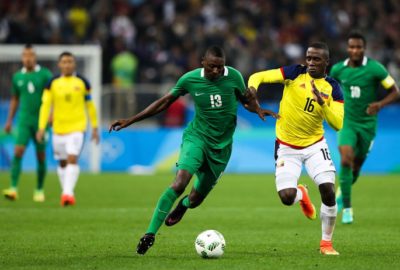
Nigeria’s Dream Team, Saturday night, qualified for the semi finals in the Rio Olympic 2016, having thrashed Denmark 2-0 in Salvador, Brazil in the quarterfinal.
The Dream Team went into the match with a lot of zeal and determination, which paid off early, with a goal scored in the 15 minutes of play by John Mikel Obi.
The two teams made several forays into each other’s territory but could not find the net until the first half was over.
On resumption for the second half, Nigeria renewed their attacks in search of goals, which paid off as Umar Sadiq increased the tally to two through a header.
Goalkeeper Emmanuel Daniel, made several point blank saves to keep Nigeria in the lead. Nigeria will now battle Germany in the semi-finals at the Corinthians Arena in Sao Paulo on Wednesday. Germany had defeated Portugal by 4-0.
Meanwhile, President Muhammadu Buhari has sent a word of courage to what he called “the indomitable spirit of the Nigerian soccer team to the Olympics Games,” which saw them flying over Denmark 2-0 to qualify for the semi-finals. “Again and again, the unconquerable Nigerian spirit has come to the fore, showing that where there is a will, there’s always a way. This was a team that was not given much chance, but which has now advanced into the semi-finals. Go for it. Go for the gold, and let the Nigerian banner be held proudly aloft once again on the global stage. We are almost there. Let’s go.” President Buhari called on Nigerians to pray and support the Nigerian contingent to the Olympics, especially the soccer team, so that the rest of the world will know that even in the face of economic adversity, the Nigerian spirit remains resolute and lifted high. “And this, we shall demonstrate in every sphere of our national life,” the President added. [myad]
Here are eleven Nigerian female celebrities who have been making do with being single parents even as they continue to combine the motherly role with their demanding careers
Genevieve Nnaji
At 37, Genny is one of Nigeria’s most sought after single mothers
She’s hot … and we mean smoking hot and unarguably one of the most celebrated actresses in Africa, with her being the face of so many brands. For years, Nnaji has managed to conceal the identity of her daughter, a child she had when she was just a teenager in secondary school.
Genny’s daughter has grown into a beautiful young lady, whom she often describes as her ‘best friend and companion’.
Kate Henshaw
Even at 45, Kate Henshaw is still as hot.
The talented Nollywood actress separated from her British husband, Roderick James Nuttal in 2011, after being married for 12 years. The union produced a daughter named Gabrielle.
Though the teenager is in Kate’s custody, she rarely talks about her; probably to keep her away from the public eye. Henshaw is still a hot mama and many often wonder how she manages to stay trim.
Bisi Ibidapo Obe
Even with the paternity controversy which involved her and a former lawmaker, Dino Melaye, the pretty actress is still one of the hottest single mothers in the country.
Doris Simeon
A look at this sexy actress and one begins to wonder, why would a man leave such a pretty woman? Doris Simeon, who was married to movie director Daniel Ademinokan, is a single parent in charge of the relationship’s nine-year old son.
Well, she doesn’t seem to be worried about the breakup as she once explained; ‘My son is also a man. He is my boyfriend.’
Fathia Balogun
The ever-beautiful actress is a proud mother of two girls and a boy. She separated from her husband, Saidi Balogun in 2006. Following their divorce, Saidi had revealed that only two of the children were his as one belonged to Fatha’s former husband, who she divorced before marrying him.
Waje
The talented Nigerian singer gave birth to her daughter 17 years ago. Waje catapulted her way to limelight after she featured in P-Square’s hit song, ‘Do Me’. She is still one of the ladies Nigerian artistes look out for!
Iyabo Ojo
Although linked to several men, the actress – who has a fetish for tattoos – has been single for a very long time. The 38-year-old actress got married far back in 1999 as a result of being pregnant from a six-month relationship. Although the marriage ended, Iyabo is glad she can count her blessings with her kids.
Liz Anjorin
Perhaps one of the sexiest Yoruba actresses, Liz charms on and off the red carpet. The mother of one has definitely got the sex appeal and enjoys the admiration of many of her male fans, but may be single for a while longer as she says, ‘I will not lie. I cannot marry ‘e go better‘.
Grace Amah
The Nollywood actress welcomed a baby boy some years ago and has kept the identity of her son’s father as a mystery.
For critics who think it’s wrong to have a child out of wedlock, do not disturb Grace
Toyin Lawani
Toyin Lawani and 23-year-old boyfriend
We all know the CEO of Tiannah Styling, Toyin Lawani as being all up in our face for her skills as a celebrity stylist.
Lawani is still enjoying the last days of her singlehood as she might hopefully get married to her 23-year old boyfriend, Lord Trigg with who she has a son.
Anna Ebiere
The ex-MBGN beauty is currently a single mother after she called off her relationship with popular highlife sensation, Flavour.
Anna and Flavour welcomed their baby daughter in August 2015. With that said, Anna is currently single and a ‘hot’ single mama at that.
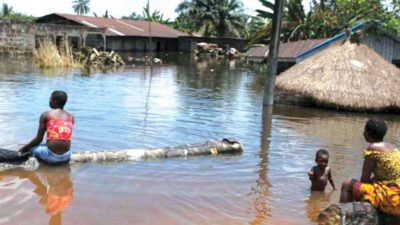
Unprecedented flood is reported to have caused havoc in 22 local government areas of Kano state, resulting in the death of no fewer than 18 people and loss of farmlands as well as other items worth over N700 Million.
The North West Zonal Coordinator of the National Emergency Management Agency, Alhaji Musa Ilallah, who spoke in Kano on Saturday said that houses and farmlands were washed away by the flood which occurred consistently for more than two eeeks.
“The worst affected local government areas are Shanono, Bagwai, Kiru with 749 victims and N347million worth of properties damaged. Other are Rano, Kibiya, Bunkure, Gabasawa, Dawakin Tofa, Kano Municipal, Danbatta and Takai. Dawakin Kudu, Karaye, Rogo, Kura, Wudil, Bichi, Sumaila, Garun Mallam, Ungoggo, Bebeji and Warawa were also affected.” Alhaji Musa, in a statement on Saturday, said that the Agency is collaborating with the State Emergency Management Agency in the assessment of damages in the areas. “NEMA commiserates with the government and people of Kano State over the loss of lives and also sympathises with victims who lost their properties in the flood. “NEMA assures that it will continue to partner the Kano State Government to alleviate the sufferings of victims of all disasters in the state.” [myad]
“Nigeria though is experiencing difficulties, but we are much much better than so many other countries. It is only what you read in the papers that disturbs you, but most industrialized countries are worst than Nigeria but you hardly hear them. We have our own problems. Let’s put hands together, irrespective of religion. Let us salvage our economy, make the country work. Let people feel free to walk at 2am.”
These were the words of the Sultan of Sokoto and the President General of the Nigerian Supreme Council for Islamic Affairs (NSCIA), Alhaji Muhammadu Sa’ad Abubakar, when he paid a courtesy visit on Governor Adams Oshiomhole in Benin, the Edo state capital. The Sultan was in the state for the annual meeting of the Nigerian Supreme Council for Islamic Affairs.
“This is the country we crave for and we must all work for that to happen. We cannot sit down and think things will work out for us, no. I heard the governor (Oshiomhole) speaking on governors who are not paying salaries. And this is one of the things increasing criminal activities. Workers are not paid and they have families and when you are hungry you will be angry.
“So we know problems in the country; so as leaders, let’s put hands together and see how we can resolve them. Nobody should blame anybody, let’s stop the blame game and face reality. Let us come together irrespective of party affiliation and move this country forward.”
Sultan Abubakar called on political leaders in Edo state to avoid violence in the forthcoming governorship elections.
He said that people must be allowed to vote candidates of their choice, saying: “when you have something on ground, the people will compare the work and that of the other parties and make their choice.”
The Sultan commended governor Oshiomhole for the developmental strides in the state, saying: “we are very proud of your achievements in the last eight years. We have so many contenders but only one will occupy this seat. Only God will bring your replacement. Carry your campaigns in peace and harmony. Issue related campaigns; convince people to vote for you don’t confuse them.
“We pray God to bring a leader who will work more than you. We have seen tremendous changes from the Edo we use to know and we believe that such changes can only come from people who are committed to making the lives of people better. God Almighty will always uplift such leader. We urge you to continue to work for the state and Nigeria as a whole.
“We want to call on all politicians in Edo state as you are preparing for elections in September, to put the interest of Edo state first and the common man who lives in the state because without the people there will be no leader. And throughout your campaigns and the swearing in, you will still need people, so please you people should put the interest of Edo state first.
“There should be no violence of any kind and when elections will hold, let it be free and fair. And whoever the Almighty picks as successor to the comrade governor should be supported by everybody.”
Governor Oshiomhole expressed his gratitude to the Sultan for his numerous counsels to Nigerian leaders, adding: “ part of the problems we face in Nigeria today, is discrimination. Every God fearing person will not resort to violence if he is conscience of the fact that every violence may lead to the death of somebody.
“The crisis arising from unfair distribution of wealth between nations and within nations substantially explains some of the dis-functional responses by aggrieved citizens. It does not matter how they chose to describe their primary motive.
“The truth is if the world is much better place, people will opt to live well rather than to kill another as a means of expressing their frustration.”
Governor Oshiomhole said that the state government would recruit Islamic teachers in the state primaries schools.
“It is important because it is at that stage we learn the teachings of the Almighty God and morals. I believe we must all relate properly in this country, forget our religious background and cooperate for the growth of the nation.” [myad]
We use cookies on our website to give you the most relevant experience by remembering your preferences and repeat visits. By clicking “Accept”, you consent to the use of ALL the cookies.
This website uses cookies to improve your experience while you navigate through the website. Out of these, the cookies that are categorized as necessary are stored on your browser as they are essential for the working of basic functionalities of the website. We also use third-party cookies that help us analyze and understand how you use this website. These cookies will be stored in your browser only with your consent. You also have the option to opt-out of these cookies. But opting out of some of these cookies may affect your browsing experience.
Necessary cookies are absolutely essential for the website to function properly. This category only includes cookies that ensures basic functionalities and security features of the website. These cookies do not store any personal information.
Any cookies that may not be particularly necessary for the website to function and is used specifically to collect user personal data via analytics, ads, other embedded contents are termed as non-necessary cookies. It is mandatory to procure user consent prior to running these cookies on your website.


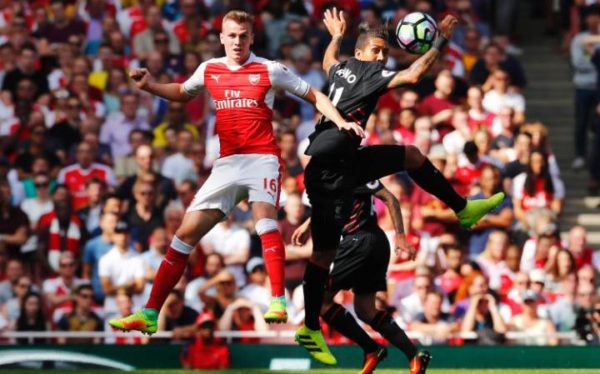 Premier League Final received a thriller on Sunday when Liverpool went on goal festival, beating Arsenal 4-3.
 A 54 year old priest, Very Reverend Father Peter Zuni of the Parishioners of the Queen of Apostles Catholic Church, Kakuri parish in Kaduna State, had been found to have secretly married to two women.
 Intending pilgrims from Yobe state who were supposed to have been flown to Saudi Arabia on August 12 for the 2016 pilgrimage are still in the country because of lack of Basic Travelling Allowance (BTA).








Is This The Change We Voted For? Yes, It Is! By Garba Shehu
The last couple of weeks have witnessed the heaviest public criticism of the Muhammadu Buhari administration since he came to power after inflicting a heavy defeat on the Peoples Democratic Party and their candidate Dr Goodluck Ebele Jonathan. Much of it has been on account of the unresolved social and economic problems facing the country.
Unfair criticism of the Buhari administration especially on account of escalating prices of foodstuff and the liberalization of the currency exchange needs to be challenged before it overshadows the commendable job the President has done in fighting terrorism as part of overall effort to secure the country, reducing corruption and yes, arresting the economic slide before it sinks the nation.
The Hausa have a saying: “Ba zomo na kashe ba, rataya a ka bani,” meaning literally “I killed no rabbit, I am helping to carry the prey.”
Wherever they go these days, in London, Dubai, Beijing, Washington, New York or Tokyo, Nigerians get the good feeling of being asked the question, how is President Muhammadu Buhari?
It is a proud moment for many citizens that the country is being perceived differently now that it has a different kind of leader creating a positive buss abroad, the kind of sentiment that can lead to foreign investments when properly capitalized upon.
The lavish praise the President gets abroad and the wide public support he enjoys among the lower segment of the local population is, by contrast, given a short shrift in the local press, mainstream and online. At its lowest point, this unambiguous media rebuke has created a wave of sympathy for anyone with a view that runs counter to the President’s.
Boko Haram terrorist leader, Shekau or the pipeline vandal form the Delta region is more likely to get newspaper front pages today than the Minister of Labour, Governor Emeka Ngige or the Finance Minister Kemi Adeosun talking about jobs creation in the economy.
I don’t say that media criticism is not reflective of the feeling of the citizens.
President Buhari has himself on numerous occasions admitted that the change mantra has brought with it pain and suffering which he likened to the pains of labor. It is a passing phase.
When they ask the question, is this the change we voted for, the critic forgets how far we have come from the scam-tainted years of the PDP rule.
How many people have given a thought to the possibility of Nigeria doing something that the combined strength of Europe and America has failed to do?
There are many today who take for granted the declared victory over the Boko Haram terrorists, forgetting the reign of the bomber who made it almost impossible for regular attendance in Churches and Mosques in many of our cities, including the Federal Capital City, Abuja.
Victory over Boko Haram has brought peace not only to Nigeria but to the countries in the Lake Chad region.
The world leaders are still at work trying to contain the Islamic State in Syria and Iraq, ISIS, which threat sadly continues to become more potent.
Everyone living in Nigeria knows that there is a major movement against corruption as part of the ongoing change. This war has forced the return to the treasury of billions of Naira and millions of Dollars stolen by past officials.
On account of this war, government suspects that the biggest trigger of the opposition to the change agenda is the army of the corrupt. With the enormous resources at their disposal; money that is unearned, these forces are ready to throw in everything to gag the Buhari administration.
When he assumed office, President Buhari said he understood the outcry of Nigerians and was determined to right those wrongs. I will remind you of his inaugural speech where he said: “At home we face enormous challenges. Insecurity, pervasive corruption, the hitherto unending and seemingly impossible fuel and power shortages are the immediate concerns. We are going to tackle them head on. Nigerians will not regret that they have entrusted national responsibility to us. We must not succumb to hopelessness and defeatism. We can fix our problems.”(Emphasis added).
He has said times without number that his government is dedicated to the poor. As can be seen from the 2016 budget, this is a government that is determined to hugely empower the disadvantaged groups- the poor, the jobless, the widows and the orphaned children including those of the North-East.
As a listening government, the President was prepared to open the door to additional food imports but given the processes involved, the turnaround in any such import of commodities would have taken a long time as to coincide with the harvest of home grown grains and cereals now in progress. The market would have been deluged and the local grower given the short end of the stick.
Calls on Hausa radio by a rabble-rousing section of the opposition for the “reopening of borders” to “allow food come in” are redundant and mischievous because all the county’s borders remain open till date.
Following the budget, the administration has begun rolling out several social welfare programs. The direct cash transfer to the poorest of the poor, the school feeding and the recruitment/skills training of about one million jobless citizens are such an example.
In addition to hard work, all leaders need luck on their side to create what is sometimes seen as economic miracles. As leader, President Buhari never had the luxury of high oil prices as did his predecessors in office.
When he first emerged as the military Head of State, General Muhammadu Buhari saw oil price, the mainstay of the nation’s economy sank to as low eight Dollars a barrel.
He rolled up his sleeves, worked on diversification strategy of the economy only to be eased out of power just as they began to take hold. Thereafter, his successors abandoned these efforts.
On his second coming, this time as a democratically elected leader, the collapse of oil prices has challenged President Buhari to quicken efforts towards the diversification of the economy with emphasis given to agriculture and solid minerals mining. Every crisis, it is said, is an opportunity. Not so in Nigeria. This is a county that inherited massive technological inventions from Biafra, yet failed to take it forward. We must not lose this opportunity to diversify the economy and our foreign earnings presented by the present oil crisis.
As the country hopes for a bumper harvest this year, government is taking steps to ensure that no farmer will sell at a loss or fail to find markets for their harvests. Grain silos are being readied nationwide to receive excess produce for warehousing to ensure food security, avert market glut and price collapse. By this, government will ensure a minimum guaranteed price.
In dealing with challenges of the economy, the administration is devoting attention to ridding the country of its notoriety as a difficult place of doing business.
The government has been making quiet but significant progress in this area, thanks to the leadership given by the National Economic Council under the Vice President and the combined efforts of the Ministries of Trade and Investment, Finance, Interior, Foreign Affairs, Budget and Planning and the Customs under new leadership.
Everyone in this sector is doing everything in his or her power to boost up Nigeria.
President Muhammadu Buhari’s infrastructure initiatives will see country making progress with intractable projects such as the Second Niger bridge, the East-West expressway, the green field Lagos-Abuja expressway and important national railway projects, Lagos-Calabar and Lagos-Kano which had been on the drawing boards for as long as anyone can remember.
These projects will be counted among the accomplishments of the administration alongside the 4,000 MW Mambila power plant which the President has declared a national priority. Government has also taken several bold steps to boost renewable energy. It has opened the door for a new conversation on the environment with decisive steps towards the clean-up the Ogoniland in the Niger Delta.
The currency liberalization and the deregulation of the petroleum products sale will make President Buhari one of the best presidents till date. The removal of subsidies on the petrol products has saved the government more than two trillion Naira in annual expenditure in this respect.
President Buhari’s foreign trips have brought many things to the country. He has energized our foreign policy. Beyond the enormous goodwill reaped from “resetting” age-old but damaged relations with neighbors and distant partners and friends, the President has attracted foreign development assistance and direct investments (FDI). It is generally accepted that good foreign relations bring foreign direct investment. So much is currently being done one year into the administration. This is in spite of the world economy being sluggish and recession-stricken.
It bears repeating that President is a different kind of leader, who just happens to be a victim of the tyranny of high expectations. He has brought positive intention, commitment, honesty and personal integrity into governance. This is why the country’s poor hold him so dear; this is why the world is in love with him.
His knack for prudent spending and effective management of resources is in the belief that this country can only prosper when there is transparency, reduced corruption and a drastic cut in bureaucratic red tape.
His decision to have a small cabinet, reducing government ministries from 46 to 24 has the effect of relieving the treasury of the burden of salaries, allowances and miscellaneous expenses now being counted in billions of Naira.
President Buhari should be credited for the the unblemished record of his ministers. This is a government that has stayed above scandal for a year.
If all of these are not desirable changes, to be appreciated and adored, it is hard to know or determine what some of our critics want.
These reforms certainly represent major milestones in change which have led to a decline of corruption at the top.
As to the question of these leading to a resurgent economy, it all means that in a democracy everything takes times. The President needs our support with understanding and patience. No matter how hasty a president wants to bring changes, there is no magic wand in that office to make everything change from bad to good or make all of us prosperous with a wave of the hand. This change is on course. It requires patience.
The change is working for the nation and sooner than later, the testimony shall be given.
Garba Shehu is Senior Special Assistant to the President on Media and Publicity. [myad]