National Chairman of the APC, Chief John Odigie-Oyegun has vowed that Edo people would no longer allow politicians to corner the state into their private pockets as it had been in the past before the APC Government dismantled their structures.
Inaugurating the National Campaign Council of the All Progressives Congress for the gubernatorial election holding in Edo State on September 10 in Benin City, described the forthcoming election as “important, crucial and will be a very great signpost” for the party.
He said that APC will win the election with ease based on the good records of the incumbent Governor, Comrade Adams Oshiomhole, adding that this is an election “which we should, and I am sure will win relatively easily.
“I say that because this is a state that for decades has been, so to speak, been privatized until the advent of the current administration. It is an election where even the blind can say yes, he is aware of the development that has taken place. It is an election that even the dumb and the deaf will say yes, they are aware of the great strides that have taken place in Edo State, especially in the wake of the ten immediate preceding years to the current administration. So, as Comrade would say, this is not a state where you earmark projects and programmes; it is a state where you eye mark; you see them; you actually see them on the ground.”
Chief Oyegun said: “So, my charge to this committee, the campaign council, made up of very eminent leaders of this party, each one specially chosen for this assignment, is not that they should deliver Edo State. It is a lot more than that. It is that they should deliver Edo State with a margin that tells the whole story. So, as you get down to your assignment, considering also that it is in a sense a mid-term election.
“So, it is an election that is important to us that we win very convincingly, not just win, but win convincingly. So, my charge to you is to go out there in coordination, close working relationship with the local election committee to strategize, to raise the resources, to talk to whosoever is necessary to talk to, some of the details of which, of course, we will discuss at a very first meeting to ensure that the kind of victory that our party deserves is in fact recorded.” The APC national chairman declared,
“So, your job is to ensure that Edo State is safely in the party. Then once that is done, then we will venture out to bring home our brothers in the South East and in the South South to join this great crusade to salvage our nation, to establish a new way of doing things, to establish new ethics, to let our people know that there is a difference between right and wrong, to change this country from the trajectory, on a permanent bases; we are already in it, to change it irreversibly on the destructive trajectory into which it was plunged by the Peoples Democratic Party (PDP) administration.”
Responding on behalf of members of the national campaign council, Chairman of the council and Lagos State Governor, Akinwumi Ambode, who was represented by the Kaduna State Governor, Mallam Nasir El Rufai said: “I want to thank the party for giving us this responsibility to manage the campaign that will lead to the election of our brother, Godwin Obaseki as the next Governor of Edo State by God’s grace.
“This is an onerous responsibility, bearing in mind the desperation of that dying party to wake up and get some life. They will use every means to come back to continue the looting that they started in Edo State.
“However, our job has been made easy by the fact that our brother, Governor Adams Oshiomhole has done such incredible work in this State that as you said even the blind, deaf and dumb can see and hear. The difference between the PDP and the APC is the difference between night and day.
“One party represents light and progress, the other party represents darkness and division. And we as loyal members of the party that you have chosen to give this responsibility will do whatever we can do to prevent darkness coming back to Edo State. As I said, our job has been made easier. We have a sitting governor; we have a sitting president. We have rule of law and an INEC that is committed to delivering credible elections. So, this should be easy for us, but we are not going to take any chances.
“With this, I would like on behalf of all of us to express our gratitude to you for finding us worthy to handle this assignment with a firm commitment that would have the support of all our governors to ensure that we succeed. By God’s grace, we will give our best shot and come back in a few months to inaugurate Governor Godwin Obaseki, by God’s grace. We thank you very much for the honour.”
In his vote of thanks, Governor Adams Oshiomhole of Edo State who commended the APC national chairman, Chief John Odigie Oyegun and members of the national campaign council for attending the meeting at a short notice said: “we want to thank all of you for coming, and we are humbled for the honour and respect you have given to us. We are very grateful, and we trust that working together, victory will be ours.
“In 2007, we didn’t have a Councillor in this State, and Mr. Fix was fixing and unfixing everything. Working together, we unfixed him, and since then, we have been in control. And as we speak, we have 22 out of 24 members of the House of Assembly elected on our party platform. So, we have no reason to worry.
“In my last election, we won in all the 18 local government areas on account of the fact that we have evidence governance and of government presence in each of the 192 wards across Edo State. So, we are confident given the fact that since then, we have done even more.”
Membership of the national campaign council is drawn from serving governors and deputy governors, former governors and deputy governors, serving ministers, senators, members of the House of Representatives and other prominent APC members across the country.
The inaugural meeting of the Council which held immediately after its inauguration was attended by Imo State Governor and Chairman of the APC Governors Forum, Owelle Rochas Okorocha; Comrade Adams Oshiomhole (Edo), Abdullahi Ganduje (Kano), Simon Lalung (Plateau), Nasir el-Rufai (Kaduna) (Co-Chairman) and Mohammed Abubakar (Bauchi). The governors of Niger, Nasarawa, Jigawa, Borno, Kwara, Oyo and Kogi were represented by their Deputies.
It was also attended by the National Chairman of the APC, Chief John Odigie-Oyegun, Omooba Olagunsoye Oyinlola, Segun Oni, APC National Deputy Chairman, (South); Senator Osita Izunaso, Dr. Chris Ngige, Minister of Labour, Hilliard Ettah, APC National Chairman, South South, among others. [myad]
France Ambassador to Nigeria, Denis Guaer, has hailed the determination of President Muhammadu Buhari in the battle against corruption, which he said, has made him to be popular in the international community.
The envoy who spoke to newsmen in Abuja on Sunday said:“Buhari presented the fight against corruption as his main priority objective and I think it is probably the main reason why he was elected. It is also the reason why he has become immediately so popular also abroad within the international community.
“Everybody is thinking this president is really willing this time to confront the problem of corruption. I think Buhari is really trying and trying very hard; it appears to me as a historical effort to fight corruption.’’
On the humanitarian crisis caused by Boko Haram insurgency, the envoy said: “This brings us back to the question of corruption also. In the whole northern part of Nigeria, public services are in a very bad shape.
“Education and healthcare are in very bad shape and this is a problem of governance; resources have to be rededicated to restore public services in the whole northern Nigeria.”
“That is difficult now because unfortunately the revenues of Nigeria are down because of the oil price and destruction of oil pipelines.” [myad]
President Muhammadu Buhari, Thursday ordered the committee investigating the Defence Equipment Procurement from 2007 to 2015, to critically dig further into the issued by focusing on those who were involved in arms procurement scandal. This followed a number of irregularities which the committee had found in the contract awards.
The presidential directive followed the ‘Third Interim Report’ of the Committee, which indicted quite a number of serving and retired Army senior officers including two former Army Chiefs, Lt. Gen. Azubuike Ihejirika and Lt. Gen. Kenneth Minimah as well as a former Minister.
Greenbarge Reporters obtained a copy of the highlights of the report which is hereby reproduced:
HIGHLIGHTS OF THIRD INTERIM REPORT OF COMMITTEE ON AUDIT OF DEFENCE EQUIPMENT PROCUREMENT IN THE NIGERIAN ARMED FORCES FROM 2007 – 2015
INTRODUCTION
In continuation of its assignment, the Committee on Audit of Defence Equipment Procurement (CADEP) in the Nigerian Armed Forces, analysed procurement contracts awarded by or for the Nigerian Army between 2007 and 2015. The Committee so far noted that within the period under review, the sum of N71, 775,313,451.30 and $685,349,692.49 were spent on Nigerian Army procurement by the Ministries of Defence, Finance, Foreign Affairs and Environment. Others were NNPC, CBN and the Office of the National Security Adviser (ONSA). Additionally, some state governments, notably Adamawa, Kano and Yobe as well as Federal Ministries of Finance and Power, funded Nigerian Army operations with the sum of N114, 067,739,113.00. The contributions made by other states such as Borno, Plateau among others were not available as at the time of writing this report. Therefore, the total amount spent for procurement and operations within the period under review were N185, 843,052,564.30 and $685,349,692.49.
MINISTRY OF DEFENCE AND NIGERIAN ARMY PROCUREMENT
The Committee found that between 2007 and 2008, the Nigerian Army procured some equipment, arms and ammunition that were funded by the NNPC. The contracts were well documented, followed due process and satisfactorily executed. However, the Committee observed that some of the subsequent procurement undertaken by the MOD and Nigerian Army substantially breached provisions of the Public Procurement Act (PPA) 2007.
The Committee reviewed some of the Nigerian Army contracts awarded by MOD for the period under review. The contracts included the procurement of assorted ammunition, 20 units of K-38 Twin Hull Boats and 6 units of 4 x 4 Ambulances fitted with radios awarded to DYI Global Services Ltd and Doiyatec Comms Nig Ltd in which Mr Amit Sade has controlling shares.
The contracts for the procurement of assorted ammunition and 20 units of K-38 Twin Hull Boats were awarded on 6 October 2008 at the cost of N2, 730,000,000.00 and N3, 120,000,000.00 to DYI Global Services Ltd and Doiyatec Comms Ltd for UN Peace-Keeping and Niger Delta Operations respectively. However, the Committee noted that BPP had earlier raised observations on the competence of the contractors to MOD but its observations and advice were ignored. DYI Global Services Ltd had been paid N2,593,500,000.00 representing 95% with the delivery of ammunition worth N1,744,183,705.31 only (representing 63%). Doiyatec Comms Ltd was paid N2, 496,500,000.00 representing 80% with the delivery of only 8 out of the 20 boats worth N1, 248,000,000.00 representing 40%. The Nigerian Army Technical Assessment Report revealed that these 8 boats did not meet the operational requirements and the Nigerian Army spent the sum of N106, 795,014.00 to make them suitable and operational. The third contract was for the procurement of 6 units of 4 x 4 Ambulances fitted with military radios awarded to DYI Global Services Ltd on 31 August 2010 at the cost of N90, 000,000.00. The company collected 15% mobilization fee of N13, 500,000.00 on 31 December 2010 but yet to deliver a single ambulance.
While the 2 companies collected N5,103,500,000.00 representing 86% of the total value of the 3 contracts amounting to N5,940,000,000.00, they only performed to the tune of N2,992,183,705.31. Furthermore, the Committee found that the terms of payment in the contract agreement for the procurement of the K-38 boats was fraudulently structured in favour of the contractor by making the inspection of manufacturer’s facilities a condition for the payment of 40% (N1, 248,000,000.00) of the contract sum. It was also discovered that MOD staff raised documents approving payments when it was obvious that the contractors had not performed, thereby suggesting connivance between MOD officials and the contractors. The then MOD officials, Dr Haruna Sanusi, Bukar Goni Aji, EO Oyemomi, BO John, Buba M Gamawa, Abdulrazak Salau, Mrs Josephine N Opara, Tajudeen G Fetuga, Abdullahi Maikano and CEO Doiyatec Comms Ltd, Mr Amit Sade need to be further investigated to establish their complicity or otherwise. The Committee is of the opinion that DYI Global Services Ltd and Doiyatec Comms Ltd should be made to jointly refund the sum of N2, 260,925,479.15, Withholding Tax (WHT) and any accruing interest on the amount collected for items not delivered. The 2 companies should also be blacklisted.
Nigerian Army awarded contracts totaling N700,000,000.00 and $63,349.470.00 to Suncraft International Ltd and Singapore Kinetics Technologies Ltd between 9 January 2007 and 6 May 2009 for the retrofitting of MK1 Fast Patrol Crafts and procurement of 50 Scorpion Fast Patrol Crafts respectively. The Committee established that the Nigerian Army deducted N35, 000,000.00 as 5% WHT on the Suncraft International Ltd contract. However, there was no evidence to show that the deducted amount was remitted to FIRS. Col AA Abubagaji and Lt Col EL- Hussaini Boyi (rtd) who effected the payment should be made to account for deducted WHT.
The MOD, between 29 April 2005 and 19 October 2010, awarded 2 contracts to Progress Limited for the supply of 42 units of BTR-3U APCs and spare parts to the Nigerian Army. Neither the MOD nor the NA could provide the contract agreements to ascertain the cost of the APCs. However, a Nigerian Army Audit Report stated that the contractor exploited the non-inclusion of specific spares list in the contract agreement and failed to deliver the requisite spare parts that were to accompany the 42 units of the APCs. Fundamental issues raised on the status of the APCs by the plant representative at the Kiev Engineering Plant in Ukraine were ignored. Delivery commenced in 2007 and quantities 26 of the delivered APCs were immediately deployed to UNAMID for Peace Keeping Operations but scandalously, broke down on induction.
The unfortunate situation necessitated the award of another contract to the same company on 19 October 2010 by the MOD for the procurement of major spare parts for the repairs of the APCs at the cost of $162,089.84 only. However, only a few quantities of the items needed for the maintenance of the APCs were delivered. For instance, only 4 out of the 84 contracted units of tyres were delivered and found to have expired. The Committee observed that the APCs did not meet the operational requirement for the Nigerian Army. Furthermore, the breakdown of the APCs on deployment to UNAMID caused Nigeria international embarrassment and deprived her appropriate re-imbursement from the United Nations. The then Permanent Secretary and DFA MOD, Dr Haruna Usman Sanusi and Mr Jonah Ogunniyi Otunla as well as CEO Progress Ltd should be held accountable for these infractions.
The MOD awarded Bamverde Nig Ltd a contract for the procurement of 3 units of Charlie Horse Level-1 Field Hospital on 12 January 2011 at the cost of N1, 241,129,497.62 at a unit cost of N413, 709,832.54. Although the contract was awarded by MOD, payments were effected by the Nigerian Army. The company was paid a total of N827, 419,656.08 for the 2 Charlie Horse Level-1 Hospitals that were delivered and deployed to the NE. However, there was no evidence of payment of WHT amounting to N41, 370,982.80 by the vendor. The Committee noted that the balance of N413, 709,832.54 for the procurement of the third hospital was in the accounts of Nigerian Army. The CEO Bamverde Ltd, Col Olu Bamgbose (Rtd) should be held accountable for none payment of the WHT.
MOD awarded 2 contracts to TS-Y International Ltd for the procurement of spare parts for Artillery guns between November 2008 and December 2009 at the total cost of N549,059,400.00 only. The contracts were vendor driven, executed and fully paid without recourse to the Nigerian Army. The Committee found that the delivered spare parts have remained in Nigerian Army stores for the past 6 years unutilized. This is a clear case of waste of public funds. Furthermore, there was no proof of payment of 5% WHT amounting to N27, 452,970.00 to FIRS. The then Permanent Secretaries and DFA MOD, Dr Haruna Usman Sanusi, Alhaji Bukar Aji Goni and Mr Abdullahi Maikano as well as CEO TS-Y International are to be held responsible for their roles in this procurement.
Four contracts were awarded to Barnes and Tubbies for the procurement of assorted arms and ammunition between 8 November 2007 and 4 July 2014 at the total cost of N1, 563,657,100.00 and $14,493,651.20. The Committee noted that the Nigerian Army included payments of VAT and WHT in the $14,493,651.00 contract agreement. It was further observed that the inclusion of VAT in the contract agreement was irregular. Furthermore, there was a Presidential approval granting waiver for payment of import duty, pre-shipment inspection and associated taxes only for the N1, 081,625,600.00 contract. Nonetheless, the Committee observed that the vendor failed to pay N71, 008,855.00 and $724,682.60 for all the contracts claiming that the waiver granted for the import duty also exempted it from payment of WHT. The Committee found the vendor’s reason untenable as there is no law exempting any entity from payment of WHT.
MOD awarded a contract to Dalfam (Nig) Ltd for the procurement of assorted weapons for the Nigerian Army on 9 December 2010 at the cost of N240, 082,162.00. However, Dalfam Ltd sub-contracted this procurement to Hadassa Investment Security (Nig) Ltd after receiving payment of 15% mobilization fee, amounting to N36, 012,324.30. Nigerian Army rejected the weapons on delivery as they were found to be refurbished. This generated some controversies but it was eventually resolved and the contractor promised to replace the refurbished weapons with new ones. Sadly, the weapons have not been delivered till date. The Committee observed that both contractors were not competent to deal in the procurement of arms and ammunition. Consequently, CEO Dalfam Nig Ltd, Alhaji Maisudan Bello Mohammed should refund the 15% (N36, 012,340.30) mobilization fee and any accrued interest.
The contract awarded to Barnes and Tubbies on the 4 July 2014 at the cost of N143, 480,000.00 made provision for 80% mobilisation amounting to N114, 784,000.00, which was paid before the signing of the agreement. The contractor failed to execute the contract and it was consequently terminated. Despite the termination, the contractor failed to refund the N114, 784,000.00 earlier collected. It took the intervention of the Committee for the contractor to refund the money to the Federal Government Funds Recovery Account at the CBN on the 12 April 2016. The Committee therefore recommends that Barnes and Tubbies should refund the $724,682.60 unlawfully included in the contract sum as VAT as well as all the WHT due. Maj Gen AI Muraina (rtd), Mr Tajudeen Gbenga Fetuga and CEO Barnes and Tubbies are to be held responsible for the observed lapses.
The MOD awarded 2 contracts amounting to N420, 726,799.20 to Baram International Nigeria Limited between 29 March 2011 and 17 June 2014 for the procurement of 53 Armoured Vehicles Spare Parts at the cost of N169,916,849.77 and that of Ballistic Vest, Night Vision Binoculars and 3 Unmanned Aerial Vehicles at the cost of N250,809,949.50. The Committee observed that the contracts were awarded without recourse to the Nigerian Army, to a vendor who lacked the necessary technical competence. Sadly, the contract worth N169, 916,849.77 with 90 days completion time was yet to be completed 5 years after. The Committee is of the opinion that the then Permanent Secretary MOD, Mr EO Oyemomi and CEO Baram International Nig Ltd Alhaji Gujja Attom, be held accountable.
Nigerian Army awarded 9 contracts to China North Industries between 20 August 2013 and 2 January 2014 for the procurement of various arms and ammunition at the total cost of $9,358,637.00 only. Out of the 9 contracts 7 were funded. Prior to the contract awards, the then COAS, Lt Gen OA Ihejirika (rtd) led a delegation of officers (who were not specialists on arms and ammunition) to China, where he personally selected the arms and ammunition, without due diligence. The Committee found through a member of the delegation that the COAS used ‘common sense, intuition and instincts’ in making those decisions. There were no ammunition receipt inspection and arms technical reports to determine the operational suitability, serviceability and shelf life of the items. Furthermore, it was observed that all fund transfers were made through Westgate Global Trust Ltd instead of CBN to the then Defence Attache (DA) Beijing, China, who then credited China North Industries. The Committee noted that transfer of funds overseas through official channels was not a challenge for government agencies at the material time. The process of award, procurement and payments were very unprofessional and unethical. Consequently, Lt Gen OA Ihejirika (rtd) and Maj Gen AI Muraina (rtd) should be held accountable accordingly.
Nigerian Army awarded 2 contracts to Hadassa Investment Security (Nig) Ltd on 3 August 2010 and 19 September 2011 for procurement of Twin Free Fall and Airborne Training Parachutes for Independent Day Celebration and Airborne Training respectively at combined cost of N290, 300,000.00. The Committee noted that only 44% of the items for the Airborne Training Parachute contracts worth N61, 859,910.13 were delivered while 56% of the items worth N78, 440,090.15 were outstanding. Although there was proof of payment to the vendor, there was no evidence that the accrued WHT on the full payments amounting to N14, 650,000.00 had been paid. The Committee is of the opinion that Hadassa Investment Security (Nig) Ltd should refund the sum of N78, 440,090.15 being the worth of items not delivered and WHT totalling N93, 090,090.15. Lt Gen OA Ihejirika (rtd), Maj Gen AI Muraina (rtd) and CEO Hadassa Investment Security Ltd should be held accountable for the poor execution of the contract.
The Committee found that between 2011 and 2014, the Nigerian Army awarded 11 contracts worth N872, 140,500.00 for procurement of arms and ammunition as well as highly technical and specialised military equipment to Clover Nig Ltd. The contract for procurement of 1000 pieces of Tisas Zigana Pistol with 100,000 rounds of ammunition at the cost of N266, 875,000.00 was vendor-driven and without need assessment hence, all the procured quantities remained in the stores unutilised for about 2 years after delivery.
Furthermore, the vendor in collaboration with Nigerian Army processed importation of another single pistol supposedly as a sample for evaluation after delivery of the 1,000 pistols. However, the Committee confirmed that the ‘sample’ was personally customized and officially issued to Lt Gen KTJ Minimah (rtd), the then COAS who had not returned it even after his retirement. The Committee found that the vendor was fully paid before delivery of the items and fraudulently attempted to collect another 30 per cent of the contract sum. The Committee is of the opinion that the procurement of this weapon was wasteful and a misplacement of priority as the expended sum could have been better utilized for more pressing needs. Thus, there is need for further investigation of the unlawful importation and possession of firearms as well as attempt at double payment by Clover Nig Ltd. Lt Gen KTJ Minimah (Rtd), Maj Gen U Buzugbe (Rtd) and CEO Clover Nig Ltd should be held accountable accordingly.
The Committee reviewed the procurement carried out by Chok Ventures Ltd and Integrated Equipment Services Ltd, 2 companies that shared the same registered office, had one Chinedu Onyekwere as common controlling shareholder and sole or mandatory signatory to the various banks accounts of the companies. The Committee further established that between March 2011 and December 2013, the 2 companies exclusively procured various types of Toyota and Mitsubishi vehicles worth over N2, 000,000,000.00 for the Nigerian Army without any competitive bidding. Most of the contracts awarded to the companies were also split, awarded on the same date or within a short space of time at costs and mobilisation higher than the prescribed thresholds. For instance, on 15 Feb 13, the 2 companies were awarded contracts worth N260, 000.000.00 and N315, 000,000.00 respectively for supplies of various vehicles. The Nigerian Army could not justify the exclusive selection of these vendors against other renowned distributors of same brands of vehicles procured.
More seriously, the Committee found no credible evidence of delivery of the vehicles by the 2 companies as there were no receipt vouchers but only unauthenticated delivery notes, invoices and waybills that were purportedly used for the deliveries. Nevertheless, the vendors were fully paid based on job completion certificate authenticated by the then Chief of Logistics, Maj Gen DD Kitchener (rtd). The payment was also made without deduction of WHT. Furthermore, analyses of the various banks accounts of the 2 companies showed transfers to individuals such as Raymond Ihejirika, Nkechi Ihejirika, Ndubuisi Ihejirika, Orji Ihejirika, Kingsley Ihejirika and Naomi Onyeabor. Thus, the Committee recommends further investigation to determine delivery of the vehicles and relationship of funds beneficiaries with Lt Gen OA Ihejirika (rtd) the former COAS and the 2 companies. Furthermore, Lt Gen OA Ihejirika (rtd), Maj Gen DD Kitchener (rtd), Col AM Inuwa and Mr Chinedu Onyekwere should be held accountable for the issues arising out of the contracts.
Nigerian Army awarded contracts to DICON between 19 September 2013 and 11 September 2014 amounting to N4, 329,985,000.00. The contracts were for the procurement of Igirigi and Spartan APCs; arms and ammunition. The Committee noted that 5% each of VAT and WHT were provided for in the contract agreements. It was further observed that DICON did not provide advance payment guarantees for mobilization fees received and there were no pre-shipment inspections conducted for all the contracts. In some of the contracts, payments were made to DICON before award letters or contract agreements were signed. It was also noted that DICON sub-contracted the contracts to foreign companies at costs far less than the amount Nigerian Army paid DICON. For instance, the contracts for the procurement of 40 units of NSVT Heavy Machine Gun with accessories and 10 units of Igirigi APCs were sub-contracted to Kennedy Logistics Ltd and Streit Group FZE at the cost of $1,597,500.00 and $1,850,000.00 respectively. The contracts were awarded to DICON at the cost of $2,237,000.00 and $3,450,000.00 resulting in price differentials of $781,000.00 (33%) and $1,600,000.00 (46.4%) respectively. However, DICON failed to explain utilization of these differentials to the benefit of the Company.
Furthermore, the post-delivery Technical Inspection Reports revealed that the APCs, over aged and unlinked ammunition were unsuitable for the NE operation. For instance, only One Million out of the 2 Million rounds of 7.62 x 51mm Ball had been linked till date. The APCs also had inadequate support spare parts, maintenance support equipment, ergonomics, operators’ training and were not amoured plated enough to withstand medium and heavy calibre weapons. Despite these deficiencies, the then COPP Maj Gen U Buzugbe (rtd) authorised the full payment to DICON. One of the Igirigi APCs was destroyed by RPG-7, killing a Colonel inside. As at 13 May 2016, only one of the 10 Igirigi APCs deployed to NE was serviceable. The same observations were made against the Spartan APCs. The Committee noted that despite the observations made in the technical reports, DICON was paid in full for all the contracts without deduction and payment of 5% each of WHT and VAT totalling N462, 541,000.00 that were provided for in the contracts. Thus, the contributions of the Igirigi and Spartan APCs to the NE operations were abysmal as attested to by the field commanders who appeared before the Committee.
The Committee discovered that suspicious transactions to the tune of N845, 600,000.00 and $3,450,619.00 were made from DICON’s domiciliary and Naira accounts with Fidelity Bank. Out of this amount, the then DG DICON`, Maj Gen ER Chioba (rtd), personally withdrew N81, 000,000.00 and $131,740.00 in cash from the accounts. The sums of N764, 600,000.00 and $3,318,879.17 were also transferred to the accounts of Lava Trade Ltd, 7×7 Ltd and Oranto Petroleum Ltd. The explanations offered by Maj Gen ER Chioba (rtd) that the transfers were payments of services and foreign exchange were unconvincing as there was no evidence of formal business relationship between DICON and these companies. Consequently, the Committee opines that the poor procurement process associated with DICON contracts contravened financial regulations, encouraged illegal withdrawals leading to wastage of public funds, diminished capacity of the Nigerian Army in the campaign against terror and served as a conduit for misappropriation of entrusted funds. The Committee is of the view that Lt Gen OA Ihejirika (rtd), Lt Gen KTJ Minimah (rtd), Maj Gen AI Muraina, Maj Gen U Buzugbe (rtd) and Maj Gen ER Chioba (rtd) are to be held accountable.
NIGERIAN ARMY PROCUREMENT FUNDED BY MINISTRIES DEPARTMENTS AND AGENCIES
The ONSA on 13 May 2013 requested funds for the conduct of Operation BOYONA aimed at dislodging terrorist camps along the common borders with Cameroun, Chad and Niger. Consequently, the government released N1, 340,000,000.00 from the Ministry of Foreign Affairs which were disbursed to DHQ and the Services accordingly. In August 2013, ONSA requested and got approval for additional N2, 000,000,000.00 for logistics requirements and sustenance of troops, which was credited to ONSA’s account. However, DHQ and the Services confirmed non receipt of any additional funds for Operation BOYONA. The Committee is of the view that the then NSA, Lt Col MS Dasuki (rtd) should be made to account for the N2, 000,000,000.00. [myad]
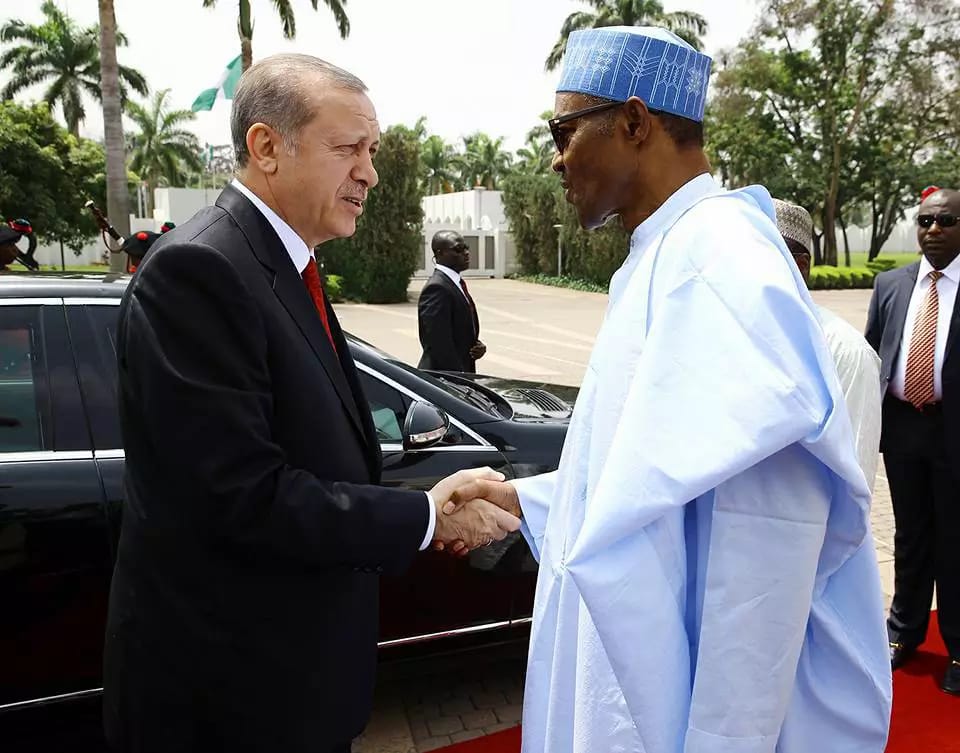
President Muhammadu Buhari has sent a message of congratulation to his Turkis counterpart, President Toyyip Erdogan for surviving a coup attempt which flopped as a result of the people’s uprising.
A statement by the senior special assistant to the President on media and publicity, Malam Garba Shehu, quoted Buhari as praising the courage and immediate response of ordinary citizens who in face of guns and tanks defied the rebel soldiers and forced them to abandon their mad quest for power.
President Buhari called on the President of Turkey to pursue reconciliation even as he assured him and people of Turkey of Nigeria’s support in their hour of trial.
President vehemently condemned the abortive coup attempt by a group of rebel army officers and men, which resulted in the reported death of more than 100 people.
President Buhari said that he is “deeply saddened by reports of a violent attempt to dismantle constitutional authority and disrupt the democratically elected government of Tayyip Erdogan in Turkey.
“The removal of a democratic government by force is no longer acceptable. Violence can never solve any problem but only complicates them and sets back the progress of democratic societies.”
The President described President Erdogan as one of Nigeria’s close international partners and sincere supporters in its current war against terrorism, adding that all should resist the “destabilization of democratic countries through coups d’état in the 21st century.”
According to the President, “democracy provides peaceful options of changing governments through the ballot box. The ballot box doesn’t require violence to remove any government perceived to have lost its popularity and public support. Despite its limitations, democracy is still better and more durable than a violent change of government.” [myad]
Following the directive by the Auditor General of Kogi State, Alhaji Yusuf Okala, Zenith Bank has agreed to open for business on Saturday, July 17th to attend to Kogi state workers, who started getting three more months’ backlog of their salaries from the government today.
According to the Auditor General, who explained the circumstances behind the just concluded staff screening in Government House, Lokoja, workers who are getting three months now had already been paid one month two weeks ago.
He said that the currently delays experienced was due to the desired to completely clean the Kogi State pay roll of ghost workers, fraudsters and other leakages.
He further explained that a total of over 5, 550 names have been cleared for payment and have begun receiving three months’ pay since Monday, July 11th.
“We had a meeting with the Zenith Bank officials and they have agreed to work between 9am and 5pm this Saturday, just to attend to Kogi workers.
“They have agreed to bring in more hands from all over the state to enable them attend to everyone coming this weekend. As I speak to you, we paid 1, 851 people additional three months’ salaries last Monday. Right now, 3, 706 more people will get theirs today.
“So, if you need to do any documentation at the bank, just go to Zenith Bank and give your details and you will be promptly attended to.”
Okala said that all found to have defrauded the state via salaries will be prosecuted. He said the cumulative list of all staff, both cleared and uncleared, will be made public as soon as Governor Yahaya Bello gives his approval.
Meanwhile, reports reaching us indicated that Zenith Bank has only been operating in Lokoja and that alert is not received in its branches around the state. The teachers, especially secondary schools teachers are already complaining that they have not received a kobo till now. [myad]
Turkey is about five hours away from Nigeria by air, about 2, 634 miles from here, but the night there was a coup attempt in Turkey, July 15, with soldiers shutting down parts of Ankara and Istanbul, you’d think Ankara is a city somewhere in Nigeria and Istanbul is an extension of our country. Commentaries kept flying up and down on Nigeria’s social media space, with the coup attempt in Turkey becoming a trending topic. And yet the strongest connection between Nigeria and Turkey is probably trade, tourism, socio-cultural affinities, and the fact that many Nigerian travellers now find it easier and cheaper to travel through Turkey to other European capitals, with Turkish Airlines making all the profit and no Nigerian airline on that route! Still, if Turkey finds itself in a bad shape, as it has, that is not likely to affect the already sorry fortunes of the Naira or the forbidding cost of food items in Nigerian markets. On Friday, many Nigerians stayed awake and projected their own worst fears unto the Turkish situation.
By way of summary, there was among the Nigerian commentators an all-round condemnation of any attempt to upturn the Constitutional order either in Turkey or anywhere else in the world. When it was reported that a former Turkish President had remarked that the coup will not stand, because “Turkey is not Africa”, (former President Abdullah Gul actually said Latin America), there was also a feeling of outrage. How dare he made such a racist comment in the midst of such a serious situation?
When President Recep Tayyip Erdogan took to Facetime on his mobile phone to get himself onto television, and he pleaded with the Turkish population to take to the streets to resist the coup makers, and his call was heeded, not a few commentators at this end wondered if Nigerians would have answered such a summon to patriotism and whether or not religious and ethnic sentiments or the fear of being shot to death would not have kept the people indoors. Concerns were also expressed about the fate of Nigerians living in Turkey in the event of a blowout at the crossroads of Europe. By Saturday morning, the coup had failed. Erdogan was significantly back in control. About 200 persons had died, and over 2,000 persons were recorded as injured. As I monitored the situation in Turkey and the reactions in Nigeria, I was struck by how so much can be learnt from the strong interest that the failed coup attempt has generated among educated Nigerians.
Nigerians know what it means to have a constitutional order derailed by military intervention. Between 1960 and 1999, Nigeria moved from one form of military rule to another, characterized by obstinacy, and absolutism, experiencing only short spells of civilian rule. Similarly, the military in Turkey have since 1960 intervened directly at least four times (1970, 1971, 1980, 1997). And in all instances, the Turkish coup plotters always claimed that their role was to restore order and stabilize the country. This is a rhetoric that is quite familiar to Nigerians. Every military coup is justified on messianic grounds. In the latest onslaught in Turkey, the plotters claim they want to establish a “Peace Council.”
Between 1993 and 1999, Nigerians fought the military to a standstill, insisting on a definite return to civilian rule and the institutionalization of democracy. Seventeen years later, the democratic spirit is well established among the people, if not the Nigerian leadership elite. The people have seen what a demonstration of people power can achieve: they used it to get the military out of power, they relied on it to insist that the Constitution be respected and obeyed when a President died in office and certain forces did not want his successor to get into office, and again, they have seen people-power at work in removing a sitting government from power. Right now in Nigeria, to toy with this power of the people in any form is to sow the seeds of organized mass rebellion.
Not surprisingly, in the past few years, every display of the people’s supremacy in other parts of the world has attracted either interest or a copy-cat instinct among Nigerians. First, there was the Arab Spring, which resulted in calls for the Nigerian Spring, which later found expression in the politically motivated Occupy Nigeria protests of January 2012. And now from Turkey, the major point of interest for Nigeria has been in my estimation, how the people took to the streets to confront soldiers. The coup failed in Turkey because it lacked popular support. Turkey has for long been considered an embarrassment in Europe. A successful coup in 2016 would have put the country in a worse shape and done further damage to the country’s reputation. The people stood up for their country, not President Recep Tayyip Erdogan. They stood up for an idea: The idea of democracy. The three major political parties disowned the coup. Mosques called on the people to go to the streets and fight for democracy. Even Erdogan’s critics, including the Kemalists and the Gulenists, denounced the coup plotters. The images that came across were images of the police confronting the soldiers and disarming them (This was intriguing- can anyone ever imagine the Nigeria police protecting democracy: they would have since collected bribe from the coup plotters, there is massive corruption in Turkey too but their police fought for the nation). Ordinary citizens lay down in front of the coup plotters’ tanks and asked to be crushed; brave citizens disarmed the soldiers and took over the city squares.
It is this kind of bravery that Nigerians find surreal. The coup attempt in Turkey comes at a time when the civil society in Nigeria is beginning to lose the spirit to stand in front of tanks and guns: the people have been battered to a point where their strongest protection is their power of the ballot and so the average Nigerian endures suffering, convinced that when again it is time to vote, no one can rob him or her of his power to choose. But the situation in Turkey reminds us of the kind of danger that any democracy, with troubled foundations can face, hence Nigerians ask if they too can be as courageous as the Turkish have been, with both Turks and the much abused Kurds, and other divided groups, uniting, momentarily, on one issue.
Not that Mr. Recep Tayyip Erdogan deserves the victory over the coup plotters, though. Outsiders, including Nigerians, consider him a bad guy; and even if he is still popular and blindly followed by the majority of his people, his 13-year record in office falls far short of standards. He came to office on the wave-crest of popular appeal. In Istanbul where he was a city mayor at a time, he remains immensely popular, and he is also probably the most popular leader, not in Europe, but the Arab world. Thrice, he and his party, the AKP, won nationally organized elections. But success soon got into Erdogan’s head, as he descended into the lower depths of arrogance and dictatorship. He started having issues with neighbours and allies.
He became undemocratic, shamelessly alienating civil society, the press and the judiciary. He is so temperamental and intolerant of criticism and alternative views, he is now surrounded mainly by sycophants and relatives. In his attempt to dominate everything and everyone, he became known as the “buyuk usta”, that is “the big master”, and of course, he now lives in a $615 million Presidential palace with 1, 150 rooms! In addition, he wants to acquire US-style executive Presidential powers and he isbusy battlingreal and imaginary enemies.
He may have been saved by the people’s rejection of the coup attempt, but perhaps Erdogan has been saved more by his own cleverness. The coup attempt against his government was an amateur, unorganized effort. It lacked the support of the military command, which Erdogan had cleverly subjected to civilian control, and among whom hehad built centres of personal loyalty. Over the years, he weakened the military and strengthened the police and the intelligence services. The coup plotters over-estimated their capacity and misread the people’s mood.
Their failure may embolden Erdogan and even make him more authoritarian: he is already sounding off about being in charge and dealing with the coup plotters(over 2,000 of whom have already been rounded up and arrested, even judges have been fired). But Turkey is in a very bad shape, politically. Resentments run deep. There are deep fears about threats to the country’s secularism, and attempts to Islamicise the country. A paranoid Erdogan could worsen the situation. Both the United States and the European Union should take a keen interest in what happens in Turkey after the coup attempt, to ensure that rather than dig deeper into authoritarianism, Erdogan would see the need to run a more open, inclusive and democratic government.
The coup may have failed, and democracy may have won, but whatever issues led to a group of ill-prepared soldiers taking the law into their hands cannot be wished away. To tell the truth, Recep Erdogan acts very much, in all respects, like an African leader in Europe – that probably explains the keen Nigerian interest. The key lesson, all told, is that the importance and survival of democracy relates to the importance of civic virtue, this is why leaders must rely not just on the people’s commitment to an idea, but must seek to make democracy work for all the people. [myad]
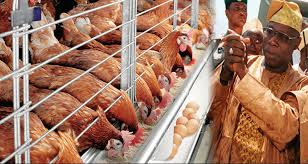
Former President Olusegun Obasanjo has revealed that he started his farming business as an apprentice after retiring as the Head of State in 1979. Obasanjo, who spoke at a lecture in the University of Ibadan on Saturday on the topic: “Agribusiness: Time to act,” said that he enrolled at the Institute of Agricultural Research and Training (IAR&T), Ibadan to learn the art of farming as an apprentice for three months shortly after he left office. He recalled that his teachers at the institute initially had problem treating him as a student or apprentice but that he insisted that he should be addressed and treated as a student and an apprentice because that was the only way to enjoy the teaching-learning process. ” I cleaned chicken house. I fed chicken. That is how to be a farmer. Anything less won’t do. You can’t be a successful farmer without being an apprentice.” The former president explained that no matter how learned or how many degrees one has, it requires learning as an apprentice, deep interest and passion to go into farming and succeed. “There must be interest and passion for people to go into agriculture and succeed in it. We must get it right. We have to glamourize and incetivize farming to keep people that are interested in agriculture in the business.” The former president said no plan to take people into agriculture will work except the people have passion for farming and are willing to learn the art of farming first. Obasanjo expressed his willingness to mentor young farmers where possible. [myad]
Nigeria’s Vice President, Professor Yemi Osinbajo has said that Nigeria has sought assistance of the World Bank and the Bill Gates Foundation to map the really poor people in Nigeria for the federal government’s social protection programme. Osinbajo admitted at a side event of the African Union Summit, hosted on Saturday by the President of Ghana, Mr. John Mahama, holding in Kigali, Rwanda that in determining who the poorest is, “we had problems on that.” “We had to get inside the communities looking for the poorest of the poor with the small sum of money which is about N5,000 (which is roughly about $25 dollars or there about) which is a sum of money that would be given to the poorest every month, which may enable them feed themselves and find something that they may do and on the condition that they send their children to school and participate in immunization.” Osinbajo, who is leading the Nigerian delegation to the continent meeting, told the breakfast event attended by a number of presidents and several heads of delegations to the AU meeting that the whole idea of the Sustainable Development Goals (SDGs) “is really about addressing inequality and poverty.” He called on African nations to rise up to the urgent need to address the problems of poverty and inequality even as the global community focuses on its new SDGs. Professor Osinbajo observed that the problems of poverty and inequality are so obvious that “however we described the programme, we really must do something and something urgently.” He narrated how the Nigeria’s current budget cycle has provision for largest social protection programme. “It’s a N500 billion programme-(worth over $2.5B as at the time budget was signed.) “Basically, we are looking at lifting many out of poverty, of course many are familiar with the size of the Nigerian state and we have close to hundred and ten million people who are poor and about two-tenth are in extreme poverty. “So it is a very huge problem and part of what we are trying to do is to look at how not just to empower people but also to ensure that what they are given is sustainable. “For the women, we are doing a programme, micro-credit programme for a million market women and artisans. “All would be given facilities, training facilities as well to enable them to be able to do some work for themselves and to continue to be able to live. “And we think that giving this micro-credit loan to women is to make sure that they handle money better and do a much better work on the whole. “So l think that with what we ve’ done already, we have seen that they are certainly going to work. “In the case of Conditional Cash Transfer, again we are handing these to women. We are giving (this to) another million, to the poorest of the poor. “So we are really excited about some of the works we are trying to do around the SDGs and we are hopeful that we’ll be able to get the Social Protection Programme working.” [myad]
Minister of education, Malam Adamu Adamu, has said that the government ban on Post-Unified Tertiary Matriculation Examination and the general admission procedures does not in any way affect the statutory role of the Senate of any University or the academic boards of any tertiary institution conducting its admissions examinations. A statement on Saturday by the Deputy Director (Press and Public Relations) in the Ministry of Education, Mr. Ben. Bem-Goong quoted the minister as saying that the clarification of the position of government on the issue became necessary “following conflicting reports in the media over the roles of universities and the Joint Admissions and Matriculation Board in admission under the new dispensation.” He said that the role of JAMB is to conduct the UTME, compile the list of candidates whose scores meet the cut-off marks (180 and above) and send same to the Universities. The Universities, he said, will shortlist the candidates using the agreed guidelines and thereafter return the shortlisted candidates to JAMB for verification of compliance to guidelines and subsequent issuance of JAMB admission letters. “For the avoidance of doubt, any screening charges shall apply only to successful candidates who have been issued admission by the universities of their choice. All Universities and JAMB should adhere to this directive,” Adamu Adamu said. [myad]
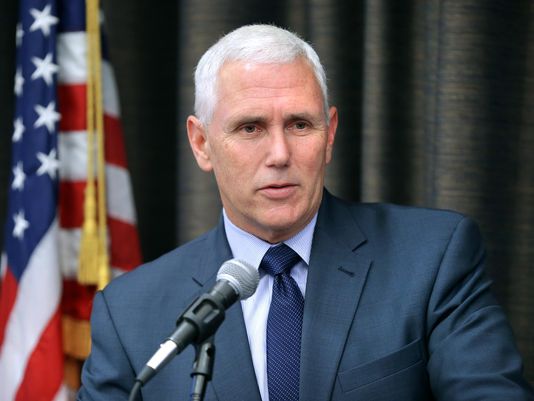
The presidential candidate of the Republican in the United States of American election later in the year, Mr. Donald Trump has finally presented Indiana Governor, Mike Pence, as his running mate. Pence has been described in American political circle as the man who can unify a fractured Republican party and help him bridge the gap created by the candidate’s outsider status.
In a wide-ranging speech in which he touted his own “landslide” victory in the Republican primaries, Trump cast Pence as a perfect complement for the White House: a veteran of government, a man with a Midwestern sensibility and strong Republican credentials as a job creator and budget balancer.
“Indiana Governor, Mike Pence was my first choice, I’ve admired the work he’s done, especially in the state of Indiana,” Trump said at an event in New York City.
“And one of the reasons is party unity, so many people have said, party unity. Because I’m an outsider,” he added in explaining his decision.
Trump and Pence made their debut just two days before the beginning of the Republican National Convention in Cleveland, where delegates from around the country will convene to officially nominate the pair as their party’s ticket for the Nov. 8 election.
Frequently straying from the notes on the lectern, Trump talked about himself and likely Democratic rival Hillary Clinton, often detouring from the purpose of the event: to introduce a little-known politician to the broader public.
“Back to Mike Pence,” Trump said, interrupting himself during a lengthy explanation about why evangelical voters support his candidacy. He then read a series of statistics highlighting the job growth in Indiana.
“He looks very good,” added the New York real estate mogul, who is known to comment openly on people’s appearances.
Trump had a bit of a winding path to settle on Pence, a devout Christian and conservative. He postponed his planned Friday announcement after the deadly attack in Nice, France and saying he had not made his “final, final decision,” Trump privately had second thoughts on who to pick in late-night conversations on Thursday, said a Republican source familiar with the situation.
Trump had been annoyed that the element of surprise had been taken away by the leaking of Pence’s name, the source added. Trump ended up announcing Pence as his running mate on Twitter on Friday.
Saturday’s event in a New York City hotel ballroom had few of the traditional hallmarks of what is arguably one of the most important decisions for a presidential candidate. Before it started, supporters listened to the Rolling Stones song “You Can’t Always Get What You Want,” a tune in regular rotation at Trump events.
There were no “Trump Pence” signs distributed to the crowd or adorning the room. The two appeared together on stage only briefly – each standing out of view while the other one spoke.
On stage, they made scant eye contact and shook hands rather than raising arms together in the classic pose of running mates. Neither offered anecdotal stories about their private time together.
Come together
Pence, in sharp contrast to Trump, delivered a prepared speech, discussing the love of his wife and country and his adoration for Ronald Reagan. He gave a full-throated call to fellow Republicans to back Trump.
“Let’s come together as a party, as a people, as a movement, to make America great again and that day begins when Donald Trump becomes the 45th president of the United States of America,” Pence said.
Trump has struggled to bridge the gap between himself and the establishment and conservative wings of the party. The drastically different styles highlighted Pence’s ability to provide a complementing tone to the presidential ticket.
It’s unclear when the two will appear together again. Pence heads back to Indiana for a solo event on Saturday night, and the Trump campaign hasn’t released a schedule for the convention that would include a joint appearance.
The pair recorded an interview with CBS’s “60 Minutes” that is scheduled to air on Sunday night.
One of their big challenges will be to brook their policy differences in public. Pence gave a nod to that by saying “strong Republican leadership can bring about real change.”
Trump has made renegotiating trade deals a central theme of his campaign, while Pence has spoken in favor of trade agreements. In an appearance on Friday night on Fox News, Pence offered a moderated take on trade, saying he agrees with Trump that deals should be renegotiated.
He also softened his vocal opposition to Trump’s call to temporarily ban Muslims from entering the United States.
“I am very supportive of Donald Trump’s call to temporarily suspend immigration from countries where terrorist influence and impact represents a threat to the United States,” Pence told conservative Fox News commentator Sean Hannity.
Pence added that he supports Trump’s call for building a wall along the U.S. border with Mexico. [myad]
We use cookies on our website to give you the most relevant experience by remembering your preferences and repeat visits. By clicking “Accept”, you consent to the use of ALL the cookies.
This website uses cookies to improve your experience while you navigate through the website. Out of these, the cookies that are categorized as necessary are stored on your browser as they are essential for the working of basic functionalities of the website. We also use third-party cookies that help us analyze and understand how you use this website. These cookies will be stored in your browser only with your consent. You also have the option to opt-out of these cookies. But opting out of some of these cookies may affect your browsing experience.
Necessary cookies are absolutely essential for the website to function properly. This category only includes cookies that ensures basic functionalities and security features of the website. These cookies do not store any personal information.
Any cookies that may not be particularly necessary for the website to function and is used specifically to collect user personal data via analytics, ads, other embedded contents are termed as non-necessary cookies. It is mandatory to procure user consent prior to running these cookies on your website.


 National Chairman of the APC, Chief John Odigie-Oyegun has vowed that Edo people would no longer allow politicians to corner the state into their private pockets as it had been in the past before the APC Government dismantled their structures.