Home Blog Page 1877

Deregulation Of Downstream Oil, By Abubakar Dangiwa Umar

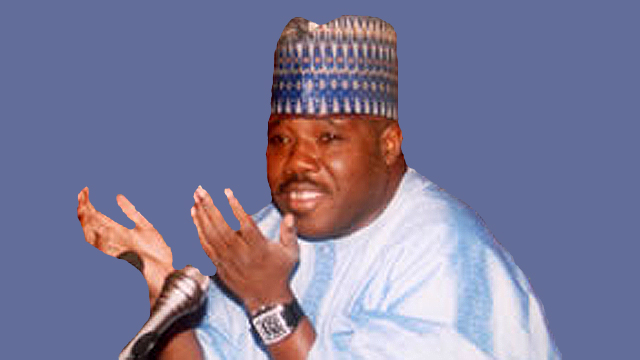
Dangiwa UmarThe long awaited decision of the Federal Government to deregulate the downstream oil sector and allow all interested independent marketers to import and sell petroleum products has been taken. Although we believe total deregulation, meaning without any fixing, may well be inevitable, we fully support this needful policy. In doing so, we take cognizance of the fact that the NNPC suffers from an abject lack of capacity to meet the astronomical rise in demand for fuel products occasioned by the following

  1. Serial failure of past administrations to expand and maintain the decaying downstream oil infrastructure.
  2. The remarkable tendency of Nigerian public officials to mismanage public enterprises which creates all sorts of system malfunctions and failures. These could be seen in the dismal failure to maintain the refineries, oil pipelines, storage facilities, distribution system and subsidy regimes.
  3. As a result, humongous amount of public funds has been deployed in the sustenance of this wasteful system with dubious benefits to the general public. This leaves government with no alternative than to direct its meager resources in the provision of other more beneficial and essential social services like education and health. Obviously, offering subsidy on petrol cannot be the only assistance government can render citizens.

Our stand does not in any way seek to deny the right of others to disagree. We actually understand and respect the rights of those equally well meaning Nigerians who have already made public their dissension. We however expect them to justify their disagreement by providing better options supported by facts and figures, failing which we remain resolute in supporting governments’ decision. We also have a duty to appeal to them not to derail a beneficial and well intentioned policy out of a desire to work cheap popularity, while creating more economic hardship for the very people they need to protect.


Col Abubakar Dangiwa Umar is chairman of Movement for Unity and Progressives (MUP).  [myad]

Shocking Facts About Development In Kogi State, By Haruna Ikotu Jimoh

Haruna Ikotu

Whichever way that it is assumed, you will be shocked and perplexed when you analyze the development initiatives on ground or the development that has taken place since Nigeria got Independence in 1960 and since Kogi state was created in 1991. You will all agree with me also that not much has been achieved in terms of development compared to what has been earned as financial resources from the federation account alone, especially since the return of democracy in 1999.

The topic: “The imperatives for development of Kogi State to achieve Sustainable Development Goals (SDGs) was specifically chosen to highlight some of the development I initiatives that need to be urgently embarked upon for sustainable development of Kogi State and her citizens.

Introduction

The word development has been so used (or is it abused?) and mentioned severally in different fora which seems to depict much understanding (or misunderstanding?) by the stakeholders and citizens. Whichever way that it is assumed, you will be shocked and perplexed when you analyze the development initiatives on ground or the development that has taken place since Nigeria got Independence in 1960 and since Kogi state was created in 1991. You will all agree with me also that not much has been achieved in terms of development compared to what has been earned as financial resources from the federation account alone, especially since the return of democracy in 1999. In fact, the formations of nation states like Nigeria and other countries of the world came into existence because of development considerations. Also States, local government, ministries, department and agencies (MDA’s) were formed to bring development closer to the grassroots.

First let’s understand the word development especially in our lexicon. The laymen definition and understanding of development is “any upward growth, increment or advancement that has taken place in the various aspect of our life such as education, health, socio- economic & technological status etc.

The Oxford Advanced Learners Dictionary defined the word development as: “The gradual growth of something so that it becomes more advanced, stronger, etc,” In academia, development studies is an interdisciplinary course and has taken a fundamental shape since it was first introduced in the Mid-20th century by early development scholars such as W.W Rostow that have noticed much gap between the developed and underdeveloped countries of the world. The underdeveloped countries are grouped in the southern hemisphere and also formed the countries in the peripheral. Since then various explanations and theories such as that of Rostow‟s theory of development which explains the five stages of development process have been formulated and advanced to explain the reasons for the underdevelopment of the countries of the southern hemisphere. Before proceeding further let‟s quickly mention some of the characteristics of the underdeveloped countries which include Nigeria and many other countries in the sub-Saharan Africa. These countries are characterized by corruption, bad governance, low average lifespan, poverty , hunger, wars, ethnic and religious conflicts, poor economy, rudimentary agriculture, lack of technological advancement, poor infrastructure, poor health services, lack of electricity, lack of clean drinking water , diseases etc just as we are experiencing in Nigeria of today. It’s therefore not surprising that Nigeria has Human Development Index (HDI) value of 0.514 and occupies 152 positions out of 188 countries surveyed in the 2015 Human Development Index (HDI) report of the United Nation Development Prorgamme (UNDP).

Kogi state and the status of her development

Kogi state was created on 27th of August 1991 by the military regime of Ibahim Babangida with its administrative headquarters in Lokoja. The creation of the state was indeed a significant development for its citizens. This was because it brought about the reunion of a people who had shared historical roots and coexisted peacefully in the former Kabba province in the defunct Northern Region for more than 80 years. The state currently has 21 LGA‟s grouped into the 3-senatorial districts viz; Kogi East, Kogi Central and Kogi west senatorial districts. The state has a projected population of 3.3 million people as at the last census. It is a multi-cultural, multi-ethnic and multi-religious state.

The state has an average maximum temperature of 33.2oC and average minimum of 22.8oC. Lokoja which once served as the national capital of Nigeria is generally hot throughout the year and serves as confluence to the 2-main Rivers in Nigeria; Rivers Niger and Benue. The State has two distinct types of weather viz; dry season, which begins from November to March and rainy season that begins from April to October. Annual rainfall ranges from 1016mm to 1524mm.The vegetation of the state consists of mixed leguminous (guinea) woodland and forest savannah. Wide expanse of fadama in the river basin and long stretches of tropical forest in the Western and Southern belts of the state define its vegetation.

Kogi state has a total land area of 28,313.53 square kilometers and it lies on latitude 7.49oN and longitude 6.45oE with a geological feature depicting young sedimentary rocks and alluvium along the riverbeds, which promotes agricultural activities. The state has famous hills like Ososo hills which spread from Edo state to the western part of Kogi State and Aporo hill on the eastern part. Another famous mountain is the Mount Patti, which lies in Lokoja and stands at 745 meters above sea level. The state is well blessed with both human and natural resources with several natural raw materials, minerals and several agricultural crops which grow well in the state.

The creation of Kogi state in 1991 brought much hope to all and sundry. It is expected to bring development and government closer to the people at the grassroots as more local governments and councillorship wards were created.

However, 25 years later, the citizens of the state are disenchanted, frustrated, disappointed and disillusioned because their hopes and expectations were dashed because of the lack of development that was witnessed since its creation.

Some political and development analysts have indeed argued that the state has not witnessed major development but rather underdevelopment in its 25 years of her existence. They argued that many major towns and communities in the state are still without pipe borne water supply including Lokoja the state capital.

Many communities still have no electricity supply or at best epileptic and erratic. The collapse of the education sector as most primary and secondary schools are mere dilapidated structures is a paradox yet to be explained.

Economically, the state is stagnated as the major industries such as Ajaokuta steel Company Ltd (ASCL) and National Iron Ore Company Ltd (NIOMCO) have since remained comatose. The only major industry operating in the state is the Obajana Cement Company owned by Dangote Cement which is located in Kogi West senatorial district. There has been no concrete effort made by the past administrations of the state to harness the abundant mineral and vast agricultural potential of the state to rejuvenate its economy. And in reality, one will be disappointed on the development status of Kogi State looking at the revenue that had accrued to the state since its creation which amounted to over 600billion naira. The condition of the roads in Lokoja, the state capital, is deplorable and a reflection of what we have in other parts of the state. Virtually, all the roads in the state pass for deathtraps. The unemployment situation in the state especially among graduates is another bad tale that has given rise to astronomical increase in armed banditry, kidnapping and killings that pervade the state.

Thankfully, some of the developments that have taken place over the years in the state are; the establishments of Kogi state polytechnic, Kogi state university, federal university, Lokoja and Federal medical center (FMC), Lokoja. They are indeed major developments worth mentioning and celebrating.

Kogi State occupies a special place in Nigeria based on several factors. The Okene-Lokoja-Abuja high way which serves as one of the major routes between the North and South of the country is like an artery that carries blood in the body. It’s also a confluence for the 2-major Rivers in the country which merge at Lokoja the state capital. The Ajaokuta Steel Company Ltd which is the largest steel plant in Africa and the iron ore deposit in Itakpe assumed to be the largest in Nigeria are all in the state. The state has two (2) power plants; The Ajaokuta steel thermal power plant and Geregu Thermal Power Plant located in Ajaokuta. Kogi State was also one of the three states that were considered for the establishment of modular refinery in 2010 by the federal government.

Recently, the federal government also earmarked citing a nuclear power plant in the state and two other states of the federation to be built in the near future. I am aware too that many foreign firms especially from China and some other countries are making efforts to establish manufacturing plants in Ajaokuta. With all the above facts and indices, Kogi state should therefore be setting the pace and can lead in the development initiatives in Nigeria especially for the achievement of the key goals of the sustainable development goals (SDGs). The dwindling resources that presently accrue to the state from the federation account means that it‟s imperative for Kogi state government to prioritize its development initiatives and projects that will touch the lives of the greater number of the citizens and also have greater impact on the people.

Kogi State has not been able to take advantage of all her endowment as listed above to achieve the developments status expected by her citizens not because it lacks the natural and financial resources or the human capital required to do it.

But sadly enough the state lacks focused, visionary and dedicated leadership both at the state and at the various local government levels.

It was therefore not surprising the huge euphoria across the state that heralded the election of the current governor his Excellency Alh.Yahaya Adoza Bello as governor of Kogi State in 2015. The citizens therefore are very hopeful that the young and dynamic governor will use his knowledge and wealth of experience to turn the state around and achieve the necessary development that it supposed to attain to achieve key sustainable development goals.

What are the Proposed SDGs and their relevance?

The sustainable development goal was an initiative of the united nation. The 2030 agenda for sustainable development was adopted by world leaders in New York on 25th Sept.2015 to run from 2016 to 2030 (15 years).The formulated goals take into account the three (3) pillars of Sustainable Development: Economic, Social and Envir1onment. The new SDGs initiative was agreed upon to attempt in finishing the job started by the MDGs.

8 Millennium Development Goals (2000-2015)

Goal 1: Eradicate Extreme Hunger and Poverty

Goal2: Achieve Universal Primary Education

Goal3: Promote gender equality and empower women

Goal4: Reduce Child Mortality

Goal5: Improve Maternal Health

Goal6: Combat HIV/AIDS, Malaria and other diseases

Goal7: Ensure Environmental Sustainability

Goal8: Develop a Global Partnership for Development

17 Sustainable Development Goals (2016-2030)

Goal 1: End poverty in all its forms everywhere;

Goal 2: End hunger, achieve food security and improved nutrition, promote

sustainable-agriculture;

Goal 3: Ensure a healthy life and promote well-being for all at all ages;

Goal 4: Ensure inclusive and equitable quality education and promote life-long

learning opportunities for all;

Goal 5: Achieve gender equality and empower all women and girls;

Goal 6: Ensure access to water and sanitation for all;

Goal 7: Ensure access to affordable, reliable, sustainable and modern energy for

all;

Goal 8: Promote inclusive and sustainable economic growth, employment and

decent work for all;

Goal 9: Build resilient infrastructure, promote inclusive and sustainable

industrialization and foster innovation;

Goal 10: Reduce inequality within and among countries;

Goal 11: Make cities and human settlements inclusive, safe, resilient and

sustainable;

Goal 12: Ensure sustainable consumption and production patterns;

Goal 13: Take urgent action to combat climate change and its impacts;

Goal 14: Conserve and use the oceans, seas and marine resources sustainably;

Goal 15: Sustainably manage forests, combat desertification, halt and reverse

land degradation and halt biodiversity loss;

Goal 16: Promote just, peaceful and inclusive societies;

Goal 17: Strengthen the means of implementation and revitalize the global

partnership for sustainable development.

The imperatives for development to achieve key SDGs

Despite the obvious grim picture of development status of the state as analyzed earlier, Kogi state has the capacity to attain high level of development provided the governments and leadership has the vision, focus and dedication to formulate and implement development initiative for sustainable development of the state. The facts are that SDGs require multi-stakeholders initiative efforts to be achieved.

Therefore to attain development in Kogi State and to achieve the key goals of the SDG for sustainable development of the state , it’s imperative that Kogi State governments embarked on some development initiatives and priority projects that will benefits the majority of the citizens and impact positively on the lives of the people.

1) For the State (and indeed Nigeria) to achieve development the collections of accurate data and statistics for the state must be taken very seriously. Data on education, work force, unemployed citizens, graduates etc are necessary because development and SDG are data intensive.(Goal 17 )

2) Creation of awareness on development issues and Sustainable Development Goals (SDG) among all stakeholders (government appointees, agencies, departments, local government executives, civil servants and the general public etc) through seminars, workshop and conferences. Government needs to be committed and maintain gains from MDGs over the past decade of MDG implementation (Goal 17)

3) The need to involve all stakeholders and to take ownership and domestication of SDGs in all MDAs, local governments and main-streaming it on the State development plan and strategies .SDG office to monitor and co-ordinate various development initiatives in the MDAs for successful implementation (Goal 17)

4) Internal resource mobilization must be taken very seriously by the government for the funding of development initiative & projects on SDG. The SDG emphasizes on internal resource mobilisation to complement external resource that may come from donor countries (Goal 17)

5) Government should align the budget to achieve SDGs. This involves prioritizing of projects and also to apply „‟bottom –up approach‟ in the process of budget preparation (Goal 17 )

6) Creation of an enabling environment by enacting and strengthening policies and laws to allow for private sector partnership on SDG projects through PPP mechanism at state and local government levels(Goal 8, 17)

7) Create policies and laws that enable and enhance social justice, strengthening & enhancing institutional performance, enhance inclusive governance and inclusive economic development of the state that will narrow the obvious gaps and inequalities in the society. (Goal 4,5,8,10,16)

8) Training of youths and graduates on skill acquisitions and vocational education for creation of employment and economic empowerment. Government should provide the seed fund for them at the end of the training to start their businesses.(Goal 1,2,5,8,16)

9) Diversification of the economy:

  1. a) Government should aggressively invest in the agricultural potential of the state by training farmers especially women & youths on agriculture and agro allied related skills (return youth to farm initiative) and to drive the process to increase production of key agricultural products such as Tomatoes, Sorghum, Cassava, Palm oil etc for local industries, domestic consumption and export. Government should also provide the seed fund for the farmers (Goal 1, 2, 3, 5, 8, 12,15,16).
  2. b) Government should put in place machinery to harness the abundant mineral resources in the state in partnership with both local and foreign mining firms. This will enhance development of the communities where the mineral resources are discovered (Goal 8, 9,15.16)

10) Development of an efficient inland water ways transportation system in Lokoja and its environs which will link many riverine communities in the state.(Goal 9,14 )

11) Rehabilitation of non-functioning water supply schemes in the various towns and communities of the state. Provision of small scale water schemes to provide clean water to various rural communities. Solar powered boreholes with overhead Tank readily fill this gap especially in communities that has non or epileptic electricity supply (Goal 6,7)

12) Urgent rehabilitation of various primary and secondary health centers in the various communities and local government of the state .Provisions of solar power system to supply uninterrupted power 24/7 to critical units of our hospitals such as the laboratory, the operating theater, consulting room, the pharmacy and the emergency unit.(Goal 3,7)

13) Urgent rehabilitation of various primary and secondary schools in the various communities and local governments in the state and make them functional and competitive. Teachers to be retrained to enhance their capacity and improve teaching efficiency (Goal 4,5,10 )

14) Rehabilitation of roads and construction of new ones to link cities and rural communities. Erosion and environmental control (Goal 2,3,6,8,9,11,13,14)

15) Provision of electricity supply to various communities in the state through the national grid or by non-grid Solar power system and other renewable energy source (Goal 1,7, 15)

16) Development of local crafts in the state for economic empowerment of the rural populace especially women eg local clothe weaving and poultry making etc (Goal 1,2,5,8)

17) Development of tourism potentials in the state and each local government via the Public Private Partnership PPP (Goal 8,9,11) 18) Initiation of house ownership schemes for civil servants, teachers and other categories of workers in the state and private individual through public private partnership (PPP).(Goal 3,9,10,11).

All the above initiatives are possible and can be implemented over time with efficient management of human, material & financial resources, fiscal discipline, good governance, accountability and probity in governance. Ladies and gentlemen, we can now see the importance of the principles of probity and accountability in governance which our Governor has promised to uphold and which has given us much hope in the state.

Conclusion

In conclusion, I will like all government agencies, MDAs, and officials both at the state and local government level in the state to take ownership of the implementation of SDGs pogrmammes and projects in the state. The inclusion of young professionals and technocrats in the current government of the state which is a clear departure from the government of the past administrations holds high hope for the citizens and a sign of good deal to come if it translates into focused, visionary and dedicated leadership at all levels. Adequate security and peaceful political climate are sina qua non for development, I therefore urge the entire political class in the state, the private sector and the citizens to join hands with the governor and the nascent administration in the state to chart a new way forward for the overall development of the state. The government alone cannot develop the state except the citizens and all the stakeholders contribute their quota. Finally, I will like to state unequivocally that with focused and visionary leadership Kogi State has the potentials and human capital required to achieve sustainable development despite the current meager financial resources and achieve the key SDGs that will spur the state into greater height that will benefit all her citizens.


Being a lecture delivered in Lokoja, Kogi State by Engr Haruna J.Ikotu, a development analyst

and project management consultant. He can be reached on 08120307356, harunaikotu@gmail.com). [myad]

1st Nigeria’s Venture Capital Summit Holds In June

SummitThe Venture Capital Advocacy Summit, the first of its kind in Nigeria has been scheduled to hold between 28th and 30th June, 2016 at the Eko Hotel, Victoria Island, Lagos.
The Summit will bring together all the critical elements that could facilitate the entrenchment of the Venture Capital Culture in the country
It is being organised by Alfe City Company Limited with the support of the Senate Committee on Trade and Investment as well as the House of Representatives Committee on Commerce.
Th Summit will feature the maiden introduction of the concept of venture capital and provide an opportunity for interaction with international experts and seasoned investors.
The organiser of the Summit, Mr Soji Adeleye, Chief Executive Officer, Alfe City Company Limited, hinted that Nigeria needs a thorough re-engineering at the moment.
He said that the total collapse of the crude oil sector in recent months is a reminder that the over-reliance on that sector was short-sighted in the extreme. “Investment in the people on the other hand is the only risk free investment as they will always be there, hence organic growth of the people’s sector – the private sector provides an insurance for the future.
According to him, the bottom-up growth –invention, innovation, imagination, creativity; attributes Nigerians need to be given emphasis.
“Venture Capitalism offers Nigeria and its universally acclaimed entrepreneurial people a new vehicle that could turn that creativity into economic power.”
He said that the endorsement of the summit by the National Assembly was crucial as the entrenchment of the Venture Capital culture in Nigeria would require legislative underpinning to guarantee the safety of investment of investors.
In the Senate endorsement of the summit, Senator Fatimat Raji Rasaki, Chairman Senate Committee on Trade and Investment said, “We share the principle and objectives behind this very laudable program and commend it to all stakeholders across the country.
“We hereby convey our commitment to work with you and other stakeholders for the success of the summit and subsequently perform our legislative responsibility to ensure a successful entrenchment of venture capitalism culture in Nigeria.”
Similarly, the Chairman, House of Representatives Committee on Commerce, Hon Sylvester Ogbaga said the committee considered the summit’s objectives as very laudable.
“I wish to therefore convey the decision of the committee to collaborate with Alfe City Company Limited in that regard.”
On the participation of the state governments, the Alfe City boss said: “for the economic growth of a federation like Nigeria to be successful and sustainable, federating unit’s governments must be seen as caterers for the Oasis that must converge for the national economy to prosper.
“State governments must necessarily pursue economic policies that are conducive for private sector investment. Universities and Colleges of Technology environments must essentially be supported to breed entrepreneurs that could rely on venture capital to translate their inventions and creativity into economic power.”
On why has Nigeria been missing from the Venture Capital space over the years, he said, “there are limited private equity activities in the financial sector of the country primarily geared towards established entities that are seeking foreign investment. It is a niche service whose clientèle is so defined. To a considerable degree Nigeria’s absence from the global venture capital space is directly a consequence of the instability of the economy. For instance the unpredictable nature of our foreign exchange regime means that dealing with serious international investors is a considerable.
“The United States of America is the predominant exponent of venture capitalism in the world.  As matter of fact, it is impossible to imagine the American economy without venture capital. Most of the global brands like Google, Intel, Microsoft and lately Uber all owe their emergence to venture capital.  It is that initial fund that turns an idea, a dream to products and services that we all now recognise.
“According to the US National Venture Capital Association, 11% of private sector jobs in the USA come from Venture-backed companies and venture-backed revenue accounts for 21% of US  $18 Trillion GDP  (2015).”
On the expected benefits of the Venture capital/summit to Nigeria, he said it will open up a new avenue for turning ideas to products.
“The Venture Capital ecosystem will create jobs, know-how that at the moment does not exist because it will be a new beginning for a lot of people and a lot entities,” he said.
“On the whole, the summit itself would be unique in setting and result as the event would mark the onset of an advocacy that promises to transform the entrepreneurial landscape of Nigeria forever.”
The summit objectives include; to Advocate and spearhead the culture of venture capitalism in Nigeria; Open an avenue for translating Nigerians’ legendary creativity and entrepreneurship to vital economic power; Bring all stakeholders together to highlight how venture capital could be the missing link in Nigeria’s struggle to build a diverse and sustainable economy; Establish a Register for practicing and prospective venture capital operators in Nigeria; Create the machinery for an annual venture capital event as a vehicle for entrenching the culture of venture capitalism in Nigeria. [myad]

I’m Going To Have Bad Relationship With UK, Donald Trump Says

Cameron TrumpThe  presumptive  candidate  of the  Republican Party  in the United  States  presidential election  in November, Donald Trump  has said  that he may end up having a bad relationship with British Prime Minister David Cameron  if  elected  president.

Trump said that the planned feud between him and David Cameron of Britain would come as a result of Cameron referring to him as “divisive, stupid and wrong” simply because he proposed a temporary ban on Muslims entering the United States.

“It looks like we are not going to have a very good relationship, who knows?” Trump told Britain’s ITV network Monday.

“I hope to have a good relationship with him, but it sounds like he is not willing to address the problem either.”

Cameron denounced Trump’s stance on Muslims entering the U.S last December, with Trump offering his proposal after terrorist attacks by Muslims killed 130 people in Paris and 14 in San Bernardino, California.

“Well, number one, I’m not stupid, OK?  I can tell you that right now,” Trump said.

“Just the opposite.  Number two, in terms of divisive, I don’t think I’m a divisive person.  I’m a unifier, unlike our president now, I’m a unifier.”

Britain and the United States have what they call a “special relationship,” but Cameron’s office Monday refused to retract his earlier comments about Trump.  The British leader has said that anyone who wins a major political party presidential nomination in the United States deserves “respect.”

Trump surged to the top of the crowded Republican presidential field with his call for the Muslim ban, an idea he lately has been calling a “suggestion,” and plans to deport 11 million undocumented immigrants living in the U.S. and to build a wall along the U.S.-Mexican border to halt the stream of immigrants entering the country.

The brash Trump, a real estate billionaire making his first run for elected office, rejected claims that he is anti-Muslim.

“Absolutely not.  I am anti-terror,” he said.

In the interview, he also attacked London’s new mayor, Sadiq Khan, the first Muslim elected to run a Western capital city.

Britain’s newly elected mayor Sadiq Khan speaks to supporters as he arrives for his first day at work at City Hall in London, May 9, 2016.

Britain’s newly elected mayor Sadiq Khan speaks to supporters as he arrives for his first day at work at City Hall in London, May 9, 2016.

Khan branded Trump as “ignorant” on Islam and said he hopes he loses the U.S. election against his likely Democratic opponent, former U.S. Secretary of State Hillary Clinton.

Trump said he was offended by Khan’s comments.

“I think they were very rude statements and, frankly, tell him I will remember those statements.  They are very nasty statements,” Trump said.

“When he won I wished him well.  Now, I don’t care about him.”

A Khan spokesman on Monday again described Trump’s views as “ignorant, divisive and dangerous.  It’s the politics of fear at its worst and will be rejected at the ballot box.” [myad]

128 Students Killed By Boko Haram In Yobe In 6 Years – Governor

Geidam IbrahimThe Yobe Government has announced that the state has lost 128 students in various institutions to Boko Haram insurgents in the last six years. The government said that it has also lost over N30 billion.

Governor Ibrahim Gaidam made this known when he received Mr. Toby Lancer, United Nations Assistant Secretary General for Humanitarian affairs, in Damaturu.

The Governor, who was represented by his Deputy, Abubakar Aliyu, said that the number of people killed by Boko Haram in Yobe runs into thousands”.

“The state suffered the largest school-based casualties with 128 students killed in Federal Government College, Buni Yadi, College of Agriculture Gujba, GSS Mamudo, GSS, Damaturu and GSSS, Potiskum,” he said.

He said that public buildings and facilities worth N7 billion were destroyed while private property and assets worth over N7.4 billion were also destroyed during the mayhem.

Gaidam said that 1,098 classrooms and health facilities; 43,209 rooms; 5,162 assorted vehicles and 109,267 livestock were all destroyed.

“The total expenditure incurred by the state government through various forms of intervention and the projected expenditure for the reconstruction of both private and public structures is estimated to be over N30 billion.

“Yobe has 309,609 registered Internally Displaced Persons (IDPs) constituting 14 per cent of the estimated 2.1 million Boko Haram-induced IDPs in Nigeria.”

The governor said that the spontaneous return of IDPs to their communities had made the task of rehabilitating facilities such as water, health facilities and schools more challenging.

He said that the state government had drawn immediate, medium and long term interventions for the rehabilitation and reconstruction of the affected communities.

Responding, Lancer said that he was in the state for on-the-spot assessment of the affected communities where the people were relocating.

“I am going there to see and mobilise hope for the people; to give voice to the voiceless and give out the message that the people need more help.

“In the UN, there is determination to do it quicker and better for a better sense of solidarity with people who have been struck by the horror of Boko Haram.”

Lancer assured the people of the state and the IDPs of the determination of the UN to help them grow their food and for their children to have access to education.

(NAN). [myad]


Fuel Price Increase: Lagos Donates 50 Buses As Palliatives To Residents

Lagos busesThe Lagos State Government has donated 50 new high-capacity bus rapid transit (BRT) vehicles to Primero Transport Services Limited to cushion the effect of the new pump price of premium motor spirit (PMS) on its residents.

The firm’s Managing Director, Mr. Fola Tinubu, who spoke to news men in Ikorodu, alongside other top officials, said that there would be no increase in fares as a result of the inflation rate.

 Tinubu said that the state government, under the administration of Governor Akinwunmi Ambode had donated 50 new BRT buses to Primero Transport Services Limited at the instance of prevailing economic challenges in the country.

According to him, this measure would substantially reduce the effect of hike in fuel price on Lagos residents, hoping that more people in Ikorodu and its environs would patronize BRT.

The managing director explained that with what the Ambode administration had done, more commuters will leave their cars at home and use BRT, which he said, would go a long way in reducing traffic congestions for the road users.

He explained that the multiplier effect of this kind of intervention provided by the present administration will lead to creation of more job opportunities for drivers, fleet officers, inspectors, mechanics, ticketers for smooth running and operations of the business.

Ignore NLC, TUC Call For Strike On Fuel Price Increase, Traders’ Union Asks Members

TradersThe National Harmonized Traders Union of Nigeria has asked its members across the country to ignore the planned strike called by the Nigeria Labour Congress (NLC) and Trade Union Congress (TUC) over the increase in the fuel pump price as announced recently by the federal government.

The President of the union, Alhaji Bature Abdul’Aziz, who made the call while briefing newsmen in Kano today, Monday, said that the call on members to shun strike was necessary following a meeting of the National leaders of the union in Kano on Saturday.

“We are calling on all traders across the country not to join the planned strike by the labour unions. This is our stand and it is part of the resolutions we reached at our meeting held in Kano on Saturday,” he said.

He said that the union has also directed its leaders in the 36 states of the federation to convey the message to their respective members. And that the union would continue to support government policies and programmes that are aimed at promoting development in the country.

He, however, called on the Federal Government and the labour unions to embrace dialogue for an amicable resolution of the dispute.

He also called on Nigerians, irrespective of their religious or political inclinations, to support the federal government in its efforts to develop the country. [myad]

Jerry Gana, Concerned PDP Stakeholders Give Modu Sheriff Quit Notice

Ali Modu SheriffA foundation member of the Peoples Democratic Party (PDP), Professor Jerry Gana and Concerned PDP Stakeholders have given the national chairman of the party, Ali Modu Sheriff quit notice, which expires on date the party will hold its national convention in Port Harcourt.

The Concerned stakeholders gave an indication that should Modu Sheriff refuses to vacate office on the appointed date, they (the Concerned PDP Stakeholders), may begin to run the party from a separate national secretariat as the party heads towards a fresh implosion reminiscent of the 2014 convention which led to the exit of the likes of former Vice President Atiku Abubakar, Alhaji Kawu Baraje and Senator Bukola Saraki.

Three ex-national chairmen of the PDP are believed to be in support of the steering committee which includes a former Deputy President of the Senate, Senator Ibrahim Mantu, 13 former governors, 14 former ministers and other key leaders of the party.

Some of the 13 ex-governors are Gbenga Daniel, Babangida Aliyu, Donald Duke, Attahiru Bafarawa, Mahmud Aliyu Shinkafi, Ahmed Makarfi, Abdulkadir Kure, Achike Udenwa, and Ibrahim Shema.

The ex-ministers are Professor Jerry Gana, Tanimu Kabir Turaki, ABC Nwosu, Dubem Onyia, John Odey, Ojo Maduekwe, Bala Mohammed, Sarafa Ishola, Ibrahim Bunu, Adamu Maina Waziri, Dr. Abubakar Olanrewaju Suleiman, Josephine Anenih, Hajiya Inna Ciroma, and Amb. Tunde Adeniran

Others are Senators Grace Bent, Florence Ita-Giwa, Zigo Azeez, Amb. Nkoyo Toyo, Mallam  Shehu Gabam, Raymond Dokpesi, and Dr. Doyin Okupe.

A member of the steering committee said: “when we met on Thursday, we told Nigerians that we will set up a steering committee.

“We have constituted the committee on Saturday (yesterday) and it is in the interest of Sheriff to step down on May 21 or else the party may split into factions.

“The steering committee is to pilot the activities of the party from May 21 pending the election of new executives for PDP.

“The implication is that if Sheriff refuses to step aside, the steering committee may run PDP activities from a new secretariat.” [myad]

Manekia, A Pakistani, Becomes Group Executive Of Ecobank Transnational

Ecobank Amin ManekiaEcobank Transnational Incorporated (ETI), parent company of the Ecobank Group, has announced the appointment of Mr. Amin Manekia as Group Executive of its Corporate & Investment Banking business. Manekia steps into the position vacated in late 2015 by Mr. Charles Kié, who became Managing Director of Ecobank Nigeria.
A national of Pakistan, Manekia joined Ecobank with 28 years of international corporate banking experience. It includes an excellent grounding in transaction banking, commercial banking, credit risk and general management. His career spans various business and regional leadership roles across different parts of the world, notably  the United States, Eastern Europe, Africa and the Middle East.
Manekia was most recently with Citigroup, where he spent 25 years of his career. He joined Citigroup directly from university in the United States in 1988, moving to South Africa earlier this year as Managing Director and Africa Head for Citi Securities & Banking. In this role, he successfully led Citibank’s Institutional Clients business.
Before he moved to South Africa, Manekia spent two transit years at the Samba Financial Group in Saudi Arabia. There, he was the executive responsible for rebuilding the Kingdom of Saudi Arabia’s corporate banking portfolio following the financial crisis. Prior to this, he held various positions with Citibank in different businesses and regions. These included his Nairobi-based role as Managing Director & Banking Head for East and Southern Africa, with business management responsibilities for corporate banking for that region. In 2007, he was the Commercial Banking Head across Citibank’s Africa platform.
As Citibank Country Head for Bulgaria from 2004 to 2007, Manekia successfully led the execution and development of a transformation strategy, which he achieved by quadrupling the bank’s business revenue base within his three-year tenure. In 1993, he relocated from New York to Pakistan, where he worked on  the origination side of the business. During his six-year tenure in Pakistan, he held a series of corporate banking roles in Karachi and Lahore.
Manekia’s appointment as Group Executive of Ecobank’s Corporate and Investment Banking business takes effect from 4 July 2016. He will report directly to the Ecobank Group CEO and be responsible for the following business lines: Corporate Banking Group; Transaction Service Group; Investment Banking Group; Fixed Income, Currencies & Commodities (Treasury); and Securities, Wealth and Asset Management.
Amin Manekia holds a degree in Business Administration and Finance from Boston University School of Management. [myad]

We Should Be Talking Of Bigger Nigeria, Not Biafran Republic – Orji Uzor Kalu

Orji Uzor KaluFormer Abia state governor, Dr. Orji Uzor Kalu has called on those agitating for the Republic of Biafra and other Nigerians to work towards a bigger Nigeria and a stronger economy rather than the call for another country out Nigeria.

“If I should have my way, we should be talking of a bigger Nigeria. The economic benefit of being together is very strong.”

Speaking to news men in Abuja, Dr. Orji Kalu said that he is making moves to mediate between President Muhammadu Buhari and the agitators for the Republic of Biafra, especially, their arrow-head, Nnamdi Kanu who has been in detention.

“I am waiting for President Muhammadu Buhari’s mind to calm down for me to personally appeal for the release of the leader of the Indigenous People of Biafra, Nnamdi Kanu. I am optimistic Buhari  will grant me attention and I will secure Nnamdi Kanu’s release.”

The former governor who said that the younger generation has the right to ask for Biafra, but that they should have gone through the right process, adding that people have committed more serious offences than that of Kanu.

“People have committed more offences than what Nnamdi did but they were pardoned; so, I’m still going to appeal to the president, we will have a common ground very soon.

“Let’s see what will happen between now and the end of the year.

“This issue should not be rushed, the president should not be pressurised; we are talking to him informally.

Kalu disclosed that Buhari is being communicated to through various national and international communities in order to secure Kanu’s release.
“We are talking to the president through the international community, we are talking to him through African presidents and we are talking to him through personal friends.

“He is going to listen, Buhari is not as hard as people think and he has a heart that flows with milk.

He said measures are ongoing for him to visit Kanu in prison soon so as to speak with him.

“I will see Nnamdi Kanu in prison very soon and I will like to talk to him and I know he will listen to me.

“Nobody is saying anybody cannot talk about Biafra; you can talk about any other republic but you should not take Nigeria for granted; it’s a sovereign nation and we’ve all sworn to keep the country together.”

He, however, lamented that the past Federal Governments have abandoned the South-East, noting that roads and other infrastructures in the region are decaying.

“Since after the war, the Federal Government has not made any investment in the entire South-East.

“But I believe the government under Buhari will do something to address this marginalization.” [myad]

Advertisement ADVERTORIAL
WP2Social Auto Publish Powered By : XYZScripts.com