A 37-year-old man, Umar Lawal, was alleged to have refused to a lady after having sexual intercourse with her. Umar Lawal resides at 12, Negbo Crescent, Wuse 2, Abuja.
Information had it that Umar Lawal had negotiated with Janet Augustus for N10,000 for some rounds of sex but that after the game, he not only refused to settle the bill, but allegedly beat her.
The love man, who was charged to a Kado Grade 1 Area Court in the FCT today, Thursday, is facing a count charge of causing grievous hurt.,
The Prosecutor, Salisu Khaleel, told court that Janet of Mpape Village in Abuja reported the matter at the Maitama Police Station on March 21, and confirmed that the defendant promised to pay her N10,000 to have sex with her. The prosecutor said the defendant beat up Janet when she demanded her fee after having sexual intercourse with her. “He stabbed her with a bottle on the face and still refused to pay the complaint the agreed sum after having sex with her,” Khaleel stated. He said the offence contravened Section 247 of the Penal Code. The accused, however, pleaded not guilty to the charge. The Judge, Malam Abubakar Sadiq, granted the accused bail in the sum of N20,000 and a surety in like sum. Sadiq said the surety must reside within the court’s jurisdiction. He adjourned the case to May 19 for further hearing. [myad]
Nigerian government has agreed to drastically cut down official travel by public servants and hopes to save an estimated of N13.88 billion.
“It is estimated that Travel Expenditure will drop by about 20% if the provisions of the new Circular issued by the OSGF are fully implemented. A 20% reduction in Air Travel Expenditure, using the figure of N69.417 billion incurred on Travels in 2014 will result in a cost-cutting of N13.88 billion. Such large savings from Travel, which should ordinarily not be a major expense item for the government, will become available for investment in capital projects such as roads, power, railways and public health facilities.”
This is coming as part of the recommendation by the Efficiency Unit of the Federal Ministry of Finance in collaborating with the Office of the Secretary to the Government of the Federation (OSGF) and the Office of the Head of the Civil Service of the Federation (OHCSF). The body reviewed the provisions of some extant government Circulars on Overhead Expenses one of which is on Travels. The Efficiency Unit, is the initiative of the current Minister of Finance, Mrs. Kemi Adeosun and was set up to engender transparency and reduce government’s large expenditure through procurement in the various ministries, departments and agencies of the Federal Government. The Efficiency Unit, in its negotiation for discounts with local and international airlines also recommended other measures for reducing the government’s large expenditure on travels to the OSGF. This includes the need to restrict Business Class travel to Ministers, Permanent Secretaries, Chairmen of Federal Government Committees, as well as Chairmen and Chief Executives of Parastatals and Agencies. In the past, some government officials who should have been on Business Class usually travelled First Class, while many others travelled Business Class instead of Economy. The second recommendation bordered on the need to reduce the frequency of travels by ensuring that Board and Committee events such as meetings, workshops and conferences in Nigeria are held in locations where the institutions or persons participating in the event are domiciled. Furthermore, such events should for the most part be held in Nigeria but where this is not possible, the prior approval of the Secretary to the Federal Government should be secured. In line with the present administration’s commitment to reform public expenditure, the OSGF accepted the recommendations in full and has accordingly issued a Circular recently to effect the changes. The buy-in and prompt reaction of the OSGF is an attestation of the common resolve by government to its change mantra and the spirit of collaboration among government institutions and officials. “The savings are expected to be even larger when discounts secured from Airlines are added. Already, 11 Airlines have offered discounts on local and international routes for travel by MDAs while negotiations are on-going with others. The discounts received so far vary across routes and airlines and range from 7% to 50%. The Efficiency Unit expects the implementation of the price discounts secured from Airlines to start in May 2016 when the Agreements would have been signed with the Airlines and MDA staff would have been trained and equipped for effective administration of the new process. Other Overhead Expenditure items reviewed by the Efficiency Unit are those relating to Refreshments and Meals, Honorarium and Sitting Allowance as well as Advertising and Publicity. Measures that will standardise spending on these items, cut costs and promote transparency on these items have been recommended to the OSGF and the Office of the Head of the Civil Service of the Federation, from which further cost-cutting on Overhead Expenditure is to be achieved. [myad]
President Muhammadu Buhari has appealed to the National Association of Resident Doctors (NARD) to shelve its threatened strike action and give the Federal Government more time to address the grievances of doctors. Speaking at a meeting with the leadership of the Nigerian Medical Association (NMA) today in his office at Aso Rock, President Buhari gave the doctors an assurance that no agreements duly entered into by the Federal Government will be dishonoured by his administration. The President called for greater understanding and support from doctors and all Nigerians in view of the present short fall in national revenue, brought about by the decline in crude oil prices. Decrying the adverse impact of the fall in oil prices on the Federal Government’s spending plans for health and other sectors, President Buhari said that his administration will continue to do its best to address issues that are of concern to doctors and other Nigerians. The President also gave the NMA delegation an insight into his administration’s plan to establish 10,000 primary healthcare centres across the country in the next two years with the objective of providing better healthcare for about 100 million Nigerians. He told the delegation led by NMA President, Dr. Kayode Obembe that the National Health Act will soon be gazetted and a steering committee appointed to oversee its implementation. The Minister of Health , Professor Isaac Adewole described the plan to establish more healthcare centres as “the single most ambitious health plan for the poor in the history of Nigeria.” In his remarks at the meeting, Dr. Obembe called for the implementation of the report of the Yayale Ahmed Committee on better relations among professional groups in the health sector. The NMA President also called for fast-tracking of the implementation of the National Health Act. At a separate meeting with the leadership of the Pharmaceutical Society of Nigeria (PSN), President Buhari promised that his administration will evolve and implement measures to curb friction and disharmony among the professional groups in the health sector. The President urged the PSN to work more closely with the National Agency for Food and Drugs Administration and Control (NAFDAC) to curb the sale of fake medicines in the country. The President of the PSN, Ahmed Ibrahim Yakasai assured President Buhari that pharmacists in Nigeria are ready to work in harmony with other professionals in the health sector to help the Federal Government achieve its objective of improving healthcare services in the country. [myad]
The Independent National Electoral Commission (INEC) has affirmed its readiness to conduct hitch free elections that are expected to produce six Area Council Chairmen and sixty two Councilors in the nation’s Federal Capital Territory (FCT).
The elections are scheduled for Saturday, April 9, for which electoral body has appealed to Political Parties and their supporters to maintain peace throughout the process. Chairman of the Commission, Professor Mahmood Yakubu, who spoke today at a stakeholders’Forum in Abuja called on the politicians to play by the rules and ensure that their supporters conduct themselves in a peaceful manner before, during and after the elections. according to him, the Commission had so far taken every step necessary for the conduct of elections in the FCT , adding: “all non-sensitive materials have been procured and delivered to our Area Council Offices. Sensitive materials shall be delivered to our FCT Headquarters and shared in the presence of all Political Parties and stakeholders as scheduled. Our registration centre areas will be activated on Friday. Election duty staff will be at the polling unit on Saturday morning to commence simultaneous accreditation and voting at exactly 8 in the morning.” The INEC Chairman condemned pockets of political violence experienced recently leading to the death of one person and an averted plot to attack the INEC office in Abaji. He however expressed confidence that the understanding and commitment to free and fair elections that prevailed at the forum would be extended to the elections proper. The National Commissioner in Charge of North Central Zone, Professor Anthonia Simbine, urged all stakeholders in the elections, especially the political parties, to moderate their political behavior before, during and after the elections. On staff recruitment and logistics for the elections, the Professor Simbine disclosed that: “we have recruited close to 10,000 ad-hoc staff from our reliable collaborators, the NYSC and surrounding institutions of learning, and we have to the best of our ability provided the needed logistic support both human and material including the support of the security agencies”. She pointed out that both local and international Observers are on the lookout for the quality of both the process, and the outcome of the elections. The Resident Electoral Commissioner (REC) in charge of the FCT, Professor Jacob Jatau, disclosed that a total of 1,020,799 registered voters were expected to vote in the election. He stressed that only those who had collected their Permanent Voter Cards (PVCs) would be allowed to vote as Smart Card Readers would be deployed at the 562 Polling Units, 2,207 Voting Points and 246 Voting Points Settlements. Professor Jatau decried the low level of PVC collection in the FCT despite the publicity and voter education outreaches. He solicited the support of all stakeholders in the process to ensure as many as possible eligible voters collected their PVCs at the INEC offices in the 6 Area Councils in the remaining two days before the elections between 8am and 4pm. The Inspector General of Police (IGP), Solomon Arase, represented by FCT Commissioner of Police, Wilson Inalegwu, assured that the Police force had taken firm steps to ensure that “this election will be free, will be conducted under a secure and safe atmosphere and that security will be provided for electoral materials, election duty officials and every nook and cranny of the FCT will be covered sufficiently by security”. He encouraged the electorate to go about their lawful business without fear or apprehension, before, during and after the election. “I just want to advise our people therefore to just go about their normal lawful business to cast their votes. On election day there will be restriction from 7am to 4pm so that we have people only moving to cast their votes at Polling Units close to them.” [myad]
The Presidency had announced a detailed economic agenda that will tackle the nation’s current challenges. This is even as the Vice President, Professor Yemi Osinbajo called on Nigerians to be patient with the government. Osinbajo who spoke today at “The Nation’s Forum On The Economy” in Lagos, acknowledged the pains which the citizens are facing even as he expressed the determination of President Muhammadu Buhari’s administration to take decisive decisions that would positively resolve the economic challenges. “We acknowledge the pains and are concerned by them. Which is why we are working diligently to address the tough challenges inherited from the nation’s past. “We are working diligently to address the tough challenges inherited from the nation’s past.” He said that the plethora of challenges facing Nigeria could be overwhelming, and that with it the multitude of things requiring decisive action that have to be strategically handled. The Vice President said that the Buhari administration is already taking actions and in due course, they would produce satisfying outcomes, adding that they are borne out of a leadership that has no other agenda than the progress and greatness of Nigeria. Unveiling the economic strategic plan, Professor Osinbajo disclosed that the Federal Government’s blueprint would be based on a strategic implementation plan for the 2016 budget under six thematic key areas. He said that the plan would focus on about 33 Priority Actions which he listed. He added that the strategic areas and some of the policy actions including the following: A. Lasting Changes in the Policy Environment, National Security and Governance – Achieve an Appropriate Foreign Exchange Regime Increase low interest lending to the Real Sector we need to move toward a single digit interest rate. – Maintain Capital Spending in the Budget at a minimum of 30%. Complement this with funds from the Infrastructure Fund for commercial projects – Intensify the Fight Against Corruption by increasing Transparency, Accountability and Compliance with Law and Order B. Diversifying the Economy by Fast-tracking Industrialization, Agriculture and Agro-Allied Processing, as well as attracting investment into the Solid Minerals, Tourism and Entertainment Sectors – Implement Measures to Achieve Self-Sufficiency & Become Net Exporters of certain agricultural Items: rice-2018, tomato paste-2016, wheat-2019. Increase local production of maize, soya, poultry & livestock, so as to achieve self-sufficiency: deadlines to be announced in due course – Adopt and Implement a Roadmap to Stimulate Investment into the Solid Minerals sector, and plug Revenue Leakages in the Sector – Increase Manufacturing Capacity through the operationalization of Industrial Parks, Free and Export Processing Zones, etc. C. Priority Critical Infrastructure, focused on increasing investment in Power, Rail and Roads, etc. – Optimize the 7,000MW installed capacity and ensure associated infrastructure to Fuel, Transmit and Distribute this capacity. – Undertake the rehabilitation and construction of 31 major Road Projects scheduled for 2016 to restore degraded sections of the Federal Highways network and to Establish Connectivity over a distance of 2,193km (through public works projects, maintenance works, PPP and other interventions) D. Oil and Gas Reforms – Adopt & Execute a Comprehensive National Oil & Gas Master-Plan (‘NOGM’) as the roadmap for the Petroleum Industry’s Development, Diversification, Privatization & Governance. Adopt & Execute a Roadmap of Gas Development & Flare Elimination – Set a deadline to be Self-Sufficient in Refined Petroleum Products & become a Net Exporter Work with the National Assembly on the passage of a Revised Petroleum Industry Bill (‘PIB’) or Bills to give effect to the NOGM & to resolve Fiscal & Governance Issues of the Sector, & Eliminate Gas Flaring E. Ease of Doing Business – Move 20 places up global Ease of Doing Business Rankings, by implementing fast track measures for business approvals, acquisition of land titles, etc. (Nigeria is currently ranked 169 out of 189 countries by the World Bank – 2015 Survey) Fast-track visa application and issuance processes F. Social Investment – Implement Social Intervention Programme and specific Health / Education projects included in 2016 Budget Health Sector Interventions including Flagging off the Revitalization of 1 Primary Health Centre per Ward (a total of 10,000 nationwide) The Social Investment plans include the following: *Train and deploy 500,000 unemployed graduates as volunteer teachers who would be paid on the job while they seek jobs in their chosen careers. *Homegrown School Feeding for primary school pupils across the country paid for by the government *Micro-credit scheme that provides very soft loans to a million market women, artisans, traders *Creating innovation and technology hubs/ parks on a large scale and skills acquisition & vocational training for over 300,000 non-graduate youths * Conditional Cash Transfer where one million poor and vulnerable Nigerians would receive N5000 monthly *Bursary awards for tertiary education students of Science, Technology, Engineering & Maths, STEM. Vice President Osinbajo also re-assured the nation on the Change Agenda in line with President Muhammadu Buhari’s statement in his 2016 Budget Presentation speech, that “we remain committed to economic diversification through import substitution, and export promotion, in order to build a robust and resilient economy, as a lasting legacy for generations to come.” He then underscored the necessity for continuous engagement with the Nigerian people, including stakeholders in the economy, stating that “we intend to start a quarterly meeting with members of the private sector and other economic stakeholders soon and thereby create a forum for engagement on an ongoing basis. “Town-hall meetings at the presidential level would also be resumed across the country to explain progress and address the challenges with our people.” [myad]
Former President Olusegun Obasanjo has made it clear to news men that they have no right to ask him what he discussed with President Muhammadu Buhari at Aso Rock in the same way they can’t ask him what he discussed with his wife.
Obasanjo, who was at the Aso Rock Presidential Villa, Abuja, earlier today, Thursday, was asked what was the purpose of his visit to President Buhari, and his answer was: “Ha! Ha! If I say I shared experiences with my wife, you will ask me wetin I talk with my wife?” He however hinted that he had briefed the President on his recent peace mission outside the country, even as said, on the claim by the National Assembly that he signed budgets without seeing the details during his reign: “Eh en? I signed budget without details? Anybody who told you that, go and ask him again.” Obasanjo, commenting on the controversial 2016 national budget, said that the constitution allows the President to continue with the budget provided he does not go beyond the previous year.
“That can be done up to the middle of the year.” He said however that he would not speak much on the budget until he had read it and know what it contains and know what to talk about. Asked to comment on corruption war and the Senate President, Bukola Saraki, former President Obasanjo simply asked: “Eh en? What is wrong with him?” [myad]
The Presidency has embarked on a vocational and entrepreneurial programme to prepare its elderly staff who are due to retire soon to face the challenge of retirement. Declaring open a two-day workshop for State House staff who are about to retire, the Permanent Secretary, Malam Jalal Arabi, said that the programme was designed to prepare them mentally and psychologically for retirement. “What the State House has set out to do is to commence a process of early pre-retirement training for potential retirees. “This is in the firm belief that adequate planning for retirement will make life after retirement much more attractive.”
Malam Jalal said that the overall aim of the Presidency was to ensure that all staff undergo pre-retirement training at least 3-4 years before their retirement. “This approach is based on the realization that it usually takes about three years to incubate and develop most business ideas.”
Eighty-one prospective retirees are being trained on livestock, fisheries management, personal finance planning and other useful skills and vocations at the workshop which opened today, Thursday. [myad]
The Federal Government has put all the security agents on alert against trouble makers, political hoodlums and election riggers as electorates in the Federal Capital Territory prepare for the Area Council elections scheduled for Saturday, April 5.
This is even as mechanism for peaceful conduct of the election has been put in place. minister of the FCT, Malam Muahammad Musa Bello who spoke today, Thursday during a special stakeholders’ meeting held at Sheraton Hotel & Towers, Abuja, emphasized that the government would do everything within its powers to ensure that peace continues to reign in the Territory as the residents go to the polls to elect those to deliver dividends of democracy to the people. Malam Muhammad Bello said that the security agencies have been directed to deal decisively with all troublemakers who might want to disrupt the process. “Let me reiterate our resolve to ensure a peaceful conduct of the exercise as all security agencies have been directed to deal decisively with al troublemakers who might want to disrupt the process.” The Minister assured that the security agencies have been fully mobilized to ensure peaceful conduct and therefore enjoined residents to obey the law and move about without fear of intimidation. Malam Muhammad Bello said that in every contest, there must be a winner and a loser and thus, advised the residents and the aspirants to be good sportsmen by being good winners and good losers. He reminded the residents that election is not a do or die affair but rather an opportunity to elect leaders of their choice who will deliver dividends of democracy. The Minister also delivered a message from President Muhammadu Buhari who is the Governor General of the FCT, urging all FCT residents to conduct themselves in a peaceful manner before, during and after the election. In his welcome address, the FCT Permanent Secretary, Dr. Babatope Ajakaiye said that the forum was designed to foster peace and understanding to ensure that the elections are held without rancour or violence. Dr. Ajakaiye reiterated that the change mantra of the present Administration demands of Nigerians a clean break from the culture of violence, which is a product of political desperation and inordinate ambitions. The Permanent Secretary noted that this desperation has always characterized and undermined the success of elections in some parts of the country. “You have all been invited here today to rub minds together in order to ensure that the elections are conducted successfully in an atmosphere of peace and order. “We owe posterity an obligation to entrench and bequeath peace and fair play as permanent features of electioneering processes in this Territory, and indeed in our country.” Also speaking at the meeting, the Police Commissioner in charge of Election Security, Mr. Folunsho Adebanjo who spoke on behalf of the security agencies, warned all political gladiators in the Federal Capital Territory to advise their supporters to shun violence as the security agents will not condone any act of political violence. Some of the people that also spoke at the occasion include the Minister of Defence, Brigadier-General Mansur Dan-Ali, Senator representing the FCT, Senator Philip Tanimu Aduda as well as Senator Isa Hamman Missau, Senate Committee Chairman on Navy. Others were the Chairman of the FCT Council of Chiefs and Ona of Abaji, FCT CAN Chairman, Deputy Imam of the Abuja National Mosque, Chairman of FCT Chapter of the NCWS, Chairman, House of Representatives Committee on FCT Area Councils & Ancillary Matters. [myad]
Today, we live in a world that is troubled by the fear of nuclear terrorism.
The Black Sea region of the world, the new republics born out of the defunct Soviet Union is awash with illicit trafficking of nuclear and associated radioactive materials. More troubling is the fact that these dangerous materials are being hawked in areas of turmoil in the Middle-East.
The Islamic State of Syria and Iraq, ISIS which took control of the University of Mosul in Iraq is believed to have formulated lethal explosives using nuclear material at the University lab.
ISIS has shown an incredible capacity and a lack of scruples in war as to deploy and use lethal weapons on civilian targets in the ongoing conflict.
The vision for the Nuclear Security Summit, NSS which President Muhammadu Buhari attended along with 56 other leaders came out of President Barack Obama’s belief that if terrorists can mount the type of attack they did on the Twin Towers in New York in 2001, they could use nuclear weapons on civil populations if they had them.
The first NSS summit Obama convened set an ambitious agenda seeking to “strengthen the global nuclear safety architecture, especially to ensure that non-state actors do not have access to nuclear stuff.”
Among others, it aimed at increasing security around poorly guarded nuclear facilities and reactors and radioactive stuff from hospitals, and to secure cooperation among states to prevent, detect and deter smuggling of nuclear radioactive materials. This is in order to keep nuclear weapons “out of the reach of terrorists and rogue nations.”
The well-known ambition of the Islamic State in seeking nuclear materials in a bid to to use them in inflicting maximum damage in densely populated areas and fears expressed from concerns about the chaos in Iraq, Syria, Libya, Yemen, Somalia and Libya, described as largely being “ungoverned,” continuing to serve as bastions for the training of terrorist all make the threat of nuclear terrorism seem possible. Although there are several terrorist organizations, armed gangs and armed merchants snooping around for these weapons, ISIS has not hidden their own Weapons of Mass Destruction, WMD ambition. They gave the world a hint of this when they launched chemical attacks on civilians in Iraq and Syria.
“If these madmen ever got their hands on nuclear material, they will certainly use it to kill as many innocent people as possible,” warned President Obama.
To us here in Nigeria, nothing brings the lesson home more than the reported allegiance paid to ISIS by Boko Haram. Our supposedly home-grown terrorist organization had from then on extended its tentacles to the world’s most ruthless terrorist society.
With the alliances formed, Nigeria is clearly at a risk of terrorists making or acquiring a nuclear bomb from a nuclear weapons country and exploding on our population; there is the danger of them attacking radioactive material storages in the civilian domain, say hospitals (X-ray machines, smoke detectors etc) to create a so-called dirty bomb that can spread nuclear contaminants.
Why was it important for President Muahmmadu Buahri to attend the NSS?
Let us first talk about diplomacy and the role of Nigeria as a continental leader when it comes to nuclear technology.
This country has been active in the nuclear area for upward of 35 years, that is from the time the Murtala/Obasanjo administration initiated a nuclear program in response to fears that the then Apartheid South Africa, which had nuclear weapons could attack Nigeria given our frontline role in the quest for the liberation of that country. Two nuclear research centers were then set up, one at the Ahmadu Bello University, ABU Zaria and the other at the Obafemi Awolowo University, OAU, Ile-Ife.
After South Africa, Nigeria and Egypt come next in ranking in nuclear technology activity on the African Continent.
In realpolitik in the unipolar world in which we live, a meeting called by President Obama is hard to ignore unless you are Mr. Putin or a Mugabe.
In the case of Nigeria, there is a special relationship between our leaders. There is so much love and respect for President Buhari on the Part of Obama that Secretary of State Kerry could pointedly tell our president to come forward with whatever he wanted of the administration if that can be done before the eight months when Obama’s tenure ends. President Obama was himself caught off guard saying to Trudeau, the Canadian Prime Minister, “Have you met President Buhari? He is doing a good job!”
In addition to all other things, this was a meeting of Presidents and leaders of Government in the World. Very serious issues of nuclear terrorism and how to protect nuclear materials were discussed at the highest level and could not have been delegated. As described by a delegate, the threat is global, the impact of a nuclear terrorist attack will be global and therefore solution must be global.
Our President, who had attended the summit for the first time, laid his own vision for nuclear safety around the globe.
If Nigeria did not participate, the rest of the World will find it difficult to believe that the Country can successfully handle the Nuclear Power Programme (NPP) we are putting in place.
Nigeria is also affected because of current terrorism in the Country; we stand to get the goodwill of the world by attending and presenting our case and showing what we are doing to tackle the problem.
The participation of our president had hopefully brought national attention to bear, not only on the summit but helping to bring knowledge and awareness of the threats posed by nuclear terrorism.
As a matter of fact, this was the most successful NSS.
Gains from the Summit
As we prepare to start a program for peaceful nuclear technology, Nigeria needs to learn and exchange experience in developing capability and procedures for emergency preparedness. We must not repeat the mistakes others have made.
The country is already getting help on the development and promulgation of best practices for developing and implementing a nuclear program. Following talks and agreements at this summit, we are receiving deeper international cooperation.
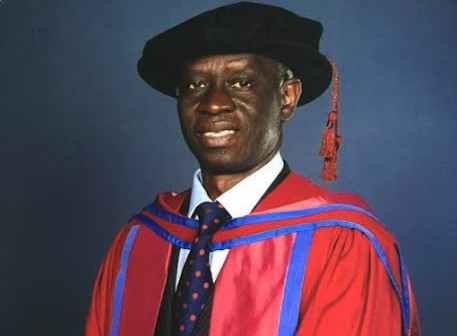
The NSS is a demonstration of the complete transparency and confidence in the world on nuclear technology. The Nigerian Nuclear Regulatory Authority (NNRA) under a notable nuclear scientist, Prof. Lawrence A. Dim, the Director-General led our team to share the progress report of the work we have done so far.
The whole world has come together as one to deal with terrorism. In fact, a discussion behind closed doors on nuclear terrorism based on a hypothetical scenario yielded a lot in terms of International understanding and cooperation in nuclear security. Countries with advances in this area are willing to share with all the others. Of particular interest, Israel for instance said they would share their advanced detection mechanisms for radioactive materials with all their neighbors, whether they have diplomatic relations with them or not.
Nigeria took home an portent lesson, which is that planning and strategy alone cannot combat the scourge, rather it is implementation that makes it work. The NNRA is expected to come up with plans for table-top exercises and drills from time to time to implement and test these strategies. The regular conduct of exercises and drill will help to mitigate the consequences, loss of life and resources in case of an attack.
President Buhari, who has shown a remarkable degree of support and encouragement, has promised to do even more to support both NNRA the national regulatory body and the IAEA to sustain nuclear security
The country also joined the others to commit themselves to the reduction of Highly Enriched Uranium (HEU) stockpiles in order to make it less attractive for terrorist to use for malicious intent in their countries.
The summit created world-wide awareness on the scourge of terrorism and for better protection and securing nuclear and radiological materials. Aside the these gains, there were bilateral meetings with other world leaders which resulted in the following gains
*There is no truth to the widespread speculation that President Obama will visit Nigeria before he ends his term but the Secretary of State John Kerry will be the one to come. Obama has earlier promised our President that he will come to Nigeria after he leaves office. An Obama visit has been the desire of Nigerians and Nigerian Leaders.
*The government of United States has made a commitment to spend 600m US$ in Nigeria arising from this visit.
*The United Nations made a commitment of 800m US$ towards the rebuilding of the North-East part of Nigeria destroyed by terrorists.
*The Government of Demark has expressed interest in investing in agricultural sector in Nigeria. This is also from one of the side meetings of the President during the NSS.
*The Japanese Government is very desirous of working with, and in assisting Nigeria. This is being worked by both parties.
*The US government through the Under Secretary for Nuclear Security and his office have pledged to support Nigeria’s effort to establish nuclear Security Infrastructure in all its ramification. They also pledged assistance in the areas of research and forensics development.
The overall achievement of the summit Is that it strengthened the nuclear security architecture at national, regional and global levels. It also broadened the ratification and implementation of international legal instruments regarding nuclear security. Participating nations agreed to to place all nuclear facilities under the highest security surveillance. They also agreed to increase individual and collective capacity to protect their borders against nuclear smuggling and radiological sources.
Nigeria gained international acceptance of its nuclear programs which are designed for peaceful purposes. But there is still much to be done by our parliament in domesticating international agreements, instruments and conventions signed by our governments. Some of these draft laws have been lingering in the legislature since 1999. “We have signed all the agreements, but Nigeria needs a new, comprehensive legal and regulatory framework” says Professor Dim.
With the progress so far achieved, the minister of Power, Babatunde Raji Fashola is optimistic that the foundation for this country’s first nuclear power plant, using the safest technology to produce 1,000 MW may be laid in four years.
With a president who takes great interest in these matters, nuclear energy may be the panacea to the unreliability of oil and gas in the provision of electricity in our country. [myad]
The 2015/2016 season of the Nigeria National League has been scheduled to kick off on May 7 this year. The Congress of the League which fixed the date today, Wednesday in Abuja, also agreed to have an abridged league format of eight teams in four different groups. Kaduna United, Sokoto United FC and Kogi United as well as five others have all been grouped in Group A1 in the new format. Group A2 has heavy weights like Kwara United, FC Taraba and Gombe United – all former NPFL clubsides. Group B1 has, among others, Rivers State FA Cup champions Go Round FC, Remo Stars and Delta Force FC, while ABS FC, Gateway FC, Bayelsa United FC and Prime FC of Oshogbo are part of Group B2 setting. Speaking at the event, the Chairman of the NNL Ad-hoc Committee and Nigeria Football Federation 1st Vice President, Barrister Seyi Akinwunmi, stated that the committee had to go for an abridged league format because of the time already wasted as they aim to have a league that would be successful and productive. Akinwunmi further noted that barring any last minute change to the proposed kick-off date, the league should be concluded in good time. The first-placed teams in all four groups automatically pick the qualification ticket to the Nigeria Professional Football League.
GROUP A1 SOKOTO UNITED KADUNA UNITED KOGI UNITED SHEKARAU BABES KATSINA UNITED FC YARMALIGHT MIGHTY JET JIGAWA STARS
GROUP A2 ADAMAWA UNITED KWARA UNTED FC TARABA WIKKI FEEDERS SUPREME COURT FC ZAMFARA DREAMS FC GOMBE UNITED
GROUP B1 REMO STARS COD UTD DELTA FORCE GO ROUND UNICEM ROVERS SHARKS FC AKWA STARLET ABIA COMETS
GROUP B2 ABS FC CROWN FC PRIME FC J. ATETE FC BAYELSA UTD FIRST BANK GATEWAY UTD BENDEL INSURANCE. [myad]
We use cookies on our website to give you the most relevant experience by remembering your preferences and repeat visits. By clicking “Accept”, you consent to the use of ALL the cookies.
This website uses cookies to improve your experience while you navigate through the website. Out of these, the cookies that are categorized as necessary are stored on your browser as they are essential for the working of basic functionalities of the website. We also use third-party cookies that help us analyze and understand how you use this website. These cookies will be stored in your browser only with your consent. You also have the option to opt-out of these cookies. But opting out of some of these cookies may affect your browsing experience.
Necessary cookies are absolutely essential for the website to function properly. This category only includes cookies that ensures basic functionalities and security features of the website. These cookies do not store any personal information.
Any cookies that may not be particularly necessary for the website to function and is used specifically to collect user personal data via analytics, ads, other embedded contents are termed as non-necessary cookies. It is mandatory to procure user consent prior to running these cookies on your website.
President Buhari At Nuclear Summit And Its Takeaways, By Garba Shehu
The Black Sea region of the world, the new republics born out of the defunct Soviet Union is awash with illicit trafficking of nuclear and associated radioactive materials. More troubling is the fact that these dangerous materials are being hawked in areas of turmoil in the Middle-East.
The Islamic State of Syria and Iraq, ISIS which took control of the University of Mosul in Iraq is believed to have formulated lethal explosives using nuclear material at the University lab.
ISIS has shown an incredible capacity and a lack of scruples in war as to deploy and use lethal weapons on civilian targets in the ongoing conflict.
The vision for the Nuclear Security Summit, NSS which President Muhammadu Buhari attended along with 56 other leaders came out of President Barack Obama’s belief that if terrorists can mount the type of attack they did on the Twin Towers in New York in 2001, they could use nuclear weapons on civil populations if they had them.
The first NSS summit Obama convened set an ambitious agenda seeking to “strengthen the global nuclear safety architecture, especially to ensure that non-state actors do not have access to nuclear stuff.”
Among others, it aimed at increasing security around poorly guarded nuclear facilities and reactors and radioactive stuff from hospitals, and to secure cooperation among states to prevent, detect and deter smuggling of nuclear radioactive materials. This is in order to keep nuclear weapons “out of the reach of terrorists and rogue nations.”
The well-known ambition of the Islamic State in seeking nuclear materials in a bid to to use them in inflicting maximum damage in densely populated areas and fears expressed from concerns about the chaos in Iraq, Syria, Libya, Yemen, Somalia and Libya, described as largely being “ungoverned,” continuing to serve as bastions for the training of terrorist all make the threat of nuclear terrorism seem possible. Although there are several terrorist organizations, armed gangs and armed merchants snooping around for these weapons, ISIS has not hidden their own Weapons of Mass Destruction, WMD ambition. They gave the world a hint of this when they launched chemical attacks on civilians in Iraq and Syria.
“If these madmen ever got their hands on nuclear material, they will certainly use it to kill as many innocent people as possible,” warned President Obama.
To us here in Nigeria, nothing brings the lesson home more than the reported allegiance paid to ISIS by Boko Haram. Our supposedly home-grown terrorist organization had from then on extended its tentacles to the world’s most ruthless terrorist society.
With the alliances formed, Nigeria is clearly at a risk of terrorists making or acquiring a nuclear bomb from a nuclear weapons country and exploding on our population; there is the danger of them attacking radioactive material storages in the civilian domain, say hospitals (X-ray machines, smoke detectors etc) to create a so-called dirty bomb that can spread nuclear contaminants.
Why was it important for President Muahmmadu Buahri to attend the NSS?
Let us first talk about diplomacy and the role of Nigeria as a continental leader when it comes to nuclear technology.
This country has been active in the nuclear area for upward of 35 years, that is from the time the Murtala/Obasanjo administration initiated a nuclear program in response to fears that the then Apartheid South Africa, which had nuclear weapons could attack Nigeria given our frontline role in the quest for the liberation of that country. Two nuclear research centers were then set up, one at the Ahmadu Bello University, ABU Zaria and the other at the Obafemi Awolowo University, OAU, Ile-Ife.
After South Africa, Nigeria and Egypt come next in ranking in nuclear technology activity on the African Continent.
In realpolitik in the unipolar world in which we live, a meeting called by President Obama is hard to ignore unless you are Mr. Putin or a Mugabe.
In the case of Nigeria, there is a special relationship between our leaders. There is so much love and respect for President Buhari on the Part of Obama that Secretary of State Kerry could pointedly tell our president to come forward with whatever he wanted of the administration if that can be done before the eight months when Obama’s tenure ends. President Obama was himself caught off guard saying to Trudeau, the Canadian Prime Minister, “Have you met President Buhari? He is doing a good job!”
In addition to all other things, this was a meeting of Presidents and leaders of Government in the World. Very serious issues of nuclear terrorism and how to protect nuclear materials were discussed at the highest level and could not have been delegated. As described by a delegate, the threat is global, the impact of a nuclear terrorist attack will be global and therefore solution must be global.
Our President, who had attended the summit for the first time, laid his own vision for nuclear safety around the globe.
If Nigeria did not participate, the rest of the World will find it difficult to believe that the Country can successfully handle the Nuclear Power Programme (NPP) we are putting in place.
Nigeria is also affected because of current terrorism in the Country; we stand to get the goodwill of the world by attending and presenting our case and showing what we are doing to tackle the problem.
The participation of our president had hopefully brought national attention to bear, not only on the summit but helping to bring knowledge and awareness of the threats posed by nuclear terrorism.
As a matter of fact, this was the most successful NSS.
Gains from the Summit
As we prepare to start a program for peaceful nuclear technology, Nigeria needs to learn and exchange experience in developing capability and procedures for emergency preparedness. We must not repeat the mistakes others have made.
The country is already getting help on the development and promulgation of best practices for developing and implementing a nuclear program. Following talks and agreements at this summit, we are receiving deeper international cooperation.
The NSS is a demonstration of the complete transparency and confidence in the world on nuclear technology. The Nigerian Nuclear Regulatory Authority (NNRA) under a notable nuclear scientist, Prof. Lawrence A. Dim, the Director-General led our team to share the progress report of the work we have done so far.
The whole world has come together as one to deal with terrorism. In fact, a discussion behind closed doors on nuclear terrorism based on a hypothetical scenario yielded a lot in terms of International understanding and cooperation in nuclear security. Countries with advances in this area are willing to share with all the others. Of particular interest, Israel for instance said they would share their advanced detection mechanisms for radioactive materials with all their neighbors, whether they have diplomatic relations with them or not.
Nigeria took home an portent lesson, which is that planning and strategy alone cannot combat the scourge, rather it is implementation that makes it work. The NNRA is expected to come up with plans for table-top exercises and drills from time to time to implement and test these strategies. The regular conduct of exercises and drill will help to mitigate the consequences, loss of life and resources in case of an attack.
President Buhari, who has shown a remarkable degree of support and encouragement, has promised to do even more to support both NNRA the national regulatory body and the IAEA to sustain nuclear security
The country also joined the others to commit themselves to the reduction of Highly Enriched Uranium (HEU) stockpiles in order to make it less attractive for terrorist to use for malicious intent in their countries.
The summit created world-wide awareness on the scourge of terrorism and for better protection and securing nuclear and radiological materials. Aside the these gains, there were bilateral meetings with other world leaders which resulted in the following gains
*There is no truth to the widespread speculation that President Obama will visit Nigeria before he ends his term but the Secretary of State John Kerry will be the one to come. Obama has earlier promised our President that he will come to Nigeria after he leaves office. An Obama visit has been the desire of Nigerians and Nigerian Leaders.
*The government of United States has made a commitment to spend 600m US$ in Nigeria arising from this visit.
*The United Nations made a commitment of 800m US$ towards the rebuilding of the North-East part of Nigeria destroyed by terrorists.
*The Government of Demark has expressed interest in investing in agricultural sector in Nigeria. This is also from one of the side meetings of the President during the NSS.
*The Japanese Government is very desirous of working with, and in assisting Nigeria. This is being worked by both parties.
*The US government through the Under Secretary for Nuclear Security and his office have pledged to support Nigeria’s effort to establish nuclear Security Infrastructure in all its ramification. They also pledged assistance in the areas of research and forensics development.
The overall achievement of the summit Is that it strengthened the nuclear security architecture at national, regional and global levels. It also broadened the ratification and implementation of international legal instruments regarding nuclear security. Participating nations agreed to to place all nuclear facilities under the highest security surveillance. They also agreed to increase individual and collective capacity to protect their borders against nuclear smuggling and radiological sources.
Nigeria gained international acceptance of its nuclear programs which are designed for peaceful purposes. But there is still much to be done by our parliament in domesticating international agreements, instruments and conventions signed by our governments. Some of these draft laws have been lingering in the legislature since 1999. “We have signed all the agreements, but Nigeria needs a new, comprehensive legal and regulatory framework” says Professor Dim.
With the progress so far achieved, the minister of Power, Babatunde Raji Fashola is optimistic that the foundation for this country’s first nuclear power plant, using the safest technology to produce 1,000 MW may be laid in four years.
With a president who takes great interest in these matters, nuclear energy may be the panacea to the unreliability of oil and gas in the provision of electricity in our country. [myad]