About two weeks into office, Kogi State Governor, Alhaji Yahaya Bello has finally picked Hon. Simon Achuba from Ibaji local government area of the state as his deputy in replacement for James Faleke who had bluntly refused to take up the position. Governor Yahaya Bello forwarded the name of Achuba to the state House of Assembly yesterday and the lawmakers are expected to work on him today for confirmation. The governor’s letter to the state House of Assembly reads: “In line with the provision of Section 186 of the Constitution of the Federal Republic of Nigeria (1999) as amended, I have the pleasure to forward herewith, the name of Hon. Simon Achuba for approval of appointment as the deputy governor of Kogi State. “Hon. Achuba (JP) hails from Ibaji Local Government Area of Kogi State and was a two-time honourable member of the state House of Assembly from 1999 to 2007 where he was Deputy-Speaker during his second tenure. “In view of the above, it will be highly appreciated if the request is treated and approved with utmost speed to pave way for his assumption of office.” James Faleke, who is a member of the House of Representatives, who was the running mate to the late Audu in an election that was inconclusive due to the death of Audu bluntly refused to be sworn-in with Yahaya Bello as his deputy on the ground that it was him that was supposed to be sworn-in as governor following the death of Prince Audu. The leadership of All Progressives Congress (APC), after several abortive attempts to convince Faleke to take the deputy governorship position, went ahead to inaugurate Yahaya Bello as the state governor on January 27 without deputy. Since Bello took over office about two weeks ago, the state had been without a deputy.
The immediate past minister of the Federal Capital Territory (FCT), Bala Mohammed has described the chairman of the Senate committee on the FCT, Senator Dino Melaye as ignorant who does not know the provision of the constitution on the limitation of the separation of power in the constitution.
The former minister reacted to media reports in which the Senate Committee on FCT accused the previous administration of illegally converting the green areas of Maitama District into developable lands and allocating same to named individuals.
In a statement signed by his media consultant, Mr. Emma Agu, the former minister said that while he had not wanted to join issues with the Senate Committee, “however, the exuberance of the Committee’s Chairman that borders on ignorance of the limitations of the doctrine of separation of powers under the constitution”
The full text of the statement goes thus:
Our attention has been drawn to various media reports in which the Senate Committee on FCT accused the previous administration of illegally converting the green areas of Maitama District into developable lands and allocating same to named individuals.
While we had not wanted to join issues with the Senate Committee, however, the exuberance of the Committee’s Chairman that borders on ignorance of the limitations of the doctrine of separation of powers under the constitution has necessitated us to set the records straight:
1. Throughout the tenure of the previous administration, all allocations of land in the FCT were based on professional advice, availability of layouts and the provisions of the Land Use Act. In reference to the Ministerial Hill, which the Senate Committee gave the Department of Development Control directive to stop work, we state as follows:
That sometimes in 2010, the FCTA under Senator Adamu Aliero commissioned Messrs. Fola Consult Limited to advise the FCT Administration on the extent of the area in Maitama Ministerial Hill that could be converted for residential use;1
That Messrs. Fola Consult Limited submitted its report highlighting the history of the area and rationale for its development as follows:
The redesign of Plot 2278 was carried out during the regime of Air Vice Marshall Hamza Abdullahi in 1998 to accommodate the Federal Ministers who moved from Lagos into the FCT;
That the change in land use was captured by the Land use plan produced in June 1989 by Messrs. Dynasys Resource Company in association with Alpha Consult Rome;
That the redesign of Messrs. Dynasys Company was not comprehensive since the sole aim of the design was just to create plots to accommodate some few Ministers’ houses;
That the area was not designated as recreational area or park but was designated as undevelopable area based on its difficult terrain and that the level of technology at the time was the major consideration for its classification as undevelopable;
That Fola Consult Limited advised the Aliero Administration that additional plots should be created to justify existing underutilized infrastructure In line with its land use
categorization as a low-density residential area;
That sometimes in 2014, the Department of Urban & Regional Panning also made recommendations that additional plots should be created on plot 2180 to justify existing underutilized infrastructure around the Mississippi street of Maitama;
That the immediate past FCT administration was fully convinced that the master plan is a dynamic road map for the city’s land use and infrastructure development, guided by the demands of change and time. Hence, on the basis of the above recommendations, and in recognition of its responsibility to ensure full utilization of resources, the administration approved the redesigns and subsequently, allocations were made in line with the Land Use Act;
That the FCT Administration allowed for commencement of work on the plots after the allottees got due building plan approvals from the Department of Development Control which approval, needless to add, can only be reversed by the authority of the Hon. Minister;
Apart from insisting that such new developments were based on the green city concept, the approval process was predicated on a robust environmental impact assessment conducted by a team of professionals within the FCT Administration.
That the Senate Committee is advised to seek adequate information from the FCT Administration before issuing wrongful directives. With the above said, we consider it imperative, at this juncture, to make some clarifications on the concept of the master plan, green areas and the dynamism of city development.
The Master Plan Concept
I am not a Town Planner, but a Master plan has been defined by professionals as that broad policy document meant to guide the growth and development of a town or city.
May I add that the life span of a master plan which is not less than Ten years minimum, is so wide that there is no way changes will not occur for a document based on assumptions, predications and projections. As soon as gaps are observed between these proposals and realities, as is the case of the Abuja master plan over time, a review or redesign becomes impera ive.
Above all, nowhere in the world and on any town or city is a master plan implementation achieved at 100 percent level even in developed countries.
Concept of Green Areas and the Dynamism – of City Development
Green area is a land use provision within the master plan for recreation, flood drains, city buffers, urban farming, reserved lands and contextually undevelopable area. However, for reasons of population growth, expansion in infrastructural facilities, security concerns and logistical demands, city development all over the world has never remained static. Rather, it has been a dynamic process. Abuja has not been an exception.
Thus, long before the advent of the last FCT Administration, Ministers had reviewed and re-conceptualized green area provisions in the Abuja Master plan. For instance, part of the Presidential Villa was a green area in the master plan. So also were the office of the National Security Adviser (NSA), the High Court, the residence of the Chief Justice of Nigeria (CJN) and recently, the residences of the presiding officers of the National Assembly. Military formations such as Camp Wu Bassey and Niger barracks, and urban fringes including Usuma, Maitama Extension and Mpape Districts etc. were part of the changes made to the master plan. Many other examples abound of green areas being converted to other uses by previous ministers based on need of the time to make the city more functional and more socio-economically viable.
In fact, all of what is termed the “Urban Fringe” including Usuma and Mpape Districts, was a green area and was supposed to constitute a buffer zone between the city on the one hand and the regional space, on the other. However, it was utilized by previous administrations for the building of the various barracks, Asokoro District, Guzape District, Sunrise Hills Estate and parts of Apo. These urban fringes were redesigned by previous ministers in accordance with the powers conferred on them by the Land Use Act.
For emphasis, it is important to note that even part of the present Presidential Villa and the Eagle Square were changed from Transportation Center to what they are today, while under the Master Plan, what is now known as Maitama Extension was supposed to be a Sports Center but was redesigned by previous administrations. Even in the city center occasions arose where the Boulevard Project in the Central Business District area led to redesign of many plots in the original master plan.
For the enlightenment of all stakeholders and members of the public who are ignorant of the historical background to this matter, it was Mallam Nasir EI-Rufai as FCT minister who, seeing the lack of capacity on the part of the FCT Administration, to maintain the green areas, started allocating them to individuals in the hope that the allottees would live up to expectation. Unfortunately, they did not. Instead, most of the park allottees converted the green areas to commercial uses thereby placing them on a collision course with the Development Control Department. Overnight, restaurants, hotels, showrooms, beer parlours, pubs etc. sprang up in these areas, in complete negation of the master plan. In some cases these unapproved conversions constituted not only a nuisance to the public but a grave security threat. To tackle the deplorable situation, the immediate past leadership of the FCT set up a committee headed by former Director General of the Nigerian Tourism Development Commission, Otunba Segun Runsewe which, in the course of its activities, established that most of the beneficiaries had made heavy investments in the green areas. It was therefore decided, that in deserving cases, the allottees should retain only 10 of the green areas while the remaining should be developed for public use with the firm belief that if the administration needed to recover the whole land, it could do so since it was not covered by deeds and titles.
We have gone to this extent to explain dynamics of the transformation of the green areas to prove the point that the immediate past FCT administration was simply following precedents in adopting out-of-the-box strategies that would guarantee more effective land use management. The truth is that the previous administration drew immensely from both the Accelerated Development Program of EI-Rufai and the Sunshine Hills Estate of Abba Gana, in prosecuting its highly ambitious mass housing programs. It is on record that the administration, under Senator Bala Mohammed, collaborated with estate developers and institutions like the Nigeria Labour Congress, NLC and the Trade Union Congress, TUC to develop districts for workers while the administration itself conceived three social and affordable housing schemes in Wasa and Mamusa Districts which were allocated to co-operatives to provide housing to the lower cadre.
Conclusion
From the above, we want to conclude as:
The Minister never acted outside the limits of his powers in the matter of land management in the FCT.
The Abuja Master Plan has never been inviolable. At various times in the past, Senator Bala Mohammed’s predecessors had managed the plan to achieve a functional and harmonious development in the city. For all his actions in the area of land management, there were precedents by his predecessors some of whom are still serving the nation in various capacities.
What we do not understand is the Senate Committee Chairman’s unusual interest in the Minister’s Hill. The committee needs no reminding that all the beneficiaries of plots at the redesigned Minister’s Hill are Nigerians who are legitimately and eminently qualified to receive the allocations that were made within the constitutional powers of the minister following laid down procedures and precedence set by his predecessors. Some of these Predecessors are not just around they are still very much in the service of the nation
We recognize the prerogative of the Chairman of the Senate Committee on FCT to carry out his oversight functions in any manner he chooses but that should never include making unguarded statements that tend to ridicule those who served to the best of their ability or derogate the powers of the executive to carry out their normal constitutional duties.
The committee will need to be reminded that a similar effort to revoke the last minute allocations by EI-Rufai on the eve of his departure could not stand. Ironically, it fell on Senator Bala Mohammed to resolve the matter and restore the status quo, which led to massive development in the FCT and alleviate unnecessary litigation.
The former minister is available at all times to clarify his actions in the area of land management thereby avoiding unnecessary dramatization of ignorance or grandstanding for media attention.
Emma Agu
Media Consultant to Senator Bala Mohammed, CON Former Minister of the FCT. [myad]
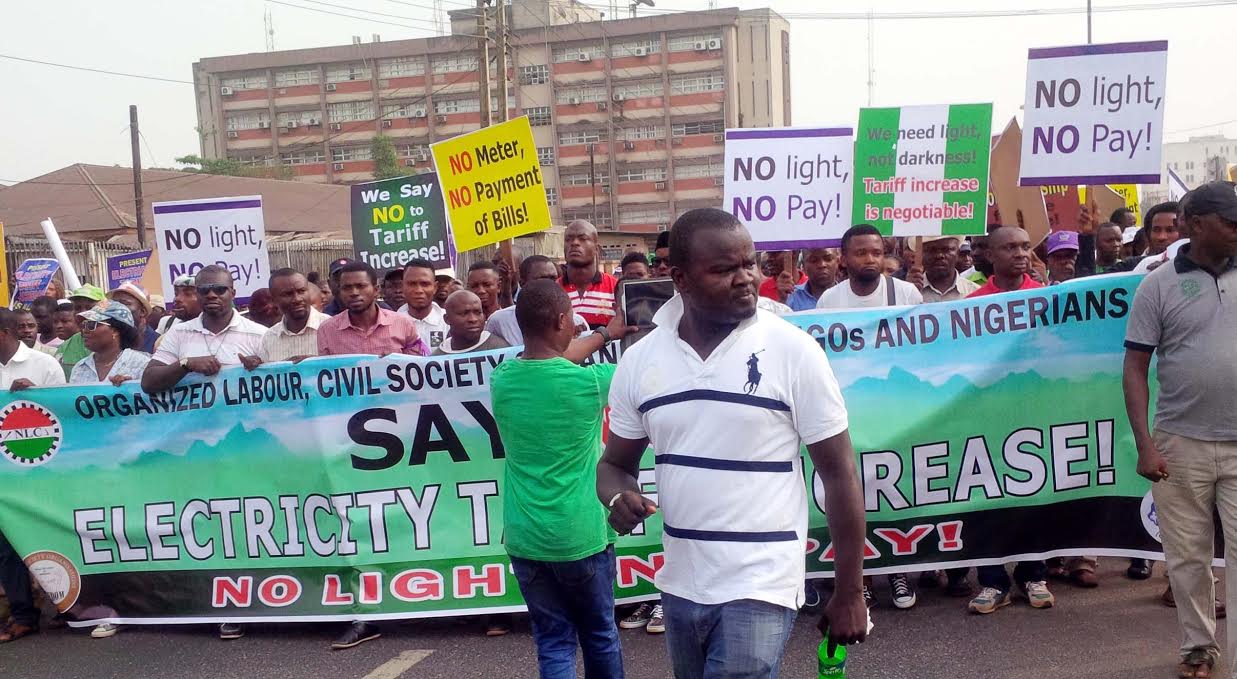
The organized labour unions today, paralysed activities in nearly all offices of the Electricity Distribution Companies nationwide, following its protest over increased in electricity tariff.
The News Agency of Nigeria (NAN) reports that protesters, led by labour leaders in states, picketed the companies in compliance to the directive of the labour unions.
The protest was led nationwide by leaders and members of the Nigeria Labour Congress (NLC), the Trade Union Congress (TUC), and civil society groups.
At the head office of the Enugu Electricity Distribution Company (EEDC) in Imo, the protesters, as early as 7a.m., padlocked the gate to the company preventing entry into the premises.
At the office located at No. 1, Royce Road, a banner with the inscription, “Organised labour says no to hike in electricity tariff; provide us with prepaid meters, not estimated bills’’, was tied to the gate. Austin Chilakpu, the state NLC chairman, said the reason for the action was to make known their displeasure over the recent hike in electricity tariff.
“What NLC is doing in Imo today is also taking place in the other 36 states and Abuja.
“We call for this protest following the recent hike in the electricity tariff by 43 per cent and the continued issuing of estimated bills to customers,’’ he said. Chilakpu recalled that after privatisation of PHCN, the new owners assured that before any increase in tariff, they would make prepaid meters available to consumers.
“Regrettably, since they took over, the prepaid meters have not been supplied; they only stay back in their offices and issue estimated bills to customers.
“There is no form of corruption like what is going on in the distribution companies, and it is very painful that this is going on while the federal government is fighting corruption,’’ he said. The NLC chairman also said that the increase was in disobedience to an existing order of a Lagos High Court.
Also in Calabar, Cross River, the NLC locked out workers of the Port Harcourt Electricity Distribution Company (PHEDC).
Mr John Ushie, chairman of NLC in the state said that the action became necessary in order to stop the uncompromising attitude of the distribution companies towards the plight of Nigerians.
According to him, allowing the hike will cause more hardship and increase the spate of criminality in the country.
`If there is an increase in petrol, you pay and you see what you are buying.
“In the case of electricity, we do not know what we are buying and what we are paying for.
“There is no light and even when there is light we are having a candle-like kind of light, yet they have gone ahead to increase tariff.
“We are here this morning to say no to that.
“This picketing is just for one day and after today, if the federal government and the companies do not budge, we will declare a total lock down of the sector,’’ he said.
In Abakaliki, Ebonyi, the story is not different, as the labour also shut down the head office of the EEDC in Abakaliki.
Chanting various protest songs, the workers besieged the head office of the distribution company as early as 8a.m.
The workers were led in the protest by the NLC State Chairman, Mr. Ikechukwu Nwafor and hisTUC
Speaking to news men, Nwafor said that due process was not followed in consonance with section 78 of Power Reform Act.
“The government has not followed the right way and due process was not adopted.
“We say no to this and as such the increment should be reversed with immediate effect.
“Conditions for metering was not followed, Nigerians are not slaves to anybody, we will resist it with everything within us,’’ he said.
Also speaking, Oduma said that most consumers were not metered in line with the Memorandum of Understanding (MOU) on privatization signed on Nov. 1, 2013. According to him, the agreement stipulates that within 18 months gestation period, all consumers are to be metered.
The Adamawa branch of the Nigeria Labour Congress also joined the nationwide protest against the electricity tariff increment.
The that protesters barricaded the Yola Electricity Distribution Company in the state capital. Dauda Maina, state Chairman of NLC, said that the protest was to tell the government and the energy companies that they oppose the new tariff.
Maina stated that the tariff increment was an exploitation that would create additional hardship on Nigerians.
“The new tariff is an indirect way of exploiting the consumers.
“We are of the view that the fixed charges earlier withdrawn should be sustained and the tariff should also be reverted to the status quo,” Maina said.
Reacting to the protest, Mr. Kingsley Nkemneme, Senior Corporate Communications Officer of the YEDC said that the reviewed tariff was done in the interest of the consumers and the Nigerian power sector.
“What was obtainable before now is not a cost reflective figure that will improve the power sector. He said that the main component of the reviewed tariff was the removal of the fixed charges and that the new tariff was “pay as you go.”
The protest was peaceful across the states covered, including the Federal Capital Territory, Abuja, as armed security operatives were stationed to forestall break down of law and order. [myad]
In search of ghost pensioners, the Lagos state government has today flagged off Biometric Verification Exercise otherwise known as I’m Alive for pensioners in the State. The state commissioner for Establishments, Training and Pensions, Dr. Akinola Benson-Oke said at the flag-off that the exercise would contribute greatly to effective pensions administration in the State. He said that it would remove the issue of double representation and impersonation of pensioners on the pay roll. He said that the exercise is part of governor Akinwunmi Ambode led administration’s commitment to fully integrate technology into governance in the State. The Commissioner said that the improvement in the Lagos State Residents Registration Project has been tremendous which has translated into huge benefits in the I’m Alive initiative, saying that pensioners need only to bring their LASRRA Identity Cards to the verification centres in order to re-validate their records. He said that through this method, government has been able to ascertain the real pensioners on the old scheme thereby eliminating fraudulent acts in the payment of pensions and gratuities which have invariably ensured prompt payment of monthly pensions or an electronic transfer of such to the right pensioners. “This initiative demonstrates, once again, the commitment of the state government to ensuring that resources are prudently managed for the benefit of all and sundry, especially for the benefit of retired public servants who have served the state meritoriously.” Benson-Oke affirmed that 15 centres have been set up at designated Local Government Secretariats in the State for pensioners to participate in the on-going exercise. The centres include Somolu, Agege, Alimosho, Amuwo/Odofin, Badagry, Epe Local Government Areas (LGAs). Others are Eti/Osa, Ikeja, Ikorodu, Kosofe, Lagos Island, Mushin, Oshodi/Isolo and Surulere LGAs in order to ensure that every pensioner is captured and given the opportunity to participate in the programme. Earlier, the Permanent Secretary of the Civil Service Pension Office, Mrs. Omobolanle Ogunmola, said that the exercise is one of the many activities dedicated to serving the state retirees and it has contributed in no small measure to the attainment of the enviable status of the state among others in the country. She said that her ministry is about to round up on the distribution of welfare packages, consisting of various foods items, to pensioners that are 70 years and above, while efforts are on to obtain Governor’s approval for beneficiaries’ age to begin from 60 years. It would be recalled that the State Government in the Y2016 Budget, earmarked N6.5 billion for the settlement of pension arrears in addition to making adequate provisions for the contributory pension scheme in the State. [myad]
Acting President Professor Yemi Osinbajo (SAN) has said that Nigerians must have learnt a bitter lesson from the bad leadership this country had been riddled with in the past years. According to him, as a nation, “we have learnt our lesson.” Professor Osinbajo, who spoke today when he received in audience, a delegation of the global body-Extractive Industries Transparency Initiative (EITI), said that going Muhammadu Buhari’s government is determined to work transparently and generate more revenues. “it is important for us that we handle our resources with transparency and good governance. “One of the objectives that we have set for ourselves is to ensure that we are transparent and able to handle our resources well.” The Acting President argued that if the past leaders had handled the nation’s resources better, with transparency, and good governance, “we would not find ourselves were we are now.” He said that the Buhari administration is determined to work with the Nigeria Extractive Industry and Transparency Initiative (NEITI) to ensure good governance and to work hard towards generating more revenues with proper accounts. On the Petroleum Industry Bill (PIB), Professor Osinbajo assured that government is working with the National Assembly to get the bill passed into law. “We want to see what will come out of the bill because this will give some regulatory direction and we are working very closely to get that done.” The in-coming global Chairman of EITI, Mr. Fredrik Reinfeldt, a former Prime Minister of Sweden commended Nigeria’s commitment to the EITI process, saying he has been following the restructuring of the NNPC, and other developments in the oil sector. On the delegation were also the Acting Executive Secretary of the NEITI, Mr. Orji Ogbonnaya Orji and the Deputy Head of the EITI global, Mr. Eddie Rich. The Minister of State for Budget & Planning, Mrs. Zainab Shamsuna Ahmed and the former Executive Secretary of the Nigeria Extractive Industries Transparency Initiative (NEITI), were in at the meeting with the Acting President. Also today the Vice President received delegations from Nigeria Leadership Initiative, NLI class of 2015 and the Nigerian Institute of Legislative Studies, NILS. He told the delegation from the NLI that considering the extent of effort required to address the socio-economic impact of the insurgency in the Northeast, Nigerians with the required capacity should partner with different agencies of government to rehabilitate and rebuild the area. “It would be useful to work with the Presidential Committee on Northeast Initiative to achieve some of its objectives.” The Acting President commended the class for its work, even as he asked the group to go further and play a more active role beyond making a documentary submission. Professor Osinbajo said that there is quite a lot to be done and lots of effort are underway. The group was led by the Minister of Industry, Trade and Investments, Dr. Okey Enelamah and Central Bank Deputy Governor, Mrs. Sarah Alade. Dr. Enelamah informed the Acting President about the proposed documentary project of the group, which focuses on the humanitarian crisis in the North East is a collective issue rather than government concern alone. In his meeting with the NILS, Vice President Osinbajo expressed government readiness to support the work of the Institute, saying that the Institute plays a prominent role in the legislative arm of government. In his remarks, the leader of the delegation, the Senate Committee Chairman on Water Resources and also a member of the Governing Council of NILS, Senator Muhammad Ubali Shitu, expressed their support for the change agenda of the Buhari’s Administration and praised the Vice President’s response to support the Institute. [myad]
Minister of Finance, Mrs. Kemi Adeosun has listed the wonders which the Treasury Single Account (TAS) has done to the Nigerian economy in terms of positive change from what the situation used to be. The minister, in a keynote address today at a one-day workshop for State Accountants-General on TSA which was held in the office of the Accountant-General of Nigeria, Abuja said that TSA at Federal Level, has allowed, for the first time, visibility of the total quantity of government funds at any point in time. The minister said that the TSA has allowed for balance, which changes daily as MDA’s remit revenues and make payments, according to the latest reports from CBN exceeds N2.2 Trillion. “I can report that work is now ongoing within The Treasury, to determine how much of these funds can potentially be utilised to part fund the 2016 budget and how much relates to pending commitments. This, of course, will reduce the amount to be borrowed The TSA, Mrs. Adeosun said, has provided the government with financial information on the revenues of agencies funded by government and has reduced revenue suppression. She said that such information is being used to drive the government’s programme to enforce compliance with the Fiscal Responsibility Act and ensure that Revenue Generating Agencies generate expected surpluses and remit to the Federal Purse. The minister added that TSA has also eliminated opportunities for brokerage and other corrupt practices that previously encouraged agencies to accumulate funds with commercial banks rather than apply them to their intended uses. “We believe that this will reduce payment delays to contractors, minimise late payment penalties and will consequently improve project completion times and service delivery. “TSA has corrected the practice of government borrowing short term funds at high rates of interest, whilst simultaneously having idle funds in various bank accounts. “By reducing the number of accounts in operation, monitoring and control has significantly improved.” She noted that the global economic challenges which are affecting Nigeria necessitated optimum efficiency in the management of public funds, saying that these objectives require an overhaul of the financial management approaches adopted to meet financial obligations on time and ensure that cost effective financial support is provided to public institutions. Adeosun described TSA as an essential reform for any government wishing to pursue fiscal sustainability and prudent management of its resources which she said, increases accountability and transparency, improves the processing of payments and collections and reduces borrowing costs. “I therefore urge the participants for this workshop to also discuss and brainstorm on ways and means of improving the revenue base of the country through full implementation of TSA and blocking of all leakages and improving the efficiency of revenue administration. “The revenue base of the Country is still low and its administration still leaves room for improvement. This is bedevilled with a range of problems such as poor computerization, lack of skilled and dedicated employees, corruption, lack of awareness and of course unpatriotic conduct by some of the operators. “This clearly indicates that the underlying assumptions underpinning the 2016 budget may only be realized with serious efforts put in place towards revenue efficiencies and expenditure discipline such as implementation of the TSA and Cash Management concepts by all tiers of government. “Therefore, I commend the efforts of the OAGF and organisers for hosting this very important workshop aimed at sensitizing the States Accountants-General on the need to key into the Treasury Single Account scheme of the Federal Government.” The minister charged the professionals in charge of Public Financial Management of the states to take advantage of the workshop to clarify issues that have agitated their minds regarding the implementation of TSA. “TSA will no doubt enables you to block all financial leakages and conserve more funds needed for development in your various States. “I am also aware that some states are already implementing TSA. I urge those states to kindly share their experiences with the rest of you so as to encourage those who are yet to decide to take their first step in this direction. “At the Federal Level, l can assure you that our experience has been worthwhile. TSA has Provided complete and timely information on government cash resources, Improved operational control on budget execution, Enabled efficient cash management, Reduced bank fees and transaction costs, Facilitated efficient payment mechanisms and it has also reduced the FGN Ways and Means requirement to bridge the budget funding gap. Mrs. Adeosun was elated to know that the workshop has been put together with a view of fashioning out ways of improving the efficiency of the nation’s scarce resources. This was even as she asked the participants to interact freely and share ideas that would improve transparency and accountability in the management of the nation’s scarce resources. [myad]
The Nigeria Immigration Service (NIS) has alerted the public that it had no intention of recruiting 5,000 in March as it was recently published in some newspapers. In a statement, the Deputy Comptroller of Immigration who is Service Public Relations Officer, Ekpedeme King said that the purported statement which said to have been made by the Public Relations Office of the Service when clarifying what the newspapers considered as “secret” recruitment into the Service was false King made it clear that at no time did he say that the NIS would recruit 5, 000 staff in March 2016 during his discussions. “It has become very important to state this fact to prevent any anxiety amongst interested persons or provide a window for fraudsters to dupe gullible unemployed Nigerians. “These are facts. The Nigerian Military have successfully reclaimed all parts of the North East of Nigeria from the insurgents. Following these victories and the imperative of moving to other areas and duties, the paramilitary agencies have been directed to have administrative presence in those areas in order to ensure that the insurgents stay off. “Consequently, the NIS like other agencies in acknowledgment that it had lost some men to the insurgency, while some had retired from Service, yet others have been promoted to ranks that had necessitated that their schedule of duties change within the last few years forwarded a request to Government for special consideration for replacement of the number that were involved in order to meet up with the manpower needed for this mandate just like others did. “This request was considered and graciously approved by Government and all necessary waivers made to enable the NIS urgently replace these positions with qualified and fit persons for the demanding task. “More importantly, although approval has been granted, the replacement has not taken place yet, let alone payment of January salary to them as alleged. As a matter of fact, officers and men of all the services had not been paid their January 2016 salaries as at the time of the publication. We therefore challenge any person who has any contrary view or fact to present the letter of appointment of any such recruit or/and evidence of payment of January 2016 salary. “May I emphasize that the replacement is NOT part of the 5, 000 vacancies that was approved by the Head of Service of the Federation in 2012 which is still pending. Please be informed that the public will be duly notified anytime there will be recruitment to fill these existing vacancies after due consultations and consent of relevant agencies in line with laid down procedures.” [myad]
There are indications today that the interactions between former Chief of Defence Staff, Air Chief Marshall Alex Badeh and operatives of the Economic and Financial Crimes Commission, (EFCC), may continue throughout the night, resulting in his spending the night at the commission today. It was gathered that the issues for which the anti graft agency is seeking clarification from the former CDS could not be exhausted at just one sitting, thereby prolonging the interaction. Badeh who has been at the anti graft agency’s office clarifying issues related to alleged inappropriate procurements of arms for soldiers fighting Boko Haram under his watch, was asked to report back to the EFCC today, Monday, when the commission could not finalise logistics for his interview with their men Wednesday last week. It was learnt that already, his interrogators have informed him that he might stay at the commission’s office overnight to continue the interaction. News had filtered in Sunday that there were plans to embarrass the former CDS, during his appearance at the EFCC premises today even though it was not immediately clear if asking him to stay the night was not unconnected with the reported moves. Badeh had earlier today, arrived at the EFCC headquarters in company of some of his associates and domestic staff and was immediately ushered into a waiting room where officers from the agency were already waiting. The interrogation was said to have commenced almost immediately. [myad]
The All Progressives Congress (APC) in Rivers State has accused the Supreme Court which upturned the lower courts’ ruling against the election of Chief Nyeson Wike of robbing the people of the State of the opportunity to elect a Governor of their choice. “We had hoped that the Supreme Court would align itself with the position of local and international observers, as well as the Election Tribunal and Appeal Court, all of whom agreed that what took place in Rivers State in the name of elections in March and April 2015 was a sham but that hope did not materialize, thus robbing the good people of the State of the opportunity to elect a Governor of their choice.” In a statement in Port Harcourt, the state Chairman of the party, Dr. Davis Ibiamu Ikanya, said that while the party had accepted the Supreme Court’s position, “we wish to appeal to the Rivers electorate to avenge the over 100 of our members whose lives were cut short because of the so called 2015 elections by overwhelmingly rejecting PDP and voting for APC candidates during the re-run State and national Assembly polls now scheduled to hold on March 19. “This is the only way to ensure that the death of the over 100 democracy martyrs was not in vain.” The party insisted that PDP does not deserve to win even one seat during the re-run elections as the party does not have the interest of Rivers people at heart, as could be seen from its ceded oil wells, belonging to the State to Bayelsa and other neighbouring states. “We trust the discerning Rivers electorate to make the right choice by voting only APC candidates during the forthcoming re-run elections. “Our candidates are trusted leaders that have proven themselves in past assignments and we are very convinced that they will provide the type of leadership needed at this time to move both Nigeria and Rivers State forward.” [myad]
A senator representing Borno Central in the National Assembly and a member of the All Progressives Congress (APC), Senator Baba Kaka Garbai, has came up with a number of communities which members of Boko Haram are still occupying in Borno state. This is coming against the background of the federal government’s claim that Boko Haram has been “technically defeated.” Senator Kaka Garbai argued that as at now Borno state is still divided in equal measure between the Boko Haram insurgents and the Nigerian military. The Senator, who spoke to newsmen during a condolence visit to Dalori village where 65 persons were reportedly killed at the weekend before last by the insurgents, said the truth must be told that both Boko Haram and the Nigerian nation each have full control of three local governments in the troubled Borno State and both have a level of dominance in 21 other local councils. Garbai, who arrived Dalori with financial and material assistance for the people of the village, said: “I feel highly demoralised, devastated in the sense that this is the village we visited during the election and they were going about their normal business. The activities that were ongoing were like confidence building. “They actually got the signal a few days before the attack that the insurgents were likely to attack them, they reported this to the constituted authorities but nothing was done to provide security for residents and their belongings.” The senator appealed to the military to intensify its efforts at beefing up security around villages and communities that share borders with Maiduguri metropolis. “It is very important and more so that this place is porous, so there could be attacks from any direction,” he said. On the perception being created by the federal government that the insurgents have been largely overpowered by the military, he said: “it is a wrong assumption that most of the local governments in Borno have been recaptured from Boko Haram. “In reality, this is not true in the sense that apart from Maiduguri metropolis, Bayo and Kwaya Kusar, these are the three local governments that are under the occupation of the Nigerian government where the military and police are maintaining law and order. “However, Mobbar, Abadam and Kala Balge are 100 per cent occupied by the insurgents. There are some local governments that are also partially occupied by the government, especially as the local government secretariats have been liberated, but the hinterland comprising other communities in such local governments is still controlled by the insurgents.” Using Konduga as an example, Garbai claimed the local government’s secretariat was liberated but still has many communities in the area under the control of the insurgents. “Though Gwoza town has been liberated, there still remain six wards in Gwoza Local Government Area that are occupied by the insurgents. “From my count, only three local governments are fully liberated, while 21 local governments remain partially occupied by insurgents – that is, there is still some level of Boko Haram occupation side by side the military or some other constituted authority. “While the local governments fully occupied by Boko Haram are Abadam, Mobbar and Kala Balge.” He insisted that Nigerians should not live under the illusion that Boko Haram has been decimated or weakened, adding: “this is not the reality and neither is it a true reflection of reality. The reality is that most of the local governments in Borno are partially occupied by Boko Baram.” On the proposed reconstruction, rehabilitation and relocation in the troubled areas, Garbai said it was not advisable for the government to commence reconstruction in devastated communities immediately. “If the people are moved back to their homelands, you are making them vulnerable to attacks. Unless you provide maximum security and return law and order in these areas, relocating these people would be endangering their lives,” he warned. However, the Senate Leader, Mohammed Ndume has debunked the Senator’s assertions, saying that a lot has been achieved by the military in retrieving captured Borno communities from the insurgents. Senator Ndume, representing Borno South, disagreed with his colleague, saying that a lot had been achieved by the military in retrieving captured Borno communities from the insurgents. He said that it was not out of place to begin the reconstruction and rehabilitation of the destroyed communities. He told news men in Maiduguri that he still has confidence in the military. “I still want to believe that our military is on top of the situation. What is happening these days are issues of intermittent suicide bombings and desperate attacks by the insurgents because their supply routes have been cut off and they attack in order to get supplies. They have been carting away foodstuff from attacked communities.” He said that the reconstruction of communities and relocation of internally displaced persons (IDPs) should still continue in spite of recent attacks, adding: “If not immediately, at least preparations should not be set aside.” The Senate leader, while maintaining that the insurgency was being rooted out, said the recent setbacks were not limited to Nigeria alone, insisting that the United States America and recently France had come under isolated terrorist attacks. He insisted that the people of Borno displaced by the insurgency were willing to go back to their homelands, and in particular made reference to the residents of Gwoza, his homeland, who are ready to return home. Similarly, the Defence Headquarters (DHQ) disputed Senator Garbai’s claim, insisting that the Boko Haram terrorists have been greatly weakened were incapable of launching a large-scale attack in parts of the North-east. The Director of Defence Information (DDI), Col. Rabe Abubakar assured Nigerians that the military was determined to finish off remnants of the terrorists and complete the restoration of the territories in the North-east. “All citizens can attest to the fact that BHT is weakened and incapable of waging any large-scale attacks as they used to in the past. “The military is committed more than ever before to finish remnants of the insurgents for the complete restoration of peace and security in the North-east and all hands must be geared towards this objective. “We don’t intend to join issues with anybody but the facts remains one that we are winning the war on terror. “This is a war which must be taken seriously by all patriotic citizens. Sambisa forest will fall to us very soon. We therefore advice all and sundry to support the military and other security agencies to eliminate remnants of BHT, instead of making comments inimical to the current war efforts. “The attacks on soft targets are carried out to attract media attention, since information is the oxygen of terrorist. Please ignore any unfounded and misleading information that they are holding anything (territory).” Meanwhile, the Chief of Army Staff (COAS), Lt-Gen. Tukur Buratai, has commenced the rotation of troops deployed for the counter-terrorism and counter-insurgency operations in the North-east. Buratai kick-started the rotation at the weekend when he visited the 242 Recce Battalion, Ibereko Barracks, Nigerian Army, Badagry, where he informed a battalion of their new deployment to take over from their colleagues in Operation Lafiya Dole in Maiduguri. He explained that the action was in line with the directive by Buhari during his maiden media chat, when he said that troops who had been serving in the North-east, some of whom have been there for years, must be rotated. “I came this evening to tell you that we are kick-starting the rotation of troops in the theatre of operation in the North-east. You will go and relieve your colleagues there and we will continue to ensure that the troops are rotated routinely. I have asked your commanders to ensure that the troop rotation is a routine exercise. “The president is very much concerned about your welfare, about your families and the psychological effect of being far from your families. That is why we are doing this rotation as a matter of routine. “You are expected to go to the theatre of operation as a fresh and well trained battalion. This number here is not conclusive, as more of your colleagues will be joining you.” The army chief also charged the troops to remain committed, dedicated and loyal to the nation and the president. He added that the Nigerian Army has secured the funds to ensure that troops are properly kitted and have adequate firepower to fight the insurgents. Buratai further assured them that the army was well equipped and determined to rout Boko Haram from Nigeria, and urged the officers and soldiers to see their call to duty as a service to humanity. He also urged them to respect human rights, the rule of law, and to adhere strictly to the rules of engagement while discharging their duties in the North-east. The army chief charged them to take care of their armoury and military equipment, especially medium and heavy weapons. Buratai called for discipline amongst the officers and soldiers with regards to obeying commands and follow`ing directives. He also warned against the leakage of operational information and other forms of misconduct, which he said would attract stiff military sanctions. [myad]
We use cookies on our website to give you the most relevant experience by remembering your preferences and repeat visits. By clicking “Accept”, you consent to the use of ALL the cookies.
This website uses cookies to improve your experience while you navigate through the website. Out of these, the cookies that are categorized as necessary are stored on your browser as they are essential for the working of basic functionalities of the website. We also use third-party cookies that help us analyze and understand how you use this website. These cookies will be stored in your browser only with your consent. You also have the option to opt-out of these cookies. But opting out of some of these cookies may affect your browsing experience.
Necessary cookies are absolutely essential for the website to function properly. This category only includes cookies that ensures basic functionalities and security features of the website. These cookies do not store any personal information.
Any cookies that may not be particularly necessary for the website to function and is used specifically to collect user personal data via analytics, ads, other embedded contents are termed as non-necessary cookies. It is mandatory to procure user consent prior to running these cookies on your website.



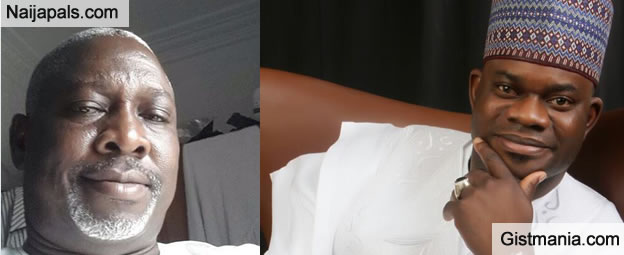 About two weeks into office, Kogi State Governor, Alhaji Yahaya Bello has finally picked Hon. Simon Achuba from Ibaji local government area of the state as his deputy in replacement for James Faleke who had bluntly refused to take up the position.