From left: Minister of State for Aviation, Senator Hadi Sirika; Minister of Transportation, Hon. Rotimi Amaechi and Acting Director General of the Nigerian Maritime Administration and Safety Agency (NIMASA), Mr. Haruna Baba Jauro, during the facility visit by the Ministerial delegation to NIMASA Resource Centre at Kirikiri, Lagos… on Monday. [myad]
President Muhammadu Buhari has expressed satisfaction that Boko Haram has successfully been separated from Islamic religion as a cover for the sacrilegious mayhem its members have visited on the psyche of Nigeria.
This is even as he asked religious leaders in Nigeria to do more in exposing the hypocrisy of the sect, whose members, he emphasized, have been stripped of all of the religious colouration and pretensions.
President Buhari who spoke when he received Ecuador’s new Ambassador to Nigeria, Leopoldo Rovayo Verdesoto at the Presidential Villa, Abuja insisted that the group has since been fully exposed as vicious terrorists, devoid of any moral or philosophical direction.
He recalled that a lot had already been done to properly expose Boko Haram as a ruthless, destructive and misguided terrorist group, adding: “what we have succeeded in doing is to separate terrorism from religion. The initial attraction for recruitments was religion. But now, people cannot relate with their relevance anymore and they are only associated with the destruction of lives and properties.
“If your life does not mean anything to you, other peoples’ lives will not mean anything to you as well. And people are beginning to see that Boko Haram is just about destruction and nothing else.”
President Buhari said that his administration will continue to prioritize diversification and other measures to help the Nigerian economy withstand the shock of falling crude oil prices.
The Ecuador’s new Ambassador was at the Presidential Villa to present his letter of credence.
The new Ambassador of Zambia, Dr. Solomon Jere and the new Ambassador of Colombia, Ms. Claudia Turbay Quintereo also presented their letters of credence to the President who wished them successful tenures in Nigeria. [myad]
Former governor of the Central Bank of Nigeria and currently the Emir of Kano, Muhammad Sanusi II has described as strange story, allegation that he donated the sum of N40bn in cash to the Office of the former National Security Adviser (ONSA), during his tenure as Governor of the Central Bank of Nigeria, CBN.
“I do not know where they are getting these strange stories. I was removed from the CBN in February 2014, and to the best of my knowledge, the EFCC is probing disbursements allegedly made in late 2014 and early 2015 before the general elections, if indeed they happened.
Sanusi, who spoke to The Cable yesterday said: “This is completely untrue. In the first place, I understand the laws of money laundering. And it is a criminal offence. The central bank is the chief regulator charged with ensuring we put an end to money laundering.
“This is partly why we started our cashless Nigeria project and why I started the BVN project. I would never authorise that amount of cash to be moved to the Office of the NSA or to anyone even if it was in their account.”
The former CBN governor said that he was not aware that officials of the Economic and Financial Crimes Commission (EFCC), are considering questioning him over the alleged disbursements even as he said that he found it difficult to believe that “this could happen in the CBN that I know. But we have to wait and see what the investigations come out with. Certainly whoever is linking me to this did not even bother to look at the dates of the alleged transactions. I know nothing about them, period.”
Sanusi said all interventions projects made by the CBN, while he was the head of the apex bank, were under its Corporate Social Responsibility, CSR, budgets.
“We never gave cash to anybody. If we did we disclosed it in published accounts under CSR. Our interventions, be this to educational institutions or security services, took the form of clearly identified projects or specified procurement, done through well laid-down procedures, including competitive bidding, award of contracts, and collection of no-objection certificate from the due process office. We did not give cash to anybody.
“The total amount disbursed by the CBN on capital projects in my five years was N55 billion. And this included contracts for CBN branches and our CSR interventions mainly in the universities and secondary schools. How can anyone suggest that we gave N40 billion to ONSA?” [myad]
“You want to know how I escaped? It was by the will of God that I was able to escape from that place.
“I think NTA was there and they aired the clip. It was very clear. They were violent. Definitely this is very clear. The clips are there. That was what happened.”
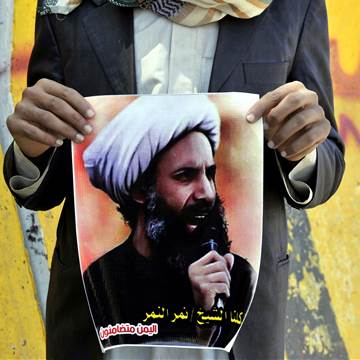
These were the exact words of the Nigeria’s Chief of Army Staff, Lt-General Tukur Buratai, when he gave account of how he escaped death in the hands of suspected members of Shi’ite Islamic sect who attacked his convoy over the weekend in Zaria, Kaduna State.
Buratai spoke to newsmen shortly after appearing alongside other service chiefs before the Senate Committee on Defence in the National Assembly Complex, Abuja.
Burutai said that his convoy was attacked despite pleas by a detachment of soldiers for the sect members to remove the blockade they mounted on the highway.
According to him, in an attempt to force their way through despite refusal of the sect members to grant them passage, the soldiers allegedly opened fire on Shiite members leading to the loss of lives. He said that the Shi’ite Islamic sect members were violent in their attack.
The army chief who called on Nigerians to be law abiding, warned however that “nobody should take the law into his hands.”
This is coming on the heels of claims by the Shiite group alleging that the army killed innocent and unarmed members of the movement at sight, all in the process of instigating uninformed members of the public against the group.
The group alleged that the Army killed about hundreds of its members following the clash with Buratai’s convoy. [myad]
The Federal Government is believed to be currently gathering details on the alleged shady circumstances through which it was ripped off in a security contract awarded to ZTEL Corporation of China in the sum of $470 Million.
It was gathered that the contract was agreed on in 2010 between the Federal Government and ZTEL for the supply and installation of 1,000 units of solar-powered Closed-Circuit Television Cameras (CCTC) in each of the two major cities of Abuja and Lagos among other technical services.
The contract became urgent for the monitoring of criminal activities against the background of the series of major bombings that trailed the tenure of the last administration of former President Goodluck Jonathan, especially the October 1st bombing, which occurred in the heart of the Federal Capital Territory, Abuja.
Investigations have revealed that ZTEL Incorporated, a firm doing business in Nigeria under the name ZTEL Nigeria, shortly after receiving $70.5 million as counterpart fund from the Federal Government, defaulted on critical areas of the contractual terms.
It was discovered that ZTEL’s impunity was made possible with clandestine connivance of top Nigerian officials, thereby allowing the firm to fail in playing its own part in the provision of the CCTV Cameras in the two cities.
Further investigations revealed that Lagos currently has less than 600 of such installations, while those so far installed in Abuja are not functioning, a situation that handicapped operational dragnet of all the security forces after the August 26, 2011 United Nations bomb blast in the same FCT.
Findings pointed to how the firm made a U-turn after receiving the $70.5 million, which was 15 per cent of the $470 million expected to finance the contract, leaving Nigeria with a loan debt of $399.5 million in the Chinese EXIM Bank.
The EXIM Bank, which agreed to provide to remaining fund, is equally suspected to be a party in the conspiracy as the bank has been taking its repayment at 3 per cent rate from Nigeria.
The continued repayment of the loan to EXIM, which will span 10 years, is despite the non-completion of the contract by ZTEL, its Chinese indigenous firm, and a step described as a disregard to its initial MOU with Nigeria on monitoring progress of the work.
Other findings also revealed that ZTEL fell short of government’s expectations by not honouring in accurate terms supply of series of auxiliary communication gadgets, which include 37 units of Switch Rooms (MW backbone) and 37 units of Coalition Emergency Response Systems.
Others are six units of Emergency Communication Vehicles, 37 e-police Systems and 38 Video Conference Sub-Systems.
While some of these items were said not to be supplied at all in most cases, others were supplied at reduced quantity under the nose of Nigerian Government top officials who allegedly received kickback from ZTEL.
ZTEL also violated another agreement in the contract, which stipulated that the Chinese firm would train Nigerian security experts for a certain period of time on how to read and interpret video recordings of the cameras in case of criminal or bomb attacks.
Security sources revealed that attempts to secure experts’ transfer training from ZTEL yielded no results as the firm itself did not operate the installations for once before handling them over to the Federal Government through the ministry of Police Affairs.
There are also questions over why ZTEL Corporation of China, which bided and got the job, refused to execute it directly as contained in the agreement.
Rather it later sublet the job to ZTEL Nigeria, a firm not known to the Federal Government in entire the deal.
According to ministry sources, a former Minister of Police Affairs, Caleb Olubolade, was said to have refused to issue ZTEL a certificate of completion on the contract following what he described as “a shoddy job and poor contract supervision” inherited from his predecessor, Aminu Adamu Waziri.
Meanwhile, the Nigerian House of Representatives is spoiling for a showdown with ZTEL over its failure to complete and meet all terms of the contract as the House has summoned the firm to appear before an investigative hearing slated for this week.
The House is also said to be interested in determining to what extent the Chinese nationals of ZTEL have been paying taxes to the coffers of the government. [myad]
A fresh book just out of the print is obviously the Abraham Nwankwo’s Economic Prophecy on Problems and Solutions of the Current Crisis for Nigeria. The author, fortunately, is the current Director General of the nation’s Debt Management Office (DMO) and an economist of the first order. Dr. Nwankwo obtained his Bachelor’s, Master’s and Ph.D degrees in Economics from the University of Nigeria, Nsukka. The book, titled: Stable Growth and Foreign Exchange, is one that should be embraced by all who want to hear the truth about how countries, especially Low Income Countries (LICs), can experience stable growth and how they can use their foreign exchange earnings rationally to avoid the type of crises that have become recurrent as a result of the irrational application of resources earned during export boom periods. Described as a “simple analysis” by the author, Stable Growth and Foreign Exchange is a robust, intense and brutally frank examination of trends in LICs that must be reversed for these countries to begin to experience stable growth. It is even more compelling for all patriotic policy makers in Nigeria to revisit this book at this time of serious economic challenges arising from a drastic fall in the prices of crude oil, the major source of foreign exchange for the country. Of course, other countries that rely on the export of other primary commodities like cocoa, rubber, coffee, vegetable oil, must also learn the lessons taught by this small but mighty book, to avoid repeating the mistakes of the past. Nwankwo said pointedly that the book of Nine Chapters and two Annexures, “focuses on how foreign exchange can be utilized to enhance stability in the process of economic growth, with special reference to Low Income Countries.” The scholarly work, from Chapter One, acknowledges that the recurring acute balance of payments crises that often confront LICs is a major challenge of international economic relations and economic development, pointing out that such situations that result in shortage of foreign exchange have often led to imposition of trade restrictions, the banning of importation of commodities, including raw materials and equipment, which have led to factory shut downs and retrenchment of workers. These unfavourable conditions often follow booms in export of the primary commodities of the affected countries. It is usual to portray the LICs as helpless victims when such reverses occur but Nwankwo insists that such sentiments are ‘’only partially true” because in reality, these LICs could have taken steps to avoid or minimise the effects of such crises. In the concluding Chapter of the book, for instance, he states categorically that LICs “are not helpless victims of crises in the international economy. They too, contribute to their problems and can thus play a positive role in providing the solutions.” He takes time to outline the “Seeds of Crises in the Structure of Foreign Trade” in Chapter 2 of the book published by Evans Brothers (Nigeria Publishers) Limited in 2011, using Colombia, Ghana and Nigeria as case studies of “the boom- crises sequence.” He also dissects “Permanent Income Hypothesis, Rational Expenditure and Stable Growth” in Chapter 3 and the “Bayesian Decision Theory and Optimal Expenditure” in Chapter 4. Chapter 5 deals with “Imports, Growth and Stability,” Chapter 6 stresses “Foreign Investment By LICs: New Path to International Economic Order,” while Chapter 7 dwells on “Economic abilization: Theory and Experience.” In this Chapter Dr, Nwankwo explains the interaction between internal and external instability, automatic and discretionary stabilization, effectiveness of alternative control measures and very importantly, the benefits of crisis to LICs. This last section of Chapter 7 is very instructive, especially for Nigeria and other such countries which are presently going through crises induced by drastic fall in foreign exchange earnings. The wholly home grown scholar explains in this section, as he does at every opportunity he has, that Nigeria and other such countries must learn from their crises to look inwards for the solutions to their problems. According to him, ‘’economic crises, as undesirable as they are may, nevertheless, provide the impetus for future economic progress,” stressing that “LICs may benefit from foreign exchange crises if they respond to the challenges positively.” How should they response to the challenges positively? Abraham Nwankwo says in Stable Growth and Foreign Exchange that crisis is an opportunity for them to “critically reappraise their strategy of participation in the international economy.” He insists that they should shun overdependence on industrialised countries from where they are misled, by their export booms, to import even basic items that they have capacity to produce, like food and other agricultural products. “Crises is an opportunity for adjustment towards a higher degree of self reliance,” he categorically asserts. He posits further that ‘’ Crises is also a time to learn the painful lesson that massive importation of capital goods for heavy industrialization is unlikely to lead to sustained growth and development. It is a time to learn that such a process of industrialization increases the vulnerability of the domestic economy and inhibits the type of industrial progress that is based on gradual but self propelled development of local resources, material and human.” Pressing home the point, he insists that ‘’Meaningful industrial progress must be based on the systematic, even if gradual, upgrading of existing locally generated techniques, skills and concepts and the invention of new ones by indigenes, as attempts are made by man to respond to the challenges of the environment. The adoption of foreign technology should be minimal and selective,” he strongly counsels. He also points out that at such periods of crises, when it becomes difficult or impossible to import finished products or raw materials and machinery, people are challenged to invent and innovate. At such times, he says, “local craftsmen and entrepreneurs are likely to be stimulated into introducing new products and processes to satisfy demand.” The 100 % Nigerian-educated Economist insists that a major problem of the LICs is the ‘’pathological misconception that is complacently accepted, particularly when local problems can be solved from outside,” of inability to solve problems facing them by themselves through internal self-help. Though it would be preferred that mistakes are not made and that crises do not occur, the author of the book avers that what is critical is the ability of any country concerned to quickly learn the necessary lessons and make the needed adjustments, including “internal restructuring of the economy.” Nwankwo’s economics is pragmatic and unapologetically nationalistic and this reflects in his prescriptions which favour development of agriculture and local manufacturing of items that can be exported to break the monopoly of crude oil as the dominant source of foreign earning; a monopoly that easily results in crisis once there is a slump in the price of the commodity as is the case presently. A public debt manager per excellence, Abraham Nwankwo sets aside Chapter 8 of his book to explain the relationship between public debt management and stable growth, pointing out that since governments of LICs “depend significantly on borrowings from external and domestic sources to finance their growth and development programmes …a satisfactory understanding of the subject of stable growth requires some understanding of the nature of public debt and its management.” He goes ahead to consider, not only the size, sources and application of public debts but their structure, the risks and how to manage the risks, which, he says, if they crystallize, could have “a direct bearing on the stability of the economy…could have virtually unmanageable adverse consequences for the growth process.” Like most consummate economists, Nwankwo sees nothing wrong in public borrowing for provision of infrastructure and the funding of socio-economic projects and programmes but insists that only “a healthy and well managed public debt portfolio is required for stable growth of the economy.” In Chapter 9 “Summary and Conclusion,” he restates his position that LICs have a major role to play in solution of their growth and development challenges especially arising from foreign exchange crisis, stressing for the umpteenth time that “the concentration of exports on a few primary commodities is certainly perilous” and warning against irrational utilization of boom-time foreign exchange earnings, which he explains, are often transitory. He counsels that imports should be directed into production of export goods to guarantee continued capacity to import and enhance growth; and that LICs should diversify their foreign exchange earnings through investment in the economies of their major industrialized trading partners. While encouraging LICs to design policies and operate their economies in ways that would prevent crisis, the author goes ahead to suggest ways to overcome such crisis when they occur. Although he ends his monumental study on the pessimistic note that “LICs hardly learn from their past experiences,” Nwankwo believes that “economic crisis may produce the shock therapy necessary to jolt up an otherwise complacent, overly dependent, indulgently importing, underdeveloped country into active exploitation of local resources,” stressing that “crisis provides an opportunity for inventions and innovations by engendering a siege situation.” At a recent forum, he said that for instance, what had been considered an oil doom could turn around to become a blessing by forcing Nigeria to look inwards. How much progress or otherwise LICs make, therefore, he says, will depend on how they respond to the crisis they encounter. “If they respond poorly, crisis and frequent interruptions of growth will persist. If they respond effectively by preventing the reoccurrence of past mistakes, not least through rational expenditure of export revenues, they may well be on their path to sustained economic growth and development.” It is believed that the efforts of the current change government of President Muhammadu Buhari are geared towards the correction of the mistakes of past governments, including their irrational use of foreign exchange earnings and overdependence on a single export commodity. The 144-page book is a must read for all policy makers, especially those involved in the planning of the economies of LICs, and even those of> developed economies, who need to have a better understanding of how to relate with LICs for a more balanced and mutually beneficial international economic order. Stable Growth and Foreign Exchange should also be a compulsory handbook for all students of Economics at all levels of the educational ladder as it is simple yet sublime, easy to read and a nugget of inestimable value. Besides policy makers and students who necessarily must read and reread this collector’s item, it is also recommended for every human being because the lessons taught therein are tailored towards guiding the average reader to take decisions concerning personal and business moves that would result in stable growth. Tables and figures graphically illustrate and simplify the points the author of three other works of creative writing (drama and poetry) is making in this timeless book that has a hint of the prophetic.
Book Title: Stable Growth and Foreign Exchange Author: Abraham E. Nwankwo Publisher: Evans Brothers (Nigeria Publishers) Limited Year of Publication: 2011 Number of Pages: 144. [myad]
The Minister of State for Petroleum and Group Managing Director of the Nigerian National Petroleum Corporation (NNPC), Dr. Ibe Kachikwu, has revealed that the total subsidy figure in 2015 when taken along with the expenses of the NNPC will be in excess of N1 trillion. Kachikwu, who made this known an interface on Medium Term Framework Expenditure with the Joint Committee of the Senate and House of Representatives, said the current pricing does not need subsidy funding. He informed the joint committees that from August this year, NNPC had been exceeding two million barrels daily production through stringent monitoring of production by getting quick fixes to instances of pipelines vandalisation. In his words: “The total subsidy figure for 2015 when taken along with the NNPC will be in excess of N1 trillion. “We can get this specifics but the point is largely that it does not involve NNPC because the agency takes its off-cuff. “We will work towards taking those figures off our budget in 2016. “They are critical issues. “ The current pricing work we are doing had shown that there shouldn’t really be subsidy. “The government doesn’t need to fund subsidy. “There is energy around the removal of subsidy. “Most Nigerians we talk to today, would say that’s where to go. “I have since left the dictionary of subsidy by going to price modulation, which is a bit more technical. “Price of refined products today is N87. “It was N97 before it was removed and we really have to go back to that because we don’t really have the finance to remove it. “There are lots of safety barometer between the N87 and N97 per litre regime, which government doest not have to fund subsidy. “Yet the prices would be fairly close to what it used to be today. “That is the first mechanism we are going to work. “It is when that mechanism fails that we will begin to look at a total subsidy exit. “We believe we could achieve that. “From August this year, we have been exceeding two million barrels daily production through stringent monitoring of our production by getting quick fixes to instances of pipelines breaking. “The internal projection for our system next year is in excess of 2.4 million barrels, which is coming from enhanced and increased production from Nigerian Petroleum Development Company field. “A lot of efficiency had really been applied in this regard. “NPDC will, for instance, be producing 300,000 barrels on its own, while other partners would process at least 2.2 million barrels. “We would address issues of security and other impediments to the realization of our target. “We are looking at a collective and holistic handling of security issues between the NNPC and the oil majors with us taking the lead.” On the oil price benchmark of $38 for the 2016 Budget, Kachikwu said: ”The projection at OPEC was along the line of the fact that once we do not interfere in terms of production cost, it will lead to a southward movement in terms of pricing. “We expect an increase as from early January when we expect it go up by $45 to $50 per barrel in spite of OPEC projection. “We expect it to hit $70 per barrel in 2017.” [myad]
Governor Adams Oshiomhole of Edo State has presented the state’s 2016 Budget of N111.5 billion to the state House of Assembly for approval. The budget is 12.6 percent lower than the 2015 budget, revised downward to N127.01 billion due to economic realities..
While presenting the budget, tagged: “Budget of Finishing Well,” the Governor said that the reduction is in line with current economic realities, especially developments in the international oil market and the dwindling inflows from the Federation Account”.
Oshiomhole said that the policy focus of the Year 2016 Budget is the completion or near completion of ongoing road construction/rehabilitation projects across the state, and that roads at various stages of completion will be accorded priority.
Capital expenditure takes N58.9 billion, representing 52.84 per cent of the total budget, while the proposed recurrent expenditure is N52.6 billion, representing 47.16 per cent of the budget.
A breakdown of the budget shows that Education and Health sub-sectors take the lion share of the budget with N14 billion each, followed by roads infrastructure at N9.24 billion and Flood and erosion control at N8 billion.
The Governor assured the people of the state that “in 2016 fiscal year, efforts would be geared towards substantial completion of all the outstanding Storm Water projects across the state, the completion of the Auchi, Queen Ede and Ekekhuan Gully Erosion remediation projects, substantial completion of all current streetlight projects and institutionalization of the process of maintenance of all built infrastructure, streetlights, drains, etc.
He said: “This administration is currently working on the designs for the following seven gully erosion sites approved: Ibore, Ewu, Emu, Ogiso/Osunde, Ambrose Alli University (AAU), and Auchi Agenebode Road gully erosion sites.
“The designs of Flood and Erosion Control Structures for Gapiona/Adesuwa Grammar School road to de-flood the Western part of the Benin City GRA, covering about 9 square kilometres is at advanced stage. Also designs for Urora Community in Benin City and Igbe Quarters in Auchi are being carried out.”
On funding for the budget, Governor Oshiomhole said: “It is now a common knowledge that given the vagaries in the international oil market, we can no longer depend on the revenue from federal sources to implement our development agenda. Therefore, it is imperative for this administration to look inward through expansion of our internal revenue base. In Year 2016, focused attention will be given to the actualization of new revenue sources such as the Land Use Charge and the automation of revenue collection process via the implementation of Integrated Tax Administration System.
“It is our desire to sustain the sensitization of our people to see the need for prompt payment of taxes in order to execute the laudable people-oriented programmes/projects of this administration. On our part as Government, committed to the principles of transparency and accountability, let me assure you that we will make judicious use of all revenues at our disposal. While we remain true to our pledge, I wish to appeal once again to all and sundry not to politicise this important issue that borders on civic responsibility and our collective survival as a State and as a people.” [myad]
Minister of science and technology, Dr. Ogbonanaya Onu has observed that the neglect of science and technology by successive governments has turned Nigeria into a consumer nation rather than a producing and an industrialized country. The minister who had a meeting today with the National Council on Science and Technology at the Transcorp Hilton Hotel, Abuja, insisted that science and technology are the key that can unlock the door of prosperity for any nation. Saying that “no nation has ever become great without them,” Dr. Onu pledged to effectively deploy science and technology toqards addressing the huge developmental challenges facing the nation. He enumerated the benefits of science and technology, including in the areas of fighting crime, building the necessary industrial and military complex that can satisfy the important and urgent needs of our defence and intelligence community, fight corruption, educate the people and create jobs for the young and old alike. The minister said also that science and technology can help to create wealth, reduce poverty, increase the nation’s capacity to on build roads, generate power, build railways as well as marine and airport. Onu said science and technology can also help “treat our sick in our own hospitals, manufacture locally the goods we need, provide the services that would promote tourism, improve our communication, strengthen our currency and above all secure a knowledge based, innovation driven economy that not only grows but is sustainable.” According to him, some countries of the world that have no natural resources as much as Nigeria have deployed science and technology to become economic and technology giants. [myad]
The Judge of the National Industrial Court of Nigeria, Abuja, Justice Peter Lifu has openly expressed anger over the way the Inspector-General of Police (IG), Solomon Arase, disrespected his order to appear before it on alleged contempt of court, even as he asked the Police boss to unfailingly appear before the court on February 8 next year to show cause why he should not be committed to prison.
In a ruling he delivered today in a post-judgment case on wrongful dismissal of Sergeant Atabo Okpanashi Justice Peter Lifu exploded: “the IG thinks that he is a big fish and has refused to obey the order of the court and has not even sent a representative or any apologies all through the case. He feels he can do anything with impunity.
“With this new era of change, one would have thought that the I-G, being a number one law enforcer, would have known that he is not above the law and must comply with court orders. “By the rules of the court, my oath of office and regulations of the National Judicial Council, I order that the I-G be present in court on Feb. 8 to show reason why an order for committal to prison should not be made against him. “It is not good that the Nigerian Police Force, a public institution, and the court, another public institution, should be on a collision course, it would create a state of anarchy. “On December 2, this court granted a short adjournment till today for the Police institution to purge itself of contempt by registering appearance. “The refusal of the I-G to appear before the court after several notices were served on him is the height of impunity.’ Okpanashi had sued the Police before the court over his wrongful dismissal and had demanded payment of all his entitlements and emoluments. On May 13, 2014, the court had in a judgment ordered the reinstatement of the sergeant and the payment of all his entitlements and emoluments. The court had held that Okpanashi was wrongfully dismissed in July 2009 on the purported allegations of discreditable conduct, breach of contract and corrupt practices leveled against him by the Police. More than one and half year after the judgment, the Police Service Commission had complied with the court by reinstating Okpanashi on Dec. 8. The I-G had, however, failed to effect the payments of Okpanashi’s entitlements thereby resulting in the post judgment case. [myad]
We use cookies on our website to give you the most relevant experience by remembering your preferences and repeat visits. By clicking “Accept”, you consent to the use of ALL the cookies.
This website uses cookies to improve your experience while you navigate through the website. Out of these, the cookies that are categorized as necessary are stored on your browser as they are essential for the working of basic functionalities of the website. We also use third-party cookies that help us analyze and understand how you use this website. These cookies will be stored in your browser only with your consent. You also have the option to opt-out of these cookies. But opting out of some of these cookies may affect your browsing experience.
Necessary cookies are absolutely essential for the website to function properly. This category only includes cookies that ensures basic functionalities and security features of the website. These cookies do not store any personal information.
Any cookies that may not be particularly necessary for the website to function and is used specifically to collect user personal data via analytics, ads, other embedded contents are termed as non-necessary cookies. It is mandatory to procure user consent prior to running these cookies on your website.