Former Nigeria Vice President, Atiku Abubakar, will turn 69 tomorrow, with a pledge that he would continue to devote his remaining life in the course of advancing democracy and education in the country.
According to his Media Adviser, Paul Ibe, in a statement today to mark the birthday, Atiku was quoted as saying that he used to get enduring joy in seeing people around him being empowered with jobs, skills, income and opportunities through investment.
The former vice president has provided scholarship both in Nigeria and abroad to thousands of needy Nigerian students and had also built several schools across the country. This included the American University in Yola which he founded with the cooperation of the American University in Washington, among others.
The university, which was started 11 years ago, presently, has 1,500 students.
Although a private university, the 60 per cent subsidy from the former Vice President has enabled children of both the rich and the poor to gain access to world-class education, the statement stated.
The statement quoted Atiku as saying that gifted children, “regardless of their parental background, are also afforded opportunity to better their fortune in the university.
“The university not only helps students acquire first rate degrees, but promotes entrepreneurship courses to meet the challenges of the present Nigerian realities.”
Atiku said that he has been inspired by his early life experience as an orphan who struggled through life to make it to the top, adding that he is not only committed to education, but that he has dedicated his life to bringing succor to humanity.
The statement said that the former vice president had donated to worthy causes to tackle many deadly but preventable diseases like the now eradicated polio and had identified with the Internally Displaced Persons (IDPs).
“Atiku is also an exponent of peace, unity, tolerance and peaceful coexistence as exemplified by the setting up of the Adamawa Peace Initiative (API) by the America University.” [myad]
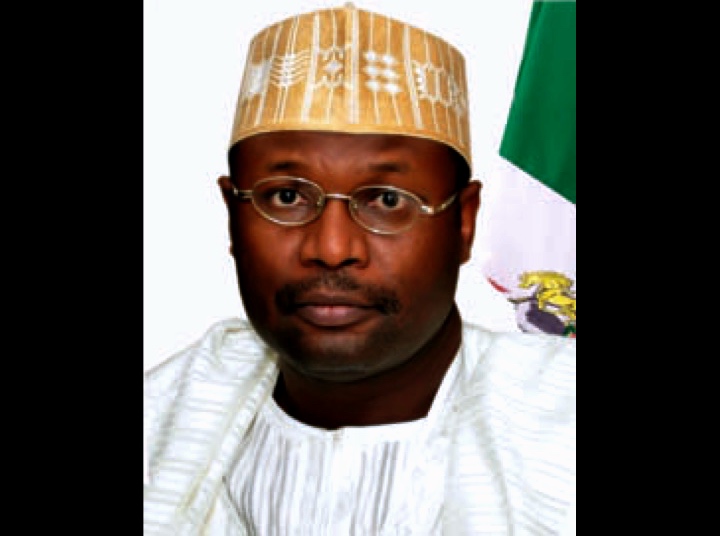
The Peoples Democratic Party (PDP) has asked the Attorney General of the Federation (AGF), Mallam Abubakar Malami and the Chairman of the Independent National Electoral Commission (INEC), Professor Yakubu to immediately tender their resignation for arriving at a decision to ask the All Progressives Congress (APC) to substitute its candidate in the inconclusive Kogi state governorship election.
A statement by the PDP’s spokesman, Olisa Metuh said the party was shocked that INEC, “a supposedly independent electoral umpire could allow itself to succumb to the antics of the APC by following the unlawful directive of an obviously partisan AGF to substitute a candidate in the middle of the ballot process.
“We are all aware that the two legal documents guiding INEC in the conduct of elections; the Constitution and the Electoral Act, have provisions for electoral exigencies as well as empower the electoral body to fully take responsibility for any of its actions or inaction without undue interference from any quarters whatsoever.
“We are, therefore, at a loss as to which sections of these two relevant laws, INEC and the AGF relied on in arriving at their bizarre decision to substitute a dead candidate in an on-going election even after the timelines for such has elapsed under all the rules.
“INEC as a statutory body has the full complements of technical hands in its legal department to advice it appropriately and we wonder why it had to wait for directives from the AGF, an external party, if not for partisan and subjective interest.
“Consequently, the PDP rejects in its entirety, this brazen move by the APC and INEC to circumvent the laws and ambush the yet-to-be concluded election by introducing a practice that is completely alien to the constitution and the electoral act.
“The clear implication of this action of the AGF and INEC is that the APC would be fielding two different governorship candidates in the on-going Kogi election, meaning that INEC would be transferring votes cast for late Prince Abubakar Audu to another candidate, scenarios that have no place in the constitution of the land.
“Whereas the PDP, in honour of the sanctity of human life and respect for the dead, had since Sunday refrained from making comments on the conduct of the election, we can no longer maintain such in the face of the barefaced attack on our democracy.
“This INEC under the leadership of Prof. Mahmood Yakubu has shown itself as partisan, morally bankrupt and obviously incapable of conducting a credible election within our laws.”
“In view of the foregoing therefore, the PDP demands an immediate resignation of the INEC Chairman, as the nation’s democracy cannot afford to be left in the hands of an electoral umpire that cannot exert its independence and the sanctity of the electoral process.” [myad]
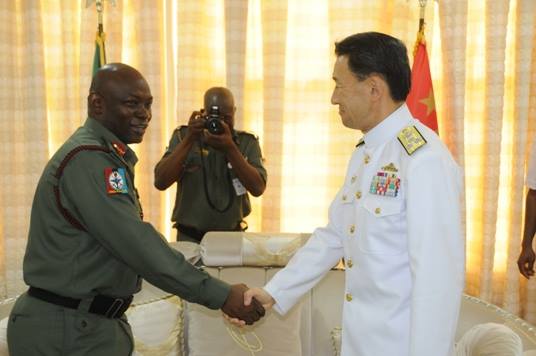
The Chief of Defence Staff, General Gabriel Olonisakin has admitted that there are a lot of things Nigeria army could learn fro their Japanese counterparts. He added tha sharing ideas and experience with Japan could be beneficial and rewarding to the Nigerian Armed Forces. General Olonisakin spoke today when he hosted the President of Japanese Maritime Self Defence Force Command and Staff College, Vice Admiral Umio Otsuka in his office. The Nigeria army chief said that the Nigerian Military appreciated and valued stand Japanese advancement in science and technology, and its proficiency in the production of military hardware. According to him, the visit of the Japanese top military officer to Nigeria would deepen the synergy of purpose and existing cooperation between the two friendly countries. Meanwhile, Vice Admiral Umio Otsuka has commended the Armed Forces of Nigeria on the success recorded in the fight against insurgence. He said that his visit to Nigeria has afforded him the opportunity of cross regional experience and was glad to be in Nigeria which he described as a great country in world politics. He pledged his country’s continuous cooperation with Nigeria, especially in its war against terrorists that has now assumed a global status. He made it clear that the war against terrorism must also take the global efforts for it to be stamped out. [myad]
The All Progressives Congress (APC) has announced the decision to conduct a fresh primary in Kogi state to pick a candidate to replace Prince Abubakar Audu, who died on Sunday shortly after the governorship election was declared inconclusive by the Independent National Electoral Commission (INEC).
The National Chairman of the party, Chief John Odigie-Oyegun who announced this today said that the party took the decision after receiving a letter from INEC that it could replace late Audu.
The need for the fresh primary was necessitated by the death of its candidate for the election, Prince Abubakar Audu. The INEC had said earlier today that the APC could replace Audu even as it fixed December 5 this year for the conduct of the supplementary election in 91 polling units where elections were either canceled or not held at all. no date was fixed however by the APC for the primary, but it might not be later than end of this month. [myad]
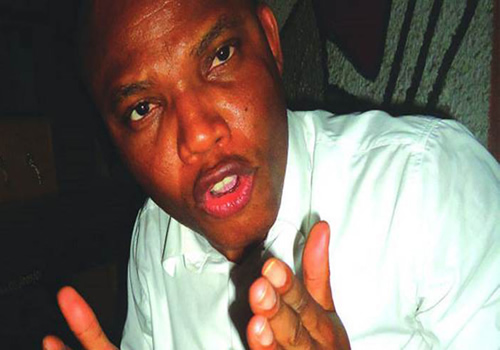
The leader of the Biafran Republic agitators, Mr. Nnamdi Kanu is to remain in detention for another 90 days on the order of the Federal High Court, Abuja.
The 90-day grace granted the Department of the State Service (DSS) was to enable investigation into the allegation of acts of terrorism and financing of terrorism leveled against the Biafran leader by the federal government.
Counsel to the DSS, Moses Idakwo, at the resumption of trial of Kanu in Abuja, drew the attention of Chief Magistrate Shuaib Usman, to the federal high court order of Justice Adeniyi Ademola, granting further detention of Kanu for another 90 days.
Idakwo therefore asked the magistrate court to step down from the trial of Kanu on the ground that the court lacked power to prosecute terrorism charges.
The Biafran leader was however, produced in court in compliance with last week’s order of the magistrate court but with heavy security escort.
Counsel to the accused person, Vincent Egechukwu Obeta, objected to the order of the court and the application that the magistrate court steps down from Kanu’s trial. [myad]
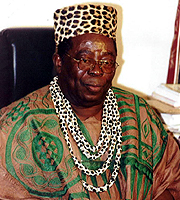
The paramount ruler of Tiv nation in Benue state, Tor Tiv, Dr. Alfred Akawe Torkula (Ochiviri IV) is dead. His death, at the age of 71, was confirmed today by the Benue state governor, Samuel Ortom. The Governor said that he was waiting for the Tiv traditional council to formally communicate the news to him. “As I am talking to you now, the Tiv traditional council members have just left Gboko to formally communicate to me the passing away of the paramount ruler.” Ortom disclosed that details of the death and formal announcement would be made public later in the day after he had been formally notified by the Tiv Traditional Council. Aged 71, the Torkula who became Tor Tiv on April 21, 1991, was until his death, the Pro Chancellor of Michael Okpara University, Chairman, Benue State Traditional Council of Chiefs. [myad]
President Buhari delivering his address at the plenary session of the 3rd summit of the Gas Exporting Countries Forum in Tehran Iran on 23rd Nov 2015
President Muhammadu Buhari has formally declared a sustained war against pipeline vandals and thieves that have continually sabotaged and undermined the efforts of the government to increase power supply in the country.
Buhari vowed in Tehran, the Islamic Republic of Iran, that that existing Military Task-Forces will be reorganized to ensure a successful protection of the network of gas pipelines.
He emphasised that the Military Task-Forces with representation from the Army, Navy, Air Force, the Police and other security agencies will be reconstituted to secure the pipelines. “Supplies will become steady; there will be less sabotage as we secure the pipelines,” he stressed.
The President, who was answering questions from the Nigerian community in that country, said that even though some improvement in power had been recorded in the recent period, but that sabotage of pipeline installations continued to be a problem.
He told his audience that Nigeria had everything it takes to generate enough power, saying: “Power is a running battle because the saboteurs are still there. We have the potential. We have gas, we have qualified people but we are contending with a lot of saboteurs who go and blow up installations. When gas is pumped to Egbin and such other power stations, thieves and saboteurs such as the militants cut those supplies.”
According to President Buhari, another factor is the reduced role of the government in the sector due to the privatization of the institutions under the Power Holding Company of Nigeria (PHCN), in the process of which, he said, the facilities “have been sold to a number of interest groups.”
President Buhari also spoke on the efforts of his administration towards ending the Boko Haram insurgency and terrorism in the country, explaining that a lot had been achieved following the reorganization of the military top command, followed by increased equipment supply and training.
In a response to a question on the need to improve healthcare delivery, the President said that efforts had been intensified towards ridding the country of fake drugs and fake doctors, and also what he called “the disgraceful aspects” manifested by “baby factories.”
He also enumerated several steps being taken towards the revival of education from primary school level to university. On the creation of jobs, he placed the prevailing joblessness in the country at the door-step of the last administration which he blamed for giving “a devastating blow to the economy through corruption and incompetence.”
The President said that something urgent will be done about the bad condition of roads, citing the Lagos-Ibadan Expressway as one to be addressed from next week by the Minister of Works, Power and Housing, Babatunde Fashola, who sat next to him at the meeting.
Speaking on the issue of corruption, one of the three issues he identified as the priorities of his administration, President Buhari said that the necessity for compliance with due process of the law was responsible for the delay in the prosecution of the looters of the country’s economy. He noted however, that the “the day of reckoning is gradually coming.” He also revealed that a number of past officials had begun the voluntary return of stolen funds but expressed the view that his government was not satisfied with tokens.”We want to have everything back – all that they took by force in 16 years,” the President concluded. [myad]
The Independent National Electoral Commission (INEC) has fixed December 5 for the supplementary election in Kogi State, following the inconclusive election held last Saturday, November 21. The Commission also asked All Progressives Congress (APC) to find a replacement for the party’s governorship candidate, Prince Abubakar Audu , who died on Sunday shortly after the votes were collated and declared inconclusive,.
In a statement today, the commission gave notice to the 22 political parties which participated in the November 21, to get set for the supplementary election in the 91 polling units were elections were either cancelled or not held at all.
There were over 49,000 votes at stake for the supplementary poll in 91 polling units.
With the announcement, the controversies generated over what action INEC will take following the death of Audu have been laid to rest.
After the 21 local councils’ election results were collated on Sunday, with the APC leading while the incumbent Governor, Captain Idris Wada of the People’s Democratic Party (PDP) trailed behind with over 41,000 margin which INEC considered to be less than the number of cancelled votes.
Earlier in the day, the Attorney General of the Federation and Minister of Justice, Abubakar Malami (SAN) had said that INEC had declared the governorship election held in Kogi state last Saturday inconclusive, the election must be concluded, adding that the APC would have to substitute its candidate for the purpose of the supplementary elections.
Malami, who spoke in Abuja at a seminar organised by the Nigerian Law Reform Commission (NLRC) on the review of the National Environmental Standards and Regulation Enforcement Agency (Establishment) Act, was however, silent on the possibility of the party’s deputy governorship candidate, James Faleke, automatically becoming the governorship candidate.
On whether the substitution could result in Faleke becoming the governorship candidate, he said the choice was for the party to make.
“The issue is very straightforward. Fundamentally, Section 33 of the Electoral Act is very clear that in case of death the right for substitution by a political party is sustained by the provisions of Section 33 of the Electoral Act.
“And, if you have a community reading of that Section with Section 221 of the Constitution, which clearly indicates that the right to vote is the right of a political party and, the party in this case, which is the APC has participated in the conduct of the election.
“It is therefore apparent that the community reading of the two provisions does not leave any room for conjecture.
“APC, as a party, is entitled to substitution by the clear provisions of Section 33 of the Electoral Act. Also, Section 221 of the Constitution is clear that the votes that were cast were cast in favour of the APC.
“Arising from that deduction, it does not require any legal interpretation. The interpretation is clear, APC will substitute, which right has been sustained by Section 33 of the Electoral Act. So be it.
“The supplementary election has to be conducted along the line. It all depends on the appreciation of issues arising from the primaries conducted before now.
“There was a first and a second candidate. The primaries that had taken place over time had not by anyway been nullified. And it is recognized by law.
“But then, a further consideration would be the idea of conducting another primary, but that is not envisaged in view of the sustainability of the first primaries,” Malami said. [myad]
I am particularly astonished by my fellow countrymen who are agitating for an independent Biafran Republic. In my own opinion, I believe they already have it. There are no less than five autonomous states that are being ruled and governed by Igbo people. If you want to count just the Igbo nation, I don’t remember any time since the 1999 democracy, that a Hausa person or a representative of any other tribe has become the leader, governor or mayor of an Igbo state or city.
The Igbo people have their land to themselves. These lands have not been taken over by Yoruba, Hausa or any other nationality in Nigeria. Igbo still have their territory where they are predominantly populated. They have the right, freedom and the opportunity to build heaven on earth in their area, anytime if they so wish. If the Igbo man wants to make his own state or region better than any other state there is nothing stopping him from doing it. The only thing that will change, if they get an independent Biafra Republic, is just the name. They will still need to govern themselves, only this time without any allocation from the Federal Government of Nigeria. So can you imagine those Igbo states governing themselves but without any government allocation from the Federal Republic of Nigeria? To say the least, things will be much more difficult for those states.
As I am writing this, I can almost hear the objection coming from my Biafran brothers, I think some are thinking that “No, we are going to go with the oil states” which means in their own understanding, the South-South states of Nigeria also belong to Biafra. I am not too good in the history of Biafra itself so I will not take it upon myself to say if this is true or not, but one thing I am sure of is that the South-South states will need to declare their willingness to join the Biafran state. So far, as far as I know, none of the South-South states are willing to join Biafra. Even if they will not remain in Nigeria, they would rather stand alone. As things are however, these states are more than willing to remain in the Nigerian Union. In fact I just watched a few days ago, the video address of one of the South-South governors, banning the Biafra demonstrations in his state.
Another major challenge that the Biafran agitations and its actualization will create for the new Biafran Republic is that, as of today, the Igbos are hugely scattered all over Nigeria. It would not be an exaggeration to say that millions of Igbos are living outside of their enclave. Let’s take just the South-South states for example; if all the South-South states choose to remain in Nigeria, that will cause a huge economic and humanitarian catastrophe for the Igbo people. Can you imagine a situation where all Igbo people are been evicted from the South-South states? I can only imagine what a catastrophe that would be if all the Igbo people were to leave Port Harcourt today. If all these people were to leave their businesses, connections and in some cases their family members only to go and create the Biafran nation, there is just no way the economy of the Biafran nation would be able to absorb these people. For some of the people themselves it would be too late to start all over again, some of them would simply not survive it. My dear Biafrans, a second thought must be given to the idea of separation from the Nigerian nation.
I have only mentioned the South-South region that only consists of 6 states. What will happen if we begin to talk about the economic and humanitarian consequences of evicting Igbo people from our two capitals, Lagos and Abuja? Igbo people control Nigeria, at least economically and socially, there is no official deprivation whatsoever in Nigeria for any tribe. Yes, I know of the killings in the northern part of Nigeria, but that is not a policy of deprivation if we are to talk about it. If there was such a policy, how come the Igbo people wield such a huge influence over the economy of the nation?
I know the objection of my Biafranfriends, most of the agitators claim that they will be better off without Nigeria. If they could produce so much in Nigeria, the argument is that away from Nigeria they will produce much more; well I personally doubt it. Let’s look at the facts. If Igbo people could produce more, what stops them from producing more in their own states where they have the right and authority to build the nation of their dream? Why can’t they produce more where they govern themselves with little influence from the Hausa, Yoruba and Fulani people?
I know there are a lot of thoughtful and analytical people in the Igbo nation. Let’s assume the Igbo people managed to get their Biafra Republic; that will limit their sphere of activities to the square kilometers that the Igbo nations control primarily. What that means in economic terms is that, for example, the Nigerian land mass is a thousand square kilometers; in that the Igbo nation will only be at most three square kilometers. The economic activities you can have in a thousand square kilometers far exceeds what you can do in 3 square kilometers. In Nigeria the Igbo people have access to much more land mass and territories for their businesses, social and political activities. In the case of a separation, that will limit the potential of the Igbo people.
Today, statistically, the Igbo people as I have said above, are the most enterprising people in Nigeria. As a result of their high level business activities the Igbo nation are responsible for between 60-70 percent of all imports into the Nigerian nation. Obviously, all these imports are being supplied to the Nigerian market. Nigeria provides for the Igbo people the market and the consumption of their goods and products imported. Their business acumen are being realized and better realized in a united nation than in a less and constrained geographical territory.
How can the Igbo people claim marginalization when they are responsible for 70 percent of the imports of the whole country? If you take Nollywood for example, the Igbo people control that as well. Many other spheres and economic life of Nigeria are under the control of the Igbo people. It is therefore illogical to talk about marginalization. If the Igbo people have been marginalized as the Southern Sudanese were marginalized in Sudan, or as the English speaking people of Cameroon are marginalized in Cameroon, they would not have been allowed to control 70% of all imports. As of 2008, 80 percent of our movie industry was in the hands of the Igbo people. Many Nigerian cities and states are totally dominated by the Igbos with no mass killing or eviction. In fact many of them are not just welcomed, especially in the western part of Nigeria, South- South, and the middle belt, many of them are actually celebrated.
I recently watched the world conquering Nigerian U17 football team. How beautiful it was to see that no nationality was protesting or complaining of marginalization in the national team this time. The picture of the national team was such that at least six of all the players were from the east (Igbo), Five were from South-South, two were from the west and all the rest were derived from among the over 500 tribes of Nigeria. Not a single one from the north, yet nobody complained. In a society where there is discrimination and deprivation, they would not have allowed the Igbo to control the majority of the spots on the team. But thank God that today in Nigerian sports, we are getting to a place where if you are good enough, you are allowed to express and display your talent. Believe me, in marginalized societies it doesn’t matter how talented you are, you are still not allowed to take the place of the majority nation. Friends, Nigeria has gone a long way, let’s work together to make it even better.
The Igbo community has been a blessing in every part of Nigeria, including the north where there has been a form of massacre of the Igbo people and the Christians in general. Yet in spite of that, it is hard to claim injustice and marginalization just against the Igbo people as a policy of the Federal Republic of Nigeria. Neither can the Igbo people claim that the other 515 tribes and nationalities of Nigeria have conspired to discriminate against them. That cannot just be true, otherwise they would not have their businesses virtually in every town and village in Nigeria. As small as my village is, with only about 40 or so houses, our commerce is being controlled by the Igbo people and we are happy about it.
Now, let’s learn a lesson of wisdom from an adage that says when we are loved, we often think that it is because we are good that is why we are loved. But in the real sense it is those who love us that are good. So also is the case when we are received and accepted by other people, we often think that we are accepted because we are so good. Sometimes we think it is because we are smarter than the other people, other times we think it is because we are the only gifted people around, that is why we are accepted, but maybe not all the credit belongs to us. Maybe we should just as well give some credit to the people who are tolerating us. Do you think that aspect should be considered as well?
I am afraid that my brethren that are agitating for Biafra might just have fallen into this trap of thinking that they are better than other Nigerians. In the real sense that could be so in some things, but they too must admit that other Nigerian tribes, nationalities, people groups, might just have areas where they too are better. We are all people; meaning in some things we are better than others, and in some things we are not as good as others. This is how God has created life and this is how He has created diversity. God has made us to be diverse so that we can learn from each other. Meanwhile, there is no way we will be able to learn or receive from each other until we admit that others too are better than we are in some areas.
I am not a prophet neither am I the son of a prophet, but as a servant of God I would like to give a word of warning to my brethren who are agitating for Biafra. I wish to sound an alarm in your ears that we should learn from history. I can almost guarantee you by the Spirit of God that if Biafra eventually gains independence and breaks away from Nigeria, a civil war might soon ensue within Biafra itself. Besides God’s Spirit, my assertion is backed by history.
It is no news to Nigerians that our Igbo nation is probably the most divisive nationality within itself. No wonder when Enugu state was carved out of the old Anambra state, the division within the Igbo people came out with sirens blaring. The desire to have all the national cake of the state “only for our own people within our state” prompted the leadership of the then Enugu state to evict the Igbo people of Anambra state from their civil service. Such was the blatant demonstration of division even within the Igbo people that the indigenes of Anambra were sent back to their state.
If this is only a matter of state, what will happen when it is real national cake within Biafra itself? I hear all the time how my friends from Imo state complain about Anambra people. People from Abia state who are Igbos also attack Anambra people. The same is also true of the people from Enugu and Ebonyi. Everybody fighting for their own piece of cake. Nowhere was this more evident than recently when the immediate past governor of Abia State, Theodore A. Orji, sacked workers from Ebonyi, Anambra, Imo and Enugu from the state’s work force.
It is difficult to see how the Igbo people would manage to find a place for all their teeming population to return from all over parts of Nigeria if the states are already fighting over jobs and employment only for their indigenes. What will happen when suddenly millions of people have to come back home without jobs, housing or occupation? It is scary to imagine what would begin to happen within the Biafra nation. Students of contemporary history will tell us that this is the exact scenario of what happened in South Sudan. The civil war that ensued as a result of their independence is still going on as I am writing within the South Sudan Republic itself.
WHAT IS MARGINALIZATION?
I pray that no Nigerian tribe, nationality or ethnic group will experience marginalization. As I am writing this, there are nations in the world that know firsthand what marginalization means in the real sense.
For a student of history, it is difficult to accept the accusation against Nigeria that Nigeria has not been fair to the Biafran nation. As I have said above, the Igbo people and the Biafran people have occupied every political, economic and military position in the Nigerian nation. A fact that should become a thing of pride for Nigeria is that Nigeria was able to assimilate the Igbo nation back into the Nigerian entity faster than most countries in the world who went through civil war.
In most countries where there has been civil war, the vanquished are always oppressed and marginalized for many years after. Usually, these people groups don’t enjoy the privileges of equal citizenship for decades after the civil wars. Even in most of the countries that we look up to as epitomes of democracy today, things did not go smoothly with them after their civil wars.
The country most of us like to refer to the most as our flagship is the United States of America. Their civil war ended 150 years ago, yet even today when you go to the southern part of America, you still hear them call the northerners names. That is where the name Yankee comes from. That is the abusive name the southerners used to call the northerners. Even today there are still conflicts, arguments and debates about the confederate flags in America 150 years later. Confederacy is what the southern part of America that lost the war was called.
So, integrating a nation after a civil war is a tough process. I have personally been in cities in the southern parts of America where I have been told, northerners are not welcome in their towns and villages. I from Nigeria was welcomed, but they were not ready to allow those from the north to come to their land. Such is the nature of civil wars almost everywhere, integration and reconciliation is always a tough process. The same thing happened after civil wars in Greece, Italy, Austria, Spain, Nicaragua, Germany, Finland, Russia, Mexico, China, India, Great Britain, Argentina, France, etc.
If you study the history of civil wars, you will discover that Nigeria has become one of the most successful countries in integrating back into the nation the secessionists. Can you believe that immediately after the Nigerian civil war finished in 1970, instead of the Federal Government of Nigeria imprisoning or killing by firing squad all the leadership of Biafra, who took the nation to war, they rather forgave them and accepted them back to a United Nigeria? In the words of the then Head of State, there was “no victor no vanquished.” Meaning Nigeria was not going to treat the Igbo people as a defeated enemy, but as brothers and sisters. That was a high level of magnanimosity displayed by the Nigerian nation.
Moreover, all Biafran people were given a twenty pounds stipend to start their lives again. That could be viewed as small or nothing today, but when you study other nations where there had been civil war, you will hardly see or hear of any gesture like that. I recently read an article written by an Igbo man in America. He said 40 years ago the richest Igbo was twenty pounds rich, while today they are prominent in the list of the richest Nigerians. What he was trying to say is that, this is mainly due to the gifts and business acumen of the Igbo people. While that is true, remember what I said above, that it is also important to have the right environment. They were only able to attain that height, thanks to the fact that the Nigerian nation allowed it. This is normally not the case in countries where there had been civil wars. When we are loved, we have the tendency to think that it is because we are good, but really it is because those who love us are good.
The Nigerian government did so much to remove any trace of segregation from all Nigerian peoples immediately after the civil war. The Igbo people were quickly absorbed as part of the Federal government of Nigeria. In the western part of Nigeria, the properties of Igbos who left to join Biafra were kept intact and later returned to them. Soon after the civil war, the Igbos benefited immensely from the Udoji award, which was a gesture by the Federal Republic of Nigeria when the newly discovered oil money was used to give Nigerians a financial boost. This provided a huge lift for all Nigerians and the former Biafrans in particular.
Just ten years after the civil war, Nigeria did something that has hardly been recorded in the history of civil wars in the world. The Nigerian state decided to forgive the initiator of the civil war itself, Chief OdumegwuOjukwu. He wasn’t just forgiven, he was given political pardon so much that he could now participate in the nation’s political process. He was accepted back as a hero and soon participated by running for political office. That is something unfathomable after civil war. Such individuals were normally assassinated, their relatives and families banned into exile for life, if not for generations to come. Ten years after the civil war, the second most powerful person in Nigeria was an Igbo man, the Vice President Dr. Alex Ekwueme. Hardly will you ever find a more tolerant approach in the whole world.
Some of my Biafran friends might say, but since the civil war we have not produced a President, well if we are talking about the Igbo people, that is true. But if I were to take sides with the Biafran agitators who claim that the South-South is part of Biafra we could say it has, because the South-South just produced a President in the person of GoodluckEbele Jonathan.
Let’s look at the history of the United States of America after their civil war. Even in the so-called most democratic nation of the world, it took another 80 years for the south who were defeated in the war to produce a nationally elected President. This is not counting Andrew Johnson who replaced the assassinated Abraham Lincoln. The first person to be elected nationally was Harry S. Truman 80 years after the war. Of course in Nigeria, I hope it is not going to take so long, but what I am trying to say is that there are processes that have to take place. Nigeria has done beautifully well in comparison to these countries that have gone through civil wars.
THINGS THAT HAPPEN IN A MARGINALIZED SOCIETY.
The marginalized group are not allowed to speak their native languages. Tell me who stopped the Igbos from speaking their language?
The marginalized group are not allowed to practice their religion. Are the Igbos not allowed to practice their religion?
A marginalized group are not allowed to carry out socio-economic activities on the level of the privileged groups. Are the Igbos not allowed to carry out socio-economic activities on the same level as everyone else?
A marginalized group is not given the right to be actively involved in the political life of the country. This obviously is not happening in Nigeria, because the Igbos have their own governors, they vote for their governors, the people who rule over them are of their ethnic groups. Some people will claim that those who rule over them came as a result of corruption; well that happens all over Nigeria, not just among the Igbos in the Igbo land.
In marginalized societies, the marginalized groups are not allowed to send their children to school or receive higher education, I don’t believe this is happening in Nigeria. In that sense, only the poor people are marginalized in Nigeria; since the Igbo people control the economy, they are surely not marginalized.
In marginalized societies, the discriminated groups are not allowed to intermarry with the privileged groups, we simply don’t have that in Nigeria. As I have mentioned above, even my family is intermarried with Igbo people. My nephew who is like a twin brother to me, married an Igbo girl and paid the full bride price or dowry as the case may be.
Marginalized people are not allowed to have a voice in the mass media: newspapers, television or radio. Igbos don’t just have that right in their own state, but even in most of the other states in Nigeria where the majority are not Igbos. Igbos are allowed to have their voice in the media all over Nigeria. I am not saying there are no cases of marginalization here and there, but this will be in individual cases not a systematized thing in the federal government of Nigeria against the Igbo people.
If we are to look at a list of marginalized people groups in our world today, we will see that we cannot compare what these people are going through to what the Igbos are enjoying in the Nigerian nation.
WHO ARE THE MARGINALIZED PEOPLE IN OUR WORLD TODAY?
THE KURDISH PEOPLE
A study into the Kurdish people will reveal to us what it means to be marginalized. These people are said to be largely marginalized in the true sense of the word in countries like Iraq, Turkey, Syria, etc. Despite the fact that it is well known that they are hugely deprived and oppressed, still they cannot break away from those countries to get their own nation. In spite of the fact that the whole world knows about their plight, no one country is willing to risk the benefit of cooperation with the existing countries to officially take the side of the Kurdish people. Friends, it is not easy to break away from a recognized state even in the case of oppression, much less when it is difficult to prove such cases.
THE PALESTINIAN PEOPLE
Thanks to mass media and worldwide television networks, everybody is pretty aware of the plight of the Palestinian people. As much as we love and support Israel, we cannot deny the fact that the Palestinian people are a marginalized group of people. Contrary to the belief of many, the Palestinians are not only marginalized by Israel, they are also marginalized in the Arab countries as well. They are marginalized in countries like Jordan, Syria, Lebanon, Egypt, etc. The level and stages of marginalization of the Palestinian people varies from one place to the other. It is impossible to say that in Nigeria, the Igbo people are as deprived as the Palestinian people.
THE TUTSI PEOPLE
We have all heard of the tragedy of Rwanda, where the Hutu nation committed a huge genocide against the Tutsi people. Most of the world talk about how wicked the Hutu people were to have murdered about a million Tutsis in a matter of days, but hardly do we ever question what it is that led to it. Well, what led to it is the story of marginalization. The Tutsis have always been the privileged few in the nations of Rwanda as well as Burundi. The massacre, therefore was an expression of the dissatisfaction with the form of marginalization, which had been practiced for years against the Hutu people. We all know how this ended. May God never allow us in Nigeria to experience what marginalization really means.
THE PEOPLE OF SOUTH SUDAN
The latest country to have gained independence in the continent of Africa is South Sudan. They fought hard and long for this privilege. They really knew what marginalization meant in the nation of Sudan. As black people, being significantly different from the Arab majority of Sudan, they were hugely marginalized and deprived. In their case, South Sudanese people will testify to you that all the factors of marginalization that were listed above were experienced by them. Needless to say, that situation led them to agitate for an independent state. It led to a protracted war lasting for over 30 years, before the international community agreed with them that they needed independence.
I am not sure the Igbo people want to forfeit all the privileges and opportunities they have now, to engage in a protracted war with the rest of Nigeria or any other nation. Peace is more important! This should be known better by the Igbo people who lost close to a million lives in the Biafra war. According to the words of the man who led that war, Chief OdumegwuOjukwu, “it will be foolish of anyone to try to start another war, there is no need for it.” That is what Ojukwu said before he departed from this world.
THE KOSOVO PEOPLE
The name Slobodan Milosevic has become synonymous with evil, thanks to the world television networks. He managed to earn that vicious title due to his treatment of the Kosovo people. Kosovans will tell you what marginalization means. It is true that Kosovo is now a semi-independent state, but they too will tell you how many lives were lost, and other losses they incurred before the world managed to pay attention to their plight.
Even today, not all countries have recognized Kosovo as an independent state. Hundreds of thousands of lives were sacrificed, yet they are still unable to enjoy their dream of a prosperous independent state. The man behind their suffering is the name I mentioned above; Slobodan Milosevic – The strong man of Serbia.
Unlike Serbia though, there is no overly dominating and controlling tribe in Nigeria, as was the case in Rwanda, Serbia, Yugoslavia, or even in Russia. The three main tribes in Nigeria are almost all equally balanced.
THE BLACK SOUTH AFRICANS
Without going far, it is easy for every African to associate marginalization with apartheid, when the black people of South Africa were largely marginalized in their own country. In spite of the obvious injustice of that regime, it took about 40 years of struggle before they could be recognized by the whole world as freedom fighters. As blatant as apartheid was, the countries of the world, especially developed western countries, did not support the armed resistance of the South African black majority. Nelson Mandela had to sacrifice 27 years of his life in prison before the world would grant the South African people their dream of equal rights.
I am sorry my dear Biafrans, what proofs and facts of marginalization can the Igbo people produce against Nigeria to justify their recognition by the international community as an independent state? It is virtually impossible in our modern world today.
THE PEOPLE OF ERITREA
Let’s go to the country of Eritrea and they will tell you how many lives they had to sacrifice before they could gain their right to independence. Beside the wars and damages that these people have had to endure, their struggle and campaign for independence lasted for years. I mean years of fighting, killing, bombing, shelling and destructions. Even after the war was over, they had to agonizingly endure decades of reconstruction. A Yoruba proverb says “it is only those that have not lived to see a war that dream about one.” I am not sure that the Biafran nation or the Igbo people are ready for another war that could cost them the very existence of their people.
THE HIGH PRICE OF INDEPENDENCE
Apart from these seven people groups that have been mentioned above, too many other people groups in their hundreds are struggling and clamoring on a daily basis for an independent nation even as we speak. If a detailed list were made, such people groups might run into a thousand. Can you imagine a thousand new countries emerging in our world today? It’s just not possible, they will not be recognized. It is going to create chaos and confusion.
Let’s have a quick look at some people groups that are agitating for their recognition or independence in our world today.
In Ukraine where I live, the eastern part of the country is agitating for independence with countless thousands of casualties already.
In Russia, the Chechen people, have been involved in two wars, yet they can’t get away.
In Afghanistan, the Taliban wants to build their own caliphate of Islamic state.
In Armenia, the Nagorno-karabakh people want their own recognition.
In Cameroon, the English speaking people have been struggling for years to have the same equal rights as the French speaking people. Some of them have been forced into exile, yet it has not been possible.
In Kenya, tribes have fought and spilled blood, yet no country has sided with any one of them to become independent.
In Great Britain, Northern Ireland has waged guerrilla war for years and still they could not get their full independence.
In Congo, part of the nation wanted to control their mineral resources, other foreign governments have only exploited them.
In Cyprus, the northern part of the country has been struggling for years, still they are not recognized as an independent nation.
In France, Guadeloupe and Basque have been fighting for years to be free and yet it is not easy to get their full independence.
In the Philippines, the Filipino guerillas have been living in the jungle for ages and they have not been able to build either their Marxist or Muslim nation.
In Sri Lanka, the Tamil Tigers have dreamt about independence but it has not been easy coming.
In Turkey, the Kurdish people have dreamt of building Kurdistan. They have fought for it, yet to no avail.
In Spain, the Basque nation has fought for their independence for years, still it is not coming.
In Mauritania, the minorities have been complaining of oppression, but no help and understanding has come from the bigger nations of the world.
What more can I say? A word is enough for the wise…
The diversity of our Nigerian nation is so beautiful. It is a glorious demonstration of God’s very own nature. Yet when diversity is not appreciated, it is abused and perverted.
“Celebrate diversity, practice acceptance and may we all choose peaceful options to conflict.” ― Donzella Michele Malone
If Nigeria had not consisted of these over 500 tribes, we would not have been as big and great as we are today. Today, Nigeria is the 7th most populous country in the world and could soon become the third most populous in the years to come (between the years 2030 – 2050). What that means is that Nigeria could soon overtake countries like, the USA, Japan, Brazil, Russia, Indonesia, Bangladesh, and Pakistan.
At times we underestimate the power of population. Friends, despise the size of a nation to your own detriment. The size of a nation plays a vital role in their positioning in the world. For example, no small nation can ever become a superpower. This is not an assumption, this is a fact.
Have you ever wondered why countries like Sweden, Switzerland, Austria, Singapore, Denmark, Belgium or other countries that are rich countries per capita are not superpower nations? It is because it is not the amount of money each citizen earns that determines the status and might of a nation. No matter how prosperous a small nation is, it is already limited if it has a small population. There is no way a small population could compete in production capacity with large countries with bigger populations.
This explains the reason why despite the fact that Nigeria is a third world country, our economy is bigger than the economies of some so called first world countries like Belgium, Norway, Austria, Denmark, Israel, Hong Kong, Singapore, Greece, Portugal, Romania, Poland, Ukraine, Belarus, Czech Republic, Luxembourg, Bulgaria, etc. Our economy is fast heading to be one of the top 20 in the world despite all our troubles and challenges.
Can you just begin to imagine what might happen when things begin to work for Nigeria? Our economy could easily double or triple if only the electricity supply would be constant. If we deal with the questions of infrastructure, we could be talking of Nigeria as being in the top 10 economies of the world. This is all thanks to the fact that we have a big population. The credit goes to all the tribes that make up Nigeria as one nation.
Another reason why countries with a large population should never be disregarded in this world is because these countries can easily become military superpowers. That is why European countries like Sweden and Belgium cannot be military superpowers while poorer countries per capita like India, Pakistan possess nuclear weapons. It is also for the same reason that while India was able to launch missions to outer space and the Moon, it is still poorer per capita than those European countries.
Dear Nigerians, our population is one of the greatest things that has ever happened to us. Our population is our trump card. If we had not had the population we have, things would have been desperate for us. It is a pity that Nigerians talk more about tribalism and other things dividing us instead of celebrating the beauty and the majesty we possess, thanks to the fact that we are together.
Just for comparison, let’s assume that the United States of America did not have the population it has, let’s say it had only 30 million people, there is no way they would have become the superpower of the world that they are today, neither economically nor militarily. Small nations don’t become superpowers, neither economically nor militarily.
That is why when America was smaller and consisted of only 13 states, they embarked on a mission of buying and taking over more lands and territories for the purpose of becoming a superpower in the future. That is what led to the addition of other territories like Texas, California, Florida and Puerto Rico to the entity of the United States of America, making them a super nation on the earth.
Can you imagine Russia being a superpower without its population? When Russia was a superpower, there were about 300 million people. After losing half of that population, Russia is no more the same anymore even though they are still a large nation of almost 150 million people. As the case may be, if Russia had 10 million or 20 million people, their production capacity would not have been able to pull them through to become a superpower. Only large populations create large economies.
There are many factors that make great nations great. The most important of those factors is the population. Apart from the production power of a huge population like China, there is also the vantage position of their purchasing power.
Let’s take China for example, people say China has the largest number of poor people in the world, but that is only a matter of time. The events of the last few decades and the rapid development of the Chinese economy has left no one in doubt that China indeed is the future of our world. It is on its way to overcoming the USA to become the strongest and largest economy in the world. It is just a matter of time.
The same thing with India. Even though there is a large number of poor people in India today, it also has one of the largest number of millionaires, the same as China. Today India, despite the fact that it is a developing country, now ranks as the 4th largest economy in the world. It is all thanks to their population. Nigeria and Nigerians therefore should be rejoicing and bragging about their good fortune to have managed to bring together so many diverse nations under one umbrella.
Have you ever heard of The European Union coming together? Do you think they had no reason in doing that? No my friends, it is because they know the power and the strength of diversity. They know the place of population in human development. Small, small nations even if they are 50, scattered all over Europe, are weak and defeatable without the strength of a combined population.
We don’t need to begin to go through that process of bringing tribes and ethnic groups together. It is already done for us either by chance or default. Whatever the case might be, Nigerians should be some of the most hopeful people on the planet, especially if we get our act together politically and economically.
It is my firm belief that our nation Nigeria is just on the verge of announcing her arrival on the world stage as the Rising Sun of the new age. This is not the time for us to begin to use tribalism to pull ourselves down. It is not the time for us to begin to lay emphasis on our old and outdated stereotypes, blaming one tribe or the other for all the woes of our nation.
SO WHO REALLY LOSES IN THE CASE OF NIGERIA’S BREAK-UP?
In my humble opinion, I think if the Igbo or the Biafran people secede from Nigeria, those who are calling for the breakup of Nigeria would have been proven right. I doubt the Nigerian nation would survive it. The most likely scenario is that if the Biafrans go, there will be some hot blooded Yorubas who might want to pull Yorubas out of the union as well, which I think would be absolutely unfortunate. I pray it never happens. The rest after that will be history.
Is it really to our mutual benefit that the Nigerian nation splits? I don’t think so for the reasons I have mentioned above. Who losses in the worst case scenario? I want to beg my brothers and sisters from Biafra not to view this as prejudice. Please take your time to read through my arguments first.
In the case that Nigeria breaks up, the northern people are going to be well covered contrary to the arguments of some. First of all, most of the northern states are Muslim states. The Islamic countries of the world will gladly take them into their embrace. Countries like Saudi Arabia, Kuwait, Qatar, will gladly pour money into the region. Incidentally, most of the northern neighboring countries are Islamic too. Countries like Niger, Chad, on top of them are countries like Tunisia, Mali, Algeria, Libya, Morocco, Egypt and Tunisia, that will automatically extend the presence of Islamic Africa down to the territory of Nigeria. It would be total dominance. They would push the whole Christian Nigeria down towards the Atlantic Ocean including the Igbo nation. That scenario is not a good one by any means, especially for the Christians in Nigeria.
So what happens to the Yorubas? The Yorubas are one of the most widespread ethnic groups in the world, surely in black Africa. If Nigeria should break up, the Yorubas also have people to embrace them. They will be readily embraced by countries like Dahomey, the present Republic of Benin, Togo, Ghana, Ivory Coast, Liberia, Sierra Leone and Burkina Faso. These are all countries where there is a significant presence of indigenous Yoruba people. The Yoruba people, no matter where they live see themselves as Yorubas still, speak the language and come back home to pay homage to their Yoruba roots in Ile-Ife.
Apart from the countries in Africa where there is a significant presence of Yorubas as indigenous citizens, the Yoruba nation is also well represented in the western hemisphere. Yorubas constitute a good number of citizens in such countries as Brazil, Cuba, Trinidad and Tobago, and the United States of America. In these countries, the Yorubas living there are not the recently migrated Yoruba diaspora, these are people who have been there for centuries, yet not losing touch with their Yoruba heritage. They would be willing to spread their arms to get back into a united family with their fellow Yoruba people.
What then would happen to the Igbo people? The Igbos would indeed be the ultimate losers and this is not sentiment at all. First of all, If Niger Delta South-South states don’t go with Biafra, the Igbo nation will be landlocked. Which means they will have no access to the sea, neither will they have direct access to the outside world by road. The nation will be forced to again rely on Nigeria to gain access to the sea, because it is only Nigeria and Cameroon that will border the Igbo land.
We know the attitude of countries in Africa to the Igbo people. To say the least, it is very hostile. Even now when they are in Nigeria, Africans often say, “you Nigerians are a trouble to us especially you yellow Nigerians” referring to the Igbo people. In countries such as Ivory coast, Gabon, South Africa, Central African Republic, Zambia, etc. It is a common saying by people there that “we used to know black Nigerians and live in peace with them until the yellow Nigerians began to show up for business.” What I am saying is that the Igbo nation will not find it as easy with Cameroon as it is with Nigeria. They will still need to come back to Nigeria to gain access to water and to the rest of Africa by road.
As you can see, these nations also have their grudges against the Igbo people. It is not just the Fulani or the Hausas that have grudges against the Igbo people as they have been accused. I know my Igbo friends say it is because of jealousy. Well, if you say the rest of Nigerians are jealous of Igbos that is understandable, but how can the whole world be jealous of the Igbos? Let’s face it, the Igbos also have their own issues that they have to deal with. As much as the wonderful qualities of the Igbo people have been praised by me above, the Igbo people must also face the fact that they need to address the issues of values in their people just like all Nigerians have to do.
Recently, the Nigerian government was involved in a diplomatic dispute with one of the countries of Southeast Asia, where an official said the Igbos are the “biggest curse of Africa.” When queried about his statement, the officer involved said he had evidence for what he was saying. In defiance, he uploaded a video onto YouTube where he repeated the same statement showing a number of Igbo people to back up his claim that 99% of all drug pushers they caught from Nigeria are of Igbo descent. The video is still there now for anyone to see.
I am sure my Igbo brothers and sisters remember that at their first attempt to declare independence from Nigeria, they never really had any major world power supporting them. They had sympathy from a few countries, but all European countries were mainly against the idea. America stood on the side of Nigeria and so did Britain. Though France was sending some humanitarian help, yet they never officially stood with Biafra. Even Russia took sides with Nigeria. What I’m trying to say ladies and gentlemen is that, I am afraid that the Biafran agitators could drive the Igbo nation into total isolation, as well as into political and economic oblivion.
The Lagos State AIDS Control Agency (LSACA) has expressed its determination to end HIV and AIDS by 2030 in Lagos. It then called on the private sector, communities and individuals in the State to join hands with the Agency to achieve the target. The Project Manager and Acting Chief Executive Officer of the Agency, Dr. Olusegun Ogboye made this position known when he briefed news men on the planned activities by the Agency to mark Year 2015 World AIDS Day. The celebration is themed: “Getting to Zero: Zero new HIV Infections, Zero Discrimination, Zero AIDS Related Deaths.” Ogboye appealed to the private sector, communities and individuals to play their part in the fight against HIV and AIDS towards eradicating the scourge in the State by 2030. He stressed that the support for the people living with HIV and AIDS is important because it would reduce the spread of the virus. He said that the Agency is using the opportunity of the 2015 World AIDS Day event, which comes up on the 1st of December, to reach out to key private players in the response to showcase their work and increase awareness on the dreaded disease.
We use cookies on our website to give you the most relevant experience by remembering your preferences and repeat visits. By clicking “Accept”, you consent to the use of ALL the cookies.
This website uses cookies to improve your experience while you navigate through the website. Out of these, the cookies that are categorized as necessary are stored on your browser as they are essential for the working of basic functionalities of the website. We also use third-party cookies that help us analyze and understand how you use this website. These cookies will be stored in your browser only with your consent. You also have the option to opt-out of these cookies. But opting out of some of these cookies may affect your browsing experience.
Necessary cookies are absolutely essential for the website to function properly. This category only includes cookies that ensures basic functionalities and security features of the website. These cookies do not store any personal information.
Any cookies that may not be particularly necessary for the website to function and is used specifically to collect user personal data via analytics, ads, other embedded contents are termed as non-necessary cookies. It is mandatory to procure user consent prior to running these cookies on your website.


 Former Nigeria Vice President, Atiku Abubakar, will turn 69 tomorrow, with a pledge that he would continue to devote his remaining life in the course of advancing democracy and education in the country.





Igbo Already Have Biafran Republic, By Sunday Adelaja
I am particularly astonished by my fellow countrymen who are agitating for an independent Biafran Republic. In my own opinion, I believe they already have it. There are no less than five autonomous states that are being ruled and governed by Igbo people. If you want to count just the Igbo nation, I don’t remember any time since the 1999 democracy, that a Hausa person or a representative of any other tribe has become the leader, governor or mayor of an Igbo state or city.
The Igbo people have their land to themselves. These lands have not been taken over by Yoruba, Hausa or any other nationality in Nigeria. Igbo still have their territory where they are predominantly populated. They have the right, freedom and the opportunity to build heaven on earth in their area, anytime if they so wish. If the Igbo man wants to make his own state or region better than any other state there is nothing stopping him from doing it. The only thing that will change, if they get an independent Biafra Republic, is just the name. They will still need to govern themselves, only this time without any allocation from the Federal Government of Nigeria. So can you imagine those Igbo states governing themselves but without any government allocation from the Federal Republic of Nigeria? To say the least, things will be much more difficult for those states.
As I am writing this, I can almost hear the objection coming from my Biafran brothers, I think some are thinking that “No, we are going to go with the oil states” which means in their own understanding, the South-South states of Nigeria also belong to Biafra. I am not too good in the history of Biafra itself so I will not take it upon myself to say if this is true or not, but one thing I am sure of is that the South-South states will need to declare their willingness to join the Biafran state. So far, as far as I know, none of the South-South states are willing to join Biafra. Even if they will not remain in Nigeria, they would rather stand alone. As things are however, these states are more than willing to remain in the Nigerian Union. In fact I just watched a few days ago, the video address of one of the South-South governors, banning the Biafra demonstrations in his state.
Another major challenge that the Biafran agitations and its actualization will create for the new Biafran Republic is that, as of today, the Igbos are hugely scattered all over Nigeria. It would not be an exaggeration to say that millions of Igbos are living outside of their enclave. Let’s take just the South-South states for example; if all the South-South states choose to remain in Nigeria, that will cause a huge economic and humanitarian catastrophe for the Igbo people. Can you imagine a situation where all Igbo people are been evicted from the South-South states? I can only imagine what a catastrophe that would be if all the Igbo people were to leave Port Harcourt today. If all these people were to leave their businesses, connections and in some cases their family members only to go and create the Biafran nation, there is just no way the economy of the Biafran nation would be able to absorb these people. For some of the people themselves it would be too late to start all over again, some of them would simply not survive it. My dear Biafrans, a second thought must be given to the idea of separation from the Nigerian nation.
I have only mentioned the South-South region that only consists of 6 states. What will happen if we begin to talk about the economic and humanitarian consequences of evicting Igbo people from our two capitals, Lagos and Abuja? Igbo people control Nigeria, at least economically and socially, there is no official deprivation whatsoever in Nigeria for any tribe. Yes, I know of the killings in the northern part of Nigeria, but that is not a policy of deprivation if we are to talk about it. If there was such a policy, how come the Igbo people wield such a huge influence over the economy of the nation?
I know the objection of my Biafranfriends, most of the agitators claim that they will be better off without Nigeria. If they could produce so much in Nigeria, the argument is that away from Nigeria they will produce much more; well I personally doubt it. Let’s look at the facts. If Igbo people could produce more, what stops them from producing more in their own states where they have the right and authority to build the nation of their dream? Why can’t they produce more where they govern themselves with little influence from the Hausa, Yoruba and Fulani people?
I know there are a lot of thoughtful and analytical people in the Igbo nation. Let’s assume the Igbo people managed to get their Biafra Republic; that will limit their sphere of activities to the square kilometers that the Igbo nations control primarily. What that means in economic terms is that, for example, the Nigerian land mass is a thousand square kilometers; in that the Igbo nation will only be at most three square kilometers. The economic activities you can have in a thousand square kilometers far exceeds what you can do in 3 square kilometers. In Nigeria the Igbo people have access to much more land mass and territories for their businesses, social and political activities. In the case of a separation, that will limit the potential of the Igbo people.
Today, statistically, the Igbo people as I have said above, are the most enterprising people in Nigeria. As a result of their high level business activities the Igbo nation are responsible for between 60-70 percent of all imports into the Nigerian nation. Obviously, all these imports are being supplied to the Nigerian market. Nigeria provides for the Igbo people the market and the consumption of their goods and products imported. Their business acumen are being realized and better realized in a united nation than in a less and constrained geographical territory.
How can the Igbo people claim marginalization when they are responsible for 70 percent of the imports of the whole country? If you take Nollywood for example, the Igbo people control that as well. Many other spheres and economic life of Nigeria are under the control of the Igbo people. It is therefore illogical to talk about marginalization. If the Igbo people have been marginalized as the Southern Sudanese were marginalized in Sudan, or as the English speaking people of Cameroon are marginalized in Cameroon, they would not have been allowed to control 70% of all imports. As of 2008, 80 percent of our movie industry was in the hands of the Igbo people. Many Nigerian cities and states are totally dominated by the Igbos with no mass killing or eviction. In fact many of them are not just welcomed, especially in the western part of Nigeria, South- South, and the middle belt, many of them are actually celebrated.
I recently watched the world conquering Nigerian U17 football team. How beautiful it was to see that no nationality was protesting or complaining of marginalization in the national team this time. The picture of the national team was such that at least six of all the players were from the east (Igbo), Five were from South-South, two were from the west and all the rest were derived from among the over 500 tribes of Nigeria. Not a single one from the north, yet nobody complained. In a society where there is discrimination and deprivation, they would not have allowed the Igbo to control the majority of the spots on the team. But thank God that today in Nigerian sports, we are getting to a place where if you are good enough, you are allowed to express and display your talent. Believe me, in marginalized societies it doesn’t matter how talented you are, you are still not allowed to take the place of the majority nation. Friends, Nigeria has gone a long way, let’s work together to make it even better.
The Igbo community has been a blessing in every part of Nigeria, including the north where there has been a form of massacre of the Igbo people and the Christians in general. Yet in spite of that, it is hard to claim injustice and marginalization just against the Igbo people as a policy of the Federal Republic of Nigeria. Neither can the Igbo people claim that the other 515 tribes and nationalities of Nigeria have conspired to discriminate against them. That cannot just be true, otherwise they would not have their businesses virtually in every town and village in Nigeria. As small as my village is, with only about 40 or so houses, our commerce is being controlled by the Igbo people and we are happy about it.
Now, let’s learn a lesson of wisdom from an adage that says when we are loved, we often think that it is because we are good that is why we are loved. But in the real sense it is those who love us that are good. So also is the case when we are received and accepted by other people, we often think that we are accepted because we are so good. Sometimes we think it is because we are smarter than the other people, other times we think it is because we are the only gifted people around, that is why we are accepted, but maybe not all the credit belongs to us. Maybe we should just as well give some credit to the people who are tolerating us. Do you think that aspect should be considered as well?
I am afraid that my brethren that are agitating for Biafra might just have fallen into this trap of thinking that they are better than other Nigerians. In the real sense that could be so in some things, but they too must admit that other Nigerian tribes, nationalities, people groups, might just have areas where they too are better. We are all people; meaning in some things we are better than others, and in some things we are not as good as others. This is how God has created life and this is how He has created diversity. God has made us to be diverse so that we can learn from each other. Meanwhile, there is no way we will be able to learn or receive from each other until we admit that others too are better than we are in some areas.
I am not a prophet neither am I the son of a prophet, but as a servant of God I would like to give a word of warning to my brethren who are agitating for Biafra. I wish to sound an alarm in your ears that we should learn from history. I can almost guarantee you by the Spirit of God that if Biafra eventually gains independence and breaks away from Nigeria, a civil war might soon ensue within Biafra itself. Besides God’s Spirit, my assertion is backed by history.
It is no news to Nigerians that our Igbo nation is probably the most divisive nationality within itself. No wonder when Enugu state was carved out of the old Anambra state, the division within the Igbo people came out with sirens blaring. The desire to have all the national cake of the state “only for our own people within our state” prompted the leadership of the then Enugu state to evict the Igbo people of Anambra state from their civil service. Such was the blatant demonstration of division even within the Igbo people that the indigenes of Anambra were sent back to their state.
If this is only a matter of state, what will happen when it is real national cake within Biafra itself? I hear all the time how my friends from Imo state complain about Anambra people. People from Abia state who are Igbos also attack Anambra people. The same is also true of the people from Enugu and Ebonyi. Everybody fighting for their own piece of cake. Nowhere was this more evident than recently when the immediate past governor of Abia State, Theodore A. Orji, sacked workers from Ebonyi, Anambra, Imo and Enugu from the state’s work force.
It is difficult to see how the Igbo people would manage to find a place for all their teeming population to return from all over parts of Nigeria if the states are already fighting over jobs and employment only for their indigenes. What will happen when suddenly millions of people have to come back home without jobs, housing or occupation? It is scary to imagine what would begin to happen within the Biafra nation. Students of contemporary history will tell us that this is the exact scenario of what happened in South Sudan. The civil war that ensued as a result of their independence is still going on as I am writing within the South Sudan Republic itself.
WHAT IS MARGINALIZATION?
I pray that no Nigerian tribe, nationality or ethnic group will experience marginalization. As I am writing this, there are nations in the world that know firsthand what marginalization means in the real sense.
For a student of history, it is difficult to accept the accusation against Nigeria that Nigeria has not been fair to the Biafran nation. As I have said above, the Igbo people and the Biafran people have occupied every political, economic and military position in the Nigerian nation. A fact that should become a thing of pride for Nigeria is that Nigeria was able to assimilate the Igbo nation back into the Nigerian entity faster than most countries in the world who went through civil war.
In most countries where there has been civil war, the vanquished are always oppressed and marginalized for many years after. Usually, these people groups don’t enjoy the privileges of equal citizenship for decades after the civil wars. Even in most of the countries that we look up to as epitomes of democracy today, things did not go smoothly with them after their civil wars.
The country most of us like to refer to the most as our flagship is the United States of America. Their civil war ended 150 years ago, yet even today when you go to the southern part of America, you still hear them call the northerners names. That is where the name Yankee comes from. That is the abusive name the southerners used to call the northerners. Even today there are still conflicts, arguments and debates about the confederate flags in America 150 years later. Confederacy is what the southern part of America that lost the war was called.
So, integrating a nation after a civil war is a tough process. I have personally been in cities in the southern parts of America where I have been told, northerners are not welcome in their towns and villages. I from Nigeria was welcomed, but they were not ready to allow those from the north to come to their land. Such is the nature of civil wars almost everywhere, integration and reconciliation is always a tough process. The same thing happened after civil wars in Greece, Italy, Austria, Spain, Nicaragua, Germany, Finland, Russia, Mexico, China, India, Great Britain, Argentina, France, etc.
If you study the history of civil wars, you will discover that Nigeria has become one of the most successful countries in integrating back into the nation the secessionists. Can you believe that immediately after the Nigerian civil war finished in 1970, instead of the Federal Government of Nigeria imprisoning or killing by firing squad all the leadership of Biafra, who took the nation to war, they rather forgave them and accepted them back to a United Nigeria? In the words of the then Head of State, there was “no victor no vanquished.” Meaning Nigeria was not going to treat the Igbo people as a defeated enemy, but as brothers and sisters. That was a high level of magnanimosity displayed by the Nigerian nation.
Moreover, all Biafran people were given a twenty pounds stipend to start their lives again. That could be viewed as small or nothing today, but when you study other nations where there had been civil war, you will hardly see or hear of any gesture like that. I recently read an article written by an Igbo man in America. He said 40 years ago the richest Igbo was twenty pounds rich, while today they are prominent in the list of the richest Nigerians. What he was trying to say is that, this is mainly due to the gifts and business acumen of the Igbo people. While that is true, remember what I said above, that it is also important to have the right environment. They were only able to attain that height, thanks to the fact that the Nigerian nation allowed it. This is normally not the case in countries where there had been civil wars. When we are loved, we have the tendency to think that it is because we are good, but really it is because those who love us are good.
The Nigerian government did so much to remove any trace of segregation from all Nigerian peoples immediately after the civil war. The Igbo people were quickly absorbed as part of the Federal government of Nigeria. In the western part of Nigeria, the properties of Igbos who left to join Biafra were kept intact and later returned to them. Soon after the civil war, the Igbos benefited immensely from the Udoji award, which was a gesture by the Federal Republic of Nigeria when the newly discovered oil money was used to give Nigerians a financial boost. This provided a huge lift for all Nigerians and the former Biafrans in particular.
Just ten years after the civil war, Nigeria did something that has hardly been recorded in the history of civil wars in the world. The Nigerian state decided to forgive the initiator of the civil war itself, Chief OdumegwuOjukwu. He wasn’t just forgiven, he was given political pardon so much that he could now participate in the nation’s political process. He was accepted back as a hero and soon participated by running for political office. That is something unfathomable after civil war. Such individuals were normally assassinated, their relatives and families banned into exile for life, if not for generations to come. Ten years after the civil war, the second most powerful person in Nigeria was an Igbo man, the Vice President Dr. Alex Ekwueme. Hardly will you ever find a more tolerant approach in the whole world.
Some of my Biafran friends might say, but since the civil war we have not produced a President, well if we are talking about the Igbo people, that is true. But if I were to take sides with the Biafran agitators who claim that the South-South is part of Biafra we could say it has, because the South-South just produced a President in the person of GoodluckEbele Jonathan.
Let’s look at the history of the United States of America after their civil war. Even in the so-called most democratic nation of the world, it took another 80 years for the south who were defeated in the war to produce a nationally elected President. This is not counting Andrew Johnson who replaced the assassinated Abraham Lincoln. The first person to be elected nationally was Harry S. Truman 80 years after the war. Of course in Nigeria, I hope it is not going to take so long, but what I am trying to say is that there are processes that have to take place. Nigeria has done beautifully well in comparison to these countries that have gone through civil wars.
THINGS THAT HAPPEN IN A MARGINALIZED SOCIETY.
The marginalized group are not allowed to speak their native languages. Tell me who stopped the Igbos from speaking their language?
The marginalized group are not allowed to practice their religion. Are the Igbos not allowed to practice their religion?
A marginalized group are not allowed to carry out socio-economic activities on the level of the privileged groups. Are the Igbos not allowed to carry out socio-economic activities on the same level as everyone else?
A marginalized group is not given the right to be actively involved in the political life of the country. This obviously is not happening in Nigeria, because the Igbos have their own governors, they vote for their governors, the people who rule over them are of their ethnic groups. Some people will claim that those who rule over them came as a result of corruption; well that happens all over Nigeria, not just among the Igbos in the Igbo land.
In marginalized societies, the marginalized groups are not allowed to send their children to school or receive higher education, I don’t believe this is happening in Nigeria. In that sense, only the poor people are marginalized in Nigeria; since the Igbo people control the economy, they are surely not marginalized.
In marginalized societies, the discriminated groups are not allowed to intermarry with the privileged groups, we simply don’t have that in Nigeria. As I have mentioned above, even my family is intermarried with Igbo people. My nephew who is like a twin brother to me, married an Igbo girl and paid the full bride price or dowry as the case may be.
Marginalized people are not allowed to have a voice in the mass media: newspapers, television or radio. Igbos don’t just have that right in their own state, but even in most of the other states in Nigeria where the majority are not Igbos. Igbos are allowed to have their voice in the media all over Nigeria. I am not saying there are no cases of marginalization here and there, but this will be in individual cases not a systematized thing in the federal government of Nigeria against the Igbo people.
If we are to look at a list of marginalized people groups in our world today, we will see that we cannot compare what these people are going through to what the Igbos are enjoying in the Nigerian nation.
WHO ARE THE MARGINALIZED PEOPLE IN OUR WORLD TODAY?
THE KURDISH PEOPLE
A study into the Kurdish people will reveal to us what it means to be marginalized. These people are said to be largely marginalized in the true sense of the word in countries like Iraq, Turkey, Syria, etc. Despite the fact that it is well known that they are hugely deprived and oppressed, still they cannot break away from those countries to get their own nation. In spite of the fact that the whole world knows about their plight, no one country is willing to risk the benefit of cooperation with the existing countries to officially take the side of the Kurdish people. Friends, it is not easy to break away from a recognized state even in the case of oppression, much less when it is difficult to prove such cases.
THE PALESTINIAN PEOPLE
Thanks to mass media and worldwide television networks, everybody is pretty aware of the plight of the Palestinian people. As much as we love and support Israel, we cannot deny the fact that the Palestinian people are a marginalized group of people. Contrary to the belief of many, the Palestinians are not only marginalized by Israel, they are also marginalized in the Arab countries as well. They are marginalized in countries like Jordan, Syria, Lebanon, Egypt, etc. The level and stages of marginalization of the Palestinian people varies from one place to the other. It is impossible to say that in Nigeria, the Igbo people are as deprived as the Palestinian people.
THE TUTSI PEOPLE
We have all heard of the tragedy of Rwanda, where the Hutu nation committed a huge genocide against the Tutsi people. Most of the world talk about how wicked the Hutu people were to have murdered about a million Tutsis in a matter of days, but hardly do we ever question what it is that led to it. Well, what led to it is the story of marginalization. The Tutsis have always been the privileged few in the nations of Rwanda as well as Burundi. The massacre, therefore was an expression of the dissatisfaction with the form of marginalization, which had been practiced for years against the Hutu people. We all know how this ended. May God never allow us in Nigeria to experience what marginalization really means.
THE PEOPLE OF SOUTH SUDAN
The latest country to have gained independence in the continent of Africa is South Sudan. They fought hard and long for this privilege. They really knew what marginalization meant in the nation of Sudan. As black people, being significantly different from the Arab majority of Sudan, they were hugely marginalized and deprived. In their case, South Sudanese people will testify to you that all the factors of marginalization that were listed above were experienced by them. Needless to say, that situation led them to agitate for an independent state. It led to a protracted war lasting for over 30 years, before the international community agreed with them that they needed independence.
I am not sure the Igbo people want to forfeit all the privileges and opportunities they have now, to engage in a protracted war with the rest of Nigeria or any other nation. Peace is more important! This should be known better by the Igbo people who lost close to a million lives in the Biafra war. According to the words of the man who led that war, Chief OdumegwuOjukwu, “it will be foolish of anyone to try to start another war, there is no need for it.” That is what Ojukwu said before he departed from this world.
THE KOSOVO PEOPLE
The name Slobodan Milosevic has become synonymous with evil, thanks to the world television networks. He managed to earn that vicious title due to his treatment of the Kosovo people. Kosovans will tell you what marginalization means. It is true that Kosovo is now a semi-independent state, but they too will tell you how many lives were lost, and other losses they incurred before the world managed to pay attention to their plight.
Even today, not all countries have recognized Kosovo as an independent state. Hundreds of thousands of lives were sacrificed, yet they are still unable to enjoy their dream of a prosperous independent state. The man behind their suffering is the name I mentioned above; Slobodan Milosevic – The strong man of Serbia.
Unlike Serbia though, there is no overly dominating and controlling tribe in Nigeria, as was the case in Rwanda, Serbia, Yugoslavia, or even in Russia. The three main tribes in Nigeria are almost all equally balanced.
THE BLACK SOUTH AFRICANS
Without going far, it is easy for every African to associate marginalization with apartheid, when the black people of South Africa were largely marginalized in their own country. In spite of the obvious injustice of that regime, it took about 40 years of struggle before they could be recognized by the whole world as freedom fighters. As blatant as apartheid was, the countries of the world, especially developed western countries, did not support the armed resistance of the South African black majority. Nelson Mandela had to sacrifice 27 years of his life in prison before the world would grant the South African people their dream of equal rights.
I am sorry my dear Biafrans, what proofs and facts of marginalization can the Igbo people produce against Nigeria to justify their recognition by the international community as an independent state? It is virtually impossible in our modern world today.
THE PEOPLE OF ERITREA
Let’s go to the country of Eritrea and they will tell you how many lives they had to sacrifice before they could gain their right to independence. Beside the wars and damages that these people have had to endure, their struggle and campaign for independence lasted for years. I mean years of fighting, killing, bombing, shelling and destructions. Even after the war was over, they had to agonizingly endure decades of reconstruction. A Yoruba proverb says “it is only those that have not lived to see a war that dream about one.” I am not sure that the Biafran nation or the Igbo people are ready for another war that could cost them the very existence of their people.
THE HIGH PRICE OF INDEPENDENCE
Apart from these seven people groups that have been mentioned above, too many other people groups in their hundreds are struggling and clamoring on a daily basis for an independent nation even as we speak. If a detailed list were made, such people groups might run into a thousand. Can you imagine a thousand new countries emerging in our world today? It’s just not possible, they will not be recognized. It is going to create chaos and confusion.
Let’s have a quick look at some people groups that are agitating for their recognition or independence in our world today.
In Ukraine where I live, the eastern part of the country is agitating for independence with countless thousands of casualties already.
In Russia, the Chechen people, have been involved in two wars, yet they can’t get away.
In Afghanistan, the Taliban wants to build their own caliphate of Islamic state.
In Armenia, the Nagorno-karabakh people want their own recognition.
In Cameroon, the English speaking people have been struggling for years to have the same equal rights as the French speaking people. Some of them have been forced into exile, yet it has not been possible.
In Kenya, tribes have fought and spilled blood, yet no country has sided with any one of them to become independent.
In Great Britain, Northern Ireland has waged guerrilla war for years and still they could not get their full independence.
In Congo, part of the nation wanted to control their mineral resources, other foreign governments have only exploited them.
In Cyprus, the northern part of the country has been struggling for years, still they are not recognized as an independent nation.
In France, Guadeloupe and Basque have been fighting for years to be free and yet it is not easy to get their full independence.
In the Philippines, the Filipino guerillas have been living in the jungle for ages and they have not been able to build either their Marxist or Muslim nation.
In Sri Lanka, the Tamil Tigers have dreamt about independence but it has not been easy coming.
In Turkey, the Kurdish people have dreamt of building Kurdistan. They have fought for it, yet to no avail.
In Spain, the Basque nation has fought for their independence for years, still it is not coming.
In Mauritania, the minorities have been complaining of oppression, but no help and understanding has come from the bigger nations of the world.
What more can I say? A word is enough for the wise…
The diversity of our Nigerian nation is so beautiful. It is a glorious demonstration of God’s very own nature. Yet when diversity is not appreciated, it is abused and perverted.
“Celebrate diversity, practice acceptance and may we all choose peaceful options to conflict.” ― Donzella Michele Malone
If Nigeria had not consisted of these over 500 tribes, we would not have been as big and great as we are today. Today, Nigeria is the 7th most populous country in the world and could soon become the third most populous in the years to come (between the years 2030 – 2050). What that means is that Nigeria could soon overtake countries like, the USA, Japan, Brazil, Russia, Indonesia, Bangladesh, and Pakistan.
At times we underestimate the power of population. Friends, despise the size of a nation to your own detriment. The size of a nation plays a vital role in their positioning in the world. For example, no small nation can ever become a superpower. This is not an assumption, this is a fact.
Have you ever wondered why countries like Sweden, Switzerland, Austria, Singapore, Denmark, Belgium or other countries that are rich countries per capita are not superpower nations? It is because it is not the amount of money each citizen earns that determines the status and might of a nation. No matter how prosperous a small nation is, it is already limited if it has a small population. There is no way a small population could compete in production capacity with large countries with bigger populations.
This explains the reason why despite the fact that Nigeria is a third world country, our economy is bigger than the economies of some so called first world countries like Belgium, Norway, Austria, Denmark, Israel, Hong Kong, Singapore, Greece, Portugal, Romania, Poland, Ukraine, Belarus, Czech Republic, Luxembourg, Bulgaria, etc. Our economy is fast heading to be one of the top 20 in the world despite all our troubles and challenges.
Can you just begin to imagine what might happen when things begin to work for Nigeria? Our economy could easily double or triple if only the electricity supply would be constant. If we deal with the questions of infrastructure, we could be talking of Nigeria as being in the top 10 economies of the world. This is all thanks to the fact that we have a big population. The credit goes to all the tribes that make up Nigeria as one nation.
Another reason why countries with a large population should never be disregarded in this world is because these countries can easily become military superpowers. That is why European countries like Sweden and Belgium cannot be military superpowers while poorer countries per capita like India, Pakistan possess nuclear weapons. It is also for the same reason that while India was able to launch missions to outer space and the Moon, it is still poorer per capita than those European countries.
Dear Nigerians, our population is one of the greatest things that has ever happened to us. Our population is our trump card. If we had not had the population we have, things would have been desperate for us. It is a pity that Nigerians talk more about tribalism and other things dividing us instead of celebrating the beauty and the majesty we possess, thanks to the fact that we are together.
Just for comparison, let’s assume that the United States of America did not have the population it has, let’s say it had only 30 million people, there is no way they would have become the superpower of the world that they are today, neither economically nor militarily. Small nations don’t become superpowers, neither economically nor militarily.
That is why when America was smaller and consisted of only 13 states, they embarked on a mission of buying and taking over more lands and territories for the purpose of becoming a superpower in the future. That is what led to the addition of other territories like Texas, California, Florida and Puerto Rico to the entity of the United States of America, making them a super nation on the earth.
Can you imagine Russia being a superpower without its population? When Russia was a superpower, there were about 300 million people. After losing half of that population, Russia is no more the same anymore even though they are still a large nation of almost 150 million people. As the case may be, if Russia had 10 million or 20 million people, their production capacity would not have been able to pull them through to become a superpower. Only large populations create large economies.
There are many factors that make great nations great. The most important of those factors is the population. Apart from the production power of a huge population like China, there is also the vantage position of their purchasing power.
Let’s take China for example, people say China has the largest number of poor people in the world, but that is only a matter of time. The events of the last few decades and the rapid development of the Chinese economy has left no one in doubt that China indeed is the future of our world. It is on its way to overcoming the USA to become the strongest and largest economy in the world. It is just a matter of time.
The same thing with India. Even though there is a large number of poor people in India today, it also has one of the largest number of millionaires, the same as China. Today India, despite the fact that it is a developing country, now ranks as the 4th largest economy in the world. It is all thanks to their population. Nigeria and Nigerians therefore should be rejoicing and bragging about their good fortune to have managed to bring together so many diverse nations under one umbrella.
Have you ever heard of The European Union coming together? Do you think they had no reason in doing that? No my friends, it is because they know the power and the strength of diversity. They know the place of population in human development. Small, small nations even if they are 50, scattered all over Europe, are weak and defeatable without the strength of a combined population.
We don’t need to begin to go through that process of bringing tribes and ethnic groups together. It is already done for us either by chance or default. Whatever the case might be, Nigerians should be some of the most hopeful people on the planet, especially if we get our act together politically and economically.
It is my firm belief that our nation Nigeria is just on the verge of announcing her arrival on the world stage as the Rising Sun of the new age. This is not the time for us to begin to use tribalism to pull ourselves down. It is not the time for us to begin to lay emphasis on our old and outdated stereotypes, blaming one tribe or the other for all the woes of our nation.
SO WHO REALLY LOSES IN THE CASE OF NIGERIA’S BREAK-UP?
In my humble opinion, I think if the Igbo or the Biafran people secede from Nigeria, those who are calling for the breakup of Nigeria would have been proven right. I doubt the Nigerian nation would survive it. The most likely scenario is that if the Biafrans go, there will be some hot blooded Yorubas who might want to pull Yorubas out of the union as well, which I think would be absolutely unfortunate. I pray it never happens. The rest after that will be history.
Is it really to our mutual benefit that the Nigerian nation splits? I don’t think so for the reasons I have mentioned above. Who losses in the worst case scenario? I want to beg my brothers and sisters from Biafra not to view this as prejudice. Please take your time to read through my arguments first.
In the case that Nigeria breaks up, the northern people are going to be well covered contrary to the arguments of some. First of all, most of the northern states are Muslim states. The Islamic countries of the world will gladly take them into their embrace. Countries like Saudi Arabia, Kuwait, Qatar, will gladly pour money into the region. Incidentally, most of the northern neighboring countries are Islamic too. Countries like Niger, Chad, on top of them are countries like Tunisia, Mali, Algeria, Libya, Morocco, Egypt and Tunisia, that will automatically extend the presence of Islamic Africa down to the territory of Nigeria. It would be total dominance. They would push the whole Christian Nigeria down towards the Atlantic Ocean including the Igbo nation. That scenario is not a good one by any means, especially for the Christians in Nigeria.
So what happens to the Yorubas? The Yorubas are one of the most widespread ethnic groups in the world, surely in black Africa. If Nigeria should break up, the Yorubas also have people to embrace them. They will be readily embraced by countries like Dahomey, the present Republic of Benin, Togo, Ghana, Ivory Coast, Liberia, Sierra Leone and Burkina Faso. These are all countries where there is a significant presence of indigenous Yoruba people. The Yoruba people, no matter where they live see themselves as Yorubas still, speak the language and come back home to pay homage to their Yoruba roots in Ile-Ife.
Apart from the countries in Africa where there is a significant presence of Yorubas as indigenous citizens, the Yoruba nation is also well represented in the western hemisphere. Yorubas constitute a good number of citizens in such countries as Brazil, Cuba, Trinidad and Tobago, and the United States of America. In these countries, the Yorubas living there are not the recently migrated Yoruba diaspora, these are people who have been there for centuries, yet not losing touch with their Yoruba heritage. They would be willing to spread their arms to get back into a united family with their fellow Yoruba people.
What then would happen to the Igbo people? The Igbos would indeed be the ultimate losers and this is not sentiment at all. First of all, If Niger Delta South-South states don’t go with Biafra, the Igbo nation will be landlocked. Which means they will have no access to the sea, neither will they have direct access to the outside world by road. The nation will be forced to again rely on Nigeria to gain access to the sea, because it is only Nigeria and Cameroon that will border the Igbo land.
We know the attitude of countries in Africa to the Igbo people. To say the least, it is very hostile. Even now when they are in Nigeria, Africans often say, “you Nigerians are a trouble to us especially you yellow Nigerians” referring to the Igbo people. In countries such as Ivory coast, Gabon, South Africa, Central African Republic, Zambia, etc. It is a common saying by people there that “we used to know black Nigerians and live in peace with them until the yellow Nigerians began to show up for business.” What I am saying is that the Igbo nation will not find it as easy with Cameroon as it is with Nigeria. They will still need to come back to Nigeria to gain access to water and to the rest of Africa by road.
As you can see, these nations also have their grudges against the Igbo people. It is not just the Fulani or the Hausas that have grudges against the Igbo people as they have been accused. I know my Igbo friends say it is because of jealousy. Well, if you say the rest of Nigerians are jealous of Igbos that is understandable, but how can the whole world be jealous of the Igbos? Let’s face it, the Igbos also have their own issues that they have to deal with. As much as the wonderful qualities of the Igbo people have been praised by me above, the Igbo people must also face the fact that they need to address the issues of values in their people just like all Nigerians have to do.
Recently, the Nigerian government was involved in a diplomatic dispute with one of the countries of Southeast Asia, where an official said the Igbos are the “biggest curse of Africa.” When queried about his statement, the officer involved said he had evidence for what he was saying. In defiance, he uploaded a video onto YouTube where he repeated the same statement showing a number of Igbo people to back up his claim that 99% of all drug pushers they caught from Nigeria are of Igbo descent. The video is still there now for anyone to see.
I am sure my Igbo brothers and sisters remember that at their first attempt to declare independence from Nigeria, they never really had any major world power supporting them. They had sympathy from a few countries, but all European countries were mainly against the idea. America stood on the side of Nigeria and so did Britain. Though France was sending some humanitarian help, yet they never officially stood with Biafra. Even Russia took sides with Nigeria. What I’m trying to say ladies and gentlemen is that, I am afraid that the Biafran agitators could drive the Igbo nation into total isolation, as well as into political and economic oblivion.
Pastor Sunday Adelaja can be contacted at sundayadelajablog@gmail.com [myad]