Indigenes of Lagos State have launched a complain against the state Governor, Akinwunmi Ambode of marginalising them in favour of none indigenes in the area of appointment. taking steps to alienate They accused the governor of sacking indigenous Lagosians holding key offices such as permanent secretaries and replacing them with non-indigenes. A newly-founded group, Eko Foundation, in a statement today by Professor Imran Oluwole Smith as President and Kunle Uthman as the General Secretary, expressed dissatisfaction with the appointment of a non-indigene of the state as the acting Vice Chancellor of the Lagos State University. Titled: “Recognising, respecting and protecting the legitimate interests of the indigenes of Lagos State,” the statement reads in full: “The essence of Eko Foundation is clearly stated in the Preamble to our Constitution as follows: “WE, the indigenous people of Eko, conscious of being sidelined and marginalised in the management of the socio-economic and political affairs of Lagos State and the Federal Republic of Nigeria are desirous: 1. To have a greater say in the governance of our people and state. 2. To occupy the commanding heights in the Administrative and Executive Class in the public service of Lagos State Government. 3. To accelerate the rate of progress and development of Eko/Lagos State. 4. To free our people from poverty, illiteracy, exploitation, disease, injustice and oppression. “TO THIS END, we have resolved to form the Eko Foundation and it is hereby formed and henceforth it shall promote the social, welfare and political interests and cultural upliftment of the people of Lagos. “The Indigenous people of Lagos State conscious of the provisions of the Constitution of Federal Republic of Nigeria, the Federal Character Commission Act and the Guidelines made there under, observed with horror, dismay, consternation and disbelief the actions of Governor Akinwunmi Ambode against the indigenous people of Lagos State since his assumption of the leadership of the State in May this year. “The reasons for this palpable fear, apprehension, trepidation and ill-feelings are founded on the most recent sack and dismissal of Indigenes in the Lagos State civil and public services; appointment of non indigenes as Chief-of-Staff and Commissioners; retirement of Permanent Secretaries who are Indigenes without any reasons given for truncating their careers; dissolution of duly constituted Commissions and Boards, which tenures were still subsisting; appointment of a non indigene as Acting Vice Chancellor of the Lagos State University (LASU) etc. “The fact of the cosmopolitan nature of our State and large heartedness as a race are no justifications whatsoever to relegate us to “second fiddle” in our State. When push comes to shove, the non indigenes have a back up, while we, the indigenes have no other place to navigate to but remain in that geographical enclave, which is our state of origin. “Politically, more than ever before, we have several non indigenes representing our State in the House of Representatives and indeed in the State House of Assembly. Prominent positions in the Lagos State Civil Service are occupied by our brothers and sisters in neighbouring states, based on well orchestrated ill-motivated foresights of their predecessors. The Commissioner from the eastern part of Nigeria took charge of Budgeting and finances in Lagos State for almost 16 years, within which time he dutifully filled vacant positions in the State Civil Service, Agencies and departments in his Ministry with his brothers and sisters from that region. As at today, prominent positions and offices in our civil and public services are occupied by non-indigenes, which is not replicated or tolerated by any other State in the Federation. There has been consistent violation of the provisions of the Constitution of the Federal Republic of Nigeria on federal character as non indigenes occupy the slots of Lagos State on Boards, Federal Government parastatals and foreign service. “The Cosmopolitan nature of our State has become a curse and an albatross. We have nothing against non indigenes to live and prosper in our State and this is confirmed by our kindness, fairness and good nature towards them. However non indigenes more than ever before are conscious of the need to repatriate their corpses to their indigenous states of origin for burial, build mansions in their states of origin and gladly retreat to their indigenous States of origin for social festivals and landmark events, while for us, Lagos is Home. “While we mop, cry and grieve on the role of some of our Royal Fathers in this political calculus, it is the elites and educated ones particularly those in government and positions of authority that must be held responsible for the pitiable relegation of our people. “Many Lagosians have concluded that if the raging Tsunami is left unchecked and we, the indigenes ignore and continue to maintain this graveside silence and self induced dumbness and amnesia, our ‘siddon look” posture and I-Don’t-Care attitude will be irreparable and our forebears would hold us eternally blameworthy. “The leadership of Eko Foundation (Eko Akete, Ile Ogbon) and its membership have collectively resolved that it will never ever again “siddon look” and pretend that all is well at the expense of our race. We will endeavour to periscope this administration and ensure that they correct obvious anomalies and anti-indigene policies and ensure that our efforts are duly recognised and appreciated; that our children are not treated with odium, disdain, ignored, relegated to the background, sidelined and made second class citizens within the socio-political dynamics of our State. “It is important that our revered Royal Fathers, Senior Citizens, Former Governors, Lagosians in the diaspora and at home should lend their support to our efforts. Our ancestors are not happy in their graves and we all must collectively salvage our dignity as a race.” [myad]
I had always thought that the Chairman emeritus of Daar Communications Plc, Chief Raymond Dokpesi was an intelligent, highly reasoned and sound man. Of course, a man who brought into fruition such media conglomerate as AIT, Ray Power Radio and others, could never be said to be dowdy. But his arrest by the Economic and Financial Crime Commission (EFCC) yesterday and what has been coming out of his mouth portrayed him in a different light. The first surprise was his open admittance before the whole world that he actually collected the sum of N2.1 Billion from the former National Security Adviser (NSA), Colonel Sambo Dasuki for publicity in various national and international media for the Peoples Democratic Party (PDP’s) campaigns. This is the most crude form of appearing in public under the circumstance. Dokpesi, by this confession, has raised a lot of questions and opened a can of putrid worms. Why would Dasuki disburse such fund to him when he (Dasuki) was not a member of the PDP campaign organization? Which of course, confirmed the allegation by the mainstream PDP shortly after the elections that the fund for the campaign was not chanelled through it. Why was it that it was Dokpesi that had the privilege of being given such huge sum of money for publicity when there were Chief Olisa Metuh, who was and still is the PDP chief megaphone; Femi Fani-Kayode, who was the spokesman for the Presidential campaign council and other sundry PDP officers all over the place? Was it a case of monkey-de-work-and-baboon-de-chop? When did NSA office became a centre for the financial disbursement for any national programme, much less the party campaign programmes? What kind of wickedness could Nigerians perpetrate against the poor Nigerians by simply sharing the money meant to be used tp purchase arms and ammunition for the soldiers to adequately save them from the antics of Boko Haram? It is unfortunate that Dokpesi accused President Muhammadu Buhari of being behind his travails, saying that he is being detained “for stupid reason.” Which is stupid: the person who cornered whooping 2.1 Billion meant to purchase arms for our soldiers fighting Boko Haram, or his own admittance to the fact for which he is being charged? As a matter of fact, by admitting that he got such huge amount of money from Dasuki, who is already in the EFCC custody, Dokpesi has technically knocked Dasuki out. It is now clear, through the garrulous Dokpesi that Dasuki actually diverted over Two Billion Dollars meant to purchase arms, and shared it amongst those who were loyal to PDP in general and former President Jonathan in particular. Dokpesi has been acting and talking too much since his arrest so much that, he has only been portraying his true colour: of greediness, self-centredness, arrogance and, above all emptiness. He was kind to remind us, in one of his loud noises in his AIT, that Nigeria belongs to all of us. Of course, no one would deny that fact. It is the fact that Nigeria belongs to all of us that he is being asked to account for the N2.1 Billion that is meant for all Nigerians, and which he alone cornered. [myad]
Let me dignify this simple piece by opening it with the profound words of Markus Cicero: “A nation can survive its fools, and even the ambitious. But it cannot survive treachery from within.” Since every nation is blessed with its fools, the over-ambitious and the treacherous, Tivland also has its fair share of these. But we concern us today with the treacherous i.e treachery from within. But what is this treachery from within the Tiv Nation? It is the treachery against truth, the truth; it is the conspiracy to decree a regime of silence in the Tiv country. Since a conspiracy usually involves a scheming minority, there is a minority in Tivland now that ardently seeks to redefine truth and impose a culture of silence on the population. If this small, but loud and powerful group succeeds, Tiv people can only clap its pleasure; and every Tiv man/woman will begin to see life through its skewed lenses. In this age and time, this should be an outrage, but in our poor Benue, the race for the crumbs has become so fierce and competitive that it has turned into a scramble. In fact, to stand aloof or not to join them is akin to economic foolishness; but to dare to question the drift is the same thing as committing economic suicide. This is the way Tivland is being structured now. A new Animal Kingdom is under construction, and its engineers, frenetic and fanatical, are intent on creating a timid society: where intimidation terrorizes the democratic spirit; where merit continues to serve mediocrity; and where nepotism locks the door against intelligence. Luckily, these engineers are doomed to fail. The vast majority of our people are decided on negating this treachery. But I return to this later. The on-going political drama between Comrade Dan Onjeh and Senator David Mark, with the attendant cheers from Tivland has inspired this opinion. The enfant terrible of Idoma politics, Onjeh, 41, has by turn been the President, National Association of Nigerian Students (NANS) as well as President, West African Students Union (WASU). He holds a B.A. (Double Honours) in Political Science/Economics from the University of Ghana, Legon. This is his CV: very short, like a mini-skirt. Of course, he is brimming with idealism, but you cannot see that on his CV. His CV is not even padded by such auxiliaries as a chieftaincy title or an honorary doctorate. His is a brief political CV indeed, but as an ambitious comrade, he is as vocal as they come. Mark, 68, on the hand, is someone that can be described, in the reality of Nigerian politics, as a political juggernaut, an enigma, a colossus. We may want to protest, but a man who has been governor, minister as well as general, and has been being inaugurated five times as a senator cannot be anything less. If we want to borrow the words of the late Chief Kingsley Ozumba Mbadiwe, we can call him: “a man of timbre and calibre.” Otherwise, we can just call him: “a caterpillar and a bulldozer of a politician.” He is someone who, at once, approaches a political institution i.e. as far as winning elections against all odds is concerned. He dumbfounds his critics; he shocks and awes his enemies; he inspires his supporters; he ridicules text-book prescriptions; he confounds political analysts; he mocks the observations of election-observers; he shatters political permutations; and his fantastic wins sometimes defy statistical tabulations too. His consecutive election-wins may have the scent of the mysterious, and his political longevity may be said to be denominated by a distinctive, democratic unorthodoxy, but 2015 is the first time since 1999 that the courts have been impressed by the arguments of the serial victims of his political braggadocio. So like him or hate him, you must give it to Mark: he knows how to make his marks. It is either he knows the game thoroughly and/or he knows the system inside-out. This is why he can plan both the game and system so very well i.e. making his own unique marks (straight or crooked), snatching victories from the jaws of defeat, drilling his opponents to no end, and thrilling his fans beyond measure. A peep into his casualty ward will reveal the pained faces of victims like Gen. Chris Abutu Garuba, Gen. Lawrence Anebi Onoja, Chief Usman Abubakar (alias Young Alhaji), Chief Ameh Abute and Okibe Mike Onoja. Matter-of-factly, they are, politically-speaking, still on life-support as even in this 2015, they are still gasping for breath, and ruing over the devastating impact of Hurricane-Mark. In Zone C where he is said to be the lord of all he surveys, a saying has evolved that: “the fear of David Mark is the beginning of political relevance.” In other words, you challenge David Mark, you go into political oblivion. This is the stuff that is the David Mark phenomenon. It is this phenomenon that has made him the most-tenured senator in the history of the Nigerian senate. And it is this phenomenon, otherwise called Chief (Dr.) David Alechenu Bonaventure Mark, that the relatively unknown comrade wants to topple from his Olympian heights. And Daniel Donald Onyirofe Onjeh has taken more than the proverbial first step: he successfully challenged Mark’s putative victory right to the Appellate Court. The next and final step will be if/when he displaces Mark during the soon-to-be-held election, and replaces him in Abuja as a distinguished senator of the Federal Republic. And from many indications, the youthful and debonair Onjeh looks set to demystify the legend – what with the APC nation-wide momentum, the advantage of APC’s double incumbency, the band-wagon effect as well as Onjeh’s promise of fresh air. But politics is still not yet a precision science, and so to cast our projections in iron will be nothing short of political naivety. In other words, in a political contest, anything can happen. It is the classic case of: it is not over until it is over. This is more so in a high-stakes election where David Mark will be a candidate, PDP will be a candidate, myth will be a candidate, ego will be a candidate, blackmail will be a candidate and money will be a candidate. But David Mark is a personality whose name at once evokes and invokes strong emotions, moods and sentiments among Tiv people. And so, not surprisingly, some Tiv people are exultant over Mark’s imminent ejection from Nigeria’s most exclusive club: the Senate! The conspirators, who deify clay-footed gods in Tivland, worship the statusquo and scoff at any suggestion of change – whether in leadership or leadership attitude – have suddenly found their voice: “BAD Mark” must go. (BAD from: Bonaventure Alechenu David). The treacherous purveyors of inverted wisdom, who are deviously twisting the truth, dubiously manufacturing facts and labouriously re-writing our history, have become the cheer-leaders of the change-campaign in Idomaland. The contradiction is that even as they do this, they are simultaneously celebrating business-as-usual politics in Tivland! This sharp contradiction brings some questions to mind. What makes Idomaland ripe for change, but Tivland ideal for the statusquo or business-as-usual? What is Mark doing wrong and his Tiv counterparts doing right that we wish them different political fates? When we re-order his names to get “BAD Mark” or say he is bad, is it because he has shamed us by representing his constituency so very well that he has turned the Idoma-minority group into a forceful majority that majorly appropriates all and everything that is due to Benue state where we Tiv are the demographic majority? Put another way, is it that when Tiv elite see Mark, he indicts them by virtue of his purposeful, pragmatic, community- focused, representation of his people, with all the practical and collateral benefits? If not, why would Tiv elite, who are vehemently opposed to real change in Tivland be drumming support for change in Idomaland? And if not, why are Tiv leaders, who celebrate change, but only as a poetic idea or a romantic slogan (Chenji), be excited that “a small boy is going to finish Mark.” Do we not have small boys in Tivland? Are they not in politics? When they vie for political crowns, and the political disputes dovetail into judicial disputes, what do we counsel them to do as aggrieved litigants? Do we urge them on the course of justice or do we pressure them to withdraw their suits “for the sake of peace and unity?” And when they refuse, don’t we vilify them, blackmail them and even curse them? And even their loyal supporters, don’t we slander and assassinate their characters; labeling them traitors and enemies of progress? So when we now turn around, and hail the “stubborn” Onjeh and his steadfastness in yonder Idomaland, there is the hidden danger of this being interpreted as an advertisement of our elite hypocrisy. But of course, in rooting for Onjeh and gloating over Mark’s precarious fate, we could also be saying unlike the Tivland, Idoma people do not deserve “peace and unity?” These questions are rather many, but I have a basketful. If we are happy that Mark is “going” because of his permanence in power and the need for fresh air, can we first make the same arguments in Tivland where some people have appropriated, monopolized and personalized power for upwards of 30 years before we seek to export the change-mantra to our Idoma-neighbours? If his offence is that he is defines democracy outside the common orthodoxy of one-man-one-vote or that he ruggedly secures his electoral victories via unorthodox methods, do we not have such political juggernauts with their unorthodox tactics in such Tiv local governments as Katsina-Ala, Ukum, Logo, Gboko, Tarka, Guma etc, and do we not worship them? If we fault “BAD Mark” with the grievous sin that he is mean to Tiv people, and helps only his people, can we say it is also his fault that Tiv leaders do not help Tiv people except when such Tiv people come from their immediate or intermediate families? And yet the man we love to hate and are helping/hoping that “a small boy” will demolish and diminish has a good testimonial before his people of his long, even if crooked, tenancy in power. We attribute the over-visibility of Idoma people in the Federal bureaucracy, their choking hold on both the military and para-military recruitments vis-à-vis their demographic strength to this BAD Mark. And physically, he has Apa University as well as Joy FM in Idomaland to his credit, to mention but these two. Can his military contemporaries and political colleagues in Tivland raise their voices or hands and point at the Nursery Schools or “Pure Water” factories they have set up in Tivland as symbolic gestures of their long and lucrative stewardship? The corner-stone of David Mark’s political longevity (at least since 1999) is his advertised legislative agenda of Apa state. It may be a tall dream, but every big thing starts with a dream; it may be a fluke, but it resonates well with his people. And that is the spirit of representative democracy. Can any Tiv constituent, in all objectivity, say he/she knows the centre-piece of the legislative agenda of any of David Mark’s colleagues on the Tiv side? And yet we hold them as humans without reproach, even gods. It is a pity that in our intimidation-induced timidity, we do not see their clay-feet. This is why our “strong men” are very powerful in Benue state, but once they come to Abuja, and are confronted with “the arithmetic of politics,” (credit to Chuba Okadigbo), their power instantly dissolves into powder! I have not seen David Mark one-on-one since 2006, so no person can seriously accuse me of holding forth for him or being sponsored. And knowing the sociology of his politics too well, there is no way I can defend him. He, therefore, stands or falls by his craftsmanship or brinkmanship or both. The morale here is that Mark is not the Tivman’s problem: He never was, is not, and never will be. In the military, Tiv sons out-numbered him; and in politics today, Tiv sons out-number him. If he out-performed us yesterday, and today too he still seems to be out-playing us, the fault is not in him, but in us. There is no position Mark has held that a Tiv man has never held. If the obsession of his contemporaries has been the accoutrements or the paraphernalia of power, but he has concerned himself with the meat or substance of power, let the truth be told, and it is hereby told: the sin is not his, but ours. Let us, therefore, leave him to the fate of Zone Constituents. We complain about Idoma predominance in the Federal bureaucracy, but Mark did not collect money to employ the non-indigenes in the Benue State Civil Service. After gulping more than N7 billion, the Greater Makurdi Waterworks still needs another N6billion to work, and residents are still drinking water straight from River Benue – the way our ancestors did 200 years ago; but Mark is not responsible for this rape. We have leaders who use desperate tactics to capture power; only to discover that in their crooked haste to win by all means, they had forgotten to worry about a Development Blue-Print; they then start shopping for blue-prints. This can hardly be Mark’s doing. We know our leaders who do not go to work, or when they go, they sleep at the duty-posts; but this cannot be Mark’s fault. For long, we have been producing predatory leaders who, first, prey aggressively on the commonwealth, and thus empowered, commence a wholesale preying on our lives. This is why BAD Mark is neither responsible for the looted funds from Benue coffers, beginning 1999, nor can anyone mention his name in connection with the orchestrated mass killings in Zaki-Biam/Gbeji, Kusuv/Ikyurav-Tiev, Kwande or Tarka Local Government. There is a dearth of industries in Tivland. About 20-30 years ago, there used to be companies like Taraku Mills, Ikyogen Cattle Ranch, Agro-Millers, Lobi Bank, Ben Cola, Benue Printing and Publishing Company etc. Today, we can only recall them from the cobwebs of our memories. David Mark did not kill these. And if in the last 16 years, a succession of Tiv leaders have been establishing companies only on Radio Benue, it would be wicked to blame such wickedness on Mark’s head. For long, there has been a leadership vacuum in Tivland, with aspirants testing the waters, but getting drowned by their own greed; not Mark’s machination. And whether or not he leaves the Senate, the leadership void in Tivland will not go away. As long as we have no Strategic Road-Map for our journey; as long as we have no Strategic Plan in engaging Nigeria and demanding our share from the national commonwealth; as long as our leaders continue to consider themselves as demi-gods and view their followers as raw-materials for wanton exploitation and gratuitous manipulation; as long as we refuse to improve on our leadership choices, deliberately holding down big ideas so that pettiness can walk tall; as long as we are torn between the Church of Christ and the Swem-Karagbe Hills in the Ugbe-Country; as long as we remain divided between the democratization of power and the democratization of poverty; and so long as we keep seeing political power as an end in itself, and not a vehicle for mass mobilization/social reconstruction; and so long as we find the turf of local politics more appealing than the pitch of national politics where the real action is, we will continue to stagnate and atrophy even as Nigeria marches on. There is, thus, so much that is before us, and to become obsessed with BAD Mark is to take our eyes off the big picture. In fact, if Mark is as good as we credit him with all sinister schemes against Tiv people, it would not matter whether he is in the Senate or not: his Idoma-Project would be on auto-pilot by now. So if we get fixated with Mark, and his putative badness, we will be missing the real lesson of this unfolding drama. So what is the lesson in this blockbuster, Onjeh-Mark drama? The lesson is that a political contest is exactly what it is: a political contest. And under our extant laws, the contest does not end on election-day or even with INEC’s announcement of the outcomes; it extends to the tribunal/courts. So there is no mischief or witchcraft or anomaly deserving of demonization in seeking legal redress after an election, and exhausting the whole gamut of the legal process. If we missed the many examples in Tivland, we can now learn this important lesson from Idomaland – after all, foreign/imported things are beautiful. In this age of the knowledge economy, two societies have become evident: the Open/Interrogative Society and the Closed/Cultic Society. The Interrogative Society asks questions, it interrogates itself: its notion of truth, its concept of reality, its dreams and hopes, its fears, as well as its goals and methodologies of goal-actualization. But it does not stop there: it goes further to interrogate its leadership, its leadership recruitment process, its leadership choices, its leadership preparedness, its concept of heroes and heroism, its view of criticism, checks, sanctions and balances. It engages in this interrogative process with an eye on self-renewal, self-rediscovery and self-actualization. In summary, a society that is interrogative is a progressing-cum-progressive one. Conversely, a closed or cultic society conducts its business secret society-style, although it may continue to make declarations to the contrary and even follow up with symbolic actions. It brooks no questions; it interrogates nothing, gets no answers and just ambles along. And because it seeks no answers, it gets no answers. There is, therefore, no renewal, no accommodation of new ideas, no innovation, no regeneration; rather society atrophies. In other words, a closed society is a static society. So while an interrogative society sets benchmarks, and constructs new paradigms of reaching them, the cultic society seeks no answers, it bothers itself with neither benchmarks nor paradigms – it celebrates the stausquo and obsesses with power: the glamour of power, the trappings of power as well as the coercive apparatus of power and no more. Finally, the challenge before every Tiv man and woman is to domesticate the positive change we so admire outside the Tiv country. We can begin with the Onjeh take-away, and proceed to states like Cross River, Kaduna and Lagos. Rikght now, some of us are eating avidly while some of are watching. But let both who eat and those who watch keep in mind that there is another country, another place, a future, called tomorrow. The visa to that country is strategic planning. Let us, therefore, renew our ideas, let us rejuvenate our leadership and let us re-invent our society. This is the challenge before each and every one of us. May God have mercy on the Tiv Nation. Imobo-Tswam, a media consultant, author and public speaker, wrote from Abuja. He can be reached on: simonpita2008@yahoo.com. [myad]
Cameroon’s army has devastated the ranks of the dreaded Boko Haram as the troops killed 100 members even as they rescued freed 900 from hostage.
The country’s minister of Defense, Joseph Beti Assomo said today on the national radio that security forces have seized large quantities of arms and ammunition during an anti-terrorist operation carried out from November 26 to 28.
Hours before this announcement, a suicide attack left six dead in the north of Cameroon.
Two women detonated an explosive charge adhered to their bodies in the town of Waza, in the Far North Region. Soldiers killed a third extremist before she could detonate the explosives, according to a military spokesman.
The Government of Cameroon denounced that Boko Haram used girls and women, through threats and lies, to carry out suicide attacks in central places. [myad]
The Nigeria police authorities are now angry with Igbo people who have been agitating for the realization of the Biafran Republic, even as they are set out to exert some force to stop the agitation.
The authorities asked the agitator, comprising members of the Indigenous Peoples of Biafra and the Movement for the Sovereign State of Biafra to stop threatening public peace or face the full weight of the law.
A statement by the Force Public Relations Officer, Olabisi Kolawole, said that the move by the police to arrest the situation followed the increasing resort to acts of brigandage by sets of misguided individuals who apparently are hiding under the cloak of MASSOB and IPOB to threaten national security and public peace in parts of South East and some other states.
Kolawole said the latest manifestation of this threat was the attempt to block the Onitsha end of the Niger Bridge yesterday.
She said the action caused major hardship to innocent and law abiding motorists and citizens.
The act, she added, also occasioned serious dislocation of business activities.
“The Inspector-General of Police notes that the increasing resort to acts of brigandage of this nature is pointing to a clear attempt by the brains behind these protests to test the will of security agencies to restore order and guarantee internal cohesion. For the avoidance of doubts, the IGP further notes, the restoration and maintenance of law and public order, and protection of lives and property remain sacred and statutory Mandate of the Nigeria Police. This Mandate, according to him, shall be fully executed in the overriding interests of the nation and vast majority of citizens and residents of the South East geopolitical Zone.
“Consequently, the Inspector-General of Police has directed the mobilisation and deployment of Police Mobile Force (PMF) across the country to reinforce security in the State Commands that MASSOB and IPOB are currently attempting to utilise as launching pad for their sinister intentions. The Assistant Inspectors – General of Police Zone 5, (Benin); Zone 6, (Calabar) and Zone 9 (Umuahia) as well as all Commissioners of Police in the affected States in the South East and neigbouring States have also been directed to henceforth maximally exercise their statutory Mandate in relation to prevention and disruption of any gathering that threatens public order and national cohesion. Any person or group of persons so arrested in furtherance to the enforcement of this order will be made to face the full wrath of the law.
“To this end, the Inspector-General of Police advises parents and guardians to call their children and wards to order as the patience of the Force is being stretched to the limit. He firmly affirmed that no individual or group interest can override the interest of the nation and that democratic values provide for exploration of rule of law to advance any concern, not the resort to endless and misguided acts of brigandage, unless there is an ulterior motive as the extant instance tends to dictate. He concluded by asserting that the Nigeria Police Force will not fold its law enforcement arms to allow few misguided elements to continually force hardships on fellow Nigerians either in the South East or any other part of the nation for that matter.” [myad]
The Nigeria Comptroller-General of the Nigeria Customs Service, Retired Colonel Hameed Ali, has warned that he would discipline, dismiss or jail any officer found guilty of corrupt practices.
Ali who gave the warning while addressing officers and men of the NCS in Calabar, the capital of Cross River State, said that there is the need for them to be of good conduct and show professionalism while carrying out their duties.
The Customs boss said that he would have zero tolerance for corruption, hence the need for officers and men of the service to shun all forms of corruption.
“I want to make it clear to all of you that I have zero tolerance for indiscipline and corruption.
“I will dismiss and jail any officer found guilty of such. Indiscipline will no longer have a place in the NCS.
“We must have officers and men with impeccable character to promote the image of the service.
“Anyone caught falsifying any documents or compromising with fake imported goods will also be dismissed and jailed.
“The NCS has resolved that anyone caught in an unprofessional conduct, no matter the circumstances, will be dismissed and jailed for the offence.”
According to Ali, dismissal and jailing of erring officers will serve as a deterrent to others and result in the reformation of the service.
“I am determined to undertake reforms and reorganize the service so we can generate more revenues into the Federal Government’s coffers.
“We have been seen as the most undisciplined para-military organisation because we have refused to obey the laws that govern us.
“Para-military is all about discipline and we must operate on that basis.
“We must also work in line with the law establishing the service.”
Ali assured officers and men that just as the NCS would discipline erring officers, it would also reward those seen to be hard working.
On welfare for officers and men of the NCS, the comptroller-general assured them that arrangements were ongoing for the provision of suitable accommodation for them.
He said: “We are aware of the accommodation challenges you are facing in your command.
“We will try our best to provide better accommodations for you all.” [myad]
A 32-year-old female banker, Adejumoke Anthony, has been accused of stealing one of her customers to the tune of N90 million.
Anthony has therefore been arraigned in an Igbosere Magistrates’ Court, Lagos.
Anthony, who resides at Lekki area of Lagos State, is standing trial on a two-count charge bordering on conspiracy and stealing.
The prosecutor, Coupler Innocent Odugbo, told the court that the accused committed the offences sometime in March 2013, at Lekki, Lagos.
Odugbo said that the accused allegedly conspired with others still at large, to fraudulently obtain N90 million belonging to one Mr and Mrs Babatunde Oduewu, a customer at her bank.
The prosecutor said that the alleged offences contravened Sections 285 and 409 of the Criminal Law of Lagos State, 2011.
The accused, however, pleaded innocent of the charges.
Section 285 provides three years imprisonment for anyone found guilty of stealing, while Section 409 provides two years imprisonment for anyone found guilty of conspiring with others to commit felony.
Counsel to the accused, O. A. Ojo, urged the court to admit the accused to bail on liberal terms.
The Magistrate, Mrs. A. O. Awogboro, admitted the accused to bail in the sum of N5 million, with two sureties in like sum.
Awogboro said that one of the sureties must be a blood relation of the accused and the sureties must have reasonable means of livelihood and must be tax payers.
She also said that the sureties must be resident in Lagos State and their addresses verified by the court.
The case was adjourned till Jan. 26 for mention. [myad]
The Nigerian Army is now putting measures together to finally crush Boko Haram insurgents in the next 28 days remaining before this year ends.
It would be recalled that President Muhammdu Buhari has given December 31 as the deadline to wipe out insurgency from the country.
The army said that its troops are now in pursuit of fleeing insurgents and are working towards preventing any incursion from terrorists in the North Eastern part of the country.
Spokesman of the Nigerian Army, Col. Sani Usman who said this in a statement in Maiduguri, the Borno State capital today, said that the locations recently attacked by terrorists have been reinforced and the troops were poised to squash any eventuality.
Usman said that the coming weeks would be critical in the operation geared towards destroying all known harbours of isugency in the North Eastern part of the country.
”As we enter the month of December, it is important to state that we have also entered a very critical part of the fight against terrorism in our country.
“The Nigerian Army wishes to reiterate its total commitment and determination to the war against the Boko Haram terrorists.
“Consequently, we solicit for the continued support, cooperation and understanding of all Nigerians in this regard.”
The Army spokesman said troops, during a recent operation in Gulak recovered a Toyota Hilux, several arms and items from the insurgents.
“Some of the arms include one PKM gun, one General Purpose Machine Gun, three AK-47 rifles, one Rocket Propelled Grenade tube and one Rocket Propelled Grenade bomb.
“Other recoveries include one charger, seven boxes of 7.62mm link, one GP 340 Hand Held Radio, four boxes of 7.62mm X 54mm ammunition, three Anti Riot Hand Held Grenade, as well as 30 Cleaning Kits, two Packets of Artillery Primers and 97 pieces of Zela fuse,” Usman said. [myad]
Dokpesi explained to the EFCC officials that the N2.1 billion that he collected from the former NSA was payment for publicity and media political campaigns during the 2015 General Elections.
Founder of Daar Communication, made up of Ray Power and AIT, Aleogho Dokpesi, has admitted that he actually collected the sum of N2.1 Million from the former National Security Adviser (NSA), Colonel Sambo Desuki but it was payment for for publicity and media political campaigns during the 2015 General Elections.
Dopkesi, in a statement signed by the management of DAAR Communications Plc, said that Dokpesi “made his statement on the various media exposures and campaign transactions which were dutifully carried out based essentially on contractual obligations/relationship.”
The statement however did not explain how the office of the National Security Adviser became the cashier office for the payment of campaign expenses and the source of the money.
The management explained what transpired yesterday, December 1, saying that the Economic and Financial Crimes Commission (EFCC) Dokpesi at about 2.00pm through a phone call.
The statement said that on getting there, he was requested to, “shed more light on some payments that were made to him through the office of the erstwhile NSA”
“Dokpesi explained to the EFCC officials that the N2.1 billion that he collected from the former NSA was payment for for publicity and media political campaigns during the 2015 General Elections.”
A special panel and the EFCC are probing how trillions of naira budgeted for defence were spent in the last eight years. An interim report by the panel already reported phoney contracts in excess of $2 billion. [myad]
President Muhammadu Buhari has asked the people of Bayelsa State to vote for the All Progressives Congress (APC) in the December 5 governorship election in the state and bring the state to the change that is sweeping across the country.
Buhari who spoke at the grand finale of the APC campaign in the state, through Vice President Yemi Osinbajo, promised that the party would create jobs for Nigerians.
He said the party would ensure good governance, peace, infrastructure development and offer a new era for the people of Bayelsa State, urging them to vote for the APC’s candidate, Timipre Sylva.
“In Bayelsa, Sylva is the new era for peace and prosperity. This is the time to change Bayelsa. This is the time to pave way for job creation, security and development.
“I urge you to do the right thing on the Election Day. This is time to vote out under-development.
“Let us move from the Peoples Democratic Party to APC.
“On the Election Day, go out and cast your vote for the change that you need.”
Sylva, who was one time governor of Bayelsa State, restated his readiness to move the state forward if elected, saying that he would diversify and deepen the state’s economy.
“We have campaigned from community to community and I have promised my people that youth empowerment and job creation will be my priority.
“APC does not stand for darkness, backwardness and under-development.
“I promise you once again that when I emerge as governor, I will also strengthen the state’s workforce.”
The National Chairman of APC, Chief John Odigie-Oyegun, asked the people to vote for the party that would guarantee development for Bayelsa State.
Odigie-Oyegun said: “APC is the party that will take Bayelsa to the Promise Land. Vote for the party and be free from darkness and backwardness.” [myad]
We use cookies on our website to give you the most relevant experience by remembering your preferences and repeat visits. By clicking “Accept”, you consent to the use of ALL the cookies.
This website uses cookies to improve your experience while you navigate through the website. Out of these, the cookies that are categorized as necessary are stored on your browser as they are essential for the working of basic functionalities of the website. We also use third-party cookies that help us analyze and understand how you use this website. These cookies will be stored in your browser only with your consent. You also have the option to opt-out of these cookies. But opting out of some of these cookies may affect your browsing experience.
Necessary cookies are absolutely essential for the website to function properly. This category only includes cookies that ensures basic functionalities and security features of the website. These cookies do not store any personal information.
Any cookies that may not be particularly necessary for the website to function and is used specifically to collect user personal data via analytics, ads, other embedded contents are termed as non-necessary cookies. It is mandatory to procure user consent prior to running these cookies on your website.




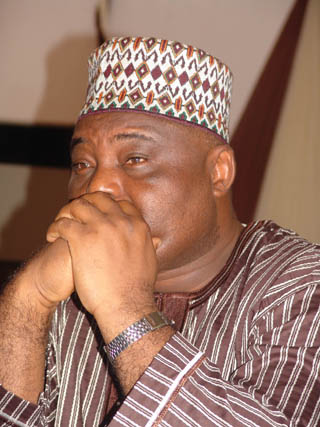





Onje Vs Mark: Lessons For Tiv Nation, By Simon Imobo-Tswam
Since every nation is blessed with its fools, the over-ambitious and the treacherous, Tivland also has its fair share of these. But we concern us today with the treacherous i.e treachery from within. But what is this treachery from within the Tiv Nation? It is the treachery against truth, the truth; it is the conspiracy to decree a regime of silence in the Tiv country.
Since a conspiracy usually involves a scheming minority, there is a minority in Tivland now that ardently seeks to redefine truth and impose a culture of silence on the population. If this small, but loud and powerful group succeeds, Tiv people can only clap its pleasure; and every Tiv man/woman will begin to see life through its skewed lenses.
In this age and time, this should be an outrage, but in our poor Benue, the race for the crumbs has become so fierce and competitive that it has turned into a scramble. In fact, to stand aloof or not to join them is akin to economic foolishness; but to dare to question the drift is the same thing as committing economic suicide. This is the way Tivland is being structured now. A new Animal Kingdom is under construction, and its engineers, frenetic and fanatical, are intent on creating a timid society: where intimidation terrorizes the democratic spirit; where merit continues to serve mediocrity; and where nepotism locks the door against intelligence. Luckily, these engineers are doomed to fail. The vast majority of our people are decided on negating this treachery. But I return to this later.
The on-going political drama between Comrade Dan Onjeh and Senator David Mark, with the attendant cheers from Tivland has inspired this opinion.
The enfant terrible of Idoma politics, Onjeh, 41, has by turn been the President, National Association of Nigerian Students (NANS) as well as President, West African Students Union (WASU). He holds a B.A. (Double Honours) in Political Science/Economics from the University of Ghana, Legon.
This is his CV: very short, like a mini-skirt. Of course, he is brimming with idealism, but you cannot see that on his CV. His CV is not even padded by such auxiliaries as a chieftaincy title or an honorary doctorate. His is a brief political CV indeed, but as an ambitious comrade, he is as vocal as they come.
Mark, 68, on the hand, is someone that can be described, in the reality of Nigerian politics, as a political juggernaut, an enigma, a colossus. We may want to protest, but a man who has been governor, minister as well as general, and has been being inaugurated five times as a senator cannot be anything less. If we want to borrow the words of the late Chief Kingsley Ozumba Mbadiwe, we can call him: “a man of timbre and calibre.” Otherwise, we can just call him: “a caterpillar and a bulldozer of a politician.”
He is someone who, at once, approaches a political institution i.e. as far as winning elections against all odds is concerned. He dumbfounds his critics; he shocks and awes his enemies; he inspires his supporters; he ridicules text-book prescriptions; he confounds political analysts; he mocks the observations of election-observers; he shatters political permutations; and his fantastic wins sometimes defy statistical tabulations too. His consecutive election-wins may have the scent of the mysterious, and his political longevity may be said to be denominated by a distinctive, democratic unorthodoxy, but 2015 is the first time since 1999 that the courts have been impressed by the arguments of the serial victims of his political braggadocio.
So like him or hate him, you must give it to Mark: he knows how to make his marks. It is either he knows the game thoroughly and/or he knows the system inside-out. This is why he can plan both the game and system so very well i.e. making his own unique marks (straight or crooked), snatching victories from the jaws of defeat, drilling his opponents to no end, and thrilling his fans beyond measure.
A peep into his casualty ward will reveal the pained faces of victims like Gen. Chris Abutu Garuba, Gen. Lawrence Anebi Onoja, Chief Usman Abubakar (alias Young Alhaji), Chief Ameh Abute and Okibe Mike Onoja. Matter-of-factly, they are, politically-speaking, still on life-support as even in this 2015, they are still gasping for breath, and ruing over the devastating impact of Hurricane-Mark. In Zone C where he is said to be the lord of all he surveys, a saying has evolved that: “the fear of David Mark is the beginning of political relevance.” In other words, you challenge David Mark, you go into political oblivion.
This is the stuff that is the David Mark phenomenon. It is this phenomenon that has made him the most-tenured senator in the history of the Nigerian senate. And it is this phenomenon, otherwise called Chief (Dr.) David Alechenu Bonaventure Mark, that the relatively unknown comrade wants to topple from his Olympian heights.
And Daniel Donald Onyirofe Onjeh has taken more than the proverbial first step: he successfully challenged Mark’s putative victory right to the Appellate Court. The next and final step will be if/when he displaces Mark during the soon-to-be-held election, and replaces him in Abuja as a distinguished senator of the Federal Republic.
And from many indications, the youthful and debonair Onjeh looks set to demystify the legend – what with the APC nation-wide momentum, the advantage of APC’s double incumbency, the band-wagon effect as well as Onjeh’s promise of fresh air.
But politics is still not yet a precision science, and so to cast our projections in iron will be nothing short of political naivety. In other words, in a political contest, anything can happen. It is the classic case of: it is not over until it is over. This is more so in a high-stakes election where David Mark will be a candidate, PDP will be a candidate, myth will be a candidate, ego will be a candidate, blackmail will be a candidate and money will be a candidate.
But David Mark is a personality whose name at once evokes and invokes strong emotions, moods and sentiments among Tiv people. And so, not surprisingly, some Tiv people are exultant over Mark’s imminent ejection from Nigeria’s most exclusive club: the Senate!
The conspirators, who deify clay-footed gods in Tivland, worship the statusquo and scoff at any suggestion of change – whether in leadership or leadership attitude – have suddenly found their voice: “BAD Mark” must go. (BAD from: Bonaventure Alechenu David). The treacherous purveyors of inverted wisdom, who are deviously twisting the truth, dubiously manufacturing facts and labouriously re-writing our history, have become the cheer-leaders of the change-campaign in Idomaland. The contradiction is that even as they do this, they are simultaneously celebrating business-as-usual politics in Tivland!
This sharp contradiction brings some questions to mind. What makes Idomaland ripe for change, but Tivland ideal for the statusquo or business-as-usual? What is Mark doing wrong and his Tiv counterparts doing right that we wish them different political fates? When we re-order his names to get “BAD Mark” or say he is bad, is it because he has shamed us by representing his constituency so very well that he has turned the Idoma-minority group into a forceful majority that majorly appropriates all and everything that is due to Benue state where we Tiv are the demographic majority? Put another way, is it that when Tiv elite see Mark, he indicts them by virtue of his purposeful, pragmatic, community- focused, representation of his people, with all the practical and collateral benefits?
If not, why would Tiv elite, who are vehemently opposed to real change in Tivland be drumming support for change in Idomaland? And if not, why are Tiv leaders, who celebrate change, but only as a poetic idea or a romantic slogan (Chenji), be excited that “a small boy is going to finish Mark.” Do we not have small boys in Tivland? Are they not in politics? When they vie for political crowns, and the political disputes dovetail into judicial disputes, what do we counsel them to do as aggrieved litigants? Do we urge them on the course of justice or do we pressure them to withdraw their suits “for the sake of peace and unity?” And when they refuse, don’t we vilify them, blackmail them and even curse them? And even their loyal supporters, don’t we slander and assassinate their characters; labeling them traitors and enemies of progress? So when we now turn around, and hail the “stubborn” Onjeh and his steadfastness in yonder Idomaland, there is the hidden danger of this being interpreted as an advertisement of our elite hypocrisy. But of course, in rooting for Onjeh and gloating over Mark’s precarious fate, we could also be saying unlike the Tivland, Idoma people do not deserve “peace and unity?”
These questions are rather many, but I have a basketful. If we are happy that Mark is “going” because of his permanence in power and the need for fresh air, can we first make the same arguments in Tivland where some people have appropriated, monopolized and personalized power for upwards of 30 years before we seek to export the change-mantra to our Idoma-neighbours? If his offence is that he is defines democracy outside the common orthodoxy of one-man-one-vote or that he ruggedly secures his electoral victories via unorthodox methods, do we not have such political juggernauts with their unorthodox tactics in such Tiv local governments as Katsina-Ala, Ukum, Logo, Gboko, Tarka, Guma etc, and do we not worship them? If we fault “BAD Mark” with the grievous sin that he is mean to Tiv people, and helps only his people, can we say it is also his fault that Tiv leaders do not help Tiv people except when such Tiv people come from their immediate or intermediate families?
And yet the man we love to hate and are helping/hoping that “a small boy” will demolish and diminish has a good testimonial before his people of his long, even if crooked, tenancy in power. We attribute the over-visibility of Idoma people in the Federal bureaucracy, their choking hold on both the military and para-military recruitments vis-à-vis their demographic strength to this BAD Mark. And physically, he has Apa University as well as Joy FM in Idomaland to his credit, to mention but these two. Can his military contemporaries and political colleagues in Tivland raise their voices or hands and point at the Nursery Schools or “Pure Water” factories they have set up in Tivland as symbolic gestures of their long and lucrative stewardship?
The corner-stone of David Mark’s political longevity (at least since 1999) is his advertised legislative agenda of Apa state. It may be a tall dream, but every big thing starts with a dream; it may be a fluke, but it resonates well with his people. And that is the spirit of representative democracy. Can any Tiv constituent, in all objectivity, say he/she knows the centre-piece of the legislative agenda of any of David Mark’s colleagues on the Tiv side? And yet we hold them as humans without reproach, even gods. It is a pity that in our intimidation-induced timidity, we do not see their clay-feet. This is why our “strong men” are very powerful in Benue state, but once they come to Abuja, and are confronted with “the arithmetic of politics,” (credit to Chuba Okadigbo), their power instantly dissolves into powder!
I have not seen David Mark one-on-one since 2006, so no person can seriously accuse me of holding forth for him or being sponsored. And knowing the sociology of his politics too well, there is no way I can defend him. He, therefore, stands or falls by his craftsmanship or brinkmanship or both.
The morale here is that Mark is not the Tivman’s problem: He never was, is not, and never will be. In the military, Tiv sons out-numbered him; and in politics today, Tiv sons out-number him. If he out-performed us yesterday, and today too he still seems to be out-playing us, the fault is not in him, but in us. There is no position Mark has held that a Tiv man has never held. If the obsession of his contemporaries has been the accoutrements or the paraphernalia of power, but he has concerned himself with the meat or substance of power, let the truth be told, and it is hereby told: the sin is not his, but ours. Let us, therefore, leave him to the fate of Zone Constituents.
We complain about Idoma predominance in the Federal bureaucracy, but Mark did not collect money to employ the non-indigenes in the Benue State Civil Service. After gulping more than N7 billion, the Greater Makurdi Waterworks still needs another N6billion to work, and residents are still drinking water straight from River Benue – the way our ancestors did 200 years ago; but Mark is not responsible for this rape.
We have leaders who use desperate tactics to capture power; only to discover that in their crooked haste to win by all means, they had forgotten to worry about a Development Blue-Print; they then start shopping for blue-prints. This can hardly be Mark’s doing. We know our leaders who do not go to work, or when they go, they sleep at the duty-posts; but this cannot be Mark’s fault.
For long, we have been producing predatory leaders who, first, prey aggressively on the commonwealth, and thus empowered, commence a wholesale preying on our lives. This is why BAD Mark is neither responsible for the looted funds from Benue coffers, beginning 1999, nor can anyone mention his name in connection with the orchestrated mass killings in Zaki-Biam/Gbeji, Kusuv/Ikyurav-Tiev, Kwande or Tarka Local Government.
There is a dearth of industries in Tivland. About 20-30 years ago, there used to be companies like Taraku Mills, Ikyogen Cattle Ranch, Agro-Millers, Lobi Bank, Ben Cola, Benue Printing and Publishing Company etc. Today, we can only recall them from the cobwebs of our memories. David Mark did not kill these. And if in the last 16 years, a succession of Tiv leaders have been establishing companies only on Radio Benue, it would be wicked to blame such wickedness on Mark’s head. For long, there has been a leadership vacuum in Tivland, with aspirants testing the waters, but getting drowned by their own greed; not Mark’s machination. And whether or not he leaves the Senate, the leadership void in Tivland will not go away.
As long as we have no Strategic Road-Map for our journey; as long as we have no Strategic Plan in engaging Nigeria and demanding our share from the national commonwealth; as long as our leaders continue to consider themselves as demi-gods and view their followers as raw-materials for wanton exploitation and gratuitous manipulation; as long as we refuse to improve on our leadership choices, deliberately holding down big ideas so that pettiness can walk tall; as long as we are torn between the Church of Christ and the Swem-Karagbe Hills in the Ugbe-Country; as long as we remain divided between the democratization of power and the democratization of poverty; and so long as we keep seeing political power as an end in itself, and not a vehicle for mass mobilization/social reconstruction; and so long as we find the turf of local politics more appealing than the pitch of national politics where the real action is, we will continue to stagnate and atrophy even as Nigeria marches on.
There is, thus, so much that is before us, and to become obsessed with BAD Mark is to take our eyes off the big picture. In fact, if Mark is as good as we credit him with all sinister schemes against Tiv people, it would not matter whether he is in the Senate or not: his Idoma-Project would be on auto-pilot by now. So if we get fixated with Mark, and his putative badness, we will be missing the real lesson of this unfolding drama.
So what is the lesson in this blockbuster, Onjeh-Mark drama? The lesson is that a political contest is exactly what it is: a political contest. And under our extant laws, the contest does not end on election-day or even with INEC’s announcement of the outcomes; it extends to the tribunal/courts. So there is no mischief or witchcraft or anomaly deserving of demonization in seeking legal redress after an election, and exhausting the whole gamut of the legal process. If we missed the many examples in Tivland, we can now learn this important lesson from Idomaland – after all, foreign/imported things are beautiful.
In this age of the knowledge economy, two societies have become evident: the Open/Interrogative Society and the Closed/Cultic Society. The Interrogative Society asks questions, it interrogates itself: its notion of truth, its concept of reality, its dreams and hopes, its fears, as well as its goals and methodologies of goal-actualization. But it does not stop there: it goes further to interrogate its leadership, its leadership recruitment process, its leadership choices, its leadership preparedness, its concept of heroes and heroism, its view of criticism, checks, sanctions and balances. It engages in this interrogative process with an eye on self-renewal, self-rediscovery and self-actualization. In summary, a society that is interrogative is a progressing-cum-progressive one.
Conversely, a closed or cultic society conducts its business secret society-style, although it may continue to make declarations to the contrary and even follow up with symbolic actions. It brooks no questions; it interrogates nothing, gets no answers and just ambles along. And because it seeks no answers, it gets no answers. There is, therefore, no renewal, no accommodation of new ideas, no innovation, no regeneration; rather society atrophies. In other words, a closed society is a static society.
So while an interrogative society sets benchmarks, and constructs new paradigms of reaching them, the cultic society seeks no answers, it bothers itself with neither benchmarks nor paradigms – it celebrates the stausquo and obsesses with power: the glamour of power, the trappings of power as well as the coercive apparatus of power and no more.
Finally, the challenge before every Tiv man and woman is to domesticate the positive change we so admire outside the Tiv country. We can begin with the Onjeh take-away, and proceed to states like Cross River, Kaduna and Lagos.
Rikght now, some of us are eating avidly while some of are watching. But let both who eat and those who watch keep in mind that there is another country, another place, a future, called tomorrow. The visa to that country is strategic planning.
Let us, therefore, renew our ideas, let us rejuvenate our leadership and let us re-invent our society. This is the challenge before each and every one of us. May God have mercy on the Tiv Nation.
Imobo-Tswam, a media consultant, author and public speaker, wrote from Abuja. He can be reached on: simonpita2008@yahoo.com. [myad]