It took the spirited efforts of majority of the electorates to dislodge the iron fists of the Peoples Democratic Party-led Federal Government and install the faces of bright hope of good governance in Nigeria. But suddenly, a dim hope surfaced from internal scuffles among the faces of bright hope and we must salvage the situation to prevent a shattered hope. Hope comes with trust and attestation of good antecedents where the masses are clear-headed and decisive, but the spate of misdemeanours along party lines at variance with patriotism threatens the formulation and implementation of productive policies, programmes and actions by the Federal Government.
When genuine intentions of few leaders combat with dubious actions of the majority, good actions becomes wanting or probably wanton as shown in the persecution of the Presidency against the decision to recover looted resources, block financial leakages, revive the economy and make life bearable for all Nigerians. The Presidency must derive means of sensitizing the masses to align with the strategies and plans of government to alleviate their sufferings and bring forth mass oriented programmes and policies.
The hunt is our stolen resources, which is responsible for the recession of our economy and failure of government to boost the economy expectedly. What we hunt is still in possession of the hunted who are the culprits fingered in shady deals and massive looting under the last administration. The hunted are scattered across political and business lanes, they are major in the opposition and minor in the ruling party. The hunted are ready to checkmate the antics of the hunters to evade trials and prosecution, the hunted are gaining upper hand over the hunters, while the hunter seems lost on best strategies to nail the hunted within the ambits of the law.
The hunters are the government agencies vested with authorities to retrieve the hunt from the hunted, while the headhunter, which is Mr. President, seems suppressed by the machinations of the hunted as clearly manifested in the tacit support of PDP leaders for any action that will portray the headhunter in bad light, as noted in series of blackmail of the Presidency on the travails and trials of the Senate President, former National Security Adviser and others. The Biafra agitators are having a free ride in PDP-controlled states and the PDP senators from the South East Region are mute in their desperation to box the Presidency into corner of ineffectual leadership and dismal performance – a PDP machination to ensure the Country record no significance success under the headhunter, not only for their political gains but to pervert the cause of justice and calmly enjoy the looted resources.
With all the instruments of government under the control of the headhunter, one expects the speedy recovery of all stolen funds but really contrasting to note the contrary, which cast aspersions on the competence and credibility of the hunters to act expediently. What we have witnessed are financial policies to block financial leakages and fraudulent practices such as the Bank Verification Number and the Treasury Single Account which brought temporary sufferings to the masses affected by the policies.
An average bank customer suffered one fate or the order in the process of getting BVN linked to their accounts, many were deprived access to their accounts, many have to effect changes in compliance with the directives of ensuring that biometrics and identities of account owners and genuinely verifiable with truism, while the TSA delayed payments by government agencies to indebted contractors and staffs. Weighing the overall benefits of both the BVN and TSA to the economic growth and blockage of financial leakages, the sufferings of the masses at the moment will translate to their prosperity at the long run, but it will amount to grave injustice if our looted commonwealth is not retrieved with immediate alacrity.
There is no point twisting the facts of the restrains of the Presidency to act in isolation of the National Assembly and the Judiciary as the synergy of the three arms of government is an impetus towards economic revitalization and recovery of stolen funds. When the uprightness and integrity of any of the arrowheads is questionable, the businesses of government get enmeshed in jeopardy and double standard, which might deny the masses the good governance they seriously yearn.
The Presidency has a covenant with the entire people of this Country and no excuse will be sufficient enough to explain any impediment towards the fulfillment of that covenant. The covenant is good governance and any lawful means must be engaged to dislodge all impediments, obstacles and albatross blocking the fulfillment of that covenant.
Mr. President must be bold enough to ignore all contretemps among his allies over the leadership of the National Assembly and other Political Appointments in the discharge of his responsibilities to the Country, Mr. President hold the aces and they should be used productively to achieve a greater Nigeria where even the Biafra agitators will celebrate him as a hero. The headhunter should be assemble the best think tank and intelligence network to suppress all obstacles endangering his perform and ensure positive result to the benefits of the masses. With clear conscience, reputable team and clear headedness, Mr. President must come out of his shells to solve the numerous problems of Nigeria.
. Comrade AbdulRahman Agboola is the National Coordinator of Mass Action for Good Governance and Grassroots Development in Nigeria. He wrote from massaction4gg@gmail.com. 08032813279
Aung San Suu Kyi writes in Letters from Burma: “I have never ceased to be moved by the sense of the world lying quiescent and vulnerable, waiting to be awakened by the light of the new day quivering just beyond the horizon…” That new day and awakening arrived on November 8 on Burma’s (Myanmar) 2015 election day and with the subsequent announcement of the final tally of the election results. But something even more remarkable happened. The military leaders have congratulated Suu Kyi and her party. The elections have been adjudged free and fair. The ordinary Burmese who trooped out in large numbers as early as 6 am to vote, are excited. It is tempting to conclude that Burma has just had its own equivalent of a Spring! The people wanted change. They have voted for it. Aung San Suu Kyi is the symbol of their hope, the irrepressible icon of their struggle. The people of Burma have shown that if they are allowed to speak, they will speak clearly about what they want. The powerless of Burma have found power at the polls. It was a vote not necessarily against incumbent President Thein Sein whose reforms have further opened up Burma and made change possible, but a referendum on years of corrosive military repression. The ruling party, the Union Solidarity and Development Party (USDP) lost in its strongholds, military-backed candidates accepted defeat and even organized parties for the triumphant opposition. When the new government is formed, next year, over 100 former political prisoners will sit in parliament. And the spirit behind all of this is Aung San Suu Kyi, the venerated daughter of General Aung San. There is in the process that has just begun in Myanmar, (it is another beginning really), a touch of the ironic and the pleasurable. But perhaps in the long run, a major aspect of modern Burmese history will come down to who between General Aung San, and Aung San Suu Kyi, his daughter has had the greatest emotional, political and spiritual impact on this South East Asian nation. The former negotiated Burmese Independence from the British and helped establish the modern Burmese army. The latter, ever so proud of her father’s legacy and conscious of his spiritual hold on the Burmese psyche, has led the struggle for a certain kind of independence from a successor patrimonial military which has held the country hostage since 1962. Aung San’s daughter was over the years, rewarded with house arrest, harassment, vilification, detention and ugly name-calling. In 1990, the National League for Democracy, which she founded and led, was denied victory at the polls. But Daw Suu Kyi has seized the Burmese public imagination in a manner that no one else has since her father’s time. On November 8, she led the NLD to the polls again, and has won a landslide victory over the military-supported ruling party, winning 387 of all 498 seats, with a majority in the Upper and lower Houses and across states and regions. This has brought so much excitement across the world. The winners are the people of Burma, for whom The Lady and the Golden Peacock (the NLD emblem) are the symbols of redemption. The ruling party induced voters; still they voted according to their conscience. Burma’s rulers have congratulated Aung San Suu Kyi, with the attendant politesse about “reconciliation” and “accepting the people’s desire”. But all of that is the easy part. What has happened, despite the euphoria is a case of deferred democracy, given the in-built contradictions in the Burmese brand of democracy. The irony is that the change that the people have voted for may raise their hopes, but the reality of Burma’s complex politics may not deliver the prospects they seek. Voting for change is not enough, ensuring the substance of that change is the hard part. This is the reality today in Burma, as much as it is in Nigeria where the complexity of political change has a special and felt resonance. It will most likely take a much longer time before democracy takes root in Burma. Elections may be substantially free and fair and the people may have spoken their mind, but five decades of military hegemony, transformed into a culture of praetorianism is the biggest threat. Burma’s military leaders have imposed on their country a unitary system that effectively puts the military in charge of the key aspects of the state, including internal security, justice, and a veto power over the Constitution. They have created a system, which ensures that they are in no way answerable to any civilian. They get 25% of the seats in parliament, not through the ballot but automatically, and they reserve the power under the Constitution to veto any legislation. Their excuse, for five decades has been that this is a “disciplined democracy”, to protect Burma from intrusive external influences, and ensure national unity and solidarity. But the same military establishment has failed to build institutions or encourage practices that will achieve unity or sustainable development. The economy is poorly managed, human rights abuses are prosecuted as state policy, and after decades of civil war, Burma remains sharply divided along religious and ethnic lines. The people of Burma have demonstrated in 1990 and now again in 2015, that they will like to be masters of their own destiny and not be teleguided by the military. Until the tension between freedom and control in Burma is resolved and the people’s will is allowed to prevail, there can be no real democracy. And this is why the international community must continue to insist on true democratization in that country. Mere civilian presence is certainly not democratic control. The Constitutionalisation of military domination is as ominous as the overt intrusion of the military and security forces into the political process and the policy centre: another point that should resonate well in our own context in Nigeria. In Myanmar, the shape of things to come is already evident. Aung San Suu Kyi is leader of the NLD, but she cannot be President. Article 59(f) of the 2008 Constitution, deliberately inserted to stop her from ever becoming President bars anyone who is married to a foreigner or has children with foreign citizenship from occupying that office. Suu Kyi’s late husband, Michael Aris and her two sons are British. The making of laws to achieve the purpose of either vendetta or exclusion is a feature of dictatorships. Burma’s Constitution is at variance with the people’s hopes, expectations and sovereignty. Only a people’s constitution will signal a new beginning. Given the present situation, how Suu Kyi and her NLD manage their relationship with the military will determine whether the events of the last week are real or illusionary and whether the new parliament will be the engine room of democracy or change or the decorative assembly that the old guard has made it. Suu Kyi will remain the major factor as she has been since she went into partisan politics in 1988. She has waited for so long for this new day and she has left no one in doubt that she intends to exercise power and authority. She intends to be “above the President” in her capacity as party leader. “I’ll take all the decisions”, she has declared. A figure-head President under the watchful eyes of a superior leader could be an arrangement for instability, or distractions as has been seen previously in Indonesia and Malaysia. Suu Kyi, also referred to as Mother Suu Kyi must guard against the contradiction of being a symbol of democracy and becoming at the same time, a parody of her former tormentors. It is important not to promote provocations. It is certainly still a long road to travel in Myanmar; as winter endures, the people hope for decent survival, a better economy, respect for human rights, including minority rights, a good life, in an open society. Whatever happens, the example of Aung San Suu Kyi: how an innocent woman became one of the most fiery defenders of the powerless in human history, will continue to inspire both men and women across the world. When will Nigeria produce our own San Suu Kyi? Or Indira Ghandhi? Or Hillary Clinton? [myad]
President of the Nigeria Labour Congress (NLC) Mr. Ayuba Wabba, has regretted that in this jet age, many companies in Nigeria are still practicing casualisation even as he vowed that very soon, the labour union will commence picketing of such companies and establishments that indulge in outsourcing and casualisation of workers.
Wabba who spoke today in Abuja in his address at the 2015 Africa Industrialisation Day Policy Roundtable Conference with the theme: “Eradicating Smuggling, Meeting the Financial and Energy Needs of Local Industries,” said: “In fact, in most of the companies in Nigeria, you will find out that it is only 10 per cent of the workers that are regular staff; the other 90 per cent are irregular staff.
“The irregular staff are casual workers and these companies take advantage of them by making them work as slaves.
“Despite the fact they are working, they are poorly paid and cannot determine their conditions of service and the amount they are paid cannot take care of them.
“Because of the unemployment situation in our country, a lot of these expatriates, a lot of these companies, take advantage of them.
“We need to provide cover for them, they must be able to work in dignity.’’
The NLC President observed that poverty and youth unemployment would be a thing of the past if the government would fix the industries, adding: “for us to get out of poverty we must be able to engage our teeming youths; we must be able to create employment opportunities for them and the key to this is industrialization.
“The multinationals have taken advantage of the unemployment situation by abusing expatiate quota system.
“So I want to call on the Federal Government, Federal Ministry of Labour, Investment Promotion Council, and Immigration Department to do a census of all expatiates resident in Nigeria.”
Wabba announced that NLC plans to organize employment summit to look at the issues of unemployment and tangible recommendation that could be brought to the table to address some of the issues.
He commended the organizers of the conference for their initiative and stressed the need for commitment from all parties.
“When we work in unity and bring our ideas to the table, we will be able to solve our common challenges, ‘’he said.
Africa Industrialisation Day is celebrated on Nov. 20 of every year since 1990, to examine various ways of stimulating industrialisation process in Africa. [myad]
The National Economic Council (NEC), chaired by Vice President Yemi Osinbajo, has approved the sharing of $150 million from $400 million Nigeria Liquefied Natural Gas (NLNG) dividend by the Federal Government and state government.
The Council also approved that the balance of $250 million be invested in the Nigerian Sovereign Investment Authority in order to increase its capital.
Osun State Governor, Rauf Aregbesola briefed State House correspondents at the end of the meeting. He was assisted by Enugu State governor, Ifianyi Ugwuanyi, Minister of Budget and National Planning, Udoma Udoh Udoma and Deputy Governor of Nassarawa State.
They briefed the press after about seven hours meeting at the Council Chamber of the State House, Abuja.
Aregbesola said: “The Managing Director of the Sovereign Wealth Fund Authority presented the status report on the Nigerian Sovereign Investment Authority (NSIA) to the council. After due deliberations on the report, the council agreed that $250m from the $400m NLNG dividend be invested in the Nigerian Sovereign Investment Authority to increase its capital.
“Council resolved that the balance of $150 million of the said $400 million NLNG fund be shared accordingly in the prescribed formulae at the Federation Account.
“Council directed the Minister of Finance to constitute an executive nomination committee and work in consultation with NEC to appoint appropriate persons to take over as board members of the NSIA of the current board is dissolved,” he added
On the report of government agencies generating revenues in foreign currency but remitting naira into the federation account, he said that the Council mandated the Ministry of Finance to investigate and report back.
He also said that the Central Bank of Nigeria (CBN) was mandated to embark on sensitisation and public enlightenment on the forex policy and relevant laws and regulations in order to guide traders and others who encounter challenges regarding the movement of foreign currency across the nation’s borders.
“We understood that some traders particularly in the East encounter challenges at the airports when they intend to go about their businesses,” he added.
On the balance in the Excess Crude Account (ECA), he said: “At the end of the NEC meeting Thursday, the Accountant-General of the Federation reported that the balance of the ECA stood at $2.257 billion and that is not much change from the last report.”
According to him, the Director General of PENCOM briefed the Council on the contributory pension scheme implementation effort and status of implementation by the states.
Highlight of the briefing, he said, was on the sustainability of the pension arrangement, scorecards of the states in the implementation of the scheme, the challenges being faced by the states, opportunities and also the steps towards full implementation by the states.
“The briefing also highlighted the need for the states to provide legal frameworks such as enacting state pension laws by those who have not done so, establishment of states pension agencies, consistent remittance of both employees and employers contributions and also full compliance of all provisions of the pension scheme,” he stated
The governor also disclosed that the International Monetary Fund (IMF) Senior Resident Representative made presentation in a workshop for state governors during the Council meeting on Treasury Single Account (TSA).
He said: “Presentations were made on the listed sub topics: implementation of TSA in states: lessons and experience; cash management and TSA reform: an overview of international practice; and budgeting reforms.”
Under the AOB, he said, that the Council considered the need to reconstitute the members of the governing board of the Niger Delta Power Holding Company.
In that direction, he said that the Vice President called for the nomination of new board members based on the six geo political zones. [myad]
Let me make three quick points to provide some context to our discourse. First, I supported President Muhammadu Buhari (PMB) over Jonathan not because I was convinced about the credibility of the APC manifesto (and I said so in my article in January this year) but for three reasons. I was convinced that the last economic team was bankrupting the economy and had no clue as to how to fix it.
I: Introduction.
I gave my commitment to the management of RealNews magazine since late May to deliver this third anniversary lecture, and we agreed that given my tight schedule, I could just speak ex tempore or from speaking notes. However, I decided to write down my thoughts a few days ago for the avoidance of doubt. My apologies if you find this a bit tardy. I have taken liberty to slightly modify the topic to reflect my central message.
The timing of this lecture is auspicious—coming in the 6th month after the inauguration of a new administration, and also with a new federal cabinet now in place. Before the government rolls out its full agenda, this is a good time to begin our citizen duty of joining the ever continuous discourse on the economy. Our focus for now shall be pre-emptive and provocative— to challenge the Buhari/APC regime not only to demonstrate that it can manage the economy better than the PDP but also that it can lay the foundation for sustainably shared prosperity in a post-oil economy.
Let me make three quick points to provide some context to our discourse. First, I supported President Muhammadu Buhari (PMB) over Jonathan not because I was convinced about the credibility of the APC manifesto (and I said so in my article in January this year) but for three reasons. I was convinced that the last economic team was bankrupting the economy and had no clue as to how to fix it. Second, PMB is the first president of Nigeria under a democracy to have seriously desired the job and struggled for it for over 12 years. To me therefore, he must have a few points to prove, and I was willing to bet on a man who wanted the job than otherwise. Third, I was convinced that it would be in the enlightened self-interest of the APC, once in power to do their utmost to keep power by delivering on the economy unlike the PDP which had taken power for granted. I am still confident that PMB can deliver but he and his team now need to run at the speed of a 1000 km per hour. We must support them to succeed by contributing when we can, and criticising when we must—tough love! I am enjoying my status as ‘an independent’ (I don’t belong to APC or PDP) and I therefore have the liberty to say it as I see it from the balcony!
Second, I am happy that the ministers are now in place, and I believe the president has assembled a team of eminently qualified and experienced Nigerians. A more important point is that it is a team of ‘believers’—who share in the mission and vision of APC. So now that a strong team of ‘believers’ is in place, there can be no excuses!
Furthermore, I read in the media that the Vice-President, Prof. Osinbajo indicated that he is “responsible for the economy”, and I believe President Buhari deserves great commendation for this fundamental delegation. No question, the buck stops on Mr. President’s table. However, as I argued in my article published January this year – “Buhari vs Jonathan: Beyond the Election” (which Vanguard newspaper still posts on their website under a section captioned ‘The Soludo Debate’), I believe the intention of our constitution is that the VP should be the ‘coordinating minister of the economy’. Besides being the chair of the national economic council (NEC), our laws make the VP chair of major economic institutions of the federal government. Thus, once a president selects his VP, we should begin to have some ideas about the possible direction of economic policy akin to a party in the UK naming its Chancellor of the Exchequer. Ours is a peculiar institutional design but to the best of my knowledge, these provisions have been undermined in the past (I have thoughts on possible amendment to the constitution so that VPs are not automatic successors to the President in case of ‘accident’ and to shield the office from the distractions of day to day politics to focus on the economy and no more). President Buhari has repeatedly stated his focus on “re-building” our institutions, and where else to begin the process of systematic dialogue on the economy than the strengthening of institutions for doing so within government? There are other institutional structures it must create/strengthen to consolidate and sharpen what Nigeria desperately needs now: a War Room on the Economy!
The rest of the paper is organized as follows: In section II, we summarize a caricature of the baseline statistics on the economy that PDP bequeathed but which APC/PMB must improve upon. Section III shows that the ‘old’ Buharinomics of command and control is a tried and failed policy and won’t work now. In Section IV, we hint at a few issues the new Buharinomics must take cognizance of if it hopes to build a sustainable, shared prosperity for Nigeria. We conclude in Section V.
II: Baseline Statistics: What is the APC/Buhari Government trying to ‘Change’?
Every team serious about ‘change’ starts with a clear identification of the baseline from which it measures deviations/progress. Nigeria has had 16 uninterrupted years of democracy with the PDP controlling the federal government as well as majority of the states. APC is now in charge at both the centre and majority of the states. A minimum standard for measuring ‘change’ is the extent to which APC government beats the record of the PDP in measurable terms. As the saying goes, if you can’t measure it, you can’t improve/change it!
Government must strengthen the National Bureau of Statistics (NBS) and preserve its independence to produce and publish credible national statistics. It needs serious funding. I really wish our policymakers can be a little less careless or casual about the use of official statistics. I criticised the last government for relying on ‘estimates’ by World Bank staff instead of the NBS statistics. When I hear the narrative so far in the media by the new government regarding the economy, I take it largely as the kind of ‘usual propaganda’ new officials deploy to show that their predecessors “did nothing” and therefore lay the ground for claiming that they are “doing everything for the first time in our history”. Fortunately also, there are many people as well taking a hard look at the numbers and recording scores. At AfriHeritage, we are developing a template for measuring government performance. As Nigeria has largely evolved into a two party state in a democracy, I prefer to frame the discourse on the baseline as ‘PDP’s legacy and the APC’s challenge’!
Since it is the practice to blame the PDP for every ill that befell our country in the last 16 years (and there are many of them) it is also fair to credit them with the positive ones. According to data from NBS, one outstanding legacy of the PDP is that in 16 years it held sway, it more than doubled the GDP of Nigeria (indeed with average year-on-year GDP growth rate in excess of 6% over the past 12 years, the GDP actually doubled within the last 12 years. It met average annual growth rate of about 2% and raised it to 6-7%, led by the non-oil sector. Yes, non-oil sector, and the “diversification” reported in the recently re-based GDP happened within the last 16 years. Will the economy more than double in the next 12 years under the APC? For me, if only the APC can double the size of GDP from about $550 billion to $1.1 trillion in 12 -16 years, and further half the poverty index to about 15%, Nigeria will indeed be on course to be one of the largest 10 economies in the world by the end of this century.
As at 1999 when PDP came to power, Nigeria was largely a pariah state still lucky to have survived as one indivisible sovereign, especially in the context of the struggle by NADECO and restiveness in many parts of the country. On corruption, Transparency International scored it 1.6 out of 10 and ranked 98 out of 99 countries in 1999. Nigeria was listed among four countries that were non-compliant on the anti-money laundering rules by the Financial Action Task Force (FATF). We could not service our external debt and relied on stressful rescheduling, with all the intrusive donor conditionalities. Poverty was estimated at 70%, and unemployment at nearly 20%. The 1990s will go down in our economic history as the decade of stagnation: when per capita income growth was zero. Average oil price in May 1999 when President Obasanjo took over was $15.24 while stock of reserves was about $5 billion.
After 16 years, several challenges remain and some have even worsened (especially insecurity). Although President Jonathan’s regime had the worst economic management relative to the resources at its disposal, it must be stressed that tremendous progress was made in the aggregate 16 years of PDP government. Yes, it should have left more than $100 billion in reserves but left only $30 billion (still about six times of what it met). We also wish Jonathan’s team did not leave Nigeria with unprecedented rate of debt accumulation. But, according to statistics from NBS, the PDP handed over a $550 billion economy (largest in Africa and 26th in the world), with 7.5% unemployment rate (better than European Union, France, Sweden, Belgium, etc); 32%?? poverty rate (as claimed by the former Finance Minister and NBS needs to clarify this claim which in effect means that poverty reduced by more than 50% under PDP); a stock of reserves of $30 billion; GDP growth rate averaging 6% over last 12 years; a relatively more diversified economy, with ICT penetration from 0.2% to over 60%, and a new contributory pension scheme now with trillions of Naira in pension fund. Our external debt is down although total debt stock is escalating. Our Gini coefficient (degree of inequality) is not different from China’s. Nigeria has consolidated and stronger banking system that currently finances both government debt and the private sector, with a relatively vibrant capital market. The capitalization of the Nigerian Stock Exchange grew from less than N1 trillion to N12 trillion as at handover. For the first time, Nigerian economy is now rated by credit rating agencies (Fitch, and Standard and Poor’s). Even on corruption perception, Nigeria is far better today than in 1999, and PDP created the two major anti-corruption agencies— ICPC and EFCC, and as at 2014 TI scored Nigeria 2.7 and ranked 136 out of 175 countries. PDP secured debt relief for Nigeria, thereby relieving Nigeria from the stranglehold of the IMF/World Bank policy conditionalities. APC does not have to negotiate with Washington on many economic policies. The list is long. The point therefore is that despite the fall in oil price, APC is starting from a much stronger base than PDP did in 1999 and the challenge now is to do far better. In the coming years, Nigerians will be asking APC to show us the figures!
III: Avoiding the Mistakes of the “Old” Buharinomics
Nigeria desperately needs the moral force/Spartan discipline and leadership of PMB at this time to fight corruption, terrorism, and hopefully begin to reconstruct the values of a people gone astray. On the economy, it is not going to be an easy transition for PMB. Igbos have a proverb that one does not learn to use the left hand at old age, but my prayer is that for the sake of Nigeria, he would have to do so and quickly too. Delegating the economy to his VP may be one smart move. Only time will tell!
When PMB first came to power in 1984-85, the nation was as well in crisis. He did so much within the short time especially on anti-corruption and restoration of national discipline. He inherited a command and control economic policy regime and deepened it (capital, exchange, and price controls; import licensing; indiscriminate ban on imports, rationing of essential commodities; government ownership and control of so-called ‘commanding heights of the economy’—banks and insurance, telecommunications, airline, refineries, roads and transport, even manufacturing companies, etc). I recall that it was something like a criminal offence then to be in possession of foreign currency. Exchange rate, interest rate, petrol price and several other prices were largely fixed. In the face of continuing shocks especially the fall in oil prices (in the face of huge debt service payments), relative prices were not allowed to adjust to restore internal and external balances. Rather, even more controls were imposed with all the gargantuan distortions in the economy (and industrial capacity utilization was largely below 20%) and as government could not pay salaries, massive retrenchment of workers was undertaken, but the economic crisis worsened and Nigeria was on the brink of bankruptcy. The economy imploded big time. Unemployment and poverty worsened. It was definitely a road to nowhere. The successor government faced little choice but to liberalize the economy under the structural adjustment programme (SAP) and Nigeria began the journey to a modern market economy. Of course, the journey has been chequered, and naturally is still a work in progress.
Since 1986, Nigerian economy has changed a lot and my reading is that there is a broad consensus on continuing progress towards a competitive (probably also compassionate) market economy framework. From the snippets of policy since the new government came, there is a growing perception of nostalgia, reminiscing of the ‘old good days’ pre-1986. There seems to be a growing tension between a tendency to return to the past versus a progressive match to the future. I am not sure how the new wine will fit into the old bottle. T
Let me illustrate with a few examples. First, there is this sense of ambivalence as to whether to remove petrol subsidy or not; and whether government is going to run refineries in competition with the private sector under a subsidy regime or deregulated pricing. I am convinced that PMB has the moral authority and legitimacy to quickly remove the subsidy and privatize the refineries. The fundamental case against subsidy removal is not economic: it is the fact that the citizens do not trust government to optimize the use of the proceeds for their welfare. If PMB does not deal with these issues NOW, I wonder when, if ever. Now that private refineries are coming up, it is time to privatize public ones. It should have been done years ago. The huge benefits are not only economic, but also an anti-corruption move. Imagine what the nearly N500 billion being asked for subsidy payment now could be used for!
Second, one hopes that the report in the media about plans to resuscitate the moribund Nigerian Airways is not true. One thing the economy cannot afford at this time of crisis is to invest scarce resources on prestige or white elephant projects when most federal highways are not motorable (certainly none in the South East is motorable) or when we need to be investing tens of billions of dollars per annum on critical infrastructure. Third, the treasury single account (TSA) is a great initiative, and I congratulate PMB for that. However, we don’t have to return to the past of having every penny of government largely redundant in the central bank. For an economy desperately in need of stimulation, piling up idle cash at the CBN is not sound economics. We should deploy technology and transparent rules to implement a hub and spoke model of TSA whereby CBN is the hub while the commercial banks remain the spoke. Of course there are some benefits of keeping it at CBN, including possible anti-corruption outcome but as Igbos say, you don’t set your house ablaze because of the irritation of a rat in the house.
Another minor point relates to communication and body language that jolts the market and undermine confidence in the monetary and financial system. When it was widely publicized on two different occasions within three months that “presidency directs central bank to …..”, it got many players in the economy seriously worried. For sure, Central Bank is not a government unto itself, and despite the statutory ‘autonomy’ or ‘independence’ of the Bank, it must work closely with the Presidency and economic agencies to coordinate macroeconomic policy. Everyone knows that the central bank or INEC cannot survive without the support and active collaboration with the presidency but no one wants to hear that the president has directed INEC on how to conduct an election. There is a reason the APC promised in its manifesto to ensure CBN independence. A central reason is to give the market confidence that the CBN will always act professionally and independently to ensure price and financial stability. It is to avoid the Africa’s Idi Amin phenomenon whereby the government of the day may ‘direct’ the central bank to ‘print’ money or to take other steps injurious to the economy because it wants to retain power. When the market knows or believes that the central bank is merely an extension of the presidency and takes daily ‘directives’ from there, the Bank loses credibility and its monetary policy committee meetings become meaningless. My fear is the precedence: we can never imagine how far future presidents can go in ‘directing’ the central bank on what to do with our commonwealth.
Responding to oil price shock: Exchange and capital controls as ‘directive’ of the Presidency?
For the better part of this year, the external shocks to the economy have been complicated or accentuated by a gamut of the “tried and failed” command and control policy regime: de facto fixed exchange rate, largely fixed CBN monetary policy rate, crude capital controls, veiled form of import bans through a long list of ‘ineligible for foreign exchange’, de facto scrapping of domiciliary account established by law, etc. At first, I thought this was the usual kneejerk response of policymakers to a ‘sudden’ shock. We tried a milder variant of this for a few months during the 2008/2009 unexpected/unprecedented global crisis (with global liquidity squeeze and massive capital flight) but even then, it was communicated as a ‘short-term crisis response’ and it was quickly dismantled. We now know what works and what doesn’t even at a time of crisis. As one reads the confusing statements from government in the media: ‘we won’t devalue’, ‘we won’t devalue for now’, and the emotional debate about ‘nationalism’ around issues of import ‘bans’ and capital controls, one wonders whether it is still a ‘short-term crisis response’ or a permanent shift back to the old policy regime of pre-1986. Even if the government initially intended it as a short-term measure, interest groups have emerged and are lobbying to make the policy shift permanent. To add to the confusion, the policy is communicated as a “directive” from PMB as widely publicised in the media. Really?
I can write a book on this subject, but for now let me make the following preliminary comments:
i): How a small, open market economy responds to terms of trade shocks and not trivial debate on ‘devalue’ or ‘not devalue’: Unfortunately, the debate around the issue has been wrongly trivialized as whether to ‘devalue’ or ‘not to devalue’ the Naira. Much of what I have read have little basis in theory or empirical evidence or even counterfactual analysis but a rehash of the sterile but polemical diatribe between ‘neo-liberals’ and ‘neo-socialists’, or simply selective partial analysis. This is not helpful and diverts attention from an otherwise serious policy issue.
The issue basically is how a small, open economy such as ours responds to (ever continuous) shocks in today’s world. In the specific case of Nigeria currently buffeted by a terms of trade shock, with macro imbalances (especially fiscal and current account deficits) as well as supply side constraints, and with the economy skidding to a halt with rising inflation and unemployment, how should relative prices or asset prices (including exchange rate and interest rate) adjust to reflect as well as shape the economic fundamentals? External shocks do not kill an economy: the choice of specific policy regime is what can lessen or worsen the effects of the shock. How policymakers respond depends on the source of the shock (nominal/monetary vs terms of trade/real sector shock). If you do not allow relative prices to adjust when faced by a terms of trade/real sector shocks, then you put the full burden of adjustment on real variables or quantities (especially output and employment)— and they will adjust with vengeance because you cannot fix price and quantity. Both economic theory and evidence from around the world are relatively unambiguous: faced with terms of trade shocks, countries with flexible exchange rate adjust faster and better and with less negative impact on growth and employment than those with fixed rate. Put differently, countries that allowed relative prices (including exchange rate) to become the key “adjusters” during terms of trade shocks have almost always done better than those that resorted to price (exchange rate) and other distorting controls.
ii) Not just other countries: Nigeria’s history presents evidence: Since 1973, Nigeria has had episodes of positive and negative oil price shocks, and the impacts on the economy have depended on the policy regime. We can broadly distinguish two policy regimes: when relative prices/flexible exchange rate and quantities were allowed to adjust simultaneously versus a regime of relatively inflexible prices/fixed exchange rate and controls. A casual empiricism nevertheless reveals a powerful result (there are not enough data points to undertake rigorous econometric work, and so we do the usual ‘before and after’ evaluation). Whether you compare episodes of positive oil price shock or episodes of negative shocks, the regime of flexible prices clearly outperform the regime of fixed rates/controls. Just take an example of the 1981- 91 negative oil price shock with two different regimes of fixed prices/controls of 1981- 85/mid 1986 vs the SAP era of late 1986 to 1991. According to data from NBS, the economy did far better under SAP especially in terms of employment, output growth, poverty and in some years even inflation. Since 1999, relative prices have adjusted and this was central to the minimal impact of the global crisis of 2008/2009. The world economy experienced the ‘great recession’, and despite the collapse of oil price from $147 to $41 at some point, Nigeria still grew by over 6%. Compare with the experience of many other oil producing countries, and the difference in outcomes relates to the different policy regimes. Of course, things are a little more complicated but at least we need to insist that the debate be evidence-based.
iii)The current comatose economy is our choice and not just oil price shock: The current slump of the economy was predictable and largely avoidable. Just as it happened in 1981-85, the economy has been on a tailspin. There is now about 4% growth shortfall relative to past trend, and this cannot be explained by fall in oil prices alone. For the first time since 1990s, per capita growth rate (on annualized basis) is now negative implying that poverty is also escalating; capital market has lost trillions, inflation and unemployment are on the rise. JP Morgan has delisted our local currency bonds and Barclays is threatening same, while the cost of borrowing for Nigeria rises. Foreign capital is on the run, while domestic savings is miniscule. It was ‘headline news’ when FG paid October salaries, while states are steeping in massive debt.
Policy choices entail costs and benefits, but the preference of one to another should be based on the “net positive effects”, depending on the stated objectives. To sustain the current arbitrarily pegged exchange rate will require a steep rise in interest rate and squeezing of bank credit to the private sector. Alternatively, intensifying the ever opaque and distorting controls and ‘bans’ will also severely harm the private sector. I will be surprised if the productive sector is not already feeling the heat. Surely, the current policy regime is inconsistent with the objectives of creating jobs, growing income and reducing poverty!
iv) There are better ways of implementing capital controls if needed: Some commentators have sought to couch the debate in terms of a struggle between ‘market fundamentalism’ and ‘state capitalism’. Again, this is distracting. Every economy is ‘controlled’ in one way or the other. The question is what kind of controls or regulations can be implemented to address observed market failures that will be credible, transparent, and without distorting or perverting the incentive structure so that we can have sustainably shared prosperity. Uncertainties about what will be in the ‘black-list’ tomorrow or next hurt capital flows, while the retroactive ‘bans’ on pre-existing commitments by banks and producers damage the economy. I support sensible regulations on cash transactions that prevent money laundering but not ones that obstruct the payment system. Some countries suffering from the disruptive effects of massive portfolio flows introduce some taxes on capital flows. We had speed bumps on capital outflow through mandatory holding period but this has been scrapped. We seem to be approbating with one hand and reprobating with the other. The point is to make the rules of capital flow transparent and credible and announce the transition period. We can’t exacerbate the impact of external shocks with dramatic policy shocks.
v)Avoiding the Great Mistake of the 1970s: competitive REER is the issue. Perhaps a worrying aspect of the public discourse on exchange rate is the obsession with the level of nominal exchange rate rather than the real effective exchange rate (REER) or volatility of exchange rate. The question that matters most is whether the currency is overvalued or undervalued in real terms. Government has not shown that N196 per dollar as fixed for months now is the rate that maintains a target competitive real exchange rate. Let me make another strong statement: no developing country has diversified its economy in the last 40 years or so, especially into competitive manufacturing with an overvalued REER over an extended period of time. In the late 1960s and early 1970s, Nigeria was in every aspect comparable to Indonesia as agrarian societies before both experienced oil boom in 1973. Books and articles have been published describing Nigeria’s ‘great mistake of the 1970s’. Indonesia decided on a deliberate strategy to avoid an overvalued real exchange rate, while Nigeria fixed its nominal rate with overvalued REER. Our argument then was that we had nothing but oil to export and therefore would not benefit from a weak currency regime. Indonesia used weak currency to protect its infant industries from imports, thereby encouraging domestic production. After two decades, Indonesia’s export of manufactures accounted for more than 25% of its exports while Nigeria’s was still less than 1% as was the case at the beginning. More than 40 years since 1973, the debate in Nigeria has not changed, while our comparator countries and rest of the world have moved on. When it suits us, we cite examples of the East Asian countries and the newly industrializing economies, but conveniently ignore their real exchange rate strategy. Even the Communist Party in China knows better. Indeed, China and several Asian countries deliberately keep a weak currency (in real terms) as instrument to protect their economies from cheap imports, thereby creating a productive base for the exports in the future. In Nigeria, the logic is going in the reverse. Oil has indeed been a curse!
vi)Nigeria’s experience of competitive REER and outcome: But Nigeria has also deliberately experimented with an undervalued REER even during an export boom (which is typically difficult because of so-called Dutch disease). As Governor of CBN, we deliberately maintained an undervalued REER, and even resisted IMF’s advice to shore up the Naira (which would have brought the nominal rate to around N80 to a dollar instead of N117- N120). Of course, that would have earned us street populism given Nigerians emotional attachment to the level of the Naira. But I insisted on not repeating the ‘great mistake of the 1970s’. This was the secret why we had the highest rate of reserve accumulation in our history (over $62 billion) even in comparison with other times of oil price boom (and lower average monthly oil price for the 60 months). It was also central to the massive capital inflows into Nigeria at the time such that the CBN became a minor supplier of forex in Nigeria: private sources of forex were dominant (many times we could not sell more than $20 million at auctions even when we wanted to sell $200). This undervalued REER plus stronger banks following consolidation that could finance the emerging private sector were central to the observed ‘diversification’ of the economy since 2005. Our calculation is that if we did not do this, the exchange rate during the global crisis would have exceeded N500 per dollar (this story is for another day). The point here is that we have been through this road before, and also made conscious efforts to remedy past errors.
vii)Delayed or dysfunctional adjustment is costly: Crude controls to sustain an artificially fixed exchange rate create permanent uncertainty and the currency remains under siege: it becomes a dead weight loss to the economy! Fixing the rate and reliance on controls to sustain the peg is a casual way to prove to everyone that the currency is overvalued and discernible investors exercise their option to ‘wait’ or expect policymakers to frontload incentives to more than compensate for the future exchange rate risks they are taking today. In either case, investment and the much needed capital inflows into the economy wait or as is happening now, continue to flow out. It is an irony that in the global economy of today with surfeit of liquidity, Nigeria (with very low savings rate and desperately in need of foreign savings) is suffering from massive capital flight. What a paradox!
A fundamental issue many analysts miss in the case of Nigeria is the link between exchange rate and government revenue. Alternative paths to exchange rate adjustment could have pumped a few trillions of Naira in extra fiscal revenue into the economy and refuelled it. Even if it was just used to pay off the contractor debt, the economy would have been back on its feet. Since N196 is an arbitrary figure, why don’t we fix it at N100 and see if any government in Nigeria will be able to pay salaries. This is a mute but powerful point about deciding the choice of the rate.
viii)Lobbying for forex as the new ‘oil rent’ in town?: We are literally back to a form of import licensing regime, and portfolio carrying ‘agents’ are back in town to ‘lobby’ for forex. While the arbitrary list of ‘banned’ items has left the economy haemorrhaging, those reaping the rents are lobbying to make their gains permanent, while others are lobbying to join the new rent industry. Oil rent is drying up and the new source of easy money is forex. With a black market premium of about 20%, a successful roundtrip creates instant jackpot. Furthermore, if a group can get items in their sector ‘banned’, they will reap the monopoly rent instantly. If you stretch the logic of the ‘ban’, it will be difficult to justify allocation of forex for anything. After all, you can argue that denial of forex should ‘force’ Nigerians to produce just any good for that matter at home or patronize substitutes. After all, during the Nigerian civil war, Biafran engineers were forced by the blockade to “invent” their own refineries, bombs, etc. So, why don’t we close our border and seek to be ‘self-reliant’ in everything (whatever that means!). No, it is the power and influence of the lobbying groups as well as subjective preferences of policymakers that determine the content of the list. There is no objective basis, and I am sceptical of the ‘national interest’ argument. Let me illustrate with an absurd example. Going by the logic of the ‘bans’, why should Nigeria allocate forex for school fees, medicals and mortgage abroad when we have thousands of schools and hundreds of universities; hospitals etc? So, why not ‘ban’ school fees and medical fees as a way of forcing the elite to patronize our local schools and hospitals? What about mortgages abroad? These three items also cost billions of dollars per annum. We won’t ‘ban’ them because they are goods consumed by the powerful elite and policymakers. That is the problem with this kind of opaque policy regime. So, where do we stop, and who determines the list? As an anti-corruption government, APC/PMB must not be unwittingly creating institutions/processes that by definition are havens for corruption.
ix)Five Myths about the relationship between exchange rate/import ban and Nigerian economy: When a lie is repeated very often, it starts sounding like the truth. Let me add some footnotes to some of the clichés in the public discourse. First, it is claimed that Nigeria is an import-dependent (consumption-dominated) economy and therefore a depreciation/devaluation will not be beneficial. It will take pages to argue against this fallacy but suffice it to say that it is tautological and superficial. I don’t know how many countries that do not ‘depend’ on imports, or where consumption does not dominate aggregate demand. Nigeria’s imports as a share of its GDP do not bear out the claim. Check out the size of imports of other countries. Furthermore, a corollary of this argument is that if ‘devaluation’ is harmful, then a ‘revaluation’ should be beneficial. So why don’t we just fix the rate at N1 per dollar? The issue is that real exchange rate is central to resource allocation in an economy, as well as capital flows, savings and investment. At the extreme, exchange rate and tariffs can combine to provide powerful protection to domestic production against imports. Exchange rate may not be the magic bullet that cures all ills but getting it wrong can cause major havoc to the macro economy.
Second, there are exaggerated claims about the inflationary impact. Inflationary impact depends on other complementary measures but the substantive issue is the sacrifice ratio— what degree of unemployment do we want to tolerate to achieve a 1% reduction in inflation rate? Evidence from episodes of ‘high’ currency depreciation does not bear out the exaggerated inflation fear in Nigeria. The Naira has depreciated by about 22% this year and the ‘increase’ in inflation has not exceeded 1%. Check out inflation figures during the SAP era when Naira floated for the first time with hundreds of percent depreciation. In one year inflation was 5.5%. Even with the massive liquidity injections during the global crisis of 2008/2009 (as every central bank did then) plus over 24% depreciation, the ‘increase’ in inflation rate was only 4%. The issue is whether it was worth the price for preserving employment and maintaining growth of 6%? Some analysts confuse the price level with its rate of change (inflation).
The third myth is that crude capital controls ‘save our reserves’ from being exhausted. I heard the same argument when we were about to migrate from the retail to the wholesale Dutch auction system (RDAS to WDAS). Many argued that our reserves would run out in three months, and I insisted that the opposite would happen, and we won. The market functions on reverse psychology and incentives. When you have the incentives for economic agents to bring their forex and they have confidence that your policy regime is transparent and sustainable, capital would flow in. On the reverse, when they know that policymakers are panicky, it is a confirmation to everyone that they have lost control and private capital runs. If people are unsure how they will take back their money as and when needed, they won’t come in the first instance. Crude controls become a race to the bottom: as private flows dry up, the pressure on official forex pool becomes unsustainable thereby leading to more perverse controls with all the distortions that kill the real economy. A vicious circle sets in. If the current policy regime continues, I can bet that policymakers will soon be under pressure to expand the list of items to ‘ban’. It is simple logic. Alternative adjustment paths could have led to stability in exchange rate and reserves without the distorting controls and bans.
The fourth myth is that if we don’t fix the rate, the currency will depreciate without bound. It is a funny arithmetic. Well, incomes and money supply are not infinite and so the argument is untenable. As you hit the liquidity ceiling, the currency will stabilize and might even start appreciating (in nominal terms). I believe the TSA as implemented, together with a few other measures would since have stabilized the Naira without the capital controls.
The fifth myth relates to import ‘bans’. It is claimed that a country like Nigeria should not import things that it can produce, and that bans will help the economy. Well, this is not just a theoretical debate. Nigeria and the world have more than 50 years’ experience to draw from. It surely appeals to the emotion but that is not how the world works. Otherwise there would be no World Trade Organization (WTO) to which Nigeria is a member, and there will be little trade among nations. Nigerians forget that the major importers of our oil are themselves oil producers. The US has higher oil reserves and produces more oil than Nigeria and yet for many decades it was a major importer of our oil. China is also an oil producer. Imagine if most countries to which we export decide to ‘ban’ Nigeria’s oil on the ground that they ‘can produce’ it (in quest of their own ‘self-reliance’). The debate in the world is how countries like Nigeria can build competitive advantages to produce quality, cheaper goods than others. Besides, analysts need to study episodes of ‘bans’ in our history and show the sectors/industries that emerged and survived under the protection of ‘bans’. There are several concessions and non-tariff barriers (NTBs) available to us under the WTO and other bilateral agreements that we are not even exploiting. With poor electricity, costly finance, little research and development (R & D), decadent infrastructure, insecurity, policy inconsistencies and mostly unemployable graduates of the educational system, does Nigeria now hope to ‘ban’ its way to prosperity?
x)Clarity on government objectives and CBN to return and focus on its mandate: Government needs to clarify the confusion on its policy regime: is exchange rate an objective, or an instrument or simply a price? Sometimes, you hear officials explaining the ‘agenda to strengthen the Naira’— does this mean we are going into exchange rate targeting? Are we going to target the level of the nominal rate (and what is the target rate?; how do we pick the rate to target)? More specifically, how did we determine that N196 is the ‘appropriate’ level? Why not: N1 or N50 or N140 or N200 or N230, etc? If we are emotionally against ‘high’ figures as exchange rates, why not redenominate the currency— take away two zeroes and at current rates, exchange rate will instantly range from N1.96 to N2.33 to one dollar? Alternatively, are we targeting the real exchange rate? Between exchange rate, interest rate and inflation, we need clarity as to which one(s) is/are objectives and which one(s) is/are instruments. I do not want to join in criticising the Central Bank because it is not even clear whether the policy regime is from CBN or ‘orders from above’. Igbos say that you don’t tell the king that he is wrong. You rather tell him ‘Our father, please take a second look at the issue’. That’s all I can say!
If it is true that CBN was simply “directed”, then it has been put in a rather untenable situation. Currently the CBN suffers from the classic Tinbergen’s problem: it has far fewer instruments than the myriad of (sometimes confusing) objectives on its plate. Now that the federal cabinet is in place, I earnestly pray that CBN will return and focus on its mandate. The fifth function of the central bank is to provide economic and financial advice to the federal government. The CBN should lead the charge and frankly advise the federal government that the current policy regime is a great mistake. It is not the kind of policy that ‘will work with time or in the long run’. This is one example where, as Maynard Keynes reminded his critics in the 1930s, “in the long run, we are all dead”! Sometimes on public policy issues, sheer ego can lead to bigoted obduracy. But I believe the APC/PMB team loves Nigeria enough that faced with superior facts or logic, would make necessary changes. Besides, it is still morning on creation day. Enough said for now!
IV: Towards a “New” Buharinomics
At the end of this century, Nigeria is projected to be the country with the highest gain in its population (close to one billion and third most populous country) and has the potentials to become one of the largest 10 economies in the world. But it could also unravel. The time is now, and the choice is ours. Again, history beckons on PMB— as the president who came “at the wrong time” according to him but one who seized the opportunity to make history. This year, 2015, is the first year of our second 100 years as a country, and fortuitously Nigerians chose a new leadership this same year – APC/PMB– to lead the charge. The challenge is whether the ‘change’ will be fundamental and as the title of a book suggests, ‘built to last’ or will be merely tinkering at the margins.
Nigerians and the world are waiting for the big ideas (Agenda) that will drive this change. The APC/PMB leadership comes with two unique opportunities or challenges depending on how one sees them: first, from all prognosis of the future of oil, this government has the chance to lay the foundation for a post-oil economy. This won’t be a coffee party, and requires bold (out of the box) ideas with execution precision. Second, it will be the first government challenged to embark upon disruptive economic change but without the external agencies of coercion and reward. Under SAP, the need for debt rescheduling forced Nigeria to embark upon the IMF/World Bank sanctioned adjustment; while our quest for debt relief led us to embark upon the first IMF’s Policy Support Instrument—PSI). Debt relief has bought us increased policy space, and Nigeria is largely free from the intrusive IMF/World Bank conditionalities. The challenge is how we use such new found ‘freedom’ or ‘policy independence’. Can we truly discipline ourselves to take tough choices or use it as license to be suicidal and take us back to the pre-debt relief era?
There must be something in PMB’s natal chart that keeps bringing him back to power as oil prices collapse and the economy/country is in crisis. After his first stint 30 years ago, I believe God has given him a second chance to correct the ‘mistakes’ of his first coming and perhaps finally lay the foundation for a truly great country. For me, one of the ‘mistakes’ to correct is to abandon or reform the ‘old Buharinomics’ of command and control. Times have changed, and Nigerian economy is different.
Our goal in this lecture is not to outline the elements of the “new” Buharinomics. We expect PMB and his new cabinet, especially the team on the economy, to unveil it soon. Thereafter, we can join the debate. Our central argument so far is that it has to be ‘new and bold’, and surely dismantling several of the policy concoctions that are badly hurting the economy now should be the starting point.
There are a few issues I would however wish to draw the attention of the team as they craft the ‘new’ agenda. In thinking about the competitiveness of an economy, I use an architectural framework that organizes the issues around the metal-level; meso-macro level; and micro level. Let me highlight a few salient issues on the meta level and meso-macro level.
a) Building to Last— meta-level socio-political governance infrastructure
The castle of the new Buharinomics cannot be built in the air. Igbos have a proverb that one must first secure the ground before struggling for the mat. Unfortunately, the ground on which we hope to construct our 100 storey building of hope is shaky and shifting. Nigeria is at war with itself, and is currently on the ‘High Alert’ list of Failed States. When the Funds for Peace (US) first published its ‘Failed States Index’ in 2005, Nigeria was ranked 54 out 76 countries— and Nigerians screamed to high heavens to condemn the ranking. Every year since then, our ranking has deteriorated and for three years now (including 2014), Nigeria has been ranked 14 out of 178 countries (the first 13 are: 1. South Sudan; 2. Somalia; 3. Central African Rep.; 4. Sudan; 5. Congo DR; 6. Chad; 7. Yemen; 8. Syria; 9. Afghanistan; 10. Guinea; 11. Haiti; 12. Iraq; 13. Pakistan). As one studies the 12 clusters of variables used in constructing the index, we are challenged to ponder the outlook for the sustainability of change. Surprisingly, this ignoble status of Nigeria as a ‘High Alert’ failed state (bequeathed by PDP) does not even feature in our public discourse.
But no sustainable economic progress can happen in this context. The sustained June 12 protests largely contributed to the economic stagnation decade of the 1990s. The North East economy was grossly degraded in a matter of months. The South East has been desolate with kidnappers holding sway and most of the elite largely in ‘exile’, and now a resurgent movement for Biafra. Thus, whether it is Boko Haram and its quest for a Caliphate (with over 1.5 million internally displaced persons (IDPs); calls for Oduduwa country; increasing tension between the Fulani herdsmen and their ‘hosts’; the resurgence of Biafra; etc, there is something we can no longer ignore.
The previous governments lived in denial but there has been a simmering undercurrent and threat to long term sustainability. We have arrested, detained, imprisoned, even gunned and bombed the ‘agitators’ but the agitations rather rise in direct proportion to the use of force applied. Conventional approach of deploying force and fear have not worked, and probably won’t. We have sought to drive the conversation underground. Oil boom has bought us some apparent peace of the graveyard and yet our yearly ranking deteriorates. As we transit to a post-oil economy with all the hardship that come with the drastic adjustment for a people/elite already glued to certain entitlements, I don’t know how the dynamics will play out. It is now time to do what people do in a democracy: dialogue and negotiate openly! Yes, it is time for a Commission to coordinate the open national conversation. I believe that the late Ahmadu Bello was right when he disagreed with Nnamdi Azikiwe, suggesting that we should rather seek to ‘understand’ rather than pretend to ‘forget’ our differences. I will add that we should work hard to urgently design institutions to address those differences/grievances in a transparent manner. It will be the first sign that we want to ‘build to last’.
A2) Institutions for a competitive, productive economy?
It is evident that PMB cares deeply for systemic change, especially national discipline and anti-corruption. These are critical. But some might argue that to an extent these are symptoms of a dysfunctional system design. Let us get to the roots! Nigeria’s unitary federalism with its perverse fiscal federalism is designed to share and consume primary resource rents. Easy money from oil kept the parasitic elite together – united by the sharing business. As we seek to transit to a post-oil economy, to what extent can a system designed for consumption become efficient for production? The perverse incentives embedded in our constitution penalize hard work and enterprise. A national economy cannot be competitive if its constituent parts are not competitive. The last national conference report does not go far, but it provides a starting point. To jettison it without a better alternative will be a historic mistake.
B: Macro-meso level issues:
Let me raise a few issues to consider in the design of the ‘new’ Buharinomics.
i)Efficient and competitive market economy with a human soul (or what Komolafe calls ‘social conscience’). Nigeria has come a long way in developing a market economy and still has a long way to go. If it is not broken, don’t mend it! President Obasanjo once narrated his conversation with the late Prime Minister of Singapore. He asked the late Li Kuan Yew to explain the Singapore’s miracle to him. According to Obasanjo, Li Kuan Yew told him there was no miracle: all they did was that they got a few things right and kept doing them for an extended period of time. There is a lesson to learn here. The ‘new’ Buharinomics must resist the temptation of most new governments to think that their mandate is to discredit and replace everything they met. Reducing uncertainties and cost of doing business as well as maintaining macroeconomic stability remain critical first steps. We must avoid ‘state overload’. In a regime of weak institutions, entrusting the bureaucracy with excessive discretion to pick winners is a breeding ground for corruption and crony capitalism. From Nigeria’s political economy and experience so far, it needs to become a slogan that “government in business is bad business”!
ii)Fix the broken public finance: This is the elephant in the room. I don’t envy our new Minister of Finance who must fix the public treasury. As I listen around, I can hear a sonorous song by all the governments in response to the current crisis and its popular refrain is: ‘give us more money to spend’! Given the short-term electoral cycle, it is evident that most governments want to avoid the painful adjustments required to put back their public finance on a path of sustainability because that could offend voters and make them unpopular. Everyone is relying on increased taxation and borrowing. But the previous government loaded the public finance with an overload of debt at a time of unprecedented oil boom. The leg-room for more debt is there but definitely not much. The PMB team must not treat this oil price shock as temporary and believe it can borrow its way out of it. We must plan for the long haul and also keep an eye on the balance sheet of the central bank and commercial banks vis-à-vis public debt. I worry more about the crowding out of the private sector as governments compete with it for debt.
The APC/PMB government must establish its reputation on public finance. Is it going to be the tax, borrow and spend party or a wealth creator? How does it intend to reorganize government to free up resources? How does it intend to negotiate or deal with the vested interests in preserving the status quo, especially the national assembly? State government debt is a time bomb for the nation. The new team must take a serious look at the Fiscal Responsibility Act— it needs serious review and tightening otherwise ‘state bailout’ will become a permanent feature of our public finance.
I have read a lot of wonderful proposals about a welfare system— conditional cash transfers, unemployment benefits, social investment, etc. Great ideas! Do we need it? Yes we do. Can we afford it at this point in time? I am not sure. I have just a few words of caution. First, we must avoid the pitfalls of the Western welfare system that has become a trap for many (created generations of indolent, entitlement-dependent, non-working households). Government must avoid institutionalizing the “dash” culture (a culture where people expect something for nothing). Once you start, a welfare system is not easily reversible. While we struggle to wean Nigeria off the oil rent, we should not replace it with another entitlement culture. Second, we must do the math properly and avoid the Jonathan’s open air announcement of wage increases before anyone tried to crunch the numbers. The result was that for five years, the total recurrent expenditure exceeded total government revenue. Every penny of capital spending was borrowed. Can APC/PMB reverse the trend and ensure a recurrent expenditure of no more than 80% of total REVENUE, or alternatively a recurrent of no more than 50-60% of total budget? Where is the statistics to use for this welfare payment? We know how states manipulate the school enrolment figures to get more money from Abuja. There is work to do before you roll out, please.
We recognise the dilemma. There is pressure to fulfil campaign promises (which are largely untenable and could bankrupt the country) versus trying to pick the pieces and put them back on a sustainable path. In my article in January, I stated that none of the two parties would deliver on their promises given the state of our public finance— except of course it wants to be suicidal in tipping us off the fiscal cliff. The APC/PMB team needs to weigh this carefully. But let us be honest: how many Nigerians voted for PMB because of the APC manifesto? My reading is that the last presidential election was more a referendum on President Jonathan’s tenure and a little bit about Buhari’s moral force as well as the powerful coalition (under a two party system) that propelled APC to power. It is time to go on a retreat: roll your sleeves and with your laptops, and start crunching the numbers. So far, they don’t add up, but your mandate is to make them add up. Already, you have done a good job of convincing the public that you met a ‘total rot’, and so we can understand if you tell us you can’t deliver on those promises (although many of us knew from the beginning). Just come clean and move the country forward. After all, even during the oil boom, the PDP never delivered on its election manifesto as well (compare the various glossy election-time manifestoes with the actual programmes implemented). Someday, we shall get there but for now, you need to get us out of the crisis.
iii) Declare National Emergency on Industrialization
The new Buharinomics must articulate the five big ideas/programmes to drive the vehicle of change. Where are the iroko trees of the change mantra? Let me suggest that one of them should be a national emergency action on industrialization. Nigeria’s urbanization rate at 5.2% per annum is one of the highest in the world, and with a rapidly growing population and millions entering the labour market every year, creating value-adding jobs for these clustering urbanites will be a fundamental challenge. We must maximize the potentials of every sector in job creation including the hitherto dormant solid minerals sector and agriculture. But the overarching emphasis of the APC manifesto on solid minerals and agriculture as its own ‘new economy’ is misplaced. An Igbo proverb says that a person who sells a dog and buys a cat still has a squatting animal in his house. Oil, agriculture, and solid minerals are all primary commodities subject to extreme volatility. If job creation is the central objective, both sectors won’t deliver much over the medium term. Indeed, as we modernize agriculture and its productivity rises, total employment in the sector declines. Manufacturing and services remain the key for the future.
It will task our policy and execution entrepreneurship to the limit to break into the club of the newly industrializing countries. China is now running out its rural cheap labour and manufacturing wages are beginning to rise. To continue to compete, Chinese firms will have to relocate to cheaper cost locations (just like the Japanese firms relocated to many East Asian countries in a phenomenon called the ‘flying geese model’). Nigeria must position itself to be the preferred location for these flying geese. We need bold targets, a plan, and actions. For 53 years since the first national development plan, we have tried all kinds of strategies to industrialize (including nationalization, indigenization, self-reliance, import-substitution, free market strategy, etc). There are ample lessons from the rest of the world and from our own history. We should build on those lessons to now set and implement an ambitious national plan to industrialize. Indeed, emphasis on solid minerals and agriculture could become integral part of the industrialization strategy— as we should aim to export only processed minerals and agricultural produce. For example, can APC set a 20 year audacious agenda (2035) for Nigeria to achieve manufacturing as share of GDP in the region of 30%, and for manufactured exports to account for at least 20-25% of exports?
It is a doable target, requiring activist governments at all levels as promoters. To work, Nigeria would have to unleash state and regional competition. Attempt to drive it from Abuja will fail as usual. The starting point is to constitute urgently a team of out-of-the box thinkers to come up with a seemingly ‘crazy plan’. For example, the Federal government might have to rethink its monopoly rights over solid minerals. If I have my way, I would immediately remove all fees/commissions on capitalization of manufacturing firms; instantly reduce corporate tax on manufacturing to 10%— to signal the national focus to the world; and states to retain 50% of all corporate taxes from their states as own revenue. I honestly believe that we should seriously debate the tax code and tax rate. I have a view that we should actually drastically reduce corporate tax rate at this time: it is too high (let’s debate!). I am just thinking on my feet, but a little further reflection will suggest several ‘simple’ but powerful policy changes that can ignite action beyond the ‘usual’ catalogue of constraints to be removed. Manufacturing as a share of GDP is miniscule and hence the initial fall in tax revenue will be insignificant but the revenue will be huge in the future as the sector explodes. We can limit the national honours in the next five years to appreciate people who have excelled in creating wealth and jobs. Nigeria needs a war room and trading floor in the Ministry of Industry, Trade and Investment (akin to what Ron Brown had in the US under President Clinton) and we need to dismantle the huge public bureaucracies and give private enterprise a breeding space to prosper and create jobs. The above is just illustrative, but many of the ideas that will unleash a boom will require changes to the constitution.
The new Buharinomics must take a position on the EU-ACP Economic Partnership Agreement (EPA). How will the ECOWAS common market prosper in the face of EPA? We had a vision for our Naira to become the de facto ECOWAS currency and I am convinced that Nigeria will ultimately return to a variant of our four-point strategic agenda for the Naira, including redenomination of the currency. As we envisioned under the Financial System Strategy, 2020, Nigeria can and must become Africa’s financial hub. Government must expedite action in setting up the international financial centre.
iv) Developmental Exchange rate strategy:
At the heart of the new Buharinomics should be an exchange rate strategy that avoids the great mistake of the past. The market for nominal exchange rate in Nigeria is an imperfect market given the position of government as dominant supplier of forex in most cases. Thus, a ‘market determined exchange rate’ in the circumstance is both an art and a science. It requires a great deal of skill to get it right. The objective however is to have a stable (not fixed) nominal exchange rate that avoids an overvalued real exchange rate. We must have a path of REER to target, and skilfully manage the evolution of the nominal exchange rate to maintain a competitive real exchange rate. In other words, nominal exchange rate adjusts to maintain a competitive REER. We can learn a lesson here from the Communist Party in China. This strategy is critical for the success of the industrialization objective, reserve accumulation, capital inflows, internal and external balance, and several other macro objectives.
Conclusion:
Let us conclude. A fundamental challenge to the APC/PMB team is that their’s is an agenda with a deadline. It has basically three annual budgets and no more than 7,000 hours (if it works 8 hours a day) for Nigerians to SEE the change. As the saying goes, you don’t have a second chance to create a first impression. It is going to be a thankless job as no one gets applause for managing an economy in a crisis. But that is what Nigerians employed them to do. Some elected officials make the mistake of postponing fundamental changes until their second term. It backfires often. My advice is to install all the pillars of the disruptive change in the first year and do all the battles and bargaining with relevant interest groups. If the change is a credible one, by the third year, the pain might have turned into gain. With the full team in place now, we must now turn the page from the Book of Lamentations, and give the people hope that soon, they will start singing from the Psalms of David. For the rest of us, we can only work, watch, and pray that the new Buharinomics can indeed usher the change that Nigeria needs. [myad]
The Vice President, Professor Yemi Osinbajo has given state governors an opportunity to nominate new Board members for the Niger Delta Power Holding Company (NDPHC). The new members in the board that is being reconstituted are expected to be based on the six geo-political zones of the country and should be made by the governors after consultations. This was one of the decisions reached today at the meeting of the National Economic Council (NEC), presided over at the Presidential Villa, Abuja, by Vice President Osinbajo. The meeting stressed the need need for sensitization and public enlightenment to create awareness on the relevant laws, regulations and policies that govern the movement of money across the nation borders. The National Economic Council directed the Central Bank of Nigeria to embark on sensitization and public enlightenment on the Forex Policy, relevant laws and regulations as necessary guide to traders, some of who are encountering challenges regarding the movement of foreign exchange across Nigeria borders, especially through some of the local airports. While sympathizing with the traders, NEC decided that awareness on the relevant laws should be created. Other deliberations of the Council include the following: A. Nigeria Sovereign Investment Authority Council received status update and presentation of 2014 Annual Report as the Governing Council on Nigeria Sovereign Investment Authority (NSIA). It was presented by the Managing Director of the (NSIA). Council then resolved that 250million USD from the $400million LNG dividend be invested in the NSIA. · Council also directed the Hon. Minister of Finance to constitute an Executive Nomination Committee and work in consultation with NEC to find appropriate persons to take over as board members of the NSIA when the current board is dissolved. · Council resolved that USD 150 million balance of the $400m LNG fund be shared among the States. B. Excess Crude Proceeds: Accountant General of the Federation (AGF) reported that the balance of the ECA stood at USD 2.257 billion and that not much has changed from the last report. Update on the Report on FGN Agencies Revenue collection in Foreign currencies but remitting Naira equivalent into the Federation Account: · The Council mandated the Ministry of Finance to investigate and report on the allegation that some revenue generating MDAs received money in foreign currencies and converted to local currencies before remitting into the FGN Account. C. Briefing by the DG, PENCOM · The DG, Pension Commission briefed the Council on the Contributory Pension Scheme and the status of implementation by States. · Highlights of the briefing was on the sustainability of the pension arrangement, scorecard of the States in the implementation of the Contributory Pension Scheme (CPS), the challenges, opportunities and also the steps towards full implementation by the States. · The briefing also highlighted the need for States to provide legal framework such as; enactment of State pension laws, establishment of State pension agencies, consistent remittance of both the employee and employer contributions and also full compliance of all the provisions of the pension scheme. D. Workshop on Treasury Single Account (TSA) for the State Governors · IMF Senior Resident Representative and Mission Chief presented a paper on the Treasury Single Account (TSA) to the Council. · Presentations were made on the under listed sub-topics by other speakers: i) Implementation of TSA in the States: Lessons and Experience ii) Cash Management and TSA Reforms: an overview of international practice iii) Budgeting Reforms. [myad]
The United Nations Children Fund (UNICEF) has said that the world is still deeply unfair to the poorest and most disadvantaged children, despite major advances since the adoption of the Convention on the Rights of the Child in 1989. The UNICEF report released today to mark the Universal Children’s Day tomorrow titled: ‘For every child, a fair chance: The promise of equity,’ presents a statistical picture of how the world’s most marginalized children have fared against basic human development indicators. It points out that: Children from the poorest households are nearly twice as likely as those from the richest households to die before age five, and five times more likely to be out of school. It said that girls from the poorest families are four times more likely as those from the richest families to be married before 18. The report notes that more than 2.4 billion people still do not have adequate toilets – 40 per cent of them in South Asia; and more than 660 million still lack access to safe drinking water – nearly half of them in sub-Saharan Africa. It said that about half of the 159 million children suffering from stunting live in South Asia and one-third in Africa. “Such vast inequities fuel a vicious intergenerational cycle of poverty and disadvantaged. “But it doesn’t have to be this way. We know how to slow, stop, and reverse it into a virtuous cycle of intergenerational progress. It is up to us to decide to do so through more commitment and resources. We must make this moral, pragmatic, strategic…and fair…choice.” The report said that for every child, a fair chance makes the case for closing persistent gaps in equity, arguing that investing in children, particularly the most vulnerable, is right in principle and right in practice – and that such investment brings multiple benefits not only to children but also to their families, communities and economies. “In just over a generation, the world has cut child death rates by half, put over 90 per cent of children in primary school, and increased by 2.6 billion the number of people with access to safe water,” said UNICEF Executive Director Anthony Lake. “Yet children make up almost half of the world’s poor, nearly 250 million children live in conflict-torn countries, and over 200,000 have risked their lives this year seeking refuge in Europe.” Meanwhile, an impressive team of UNICEF Ambassadors are raising their voices or activating their social media networks to help spur action for the world’s most vulnerable children as part of UNICEF’s “Fight Unfair” campaign. “It is shocking to think that one in nine children lives in a country affected by armed conflict, witnessing horrific violence and having their rights to survival, health and education destroyed,” said British actor and UNICEF Goodwill Ambassador Orlando Bloom. “I travelled with UNICEF to the former Yugoslav Republic of Macedonia and Serbia to see the how war is driving children and their families from their homes. The world is facing the biggest refugee crisis since World War II. Every country that can, should be supporting the children and the families who have been affected.”
Universal Children’s Day, marked on November 20 each year, is the anniversary of the adoption of the CRC. This year, in Nigeria, following the launch of the Year of Action to End Violence Against Children, launched by President Buhari on September 15, UNICEF is also highlighting the need to address the high rates of violence that millions of children in Nigeria are suffering. [myad]
Nigeria’s leading Information Communication and Technology (ICT) company, MTN, has shown concern and fighting breast cancer through sponsoring of the 2015 edition of the African Patrons Cup Tournament.
The tournament, which had a special focus on creating awareness for breast cancer saw female polo players from Nigeria, South Africa and the US participating in the two-day tourney.
Speaking at the event, Dr. Amina Abubakar Bello, the First Lady of Niger State and Ambassador of the Pink Polo Day, commended the ICT Company for its sustained efforts in the fight against Breast Cancer.
“Breast Cancer, as we all know is one of the most common cancers. On behalf of the Nigerian women I would like to commend MTN for being a strong advocate against the breast cancer scourge.”
Also speaking on the tourney, Hajia Hadiza Nasir El-Rufai, Chief Host of the event and First Lady of Kaduna state expressed optimism that the Pink Polo Day would draw awareness to the devastating effects of breast cancer in the country. She also called on other corporate bodies to emulate MTN’s commitment towards fighting breast cancer in the country. [myad]
The AUN-Adamawa Peace Initiative, a nongovernmental organization composed of religious and community leaders, has denounced the suicide bombing on Tuesday night in a local market in Yola, the Adamawa State capital.
“This senseless violence can never be condoned and we sympathize with the families of those who lost loved ones as well as those injured. Our peace and development work will not only continue but will expand in response to such terrorist acts,” the AUN-API said in a statement in Yola by its Chairman, President Margee Ensign of the American University of Nigeria.
The Margee thanked the security agencies, hospitals, government, media, other nongovernmental organizations (NGOs), and all the good people of Adamawa State for their contributions to safety and security, and for their assistance to the wounded ones.
The second bombing in Yola in less than a month, on October 29, on the heels of a similar blast in a school mosque at the Jambutu area of Yola, AUN-API members, led by Dr. Ensign, paid a compassionate visit to the blast survivors at the Federal Medical Center, Yola, and the Adamawa State Specialist Hospital, Jimeta, as well as at the blast site.
The group donated relief items while promising that API would return and work towards further assisting them.
Similarly, the group had responded with medical supplies in June when another blast in the marketplace caused mayhem leading to deaths and the hospitalization of many.
At an emergency meeting called in response to the October bombing, the Adamawa Peace makers resolved to initiate counter-insurgency awareness training for local vigilantes, in conjunction with the government security agencies. AUN-API maintains that the masterminds of bomb blasts are “motivated by an evil ideology focused solely on destruction.” [myad]
Governors of the 36 states of Nigeria have grumbled over the N18,000 minimum wage for the workers, which they said was imposed on them at the time the nation was enjoying good financial portfolio. The governors were unanimous at the end of a meeting last night on the platform of Nigeria Governors’ Forum (NGF), that they could no longer bear the N18,000 minimum wage that was imposed on them when oil sold for $126 as against its present cost of $41. The meeting was held at the Banquet Hall of the Presidential Villa, Abuja. Speaking to newsmen shortly after the meeting, the NGF chairman and governor of Zamfara state, Abdulaziz Yari said that the governors would soon meet with President Muhammadu Buhari to fashion a way out of the quagmire. “The situation is no longer the same when we were asked to pay N18,000 minimum wage, when oil price was $126 (per barrel) and continued paying N18,000 minimum wage when the oil is $41 and the source of government expenditure is from oil, and we have not seen prospects in the oil industry in the near future. “We resolved that we must look at ways to enhance revenue generation and at the same time look at ways to cut our overhead costs, especially the political office holders’ salaries and other overhead expenses. “We will diversify our economy in the area of agriculture and mining. But at the same time, we should understand our situation where some of us (states) today are taking N100 million take home (monthly allocation) and having salaries in particular of over N2 billion to pay. “We therefore agreed here to take this suggestion to NEC (National Economic Council) in our meeting tomorrow (Thursday) so that we can be able to find ways to tackle this problem. “And we are looking at coming together to discussing with Mr. President and his team, with governors, technocrats and experts in the economy to see how we can tackle our troubled situation. We are working harder to deal with it.” On the MTN fine, Yari said that NGF’s supported the Nigerian Communications Commission (NCC) over the N1.4 trillion fine, adding that the service provider must pay up in full. He said that the governors took the stand after the Acting Executive Chairman/Chief Executive Officer of NCC, Professor Umar Dambata had brief them. He said that the forum congratulated Dambata for his appointment even as it also commended the regulatory agency for its strict compliance and enforcement of the law with regards to the fine issued to MTN. It advised the Federal Government to ensure prompt and full payment of the fine. “Hence the MTN has accepted that they committed the offense and has apologized, and they are looking for leniency, we the governors forum decided to support the NCC to abide by the laws of the land and the laws of our land do not give leniency to deliberate offense to our nation.” Yari said that the forum also received a presentation from the National Agency for Science and Engineering Infrastructure (NASENI) and resolved to fully cooperate with agency to help boost mechanization in the agricultural sector, promote small and medium scale enterprises and alternative energy generation across rural areas. [myad]
We use cookies on our website to give you the most relevant experience by remembering your preferences and repeat visits. By clicking “Accept”, you consent to the use of ALL the cookies.
This website uses cookies to improve your experience while you navigate through the website. Out of these, the cookies that are categorized as necessary are stored on your browser as they are essential for the working of basic functionalities of the website. We also use third-party cookies that help us analyze and understand how you use this website. These cookies will be stored in your browser only with your consent. You also have the option to opt-out of these cookies. But opting out of some of these cookies may affect your browsing experience.
Necessary cookies are absolutely essential for the website to function properly. This category only includes cookies that ensures basic functionalities and security features of the website. These cookies do not store any personal information.
Any cookies that may not be particularly necessary for the website to function and is used specifically to collect user personal data via analytics, ads, other embedded contents are termed as non-necessary cookies. It is mandatory to procure user consent prior to running these cookies on your website.




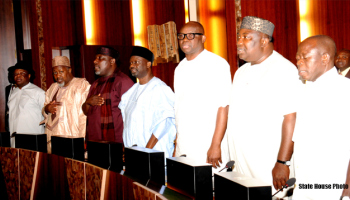






The Hunt, Hunted, Hunters, Headhunter And Fate Of The Masses, By AbdulRahman Agboola
When genuine intentions of few leaders combat with dubious actions of the majority, good actions becomes wanting or probably wanton as shown in the persecution of the Presidency against the decision to recover looted resources, block financial leakages, revive the economy and make life bearable for all Nigerians. The Presidency must derive means of sensitizing the masses to align with the strategies and plans of government to alleviate their sufferings and bring forth mass oriented programmes and policies.
The hunt is our stolen resources, which is responsible for the recession of our economy and failure of government to boost the economy expectedly. What we hunt is still in possession of the hunted who are the culprits fingered in shady deals and massive looting under the last administration. The hunted are scattered across political and business lanes, they are major in the opposition and minor in the ruling party. The hunted are ready to checkmate the antics of the hunters to evade trials and prosecution, the hunted are gaining upper hand over the hunters, while the hunter seems lost on best strategies to nail the hunted within the ambits of the law.
The hunters are the government agencies vested with authorities to retrieve the hunt from the hunted, while the headhunter, which is Mr. President, seems suppressed by the machinations of the hunted as clearly manifested in the tacit support of PDP leaders for any action that will portray the headhunter in bad light, as noted in series of blackmail of the Presidency on the travails and trials of the Senate President, former National Security Adviser and others. The Biafra agitators are having a free ride in PDP-controlled states and the PDP senators from the South East Region are mute in their desperation to box the Presidency into corner of ineffectual leadership and dismal performance – a PDP machination to ensure the Country record no significance success under the headhunter, not only for their political gains but to pervert the cause of justice and calmly enjoy the looted resources.
With all the instruments of government under the control of the headhunter, one expects the speedy recovery of all stolen funds but really contrasting to note the contrary, which cast aspersions on the competence and credibility of the hunters to act expediently. What we have witnessed are financial policies to block financial leakages and fraudulent practices such as the Bank Verification Number and the Treasury Single Account which brought temporary sufferings to the masses affected by the policies.
An average bank customer suffered one fate or the order in the process of getting BVN linked to their accounts, many were deprived access to their accounts, many have to effect changes in compliance with the directives of ensuring that biometrics and identities of account owners and genuinely verifiable with truism, while the TSA delayed payments by government agencies to indebted contractors and staffs. Weighing the overall benefits of both the BVN and TSA to the economic growth and blockage of financial leakages, the sufferings of the masses at the moment will translate to their prosperity at the long run, but it will amount to grave injustice if our looted commonwealth is not retrieved with immediate alacrity.
There is no point twisting the facts of the restrains of the Presidency to act in isolation of the National Assembly and the Judiciary as the synergy of the three arms of government is an impetus towards economic revitalization and recovery of stolen funds. When the uprightness and integrity of any of the arrowheads is questionable, the businesses of government get enmeshed in jeopardy and double standard, which might deny the masses the good governance they seriously yearn.
The Presidency has a covenant with the entire people of this Country and no excuse will be sufficient enough to explain any impediment towards the fulfillment of that covenant. The covenant is good governance and any lawful means must be engaged to dislodge all impediments, obstacles and albatross blocking the fulfillment of that covenant.
Mr. President must be bold enough to ignore all contretemps among his allies over the leadership of the National Assembly and other Political Appointments in the discharge of his responsibilities to the Country, Mr. President hold the aces and they should be used productively to achieve a greater Nigeria where even the Biafra agitators will celebrate him as a hero. The headhunter should be assemble the best think tank and intelligence network to suppress all obstacles endangering his perform and ensure positive result to the benefits of the masses. With clear conscience, reputable team and clear headedness, Mr. President must come out of his shells to solve the numerous problems of Nigeria.
. Comrade AbdulRahman Agboola is the National Coordinator of Mass Action for Good Governance and Grassroots Development in Nigeria. He wrote from massaction4gg@gmail.com. 08032813279