The immediate past Chairman of the Independent National Electoral Commission (INEC), Professor Attahiru Jega has warned the federal government against implementing the Treasury Single Account (TSA) on the electoral body, saying that that it will be a recipe for disaster.
Jega who spoke at the 2015 e-Nigeria Governance Forum in Abuja, said the effectiveness of electoral processes is conditional on availability of financial resources to deliver efficient services consistent with international minimum benchmarks and global best practices. “Electoral processes cannot be effective if an EMB is starved of funds and/or has to go cap in hand to an incumbent executive begging for funds before it can conduct an election. The financial autonomy of INEC needs to be strengthened.
“It should continue to be on first line charge and have all its funds released through the statutory transfer fund as appropriated by the National Assembly. Subjecting an electoral Commission to the so-called single treasury account, I believe, is a recipe for disaster.” [myad]
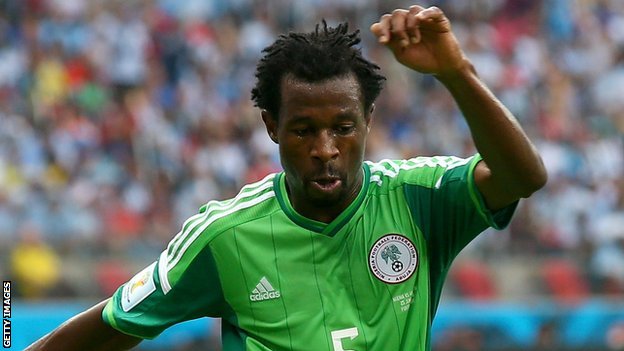
Nigeria has zoomed pass Swaziland into the final pool stages of African World Cup qualifying with a 2-0 defeat today in Port Harcourt, capital of Rivers state of Nigeria.
Swaziland’s underdogs had held Nigeria to a goalless draw in the first leg in Lobamba last Friday and it took into the second half of the return game for the West African powerhouse to finally breach their defence.
Ghent forward Simon scored from a free-kick six minutes after the break, before Celtic defender Ambrose turned the ball home from another set-piece with four minutes remaining to seal the tie.
Swaziland finished the game with 10 men when Phumlani Dlamini received his second booking in the closing stages.
Twenty African sides, split into five groups, will compete in the decisive pool stages of the World Cup qualifiers starting late next year, with the top team in each group guaranteed a place in the finals in Russia. [myad]
The President of the Senate, Dr. Bukola Saraki has vowed to lead the senate to investigate the alleged N25 billion Treasury Single Account (TSA) fraud irrespective of intimidation from any quarter.
Saraki, who was reacting to a motion moved by Senator Dino Melaye (APC-Kogi West) over a newspaper article allegedly blackmailing the Senate for pointing out the alleged fraud said that the senate would not relent in carrying out its constitutional duties, including pointing out any action that would be detrimental to Nigerians.
“No amount of either blackmail or intimidation will stop us from doing the work we have to do. We have a responsibility here to ensure that there are no leakages in government funds and if there are, we will call the attention of the public and do whatever it takes to salvage the situation; it is our responsibility.
“The fact about the TSA will come out and everybody will have opportunity before the committee to state the fact, the facts will speak for themselves,’’ he said. Saraki said the assembly would expedite action on the inauguration of Standing Committees to enable it to begin its oversight function fully.
Earlier, Melaye said that his attention was drawn to the write-up accusing the Senate of working against President Muhammadu Buhari’s effort to implement TSA. He expressed concern that the writer could conceive such an idea in spite of the National Assembly’s resolve to work with Buhari in fighting corruption.
Melaye recalled that it was the assembly’s stand on the alleged TSA fraud that led SystemSpecs to refund the one per cent it collected from mopped up funds to Central Bank of Nigeria (CBN). “The writer said we are against the change agenda of Mr President because we raised the abnormality going on with the implementation of the TSA.
“We did not at any time in this Hallowed Chamber implicate President Muhammadu Buhari of being involved in TSA fraud. “ We will not stop carrying out our legislative duties for fear of being blackmailed. “The motion moved last week had two prayers.
“The first thing we did was to thank Mr President and commend him for the implementation of the TSA and for anyone to say the Senate is fighting Mr President is myopic, parochial and unacceptable. “I have a letter here that I am going to lay with this paper, written by the Director, Banking and Payment of CBN to the Managing Director of SystemSpecs.
“The CBN categorically stated that they should remit the one per cent that they collected. “I also have a letter here by the managing director of that company to the Accountant General of the Federation and the Governor of CBN that have completely buttressed and elicited our decision last week.
“So for people to blackmail us as irresponsible, it is not acceptable to me and the Senate. “Never would we allow blackmail and political and economic bigots to destroy the people. We are for the people and we will stand in defence of public interest.’’
The write-up and letters cited by Melaye were referred to the Senate Committee on Ethics, Privileges and Public Petition to be returned to Senate in one week.
The Senate had on November 11 raised alarm over alleged payment of N25 billion to one e-collection firm, REMITA, in one day as one per cent of monies transferred to TSA. It also directed its Committee on Finance, Banking and other Financial Institutions and Public Accounts to carry out a holistic investigation into the matter and report back in two weeks.
A four year-old girl raped by her uncle; a ten year old boy beaten to death by his father; yet another heart wrenching story of abuse. No day passes without similar stories in the media. Many of us will sigh and turn the page, searching for the financials, the latest corruption scandal, or the sports news. We seem to have become desensitized to these horrors our children suffer. Today, on Universal Children’s Day, and as the Goodwill Ambassador on Ending Violence Against Children, I urge you, please read on. The global call for children to be protected from all forms of violence, in all settings was sounded on this day in 1989, when the UN adopted the Convention on the Rights of the Child. Africa reinforced this call to end violence, one year later, when it adopted its own African Charter on the Rights and Welfare of the Child. Nigeria readily signed up to both treaties in 1991, and in 2003 we passed our own national law – the Child’s Rights Act – bringing in comprehensive protection for children from violence. Paper commitments, however, are meaningless without action and our children continue to suffer extreme levels of physical, sexual and emotional violence. Six out of ten children (60%) in Nigeria, according to the National Violence Against Children Survey, conducted by the National Population Commission with support from UNICEF and the US Centers for Disease Control and Prevention, suffer such violence. By any measure, that is shocking, horrific and, for Nigeria as a nation, an embarrassment. One in four girls (25%) and one in ten boys (10%) will suffer sexual violence before they reach 18 years old; this year alone 9 million of our children will have been subjected to rape and sexual abuse. And they suffer in silence. They are prevented from reaching out for help by shame, stigma and a lack of knowledge about where to get help. Most worrying is that sexual violence is so normalized amongst our children that many of them do not realise that what they suffering is wrong. Before they have turned 18 years, half of all of our children will have been whipped, intentionally burned, punched, kicked, hit or threatened with a weapon. These cannot be dismissed as acts of discipline. These are acts of violence that have no place in an upbringing that should enable our children to flourish. Violence – sexual, physical and emotional – is not confined to children who are poor or marginalized. It does not just affect children in the north east who are affected by the conflict there. It transcends wealth, location, and family circumstance. It can happen to any child, anywhere. It can happen to your son or daughter, your brother, sister, niece, nephew or cousin, to your friend. Adults who suffered violence are significantly more likely to use violence themselves. Violence against children constrains our development and costs us between two and eight per cent of our GDP. In September this year, the UN included a target to end violence against children in the Sustainable Development Goals, explicitly linking, for the first time, a violence-free society for children to economic growth. I was proud to speak at the launch of the Year of Action to End Violence Against Children in September, at which President Buhari personally called on each and every one of us to take action. We have a moral obligation to act, a civic duty, and a legal obligation. I am proud to be the Goodwill Ambassador for this campaign. If I can inspire even one person to take action – to stop perpetrating violence; to protect children from violence; to make children aware that they have a right to grow up free of violence; to help a child speak out, and to show compassion and support when they do – it will have been worthwhile. You too can join this fight. It’s time to take action! Together, Let’s End Violence Against Children. [myad]
The Lagos State Government has given allottees of the State lands for residential Schemes to take physical possession and develop the plots allocated to them on or before December 14, 2015. The plots are particularly located in Victoria Island, Ikoyi, Lekki 1 & 2 and Abijo. The state Permanent Secretary in the Lands Bureau, Mr. Bode Agoro, who gave the directive on behalf of the State Government, said that the directive is in line with the policy thrust of the Government in allocating lands to citizens in residential schemes which is to assist them meet their desire of building houses of their own. Agoro affirmed that the terms and conditions as stated in the State Land Law, mandates allottees or holders of Right of Occupancy to fully develop their plots within two years of allocation, which he said, informed allocation of plots of lands on the schemes. He gave assurance that building approval for those that are ready to develop their plots or parcels of land in compliance with the directive would be treated with utmost dispatch and urged affected persons to act without delay. Agoro decried the unwholesome activities of miscreants and hoodlums who constitute threats to lives and properties of residents in those areas, despite provision of infrastructure by the Government, adding that government would not fold its arms and continue to watch innocent citizens suffer unduly. He advised the public to verify the status of any landed property before consummating transaction. He added that they should also obtain information from the Office of the Surveyor-General as well as ensure proper validation of Titles from the State Land Registry. The Permanent Secretary said that such steps would guard against practice whereby some individuals, families and communities engage in illegal sale of government acquired land. [myad]
Lagos State Government has commenced full enforcement of rules and regulations guiding Central Business District (CBD) as part of measures to curb illegal activities of traders and motorists that impede free flow of human and vehicular movement. Special Adviser to the Governor on CBD, Mr. Agboola Dabiri, who led enforcement team to Lagos Island CBD said that the government would no longer condone street trading, display of goods on road and walkways and illegal parking, as well as driving against the traffic. “The State Government will no longer tolerate any act of impunity by traders and motorists. You have been warned over time to desist from all illegal activities that impede traffic.” He warned that anyone caught will be made to face the full wrath of the law so as to serve as deterrent to others, adding that the inspection would continue “until we all abide by all CBD rules and regulations which centered mainly on orderliness, conformity and free flow of traffic in line with international standard for CBD in developed countries.” No fewer than 15 vehicles were impounded in the exercise which commenced from Onikan through Broad Street, Apongbon, Elegbeta, Ebute Ero and Idumagbo. Other areas involved are Eyin Eyo, CMS, Eja Lonibu and Tinubu. Scores of recalcitrant traders were also arrested and goods seized in an exercise that caught traders, motorists and other stakeholders unaware. [myad]
Nigeria’s new cabinet, perhaps the most awaited in the history of constitutional democracy in Africa, has finally been sworn in. The wait involved at first a shocking and unexplained silence, and then the release of a partial list which was approved by the Senate in October, a full 131 days after the president was sworn in. Ministers apparently got to know of their respective portfolios 35 days later. It was shambolic. Clearly the governing party had not listened to the message delivered on behalf of Tony Blair, former UK prime minister, about the importance of the first 100 days of office. In a keynote address at a special two-day policy dialogue held in Abuja immediately after the party secured victory in May 2015, Blair, through his former advisor Peter Mandelson, said: You will have more good will and more authority to do the difficult things at the beginning of your term than at the end. No-one at that stage imagined that it would take more than 100 days to even form a cabinet. But then Nigeria is no ordinary country and it has its own inherent logic. Eventually nearly all appointees came from inside Nigeria and were quite known, if not predictable faces from the coalition-opposition. Some have suggested that the president needed time to fish out the very best from home and abroad. Others point to the fact that he needed time to understand the rot in the system and put in a host of ingenious strategies to fix loopholes that made corrupt practices easy. But the wait could very easily be due to party intrigues and sloppy handling of the task. The country could ill afford the long wait. Longstanding energy instability is taking its toll on industry and unemployment is skyrocketing. With a depressed economy crime rates have begun to rise. Things are getting so worrisome that stocks on the Nigerian Stock Exchange continued to fall as investors reacted indifferently to the inauguration of the new ministers. The list of new ministers appears to have generally gone down well with the public. Citizens were so fed up with the last Peoples Democratic Party government that, frankly speaking, the first 50 names in the telephone directory would have been preferable to the status quo. There are some notable personalities in the new cabinet. Babatunde Fashola, former governor of Lagos state with a population of 18 million, is now minister of power, works and housing. Kayode Fayemi, former governor of Ekiti state, is minister of solid minerals. Both Fashola and Fayemi have enviable records of performance and the halo of much needed technocratic competence. It would have been unimaginable for the brilliant communicator, Lai Mohammed, not to be the minister of information. He was virtually the only authentic voice of the opposition even before there was an effective opposition party. Transportation Minister Rotimi Amaechi is experienced and is expected to flourish. The corporate and political gravitas of a politician like Senator Udo Udoma, minister of budget and national planning, is expected to come in handy. Abubakar Malami (Kebbi), the minister of justice, is young, dynamic and belongs to the president’s political circle. He has an enviable legal practice record but is relatively new to government. Then there are younger northern stars like senators Hadi Sirika, Ibrahim Usman Jibril and Ahmed Musa Ibeto, who are ready to earn their stripes on a national stage. They have enviably clean records and are expected to be massively loyal to the president. He will need lots of loyalty given the tumultuous times ahead. The list is quite short on academics and intellectuals. There is only one professor, and Fayemi, who has an academic history. Buhari himself has a keen and trained mind even though he has no degree. This is notable because only two Nigerian presidents have had a degree. Modern African political scientists lament the near total absence of the philosopher king in modern African states. On the other hand the immediate past president, Goodluck Jonathan, brandished a doctorate degree but had little luck putting it to use. The gender balance is disconcerting even by African standards. Just five out of 37 ministers are women. But, it is significant that the economy is in the hands of a woman, former investment banker Kemi Adeosun. It is not that women hold the key to all positive change in Nigeria. Indeed the country Nigeria has had its fair share of rogue female leaders. President Buhari’s predecessor as prime minister for petroleum Diezani Alison-Madueke is being held in the UK and faces up to 10 years in jail for corruption and money laundering. Nevertheless, the appointment of Taraba’s first female attorney General Aisha Jummai Al-Hassan as minister of women affairs is commendable. It is hoped she’ll make a meaningful impact on empowering women, particularly in the northern regions of the country where paternalistic attitudes and religion are very oppressive. There are other short comings in the appointments. For example, the spread is very elitist and there is little hope of a left leaning agenda – at least at this stage. This is a shame because there is a massive percentage of the population needing directed socialist policies to lift them out of severe hardship, chronic poverty and generational under achievement. The Nigerian government must learn to communicate better. Silent governance is fast receding as an effective strategy everywhere. It is quite unforgivable that in nearly six months there was no systematic communication to the citizenry on a new cabinet. At the very least this was disrespectful. It was also awkward from an international relations point of view. As Mandelson, the UK’s renowned “Prince of Spin” himself, explained in Abuja recently: Strategy without communications is like a car without headlights. There is no excuse for Buhari’s shoddy handling of the appointments. On his wide shoulders lies the fate of 150 million people that sorely yearn for successes. And the emergence of Nigeria as a truly great African nation will have spill over effects that can lift an entire region out of stark mediocrity. He has been entrusted with possibly the most difficult job of any leader on the continent. Now he must perform in a way that promotes transparency. He must nurture Africa’s largest economy back to strength. This entails transforming its agricultural, financial and industrial base into that of a 21st century jet stream economy. There is little doubt that Buhari is a man of conviction and a patriot. But he must become a phenomenal leader.
Gbenga Oduntan Senior Lecturer in International Commercial Law, University of Kent [myad]
The Nigerian Meteorological Agency (NiMet) has alerted Nigerians of the possible outbreak of meningitis due to the onset of dry season in some parts of the country.
The agency warned rural dwellers against direct exposure to prolonged sunlight even as it noted that the occurrence of dust outbreaks during the season night lead to disruption of flight operations across the country.
In a statement today in Abuja, NiMet said that with the end of the rainy season, hot and dry weather conditions in the afternoons and cold nights will set in, especially in the northern part of the country and a general increase in temperature across most parts of the country.
“The effect of the increase in temperatures will result in deterioration in human comfort. The citizenry, especially rural dwellers resident in north and central parts of the country are advised to avoid prolonged exposure to direct sunlight and stay in cool and ventilated environment. This will reduce heat stress and prevent incidences of dehydration and meningitis epidemics.
“During this period, the prevailing meteorological conditions will be favorable for increase in the surface wind speed. Consequently, dust particles are expected to be raised in Niger and Chad desert areas and subsequently transported across the country by the Northeast trade wind.
“Progressively, the dry and dusty wind (harmattan) will become prevalent and extend to the southern part of the country.
“As the concentration of the dust particles increases, the atmosphere will get drier and incidences of respiratory disorder will become prevalent. Dust outbreaks will occur during the season which occasionally will reduce horizontal visibility significantly with the attendant disruption of flight operations across the country.” [myad]
President Muhammadu Buhari has described those agitating for the republic of Biafra as jokers, saying that Nigeria remains one indivisible country.
The President, who spoke today at the new Banquet Hall of the Aso Rock Presidential Villa in Abuja, while launching the 2016 Armed Forces Remembrance Day Emblem and Appeal Fund, said that the fact that Nigeria had since independence remained united, was an eloquent testimony to Nigerians’ determination to remain one people.
“Our nation has recently celebrated 55 years of political independence and continues to remain as one indivisible entity despite several grievous challenges.
“Since independence, Nigeria has witnessed a lot of internal strife, survived a civil war and has remained united. This feat achieved by the country is an eloquent testimony to the determination of our citizens to remain as one people.”
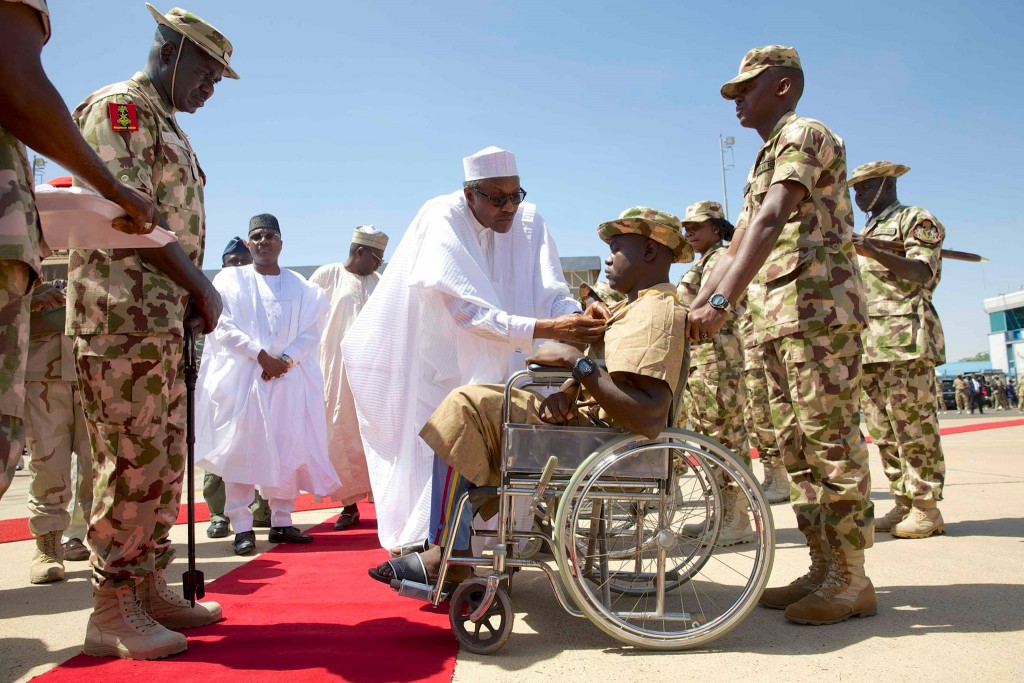
President Buhari said the sacrifices of the nation’s fallen heroes, heroines and veterans who rose up to the security challenges could not go uncelebrated. [myad]
We use cookies on our website to give you the most relevant experience by remembering your preferences and repeat visits. By clicking “Accept”, you consent to the use of ALL the cookies.
This website uses cookies to improve your experience while you navigate through the website. Out of these, the cookies that are categorized as necessary are stored on your browser as they are essential for the working of basic functionalities of the website. We also use third-party cookies that help us analyze and understand how you use this website. These cookies will be stored in your browser only with your consent. You also have the option to opt-out of these cookies. But opting out of some of these cookies may affect your browsing experience.
Necessary cookies are absolutely essential for the website to function properly. This category only includes cookies that ensures basic functionalities and security features of the website. These cookies do not store any personal information.
Any cookies that may not be particularly necessary for the website to function and is used specifically to collect user personal data via analytics, ads, other embedded contents are termed as non-necessary cookies. It is mandatory to procure user consent prior to running these cookies on your website.



 A group of elderly women in Edo State appeared on the streets in Benin City, the state capital, half naked and in red attires.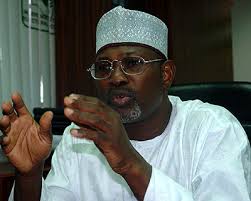






Buhari’s Cabinet: Solid Choices, Too Elitist, By Gbenga Oduntan
Nigeria’s new cabinet, perhaps the most awaited in the history of constitutional democracy in Africa, has finally been sworn in. The wait involved at first a shocking and unexplained silence, and then the release of a partial list which was approved by the Senate in October, a full 131 days after the president was sworn in. Ministers apparently got to know of their respective portfolios 35 days later. It was shambolic.
Clearly the governing party had not listened to the message delivered on behalf of Tony Blair, former UK prime minister, about the importance of the first 100 days of office. In a keynote address at a special two-day policy dialogue held in Abuja immediately after the party secured victory in May 2015, Blair, through his former advisor Peter Mandelson, said:
You will have more good will and more authority to do the difficult things at the beginning of your term than at the end.
No-one at that stage imagined that it would take more than 100 days to even form a cabinet. But then Nigeria is no ordinary country and it has its own inherent logic.
Eventually nearly all appointees came from inside Nigeria and were quite known, if not predictable faces from the coalition-opposition.
Some have suggested that the president needed time to fish out the very best from home and abroad. Others point to the fact that he needed time to understand the rot in the system and put in a host of ingenious strategies to fix loopholes that made corrupt practices easy.
But the wait could very easily be due to party intrigues and sloppy handling of the task.
The country could ill afford the long wait. Longstanding energy instability is taking its toll on industry and unemployment is skyrocketing.
With a depressed economy crime rates have begun to rise. Things are getting so worrisome that stocks on the Nigerian Stock Exchange continued to fall as investors reacted indifferently to the inauguration of the new ministers.
The list of new ministers appears to have generally gone down well with the public. Citizens were so fed up with the last Peoples Democratic Party government that, frankly speaking, the first 50 names in the telephone directory would have been preferable to the status quo. There are some notable personalities in the new cabinet.
Babatunde Fashola, former governor of Lagos state with a population of 18 million, is now minister of power, works and housing.
Kayode Fayemi, former governor of Ekiti state, is minister of solid minerals. Both Fashola and Fayemi have enviable records of performance and the halo of much needed technocratic competence.
It would have been unimaginable for the brilliant communicator, Lai Mohammed, not to be the minister of information. He was virtually the only authentic voice of the opposition even before there was an effective opposition party.
Transportation Minister Rotimi Amaechi is experienced and is expected to flourish.
The corporate and political gravitas of a politician like Senator Udo Udoma, minister of budget and national planning, is expected to come in handy.
Abubakar Malami (Kebbi), the minister of justice, is young, dynamic and belongs to the president’s political circle. He has an enviable legal practice record but is relatively new to government.
Then there are younger northern stars like senators Hadi Sirika, Ibrahim Usman Jibril and Ahmed Musa Ibeto, who are ready to earn their stripes on a national stage. They have enviably clean records and are expected to be massively loyal to the president. He will need lots of loyalty given the tumultuous times ahead.
The list is quite short on academics and intellectuals. There is only one professor, and Fayemi, who has an academic history.
Buhari himself has a keen and trained mind even though he has no degree. This is notable because only two Nigerian presidents have had a degree. Modern African political scientists lament the near total absence of the philosopher king in modern African states. On the other hand the immediate past president, Goodluck Jonathan, brandished a doctorate degree but had little luck putting it to use.
The gender balance is disconcerting even by African standards. Just five out of 37 ministers are women. But, it is significant that the economy is in the hands of a woman, former investment banker Kemi Adeosun.
It is not that women hold the key to all positive change in Nigeria. Indeed the country Nigeria has had its fair share of rogue female leaders. President Buhari’s predecessor as prime minister for petroleum Diezani Alison-Madueke is being held in the UK and faces up to 10 years in jail for corruption and money laundering.
Nevertheless, the appointment of Taraba’s first female attorney General Aisha Jummai Al-Hassan as minister of women affairs is commendable. It is hoped she’ll make a meaningful impact on empowering women, particularly in the northern regions of the country where paternalistic attitudes and religion are very oppressive.
There are other short comings in the appointments. For example, the spread is very elitist and there is little hope of a left leaning agenda – at least at this stage.
This is a shame because there is a massive percentage of the population needing directed socialist policies to lift them out of severe hardship, chronic poverty and generational under achievement.
The Nigerian government must learn to communicate better. Silent governance is fast receding as an effective strategy everywhere. It is quite unforgivable that in nearly six months there was no systematic communication to the citizenry on a new cabinet. At the very least this was disrespectful.
It was also awkward from an international relations point of view. As Mandelson, the UK’s renowned “Prince of Spin” himself, explained in Abuja recently:
Strategy without communications is like a car without headlights.
There is no excuse for Buhari’s shoddy handling of the appointments. On his wide shoulders lies the fate of 150 million people that sorely yearn for successes. And the emergence of Nigeria as a truly great African nation will have spill over effects that can lift an entire region out of stark mediocrity.
He has been entrusted with possibly the most difficult job of any leader on the continent. Now he must perform in a way that promotes transparency. He must nurture Africa’s largest economy back to strength. This entails transforming its agricultural, financial and industrial base into that of a 21st century jet stream economy.
There is little doubt that Buhari is a man of conviction and a patriot. But he must become a phenomenal leader.
Gbenga Oduntan
Senior Lecturer in International Commercial Law, University of Kent [myad]