President Muhammadu Buhari may have set to present to the nation, a budget of about N8 trillion for 2016.
This fact came to light via a document from office of the Vice-President, Yemi Osinbajo which was seen by Reuters on Friday. The budget wil be twice that of last year’s, which was N4.4 trillion
It is unknown how the federal government plans to fund the budget in an economy going downward due to the sharp fall in crude prices, as oil exports account for 70 percent of government revenue.
The document, used as the basis for a presentation by Osinbajo to the incoming ministers, during a two-day retreat for them, proposed capital expenditure of N2 trillion next year, up from N1.3 trillion in 2015.
The document presented to them, titled: “The Economy – Where We Are Today”, laid out the extent to which the country has been hit by plunging oil prices, stating that in May, foreign reserves hit a 10-year low of $29.6 billion.
A page headed “How can we get out of a possible recession?” outlined the need for a “massive infrastructure building” programme for roads, rail and power, along with “expansionist” fiscal and monetary policies.
The presentation by Osinbajo, who heads the National Economic Council (NEC), stated that this would be paid for by a N25 billion infrastructure fund and a N2.5 trillion “special intervention fund.” [myad]
There was wild jubilation in Jalingo, Taraba state capital today, as the Taraba Governorship Election Tribunal sitting in Abuja, declared the All Progressives Congress (APC) governorship candidate in the 2015 governorship election the winner of the election even as it sent the Peoples Democratic Party (PDP) candidate who has been in the control of the affairs of the state, Mr. Darius Ishaku packing.
Although policemen were deployed in strategic locations in the state to ensure that law and order are maintained, some people took to the streets at Angwan Gaadi, Barde Way, Wuro-Sambo and Angwani, celebrating the Tribunal’s judgment. [myad]
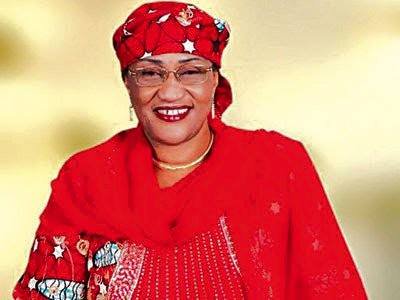
The Peoples Democratic Party (PDP) and garrulous governor Ayodele Fayose of Ekiti state have faulted the today’s judgment of the Taraba state gubernatorial election tribunal in favour of the All Progressives Congress (APC) candidate, Hajia Aisha Jummai Alhassan.
While PDP through its National publicity secretary, Olisa Metu described it as another evidence of executive interference in the judiciary, Fayose said that there was a conspiracy by the APC-led federal government and a section of the judiciary against the PDP.
PDP insisted that the reason given by the tribunal for arriving at what it called ‘bizarre decision’ is intriguing and that it further exposed the contradictions and double standards inherent in most tribunal rulings against PDP interests recently.
Metuh in a statement today said that the Taraba state tribunal ruling had again brought to the fore, the organized plan by the President Muhammadu Buhari-led APC Federal Government to deploy all unorthodox means to decimate the opposition.
“It is rather curious and a great conflict of irony that the Taraba tribunal sitting in Abuja on security grounds faulted the conduct of PDP primaries shifted to the same Abuja on security reasons.”
PDP said that if the tribunal is faulting the party primaries as basis for its decision, it then means that no APC gubernatorial candidate can stand the test, as their party never had acceptable primaries in any of their states.
The party wanted democracy watchers globally to recall that it had earlier alerted the nation and the international community of the grand design by the APC to use the judiciary to wrestle some PDP states, particularly Rivers, Akwa Ibom and Taraba states.
“Evidence that Taraba ruling was a product of Presidency manipulation can be deduced from the fact that few hours before the judgment was delivered, the APC had arrogantly announced their victory on the new media.”
PDP said it is totally confounded by the brazing show of power by the executive and warned that the development clearly portends grave danger to our democracy and indeed national cohesion and development.
It called on its members across the country, especially in Taraba state to remain undaunted as the appellate courts will restore its well-deserved victory.
This was even as governor Fayose called on the Supreme Court to save the country from impending anarchy, adding in a statement by his Special Assistant on Public Communications and New Media, Lere Olayinka, that the tribunal would resort to the mere PDP primary that produced Governor Ishaku in Abuja as a big issue even when the tribunal itself sat in Abuja.
“How does the emergence of party candidate, which is the clear internal business of the party and a pre-election matter concern the APC and the Election Tribunal?
“Isn’t it funny that it is no longer about election rigging, but technicality of how PDP candidates emerged even when no one in the PDP went to court to challenge how Governor Ishaku emerged as the PDP governorship candidate?
“If insecurity could make Taraba State Tribunal sit in Abuja and not in Jalingo, how then can it be justified that the same tribunal that sat in Abuja nullified the governor’s election because the primary election that produced him too was held in Abuja?
“Is it not being manifested in this President Muhammadu Buhari led APC government that what is good for some people may not be good for others even though we operate the same constitution?
“To me and the teeming supporters of the PDP, this judgement is one that must not be allowed to stand. It is a clear miscarriage of justice and we will seek redress from the court of men and the court of God.”
The governor reiterated his commitment to speaking the truth in the overall interest of Nigerians, saying: “If everybody is persecuted and intimidated to submission, I will remain resolute in my resolved to always say the truth before men and God.” [myad]
The Governorship Election Petition Tribunal for Taraba has explained that it nullified the election of Taraba Governor, Darius Ishaku, because he was never the candidate of the Peoples Democratic Party (PDP) in the first place.
The three-member tribunal concluded in their collective judgment today that Mr. Ishaku was not validly nominated as candidate of the PDP and therefore did not qualify, from start, to contest the governorship election.
Tthe tribunal held that the governorship primaries purportedly conducted by the PDP in the state was done in violation of section 78 (b) (1)(2) of the Electoral Act which guides parties nomination to the position of governorship candidate.
It held that contrary to the provision of the section, PDP conducted the purported primaries at its national secretariat, Wadata Plaza, in Abuja with no clear delegation from the local government areas in the state.
The tribunal sustained the testimonies of the head of election monitoring of Independent National Electoral Commission that the commission was not aware of any primaries conducted by the party in line with the provision of the electoral act which produced Ishaku as the party’s flagbearer.
Section 78 (b) (1)(2) of the Electoral Act states: In the case of nomination to the position of Governorship candidate, a political party shall where they intend to sponsor candidates:
(i) hold special congress in each of the Local Government Areas of the States with delegates voting for each of the aspirants at the congress to be held in designated centres on specified dates.
(ii) the aspirant with the highest number of vote at the end of the voting shall be declared the winner of the primaries of the party and aspirant’s name shall be forwarded to the commission as the candidate of the party, for the particular state.
The tribunal said the defence by the PDP that the primaries were shifted to Abuja because of security challenges in the state was rejected by the tribunal.
It sustained the evidence of the INEC official that there was no primaries election in the state and the emergence of Mr. Ishaku through the purported election in Abuja was after the statutory stipulated time for party primaries had elapsed.
It held that since Mr. Ishaku was not duly sponsored by the PDP, the party had no candidate in the governorship election in the eyes of the law.
The tribunal therefore voided the votes of the PDP and Mr. Ishaku in the election saying “it is a waste’’ and declared the APC and its candidate, who came second, as the valid winner of the April 11 election.
The Tribunal, sitting in Abuja, declared the candidate of the All Progressives Congress (APC) who is currently a Minister designate, Aisha Alhassan, as the winner of the April 11 governorship election in the state.
Reacting to the judgment, counsel to APC, Abiodun Owonikoko, a Senior Advocate of Nigeria (SAN), said the judgment was a landmark, being the first time the election of a governor would be nullified on the doctrine of wasted votes.
He said with the judgment, the era of impunity in party primaries was gone and it would be a lesson not only for PDP but all political parties.
On whether Mr. Ishaku will vacate the seat immediately, Mr. Owonikoko said the judgment “is not the end of the road, there is opportunity for all the parties to explore whatever the grievance they have.”
Mr. Owonikoko added that if the governor or the party did not appeal within 21 days, Hajia Alhassan will be sworn-in as governor.
The counsel to the PDP was not available to comment on the verdict of the Tribunal as they all rushed out of the venue after the judgment. [myad]
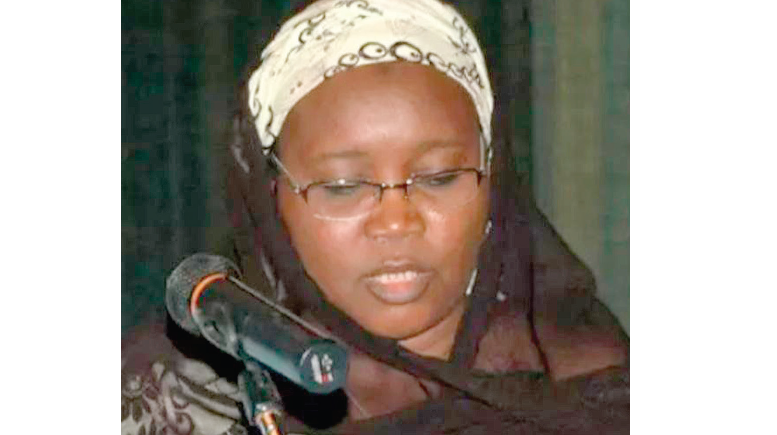
Association of Muslim Women in Business and the Professions will hold its 8th biennial National Conference in Abuja, Nigeria Federal Capital Territory from November 18 to 21.
A statement jointly signed by the National Amirah and the National PRO of the Association, Dr. Saudat Salah Abdulbaqi and Hajia Shakirat Abdulmajeed, said that Deputy Governor of Lagos State, Dr. Idiat Aderanti Olubule will be the special guest of honour at the conference, which has its themed: “Challenges of Globalisation on Muslims.”
Abdulbaqi said that the choice of the theme was informed by the fact that the linkage of the world via Information and Communication Technology and its attending spiral effect on all citizens of the world calls for concerted effort to attain a knowledge of reality through common reflection and action in order to make informed contributions towards self and global development.
According to her it is the tradition of the organization to hold a Biennial National Conference to bring Muslim elites together to discuss contemporary issues as they affect the Ummah and the society at large.
The opening ceremony of the 8th Biennial conference is expected to be chaired by Alhaji Ahmed Tunde Popoola, the Managing Director of CRC Credit Bureau Limited on November 21 at the Abuja National Mosque, while Alhaji Abdulfatah Adeyemi will present the lead paper.
Other activities lined-up for the occasion include courtesy visits to notable personalities within the FCT, Educational Chat with secondary school students, Interactive Session with Muslim Women groups, Humanitarian visit to Durumi Internally Displayed Persons’ camp and Nurul Bayan Orphanage home where the group hopes to hold memorable interactive sessions with the inmates and distribute relief materials.
Other speakers at the three-day event include Alhaji Shuaib Salis, a former Assistant Chief of Staff to Ogun State Governor; Dr. Amina Soliu; Senator Mulikat Akande Adeola; and Senator Monsurah Sumonu. [myad]
The Taraba State Governorship Election Petitions Tribunal haS declared the candidate of the All Progressives Congress (APC), Hajia Aisha Alhassan, the lawful winner of the Taraba State governorship election held on April 11. In its judgment TODAY, the Tribunal sacked Darius Ishaku of the Peoples Democratic Party (PDP) as governor. It said Alhassan, who is popularly known as Mama Taraba, was the lawfully elected candidate of the election. [myad]
“My mum has been there for me; challenging me to be the best. “My dad died last year; I remember him too, but it is my mum that has been there for me all this while. I thank her so much.” These were the words of one of the all-conquering Golden Eaglets’ pacesetting performers and striker, Orji Okonkwo. Okonkwo, who described his 35-yard screamer, which fetched the second goal for Nigeria in the 4-2 defeat of Mexico in the semi finals of the FIFA U-17 World Cup last night, as his best ever, said: “I have never scored a goal like this before and you cannot practice this kind of goal.” The striker who is the first boy in a family with six other children, came into the game as replacement for Funsho Bamgboye, who was suspended after two yellow cards. Okonkwo hardly entered the pitch when he scored what is known in Nigerian football parlance as intercontinental ballistic missile. The surprised Okonkwo admitted: “the goal I scored against Mexico today is a wonderful goal and I’m dedicating the goal to my mum.” Okonkwo had earlier scored thrice, including a goal against Mali on April 21, 2014, at the sub-regional West African Football Union B Tournament in Togo where the Golden Eaglets finished third behind Benin and Togo. Okonkwo also thanked coach Emmanuel Amuneke “for pushing me so hard. “He is a nice person who wants the best for us. Before the match, he called me and said: ‘Orji, this is your chance, you can’t afford to let yourself and Nigerians down.’ And when I scored, I kept saying: ‘Coach, coach, coach.’ I’m grateful to him.” Okonkwo is two-time winner of the annual Karanka Reveria Invitational Tournament in Croatia in 2013 and 2015, with the Abuja Football College. [myad]
The All Progressives Congress (APC) has said that it has not reneged on its campaign promise to pay N5,000 each monthly to 25 million most vulnerable Nigerians.
The party called on Nigerians to ignore the mischievous attempt by the Peoples Democratic Party (PDP) to confuse and mislead them on this issue.
In a statement today by its National Publicity Secretary, Alhaji Lai Mohammed, the party said that though the then PDP-led Federal Government plundered the common wealth, but that APC has devised creative means not only to pay the money but also to fulfill its other campaign promises to Nigerians.
It said that the non-implementation of the payment policy so far is due to the fact that it was not included in the 2015 budget, which was prepared by the PDP-led President Goodluck Jonathan’s Administration, and also because of the need to first block all financial leakages.
“Now, the Buhari administration has been busy putting into place measures that will make it possible to start the implementation of this project. Such measures include the introduction of the Treasury Single Account.
“We are happy to inform Nigerians that as at the end of September 2015, over 1.4 trillion Naira – which hitherto was lying unproductively in various commercial banks – has been recovered and paid into the TSA.”
The party said that in its usual jumpy and superficial approach to issues, the irresponsible opposition has already rushed to judgment on the issue without bothering to hear from the APC, which made the promise in the first instance. Had the PDP not sacrificed the truth on the altar of political expediency, it would have realized that the APC never at any time indicated it has reneged on its promise to pay 5,000 Naira monthly to 25 million most vulnerable Nigerians. In our press statement of Aug. 30th 2015, we still reiterated our plan to redeem our campaign promises, including the social security payment policy, despite the primitive looting of the treasury under the watch of the PDP.
“It is therefore astonishing that the same PDP, which is becoming more and more infamous for its penchant for peddling half truths and sensationalizing every issue, will rush to the press to celebrate the figment of its imagination that the APC will not fulfill its campaign promise regarding the payment.”
The APC said that the Buhari administration is also embarking on a massive infrastructure renewal programme in the areas of roads, rail and power, for which a $2.5 billion
Infrastructure Fund is being put in place.
“Contrary to the disinformation being peddled by the PDP, the Buhari administration is poised to lift millions of Nigerians out of extreme poverty by providing social protection and safety nets with another 2.5 trillion Naira Special Intervention.” [myad]
The President of the Nigeria Football Federation (NFF), Amaju Pinnick, has reminded the Golden Eaglets’ handler, Emmanuel Amuneke, that the most important match in the ongoing under 17 world cup tournament is against Malian side in the final on Sunday.
“This is a life -time opportunity for you to write your names in gold and you know how appreciative our country can be to winners and heroes. Sunday is the day to write your names into the history books.”
Pinnick who spoke last night shortly after the Golden Eaglets beat Mexico 4-2 at the Estadio Municipal Ester Roa, said that Emmanuel has shamed all the doubting Thomases about his professional prowess.
“Today, you convinced Nigerians you are the best and I want to thank you on behalf of Nigerians especially, President Muhammadu Buhari, for playing your hearts out and truly demonstrating the never-say-die Nigerian spirit.
“I’m extremely happy for Emmanuel because he, along with other officials, have demonstrated that they are good fathers to you all and I’m glad that I was able to withstand the pressure to sack him when the team failed to win the African Championship trophy in Niger Republic.” [myad]
President Muhammadu Buhari is worried by a situation where foreigners are being employed in many construction companies in Nigeria at the detriment of Nigerians. The President who ordered the Federal Ministries of Works and Lands, Housing and Urban Development to immediately commence the process of reversing the situation, made it clear that jobs must be created for thousands of unemployed people in the country. President Buhari who met with the Board of Directors of a leading construction company in the country at the Presidential Villa, Abuja today, asked that the relevant ministries should also urgently prepare and present to him for approval and implementation, a plan of action for the speedy revitalisation and expansion of the nation’s vocational training centres. The companies’ chiefs had told the President that because of the shortage of competent construction workers and artisans in the country, many construction companies were forced to bring in skilled workers from the foreign lands. Buhari expressed worry over this practice which he said, is very detrimental to his administration’s commitment to boost employment opportunities for young Nigerians. He said that his administration will move quickly to address the shortage of skilled construction workers in the country. The President who demanded a report on the current status of existing vocational training centres established by the Federal Government, said that his administration will take all necessary actions to rapidly re-position them as efficient producers of skilled workers for Nigeria’s building and construction industry. President Buhari assured members of the Board of Julius Berger Nigeria Plc that his administration will act swiftly to ensure that the Building Craft Training School and Skill Improvement Centre in Lagos are fully revamped, staffed and equipped to produce more skilled electricians, brick and block layers, carpenters, painters, welders, fabricators, plumbers and other artisans. He reaffirmed his government’s commitment to the proper education and training of Nigerian youth for the current demands of the labour market. The President said that the Federal Government will act expeditiously to remove all impediments to the fulfilment of its promise of more jobs for unemployed Nigerians. He also assured the Julius Berger Directors led by Mr. Mutiu Sunmonu that in spite of present financial challenges, the Federal Government will continue to do everything possible to settle genuine outstanding payments due to contractors. [myad]
We use cookies on our website to give you the most relevant experience by remembering your preferences and repeat visits. By clicking “Accept”, you consent to the use of ALL the cookies.
This website uses cookies to improve your experience while you navigate through the website. Out of these, the cookies that are categorized as necessary are stored on your browser as they are essential for the working of basic functionalities of the website. We also use third-party cookies that help us analyze and understand how you use this website. These cookies will be stored in your browser only with your consent. You also have the option to opt-out of these cookies. But opting out of some of these cookies may affect your browsing experience.
Necessary cookies are absolutely essential for the website to function properly. This category only includes cookies that ensures basic functionalities and security features of the website. These cookies do not store any personal information.
Any cookies that may not be particularly necessary for the website to function and is used specifically to collect user personal data via analytics, ads, other embedded contents are termed as non-necessary cookies. It is mandatory to procure user consent prior to running these cookies on your website.