


As Ex Edo Commissioner Casts First Stone On Oshiomhole’s Performance, By John Ainofenokhai
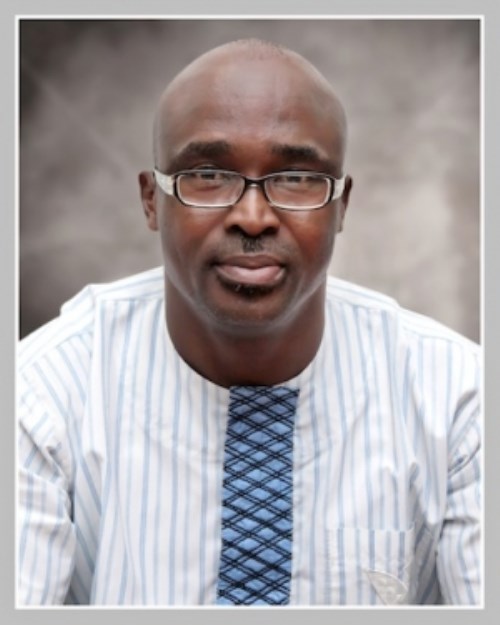
After reading the interview by former Transport Commissioner in Governor Adams Oshiomhole’s government, Mr. Orobosa Omo-Ojo, in Daily Sun of Tuesday, September 29, 2015, my initial reaction was that he (Omo-Ojo) was simply belly-aching, having only very recently been dropped from the Edo state cabinet by the comrade governor.
At the end of my quiet rumination, I resolved the issue in favour of both of them; and it is that if Governor Oshiomhole enjoys the absolute prerogative to engage and dispense with his commissioner in the manner he engaged and dispensed with Omo-Ojo, who says that he (Omo-Ojo) does not have the right to bellyache, especially if he feels that he was unfairly treated and, consequently, wrongly characterized?
When things like this happen, the tendency is for the public to assume that one or all of incompetence, corruption and malfeasances must have contributed to his removal as commissioner. The onus is therefore on Omo-Ojo to prove his incorruptibility or, at least, to prove that in Oshiomhole’s government, he was able to play in accordance with the rules of honesty, transparency and accountability.
But I harbour some guesses: it is not always that one finds people who look for opportunities to daringly hurl umbrages at governments in which they participated once they are shoved out of office. Many of them prefer to remain conformists and possibly go underground to enjoy their loots, that is if they were able to make some loots, instead of courting and earning the vindictive wrath of the usually merciless incumbent executive heads that would not brook any opposition from former minions.
Omo-Ojo’s predilection, therefore, to confrontationally expose the underbelly of his former boss-Oshiomhole- runs against the tide of this common sense wisdom of political survival, and perhaps, speaks to the critical issue of morality and integrity in public service; and which is that, like Caesar’s wife, he was probably above board while in government. Otherwise, it would have amounted to political hara-kiri for Omo-Ojo to step on the tail of the Tiger in Oshiomhole by pointedly suggesting that the comrade is not a man of integrity.
To argue, as he did, in the said interview that Oshiomhole has not kept all his promises to Edo people is to point out the comrade governor’s limitations (and this is Oshiomhole who believes that he is the best governor ever in Edo) and the fact that he probably has not been superlative in his performances contrary to contrived reports about his achievements, especially in the development of road infrastructure in the state.
According to Omo-Ojo: “Seven years down the line, thank God I had the opportunity to serve first, as Special Adviser in charge of Tourism and then I became Commissioner for Oil and Gas, and not too long ago, I was appointed as the Commissioner for Transport. So I want to humbly say in some areas, I am proud that we were able to bring some succor; we were able to effect some changes. But on a general note, I can’t be bold enough, in all honesty, to say we have delivered on our promises, except we do so in the next 12 or 13 months.”
It is left for Oshiomhole to, directly or through his spokespersons, rebut Omo-Ojo’s claims. This has become imperative against the backdrop of the narrative that the administration did not have fidelity to its promise to empower the youth of the state. He said the promise to create 10,000 jobs through the Edo Youth Empowerment Scheme (Edo YES) was a ruse, as according to him, the men and women who were engaged under the programme were on casual basis, which is against the ethics of labour movement.
If this claim is correct, I wonder how Oshiomhole, who is a labour man, would be able to rationalise the evident fact of casualisation of workers in his State. I expect Osho Baba to rise up in his own defence by taking up the gauntlet thrown down by Omo-Ojo who, in a bid to further expose the foibles in the comrade governor’s administration, expressed his unhappiness that the government has not been able to meet the promises made in terms of job creation, in terms of letting the people to lead, in terms of the failure of his promise seven years ago to abolish illegal taxation and tickets (levies) on the people.
Although he conceded that the administration tried in the area of education, yet he declared that the progress was superficial (perhaps in the area of building of school structures and classes) while the teaching personnel and curriculum lack content. According to him: “I am not aware that our teachers in colleges that 40 percent of them are ICT literate or compliant. I am not aware that Education has gone global and it is ICT trending; and except we go back to the drawing board, we may not have enough for us to give of our achievements in terms of quality achievement and what we promised. I believe it is not enough for us to have the red roofs (classrooms) or revolution as we call it now.”
I agree the time has come for our people to begin to interrogate the Oshiomhole years in the governance of our dear State. I commend Omo-Ojo, who was an insider in his government, for commencing this public conversation on the stewardship of the comrade governor. I believe it is important that stakeholders in Edo join issues with Omo-Ojo especially for attempting to do a comparative analysis between the Lucky Igbinedion and Oshiomhole years.
Omo-Ojo argued that former Governor Igbinedion actually performed better than Oshiomhole but that Igbinedion failed to leverage on the media to publicise his achievements. He actually gave reasons to justify his position. I will not re-echo his position and the reasons herein lest I turn myself into a megaphone for propagating the supposed achievements of the Igbinedion administration, which, objectively, are at best arguable.
This is the reason I strongly believe that since Oshiomhole approaches the terminus of his administration in Edo State next year and a burgeoning succession battle to contend with, the public space should come alive for Edolites to interrogate and debate the leadership and governance question in the State within the context of probity, accountability and prudent public finance. The ball is in the court of Oshiomhole and his government to take up the Omo-Ojo gauntlet to debunk the charge of failed promises, if they can. Those who have watched governance in Edo since 1999 are welcome on board this conversation.
Ainofenokhai, public affairs commentator, sent this piece from Benin City. [myad]






Imperative Of Strengthening Buhari -National Assembly’s Relationship, By Dare Atoye
Since 1999, the dominant thinking in the executive branch of government in Nigeria has been one that favours the ancient aristocratic system of government in which small elite that constitutes the executive arm held sway. This is even more evident at the state level, where the principle of checks and balances has been largely undermined by the executive, as the governors practically dictate to the legislative arm. The only semblance of separation of power as espoused by renowned French Philosopher, Baron de Montesquieu, can only be seen at the Federal level where the National Assembly, against all odds, has been able to robustly exert its influence in the scheme of democratic governance.
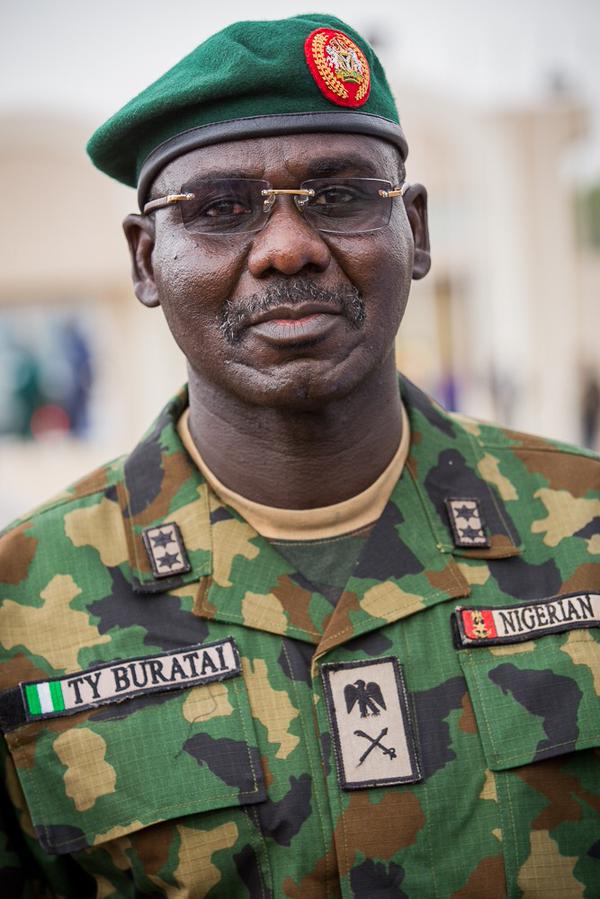
Indeed, because of the unnecessary interference and pressure that the National Assembly usually faces from the Presidency, Nigerians were gladdened when President Muhammadu Buhari made that famous line of thought in his speech, to wit: “I belong to everybody and I belong to nobody.” It raised the hope in parliamentary watchers and political commentators that this era will present a President that will not interfere in the internal affairs of the Legislature. Coming from the Olusegun Obasanjo’s experience where executive’s influence nearly marred the National Assembly and compromised its independence, through the disquiet of the Umaru Musa Yar’Adua era and the running battle that characterized the Goodluck Jonathan administration, that statement reinforced a new approach to Executive-Legislative relationship. Although we experienced a bit of improvement during the Yar’Adua and Jonathan administrations, there was however no let up in the Presidency having a say in the leadership arrangements of the parliament.
It would be recalled also that the Buhari had on more than one occasion assured the nation that he was ready to work with the leadership choices of the federal lawmakers. He was quoted to have said: “I am prepared to work with any leader that the House or Senate selects. It doesn’t matter who the person is or where he or she is from ….there is due process for the selection of leaders of the National Assembly, and I will not interfere in that process.” Commentators have had to reference this to adjudge Buhari as a born-again democrat who now understands the tenets of democracy.
But a few months down the line, it appears that the a few power mongers in our politics, who are never comfortable with the independence of the legislature, have wormed their ways into the heart of the President. I don’t want to make a wrong assumption that there is a special group of people whose business it is to always play up this executive supremacy over the parliament as it will be sounding superficial. However, it is an ideological thinking that has remained in our politics since 1999 and one which believes that the leadership of the National Assembly must be settled in the Aso Rock villa and not in the hallowed chambers of the National Assembly. This is very wrong and has been severally resisted. Unfortunately, this thought process has found its way into the Buhari’s presidency.
At this juncture, it is apposite to tell the President some home truths: that he must now rise above the imaginary fears that power mongers, stooges and sycophants usually create around the Presidency about the National Assembly. They are at best products of contrived imagination designed to create tension and in the process pave the way for the “greasing” of some palms. In the midst of confusions and rivalries, some politicians do get richer. Although it is not in doubt that the constitutional power to impeach the President lies with the federal lawmakers, it is however an expensive venture that hardly any session of the National Assembly will want to venture into. It will be a huge distraction and an almost impossible mission in our climes. The idea of impeachment was once tried by Ghali Na’aba-led House of Representatives against Obasanjo, but the outcome was futile.
Buhari must come to the reasonable understanding that, over time, the frictions between the executive and the legislature have become a big business in Nigeria. History should avail him of the fact that there will always be some very mischievous politicians on both sides of the divide, who will never stop pulling strings to create unnecessary rivalries between the two arms while they go from behind to act as go-betweens, with profit motives denominated in mega cash. Maybe if the President is not aware of this, let him now becomes aware that there will be interest-induced frictions. As long as the interest of the Presidency is involved, the President or indirectly through his ministers and other aides will sometimes be forced to play games, especially when they suspect or know that the body language of the President is in conflict with the leadership of the National Assembly.
The kind of politics that plays out in the National Assembly is usually slippery, internal and peculiar to its members; it is sometimes full of uncertainty. Any time conflict in the house is externalized, because of the influence of the Presidency, it is the country that usually suffers, while more money is spent to sustain the allies of the President in the National Assembly and funds will be deployed to do media battle and curry public opinion. Yet there is no guarantee that the interest of the Presidency will prevail because a majority of the lawmakers usually prefer to be independent of executive interference. It is always a “lose-lose” situation for the nation when the executive and the legislature engage in a battle of political supremacy. The experience has never been good for the nation, but some political players know how to circumvent the process to get richer.
As it is now, Buhari has no option other than to work with the National Assembly through its current leadership composition in the spirit of the interdependence, not necessarily independence of the arms of government. He must realize that the recent vote of confidence passed in the Senate President, Bukola Saraki, is a strong message, not just in favour of Saraki, but in favour of strengthening and defending the institution of the Senate and the entire National Assembly. It is a bold statement deliberately made to exert its authority as both an interdependent and independent arm of government. The last vote of confidence passed in him following the disquiet that followed his emergence was sanctioned by 81 Senators. This figure increased to 83 in the last confidence vote despite his much-publicized trial at the Code of Conduct Tribunal. This is noteworthy.
Buhari should engage the Legislature constructively and feed a positive relationship between them while, at the same time, he should starve the flashpoints of discord. This effort should be reciprocated by the Legislature and its leaders. The consequences of a stand-off between the two arms of government will not augur well for the nation’s democracy. As the leader of the party that controls the majority seats in the National Assembly, he should reconcile all his party members and get them on board to drive his policies. The Presidential system of government is always very tough with a Parliament that could be hostile. He should therefore see the National Assembly as partners and necessary stakeholders to move the nation forward.
Last lines: Buhari should avoid repeating the divisive approach he used in appointing the leaderships of the Asset Management Corporation of Nigeria (AMCON) and the Federal Inland Revenue Service (FIRS) without the confirmation of the Senate. Hiding them under acting capacity is disdainful. Unnecessary confrontations should be avoided, when following due process will still get him the necessary results. Lobbying is part of what the executive must do regularly to have its way with the Parliament. Executive lobbying of the Legislature is legitimate. The approach should not be contra bonus mores (against public morality).
Atoye, public affairs commentator, is based in Abuja and can be reached on 08117411911. [myad]