2024 Budget: Senate President Asks Tinubu To Restrict Movement Of Ministers, Others

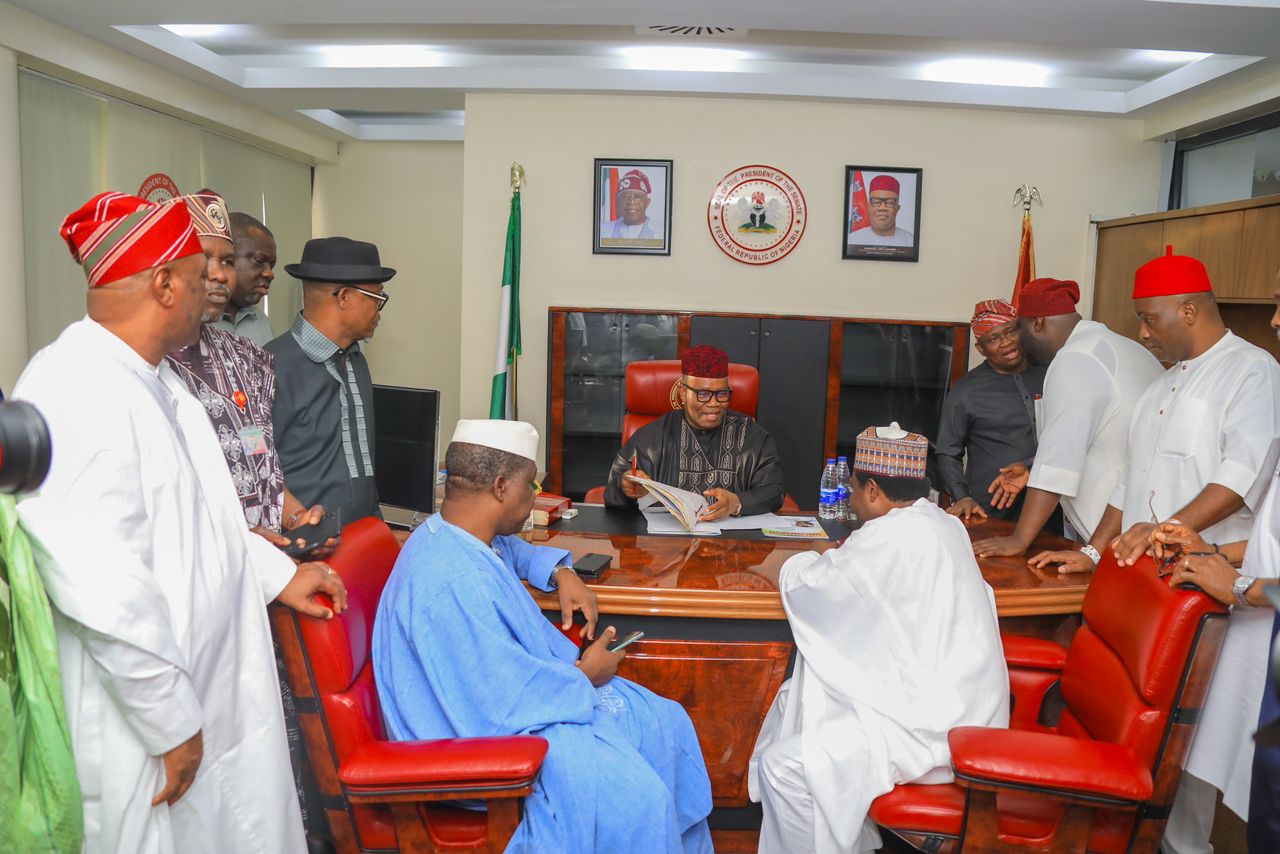
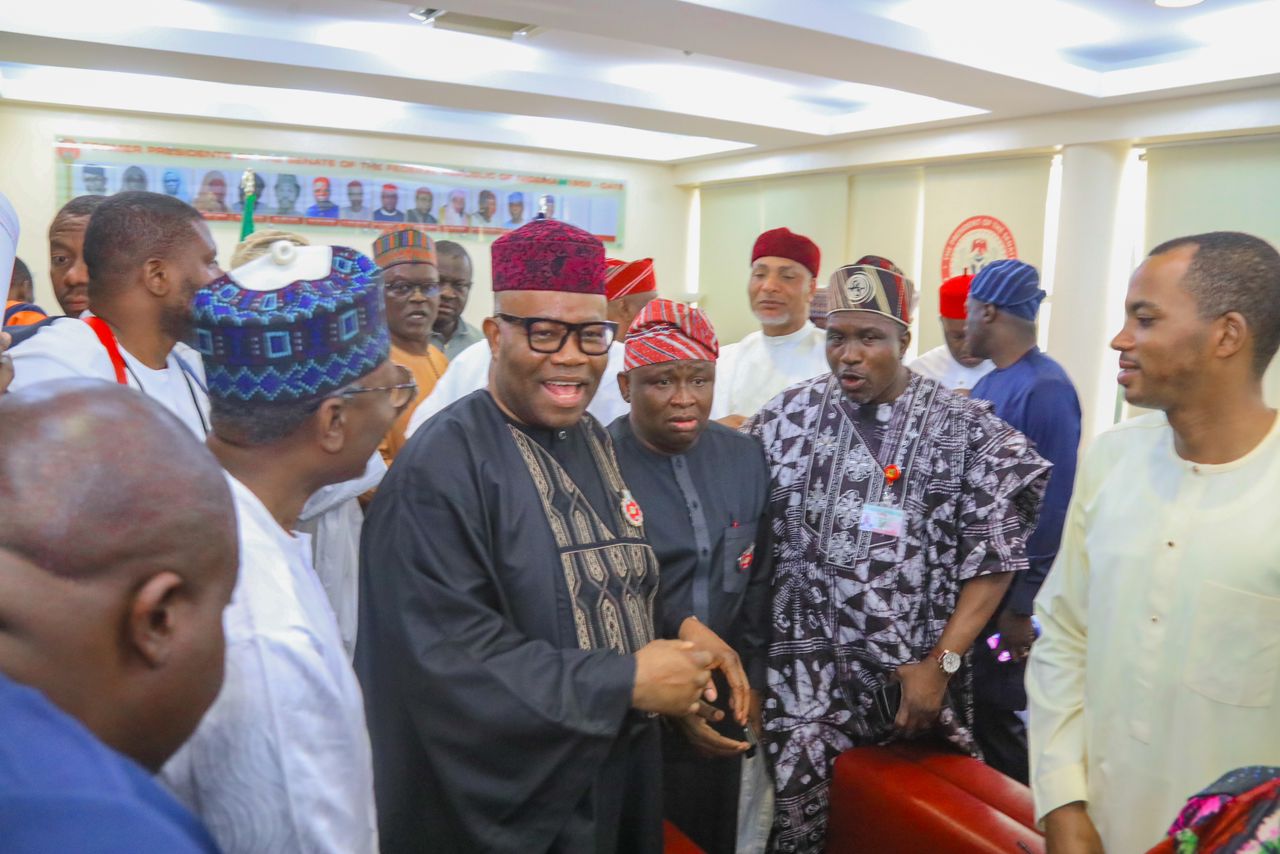
President of the Senate, Senator Godwin Akpabio, has called on President Bola Tinubu to restrict the movement of his ministers and other relevant government officials, as the national assembly gets down to look at the 2024 budget estimate which the President presented before the lawmakers today, November 29.
Speaking shortly after the presentation of the budget by President Tinubu before the joint session of the National Assembly, Senator Akpabio stressed the need for any minister invited to promptly appear before the relevant Committees.
“To ensure maximum attention to the review of the Year 2023 Budget performance and the consideration of the Year 2024 Budget Proposal, we request that Mr President would mandate Honorable Ministers and Heads of Agencies to avoid any travelling engagements that would prevent them from honoring our invitation to promptly appear before our committees to defend their budget estimates.”
Akpabio reminded the leadership that their actions today, as they embark on considering the budget, “will shape the future of our nation. “Together, let us work towards a budget that reflects the aspirations and dreams of every Nigerian citizen for a greater country.”
Part of the speech of the Senate President is reproduced hereunder:
The presentation of the budgetary estimates sets the course for our nation’s fiscal policies and priorities for the coming year. It is an opportunity for us to deliberate, scrutinize, and collaborate in order to ensure that the budget aligns with the needs, hopes, and aspirations of our people.
Therefore, the National Assembly bears a great responsibility in the task of reviewing and approving the budget. We fully understand the weight of this responsibility, and the impact our decisions will have on the lives and welfare of the Nigerian people. It is our duty to ensure that the budget reflects the principles of transparency, accountability and inclusiveness. Consequently, we will certainly conduct a thorough and meticulous review of the budget estimates.
I would also like to express our gratitude to the President for his tireless efforts in driving economic growth, promoting social welfare, and enhancing the security of our country. His patriotic efforts give us hope, his antecedents comfort us, while his courage to take decisions motivates us.
In our people-focused legislative agenda, we place a strong emphasis on national security, recognizing it as a cornerstone for progress. These challenges demand a united front. We remain steadfast in our determination to work collaboratively with the executive to address and overcome the security challenges confronting our nation. In this National Assembly, the death of any Nigerian equates a loss of a constituent. So when ever we lose anyone to insecurity, it is the sound of the ambulance passing by our window. We believe that insecurity can and must be stopped and it must be stopped by all Nigerians rallying around and supporting Government’s efforts. We also want to seize this opportunity to appreciate our Armed Forces for fighting for us and sometimes paying the supreme sacrifice for us.
We need to acknowledge the specific achievements of President Bola Ahmed Tinubu’s administration so far. Those who doubted him, initially, forgot his track record as the Governor of Lagos State, Nigeria’s melting pot. They forgot his various economic reforms that helped attract investments and promoted economic growth; improved the ease of doing business; promoted pro-business policies; and attracted foreign direct investment, not to mention today’s robust internally generated revenue which he grew as the Governor of Lagos from N600 million to N50 billion. Nigerians believe you are the man for the job of fixing our economy.
Already we have seen significant economic reforms. Starting with the courageous removal of the petroleum subsidy which had become an albatross for our nation. He also took steps to unify the multiple foreign exchange markets, signed the 2023 Electricity Bill into an Act, not to mention other good works.
Mr President, Sir, as the removal of the petroleum subsity caused some discomfort in the nation, you responded with compassion and doled out palliatives to assuage the effects on the people. We the elected representatives of the masses of this country took note of the responsiveness your government.
We have also taken note that these bold decisions taken so far by this Government have created some measures of economic discomfort for some Nigerians. We plead for continued support for the Government to actualise the long term benefits of these policies. The pain of today is like the pain of childbirth, when the result (the baby) manifests, we will rejoice and forget the pains. However, we hope these budgetary estimates contain provisions to ameliorate the sufferings that the economic measures has exacted on our fellow citizens whom we represent here.
The Tenth National Assembly is fully aligned with the President’s dreams for our country. Our plans encompass comprehensive legislative actions that will contribute to nation-building, economic growth, and social development. Through strategic reforms, we aim to create an enabling legal environment for sustainable progress and growth.
Mr President, Distinguished Senators and Honorable Members, the two chambers of this Assembly are the two wings upon which not only the executive will soar but our country would rise as well. There is unparrarrel unity between the two chambers. Recently, the House of Representatives set forth its legislative agenda and that of the Senate will be out in due course. Both Chambers believe that we need to encourage the Executive Arm to unbundle some agencies for effectiveness, and merge agencies of Government which job definitions or or roles overlap for greater effectiveness. We deem it necessary for our country to go back to agriculture as a way of stopping the overdependence on crude oil. A monoeconomy is putting all our eggs in one basket. It is a risk we have taken for too long and we cannot continue to tempt providence..
We also believe that education should be prioritized and something done to stop frequent closures. If we do not checkmate the braindrain, the drain will numb our brains. This is why we must open the door of education, because when you open the door of education you close the door of the prison. We also want to plead with the Government to do all within its powers to reduce our high debt profile. We know that Mr President inherited this worrisome burden. But then the mark of a great leader is that he fixes the problems wherever they exist
Mr President, as we embark on this budget presentation, let us reaffirm our commitment to responsible governance, fiscal prudence, and the efficient allocation of resources for the benefit of all Nigerians. Together, with the spirit of unity and collaboration, we can overcome challenges and usher in an era of unprecedented development through reinvigorated revenue generation and fiscal prudence.
We will continue to support the war against corruption and collaborate with anti-graft agencies to ensure that we do not continue to lose money that could be used to develop our people. The Tenth Assembly will always stand with the people, protect their constitutional rights and fight for their welfare. We are glad that you share these sentiments for our people and had codified these in the Renewed Hope Agenda. This Agenda resonates with us as an instrument the people endorsed by voting you into office. Our legislative agenda constellate around it and we believe its faithful implementation would agur well for our nation, and put our country on a new growth trajectory.
Mr. President, we reiterate and assure you of the National Assembly’s readiness to support your administration. Our legislative agenda reflects our dedication to the Nigerian people, and we look forward to achieving remarkable milestones for our great nation under your purposeful leadership. However, from whom much is given, much is expected, and we will try to perform the oversight functions expected of this Assembly and ensure that the tax payers money is used to benefit the taxpayer.
In conclusion, we assure you that the proposals you have come to present will be diligently considered accordingly. We approach this moment with a sense of duty, unity, and purpose.


Before Nigeria Judiciary Completely Loses Out…By Dakuku Peterside
In 1961, the Prime Minister of Nigeria, Abubakar Tafawa Balewa, enjoined Justice Adetokunbo Ademola to “never waiver from the truth” and charged him that if he committed a crime and was brought before the justice, he should send him to jail. Balewa understands the importance of judicial independence and the integrity of the judges in fostering an enduring democracy. He understands that the Judiciary in our democracy is the third estate of the realm, the interpreter of the law, the common man’s last hope and the society’s conscience. It serves as a checks and balances of the executive and the legislature while adjudicating criminal and civil matters within the society, punishing offenders, and protecting citizens. The judges who preside in Courts and the lawyers who prosecute or defend their clients ought to be impartial, upright, diligent, consistent, and open in whatever they do because their character is public property. The judges are the cynosure of the adjudication system and are expected to live above board. This is the ideal. However, this is too far from our current reality.
Recently, there has been a substantial amount of debate, discussion and concerns about the health and reputation of Nigeria’s Judiciary. A cursory review and quasi-research of commentaries on the actions and inactions of the Nigerian Judiciary in 5 Nigerian newspapers between September 2023 and September 2023 reveals that 67% were negative, 10% were classified as neutral, and a paltry 23% were positive. The inference to draw is that the Judiciary in Nigeria has been in the news for all the wrong reasons. Why, then, do the commentariat and public view the Nigerian Judiciary mainly in the negative?
Our Judiciary has dug itself into a deep hole of credibility crisis for three key reasons. The first reason is the preponderance of questionable judgments. This is worse with political cum election cases. Some judgments are inconceivable, and it is difficult for right-thinking persons to wrap their heads around them. From politicians not participating in primaries but becoming substantive candidates to court injunctions against the arrest of politicians or politically exposed people on criminal allegations to unimaginable errors in electoral judgment and judicial procedures, one wonders why we are facing such an epidemic of judicial impunity.
In election-related cases, could the waning quality of judgments be blamed on the sheer unmanageable caseload and the punishing timeline for hearing and delivering judgments in election petition cases? Are the judges sitting on an electoral tribunal or Appeal in a panel of at least three members able to have valuable conferences to deliberate on the cases argued before them to enable them to make informed decisions? Or is it just a routine ritual where one member cavalierly decides, and the rest chorus their agreement with the lead judgment that they never had the prior privilege to read the draft in advance? Whatever the answers might be to these posers, the Judiciary is fast losing the trust and reverence it used to enjoy from the public.
The second reason is the plethora of embarrassing corruption stories about the Judiciary constantly in the public domain. The public has lost trust in the incorruptible Judiciary, and now the general perception is that the Judiciary is prone to corrupt practices. Although this may be a hasty generalisation because we still have honest and incorruptible judges doing a great job, they hardly get mentioned in the media. Instead, the public is bombarded with news about corruption in the Judiciary.
Besides, the lifestyle of some judges belies the fact that they must be corrupt. We all know that the remuneration of judges and justices (between N450,000 to N750,000) is poor considering their excellent work; some live billionaires’ lifestyles, making people wonder how they come about the money they are spending. It is public knowledge that judges clamour for jobs in the election petition seasons, and evidence abounds that some of the judges’ lives change overnight after the election petition assignment period. We have proof of some judges being indicted and punished for corruption in the electoral judicial cases saga, but that has not deterred others from engaging in such dastardly art.
The third reason is the panoply of unethical conduct among judicial officers and the slow conduct of cases, especially during electoral adjudication periods. Judicial accountability is far-fetched. Justice delayed is tantamount to justice denied. Most Nigerians will shy away from our Judicial system because of the delay in the court process and the recklessness of ending cases mostly on technical issues rather than substantive ones. This has been made worse by the politicisation of the Judiciary to the extent that some stakeholders call it the “capture of the Judiciary ” by politics. Judges are supposed to be politically neutral and objective, contributing to maintaining a democratic state without bias. However, we notice the involvement of some judges in politics, or their close family members are politicians or politically exposed, and therefore put undue pressure on them and the judicial system. Conflict of interest issues are seen, and politicians use all means necessary to maintain a firm hold on these judges.
The most recent example of how low our judicial system has gone, which is very embarrassing, is the Kano State Governorship Contest Appeal Court judgment. Court of Appeal Kano on November 17 delivered judgment on this case, and parties applied and obtained the certified true copies of the judgment. Two days later, after Mr. Femi Falana raised an alarm that there were significant inconsistencies in the judgment and that what was delivered in court was at variance with copies of the judgment given to parties, the Deputy Chief Registrar of the Court of Appeal on November 22, wrote to lawyers in the case to return the judgment for what he called “Typographical errors”.
Meanwhile, the appellant had already filed its appeal before the Supreme Court. We must interrogate a lot of pertinent issues concerning this issue. First, the Kano Appeal Court judgment was unanimous, and the other two members of the panel of judges agreed with the lead judgment and stated in their contribution that they had read the lead judgment and agreed with it, including consequential orders. So how come there were such blatant “clerical errors, “as stated by the Chief Registrar of the court in his subsequent publicised letter to the lawyers inviting them to apply to correct the errors? Second, why will this clerical error be made at the most essential part of the judgment declaration? Does this smell, taste and feel like human error rather than a deliberate attempt at mismanaging the judicial process? These raise concerns about the industry, quality of judgment, and integrity of the judiciary and men on the Bench.
It is time we explore an alternative forum (Specialist Court) for resolving election disputes or narrowing down the grounds on which elections are disputed. In the 2023 general elections, there were gubernatorial elections in 29 states, Houses of Assembly elections in 36 states, and NASS in all constituencies. Disputes arose from almost all these elections. In some cases, multiple parties filed petitions. Given the timelines prescribed in Section 285 CFRN, all these cases arrived at the Court of Appeal at about the same time and are to be determined within the same time frame – a point of thousands of court cases to be determined by a Court consisting of 81 judges (not all 81 would participate) in approximately 60 days. This timeframe covers the period for filing briefs and hearings; in most cases, they are left with barely a week after the hearing of the appeal. With this workload, should we expect justice from the Court of Appeal? Are the mistakes not inevitable? No one advocates for the injustice inflicted on hundreds of thousands of citizen litigants, whose matters have been abeyance until all political matters have been resolved.
Second, this ‘error’ has created a potential constitutional quagmire. The supposed error is contained in the dispositive part of the judgment. Regardless of the content of the judgment, it is the court’s final disposition that is enforceable. What happens if the NNPP and Governor decide not to appeal and insist that the final disposition favours them? This is an opportunity to fight against judicial misconduct, negligence, and sloppiness. The police and the anti-graft agencies should not wait for an invitation or petition; they should investigate this.
Regrettably, the erosion of the independence, integrity, and reputation of the Judiciary is a critical aspect of the collapse of our democracy and the rise of impunity and authoritarianism. These signs are ominous because the failure of the Judiciary is the end of law and order and the genesis of anarchy. Unless the Judiciary is reformed and maintains its integrity, and independence, democracy dies. Members of the Legal profession, especially the Bench, must reflect on the consequences of their actions on society, especially the health of our democracy. All stakeholders must urgently interrogate how the Judiciary, which is supposed to protect and give us justice, became so vulnerable.