Attorney-general and commissioner of justice in Rivers State, Zacchaeus Adangor has resigned. In a letter to Governor Siminalayi Fubara, Adangor said that his resignation is “based purely on personal reasons.” The letter, dated December 14, reads: “I hereby give Your Excellency Notice of my resignation as the Honourable Attorney-General and Commissioner for Justice, Rivers State with effect from the date of this letter. “For the avoidance of doubt, my resignation from the said office is based purely on personal principles. “I wish to thank Your Excellency for the opportunity and privilege granted me to serve in your administration as a member of the Cabinet. My family and are indebted to Your Excellency in gratitude. “I wish your Excellency a successful tenure. Please accept the assurances of my highest regards always.” The resignation is coming in the middle of the political crisis between Governor Fubara and his predecessor, Nyesom Wike who is now minister of the Federal Capital Territory (FCT). Only yesterday, December 13, Governor Fubara presented 2024 budget to five members of Rivers House of Assembly. He also demolished the assembly complex over the fire incident in October. Earlier in the week, 27 members of the House of Assembly had defected from the ruling People’s Democratic Party (PDP) in the State to the All Progressives Congress (APC).
Seventy Three year old musician Charly Boy has said that he battled and survived prostate cancer in 2023 and thanked God that he cheated death. In an Instagram post today, December 14, Charly Boy said he survived an illness that had killed many and for that, he is grateful. The man, who is popularly called “Area Fada” shared a video of himself receiving treatment at an undisclosed hospital. He said in the video: “Many things bin happen dis year 2023. The good, the bad and the ugly. But most importantly, I cheated death for something wey no suppose kill us but has killed many. Am a Prostate Cancer Survivor God, am grateful. “I know say dis year remain small but still by his Grace, me and everybody reading dis, shall see 2024. Iseee!!” Fellow celebrities like Iyabo Ojo, Okon Lagos, Uche Odoputa and many of his followers wished him a speedy recovery in the comment section of the post. In 2022, Charly boy joined some of his colleagues to stage a walk in commemoration of the Prostrate Cancer Awareness Day organised by the Dozy Mmobuosi Foundation (DMF).
The Minister of Labour, Simon Lalong, has tendered his resignation from President Bola Tinubu’s government. He submitted his resignation letter at the Federal Executive Council (FEC) meeting, today, December 14. His resignation is for him to resume as the senator representing Plateau South Senatorial district. He had contested the election and lost but was declared the rightful winner recently by the appeal court. Details later…
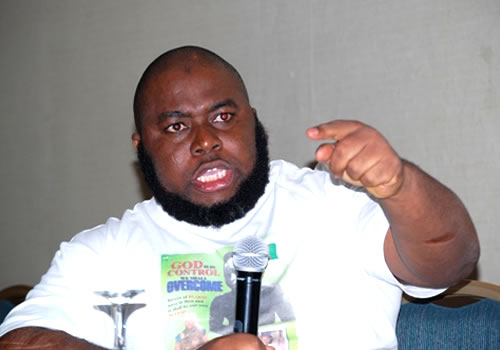
Niger Delta activist, Alhaji Mujahideen Asari Dokubo has alerted President Bola Tinubu that his Ijaw people are now angry with him for running what he called “the worst administration” in the history of Nigeria. In a video he posted online, Dokubo said: “the Ijaw people are already angry that this is the worst government “This government is against the Ijaw people, and you want to add fire to petrol “The Ijaw people feel this is the worst government; this is a nightmare for them. “When we were campaigning for you (Tinubu), a lot of Ijaw people called me and were asking questions and I assured everybody that if Tinubu fails, they should hold me responsible. “And today, people still ask if I should be held responsible “Rivers State is a litmus test. If there’s going to be any fire, it’ll start with Rivers State and I cannot even stop them because they will shove me aside,” he said.
The Group Chief Executive Officer of the Nigerian National Petroleum Company Ltd. (NNPC Ltd.), Mele Kyari Kolo, has assured that the projections on crude oil production and price benchmark for the 2024 Budget are realistic and realizable. Speaking at an interactive session with the Senate Committee on Finance at the National Assembly, Abuja today, December 13, Kyari said: “With what we see in the market today and potentially in the year 2024 and even beyond the next two years, it is very unlikely to see $70 per barrel oil in the market. The oscillation we are seeing, sometimes you do see prices coming down to $75 to the barrel and sometimes it goes above it, overall, benchmarks are averages. We think that the proposal by Mr. President around the $77.96 is still realisable in 2024.” On the crude oil production projection, he said: “The number we have is 1.785mbpd. This is cumulative of all oil produced in the country. This figure is inclusive of all production including crude oil and condensate. I need to make this clarification because of the reports in the media that our OPEC quota is 1.5million barrels per day. The OPEC quota is related only to crude oil. We also do between 250,000 to 300,000 barrels per day of condensate in our production. When you combine the two, the 1.78mbpd is realistic and realisable.” He expressed optimism that though there are challenges such as security and force majeure, the measures being deployed by the Federal Government would be able to take care of them to guarantee the projected level of production. The Group Chief Executive Offer also assured that NNPC Ltd. will maintain the level of dividends remittance to the Federation Account as stated in the Medium-Term Expenditure Framework, adding that the projected dividends from the Nigeria Liquefied Natural Gas Ltd. is also realizable and would be flowed directly into the Federation Account as stipulated by the law. Answering a question on the Company’s Road Tax Credit Scheme, Kyari explained that all the roads being undertaken under the scheme would be duly completed, adding that the scheme was anchored by the Ministry of Works while the Federal Inland Revenue Service and NNPC Ltd. were only playing supervisory roles to ensure that value is delivered for every kobo paid. Earlier, the Chairman of the Senate Committee on Finance, Senator Mohammed Sani Musa, said that the purpose of the interactive session was to deepen conversations on the projections in the 2024 Appropriation Bill to help the lawmakers determine what and where to adjust. He expressed satisfaction with the explanations offered by the NNPC Ltd.’s helmsman.
The Central Bank of Nigeria (CBN) has once more assured members of the public that it is addressing the reported cases of cash scarcity in some major cities across the country. It attributed the current situation to the hoarding of the Naira by some persons due to challenges experienced during the Naira redesign project. The Bank’s Acting Director in charge of Corporate Communications, Mrs. Hakama Sidi Ali, who spoke to newsmen in Abuja today, December 13, said that the CBN is monitoring the situation and has released sufficient cash to its branches across the country for onward distribution to Deposit Money Banks (DMBs). On the cases of hoarding, Mrs. Sidi Ali said that currency in circulation as of February 2023, was N1 trillion, while that figure had risen to over N3.4 Trillion as of December 11, 2023. This, according to her, indicated that there is sufficient cash in circulation, except that the cash is in the hands of individuals who are apprehensive due to their previous experiences. She empathised with Nigerians, over their previous and current experiences, but insisted that CBN has adequate cash to meet the day-to-day transaction needs of Nigerians. She appealed to Nigerians to be patient while the CBN does the needful to ensure the availability of cash, particularly during the yuletide and beyond. She called Nigerians to continue to accept all Naira banknotes for their daily transactions, stressing the Bank’s earlier call to the public to embrace alternative modes of payment, e-channels, to reduce pressure on the use of physical cash.
The Speaker of the House of Representatives, Abbas Tajudeen, has explained why a standing committee was created to monitor and evaluate the implementation of the Legislative Agenda of the 10th House. Speaker Abbas said that the House Committee on Monitoring, Evaluation and Implementation of the Legislative Agenda, is an extension of his vision for the 10th House, with the aim of making other standing committees align their activities with the Agenda. The Speaker said that it was the reason why the ad hoc committee was converted to a standing committee of the House. Speaker Abbas, who spoke today, December 13, at the inaugural meeting of the committee, where he was represented by his Chief of Staff, Professor. Jake Dan-Azumi, said that the committee plays a vital role in ensuring that every bill and motion of the House are in line with the Legislative Agenda of the House, and they are prioritised to meet the yearnings of Nigerians. Speaker Abbas expressed his commitment to the success of the committee, especially through the Project Coordinating Unit in his office. He also pledged his personal commitment to the workings and success of the panel. The chairman of the committee, Hon. Patrick Umoh, in his opening address, said that the committee is aimed at ensuring constructive dialogue, while also striving to achieve transparency in the implementation of the Legislative Agenda. Umoh said that the committee has the mandate to oversight all the standing and special committees of the House, as well as monitore their performance indices. He commended the efforts of the Speaker and the Majority Leader, Prof. Julius Ihonvbere, who chaired the Ad Hoc Committee on the Legislative Agenda, which has metamorphosed into the standing committee.
Nigeria LNG (NLNG) Limited has completed the renovation and expansion of the Accident and Emergency Unit of the University of Uyo Teaching Hospital (UUTH). This is in line with the company’s Hospital Support Programme (HSP), demonstrating its commitment to enhancing healthcare delivery nationwide. Information from the company said that the unit was commissioned by the Executive Governor of Akwa Ibom State, Pastor Umo Eno, represented by the Secretary to the State Government, Prince Enobong Uwah. At the event were the Minister of State for Petroleum Resources (Gas), Ekperikpe Ekpo; the Executive Vice President (Gas), Nigerian National Petroleum Company Limited (NNPCL), Olalekan Ogunleye; the Chief Technology Officer (NNPCL), Kunle Osobu and UUTH’s Chief Medical Director, Prof. Emem Bassey, among others. It said that the renovated unit is the seventh project undertaken as part of the NLNG-sponsored HSP, designed to elevate the healthcare delivery system across 12 Federal University Teaching Hospitals spanning the country’s six geopolitical zones. The program, the statement said, was launched in 2022, and has rapidly gained momentum. At the beginning of the program, the Company commissioned a maternity centre at University of Abuja Teaching Hospital (UATH), Gwagwalada and a new Intensive Care Unit (ICU) at University of Benin Teaching Hospital (UBTH). In 2023, the Company added four more to the list of commissioned projects, which included an Obstetrics & Gynaecology Ward at Lagos University Teaching Hospital (LUTH), Lagos; an Intensive Care Unit (ICU) at Niger Delta University Teaching Hospital (NDUTH), Yenagoa; an Occupational Therapy and Neuromodulation Rehabilitation Centre at Aminu Kano Teaching Hospital (AKTH), Kano; and a Neurosurgical and Stroke Centre at University of Calabar Teaching Hospital (UCTH), Calabar. The statement said that the UUTH project is one of three projects in the second phase of the programme which commenced in January 2023. “At the UUTH commissioning on Tuesday, NLNG’s Managing Director and Chief Executive Officer, Dr. Philip Mshelbila, stated that the renovated and fully equipped Accident and Emergency Unit of UUTH presented a clear message of what is possible when private and public sector work together for the betterment of all our people. “NLNG is focused on the pursuit of interventions, initiatives or experiences that make life meaningful for Nigerians grounded upon the four pillars of education, economic empowerment, infrastructure and health. Yes, health. That is the basis for being here today. A healthy nation is the foundation for a wealthy nation, hence successes in other areas of development are anchored on sound health. It is indeed my belief that today’s commissioning of this renovated Accident and Emergency Unit opens new vistas for sustainable growth of Akwa Ibom state and indeed Nigeria.” In his remarks, Governor Eno commended NLNG for choosing UUTH as one of the hospitals in its HSP project. He stated that the government was interested in partnering with corporate organisations to further develop government facilities and elevating the general wellbeing of its populace. The Minister of State for Petroleum Resources (Gas), Ekpo, in his remarks, said that the HSP-renovated accident and emergency unit will be a place where lives will be restored, and hopes will be rekindled in the darkest of moments. The newly renovated UUTH project includes the complete renovation and expansion of theatre suites to accommodate a 2-bed recovery space, installation of oxygen piping and manifolds in the entire facility. The renovated centre is equipped with modern medical equipment to support the services of the unit, namely ECG, Diathermy and Anaesthesia machines, Nebulizers, Electric Suction, POP cutter and spreaders, patient beds, in addition to other basic medical equipment and furniture. It also includes the expansion of pay point or revenue collection offices, construction of extra conveniences for patients and replacement of roof covering as well as the provision of furniture. Other work done in the hospital includes maintenance and repairs to windows, automated doors for theatre suites, mechanical services, electrical services, surface finishes, landscaping as well as the installation of a 15KVA solar inverter and connection of the facility to the hospital’s water supply system.
Barrister Sani Abbas, lawyer to the former Clerk of the National Assembly (CNA), Ataba Muhammad Sani Omolori has debunked the news making the rounds that his client has ran away because of the family feud resulting from alleged multi million naira land fraud. Barrister Sani Abbas, who was reacting to the allegation of his client running away from the police, stressed that Ataba has no reason to avoid arrest. According to him, Ataba has been out of town and would willingly meet with the police on his return. “First, my client would never avoid the police; that I am sure of. “Secondly, my client has been out of town. I, personally, have been to the police station and I told the police he is out of town and when he is back, he would come. “So, my client is not running away from the police. He would never refuse to visit any authority that invites him for anything that has a reasonable cause. “On the other issues, I do not have my client’s instructions to speak to you. I would seek his consent and if he gives me the go-ahead, I would call you.” Ataba Sani Omolori, who is a front runner to the throne of Ohinoyi of Ebiraland, which is now vacant after the death of its occupant, Alhaji Dr. Ado Ibrahim, has been dragged to court by his sibling, alleging that he fraudulently sold off one of their late father’s vast properties and pocketed the proceeds. It would be recalled that kingmakers in Ebiraland, Kogi State, have already been authorized by the State Government to begin the selection process for a successor to the Ohinoyi’s Throne. Ataba, currently the Chiroma of Ebiraland, is believed to be grooming himself long ago to become the next in line for the throne, which was held by his late father for 40 years until 1997. However, Ataba is now facing a N7 billion property fraud allegations from his brother, of the same father. According to a police report, Ataba has been evading detectives investigating claims that he illegally sold the multi-million naira property bought in the name of Mohammed Tata and Sons Nigeria Limited by his late father. The allegations resulted in the police investigation into the sale of the property located at Plot No. 260-Katampe Ext. District in Abuja. One of the Ataba’s siblings, Buhari Sani-Omolori, filed the complaint on August 10, 2023, at the Life Camp Police Division in Abuja. The report accused Ataba of conspiring with a clique of property developers to fraudulently sell off the land now supposedly valued at hundreds of millions of naira. According to the documents, Ataba conspired with several individuals, including Messrs Hennes Homes Limited, HRH Igwe Gabriel Umeh, Mr Bala Khamofu, Nwegwa Uchenna, and Paul Igwe Nwagbamu, to sell the property without the consent of directors of Kareem Mohammed Tata and Sons Nigeria Limited, which he is not a director. The land was allegedly sold by Ataba for a fraction of its potential value and failed to distribute the proceeds to his siblings, who are the original directors of the company. Ataba, according to the police report dated December 6, 2023, with reference number AB:4099/FCT/LC/VOL.12/75, has remained “at large” and efforts by police detectives to interview him over the fraud allegations have “proved abortive.” In the criminal complaint filed by Buhari Sani-Omolori, the late monarch’s son said Ataba knew he wasn’t a director in Kareem Mohammed Tata and Sons Nigeria Limited yet signed as a director during the sale of the property. A police report on the matter submitted to the Registrar of the Chief Magistrate Court, Life Camp, Abuja, said: “Henness Homes company trespassed into the land claiming to have bought the said land from HRH Igwe Gabriel Umeh (and) were building on the said land without the consent of directors of the company of Kareem Mohammed Tata and Sons Nigeria Limited. “That the chief sales representative from Henness Homes and company, Mr. Ferri Ojomu Emmanuel, was invited and he stated that Henness Homes Company bought the said land from HRH Igwe Gabriel Umeh, while HRH Igwe Gabriel stated that he bought the said land from one Mr. Bala Kharnofu in the year 2000 at the rate of N4,500,000.00 (Four Million Five Hundred Thousand Nair Only).” According to the police, “Mr. Bala Khamofu in return stated that he bought the said land from one Mr. Abdulrazaq Ataba Sani Omolori ‘m’ who is now at large at the rate of N2,000,00 (Two Million Naira Only).” The police further said that they invited all the suspects for questioning and obtained voluntary statements from them “except Mr. Abdulrazaq Ataba Sani Omolori ‘m’ who is now at large” and “Efforts made to get him proved abortive.” The police said that from the investigation conducted so far, they were able to establish that “the person who signed the Director Column for the purchase of the land is not among the four Shareholders of Kareem Mohammed Tata and Sons Nigeria Limited.” The Life Camp Police Command recommended that “in view of the above, a prima facie case of Criminal Conspiracy and Trespass should be established against all the suspects mentioned above, while the case of cheating should be established against Abdulrazaq Ataba Sani Omolori ‘m” who is now at large.” In 2021, the children of the late monarch filed a petition before the Economic and Financial Crimes Commission (EFCC) seeking investigations into how a briefcase containing original documents of their late father’s properties was allegedly stolen days after his death. Some of the properties are said to be located in the Maitama, Katampe, and Mabushi districts of the Federal Capital Territory, Abuja. In 2022, a member of the Omolori family said the family carried out investigations and found that the monarch’s eldest son, Ataba, allegedly stole original documents days after their father’s death and sold them without consulting his siblings or sharing the benefits with them. Source: THE WHISTLER.
The Rivers State Governor, Siminalayi Fubara has presented a N800 billion 2024 budget estimates to barely 5-member State House of Assembly at the Government House in Port Harcourt, the State Capital. Edison EhieEhie served as the factional Speaker at the presentation today, December 13.
This came just as the House of Assembly complex was being demolished ostensibly to enable the rebuilding and renovation of the complex. About six bulldozers had driven into the premises of the Assembly complex and started the demolition under a tight security.
The demolition is coming about two months after fire gutted the complex and 72 hours after the 27 lawmakers loyal to the Federal Capital Territory (FCT) Minister, Nyeson Wike, defected from the People’s Democratic Party (PDP) to the All Progressives Congress (APC).
The 27 members of the 32-member legislature are said to be loyal also to a factional Speaker, Martins Amaewhule, an ally of Wike.
In October, the Assembly under Amaewhule had served an impeachment notice on Fubara and removed Mr Edison EhieEhie as the House Leader.
In retaliation, some lawmakers loyal to Fubara immediately impeached Amaewhule and “elected” EhieEhie the new Speaker.
A Rivers High Court sitting in Port Harcourt subsequently restrained the Amaewhule-led group from forcefully gaining access into the assembly complex, pending the hearing of the suit before it.
Earlier today, EhieEhie had led lawmakers loyal to the governor to hold a sitting before the demolition began.
The factional speaker had during the session said the complex was due for repairs following the explosion that rocked it on October 30, 2023.
He said that the governor would provide an alternative building for them to sit for their legislative businesses pending the reconstruction of the complex.
We use cookies on our website to give you the most relevant experience by remembering your preferences and repeat visits. By clicking “Accept”, you consent to the use of ALL the cookies.
This website uses cookies to improve your experience while you navigate through the website. Out of these, the cookies that are categorized as necessary are stored on your browser as they are essential for the working of basic functionalities of the website. We also use third-party cookies that help us analyze and understand how you use this website. These cookies will be stored in your browser only with your consent. You also have the option to opt-out of these cookies. But opting out of some of these cookies may affect your browsing experience.
Necessary cookies are absolutely essential for the website to function properly. This category only includes cookies that ensures basic functionalities and security features of the website. These cookies do not store any personal information.
Any cookies that may not be particularly necessary for the website to function and is used specifically to collect user personal data via analytics, ads, other embedded contents are termed as non-necessary cookies. It is mandatory to procure user consent prior to running these cookies on your website.