Home Blog Page 2276

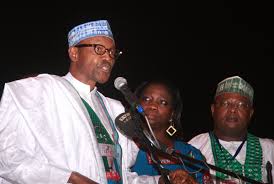
Buhari Cautions Supporters Against Violent Reaction To Election Postponement, Says INEC Independence Compromised

Gen. Muhammadu Buhari (Rtd)

Presidential candidate of All Progressives Congress (APC), General Muhammadu Buhari has cautioned supporters of the party against allowing themselves into taking actions that would further endanger the democratic process as a result of the postponement of the general elections by Independent National Electoral Commission (INEC), whose independence, he said has been gravely compromised.
In a statement today personally reacting to the postponement, General Buhari said: “we must not allow ourselves to be tempted into taking actions that could further endanger the democratic process. Our country is going through a difficult time in the hands of terrorists. Any act of violence can only complicate the security challenges in the country and provide further justification to those who would want to exploit every situation to frustrate the democratic process in the face of certain defeat at the polls.”
The full text of the statement titled:
“We Must Remain Calm But Resolute” goes thus:
Following the decision by the Independent National Electoral Commission (INEC) to postpone the 2015 general elections by six weeks, I wish to appeal for utmost restraint and calm by all Nigerians, especially the teeming supporters of our great party, the All Progressives Congress (APC).
This postponement, which comes on the heels of  the bogey of the National Security Adviser that half of the registered voters were being disenfranchised was exposed as a crude and fraudulent attempt to subvert the electoral process. The PDP administration has now engineered a postponement using the threat that security will not be guaranteed across the length and breadth  of Nigeria because of military engagement in some states in the North East.
It is important to note that although INEC acted within its constitutional powers, it is clear that it has been boxed into a situation where it has had to bow to pressure. Thus, the independence of INEC has been gravely compromised.
As a Nigerian and a presidential candidate in the elections, I share in the disappointment and frustration of this decision. This postponement coming a week to the first election has raised so many questions, many of which shall be asked in the days ahead.
However, we must not allow ourselves to be tempted into taking actions that could further endanger the democratic process. Our country is going through a difficult time in the hands of terrorists. Any act of violence can only complicate the security challenges in the country and provide further justification to those who would want to exploit every situation to frustrate the democratic process in the face of certain defeat at the polls.
If anything, this postponement should strengthen our resolve and commitment to rescue our country from the current economic and social collapse from this desperate band. Our desire for change must surpass their desperation to hold on to power at all cost.  We are clearly dealing with people who feel they can get away with placing their personal interest over those of our nation and its citizens. What is at stake is the very survival of our country. We must not allow this temporary delay to abort this great opportunity.   While I share the pains and frustrations of my fellow citizens over this development, my deep faith in the democratic process assures me that this country, with your support, will overcome.
We must remain resolute and rise above all provocations. We must continue to trust in the entire democratic process and in INEC, which has been brought under so much pressure in the last few days. Our trust can only serve to encourage the electoral body to remain steadfast and remain committed to the rule of law.  I wish to state strongly that our  party will not tolerate any further interference with the electoral process. The rescheduled elections of March 28th and April 11th, 2015 must be sacrosanct.
Nigeria is definitely greater than any of us, and much more important than our individual ambitions. Before us there was Nigeria, and long after we are gone there will still be Nigeria. Let  us continue to do our part to make it thegreat  country that it should be. We must rescue our dear country. God  being on our side, we shall salvage Nigeria together.
God Bless Nigeria!
Gen. Muhammadu Buhari, GCFR
Presidential Candidate of the All Progressives Party, APC. [myad]

We Must Not Fall Into The Trap Of PDP Government, APC Chairman Advises Nigerians

APC National Chairman, Chief John Odigie-Oyegun

National Chairman of All Progressives Congress (APC), Chief John Odigie-Oyegun advised Nigerians not to fall into a trap set by the ruling People Democratic Party (PDP) government through what he called, provocative postponement of the general elections from February 14 and 28 to March 28 and April 11.
In a statement reacting to the postponement by the Independent National Electoral Commission (INEC), Chief Oyegun described the postponement as a big set back to the nation’s democracy.
“This is clearly a major setback for Nigerian democracy. Though what has happened is highly provocative, I strongly appeal to all Nigerians to remain calm and desist from violence and any activity which will compound this unfortunate development.
“We must not fall into this obvious trap. Change we must. They can only delay it; No one can stop it.”
He assured Nigerians that APC would not abandon its commitment to change and that would sustain the struggle to establish a new Nigeria. [myad]

US Warns Nigerian Government Not To Use Security Concerns To Impede Democratic Process

John Kerry

The United States of America has warned Nigerian Government not to use security concerns as a pretext for impeding the democratic process, even as it said that it is “deeply disappointed by the decision to postpone Nigeria’s presidential election, which had been scheduled for February 14.”

In a press statement by the US Secretary of State, Washington, DC, Mr. John Kerry made it clear that political interference with the Independent National Electoral Commission (INEC) is unacceptable to the US and international communities.

Kerry, who reacted to the postponement of the Nigeria general elections from February 14 and 28 to March 28 and April 11, 2015 said that the international community will be watching closely as the Nigerian government prepares for elections on the newly scheduled dates.

“The United States underscores the importance of ensuring that there are no further delays. As I reaffirmed when I visited Lagos last month, we support a free, transparent, and credible electoral process in Nigeria and renew our calls on all candidates, their supporters, and Nigerian citizens to maintain calm and reject election-related violence.” [myad]

It’s An Insult On Military To Question Buhari’s Certificate — General Akinrinade

Akinrinade

It is an insult to the armed forces — a terrible insult to the armed forces to say that General Buhari has no certificate. If they are so embedded in the system and they have lost their souls, then they can go ahead and join everybody else in castigating a General of Buhari’s calibre. They are now talking about a school certificate. What is that? By the time he joined the army, in those days, there were no cutting corners. It is later when these same civilians took over from the army that admission into it became less transparent. I can give you an instance. There was Course Five around 1964: if one did not have a school certificate one couldn’t apply to join the army. And I know up to 1963 when the last General Officer Commanding left Nigeria, there were no corners to be cut. There was no such thing. Everything was on merit. And, that was how it was till Buhari’s time. Buhari attended the Mons (Officer Cadet School in Aldershot in England) and the Staff College; I don’t want to think they have an idea what they teach in those places. And the rest of us pretend as if we don’t know what they do there. You send a man to America for one and a half years in a military school. Do they think he just went there to learn how to fire a rifle? No.

But why is it difficult for Buhari to produce the original copy of the certificate?

He did. As I speak to you, I don’t know where my original certificate is because we gave the original to the Military Board. They took it from us when we applied to join the army. You give the original copy of credential to the board. They take it and keep it in your file, that’s what happened. How many years ago? 50 years. And Nigeria with our (poor) record-keeping and and filing things into an archive –if we have archive at all; an archive inhibited by rats and cockroaches. I think it’s an insult. I think it is a personal insult on Buhari.

Theses are the exact words of the former Nigerian Chief of Army Staff and Chief of Defence Staff, General Alani Akinrinade in an interview, excerpts:


You are one of the finest soldiers Nigeria has ever produced. You also fought in the civil war to keep the country as one. Do you have any regrets?

When you have a duty, especially if it is a professional duty, you should be happy each time you are able to discharge your responsibilities creditably. Therefore, to that extent, yes (I feel fulfilled.) We fought a civil war. I will say to the best of my ability, I discharged my duties. But if you look at the reasons why we fought the war, I will say it was an unnecessary war. If I knew at that time what I now know after many years of going around the world, studying history and reading biographies, I just feel it was an unnecessary war. But, unfortunately today, we’re faced with fighting terrorism. That phenomenon is going to dominate the world for the next 50 years, like I said in 2001 in one of my lectures. We are going to be chasing terrorists for the next 50 years if we are not careful. The reason is simply because we ignore why people do the things they do. We dismiss them instead of examining the message carefully and finding answers to it. I think it is rooted in injustice — injustice that breeds poverty in such a big way; that is overwhelming that people become desperate to use any means to vent their frustration and religion is an instrument they use.

Going back to the civil war, we have not attained the peace we were looking for; we have not achieved that unity we sought. We wanted to keep Nigeria united for a purpose. We have not achieved the purpose from what we see now many years after the war — and that is the source of my regret. There is too much of a class struggle in Nigeria. The centre of power in Nigeria is so narrow and they make all the decisions.

How will you assess the state of insecurity in the country and do you think the Multinational Joint Task Force is the solution to the insurgency in the North-East?

The insurgency we are facing in this country is getting more sophisticated and aggravated by the day. The insurgents are beginning to have high morale as if they are achieving something. The state of insecurity in Nigeria is very bad; it is frightening. When Nigeria on the northern border has such countries like Cameroon, Niger and Chad, I don’t think the insurgency we have on our hand now is going to recognise any boundary at all. Boko Haram is looking for territories they can capture; it doesn’t matter whether it is in Nigeria or Cameroon. That’s certainly a reason for everyone to be sitting up and lend a hand to the Nigerian troops. If you remember, the September 11 plot was hatched not in the United States but in a foreign land. Therefore, there is a possibility that if neighbouring countries allow the insurgents to establish an Islamic caliphate, the whole world has a problem to deal with. Evidently, there is a reason for the international community to get really worried. Unfortunately, despite having some combined international forces fighting in Iraq many years ago, that country still remains an unsafe place for people to live. A similar thing is being experienced in Afghanistan; America is still battling with the Taliban. Multinational Joint Task Force is okay but I am not really sure that is the sole solution to the insurgency. I am not sure the MNJTF alone will solve the problem but we need to have all the neighbouring countries in the northern border to wake up and start doing something. I think it’s a very good idea but there are still limitations to such endeavours.

Nigeria boasts of probably the best troops in sub-Saharan Africa but the troops seem incapable of dislodging Boko Haram insurgents. Where does the problem lie?

Perhaps, it is rooted in the trend of development in the Army itself when they went into governance and coups started happening. Even within the coups, there were coups and there were people shot and murdered trying to attempt a coup. With a situation like that, the esprit de corps of the military has been eroded. I think we lost that esprit de corps gradually since the day the military started engaging in coups. That’s one aspect. Second, our governments didn’t have proper ministers of defence, who represent the political class, the political system and the professional soldiers. They are removed in quick successions, thereby destroying the military institution. There were periods when no development really took place.

In the case of arms, ammunitions and equipment to match what is happening in the world, we didn’t pay enough attention to that. I also think that soldiers are humans; they live with us and they have the same kind of connections that all of us have within the society. They need to be encouraged. I heard an officer say that all over the world soldiers buy uniforms for themselves. That is not true. There is no country in the world that will send its soldiers to war and be expecting them to buy uniforms with their own money. If it gets to that point, then we are beginning to lose the grip on our soldiers.

Do you see anything wrong in the use of the Civilian Joint Task Force in military operations against Boko Haram?

Even during the civil war, we needed the help of the civilians because they knew the terrains better than what the map was telling us. They also knew some of idiosyncrasies of the population there, helping us to know how to handle them. But we didn’t organise them into a force. If you arm a man and afterwards he is hungry, he will use the weapon to find something to eat. Boko Haram also was supposed to have started that way except that religion was part of it — where a governor was alleged to have used some people as thugs, though organised, and he abandoned them. They also abandoned him and turned on the people, the police and the nation. Though that danger is there for the civilian JTF to become a menace, it is not unusual to use civilians to help the military in terms of intelligence gathering. It is easier to send someone who is not a soldier around the enemy line, who is part of the population whom they know.

Nobody knew the depth to which they could go simply because we don’t have a police force within the people. That’s one problem and that’s why the military now need an organised civilian JTF. But if the soldiers cannot face the guns of the insurgents, how do you expect people carrying bows, arrows and some dane guns to be effective? Beyond using them for gathering information, and assisting the military in carrying out some logistic duties, they can’t be any more effective. We are on dangerous grounds, more so when we now have elections around the corner; they may be available to unscrupulous politicians.

The court marshalling of soldiers accused of mutiny in the current fight against Boko Haram has been described by some people as ill-timed. Some say it should have been done secretly not to demoralise other soldiers on the war front. What do you think?

We have to be very careful. We are in a democracy and there is freedom of information. Democracy thrives on information being freely available; it will be difficult to defend in the future if the military went into the barracks and secretly court marshal people on matters of life and death — in which case they can be sentenced to death. That can be very dangerous. Maybe in military era, you can do that. But in this democracy, all of us have the responsibility to demand for an open book so that we know exactly what is going on. It’s a lesson for all of us. Be that as it may, there is no good time or bad time of disciplining soldiers. I think what we should worry about is the frequency and the magnitude of it. When the country has a hundred soldiers, including officers, being court -marshalled at the same time, we should start asking ourselves questions. Are we really going down slope to the extent that we will not able to retrieve these things if we just apply the simple law? It’s unlawful to demonstrate in the army. Yet, I don’t think it is enough to rely on the law to discipline erring soldiers in this case. We need to ask why. I tell myself that if these (mutinies by soldiers) happened under my watch, I will court marshal all the officers. I will disband the units because soldiers cannot under these circumstances do anything on their own. Therefore, the senior officers must have done something wrong. We should find out exactly what it is. The soldiers gave all sorts of reasons — that they were badly equipped and that they didn’t have food. We suggest to the armed forces to look deeper into the reasons these things are happening. Using ordinary complaints about equipment not being good enough to fight the war does not entail discipline. The military authorities, particularly the civilian authorities, have a primary responsibility to critically consider this issue and find out exactly why the soldiers acted the way they did.

Some people are agitating for the postponement of the general elections. How do you see the call for poll shift or otherwise?

Those using the security situation as a reason for poll shift owe us answers on when it will be conducive to conduct the general elections. When is the situation going to be better than now? Before we can debate this, they must advance what will happen if the elections are held at the scheduled time. I haven’t seen or heard anyone oblige us with those arguments. I have a feeling that this situation that we are in is not going to change for a very long time. If elections could be held in Afghanistan, Pakistan and Iraq, we will have to think again; if really we want democracy or we want something else. I know there are cases in court concerning the election. I think the most annoying one is the case about (Muhammadu) Buhari not having a certificate.

Why is it annoying?

You feel the general elections should go ahead?

Yes. That is what the constitution says. Let the election hold and let’s see in how many places people cannot vote before we start this hue and cry. We’re back to 1993. They took us back all the way to 1993. We have seen this before. I am unhappy that (Pastor Tunde) Bakare was ever part of it (call for poll shift) because he is a great fellow of mine. They see a difficult situation instead of going head on to confront it, Nigeria wants to take a path that leads to nowhere to only perdition. We have been on this route before and we know the result. Why do we think this current situation is going to end up differently? The danger in this one is that we have been hearing of a possible disintegration in Nigeria; not from outside the country but within. It was a subject (disintegration) at the National Conference. I was there. We are driving ourselves towards that route. The result may not be very palatable. What is more, we have created so many warlords all over Nigeria. There are private armies around the whole place.

Will you encourage the call for the international community like the European Union, African Union, and the United Kingdom to prevail on the Federal Government not to postpone the February 14 elections just as the United States recently did?

For people who are democrats, exactly what America said is what they are going to say. We did this (presidential election) four years ago where they swore in President Jonathan and four years after we are going to have another election. This is not the time to start swaying about like lilies in the wind. They can’t do much more than they have done; to warn us and also to send election observers. I hear a lot of them already have observers in the country, which should be at a great cost to them. Therefore, what else do we want from these people? We must think of ourselves as being very much devalued and we earned it — we deserve it. The international community has done its bit. It is also disturbing that up till now we still need policemen to be standing by polling booths before we can even be sure we can vote. If we are expecting much more from the developed world, we are wasting our time. A few things have changed since 1993 that can make the situation worse now, if we are stupid enough not to have an election. We might realise that the world is not so enamoured with us. Perhaps, they are angry with us because we have made a very bad specimen of a country in a developing world. We’re not even developing because we’re still very backward.

Buhari has been portrayed as being an honest man. Do you think being an honest man is enough for someone to rule Nigeria?

It is not enough but it is the first thing in the order in which I would put the qualities of a Nigerian leader. Considering where we find ourselves today, honesty is the first quality a man should have. The people should trust a leader to the point that his words are taken as a bond. If it is your worry that is honesty enough, I will say yes it is enough. The next one is wisdom so that the leader is able to get people who will do the work for him.

Jonathan seems to be the most criticised President the country has ever produced. Do you think he deserves the criticisms?

I will just say he earned the criticisms. There is no smoke without fire. If fish wants to rot, it starts from the head. The market, women know that when they go to the market they open the gill. If it is green inside, the fish is rotten. Even if he didn’t personally commit all the offences levelled against him, he’s still responsible. He is the President. He can ensure that justice is done where there are infractions committed by people under his watch. He shouldn’t allow impunity to thrive.

Recently, Niger Delta militants threatened to go to war if Jonathan loses his re-election bid. What do you make of that?

I know only one of the militants but I don’t think he was old enough to really talk about what happened during the civil war. They must also remember, especially the ethnic militias in the Niger Delta area, that the war went through their places too. They got away very lightly then simply because it was the area we wanted to carve out of the jurisdiction of (Emeka) Ojukwu. First, they were the minorities and they didn’t sign an agreement that said they wanted to form part of Biafra. As a result, the rest of us were under obligation to protect the minorities. The war was also fought in their territories. If they were old enough they would see the misery even though they didn’t suffer ten per cent of what the East-Central, the present South-East went through. They are giving wrong reasons to keep their son in the Presidency. It’s a filthy reason. It doesn’t show they understand what democracy is all about. Nigerians are not going to vote under duress. Politics is a game of numbers. The one we refused to do in 1993, we have not come out of it. We’re going through the same cycle. I don’t think they lived at that time. I don’t think even the politicians today were old enough at that time to see exactly the drama that unfolded. It seems to me: we learn very little from our past. What we are risking is a complete disintegration of our country. Thereafter, we will blame America for predicting the doom staring us in the face. In 2010, John Campbell wrote in his book what could lead Nigeria into a bigger trouble. Is that not what is happening now? [myad]


Why We Postponed Elections, Text Of Professor Jega’s Statement

Prof Jega INEC

The conduct of elections in a country like Nigeria is invariably a collective venture that involves not just the Election Management Body (EMB), but also a diverse range of stakeholders, notably security agencies, political parties and their candidates, voters, as well as interest groups, such as the civil society organizations and the media. To guarantee successful conduct of elections, there are things that are wholly the responsibility of the EMB. But there are other things critical for the success of elections, which fall outside the control of the EMB.

Read on:

STATEMENT ON THE TIMETABLE FOR 2015 GENERAL ELECTIONS BY THE CHAIRMAN, INDEPENDENT NATIONAL ELECTORAL COMMISSION (INEC), PROFESSOR ATTAHIRU M. JEGA, AT A PRESS CONFERENCE ON FEBRUARY 07th, 2015

Ladies and Gentlemen,

We invited you here today to make known the position of the Independent National Electoral Commission (INEC) on the timetable for the 2015 general elections. Let me state from the outset that the Commission’s position was reached after carefully weighing the suggestions from briefings held with different stakeholders in the electoral process.

The conduct of elections in a country like Nigeria is invariably a collective venture that involves not just the Election Management Body (EMB), but also a diverse range of stakeholders, notably security agencies, political parties and their candidates, voters, as well as interest groups, such as the civil society organizations and the media. To guarantee successful conduct of elections, there are things that are wholly the responsibility of the EMB. But there are other things critical for the success of elections, which fall outside the control of the EMB.

In other words, while INEC must work hard to perfect its systems and processes for conducting elections, and take responsibility for any imperfections thereof, whatever the Commission does may not by itself be sufficient to guarantee the success of elections. There are a number of issues in the preparation and conduct of an election, the most critical of which is security, which is not under the control of INEC.

Current State of INEC’s Preparedness

On Thursday, February 5, 2015, I was invited to brief the National Council of State, which is the highest advisory to the President comprising past and present leaders in Nigeria, on the level of preparedness of INEC to conduct the 2015 general elections. I made a presentation to the Council titled ‘Preparations for the 2015 General Elections: Progress Report,’ in which I gave a detailed account of what the Commission has been doing in readiness for the national elections (National Assembly and Presidential) scheduled for February 14th, and the state elections (Governorship and State Assembly) scheduled for February 28th, 2015.

The summary of my presentation to the National Council of State meeting is that, for matters under its control, INEC is substantially readyfor the general elections as scheduled, despite discernible challenges being encountered with some of its processes like the collection of Permanent Voter Cards (PVCs) by registered members of the public.

In addition, INEC has been doing everything it can to facilitate the collection of the PVCs by registered members of the public. As at 5thFebruary 2015, the total number of PVCs collected was 45, 829, 808, representing 66.58% of the total number of registered voters.

In the delivery and deployment of electoral materials, INEC is also at a comfort level in its readiness for the general elections as scheduled (see the presentation to the Council of State). The Commission’s preparations are not yet perfect or fully accomplished. But our level of preparedness, despite a few challenges, is sufficient to conduct free, fair and credible elections as scheduled on February 14th and February 28th. Compared with 2011 when, within a short time, we conducted general elections that were universally adjudged free, fair and credible and the best in Nigeria’s recent electoral history, our processes are today better refined, more robust and therefore capable of delivering even better elections.

Other Variables

But as I mentioned earlier, there are some other variables equally crucial for successful conduct of the 2015 general elections that are outside the control of INEC. One important variable is security for the elections.

While the Commission has a very good working relationship with all security agencies, especially on the platform of the Inter-agency Consultative Committee on Election Security (ICCES) since its inception in 2010, it has become pertinent for it to seriously consider the security advisory presented to it by the Security and Intelligence Services. I would like to reiterate here that INEC is an EMB and not a security agency. It relies on the security services to provide a safe environment for personnel, voters, election observers and election materials to conduct elections wherever it deploys. Where the security services strongly advise otherwise, it would be unconscionable of the Commission to deploy personnel and call voters out in such a situation.

Last Wednesday, which was a day before the Council of State meeting, the office of the National Security Adviser (NSA) wrote a letter to the Commission, drawing attention to recent developments in four North east states of Borno, Yobe, Adamawa and Gombe currently experiencing the challenge of insurgency. The letter stated that security could not be guaranteed during the proposed period in February for the general elections.

This advisory was reinforced at the Council of State meeting on Thursday where the NSA and all the Armed Services and Intelligence Chiefs unanimously reiterated that the safety and security of our operations cannot be guaranteed, and that the Security Services needed at least six weeks within which to conclude a major military operation against the insurgency in the Northeast; and that during this operation, the military will be concentrating its attention in the theatre of operations such that they may not be able to provide the traditional support they render to the Police and other agencies during elections.

INEC’s Decision

We have done wide ranging consultation to enable us have as much input as is necessary before taking an informed decision. In the series of consultations that we held with stakeholders, the questions consistently posed to them for consideration are:

(i)

In view of the latest development, should INEC proceed with the conduct of the general elections as scheduled in spite of this strong advice; and if so, what alternative security arrangements are available to be put in place?

(ii)

Or, should INEC take the advice and adjust the schedules of the general elections within the framework of Constitutional provisions?

The Commission held a meeting after the consultations, and decided to take the advice of the Security Chiefs and adjust the dates of the elections. We have done this relying on Section 26(1) of the Electoral 2010 (As Amended), which states thus: “Where a date has been appointed for the holding of an election, and there is reason to believe that a serious breach of the peace is likely to occur if the election is proceeded with on that date or it is impossible to conduct the elections as a result of natural disasters or other emergencies, the Commission may postpone the election and shall in respect of the area, or areas concerned, appoint another date for the holding of the postponed election, provided that such reason for the postponement is cogent and verifiable”.

INEC not being a security agency that could by itself guarantee protection for personnel and materials, as well as voters during elections, the Commission cannot lightly wave off the advice by the nation’s Security Chiefs. The Commission is specifically concerned about the security of our ad hoc staff who constitute at least 600,000 young men and women, together with our regular staff, voters, election observers as well as election materials painstakingly acquired over the last one and half years. This concern is limited not just to the areas in the North-eastern part of Nigeria experiencing insurgency; the risk of deploying young men and women and calling people to exercise their democratic rights in a situation where their security cannot be guaranteed is a most onerous responsibility. Under such circumstances, few EMBs across the world, if any, would contemplate proceeding with the elections as scheduled. No matter the extent of INEC’s preparedness, therefore, if the security of personnel, voters, election observers and election materials cannot be guaranteed, the life of innocent young men and women as well the prospects of free, fair, credible and peaceful elections would be greatly jeopardized.

Consequently, the Commission has decided to reschedule the 2015general elections thus: the national elections (i.e. Presidential and National Assembly) are now to hold on March 28th, 2015; while the state elections (Governorship and State Assembly) are to hold on April 11th, 2015. It should be noted that this rescheduling falls within the constitutional framework for the conduct of the elections, notably, Sections 76(2), 116(2), 132(2) and 178(2). See also Section 25 of the Electoral Act 2010 (As Amended).

For the avoidance of doubt, we will under no circumstances approve an arrangement that is not in line with the provisions of our laws. Our hope is that with this rescheduling, the security services will do their best to ensure that the security environment needed for safe and peaceful conduct of the 2015 elections is rapidly put in place.

We in INEC reassure all Nigerians and indeed the international community of our commitment to do everything within the law and to conduct free, fair, credible and peaceful elections. We call on the security agencies to honour their commitment to restore sufficient normalcy for elections to take place within the period of extension. We also call on Nigerians, political parties, candidates and all other stakeholders to accept this decision in good faith and ensure the maintenance of peace.

As for us in INEC we’ll endeavour to use the period of the extension to keep on perfecting our systems and processes for conducting the best elections in Nigeria’s history. In particular, we believe that we would resolve all outstanding issues related to non-collection of PVCs, which agitate the minds of many Nigerians.

Finally, we wish to call on all Nigerians to accept our decision, which is taken in good faith and the best interest of deepening democracy in our country.

Thank you.

Professor Attahiru M. Jega, OFR

Chairman, INEC. [myad]

PDP Commends INEC’s Courage For Postponing Elections

Femi Fani Kayode
Femi Fani Kayode

Peoples Democratic Party (PDP), through its Presidential Campaign Organization has commended Independent National Electoral Commission (INEC) for its courage to shift the dates of general elections from February 14 and 28 to March 28 and April 11, 2015.

At a press conference today, the Director of the Presidential Campaign Organization, Chief Femi Fani-Kayode said that PDP has already endorsed the shift in the original dates of the election as being in the interest of deepening the nation’s democracy and in the national interest.

“We will like to reiterate our commendation of INEC for showing the courage to shift the poll after acknowledging the fact that its state of preparedness was not 100 percent and also after taking into cognizance the imperative of ensuring adequate security for the electorate and electoral personnel especially in the Northeast zone of the country.”

Fani-Kayode said that because of the shift in election dates, the PDP Presidential Campaign Organisation, acting in concert and synergy with the PDP, will intensify its campaign in every nook and cranny of the country to sell President Goodluck Jonathan to the electorate and Nigerians in general as the best candidate who should be voted for and elected as president in the March 28 presidential election.

“The campaign will be all-encompassing and robust and it will reach all levels in order to shore up the chances of our various candidates in the elections.  We believe that with the commitment by INEC, which has been demonstrated by its readiness to work strictly in line with the advice by the nation’s security agencies, our nation is heading for a general election that is freer, fairer and more transparent than the 2011 elections.

“Our belief is anchored on the international and domestic desire for a credible poll.  We therefore encourage and support INEC to do all that they need to do to ensure that we have a credible election that will produce results that are acceptable to all. We are constrained to point out the fact that one of the things that INEC must do is to ensure that it establishes a strategy and process that will result in the equitable and prompt distribution of the Permanent Voter Cards (PVCs) to all registered voters who have not collected them up till this time.

“If the front page report in today’s Sunday Vanguard is true, then the Commission must quickly set out to ensure the production of its training manual, recruitment of 700,000 ad-hoc staff, training of presiding officers, deployment of printers for voter registers which are said to still be in Abuja , printing of voter registers by the Resident Electoral Commissioners, provision of full complement of ballot boxes and distribution of the balance of card readers to many states that are yet to get them.

“On our part, we will increase advocacy and sensitisation on the PVC collection because we are not comfortable with the fact that as at the time INEC announced the shift in election dates, 34 percent of eligible voters have not been able to access their Permanent Voter Cards (PVCs).

“Our Campaign Organisation will be ready to collaborate with the APC Presidential Campaign Organisation to support the process of PVCs collection so that no part of the country is seen to have been deliberately manipulated into a position of disadvantage through low percentage rate of PVCs distribution and collection whilst the other part of the country has recorded between 80 and 98 percent collection.

“The credibility, acceptability and success of the forthcoming elections are therefore dependent on two things: firstly 100 percent or just below 100 percent distribution of the PVCs to eligible registered voters so that no-one or no group of people are disenfranchised and secondly the deployment of adequate security forces before, during and after the elections who will ensure that the electorate are able to go out to perform their civic responsibility of voting on the election days.

“These are our legitimate and genuine concerns.  We will remain sharply focused on our campaign issues.  We will continue to sell the candidature of President Jonathan whose victory at the poll is key to everything we stand for while we will continue to expose the chicanery, the weaknesses and the violent nature of the opposition APC and its presidential candidate, General Muhammadu Buhari.”

Fani-Kayode said that for APC to insist that the elections should be conducted on February 14th, it is not only dangerously flirting with chaos but also putting the country on the path of confrontation, division, injustice, disaster and destruction.

“We posited that a situation where no less than 34 percent of our people would have been disenfranchised is unacceptable and the fact that the APC was insensitive to that fact speaks volumes.

“All stakeholders in the forthcoming elections should therefore take advantage of this short extension to get their acts together and prepare for the elections. This is all the more so because there will be no room for a further shift of poll date within the ambit of the relevant extant laws.

“On the part of the PDP and its Presidential Campaign Organisation, winning elections is our forte and, as always, we are ready.  We wish to reiterate our gratitude to our supporters and once again we wish to encourage them to remain calm and patient.  We have nothing to fear because we see victory on the horizon. Our party is strong; our presidential candidate is confident; our cause is just; our God is mighty and our victory is assured.  No matter what happens and no matter how long it takes, we shall prevail.” [myad]


Election Postponement Won’t Affect May 27 Hand-Over, Jonathan Assures

Jonathan in Ibadan

President Goodluck Jonathan has reassured the nation the adjustment of the dates for the 2015 general elections by the Independent National Electoral Commission (INEC) from February 14 and 28 to March 28 and April 11 will not affect his commitment to the sanctity of May 29, 2015 as the terminal date of his first term in office.

The President who was reacting to a flurry of anger being expressed by Nigerians over the postponement of the elections by six weeks, in a statement by his special adviser on media and publicity, Dr. Reuben Abati today, affirmed that “May 29 is, has been, and will remain sacrosanct.”

The President appealed to all stakeholders to accept the adjustment of the election dates by INEC in good faith, adding that the electoral body has a responsibility to conduct credible elections in which every Nigerian of voting age is afforded the opportunity to exercise their civic right without any form of hindrance.

He said that this is not a time to trade blames or make statements that may overheat the polity, “but it is a time to show understanding and support the electoral commission to conduct the elections successfully.”

The President said that INEC’s decision to postpone the elections should not be allowed to generate acrimony, saying that it acted within its powers under the law and in consultation with all relevant stakeholders.

He called on the international community, civil society and the electorate to continue to support the administration’s commitment to a free, fair, credible, and non-violent electoral process. [myad]


The Fear Of Buhari In Nigeria, By Joe Igbokwe

Joe Ibokwe
Joe Ibokwe

Like Abraham Lincoln who through power of consistent consistency rose to become the president of the United States after several attempts, General Muhammadu Buhari waded through pains and tears to get to where he is today.

The fear of candidate Buhari is now the beginning of wisdom in Nigeria today. Buhari was no serious contender in the eyes of ordinary Nigerians in the contest for the Presidency in 2003, 2007, 2011 but in 2015 Buhari has become a serious issue, a volcano, an avatar, a hurricane, a force and a thunder to reckon with. The event that changed everything was when General Buhari was nominated as the presidential candidate of the All Progressives Congress, APC in a 48-hour non-stop event at Teslim Balogun stadium in Surulere. Few days after a cerebral scholar and Pastor in the finest tradition Professor Yemi Osinbajo was picked as his running mate, the momentum changed, permutations changed and calculations changed. The very stone which the builder rejected has become the head of the corner and all and sundry have come far and near to admire the edifice.

But Buhari’s rise to fame in Nigeria did not come so easy. Like Abraham Lincoln who through power of consistent consistency rose to become the president of the United States after several attempts, Buhari waded through pains and tears to get to where he is today. I have since learnt a lot through Buhari’s power of not losing his head when others are losing theirs in a country where politics of the stomach holds sway. Through Buhari’s life I have learnt that there is hope for a man who is not easily defeated even when the person seems to have lost everything. I have learnt that the world and everything that is in it belongs to those who try to drill the deepest well.

This is the reason why the thieves, the corrupt, the demons, jezebels and all the monsters in Nigeria will not sleep until Buhari is out of the way for them to continue the business as usual. Check the newspapers, the TV stations, radio stations etc and you will at once notice that the common project is to find everything that is bad under the sun and hang it on the neck of the retired general. They all have a thousand and one reasons to demonize and pull down candidate Buhari so that the business will continue as usual. They place adverts and documentaries that make no meaning to anybody except those placing  them. When there are no lies to use against Buhari, they try to manufacture as many as possible and dish it out to to the political space. The more they do this the more it becomes obvious that Nigeria needs a Buhari to rise again. The more those who seek to destroy Buhari work, the more his popularity grows a million times. The more they throw mud at him the more cleaner the man becomes in the eyes of the ordinary Nigerians who desire change at all cost.

If you have listened to the audio and the transcript of how Ayo Fayose, Obanikoro, Omisore, Olubolade, Chris Ubah, Nigerian army, the police, DSS, the presidency etc conspired to steal Ekiti state from APC, you will then realize why Ayo Fayose wants Buhari dead by all means. If you know how much crude oil is stolen in Nigeria on a daily basis or how some importers of petroleum products have shortchanged the country, you will then realize why they are fighting tooth and nail to maintain the status quo. If you know the privileges Asari Dokubo, Edwin Clark, Tompolo and others enjoy today under President Jonathan you will at once understand why they are threatening fire and brimstone should Jonathan lose this election. If you are privileged to know the billions going to the pastors and the so called Men of God, you may not go too far to understand why they are falling over themselves to accuse Buhari of planning to Islamize Nigeria if elected president. If your eyes are wider enough to see the rot some government officials especially at the federal level have brought to the land, you will at once understand why they want the soft and weak Jonathan to continue in office. If you are clever enough to know the billions of dollars Jonathan’s administration has invested in the power sector without anything to show for it in sixteen years ,you will then realize why the fear of candidate Buhari is now the beginning of wisdom in Nigeria. If you know the level of corruption being condoned by this administration in Abuja, you will further understand why they want president Jonathan to continue forever.

But the thieves have stolen enough for the owners to take notice. They have taken enough for themselves, for their children, their grandchildren and great grandchildren and yet they cannot say enough is enough. Candidate Buhari is coming to put a stop to this endless corruption and impunity. Buhari is coming to build the battered and badly managed Nigerian Army which was once one of the best standing Armies in Africa. Buhari is coming to unite Nigerians, president Jonathan has divided along ethnic and religious lines. Candidate Buhari is coming to restore sanity in the land. He is coming to stop the oil thieves and the political traders in the seat of power. The retired general is coming to restore the dignity of Nigeria and Nigerians in the comity of nations. He is coming to rebuild our decayed infrastructure and democratic institutions. He is coming to restore hope to the hopeless. He is coming to secure the land.

Today, the money changers, the money doublers, the wheel dealers, marabouts, sorcerers, foolish constituencies, foolish gerontocrats, merciless and unconscionable oil dealers ritualists,who thrives under President Jonathan have become desperate, hysterical, confused, dumbfounded, and in total disarray about the coming of candidate Buhari. They are looking for time to regroup but cannot find the time. They want their Jonathan to be re-elected and yet they do not want an election. They have placed confused Advertorials to fight Buhari but they end up fighting themselves. They created a thousand lies to cover a lie and yet the truth stands out like the rock of Gibraltar.

There is a finger of God in this fourth coming of candidate Buhari in 2015. Students of the Bible know that Cyrus in Isaiah 45 did not know God and yet God blessed him and used him. God is not man. God’s ways are not man’s ways. He sees beyond all of us in the world put together. I want Buhari to win this election so that these scavengers, contractors, ritualists, kidnappers, armed robbers, and oil dealers who call themselves Bishops, Pastors, Men of Gof will return to the scriptures. You cannot serve God and mammon. When the ordinary Nigerians call Buhari  Mai Gaskiya, do we understand the meaning? A good man can be found in the church, in the mosque and in other religions. One honest man is worth more to the society than all ruffians that ever existed. Buhari is the next President of Nigeria. Case rested!

Igbokwe wrote in from Lagos, Nigeria. [myad]

Election Postponement: Shame Of A Nation

service chiefs of nigeria
Whatever anyone would say, the postponement of general elections from February 14, 28 to March 28, April 11, 2015 is not only a draw-back in the nation’s march to perfect the 16 year-old unbroken democracy but a shame on the nation in general and the nation’s security forces in particular..
The INEC Chairman, Professor Attahiru Jega confirmed to a group of over 60 Civil Society Organizations, (CSOs), under the Nigeria Civil Society Situation Room, while announcing the postponement last night, that it was the military that caused the postponement via a letter it addressed to him. In the letter, the military leadership indicated that troops would have to concentrate on fighting Boko Haram insurgents in the North East and therefore, would not be available for security duties during the elections at the earlier scheduled dates. The military, in the letter, advised INEC to reschedule the elections by “at least six weeks in the first instance.”
The military made it clear in the letter that its men and officers will begin their full operations against Boko Haram on February 14, the date originally set for the Presidential election.
The Nigeria military, apart from showing that it has gone deep into partisan politicking, doing the bidding of the ruling political party, has also obviously, thrown the country into a big shame by coming out as the single factor that has sought to threaten the survival of the 16-year-old democracy on such flimsy excuse.
It is obviously a shame for the military to tie its “morbid desire” for the postponement of the elections to the battle with Boko Haram, the Boko Haram its men and officers have been fighting since 2009. And that, co-incidentally, they would launch the new offensive on the recalcitrant Boko Haram on the same day the election was originally fixed. Why that day?
What the Nigeria military has succeeded in doing is throw dirty sand into its integrity, respect and reputation, because apart from indicating that Boko Haram has been winning the battle all these while, it has also succeeded in putting smiles into the members of Boko Haram for being so powerful as to be able to put a stop to the democratic movement of the nation. Boko Haram now has cause to laugh that one of its aims, of disrupting the major national political activities, has been achieved.
The Situation Room, made up of Civil Society Organizations working in support of credible and transparent elections in Nigeria, expressed disappointment with the letter from the security agencies pointing out that this amounted to the military’s abdication of its constitutional duties to provide security to citizens and to the Electoral Commission to enable it conduct elections. The group accused the military of an act that appears to show contrivance to truncate the democratic process in Nigeria.
The group is made up of Policy and Legal Advocacy Centre (PLAC), CLEEN Foundation, Action Aid Nigeria, Centre for Democracy and Development (CDD), Enough is Enough Nigeria and Wan­gonet, Partners for Electoral Reform and Youth Initiative for Advocacy, Growth & Advancement (YIAGA), Development Dynamics, Human Rights Monitor, Election Monitor, Reclaim Naija, Institute for Human Rights and Humanitarian Law and several others.
Situation Room expressed worry that “the military’s position also aims to blackmail and arm-twist the Election Management Body (EMB) away from its constitutional guaranteed function of conducting elections.
“Situation Room also condemns this advisory by security agents that they cannot guarantee the security of citizens, election officials and materials during the election.”
It also called for the resignation of military chiefs and security heads, including the Police, on account of their inability to exercise their constitutional responsibility to secure lives and property at all times, including during the elections.
Indeed, the military and the masters it is fronting for, may not have taken into consideration the provision of the electoral Act which makes it abundantly clear that except where (Nigeria) federation is at war, there can be no blanket shift of all elections across the whole federation.
Section 26(1) of the Electoral Act 2010 (amended) states: “Where a date has been appointed for the holding of an election, and there is reason to believe that a serious breach of the peace is likely to oc­cur if the election is proceeded with on that date or it is impossible to conduct the elections as a result of natural disasters or other emergencies, the commission may postpone the election and shall in respect of the area, or areas concerned, appoint another date for the holding of the postponed election provided that such reason for the postponement is cogent and verifiable.”
The Act, for emphasis, does not envisage where elections would be postponed all at the same time across the country as if it is the whole country that is at war.
And, in any case, what the military is implying by its “first instance” in its letter to Professor Jega is that if it cannot defeat Boko Haram in six weeks it asked for (and there is no likelihood that it will), Nigeria should wait for it until it is able to do so.
And, that of course means that Nigeria should forget about elections for now, until the military defeats Boko Haram, for only God knows how long. [myad]

Finally, INEC Postpones Nigeria General Elections To March 28, April 11

INEC Boss, Prof. Atahiru Jega

Nigeria Independent National Electoral Commission (INEC) has finally bowed to pressure on it to postpone the nation’s general elections that are supposed to be held on February 14 and 28 respectively.

After a series of consultative meetings with all the stakeholders which dovetailed far into the night today, the Chairman of the INEC, Professor Attahiru Jega announced the postponement to March 28 and April 11, following advice from security chiefs in the country.

Professor Jega said the electoral body is ready to go ahead with the polls but the Boko Haram insurgency in the country necessitated the postponement. He said, the Presidential and National Assembly elections billed for February 14 will now hold on March 28 while governorship and State House of Assembly elections will hold on April 11.

He said that the six weeks window will also help the electoral body to perfect the strategies towards a peaceful, free and fair elections. [myad]


Advertisement
Advertisement ADVERTORIAL
WP2Social Auto Publish Powered By : XYZScripts.com