Home Blog Page 2333

CBN’s Desperate Measures, Signs Of Desperate Times, By Atiku Abubakar

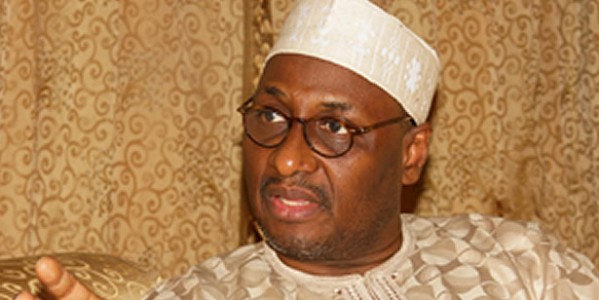
Alhaji Atiku Abubakar

The Monetary Policy Committee of the Central Bank of Nigeria rose from its meeting of 25th November, 2014 to announce a string of measures ostensibly to reduce pressure on the Naira and achieve macro-economic stability. The Committee considered vulnerabilities in the domestic as well as the exposure to changes in the global economies.
In the communiqué issued by the Committee, it claimed that “the domestic economy is strong and resilient in the face of strong global head winds.” The Bank also projected a 7 per cent overall growth of the economy in 2014, a figure better than the 5.5% recorded in 2013. The committee equally noted that “the robust expansion in domestic output in the third quarter of 2014 against tepid growth in the global economy was anchored by the improved performance in services, agriculture, trade and industry.”
These are contradictions that are not consistent with the prevailing realities on ground and neither can this be the true premise for justify the drastic panic measures being taken.
The Committee claimed that a total of 600,000 jobs were created in the second and third quarters of 2014 and that most of these jobs were created in the informal sector. In reality, most of these jobs are mere hand-outs based on fanciful schemes with attractive acronyms. They add very little to the National Productivity Index and have been designed for cosmetic political intentions.
The claim by the CBN that under the 200Million Naira Commercial Agriculture Credit Scheme, 166,790 jobs have been created since 2009 is despicable. This amounts to creating 33,000 thousand jobs per year at the cost of 1.2Million Naira per each creation. This is probably the most expensive way of creating jobs in Agriculture anywhere in the world.
The point that I am trying to make is that the mangers of our economy should be sincere with themselves and be sincere with Nigerians. Hiding under the umbrella of international economic development trend to justify our current predicament is misleading and deceitful.
The economy is not as strong as they make us believe and the “global head winds” cannot fully explain our dilemma. Key vulnerabilities in the economy have been noticed a long time ago.
Months ago, I warned that the economy was headed for hard times if changes were not made immediately. My position was informed by a number of reasons which I observed at that time namely:
I. Uncontrolled spending and lack of discipline in budgetary implementation both of which propelled the nation into foreign and domestic debt portfolios Foreign debt ($3.9 billion in 2007 to $9.3 billion now)Domestic borrowing (now N8.9 trillion)
II. Rapid depletion of our external reserves at a height of $68 billion under Yar’Adua in 2008 to as low as $36.75 billion at the end of October 2014
III. Misapplication of the excess crude account which stood at $22 billion in 2008 but now as low as $470m with nothing much to show for it in terms of investment with recoverable revenues  IV. Sluggish effort at diversifying into other non-oil sectors of the Nigerian economy with the attendant exposure to the vagaries of global economy
V. The unacceptable cost of governance in which a disproportionate percentage of the budget is being allocated to recurrent expenditures.
I warned that the trend will leave our economy undiversified and make us sleep-walk into austerity.
Nigeria used to have in 2008, a Foreign Exchange Import Cover of up to 24 months but now have less than 7 months cover despite experiencing nearly six years of oil boom. This administration has been engaged in frivolous spending, careless borrowing and poor savings. This extravagance and inability to put enough away to absorb and cushion potential shocks in global oil price fluctuations shows a high level of negligence and lack of vision.
Excessive government borrowing and higher bond repayment prices with higher interest rates have also significantly contributed to the present problem.
It is also alarming that the committee admitted in the Communique that the depletion of the foreign exchange “ does not seem to have any bearing on the genuine foreign exchange need of the country.”
This is probably the most sincere admission of the Bank to its incapacity to discharge a critical aspect of its mandate.
The Bank needs to fine-tune its policies such that while targeting currency speculators on the one hand, we can boost investors’ confidence on the other to forestall dreadful capital flight.
Most importantly, we need to deliberately intervene for SMEs whose operations require Foreign Expenditure so as to ensure that people can keep their jobs. We cannot afford to worsen the already bad unemployment rate. There is need to suspend all non-essential business regulations that will hamper the growth and sustenance of small businesses until such time that the ECA reaches a certain threshold.
Unfortunately, there has been poor disclosure of true state of the country’s finances. This has made it difficult for anybody with good intention to diagnose and prescribe corrective measures. This has also led to constant mistrust and constant squabbles between the Federal government and the states at FAAC meetings resulting from haphazard and arbitrary allocation of funds to states.
It is gratifying that the Monetary Policy Committee of the CBN has now resolved to take some measures. The reality is that these actions may have come too late.
The increase in CRR (from 15% to 20%) and MPR (from 12% to 13%) will obviously increase the cost of borrowing. This will affect small and medium businesses and reduce their capacity to expand and create jobs. While the banks and speculators are legitimate primary targets of the CBN action, the challenge of protecting small scale businesses must be equally addressed.
The movement of the mid-point of the critical window of the Foreign Exchange Market from N155 to N168/ US$ has officially devalued the Naira. In essence, the Naira has depreciated by 45% within a space of 6 years. The CBN’s action is only a first move. The Naira may have to be further devalued as stated in the CBN communique which claimed that.“
unlike in previous episodes the current downturn in oil prices is not transitory but appears to be permanent”
The continued volatility of the Naira can only spell disaster for the economy.  The Naira already trades outside the new band, meaning that all Nigerians will suffer. Small and medium businesses who were already starved of funds will now have even more difficulties accessing funds. This leads to less revenues for businesses, and less revenues means less potential for job creation.
Businesses may now have to cut jobs to balance their books. This is the last thing Nigeria needs when we should be creating more jobs.
We are facing a potential economic crisis and the Federal Government needs to change its ways.
The proposed crude benchmark of $78 is already too high and this needs to be reviewed. We should no longer continue to build our castle in the air when other countries have reduced their benchmark to below $70. Planning on a benchmark of $78 will make a nonsense of the 2015 Budget from day 1 unless we resort to borrowing again.
We should retain only those regulations whose social benefits clearly outweigh their cost.
Creating an export oriented agricultural market is the best way to improve productivity, strengthen farmers income, ease rural unemployment, reduce poverty and forestall rural-urban migration. We should now be realistic with genuine development in Agriculture by setting up an Agricultural Pre-export Financing Facility such that farmers will have a real choice as to whom they will sell their produce under competitive pricing.
It is also about time to consider realistic opportunities to reduce the cost of governance.
It is not too late to re-evaluate the application of the ECA and channel some part of the account to act as a “Global Oil Price Equalization Fund”. This will act to offset the possible future losses from downward oil price fluctuations.
I have always advocated for and I believe it is critical to have a truly independent Central Bank of Nigeria, which will adequately intervene without recourse to the Federal Government in a timely and efficient manner.
The Debt Management Office also needs to be strengthened and equipped to play its oversight role rather than being used as a mere rubberstamp for executive borrowing.
In the near future, we may need to consider hedging global oil price fluctuations using “Crude Oil Futures”. This is an internationally adopted commodity exchange instrument, which seeks to lock future prices of oil to avoid losses from reduced prices. This, however, can only be effectively accomplished through the strengthening and modernization of our Commodity Exchange.
Whatever measures are recommended and put in place by the CBN, as long as the fundamental issues underpinning the development of a robust economy is not comprehensively addressed, it will all amount to chasing shadows. Government Policies should focus on the provision of adequate infrastructure which are necessary for economic growth. Government should address the security challenges to ensure national cohesion, social and political stability, all of which are required to boost investor confidence and grow the economy.
If we promote
government to government (G2G)partnership and devolve responsibilities and resources  to  where  it  can  best  be  utilized  for  the common good, we will have opened a pathway to reduce the cost of governance. Developing accountable institutions for efficient service delivery will forestall leakages through corruption, mismanagement and misapplication of public funds.
Above all, we must drastically sanction corruption and nepotism and create competitive services that will stimulate the growth of a private sector driven economy.
Even though the economy is in a desperate situation that warrant desperate measures, Nigerians should not be made to face desperate times without hope for a better tomorrow.

Atiku Abubakar, GCON, former Nigeria Vice President is Presidential Aspirant on the platform of All Progressives Congress (APC). [myad]

Football Legend, Pele, Hospitalized For Urinary Infection

Pele

Brazil great Pele, 74, was today, Thursday, taken into a “special care” unit in a Sao Paulo hospital after his health worsened, three days after being admitted with a urinary infection, the hospital confirmed.

“Edson Arantes do Nascimento (Pele) remains in hospital with clinical instability. To receive the best care, he was transferred in order to be monitored in a special care unit,” a statement released by the Albert Einstein hospital in Sao Paulo said. myad]


Villa Journalists Test-Run Democracy, Go To Polls

President, Nigeria Union of Journalist

Journalists, including editors and photo journalists covering the Presidential Aso Villa, yesterday, displayed the tenet of democracy when they held election to pick officers that would run their affairs in the next couple of years. The election was held under the canopy of State House Press Corps.

The election, which was organized by an ad-hoc committee, headed by Alhaji Ismaila Chafe was conducted under peaceful and friendly atmosphere in the Banquet Hall of the Aso Villa, Abuja. The ad-hoc committee chairman was fondly referred to before the election as “INEC Chairman” or “Jega.”

The 85-member State House Press Corps is being led by Kehinde Amodu, who emerged, for his second-term in office through members’ affirmation, as no one challenged him, while Mr. Emmanuel Anule clinched the position of Secretary, also for his second term.

Others who were elected were Attah Ikharo as Vice Chairman, Abdulrahman Abdulrahim as Treasurer, Qasim Jimoh as Welfare officer, Mohammed of Liberty Radio as Financial secretary and Taiwo Amodu as Assistant Secretary,

Journalists and editors who participated in the election said it was all fun, and wished that the 2015 general elections in the country would take the same shape. [myad]

Nigeria Now 3rd Highest TB Burden Country In The World, 1st In the Africa – WHO

Health Minister new

The World Health Organisation (WHO) has classified Nigeria as third highest Tuberculosis (TB) burden country and number one in Africa region.

The organization is therefore worried over what it called “the rising cases of TB in Nigeria, which has risen to three times what was initially estimated. It said that out of the estimated 3,700 TB cases per year in Nigeria, only about 500 have been placed on treatment

The WHO Country Representative to Nigeria, Rui Gama Vaz, spoke today at the formal launch of the National Strategic Plan for TB Control (2015-2020) and Dissemination of the First National TB Prevalence Survey Report in Abuja.

He regretted that: “Nigeria is now the 3rd highest TB burden country in the world and the 1st in the Africa Region. With the current 16 percent TB cases notification rate, the Nigeria’s TB treatment gap has also become the highest, accounting 15 percent of the global gap.

“The survey also confirmed a worrisome situation with regard to Multi Drug Resistant Tuberculosis (MDR-TB). Nigeria is now the 13th highest MDTR-TB burden country globally and the 2nd highest in the African Region, with estimated 3,700 cases per year, of which only up to 500 have ever put on treatment.

The Supervising Minister of Health and Minister of State for Health, Khaliru Alhassan said until recently, the burden of TB in Nigeria was based on estimates and that it was heart-warming that his ministry, with the support of development partners, successfully conducted the first national TB prevalence survey in the country.

“Based on projections from the survey result, Nigeria diagnosed and reported only 16 percent of the estimated TB cases in 2013. With this very low TB case detection rate, the country accounted for 15 percent (about 500,000) of the 3.3 million TB cases that were either not diagnosed or diagnosed but not notified in 2013.”

Alhassan said that the Federal Government was committed to tackling the problems posed by TB, pointing out that the lessons learnt from the recent containment of the Ebola virus disease is a testimony to what Nigerians can collectively achieve. [myad]

Nigeria Police Boss At Loggerhead With House Of Reps Members Over Tambuwal

New IGP

There was a serious drama today at the National Assembly when the Nigeria’s Inspector-General of Police (IGP), Suleiman Abba and members of the House of Representatives walked out angrily on each other because the police boss refused to recognise the Speaker of the House of Representatives, Aminu Tambuwal, as the speaker.

It all started when the Inspector General continued to refer to Tambuwal as “Alhaji Aminu Tambuwal” which angered members‎ of the House Committee on Police Affairs.

Abba insisted that it would be “subjudice ” for him to address Tambuwal as speaker or any matter relating to him so long as such a matter is in court.

The Chairman of the committee, Usman Bello-Kurmo, asked him a direct question: “Is Aminu Waziri-Tambuwal the speaker of the House of Representatives or not?”

The IG replied: “Mr. Chairman, you know that matters before the courts are subjudice.

“Commenting on them is subjudice until they are disposed of.”

Nevertheless, members accused the Inspector General of “disrespecting” the speaker.

Hakeem Munir and Victor Nwokolo insisted that the IG should retract his comment and address Tambuwal with his official title, but Abba was unmoved.

The committee resolved that the discussions could no longer hold since the IG would not accord Tambuwal ‎his respect.

The lawmakers stormed out of the venue angrily. They stopped Bello-Kurmo from shaking hands with Abba or making efforts to see him off to the door.

The committee, acting on a House resolution, had summoned Abba to explain why the police shut the gates of the National Assembly against lawmakers on Thursday last week.

During the closure, Tambuwal and many lawmakers were disallowed entry by the police, resulting in violent reactions by the members.

In the process, many of them scaled the gates to enter the premises and later forcibly took the speaker into the House.

Riot policemen reacted by throwing tear-gas at the speaker and the enraged members. [myad]


Jonathan Government Feeds Nigerians With Lies About The State Of Economy -Obasanjo

obasanjo

Former President Olusegun Obasanjo has said that the administration of President Goodluck Jonathan has not been telling Nigerians the truth about the state of the country of the country.

According to Obasanjo, Nigeria has continued to sink deeper but that instead of saying the truth, the government has been telling Nigerians that the state of the economy buoyant.

“Nigerians are not being told the truth. The truth is that the economy is in doldrums, if not in reverse.”

The former President spoke today at a book Launch in honour of the pioneer chairman of the Independent Corrupt Practices Commission (ICPC), Mustapha Akanbi‎, in Abuja. Obasanjo was the chairman of the occasion.

The former Nigerian leader blamed corruption for the rot in the economy, adding that there is no sign that the government is ready to confront corruption head-on.

“When the head is rotten, the whole body is useless,” he stressed, even as he made it clear that Nigerian democracy is presently at risk of collapse due to the action of the present administration.

He warned President Jonathan to watch his back and stop encouraging ‘verbal violence which he said could degenerate into physical violence.’

Obasanjo said that the greatest indictment against any administration is to be seen trying to destroy opposition parties, adding that this attitude could destroy democracy.

“Management of democracy without resorting to brute force and dictatorial tendencies must be cultivated. As a leader, you must not deliberately do evil or condone evil. You should know that you will one day give account to God, you may cover up here, but before God, there is no cover up.” [myad]


Naira In A Mess After CBN Devalued It

Naira

Nigeria’s naira is now in a mess as it attained a ridiculous low against the dollar today, a day after the Central Bank of Nigeria (CBN) devalued the currency. This situation, according to financial experts, has complicated efforts to contain inflation before presidential elections early next year.

The central bank devalued the naira by 8 percent and raised interest rates sharply yesterday. It was meant to stem losses to the country’s foreign reserves which have been spent defending the currency as the price of oil – Nigeria’s dominant export – slides in global markets.

The naira fell to a record low of 178.85 to the dollar shortly after the market opened, but rebounded by around 1 percent to 176.35 after two oil companies sold dollars. Nevertheless, that was still just below the new target band of 5 percent either side of 168 to the dollar, announced by Governor Godwin Emefiele yesterday.

Trading in the next few days will test whether financial markets believe the new target is realistic for a country contending with a 30 percent fall in world oil prices since June as well as an Islamist insurgency in the northeast.

Economists welcomed Emefiele’s action as accepting the reality of the naira’s sliding value – in common with the currencies of other oil exporters such as Russia – in trading between commercial banks.

“Given the move higher in the largely-market determined interbank rate … the widening of the band around the official mid-rate, and the setting of the mid-rate at 168 were the right moves,” said Razia Khan at Standard Chartered bank.

Analysts also said that yesterday’s widening of the band from 3 percent either side of the target rate would help to build in some flexibility. The stock market received the devaluation positively, rising by 1.5 percent.

However, continued downward pressure on the naira threatens to stoke inflation by pushing up the cost of imports, on which Africa’s biggest economy relies for around 80 percent of its consumption.

Over the past two years Nigeria has enjoyed historically low inflation in single digits, a target the central bank is keen to keep meeting. A surge in living costs would be a headache for President Goodluck Jonathan less than three months before what is likely to be a closely fought presidential election.

Though Nigeria grows much of its own food, a number of staples, particularly wheat and rice, are largely imported. The statistics office in 2012 estimated that about 60 percent of Nigerians were living on less than a dollar a day in 2010.

Foreign oil companies, which typically buy naira towards the end of the month to fund their Nigerian operations, helped the currency to recoup some of its losses on Wednesday. Total of France sold $20 million and Anglo-Dutch Shell an undisclosed amount, boosting dollar liquidity on the interbank market, dealers said.

Dealers also said there were expectations that the central bank would intervene to keep the naira within the band.

Investors have pulled huge sums out of many emerging economies since the U.S. Federal Reserve began rolling back a policy that kept yields on U.S. debt ultra low. Currencies from economies sensitive to oil prices such as the naira and the Russian rouble have been hardest hit. Angola’s kwanza hit a record low of 100.895 to the dollar on Wednesday.

Falls in the naira have spooked bond investors who had been wooed by Nigeria’s high yields. Africa’s top oil producer relies on crude revenues for 95 percent of its foreign exchange.

The yield on Nigeria’s 2022 government bond rose 45 basis point to 14.25 percent, reacting to the increase in the policy interest rate of 100 basis points to 13 percent on Tuesday.

Trading on the overnight lending market stopped, as banks awaited information from the central bank on when a rise in the level of cash reserves they have to keep would come into force.

Nigerian revenues have also been hit by crude oil theft from pipelines and the disappearance of large sums from the state oil firm that were highlighted by former central bank Governor Lamido Sanusi earlier this year.

Analysts say failing to devalue would have been much worse. “The bold steps taken by the central bank will help tremendously to stem the drawdown in foreign exchange reserves,” South African-based NKC Research said in a note on Wednesday.

“Given the sharp depreciation of the interbank exchange rate in recent months … the cost of imports would have increased even in the absence of an official devaluation.”

According to its website, Nigeria’s central bank has spent an average of $27.9 million a day this year defending the naira. The currency has nonetheless dropped by 11 percent since the start of the year.

Emefiele told an investors’ conference that Nigeria’s foreign reserves stood at $36.5 billion, down 18.3 percent from a year ago. “We will continue to defend the currency as much as we can but not at all costs.” [myad]

Peterside Becomes APC’s Governorship Candidate In Rivers

Peterside

There are indications that the Rivers State All Progressives Congress (APC) has settled for a member of the House of Representatives, Mr. Dakuku Peterside, as its consensus governorship candidate for 2015.

Peterside, who represents Andoni/Opobo/Nkoro Federal Constituency in the National Assembly, was chosen over and above a member representing Rivers South East in the Senate, Senator Magnus Abe.

The governorship candidate emerged at a stakeholders’ meeting which was presided over by the State Governor, Chief Rotimi Amaechi. [myad]

Nigeria’s Central Bank Devalues Naira

CBN new Governor

The Central Bank of Nigeria has devalued the Naira by N13 saying that the move is part of efforts to strengthen the nation’s economy.

CBN Governor, Mr. Godwin Emefiele, disclosed the devaluation to newsmen after a meeting of the Monetary Policy Committee today.

Emefiele explained that under the new arrangement, the Naira would now exchange for N168 instead of the old official rate of N155 to one US dollar.

He said the meeting also decided to increase the Monetary Policy Rate by 100 basis point from 12 per cent to 13 per cent.

The MPR is the rate at which banks borrow from the CBN to cover their immediate cash shortfalls.

The higher the cost of such borrowing, the higher the rate at which banks advance credit to customers.

Emefiele noted that there was an increase in Cash Reserve Ratio on private sector deposits by 500 basis point from 15 per cent to 20 per cent.

The CRR is a monetary tool used to either call up excess liquidity or release funds needed for the growth of the economy as situation demands.

He added that the public sector CRR would be retained at the current level of 75 per cent and the symmetric corridor of plus or minus 200 basis points around the MPR will be maintained.

“The public sector should be retained at 75 per cent and foreign exchange trading position should also be retained at one per cent.”

The CBN governor said that the decision to lower the value of the Naira against the dollar is to strengthen the currency. [myad]


PDP To APC: We’re Ready To Return ‘Fire For Fire’

Olisa Metuh
Olisa Metuh

The national leadership of Peoples Democratic Party (PDP) has vowed to take on the opposition All Progressives Congress (APC) if its leaders failed to stop denigrating the office of the President through their utterances, warning that enough is enough.

In a statement today by the National Publicity Secretary, Chief Olisa Metuh, PDP warned leaders, governors and elders of APC to respect the office of the President of the country and stop insulting him. The ruling party said that the actions of the opposition are posing threat to the very survival of democracy and Nigeria as a nation.

The PDP noted that while it is preparing for the 2015 general elections with a view to winning, APC is actively planning to scheme itself into power in 2015, using violent uprising as replacement for planned peaceful polls.

“PDP will no longer condone the deliberate, unwarranted and sustained vicious attacks on the person and office of the President, the institutions of democracy and the unity of the nation by the opposition All Progressives Congress, APC.

“The PDP will no longer fold its hands while the desperate desire of the APC for power unchains undisciplined impulses and actions posing a threat to the very survival of democracy and the nation.

“The PDP has been watching carefully as the rank and file of the APC, the governors, party leaders, presidential hopefuls and even sidekicks  run amok, competing in a heavily subjective castigation of President Goodluck Jonathan with incendiary utterances, signposting its plans for the dastardly when it loses in next year’s general elections.” [myad]


Advertisement ADVERTORIAL
WP2Social Auto Publish Powered By : XYZScripts.com