Despite the claim that Nigeria is the biggest economy in Africa, report, published by UK-based Legatum Institute, a research organization that documents annual prosperity indicators around the world, has placed the country far behind smaller nations like Niger, Benin, Mali and Cameroun.
In its annual global prosperity survey released this week, the Institute indicated that Nigeria is not only one of the world’s least prosperous countries in 2014, but also one of Africa’s poorest. The report listed Nigeria as the 125th out of 142 countries surveyed.
Nigeria, therefore, failed to make the list of Africa’s top 10 most prosperous countries, a league dominated by Botswana and South Africa.
Other countries in that bracket, listed from third and below, are Morocco, Namibia, Tunisia, Algeria, Ghana, Rwanda, Burkina Faso, and Senegal.
Nigeria fell to 27 in Africa in 2014, nose-diving 22 places from its ranking in 2011, the report said.
In between the top 10 countries and Nigeria are Benin, Kenya, Zambia, Uganda, Mali, Niger, Cameroon, Egypt, Tanzania, Malawi, Djibouti, Mozambique, Cote d’Ivoire, Congo Republic, Zimbabwe, and Mauritania.
“The 2014 Prosperity Index provides a lens through which to view a comprehensive assessment of national success. The Index measures the broad set of indicators that tell us not only how nations perform economically but in vital areas of education, health, freedom, opportunity, social capital,” said Executive Director of Legatum Institute, Sain Hansen.
Other indicators measured by the institute are, governance and safety and security.
For each of the indices assessed, Nigeria performed woefully, highlighting how life in Nigeria is perhaps among the harshest in the world despite the country’s oil and mineral wealth.
Nigeria’s best ranking was in the economy group, where it was ranked 97th out of 142 countries in the survey.
Elsewhere, Nigeria ranked 114th, 130th, 123th, 132th, 137th, 106th, and 108th in entrepreneurship and opportunity, governance, education, health, safety and security, personal freedom and social capital respectively.
The leading African country, Botswana, ranked 75th globally, and has a Gross Domestic Product (GDP) of $15,147. The country is among the biggest proportional spender in the world as its government spends 8 percent of its GDP on Education.
The least ranked country in the survey is Central African Republic, barely unexpected as the country has be ravaged by internal ethno-religious conflict in the past few years.
Norway is ranked as the most prosperous country in the world followed by Switzerland.
Managing Director of the News Agency of Nigeria (NAN), Ima Niboro, vowed to turn the furtune of the organisation around within the shortest time possible, even as he has, within 10 months of his being in the saddle, changed the face of the organisation and its ways of doing business. Niboro has not only renovated NAN’s New York Office in the United States, but also embarked on a similar upgrading exercise at the agency’s headquarters in Abuja, the Nigerian capital. Speaking with a delegation of the Guild of Corporate Online Publishers (GOCOP) in his office in Abuja, Niboro said: “by the time I am through with this project, we’ll have a befitting working environment and will be in a position to host anybody from anywhere in the world.” Niboro spoke about efforts being made to move NAN along with the times by digitalising its operations, adding that this. would reduce operational cost and enhance efficiency. He said that it would also result in more affordable subscription fees. “We are targeting millions of subscribers. “Already, you can subscribe to daily NAN news through sms. By the time we finish what we are doing, people would be free to subscribe for only the news they need. You can even subscribe for a day and pay online for a day.” A journalist himself and immediate past Special Assistant on Media to President Goodluck Jonathan, Niboro spoke of his desire for NAN to generate more revenue, which explains why his administration is working hard to broaden the agency’s streams of income. This, he said, informed the introduction of NAN Bulletin, an all-gloss monthly magazine edited by industry veteran, Obiora Chukwumba, a Deputy Director at NAN. A fully commercial venture, NAN Bulletin sells for N500 a copy and competes for advertisements with private publications. Its third edition is presently on sale. Niboro promised that NAN would remain objective in its reports, even though it is a government agency. He commended GOCOP for its efforts to sanitise online publishing in the country and stressed the need for journalists to report issues objectively in the national interest. Speaking earlier, GOCOP’s General Secretary, Dotun Oladipo, explained the aims and objectives of the Guild, even as he expressed the Guild’s readiness to partner with NAN for the mutual benefit of both organisations.
Presidential Committee of Experts on Inter-Professional Relationship in the Public Health Sector has come up with a damning revelation that there are no fewer than 50 areas of conflict amongst the various professionals in the sector. The areas of conflict are mainly in organizational management, leadership and team work, remuneration and motivation, career management, capacity building, professional practice, labour, legal and governance issues. Submitting the report to President Goodluck Jonathan today at the Presidential Villa, Abuja, chairman of the committee and former Head of Service, Alhaji Mahmud Yayale Ahmed, said that the committee received memoranda from, and interacted with about 40 professional bodies in the Public Health Sector and members of the public during its work. Alhaji Yayale said that the committee made far-reaching recommendations to resolve conflicts in the sector which President Jonathan vowed to implement to end what he called “unhealthy rivalries” among healthcare professionals. The President made it clear that government will review the report immediately with a view to issuing a white paper on it and begin the implementation of its accepted recommendations early next year. “I had to set up the committee because I am very sad, and I know most Nigerians feel very sad that strikes and unhealthy rivalries among professionals in the health sector have adversely affected medical services,.” President Jonathan said that he is optimistic that the implementation of the committee’s accepted recommendations will help to end unhealthy rivalries and incessant strikes in the public health sector, which, he said, had unfortunately created an atmosphere of uncertainty in the sector, leaving many people with fewer options for quality medical services.
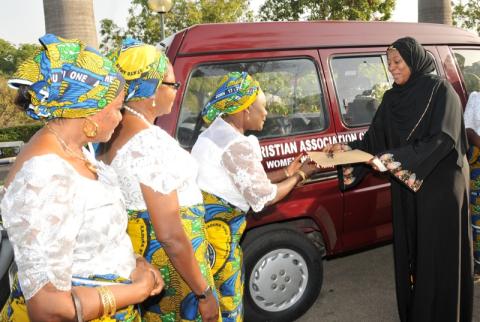
Wife of Vice President, Hajiya Amina Namadi Sambo presenting the key of the 14-seater bus to the Christian Association of Nigeria (CAN), Kaduna state Women Wing, Mrs. Elizabeth Abuk in Abuja on Thursday, December 18. [myad]
The Chancellor of Igbinedion University, Okada, Sir Gabriel Igbinedion congratulating the FCT Minister, Senator Bala Mohammed after his conferment with an honorary doctorate degree in Governance of the Igbinedion University, Okada, Saturday
The recent conferment of the honuorary doctorate degree on the minister of the Federal Capital Territory (FCT), Senator Bala Mohammed in Benin, by the prestigious Igbinedion University did not come as a surprise to many. It was something that had been expected which should have happened long before now. The unparalled manner by which Bala has been working, executing several projects consistently over the past few years ordinarily would and should attract this kind of award. Senator Bala’s honesty of purpose, humility, loyalty to his superiors; hard work and above all, his trustworthiness have combined to make him worthy of recognition at highest level. Though as human, there is no doubt that he still has a lot to do in many areas in Abuja even as he himself agreed recently, but the claim by one Salisu in recent write-up in Leadership newpaper was in bad taste. While it is on record that Bala has marshalled out strategies to overcome many challenges in the FCT, the fact should not be lost on the population of Abuja that has now grown to over 6 million people instead of less than two million maximum projection, and this has overstretched all facilities to the limit in all areas. Again, despite the budget constraints Bala had shown a grim determination to forge ahead in strategic priority areas, especially in human and infrastructure development. Bala has since 2010 given priority attention to human development by insisting on training and re-training of officers of all cadres, believing that as the engine room of the civil service, the civil servants must continuously be given relevant exposure. Many of such workers have attended training programmes within and outside the country and has helped them to be professionally competent, more patriotic and amenable to service delivery. Bala and his team also embarked on the provision of critical infrastructure required to fast-track the development of eleven new districts. With the participation of respected investors newly opened up areas are now being developed by the approved alottees. Apart from Bala’s effort at running an open and transparent administration, he has fashioned out a unique style of supervising his Directors and heads of agencies to ascertain the truth of information given to him from any quarters. This had helped him to be on top of whatever is happening in the FCTA/FCDA. The recognition of the FCTA Minister by the University of Igbinedion therefore, for the award of an honorary doctorate degree is an evidence of his commitment and determination to develop Abuja as a very beautiful city Nigerians will be proud of.
Reports reaching us have confirmed that some politicians who are already candidates of the Peoples Democratic Party (PDP) have started buying the Permanent Voters Cards (PVC) from ignorant local people in some parts of the Nigeria’s Federal Capital Territory (FCT). Our investugations revealed that the politicians have sent their agents to some villages in the capital city to buy the PVC from the people at the rate ranging between N700 and N1,000. It was learnt that those who easily fall victims are the women farmers and idle adults in the remote parts of the city. Though the Independent National Electoral Commission (INEC) has continually said that it is ready to stem rigging in the 2015 general elections, politicians also seem set to frustrate INEC’s plan. The desperate politicians are either out to capture power at all costs or disenfranchise as many voters as possible through systemic buying of PVCs. Meanwhile, an Islamic leader and Imam of Market Mosque in Kuje, Alhaji Saidu Ishaq has cautioned Muslims not to yield to the PVC buyers. He made it clear to the Muslims at the Friday congregation prayer today that selling the PVC would amount to selling their birthright.
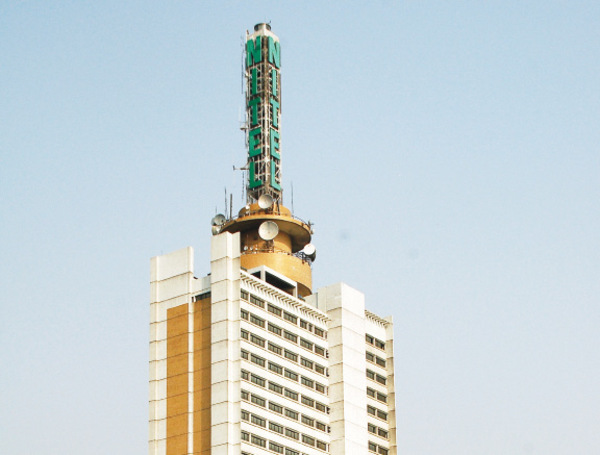
Nigeria Federal Government, through the National Council on Privatisation (NCP), has approved the sale of the liquidated Nigeria Telecommunication Plc. and its subsidiary, Mtel, to NATCOM Consortium for $252million.
The chairman of NCP’s Technical Committee, Atedo Peterside, told newsmen in Abuja that the approval was one of the decisions taken at a meeting of the council today. The meeting was presided over by Vice-President Namadi Sambo.
He said that NATCOM beat one other bidder to clinch the deal.
“What happened today was that the NCP approved the transaction which is like the final phase of the approval because only the NCP has the powers to pronounce a winner,” Mr. Peterside said. “So, the NCP today confirmed the process and so, the transaction from the point of view of approval and emergence of preferred bidder is now confirmed.
“We now have a preferred bidder that has been fully ratified by the NCP. So, that brings us to the end of the bidding process. So, that is the highlight of the decision on NITEL/Mtel.”
According to him, the ratification of the sale by the NCP marked the end of the entire bidding process and what was now left was to conclude the necessary documentation.
He said that the NITEL/Mtel transaction was different from what happened with the sale of power plants because Nitel was not an ongoing concern, but a liquidated one and no longer in business.
“In view of this, the liquidator will through the court pay some verified claims of creditors of NITEL/Mtel, which, therefore, sidesteps the issue of third party creditors,” he said. “But it does not preclude the government from settling any obligations it feels like.”
The Director-General, Bureau of Public Enterprises (BPE), Benjamin Dikki, announced that Indorama Eleme Petrochemical Limited had passed the performance evaluation administered on it.
“It means that Indorama has fulfilled the sale purchase agreements it signed with BPE and is therefore freed from a five-year probation/monitoring period,” Mr. Dikki said. “The necessary documentation will now be done so that Vice-President Namadi Sambo can hand over the certificate of release to the company.”
President Goodluck Jonathan has said that it is only God that knows why he made him President of Nigeria and it is Him also that will continue to direct him.
Jonathan who spoke at the 2014 Christmas Carol, organized by the Aso Villa Chapel at the old Banquet Hall of the Presidential Villa, Abuja said: “God knows why we are here. Nobody will place himself in any position without God. So God that gives all of us the opportunity will see us through.
“For me your servant today, I will continue to request for your prayers that God should give me the wisdom to do what is right in His sight.
“Because it is quite challenging for a leader. For every subject that you want to take a decision, you will have multiple suggestions, some contradictory, some to the left, some to the right, some to the centre. But you must take a decision.
“It is only God that can guide you to take the rightful decision that will not bring suffering to your people.”
President Jonathan insisted that nobody can place himself in a position of authority without the consent of God, even as he expressed the belief that God, who chose him, would see him through.
“We pray that God should give those of us who are in charge the grace to do things with the fear of God. If we begin to do what is right in our own little way, this nation will survive.
“We will try our best and we will continue to do our best. We promise that any opportunity given to us, we will use it to serve mankind.”
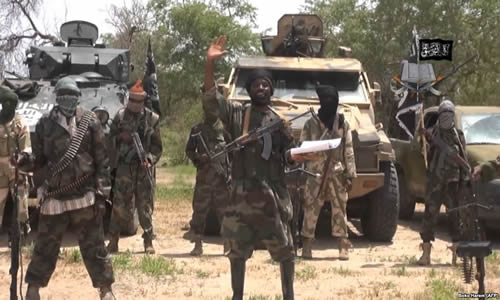
Members of the notorious Boko Haram, today, struck again in Gumsuri village, near the fearful Sambisa forest in Borno state, kidnapping at least 185 people, including women and children. They loaded the hostages away in trucks and drove towards Sambisa Forest, which is their stronghold.
Two local officials and a vigilante leader said today that during the mass abduction, 32 people were killed. They said that the local government has been able to establish the number of those abducted through contacting families, ward heads and emirs.
A vigilante leader based in the Borno State capital of Maiduguri, Usman Kakani, told AFP that fighters who were in Gumsuri during the attack provided a figure of 191 abducted, including women, girls and boys.
Gumsuri is about 70 kilometres (43 miles) south of Maiduguri and falls on the road that leads to Chibok, where Boko Haram kidnapped more than 200 schoolgirls in April.
Details of the Gumsuri attack took four days to emerge because the mobile phone network in the region has completely collapsed and many roads are impassable.
Those who fled the village said it was too dangerous to head directly to Maiduguri.
Instead, they travelled several hundred kilometres in the opposite direction to connect with the main road that leads to the state capital.
Mukhtar Buba, a Gumsuri resident who fled to Maiduguri, also confirmed that women and children were taken.
“After killing our youths, the insurgents have taken away our wives and daughters,” he said.
Boko Haram has increasingly used kidnappings to boost its supply of child fighters, porters and young women who have reportedly been used as sex slaves.
President Goodluck Jonathan has advised Nigerians to insist that there are no northern or southern citizens in the country, but a people and a race bounded by the same history and constitution.
The President spoke today in Abuja, at the maiden edition of the Annual National Migration Dialogue, organized by the National Commission for Refugees, Migrants and Internally Displaced Person (NCRMIDP) with the theme: Better Migration Management as a Tool for National Development.”
President Jonathan, who was represented by Vice President Mohammed Namadi Sambo, said that the Nigerian Constitution and even the recommendations of the recently concluded National Conference guaranteed the right of every Nigerian to reside anywhere in the country without discrimination.
“Our ethnic diversity, ideally, should be a source of strength, not weakness; a country where people freely profess and practice their respective religious belief anywhere within our national boundaries; without any fear of discrimination. The future I see, is of a nation where people are no longer identified by their ethnic or religious affiliation but by the very virtue of their Citizenship as Nigerians. This issue of indigene or non-indigene must stop.”
The President acknowledging the role migration plays in national development said evidence had shown that Nigeria has the highest volume of international migrants, and the largest remittances in sub-Saharan Africa with 65 per cent of recorded remittances, worth 20.76 billion dollars in 2013, according to CBN statistics.
He said that Nigeria would continually deploy strategies to encourage Nigerians in the Diaspora to invest remittances in social infrastructure, human capital development and other activities, adding that his administration had made it a cardinal principle that Nigerians must be treated humanely and with dignity in any country of their residence.
Speaking on internally displaced persons, the President said that people do not get displaced by choice, stressing that the government was fully aware and sensitive that the current cause of internal displacement in Nigeria is the insurgency in the North-east, he therefore emphasised that government was making efforts to ensure it addressed the insurgency squarely, adding that he had directed that victims must be given due care and maintenance without any form of social exclusion.
On the national migration dialogue, he said that the dialogue would help shape Nigeria’s national migratory orientation, even as he stressed the need for “the debate to give priority attention to the protection of the rights of Nigerian migrants; both internal and international and also protect the rights of foreigners in our country.”
In her remarks, the Federal Commissioner for Refugees, Hajiya Hadiza Sani Kangiwa, said that Nigeria was the first country in the ECOWAS sub-region to institute the dialogue, said it was conceived as a strategy for mainstreaming migration into the post development agenda, and also a derivation of the draft National Migration Policy document.
She said that the objective of the dialogue was to provide a platform for debating the impact and linkages between migration and development thereby shaping Nigeria’s national migratory linkages and also to provide an opportunity for reviewing the various operational challenges at the implementation level.
Hajiya Kangiwa said participants at the dialogue were drawn from the 36 States of the federation and also has the participation of international development partners like the International Organisation for Migration.
The event comes as the world celebrates the International Migrants Day 2014.
We use cookies on our website to give you the most relevant experience by remembering your preferences and repeat visits. By clicking “Accept”, you consent to the use of ALL the cookies.
This website uses cookies to improve your experience while you navigate through the website. Out of these, the cookies that are categorized as necessary are stored on your browser as they are essential for the working of basic functionalities of the website. We also use third-party cookies that help us analyze and understand how you use this website. These cookies will be stored in your browser only with your consent. You also have the option to opt-out of these cookies. But opting out of some of these cookies may affect your browsing experience.
Necessary cookies are absolutely essential for the website to function properly. This category only includes cookies that ensures basic functionalities and security features of the website. These cookies do not store any personal information.
Any cookies that may not be particularly necessary for the website to function and is used specifically to collect user personal data via analytics, ads, other embedded contents are termed as non-necessary cookies. It is mandatory to procure user consent prior to running these cookies on your website.
A Befitting Degree Award For Senator Bala Mohammed, By Ibrahim Biu
The recent conferment of the honuorary doctorate degree on the minister of the Federal Capital Territory (FCT), Senator Bala Mohammed in Benin, by the prestigious Igbinedion University did not come as a surprise to many. It was something that had been expected which should have happened long before now.
The unparalled manner by which Bala has been working, executing several projects consistently over the past few years ordinarily would and should attract this kind of award.
Senator Bala’s honesty of purpose, humility, loyalty to his superiors; hard work and above all, his trustworthiness have combined to make him worthy of recognition at highest level.
Though as human, there is no doubt that he still has a lot to do in many areas in Abuja even as he himself agreed recently, but the claim by one Salisu in recent write-up in Leadership newpaper was in bad taste.
While it is on record that Bala has marshalled out strategies to overcome many challenges in the FCT, the fact should not be lost on the population of Abuja that has now grown to over 6 million people instead of less than two million maximum projection, and this has overstretched all facilities to the limit in all areas.
Again, despite the budget constraints Bala had shown a grim determination to forge ahead in strategic priority areas, especially in human and infrastructure development. Bala has since 2010 given priority attention to human development by insisting on training and re-training of officers of all cadres, believing that as the engine room of the civil service, the civil servants must continuously be given relevant exposure.
Many of such workers have attended training programmes within and outside the country and has helped them to be professionally competent, more patriotic and amenable to service delivery.
Bala and his team also embarked on the provision of critical infrastructure required to fast-track the development of eleven new districts. With the participation of respected investors newly opened up areas are now being developed by the approved alottees. Apart from Bala’s effort at running an open and transparent administration, he has fashioned out a unique style of supervising his Directors and heads of agencies to ascertain the truth of information given to him from any quarters. This had helped him to be on top of whatever is happening in the FCTA/FCDA.
The recognition of the FCTA Minister by the University of Igbinedion therefore, for the award of an honorary doctorate degree is an evidence of his commitment and determination to develop Abuja as a very beautiful city Nigerians will be proud of.
[myad]