Nigeria’s Federal Capital Territory Administration has said that it requires a minimum of $3.8 Billion (about N600 Billion) of private sector capital to develop a total land area of 4,283.2 hectares in the territory. The distance of this area is averagely 20 minutes from the City centre and 15 minutes fromthe Nnamdi Azikiwe International Airport, Abuja. The FCT minister, Bala Mohammed made these known while addressing the 2014 conference of the Nigerians in Diaspora which took place at the Embassy Suites, Columbus, Ohio, US at the weekend. The Minister, represented by the Permanent Secretary of FCT, Engr. John Chukwu, asked Nigerians in Diaspora to think how they can contribute to the development of Nigeria. He said that the implementation thrust of the Transformation Agenda in FCT is to open up the Territory to unfettered private capital-driven development. He said that it is this thrust that made the FCT Administration to introduce the Land Swap programme as a catalysts for accelerated development. According to him, the private sector would be incentivized to provide site and services within the districts. He added that Government’s emphasis would be to provide the policy, legal regulatory environment for seamless private sector participation in the development of the districts. The benchmark, he said, is to open up by providing modern infrastructure in at least 10 new districts within five years. “Development is based on contractual Agreement with 15 Private Investors on the basis of the Land-for-Infrastructure Swap Framework; The total land area for the development is 4,283.2 hectares and projected to require a minimum of $3.8 Billion of private sector capital. The distance of this area is averagely 20 minutes from the City centre and 15 minutes fromthe Nnamdi Azikiwe International Airport, Abuja.” He said the benefit analysis of the investment initiatives of the FCT Administration include creation of more than 300,000 jobs within the plan period; inflow of N1 trillion investment to the FCT; reduction of housing deficit by 20%; reduction of cost of rent/lease by 15%; increased funding to human capital development and enhanced security of lives and properties 20% of schooling population.” The theme of the 2014 conference is: “Nigeria’s Transformation Agenda and Leadership Accountability: The Role of Nigerians in Diaspora.”
Dr. Stephen Davis responded to an allegation by Ijaw activist and leader of the defunct Niger Delta Volunteers Force, Alhaji Mu¬jadid Asari Dokubo that he, Davis was play¬ing a script by former president Olusegun Obasanjo in his recent disclosure on the sponsors of Boko Haram. Asari- Dokubo had, in an interview in Yenagoa with The SUN newspaper, said that he was the first Nigerian that Dr. Davis negotiated with and that the international negotiator was being economic with the truth. Below is full text Dr. Davis’ response today made available to newsmen: “I read with interest Asari Dokubo’s comments published on September 14. Asari is quite correct in saying that he knows me well and has met members of my family. In 2004, the Niger Delta was aflame with conflict. Asari, Ateke Tom and Tompolo were waging a fierce war against the Nigerian federal and state governments. Many people had been killed. Nigerian military were having trouble contending with Asari’s guerrilla warfare. Small, highly mobile and heavily armed militant forces in fast boats struck across the Niger Delta targeting oil installations and military posts. Nigeria’s oil output at one point dropped to as low as 600,000 barrels per day and on average was halved to one million barrels per day. This was a devastating blow to Nigeria’s economy and the operations of the major international oil companies. Apart from the economic impact, communities were suffering from the conflict with many innocent people killed in military efforts to purge the communities of militants. My wife and I were living in Port Harcourt and, in 2004 I explored the idea of a peace deal with an Ijaw friend, Von Kemedi. As an Ijaw, he knew Asari who was also Ijaw. Von was able to make contact with Asari who agreed to meet with me. Von and I subsequently travelled through the swamps in a speed boat to Opurata village to see the damage to villages before transferring to a canoe that we paddled to another village from where we were met by Asari’s men in another fast boat. With a blindfold on we were taken to another island where we waited until another boat escorted us to Asari’s camp. A vigorous discussion took place that night surrounded by Asari’s well-armed fighters. By the end of the night, the foundation of a peace deal has been set down. I subsequently took the peace proposal to President Olusegun Obasanjo and found him ready and willing to support peace and disarmament. The deal also encompassed demobilisation and a programme to reintegrate the militants back into the communities. This required a skills training programme which President Obasanjo supported. A final essential element was weapons surrender and destruction. The protocol used was that set down by the UN and was agreed by both sides. I stayed in close contact with Asari by satellite phone each evening around 5pm. We worked out the details of the peace process. The first step was a ceasefire. The ceasefire was set in place on September 8, 2004, but in the following days was broken three times and each time it was the Nigerian military that broke the ceasefire. Even when under fire during a ceasefire breach Asari, honoured his word and withdrew, firing only for self-protection. To complete the peace deal, President Obasanjo directed me to oversee the extraction of Asari and his key commanders in September 2004. I travelled to the Niger Delta with a handful of SSS men headed by Fubara Duke, an Ijaw man known to Asari and trusted by President Obasanjo. At 1am on September 29, 2004 Asari, and his commanders met us at Abonnema Landing in the Niger Delta and we proceeded to Port Harcourt airport where we boarded a plane at dawn to take us to Abuja and direct to President Obasanjo in the Cabinet Room. That day was punctuated with amazing revelations as Asari recounted events that led him and his men to defy the government and launch a guerrilla style campaign. Asari always kept his word to me. He gave me an undertaking on the ceasefire and kept it even in the face of breaches by the military. When it came to time for weapons surrender, he asked me how many weapons I wanted him to surrender. I said, ‘ Asari you have 3,000 men, so I want 3,000 weapons.’ Asari gave a commitment to hand over 3,000 guns, 100 general purpose machine guns and some rocket launchers which were subsequently destroyed in a series of public destructions to UN standards overseen by the Army at Bori Military Camp in Port Harcourt in mid-November 2004. President Obasanjo kept his word and on October 1, 2004 the peace accord was announced and Asari and his commanders returned to the Niger Delta. Asari is correct is saying I never paid him anything. I never paid anyone and no one paid me either by way of funds or favours. President Obasanjo did not offer to pay me for the Niger Delta peace accord and I did not seek payment. The peace deal was built on trust. I went to Asari’s camp unarmed and without any security. Asari and his key commanders travelled with me and the small SSS contingent totally unarmed. We trusted each other with our lives and that built trust. There can be no peace without trust. Without trust, there is merely a ceasefire which will eventually be broken and the fighting resume. Asari said in his interview with the Daily Post that President Obasanjo broke his word. I am not so sure of that. What I think Asari may be referring to is the demobilisation and skills training that did not materialise after the peace accord. Funds were to be set aside to train the ex-militants for employment and to reintegrate them back into their communities. This phase of the work was to be undertaken by the state governors. By March 2005, a full six months had passed without any sign of training and reintegration. It was no surprise then to find 200 Niger Delta ex-militants had been recruited by foreign mercenaries to participate in a coup attempt in Equatorial Guinea. The ex-militants were intercepted as they departed Warri in a ship bound for Guinea. They had each been promised $5,000 and an AK47. Had the promised skills training and reintegration been implemented, these young men probably would not have agreed to join the coup attempt in Equatorial Guinea. So Asari is right but it was more likely that the governors were not sincere and not former President Obasanjo. It was the governors that had armed, promoted and used the gangs for political purposes in much the same way that former Governor Modu Sheriff was alleged to have done in Borno State. It was this failure to honour the agreement to demobilise by providing skills training and reintegration that fuelled discontent and provided the conditions that formed MEND which added bombing and kidnapping to its mode of operation. Contrary to Asari’s understanding, former President Obasanjo did not bring me to Nigeria on my recent trip to seek the release of the Chibok girls or for any other purpose, nor did President Jonathan or anyone else. I came to Nigeria in April this year to seek the release of the Chibok girls at my own expense and of my own volition because I could see no progress on the release of the kidnapped girls. While Asari may not believe any girls were kidnapped, let me assure you that hearing the stories of some girls who have escaped from Boko Haram camps is a sobering experience. There are many girls who have been kidnapped apart from the girls from the Chibok School. The kidnapping of girls by Boko Haram has been going on for at least a year. Initially Boko Haram kidnapped girls because the fighters could not go back home to their wives. They used the kidnapped girls. Girls tell how they were raped every day, week after week. One girl was raped every day, sometimes several times a day by groups of men. Some did not survive the ordeal. The escaped girls tell harrowing stories of rape and abuse. They are traumatised and require medical treatment and counselling. These girls are testament to the horrifying truth about the kidnappings. But the Chibok kidnappings were only the start of my recent journey to Nigeria. It soon became apparent the (alleged) sponsors did not want any interference in their plan. The “political Boko Haram” which (allegedly) started out as Sheriff’s ECOMOG (so named after the military peace keeping forces operating in Liberia at that time because an SDP – Social Democratic Party – candidate was protected from an angry mob in Bama by a group of youths supporting the SDP) that targeted his political opponents in the 2003 and 2007 elections have since mutated into the Boko Haram we see today that terrorises through beheadings, butchering innocent villagers, bombing innocent people at shopping malls and in churches, raping and kidnapping. It is true that Sheriff fell-out with Yusuf and the allegation stands that when the military captured Yusuf in late July 2009 and handed him over to the police in Borno State, he was allegedly executed on Sheriff’s instruction; thus the root of the perception that Sheriff cannot be a sponsor but a hated enemy of Boko Haram. But the core of the old Yusufiya is no longer part of Boko Haram. Boko Haram is a mutation of political Boko Haram and Shekau’s Ansaru. The Yusufiya grew out of the Izala movement and had great respect for Izala. Boko Haram now beheads Izala followers. The “slaughterers” work with the political assassins and suicide bombers. The sponsors of Boko Haram do not care how many innocent Nigerians are slaughtered, how many women are raped, how many girls and boys are kidnapped, how many villages are plundered. I have met too many victims to say, “It is not my problem”. We are each diminished if we allow such crimes against our fellow citizens to persist. The Nigerian military is diminished if it uses Boko Haram tactics to address the problem. Evil will flourish and triumph if good men and women do nothing. Many Nigerian politicians have said little and done nothing to curb the slaughter of Nigerians that is being supported by the sponsors. While fathers die to protect their daughters and wives are raped and butchered the sponsors of Boko Haram are accorded privileges and protection. They fly in private jets and are accorded military protection. Are the sponsors of Boko Haram so far above the law? Have the citizens of Nigeria lost the right to bring these men to justice? Who will stand up for the poor and oppressed who are being slaughtered and raped in their hundreds? By the grace of God we trust that good men and women will stand up and justice will prevail.
The recent statement credited to the President General of Ohanaeze Ndigbo, Chief Gary Enwo-Agariwey in most Nigerian newspapers published on Monday September 15, 2014, stating in clear terms that Ohanaeze Ndigbo is not interested in the participation of Ndigbo to produce the President of Nigeria in the 2015 presidential election is heart-rending and the “unkindest cut of all.” In my 38 years active involvement in Igbo rights crusade, no Igbo leader occupying the exalted office of President General of Ohanaeze Ndigbo has gone this far in betraying the Igbo people. I was a very young member of the Igbo Forum as an undergraduate in 1976 when it was formed. The Forum had Dr. Akanu Ibiam as Chairman, Justice Daddy Onyeama as Vice Chairman, Chief Jerome Udoji as Secretary and Mr. Jacob Ukeje Agwu (my Uncle and Guardian) as Assistant Secretary. It was Mr. Agwu that brought me to the Igbo Forum. It was in 1979 that the name of the Forum was changed to Ohanaeze Ndigbo with the same officers in control. These men of unquestionable integrity did their utmost to restore the battered self-esteem of the Igbo people who had just came out of the debilitating fratricidal war, the Nigeria-Biafra War which ended in 1970. By the way, Dr. Nnamdi Azikiwe was the Patron of the Igbo Forum and for a brief period the Patron of Ohanaeze Ndigbo. Things began to go wrong in Ohanaeze when businessmen, government apologists and contractors began to lead the organisation. In 1979 under the chairmanship of Igwe M. N. Ugochukwu, a renowned contractor and the Traditional Ruler of Umunze in Orumba Local Government Area of Anambra State, Ohanaeze was misdirected to pander with the National Party of Nigeria (NPN). This unfortunate partisan posture of the leadership of Ohanaeze angered Dr. Nnamdi Azikiwe and all his Nigerian Peoples Party (NPP) associates and they pulled out of the organisation. Ohanaeze collapsed. It was not until 1983 that Ohanaeze was revived with the clear resolution to stay the organisation away from partisanship in order to ensure the respect and loyalty of Ndigbo. It remained on course and became a very powerful and respected mouthpiece of the Igbo people. But during the Presidency of President Olusegun Obasanjo, the leadership of Ohanaeze under Prof. J. O. Irukwu as President General aligned with the Third Term ambition of Obasanjo. This resulted in the first major factionalisation of Ohanaeze Ndigbo. A Committee led by Admiral Ndubuisi Kanu as Chairman and Chief Mike Ahamba as Secretary, amongst other notable members, including respected Clergymen brought Ohanaeze Ndigbo once again back on track with Dr. Dozie Ikedife as President General. In 2011 the leadership of Ohanaeze under the leadership of Amb. Raph Uwechue led Ohanaeze into full-blown partisanship. Ohanaeze Ndigbo became an appendage of the Peoples Democratic Party (PDP). Even at that, Amb. Uwechue repeatedly assured Ndigbo that it would be their turn to go for the Presidency of Nigeria in 2015. This assertion of the Ohanaeze leader found eloquent and powerful expression in the Key Note Address he delivered at a Seminar in commemoration of the Ahiara Declaration in 2012. Here we are in 2014 to be assaulted and insulted by Chief Gary Enwo-Agariwey, the President General of Ohanaeze with the offensive and heart-breaking statement that Ohanaeze is not interested in the project of Igbo man becoming the President of Nigeria in the 2015 General Elections. Even the predecessors of Agariwey who towed the path he is following now clearly avoided the heresy of an outright betrayal of the legitimate aspiration of Igbo people by stating that the Pan-Igbo Organisation was not interested in an Igbo man vying to become the President of Nigeria. It may be necessary to remind Chief Agariwey that it was Dr. Nnamdi Azikiwe, an Igboman that spearheaded the struggle for the independence of Nigeria. Dr. Azikiwe, an Igboman contested to become the First Prime Minister of Nigeria in 1963 on the platform of the National Council for Nigerian Citizens (NCNC). He did not succeed in that bid but wisely led his Party to form a Coalition Government with the Northern Peoples Congress (NPC). The fallout of that coalition was that while the NPC produced the Prime Minister in the person of Alhaji Tafawa Balewa, the NCNC produced the President And Commander-in-Chief of Nigerian Armed Forces in the person of Dr. Nnamdi Azikiwe. The NCNC also produced the Speaker of the First Post-Independence Nigerian Parliament in the person of Dr. Jaja Wachukwu. Ndigbo stood to be counted and were respected in Nigeria. The creation of Mid-Western Region was made possible because of the collaboration between NCNC that led the struggle and the ruling NPC. In the Second Republic, Dr. Nnamdi Azikiwe contested twice to be President of Nigeria in 1979 and 1983. After 1983 when Dr. Azikiwe last contested for the President of Nigeria, Igbo people consigned themselves to the sideline and were practically missing in action in the politics of Nigeria until 20 years after, in 2003, when I founded the All Progressives Grand Alliance (APGA). God used me to present to the Nigerian people on our Party platform Dim Chukwuemeka Odumegwu-Ojukwu of blessed memory as Presidential Candidate. Whatever was the outcome of that election, Ndigbo stood to be counted and we were respected. In 201, the appropriation of APGA by agents of the Presidency had been virtually completed. To reward the Presidency for assisting their stooges to assume the leadership of APGA, the party adopted President Goodluck Jonathan as their candidate for the Presidential Election of that year unconditionally. Dim Odumegwu-Ojukwu was terminally ill and incommunicado in a London Hospital at the time of this coupe de grace. The lie was even told that he gave his consent, but his son Chief Emeka Ojukwu Jnr. in a measured public statement stated that his father was not in any condition to communicate with anybody let alone making such weighty political commitment. In 2012, I led my associates across the country to found the United Progressive Party (UPP). The National Executive Committee (NEC) of UPP in its inaugural meeting in November 2012 graciously zoned its Presidential slot for the 2015 Presidential Election to the South-East geopolitical Zone in a very strategic initiative that has positioned our party very well for the impending epic encounter of 2015. The least that is expected of the leadership of Ohanaeze at this time is to appreciate and commend the UPP for giving the Igbo people of Nigeria a voice to be heard and a place to stand in the contest for the highest office of the land. The President General of Ohanaeze Ndigbo by the reckless statement he has made regarding the interest of Ohanaeze or lack of it in an Igboman vying for the President of Nigeria in 2015 is a grievous act of ingratitude to UPP, as well as the betrayal and sabotage of the Igbo collective aspiration. Neither Afenifere nor Arewa Consultative Forum (ACF), Ohanaeze counterparts in Yoruba and the North, will never be caught undermining the collective aspiration of their people. We demand the General Assembly of Ohanaeze to disown the statement credited to its President General and reassert their commitment to the well-being and welfare of the Igbo race in line with the vision of the founding fathers of Ohanaeze. On the other hand, Igboezue joins all well-meaning Nigerians, especially Ndigbo in commending and appreciating the kind gesture extended to the people of the South-East Zone by the party which will enable an Igboman to fly the Presidential flag, a situation that was last witnessed about 12 years ago. We have implicit confidence in the leadership of UPP and we shall accept in good fate any political alliance the party may wish to enter into which will be to our collective benefit and interest, and for the political development and stability of Nigeria. To Ndigbo, we urge them to take heart in the face of the Ohanaeze betrayal. The plague of the present leadership of the organisation shall one day become history like others before it. Ndigbo should remain prayerful. It shall be well. [myad]
No fewer than five leading members of the deadly Boko Haram were said to have surrendered and turned in their weapons to Nigerian troops in Konduga, Borno state. This Followedrelentless onslaught by Nigerian troops, launched on the sect in the past few days. In a tweet by the Defence Headquarters today, it said: “as the heat on the terrorists continues, five terrorists surrendered on Saturday (September 20, 2014) with all their weapons to troops at Konduga, pleading for mercy.” Other captured terrorists who refused to surrender have also been giving useful information on the subsequent plans of the group in an apparent offer to cooperate. In the last few days there have been several attempts by terrorists desperate to gain entry to Konduga which the Nigerian troops have continued to foil. A report by PRNigeria said that the terrorists’ move was aimed at recovering the bodies of their prominent fighters who had died in the previous encounters in the area. Meanwhile the Nigerian troops have recovered more weapons during mop-up operations while some of their (terrorists’) vehicles have been destroyed.
Nigerian President, Goodluck Ebele Jonathan Addressing UN General Assembly
President Goodluck Ebele Jonathan will on Wedneday, breif the General Assembly of the United Nations in New York, the United States of America on the current state of affair in the fight against Boko Haram terrorist gang in Nigeria. The President, who left Nigerian in the early hours of today, is expected to join other members to attend the 69th Session of the United Nations General Assembly in New York. A statement from speicla adviser on media and publicity, Dr. Reuben Abati said that President Jonathan will also, as part of his schedules, attend receptions hosted by President Barack Obama and the Secretary-General of the United Nations, Mr. Ban Ki Moon. The statement, which was silent over the number of people in the entorage of the President, said that Jonathan is also scheduled to address the United Nations Security Council High-Level Session on “Threats to International Peace and Security, Caused By Terrorist Acts.” President Jonathan, Abati said, is also scheduled to hold bilateral talks with Mr. Ban Ki Moon and the British Prime Minister, Mr. David Cameron, adding that he will stop over in London for a brief private visit before proceeding to New York. The President will return to Nigeria on Thursday, the statement said.
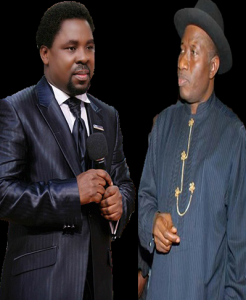
President Goodluck Jonathan, today, visited the troubled preacher, T. B. Joshua whose Synagogue Church of Nations collapsed in Lagos last week killing over 80 people, including over 60 from South Africa. “My coming here is to express condolences to Prophet Joshua, the Synagogue of all Nations (his church) and of course the bereaved families,” President Jonathan said. His support for popular preacher TB Joshua is seen as threatening the diplomatic relationship between Nigeria and South Africa. The South African government has already expressed dismay at the Nigerians’ reluctance to criticise the church for what looks like shoddy construction work. South Africa has called for an investigation into the collapse, in which it says 84 South Africans, comprising three church groups that were on tour and staying in the guest house, died. The Nigerian emergency services put the confirmed death toll at 80. Joshua and his supporters say the collapse was an “attack” somehow linked to a mysterious aircraft they claim flew over the building before it went down. T.B. Joshua’s church draws thousands of followers from all over Africa and many other parts of the world, attracted by claims that he and his “wise men” can cure almost any affliction by “casting out demons” they say are responsible for everything from madness to HIV/AIDS to normally irreparable spine damage. The regular influx of visitors from abroad for church services that can last up to a week creates demand for accommodation that the church’s own guest house has been unable to meet, and often spills over into local hotels. Analysts say Nigeria’s megachurch leaders are so influential that few politicians dare upset them, especially just before a national election, which Nigeria is due to hold in five months.
Information reaching us has indicated that the governors on the platform of the ruling Peoples Democratic Party (PDP) were arm-twisted to endorse the candidacy of President Goodlcuk Jonathan for the 2015 election with promise not to use the anti corruption agencies: Economic and Financial Crimes Commission (EFCC) and the Independent Corrupt Practices and Related Offences Commission (ICPC) to haunt them after their tenures. Though there was no known petition against any of the governors who are still enjoying immunity now, aides and children of some of them were however said to have been interrogated by the operatives of the EFCC. It was learnt that some of the governors would have been picked up or invited for interrogation in connection with alleged fraud in their states but thanks to the immunity they are currently enjoying. It will be recalled that two sons of Jigawa State Governor, Alhaji Sule Lamido, were some months ago arrested by the EFCC over an alleged N10bn fraud. It was not clear if the two sons will no longer be prosecuted since their father, who was nursing presidential ambition, was among other PDP governors that had endorsed President Jonathan for a second term. The conviction of three former governors was said to have made some of the serving governors to be apprehensive of what might befall them after leaving office. Those convicted were Lucky Igbinedion (Edo), Diepreye Alamieyeseigha (Bayesla) and James Ibori(Delta). Of the three former governors, Ibori was the only one convicted outside the country while Alamieyeseigha has been pardoned by President Jonathan, who served as deputy governor to the pardoned ex-convict. Some other former governors like Gbenga Daniel (Ogun), Ayo Fayose (Ekiti), Chimaroke Nnamani (Enugu), Danjuma Goje (Gombe), Saminu Turaki (Jigawa) and Adebayo Alao-Akala(Oyo) are currently facing corruption charges. A governor, who played a prominent role in the endorsement of the President by his colleagues, also said the President had agreed that all the outgoing governors are free to pick their successors. He said: “because of this, just like the Presidential Convention on December 6 will be a formality, so it is going to be in most of our states on November 29 as we are going to be the one to pick our successors.” He said the plan not to rock the boat in the states was also responsible for the party’s allowing the Acting Governor of Adamawa State, Ahmadu Fintiri, to be cleared before winning the governorship ticket in his state by the party. “Fintiri’s clearance by the PDP appeal panel was significant because he ought not to have been allowed in the first place, but in order not to rock the boat, he was asked to run and he eventually won the ticket,” the governor added. It was learnt the party and the President have agreed to support any of the governors who is interested in coming to the Senate. Among the governors who have signified their interest in contesting senatorial election in their states are Gabriel Suswam (Benue), Emmanuel Uduaghan (Delta), Godswill Akpabio(Akwa Ibom), Sulivan Chime(Enugu) and Babangida Aliyu(Niger).
Tropical storm Fung-Wong has brought flooding, heavy rains and high winds to the Philippines, has killed five people and forced about 200,000 people from their homes. Two of the people killed got electrocuted while wading through flood waters, an emergency official said. Manila and the northern provinces were worst hit, with residents being rescued from the roofs of flooded homes. The storm is now heading north, and is expected to hit Taiwan on Sunday. Some 50,000 troops have been placed on standby on the island for potential rescue and relief operations. The flood waters began to subside in parts of the the Philippines on Saturday, allowing displaced residents to return home and begin clearing up. Fung-Wong had struck the archipelago with winds of 95kph (59mph) and gusts of 120kph, gathering strength as it moved north. Three weeks’ worth of rain is reported to have fallen overnight in parts of the country. Roofs were blown away, trees toppled and highways flooded across the island of Luzon, seat of the capital, Manila. Local media reported a river burst its banks in an eastern part of Manila on Friday, prompting the evacuation of more than 20,000 people. Other residents, however, chose to stay put. “We can’t just move to another place,” a resident of Marikina, a Manila suburb said. “Our house is here. We’ve spent money on it. It would be a waste if we left, so we will stay here.” The storm also lashed Cebu City in central Philippines, leaving parts of it 2m (6ft) underwater. Tropical storms frequently strike the Philippines: Fung-Wong is the second in two weeks. Typhoon Kalmaegi last week left eight people and forced more than 350,000 from their homes.
Leader of the Islamic Movement of Nigeria (IMN), Sheik Ibraheem El-Zakzaky, has dragged Nigerian federal government to the United Nations Human Rights Commission (UNHRC) in Geneva, Switzerland, over the killing of his members. Thirty-five members of the group, including three of the prominent cleric’s sons, were shot dead in July by soldiers during the group’s procession in Zaria, Kaduna State, to mark the annual International Quds Day. A statement from one of its leaders, Ibrahim Usman, said their presentation before the world body was facilitated by the fact-finding team of the Islamic Human Rights Commission (IHRC). The statement said the presentation to the UN commission was made through Skype because El-Zakzaky and another witness were denied visa to personally attend the special session of the UNHRC. The three sons – Mahmud was a student of Almustapha University, Beirut; Ahmad a Chemical Engineering student of Shenyang University, China and Hamid an Aeronautical Engineering student of Xiang University, also in China. El-Zakzaky said a fourth son, Ali, was shot in the leg and is currently being treated in hospital. The group said it was not satisfied with the way the matter was handled by the Nigerian authorities hence it decided to take it to the UNHRC. After the shooting, President Goodluck Jonathan reportedly called El-Zakzaky to express his condolences and appeal for calm, but the cleric turned down the appeal, asking for justice.
Her wedding day was one of happiness and merry making. But that was a few years ago when Wunmi Oyediji was still in love. Fast forward eight years and you have a completely different story from the sweet romance that led Oyediji to the altar. Her marriage to Damilare had so much promise, but her hope of a blissful union gradually faded into a living hell before her eyes, albeit a silent one since her frustrations are being bottled up. Oyediji’s constant source of worry is her husband. Oyediji, a banker with a reasonable income, met Damilare when he was working in an IT firm in Lagos. But shortly after their marriage, Damilare lost his job and has had none since then, except for the mostly futile hustling he does at the Computer Village, Ikeja, Lagos State capital. The village is Nigeria’s IT hub. For over five years, Oyediji has been shouldering the financial responsibilities at home like paying their children’s school fees, feeding and clothing the family. Twice, she has tried to set up business for her husband and twice he has been unable to account for the money invested in the businesses. On several occasions, Oyediji has caught Damilare cheating on her and on a few other instances suspected him of attempting to dupe her. “It’s just like he’s contented with the situation because he has since stopped looking for job or trying to take care of his responsibilities at home. If I ask him for any money, he will say ‘shebi you have money, go and do it now,’” she said. “Over a year ago, I gave him over N1.5m to get some equipment from overseas which he said he would sell at the Computer Village. Till now, he insists the goods have not arrived in Nigeria and each time I ask, he keeps giving different reasons. Some months ago, he asked for another N300,000 to clear some issues causing the delay in bringing in the goods but I didn’t believe him; so I didn’t give him. “Earlier, I had given him about N1m for another project but nothing also came out of that one. I know he also cheats on me because I go through his phones but he always denies it. In spite of everything I do for him, he still connives with my mechanic to increase the cost of auto parts so that he can take cuts. ” However, Oyediji is not considering divorce or separating from Damilare yet for a few reasons including the fear of raising their children without a father figure. “Apart from the fact that I don’t want to raise the children as a single parent, I also don’t want my marriage to fail. People will say the marriage failed because I’m richer than my husband and that’s why I’m not submissive to him. But that’s far from the truth. Some of my friends wonder if I’ve been charmed but those are the reasons I don’t want a divorce,” she said. In many of such cases, the women suffer in silence because of a range of reasons including the stigma and the cultural issues associated with divorce. In Nigeria, divorce is frowned at culturally and so divorcees often have a hard time getting someone to remarry.
We use cookies on our website to give you the most relevant experience by remembering your preferences and repeat visits. By clicking “Accept”, you consent to the use of ALL the cookies.
This website uses cookies to improve your experience while you navigate through the website. Out of these, the cookies that are categorized as necessary are stored on your browser as they are essential for the working of basic functionalities of the website. We also use third-party cookies that help us analyze and understand how you use this website. These cookies will be stored in your browser only with your consent. You also have the option to opt-out of these cookies. But opting out of some of these cookies may affect your browsing experience.
Necessary cookies are absolutely essential for the website to function properly. This category only includes cookies that ensures basic functionalities and security features of the website. These cookies do not store any personal information.
Any cookies that may not be particularly necessary for the website to function and is used specifically to collect user personal data via analytics, ads, other embedded contents are termed as non-necessary cookies. It is mandatory to procure user consent prior to running these cookies on your website.





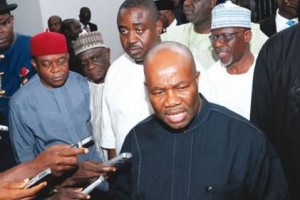 Information reaching us has indicated that the governors on the platform of the ruling Peoples Democratic Party (PDP) were arm-twisted to endorse the candidacy of President Goodlcuk Jonathan for the 2015 election with promise not to use the anti corruption agencies: Economic and Financial Crimes Commission (EFCC) and the Independent Corrupt Practices and Related Offences Commission (ICPC) to haunt them after their tenures.
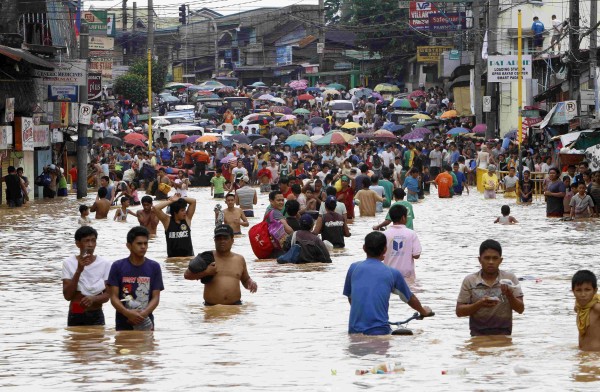 Tropical storm Fung-Wong has brought flooding, heavy rains and high winds to the Philippines, has killed five people and forced about 200,000 people from their homes.
 Her wedding day was one of happiness and merry making. But that was a few years ago when Wunmi Oyediji was still in love. Fast forward eight years and you have a completely different story from the sweet romance that led Oyediji to the altar.


Dr. Davis Comes Clean On Main Sponsor Of Boko Haram
Dr. Stephen Davisand Asari Dokubo
Dr. Stephen Davis responded to an allegation by Ijaw activist and leader of the defunct Niger Delta Volunteers Force, Alhaji Mu¬jadid Asari Dokubo that he, Davis was play¬ing a script by former president Olusegun Obasanjo in his recent disclosure on the sponsors of Boko Haram.
Asari- Dokubo had, in an interview in Yenagoa with The SUN newspaper, said that he was the first Nigerian that Dr. Davis negotiated with and that the international negotiator was being economic with the truth.
Below is full text Dr. Davis’ response today made available to newsmen:
“I read with interest Asari Dokubo’s comments published on September 14. Asari is quite correct in saying that he knows me well and has met members of my family. In 2004, the Niger Delta was aflame with conflict. Asari, Ateke Tom and Tompolo were waging a fierce war against the Nigerian federal and state governments.
Many people had been killed. Nigerian military were having trouble contending with Asari’s guerrilla warfare. Small, highly mobile and heavily armed militant forces in fast boats struck across the Niger Delta targeting oil installations and military posts. Nigeria’s oil output at one point dropped to as low as 600,000 barrels per day and on average was halved to one million barrels per day.
This was a devastating blow to Nigeria’s economy and the operations of the major international oil companies. Apart from the economic impact, communities were suffering from the conflict with many innocent people killed in military efforts to purge the communities of militants.
My wife and I were living in Port Harcourt and, in 2004 I explored the idea of a peace deal with an Ijaw friend, Von Kemedi. As an Ijaw, he knew Asari who was also Ijaw. Von was able to make contact with Asari who agreed to meet with me.
Von and I subsequently travelled through the swamps in a speed boat to Opurata village to see the damage to villages before transferring to a canoe that we paddled to another village from where we were met by Asari’s men in another fast boat. With a blindfold on we were taken to another island where we waited until another boat escorted us to Asari’s camp. A vigorous discussion took place that night surrounded by Asari’s well-armed fighters. By the end of the night, the foundation of a peace deal has been set down. I subsequently took the peace proposal to President Olusegun Obasanjo and found him ready and willing to support peace and disarmament. The deal also encompassed demobilisation and a programme to reintegrate the militants back into the communities.
This required a skills training programme which President Obasanjo supported. A final essential element was weapons surrender and destruction.
The protocol used was that set down by the UN and was agreed by both sides.
I stayed in close contact with Asari by satellite phone each evening around 5pm. We worked out the details of the peace process. The first step was a ceasefire. The ceasefire was set in place on September 8, 2004, but in the following days was broken three times and each time it was the Nigerian military that broke the ceasefire. Even when under fire during a ceasefire breach Asari, honoured his word and withdrew, firing only for self-protection.
To complete the peace deal, President Obasanjo directed me to oversee the extraction of Asari and his key commanders in September 2004. I travelled to the Niger Delta with a handful of SSS men headed by Fubara Duke, an Ijaw man known to Asari and trusted by President Obasanjo.
At 1am on September 29, 2004 Asari, and his commanders met us at Abonnema Landing in the Niger Delta and we proceeded to Port Harcourt airport where we boarded a plane at dawn to take us to Abuja and direct to President Obasanjo in the Cabinet Room. That day was punctuated with amazing revelations as Asari recounted events that led him and his men to defy the government and launch a guerrilla style campaign.
Asari always kept his word to me. He gave me an undertaking on the ceasefire and kept it even in the face of breaches by the military. When it came to time for weapons surrender, he asked me how many weapons I wanted him to surrender. I said, ‘
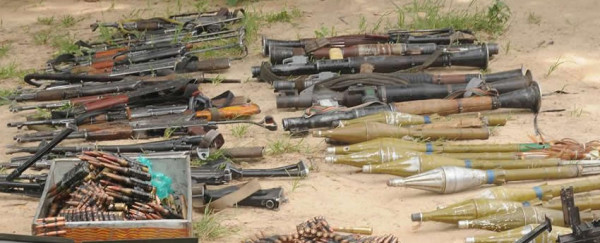
Asari you have 3,000 men, so I want 3,000 weapons.’ Asari gave a commitment to hand over 3,000 guns, 100 general purpose machine guns and some rocket launchers which were subsequently destroyed in a series of public destructions to UN standards overseen by the Army at Bori Military Camp in Port Harcourt in mid-November 2004.
President Obasanjo kept his word and on October 1, 2004 the peace accord was announced and Asari and his commanders returned to the Niger Delta.
Asari is correct is saying I never paid him anything. I never paid anyone and no one paid me either by way of funds or favours. President Obasanjo did not offer to pay me for the Niger Delta peace accord and I did not seek payment. The peace deal was built on trust. I went to Asari’s camp unarmed and without any security. Asari and his key commanders travelled with me and the small SSS contingent totally unarmed. We trusted each other with our lives and that built trust.
There can be no peace without trust. Without trust, there is merely a ceasefire which will eventually be broken and the fighting resume.
Asari said in his interview with the Daily Post that President Obasanjo broke his word. I am not so sure of that. What I think Asari may be referring to is the demobilisation and skills training that did not materialise after the peace accord. Funds were to be set aside to train the ex-militants for employment and to reintegrate them back into their communities. This phase of the work was to be undertaken by the state governors.
By March 2005, a full six months had passed without any sign of training and reintegration. It was no surprise then to find 200 Niger Delta ex-militants had been recruited by foreign mercenaries to participate in a coup attempt in Equatorial Guinea.
The ex-militants were intercepted as they departed Warri in a ship bound for Guinea. They had each been promised $5,000 and an AK47.
Had the promised skills training and reintegration been implemented, these young men probably would not have agreed to join the coup attempt in Equatorial Guinea. So Asari is right but it was more likely that the governors were not sincere and not former President Obasanjo. It was the governors that had armed, promoted and used the gangs for political purposes in much the same way that former Governor Modu Sheriff was alleged to have done in Borno State.
It was this failure to honour the agreement to demobilise by providing skills training and reintegration that fuelled discontent and provided the conditions that formed MEND which added bombing and kidnapping to its mode of operation.
Contrary to Asari’s understanding, former President Obasanjo did not bring me to Nigeria on my recent trip to seek the release of the Chibok girls or for any other purpose, nor did President Jonathan or anyone else. I came to Nigeria in April this year to seek the release of the Chibok girls at my own expense and of my own volition because I could see no progress on the release of the kidnapped girls.
While Asari may not believe any girls were kidnapped, let me assure you that hearing the stories of some girls who have escaped from Boko Haram camps is a sobering experience. There are many girls who have been kidnapped apart from the girls from the Chibok School.
The kidnapping of girls by Boko Haram has been going on for at least a year. Initially Boko Haram kidnapped girls because the fighters could not go back home to their wives. They used the kidnapped girls. Girls tell how they were raped every day, week after week.
One girl was raped every day, sometimes several times a day by groups of men. Some did not survive the ordeal. The escaped girls tell harrowing stories of rape and abuse. They are traumatised and require medical treatment and counselling. These girls are testament to the horrifying truth about the kidnappings.
But the Chibok kidnappings were only the start of my recent journey to Nigeria. It soon became apparent the (alleged) sponsors did not want any interference in their plan. The “political Boko Haram” which (allegedly) started out as Sheriff’s ECOMOG (so named after the military peace keeping forces operating in Liberia at that time because an SDP – Social Democratic Party – candidate was protected from an angry mob in Bama by a group of youths supporting the SDP) that targeted his political opponents in the 2003 and 2007 elections have since mutated into the Boko Haram we see today that terrorises through beheadings, butchering innocent villagers, bombing innocent people at shopping malls and in churches, raping and kidnapping.
It is true that Sheriff fell-out with Yusuf and the allegation stands that when the military captured Yusuf in late July 2009 and handed him over to the police in Borno State, he was allegedly executed on Sheriff’s instruction; thus the root of the perception that Sheriff cannot be a sponsor but a hated enemy of Boko Haram. But the core of the old Yusufiya is no longer part of Boko Haram.
Boko Haram is a mutation of political Boko Haram and Shekau’s Ansaru. The Yusufiya grew out of the Izala movement and had great respect for Izala. Boko Haram now beheads Izala followers. The “slaughterers” work with the political assassins and suicide bombers.
The sponsors of Boko Haram do not care how many innocent Nigerians are slaughtered, how many women are raped, how many girls and boys are kidnapped, how many villages are plundered. I have met too many victims to say, “It is not my problem”.
We are each diminished if we allow such crimes against our fellow citizens to persist. The Nigerian military is diminished if it uses Boko Haram tactics to address the problem. Evil will flourish and triumph if good men and women do nothing. Many Nigerian politicians have said little and done nothing to curb the slaughter of Nigerians that is being supported by the sponsors. While fathers die to protect their daughters and wives are raped and butchered the sponsors of Boko Haram are accorded privileges and protection. They fly in private jets and are accorded military protection.
Are the sponsors of Boko Haram so far above the law? Have the citizens of Nigeria lost the right to bring these men to justice? Who will stand up for the poor and oppressed who are being slaughtered and raped in their hundreds? By the grace of God we trust that good men and women will stand up and justice will prevail.
[myad]