The pioneer Managing Director of Caverton Helicopters, a leading aviation company in Nigeria, Mr. Sola Falola is bowing out after eight years of positioning the organization, which is a subsidiary of Caverton Offshore Support Group. A statement from the company said that Falola had successfully served out two terms of four years each and is stepping down in line with the company’s corporate governance practice. The statement described the outgoing Managing Director as Amiable and Hard working, adding that his tenure witnessed tremendous growth and brought the company to lime light. “His administration won major oil servicing contracts to provide aviation support services for major oil companies.” The statement said that the management has appointed Captain (Dr) Josiah Choms to succeed Falola, adding that the new man is coming in with a wealth of experience that span two decades. The new Managing Director was a graduate of the Prestigious Nigerian Military School Zaria. At the age of 18, he went straight to School of Aviation Technology Zaria to study aeronautic engineering and proceeded to the United States for his pilot training. Captain Choms was until his appointment, the Shell Contract Manager for Caverton Helicopters. He holds the Airplane Transport Pilot Licenses (Aeroplanes and Helicopters) and is a certified flight instructor. He is an authorized examiner for the Nigerian Civil Aviation Authority. He is also an ISO 9001:2008 lead auditor. He holds a PhD from the United States of America. Captain Choms joined Caverton in August 2010, serving first as the Chief Pilot for Shell Port Harcourt before his promotion to Managing Pilot for the entire Shell Operations covering Port Harcourt, Warri and Lagos He has over 20 years flying and administrative experience in aviation industry Captain Choms who assumed duty recently admitted that the shoes of Falola are too big for him, however pledged to take the company to the next level and to drive the re positioning efforts of the company. [myad]
Former Vice President Atiku Abubakar has asked the Federal Government to take a holistic approach in solving the problem of education development in the country through the convocation of a national education summit, instead of the present blame games between the government and lecturers. Atiku emphasized that the unwholesome situation whereby government and lecturers will continue to trade blames while the future of the nation’s youths remains on a pause is unacceptable. Atiku who commended the Academic Staff Union of Polytechnics (ASUP) for suspending the 10-month old strike action which left polytechnic students across the country out of their classrooms, in a statement by his media office in Abuja, welcomed the opportunity for students to return to their campuses. The former Vice President said that the convocation of a national summit on education will address issues relating to building more capacity for the tertiary institutions of learning. “It is noteworthy that the issue of funding is very germane to the management of our public sector education; and so, both government and practitioners in our public education system must come to terms with the parameters of the existing budgetary allocation for education and also create new methods of sourcing funds. They must do this without causing harm to the future of our youths.” Atiku made it clear that there are far greater challenges facing the Nigerian tertiary education system beyond the issue of funding from the experience of running a world-class university in his home state of Adamawa. He listed the issues involved to include capacities to measure and report quality of education on a school by school basis, hold each school accountable for learning and morals, recruit and retain the best teachers, failure to tap into the world of Information Technology to boost teachings and the inherent disconnect between the ivory towers and the national economy. “Biting as the problem of youths unemployment might be everywhere around the globe, countries now device new ways of getting out of the quagmire, and one approach which I find attractive is teaching our young school leavers the skills of being entrepreneurs and having a line of core interest along their academic discipline where they can take off from after graduation.” [myad]
Former Vice President Atiku Abubakar has said that he always admired the Nobel Laureate, Professor Wole Soyinka’s patriotism and courage to speak freely and honestly on public issues. In a statement by his media office in Abuja today, on the occasion of Soyinka’s 80th birthday, the former Vice President described Professor Soyinka as a credible social critic that created a big space for himself in the hearts of Nigerians. “Soyinka is an inimitable and indomitable social critic who never hesitates to criticize Nigeria’s leaders whenever he believes they were going wrong.” Atiku who is also the Turaki Adamawa, said that the Nobel Laureate looks at national issues beyond ethnic and regional sentiments and that “his views are coloured by the larger national interests.” The former Vice President recalled that while Soyinka was criticizing governments in power whereas many Nigerians would always praise him from safe distance. Atiku Abubakar commended the Nobel Laureate for being on the side of the ordinary Nigerians all the times, adding that his courage to criticize military regimes, which resulted in his being jailed, was a shining example of his remarkable courage. The former Vice president wished the Nobel Laureate many more years of patriotic service to Nigeria and humanity. [myad]
German national team, Sunday night, beat hard-fighting Argentina by a lone goal. The goal came about seven minutes to go in the extra time after goaless draw at full time. Thus for the fourth time in their illustrious history, lifted the World Cup through serious long plan, beginning from 2002. The deciding goal came in 113th minute from Mario Gotze with classic positioning planning and shot in front of the goal mouth. Lionel Messi’s goal in the first half of the game was disallowed as linesman had already raised his flag for off-side. However, the two team showed class in what appeared clearly as exhilarating encounter at the Estadio do Maracana. The substitute scored a brilliant goal more than worthy of the World Cup title when it looked like we were heading for penalties. What a moment for the 22-year-old. Germany become the first European team to ever win the World Cup on South American soil. The best team at the tournament has been crowned champions, just the way it should be.
Lack of knowledge of natural food products with health benefits is believed to be one of the factors that continue to discourage people from consuming natural foods which contain pure nutrients necessary for the nourishment and well being of our body. The coconut tree (Cocos nucifera), is a member of the family Arecaceae (palm family). It is the only accepted species in the genus Cocos. The term coconut can refer to the entire coconut palm, the seed, or the fruit, which, botanically, is a drupe, not a nut. The spelling cocoanut is an archaic form of the word. The term is derived from 16th-century Portuguese and Spanish coco, meaning “head” or “skull.” from the three indentations on the coconut shell that resemble facial features. Found throughout the tropic and subtropic area, the coconut is known for its great versatility as seen in the many uses of its different parts. Coconuts are part of the daily diets of many people. Coconuts are different from any other fruits because they contain a large quantity of “water” and when immature they are known as tender-nuts or jelly-nuts and may be harvested for drinking. When mature, they still contain some water and can be used as seednuts or processed to give oil from the kernel, charcoal from the hard shell and coir from the fibrous husk. The endosperm is initially in its nuclear phase suspended within the coconut water. As development continues, cellular layers of endosperm deposit along the walls of the coconut, becoming the edible coconut “flesh.” When dried, the coconut flesh is called copra. The oil and milk derived from it are commonly used in cooking and frying; coconut oil is also widely used in soaps and cosmetics. The clear liquid coconut water within is drinkable. The husks and leaves can be used as material to make a variety of products for furnishing and decorating. It also has cultural and religious significance in many societies that use it. The 32-page book written by Mrs. Grace Ngozi Enemali, the President of Grace Ngo Foundation discusses the history of coconut, the health benefits of Coconut milk, water and meat. It also discusses the medicinal value and other uses of coconut oil as well as the benefits of saturated fat and explains why coconut oil stands out as the best oil among others. Though the origin of Coconut is still debatable, scientific research suggests that it might have come from the Pacific Ocean or Indian Ocean while other research findings suggested Western America. It is thought to have come from Western Pacific and spread all over the tropics by human activity and ocean currents.
Botanically, Coconut has potential healing properties capable of curing all range of sicknesses according to Islanders. It is highly nutritious with rich vitamins and minerals. Its oil is often used in traditional medicines especially in Asia. The coconut oil contains few healthy fats such as saturated fat, polyunsaturated fat, mono unsaturated fat omega 3 fats and omega 6 fats. These fats are found to be beneficial to the heart, brain and also serve as an anti-inflammatory property while the Omega 3 fats are useful to the joints. It is also an effective remedy for the treatment of intestinal worms of all kinds. While its nutritional value includes the enhancement of foetal growth and brain development, improves digestion and helps to keep blood sugar in balance. The health benefits of coconut oil cannot be overemphasized, for instance, in coconut milk; the unique fatty acid may aid weight loss, improve immune function, reduces diseases risk and improve health condition of the skin and hair. Whereas, the coconut water with its refreshing taste serves as a store house for important nutrients like B complex, riboflavin, niacin, thiamine, pyridoxine and foliate. It is also good for kidney due to the presence of potassium and magnesium which plays a key role in urine alkalizing and prevention of kidney stones. Another important part of the coconut which is called the meat is a good quality source of food. The mature meat has high fibre and oil which enables it to function like a probiotic which is beneficial to the digestive system because they feed the good bacterial in the intestine. Frequent intake of coconut meat helps to regulate digestion and elimination; it assists weight loss and also serves as a powerful germ fighter. Apart from the health and nutritional uses, coconut also has industrial value. It can be used in the industries for the production of shampoo, lamp fuel and wood polish. Looking at the various uses and health benefits of coconut, it is my firm belief that this informative book will further help to enlighten people more about the importance of coconut and how to maximise it to our advantage. If perhaps you have not been consuming coconut products, I think this is the time for you to consider doing so in order to boost your health status. However, the author needs to pay more attention to proof reading in terms of the grammatical faults in the book which tend to spoil the appetite of the reader, sort of. This is manifest even from the cover of the book which twice misuses ‘it’s’ when it should have been ‘its’ to read; Its’ Health Benefits and not It’s Health benefits. _________________ Book Title:: The Coconut (Cocos Nucifera): It’s Health Benefits and why it’s oil stands out amongst others.
“Multiple systemic factors further constrain the effectiveness of the Nigerian security force’s response to Boko Haram, notably security sector corruption and mismanagement, and some of these factors impede US support even for units that have been cleared for assistance.” This revelation was made before the United States House of Foreign Affairs, Sub-committee on Africa’s hearing, entitled: ‘Human Rights Vetting: Nigeria and Beyond’ by the Specialist at African Affairs Congressional Research Service, Lauren Blanchard. Blanchard who said that despite about N1trn ($5.8b) security budget the “Nigerian troops are not adequately resourced or equipped” to counter Boko Haram insurgency, said that among the cleared units were the Nigeria’s Speed Boat Service commando and the 101st Infantry Battalion, which the ACRS specialist said were best positioned to conduct hostage rescue operations. “Both reportedly require significant additional training,” she explained even as she added that the security relationship between Nigeria and the US is being hampered by the lack of cooperation and systemic failure in Nigeria. “The security relationship also has been hampered at times by a lack of cooperation from Nigerian officials and by systemic problems in the Nigerian military. Political and human rights concerns have been a prominent factor in shaping US-Nigeria relations for decades. “State Department human rights reports have continued to highlight serious human rights violations by the Nigerian security forces every year. These violations include politically motivated and extrajudicial killings, excessive use of force, and torture,” Blanchard said at the hearing. She stressed that the Nigerian government and its military had not been yielding to America’s suggestions, even as she said that the troops were “slow to adapt with new strategies, new doctrines and new tactics.” She described Nigeria as “an extremely challenging partner to work with.”
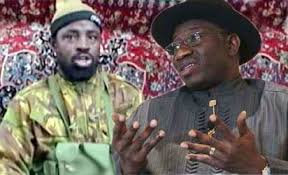
We in Greenbarge Reporters were embarrassed at the news item published in many online media today, most of them as Breaking news, the claim by supposed leader of the deadly Boko Haram, Abubakar Shekau, that his members were responsible for the June 25 bomb blasts near Folawiyo Energy fuel depot in Apapa, Lagos and the one at Emab plaza, Abuja, the nation’s federal capital. It is for lack of appropriate word to use that we called it embarrassment, especially with the High Intelligent Quotent (HIQ) Nigerian Journalists are endowed with. Agreed that almost all the media dubbed the news from a French foreign agency, AFP, the fact remains that the media appear to be indirectly fighting on the side of Boko Haram against the security people and, of course, government. There is no doubt that the message conveyed in that media promoted Shekau claim seriously damaged the corporate entity of Nigeria, as questionable as it appeared. It has been long that minister of information, Labaran Maku has been calling on the media to either blackout Boko Haram activities from their pages or airwaves or give less emphasis to them. We in this medium never really comprehended the enormity of Maku’s continuous appeal until the governor of Edo state, Comrade Adams Oshiomhole backed him last week. Oshiohole, who spoke to newsmen shortly after the National Council of State meeting at the Presidential villa, Abuja, made it clear that more publicity to Boko Haram and any other enemy of the state amounts to giving them incentive. In this case, incentive means encouragement to them to continue to do more harm or using media as mega phone to make it look as if they are doing more harm. The media may not have come to terms with the universal reality that most of the wars are won through the power of information. Information most times, lounders the ego of the perpetrators of the terrorism and devastates the morale of the security operatives and government. In most cases, 80 percent of information dished out are manufactured just so as to dampen the spirit of the opponent. This is saying that Information is power. That is to repeat also that winning a war is dependent on how vocal or loud mouthed the winner is. Why should it be that each time disasater ocures in any part of the country, someone floating any name, would claim to be responsible and the media would go to town with it, line, hook and sinker? We were told by the security operatives long time ago that Abubakar Shekau was dead, but each time, it is the same Shekau that would appear on yootube to claim responsibility for any explosion, even if it is petroleum tanker that is gutted by fire, and the media would celebrate it. Does it not occure to colleagues that anybody, in this era of technological advancement in which people hack even the most sophisticated website, can appear on yootube, calls himself or even herself Abubakar Shekau as “responsible” for one attrocity or the other? We in Greenbarge Reporters are appealing to colleagues to slow down in the way they fall over one another to celebrate the “achievements” of Boko Haram, as if such “achievements” would add to the nation’s peace, unity and socio-economic progress. Especially when they capitalize on disaster that is akin to their modus operandis, making us to believe that such is also part of their “achievements.” As a matter of fact, it would not cost our respected and responsible colleagues, either those in online, in newspaper or broadcasting, any negative thing for them to let some news items about Boko Haram pass them by. Rather, downplaying Boko Haram’s exploits will likely push the members out of business, how ever slow it may be.
Perhaps, it is only in Nigeria that adults, whose children have grown up to also earn the status of adulthood would throw pure insults at one another in the name of politics with no shame at all. Indeed, as the nation advances to 2015, another election year, there have been growing number of old people, and their younger counterparts throwing insults all over the place. Just imagine for a start, this portion of the remarks by Chief Edewin Clark who has been around in Nigerian politics since the first Republic in the 60’s: “Let Nigerians decide (whether President Goodluck Jonathan should win the 2015 Presidential election; not people like the crooked Dr. Junaid Mohammed in Kano who believes his people are superior to all other Nigerians. Dr. Junaid Mohammed is a very irresponsible person who has no regard for decency and behaves like a hired thug.” If in response, Dr. Junaidu heaped painful insults on a man that is supposed to be playing the role of statesmanship now, one wonders how his (Clark’s) children, who are now fully grown as adults, will feel. As a matter of fact, the social media is now a market for Nigerians to throw insults at one another, mostly on the basis of tribe, religion and region. Older or even oldest Nigerians and the intellectuals appear so frustrated and confused by the exigency of the moment that nothing else pleases them other than the usage of insultive words on fellow Nigerians at the slightest provocation. Just as lives of Nigerians, to terrorists, ritual and hired killers, as well as other sundry sadists no longer worth more than that of lizards, insults are so common that even the son would throw them freely at his father whenever he feels provoked. Must we return to the late 50’s when all that mattered in politics, for those who have dirty ambitions, is to throw stones in the market square, at whoever opposed them? Are we this crude: both the young and the elders that are supposed to be the guiding lights?
Gunmen, suspected to be hired-killers, last night, murdered the General Manager of a Kaduna-based New Democrat newspaper, Malam Ustaz Yunus. The newspaper company, a Weekly tabloid, is owned by Senator Mukhtar Aruwa.
Eye witnesses said that the gunmen stormed the residence of Yunus at Ungwan Dosa area of Kaduna metropolis at about 7.45 p.m., and shot him dead.
Some staff of the newspaper outfit, who did not want their names mentioned, said no single item was taken away from the residence of the victim.
“We suspect a political undertone to his killing because the killers did not take anything from the house. They just stormed the house, killed him, and disappeared,” said one of the staff.
Kaduna State Police Command’s spokesperson, Aminu Lawal, confirmed the incident.
He said investigations had commenced on the matter. [myad]
The Academic Staff Union of Polytechnics (ASUP) has suspended its nine-month strike and may return to the street after three months if government does not meet their demands.
The National President of ASUP, Chibuzor Asomugha, said today that the polytechnic lecturers would resume work Tuesday.
He explained that the strike had only been suspended for three months, an interlude the government is expected to meet the demands of ASUP.
The polytechnic lecturers began their strike on October 4, 2013. [myad]
We use cookies on our website to give you the most relevant experience by remembering your preferences and repeat visits. By clicking “Accept”, you consent to the use of ALL the cookies.
This website uses cookies to improve your experience while you navigate through the website. Out of these, the cookies that are categorized as necessary are stored on your browser as they are essential for the working of basic functionalities of the website. We also use third-party cookies that help us analyze and understand how you use this website. These cookies will be stored in your browser only with your consent. You also have the option to opt-out of these cookies. But opting out of some of these cookies may affect your browsing experience.
Necessary cookies are absolutely essential for the website to function properly. This category only includes cookies that ensures basic functionalities and security features of the website. These cookies do not store any personal information.
Any cookies that may not be particularly necessary for the website to function and is used specifically to collect user personal data via analytics, ads, other embedded contents are termed as non-necessary cookies. It is mandatory to procure user consent prior to running these cookies on your website.
The Many Health And Industrial Benefits Of Coconut, By Joseph Saater Undu
Lack of knowledge of natural food products with health benefits is believed to be one of the factors that continue to discourage people from consuming natural foods which contain pure nutrients necessary for the nourishment and well being of our body.
The coconut tree (Cocos nucifera), is a member of the family Arecaceae (palm family). It is the only accepted species in the genus Cocos. The term coconut can refer to the entire coconut palm, the seed, or the fruit, which, botanically, is a drupe, not a nut. The spelling cocoanut is an archaic form of the word. The term is derived from 16th-century Portuguese and Spanish coco, meaning “head” or “skull.” from the three indentations on the coconut shell that resemble facial features.
Found throughout the tropic and subtropic area, the coconut is known for its great versatility as seen in the many uses of its different parts. Coconuts are part of the daily diets of many people. Coconuts are different from any other fruits because they contain a large quantity of “water” and when immature they are known as tender-nuts or jelly-nuts and may be harvested for drinking. When mature, they still contain some water and can be used as seednuts or processed to give oil from the kernel, charcoal from the hard shell and coir from the fibrous husk.
The endosperm is initially in its nuclear phase suspended within the coconut water. As development continues, cellular layers of endosperm deposit along the walls of the coconut, becoming the edible coconut “flesh.”
When dried, the coconut flesh is called copra.
The oil and milk derived from it are commonly used in cooking and frying; coconut oil is also widely used in soaps and cosmetics. The clear liquid coconut water within is drinkable. The husks and leaves can be used as material to make a variety of products for furnishing and decorating. It also has cultural and religious significance in many societies that use it.
The 32-page book written by Mrs. Grace Ngozi Enemali, the President of Grace Ngo Foundation discusses the history of coconut, the health benefits of Coconut milk, water and meat.
It also discusses the medicinal value and other uses of coconut oil as well as the benefits of saturated fat and explains why coconut oil stands out as the best oil among others.
Though the origin of Coconut is still debatable, scientific research suggests that it might have come from the Pacific Ocean or Indian Ocean while other research findings suggested Western America. It is thought to have come from Western Pacific and spread all over the tropics by human activity and ocean currents.
Botanically, Coconut has potential healing properties capable of curing all range of sicknesses according to Islanders. It is highly nutritious with rich vitamins and minerals. Its oil is often used in traditional medicines especially in Asia.
The coconut oil contains few healthy fats such as saturated fat, polyunsaturated fat, mono unsaturated fat omega 3 fats and omega 6 fats. These fats are found to be beneficial to the heart, brain and also serve as an anti-inflammatory property while the Omega 3 fats are useful to the joints. It is also an effective remedy for the treatment of intestinal worms of all kinds.
While its nutritional value includes the enhancement of foetal growth and brain development, improves digestion and helps to keep blood sugar in balance.
The health benefits of coconut oil cannot be overemphasized, for instance, in coconut milk; the unique fatty acid may aid weight loss, improve immune function, reduces diseases risk and improve health condition of the skin and hair. Whereas, the coconut water with its refreshing taste serves as a store house for important nutrients like B complex, riboflavin, niacin, thiamine, pyridoxine and foliate. It is also good for kidney due to the presence of potassium and magnesium which plays a key role in urine alkalizing and prevention of kidney stones.
Another important part of the coconut which is called the meat is a good quality source of food. The mature meat has high fibre and oil which enables it to function like a probiotic which is beneficial to the digestive system because they feed the good bacterial in the intestine. Frequent intake of coconut meat helps to regulate digestion and elimination; it assists weight loss and also serves as a powerful germ fighter.
Apart from the health and nutritional uses, coconut also has industrial value. It can be used in the industries for the production of shampoo, lamp fuel and wood polish.
Looking at the various uses and health benefits of coconut, it is my firm belief that this informative book will further help to enlighten people more about the importance of coconut and how to maximise it to our advantage. If perhaps you have not been consuming coconut products, I think this is the time for you to consider doing so in order to boost your health status.
However, the author needs to pay more attention to proof reading in terms of the grammatical faults in the book which tend to spoil the appetite of the reader, sort of. This is manifest even from the cover of the book which twice misuses ‘it’s’ when it should have been ‘its’ to read; Its’ Health Benefits and not It’s Health benefits.
_________________
Book Title:: The Coconut (Cocos Nucifera): It’s Health Benefits and why it’s oil stands out amongst others.
Author: Mrs. Grace Ngozi Enemali (Nee Nwokoye)
Publisher: Surepoint Limited
Year of Publication: 2014
Pages: 32
Reviewer: Joseph Saater Undu
[myad]