


My Last Word For Senator Natasha, By Yusuf Ozi-Usman
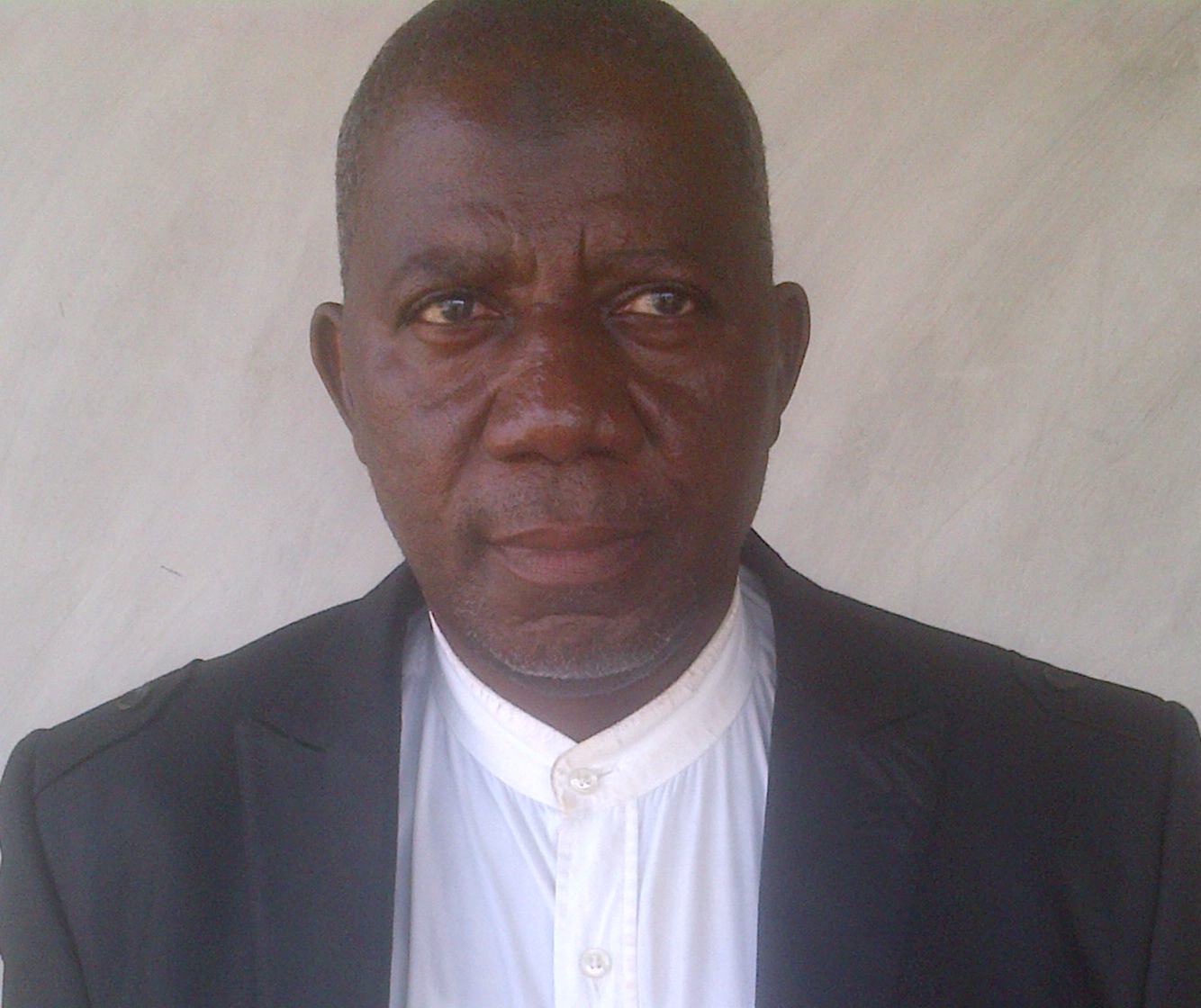
I have admired Barrister, Senator Natasha Akpoti from the very moment she threw herself into limelight. She first caught my attention a few years ago when she launched courageous campaign and fact-of-the-matter “war” against negative elements that were trying to derail the practical takeoff and functionality of Ajaokuta Steel Project.
As a matter of fact, my admiration for her grew when the fact was made available to me that she is the daughter of one of the greatest leaders the Ebira nation had ever been blessed with. He was Dr. Jimoh Abdul Akpoti, a devout Muslim from Obeiba-Ihima in Okehi Local Government Area of Kogi State. Dr. Jimoh Abdul Akpoti was primarily a medical doctor, having studied medicine in the Soviet Union, now Ukraine, where he met his wife and mother of Natasha, in the person of Ludmila Kravchenko, an Ukrainian citizen.
Natasha’s father was known not only in Ihima but the Ebiraland for acts of generosity and service, such as treating poor patients for free, helping to pay school fees for children and supporting local farmers and traders, and above all, his sense of forgiveness, humility and practical peacemaking. These were the values he upheld, so much that he wormed himself into the heart of Ebira people of different classes, clans and status. He was embraced by both the second first class Paramount ruler of Ebiraland, late Alhaji Mohammed Sani Omolori and the immediate past King, late Alhaji Dr Ado ibrahim. Natasha benefitted from her father’s all-round goodness when the immediate past King crowned her with exhalted traditional title. In fact, when Dr. Jimoh Abdul Akpoti died on 3 November 1998, the then King (Ohinoyi) was reported to have begged that he should be buried in his Palace. His death shook Ebiraland and beyond.The memory of his peacemaking efforts and humble disposition lingers on in many of those who knew him or heard about him.
 …. Natasha
It is therefore not surprising that Natasha turns out to be the chips of the old block, as they say. In fact, the characters and characteristics of Natasha do not deviate a bit from her father, despite the fact that she is a female. This pontificates the Ebira proverb which says that where male dog is not available to go for hunting, female one would suffice. Of course, Natasha has a younger brother, Dr. Okehi, who is also a medical doctor but prefers to live a quiet life where he is practicing in Abuja.
However, there is just one beautiful trait which Natasha has failed or forget to imbibe and or display from the point of view of her father’s character: forgiveness and mindset for manifesting unity amongst Ebira people, especially of different political camps. This is even more distrubing considering the leadership position God has thrusted on her.
Speaking about the leadership, she happens to be the only female leader in recent history from Ebira that has attained national recognition by whatever means. On top of it, today, she is a traditional title holder; the Ohiogu of Ebiraland, just like her husband, Chief Emmanuel Oritsejolomi Uduaghan who is the Alema of Warri Kingdom in Delta State. And therefore, it should have been part of Natasha’s itinerary to accord respect and even join hands with the reigning Ohinoyi of Ebiraland to bring about the kind of Ebiraland her father had dreamt of and worked hard to build.
It doesn’t make sense to me that Natasha refuses to acknowledge the authority of the present Ohinoyi simply because of the circumstances of his ascension to the throne, and of course, because of who appointed him.
As a good Christian, Natasha ought to know that it is only God that chooses leaders. In other words, there is no leader that can emerge without the Hand of God in the emergence. The fact that the person one doesn’t like or, appropriately, because it is one’s adversary that is responsible for the choice of the leader does still not cancel the idea of God’s Hand.
And as a senior lawyer, and in fact, as a Barrister-at-law, Natasha should know that the present Ohinoyi of Ebiraland emerged from within the provision of legal framework and traditional requirements.
In other words, it is on record that no fewer than 70 qualified sons and daughters of the land contested for the stool. It is natural that in such contest, one person must emerge, and be chosen and appointed by the STATE GOVERNOR in accordance with the legal framework and traditional requirements. Unfortunately, such law and traditional requirements do not give the name of a particular GOVERNOR to make the choice and appointment. In fact, the law doesn’t say the GOVERNOR must be your friend or detractor or adversary.
In the case being treated, the law and traditional requirements were blind to who was the Governor, who made the choice and appointment; he could have been from Igalaland, Okunland and Koton Karfe. Such Governor would have chosen and appointed Mohammed Ataba Sani Omolori or Barrister Momohsani Shaibu or Engineer Ibrahim Jibril or any of the over 70 contestants to the throne. It would not have made any difference for the fact that it was still the GOVERNOR that did the choice and appointment, according to the legal framework and traditional requirements.
It therefore looks strange that Natasha turned her back on the new Ohinoyi simply because he was chosen and appointed by the GOVERNOR she has issues with. Her main grouse is that the Ohinoyi was the choice of her sworn political adversary, not that the person who was finally chosen and appointed offended her. Not that she has any particular issue with him.
One has the feeling that Natasha would still have turned her back on whoever, amongst the contestants that emerged Ohinoyi, aside from the one on the throne now if such contestant was still chosen and appointed by the same Governor that chose and appointed the present King.
My honest advice to Natasha in this circumstance, is that she should have a rethink and tow the line of her father who she so loved, and who was so loved by Ebira people because of his impactful contribution to the peace, unity and development of the land. Natasha, being the Ohiogu of Ebiraland should return to the root to play her role in uniting the people, in spite of whatever political differences and or disputes she is battling with opponents; the opponents that are purely her brothers and sisters.
For Natasha to be playing politics with the mind that she cannot forgive or that she has nothing to do with her adversaries forever is like swimming in the river and trying to avoid or complaining of being touched by water. Politics anywhere in the world, to the best of my knowledge, is full of mudslinging, backslapping and even, in the context of Africa, attempt at physical elimination of the opponents. In short, political game in Africa, Nigeria and Ebiraland is full of landmine and is meant for those who can take mighty risk, of either “do” or “perish”.
As a good Christian, Natasha should know that her life has been predetermined by God Almighty and that no machinations of man or woman can change it. It is God Almighty that has sustained her life all through, in the face of dangers she encountered in the process of politicking. It is therefore not fair even to God Almighty who has so sustained her for her to get angry with those she claimed “wanting to kill her” and therefore hold such people, and the people around them as enemies for life.
For a fact, her husband is currently playing an impactful role, as traditional title holder for the peace, unity and development of his Kingdom. He is relating very well with the Paramount ruler of his Kingdom and politicians of different camps. Why would Natasha, not also turn to the only birth place she can legitimately lay claim to, to proudly play the same role in her kingdom?
Her father, late Dr. Jimoh Abdul Akpoti left a legacy as a unifier of Ebiraland, embraced both the good and not so good people in the community, beyond just being generous. In turn, he was loved and embraced also by all. Natasha should aspire to do the same, with the desire to even leave behind legacy that is better than that of her loving father.
This is the way I think, for her to go, because when the chips are down, this is what will determine the people’s verdict long after she’s gone.

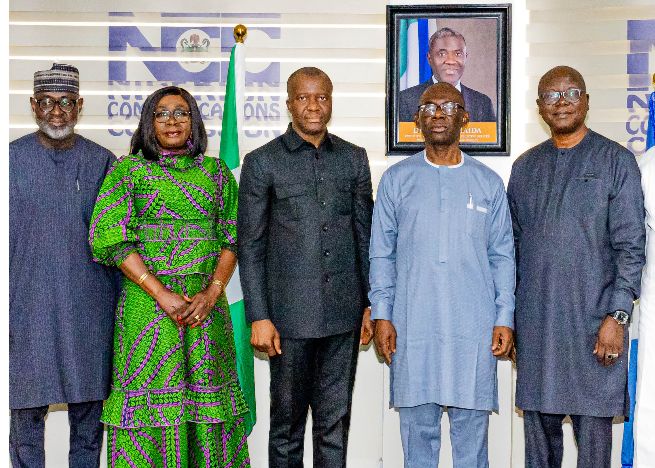 He said that given the NCC’s long-standing commitment to regional cooperation through platforms such as the West Africa Telecommunications Regulators Assembly (WATRA), the Commission has no doubt that the region would be stronger and more prosperous when all countries are interconnected.

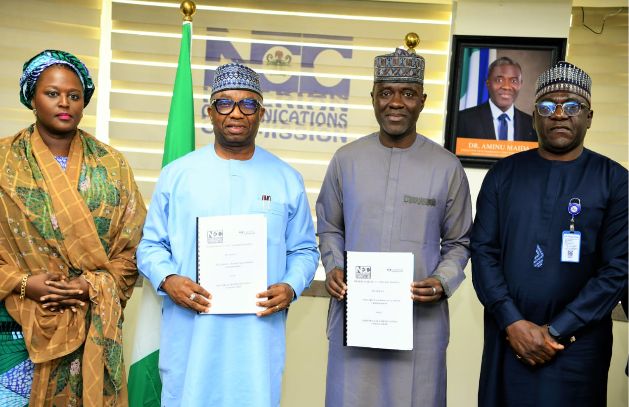

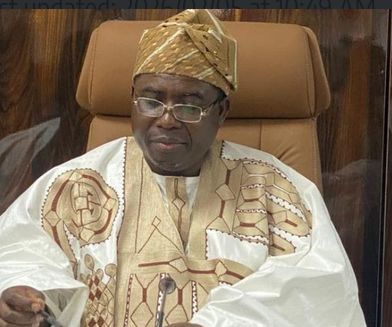

 The Independent National Electoral Commission (INEC) has lamented the damage being done to the electoral process and democracy through “increasingly frequent leadership squabbles within various political parties” across the country.


Nigeria: The Silent Press And The Silent Siege, By Segun Adediran
Within the next several years, the invisible architecture of Nigeria’s democracy faces a quiet but existential threat. For decades, the local press served as the bedrock of our national identity, but today, that foundation is being hollowed out by unregulated global digital gatekeepers.
Led by Lady Maiden Alex-Ibru, the President of the Newspaper Proprietors’ Association of Nigeria (NPAN), the Press is opening up.
On the platform of the Nigerian Press Organisation (NPO), which represents the collective weight of the NPAN, the Nigeria Guild of Editors (NGE), Broadcasting Organisations of Nigeria (BON), Nigerian Union of Journalists (NUJ) and the Guild of Corporate Online Publishers (GOCOP), it broke the “ungolden” silence.
Last Tuesday, it issued a stark warning on a major threat: Nigeria’s social cohesion, national security, and democratic governance are being surreptitiously surrendered to algorithms controlled from outside our borders. It gladdens my heart.
Silently, the Big Tech firms, under the guise of technological innovation, have been killing the global media one bit at a time. But it appears the Nigerian press can no longer bear the pains of where their “shoe pinches” like their peers elsewhere. They have rightly identified the specific point where troubles, difficulties and stresses for their survival originate: Big Tech’s thieving technology.
They have also highlighted a more insidious vulnerability. In an era where foreign-coded narratives can dictate public discourse and relegate professional journalism to the margins, the “information sovereignty” of the republic is no longer a theoretical concern. It is an active crisis.
And the message is crystal clear: A new commitment to establishing terms of engagement with these global platforms will be needed to ensure that Nigeria’s national conversation is not quietly outsourced to opaque commercial interests beyond our control.
The Nigerian government should be worried. As the world pivots toward a digital-first existence, the structural pillars of the Nigerian Fourth Estate are being dismantled by global forces that owe no allegiance to our national borders, our social cohesion, or our democratic survival.
Yet, amid this mounting disruption, our policy response remains dangerously dormant. While the Presidency and the National Assembly grapple with immediate crises of security and currency, a more insidious vulnerability is being coded into our daily lives: the surrender of Nigeria’s public square to unregulated, transnational digital gatekeepers.
There is no precedent for the complexity of the current digital era. The era of the “town crier” or the monopolistic state broadcaster has given way to a fragmented reality where foreign-owned algorithms determine what a citizen in Kano, Lagos, or Enugu sees, believes, or ignores. They, “the big boys”, smile , to the banks while our news organisations gnash their teeth.
Today, Nigeria’s total advertising spend is estimated to be nearing $1 billion, yet a staggering $340 million of that is being swallowed by digital platforms—primarily Search and Social Media. By 2025, Social Media alone was projected to command $131 million in Nigerian ad spend, while online video and banner ads—territories dominated by Google and Meta—would siphon off another $269 million.
Recent reporting from BusinessDay (February 2026) highlights that the digital ad sector is projected to grow to $148 million in social media alone by the end of this year. Meta’s total 2024 revenue was approximately $134 billion, and Alphabet (Google) exceeded $307 billion.
This is not merely a market disruption; it is a strategic decapitation of the local press. While these global behemoths reported 2024 revenues as high as $164.5 billion globally, their Nigerian operations operate in a financial “black box,” extracting local capital while returning almost zero reinvestment into the newsrooms that provide the very content their users discuss.
When professional journalism collapses, the vacuum is not filled by silence; it is filled by chaos.
The other answer lies in the global history of democratic resilience. When nations in the 20th century realised that certain industries—telecommunications, banking, energy—were vital to national security, they created robust frameworks to ensure they remained indigenous and accountable. Journalism is no different. It is strategic civic infrastructure, as essential to the health of the republic as the judiciary. Yet, we are currently treating it as a disposable commodity in a lopsided global auction where foreign entities pay billions in taxes to the Federal Government—N3.85 trillion in the first nine months of 2024 alone—yet provide no direct compensation to the industry whose intellectual property they monetise.
The Nigerian press does not come to the government seeking a handout. We come with a warning: a democracy of Nigeria’s scale cannot afford to outsource its information sovereignty. And this is not just Nigeria’s trouble; it’s a global movement. Leading democracies have already concluded that non-intervention is a recipe for the institutional collapse of their trusted news industries. The European Union has moved to curb gatekeeper dominance; Australia has implemented a bargaining framework that forces tech giants to remunerate local newsrooms; and Canada has enacted legislation to secure long-term funding for domestic journalism.
These nations recognised a fundamental truth: press freedom requires economic viability. A journalist who cannot afford to eat cannot afford to be brave. A newsroom that cannot fund a legal team cannot challenge corruption.
Today, the Nigerian safety net for truth is frayed. The good news is that it can be restitched. As a first step, the Federal Government should empower the Federal Competition and Consumer Protection Commission (FCCPC) and the Nigerian Copyright Commission (NCC) to establish a mandatory bargaining code. This would ensure that when global platforms monetise Nigerian news content, a fair portion of that value is reinvested back into the newsrooms that produced it.
Finally, we must insist on transparency in algorithmic distribution, ensuring that local, credible news is not buried under a mountain of sensationalist, offshore-driven “engagement.”
Democracy rarely prevents the emergence of new technologies, but it must serve as a check on their excesses. Citizens need to exert their influence now, demanding that their representatives protect the integrity of the news they consume. We should not allow the next generation of Nigerians to inherit a world where they cannot distinguish between a verified fact and a manufactured lie, or where their national discourse is merely a data point for a foreign corporation’s profit margin.
The decisions made in the hallowed chambers of the National Assembly and the offices of the Presidency over the next two years will define the digital sovereignty of this nation. We can either act to secure a professional, independent, and viable press, or we can watch as the “last major treaty” between the truth and the public is allowed to expire.
This is the time when silence is not golden.
Adediran, NPAN CEO, writes via olusegunadediran@gmail.com