Yobe State Governor, Mai Mala Buni Governor Mai Mala Buni of Yobe State has approved the outstanding payment of domestic scholarships for 15,503 students who did not receive their payment in the first phase of the exercise. A statement by Tijjani Chiroma, the Public Relations Officer of the Yobe State Scholarship Board, Tijjani Chiroma said that the payments will be made to the following institutions; University of Maiduguri (UNIMAID), Federal College Education Technical Potiskum (FCE-TP), Umar Suleiman College of Education Gashua (USCOEGA), Abubakar Tafawa Balewa University Bauchi (ATBU), Ahmadu Bello University Zaria (ABU) and all other schools that were not paid. He said that the exercise will commence tomorrow, October 9, with the University of Maiduguri. According to him, another team will be at FCE (Tech) Potiskum from Thursday 13th October. “Simultaneously, all the schools will be reached and paid from now till end of October this year Insha Allah. “A calendar of schedules and stations will be released on the Board’s media page, over the weekend. “As it was done with other schools, the names, ID number and other relevant details of all beneficiaries will be shared on the Boards’ media pages and on notice boards across the schools prior to the beginning of the exercise.”
Governor Godswill Akpabio The President of the 10th Senate, Godswill Akpabio has congratulated Maureen Chigbo on her election as President of the Guild of Corporate online Publishers (GOCOP) and other elected Executive members of the Guild at its 7th National Conference in Abuja on October 5, 2023. In a message, signed by his Special Adviser on Media and Publicity, Hon. Eseme Eyiboh, the Senate President said: “I congratulate the new national executive of the Guild of Corporate Online Publishers (GOCOP).” Senator Akpabio said that his leadership of the 10th Senate is a creation and creature of a transparent and Credible elections, and expressed satisfaction that GOCOP had replicated the same spirit of electing leaders. He wished the Guild the best, even as he promised to cooperate with it for the development of the nation’s democracy to the benefit of the common man. “I urge you all to invest your expertise and experience in the general public perception and reputation management of the 10th Senate and its leadership.” At an election conducted by a five-member electoral committee, led by the Editor-in-chief of Greenbarge Reporters online newspaper, Yusuf Ozi-Usman, Danlami Modu, mni of the newsdiary online was elected Deputy President while Collins Edomaruse became Secretary General. Others who were elected for two-year tenure are: Tom Chiahemen as Vice President (North); Ken Ugbechie as Vice President (South); Remmy Nweke as Publicity Secretary; Olumide Iyanda, Deputy Secretary General; Yemisi Izuora as Treasurer and Azuh Arinze as Financial Secretary. James Umeh was elected as North East Coordinator while Max Amuchie was elected for North Central and Horatius Egua North West. Tony Edike and Akeem Oyetunji were elected zonal coordinators for Southeast and South West respectively.
From left: Yobe State Commissioner of information, Abdullahi Bego; Special Adviser to Senate President Godswill Akpabio on Media and Publicity, Hon. Eseme Eyiboh and President of the Guild of Corporate online Publishers (GOCOP), Maureen Chigbo (all of them professional journalists), exchanging pleasantries at the Annual Conference of the Guild, held at the Continental (formerly Sheraton) Hotel, Abuja, from October 4 to 5, 2023.
In the world of politics, where power dynamics often take precedence over humanity, it is truly remarkable when a leader’s compassionate approach rises above the fray. Such an exceptional moment unfolded two days ago during the ministerial screening in Nigeria when Senate President Godswill Akpabio demonstrated a level of empathy and concern that left the nation in awe. During the screening process for ministerial nominee from Kaduna State, an unexpected and distressing incident occurred when Malam Balarabe Abbas, the nominee, slumped. What could have been a chaotic and disheartening scene quickly turned into a testament to compassionate leadership. Godswill Akpabio, known for his seasoned political career and leadership, immediately sprang into action. Instead of merely continuing with the proceedings, he showed genuine concern for Abbas’ well-being. Akpabio, a former Governor and distinguished politician, exhibited a deeply human response in the face of crisis. One could argue that in the fast-paced world of politics, where agendas are often prioritized over individuals, leaders tend to forget the human element. However, Akpabio’s actions reminded us all of the importance of empathy in leadership. He was seen proffering first aid solutions, reassuring those in attendance that the welfare of a fellow countryman was paramount. “Bring sugar, bring water,” give him sugar, give him water,” ” sugar, sugar, sugar,” “where’s Dr. Wale?” Akpabio intervened spontaneously during during the crisis. This intervention smacks of a heart imbued with thick milk of love. But his compassionate approach did not stop at immediate medical attention. Understanding the gravity of the situation, Akpabio proposed that the Senate go into a closed-door session until further notice. This decision, though unconventional in such circumstances, showcased his unwavering commitment to the well-being of not just one man but the entire assembly. In a world where leaders are frequently criticized for their detachment from the struggles of ordinary citizens, Godswill Akpabio’s actions during that critical moment spoke volumes. He exemplified a brand of leadership that prioritizes humanity over politics, demonstrating what many leaders might hesitate to do in similar situations. His willingness to put the ministerial screening on hold and offer assistance without hesitation sets a powerful example for leaders across the nation. It is a reminder that, regardless of political affiliations or agendas, our shared humanity should always come first. In conclusion, Senate President Godswill Akpabio’s compassionate approach during the ministerial screening crisis serves as an inspiring example of leadership that puts people before politics. His actions remind us all that true leadership is not just about wielding power; it is about showing genuine concern for the well-being of those we serve. In a world that often craves such displays of empathy, Akpabio’s actions shine as a beacon of hope and a testament to the power of compassionate and uncommon leadership. Ahmed Tijani wrote in from Abuja.
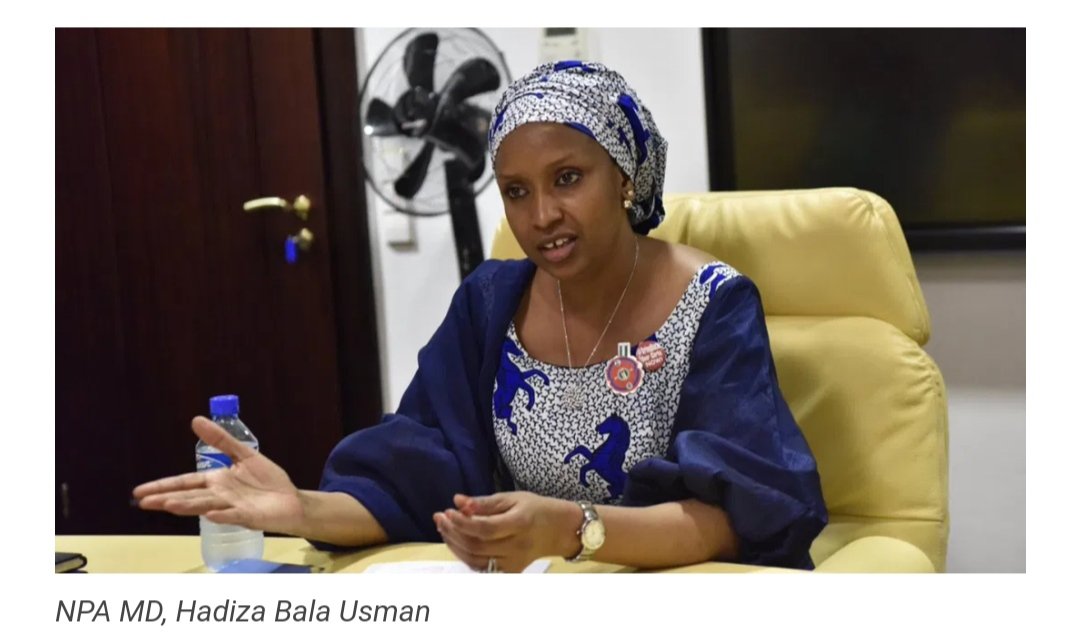
The Secretary-General of the Committee of Vice Chancellors of Nigerian Universities (CVCNU), Professor Yakubu Ochefu has submitted that Nigeria’s economy can develop fast only if the elite in the country are in consensus and are unanimous about the fundamentals of the economy, including the norms of the social system. Professor Ochefu made it clear that the current state of the economy need to follow the universal phenomenon which most developed social formations have in common. He spoke as a panelist at the 7th annual conference of the Guild of Corporate Online Publishers (GOCOP), in Abuja, during the week. The Prof stressed the need to address the issue of elite consensus if the country must talk about economic growth and sustainable development. According to Professor Ochefu, the character and lifestyle of the elites play significant role in shaping the country’s development trajectory. The panelist further advised the government to improve it investment in education noting that Nigeria is currently doing 9% in terms of space for higher education as “over 200 Universities we have are not enough to cater for large number of Nigerians seeking tertiary education.” He decried a situation where those in position of leadership amass wealth more than they need to the detriment of the economy and the Nigerian people. Other panelist include Hajiya Hadiza Bala Usman, with the keynote address on ‘Nigeria: Roadmap for Socio-Economic Recovery and Sustainability’ delivered by Professor Uche Uwaleke, a professor of capital market and the Special Adviser to the Senate Committee Chairman on Capital Market. The president of GOCOP, Maureen Chigbo, had stressed the importance of security for investment to flourish, even as she underscored the purposeof the conference theme. “There is a new administration in town, so there is need to assist them with professional information to build sound roadmap.” Maureen Chigbo, who is the publisher of RealNews online, said the Guild is made up of mediapreneurs who are seasoned journalists. According to the GOCOP President, the body has created mechanisms to control and discipline any erring members to ensure credibility in online journalism. The 2023 conference was chaired by the chief executive officer and Registrar of the Joint Admissions and Matriculation Board (JAMB), Professor Ishaq Oloyede, whereas the Minister of Information and National Orientation, Alhaji Mohammed Idris led the Federal Government delegation to the annual conference.
The Group Executive Editor (GEE) of ITREALMS Media group, Remmy Nweke has suggested to online publishers in Nigeria to have operational web analytical strategy to grow their businesses. Speaking at the pre-conference business session of the 2023 annual conference of the Guild of Corporate Online Publishers (GOCOP) held at the Abuja during the week, Nweke said that by developing web analytical strategy, mediapreneurs under GOCOP will be propelling their websites for healthy growth. According to Nweke, who spoke on ‘How to GROW your website: The Fundamentals’ at the per-conference session of the 7th annual conference of GOCOP, noted that such a growth strategy must include making out time to check the personal health of the strategists themselves, especially the chief executive officers. This, he said, is imperative due to the level of stress and obvious distractions associated with managing a burgeoning media concern in this digital era. He said that this is prerequisite to having a healthy website because health is wealth, with profitable return on investment as the bottom-line. “Above all, make out time to check your personal health, which is prerequisite to checking your website healthiness; health is wealth,” he declared. In developing growth scheme for their businesses, Nweke who also is the lead consulting strategist at ITREALMS, advised the online mediapreneurs to come up with two approach tools, which comprise strategic and technical components. The strategic component, he said, would afford them to organize their websites to reflect business goals by ensuring they are aligned. “That way, you could know what to measure going forward,” he said. On the technical component, Nweke pointed out that it would enable them to examine everything from site architecture and page loading speeds to the quality of the user experience; all the moving parts contributing to your goals while supporting your specific customer digital footprint on a given website. Nweke cited an instance of using the Google PageSpeed Insight (PSI) to deepen web analytics and search engine optimisation (SEO), underscoring that any anticipated growth must have a ‘GROW’ model alignment. Stages of a ‘GROW’ model, he said revolves around the goal, realty, obstacles cum options and way forward. “The goal is the end point, where the Publisher wants to be and must be clearly stated, so that when achieved its noticeable.” On the reality, he said, is where the Publishers and or the websites are now, taking cognizance of what are the issues, the challenges, how far are they away from their goal? “The obstacles stopping the Publishers/websites getting from where they are now to where they want to be, need to be properly identified as well as available options to find ways of dealing with them if they are to make progress and grow. On the way forward, Nweke said it involves converting the options into actionable steps which will take the Publisher to anticipated goal built on commitment and willingness to advance further the growth. In advancing the growth goal, publishers, he advised should do everything possible to make their websites more users, readers and search engine friendly. He suggested in addition to establishing content authority, perfecting website technical SEO via multivariate testing in order to create a seamless mobile experience, by use of Google PageSpeed Insights (PSI) which is a popular, but free tool that analyzes the page speed of a website on mobile and desktop devices. Nweke canvassed for deployment of latest image compressor formats to improve website growth like the use of WebP created by Google since 2010 and AVIF developed by Alliance for Open Media, a non-profit organization since 2019 which translates to faster downloads and less data consumption. WebP for instance, he said, makes online images less bulky by significantly reducing photo and graphic sizes, websites loading faster and giving users a better experience. “WebP is estimated to reduce JPEG/PNG formats by 25-35% compression,” he asserted, reiterating that these are some of the things needed to be incorporated into the strategy for web analytics by online mediapreneurs, so as to grow their businesses.
Former Nigeria’s Chief of Army Staff, retired Leautenal General Tukur Yusuf Buratai has described online Publishers as the Queen of the media. “As we all consider the media to be the fourth estate of the realm, then the online component of the media should be compared to the Infantry Corps of an Army. “To an Army, the Infantry is the Queen of Battle. Therefore I see the online publishers as the Queen of the Media. “Real power revolves around the Queen.” General Buratai, who spoke at the 7th Annual Conference of the Guild of Corporate Online Publishers (GOCOP), in Abuja during the week, said that unlike traditional or print media, online media can reach millions of people all over the world in minutes with just one click. Ambassador Buratai said that because of its low cost, online media has made a big contribution to informing, educating, and entertaining the general people. The former Army Chief, who is currently Nigeria Ambassador to the Republic of Benin, praised the adaptability of the online media, even as he condemned some undesirable developments. He cited what he called “the extensive use of propaganda, half-truths, manufactured lies, and fake news,” as unintended repercussions of the development. He called on the Guild of Corporate Online Publishers (GOCOP) to put a stop to those who violate its corporate objectives by standing firm and ensuring that all practitioners in the online media adhere to ethical standards and professionalism. “I have a firm conviction that online media is a genuine instrument for the consolidation of our nation’s social fabric, the promotion of forward movement, the maintenance of peace and security, and the growth of our economy. “Therefore, GOCOP should continue to assist us in sanitizing and standardizing the online media space to make it healthier and more effective. “This vital domain will not be ceded to fifth columnists, bigots, and blackmailers. “This does not preclude the use of online media to expose corruption and injustice and advocate for the rights of the disadvantaged.” The former Chief of Army Staff said that he has always valued the vitality of the online media in their reach, penetration, speed, and durability. Buratai was represented by his Special Adviser on Research and Documentation and Acting Director, Tukur Buratai Research Centre, Dr. M. S Abubakar. Full text of Buratai’s statement TEXT OF GOODWILL MESSAGE BY H.E. LIEUTENANT GENERAL BURATAI, (RTD) CFR, GOCOP ANNUAL CONFERENCE AT ABUJA CONTINENTAL HOTEL ON THE 5TH OCTOBER 2023 Salutations 1. I am glad to be with you today on the occasion of your Annual Conference 2023. I have always admired the dynamism of the online media in their reach, penetration, speed and resilience. As we all consider the media to be the fourth estate of the realm, then the online component of the media should be compared to the Infantry Corps of an Army. To an Army, the Infantry is the Queen of Battle. Therefore I see the Online Publisher as the Queen of the Media. Real power revolves around the Queen. 2. Online media, in contrast to traditional or print media, is capable of reaching millions of people all over the world in a matter of minutes with just one click. Because of how relatively inexpensive it is, it has made a significant contribution to informing, educating, and entertaining of the general public. All that is required is an Android phone and access to the internet. The days are long gone when individuals needed to physically purchase newspapers in order to be informed. 3. While we appreciate the versatility of the Online Media, let me be quick to point out certain unwanted trends. The widespread use of propaganda, half-truths, invented lies, and fake news in online media, is a regrettable unintended consequences of this advancement. I however have confidence with this August body – Guild of Corporate Online Publishers to checkmate those who pracice deviations from its corporate objectives. 4. Here is where GCOP needs to take a stand and ensure that ethical standards and professionalism are respected by all practitioners in the online media. I have a firm conviction that the online media is a genuine instrument for the consolidation of our nation’s social fabric, the promotion of forward movement, the maintenance of peace and security, and the growth of our economy. 5. Therefore, GOCOP should continue to assist us in sanitizing and standardizing the online media space to make it healthier and more effective. This vital domain will not be ceded to fifth columnists, bigots, and blackmailers. This does not preclude the use of online media to expose corruption and injustice and advocate for the rights of the disadvantaged. 6. It is not my intention to engage in a drawn-out conversation with you today. I would like to applaud the organizers for their hard work in putting together this conference. You can count on my support and blessings in this endeavor at any time. Congratulations to the President, the EXCO and all members of the GOCOP. God bless you all. Amen.”
The Lagos State Police Command has revealed how “multiple and highly potent” injections administered on late singer, Ilerioluwa Aloba, aka Mohbad, by an auxiliary nurse, Ms. Feyisayo Ogedengbe, led to his death. The state Commissioner of Police, Idowu Owohunwa made this revelation yesterday, October 6, while addressing the media on update into the ongoing investigation of the late singer’s death. He said that the injections, consisting of Tetanus Toxoid, paracetamol and Cetrazone, an antibiotic, were administered on Mobad at his residence on September 12. He said that the medications by the nurse triggered an immediate reaction, including vomiting, goosebumps and convulsion, adding that the nurse was not even qualified to perform the role of a home nurse. According to the Police boss, the nurse conducted the medication on Mohbad in a non-clinical environment and professionally negligent manner. Meanwhile, the police announced that four other suspects have been interrogated over the late singer’s death. The suspects include, Naira Marley, Sam Larry, Ibrahim Oluwatosin Owodunni aka Primeboy “Five suspects have so far been identified, arrested, detained, and interrogated on their alleged roles in the sequence of events that led to the death of the singer,” the Commissioner of Police said. Primeboy is said to be childhood friend of late Mohbad. The police commissioner said that Primeboy attended a show with Mohbad on September 10, which culminated in a physical fight between the two that led to the late singer’s injury. “The management of the injury subsequently resulted in his death,” Owohunwa said. Samson Balogun, nicknamed Sam Larry was arrested and remains in detention for being complicit in the Afrobeats star’s death and in relation to viral videos by the deceased about bullying and assault, the police commissioner said. Also, Abdul-Aziz Fashola, also known as Naira Marley, was arrested and is still in detention over similar allegations, Owohunwa said.
The Federal Capital Territory Administration (FCTA) is set to embark on aggressive internally revenue with an annual target of over N250 Billion. The Mandate Secretary, Economic Planning, Revenue Generation and Public Private Partnership Secretariat (EPRGPPPS), Charles Chinedum Elechi, in an interactive session on revenue generation, monitoring and tracking exercise in Abuja, today , October 6, charged all heads and officers of revenue-generating Secretariats, Departments and Agencies (SDAs) to redouble their efforts in revenue generation drive to boost the financial profile of the Administration. Elechi lamented the dwindling revenue profile of the FCT Administration, reminding the officers that the days of oil boom revenue was over, giving way to the generation of IGR to drive the machinery of governance. “The days of oil boom revenue have gone. What is in vogue is the generation of IGR to drive the machinery of governance in the FCT. A good IGR can do a lot of magic. “As you are aware, revenue generation is critical to the development and sustenance of every economy and infrastructural development. In this regard, it is very important to inform you that the FCT Administration is saddled with the responsibility of providing many basic infrastructural facilities for FCT residents.” The Secretary said: “without revenue, government cannot provide public infrastructure such as good roads, hospitals, schools and other welfare services. Improved IGR is paramount to the funding of the Administration to augment the dwindling Federal Government’s Monthly Statutory Allocations for accelerated infrastructural development in the FCT. Therefore, there is a strong need for all us to redouble our efforts to attain our IGR targets and deliver on these enormous responsibilities.” Elechi therefore advised all heads of revenue-generating SDAs to work in synergy with other stakeholders for effective revenue generation and tracking. He charged every SDA to identify all revenue-yielding sources, pursue their revenue targets and block all loopholes and revenue leakages. “From all indications, part of the major challenges we face in revenue generation and collection is the problem of revenue leakage and inefficient harmonization of taxes and levies. “However, I learnt that Management had made serious efforts in this direction through the creation of a tax and revenue harmonization committee to address the challenges.” He said that the committee is responsible for harmonizing all taxes, levies and revenues collectibles in the FCT, while rationalizing the tax system to reduce the incidence of multiple taxation and unnecessary conflicts that may arise from revenue collection in line with global best practices. The Mandate Secretary stressed the need for the officers to build their capacity for optimum performance in revenue generation and management as well as achieving the mandate and target set for them. “Beyond that, we need to explore ways of building the capacity of our revenue officers to improve their skills and knowledge in revenue collection and administration. This is very critical if we must achieve the mandate and target set for us.”
There’s a saying: “Egungun be careful na express you dey go,” which essentially warns individuals to tread cautiously, especially when embarking on a direct or potentially treacherous path. It’s a sage piece of advice, urging us to be mindful of our actions and decisions, for they may lead to unfavorable consequences. Yesterday, former Vice President and serial presidential candidate, Atiku Abubakar, took center stage at a world press conference, where he embarked on a macabre dance reminiscent of the Egungun festival, a celebration where local masquerades showcase their intricate dance moves. In typical fashion, Atiku seized the opportunity to massage his ego and make claims that were nothing short of deceptive, all in a bid to portray himself as a selfless patriot with the people’s interests at heart. One of his eyebrow-raising statements was his revelation that in 2007, Bola Ahmed Tinubu, the political titan from Lagos, had offered him the chance to run for the presidency under the Action Congress of Nigeria (ACN) banner. However, Atiku disclosed that Tinubu withdrew his support shortly after because Atiku refused to name him as his running mate. According to Atiku, this led Tinubu to throw his weight behind the late Umaru Musa Yar’Adua, the People’s Democratic Party (PDP) candidate at the time. These claims, if not effectively countered, could take root, especially among the younger generation, often referred to as the “Sorosoke generation,” who might not be well-versed in the historical facts. However, Atiku’s narrative raises numerous questions. In the not-so-distant past, Atiku sought refuge in the ACN, with Bola Tinubu as his political protector, during his skirmishes with Chief Olusegun Obasanjo. Given this history, it’s puzzling that Atiku would assert that he had the opportunity to make Tinubu his running mate and declined. This contradiction casts doubt on Atiku’s credibility. Furthermore, we must address the significant role Bola Tinubu played within the ACN. It appears inconceivable that Atiku, who appeared indebted to Tinubu for his political comeback, would reject the opportunity to have Tinubu as his running mate. This assertion loses even more credibility when we remember that Tinubu was offered the vice-presidential position by General Muhammadu Buhari in 2015 and declined, choosing Professor Osinbajo instead. This fact contradicts Atiku’s claims and casts serious doubt on their validity. Atiku’s assertion that he persuaded Obasanjo not to manipulate the 2003 elections to wrest Lagos from Tinubu is another head-scratcher. The rift between Atiku and Obasanjo arose from Atiku’s audacious attempt to challenge Obasanjo’s presidency in 2003, a betrayal that left a lasting rift. How then could Atiku, who had once aspired to unseat Obasanjo, have held enough sway to prevent him from tampering with Lagos in 2003? It is important to note that Bola Ahmed Tinubu has intentionally aspired for the presidency and was intelligent enough to recognise that serving as vice president may jeopardise that goal. Atiku, on the other hand, has been a serial presidential aspirant since 1993, holding the record for the most presidential bids in Nigeria, if not Africa or the globe. Tinubu, often described as the “Last Man Standing” among the class of 1999 Governors, remains a potent political force with influence spread across the nation. Atiku’s claims may resonate with some, but they fail to hold water when subjected to scrutiny. In conclusion, Atiku’s recent claims, when analyzed closely, reveal a web of contradictions and deceit. The warning, “Egungun be careful na express you dey go,” echoes loudly here, urging us to be vigilant and discerning when confronted with political narratives. Truth is our most valuable asset, and it’s our duty to safeguard it. Osigwe Omo-Ikirodah is the Principal and CEO of Bush Radio Academy.
We use cookies on our website to give you the most relevant experience by remembering your preferences and repeat visits. By clicking “Accept”, you consent to the use of ALL the cookies.
This website uses cookies to improve your experience while you navigate through the website. Out of these, the cookies that are categorized as necessary are stored on your browser as they are essential for the working of basic functionalities of the website. We also use third-party cookies that help us analyze and understand how you use this website. These cookies will be stored in your browser only with your consent. You also have the option to opt-out of these cookies. But opting out of some of these cookies may affect your browsing experience.
Necessary cookies are absolutely essential for the website to function properly. This category only includes cookies that ensures basic functionalities and security features of the website. These cookies do not store any personal information.
Any cookies that may not be particularly necessary for the website to function and is used specifically to collect user personal data via analytics, ads, other embedded contents are termed as non-necessary cookies. It is mandatory to procure user consent prior to running these cookies on your website.








How Akpabio Displayed Compassionate Leadership During Ministerial Screening Crisis, By Mustafa Ahmed Tijani
In the world of politics, where power dynamics often take precedence over humanity, it is truly remarkable when a leader’s compassionate approach rises above the fray. Such an exceptional moment unfolded two days ago during the ministerial screening in Nigeria when Senate President Godswill Akpabio demonstrated a level of empathy and concern that left the nation in awe.
During the screening process for ministerial nominee from Kaduna State, an unexpected and distressing incident occurred when Malam Balarabe Abbas, the nominee, slumped. What could have been a chaotic and disheartening scene quickly turned into a testament to compassionate leadership.
Godswill Akpabio, known for his seasoned political career and leadership, immediately sprang into action. Instead of merely continuing with the proceedings, he showed genuine concern for Abbas’ well-being. Akpabio, a former Governor and distinguished politician, exhibited a deeply human response in the face of crisis.
One could argue that in the fast-paced world of politics, where agendas are often prioritized over individuals, leaders tend to forget the human element. However, Akpabio’s actions reminded us all of the importance of empathy in leadership. He was seen proffering first aid solutions, reassuring those in attendance that the welfare of a fellow countryman was paramount.
“Bring sugar, bring water,” give him sugar, give him water,” ” sugar, sugar, sugar,” “where’s Dr. Wale?” Akpabio intervened spontaneously during during the crisis. This intervention smacks of a heart imbued with thick milk of love.
But his compassionate approach did not stop at immediate medical attention. Understanding the gravity of the situation, Akpabio proposed that the Senate go into a closed-door session until further notice. This decision, though unconventional in such circumstances, showcased his unwavering commitment to the well-being of not just one man but the entire assembly.
In a world where leaders are frequently criticized for their detachment from the struggles of ordinary citizens, Godswill Akpabio’s actions during that critical moment spoke volumes. He exemplified a brand of leadership that prioritizes humanity over politics, demonstrating what many leaders might hesitate to do in similar situations.
His willingness to put the ministerial screening on hold and offer assistance without hesitation sets a powerful example for leaders across the nation. It is a reminder that, regardless of political affiliations or agendas, our shared humanity should always come first.
In conclusion, Senate President Godswill Akpabio’s compassionate approach during the ministerial screening crisis serves as an inspiring example of leadership that puts people before politics. His actions remind us all that true leadership is not just about wielding power; it is about showing genuine concern for the well-being of those we serve. In a world that often craves such displays of empathy, Akpabio’s actions shine as a beacon of hope and a testament to the power of compassionate and uncommon leadership.
Ahmed Tijani wrote in from Abuja.