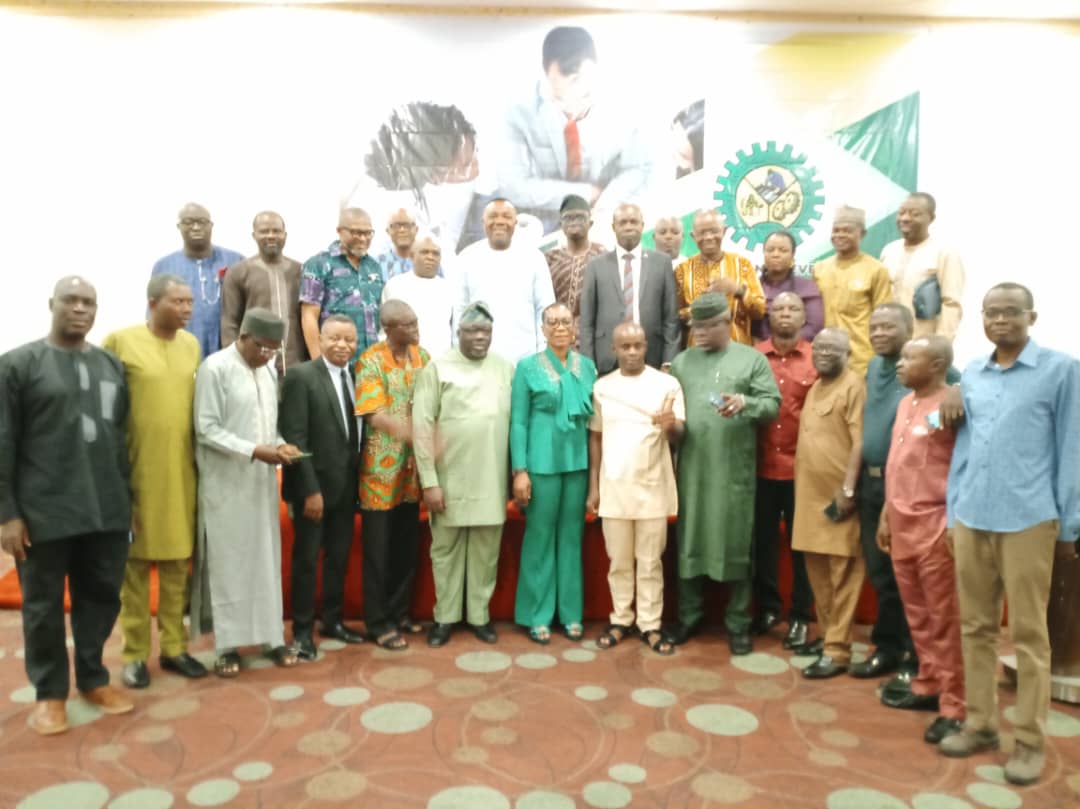
President of the Guild of Corporate Online Publishers (GOCOP), Maureen Chigbo has assured stakeholders that members of the Guild are professional journalists and mediaprenneurs. “We are mediapreneurs, not just journalists,” adding that the Guild used to screen intending members well before admittance. She emphasized that there is a peer review process within GOCOP that disciplines erring members. Maureen Chigbo, who spoke yesterday, October 4, at a pre Annual Conference luncheon of GOCOP with the stakeholders in Abuja, said that the Guild is made up of seasoned journalists of thoroughbred practitioners. She said that the luncheon is an opportunity for the stakeholders and Nigerians to meet GOCOP members one on one. “We cherish the relationship we share with you people and we want it on sustainable or long-term basis.” Maureen Chigbo, who was later re-elected for another two years, said that online publishing has come to stay. “You need to know that we are not quacks but seasoned professionals. Some of us have managed the regular media houses successfully. “You have a chance to tell us what worries you have in engaging with the media. You can put a face to the online organisations you interact with you.” She emphasized that the Guild would continue to bring professionalism to play in all their roles. She explained that the business luncheon with media managers is aimed at getting feedback from media managers, advertisers and sponsors of the yearly conference. “You always invite us, so today, we invite you. You cant have this number when you invite us.
Stakeholders have challenged members of the Guild Of Corporate Online Publishers (GOCOP) to take the lead in the war against fake news in Nigeria, especially in the online space. Leading the charge at the pre Annual Conference luncheon of GOCOP in Abuja yesterday, October 4, the Ogun State Commissioner of Police, Abiodun Alamutu, stressed: “my singular message to GOCOP is a charge to them to help in the fight against fake news.” He said that newsmen must learn to confirm any information at their disposal before going to town. He said that he recently suffered the poison in fake news. This was even as the Nigeria Customs Service through its National Public Relations Officer, Abudullahi Aliyu Mai Wada, said that most public relations divisions in the armed forces and beyond knew very much about the integrity in GOCOP. “We hold GOCOP on high esteem and we congratulate you on your first AGM in Abuja, the nation’s capital,” he declared. From the Air Force, Group Captain K. Ali, the Deputy Director, Public Relations & Information, Nigerian Airforce Headquarters, Abuja, said that the Nigerian Airforce leadership reserved huge respect for online publishers. “The leadership of the Airforce Public Relations Division is keen on this conference.” Deputy Commandant of the Nigerian Drug Law Enforcement Agency (NDLEA), Ndukwu Chidi, representing Director, Media & Advocacy, NDLEA, Femi Babafemi, said that GOCOP members are the great allies of the Agency. He stressed the need for the citizens to be able to differentiate between publishers and mere bloggers or quacks. He pledged continued collaboration, saying: “We continue to work with GOCOP.” Mrs. Ndidi Mbah, GM, Public Affairs, Transmission Company of Nigeria (TCN), who was represented by Eric Ephraim Ene, said that they too respect GOCOP members a lot. “We respect you people a lot. Some of you that we have interacted with at events conduct yourselves creditably.” Officials from SEPLAT added their voice by disclosing how some GOCOP members had helped to groomed many other media practitioners. “As said by the Manager, Corporate Communications (External affairs and Sustainability) at Seplat Energy, Stanley Opara, “Media has helped us a lot. We will do our best to support you. “Let us sustain the relationship.” The Chief Press Secretary to the Speaker of the House of Representatives, Leke Bayewu, said that mentorship is very important. “Many media executives act only as bosses, not mentors, but in GOCOP there are many mentors.” From Nestle, Victoria Uwadoka, Corporate Communications, Public Affairs and Sustainability Lead, made it clear that media people have emerged as the unelected representatives of the people. “You are the voice of the ordinary people. You people are big stakeholders in the society, whereas GOCOP members stand out.” Special guests, partners, top media managers and sponsors attended the pre-conference luncheon.
A police constable, Belasa Iyangedue, who allegedly confessed to have raped a 16-year-old girl while in detention has been dismissed by the Benue State Police Command. The state Commissioner of Police, Batholomew Onyeka, who made this known at a news briefing in Makurdi, said that the Nigeria Police Force, as a disciplined organisation, would not tolerate such infraction on the ethics of the profession. He said that the dismissed constable committed the crime at Tse Agbaragba Divisional Police Station in Konshisha Local Government Area of the state and that he is already facing prosecution. “The police is a disciplined organ of government and being the statutory organ for crime fighting and crime management, people of such character cannot be allowed to be in the system. He was not only dismissed, he is facing prosecution.” The victim was said to have been detained at the police station on August 15 over an offence bordering on defamation of character. The case was reported against her by one Ngunan Iorhaa. A First Information Report, (FIR) at the Magistrate Court Makurdi said that the constable committed the crime on August 16, 2023, around 2pm. It said that while in detention, the constable went into the female cell and took her into an office where he forcefully had sexual intercourse with her. The victim, after her release on bail the next day, reported the incident to the Divisional Police head. The FIR indicated that during investigation, Iyangedue was arrested and he confessed to committing the offence, which is against Section 284 of the Penal Code Law of Benue State 2004.
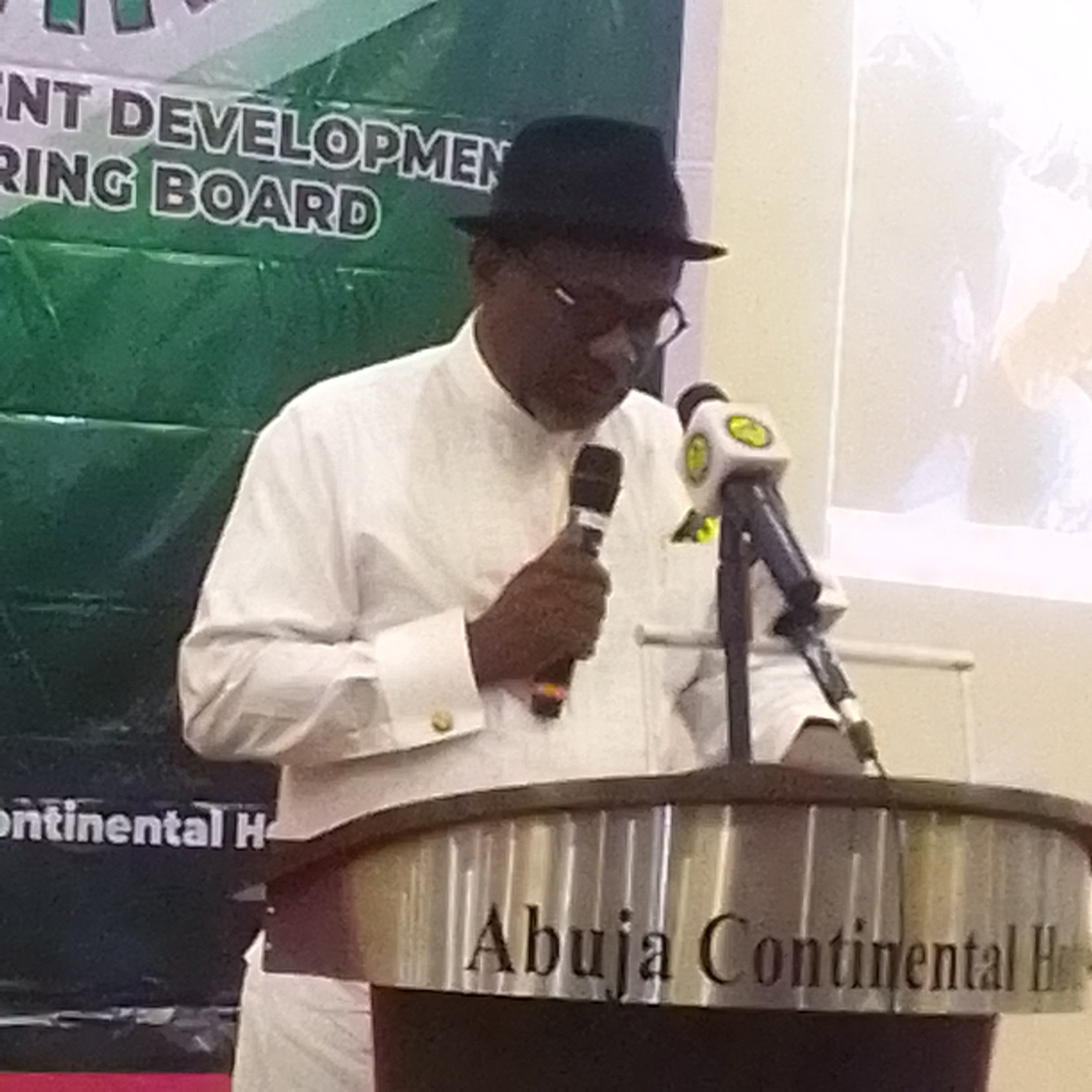
Exif_JPEG_420 The Executive Secretary of the Nigerian Content Development and Monitoring Board (NCDMB), Engineer Simbi Kesiye Wabote, addressing members and leaders of the Guild of Corporate Online Publishers (GOCOP) today, October 3, at the Abuja Continental Hotel, at a Breakfast Meeting, as part of the activities for GOCOP’s two-day Annual Conference.
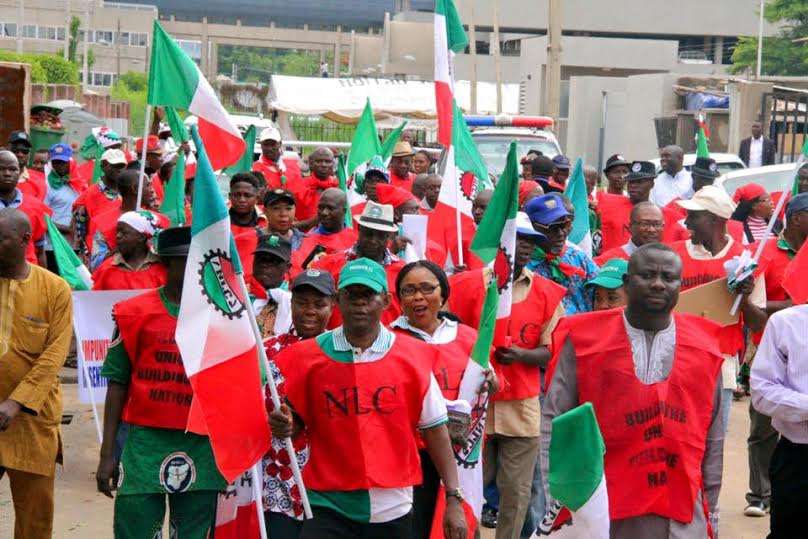
Organised Labour in Nigeria has suspended a nationwide strike it planned to commence today, October 3 after a day long meeting with representatives of the federal government that dovetailed into late hours last night. In a fifteen-point Memorandum emanating from the meeting, the Labour force, represented by the Nigerian Labour Congress (NLC) and the Trade Union Congress (TUC) agreed “to suspend for 30 days, the planned Indefinite Nationwide strike scheduled to begin Tuesday, the 3rd of October, 2023.” The Memorandum, which was duly signed by representatives of the federal government and the leadership of the two labour unions shall be filed with the relevant Court of competent jurisdiction within one week “as consent judgment by the Federal Government.” The content of the Memorandum goes thus: MEMORANDUM OF UNDERSTANDING REACHED BETWEEN THE FEDERAL GOVERNMENT OF NIGERIA AND THE NIGERIA LABOUR CONGRESS (NLC) AND TRADE UNION CONGRESS OF NIGERIA (TUC) AS A RESULT OF DISPUTE ARISING FROM WITHDRAWAL OF SUBSIDY ON THE PRICE OF PREMIUM MOTOR SPIRIT (PMS) ON MONDAY, THE 2ND DAY OF OCTOBER, 2023 Arising from the withdrawal of subsidy on Premium Motor Spirit (PMS) by the Federal Government and the resultant increase in the price of the commodity, the Nigeria Labour Congress (NLC) and the Trade Union Congress (TUC) issued a strike notice which had elapsed and they were poised to embark on a strike billed to commence on Tuesday, the 3rd of October, 2023. Consequently, a meeting was called by the Federal Government to avert the strike and after much discussion, the following agreements were reached: 1. The Federal Government grants a wage award of N35,000 (thirty-five thousand Naira) only to all Federal Government workers beginning from the month of September pending when a new national minimum wage is expected to have been signed into law. 2. A minimum wage committee shall be inaugurated within one month from the date of this agreement. 3. Federal Government suspends collection of Value Added Tax (VAT) on Diesel for six months beginning from October, 2023. 4. Federal Government accepts to vote N100 billion for the provision of high capacity CNG buses for mass transit in Nigeria. Provisions are also being made for initial 55,000 CNG conversion kits to kick start an auto gas conversion programme, whilst work is ongoing on state-of-the-art CNG stations nationwide. The rollout aims to commence by November with pilots across 10 campuses nationwide. 5. The Federal Government plans to implement various tax incentive measures for private sector and the general public. 6. On the leadership crises rocking the NURTW and the purported proscription of RTEAN, the Federal Government commits to handling Labour matters in line with relevant ILO Conventions and Nigerian Labour Acts. A resolution of the ongoing impasse is expected by or before October 13. 7. The issue of outstanding Salaries and Wages of Tertiary Education workers in Federal-owned educational institutions is being referred to Ministry of Labour and Employment for further engagement. 8. The Federal Government commits to pay N25,000 per month for three months starting from October, 2023 to 15 million households, including vulnerable pensioners. 9. The Federal Government will increase its initiatives on subsidized distribution of fertilizers to farmers across the country. 10. The Federal Government should urge State Government through the National Economic Council and Governors Forum to implement wage award for their workers. Similar consideration should also be given to local government and private sector workers. 11. The Federal Government commits to the provision of funds as announced by the President on the 1st of August broadcast to the Nation for Micro and Small Scale Enterprises. The MSMEs beneficiaries should commit to the principle of decent jobs. 12. A joint visitation will be made to the refineries to ascertain their rehabilitation status. 13. All parties commit to henceforth abide by the dictates of Social dialogue in all our future engagements. 14. NLC and TUC accept to suspend for 30 days the planned Indefinite Nationwide strike scheduled to begin, Tuesday, the 3rd of October, 2023. 15. This Memorandum shall be filed with the relevant Court of competent jurisdiction within one (1) week as consent judgment by the Federal Government. Signed: NLC: Comrade Joe Ajaero Comrade Emmanuel Ugboaja, mni President NLC General Secretary TUC: Comrade (Engr) Festus Osifo Comrade Nuhu A. Toro President Secretary General Federal Government: H.E. Simon Bako Lalong Honourable Minister of Labour and Employment Hon. Dr Nkeiruka Onyejeocha Honourable Minister of State for Labour and Employment Mallam Mohammed Idris Honourable Minister of Information and National Orientation
As we celebrate another year of independence, it is time to reflect, to look in the mirror, for our nation and ourselves. We know Nigeria, we love Nigeria, Nigeria is one of Africa’s most diverse and dynamic countries. We are a nation that excites, beguiles, and dreams. Yet, amidst our diversity and that potential that we all feel, we have faced so many challenges. These challenges ask us to answer a fundamental question: What is our collective responsibility in nation-building? The destiny of Nigeria lies firmly in the hands of its people – you and me. I am an optimist and I believe strongly in the potential of our nation. We must work together to create the progress we so desire through innovation, and with unity in diversity. In August, I spoke to the Nigerian Bar Association Annual General Conference in Abuja. At the time of a new administration – and without doubt some of our toughest times economically, I spoke about our collective responsibility as Nigerians, and what we must do to foster nation-building. My prescription, my advice, my philosophy is simple: 1. Unity. We must set our differences aside and be united with one ambition, and one duty – nation-building. Whatever our backgrounds, geographies, religions, and experiences let us ensure that our country experiences a true renaissance. 2. Celebrate our Global Success. We know the potential of Nigeria. We know the resources, human and natural, that Nigeria has at her disposal. We must learn to champion the successes of Nigerians globally – in international leadership positions at the WTO, at the UN, at the African Development Bank, at the Afreximbank, in technology, in music and entertainment, in business, in arts and in media, in film, in sports. We see these replicated at home – what we need to do is unleash our potential, create that enabling environment in Nigeria. 3. Business Excellence. The Nigerian private sector is showing globally our capability, our ingenuity, our institutionalisation. We have global businesses with Nigerian origins. For instance – UBA, the United Bank for Africa, the only African Bank that operates in the USA, as a deposit-taking bank. We are now in Dubai, Paris, and London – and just as importantly 20 other countries in Africa. Who would have thought 20 years ago, that Nigeria would be home to Africa’s global bank! The private sector must continue to surpass its own achievements and continue to put Nigeria on the map. 4. Shared Responsibility Nation-building is a call to arms – a vital task – a necessity. At its core, nation-building is the intricate process of forging a cohesive, harmonious, and united society, out of diverse individuals, cultures, and ideologies. It is the art of constructing a shared identity. Transforming Nigeria is a journey that demands our collective dedication, building across political affiliations, ethnic differences, and socioeconomic differences. One that is not the responsibility of our government alone. Great nations start with great people, not just great leaders. 5. A Shared Ambition Across Our Society. Our private sector, our philanthropies, our civil society, all citizens must be brought together and be empowered – as real, valued and executing partners for this national renewal, this nation building. 6. Love For Country. Let Nigeria be at the centre of our hearts. Let us invest in the brand Nigeria. We have no other place, no other motherland than Nigeria. We must begin to show and share a sense of pride in Nigeria. We must begin to rekindle our hope and have confidence in Nigeria and in our leaders. Let us be proud of Nigeria. The responsibility of nation-building falls upon each and every one of us. To truly build a strong and prosperous nation, we must be more conscious and dedicated in our efforts. Let us be inspired by the lessons of history, motivated by the sacrifices of our forefathers, guided by the wisdom of our elders, and energised by the aspirations of our youth. Together, we can build a nation we can all be proud of. Celebrate 63!
Governor Hyacinth Alia of Benue has lamented the mess of N359 billion debt into which the past administration of the People’s Democratic Party (PDP) threw the State before it quit the stage a few months ago. Governor Alia, who spoke at a church service at the Methodist Cathedral, South Bank, Makurdi to commemorate Nigeria’s 63rd independence anniversary, promised to grow over the huge debt and reposition the state by providing an enabling environment for businesses to thrive. The governor, who is a Catholic priest, said: “God has accomplished his work, and it is now left for us to make our state and nation to work. I am here to make things work. “What we inherited was nothing to be proud of, but we will do what will make us all proud. I inherited over N359bn debt.” He regretted that the state lost billions of Naira worth of agricultural produce and other property to herders’ attacks on farmers. He said that the farmers must be supported to do their job well. Governor Alia said that the condition of rural dwellers following incessant herders’ attacks and fuel subsidy removal had become worrisome. He said that his administration would find ways to support farmers by providing seedlings, fertilisers and other forms of support to enable them to work effectively in the coming farming season. “My colleagues call me the governor of the richest state in Nigeria and I agree with them because we have numerous mineral deposits, we have the best yams and soyabeans, among others. “We will create billionaires in the state through our farms. We have everything it takes to do it.” The Governor ordered immediate end to illegal mining in the state. “The foreigners illegally mining gold in Kwande, Logo, Konshisha LGAs and other places in the state should desist from it immediately. This is an order.” He said that God blessed the state and the entire Nigeria abundantly and it was left for the leaders to make things to work. He decried the spate of kidnapping and other criminal activities in the state, pledging to tackle them. The governor said that the future of the state lied in the hands of the youth, adding that his administration is training 10,000 youths in information technology for improved digital knowledge. Governor Alia gave the assurance that his administration would not accommodate corruption and nepotism. The governor appealed to Benue sons and daughters to support the state in any way they can. The church service was organised by the Christian Association of Nigeria (CAN), Benue State Chapter. Source: NAN.
The management of BUA PLC has crashed the price of the cement it’s producing from about N5,000 per bag to N3,500 with effect from today, October 2. The company has therefore, directed the dealers to ensure that end-users benefit from the reduction in ex-factory prices. The management, in a statement, made it clear that its officers would monitor field sales to ensure compliance. “Effective October 2, 2023, we have decided to bring the price reduction forward. As a result, BUA cement would now be sold at an ex-factory price of 3,500 Naira per bag so that Nigerians can begin to enjoy the benefits of the price reduction before the completion of our plants. “Upon completion of the ongoing construction of our new plants which will increase our production volumes to 17 million metric tonnes per annum BUA cement PLC intends to review these prices further in line with our earlier pronouncements by the first quarter of 2024.” BUA PLC had earlier said: “all pending undelivered orders which had been paid for at the old prices would be reviewed downwards to N3,500/bag in line with the new pricing from October 2 2023.”
President Bola Tinubu has approved N35,000 provisional wage award for all treasury-paid federal government workers for six months. This came after further consultations with the Federal Government delegation that met with the leadership of the Nigeria Labour Congress (NLC) and Trade Union Congress (TUC) earlier yesterday, October 1. It will be recalled that at the meeting between both parties, the Federal Government pledged its commitment to fast-track the provision of Compressed Natural Gas (CNG) buses to ease public transportation difficulties associated with the removal of PMS subsidy. The Federal Government also committed to the provision of funds for micro and small-scale enterprises as well as waivers on VAT on diesel for the next 6 months. The Federal Government announced that it will commence payment of N75,000 to 15 million households at N25,000 per month, for a three-month period between October and December 2023. The Minister of Information and National Orientation, Mohammed Idris highlighted the major points that were addressed as follows: i) The Federal Government urged the Labour unions not to embark on strike action as the issues in dispute can only be resolved when workers are at work. ii) Labour Unions made case for higher wage award. iii) A sub-committee to be constituted to work out the details of implementation of all items regarding government interventions to cushion the effect of fuel subsidy removal. iv) The lingering matter of Road Transport Employees Association of Nigeria (RTEAN) and National Union of Road Transport Workers (NURTW) in Lagos State needs to be addressed urgently. v.) NLC and TUC will consider the offers by the Federal Government with a view to suspending the planned strike to allow for further consultations on the implementation of the resolutions above.
There are indications that the organised labour will call off the nationwide strike it planned to commence from the day after tomorrow, October 3. This follows a meeting the federal government with some state governors held with the leadership of the Nigeria Labour Congress (NLC), the Trade Union Congress (TUC) and other stakeholders in Abuja today, October 1. At the meeting, the federal government agreed to quickly address the issues at stake, but that “the issues in dispute can only be resolved when workers are at work and not when they are on strike.” A communique at the end of the meeting, issued by the minister of Information and National Orientation, Mohammed Idris said that the meeting was held “to address the dispute arising from the removal of subsidy on Premium Motor Spirit (PMS). “The parties noted the following: i) The Federal Government has announced N25,000 only as provisional wage increment for all treasury-paid federal government workers for six months. ii) The Federal Government is committed to fast-tracking the provision of Compressed Natural Gas (CNG) buses to ease public transportation difficulties associated with the removal of PMS subsidy. iii) The Federal Government commits to the provision of funds for micro and small-scale enterprises. iv) VAT on diesel will be waived for the next 6 months. v) The Federal Government will commence payment of N75,000 to 15 million households at N25,000 per month, for a three-month period from October-December 2023.” The parties resolved, according to the minister, that Federal Government Team promised to present Labour’s request by Labour Unions for higher wage award to President Bola Tinubu for further consideration. “A sub-committee to be constituted to work out the details of implementation of all items for consideration regarding government interventions to cushion the effect of fuel subsidy removal. “The lingering matter of Road Transport Employees Association of Nigeria (RTEAN) and National Union of Road Transport Workers (NURTW) in Lagos State needs to be addressed urgently and Lagos State Governor, Babajide Sanwo-Olu, who participated virtually, pledged to resolve the matter. “NLC and TUC will consider the offers by the Federal Government with a view to suspending the planned strike to allow for further consultations on the implementation of the resolutions above.” Meanwhile, the Labour leaders have promised to take the end product of the meeting to their members who will collectively decide the next move as to whether to go for strike as planned or call it off. At the meeting were Governor Abdulrazak Abdulrahman of Kwara State who doubles as Chairman of the Nigeria Governors Forum (NGF) and Governor Dapo Abiodun of Ogun State. The meeting was chaired by the Chief of Staff to the President, Femi Gbajabiamila. Also in attendance were the Minister of Finance and Coordinating Minister of the Economy, Wale Edun, the Minister of Information and National Orientation, Mohammed Idris, the Minister of Labour and Employment, Simon Lalong, the Minister of State, Labour, Nkeiruka Onyejeocha, the Minister of Budget and Economic Planning, Abubakar Atiku Bagudu, the Minister of Humanitarian Affairs and Poverty Alleviation, Betta Edu, the Minister of Industry, Trade and Investment, Doris Uzoka-Anite, the Head of Service of the Federation, Dr. Folasade Yemi-Esan and the National Security Adviser (NSA), Mallam Nuhu Ribadu. The labour delegation was led by NLC President, Joe Ajaero, Dr. Tommy Etim Okon, Deputy President, TUC, NLC General Secretary, Emma Ugboaja, TUC General Secretary, Nuhu Toro, among others.
We use cookies on our website to give you the most relevant experience by remembering your preferences and repeat visits. By clicking “Accept”, you consent to the use of ALL the cookies.
This website uses cookies to improve your experience while you navigate through the website. Out of these, the cookies that are categorized as necessary are stored on your browser as they are essential for the working of basic functionalities of the website. We also use third-party cookies that help us analyze and understand how you use this website. These cookies will be stored in your browser only with your consent. You also have the option to opt-out of these cookies. But opting out of some of these cookies may affect your browsing experience.
Necessary cookies are absolutely essential for the website to function properly. This category only includes cookies that ensures basic functionalities and security features of the website. These cookies do not store any personal information.
Any cookies that may not be particularly necessary for the website to function and is used specifically to collect user personal data via analytics, ads, other embedded contents are termed as non-necessary cookies. It is mandatory to procure user consent prior to running these cookies on your website.






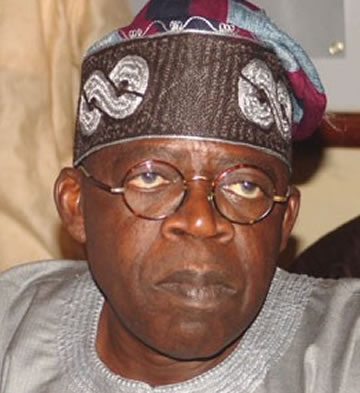



At 63, Nigeria Needs Collective Actions To Foster Nation-Building, By Tony Elumelu
As we celebrate another year of independence, it is time to reflect, to look in the mirror, for our nation and ourselves.
We know Nigeria, we love Nigeria, Nigeria is one of Africa’s most diverse and dynamic countries. We are a nation that excites, beguiles, and dreams. Yet, amidst our diversity and that potential that we all feel, we have faced so many challenges. These challenges ask us to answer a fundamental question: What is our collective responsibility in nation-building?
The destiny of Nigeria lies firmly in the hands of its people – you and me. I am an optimist and I believe strongly in the potential of our nation. We must work together to create the progress we so desire through innovation, and with unity in diversity.
In August, I spoke to the Nigerian Bar Association Annual General Conference in Abuja. At the time of a new administration – and without doubt some of our toughest times economically, I spoke about our collective responsibility as Nigerians, and what we must do to foster nation-building.
My prescription, my advice, my philosophy is simple:
1. Unity.
We must set our differences aside and be united with one ambition, and one duty – nation-building. Whatever our backgrounds, geographies, religions, and experiences let us ensure that our country experiences a true renaissance.
2. Celebrate our Global Success.
We know the potential of Nigeria.
We know the resources, human and natural, that Nigeria has at her disposal. We must learn to champion the successes of Nigerians globally – in international leadership positions at the WTO, at the UN, at the African Development Bank, at the Afreximbank, in technology, in music and entertainment, in business, in arts and in media, in film, in sports.
We see these replicated at home – what we need to do is unleash our potential, create that enabling environment in Nigeria.
3. Business Excellence.
The Nigerian private sector is showing globally our capability, our ingenuity, our institutionalisation. We have global businesses with Nigerian origins. For instance – UBA, the United Bank for Africa, the only African Bank that operates in the USA, as a deposit-taking bank. We are now in Dubai, Paris, and London – and just as importantly 20 other countries in Africa. Who would have thought 20 years ago, that Nigeria would be home to Africa’s global bank!
The private sector must continue to surpass its own achievements and continue to put Nigeria on the map.
4. Shared Responsibility
Nation-building is a call to arms – a vital task – a necessity.
At its core, nation-building is the intricate process of forging a cohesive, harmonious, and united society, out of diverse individuals, cultures, and ideologies. It is the art of constructing a shared identity.
Transforming Nigeria is a journey that demands our collective dedication, building across political affiliations, ethnic differences, and socioeconomic differences.
One that is not the responsibility of our government alone. Great nations start with great people, not just great leaders.
5. A Shared Ambition Across Our Society.
Our private sector, our philanthropies, our civil society, all citizens must be brought together and be empowered – as real, valued and executing partners for this national renewal, this nation building.
6. Love For Country.
Let Nigeria be at the centre of our hearts. Let us invest in the brand Nigeria.
We have no other place, no other motherland than Nigeria. We must begin to show and share a sense of pride in Nigeria. We must begin to rekindle our hope and have confidence in Nigeria and in our leaders. Let us be proud of Nigeria.
The responsibility of nation-building falls upon each and every one of us. To truly build a strong and prosperous nation, we must be more conscious and dedicated in our efforts.
Let us be inspired by the lessons of history, motivated by the sacrifices of our forefathers, guided by the wisdom of our elders, and energised by the aspirations of our youth.
Together, we can build a nation we can all be proud of.
Celebrate 63!