An Abuja-based business mover, has recently transformed from Hajiya Halimat Sani to Hajiya, Mrs. Halimat Musa, setting a stage to move to the next level.
The wedding was celebrated recently in Okene, Kogi Stste, with crème de la crème in attendance. Congratulations from Greenbarge Reporters online newspaper and hardcopy magazine.
A group known as Organisation of Muslim Unity (OMU) Nigeria has called for the hastening of legislative action by the National Assembly against moves to start producing sachet alcoholic drinks in Nigeria. The group commended the National Assembly for initiating legislation to halt such moves but stressed the need to hasten the process. In a statement, the Organization of Muslim Unity said that the legislative initiative by the National Assembly is timely and that it is a fundamental response to the growing insecurity and social instability in the country. In the statement signed by the organisation’s National Ameer, Professor Ahmad AbdulGaniyy, the group noted that many of the social vices undermining peace and public safety in Nigeria are closely linked to the widespread abuse of intoxicating substances. According it, crimes committed by unscrupulous elements in society including theft, violence, hooliganism, and other forms of criminality were often fueled by the consumption of drugs in miniature packages. The Organisation observed that widespread availability of sachet alcoholic drinks, cannabis, inhalants, and hard drugs such as cocaine permeate easy access and affordability with the attendant negative impact on the society; particularly among vulnerable youths and low-income earners.
“It is against this backdrop that proposal to legislate against the production of sachet alcoholic drinks, represents a proactive and preventive approach to crime reduction. “By cutting off this major source of substance abuse, the nation stands to witness a decline in alcohol-induced misconduct, road accidents, domestic violence, and youth restiveness. “This measure will also support broader efforts aimed at safeguarding public health and restoring moral discipline in society. The group stressed that major religious traditions in Nigeria, including Islam and Christianity, discourage the consumption of intoxicants due to their harmful effects on individuals and communities. “Alcohol abuse erodes moral values, weakens family structures, and compromises the future of young people who should otherwise be productive contributors to national development.” The group called on all stakeholders, including lawmakers, religious leaders, civil society organizations and parents, to support the legislative initiative. “We urge the National Assembly to expedite the legislative process in the interest of national security, youth protection and social harmony. A safer Nigeria requires bold, principled decisions and this step is a move in the right direction.”
A few days ago, I woke up in the night, anxious and checking the news, half-expecting America and Israel to have attacked Iran. Given this tension, the central issue is the longstanding American-Israeli effort to destabilise Iran. Even though it cannot be exhausted in one article, I’d like you to come along as we look over the underlying hostility, the motives behind American and Israeli actions, and why both countries believe only a fractured, weakened Iran will serve their interests. The apparent lowering of tensions and talk of de-escalation are largely superficial. America—the dog—and Israel—the tail that wags it—will never rest until they see a balkanised Iran; regime change to install a malleable monarchy is just a ruse. It is a first step to the annihilation of Iran, but at first, the people of the country have to be deceived into thinking they are going to have a new government. The tag team of Donald Trump and Benjamin Netanyahu will not be satisfied with merely installing a malleable regime, because they represent a concept whose custodians plan in decades and think in centuries. As long as Iran remains intact, a future “antagonistic” government could replace their pliable proxy—and that is unacceptable to them. What they desire is a shattered Iran, broken into fragments and at each other’s throats. America wants to neutralise Iran to limit China’s growing influence and weaken Russia. Iran currently acts as a buffer and supplies vital energy resources to China. For Israel, Iran obstructs its ambition for a so-called “Greater Israel.” Aware of Iran’s strength and resilience, Netanyahu has worked relentlessly to push America into confronting Iran on his country’s behalf. China now sources almost all its oil from Iran, with Venezuela no longer a viable alternative. Should America succeed in cutting off Iran’s crude oil exports to China, the Land of the Dragon would lose a critical fuel supply that sustains its economy. Without it, China’s economic stability could be severely threatened. For these reasons, America and Israel—long-time siamese twins with converging interests—have kept Iran in their sights. During the recent periods of unrest, Iran accused the CIA and Mossad of fomenting it, and both countries reportedly contemplated military action “to save Iranians” with the protests as an excuse. Following events in Venezuela involving Nicolás Maduro, Trump even considered a “limited” and “targeted” strike on Ayatollah Ali Khamenei. He publicly declared America was “locked and loaded,” but several factors restrained them. One such factor was Iran’s disruption of internet services and the jamming of Elon Musk’s Starlink system, rendering GPS unreliable. Without satellite navigation and insider support, American and Israeli aircraft and missiles would struggle to operate effectively and could be easily neutralised. Another deterrent was Iran’s acquisition of advanced weaponry from China and Russia, as well as the testing of its own Intercontinental Ballistic Missiles (ICBM). This proved Iran could hit back, raising the risk of Mutually Assured Destruction (MAD), recalling the Cold War. There was also palpable fear in Tel Aviv. After Iranian missiles inflicted significant damage during the 12-day conflict last June, Netanyahu’s aircraft—the Wing of Zion—was reportedly flown to Crete, Greece, with some commentators suggesting he was on board. Israel was unprepared for a direct military confrontation with Iran, goading America, instead, into it. It instead favoured indirect tactics, including fomenting internal unrest. Most Gulf states—except the UAE—reportedly informed America they would not allow their bases to be used for an attack on Iran. Turkey’s President, Recep Tayyip Erdoğan, also urged Trump to avoid military action. These factors collectively compelled Trump to pause. Initially, he remarked that “they have stopped shooting people,” later adding that “they have stopped the killing of about 800 people,” the majority of whom were reportedly American and Israeli operatives. Still, Iran must punish lawbreakers according to its laws—just as America, Israel, and all sovereign nations committed to the rule of law do. Failing to act would only embolden saboteurs and invite other unpatriotic citizens to commit more destabilising acts. History is replete with examples of nations weakened by impunity. In Nigeria, Boko Haram members and bandits are often forgiven or even treated better than their victims. Those who lost homes and loved ones are rarely compensated, while perpetrators are “rehabilitated.” That is the civilian reality. Imagine the fate of soldiers, police, and security agents. I remember a harrowing video of a woman in Maiduguri, Borno State, accused—despite her denials—of being a DSS agent, brutally beheaded by Boko Haram. It was devastating. But to appreciate the long-term planning of the concept the duo of Trump and Netanyahu represent, consider the recent “escape” of about 3,000 ISIS detainees from prisons run by American-backed Syrian Democratic Forces (SDF) in Syria, and America’s reported attempt to relocate another 7,000 ISIS prisoners to Iraq, which borders Iran. This could be interpreted as laying the groundwork for a future proxy force to destabilise Iran and push for regime change or fragmentation. Meanwhile, Trump, who claimed he wanted to help Iranians, recently warned that he would destroy the people if anything were to happen to him. He remarked, “If anything happens, they’re going to wipe [Iran] off the face of the earth,” and that, “I’ve left notification for that.” Neither Trump nor his partner-in-crime, Netanyahu, stepped back out of a desire for peace. Trump still wants to strike Iran because it is what Netanyahu seeks. Military action remains firmly on the table. They may not have been ready before, but preparations are clearly underway. US carrier groups, fighter jets, and command units, what Trump called “Armada”, are moving closer, assembling enough firepower for air, sea, cyber, and special-forces operations designed to prevent Iran from mounting an adequate response. However, it could also be a show of force meant to intimidate Iran not to pass judgment on the 800 arrested agents. However, US activist Calla Walsh captured their mindset succinctly when she said: “Israel (and America) doesn’t need you to like Israel; it only needs you to support them in destroying Iran.” Others echo this warning, urging the Persians to remain vigilant, as these Siamese twin warmongers appear eager to strike—whether through the fangs of January, the scourge of February, or, at the latest, the ides of March. Beyond open warfare, covert operations and crushing sanctions aimed to make Iranians suffer economically and so rise against their government, they want to isolate Iran globally. However, despite repeated provocations from both parties for Iran to fire the first salvo, it has resisted taking the bait, consistent with its policy of avoiding war. Yet its leaders have vowed to retaliate decisively if attacked. The Foreign Ministry stated that Iran is prepared to respond “with everything we have.” President Masoud Pezeshkian warned on X that any American attack would provoke a “severe and regret-inducing” response. Yahya Rahim Safavi, adviser to Imam Khamenei, declared, “We are preparing for the final battle with Israel,” stressing that “we are in a war phase” with no ceasefire or agreements in place. Major General Mohammad Pakpour, head of the Islamic Revolutionary Guard Corps (IRGC), reinforced this Thursday, saying Iranian forces “have their hands on the trigger,” and warned against miscalculation, citing lessons from June. Next, we will examine the choices available to both sides and how a military confrontation might unfold. It is worth noting that Israel reportedly contemplated the use of nuclear weapons in its last war with Iran—a doctrine known as the Samson Option. Should this occur, Israel would become only the second nation, after the United States in Hiroshima and Nagasaki in 1945, to deploy atomic weapons in warfare.
Lest I Forget
What is wrong with our politicians that they almost always fail the test of trust or amana, in Hausa? Those are the people who literally lick the feet of Governors but turn against them the moment the Governors elevate them to that seat.
Hassan Gimba is the Publisher and CEO of Neptune Prime.
The minister of the Nigeria’s Federal Capital Territory (FCT) and chieftain of the main opposition People’s Democratic Party (PDP), Nyesom Wike is on collision course with the National Secretary of the ruling All Progressives Congress (APC), Senator Ajibola Basiru. This is even as protesters are now demanding for the sack of Wike over alleged disrespect to party leaders. While Ajibola Basiru asked Wike to resign his appointment and focus on what he described as an “obsession” with Rivers politics, Wike cautioned Basiru to stay away from Rivers politics. The APC secretary insisted that all members of the party’s National Working Committee (NWC) must accord sitting governors due respect as party leaders in their respective states. But Wike responded by saying: “I want to say it here; take this message to the national secretary to leave Rivers State alone.” At a stakeholders’ meeting in Oyigbo Local Government Area of Rivers State, Wike continued: “go and ask those who have tried it before. “Don’t take our support for Mr President for granted. “You have to be careful with the statements you make. “Today, you are enjoying in Osun; you don’t know those who did the work. Now you open your mouth to talk about Rivers State. Anything you see, take it. “Carrying your hands to Rivers State—if they burn, don’t say I burnt it. “I can challenge anybody. This state is a no-go area, whether you like it or not. Don’t dare us. So, stop making unnecessary comments.” Against the background of the bitter exchange of words, the APC youths, converged on the APC secretariat yesterday, January 23, with placards bearing inscriptions such as, “President Tinubu, sack Wike now” “Stop disrespecting APC members” “No minister is above APC” “APC no be Wike property” “APC must restore order” “Wike, APC leadership is not your mate” “Wike, no more political threats.” Source: The Punch.
The Central Bank of Nigeria (CBN) towed the path of economic resilience and sustainable growth by relaunching the moribund Agricultural Credit Guaranty Scheme Fund (ACGSF). At least the last we heard or read anything about ACGSF was far back in 2005 when the CBN made mention of the then Board under the chairmanship of Alhaji Umaru Baba in its annual report. This important ‘special purpose vehicle’ was established by the Nigerian government, vide Decree 20 of 1977, to encourage banks lending to the agricultural sector and mitigate the risk associated with agricultural financing. Risk aversion has been a major bane to the growth and modernization of the sector. Hence, the primary objective is to provide guarantees for credit facilities extended by financial institutions to farmers, thereby alleviating the banks’ risks and boost lending to this crucial sector, which employs a significant portion of Nigeria’s workforce. In 2019, efforts were made to give a new lease of life to this strategic scheme which nearly went into extinction, with the amendment of the law establishing it. That particular move significantly increased the Fund’s share capital from N3 billion to N50 billion, thereby expanding its capacity to deliver on its mandates. Now that a new board has been inaugurated, one is optimistic that the stage is set for the scheme to fulfill its mandates. More so that farmers are now well represented on the board which ensures inclusivity. The well articulated and robust mandate of the scheme has enliven the hope that it’s going to address part of the numerous challenges confronting the country’s agriculture which has rendered it incapable of unleashing its potentials or even retain its enviable socio-economic position of 1960s. The bane of the country’s agricultural sector includes insecurity, poor infrastructure, outdated methods due to low level of mechanization and technology adoption, limited access to credit high input costs, climate change impacts, and weak value chains leading to low productivity, and undue reliance on imports despite immense potentials begging to be tapped. The new ACGSF Board composed of accomplished individuals chaired by Dr. Olusegun Oshin, with members drawn from the banking industry, academia and agricultural sector has the task of effectively addressing the barriers to agricultural financing. At the inauguration of the new board, the CBN Governor, Olayemi Cardoso acknowledged the fact that agricultural remains the backbone of Nigeria’s economy contributing one fifth to the gross domestic product (GDP) but lamented that the sector remained almost neglected by attracting a negligible fraction of less than five percent of total credit in economy. No doubt that financing gap has tremendously limited the potentials of millions of small holder farmers and of course able bodied youths who were willing to practice agriculture as businesses or hobby. Of course, agriculture not only lost its potentials of feeding the ever increasing population but also missed the potentials of serving as catalyst for industrialization and foreign exchange earner for the country. It is never an exaggeration that agriculture has what it takes to address poverty and its associated ills like malnutrition, diseases, low investment and social maladies. Poverty levels in Nigeria are projected to deteriorate sharply, with as many as 141 million Nigerians—about 62% of the population—expected to be living in poverty by 2026. According to the World Bank the absolute number of people living in poverty has increased sharply, from about 81 million in 2019 to roughly 139 million in 2025. Food bills account for up to 70% of total consumption among poorer Nigerians, thereby leaving them highly exposed to food price increases. The current ease experienced in the headline inflation not withstanding, the pass-through effects of structural deficiencies will continue to keep food prices high. However, period of lamentation should be discarded as Nigerians look forward to revolutionised agricultural practices with appropriate financing strategy. The panacea for agric development is never a single magic bullet, rather a holistic approach integrating technology in form of functional mechanization, digital tools, sustainable practices, water resources management and improved finance which ACGSF stands for. The above propositions might an illusion without vibrant security architecture, good rural road networks, agro-processing facilities, and linking farmers to markets to reduce costs and add value which are essential to leapfrog and reposition agricultural production. The board of the ACGSF should not occupy itself with issue of finance or credit alone but to initiate effective collaborative strategies towards achieving its mandate. The place of institutional support cannot be wished aside as issues such as land administration and accessibility are critical for inclusiveness and effective mobilization for smallholder farmers for enhanced productivity. Supporting institutions like the Nigerian Agricultural Insurance Corporation, National Agricultural Land Development Authority (NALDA) , River Basin Development Authorities should be revived along with a adequately capitalized Bank of Agriculture as all have vital and complementary roles to play at this critical time. The recent resolve of the National Economic Council under the chairmanship of Vice President Kashim Shetima to deepen the engagement with stakeholders to boost non oil revenues and accelerate the transition from oil to non oil economy should be taken as further motivation for all stakeholders in the agricultural and allied sectors leverage. It’s incontrovertible fact that agriculture takes precedence when considering non oil potentials of the country. As such, no effort should be spared at this point in time to reposition it. A thriving agricultural sector not only provides food and raw materials among other associated value chains but also serves moral booster for the citizens. A country that is self sufficient in food production commands respect prides among comity of nations and possibly its pride itself as a power bloc. The desired goal for agricultural development is about transforming the sector into a robust engine for inclusive and sustainable economic growth by addressing its structural challenges with a comprehensive, integrated strategy. The central Bank of Nigeria has again demonstrated its determination to wrestle down inflation, especially food prices, which is a major driver of inflation in the country by assuming yet another pivotal role in agricultural financing. This singular move is enough to catalyze growth for other sectors of the economy. Going forward, CBN should be very assertive in discharging its developmental roles in the Nigeria’ s economy in addition to traditional mandates of price and financial system stability. In several jurisdictions central banks have deployed asset- based reserves requirements to influence allocation of credit to critical sectors. Countries like China, India, Brazil, Russia and even the United States of America in one form or the other strongly support agriculture through subsidy, crop insurance, research and extension services. Coming down home, countries like Ethiopia and Senegal have shown significant government commitment toward the development of agriculture. As we welcome the return of a rejuvenated ACGSF and the inauguration of the new board, the CBN should know that guaranteeing credit alone even at 100 percent is never enough to reposition agriculture to the desired stage. The Bank should also step in boldly to galvanize the support of other stakeholders in agriculture to play their statutory roles so that its efforts are not in vain. More so, the whole effort should not be on production alone but other several agricultural value chains with a view to ensuring sustainable agribusiness in Nigeria. Ummie wrote in from Abuja, Nigeria.
Faces at the Stakeholder Engagement on Spectrum Roadmap 2026 – 2030, Guidelines for the Use of the 60 GHz for Multi Gigabit Wireless Systems and the Guidelines for the Use of the Lower Part of the 6 GHz Band for Wifi-6 in Nigeria are from left to right, Deputy Director, Huawei Business Environment/Affairs Nigeria, Dr. Nihinlola Fafore; Head, Spectrum Administration Department, Nigerian Communications Commission (NCC), Engineer Atiku Lawal; Head, Fixed Networks and Converged Services (NCC), Engineer Gidado Maigana Ahmed; Head Spectrum Assignment (NCC), Abubakar Hammanyaji; Country Lead, Digital Access Program, Foreign, Commonwealth & Development Office (FCDO), Idongesit Udo; Head, Spectrum Planning, (NCC), Dr. Joseph Emeshili Event held at the Auditorium of the Communications and Digital Economy Complex, NCC Annex Office, Mbora, FCT, Abuja.
When I arrived in Minna, capital of Niger State on January 18, 2026, I carried the burden in my mind, of the frightening security situation in that state in particular. I had gone to see my nephew and to as usual, have some pep talks with him and his wife, especially in view of the fact that his father, my immediate elder brother, was no more on this side of God’s creation. Because we talked far into the evening, my nephew convinced me not to go for a lodge around town but suggested that I should pass the night in the room of his neighbour who happened to be away on a journey too. I decided to go to sleep around 9.30pm because I was thoroughly exhausted after driving on the devastatingly bad Suleja-Minna road for nearly four hours instead of two hours from Abuja. Immediately my nephew introduced me to the young man who usually sleeps in the sitting room of the two-room ensuite, I began to say my usual last prayer before lying down. At that point, the young man drew my attention to the fact that he would want to go out, and that he would lock the entrance door with the key and that he would go away with key. His excuse was that he would not want to disturb me when he return. I thought that he was just going for a few minutes to buy something across the road. After my prayer, I lied down to sleep. By 10.00pm, I suddenly woke up to find out that the young man had not returned. I became worried! Why has he not returned; where must he have gone to? While different questions began to fill my thoughts, I heard the entrance door being opened. The young man entered, went to a corner in the room to pick something. When I casually asked him where he had gone to, he did not answer. Instead, he picked what he came for and was going out again. I ran to meet him at the doormouth, asking him where he was going again. He still did not answer, but merely closed the door, locked it and went away with the key. I was virtually caged in the room like a prisoner. At about 10.30pm, sleep completely disappeared from my eyes as I kept on thinking about what actually was happening. To say that I was siezed by undefined fear was to say the obvious. I picked my phone and called my nephew who slept with his wife in another apartment within the fenced compound. I complained that the young man had not returned, but he assured me that he would soon return. Not satisfied, I called my wife back in Abuja, as at 11.00pm to inform her about my location. At about 12.45pm, I heard the door open. It was him. He shut the and began to prepare to lie down, so I thought. All these were happening in the darkness; there was no electricity. I was already battling with darkness, heat that left me sweating profusely, sleeplessness, uncertainty of my fate due to the strange behaviour by the man. After he entered and locked the door, I thought he was going to sleep. But a few minutes later, I heard him talking in Hausa language. He was talking so audibly that I could hear him, though I didn’t quite get what he was saying. As a matter of fact, I thought he was talking to someone with whom he might have returned, but, no. He was just talking. My fear heightened. Was he talking to someone on phone? At a point, I wanted to pick my phone and call my nephew to come and open the door so that I would go and sleep in his room, but I restrained myself because I didn’t know if there was any kind of conspiracy. If you don’t believe in conspiracy, especially between the person you know and the stranger, it is just that you have never adverted your mind to it. My thoughts at that time were confusing but not far away from the conspiracy theory, especially in the kind of country we live today; in the kind of the people whose motives are difficult to place. Amidst hundreds of thoughts crossing my mind, a powerful, uncontrollable sleep siezed me, maybe around 3.55am only to be woken up by a call to Muslim prayer at about 5.00am. That was when I woke up, prayed and got set to face a new day. When I narrated the scenario to my nephew in the morning, his response was shocking: “the man has some mental challenges: he always behaves abnormally.” And so, it was confirmed that I slept in the same room, alone, with a man that is suffering from mental instability. Anything could have happened that night, and the defense would be, he is not mentally okay! What a night!!
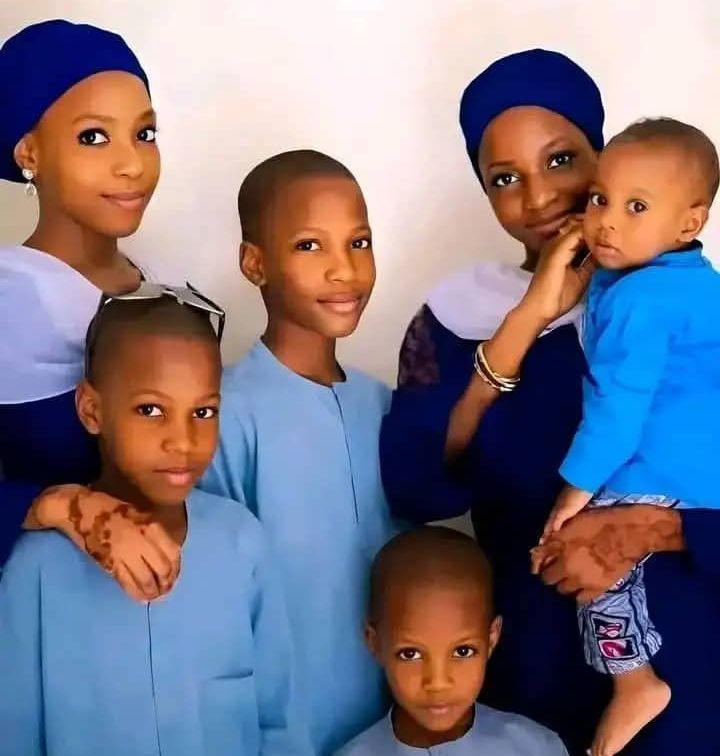
The Kano State Police Command have arrested three suspects in connection with the brutal murder of a housewife, Fatima Abubakar, and her six children in Dorayi Chiranchi Quarters of Kano. The suspects are 23 years old Umar Auwalu, identified as the leader of the syndicate and a nephew of the deceased housewife; 40 years old Isyaku Yakubu and 21 years old Yakubu Abdulaziz. They were arrested during a sting operation conducted between 10pm on January 17, 2026 and 4am on January 18, 2026. A statement by the Kano State Command’s Public Relations Officer, CSP Abdullahi Kiyawa today, January 18, said that the suspects have confessed to committing the crime and admitted the involvement in other killings and attacks. Items recovered from the suspects included four blood-stained clothes, two mobile phones belonging to the deceased, a cutlass, a club (gora), and some amount of money suspected to have been stolen from the scene. Abdullahi Kiyawa said that investigations are ongoing to unravel the full circumstances surrounding the incident and to apprehend other accomplices, if any. The Kano State Police Command commended the officers involved in the operation and reassured members of the public of its commitment to bringing perpetrators of crime to justice.
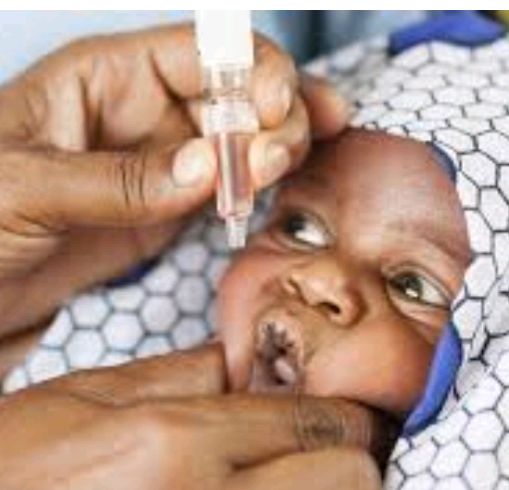
Promise Samuel Alozie has accused a Nurse at the Ajangbadi Primary Health Centre in Ojo Local Government Area of Lagos State of having killed his nine-month-old identical twin sons: Testimony and Timothy, after routine immunisation. Samuel Alozie, in a viral post on TikTok, said that he took the twins for their routine vaccinations on the morning of December 24, 2025. “It happened that the immunisation was conducted on the 24th of December, in the morning. On that 24th, after the injection, they were very weak. And on the morning of 25th December, they died. “This is the result of the immunisation. “They killed my twin boys with injections. He said that despite giving paracetamol and bathing the twins to reduce a rising temperature, the infants reportedly died on Christmas morning. The father raised concerns about the health centre, alleging that the twins were given expired or fake vaccines or an overdose. “The government has killed my children. “The Nigerian government… “My twins, my nine-month-old children, they have killed them with their fake injection and fake vaccine.” Alozie noted that the nurse who administered the injections was not the usual staff and reportedly gave the twins deworming tablets without his consent. “The funny part of this is that the woman who has been giving us injections was not the woman who gave us the injection that day. It was another face.” He rejected claims from the health centre that food bacteria caused the deaths. “The nurse is talking about bacteria, food bacteria. She said that it is food bacteria that killed my children. “How can food bacteria kill a child?” As the official statements or autopsy findings on the cause of the death of the twins are being awaited from the Lagos State Ministry of Health and the Primary Health Care Board, Alozie expressed fears that the results could be manipulated and issued a plea for legal help. “Please, if you’re a lawyer, a human rights lawyer, please help me. I don’t have a lawyer, and you know, government issue. If you don’t have anybody, you will not get a better result. “If I don’t have finance, I have people. People should help me. “I need justice for these children. “I have buried them, but I know that their spirit is still not at peace, because they died untimely death and their death was caused by the government. “I don’t have anybody except God, and I know that God will bring justice to them.”
We use cookies on our website to give you the most relevant experience by remembering your preferences and repeat visits. By clicking “Accept”, you consent to the use of ALL the cookies.
This website uses cookies to improve your experience while you navigate through the website. Out of these, the cookies that are categorized as necessary are stored on your browser as they are essential for the working of basic functionalities of the website. We also use third-party cookies that help us analyze and understand how you use this website. These cookies will be stored in your browser only with your consent. You also have the option to opt-out of these cookies. But opting out of some of these cookies may affect your browsing experience.
Necessary cookies are absolutely essential for the website to function properly. This category only includes cookies that ensures basic functionalities and security features of the website. These cookies do not store any personal information.
Any cookies that may not be particularly necessary for the website to function and is used specifically to collect user personal data via analytics, ads, other embedded contents are termed as non-necessary cookies. It is mandatory to procure user consent prior to running these cookies on your website.



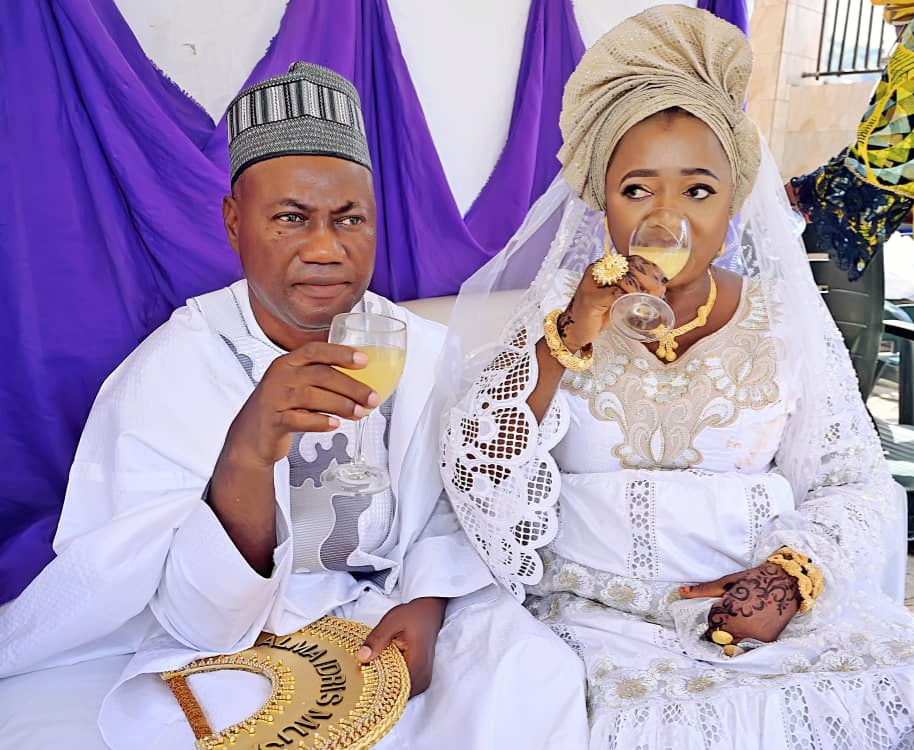
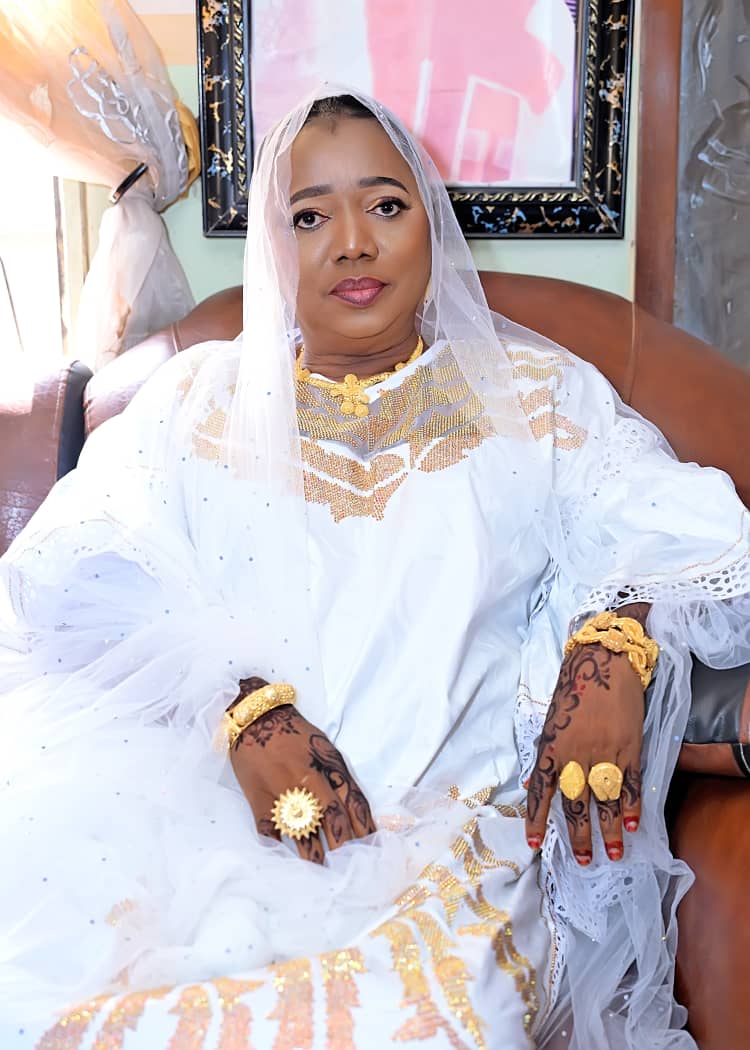 The wedding was celebrated recently in Okene, Kogi Stste, with crème de la crème in attendance. Congratulations from Greenbarge Reporters online newspaper and hardcopy magazine.
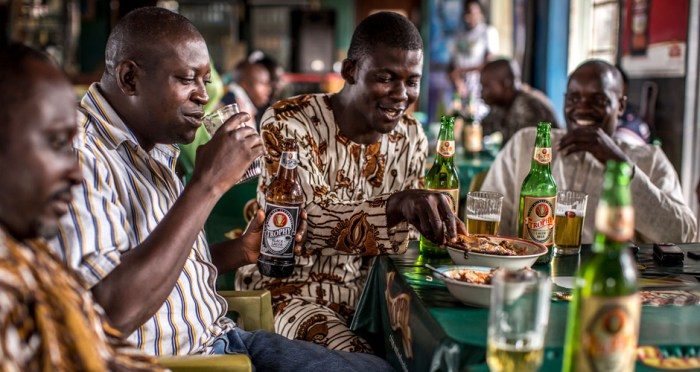 “It is against this backdrop that proposal to legislate against the production of sachet alcoholic drinks, represents a proactive and preventive approach to crime reduction.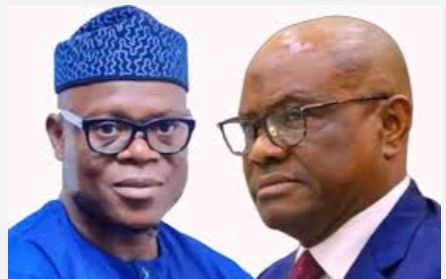

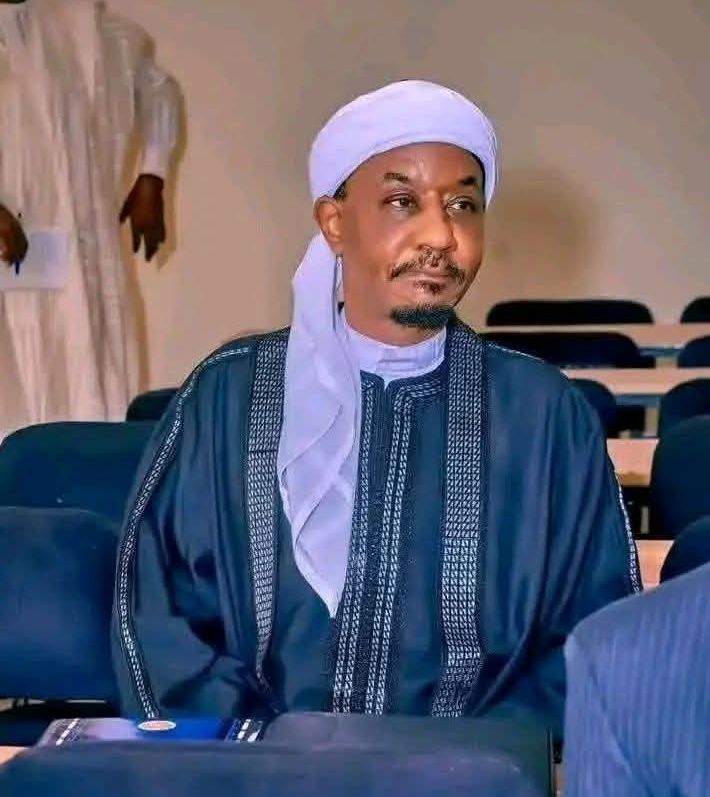
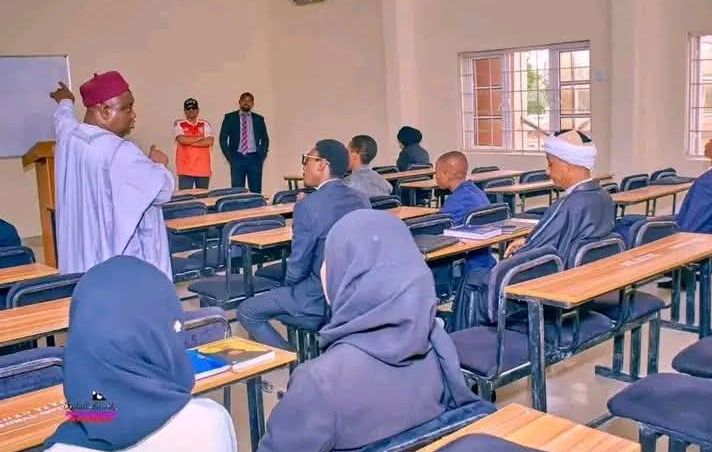
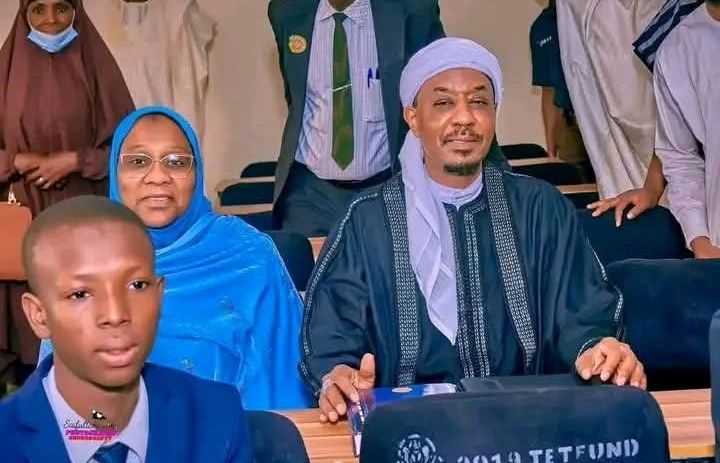 Source: Daily Trust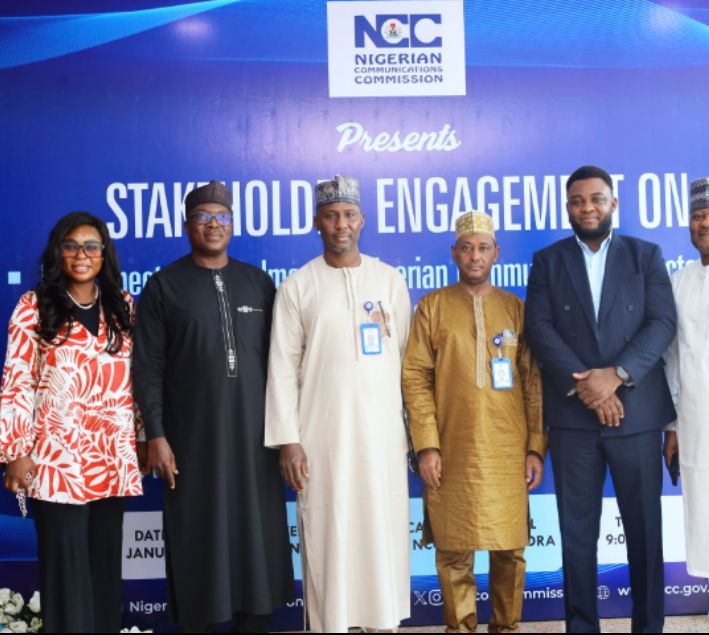



Iran, Beware Fangs Of January, Scourge Of February, Ides Of March, By Hassan Gimba
A few days ago, I woke up in the night, anxious and checking the news, half-expecting America and Israel to have attacked Iran.
Given this tension, the central issue is the longstanding American-Israeli effort to destabilise Iran. Even though it cannot be exhausted in one article, I’d like you to come along as we look over the underlying hostility, the motives behind American and Israeli actions, and why both countries believe only a fractured, weakened Iran will serve their interests.
The apparent lowering of tensions and talk of de-escalation are largely superficial. America—the dog—and Israel—the tail that wags it—will never rest until they see a balkanised Iran; regime change to install a malleable monarchy is just a ruse. It is a first step to the annihilation of Iran, but at first, the people of the country have to be deceived into thinking they are going to have a new government.
The tag team of Donald Trump and Benjamin Netanyahu will not be satisfied with merely installing a malleable regime, because they represent a concept whose custodians plan in decades and think in centuries. As long as Iran remains intact, a future “antagonistic” government could replace their pliable proxy—and that is unacceptable to them. What they desire is a shattered Iran, broken into fragments and at each other’s throats.
America wants to neutralise Iran to limit China’s growing influence and weaken Russia. Iran currently acts as a buffer and supplies vital energy resources to China. For Israel, Iran obstructs its ambition for a so-called “Greater Israel.” Aware of Iran’s strength and resilience, Netanyahu has worked relentlessly to push America into confronting Iran on his country’s behalf.
China now sources almost all its oil from Iran, with Venezuela no longer a viable alternative. Should America succeed in cutting off Iran’s crude oil exports to China, the Land of the Dragon would lose a critical fuel supply that sustains its economy. Without it, China’s economic stability could be severely threatened.
For these reasons, America and Israel—long-time siamese twins with converging interests—have kept Iran in their sights. During the recent periods of unrest, Iran accused the CIA and Mossad of fomenting it, and both countries reportedly contemplated military action “to save Iranians” with the protests as an excuse. Following events in Venezuela involving Nicolás Maduro, Trump even considered a “limited” and “targeted” strike on Ayatollah Ali Khamenei. He publicly declared America was “locked and loaded,” but several factors restrained them.
One such factor was Iran’s disruption of internet services and the jamming of Elon Musk’s Starlink system, rendering GPS unreliable. Without satellite navigation and insider support, American and Israeli aircraft and missiles would struggle to operate effectively and could be easily neutralised.
Another deterrent was Iran’s acquisition of advanced weaponry from China and Russia, as well as the testing of its own Intercontinental Ballistic Missiles (ICBM). This proved Iran could hit back, raising the risk of Mutually Assured Destruction (MAD), recalling the Cold War.
There was also palpable fear in Tel Aviv. After Iranian missiles inflicted significant damage during the 12-day conflict last June, Netanyahu’s aircraft—the Wing of Zion—was reportedly flown to Crete, Greece, with some commentators suggesting he was on board. Israel was unprepared for a direct military confrontation with Iran, goading America, instead, into it. It instead favoured indirect tactics, including fomenting internal unrest.
Most Gulf states—except the UAE—reportedly informed America they would not allow their bases to be used for an attack on Iran. Turkey’s President, Recep Tayyip Erdoğan, also urged Trump to avoid military action.
These factors collectively compelled Trump to pause. Initially, he remarked that “they have stopped shooting people,” later adding that “they have stopped the killing of about 800 people,” the majority of whom were reportedly American and Israeli operatives.
Still, Iran must punish lawbreakers according to its laws—just as America, Israel, and all sovereign nations committed to the rule of law do. Failing to act would only embolden saboteurs and invite other unpatriotic citizens to commit more destabilising acts.
History is replete with examples of nations weakened by impunity. In Nigeria, Boko Haram members and bandits are often forgiven or even treated better than their victims. Those who lost homes and loved ones are rarely compensated, while perpetrators are “rehabilitated.”
That is the civilian reality. Imagine the fate of soldiers, police, and security agents. I remember a harrowing video of a woman in Maiduguri, Borno State, accused—despite her denials—of being a DSS agent, brutally beheaded by Boko Haram. It was devastating.
But to appreciate the long-term planning of the concept the duo of Trump and Netanyahu represent, consider the recent “escape” of about 3,000 ISIS detainees from prisons run by American-backed Syrian Democratic Forces (SDF) in Syria, and America’s reported attempt to relocate another 7,000 ISIS prisoners to Iraq, which borders Iran. This could be interpreted as laying the groundwork for a future proxy force to destabilise Iran and push for regime change or fragmentation.
Meanwhile, Trump, who claimed he wanted to help Iranians, recently warned that he would destroy the people if anything were to happen to him. He remarked, “If anything happens, they’re going to wipe [Iran] off the face of the earth,” and that, “I’ve left notification for that.”
Neither Trump nor his partner-in-crime, Netanyahu, stepped back out of a desire for peace. Trump still wants to strike Iran because it is what Netanyahu seeks. Military action remains firmly on the table. They may not have been ready before, but preparations are clearly underway. US carrier groups, fighter jets, and command units, what Trump called “Armada”, are moving closer, assembling enough firepower for air, sea, cyber, and special-forces operations designed to prevent Iran from mounting an adequate response. However, it could also be a show of force meant to intimidate Iran not to pass judgment on the 800 arrested agents.
However, US activist Calla Walsh captured their mindset succinctly when she said: “Israel (and America) doesn’t need you to like Israel; it only needs you to support them in destroying Iran.”
Others echo this warning, urging the Persians to remain vigilant, as these Siamese twin warmongers appear eager to strike—whether through the fangs of January, the scourge of February, or, at the latest, the ides of March.
Beyond open warfare, covert operations and crushing sanctions aimed to make Iranians suffer economically and so rise against their government, they want to isolate Iran globally. However, despite repeated provocations from both parties for Iran to fire the first salvo, it has resisted taking the bait, consistent with its policy of avoiding war. Yet its leaders have vowed to retaliate decisively if attacked.
The Foreign Ministry stated that Iran is prepared to respond “with everything we have.” President Masoud Pezeshkian warned on X that any American attack would provoke a “severe and regret-inducing” response. Yahya Rahim Safavi, adviser to Imam Khamenei, declared, “We are preparing for the final battle with Israel,” stressing that “we are in a war phase” with no ceasefire or agreements in place.
Major General Mohammad Pakpour, head of the Islamic Revolutionary Guard Corps (IRGC), reinforced this Thursday, saying Iranian forces “have their hands on the trigger,” and warned against miscalculation, citing lessons from June.
Next, we will examine the choices available to both sides and how a military confrontation might unfold. It is worth noting that Israel reportedly contemplated the use of nuclear weapons in its last war with Iran—a doctrine known as the Samson Option. Should this occur, Israel would become only the second nation, after the United States in Hiroshima and Nagasaki in 1945, to deploy atomic weapons in warfare.
Lest I Forget
What is wrong with our politicians that they almost always fail the test of trust or amana, in Hausa? Those are the people who literally lick the feet of Governors but turn against them the moment the Governors elevate them to that seat.
Hassan Gimba is the Publisher and CEO of Neptune Prime.