A team of ground troops described by the United States of America as “small team of troops” have landed in Nigeria.
The General in charge of the U.S. command for Africa (AFRICOM), General Dagvin R.M. Anderson, confirmed the troops deployment to Nigeria yesterday, February 3. He spoke to journalists at a news briefing. He said that the decision to send troops to Nigeria was after both countries agreed that more is needed to combat the terrorist threat in West Africa. “That has led to increased collaboration between our nations to include a small US team that brings some unique capabilities from the United States.” General Anderson did not however provide further details about the size and scope of their mission in Nigeria. According to Reuters, Nigeria’s Defense Minister, Christopher Musa, confirmed that a team was working in Nigeria but did not provide further details. The development is the first acknowledgment of U.S. forces on the ground since US airstrikes targeting terrorists in Nigeria’s North-West on Christmas Day, 2025. President Donald Trump, who announced that he ordered the airstrikes on what he described as Islamic State targets, had said there could be more U.S. military action in Nigeria. The U.S. is believed to have been conducting surveillance flights over the country from Ghana since late November last year. A former U.S. official said the U.S. team appeared to be heavily involved in intelligence gathering that have enabled Nigerian forces to strike terrorist-affiliated groups.
The Guild of Interfaith Media Practitioners Nigeria (GIMP-Nigeria) has called for interfaith harmony as a means towards achieving peace, development and national cohesion. In a statement to mark this year’s (2026) World Interfaith Harmony Week, Chairman and National Co-ordinator of GIMP-Nigeria, Abdulkarim Abdulmalik said: “as plural as Nigeria, harmony is not optional; it is a necessity for peace, development, and national cohesion.” He emphasized that Interfaith harmony is strongly relevant in Nigeria, where religious narratives can either deepen divisions or become powerful instruments for peace building. Abdúlkarim described the World Interfaith Harmony Week as a timely reminder that dialogue, empathy, and ethical communication remain indispensable tools for addressing Nigeria’s social tensions and conflicts. “World Interfaith Harmony Week calls on us to rediscover our shared values as people of faith and conscience.” He said that the World Interfaith Harmony Week has come to strengthen the leadership of the body to be committed to promoting mutual understanding, peaceful coexistence and responsible media engagement among Nigeria’s diverse religious communities. Abdulmalik emphasised the critical role of the media in shaping public perceptions of religion and interfaith relations. He called on the media professionals and digital content creators to uphold professionalism, avoid sensationalism and consciously counter hate speech and divisive reporting. “The media must rise above narratives that inflame passions”, he stated, while noting that: “As interfaith media practitioners, our duty is to tell stories that humanize the ‘other,’ amplify voices of moderation, and highlight examples of cooperation between faith communities”. He also called on religious leaders, youth groups, civil society organisations, and government institutions to use the week as an opportunity to renew commitments to dialogue, tolerance, and joint social action, particularly in addressing insecurity, misinformation, and moral decline. According to him, the group is determined to continue with initiatives that promote interfaith dialogue, media literacy and peace-oriented journalism, including trainings, public engagements, and collaborative platforms involving Muslim, Christian, and traditional faith practitioners. “As we mark the 2026 World Interfaith Harmony Week”, Abdulmalik further said, “let us move beyond symbolic gestures and commit to practical steps that translate harmony into everyday attitudes, policies, and media practices. Only then can faith become a force for unity rather than division.” The World Interfaith Harmon Week is observed annually from 1–7 February in tandem with a United Nations General Assembly resolution. It seeks to encourage harmony between all people regardless of faith traditions.
Politics is not a realm of permanent enemies; permanent interests is a cliché that refuses to go away. In Nigeria’s fragile democratic space, the way power forgives – or refuses to forgive – often reveals more about the State than official speeches ever could. Recent developments under President Bola Ahmed Tinubu reignited this debate, particularly the appointment of Daniel Bwala as Special Adviser on Media and Public Communications in November 2024 and the recent nomination of Reno Omokri – once one of the President’s fiercest critics – to an ambassadorial position. Both men had, at different times, publicly attacked Tinubu in strong and personal terms. Bwala was widely known for relentless media criticisms during the election season, while Omokri had previously accused Tinubu on national television of grave criminal conduct. Today, both are either within or closely aligned to the power structure they once condemned. This raises an unavoidable question: is forgiveness now a political virtue or merely a privilege reserved for the powerful and connected? In attempting to provide answer to the question, it is necessary to look at the issue as a two-sided coin: Political Reconciliation or Political Convenience. Defenders of these appointments argue that democracy thrives on reconciliation. They point to global precedents where former critics are absorbed into government to foster unity, reduce polarization and harness diverse talents. Against this backdrop, they believe that Tinubu’s actions demonstrate magnanimity and political maturity; a proof that campaigns have ended and governance has begun. However, critics argue that credibility of forgiveness in politics must be anchored on principle and moral ethics. When reconciliation appears selective, it risks being interpreted not as statesmanship but as expediency. The Nigerian public is left wondering whether repentance, apology or accountability played any role in these political rehabilitations or whether proximity to power alone was sufficient absolution. More troubling is the implicit message: harsh attacks on a candidate may carry no consequences if the attacker later aligns with the victor, but severe punishment may await those who remain defiant.This tension becomes sharper when viewed alongside the case of Omoyele Sowore. The activist who is also the publisher of Sahara Reporters has faced repeated arrests and is currently standing trial over allegations, including disparaging the President. Sowore’s rhetoric, while often provocative and confrontational, falls within the tradition of radical dissent that democracies are expected to tolerate; especially when it does not translate into violence. If Bwala and Omokri could be politically forgiven for past verbal assaults – some arguably more personal and damaging – why is Sowore’s continued dissent treated as a criminal matter rather than a democratic nuisance? The inconsistency fuels the perception that loyalty to power, not the severity of speech, determines who is forgiven and who is prosecuted. Democracy does not merely protect praise; it protects offense, criticism, and even discomfort. When forgiveness is extended only to those who submit, dissent ceases to be a right. It becomes a liability. An even more complex dimension is introduced by the reported detention of alleged coup plotters awaiting military court-martial or trial. Unlike verbal critics, coup allegations strike at the heart of state security. No responsible government can trivialize such claims. This explains the limits of mercy. However, the principle of fairness remains essential. Thus, if political forgiveness is now a governing philosophy, the question arises: what are its boundaries? Is forgiveness reserved for media critics who cross over to the ruling camp, or can it extend—after due process—to others accused of threatening the state? The issue is not whether alleged coup plotters should be automatically forgiven; they should not. The issue is whether the rule of law is applied consistently and transparently, or whether punishment and pardon are politically calibrated tools. Selective mercy weakens deterrence, while selective punishment undermines legitimacy.When a government forgives yesterday’s abusers but criminalizes today’s critics, it creates a moral hazard. Political actors learn that insults are tolerable, even profitable, so long as they eventually defect to power. Meanwhile, principled opposition becomes dangerous. This dynamic corrodes public trust. Citizens begin to see political morality not as a matter of truth or justice, but of timing and allegiance. Forgiveness becomes transactional, not ethical. This is the moral hazard embedded in selective forgiveness.In religious terms – particularly within Islam and Christianity, both influential in Nigeria – forgiveness is tied to repentance, justice and reconciliation. It is neither blind nor is it cynical. Translating forgiveness into governance without these anchors turns it into hypocrisy. Bearing in mind that the State is above personal grievances, the presidency is an institution, not a personal project. Insults against a candidate during campaigns should not automatically translate into crimes against the State once elections are over. In the same vein, accepting former critics into government should not erase legitimate questions about credibility, consistency and accountability. If Bwala and Omokri are forgiven, the process should be explicit and principled. If Sowore is prosecuted, the legal basis must be clear, proportionate and insulated from political vendetta. If coup suspects are detained, their rights must be protected and their trials swift and transparent. Anything less creates the impression of a government that forgives friends, punishes “supposed” enemies and confuses loyalty with patriotism. To this end, forgiveness must be proportional, else it becomes oppression. The truth, however, is that Nigeria stands at a crossroads where democratic endurance depends not on how power rewards loyalty, but on how it treats dissent. Forgiveness, when unevenly applied, ceases to be a virtue. It becomes a weapon.The critical question therefore, is not whether Bwala and Omokri should be forgiven. They could. The question is whether all Nigerians are equally entitled to justice, mercy and due process, regardless of their political usefulness to those in power. So, until forgiveness is guided by principle rather than proximity, Nigeria’s democracy will remain fragile: ruled not by law, but by convenience.
Abdulkarim Abdulmalik, wrote in from Abuja and can be reached on nowmalik@gmail.com
The Nigerian National Petroleum Company Limited (NNPC Ltd) has officially unveiled its Gas Master Plan (GMP) 2026, tagged NGMP 2026.The unveiling, at the NNPC Towers in Abuja today, January 30, according to a statement by the Chief Corporate Communications Officer of the company, Andy Odeh, marks a strategic inflection point in Nigeria’s energy transition journey, and underscores government’s resolve to translate the nation’s vast gas endowment into tangible economic value, infrastructure expansion, and global competitiveness, in alignment with its long-term development aspirations.The statement quoted the Group Chief Executive Officer of the NNPC Ltd, Engineer Bashir Bayo Ojulari, as having described the NNPC Gas Master Plan 2026 as a bold, effective execution-anchored roadmap designed to unlock Nigeria’s immense gas potential and elevate the country into a globally competitive gas hub.Ojulari said that with about 210 trillion cubic feet (Tcf) of proven gas reserves and an upside potential of up to 600 Tcf, Nigeria possesses one of the most consequential hydrocarbon basins in the world; one reinforced by the Petroleum Industry Act (PIA) and the Federal Government’s gas-centric energy transition agenda.“The Plan is structured not just to deliver, but to exceed the Presidential mandate of increasing national gas production to 10 billion cubic feet per day by 2027 and 12 billion cubic feet per day by 2030, while catalysing over 60 billion dollars in new investments across the oil and gas value chain by 2030.” He explained that the Plan prioritises cost optimisation, operational excellence, and systematic advancement of resources from 3P to bankable 2P reserves, while strengthening gas supply to power generation, CNG, LPG, Mini-LNG, and critical industrial off-takers. He pledged his continued personal commitment as Chief Sponsor of the initiative, saying that the Company has adopted a more collaborative, investor-centric approach in shaping the NGMP 2026, with strong alignment to industry stakeholders, partners, and investors. This was even as the Minister of State for Petroleum Resources (Gas), Ekperikpe Ekpo, described the Gas Master Plan as a deliberate pivot from policy articulation to disciplined execution, anchored on commercial viability and integrated sector-wide coordination. “Today’s launch is not merely the unveiling of a document; it represents a deliberate shift towards a more integrated, commercially driven, and execution-focused gas sector, aligned with Nigeria’s development aspirations. Nigeria is fundamentally a gas Nation. With one of the largest proven gas reserves in Africa, our challenge has never been potential, but translation: translating resources into reliable supply, infrastructure into value, and policy into measurable outcomes for our economy and our people. The Gas Master Plan speaks directly to this challenge.” Ekpo noted that the Plan’s strong focus on supply reliability, infrastructure expansion, domestic and export market flexibility, and strategic partnerships aligns seamlessly with the Federal Government’s Decade of Gas Initiative, positioning natural gas as the backbone of Nigeria’s energy security, industrialisation, and just energy transition. In a goodwill message at the occasion, the Chairman of the Independent Petroleum Producers’ Group (IPPG) and CEO of Aradel Holdings, Mr. Adegbite Falade, said: “This is giving a shot in the arm to the economy which will bridge the gap between intent and reality. Gas thrives on value chain, from upstream to offtakers. As IPPG members, we reiterate our commitment and support to this initiative.” Chairman of the Oil Producers Trade Section (OPTS) and MD of TotalEnergies Upstream Companies in Nigeria, Matthieu Bouyer, thanked the NNPC Ltd for the ambition behind the NNPC GMP, stressing that his organisation supports the core operating principles of the Plan. The Gas Master Plan 2026 is expected to serve as the definitive framework for coordinated gas sector development, execution discipline, and value creation over the next decade. The Gas Master Plan 2026 is an offshoot of the Nigerian Gas Master Plan (NGMP) 2008, which is a strategic framework aimed at maximizing the economic benefits from the country’s abundant gas resources. Another significant dimension to the NGMP 2026 is the utmost attention to full alignment with the Nigerian Decade of Gas Programme.
The Nigerian Communications Commission (NCC) has confirmed that there has been improvement in the network performance by service providers. Presenting the Q4 2025 Network Performance Report to media partners in Abuja, the Executive Commissioner, Technical Services in NCC, Engineer Abraham Oshadami said: “We are observing measurable improvements in network performance and, importantly, in the Quality of Experience delivered to consumers.” He said that the report is one of the measures to bring out transparency that has become a guiding principle that underpins NCC’s regulatory approach. “We believe that open access to information strengthens the industry, builds public trust and reinforces accountability among operators. It is for this reason that the Commission continues to proactively share data and insights on industry performance, not only to support informed decision-making, but also to ensure that service providers remain accountable to consumers.” Engineer Abraham recalled that last year, the Commission deepened its commitment by partnering with Ookla to develop nationwide Network Coverage Maps. “These maps provide consumers with an objective tool to compare network quality across locations and operators. “As part of this same partnership, we commenced the publication of Quarterly Network Performance Reports, designed to offer consistent, data-driven insights into how networks are performing across the country. “The first of these reports—the Q3 2025 Network Performance Report—was published in October last year.” The Executive Commissioner said that the objective of this interaction is to share key insights from the report, highlight how the industry is performing, and provide clarity on trends that matter to both consumers and stakeholders. He announced that the collective efforts of the Commission and media are beginning to yield positive results. “We regard the media as strategic partners in this journey. It is important that stories of progress, accountability, and reform are accurately told and widely understood.”
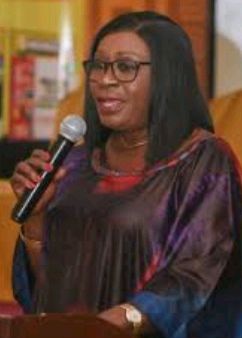
Head of Public Affairs Department in the Nigerian Communications Commission (NCC), Mrs. Nnenna Ukoha has acknowledged that media reporting has been shaping the narrative on telecommunication in the country. According to her, media reporting “affects investor confidence, consumer trust, and policy direction. It influences how Nigerians understand the technologies that power their daily lives.” Mrs. Ukoha spoke on January 28, at the presentation of the NCC Quarterly industry network performance reports. She stressed that the work of informing the public, shaping narratives, and guiding national conversations, is critical to the health and sustainability of the telecommunications sector. “The Commission had in the past, affirmed its commitment to accountability and transparency, and a data-driven approach in implementing its mandate. “Part of this commitment is the drive to generate accurate, transparent, and timely data. Consequently, we have the responsibility to ensure that this data is properly understood, well‑interpreted, and correctly communicated to the Nigerian public. “And in this effort, you, our media partners, are indispensable.” The spokesperson said that the objective of the NCC to deepen the media understanding of the NCC’s quarterly performance data and to equip the practitioners with practical insights on how best to integrate these findings into their reporting. “Therefore, this session gives you access not only to the data itself, but also to the context behind it, context that ensures accuracy, prevents misinterpretation, and ultimately enhances the quality of information reaching the public. ” “In reporting industry data to Nigerians and the world, we encourage what we call constructive framing, which does not mean ignoring sectoral challenges, far from it. “Rather, it means presenting issues in a way that highlights progress alongside challenges, shows the solutions being deployed, reflects the investments and innovations shaping the sector, recognizes improvements in quality of service and experience, and supports industry resilience. “Our quarterly performance reports provide rich material for daily news coverage, feature stories, data‑driven investigative reporting, background analysis for interviews, and sector monitoring dashboards used by your newsrooms. “We value your partnership. Your reporting shapes the national narrative around telecommunications. “As we present the Q4 Industry Performance Reports today, we do so in the spirit of collaboration. We look forward to meaningful engagements, thoughtful questions, and impactful stories that reflect the realities of our industry, its challenges, its victories, and its future.”
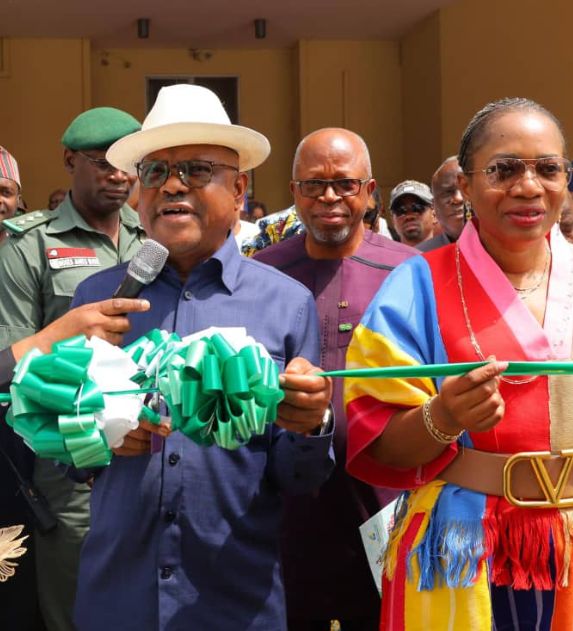
“So, I appeal to all of you, forget this thing that you say you will go and block the gate and you will not obey court order. I appeal to all of you, senior staff, management staff and the junior staff, nobody will sit to say you are not entitled to get your entitlement. Except that person is an extremist. “I appeal to all of you to have a reconsideration and allow peace to reign for the development of the FCT”. The tough-talking minister of the Federal Capital Territory (FCT) before now, Nyeson Wike made the appeals to workers today, December 29 at an official function where he handed over some state-of-the-art Ambulance buses to hospitals in the capital city. The minister had threatened to dismiss workers who failed to return to work today after the judgment of the National Industrial Court yesterday. The Minister insisted that his administration had reasonably met the demands of the workers, on the umbrella of Joint Union Action Committee, accusing some people with political interests, of hijacking the labour struggle to sabotage the efforts of government. He assured the grieving workers that he is ready to dialogue to ensure industrial harmony. “To workers and some of us who are management staff, who sabotage the efforts of government, I have said that the whole essence is to have dialogue. Where there are problems, you sit down and say these problems, I can solve this now, leave this for me tomorrow and I will be able to do it tomorrow. “If you make a request or a demand for five items for example and the government says okay, we can take up three items and thereafter, we take up the other two items, if you are really sincere, if there is no objective behind it, there is no way you will not accept. But when you leave it and begin to join issues with us as politicians, we will of course treat you as politicians, “I can’t sit here as a Minister and I see a political opponent trying to run the administration down using some people. No government will shut its eyes and allow that to happen. This society is not a lawless society”. The Minister said that the government cannot commit its entire resources to workers welfare because it also needs to fund the ongoing massive infrastructure development across the capital territory.
The release of the names and States of origin of the military officers alleged to have planned the failed military coup against the government of President Bola Tinubu showed that it was all a Northern affair. The the full names, States and ranks of the 16 officers listed for trial are as follows: 1. Brigadier General Musa Abubakar Sadiq (Nasarawa, 44th Regular Course) 2. Colonel M. A. Ma’aji (Niger, 47th Regular Course) 3. Lieutenant Colonel S. Bappah (Bauchi, 56th Regular Course) 4. Lieutenant Colonel A. A. Hayatu (Kaduna, 56th Regular Course) 5. Lieutenant Colonel Dangnan (Plateau, 56th Regular Course) 6. Lieutenant Colonel M. Almakura (Nasarawa, 56th Regular Course) 7. Major A. J. Ibrahim (Gombe, 56th Regular Course) 8. Major M. M. Jiddah (Katsina, 56th Regular Course) 9. Major M. A. Usman (Federal Capital Territory, 60th Regular Course) 10. Major D. Yusuf (Gombe, 59th Regular Course) 11. Major I. Dauda (Jigawa, DSSC 38) 12. Captain I. Bello (DSSC 43) 13. Captain A. A. Yusuf 14. Lieutenant S. S. Felix (DSSC) 15. Lieutenant Commander D. B. Abdullahi (Nigerian Navy) 16. Squadron Leader S. B. Adamu (Nigerian Air Force) A review of the list shows that most of the officers are drawn from the Infantry, Signals, and Ordnance Corps. The Director of Defence Information, Major-General Samaila Uba, confirmed that investigative panel constituted by the military authorities has concluded its assignment on the matter. Major-General Samaila Uba said that the trials of the officers will proceed as part of efforts to enforce discipline and uphold professionalism within the armed forces.
Minister of the Federal Capital Territory (FCT), Nyesom Wike has made it clear that he would deal severely with workers that play politics in the name of strike action. “The moment you no longer act as a worker and you now act as a politician, then I will face you. I will treat you the way politicians are being treated.” Wike, who was reacting to the ruling of the National Industrial Court directing the striking FCT workers to suspend the strike and return to work, expressed concern that the strike action was “hijacked” by political interests and disgruntled elements. He warned that the FCT Administration will not succumb to blackmail, intimidation or insults. “The court has called off the strike. If anybody dares to block the gate again, then I will use the person as a scapegoat because you must obey the law. We are in a democracy and not in a military government. “I have given them the window. From tomorrow, if you don’t come to work, we are going to apply the big stick. If we see anybody who says he wants to block the gate, we will make you a scapegoat. The law must take its place.” He said that the FCT administration is ready to genuine dialogue, acknowledging the rights of workers to protest in a democracy. According to the minister, the administration has already met the vast majority of the workers’ demands, adding that the FCTA has been proactive in addressing staff needs. He said that that out of the 14 demands presented by the union, over 10 have been fully resolved. The Minister detailed the administration’s commitment to the payment of wage awards, confirming that December payments were made while January payments have been processed and that of February is also on track. “If you are requesting 14 things and the government has met over 10 of them, reasonably you should be able to give the government some time”, the Minister stated. “It is not correct to think that this administration will deny workers their entitlements or wages.” He said that the FCT only receives one percent share of what the Federal Government gets from the Federation Account and requires additional funding from internally generated revenue to meet its financial commitments. Wike said that despite the financial challenges, FCTA has recorded appreciable growth in its Internally Generated Revenue (IGR), from ₦9 billion to ₦30 billion, enabling it to fund massive infrastructure projects alongside worker welfare. The Minister reminded workers of the unprecedented institutional growth achieved under President Bola Ahmed Tinubu’s “Renewed Hope Agenda”, including the establishment of the FCT Civil Service Commission, the appointment of the first-ever Head of Service and Permanent Secretaries for the FCTA, exiting the Treasury Single Account (TSA) to allow for better financial flexibility and growth for workers. The National Industrial Court of Nigeria sitting in Abuja had earlier ordered the Joint Unions Action Committee (JUAC) of the Federal Capital Territory Administration (FCTA) to immediately suspend its ongoing indefinite strike. A ruling delivered by Justice Emmanuel Subilim granted an interlocutory injunction sought by the FCT Minister to restrain the defendants – the President of the Joint Union Action Committee, Rifkatu Iortyer, its Secretary, Abdullahi Umar Saleh and their agents from embarking on any industrial action, picketing or lockout. The court held that under the Trade Dispute Act, once a matter has been referred to the Industrial Court, all parties must cease industrial action and maintain the “status quo” pending the final determination of the suit. “An order of interlocutory injunction is hereby granted, restraining the claimants and representatives… from further embarking on any industrial action against the claimant. The order shall remain in force, pending the determination of this suit.” The court adjourned the matter until March 23, 2026, for the hearing of the substantive suit. The court’s decision came after a week of total administrative paralysis in the FCTA due to the indefinite strike embarked upon by workers to demand the immediate payment of outstanding promotion arrears and wage awards as well as the remittance of long-overdue pension deductions, among others.
Nigeria’s President Bola Tinubu, today, December 27, stumbled and fell in Turkey, where he is now on official visit. A short video clip now trending in social media, shows how the Nigerian leader, walking side-by-side with his host, President Recep Tayyip Erdogan of Turkey, suddenly stumbled in the midst of presidential close aides and went on his knees. He was helped to his feet by the presidential aides. President Tinubu is visiting Turkey for the purpose of strengthening the existing cordial relations between Nigeria and the Republic of Turkey and to explore further areas of cooperation to advance a mutually beneficial partnership.
The visit will also be used as an opportunity to hold discussions with his Turkish counterpart. There will also be the signing of Memoranda of Understanding between the two countries, among other engagements.
We use cookies on our website to give you the most relevant experience by remembering your preferences and repeat visits. By clicking “Accept”, you consent to the use of ALL the cookies.
This website uses cookies to improve your experience while you navigate through the website. Out of these, the cookies that are categorized as necessary are stored on your browser as they are essential for the working of basic functionalities of the website. We also use third-party cookies that help us analyze and understand how you use this website. These cookies will be stored in your browser only with your consent. You also have the option to opt-out of these cookies. But opting out of some of these cookies may affect your browsing experience.
Necessary cookies are absolutely essential for the website to function properly. This category only includes cookies that ensures basic functionalities and security features of the website. These cookies do not store any personal information.
Any cookies that may not be particularly necessary for the website to function and is used specifically to collect user personal data via analytics, ads, other embedded contents are termed as non-necessary cookies. It is mandatory to procure user consent prior to running these cookies on your website.




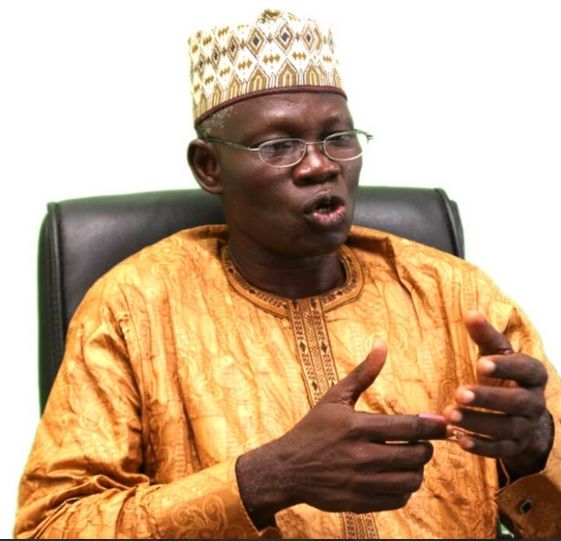
 The Nigerian National Petroleum Company Limited (NNPC Ltd) has officially unveiled its Gas Master Plan (GMP) 2026, tagged NGMP 2026.The unveiling, at the NNPC Towers in Abuja today, January 30, according to a statement by the Chief Corporate Communications Officer of the company, Andy Odeh, marks a strategic inflection point in Nigeria’s energy transition journey, and underscores government’s resolve to translate the nation’s vast gas endowment into tangible economic value, infrastructure expansion, and global competitiveness, in alignment with its long-term development aspirations.The statement quoted the Group Chief Executive Officer of the NNPC Ltd, Engineer Bashir Bayo Ojulari, as having described the NNPC Gas Master Plan 2026 as a bold, effective execution-anchored roadmap designed to unlock Nigeria’s immense gas potential and elevate the country into a globally competitive gas hub.Ojulari said that with about 210 trillion cubic feet (Tcf) of proven gas reserves and an upside potential of up to 600 Tcf, Nigeria possesses one of the most consequential hydrocarbon basins in the world; one reinforced by the Petroleum Industry Act (PIA) and the Federal Government’s gas-centric energy transition agenda.“The Plan is structured not just to deliver, but to exceed the Presidential mandate of increasing national gas production to 10 billion cubic feet per day by 2027 and 12 billion cubic feet per day by 2030, while catalysing over 60 billion dollars in new investments across the oil and gas value chain by 2030.”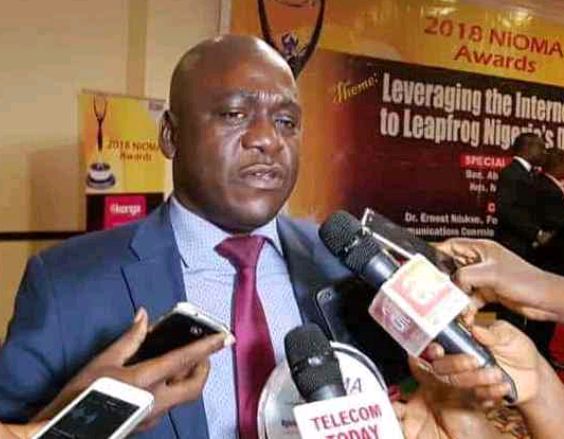


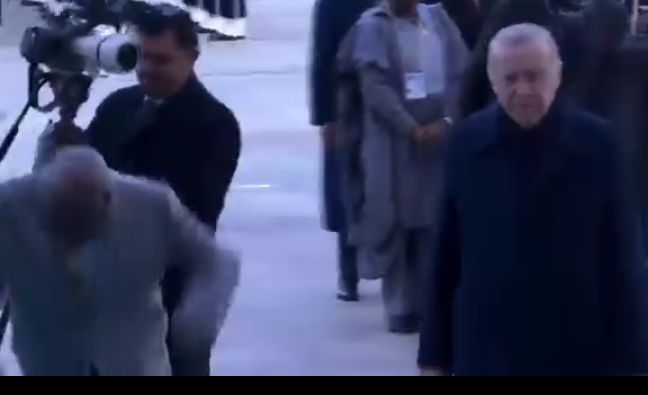
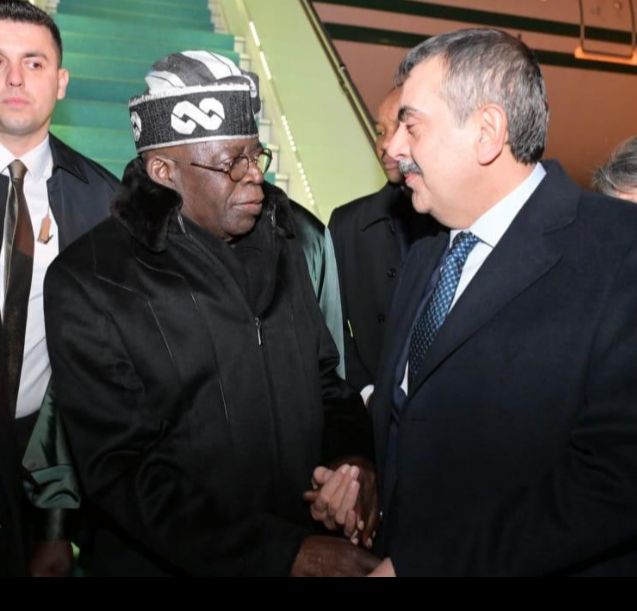 The visit will also be used as an opportunity to hold discussions with his Turkish counterpart.

Politics Of Selective Forgiveness In Tinubu’s Nigeria, By Abdulkarim Abdulmalik
Politics is not a realm of permanent enemies; permanent interests is a cliché that refuses to go away.
In Nigeria’s fragile democratic space, the way power forgives – or refuses to forgive – often reveals more about the State than official speeches ever could. Recent developments under President Bola Ahmed Tinubu reignited this debate, particularly the appointment of Daniel Bwala as Special Adviser on Media and Public Communications in November 2024 and the recent nomination of Reno Omokri – once one of the President’s fiercest critics – to an ambassadorial position. Both men had, at different times, publicly attacked Tinubu in strong and personal terms. Bwala was widely known for relentless media criticisms during the election season, while Omokri had previously accused Tinubu on national television of grave criminal conduct. Today, both are either within or closely aligned to the power structure they once condemned. This raises an unavoidable question: is forgiveness now a political virtue or merely a privilege reserved for the powerful and connected?
In attempting to provide answer to the question, it is necessary to look at the issue as a two-sided coin: Political Reconciliation or Political Convenience. Defenders of these appointments argue that democracy thrives on reconciliation. They point to global precedents where former critics are absorbed into government to foster unity, reduce polarization and harness diverse talents. Against this backdrop, they believe that Tinubu’s actions demonstrate magnanimity and political maturity; a proof that campaigns have ended and governance has begun.
However, critics argue that credibility of forgiveness in politics must be anchored on principle and moral ethics. When reconciliation appears selective, it risks being interpreted not as statesmanship but as expediency.
The Nigerian public is left wondering whether repentance, apology or accountability played any role in these political rehabilitations or whether proximity to power alone was sufficient absolution. More troubling is the implicit message: harsh attacks on a candidate may carry no consequences if the attacker later aligns with the victor, but severe punishment may await those who remain defiant.This tension becomes sharper when viewed alongside the case of Omoyele Sowore. The activist who is also the publisher of Sahara Reporters has faced repeated arrests and is currently standing trial over allegations, including disparaging the President. Sowore’s rhetoric, while often provocative and confrontational, falls within the tradition of radical dissent that democracies are expected to tolerate; especially when it does not translate into violence.
If Bwala and Omokri could be politically forgiven for past verbal assaults – some arguably more personal and damaging – why is Sowore’s continued dissent treated as a criminal matter rather than a democratic nuisance?
The inconsistency fuels the perception that loyalty to power, not the severity of speech, determines who is forgiven and who is prosecuted.
Democracy does not merely protect praise; it protects offense, criticism, and even discomfort. When forgiveness is extended only to those who submit, dissent ceases to be a right. It becomes a liability.
An even more complex dimension is introduced by the reported detention of alleged coup plotters awaiting military court-martial or trial. Unlike verbal critics, coup allegations strike at the heart of state security. No responsible government can trivialize such claims. This explains the limits of mercy. However, the principle of fairness remains essential. Thus, if political forgiveness is now a governing philosophy, the question arises: what are its boundaries? Is forgiveness reserved for media critics who cross over to the ruling camp, or can it extend—after due process—to others accused of threatening the state?
The issue is not whether alleged coup plotters should be automatically forgiven; they should not. The issue is whether the rule of law is applied consistently and transparently, or whether punishment and pardon are politically calibrated tools. Selective mercy weakens deterrence, while selective punishment undermines legitimacy.When a government forgives yesterday’s abusers but criminalizes today’s critics, it creates a moral hazard. Political actors learn that insults are tolerable, even profitable, so long as they eventually defect to power. Meanwhile, principled opposition becomes dangerous. This dynamic corrodes public trust. Citizens begin to see political morality not as a matter of truth or justice, but of timing and allegiance. Forgiveness becomes transactional, not ethical. This is the moral hazard embedded in selective forgiveness.In religious terms – particularly within Islam and Christianity, both influential in Nigeria – forgiveness is tied to repentance, justice and reconciliation. It is neither blind nor is it cynical. Translating forgiveness into governance without these anchors turns it into hypocrisy.
Bearing in mind that the State is above personal grievances, the presidency is an institution, not a personal project. Insults against a candidate during campaigns should not automatically translate into crimes against the State once elections are over. In the same vein, accepting former critics into government should not erase legitimate questions about credibility, consistency and accountability.
If Bwala and Omokri are forgiven, the process should be explicit and principled. If Sowore is prosecuted, the legal basis must be clear, proportionate and insulated from political vendetta. If coup suspects are detained, their rights must be protected and their trials swift and transparent. Anything less creates the impression of a government that forgives friends, punishes “supposed” enemies and confuses loyalty with patriotism.
To this end, forgiveness must be proportional, else it becomes oppression. The truth, however, is that Nigeria stands at a crossroads where democratic endurance depends not on how power rewards loyalty, but on how it treats dissent. Forgiveness, when unevenly applied, ceases to be a virtue. It becomes a weapon.The critical question therefore, is not whether Bwala and Omokri should be forgiven. They could. The question is whether all Nigerians are equally entitled to justice, mercy and due process, regardless of their political usefulness to those in power. So, until forgiveness is guided by principle rather than proximity, Nigeria’s democracy will remain fragile: ruled not by law, but by convenience.
Abdulkarim Abdulmalik, wrote in from Abuja and can be reached on nowmalik@gmail.com