The Tertiary Education Trust Fund (TETFund) has said that the recent Central Bank of Nigeria (CBN) policy had created difficulties in the payment of foreign scholarship tuition fees and stipends and may lead to suspending foreign scholarships to Nigerians.
The Executive Secretary of the TETFund, Sonny Echono, who spoke today, August 16, in Abuja, at a One-Day Stakeholders’ Engagement on Emerging Issues with the TETFund Intervention, said that since the funds allocation is barely enough to service programmes under its Tertiary Scholarship for Academic Staff (TSAS), the fund is considering suspending foreign scholarships.
He said however, that the Fund is considering an upward review of local scholarships.
”The fund at this material time is also discouraging beneficiary institutions from initiating new Benchwork programmes.
”Additionally, there are issues related to scholars not returning to serve their bonds at their home institutions upon completion of their programmes.
”Infact, the challenge of scholars absconding has undermine and complicated the TSAS programme and brought it under intense scrutiny.
”It is for these and other reasons that this engagement was organised. We need to address these challenges and find solutions to ensure the effective and smooth implementation of our scholarship programmes.”
The executive secretary said that the fund recently signed several MoU’s with some prestigious institutions overseas that include universities in Malaysia, India, Brazil, France and the United States with a view to boosting and enhancing the TSAS programme in the future.
Also speaking, the Acting Executive Secretary, National Universities Commission (NUC), Chris Maiyaki stressed the need to develop new strategies for funding while ensuring sensitivity of the evolving challenging dynamics through qualitative funding.
Maiyaki advised the fund to revamp its monitoring mechanism for quality assurance so as to have a better return on investment on its projects.
Meanwhile, the Chairman of the House Committee on TETFund, Mrs. Miriam Onuoha said that in making essential infrastructure available in tertiary institutions, there was need to ensure inclusivity especially with Persons Living With Disabilities (PLWD).
“In our physical planning, we must make accessible the building to be accommodating to the needs of PLWD,” she said.
This was even as the former Executive Secretary of NUC, Professor Peter Okebukola, called for a monitoring and implementation system to ensure that academic calendars of universities were adhered to.
Okebukola, who spoke on TSAS, emerging issues and possible solutions, clamour for reduced TETFund oversees scholarships while encouraging in-country training in TETFund strengthened PG programmes.
He said that rather than continuously spending a lot of funds on foreign training, local universities should be provided with state-of-the-art facilities while carrying out accreditation of postgraduate programmes.
”In offering solutions to these challenges, there is need to offer TETFund support to top-rate lecturers from oversees universities to come to Nigeria to join local PG training by Nigerian professors.
”We must send professors (of at least 10 years standing) for capacity building to top-rate overseas universities in carefully selected programmes on return to bolster doctoral education and supervision,”he said.
President Bola Ahmed Tinubu has expressed surprise at how the former military President of Nigeria, Ibrahim Babangida has been able to maintain his wisdom
and counsel for many political leaders, both within and outside of Nigeria, 30 Years after leaving power.
In a message today, August 16, to wish ex President Babangida happy 82 birthday coming up tomorrow, August 17, Tinubu marveled at the influential position of the former Nigerian leader, “who has, after 30 years outside of power, consistently remained a voice of wisdom and counsel for many political leaders, both within and outside of Nigeria.”
President Tinubu, who shared in the joy of celebration with family members, friends, and associates of Babangida, acknowledged the service the retired Army General rendered to the nation in many capacities, especially in the Nigerian army, “with distinction, reaching the peak of his career as Chief of Army Staff with indelible legacies for his gallant defense of our nationhood during the Nigerian Civil War.”
The President said that the contributions of Babangida to national development, which include the creation of many states to strengthen the federal structure, physical infrastructure, the liberalization of the media industry and other initiatives across the health and defense sectors can never be forgotten.
He prayed for the continuous well-being of Babangida and his family.
Report reaching us indicated that crisis has broken out between Boko Haram fighters and members of another Islamic terrorist group, known as Islamic State in West African Province (ISWAP), leading to Boko Haram capturing and detaining of 60 ISWAP members, including three prominent commanders from the sect.
The identified commanders so detained, according to informed sources, are Abubakar Saddiq, Abou Maimuna and Malam Idris.
Zagazola Makama, a security analyst and counter-insurgency expert in the Lake Chad region, hinted that the ISWAP terrorists were apprehended while en route to Damasak in Borno State.
It was revealed that the Boko Haram Buduma factions, which recently gained an advantage over ISWAP, captured the majority of ISWAP’s camps and as a result, ISWAP members sought refuge in heavily fortified hideouts in the Kukawa, Madayi and Kwatan Mota areas.
“The Boko Haram Buduma Faction’s recent success against ISWAP was due to disaffected ISWAP fighters defecting to join forces with them,” Makama explained.
The captured ISWAP members were said to have been subsequently taken to an underground prison cell near Dogon Chukwu, specifically in KWATAN MOTA, where they are being held as Prisoners of War.
The clash between the terrorist groups was believed to have occurred on Monday during their ongoing supremacy battle.
In a separate development, reports indicate that an additional 78 Boko Haram terrorists and their family members have surrendered to troops of Sector 3 Multinational Joint Task Force (MNJTF) Operation Hadin Kai in Monguno Local Government Area of Borno State.
Their surrender followed sustained military operations targeting their hideouts and the internal conflicts with ISWAP, which resulted in the deaths of over 100 terrorists from both sides within the past seven days.
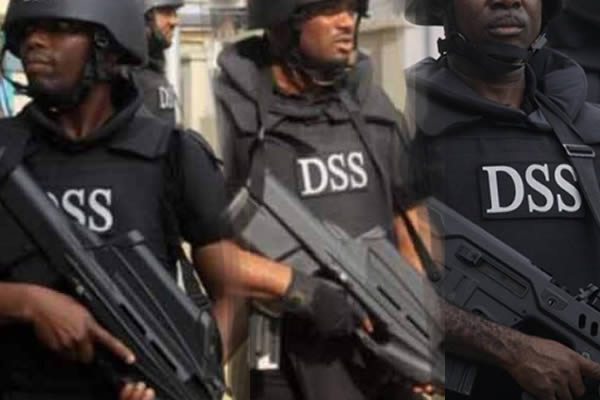
The Department of State Services (DSS) has issued a security alert on a grand plot by terrorists to attack the Abuja-Kaduna train service anytime from now.
It would be recalled that an Abuja–Kaduna bound train was attacked in Katari village, Kaduna State on March 28, 2022, prompting the Nigeria Railway Corporation (NRC) to briefly halt operations along the route.
In a leaked/secret letter signed by DSS Director of FCT Command, R.N. Adepemu, entitled, ‘Security Alert: Impending Threat By A Coalition Of Banditry Syndicate To Attack Abuja-Kaduna Train Service Along AKTS Corridor’, the DSS cautioned train passengers to be extra vigilant.
The DSS warned of an “impending threat to seamless train transportation along the Abuja – Kaduna Train Service (AKTS).”
The secret memo stated that a coalition of banditry syndicate was plotting to attack the Abuja-Kaduna train aimed at kidnapping passengers on board for ransom any moment from now.
”In view of the threat inherent and the need to forestall likely breach of security along the AKTS, it is advised that, existing security arrangements be scaled up within and along the route. In addition, the need for the under listed counter security measures be emplaced ta nip in the bud the impending threats.
i. Air surveillance patrol; Surveillance on the rail track; Military checkpoint/ patrol; Police checkpoint/ patrol; Security raid operation be carry out around Byazhin, Jibi, as well as ja forest Enhance the Nigeria Police Mobile Force (NPMF) operatives with walkie talkie to sustain escort services on train;
“Deploy more Nigerian Security and Civil Defence Corps (NSCDC) with walkie talkie to provide escort duty; ie contents of this correspondence are classified: Unauthorized disclostre could lead to prosecution.
“Crisis response team be established in the advent of attack for quick response time; Intelligence sharing amongst all relevant stakeholders.
“Although, the aforementioned threat is yet to be in the public domain, the development is capable of heightening fears over safety of lives and property amongst stakeholders and commuters of trail transportation along the AKTS corridor.
“Therefore, the need to discreetly manage this intelligence provided cannot be, over emphasized.
“This is particularly against the backdrop of fatal attacks along the routes which left casualties and victims hence, some passengers were killed as well as others abducted for several months before their eventual release.”
President Bola Ahmed Tinubu has assigned the ministry of the Federal Capital Territory (FCT) to the immediate past Governor of Rivers State, Nyeson Wike and Ministry of Solid Minerals development to his immediate past Special Adviser on Special Duties, Communications and Strategy, Dele Alake. The facts emerged today, August 16, following the release of the list of the ministers and their portfolios. Below are the ministers with their portfolios: SOUTH WEST Minister of Communications, Innovation and Digital Economy Bosun Tuani Minister of State, Environment and Ecological Management Ishak Salako Minister of Finance and Coordinating Minister Of The Economy Wale Edun Minister of Marine and Blue Economy Bunmi Tunji-Ojo Minister of Power Adebayo Adelabu Minister of State, Health and Social Welfare Tunji Alausa Minister of Solid Minerals Development Dele Alake Minister of Tourism Lola Ade-John Minister of Transportation Adegboyega Oyetola
SOUTH EAST Minister of Industry, Trade and Investment Doris Anite Minister of Innovation, Science and Technology Uche Nnaji Minister of State, Labour and Employment Nkiruka Onyejeocha Minister of Women Affairs Uju Kennedy Minister of Works David Umahi
SOUTH SOUTH Minister of Aviation and Aerospace Development Festus Keyamo Minister of Youth Abubakar Momoh Minister of Humanitarian Affairs And Poverty Alleviation Betta Edu Minister of State, Gas Resources Ekperipe Ekpo Minister of State, Petroleum Resources Heineken Lokpobiri Minister of Sports Development John Enoh Minister of Federal Capital Territory Nyesom Wike
NORTH WEST Minister of Art, Culture and The Creative Economy Hannatu Musawa Minister of Defence Mohammed Badaru Minister of State, Defence Bello Matawalle Minister of State, Education Yusuf T. Sununu Minister of Housing and Urban Development Ahmed M. Dangiwa Minister of State, Housing and Urban Development Abdullahi T. Gwarzo Minister of Budget and Economic Planning Atiku Bagudu Minister of Environment and Ecological Management (Kaduna) Minister Of State, Federal Capital Territory Mairiga Mahmud Minister Of State, Water Resources And Sanitation Bello M. Goronto
NORTH EAST Minster of Agriculture and Food Security Abubakar Kyari Minister of Education Tahir Maman Minister of Interior Sa’idu A. Alkali Minister of Foreign Affairs Yusuf M. Tuggar Coordinating Minister of Health and Social Welfare All Pate Minister of Police Affairs Ibrahim Geidam Minister of State, Steel Development U. Maigari Ahmadu
NORTH CENTRAL Minister of Steel Development Shuaibu A. Audu Minister of Information and National Orientation Muhammed Idris Attorney General of the Federation and Minister of Justice Lateef Fagbemi Minister of Labour And Employment Simon B. Lalong Minister of State, Police Affairs Imaan Sulaiman-Ibrahim Minister of Special Duties and Inter-Governmental Affairs Zephaniah Jisalo Minister of Water Resources and Sanitation Joseph Utsev Minister of State, Agriculture and Food Security Aliyu Sabi Abdullahi.
The Nigeria Air Force (NAF) has condemned the social media for helping in promoting the false propaganda of the terrorists on the crashed MI-171 helicopter at Chukuba Village in Shiroro Local Government Area of Niger State. In a statement today, August 16, NAF expressed worry over the consequences of circulating a video on social media platforms depicting the alleged wreckage of the crashed helicopter, with bodies of the victims. “While the NAF regrets such unfortunate incidents, especially as they involve the loss of lives of our colleagues, the Service will never shy away from unravelling the probable cause of the crash with a view to drawing lessons. “For those aiding and abetting the propaganda tendencies of terrorists, deliberately or inadvertently, by spreading the videos of the alleged crash site with gory pictures of dead military personnel, the need to rethink the consequences of their actions on the morale of troops, families of deceased personnel as well as on Nigeria’s national security is imperative.” The statement, signed by the Director of Public Relations and Information of the Nigerian Air Force, Air Commodore Edward Gabkwet, said that it is not in the character of the NAF to respond to such claims, particularly one peddled by terrorists, but that concerns expressed by well-meaning Nigerians on the need to address the propaganda became imperative. “Like all military organizations involved in counterinsurgency and counterterrorism operations, incidences of fatalities, mishaps and crashes are sometimes inevitable. “For the NAF, the last 8 years has seen an increased level of air operations in efforts at checkmating the nefarious activities of terrorists and criminal elements in the country. “With heightened levels of air operations, occasioned by an enhanced fleet, the likelihood of air mishaps and accidents at times become unavoidable and inevitable due to various reasons. “Indeed, the Chief of the Air Staff, Air Marshal Hasan Abubakar said this much when he hosted Governor Umaru Bago of Niger State, yesterday, 15 August 2023, at his office where he noted that the rates of aircraft accidents/incidences are directly proportional to the heightened level of air operations. “For the NAF and indeed, the entire members of the Armed Forces, our resolve and determination to bring the current security situation in Niger State and indeed, all troubled spots in the country remains unshaken. “Infact, if anything, we are determined more than ever before, to take on the enemy frontally until they are brought to their knees. “While calling on all Nigerians to continue to support the Armed Forces of Nigeria and other security agencies as we all jointly confront our common enemies, the NAF wishes to appreciate the President, Commander-in-Chief of the Armed Forces, Bola Ahmed Tinubu, GCFR, for his message of condolence and words of encouragement. Our appreciation also goes to other well-meaning Nigerians for their support.”
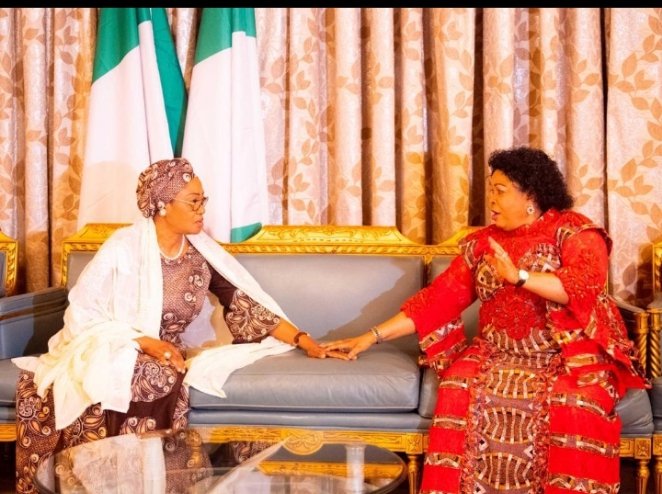
Former Nigerian First Lady, Dame Patience Jonathan stormed Aso Rock Presidential villa, Abuja, today, August 16, on solidarity visit to the current First Lady, Senator Olufemi Tinubu. From left: Dame Patience Jonathan and Senator Oluremi Tinubu.
Governor Ademola Adeleke of Osun State has appointed and sworn-in Caretaker committees for Local Government Council Areas, Local Government Development Areas and the Area Office in the state. The Governor had written to the Speaker of the State House of Assembly, seeking approval for the appointment of the Caretaker committees, which was promptly approved. The Governor’s letter to the Assembly reads in part: “In view of the urgency of need for a functioning local government system and the arising necessity due to non-existence of legitimate and democratically elected Local Government Executives across the Local Government Councils in Osun State, I hereby forward the attached list of Caretaker members for all the Local Government Council Areas, Local Government Development Area and Area Councils across Osun State, for your consideration, pending the holding of Local Government elections in line with the relevant provisions of the law. “I seek your expeditious approval so as to properly re-shape and direct the administration of the third tier of government in Osun State.” Immediately after the Assembly approved the appointees, they were screened. The swearing-in of the Caretaker members, according to a statement by the spokesperson to the Governor, Mallam Olawale Rasheed, held earlier today, August 16, at the Bola Ige House, Abere , Osogbo.
Yushau Shaibu The hurriedly declared resolution of the Economic Community of West African States (ECOWAS) to deploy troops to restore democracy and reinstate the ousted President Mohamed Bazoum of Niger Republic, after the military takeover of power on the 26th of July, might have been influenced by the need to avoid foreign interventions that could lead to the kinds of destruction and agony evident in Syria, Yemen, Libya, Sudan, and elsewhere. In its keen and swift desire for a resolution to the crisis, President Bola Tinubu, on behalf of ECOWAS, raised special envoys, comprising former Nigerian leader, General Abdulsalam Abubakar; the Sultan of Sokoto, Muhammad Abubakar III and the president of the ECOWAS Commission, Alieu Touray, to mediate in the unfolding crisis in Niger. Unfortunately, the Nigerien Coup leader, Abdourahmane Tchiani, snubbed the ECOWAS delegation by refusing to receive them, even though he later received the former Emir of Kano, Sanusi Lamido Sanusi. It was quite disheartening that the official delegation was not even given access to leave the airport in Niamey in the endeavour to meet with Tchiani and Bazoum. It is gratifying that Tinubu subsequently constituted another powerful delegation, comprising top Islamic clerics, to open talks with the junta in Niger, which has now agreed to dialogue with the ECOWAS on the way forward in the country. The latest action by ECOWAS is possibly to checkmate what appears to be an evolving annual ritual, evident in the past three years, in which military personnel in Francophone countries in the subregion are overthrowing democratically elected leaders. The coup plotters removed Presidents Ibrahim Boubacar Keita of Mali in 2020, Alpha Condé of Guinea in 2021, Roch Marc Christian Kaboré of Burkina Faso in 2022 and now President Mohamad Bazoum of Niger in 2023. The military juntas, led by Colonel Assimi Goïta in Mali, Colonel Mamady Doumbouya in Guinea, and Captain Ibrahim Traoré in Burkina Faso, were mostly trained by the U.S. In fact, Goita and Doumbouya attended a 2019 US military training exercise in Burkina Faso. Surprisingly after taking over, they also drove away French troops and allegedly invited Russian mercenary forces in as their replacement. While increasing complaints about poor governance, escalating poverty and insecurity are often cited for the coups, a deeper factor is the geopolitics of resource access and control. This involves foreign interests’ desires to explore and control the abundant mineral resources of West African nations. Hence, the ascendant tension in Niger and the wider subregion are impelled by the imperialist and economic rivalry between the East and the West. As it is now, if appropriate steps are not taken to defuse the budding conflict in Niger Republic, the ongoing proxy war between Russia and NATO/USA over Ukraine, can easily creep into West Africa, where diverse groups of mercenaries and Western Special Forces are already stationed across different locations, and with the military bases just waiting for instructions from their commanders for armed actions to break out. In many instances, military actions and interventions are not only carried out on battlegrounds but they are first activated in the minds of the public through crude propaganda. The conflict in Ukraine, for instance, exposes how the Western media – essentially – display their extreme biases in reportage, as they engage in psychological warfare, propagating one-sided and selective facts, while censoring counterclaims and obvious facts. Rather than striving for fair, conflict-sensitive, and objective reports towards the promotion of peace, they are advancing a highly inflammatory and pernicious form of war journalism and thereby escalating the crises in the process. This appears to be working to certain ends. A similar instance of this that we should never forget in a hurry is the conspiracy involving the Western media over the so-called accumulation of weapons of mass destruction in Iraq, and the democratisation campaign in Libya, which led to the elimination of the leaders of the two mentioned countries, Saddam Hussein and Muammar Ghadafi, and to the death of scores of innocent citizens through the aggression of the allied forces and NATO. In considering the unfortunate case of poor Ukraine, which has become the battleground for the flexing of muscles between Russian mercenaries and Western (US/NATO) Special Forces – with attendant devastation that would take several years, if not decades, to recover from – care should be seriously taken so that West Africa does not become next theatre of a proxy war between foreign powers driven by agenda that is far from the liberation of the subregion and larger continent from their debilitating challenges. Although the Russian government does not have military bases in Africa like US and France that represents NATO do, its presence is strongly felt through the activities of the Wagner Group of armed mercenaries, which executes the government’s military cooperation agreements, especially in a number of West African states. While Wagner’s fighters are hired by African leaders for regime protection and to consolidate their holds on power, the Group, founded by Yevgeny Prigozhin as a private military company, operates with the permission of Russian President Vladimir Putin. The mercenaries are hired to suppress dissent, guard natural resources, engage in direct combat with adversaries, bolster weak official military forces, and explore newer areas of strategic vulnerability towards rooting out the West’s declining influence in many sensitive spots around the world. Of its numerous engagements, the Wagner Group is more keenly involved in providing security cover for well-laden but remote mineral sites that are often under the constant threat of non-state actors. Meanwhile, as mercenaries are having their ways in the African region, NATO through the US continues to carry out joint military exercises with other allies and partners in contiguous territorial spaces within the region. For instance, the US Africa Command (USAFRICOM), headquartered in Stuttgart, Germany (another NATO member), is one of the US Department of Defense combatant commands, with a geographic or functional mission that provides for the command and control of military forces for peace and war. It has military bases in select African countries. In the West African rim of the Sahel, for instance, the United States under President Joe Biden has two military bases in Niger – Air Base 101 in Niamey, and Air Base 201 in Agadez, which was constructed at the cost of $110 million. The American interventions in Niger have included the deployment of special operations forces, unmanned aerial vehicles and drones by its Air Force, while the CIA has engaged in counter-terrorism operations. After its ejection from the other francophone countries in West Africa, France (NATO member), with the support of America, has reinforced its presence in Niger and despatched hundreds of its operatives to the southwest of the country, towards the Malian border. Niger previously served mainly as a transit base for France’s operations in Mali. And just recently, precisely in May 2023, in a new strategic partnership, Niger accepted 1,500 French soldiers on its soil to bolster its armed forces, at a time of a great security threat. Before then the European Union (EU) had accepted the call from Niger’s parliament to station special operations forces (SOF) in the country in order to counter its problems of insecurity. Note that the security of EU and NATO are inter-connected having respectively 27 and 31 member states, of which 22 states are members of both. It is also worth noting that the US and French Special Forces have jointly and discreetly undertaken major military operations within the ECOWAS region. It could be recalled that at some point the US special forces secretly came into Nigeria and killed several kidnappers while rescuing a 27-year-old American citizen, Philip Walton, who was abducted in Niger in 2020. Similarly, during the Tongo Tongo ambush in 2017, when armed terrorists attacked US and Nigerien soldiers in an ambush, French aircraft swiftly responded to this and brought the fire-fight to an end. Although some Americans and Nigeriens were killed during the military intervention, many soldiers actually survived that operation. While ECOWAS is struggling to ensure that the Niger crisis is resolved amicably, some Nigerians are unmindful of their provocative behaviours and statements. It is quite shameful that those who never experienced a civil war or a military coup, are the ones clamouring for a military intervention in the world’s most populous black nation on the basis of myopic sentiments. Any attempt to disrupt the current democratic administration, under the leadership of President Ahmed Bola Tinubu, will not only lead to the dissolution of the country but would unleash on each region monumental security challenges that it barely has the capacity to contend with. Imagine an ‘explosion’ of terrorism in the North-East, banditry in the North-West, kidnappings in the North-Central, volatile militancy in the South-South, violent secessionist agitation in the South-East, and cultism in the South-West. No single region will be willing to stick its neck out in furtherance of any campaign for a united country thereafter. In a nutshell, I agree with the recent position of the Arewa Economic Forum (AEC) supporting the deepening of democratic principles in the subregion and urging ECOWAS to allow the socio-economic reality of Nigeriens to govern their choices. While suggesting that sanctions should be targeted at the military junta and its cronies, the Forum yet admonished that ways have to be found to protect innocent citizens, especially vulnerable people, including traders, women and children, from these penalties. Being one of the poorest nations on earth, any further deterioration of the precarious living conditions of Nigeriens would activate hordes of new migrations into Nigeria for succour, which will invariably burden our current economic situation and put further pressure on our scarce national resources. All said, Nigeria must avoid going into a new war when the country is yet to contain ISWAP-Boko Haram terrorism and the pervasive acts of banditry, especially along the Northern corridor. Dialogue and diplomacy should be sustained towards resolving not only the Nigerien but also the ECOWAS crises. _Yushau A. Shuaib, author of “An Encounter with the Spymaster” and can be reached at www.YAShuaib.com yashuaib@yahoo.com
Kenya has reintroduced a small subsidy to stabilise retail fuel prices for the next 30 days.
According to the energy regulator, the measure, in response to public anger over the high cost of living, is a reversal of the government earlier policy which removed the subsidy.
On coming to office last September, President William Ruto removed fuel and maize flour subsidies put in place by his predecessor, saying that he preferred subsidising production rather than consumption.
The move was also aimed at cutting government spending as the government seeks to get a handle on debt repayments that have forced it to deny market speculation about a possible default.
But the subsidy cuts as well as recent tax hikes have increased living costs and contributed to violent anti-government protests in recent months.
The energy regulator said that the maximum retail price of a litre of petrol would remain constant at 194.68 shillings ($1.35), shielding consumers from an increase of 7.33 shillings, which the government will shoulder through a price stabilisation fund.
Retail fuel prices are set in the middle of each month. The government also applied small subsidies on kerosene and diesel, the regulator, known as EPRA, said.
The move did not amount to a reinstatement of the subsidies, since the regulator is using the petroleum development levy to stabilise prices, rather than asking for exchequer support, said Daniel Kiptoo, the director general of EPRA.
“We are basically giving to Kenyans the money that we have collected over the past couple of months,” he told Reuters, referring to the levy, which is charged at the rate of 5.40 shillings per litre of fuel.
Officials from the energy ministry and the finance ministry did not immediately respond to requests for comment.
Fuel prices shot up when Ruto removed the subsidies. They spiked again in July after the government pushed through parliament a contentious law that doubled the fuel tax.
The protests organised in response to that law were called off last month after the opposition and Ruto agreed to talks to resolve their differences, the second such attempt this year.
We use cookies on our website to give you the most relevant experience by remembering your preferences and repeat visits. By clicking “Accept”, you consent to the use of ALL the cookies.
This website uses cookies to improve your experience while you navigate through the website. Out of these, the cookies that are categorized as necessary are stored on your browser as they are essential for the working of basic functionalities of the website. We also use third-party cookies that help us analyze and understand how you use this website. These cookies will be stored in your browser only with your consent. You also have the option to opt-out of these cookies. But opting out of some of these cookies may affect your browsing experience.
Necessary cookies are absolutely essential for the website to function properly. This category only includes cookies that ensures basic functionalities and security features of the website. These cookies do not store any personal information.
Any cookies that may not be particularly necessary for the website to function and is used specifically to collect user personal data via analytics, ads, other embedded contents are termed as non-necessary cookies. It is mandatory to procure user consent prior to running these cookies on your website.











Niger Coup: Of Russian Mercenaries, NATO Forces And Looming Proxy Wars, By Yushau A. Shuaib
The hurriedly declared resolution of the Economic Community of West African States (ECOWAS) to deploy troops to restore democracy and reinstate the ousted President Mohamed Bazoum of Niger Republic, after the military takeover of power on the 26th of July, might have been influenced by the need to avoid foreign interventions that could lead to the kinds of destruction and agony evident in Syria, Yemen, Libya, Sudan, and elsewhere.
In its keen and swift desire for a resolution to the crisis, President Bola Tinubu, on behalf of ECOWAS, raised special envoys, comprising former Nigerian leader, General Abdulsalam Abubakar; the Sultan of Sokoto, Muhammad Abubakar III and the president of the ECOWAS Commission, Alieu Touray, to mediate in the unfolding crisis in Niger. Unfortunately, the Nigerien Coup leader, Abdourahmane Tchiani, snubbed the ECOWAS delegation by refusing to receive them, even though he later received the former Emir of Kano, Sanusi Lamido Sanusi. It was quite disheartening that the official delegation was not even given access to leave the airport in Niamey in the endeavour to meet with Tchiani and Bazoum.
It is gratifying that Tinubu subsequently constituted another powerful delegation, comprising top Islamic clerics, to open talks with the junta in Niger, which has now agreed to dialogue with the ECOWAS on the way forward in the country.
The latest action by ECOWAS is possibly to checkmate what appears to be an evolving annual ritual, evident in the past three years, in which military personnel in Francophone countries in the subregion are overthrowing democratically elected leaders. The coup plotters removed Presidents Ibrahim Boubacar Keita of Mali in 2020, Alpha Condé of Guinea in 2021, Roch Marc Christian Kaboré of Burkina Faso in 2022 and now President Mohamad Bazoum of Niger in 2023.
The military juntas, led by Colonel Assimi Goïta in Mali, Colonel Mamady Doumbouya in Guinea, and Captain Ibrahim Traoré in Burkina Faso, were mostly trained by the U.S. In fact, Goita and Doumbouya attended a 2019 US military training exercise in Burkina Faso. Surprisingly after taking over, they also drove away French troops and allegedly invited Russian mercenary forces in as their replacement.
While increasing complaints about poor governance, escalating poverty and insecurity are often cited for the coups, a deeper factor is the geopolitics of resource access and control. This involves foreign interests’ desires to explore and control the abundant mineral resources of West African nations. Hence, the ascendant tension in Niger and the wider subregion are impelled by the imperialist and economic rivalry between the East and the West.
As it is now, if appropriate steps are not taken to defuse the budding conflict in Niger Republic, the ongoing proxy war between Russia and NATO/USA over Ukraine, can easily creep into West Africa, where diverse groups of mercenaries and Western Special Forces are already stationed across different locations, and with the military bases just waiting for instructions from their commanders for armed actions to break out.
In many instances, military actions and interventions are not only carried out on battlegrounds but they are first activated in the minds of the public through crude propaganda. The conflict in Ukraine, for instance, exposes how the Western media – essentially – display their extreme biases in reportage, as they engage in psychological warfare, propagating one-sided and selective facts, while censoring counterclaims and obvious facts. Rather than striving for fair, conflict-sensitive, and objective reports towards the promotion of peace, they are advancing a highly inflammatory and pernicious form of war journalism and thereby escalating the crises in the process. This appears to be working to certain ends.
A similar instance of this that we should never forget in a hurry is the conspiracy involving the Western media over the so-called accumulation of weapons of mass destruction in Iraq, and the democratisation campaign in Libya, which led to the elimination of the leaders of the two mentioned countries, Saddam Hussein and Muammar Ghadafi, and to the death of scores of innocent citizens through the aggression of the allied forces and NATO.
In considering the unfortunate case of poor Ukraine, which has become the battleground for the flexing of muscles between Russian mercenaries and Western (US/NATO) Special Forces – with attendant devastation that would take several years, if not decades, to recover from – care should be seriously taken so that West Africa does not become next theatre of a proxy war between foreign powers driven by agenda that is far from the liberation of the subregion and larger continent from their debilitating challenges.
Although the Russian government does not have military bases in Africa like US and France that represents NATO do, its presence is strongly felt through the activities of the Wagner Group of armed mercenaries, which executes the government’s military cooperation agreements, especially in a number of West African states.
While Wagner’s fighters are hired by African leaders for regime protection and to consolidate their holds on power, the Group, founded by Yevgeny Prigozhin as a private military company, operates with the permission of Russian President Vladimir Putin.
The mercenaries are hired to suppress dissent, guard natural resources, engage in direct combat with adversaries, bolster weak official military forces, and explore newer areas of strategic vulnerability towards rooting out the West’s declining influence in many sensitive spots around the world. Of its numerous engagements, the Wagner Group is more keenly involved in providing security cover for well-laden but remote mineral sites that are often under the constant threat of non-state actors.
Meanwhile, as mercenaries are having their ways in the African region, NATO through the US continues to carry out joint military exercises with other allies and partners in contiguous territorial spaces within the region. For instance, the US Africa Command (USAFRICOM), headquartered in Stuttgart, Germany (another NATO member), is one of the US Department of Defense combatant commands, with a geographic or functional mission that provides for the command and control of military forces for peace and war. It has military bases in select African countries.
In the West African rim of the Sahel, for instance, the United States under President Joe Biden has two military bases in Niger – Air Base 101 in Niamey, and Air Base 201 in Agadez, which was constructed at the cost of $110 million. The American interventions in Niger have included the deployment of special operations forces, unmanned aerial vehicles and drones by its Air Force, while the CIA has engaged in counter-terrorism operations.
After its ejection from the other francophone countries in West Africa, France (NATO member), with the support of America, has reinforced its presence in Niger and despatched hundreds of its operatives to the southwest of the country, towards the Malian border. Niger previously served mainly as a transit base for France’s operations in Mali.
And just recently, precisely in May 2023, in a new strategic partnership, Niger accepted 1,500 French soldiers on its soil to bolster its armed forces, at a time of a great security threat. Before then the European Union (EU) had accepted the call from Niger’s parliament to station special operations forces (SOF) in the country in order to counter its problems of insecurity. Note that the security of EU and NATO are inter-connected having respectively 27 and 31 member states, of which 22 states are members of both.
It is also worth noting that the US and French Special Forces have jointly and discreetly undertaken major military operations within the ECOWAS region. It could be recalled that at some point the US special forces secretly came into Nigeria and killed several kidnappers while rescuing a 27-year-old American citizen, Philip Walton, who was abducted in Niger in 2020.
Similarly, during the Tongo Tongo ambush in 2017, when armed terrorists attacked US and Nigerien soldiers in an ambush, French aircraft swiftly responded to this and brought the fire-fight to an end. Although some Americans and Nigeriens were killed during the military intervention, many soldiers actually survived that operation.
While ECOWAS is struggling to ensure that the Niger crisis is resolved amicably, some Nigerians are unmindful of their provocative behaviours and statements. It is quite shameful that those who never experienced a civil war or a military coup, are the ones clamouring for a military intervention in the world’s most populous black nation on the basis of myopic sentiments. Any attempt to disrupt the current democratic administration, under the leadership of President Ahmed Bola Tinubu, will not only lead to the dissolution of the country but would unleash on each region monumental security challenges that it barely has the capacity to contend with. Imagine an ‘explosion’ of terrorism in the North-East, banditry in the North-West, kidnappings in the North-Central, volatile militancy in the South-South, violent secessionist agitation in the South-East, and cultism in the South-West. No single region will be willing to stick its neck out in furtherance of any campaign for a united country thereafter.
In a nutshell, I agree with the recent position of the Arewa Economic Forum (AEC) supporting the deepening of democratic principles in the subregion and urging ECOWAS to allow the socio-economic reality of Nigeriens to govern their choices. While suggesting that sanctions should be targeted at the military junta and its cronies, the Forum yet admonished that ways have to be found to protect innocent citizens, especially vulnerable people, including traders, women and children, from these penalties.
Being one of the poorest nations on earth, any further deterioration of the precarious living conditions of Nigeriens would activate hordes of new migrations into Nigeria for succour, which will invariably burden our current economic situation and put further pressure on our scarce national resources.
All said, Nigeria must avoid going into a new war when the country is yet to contain ISWAP-Boko Haram terrorism and the pervasive acts of banditry, especially along the Northern corridor. Dialogue and diplomacy should be sustained towards resolving not only the Nigerien but also the ECOWAS crises.
_Yushau A. Shuaib, author of “An Encounter with the Spymaster” and can be reached at www.YAShuaib.com yashuaib@yahoo.com