

Attah Igala Describes Attack On Kogi Gov, Yahaya Bello’s Convoy As Criminal

The Attah Igala, Mathew Opaluwa Ogwuche-Akpa, has condemned the Saturday, June 3 attack on the convoy of the State Governor, Yahaya Bello by a political group while returning from Abuja to Lokoja.
The Attah, who led members of the Kogi State Traditional Council of chiefs on a sympathy visit to the Governor, at the Government House in Lokoja today, June 5, strongly condemned the attack, labeling it as a criminal act that must not be repeated in Kogi State, going forward.
The first class traditional ruler and President of the Council of chiefs in the State, cautioned politicians and their followers against violent campings ahead of November 2023 election.
He prayed for the continuous well-being of Governor Yahaya Bello and the progress of Kogi State, even as the Ohimege-Igu of Koto Karfe, Abdulrazaq Isah Koto, emphasized that the state, which has enjoyed significant peace and tranquility under the leadership of Governor Yahaya Bello, will continue to remain peaceful.
He called on the politicians to adhere to the established rules.
Responding, the Governor expressed surprise at the conduct of those who attacked his convoy on Saturday.
The governor narrated that on his way to Abuja on May 25th, his convoy encountered a roadblock allegedly set up by protesting truck drivers who claimed to have issues with the task force.
The governor said that after waiting for hours, enduring untold hardship alongside other commuters who were unaware of the situation, he joined the security personnel in clearing the road.
He said that those who were involved in subjecting other road users to such harsh conditions, were subsequently arrested and charged by the security forces.
The governor said that such actions were meant to serve as a deterrent to others who may attempt to take the law into their own hands.
According to him, due to a meeting of the Progressive Governors Forum with President, Bola Ahmed Tinubu in Abuja, he requested the party to reschedule the Unveiling of the APC’s Deputy Governorship candidate, rescheduled for Saturday to Saturday.
The Governor said that as a result of a hectic week, he was taking a naps in his car while on his way to Lokoja when he noticed that the convoy was not moving.
He said that when he inquired about the reason, he was informed by his security details that it was the convoy of the governorship candidate of the Social Democratic Party (SDP) that was causing the delay.
He said that despite frantic efforts by his security details to find a way through, he had no choice but to follow behind Murtala’s convoy from Koto Karfe to Lokoja, covering a distance of approximately 30 kilometers to the point that his convoy was attacked.
The governor described the attackers’ actions as criminal, emphasizing that such lawlessness would never be tolerated in the state.
He called on the security forces, including the traditional rulers, to play their part in ensuring the continuity of peace in the state ahead of the election.
He stressed the need for collective efforts to combat criminality, saying that there is no room for division in Kogi State.
Governor Yahaya Bello commended the traditional rulers for their proactive and fatherly guidance, expressing his appreciation for their visit and sympathy.
He also highlighted the historical connection between the Igala and Ebira people, emphasizing that politicians campaigning along ethnic and religious lines are causing problems in the state.
The governor assured the traditional leaders of his unwavering commitment to maintaining law and order in the state.

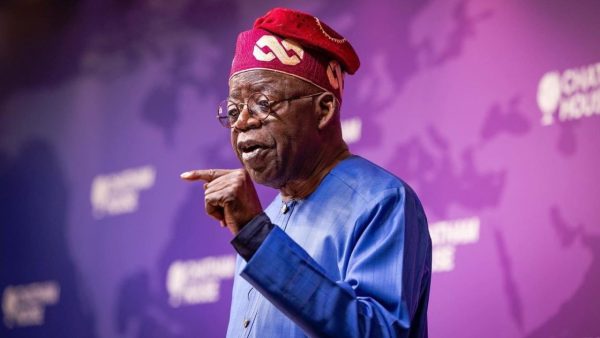 President Bola Ahmed Tinubu has made it clear that Counter-Terrorism can only succeed when intelligence is backed by knowledge.
 The Presidency, again, held a meeting with representatives of the Trade Union Congress (TUC) at the Presidential Villa, Abuja today, June 4, even as no one from the Nigeria Labour Congress (NLC) was present.


 Government of the Federal Capital Territory (FCT) has indicated plans to encourage the residents to take to bicycle as an alternative form of transport towards mitigating the negative effects of climate change.

When Preparation Meets Leadership; Tinubu Happens, by Fredrick Nwabufo
The past one week has been one of the most momentous in the life of the nation. President Bola Ahmed Tinubu dared the undared, and triumphed. He passed a knotty test of leadership. The first of its kind. Under a haze of threats of strike by labour unions over the abrogation of petrol subsidy, President Tinubu showed peerless leadership, preparation, and attunement. When preparation meets leadership, Tinubu happens.
With mounting national debts, desiccating revenue, haemorrhaging economy, corruption, and shadowy sectoral enterprise, the removal of subsidy on petrol is coming at an auspicious time. It is either we slither down the snaky tunnel to certain economic peril or we buck up, pull together, and confront this bogeyman menacing us for decades.
Tough decisions are expected. President Tinubu affirmed a fait accompli when he said in his inaugural address that petrol subsidy ‘’is gone’’. The Petroleum Industry Act (PIA) 2021 signed by former President Buhari already made the petrol subsidy regime inoperative. Although the effective abolishment of the scheme was delayed until the end of June 2023, there are no funds to finance the deficit.
But the President had been forthright and genuine about his intentions on petrol subsidy. He said during the campaigns that he would not maintain the parlous order, and that he would stop the haemorrhage.
Nigeria had been borrowing to fund petrol subsidy. The Nigerian National Petroleum Company Limited (NNPCL) was spending as much as N400 billion every month to subsidise the petrol price. According to Mele Kyari, NNPCL CEO, Nigeria has racked up $6 billion in petrol subsidy debts. The scheme is projected to have wolved over N11 trillion in eight years. This is clearly not sustainable, not even for any avidly populist government. Without an accurate data of Nigeria’s daily petrol consumption quota, the petrol subsidy regime was nebulous and prone to abuse, and chronic venality. Much of the subsidised product is believed to be smuggled to neighbouring West African countries by profiteers.
The argument for petrol subsidy retention is an emotive one that obviates the filth in the system. Nigeria is a quasi-socialist country, a highly subsidised country. Corruption thrives partly because of the regime of subsidies.
The President once said he had prepared himself, all his life, to lead Nigeria. His artful management of the concomitants and corollaries of the petrol subsidy removal accents this conviction. He has triumphed where many leaders failed. How did he do it?
On Monday, the Nigeria Labour Congress (NLC) and the Trade Union Congress (TUC) suspended the planned strike. Earlier, the Joint Health Workers Union of Nigeria (JOHESU) suspended its planned strike as well. A government delegation had been meeting with the labour unions, negotiating terms of entente. The president, himself, had met with the leadership of JOHESU. He did not stay behind the ornated walls of his office while his aides do the jaw-jawing. He got his hands on the wheel.
The President was unambiguous about his proposition to the unions – providing palliatives, particularly minimum wage review — to cushion the effects of petrol subsidy removal. At a meeting with some governors, the president had said: “We need to do some arithmetic and soul searching on the minimum wage. We will have to take a look at that together, and the revenue. We must strengthen the source and application of our revenue.’’
The federal government and the labour unions agreed to ‘’establish a joint committee to review the proposal for any wage increase or award and establish a framework and timeline for implementation” and ‘’to review World Bank Financed Cash Transfer scheme and propose inclusion of low-income earners in the programme.’’
Evidently, the President anticipated a problem and primed a solution.
During the campaigns, the President made a valiant statement on axing petrol subsidy and other economic blackholes. What many considered a political suicide attempt at the time. But he stuck to his guns.
He said: “By all means, you must have electricity. And you won’t pay for estimated billing anymore. When I become president, multiple exchange rates will go away. Write it down. How can we be subsidising fuel consumption of Cameroon, Niger, Benin Republic? No matter how long you protest, we are going to remove subsidy. We can do it. We are educated enough.’’
The honesty, courage and forthrightness exemplified by the President in this instance was infectious. He did not dilly-dally or play around the critical issue with political chicanery; he made a firm statement and asked Nigerians to hold him to his word.
And staying true to principle, his first presidential dispatch was to permanently seal the drainpipe. He showed sincerity of purpose, genuineness, and clarity of mind. Honesty is infectious. Nigerians saw the sincerity of the President and the decisiveness of his leadership. He did not get into the saddle and change from Rock and Roll to Rhythm and Blues; he maintained the same tempo; the same energy, the same oomph; the same vision, the same truth, and the same purpose. When preparation meets leadership, Tinubu happens.
The President has earned public trust and goodwill for his honesty and firmness of character. He is aware. Two days after his inauguration, two law enforcement agencies got into a public brawl. He did not dither. He did not vacillate. He did not look away. He issued a stern reprimand.
Nigeria has a leader who is not afraid of taking tough decisions for the greater good. The President may have prepared himself for leadership, but destiny prepared him for Nigeria at this time.
Fredrick Nwabufo, Nwabufo is a media executive.