


Nnamdi Kanu Makes Nonsense Of Sowore-Led Protests, Goes Ahead With His Court Case

Days after the publisher of the Sahara Reporters online newspaper, Omoyele Sowore led some protesters in parts of Abuja demanding the release from detention of the leader of the outlawed Indigenous Peoples of Biafra (IPOB), Nnamdi Kanu, the separatist leader, in a dramatic turn today, October 22, agreed to enter his defence in court.
Kanu’s had last week Thursday, filed a motion of preliminary objection challenging the jurisdiction of the court to continue with his trial. He filed the objection the same day a team of medical experts enpanelled by the court to determine his health status, turned in a report that he was medically fit to stand trial.
In a fresh motion he personally filed yesterday, October 21, Kanu assured the court that he was prepared to begin his defence “pursuant to the order of this honourable court made on the 16th day of October 2015, directing the defendant to commence his defence on the 24th day of October 2025.”
Kanu informed the court, presided by Justice James Omotosho, of his plan to call a total of 23 witnesses divided into two categories. The first category, he said, would be those he called “ordinary but material witnesses”.
He said that his second category of witnesses would be “vital and compellable” and shall be “summoned under Section 232 of the Evidence Act, 2011.”
In the notice which Kanu personally signed, suggesting that he may have fired his team of lawyers, led by Kanu Agabi (SAN), the IPOB leader told the court that, in view of the number of witnesses he intends to call, the court should consider granting a 90-day timeframe to enable him conclude his defence.
He told the court that he would “testify on his own behalf, providing a sworn account of the facts, denying the allegations, and explaining the political context of his statements and actions.”
Among those Kanu listed as “compelable witnesses” are a former Minister of Defence, General Theophilus Danjuma (rtd), a former Chief of Army Staff, General Tukur Buratai (rtd), as well as Babajide Sanwo-Olu and Hope Uzodinma, Governors of Lagos and Imo States respectively.
He further listed current Minister of the Federal Capital Territory Administration (FCTA), Nyesom Nwike, his Works’ counterpart, Dave Umahi and the immediate past governor of Abia State, Dr. Okezie Ikpeazu.
He also listed the immediate past Minister of Justice, Abubakar Malami, (SAN), the immediate past Director General of the National Intelligence Agency, (NIA), Ahmed Rufai Abubakar, his then-collegue at the State Security Service (SSS), Yusuf Magaji Bichi and several withnesses whose identities he didn’t reveal.
Kanu, in the notice, promised to “provide the sworn statements of all voluntary witnesses to this honourable court, and to notify the prosecution within a reasonable time.”
He assured that “no precious time of the honourable court would be delayed,” stressing, “and it would interest the honourable court that and the general public that justice is not only done but manifestly seen to have been done.”
Kanu’s motion offering to open his defence came on the same day a magistrate court in Abuja ordered the remand of his special counsel, Aloy Ejimakor and 12 others who were among those protesting against Kanu’s continued trial.
The police charged the 13 persons with various offences, including criminal conspiracy, disobedience of a lawful order, inciting disturbance and disturbance of public peace, contravening sections 152, 114, and 113 of the Penal Code Law.
The 13 defendants named in two separate first information reports (FIRs) are Ejimakor, Kanu’s brother, Emmanuel, Joshua Emmanuel, Wilson Anyalewechi, Okere Kingdom Nnamdi, Clinton Chimeneze, Gabriel Joshua, Isiaka Husseini, Onyekachi Ferdinand, Amadi Prince, Edison Ojisom, Godwill Obioma, and Chima Onuchukwu.
The magistrate, who stood down the case, later ordered that the defendants be remanded in Kuje Correctional Centre and adjourned the case until October 24 for arraignment.


 ….A Senior officer in FHA (in kaftan) at the controversial project site
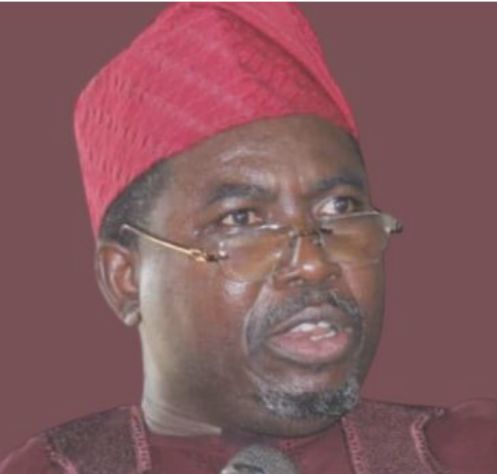
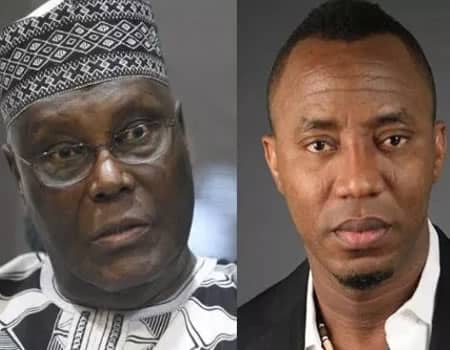




Unbreakable Akpabio: Strength In Gathering Storms, By Eseme Eyiboh
In the grand theatre of Nigerian public life, where noise often masquerades as news and envy parades as activism, one truth remains constant: the measure of a leader’s vision is often revealed by the weight of the storms they weather. The recent deeply personal attacks aimed at the President of the Senate, His Excellency Senator Godswill Akpabio,GCON merely affirm his impact. They are the inevitable rumblings that follow the footsteps of those who build, for greatness has always attracted turbulence. It is the familiar rhythm of leadership in a country where change unsettles those too comfortable with decay.
Every student of history understands this pattern. From Nigeria’s founding fathers to the reformers who shaped later decades, the same principle applies: the hands that build will always invite the stones of envy, even from within their own families. Senator Akpabio stands in that lineage of nation builders who have chosen the difficult path of service over applause. The attempt to malign his reputation through fabricated allegations has only refined his public image, revealing the steel beneath the smile. What was meant to be a wound has strengthened him. What was designed to divide has instead united both his family and a wider circle of admirers who see through the fog of falsehood.
To understand the hollowness of the attacks, one must return to the beginning. His character was not forged in the vanity of politics but moulded in the discipline of a God-fearing home. The Greater Akpabio Family of Ukana Ikot Ntuen, Essien Udim, nurtured in him from childhood the virtues of kindness, respect, and a strong aversion to violence. These are not borrowed principles but the moral roots of his existence. The family’s recent statement reaffirmed what the nation already knows: that Akpabio’s life has been guided by faith, integrity, and a sense of service to humanity. From son and student to Commissioner, Governor, Minister, and now Senate President, the same quiet strength runs through his story. His life is a continuous narrative of purpose and compassion. The caricature painted by detractors collapses under the weight of that reality.
In their carefully worded declaration, the Greater Akpabio Family condemned the actions of those spreading falsehood and reaffirmed their unity and discipline as a family bound by respect and honour. They reminded Nigerians that this was not a matter for vengeance but one of principle. The family’s message was clear and unshaken: “Any attack on Distinguished Senator Godswill Akpabio, GCON is an attack on us.”
That single line, calm and deliberate, turned a personal smear campaign into a collective stand for truth. The family spoke not merely for kinship but for values, faith, order, and unity, that define their legacy and, by extension, the character of their most prominent son.
To be clear, the Akpabio journey is not an accident but of deliberate ascent. As Governor of Akwa Ibom State, he transformed what was once a sleepy corner of the Niger Delta into a beacon of infrastructure renewal and civic pride. As Minister of Niger Delta Affairs, he confronted decades of frustration and corruption with focus and will. As Senate President, he has brought calm, order, and renewed discipline to the National Assembly, guiding it in partnership with President Bola Ahmed Tinubu towards a season of national stability and reform. His leadership, measured and firm, speaks of a man who values results over rhetoric. His record is written not in slogans but in roads, hospitals, schools, and laws that continue to shape lives.
This moment, therefore, offers a mirror to Nigeria itself. On one side stands a man engaged in the difficult, often thankless business of governance. On the other, a chorus of distraction, disgruntled voices that echo not from conviction but from envy. The choice for the public is simple: to chase the noise or to stand by the substance. The family’s vote of confidence in him reflects the choice many Nigerians have already made, to side with the builders, not the breakers; the doers, not the destroyers.
In every generation, there arises a leader whose trials become their teacher. For Senator Akpabio, adversity has always been a forge, not a fetter. From his earliest days in public life, his philosophy has been constant: that strength is born of struggle and that — as the Bible says in James 1:3 — faith, when tested, yields endurance. His calm demeanour in the face of provocation reveals a leader who understands that true authority is not loud but steady, not reactive but grounded. Without an iota of doubt, when he chooses silence over outrage, it is not a weakness. It is wisdom, the wisdom of one who knows that truth does not need to shout.
His family’s declaration carried a profound message that transcends the moment: that greatness must be protected not with bitterness but with dignity. They reminded Nigerians that their son’s patriotism and discipline have been consistent hallmarks of his life. They reaffirmed his aversion to violence, his faith in God, and his unwavering service to family, state, and nation. This statement, emerging from the heart of Ukana Ikot Ntuen, is a national affirmation of character. It symbolises what every Nigerian family should aspire to: unity, discipline, and the courage to stand for what is right even when malice roams free.
The question is never whether a leader will face adversity. It is always a question of when. Adversity, for the true leader, is a refining fire. It purifies, clarifies, and dignifies. Senator Akpabio’s life embodies this truth. He has faced storms before, political intrigues, false accusations, and bitter envy, and each time, he has emerged stronger. The same grace that carried him through those trials sustains him now. Like fine steel shaped by fire, his spirit grows only more resolute.
As Nigeria navigates its own complex season of renewal under President Tinubu, leaders like Akpabio stand as pillars of steadiness. His focus on legislative order, national cohesion, and collaboration between the arms of government reflects his understanding that progress is built, not decreed. He represents the quiet strength of leadership that seeks to heal rather than divide, to build rather than destroy.
So let the noise rage, as it surely will. In the end, it will recede like waves retreating from a rock they could not erode. What will remain is the enduring image of a man who met adversity with calm, who answered malice with composure, and who transformed personal attack into public inspiration. His faith in God, his loyalty to family, and his belief in Nigeria’s promise remain unbroken.
There is no doubt whatsoever that history will not remember the noise. It will remember the work. It will recall the man who stood firm when others faltered, who faced fire, and emerged refined. In that enduring record of service and courage, Senator Godswill Akpabio will stand not as a man untested, but as one proven by the very trials that sought to break him. His leadership endures because it is rooted in conviction, tempered by faith, and guided by an unshakeable belief in the better angels of our nation’s destiny.
Rt Hon Eseme Eyiboh is Official Spokesperson to the President of the Senate.