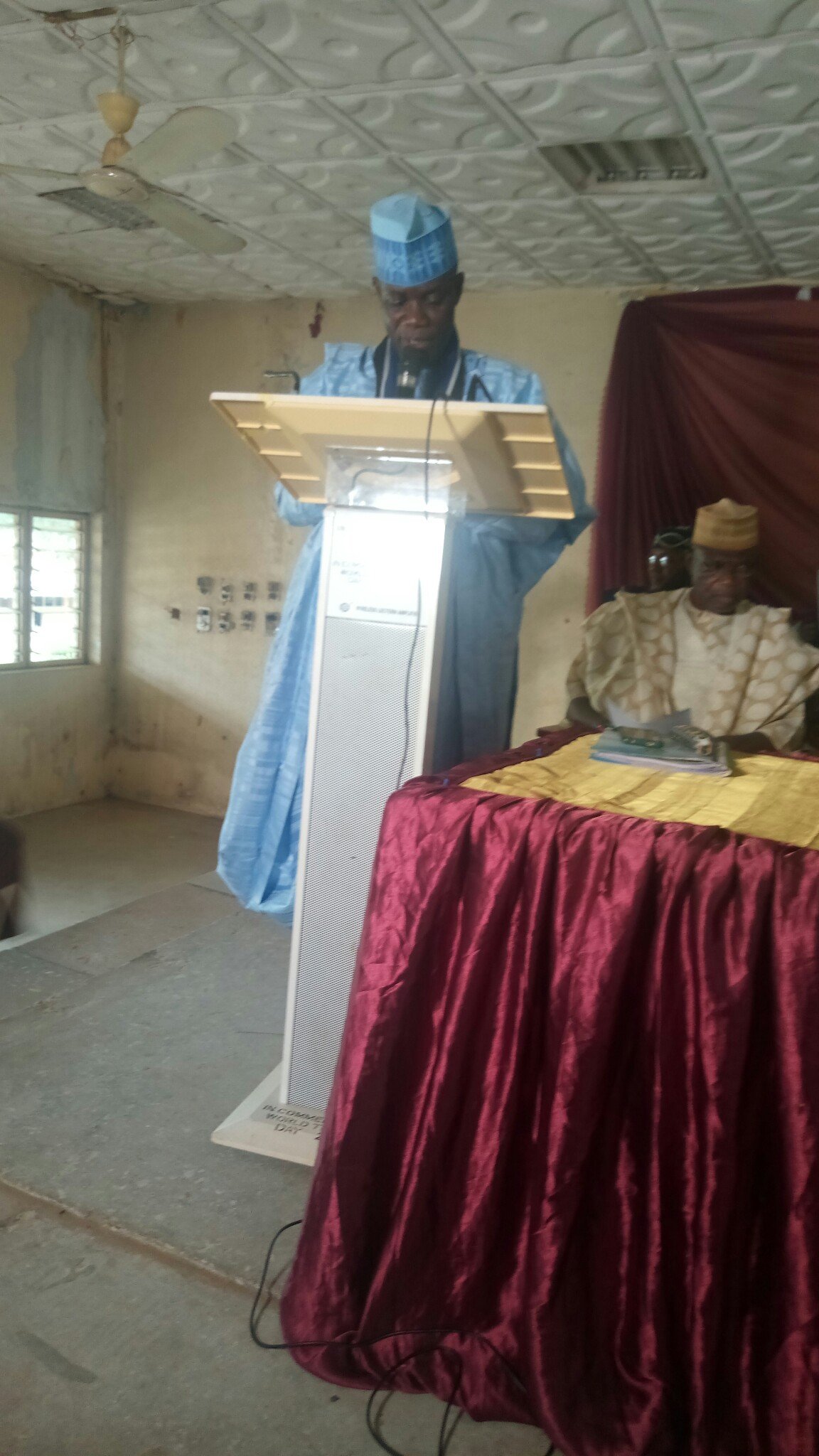
The umbrella sociocultural body of Egbira in Kogi State, Ebira Peoples Association (EPA) has cautioned politicians against turning the land into another political warzone as the nation prepares for general elections next year. The President-General of the Association, Dr. Godwin Oyibo, who spoke today, November 5 at the Ebira National Conference organized by EPA, at the Federal College of Education (FCE) Okene, Kogi State said the umbrella body of Ebira nation “cannot turn blind eyes and deaf ears to the ominous clouds being formed and blared from the drums of needless war, with palpable fears fast enveloping our sociopolitical space.” Dr. Oyibo said that the era of senseless war of attrition and immolation usually resulting from sectoral violence should be regarded as having gone forever in Ebira land He regretted that after several years of politics of bitterness, “Ebira is still contending with painful memories and scars of those violent conflicts that have been visited on the land with large scale destructions of lives and properties. ” We cannot afford any form of a repeat of those evil days. ” He appealed to all sons and daughters of Ebira to resist any temptation to be used as instrument of destruction and retrogression. He emphasized the need for all to work for the peace in the land, especially in the present political dispensation, stressing: “nobody’s political interest is worth the peace of Ebira land.” Dr. Oyibo called on the actors to avoid inflammatory statements that can trigger rancor and violence. The EPA President-General said that the Conference would also look at Ebira nation stands in the unfolding national discourses, such as the issues of security, resource ownership and control, economic decline, ethnic contention, dysfunctional education, religious conflicts and other maladies. “How strategic are we for alignment and realignment ahead of the 2023 general elections? What are our concerns and what are we saying as a people? What fate awaits Ebira in the foreseeable future in Nigeria. These questions essentially informed the theme of the Conference which is Situating Ebira In The Array Of National Discourses.” The Conference, according to Dr. Oyibo, would address the issue of ownership of Ajaokuta Steel Company Limited and mobilisation for the 2023 proposed national population census.
Chairman of the National Drug Law Enforcement Agency (NDLEA), retired Brigadier General Buba Marwa has narrated how his officers and men arrested and prosecuting a top drug baron with N20 billion in 103 banks.
“We have arrested and are prosecuting so far 28 barons with seizures worth billions of naira. Indeed, one of the barons we found had 103 bank accounts with a total balance of over 20 billion naira, which we have frozen.”
The NDLEA boss spoke yesterday when he appeared before the House of Representatives Committee of Drugs and Narcotics to defend the agency’s 2022 budget performance and 2023 proposal.
He said that because of the fierce battle the NDLEA wage against drug barons, they are now after the operatives of the agency, adding that in the renewed efforts against drug war under his watch, the agency had arrested and is prosecuting 28 barons with seizures worth billions of naira.
NDLEA boss raised the issue of barracks accommodation for the operatives of the agency for their safety.
“The barracks issue is very critical to us because as we all know the NDLEA is very aggressive now against drug traffickers and the drug barons and when you arrest and prosecute them and send them to jail, they are not happy. So they come after our personnel and with our personnel living in the town and cities and among them, we have been recording casualties and assassinations against them.”
He said that the agency is in the process of building a barrack for NDLEA personnel for the first time following the intervention of President Muhammadu Buhari and well in the process of building three laboratory centres, two forensic laboratories and purchasing of security equipment.
He said that the agency has concluded the acquisition of land in Adamawa, Abuja and Lagos for the barracks and the Private Public Parternip process is rounding off.
The NDLEA boss said that N24 billion was allocated to the barracks project in the 2022 budget but now been slashed to N13 billion in the 2023 budget proposal and demanded an additional N10 billion for the projects.
Since former Lagos state governor, Asiwaju Bola Ahmed Tinubu, defeated the Vice President, Professor Yemi Osinbajo and a host of others to win the APC presidential primaries with a landslide, the issue of where his running mate will come from became issue. More worrisome was the issue of whether he would go with a northern Christian or Muslim, both of which would find a way to cause their own problems.
If he had a chosen a northern Christian which would have balanced the ticket in terms of faith, he would have probably lost a lot of the Muslim votes he is chasing in northwest and northeast since people would find it difficult to relate with the ticket. But now that he has chosen a fellow Muslim from northeast so he can compete for some strategic votes in northwest and northeast, the Christians, both in the north and south, have been up in arms against what they see as an insult or assault on their faith.
Again, Tinubu did not just choose a Muslim, he picked Senator Kashim Shettima, a man whose career in politics and beyond shows that he is eminently qualified not only to deliver that all important election victory, but also to step into the shoes of the Vice President. He is a man who possesses the talent, maturity, strength of character and patriotism to deliver as Nigeria’s number two.
But rather than look at the bigger picture and work for the party’s victory after which positions can be shared, the duo of Babachir Lawal and Yakubu Dogara have declared war on the party and the presidential candidate.
Babachir was reported to be part of the initial process that led to the eventual emergence of Shettima but because he apparently wanted the position for himself, he is hiding under the pretence of Muslim-Muslim ticket to fight Tinubu for not picking him. Dogara is obviously in this boat too. He reportedly defected from the People’s Democratic Party (PDP) in the hope of becoming Tinubu’s running mate only for him to be dumped like used clothes and like a jilted lover, he has been jumping from one meeting or conference to the other attacking the party and the candidate and also playing the religious card.
Lawan made the assertion that the APC same ticket is a plan to further create more division within the north and the country at large.
He said: “The introduction of a Muslim-Muslim ticket by the APC or same-faith ticket is a wicked plan to further create divisions within the north. We try as leaders of societies to live as brothers and sisters but this demonic proposition just came out of the blues.”
Lawan who was disgraced out of office as Secretary to the Government of the Federation over N500 million grass cutting scandal he perpetrated has suddenly become the moral conscience of the nation who is telling the world how evil Muslim-Muslim ticket is.
Like Babachir, Dogara as Speaker of the House of Representatives, was in 2016 heavily involved in budget padding scandal worth billions of naira.
The then chairman, House committee on Appropriation, Abdulmumini Jibrin, had alleged that Dogara and four other principal officers of the House had illegally inserted several budget items worth hundreds of billions of naira into the 2016 budget.
Babachir and Dogara are liabilities to any political camp they choose to join. Their political value is limited as their records show. They can’t even boost the winning chances of APC in the 2023 elections. Babachir did not deliver his ward in Hong Local government of Adamawa state to APC in 2019. Also, Dogara did not deliver his ward to the PDP in 2019, thus, it will not change a thing if the duo chose to leave the party eventually.
Nigerians are smarter and are fully aware of the antics of this overrated duo. Babachir and Dogara are obviously fighting for their self-centered interest and looking for undeserved relevance in the political arena.
However, the duo and the gullible minds who believe in their shenanigans should not forget that APC’s Muslim-Muslim ticket is not a fait accompli. Nigerians still have a vote and there are other presidential tickets that will be on the ballot on February 25, 2023. So, the due should quit playing the religious card and heating up the polity. They should pitch their tent with any other party of their choice rather than making inflammatory statements that are meant to incite and further divide the country along familiar fault lines.
They are making it look as if same faith ticket is a taboo, a sacrilege that has never happened before. Aside the MKO dream team of 1993, General Gowon, a Christian, had a Christian Deputy as Head of State. Even General Aguiyi Ironsi, a Christian also had a Christian, Brigadier-General Ogundipe, as his Deputy, when he was Head of State.
It is high time Nigerians began to look at the competence and capacity of candidates and not their ethnicity and religion. Religion or tribe will not solve any of the problems the country is facing right now. This includes but not limited to insecurity, corruption, poverty, unemployment, inflation and poor educational system.
Same faith tickets should be the least of our problems, in the search of someone who can really deliver on the job.
May Nigeria succeed.
Idris is an Abuja-based journalist and political commentator. He can be reached on findarumar@gmail.com
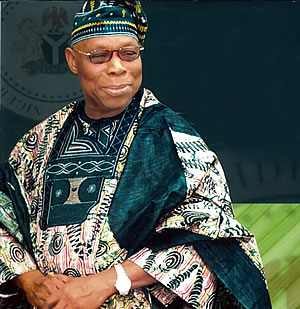
The United Nations Secretary-General, Antonio Guterres, has given a special commendation to Nigeria’s former President, Olusegun Obasanjo for successfully facilitating the signing of a peace deal between the Ethiopian Government and the Tigray People’s Liberation Front (TPLF).
Obasanjo, who serves as the African Union Mediator, got the two warring sides to sign the peace agreement in South Africa on Wednesday, November 2.
“Both sides also agreed on the restoration of law and order, restoration of services and unhindered access to humanitarian supplies. The agreement marked a new dawn for Ethiopia,” he said.
Fighting had erupted in November 2020 after months of tension with thousands of lives and livelihoods destroyed.
With the signing of the agreement, the parties in the conflict in Ethiopia’s northern region of Tigray have agreed on a “permanent cessation of hostilities’’ just more than a week after formal peace talks began in South Africa.
Guterres, in a statement by his spokesperson, Stephane Dujarric, said the agreement signed on Wednesday in South Africa represented “a critical first step” towards ending the brutal two-year war.
The UN chief said: “the Agreement for Lasting Peace“ through a Permanent Cessation of Hostilities brokered by the African Union and mediated by Obasanjo was a promising start.
According to him, it is a promising start to finally stopping the fighting which erupted in November 2020 after months of tension which had destroyed so many lives and livelihoods.
“The secretary-general urges all Ethiopians and the international community to support the bold step taken today by the Federal Government of Ethiopia and the Tigrayan leadership.”
The secretary-general pledged his support to the parties in the implementation of the agreement.
Guterres urged both sides to continue with negotiations on the outstanding issues in a spirit of reconciliation to reach a lasting political settlement.
He appealed to all stakeholders to seize the opportunity provided by the ceasefire, “to scale up humanitarian assistance to all civilians in need and to restore the desperately needed public services.”
Guterres commended the AU and its High-Level Panel for the facilitation of the peace talks and South Africa, for its key role in hosting the peace talks.
“The UN stands ready to assist the next steps of the African Union-led process and will continue to mobilise much-needed assistance to alleviate suffering in the affected areas,” he said.
In the first briefing on the peace talks, Obasanjo said that Ethiopia’s government and Tigrayan authorities had agreed on an “orderly, smooth and coordinated disarmament”.
He said both sides also agreed on the “restoration of law and order, restoration of services and unhindered access to humanitarian supplies“.
At a news conference in South Africa, Obasanjo said that the agreement marked a new “dawn” for Ethiopia.
The war, which broke out in November 2020, has pitted regional forces from Tigray against Ethiopia’s federal army and its allies, which include forces from other regions and from neighbouring Eritrea.
The Permanent Secretary in the Presidency, the State House, Tijjani Umar, has attributed the reduction in the budgetary projection for the 2023 to the expected retirement of 40 staff.
Defending the State House 2023 budget proposal of N21.1 Billion before the Senate Committee on Federal Character and Intergovernmental Affairs, Tijjani Umar explained that “there is a marginal decrease in the personnel cost due to the anticipated retirement of 40 staff in 2023.”
According to him, the recurrent expenditure levels in the various cost centres have been maintained except for marginal increases in the Office of the President, Vice President and the Chief of Staff to the President.
On capital expenditure for 2023, the Permanent Secretary explained that the major areas of expenditure in the State House under capital appropriation include the annual routine maintenance of the facilities in the Presidential Villa, Abuja and the State House Complex, Lagos; the purchase of operational motor vehicles, State House Clinic and the proposed National Centre for Coordination for Early Warning and Response Mechanism (NCCRM) in the office of the Vice President for Strategic Preparedness and Resilience (OSPRE) .
He said that the facilities in Abuja and Lagos buildings and infrastructure in the President’s and Vice President’s residences, Offices, State House Auditorium, State House Gymnasium, Presidential Banquet Hall, Council Chamber, State House Conference Centre, Presidential and Ministerial Airport Chalets and Airport Lounge in Abuja as well as State House, Dodan Barracks Complex in Lagos.
Tijjani Umar said that commitment to these facilities take 65 per cent of the total appropriation, adding that in order to keep them in optimal working condition, the sum of N7.20 billion has been proposed for year 2023 as against N7.76 billion in 2022.
“Closely following this, is the dire and urgent need for the complete replacement and upgrading of the communication/telephony system and electronic visitors record management in the Presidential Villa.”
He said that N150 million has been proposed for the completion of the telecommunications infrastructure in 2023.
He said that the facilities and buildings in the Lagos Liaison Office Complex and Guest the Houses are old and require not only maintenance, but renovation and renewal.
The Permanent Secretary expressed concern that the provision of N59 million for maintenance of State House Lagos Complex and Guest Houses is inadequate, saying that an estimated sum of N644 million would be required to upgrade the facilities.
On the purchase of operational motor vehicles and following discussions with the Budget Office of the Federation, the Permanent Secretary said that N1.96 billion has been proposed under the phased replacement of vehicles in the Presidential Ground Fleet and those in the Conference Coordination Unit (CCU).
“It is noteworthy that most of the vehicles being proposed for replacement were procured more than 10 years ago and have since exceeded their useful economic lives.
“This has resulted in frequent breakdowns and an unsustainable expenditure on repairs/replacements of parts.”
He said that the released amount of N800 million was inadequate to procure the required numbers that need to be replaced partly because some of the vehicles are treated and very expensive.
On State House Clinic, Umar thanked the Committee members for their support in getting the Presidential/VIP Wing of State House Clinic off the ground, expressing delight that the project which was flagged off on November 1, 2021 is at an advanced stage of completion.
“This level of progress was attained given the full support of Mr President and the assistance of key stakeholders especially this distinguished Committee which has appropriated funds needed with the backing of and support of the Minister of Finance, Budget and National Planning.”
He said that the project, which is 80 percent completed, would be delivered by the end of December, 2022 or latest during the 1st quarter of 2023.
The Chairman of the Committee, Senator Abba Moro, said: “I am not unmindful that the State House is the hub of the government and everything radiates from there. We would do the needful and if there is a need for us to see you again, we will invite you. But so far with what has been discussed and presented to us, we will be able to do the needful to the satisfaction of all.”
The ruling All Progressives Congress (APC) has scheduled its Presidential campaign to take-off in Jos, capital of Plateau States on November 15.
Plateau is the home state of Governor Simon Lalong, who is the Director-General of APC Presidential Campaign Council.
In a statement today, November 3, the Director of Media and Publicity for the Presidential Campaign Council, Bayo Onanuga said that the campaign was first started on November 1, with the Town Hall meeting in Lagos between Asíwájú Bola Ahmed Tinubu and business leaders in Lagos.
He said that more of such town hall meetings will take place before the mega rally in Kano on 11 February, 2023, adding that the Kano rally will draw the curtains on the campaign, as the party shifts into election planning mode.
He said that there will also be campaign rallies in Imo on November 21, Kwara State on November 22, Adamawa State on November 24, Ogun State and Enugu State on November 26 as well as Sokoto on November 30.
According to the spokesman, in between the rallies are scheduled five town hall meetings, one of which will be with interfaith groups in Abuja on November 9, saying that other town hall meetings will be between the candidate and various business and agricultural groups.
The campaign council appealed to party structures, party chieftains and members across the country to continue to mobilise support for the party and presidential candidate and his running mate, to ensure that APC wins the presidential and other elections.
The United States Army has promoted a Nigerian female, Amanda Azubuike, from Lieutenant Colonel to Brigadier general. The promotion took place at a military base in Fort Knox, Kentucky, USA.
Azubuike, who was born in London, the United Kingdom, joined the US Army in 1994 and became an aviator after passing the army aviation officer basic course.
Speaking on her leadership qualities, US Army Futures Command commander, General James Rainey, said that Azubuike “makes everyone around her better.”
In a congratulatory tweet, Major General Antonio Munera said: “Congratulations to USACC’s newly promoted @dcg_armyrotc, Brig. Gen. Amanda Azubuike! Today, she received her 1st star from Gen. James Rainey, @armyfutures, during a ceremony with family, friends, & fellow community leaders.”
Azubuike currently serves as a deputy commanding officer at the US Army Cadet Command and previously served as a chief of staff/senior military advisor at the Office of the Secretary of Defense. She was also chief of public affairs at the United States Southern Command, Fort Lauderdale Area, and the director of public affairs, Joint Force HQs-National Capital Region/Military District of Washington.
She also served as a communications consultant for the National Football League Players Association and a public relations staff for the NFL franchise, the Washington Redskins.
Apart from her army qualifications, Gen. Azubuike has a bachelor of science degree in mass communication/media studies from the University of Central Arkansas, a master of arts in national security and strategic studies from the United States Army War College, and a master of professional studies, public relations/corporate communications from Georgetown University.
Nigerian music star, David Adeleke, famously known as Davido and his wife, Chioma, were said to be returning from Ibadan on Monday, October 31 at the time his son, Ifeanyi sneaked into the in the swimming pool of their palatial Banana Island house in Lekki, Lagos, throwing the family and the world of entertainment into grief.
Information had it that Davido and Chioma were in Ibadan on Sunday for a family event but returned to Lagos on Monday afternoon to receive the shocking news of the death of their son who clocked three on October 27, 2022.
Davido and his crew were left in a state of confusion as none of them could explain how Ifeanyi got into the swimming pool and stayed under water for more 30 minutes before help could come for him.
It was gathered that the deceased’s caregivers noticed the boy’s sudden disappearance from the house around 6pm and started looking for him until they rushed to swimming pool side where they noticed a strange movement inside the water.
They were said to have rescued Ifeanyi who had drowned and rushed him to a Lagos hospital where he was pronounced dead on arrival by the doctor on duty.
The news of the Ifeanyi’s death was said to have rattled the entire 30BG crew led by Davido as they rushed to the hospital to receive the shocking news that Ifeanyi didn’t make it.
It was learnt that before the arrival of Davido at the hospital where efforts were made to revive his boy, no member of his crew or the aides were allowed to go inside the hospital except Davido and two of his close friends.
Others were told to wait outside and warned not to release any information about the incident to the public.
This explained why none of them could confirm the incident despite series of calls made to their phones by friends and families of the singer.
As soon as news filtered into the social media space that Davido’s son had died in a swimming pool inside the singer’s house, the entertainment industry was thrown into confusion with some of his colleagues praying and wishing that the news was not true.
The social media space became tense when actress Eniola Badmus posted a broken emoji on her Instagram page later in the evening sending shivers down the spine of many who had stayed up late to confirm if the news was true.
She was forced to pull down the post following backlash from fans who blasted the actress and asked her to wait for Davido to break the news himself.
Information pieced together by Per Seconds News revealed that bereaved Davido who was planning to have a big 30th birthday celebration later in the year was quickly rushed to his father’s house in Lekki where he was later joined by Chioma.
The tragic news has been trending globally, with fans and colleagues from the entertainment industry sending their heartfelt condolences to the couple who are said to be planning for formalize their union next year.
During a trip to London last month, he and Chioma announced they would be getting married.
A source who had confirmed the news of Ifeanyi’s death to Per Seconds News on Monday morning dismissed insulations that the singer ignored the prophetic revelation about his family, saying “those who know David would tell you how serious he is when it comes to spiritual matter.
“We have heard series of prophecies and we always adhere but no one could question God on this particular incident.”
The mood in the singer’s camp as of Tuesday evening remained pensive as no one could explain what the outcome of police investigation would be after nine of Davido’s domestic staff were invited and detained by the police.
A source reliably told Per Seconds News that all engagements regarding bookings and shows have been canceled for now until Davido decides otherwise.
Though the police denied that the domestic staff were arrested, insisting that they were “brought to the police for questioning.”
The Public Relations Officer of the state police command, ASP Benjamin Hundeyin, confirmed that Ifeanyi’s death was reported to the police on Monday.
”Yes I can confirm the death of Davido’ s son to you. The case was reported to the police on Monday.
“We have not arrested anybody but eight members of Davido’ s domestic staff have been brought for questioning.”
The Economic and Financial Crimes Commission (EFCC), has arrested a candidate of New Nigeria Peoples Party (NNPP), who is contesting the 2023 election to represent Ankpa 11 Constituency in the Kogi State House of Assembly, Ismaila Atumeyi, with N326 million and $140,500 cash.
Atumeyi was arrested on October 30, alongside one Joshua Dominic, an alleged serial fraudster, in a sting operation at Macedonia Street, Queens Estate, Karsana, Gwarinpa, Abuja.
Also arrested in connection for the same fraud is Abdumalik Femi, a former bank employee, who allegedly supplied the inside information that facilitated the attack on the bank by the syndicate.
The EFCC spokesperson, Wilson Uwujaren, confirmed that Femi was picked up today, November 1at the Radisson Blu Hotel in Lagos.
“Following his arrest, a search was conducted on his home in Morgan Estate, Ojodu where a total of $470,000 USD was recovered.
“The arrest of the suspects followed months of investigation into the hacking of one of the commercial banks by a syndicate of fraudsters who pulled off a heist of N1.4billion.”
The syndicate allegedly moved N887 million into the account of Fav Oil and Gas limited, from where the monies were paid to several Bureau de Change operators and some auto dealers for exchange into United States dollars and purchase of high-end cars.
Dominic, who has severally been arrested for fraud, allegedly helped Atumeyi perfect the hacking plan through Abdumalik. Dominic, a self-styled investment expert and Managing Director of Brisk Capital Limited was arrested in May 2021 by the Special Fraud Unit of the Nigeria Police for alleged N2 billion investment scam. He allegedly defrauded over 500 persons in a phony investment scheme.
Two Range Rover Luxury SUVs were also recovered from the two suspects arrested in Abuja.
Uwujaren said that the suspects would be charged to court as soon as the investigation was concluded.
Meanwhile, the commission expresses concern over the rising spate of cyber-attacks on banks and the reluctance of the institutions to report such breaches to law enforcement.
While warning that such reticence would only embolden the criminals, the EFCC appealed to financial institutions to collaborate with it to secure the financial sector from threats of cyber-attacks.
The Federal Government has announced the appointment of a transaction adviser to concession the Ajaokuta Steel Company and the Nigerian Iron Ore Mining Company, Itakpe, all in Kogi State.
Vice President Yemi Osinbajo, who made this known today, November 1, at the opening of the 6th Edition of the Nigerian Mining Week in Abuja, where he represented President Muhammadu Buhari as the Special Guest of Honour, said that the process is ongoing.
“Our commitment is to break the jinx and actualize the dream of a vibrant steel sector.” Professor Osinbajo emphasized the “huge priority” the government of President Muhammadu Buhari gives to the development of the steel sector, saying: “our vision for an industrialised nation cannot be achieved without a vibrant steel sector.
“We understand the huge demand for steel and iron in our domestic markets and across the sub-region. This is why we prioritized the resolution of all the issues constraining the full operation of the Ajaokuta Steel company. The Vice President stressed the a fully developed steel sector will not only surpass other sectors of the economy in terms of export earnings, it will also create more lucrative jobs and opportunities for many Nigerians. Steel sector, he added: “will stimulate industrial growth as a local source of raw materials and improve the quality of lives in rural communities.” He said that since Buhari came into office in 2015, he had continually prioritized the development of the country’s mineral resources as one of the frontiers for economic growth. “This led to the comprehensive Roadmap for the Growth and Development of the Nigerian Mining Sector and we have steadily followed the steps set out in the roadmap. So far, we can say without fear of contradiction that this administration has committed more resources to the development of the mining sector than any other government in the history of this country. “Government will continue to intensify its regulatory and supervisory role in ensuring that mining is held to the highest standards of sustainable development and intergenerational equity.”
The Vice President called for more responsibility and accountability from public and private sector entities to ensure sustainable development and mitigate the effects of climate change. “The extraction of mineral commodities entails considerable impact on land, water, air and other environmental assets that are central to human living, both now and in the future. The painful experience of the negative impact of oil and gas exploitation in the Niger Delta cannot be ignored. Therefore, all operators in the mining sector are obliged by law ethics, and our responsibility for the future, to ensure that proper environmental, social and governance principles are practiced in the sector.” Osinbajo acknowledged that the Ministry of Mines and Steel Development has achieved some milestones and commended the Minister, Arc. Olamilekan Adegbite, and other stakeholders in providing a conducive environment for investment. The Vice President noted that the organization of informal miners into productive work groups is another landmark activity for the Ministry. “The Ministry has increased the formalisation of mining activities and stimulated downstream development by the establishment of a gemstones and Jewellery Marketing Centre in Oyo State, Gold Ore processing plant in Kogi State, a Gold Souk in Kano State, and the construction of a Barite plant in Cross River State, as well as Kaoline plant in Bauchi State and a Lead/Zinc processing plant in Ebonyi State. “The aim of these clusters is to provide direct and indirect economic opportunities for many Nigerians,” the VP added. In his remarks, the Minister of Mines and Steel Development, Arc. Olamilekan Adegbite said that environmental impact is critical in sustainable mineral development, saying: “Government has maintained a consistent environmental surveillance and green mining practices to ensure minimum damage to the environment.
“The Mineral Resources and Environmental Management Committee (MIREMCO) has been strengthened and the Ministry is keeping constant dialogue with committees in almost all the states of the country. “The Committees have the responsibility of monitoring mining activities in the states including addressing issues of compensation and community relations.” At the event, the Vice President commissioned the on-line innovation, the Electronic Mining Cadastre Plus of the Nigeria Mining Cadastre Office.
We use cookies on our website to give you the most relevant experience by remembering your preferences and repeat visits. By clicking “Accept”, you consent to the use of ALL the cookies.
This website uses cookies to improve your experience while you navigate through the website. Out of these, the cookies that are categorized as necessary are stored on your browser as they are essential for the working of basic functionalities of the website. We also use third-party cookies that help us analyze and understand how you use this website. These cookies will be stored in your browser only with your consent. You also have the option to opt-out of these cookies. But opting out of some of these cookies may affect your browsing experience.
Necessary cookies are absolutely essential for the website to function properly. This category only includes cookies that ensures basic functionalities and security features of the website. These cookies do not store any personal information.
Any cookies that may not be particularly necessary for the website to function and is used specifically to collect user personal data via analytics, ads, other embedded contents are termed as non-necessary cookies. It is mandatory to procure user consent prior to running these cookies on your website.



 The United Nations Secretary-General, Antonio Guterres, has given a special commendation to Nigeria’s former President, Olusegun Obasanjo for successfully facilitating the signing of a peace deal between the Ethiopian Government and the Tigray People’s Liberation Front (TPLF).
 The ruling All Progressives Congress (APC) has scheduled its Presidential campaign to take-off in Jos, capital of Plateau States on November 15.

 The Economic and Financial Crimes Commission (EFCC), has arrested a candidate of New Nigeria Peoples Party (NNPP), who is contesting the 2023 election to represent Ankpa 11 Constituency in the Kogi State House of Assembly, Ismaila Atumeyi, with N326 million and $140,500 cash.
 The Federal Government has announced the appointment of a transaction adviser to concession the Ajaokuta Steel Company and the Nigerian Iron Ore Mining Company, Itakpe, all in Kogi State.


2023: Babachir, Dogara’s Hypocrisy On Same-Faith Ticket, By Idris Umar
If he had a chosen a northern Christian which would have balanced the ticket in terms of faith, he would have probably lost a lot of the Muslim votes he is chasing in northwest and northeast since people would find it difficult to relate with the ticket. But now that he has chosen a fellow Muslim from northeast so he can compete for some strategic votes in northwest and northeast, the Christians, both in the north and south, have been up in arms against what they see as an insult or assault on their faith.
Again, Tinubu did not just choose a Muslim, he picked Senator Kashim Shettima, a man whose career in politics and beyond shows that he is eminently qualified not only to deliver that all important election victory, but also to step into the shoes of the Vice President. He is a man who possesses the talent, maturity, strength of character and patriotism to deliver as Nigeria’s number two.
But rather than look at the bigger picture and work for the party’s victory after which positions can be shared, the duo of Babachir Lawal and Yakubu Dogara have declared war on the party and the presidential candidate.
Babachir was reported to be part of the initial process that led to the eventual emergence of Shettima but because he apparently wanted the position for himself, he is hiding under the pretence of Muslim-Muslim ticket to fight Tinubu for not picking him. Dogara is obviously in this boat too. He reportedly defected from the People’s Democratic Party (PDP) in the hope of becoming Tinubu’s running mate only for him to be dumped like used clothes and like a jilted lover, he has been jumping from one meeting or conference to the other attacking the party and the candidate and also playing the religious card.
Lawan made the assertion that the APC same ticket is a plan to further create more division within the north and the country at large.
He said: “The introduction of a Muslim-Muslim ticket by the APC or same-faith ticket is a wicked plan to further create divisions within the north. We try as leaders of societies to live as brothers and sisters but this demonic proposition just came out of the blues.”
Lawan who was disgraced out of office as Secretary to the Government of the Federation over N500 million grass cutting scandal he perpetrated has suddenly become the moral conscience of the nation who is telling the world how evil Muslim-Muslim ticket is.
Like Babachir, Dogara as Speaker of the House of Representatives, was in 2016 heavily involved in budget padding scandal worth billions of naira.
The then chairman, House committee on Appropriation, Abdulmumini Jibrin, had alleged that Dogara and four other principal officers of the House had illegally inserted several budget items worth hundreds of billions of naira into the 2016 budget.
Babachir and Dogara are liabilities to any political camp they choose to join. Their political value is limited as their records show. They can’t even boost the winning chances of APC in the 2023 elections. Babachir did not deliver his ward in Hong Local government of Adamawa state to APC in 2019. Also, Dogara did not deliver his ward to the PDP in 2019, thus, it will not change a thing if the duo chose to leave the party eventually.
Nigerians are smarter and are fully aware of the antics of this overrated duo. Babachir and Dogara are obviously fighting for their self-centered interest and looking for undeserved relevance in the political arena.
However, the duo and the gullible minds who believe in their shenanigans should not forget that APC’s Muslim-Muslim ticket is not a fait accompli. Nigerians still have a vote and there are other presidential tickets that will be on the ballot on February 25, 2023. So, the due should quit playing the religious card and heating up the polity. They should pitch their tent with any other party of their choice rather than making inflammatory statements that are meant to incite and further divide the country along familiar fault lines.
They are making it look as if same faith ticket is a taboo, a sacrilege that has never happened before. Aside the MKO dream team of 1993, General Gowon, a Christian, had a Christian Deputy as Head of State. Even General Aguiyi Ironsi, a Christian also had a Christian, Brigadier-General Ogundipe, as his Deputy, when he was Head of State.
It is high time Nigerians began to look at the competence and capacity of candidates and not their ethnicity and religion. Religion or tribe will not solve any of the problems the country is facing right now. This includes but not limited to insecurity, corruption, poverty, unemployment, inflation and poor educational system.
Same faith tickets should be the least of our problems, in the search of someone who can really deliver on the job.
May Nigeria succeed.