Dangote Group, Sundry Food Limited, Access Bank Corporation and United Bank for Africa (UBA) have vowed to continue to grow the nation’s economy through their various initiatives, while creating jobs in the process.
The companies made the pledges while speaking as key sponsors of the Association of Business Editors of Nigeria(ABEN) annual workshop on ‘Infrastructure Financing,’ in Lagos recently.
They promised to continue to devote resources to impact their host communities and the Nigerian society through job creation and citizens’ wellbeing.
Dangote Group, represented by a three -man team, including, Okey Nwankwo, Francis Awowole Brown and Sunday Esan of the Corporate Communications Department, showcased the company‘s imprints in manufacturing, cash crop production, foods processing and lately Oil and Gas businesses.
It said that its investments in the Nigerian economy have created jobs in its host communities and beyond, thereby enhancing the social and economic living standards of its workforce. All these the company said has contributed to the nation’s Gross Domestic Product (GDP).
According to Dangote, through the exportation of its cement products, it is helping the country generate more foreign exchange.
It promised that the expansion drive of Dangote Group will further enhance its profitability, the company said its activities are geared that Group and its subsidiaries would continue to reward shareholders handsomely through improved dividend payout, thereby, giving them good returns on their Investments.
Earlier, the managing director of Sundry Foods Limited, Ebele Enunwa, who was represented by the company’s general manager, Lagos Region, Jubril Shoaga, lamented the harsh operating environment that is affecting business growth nationwide, promising that, irrespective of the challenge, Sundry Foods will continue to pursue its growth trajectory to become a major player in the Food and service industry.
He also called on government to address the challenge of multiple taxation currently impeding Small and Medium Enterprises across the country, stressing that this remains a disincentive to entrepreneurs, who are already struggling to source funding to expand and grow their businesses.
Also, the Group Head, Media and External Relations, at the United Bank for Africa (UBA), Nasir Ramon, disclosed that the bank has an enhanced delivery touch points in line with development in global economy with its services now driven by technology and branch expansion.
According to Ramoni, through its services, the bank has been able to incorporate financial inclusion and has also been supporting many Micro, Small and Medium Enterprises(MSMEs) financially so that they can either start their dream businesses or expand the existing ones.
The UBA representative promised to continue in this trajectory.
Speaking also, Head, Media and External Relations at Access Bank Corporation, Abdul Imoyo, disclosed that, the recent adoption of the Holding company structure of the bank was to make the a financial hub, whereby, customers can have access to banking services and other financial support services, like insurance, pension, asset management, trustee services, among others. He explained that the bank will continue to intensify it’s aggressive move to cover more grounds through its products and service delivery on African continent as well as on the global stage.
This year’s just concluded Africa Investment Forum Market Days; the continent’s premier investment platform has drawn $31 billion in investment interest from African and global investors.
Informed sources said that the combined with $32.8 billion from the rescheduled 2021 Africa Investment Forum Market days which took place as virtual boardrooms in March this year.
It was learnt that the forum mobilized a total of $63.8 billion of investment interest this year. The three-day event, held in the Ivorian commercial capital, Abidjan, attracted the participation of several African heads of state and government.
The leaders who chaired boardrooms and led transactions with potential investors included Vice President Tiémoko Meyliet Koné of Côte d’Ivoire, who represented President Alassane Ouattara.
Others were President Sahle-Work Zewde of Ethiopia; President Nana Akufo-Addo of Ghana; President Emmerson Mnangagwa of Zimbabwe; Vice President Jewel Howard Taylor of Liberia; Vice President Philip Mpango of Tanzania; Prime Minister José Ulisses Correia e Silva n of Cabo Verde; and Prime Minister Patrick Achi of Côte d’Ivoire.
It was learnt that this year’s Market Days event—the third since 2018—took place under the theme: ‘Building Economic Resilience through Sustainable Investments.
It was held amid global economic challenges that have been compounded by the impacts of climate change, the Covid-19 pandemic, and the Russia-Ukraine war. The event showcased the Africa Investment Forum’s founding partners’ joint resolve to help unleash Africa’s investment potential in such critical sectors as infrastructure, agriculture, energy, education, the creative industries, sports, and transactions that champion women entrepreneurs.
The forum’s founding partners are the African Development Bank, Africa50, Afrexim Bank, the Africa Finance Corporation, the Development Bank of Southern Africa, the European Investment Bank, the Islamic Development Bank, and the Trade and Development Bank.
The partners said the results this year have exceeded expectations, given that the world is currently grappling with so many unprecedented economic challenges.
African Development Bank President Dr. Akinwumi Adesina commended the forum’s outcomes and the partners’ commitment. He said “despite the challenges, we are not afraid, and neither have we despaired nor lost hope. We are excited and committed to a collective goal… accelerating the closure of deals to transform Africa and its investment landscape.”
Adesina said the Africa Investment Forum’s focus is to attract more foreign direct investment to Africa and ensure the private sector remains the driving force of that transformation. “The private sector is Africa’s growth accelerator. We must mitigate real and perceived risks and persuade the private sector that investing in Africa is safe,” he emphasised.
Islamic Development Bank President, Dr. Muhammed Sulaiman Al Jasser said in a message that his organization was hopeful that “our commitment and dedication to the AIF will translate into tangible and measurable outcomes for the benefit of our member countries across Africa.”
Al Jasser restated the Islamic Development Bank Group’s commitment to support transformative African projects, especially those promoting resilience, financial, economic, and social sustainability.
Trade and Development Bank Group President and Chief Executive Admassu Tadesse underscored the value of the “AIF spirit” in doing more to advance and close investments. Tadesse stressed “notwithstanding ongoing global crises, we have to keep our eye on the ball. “We must continue to encourage and enable investment in agriculture and industry, as well as infrastructure. Growing our own food and manufacturing more will enable us to trade more.
It will lead to less overall greenhouse gas emissions linked to imports from far away, in the process also generating more employment and opportunities for our peoples.” European Investment Bank President Werner Hoyer said while travelling to COP27 “a diversity of ambitious and wide-ranging initiatives” attracted high interest at this year’s Market Days.
“At the European Investment Bank, we are excited to see how the creativity and vision of African innovators are making an impact, particularly in the area of technology which holds such great potential for Africa’s future,” Hoyer said. Mohan Vivekanandan, Group Executive Origination and Coverage, Development Bank of Southern Africa, noted that a unique feature of this year’s forum was that it focused on transactions.
“It’s about the project sponsors, the project developers and how we as development financiers help them get their vision implemented to improve the quality of life of Africans, and how we promote economic growth, job creation and industrialisation,” Vivekanandan said. Africa Finance Corporation President and CEO Samaila Zubairu said: “The current global economic challenges indicate the critical need to build Africa’s self-sufficiency by investing in resilient infrastructure. Such critical investment is needed to drive Africa’s industrialization and economic prosperity.”
Africa50 CEO Alain Ebobisse said the Africa Investment Forum presented a timely platform to help scale up and speed up investments into Africa, especially as partners strive to build the continent’s resilience to economic shocks and climate change. Ebobisse said “Attracting new pools of capital into infrastructure will be critical. More specifically, Africa’s institutional investors, such as pension funds and sovereign wealth funds must play a critical role and will be the game changers for Africa’s infrastructure development.”
Afreximbank President Benedict Oramah said: “This year’s Africa Investment Forum reflects, in the number, attitudes and diversity of its attendees, the interest and optimism of global investors towards the continent and its opportunities. We close, knowing that the AIF, Africa’s largest transactional investment marketplace, continues to be a huge success. Moreover, the event serves as a measure of international confidence in Africa’s economic and political development, and the unmatched investment opportunities this is creating.”
Africa Investment Forum Senior Director Chinelo Anohu said: “A lot of the successes recorded by the Africa Investment Forum are domiciled in the spirit of the partnership. It’s up to us to ensure the continent is what it ought to be.” Since its inception in 2018, the Africa Investment Forum platform has mobilised over $100 billion in investment interests.
The Majority Leader of the House of Representatives, Hon. Alhassan Ado Doguwa, has said that those who are alleging that he is planning to leave the ruling All Progressives Congress (APC) are spreading what he called “catastrophic fake news.”
He made it clear that he has no reason to leave the party either now or in the future.
Ado Doguwa, who represents Doguwa/Tudun Wada Federal Constituency of Kano State in the House of Representatives, spoke when he paid a solidarity visit to the APC Presidential Candidate, Asiwaju Bola Tinubu, in Abuja today, November 6.
The House Majority Leader visited Tinubu in company with the state House of Assembly member and the two local government chairmen from his constituency as well as other prominent leaders from the state.
He assured Asiwaju Tinubu of his support and that he will remain in the APC, adding that Kano State Governor, Abdullahi Umar Ganduje is in safe hands.
“ÄPC remains my party, my destiny. I’m not leaving the party for any other. I remain in the APC because victory is for the party.
“I also believe we have a presidential candidate in Asiwaju Tinubu who has the sagacity, capacity and experience to turn around the economy, the fortune of the country, the same way he did in Lagos.
“I believe that under Tinubu, Nigeria will do well in the comity of nations.
“Kano is under the able leadership of Governor Ganduje who I call an engineer because the wonderful things he has done in the state and the way he has turned Kano to a model.
“He has improved on and created additional infrastructure. Ganduje is everything to us in Kano.
“With Governor Ganduje leading the charge, we will deliver the state to APC, to Asiwaju Tinubu.
“We have done this before in Kano State. During the cancelled 1993 election, we voted for the MKO Abiola/Babagana Kingibe of the then SDP against the candidature of our son, late Alhaji Bashir Tofa, of the defunct NRC.
“Tofa was not just a Kano man, he was an eminent statesman. Kano votes on the basis of ideology. History will repeat itself again Kano. Mark my words.”
Asiwaju Tinubu thanked Ado Doguwa for the visit, promising to stand by him and the people of the state for their support.
He recalled that he had come a long way with Ado Doguwa, from their days in the 1992 National Assembly, adding that while he was in the Senate, Doguwa was in the House of Representatives, describing the House Majority Leader as his son and a dependable ally.
Fighting officers of the Nigerian armed forces have confirmed the killing of two leaders of the Islamic States of West Africa Province (ISWAP) named Ali Kwaya and Bukar Mainoka.
Information reaching us said that they were killed in an operation by Nigerian military fighter jets at Lake Chad on Saturday.
Kwaya and Mainoka were influential members of the ISWAP Shura (Consultation) Council. They died after the Air Component of Operation Hadin Kai conducted air interdiction missions at Belowa.
Belowa, one of the ISWAP/Boko Haram enclaves in the Tumbuns, is located in Abadam Local Government Area of Borno State, on the western coast of Lake Chad
The military said that the strikes at Belowa became necessary after intelligence revealed the convergence of some ISWAP leaders and fighters. The terrorists were suspected to be gathering for a meeting ahead of an attack on friendly forces.
It was gathered that a Nigerian Air Force (NAF) fighter aircraft was subsequently dispatched to the location to hit the ISWAP elements with rockets and bombs.
An intelligence operative confirmed that the airstrikes were successful.
“Two vehicles conveying about 13 injured surviving terrorists to another hideout were struck through precision strikes.
“Feedbak revealed that ISWAP kingpin, Ali Kwaya, a key member of the ISWAP Shura Council, and Mallam Bukar Mainoka were among those neutralized.”
A Federal High Court, sitting in Abuja, has sacked the Presidential candidate of the Action Alliance (AA), retired Major Hamza Al-Mustapha and other candidates, submitted by the Kenneth Udeze-led faction of the party.
The court, presided over by Justice Z.B Abubakar ordered the Independent National Electoral Commission (INEC) not to recognize all candidates presented by the Kenneth Udeze-led faction of the party.
The Judge said that instead, the candidates submitted by the faction loyal to the chairman of the party, Adekunle Rufai Omoaje should be recognized for the 2023 elections. Justice Abubakar cited section 29 (1) of the Electoral Act, 2022, and ordered that INEC should immediately publish the names and addresses of all candidates submitted by Omoaje on behalf of the Action Alliance. “By the provision of section 29(1) of the Electoral Act, 2022, the INEC should publish by displaying at the relevant office or offices of INEC and on its website,” the Judge ruled. The court order followed a suit instituted by Omoaje who challenged the decision of INEC not to recognize the candidates submitted by him on behalf of the party for the 2023 polls. Omoaje said that Kenneth Udeze had been expelled from the party since February 14, 2020, during the party’s National Convention in Osogbo, hence should stop parading himself as the AA National Chairman.
“Citizens who contribute to national development deserve appreciation.” This quote by President Muhammadu Buhari captures the idea behind the national honours conferred on some Nigerians by him last month. And each recipient, well, almost all, when placed on the scale of merit, deserved what they got.
However, in such national recognitions, in a country of over 200 million, it is impossible to reward all the deserving at a go. This is why it is an event that happens periodically so that those overlooked this year may get it next year or after.
While everyone may have one or two that they strongly feel should be in the roll call of those that should make the cut, or should not, what matters most is that the criteria for selection and conferment are not compromised.
The Nigerian National Honours are conferred upon Nigerians and friends of Nigeria. The awards concept was instituted by the National Honours Act No. 5 of 1964 during the Tafawa Balewa administration to honour Nigerians who have rendered exceptional service to the nation.
Such service includes contributions towards uplifting the nation and humanity in general. It also recognises outstanding honour, dedication and patriotic commitments as well as service with integrity.
The awards, therefore, are a nation’s way of acknowledging and appreciating patriotism and loyalty to the country – a reward for selfless service which seeks to encourage beneficiaries to do more and for those of us yet to be recognised to tread the path of good work and meritorious service to the fatherland.
Taking all these into consideration, I feel three great Nigerians were overlooked on the awards and so missed out on that golden handshake from the number one citizen that historical Tuesday.
In my opinion, the late Baba Aji Mamman deserves a posthumous award. An employee of the Yobe Rural Electrification Board, Mamman, died on March 28, 2020. Before his death, he instructed his family to refund the government the amount of his salary for the 11 years he was absent from work.
Because of age, ill health and other constraints, Mamman sometimes came to the office twice or three times a week as opposed to the statutory five times. And so he instructed his family to refund to the government’s coffers the estimated “unearned” salaries and allowances of about 11 years amounting to the tune of N11 million.
The other one is Dr Arhyel Dibal Wandali, a.k.a. Mr Nigeria or Mr Green-White-Green. According to Sani Usman Kukasheka, a retired general, Dr Wandali is a patriot of the highest order and worthy of emulation. And the general should know because he was trained to be patriotic and loyal to Nigeria.
The retired general said of Dr Wandali: “There is no doubt that people like him are rare: highly intelligent, humble, compassionate and a case study in nationalism and patriotism as they bring hope and a great sense of inspiration about the great future for this country. His hope, aspiration and optimism about Nigeria are unparalleled. It is, therefore, desirable that he should be emulated and further encouraged through recognition and reward by relevant government agencies.”
Born in October, Nigeria’s birth month, 1963, Mr Nigeria who hails from Biu, Borno State, is a 1982 product of Government College, Maiduguri. His love for Nigeria is so massive that everything about him – from his house, cars, interior décor, clothes, down to even his phones and, some said, undies – are painted in the nation’s colours.
At this time when some Nigerians have no other vocation other than to disparage the country in the eyes of the world, Dr Arhyel Dibal Wandali, or Mr Nigeria, is a perfect role model for our upcoming ones, to recalibrate our idea of national pride and to let the world know that we are not short of patriots. He, in my opinion, deserves national honour.
And then there is Dr Kole Shettima. Born on 25 February 1960, if there’s any Nigerian that has strengthened the capacity of the Nigerian press and non-governmental organisations to be independent and focused on the demand for good governance, Dr Shettima is it.
I always recall his life-inspiring statement: “Machina is about five kilometres from the Nigeria/Niger border. We had no pipe-borne water, no electricity and no roads but we had human beings with soul”, in an interview with the Vanguard newspaper on 25 March 2011. He was speaking about his hometown, Machina, a town with a rich history threatened by the Sahara desert.
I first came to know Dr Kole Shettima through his writings in 2006, before my first physical contact with him some eight years later. When I started reading his educative, intellectual-cum-philosophical write-ups in various national dailies, notably in ThisDay and The Guardian newspapers, in the mid-1980s, I was wondering where this brilliant Yoruba man with a Kanuri surname came from. I knew Kole was a Yoruba name and Shettima, a northern, especially Borno or Yobe name, derived from a traditional title normally given to those who have proved to be educated and vast in knowledge.
Then in late 2013, at the height of the Boko Haram onslaught on the North East, Alhaji Garba Mamu, a senior colleague and brother, who was executive director, News and Current Affairs, at the headquarters of the Nigerian Television Authority (NTA), Abuja, called me up when Borno Elders’ Forum (made up of Borno and Yobe notables) wanted a journalist to act as their publicity man.
And that’s what I was through 2013 and 2014, liaising with the secretary of the forum, Ambassador B.K. Kaigama, a retired federal permanent secretary. The forum met periodically at the house of Architect Ibrahim Bunu at Aso Drive, Abuja. And that was where I first came into physical contact with Dr Kole Shettima. It was there I learnt he also came from Yobe and that his Kole was pronounced differently from the Yoruba Kole.
Ever smiling, shy and soft-spoken, with an image of being a loner, he would always sit on a chair by a door leading out to a patio. I did not introduce myself as a fan from afar, but I recall going up to him to shake hands. Once.
Not given to much talking, he deploys his expertise and passion in promoting education for the girl-child, peace and security, population and reproductive health, human rights and international justice, and pushing for anti-corruption and accountability in governance.
With over 30 years of experience in academia and as a development leader, manager, grant-maker, programme developer, teacher, researcher, trainer and consultant, he has taught at universities in Maiduguri, Toronto, York, Athens and Damaturu.
But where his impact has affected national development is his work at the MacArthur Foundation where he has worked since 1999 as Country Co-ordinator, Country Director, Co-chair of Higher Education in Africa, Director of the Africa Office and Co-director of the On Nigeria Programme. He has also been an adviser to the governments of Nigeria, the United States, Canada, Australia, Switzerland and the United Kingdom.
In Nigeria, he has advised the governments of Ekiti, Kano, Borno, Niger and Yobe, the Northern Governors’ Forum, the Progressive Governors’ Forum, the Nigeria Governors’ Forum and the federal ministries of Health, Education, Environment and Mines and Steel.
There is hardly any big journalism outlet in Nigeria, whether in the electronics (television and radio) print (newspapers, magazines, journals) or online, that has not benefited from Dr Shettima’s intervention through grants that allow them to expand and aim to be among the best in the world. They have also assisted smaller ones through his efforts so that they can pull themselves up by their bootstraps.
Through the intervention of the foundation, the organisations develop their structures and infrastructure, employ more Nigerians, train a lot of people, educate, enlighten, and entertain as well as bring to the notice of policymakers the plight of the downtrodden.
Dr Kole Shettima, from Machina, son of Yobe and pride of Nigeria, surely deserves to make the list of national awards.
The organisers only need to look well to see real patriots in the mould of Dr Arhyel Dibal Wandali, the late Aji Mamman and Dr Kole Shettima. This will confer more legitimacy on the whole exercise.
Hassan Gimba is the Publisher and Editor-in-Chief of Neptune Prime.
Nigerian-born Amanda Azubuike has encouraged Nigerians who have a passion for joining the United States army to contact her, saying that there are many opportunities for which she would help such Nigerians to achieve their dreams.
Amanda Azubuike, a senior officer in the US Army, was recently promoted to the Brigadier General rank.
The female General shared the story of how she joined the US army even before she became a citizen of the country, saying that her family and faith in God helped in propelling her career.
She said, via a post on her official Linkedin account: “We have many opportunities for those looking for a sense of purpose and service. As I found out very early in life, the Army has many opportunities, and many occupations, and we award many scholarships. Please contact me if you or someone you know wants to be an Army officer. Regardless of how you define success, the Army can help you get there – we want to be part of your journey!”
Minister of labour, Dr. Chris Ngige has insisted that the federal government would not pay salaries of the lecturers of the Federal universities for the eight months they went on strike but that they would be only allowances for the “number of days that they worked in October” this year.
In a statement yesterday, November 5, by Olajide Oshundun, the labour ministry spokesperson, the minister said that lecturers were paid in pro-rata to the number of days that they worked in October, counting from the day that they suspended their industrial action. Pro-rata was done because you cannot pay them for work not done. Everybody’s hands are tied.”
Dr. Ngige said that claims by the Academic Staff Union of Universities (ASUU) that he was bias for paying full salaries to selected members of the union was a “barefaced distortion of facts.”
He explained that members of the Medical and Dental Consultants Association were paid their full salaries because they did not participate in the strike.
“Following the ruling of the Court of Appeal, which upheld the order of the National Industrial Court of Nigeria (NICN), asking ASUU to go back to work, the leadership of the union wrote to the Minister, informing him that they have suspended the strike.
“The Federal Ministry of Education wrote to him in a similar vein and our labour inspectors in various states also confirmed that they have resumed work,” Mr Oshundun said.
“So, the Minister wrote to the Federal Ministry of Finance, Budget and Planning, directing that their salaries should be restored. They were paid in pro-rata to the number of days that they worked in October, counting from the day that they suspended their industrial action. Pro-rata was done because you cannot pay them for work not done. Everybody’s hands are tied.
“Those obviously being referred to by the UDUS ASUU chairperson were members of the Medical and Dental Consultants Association (MDCAN) who abstained from the eight-month strike of ASUU because they abhorred the incessant strikes by the union and its grave effects on medical education in Nigeria and production of more medical doctors
“Accusing the Minister of Labour and Employment, Sen. Chris Ngige, of biased payment of salaries to selected professional members of ASUU, is a barefaced distortion of facts.”
Oshundun added, “Mustapha said he received information that a segment of the staff in the College of Health Sciences (CHS) has been paid seven months of their withheld salaries from March to September, due to a letter written to the Minister of Finance, instructing the exemption of the under-listed staff on the application of ‘No Work, No Pay’ rule.
“To set the records straight, the medical lecturers who are being referred to by the Chairperson of the ASUU UDUS branch, abstained from the eight-month strike of ASUU. This has been corroborated in a press statement by the Chairman, MDCAN UdUS, Dr B. Jubrin and Secretary, Dr I. G Ango, on Friday, November 4, 2022.”
The chairman of ASUU, University of Jos (ASUU-UNIJOS), Lazarus Maigoro, said an indefinite sit at home order was given to its members pending the payment of their full salaries by the federal government.
“In view of the bottleneck placed by Ngige towards paying our members the backlog of our salaries, the congress of ASUU University of Jos met today November 4, 2022 and resolved to stay at home, though not on strike until the backlog of the withheld salaries are paid.”
The umbrella sociocultural body of Egbira in Kogi State, Ebira Peoples Association (EPA) has cautioned politicians against turning the land into another political warzone as the nation prepares for general elections next year. The President-General of the Association, Dr. Godwin Oyibo, who spoke today, November 5 at the Ebira National Conference organized by EPA, at the Federal College of Education (FCE) Okene, Kogi State said the umbrella body of Ebira nation “cannot turn blind eyes and deaf ears to the ominous clouds being formed and blared from the drums of needless war, with palpable fears fast enveloping our sociopolitical space.” Dr. Oyibo said that the era of senseless war of attrition and immolation usually resulting from sectoral violence should be regarded as having gone forever in Ebira land He regretted that after several years of politics of bitterness, “Ebira is still contending with painful memories and scars of those violent conflicts that have been visited on the land with large scale destructions of lives and properties. ” We cannot afford any form of a repeat of those evil days. ” He appealed to all sons and daughters of Ebira to resist any temptation to be used as instrument of destruction and retrogression. He emphasized the need for all to work for the peace in the land, especially in the present political dispensation, stressing: “nobody’s political interest is worth the peace of Ebira land.” Dr. Oyibo called on the actors to avoid inflammatory statements that can trigger rancor and violence. The EPA President-General said that the Conference would also look at Ebira nation stands in the unfolding national discourses, such as the issues of security, resource ownership and control, economic decline, ethnic contention, dysfunctional education, religious conflicts and other maladies. “How strategic are we for alignment and realignment ahead of the 2023 general elections? What are our concerns and what are we saying as a people? What fate awaits Ebira in the foreseeable future in Nigeria. These questions essentially informed the theme of the Conference which is Situating Ebira In The Array Of National Discourses.” The Conference, according to Dr. Oyibo, would address the issue of ownership of Ajaokuta Steel Company Limited and mobilisation for the 2023 proposed national population census.
Chairman of the National Drug Law Enforcement Agency (NDLEA), retired Brigadier General Buba Marwa has narrated how his officers and men arrested and prosecuting a top drug baron with N20 billion in 103 banks.
“We have arrested and are prosecuting so far 28 barons with seizures worth billions of naira. Indeed, one of the barons we found had 103 bank accounts with a total balance of over 20 billion naira, which we have frozen.”
The NDLEA boss spoke yesterday when he appeared before the House of Representatives Committee of Drugs and Narcotics to defend the agency’s 2022 budget performance and 2023 proposal.
He said that because of the fierce battle the NDLEA wage against drug barons, they are now after the operatives of the agency, adding that in the renewed efforts against drug war under his watch, the agency had arrested and is prosecuting 28 barons with seizures worth billions of naira.
NDLEA boss raised the issue of barracks accommodation for the operatives of the agency for their safety.
“The barracks issue is very critical to us because as we all know the NDLEA is very aggressive now against drug traffickers and the drug barons and when you arrest and prosecute them and send them to jail, they are not happy. So they come after our personnel and with our personnel living in the town and cities and among them, we have been recording casualties and assassinations against them.”
He said that the agency is in the process of building a barrack for NDLEA personnel for the first time following the intervention of President Muhammadu Buhari and well in the process of building three laboratory centres, two forensic laboratories and purchasing of security equipment.
He said that the agency has concluded the acquisition of land in Adamawa, Abuja and Lagos for the barracks and the Private Public Parternip process is rounding off.
The NDLEA boss said that N24 billion was allocated to the barracks project in the 2022 budget but now been slashed to N13 billion in the 2023 budget proposal and demanded an additional N10 billion for the projects.
We use cookies on our website to give you the most relevant experience by remembering your preferences and repeat visits. By clicking “Accept”, you consent to the use of ALL the cookies.
This website uses cookies to improve your experience while you navigate through the website. Out of these, the cookies that are categorized as necessary are stored on your browser as they are essential for the working of basic functionalities of the website. We also use third-party cookies that help us analyze and understand how you use this website. These cookies will be stored in your browser only with your consent. You also have the option to opt-out of these cookies. But opting out of some of these cookies may affect your browsing experience.
Necessary cookies are absolutely essential for the website to function properly. This category only includes cookies that ensures basic functionalities and security features of the website. These cookies do not store any personal information.
Any cookies that may not be particularly necessary for the website to function and is used specifically to collect user personal data via analytics, ads, other embedded contents are termed as non-necessary cookies. It is mandatory to procure user consent prior to running these cookies on your website.



 Dangote Group, Sundry Food Limited, Access Bank Corporation and United Bank for Africa (UBA) have vowed to continue to grow the nation’s economy through their various initiatives, while creating jobs in the process.
 This year’s just concluded Africa Investment Forum Market Days; the continent’s premier investment platform has drawn $31 billion in investment interest from African and global investors.
 The Majority Leader of the House of Representatives, Hon. Alhassan Ado Doguwa, has said that those who are alleging that he is planning to leave the ruling All Progressives Congress (APC) are spreading what he called “catastrophic fake news.”
 Fighting officers of the Nigerian armed forces have confirmed the killing of two leaders of the Islamic States of West Africa Province (ISWAP) named Ali Kwaya and Bukar Mainoka.


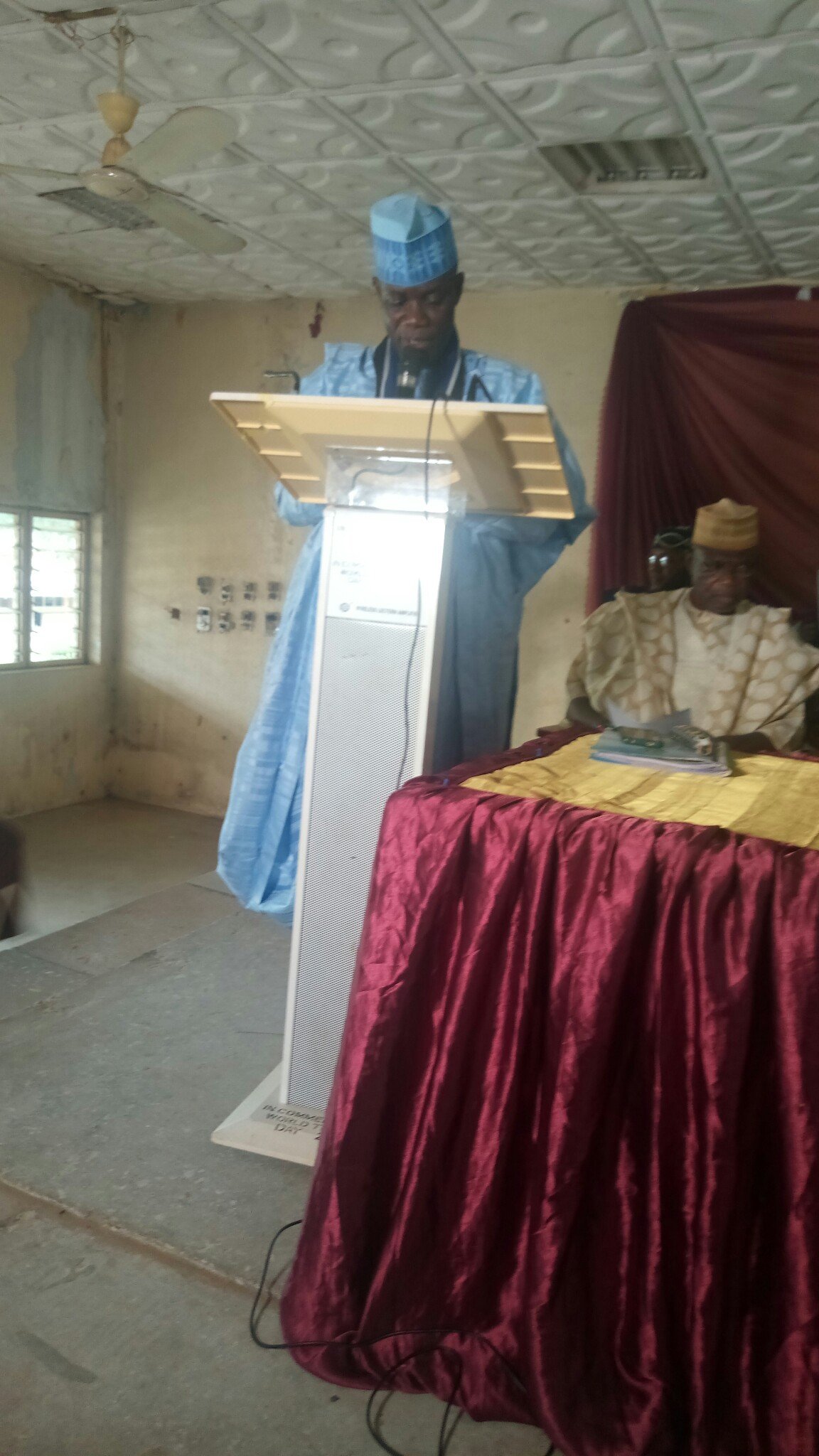


Kole Shettima, Other Patriots Deserving Of National Awards, By Hassan Gimba
“Citizens who contribute to national development deserve appreciation.” This quote by President Muhammadu Buhari captures the idea behind the national honours conferred on some Nigerians by him last month. And each recipient, well, almost all, when placed on the scale of merit, deserved what they got.
However, in such national recognitions, in a country of over 200 million, it is impossible to reward all the deserving at a go. This is why it is an event that happens periodically so that those overlooked this year may get it next year or after.
While everyone may have one or two that they strongly feel should be in the roll call of those that should make the cut, or should not, what matters most is that the criteria for selection and conferment are not compromised.
The Nigerian National Honours are conferred upon Nigerians and friends of Nigeria. The awards concept was instituted by the National Honours Act No. 5 of 1964 during the Tafawa Balewa administration to honour Nigerians who have rendered exceptional service to the nation.
Such service includes contributions towards uplifting the nation and humanity in general. It also recognises outstanding honour, dedication and patriotic commitments as well as service with integrity.
The awards, therefore, are a nation’s way of acknowledging and appreciating patriotism and loyalty to the country – a reward for selfless service which seeks to encourage beneficiaries to do more and for those of us yet to be recognised to tread the path of good work and meritorious service to the fatherland.
Taking all these into consideration, I feel three great Nigerians were overlooked on the awards and so missed out on that golden handshake from the number one citizen that historical Tuesday.
In my opinion, the late Baba Aji Mamman deserves a posthumous award. An employee of the Yobe Rural Electrification Board, Mamman, died on March 28, 2020. Before his death, he instructed his family to refund the government the amount of his salary for the 11 years he was absent from work.
Because of age, ill health and other constraints, Mamman sometimes came to the office twice or three times a week as opposed to the statutory five times. And so he instructed his family to refund to the government’s coffers the estimated “unearned” salaries and allowances of about 11 years amounting to the tune of N11 million.
The other one is Dr Arhyel Dibal Wandali, a.k.a. Mr Nigeria or Mr Green-White-Green. According to Sani Usman Kukasheka, a retired general, Dr Wandali is a patriot of the highest order and worthy of emulation. And the general should know because he was trained to be patriotic and loyal to Nigeria.
The retired general said of Dr Wandali: “There is no doubt that people like him are rare: highly intelligent, humble, compassionate and a case study in nationalism and patriotism as they bring hope and a great sense of inspiration about the great future for this country. His hope, aspiration and optimism about Nigeria are unparalleled. It is, therefore, desirable that he should be emulated and further encouraged through recognition and reward by relevant government agencies.”
Born in October, Nigeria’s birth month, 1963, Mr Nigeria who hails from Biu, Borno State, is a 1982 product of Government College, Maiduguri. His love for Nigeria is so massive that everything about him – from his house, cars, interior décor, clothes, down to even his phones and, some said, undies – are painted in the nation’s colours.
At this time when some Nigerians have no other vocation other than to disparage the country in the eyes of the world, Dr Arhyel Dibal Wandali, or Mr Nigeria, is a perfect role model for our upcoming ones, to recalibrate our idea of national pride and to let the world know that we are not short of patriots. He, in my opinion, deserves national honour.
And then there is Dr Kole Shettima. Born on 25 February 1960, if there’s any Nigerian that has strengthened the capacity of the Nigerian press and non-governmental organisations to be independent and focused on the demand for good governance, Dr Shettima is it.
I always recall his life-inspiring statement: “Machina is about five kilometres from the Nigeria/Niger border. We had no pipe-borne water, no electricity and no roads but we had human beings with soul”, in an interview with the Vanguard newspaper on 25 March 2011. He was speaking about his hometown, Machina, a town with a rich history threatened by the Sahara desert.
I first came to know Dr Kole Shettima through his writings in 2006, before my first physical contact with him some eight years later. When I started reading his educative, intellectual-cum-philosophical write-ups in various national dailies, notably in ThisDay and The Guardian newspapers, in the mid-1980s, I was wondering where this brilliant Yoruba man with a Kanuri surname came from. I knew Kole was a Yoruba name and Shettima, a northern, especially Borno or Yobe name, derived from a traditional title normally given to those who have proved to be educated and vast in knowledge.
Then in late 2013, at the height of the Boko Haram onslaught on the North East, Alhaji Garba Mamu, a senior colleague and brother, who was executive director, News and Current Affairs, at the headquarters of the Nigerian Television Authority (NTA), Abuja, called me up when Borno Elders’ Forum (made up of Borno and Yobe notables) wanted a journalist to act as their publicity man.
And that’s what I was through 2013 and 2014, liaising with the secretary of the forum, Ambassador B.K. Kaigama, a retired federal permanent secretary. The forum met periodically at the house of Architect Ibrahim Bunu at Aso Drive, Abuja. And that was where I first came into physical contact with Dr Kole Shettima. It was there I learnt he also came from Yobe and that his Kole was pronounced differently from the Yoruba Kole.
Ever smiling, shy and soft-spoken, with an image of being a loner, he would always sit on a chair by a door leading out to a patio. I did not introduce myself as a fan from afar, but I recall going up to him to shake hands. Once.
Not given to much talking, he deploys his expertise and passion in promoting education for the girl-child, peace and security, population and reproductive health, human rights and international justice, and pushing for anti-corruption and accountability in governance.
With over 30 years of experience in academia and as a development leader, manager, grant-maker, programme developer, teacher, researcher, trainer and consultant, he has taught at universities in Maiduguri, Toronto, York, Athens and Damaturu.
But where his impact has affected national development is his work at the MacArthur Foundation where he has worked since 1999 as Country Co-ordinator, Country Director, Co-chair of Higher Education in Africa, Director of the Africa Office and Co-director of the On Nigeria Programme. He has also been an adviser to the governments of Nigeria, the United States, Canada, Australia, Switzerland and the United Kingdom.
In Nigeria, he has advised the governments of Ekiti, Kano, Borno, Niger and Yobe, the Northern Governors’ Forum, the Progressive Governors’ Forum, the Nigeria Governors’ Forum and the federal ministries of Health, Education, Environment and Mines and Steel.
There is hardly any big journalism outlet in Nigeria, whether in the electronics (television and radio) print (newspapers, magazines, journals) or online, that has not benefited from Dr Shettima’s intervention through grants that allow them to expand and aim to be among the best in the world. They have also assisted smaller ones through his efforts so that they can pull themselves up by their bootstraps.
Through the intervention of the foundation, the organisations develop their structures and infrastructure, employ more Nigerians, train a lot of people, educate, enlighten, and entertain as well as bring to the notice of policymakers the plight of the downtrodden.
Dr Kole Shettima, from Machina, son of Yobe and pride of Nigeria, surely deserves to make the list of national awards.
The organisers only need to look well to see real patriots in the mould of Dr Arhyel Dibal Wandali, the late Aji Mamman and Dr Kole Shettima. This will confer more legitimacy on the whole exercise.
Hassan Gimba is the Publisher and Editor-in-Chief of Neptune Prime.