The Nigeria Union of Journalists (NUJ), has regretted the inability of the 52 TV and Radio broadcasting stations to fulfil their obligations to the National Broadcasting Commission (NBC), but that shutting them down now is not the best.
The Union’s national President, Chris Isiguzo, in a statement today, August 19, said that NBC’s decision to shut the stations down is hasty, ill-timed and reckless, saying that said that such a decision appeared to have been taken without careful deliberation.
“Media Release NBC: A hasty decision The decision today by the Industry Regulator, the National Broadcasting Commission – NBC, to revoke the licenses of 52 broadcast stations nationwide over-indebtedness to the Commission was ill-advised. The affected stations, according to NBC, are said to owe arrears of licence fees amounting to N2.6 billion since 2015.
“Although the Director General of NBC, Malam Balarabe Shehu Ilelah claimed that this development had no political motives, yet we insist that the action was ill-timed and reckless. It should be noted that this wholesale revocation of licences at this critical time of insecurity in the Country appears to be a decision taken without careful prior deliberation, consultation or counsel.
“While we regret the inability of these broadcast stations to fulfil their obligations to NBC, in view of dwindling resources, we caution against such a large-scale clampdown of broadcast stations in disregard to security issues and the attendant consequence.
“We cannot afford the unpleasant outcome of such a media blackout at this time. We call on NBC to exercise more restraint on this issue in consideration of national security and allow for more dialogue and consultation to find a better way of dealing with the situation.”
NBC had revoked the broadcast licences of Silverbird TV, AIT/ Raypower FM, and Rhythm FM, amongst others.
The Director-General of the NBC, Mallam Balarabe Shehu, who made the disclosure today, said that the development followed the failure of the media houses to renew their broadcast licences.
He directed its state offices to liaise with security agencies to ensure the shutdown of the operation of these stations within the next 24 hours.
The National Broadcasting Commission (NBC) has shut down 52 television and radio stations over none payment for their license and thereby violating National Broadcasting Commission Act CAP N11, Laws of the Federation of Nigeria, 2004, particularly section 10(a) of the third schedule of the Act. The list of the stations so shut down and given 24 hours to stop operation, at a news briefing today, August 19, by the Director-General of NBC, Malam Balarabe Ilelah, are as follows:
Silverbird TV (Silverbird Communications Co. Ltd) Network Rhythm FM (Silverbird Communications Ltd) FM Abuja 3. Rhythm FM (Silverbird Communications Ltd) FM Lagos 4. Rhythm FM (Silverbird Communications Ltd) FM Yenagoa 5. Rhythm FM (Silverbird Communications Ltd) FM Port-Harcourt 6. Rhythm FM (Silverbird Communications Ltd) FM Jos 7. Rhythm FM (Silverbird Communication Ltd) Benin 8. Greetings FM (Greetings Media Ltd) FM Network 9. Tao FM (Ovidi CommunicationS Ltd) FM Okene 10. Zuma FM (Zuma FM Ltd) FM Suleja 11. Crowther FM (Crowther Communications Ltd) FM Abuja 12. We FM (Kings Broadcasting Ltd) FM Benin 13. Linksman International ltd Keffi 14. Bomay Broadcasting Services ltd Abuja 15. MITV (Murhi International Group Ltd) Ibadan 16. Classic FM (Pinkt Nigeria Ltd) Port-Harcourt 17. Classic FM (Pinkt Nigeria Ltd) Lagos 18. Classic TV (Pinkt Nigeria Ltd) Lagos 19. Smoot FM (Fenchurch Invest Consortium ltd) Lagos 20. Beat FM (Megalectrics LTD) Lagos 21. Cooper Communications ltd Lagos 22. Splash FM (West Midlands Ltd) Ibadan 23. Rock City FM (Boot Communications ltd) Abeokuta 24. Family FM (Kalaks Investments Nig. Ltd) Ilugun 25. Space FM (Creazioni Nig. Ltd) Ibadan 26. Radio Jeremi (Radio Jeremi ltd) Effurun 27. Breeze FM (Bays Water ltd) Akure 28. Vibes FM (Vibes Communication ltd) Benin 29. Family Love FM (Multimesh Broadcasting Co. Ltd) Port-Harcourt 30. Wave FM (South Atlantic Media ltd) Port-Harcourt 31. Kogi State Broadcasting Corporation 32. Kwara State Broadcasting Corporation 33. Niger State Broadcasting Corporation 34. Gombe State Broadcasting Corporation 35. Lagos State Broadcasting Corporation 36. Lagos DSB 37. Osun State Broadcasting Corporation 38. Ogun State Broadcasting Corporation 39. Ondo State Broadcasting Corporation 40. Rivers State Broadcasting Corporation 41. Bayelsa State Broadcasting Corporation 42. Cross River State Broadcasting Corporation 43. Imo State Broadcasting Corporation 44. Anambra State Broadcasting Corporation 45. Borno State Broadcasting Corporation 46. Yobe State Broadcasting Corporation 47. Sokoto State Broadcasting Corporation 48. Zamfara State Broadcasting Corporation 49. Kebbi State Broadcasting Corporation 50. Jigawa State Broadcasting Corporation 51. Kaduna State Broadcasting Corporation 52. Katsina State Broadcasting Corporation
Balarabe Ilelah recalled that in May this year, the NBC published in the National Dailies, the list of licensees that are indebted to the Commission, and granted them two weeks to renew their licenses and pay their debts or consider their licenses revoked, frequencies withdrawn and the withdrawn frequencies reassigned to others who are ready to abide by the necessary requirements. “Three months after the publication, some licensees are yet to pay their outstanding debts, in contravention of the National Broadcasting Commission Act CAP N11, Laws of the Federation of Nigeria, 2004, particularly section 10(a) of the third schedule of the Act. In view of this development, the continued operation of the debtor-stations is illegal and constitutes a threat to national security. “Therefore, after due consideration, the NBC hereby announces the revocation of the licenses of the under-listed stations and gives them 24 hours to shut down their operations. Our offices nationwide are hereby directed to collaborate with security agencies to ensure immediate compliance.
The Director General said that Broadcast stations that are not affected and whose names are not on the list should renew their licenses for their current duration within the next 30 days or get their licenses also revoked.
The House of Representatives Committee on area councils, has subjected the officials of the Federal Capital Territory Administration (FCTA) to questions on the ongoing demolition of illegal structures in Kuje area council.
The House Committee, in response to a petition today, August 18, by victims of the demolition, wanted to know why the action was being embarked upon at the time the country is going through economic hardships.
And, the Coordinator of the Abuja Metropolitan Management Council (AMMC), Umar Shaibu, said that the exercise is being undertaken by the administration to identify areas that have been used as hideouts by criminals thereby constituting threats to national security, peace and order.
According to him, in carrying out the demolition, careful procedure is being followed and that all extant laws are being adhered, adding that critical stakeholders are being engaged at different times to ensure human rights are not bridged.
This was even as the Senior Special Assistant on Monitoring, Inspection and Enforcement to FCT Minister, Ikharo Attah, said that the administration has been worried about the security breaches that had taken place in Kuje in recent time.
According to him, the breeches could not be tolerated, as such activities of the underworlds put the administration in bad light.
Attah added that certain people have disregarded earlier warnings that they should stop converting the reserved railway corridors and public abattoir site to residential homes.
Also, the director of Development Control, Muktar Galadima, said that area councils have the right to allocate lands in FCT after the reforms that were introduced in 2005.
He added however, that local chiefs do not have the legal right to transfer any valid title to anyone.
The representative of Kuje area council chairman, Ishaku Habila, who is also the chief surveyor of Kuje area council, confirmed that the council followed the illegal developments, especially at the railway corridors with concern.
President Muhammadu Buhari has commanded the security forces to take the war against insurgents to their hideout in bushes and other places, and kill them.
The President, who spoke today, August 18 in Maiduguri, Borno State capital, at the World Humanitarian Day 2022 e stressed that the security forces must ensure that the terrorists are completely eliminated from the surface of the earth.
”The men and officers of Operation Lafiya Dole, Security Agencies and the Multi-National Joint Task Force (MNJTF) are very much appreciated for their commitment to the fight against insurgency.
”I commend their professionalism and tactical penetration to the hideout of the criminal elements, leading to appreciable improvement of the security situation in this North East Region, without which the resettlement of the IDP’s would not be possible.
”I, therefore, implore you not to relent in your efforts, continue to take the fight to their hideouts and ensure they are completely eliminated.
”I also implore you to ensure adequate security for farmers in their farming activities. Agricultural activities are most needed for settlement and development of the rural areas and this can only be achieved if the farmers are sure of their safety.”
Buhari directed the Federal Ministry of Humanitarian Affairs, Disaster Management and Social Development and its agencies to come up with specific programmes to address urgent threats posed by explosive remnants in the North East region.
He said that government will remain committed to reducing the effect of disasters, climate change, insurgency and challenges of Internally Displaced Persons (IDPs).
In directing the Ministry of Humanitarian Affairs and its agencies to pay particular attention to emerging issues amid the return and rehabilitation of Nigerians displaced in the 13-year conflict and insurgency in the region, the President said:”the emerging issues include the increasing number of orphans and widows.
”From our experience in the unfortunate Civil War, I know the threat that unexploded ordnances can pose to returnees even after the conflict has ended as we saw in the latest IED incident in Bama just last week.
”I urge the Ministry and its agencies as well as State Governments and the Special Committee I have set up under the Chairmanship of the Vice President to come up with specific programmes and projects that respond to these emerging challenges of explosive ordnance as well as that of children orphaned by insurgency.”
On World Humanitarian Day, commemorated annually on August 19, President Buhari commended all humanitarian aid workers that provide the much-needed assistance to those afflicted by the conflict.
He praised humanitarian aid workers across the globe for distinguishing themselves through their courage, commitment and drive to help their fellow humans in need – often at extreme personal risk to themselves.
”This typifies the nature of humanitarian work and sacrifice, and it is a great testimony for the theme of this year’s World Humanitarian Day which is “It Takes a Village,” he said.
The President led other guests at the event in Maiduguri to observe a minute silence in memory of all who lost their lives in disasters and humanitarian workers who died in the line of duty.
“On this 2022 World Humanitarian Day and every other day, we stand and shall continue to stand in solidarity with humanitarian aid workers and recognize their tremendous service and sacrifice.
”We celebrate their tireless efforts to save lives, preserve human dignity, and alleviate suffering. Their selfless commitment and actions stand as an example to us all.
”We will also make sure that they have our backing by ensuring that the Federal Ministry of Humanitarian Affairs and Disaster Management, Social Development facilitates their work.”
President Buhari also used the occasion to appreciate retired General Theophilus Danjuma for his support to Borno State Government in rehabilitating many IDPs in the North East.
The Ahmadu Bello University (ABU) in Zaria, Kaduna State, has received medical equipment from TETFund’s N1billion Special Intervention for the establishment of Urology and Kidney Transplant Unit at ABU Teaching Hospital, Shika, Zaria.
The Director of Public Affairs Directorate of the University, Auwalu Umar, said today, August 18, in a statement, said the supply of the medical equipment has further strengthened the preparations for the establishment of Urology and Kidney Transplant facility.
He added that the first and second consignments of the equipment were delivered to the University in two months and that the last consignment would soon be delivered.
According to him, some of the medical items delivered to the University for the establishment of the facility include C-Arm X-Ray system, operating table, electric suction machine, anaesthesia machine, and virgor patient monitor.
“Others are lend vest (radiation protector), apron hanger and uretheroscope flexible (video).”
He said that the Vice-Chancellor, Professor Kabiru Bala had inspected the items and expressed the University’s gratitude to TETFund and other key partners in the project.
Kaduna state Commissioner for Internal Security and Home Affairs, Samuel Aruwan has confirmed that the security agents have cleared the Lawal Kwalba camp in Chikun Forest in the State.
In a statement today, August 18, the Commissioner said: “Troops have made further inroads in the ongoing campaign against terrorists and armed bandits across the state. The troops cleared the camp of a notorious bandit, Lawal Kwalba, in Rafin Dawa in the Dende general area of Chikun local government.
“According to the operational feedback, the troops of Operation Forest Sanity conducted a patrol to the location following actionable intelligence. The troops after clearing the camp recovered some batteries and 27 bags of fertilizer. These materials indicate likely plans to manufacture Improvised Explosive Devices (IED), considering the bandits’ close alliance with terrorists.
“Furthermore, one motorcycle and two mobile phones were recovered as the bandits took to their heels before the troops’ arrival. The troops extended the search a short distance from the camp, and made some arrests. Investigations are ongoing on the intercepted suspects.
“The Kaduna state government received the report with satisfaction, and praised the sustained efforts by officers and men carrying out the operations.
“Security agencies have reported that three persons were rescued by troops conducting patrols around Ungwan Namama, along the Zaria-Kano road. The troops came in contact with migrating bandits in the area and engaged them, forcing them to abandon their three captives as they hastily escaped.
“The troops then rescued the victims, identified as follows: Abdullahi Lawal, Sadiya Salimanu and Fatima Salimanu (Sadiya’s 10-month-old child). Investigations revealed that the captives were kidnapped in a neighbouring state. Also recovered from the bandits were nine rustled animals, comprising one cow and eight sheep.
“The Kaduna state government thanked the troops for their valiant action in rescuing the kidnapped victims. The rescued persons have been reunited with their families, while the recovered animals were handed over to local authorities for proper identification and retrieval.
Popular Nigerian actress, Toto Dikeh has announced her decision to call it quits with the Nollywood industry to enable her concentrate on her political career.
The mother of one was on June 24 this year, picked by the African Democratic Congress (ADC) as governorship running mate to Tonte Ibraye, the ADC governorship candidate in Rivers State. Tonto spoke today, August 18, in an interview with BBC News Pidgin.
“I have done like two films in 10 years, so you can’t tell me I’m still in the industry. I would always appreciate that it was the industry that my path started from, that my shine started from it. It is something that I respect, but it’s not something that has been in my life for a while now. So even after the election, it is not something I plan on bringing back.”
She compared her chances of winning to the duel between biblical David and Goliath, saying “anything can happen.”
The battle between the Federal Government and the Academic Staff Union of Universities (ASUU) has taken a new dimension with ASUU insisting that before it calls of the strike, its members should be paid the salary of the five months they have been off the classrooms.
The Education minister, Malam Adamu Adamu, at a ministerial briefing of the newsmen today, August 18, at the Presidential villa, Abuja, said that the government has decided not to accede to such demand.
“We have done this before on compassionate ground and would not want to continue in a way that they would not take us for granted.”
Adamu Adamu said that the government is not doing what is not there, explaining that there international labour law of no work no pay.
The slap on the wrist given a notorious kidnap kingpin has exposed the underbelly of the criminal justice administration in Nigeria. It also underscores the seeming hopelessness of the national security situation. Justice Binta Nyako of the Federal High Court, according to reports, last month sentenced Hamisu Bala, popularly known as Wadume, to seven years imprisonment for unlawfully dealing in prohibited firearms and escaping from prison custody. Among the six others convicted with Wadume is Inspector Aliyu Dadje, station officer at the Ibi Divisional Police Headquarters in Taraba State at the time the crime was committed. Dadje bagged three years in jail for tampering with police records to conceal a crime. All the elements that have made our country unsafe today are present in this tragedy that has been treated so casually by the federal government. From kidnapping to criminal complicity by military/security agencies to inter-agency rivalry and the way life has become so cheap in Nigeria, this is one case that should have been used for the purpose of deterrence in our quest for peace and security. Sadly, not only has the case been cynically bungled, but we have also shown that lives of innocent people do not matter and accountability counts for nothing. Since Wadume has already spent some years in detention, he can be freed as early as 2025. And perhaps then granted presidential pardon (the way we roll in Nigeria) to contest for senate in 2027 on the platform of whichever party is in power at the time! I cannot but feel for the families of the slain policemen for whom the state cannot secure real justice. What is more confounding is the secrecy that has shrouded this trial whose outcome we only got to know more than three weeks later. The judgement was said to have been handed down on 22nd July with a statement released only last Sunday. The report also stated that ten military officers earlier charged with the convicts have had their trial “separated for departmental reasons,” whatever that means. These soldiers are Captain Tijjani Balarabe; Staff Sgt David Isaiah; Sgt Ibrahim Mohammed; Corporal Bartholomew Obanye; Private Mohammed Nura; Lance Corporal Okorozie Gideon; Corporal Marcus Michael; Lance Corporal Nvenaweimoeimi Akpagra; Staff Sgt Abdulahi Adamu and Private Ebele Emmanuel. While we can assume that these were the soldiers who killed the police team, we do not know what the exact charges are against them. Meanwhile, this tragic story began on 6th August 2019 when a special operational team sent from Abuja arrested Wadume in Taraba State, handcuffed him and were driving toward Jalingo when they came under heavy bombardment from soldiers. In the process, four persons were killed on the spot while several others were injured. Those killed were Inspector Mark Ediale and two sergeants – Usman Danzumi and Dahiru Musa and a civilian by name of Jibrin. The soldiers then freed the handcuffed suspect, according to a statement by then police spokesperson, Frank Mba, who provided public updates on the matter.
From all that transpired at the time, there was no dispute about the fact that Wadume was freed by the soldiers who killed the policemen. In his version of the event, the then Army spokesperson, Sagir Musa said that soldiers from 93 Battalion received a distress call that kidnappers had come to operate in their community, leading to the hot pursuit that culminated in the unfortunate killings. Musa, who accused police operatives of refusing to stop at the military checkpoint, described them as “suspected kidnappers who turned out to be an Intelligence Response Team…on a covert assignment from Abuja.” But he gave a convoluted account of how Wadume escaped unhurt from the hands of the military men. Evidently miffed by the attempt to cover up the crime, the police immediately countered by raising pertinent posers: “Where is the notorious kidnapper, Alhaji Hamisu Bala Wadume ‘rescued’ by the soldiers? How could a kidnap suspect properly restrained with handcuffs by the Police escape from the hands of his military rescuers? If Alhaji Hamisu Bala Wadume is a ‘victim of kidnap’ as claimed, and properly rescued by soldiers, why was he not taken to the Army Base for documentation purposes and debriefing in line with the Standard Operating Procedure in the Nigerian Army?” Insisting that their officers were murdered by the soldiers who they accused of colluding with the kidnap suspect, the police asked, “Why were the Police Operatives shot at close range even after they had identified themselves as Police Officers on legitimate duty as evident in the video now in circulation?” Indeed, the clear give-away in the video released by police after the killings was the question, ‘Where is their service pistol?’ Asked by one of the shooters, it is an indication they knew their victims were officers of the law. That a most wanted criminal suspect was set free in the process further confirmed the motive of the callous act that points to a clear link between officialdom and organised crime in our country. And to the extent that the insecurity that plagues our country today is the product of a justice administration that places criminals above the rest of society, it is no surprise that we have treated this unfortunate tragedy in a cavalier manner. Apparently embarrassed, President Muhammadu Buhari tasked the then Chief of Defence Staff, General Abayomi Gabriel Olonisakin to investigate the incident and report back to him. The police of course went in search of Wadume who was later captured in Kano on 20th August 2019. They subsequently released the video of his confessional statement that corroborated their allegation that the soldiers who killed their men were working in concert with kidnappers. “I am Hamisu Bala also known as Wadume. The police came to Ibi and arrested me. After arresting me, they were taking me to Abuja when soldiers went after them, opened fire and some policemen were killed. From there, the soldiers took me to their headquarters and cut off the handcuffs on my hands and I ran away. Since I ran away, I have been hiding until now that the police arrested me again,” Wadume said in the video. Meanwhile, the joint presidential investigative panel headed by Rear Admiral T.I Olaiya with representatives from the National Intelligence Agency (NIA), Defence Intelligence Agency (DIA), State Security Service (SSS) as well as the army, navy and police went mute. Although the panel was said to have presented a report to Olonisakin for onward transmission to the president, the APC broom has swept the matter under the proverbial carpet. Beyond what we are reading about “separated cases”, I am not aware that anybody in the military has been held accountable for executing three senior police officers and a civilian while on duty: No punishment for bad behavior, no justice for slain police officers, no lessons learnt. Case closed! I concede that I do not know the charges filed against Wadume and accomplices at the federal high court by the office of the Attorney General of the Federation. So it is possible that Justice Nyako merely applied the law. But when you run a system where the punishment does not fit the crime and there is no accountability even for lives lost, it is the larger society that is in danger. We can see the evidence of that in all facets of our country today – which is why we should be concerned.
Adamu and the Water Resources Bill On 3rd September 2020, I wrote a column regarding the controversial Water Resources Bill that had been effectively killed two years earlier by former Akwa Ibom State Governor, Godswill Akpabio before it resurfaced in the Senate. When the column was posted on an online chat group, I was surprised when the Minister of Water Resources, Suleiman Adamu joined the conversation. I had no idea that he was on the platform. He wrote: “I would have loved to comment on this write up, if I had the assurances that Segun has actually read the contents of the draft bill and isn’t simply arriving at his judgment based on the ‘drama’ that transpired in the Senate two years ago. I would be happy to engage him and clear the air, sort of.” I responded to Adamu’s jibe: “Thank you very much Honourable Minister. Although I did not read the bill before I wrote my column, I read the full presentation of the Water Resources Committee chairman, Senator Ubali Shitu which highlighted and explained most of the clauses in the bill. So, I did not write out of ignorance. I never do that. But I also came to my own conclusion which has been reaffirmed after reading the full bill. I find nothing new that I did not already know. It is still the same 2018 bill, and the issues remain the same. For instance, I referenced attempts at power grab by the federal government at a time we should be devolving powers. That much is still evident in the bill. I am almost certain that the issues raised by Akpabio will still come up in the debate of this bill when the National Assembly resumes. And given the toxic ethno-religious environment in the country, partly helped by some of the choices made by this government, the bill will still generate a lot of heat at the National Assembly.” After thanking me for the explanation, Adamu also responded to an aspect of my column: “There is a schedule in the draft bill where the major rivers involved are listed. I bet more than 90% of the people shouting ‘foul’ have not read the Bill. That’s why I would rather discuss it with any individual after he/she would have read the draft. “This bill was drafted between 2006 and 2008. So, it’s not a ‘Buhari Water Bill’. The Bill went through six town hall meetings, in each geopolitical zone, as of 2008. When I came into office and was requested by Water Stakeholders to ensure its passage at a retreat in December 2015, I first circulated it to all 36 states and received their feedback. Observations were incorporated into the final draft which I then presented to the National Council on Water Resources meeting of May 2016, at which all 36 commissioners responsible for water resources endorsed it. Then I presented it to the Federal Executive Council (FEC) in September 2016 where it was also unanimously approved. Every state is of course represented at FEC. Finally, it went through another public hearing in the House of Representatives in November 2017 and passed without any rancour. Yes, I agree with Segun, it was Akpabio who tried to kill it in the Senate. “By the way, the Water Resources Bill has nothing to do with inland waterways navigation. I will try and post a soft copy later today as passed by the House of Representatives. I really don’t understand the hysteria around it, other than just dirty politics. Unfortunately, many people have been sucked into it. And it’s not as if the Bill was brought back to National Assembly through the back door. The issue just got entangled with the 2019 elections and we ran out of time. With the good fortune that I returned as Minister of Water Resources for a second term, I was obliged to continue with the process, starting again from where we stopped. “Let me also say that the hysteria is totally unnecessary because the Bill is just a consolidation of four existing Water laws into a single statute. The existing laws are Water Resources Act 2004; National Water Resources Institute Act; River Basin Development Authorities Act, and Nigeria Hydrological Services Act. Other aspects of the Bill which deal with the concept of integrated water resources management whittle down the powers of the Minister and empower citizens within a catchment to have a say in any major water resources development. It means, for instance, that the Minister cannot approve a major dam, irrigation or hydropower project without a consensus among stakeholders. It also strengthens regulations that would make the Water sector more attractive to private sector investment. Another provision deals with empowerment of farmers to maintain secondary and tertiary irrigation facilities, plus a new section for the establishment of a Water, Sanitation and Hygiene (WASH) Fund. “As Minister of Water Resources, I am contented with the enormous powers bestowed on me by the existing Water Resources Act. But as a technocrat and a professional who has been involved with water issues for the past 36 years, I consider it most appropriate at this time to update our water laws and make them more effective, in accordance with global best practices and international conventions Nigeria has subscribed to.” When others on the platform took on the Minister as to why Nigerians were not availed the information he was providing, he replied. “I do admit that our government has not been good at managing its public image, but on this score, we did everything possible to address the issue back in 2018. Honestly, we were taken by surprise at the negative expression that emerged from the Senate debate back then, as the Bill already had a smooth sail in the House of Representatives. However, although public perception matters a lot, I have taken the position that I would rather engage our legislators and other concerned individuals/interest groups/CSOs directly to explain and address their areas of concern. In the end, laws are only passed in the Legislature, not in the market square.” Well, what Adamu forgot is that opinions in the ‘market square’ often determine what happens in the legislature. Two years after our online conversation, the 36 governors have rejected the bill on grounds that it “does not adequately address the interests of the states and is inconsistent with the provisions of the Constitution of the Federal Republic of Nigeria,” according to a statement by Nigerian Governors’ Forum (NGF) chairman and Ekiti State governor, Kayode Fayemi. Given my opposition to the bill, based on the same fears recently expressed by the governors, I met Adamu on Tuesday, at his instance. He took me through the history of the bill and explained that before it was sent to the National Assembly, inputs were received from renowned experts such as Prof Lanre Fagbohun, SAN, Prof Goldface Irokalibe (a specialist in International Water Law who was said to have done the initial draft) and Prof Lekan Oyebande (a well-respected hydrologist). Fagbohun, member of an independent team of experts put together by the federal government “to provide an assessment of the provisions of the Bill against the backdrop of implications for relevant constitutional provisions and State powers” has argued that the governors have nothing to fear in the bill that “applies to inter-state waters alone.” The bill, according to Fagbohun who echoes everything Adamu has been saying, is important to ensure that our water resources “are protected, used, developed, conserved, managed and controlled in ways which take into account amongst other factors citizens’ right of access to safe water and basic sanitation; meeting the basic human needs of present and future generations; promoting equitable and affordable access to water and reducing poverty.” My session with Adamu was quite stimulating, even though we were meeting for the first time. Fellow of the Nigerian Society of Engineers (FNSE), Member of the American Society of Engineers (MASCE) and Council Member of both COREN (Council of Registered Engineers of Nigeria) and ACEN (Association of Consulting Engineers of Nigeria), Adamu is obviously one of the few round pegs in round holes under the current dispensation. When he graduated from the Ahmadu Bello University (ABU) Zaria in 1984 at 21, Adamu was the winner of the Nigerian Port Authority (NPA) prize for the best final year student in Civil Engineering. He obtained his master’s in project management from University of Reading, United Kingdom. I now understand what Adamu is trying to do with the Water Resources Bill, but he still needs to address the concerns of all critical stakeholders, especially the governors. And Adamu must also understand that even with good intentions, when it comes to public policy, securing the buy-in of “the market square” also matters!
We use cookies on our website to give you the most relevant experience by remembering your preferences and repeat visits. By clicking “Accept”, you consent to the use of ALL the cookies.
This website uses cookies to improve your experience while you navigate through the website. Out of these, the cookies that are categorized as necessary are stored on your browser as they are essential for the working of basic functionalities of the website. We also use third-party cookies that help us analyze and understand how you use this website. These cookies will be stored in your browser only with your consent. You also have the option to opt-out of these cookies. But opting out of some of these cookies may affect your browsing experience.
Necessary cookies are absolutely essential for the website to function properly. This category only includes cookies that ensures basic functionalities and security features of the website. These cookies do not store any personal information.
Any cookies that may not be particularly necessary for the website to function and is used specifically to collect user personal data via analytics, ads, other embedded contents are termed as non-necessary cookies. It is mandatory to procure user consent prior to running these cookies on your website.




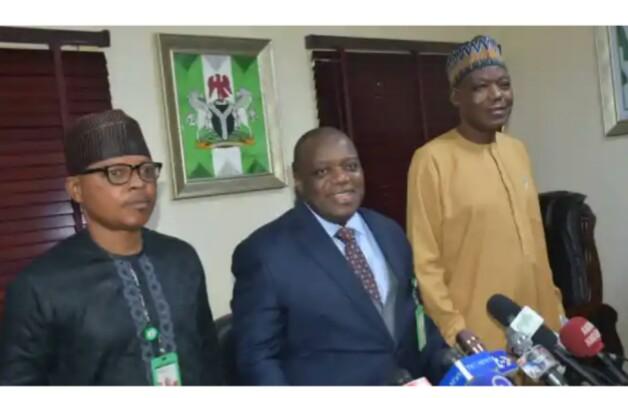 The National Broadcasting Commission (NBC) has shut down 52 television and radio stations over none payment for their license and thereby violating National Broadcasting Commission Act CAP N11, Laws of the Federation of Nigeria, 2004, particularly section 10(a) of the third schedule of the Act.

 President Muhammadu Buhari has commanded the security forces to take the war against insurgents to their hideout in bushes and other places, and kill them.
 The Ahmadu Bello University (ABU) in Zaria, Kaduna State, has received medical equipment from TETFund’s N1billion Special Intervention for the establishment of Urology and Kidney Transplant Unit at ABU Teaching Hospital, Shika, Zaria.
 Kaduna state Commissioner for Internal Security and Home Affairs, Samuel Aruwan has confirmed that the security agents have cleared the Lawal Kwalba camp in Chikun Forest in the State.




Wadume And The Nigerian Tragedy, By Olusegun Adeniyi
The slap on the wrist given a notorious kidnap kingpin has exposed the underbelly of the criminal justice administration in Nigeria. It also underscores the seeming hopelessness of the national security situation. Justice Binta Nyako of the Federal High Court, according to reports, last month sentenced Hamisu Bala, popularly known as Wadume, to seven years imprisonment for unlawfully dealing in prohibited firearms and escaping from prison custody. Among the six others convicted with Wadume is Inspector Aliyu Dadje, station officer at the Ibi Divisional Police Headquarters in Taraba State at the time the crime was committed. Dadje bagged three years in jail for tampering with police records to conceal a crime.
All the elements that have made our country unsafe today are present in this tragedy that has been treated so casually by the federal government. From kidnapping to criminal complicity by military/security agencies to inter-agency rivalry and the way life has become so cheap in Nigeria, this is one case that should have been used for the purpose of deterrence in our quest for peace and security. Sadly, not only has the case been cynically bungled, but we have also shown that lives of innocent people do not matter and accountability counts for nothing. Since Wadume has already spent some years in detention, he can be freed as early as 2025. And perhaps then granted presidential pardon (the way we roll in Nigeria) to contest for senate in 2027 on the platform of whichever party is in power at the time!
I cannot but feel for the families of the slain policemen for whom the state cannot secure real justice. What is more confounding is the secrecy that has shrouded this trial whose outcome we only got to know more than three weeks later. The judgement was said to have been handed down on 22nd July with a statement released only last Sunday. The report also stated that ten military officers earlier charged with the convicts have had their trial “separated for departmental reasons,” whatever that means. These soldiers are Captain Tijjani Balarabe; Staff Sgt David Isaiah; Sgt Ibrahim Mohammed; Corporal Bartholomew Obanye; Private Mohammed Nura; Lance Corporal Okorozie Gideon; Corporal Marcus Michael; Lance Corporal Nvenaweimoeimi Akpagra; Staff Sgt Abdulahi Adamu and Private Ebele Emmanuel. While we can assume that these were the soldiers who killed the police team, we do not know what the exact charges are against them.
Meanwhile, this tragic story began on 6th August 2019 when a special operational team sent from Abuja arrested Wadume in Taraba State, handcuffed him and were driving toward Jalingo when they came under heavy bombardment from soldiers. In the process, four persons were killed on the spot while several others were injured. Those killed were Inspector Mark Ediale and two sergeants – Usman Danzumi and Dahiru Musa and a civilian by name of Jibrin. The soldiers then freed the handcuffed suspect, according to a statement by then police spokesperson, Frank Mba, who provided public updates on the matter.
From all that transpired at the time, there was no dispute about the fact that Wadume was freed by the soldiers who killed the policemen. In his version of the event, the then Army spokesperson, Sagir Musa said that soldiers from 93 Battalion received a distress call that kidnappers had come to operate in their community, leading to the hot pursuit that culminated in the unfortunate killings. Musa, who accused police operatives of refusing to stop at the military checkpoint, described them as “suspected kidnappers who turned out to be an Intelligence Response Team…on a covert assignment from Abuja.” But he gave a convoluted account of how Wadume escaped unhurt from the hands of the military men.
Evidently miffed by the attempt to cover up the crime, the police immediately countered by raising pertinent posers: “Where is the notorious kidnapper, Alhaji Hamisu Bala Wadume ‘rescued’ by the soldiers? How could a kidnap suspect properly restrained with handcuffs by the Police escape from the hands of his military rescuers? If Alhaji Hamisu Bala Wadume is a ‘victim of kidnap’ as claimed, and properly rescued by soldiers, why was he not taken to the Army Base for documentation purposes and debriefing in line with the Standard Operating Procedure in the Nigerian Army?” Insisting that their officers were murdered by the soldiers who they accused of colluding with the kidnap suspect, the police asked, “Why were the Police Operatives shot at close range even after they had identified themselves as Police Officers on legitimate duty as evident in the video now in circulation?”
Indeed, the clear give-away in the video released by police after the killings was the question, ‘Where is their service pistol?’ Asked by one of the shooters, it is an indication they knew their victims were officers of the law. That a most wanted criminal suspect was set free in the process further confirmed the motive of the callous act that points to a clear link between officialdom and organised crime in our country. And to the extent that the insecurity that plagues our country today is the product of a justice administration that places criminals above the rest of society, it is no surprise that we have treated this unfortunate tragedy in a cavalier manner.
Apparently embarrassed, President Muhammadu Buhari tasked the then Chief of Defence Staff, General Abayomi Gabriel Olonisakin to investigate the incident and report back to him. The police of course went in search of Wadume who was later captured in Kano on 20th August 2019. They subsequently released the video of his confessional statement that corroborated their allegation that the soldiers who killed their men were working in concert with kidnappers. “I am Hamisu Bala also known as Wadume. The police came to Ibi and arrested me. After arresting me, they were taking me to Abuja when soldiers went after them, opened fire and some policemen were killed. From there, the soldiers took me to their headquarters and cut off the handcuffs on my hands and I ran away. Since I ran away, I have been hiding until now that the police arrested me again,” Wadume said in the video.
Meanwhile, the joint presidential investigative panel headed by Rear Admiral T.I Olaiya with representatives from the National Intelligence Agency (NIA), Defence Intelligence Agency (DIA), State Security Service (SSS) as well as the army, navy and police went mute. Although the panel was said to have presented a report to Olonisakin for onward transmission to the president, the APC broom has swept the matter under the proverbial carpet. Beyond what we are reading about “separated cases”, I am not aware that anybody in the military has been held accountable for executing three senior police officers and a civilian while on duty: No punishment for bad behavior, no justice for slain police officers, no lessons learnt. Case closed!
I concede that I do not know the charges filed against Wadume and accomplices at the federal high court by the office of the Attorney General of the Federation. So it is possible that Justice Nyako merely applied the law. But when you run a system where the punishment does not fit the crime and there is no accountability even for lives lost, it is the larger society that is in danger. We can see the evidence of that in all facets of our country today – which is why we should be concerned.
Adamu and the Water Resources Bill
On 3rd September 2020, I wrote a column regarding the controversial Water Resources Bill that had been effectively killed two years earlier by former Akwa Ibom State Governor, Godswill Akpabio before it resurfaced in the Senate. When the column was posted on an online chat group, I was surprised when the Minister of Water Resources, Suleiman Adamu joined the conversation. I had no idea that he was on the platform. He wrote: “I would have loved to comment on this write up, if I had the assurances that Segun has actually read the contents of the draft bill and isn’t simply arriving at his judgment based on the ‘drama’ that transpired in the Senate two years ago. I would be happy to engage him and clear the air, sort of.”
I responded to Adamu’s jibe: “Thank you very much Honourable Minister. Although I did not read the bill before I wrote my column, I read the full presentation of the Water Resources Committee chairman, Senator Ubali Shitu which highlighted and explained most of the clauses in the bill. So, I did not write out of ignorance. I never do that. But I also came to my own conclusion which has been reaffirmed after reading the full bill. I find nothing new that I did not already know. It is still the same 2018 bill, and the issues remain the same. For instance, I referenced attempts at power grab by the federal government at a time we should be devolving powers. That much is still evident in the bill. I am almost certain that the issues raised by Akpabio will still come up in the debate of this bill when the National Assembly resumes. And given the toxic ethno-religious environment in the country, partly helped by some of the choices made by this government, the bill will still generate a lot of heat at the National Assembly.”
After thanking me for the explanation, Adamu also responded to an aspect of my column: “There is a schedule in the draft bill where the major rivers involved are listed. I bet more than 90% of the people shouting ‘foul’ have not read the Bill. That’s why I would rather discuss it with any individual after he/she would have read the draft.
“This bill was drafted between 2006 and 2008. So, it’s not a ‘Buhari Water Bill’. The Bill went through six town hall meetings, in each geopolitical zone, as of 2008. When I came into office and was requested by Water Stakeholders to ensure its passage at a retreat in December 2015, I first circulated it to all 36 states and received their feedback. Observations were incorporated into the final draft which I then presented to the National Council on Water Resources meeting of May 2016, at which all 36 commissioners responsible for water resources endorsed it. Then I presented it to the Federal Executive Council (FEC) in September 2016 where it was also unanimously approved. Every state is of course represented at FEC. Finally, it went through another public hearing in the House of Representatives in November 2017 and passed without any rancour. Yes, I agree with Segun, it was Akpabio who tried to kill it in the Senate.
“By the way, the Water Resources Bill has nothing to do with inland waterways navigation. I will try and post a soft copy later today as passed by the House of Representatives. I really don’t understand the hysteria around it, other than just dirty politics. Unfortunately, many people have been sucked into it. And it’s not as if the Bill was brought back to National Assembly through the back door. The issue just got entangled with the 2019 elections and we ran out of time. With the good fortune that I returned as Minister of Water Resources for a second term, I was obliged to continue with the process, starting again from where we stopped.
“Let me also say that the hysteria is totally unnecessary because the Bill is just a consolidation of four existing Water laws into a single statute. The existing laws are Water Resources Act 2004; National Water Resources Institute Act; River Basin Development Authorities Act, and Nigeria Hydrological Services Act. Other aspects of the Bill which deal with the concept of integrated water resources management whittle down the powers of the Minister and empower citizens within a catchment to have a say in any major water resources development. It means, for instance, that the Minister cannot approve a major dam, irrigation or hydropower project without a consensus among stakeholders. It also strengthens regulations that would make the Water sector more attractive to private sector investment. Another provision deals with empowerment of farmers to maintain secondary and tertiary irrigation facilities, plus a new section for the establishment of a Water, Sanitation and Hygiene (WASH) Fund.
“As Minister of Water Resources, I am contented with the enormous powers bestowed on me by the existing Water Resources Act. But as a technocrat and a professional who has been involved with water issues for the past 36 years, I consider it most appropriate at this time to update our water laws and make them more effective, in accordance with global best practices and international conventions Nigeria has subscribed to.”
When others on the platform took on the Minister as to why Nigerians were not availed the information he was providing, he replied. “I do admit that our government has not been good at managing its public image, but on this score, we did everything possible to address the issue back in 2018. Honestly, we were taken by surprise at the negative expression that emerged from the Senate debate back then, as the Bill already had a smooth sail in the House of Representatives. However, although public perception matters a lot, I have taken the position that I would rather engage our legislators and other concerned individuals/interest groups/CSOs directly to explain and address their areas of concern. In the end, laws are only passed in the Legislature, not in the market square.”
Well, what Adamu forgot is that opinions in the ‘market square’ often determine what happens in the legislature. Two years after our online conversation, the 36 governors have rejected the bill on grounds that it “does not adequately address the interests of the states and is inconsistent with the provisions of the Constitution of the Federal Republic of Nigeria,” according to a statement by Nigerian Governors’ Forum (NGF) chairman and Ekiti State governor, Kayode Fayemi.
Given my opposition to the bill, based on the same fears recently expressed by the governors, I met Adamu on Tuesday, at his instance. He took me through the history of the bill and explained that before it was sent to the National Assembly, inputs were received from renowned experts such as Prof Lanre Fagbohun, SAN, Prof Goldface Irokalibe (a specialist in International Water Law who was said to have done the initial draft) and Prof Lekan Oyebande (a well-respected hydrologist). Fagbohun, member of an independent team of experts put together by the federal government “to provide an assessment of the provisions of the Bill against the backdrop of implications for relevant constitutional provisions and State powers” has argued that the governors have nothing to fear in the bill that “applies to inter-state waters alone.”
The bill, according to Fagbohun who echoes everything Adamu has been saying, is important to ensure that our water resources “are protected, used, developed, conserved, managed and controlled in ways which take into account amongst other factors citizens’ right of access to safe water and basic sanitation; meeting the basic human needs of present and future generations; promoting equitable and affordable access to water and reducing poverty.”
My session with Adamu was quite stimulating, even though we were meeting for the first time. Fellow of the Nigerian Society of Engineers (FNSE), Member of the American Society of Engineers (MASCE) and Council Member of both COREN (Council of Registered Engineers of Nigeria) and ACEN (Association of Consulting Engineers of Nigeria), Adamu is obviously one of the few round pegs in round holes under the current dispensation. When he graduated from the Ahmadu Bello University (ABU) Zaria in 1984 at 21, Adamu was the winner of the Nigerian Port Authority (NPA) prize for the best final year student in Civil Engineering. He obtained his master’s in project management from University of Reading, United Kingdom.
I now understand what Adamu is trying to do with the Water Resources Bill, but he still needs to address the concerns of all critical stakeholders, especially the governors. And Adamu must also understand that even with good intentions, when it comes to public policy, securing the buy-in of “the market square” also matters!