Home Blog Page 48

Tinubu’s “Reforms”: Shock Therapy Without Relief, By Jazuli Lawal

As Development Economist, I was shocked reading The Financial Times editorial of May 2025 arguing that President Bola Ahmed Tinubu’s administration has “stabilised the economy” and “turned a corner.” While this assessment may seem encouraging on paper, it is detached from the reality of most Nigerians, who are enduring the worst economic hardship in decades. Far from heralding a recovery, these reforms have plunged millions deeper into poverty, hunger, and despair.

Yes, growth projections may reach 3.7%, but growth without shared prosperity is economic illusion. It is one thing for the World Bank or foreign investors to read green shoots in quarterly reports; it is quite another for ordinary Nigerians to afford a loaf of bread, a litre of petrol, or basic healthcare. In truth, these reforms have inflicted more pain than progress.
1. Fuel Subsidy Removal: Pain Without a Plan
The removal of the fuel subsidy may have been economically justifiable, but it was executed without safety nets for the poor. Transport costs tripled overnight. Food inflation soared above 40%. Public transportation collapsed in many cities. Promised palliatives buses, cash transfers, food programs — either never materialized or were grossly inadequate. For the average Nigerian, this was not reform. It was economic cruelty.
2. Naira Devaluation: Stabilised for Whom?
The editorial praises the naira’s “stabilisation” after its free fall, but at what cost? The official exchange rate may have narrowed against the black market, but imported inflation has devastated households. Medications, textbooks, and technology are now luxuries. The so-called “orthodox monetary policy” has benefited speculators and exporters not the average worker, teacher, or trader. Stability that increases suffering is not progress.
3. Cronyism and Cosmetic Fiscal Changes
While the CBN may have stopped printing money, government waste continues unchecked. Budget padding, inflated contracts, and luxury spending from bulletproof SUVs to a proposed N90 billion pilgrimage subsidies persist. A restructured tax base is meaningless when the proceeds fund elite extravagance instead of schools, clinics, or rural roads.
4. Oil Production: Temporary Gains Amid Systemic Failures
That oil output rose from 1.0 to 1.5 million barrels daily is not a structural win, it is a partial recovery from collapse, not a transformation. Oil theft may be reduced for now, but the deeper issues of diversification, value chain development, and energy access remain unresolved. Worse still, Nigeria’s overdependence on oil continues, as non-oil revenues remain weak and productivity outside Lagos and Abuja stagnates.
5. Inflation and Insecurity: The Twin Threats Ignored
The editorial mildly admits to 24% inflation and ongoing insecurity, but these are not minor challenges, they are national emergencies. Farmers cannot access markets due to banditry. Schools are being closed for fear of abductions. In this context, talking about investor access to dollars misses the mark. The real economy — the economy of ordinary people is in distress.
6. Who Feels the Reform? Not the People.
To claim that Nigeria is in “better shape” than in the last decade is an insult to Nigerians whose real incomes have eroded, whose children are out of school, and who are being told to “endure” while political elites fly private jets and allocate billions for luxury offices. If this is the price of reform, it is too high, too cruel, and too disconnected from any real social contract.
Conclusion: Reform Must Deliver, Not Destroy
The Financial Times rightly notes that Nigeria has potential, but potential does not feed empty stomachs. Nigeria does not need shock therapy that breaks its people before healing its economy. Real reform must be inclusive, empathetic, and transparent. What we are witnessing under Tinubu is not reform, but elite restructuring where the same political class gains, while the masses are told to be patient and patriotic in poverty.
Nigeria can indeed turn the corner, but not with policies that privilege IMF applause over local realities, or foreign investor optimism over domestic survival. True reform must touch the lives of ordinary people or it remains nothing but a foreign illusion and a local tragedy.

Dr. Jazuli Lawal is M.CIoD, Development Economist & Management Consultant Abuja, Nigeria, in a rejoinder to the Financial Times Editorial.

How Kogi Women Are Revolutionizing Agriculture, By Dada Ahmed
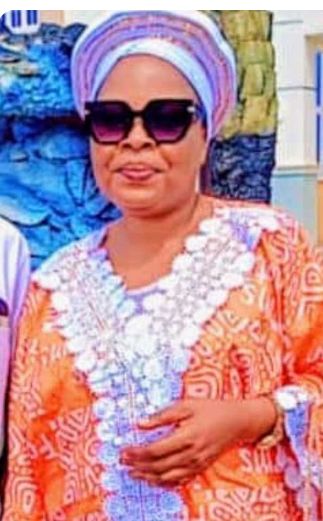
Without mincing words, it is correct to say that in the heart of Nigeria’s farming communities, women till the land, sow the seeds, and harvest the crops that feed millions. Unfortunately, findings have shown that for decades, women have remained on the margins of the agricultural policy-making process, access to credit, and technological innovation.
But on a happy note, the story is changing, thanks in part, to the efforts of the Women in Agriculture Cooperative Federation Limited (WIACF), an organization representing transformative force that is quietly reshaping the role of women in farming in Kogi State.
Founded in 2009 and led by Dr. (Mrs.) Esther Audu as the National President, WIACF is not just another cooperative; it is a lifeline for thousands of women seeking dignity, prosperity, and inclusion in Nigeria’s most vital economic sector,agriculture. Through a well-structured model that combines production, processing, marketing, health insurance, and financial access, WIACF is determined to turn women farmers in the state into formidable agribusiness stakeholders.
Kogi State, often called the “food basket” of the North Central zone in certain quarters of Nigeria, is a major focus of WIACF’s interventions in this write up. The Federation operates in all 21 Local Government Areas, directly reaching rural women in communities such as Anyigba, Dekina, Okene, Kabba, and Lokoja. Agriculture experts believe that with over 70 percent of the state’s farming population said to be women, the impact of empowering them cannot be overstated.
However, it must be noted that one of the key challenges women in agriculture face generally is land ownership. Cultural norms and gender-biased inheritance systems restrict their access to land, thereby limiting their productivity. WIACF realizes this major hindrance to effective women participation in food production and has put machinery in motion to address this by forming cooperative clusters. These clusters allow women to pool resources, lease land collectively, and negotiate better terms with community leaders and local authorities for greater results.
Another hurdle is access to finance and mechanization,a development that has forced many women farmers to operate at a subsistence level due to a lack of capital and tools. The management of WIACF has expressed its resolve to bridge this gap through microloans, tractor leasing, and seedling provision.
The Federation says it has partnered with Liberty Hub International and Mechanized Agricultural Investment and Services (MAIS) to provide cleared farmland, high-yield seedlings, and direct produce-buying contracts to women-led cooperatives.
Beyond cultivation, WIACF is also focusing on value addition and entrepreneurship. Hundreds of Kogi women are being trained in soap-making, food processing, block molding, and poultry to create multiple income streams, stabilize family welfare, and reduce rural poverty.
Perhaps, most revolutionary in the Federation’s conscious effort to transform agriculture in the state is its investment in infrastructure. Record shows that WIACF is developing 16 food merchant centres across Kogi to store, process, and distribute agricultural produce.
The optimism is that, these centres will cut down post-harvest losses,an issue that has plagued Nigerian agriculture for decades,and improve food availability throughout the year.
Conscious of the role of good health in farming activities, WIACF has incorporated health and social welfare into its model.
The programme enables women to enroll in the Federation and benefit from health insurance schemes, thereby giving them a kind of security that is rare in informal agricultural settings. The management of WIACF believes with other discerning minds that, when women farmers are healthy and financially protected, their productivity will increase significantly and not taking this for granted in its operations.
Advocacy also forms a pillar of WIACF’s approach in actualizing its aims and objectives for women farmers in the state. To realize this noble cause, it has consistently stressed the imperative of the public sector releasing agricultural funds allocated for women annually,funds which often run into hundreds of millions of naira could not be accessed.
Studies show that cultural and socioeconomic barriers account for over 90% of the variance in women’s ability to participate in agricultural cooperatives.
To rectify this anomaly, WIACF says it has developed a cooperative model that will help dismantle these barriers by offering a support system where women find solidarity, education, and collective bargaining power. In doing so, women farmers will gain a stronger voice,both on the farm and at the policy table.
Partnerships have also fueled WIACF’s reach, especially through collaborations with organizations like the World Bank, CESEL, and Youth for Technology. These partnerships will necessitate bringing solar-powered irrigation systems to 10,000 farmers in the state, 70 percent of them women. Agricultural analysts praise the Federation for taking such a step, noting that it will expand dry-season farming, reduce dependence on rain-fed agriculture, ginger the interest of women into farming and improve year-round food supply.
By enabling market access, WIACF has promised to connect women producers directly with buyers to eliminate exploitative middlemen. This translates into better prices, increased savings, and a stronger economic base for households and enable to reinvest in better seeds, equipment, and training, thereby fueling a virtuous cycle of growth.
The Federation’s commitment to capacity building cannot be ignored. Every year, WIACF train over 200 women in the state to enhance their technical skills in farming and soft skills like bookkeeping, leadership, and marketing. Over time, these trained women become peer mentors, spreading knowledge across communities.
In a country such as Nigeria, battling food insecurity, Kogi State inclusive, due to climate change, insecurity, and rising input costs, empowering women is not just a moral obligation; it is a strategic necessity.
The Women in Agriculture Cooperative Federation Limited is actively contributing to the concerted efforts to ensure food security in Kogi state by demonstrating that food sufficiency cannot be achieved without women’s full participation,if the state must witness agricultural revolution.
As Nigeria looks forward to meet the Sustainable Development Goals, particularly SDG 2 (Zero Hunger) and SDG 5 (Gender Equality), WIACF offers a blueprint for inclusive agricultural growth in alliance with its operations in Kogi State. Its work in the state is a testament to what is possible when policy meets passion and tradition gives way to transformation.
The consensus amongst agriculture experts is that, the future of Kogi’s agriculture may well lie in the hands of its women. With organizations like WIACF providing the tools, training, and voice they need, that future looks increasingly fertile.
Dada Ahmed is the Director of Media for WIAC.
JAMB Reduces Cut-Off Mark For Admission Into Universities To 150

The Joint Admissions and Matriculation Board (JAMB) has approved 150 as the minimum cut-off mark for admission into Nigerian universities for the 2025/2026 academic session. The decision was reached today, July 8, during the JAMB 2025 Policy Meeting on Admissions in Abuja.
The meeting brought together stakeholders from federal and state ministries of education, heads of tertiary institutions, and other relevant agencies.
In addition to the university benchmark, JAMB announced that the minimum cut-off mark for colleges of nursing will be 140, while colleges of agriculture and colleges of education will have a cut-off mark of 100.
The Minister of Education, Dr. Tunji Alausa, had earlier announced that the minimum age for entry into tertiary institutions is 16 years.

NCC Wins 2025 Prize For Digital Awareness Programme In Geneva, Switzerland

The Nigerian Communications Commission (NCC) has won the prestigious 2025 World Summit on the Information Society (WSIS) Prize for its Digital Awareness Programme under Category C3 (Access to Information and Knowledge).
The initiative, which provides ICT resources and internet connectivity to secondary schools across Nigeria, emerged as the top-voted project in its category.
Since its launch in 2006, DAP has benefited over 300 schools nationwide, enhancing digital learning and research.
In his acceptance speech, Dr. Wada Maida expressed gratitude to the International Telecommunication Union (ITU) and WSIS for acknowledging Nigeria’s strides in digital inclusion. “This award reinforces our commitment to bridging the digital divide and advancing national development.”
Meanwhile four other Nigerian projects: Women Techsters, ADEPTI, Telecom-Based Research Grant Initiative, and Digital Learning Initiative were recognized in the Champions Category, underscoring Nigeria’s growing influence in global ICT innovation.
The WSIS Prizes celebrate initiatives leveraging technology to drive sustainable development, aligning with the UN’s vision of an inclusive digital future.

I’ll Not Be Ungrateful To APC, Ex President Buhari Swears

Immediate past President Muhammadu Buhari has made it clear that he would not leave the All Progressives Congress (APC) that provided him platform to get elected in 2015 and 2019.
“For Muhammadu Buhari, he’s still very much an APC member. He has always said, ‘I will never be ungrateful. I will never betray the party that gave me two terms in office.”
The spokesperson to the former President, Malam Garba Shehu, who featured on “Trust TV’s 30 Minutes” stressed that Buhari remains loyal to the APC which gave him a platform to win the presidency after three failed attempts.
He said that Buhari’s camp is not shaking by unfolding developments in the APC, saying that the camp is not disturbed?
Garba Shehu said that those who played a role in forming the APC back in 2014 understand the sacrifices it took and are unlikely to do anything to weaken it now.
“It took hard work, energy and sacrifice to bring the APC together. After trying multiple times, the opposition groups finally joined forces in 2014 and won.
“Those who saw how much effort it took to build that coalition won’t be the ones to tear it down.”
He dismissed insinuation in some quarters that Buhari and President Bola Tinubu are not in good term with each other, adding that the two leaders remain united under the APC.
“People are entitled to their opinions. But officially, there is no distrust or fallout between the Buhari and Tinubu administrations.”

Nigerian Govt Settles For 16 Years Minimum Age For Admission Into Universities 

The Federal Government of Nigeria has finally endorsed 16 years as the minimum age for admission of fresh students into universities and other tertiary institutions.
The Minister of Education, Dr. Tunji Alausa, who made this known today, July 7, at the opening of the Joint Admissions and Matriculation Board (JAMB) Policy Meeting in Abuja, said that the new age requirement is mandatory and non-negotiable.
According to the minister, heads of institutions found complicit in admission fraud will face strict legal consequences.
He stressed that any admission conducted outside the Central Admission Processing System (CAPS) would be deemed illegal, adding that institutions and individuals involved in such practices would also be prosecuted.

Edo Gov Grants Request Of Youths, Approves ₦1 Billion Annual Bursary For Students In Nigeria’s Tertiary Institutions

The Governor of Edo State, Senator Monday Okpebholo, has approved the sum of ₦1 billion as bursary support for students of Edo State origin in tertiary institutions across the country.
Governor Okpebholo made the pronouncement as part of his automatic granting of the request of the youths, during a town hall meeting with young people, for the introduction of bursaries to assist Edo indigenes pursuing higher education in various institutions nationwide.
The approval of the bursary is expected to become an annual program designed to ease the financial burden on students and their families.
Governor Okpebholo said that eligibility for the bursary will be based on proper verification through the applicant’s Local Government of Origin to ensure that only genuine indigenes of the State benefit from the scheme.
The Governor emphasized that the initiative aligned with his administration’s broader vision to enhance access to quality education, encourage academic excellence and support the aspirations of Edo youths to contribute meaningfully to the development of the State and the nation.
A statement today, July 6 by the Governor’s spokesperson, Fred Itua, said that further details on application procedures and timelines will be made available by the various relevant government agencies.

Cross River Women Threaten To Protest Naked Over Cocoa Estate Privatisation

Women and youths of Bendeghe Ekiem community in Etung local government area of Cross River state have given the Commissioner for Agriculture, Johnson Ebokpo, a 14-day ultimatum to reverse the planned privatisation of government-controlled estate or be ready to see the women go naked to dance around the cocoa plantation.
Youth in the community have already staged a protest to express their displeasure over the issue.
The community women leader, Ntunkai Obi and the women’s chief, Helen Ogar, called on the commissioner to reach out to the leaders of their community to dialogue on the issue to enable them to know the next line of action on the issue.
“Starting from today, we have given a two-week ultimatum to the Commissioner for Agriculture to get back to us after this protest for us to dialogue; otherwise, we will continue with the protest after two weeks.
“If the commissioner fails to get back to us, we will do as our culture demands. In our culture, nobody comes to us, we will go to the estate naked, and walk round the estate before leaving it for the government to occupy.”
The town council chairman, Etta Atu-Ojua, in company of the community youth leader, Comrade Tandu Kingsley, expressed their displeasure over the planned privatisation of the estate, urging the Agric Commissioner Johnson Ebokpo, to stop the move to privatise the estate to avoid plunging the community into criminality.
“The land is ours, Cocoa is theirs. We are ready to allow the commissioner to pull off their cocoa trees and take them away so that we can have access to our land to re-plant our own stems.
“Cocoa is our oil. Cocoa is our goal. Nobody can take it away from us.
“We have instances where our youths took to crime, committing all manner of crimes, until God decided to touch their hearts as a result of the functional estate.
“We knew what our community went through in the hands of youths. Unless the commissioner wants to tell us that he is seeking an avenue to send our youths to prison.
“Like the saying goes, an idle man’s heart is a workshop for the devil.
“The plantation is like an industry that engages our young men. Can’t you see how energetic they are?”
The community youths vowed to continue with the protest should the commissioner fail to give a listening ear to their cry.
They warned that the decision would plunge the community into criminality and urged the commissioner to reconsider that decision.
The community demands that the government rescind the decision to privatise the cocoa estate, engage in dialogue with the community stakeholders, and allow the community to take back their land if the government is no longer interested in managing the estate.

We’re Equipping Young Nigerians To Succeed Wherever They Are – Jobberman Nigeria Boss

The country Director of Jobberman Nigeria, Mr. Olamide Adeyeye has affirmed the organisation’s focus on local impact for young men and women in Nigeria to be productive.
Speaking at a Career Clinic organized for Young Nigerians in Yola, Adamawa State capital, Olamide Adeyeye said that the program is a platform for young job seekers and entrepreneurs, particularly those with 0 to 5 years of experience, to gain critical insights, develop their professional capacity and receive personalised guidance.
“What we’re doing here in Adamawa is part of a larger commitment to equip young Nigerians with what they need to succeed, right where they are.”
The program, tagged “Your Career Compass: Gain Clarity in Work and Business,” drew over 1,000 young people, with a 80 precent turnout of women between the ages of 18 and 35 working or aspiring to work in agriculture, hospitality and other informal businesses.
Jobberman Nigeria, carried out the program in partnership with the Mastercard Foundation, with over one thousand Youths in attendance.
Adeyeye said that the two partners were out to reshape how young people access opportunity in jobs, business and in mindset, adding: “from practical CV writing and interview preparation to entrepreneurial thinking and business model development, participants were equipped with tools to make informed career and business decisions.”
The Lead Consultant at Innovate Highfliers Consulting Ltd., Mrs.Juliana Omale, challenged attendees to think beyond survival and focus on growth.
“Clarity means more than knowing what you want. It is about positioning yourself where opportunity lives, whether that’s in your skills, your business idea, or how you show up to the world.
“Through our partnership with the Mastercard Foundation, we are reshaping how young people access opportunity – in jobs, in business, and in mindset.”
The Clinic featured two breakout sessions running concurrently: one on Interview Etiquette and CV Reviews, which gave participants insight into building standout resumes, mastering interviews and leveraging digital tools for job searches; and the second on Entrepreneurship Development, which focused on turning ideas into viable ventures within Adamawa’s local economy, particularly in agriculture, crafts, and hospitality.
During the breakout sessions, attendees benefited from one-on-one career counselling and CV reviews facilitated by Jobberman Youth Engagement facilitators, HR experts and experienced entrepreneurs.
The personalised sessions gave participants the opportunity to receive honest feedback, identify gaps and walk away with a clearer understanding of how to move forward professionally.
A participant including Fatima Musa, 22, a recent graduate who joined the entrepreneurship track, shared her reflection:
“This is the first time I’ve spoken to someone who listened to my business idea and helped me think through how to make it work in my community.
“It feels like I’ve been given permission to try.”
Another participant, Maryam Adamu said: “before today, I felt stuck. I wasn’t sure if I should keep applying for jobs or start my own small business but now, I have direction.”
Also, Miss Asete Divine Ajayi said: ”As a young secondary school leaver, I need orientation to put and keep me on the right part of life even as I look forward to pursuing my dreams.”
The Adamawa Career Clinic is part of Jobberman’s ongoing efforts to foster inclusive employment and entrepreneurial pathways.

50 Women Trained As CNG Motor Mechanics In Edo, Nigeria

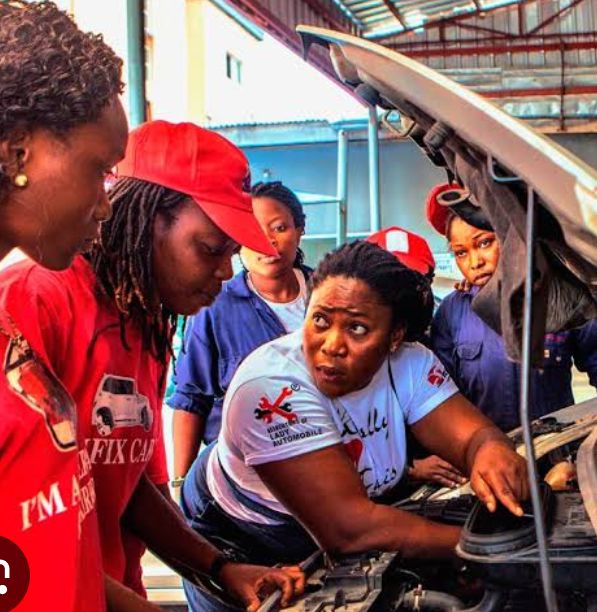
No fewer than 50 women have been trained as mechanics in Edo State and have received their certificates.
The women were trained as specialists on converting petrol vehicles to Compressed Natural Gas (CNG)-powered vehicles.
Information reaching us at Greenbarge Reporters showed that the training was sponsored by Mrs. Sandra Aguebor, Founder of Lady Mechanic Initiative, National Automotive Design And Development Council(NADDC) and Edo Government.
Mrs. Aguebor was quoted as saying that the 50 graduates would significantly boost manpower for converting petrol vehicles to environmentally friendly CNG-powered engines.
She said that the CNG conversion is a new horizon for women in the automotive industry, emphasizing women’s expanding role in the male-dominated sector.
Mrs. Aguebor, Nigeria’s first lady mechanic, said that Edo women mechanics could convert petrol vehicles to CNG following their training and successful graduation from the Lady Mechanic Initiative.
She said that that so far, the Lady Mechanic Initiative had trained more than 6,000 women across 20 states, with certified coordinators supporting the programme
Mrs. Aguebor explained that the initiative was to empower women and girls, as well as promoting economic prosperity for families, especially vulnerable women in society through skill development.
She added that the initiative also provided mentorship and counseling, further supporting the girl child and encouraging women’s sustained success in mechanics.
“All beneficiaries have been trained and certified as CNG conversion technicians.”
Mrs. Aguebor commended Governor Monday Okpebholo and the Federal Government for their vital support and commitment to the women empowerment initiative.

Advertisement ADVERTORIAL
WP2Social Auto Publish Powered By : XYZScripts.com