The Nigerian Communications Commission (NCC) was believed to have played a rallying role in stemming the planned strike action by the Natural Oil and Gas Suppliers Association of Nigeria (NOGASA) that would have crippled telecommunication connectivity nationwide. Information reaching us at Greenbarge Reporters online newspaper said that the Commission, working hand in hand with the Office of the National Security Adviser (ONSA), mediated in the dispute by the Association. It was gathered that the strike, if it was carried out, would have disrupted the supply of diesel to telecommunications sites nationwide, severely affecting network operators’ ability to power their diesel-driven generators and maintain uninterrupted connectivity. In the days leading up to the resolution, the ONSA, under the leadership of the National Security Adviser (NSA), Mallam Nuhu Ribadu, held strategic engagements with NOGASA’s leadership, with the Commission, providing technical and regulatory guidance to highlight the potential implications of service disruptions on national security, the economy, and everyday life. The discussions culminated in an agreement to call off the industrial action, averting what could have been a nationwide disruption of telecom services. Nuhu Ribadu was quoted as saying: “Telecommunications infrastructure is the backbone of our connectivity and digital economy. Any disruption, whether through vandalism, accidental damage during construction work, theft of equipment, denial of access to maintenance teams, or interruptions in the supply of essential operational materials, has far- reaching implications for service delivery, economic stability, and national security.” In a statement, NCC’s Head of Public Affairs, Nnena Ukoha, said that the Commission is committed to the full operationalisation of President Bola Ahmed Tinubu’s Executive Order on Critical National Information Infrastructure (CNII), which designates telecommunications facilities as critical national assets deserving optimal protection. It expressed appreciation to the ONSA for its leadership and dedication to protecting national assets and commended the maturity and understanding demonstrated by relevant stakeholders in recognising the national importance of telecommunications services. The statement quoted the Executive Vice Chairman/Chief Executive Officer of the Commission, Dr. Aminu Maida, as saying: “We will continue to enforce strict compliance by our licensees with technical standards for the deployment and maintenance of telecommunications infrastructure, while working closely with relevant stakeholders to strengthen awareness and cooperation on their protection. “We also recognize mediation as an effective tool for building consensus among stakeholders.
“This resolution underscores the importance of dialogue in preventing avoidable service disruptions. Ultimately, we call on all Nigerians to regard telecom infrastructure as a shared national asset, one that underpins our ability to connect with loved ones, transact businesses, access healthcare, pursue education, and participate in the global digital economy.” The Commission stressed that it would continue to coordinate with security agencies, industry stakeholders, and the public to ensure that Nigeria’s telecommunications infrastructure remains protected, resilient, and reliable for all.
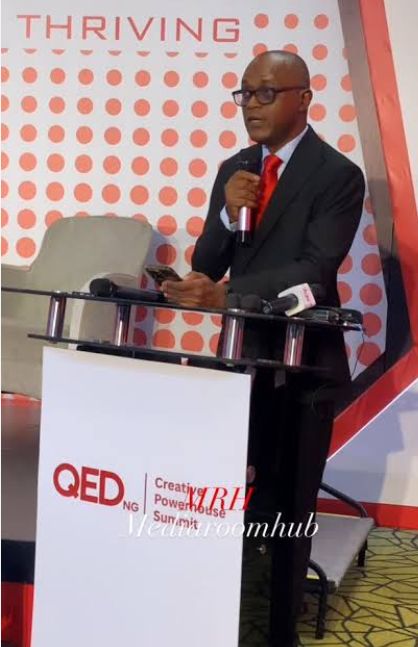
Experts in Nigeria industry have concluded that without adequate capital, creative entrepreneurs would not grow in the country. They stressed that the creative industry required long-term financing and a shift in the mindset that are essential in enabling the industry to thrive. The creative industry stakeholders reached this consensus in Lagos at the maiden edition of QEDNG Creative Powerhouse Summit, organised by Mighty Media Plus Network Limited. Themed: “Financing as Catalyst for a Thriving Creative Economy,” the summit brought together filmmakers, musicians, fashion designers, journalists, business and thought leaders, bankers and government officials, among others, to brainstorm on how to make creatives in Nigeria thrive and not just survive. Founder and Chief Executive Officer of Mighty Media, Olumide Iyanda, in his welcome address, called for what he called “honest conversations,” for creatives to think and act smart for the industry to bloom. “Nigeria’s creative economy contributes approximately $5.6 billion to our GDP and it is the second highest employer in the country. The federal government has set a bold goal of raising the sector’s contribution to $100 billion by 2030. The plan seeks to position Nigeria as a leading creative and entertainment hub on the global stage.” According to him, talents and ideas abound, but that the real challenge is turning them into “something people can see, hear, touch and actually pay for. “We need honest conversations. We need new partnerships. We need to think big and act smart.” Mr Iyanda doubles as Publisher of QEDNG and Convener of the QEDNG Creative Powerhouse Summit, added. This was even as the Group Managing Director of SO&U, Udeme Ufot, in his capacity as chairman of the summit, hailed QEDNG as a platform which has “steadily grown into a reputable voice in Nigeria’s media and digital journalism space through its commitment to telling authentic stories, amplifying emerging voices, and shaping conversations that reflect our evolving national identity. “Its journey mirrors the core theme of this summit: unlocking potential through vision and purpose.” He agreed that capital is required to unlock the potential of Nigeria’s creative economy and that capital must be sustainable and accessible. “Because without access to sustainable and strategic funding, creativity will remain trapped in notebooks. “Studios shut down, talent goes untrained and potential remains just that – potential! “The issue is not just about throwing money at the industry. It is about smart financing. It is about investors who understand the long tail of content development, banks willing to develop products tailored for creative entrepreneurs, governments designing policy environments that reward innovation and risk-taking, and private sector leaders championing scalable, locally relevant business models,” Mr Ufot noted. The advertising expert urged Nigerian creative entrepreneurs to demonstrate sound financial management and assure investors that funds entrusted to them will be used responsibly. Founder of The Africa Soft Power Group, Dr. Nkiru Balonwu, kicked off discussions with her keynote speech, saying: “the challenge is not the absence of capital but the lack of scalable, structured investment frameworks that the industry needs to thrive.” Balonwu referenced the recent announcement of Afreximbank’s billion-dollar Africa film fund under its Mechanics Programme as a welcome step but cautioned that its impact would depend on effective implementation and alignment with industry needs. She noted that at the national level, capital exists in theory, but that the real gaps lie in design, accessibility and alignment with the practical needs of entrepreneurs. According to her, these funds serve large-scale projects while most creatives in Nigeria are operating at the micro or early growth level. “Part of what we need is tier-targeted financing (early stage grants), seed capital, patient equity, all tailored to the creative life cycle. We need financing designed for the messy middle, not just the glamorous headline projects or the polished final product,” she said. Balonwu, former chief executive of Spinlet, the first music streaming and digital distribution platform in Sub-Saharan Africa, called for long-term financing solutions that support not just content production but also the often overlooked infrastructure critical for a thriving creative economy, including intellectual property banks, data centres, legal support, domestic distribution networks, rights management platforms, efficient payment systems and affordable production facilities. “This requires a mindset shift. Creatives must see themselves not just as artists but as businesspeople, institution builders and financially literate architects of enterprise. Financing must be smart, responsive, and tailored to the entire creative process, not just consumption,” she said. Balonwu also noted the impact of Artificial Intelligence (AI) in the industry, urging creatives to see it as an enabler, not as a threat. President Bola Tinubu’s senior special assistant on media and publicity, Temitope Ajayi, in his goodwill message, assured that the government would continue to support the creative sector. “In terms of promoting the cultural export of Nigeria, the creative sector in the past decade has really done well. So, we must commend the operators of this sector for the good job they are doing,” he said. Ajayi added that creators must grow beyond “subsistence thinking” for the industry to thrive. On the panel to dissect the keynote speech were filmmaker and Founder of KAP Group, Kunle Afolayan; President and Founder of All-Africa Music Awards (AFRIMA), Mike Dada; Founder of Africa Film Finance Forum (AFFF), Mary Ephraim-Egbas, and Founder of Duke of Shomolu Productions, Joseph Edgar. The panellists, during the session moderated by broadcaster, Anike-Ade Funke Treasure, agreed that funding is key to unlocking the industry’s potential but cited difficulties in accessing these funds both from banks, investors and the government. Former Lagos State Commissioner for Tourism, Arts and Culture, Steve Ayorinde, moderated the second panel, which had the Executive Director of the National Film and Video Censors Board (NFVCB), Dr Shaibu Husseini; Head of SME Banking at First Bank of Nigeria, Dr Abiodun Famuyiwa; Head of Legal and Business Development at The Temple Company, Yemisi Falaye and Group Head of Large Corporates and Structured Finance at Providus Bank, Dr Biodun Ariyo. While Husseini restated the Nigerian government’s provision of funds for the creative industry, the bankers assured of an open mind to understand the complexities of the industry, which would translate into funding. Plaques were presented on behalf of QEDNG to some of the notable participants by the Publisher of Realnews Magazine and President of the Guild of Corporate Online Publishers (GOCOP), Maureen Chigbo; Editor of Vanguard Newspaper and President of the Nigerian Guild of Editors (NGE), Eze Anaba, and veteran actress and film director, Joke Silva. Among the participants at the summit were the Special Adviser to Lagos State Governor on Media and Publicity, Gboyega Akosile; Group Head, Brand Management and Corporate Communication of Polaris Bank, Rasheed Bolarinwa, and former Osun State Commissioner for Information and Orientation, Funke Egbemode. The event was anchored by actress and voice artiste, EyiyemiOlivia Rogbinyin.
A young lady, Hadiza Baffa, who accused the former Minister of Special Duties, Alhaji Kabiru Tanimu Turaki of rape, has admitted lying and tendered public apology to the minister. Hadiza Baffa, who withdrew her petition against the minister with the police, leading to the striking out of the case from the court, said that time “has become necessary both for the record and for posterity to set the facts straight, as silence is no longer golden.” The court had, following the new development, discharged the former minister of the false allegations and charges. This came even as the father of the lady, Musa Bashir Baffa, wrote a formal letter of apology to Turaki, pleading for forgiveness for his family, saying that his daughter, Hadiza Baffa and her mother, his former wife, as having been used by the former Minister’s political adversaries to tarnish his image. It is on record that Hadiza Baffa had last year claimed that the former minister took advantage of her, violated her and harvested eight pregnancies for alleged ritual purposes and was also after her life. As a result of the allegations and petition by Hadiza Baffa, the former Minister, who is also a Senior Advocate of Nigeria (SAN), was charged to court. But the matter was eventually struck out by the court after Hadiza Baffa admitted lying against Turaki, apologised and withdrew her petition with the police. Turaki, in turn, in September 2024, sued Hadiza Baffa, the Nigeria Police Force, the Inspector General of Police and others over the matter. According to Turaki, in a statement on Wednesday by his Special Adviser on Media, Lawal Umar: “In light of these facts, it is both fair and just to acknowledge that the allegations were unfounded and as Mr. Turaki has consistently maintained, were orchestrated by political adversaries using her as part of a smear campaign. He has refused to succumb to such tactics and remains committed to upholding his integrity, the rule of law, and the principles of justice.” The statement however noted that Turaki, being a former minister and a SAN, refrained from commenting on the matter during police investigation to avoid being accused of interference and contempt for judicial processes. This stance of the former Minister, the statement added, however, gave room for unverified narratives to trend on social media while Turaki: “allowed the authorities to conduct their work without interference.” Turaki, however, stated that despite the court striking out the case after discharging him, and since “the matter has continued to trend with different narratives tailored to suit various sponsors,” he has found it imperative, for record purposes and posterity, to speak out. Therefore, revealing the background of the lady’s false allegations against the former minister, the statement explained, “Hadiza Baffa was entrusted to Mr. Turaki’s care by her mother when she relocated to Abuja, as she was new to the city. In the spirit of longstanding friendship with her family, he accepted this responsibility and treated her in a manner befitting that of a guardian. However, following her repeated involvement in financial scams and subsequent detentions where Mr. Turaki was frequently called upon to intervene and settle matters he reported her conduct to her mother and withdrew his guardianship. Aggrieved by this decision, Hadiza Baffa petitioned the police, making spurious allegations against him, including claims of rape, unlawful termination of pregnancy, and threats to life, which she also published on various social media platforms. “Following a thorough police investigation, Hadiza Baffa was unable to substantiate her allegations. Despite the lack of evidence, a charge was filed against Mr. Turaki. However, she later wrote to the police and the court to withdraw her petition, leading to the striking out of the charge and Mr. Turaki’s subsequent discharge.” It further said: “Significantly, her father who had initially supported his daughter later reviewed the circumstances in full and wrote a letter of apology to Mr. Turaki, expressing appreciation for his care towards his daughter and regret over the entire episode. Subsequently, Ms. Baffa herself sent a written WhatsApp message from her verified number (0806 795 7035), stating: “Salaam, ya ibada? Allah ya karba mana. Seeing you yesterday in the witness box was heart-wrenching and it saddens me a lot, I couldn’t stop thinking about it. I never wished for all this to happen but unfortunately, we are here already. I want to withdraw my police case and for the sake of this holy month please forgive me, bygones be bygones. May Allah ease our affairs.”” The statement further said: “Regarding the DNA aspect of the matter, Mr. Turaki only became aware of the purported result through certain social media platforms and has challenged its authenticity in court. The Court has, in fact, restrained parties from relying on it pending the determination of the suit.”
Nigerian Government has withdrawn the criminal charge against Ms Comfort Emmanson, an Ibom Air passenger accused of unruly behaviour during a flight from Uyo, the capital of Akwa Ibom State to Lagos. The government also reduced the flight ban on King Wasiu Ayinde Marshal for the same offence, even as it ordered that the suspension of the licences of the pilots of Value Jet over the K1 De Ultimate incident be reduced to one month. The Minister of Aviation and Aerospace Development, Festus Keyamo, who made the position of the government known in a press release on his verified X handle today, August 13, said: “In the last 48 hours, I have been in consultation with critical stakeholders in the Aviation Sector and those involved in the unfortunate incidents regarding the unruly behaviours of certain individuals at our airports of recent. “Though regrettable, we think valuable lessons have been learnt by all sides to these incidents and airport security protocol, especially, have been well highlighted for the travelling public. If nothing at all, the episodes have undoubtedly helped to raise public awareness about appropriate conduct within the aviation space. “As highlighted in my previous statements on the last two incidents, clear wrongs were committed by both the offending passengers and staff of the airlines involved from all the evidence available to us and those available to the public. It is clear that all the actors involved cannot continue to highlight the injury or injustice done to them without acknowledging their own equal culpability. “Therefore, after reviewing the entire incidents, including appeals made by well-meaning individuals and remorse shown by the actors, the following decisions have been reached: THE CASE OF IBOM AIRLINE AND MS. COMFORT EMMANSON “(a) In the case of the unruly passenger, Ms. Comfort Emmanson, on the Ibom Airline on Sunday, the 10th of August, 2025, I have conferred with Ibom Airline to withdraw the Complaint against her today. When the Police took her Statement in presence of her lawyer, she exhibited great remorse for her conduct. “(b) Subsequent to the withdrawal of the complaint by the Complainant, the CP of Airport Command and the Police Prosecutor will immediately take the remaining steps to facilitate her release from Kirikiri Prisons within this week. “(c) I have also conferred with the leadership of the Airline Operators of Nigeria (AON) and have appealed to them to lift the life-time flying ban imposed on her, to which they agreed. The details of the resolution will be made public by the AON subsequently. THE CASE OF VALUEJET AND WASIU AYINDE MARSHALL (KWAM 1) “(d) In the case of KWAM 1, the NCAA is to reduce his flight ban to a one-month period. FAAN will also work with the music star with a view to engaging him as an ambassador for proper airport security protocol going forward. “(e) Having publicly demonstrated penitence, the NCAA is also to withdraw its criminal complaints against KWAM 1 earlier lodged with the Police. “(f) In the case of Captain Oluranti Ogoyi, and the co-pilot, First Officer Ivan Oloba of VALUEJET, the NCAA is to restore their licenses after the same period of one-month ban after undergoing some mandatory professional re-appraisal. The details will be announced by the NCAA. AIRLINE OPERATORS, AVIATION AND OTHER GOVERNMENT AGENCIES “I have directed all relevant Aviation agencies in collaboration with other complementary agencies outside aviation to IMMEDIATELY begin a retreat NEXT WEEK to properly retrain and prepare our Aviation security personnel on how to deal with errant and disruptive passengers and how to deescalate potentially explosive situations. The retreat will be fully covered by the Press with the opportunity to ask all the relevant questions. “The Airlines will also have their own session when the conduct and attitude of their staff towards members of the travelling public will be in full focus. FINAL COMMENTS “These above decisions were taken by Government and the airline operators purely on COMPASSIONATE grounds as Government will never pander to base sentiments, politically-motivated views or warped legal opinions when clear encroachment of our laws are involved. “We are also sending a CLEAR MESSAGE that we take safety and security in the aviation sector very seriously and we have decided to draw a line after these clemencies.”
Dangote Petroleum Refinery has announced a further reduction in the ex-depot (gantry) price of Premium Motor Spirit, commonly referred to as petrol, by N30; from N850 to N820 per litre. A statement today, August 12, by the Group Chief Branding and Communications Officer of the company, Anthony Chiejina, said that the reduction is with effect from today, 12th August 2025. “As part of our unwavering commitment to national development, Dangote Petroleum Refinery assures the public of a consistent and uninterrupted supply of petroleum products. “In line with our dedication to operational excellence and sustainable energy solutions, Dangote Petroleum Refinery will commence the phased deployment of 4,000 Compressed Natural Gas (CNG)-powered trucks for fuel distribution across Nigeria, effective August 15, 2025.”
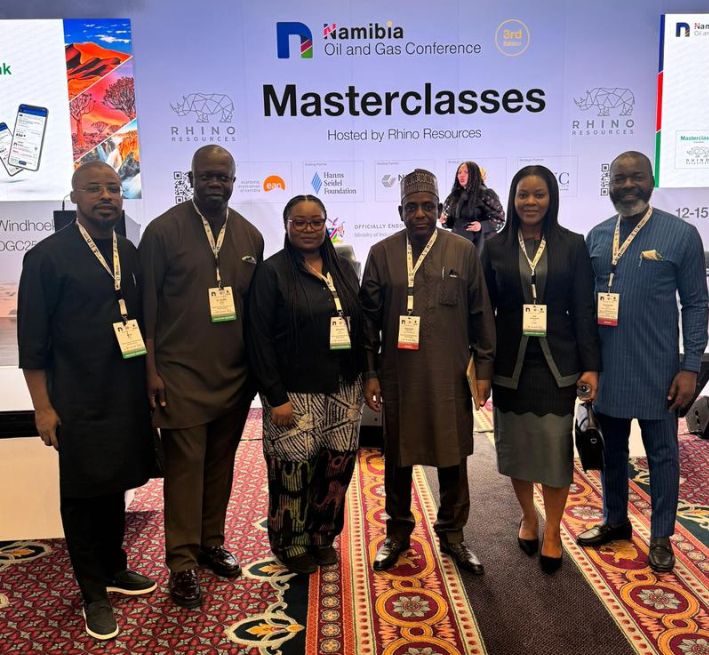
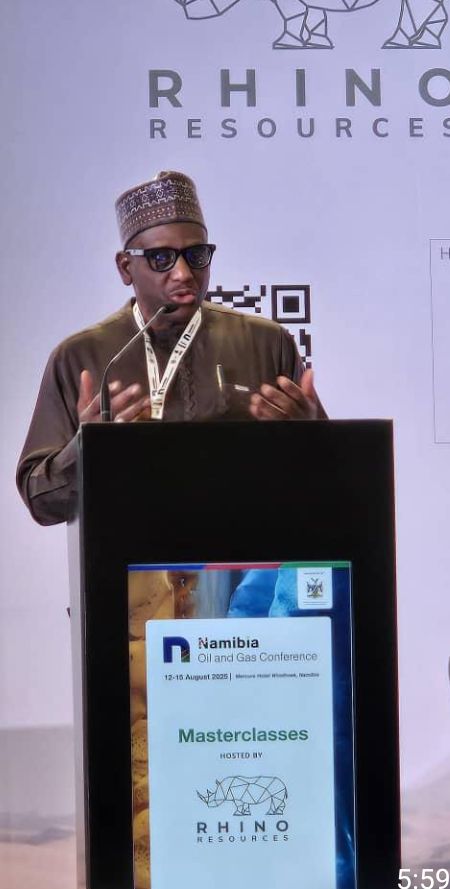
Nigeria’s local content successes in the oil and gas industry came up today, August 12, as example of what it ought to be, at the 2025 Namibia Oil and Gas Conference, at Windhoek, Namibia. A statement today, by the General Manager, Corporate Communications of the Nigerian Content Development and Monitoring Board (NCDMB), Dr. Obinna Ezeobi, said that the event is being attended by policymakers, international oil and gas operating and service companies, Namibian indigenous players and other stakeholders. The goal is to enhance the local content ecosystem in the Southern African country’s evolving oil and gas industry. The statement said that NCDMB and the Petroleum Technology Association of Nigeria (PETAN) are participating at the Namibian event in furtherance of their collaboration for the promotion of African local content, creation of opportunities and new markets for Nigerian oil and gas companies. The Board’s delegation, according to the statement, is led by the Executive Secretary, Engineer Felix Omatsola Ogbe, represented by the Director, Corporate Services, Dr. Abdulmalik Halilu, while the PETAN team is led by its Chairman and member of NCDMB Governing Council, Wole Ogunsanya. It said that Dr. Halilu delivered a presentation at the Local Content Masterclass at the opening, and outlined a number of strategies that African oil producing countries can adopt to grow their local content capabilities. According to him, local content value proposition for Africa include research and technology development, local employment, strategic partnerships, ownership and control of assets, value chain optimisation, sustainable operations, increase production and utilization of locally made goods and contribution to gross domestic product (GDP). He identified government’s role in supplier development as regulatory, developmental and promotional.
Using Nigeria as a case study, Halilu listed key achievements of NCDMB to include the establishment of world class fabrication and construction yards, human capital development, manufacturing initiative, service sector growth, financial support and establishment of integration capability for floating production and storage and offloading facility (FPSO). On the new wave of local content development in Nigeria, the Director pointed to the promotion of equipment assembly and components manufacturing, development of small and medium enterprises, enforcement of research and development and technology transfer as well as prioritization of gas based industrialisation. On the strategies that would support the growth of African local content, he urged oil-producing countries to specialise in different manufacturing and service areas of the oil and gas industry and develop their competencies to the right specifications. This will enable the countries to trade among themselves and contribute towards the manufacturing of complex oil and gas equipment. He cited an example with the Boeing aircraft, which has critical components produced by different original equipment manufacturers (OEMs) and assembled at a designated factory. Such a model, he noted, will ensure that each African country develops a competitive advantage and can contribute effectively to the African oil and gas industry. The representative of the Executive Secretary concluded by offering local content nuggets, which include that local content implementation is not a sprint but a marathon and must be executed as a business and not as corporate social responsibility. Local content must also be cost effective and local peculiarities must be given key considerations, he noted. Other recommendations include the fact that local content regulations must apply to all players in the industry and not only foreign companies or expatriates and the implementation takes time, consistency, and coordination. He also suggested that capacity building initiatives should include grassroots and underserved communities, adding that local content practice would not grow if new projects are not developed. He assured the audience that Nigeria is ready to partner with Namibia and other African nations to build an energy sector that empower the African people and drive shared prosperity. The opening day also featured a presentation by NCDMB’s General Manager, Human Capacity Development, Esueme Dan Kikile, Esq. He shared the Board’s success stories in human capital development. The conference continues till Friday and is expected to feature another presentation by the NCDMB boss on Wednesday, while one of the panel discussions would feature the Chairman of PETAN, Wole Ogunsanya.
Report reaching us at Greenbarge Reporters online newspaper indicated the forceful removal of an alleged unruly female passenger, Ms Comfort Emmanson, from Air Ibom Aircraft en-route Uyo–Lagos. It was gathered that the young lady attacked the Chief flight attendant, known as purser, forcibly tearing off her wig, removing her glasses and throwing it to the floor, and using her footwear to assault her. The unruly passenger, it was learnt, also slapped the purser several times and when the other cabin crew member tried to intervene, the angry passenger slapped her too. “She then attempted to forcibly remove a fire extinguisher to use as a weapon, an act that could have damaged and grounded the aircraft.”
A statement today, August 11, from Ibom Airlines Limited, narrated how it all happened thus: Ibom Air confirms that on Sunday, August 10, 2025, an incident occurred on board our Uyo–Lagos flight involving a passenger, Ms. Comfort Emmanson, whose conduct posed a serious threat to the safety of our crew, passengers, and aircraft. Shortly before take-off from Uyo, Ms. Emmanson was instructed in line with standard aviation safety procedures, to switch off her mobile phone. She bluntly refused to comply until the Pilot-in-Command made an announcement, after which a fellow passenger seated beside her took the phone and switched it off. This action prompted a verbal tirade from Ms. Emmanson. The situation was eventually calmed, and the flight departed as scheduled. Upon arrival in Lagos, Ms. Emmanson waited for all other passengers to disembark and then proceeded to confront the Purser who had earlier instructed her. She walked up to the unsuspecting Purser, stepped on her, forcibly tore off her wig, removed her glasses and threw it to the floor, and used her footwear to assault her. She slapped her several times and when the other cabin crew member tried to intervene, she slapped her too. She then attempted to forcibly remove a fire extinguisher to use as a weapon, an act that could have damaged and grounded the aircraft. By this time, the Pilot-in-Command had alerted airport security. Before security could arrive, the Purser as seen on the viral video on the internet, prevented the passenger from leaving the aircraft until security arrived. The arrival of Ibom Air Security personnel, did not deter the passenger as she attacked them as well, lashing out violently at both Ibom Air and FAAN security. She was then restrained and removed from the aircraft by force. Even after disembarking, she continued to assault both Ibom Air and FAAN security staff, and even slapped the ground supervisor. The passenger was removed from the ramp and taken into custody by FAAN security and handed over to the Nigeria Police Force for further investigation. Ibom Air has since submitted a report on the incident to the Nigerian Civil Aviation Authority, and placed a travel restriction on Ms. Emmanson, who will no longer be permitted to fly on any of our aircraft. Ibom Air reiterates its zero-tolerance policy towards any form of unruly or violent conduct that threatens the safety of passengers, crew, or equipment. Such behavior will be met with the strongest possible response, including legal action and permanent restriction from our services. We commend the bravery and professionalism of our crew in handling this situation under extremely challenging circumstances, as well as the swift support from airport security and the Nigeria Police. Safety remains our highest priority. We urge all passengers to comply with crew instructions at all times for the safety, security, and comfort of everyone on board.
The National Bureau of Statistics (NBS), in its Capital Importation report for Q1, 2025 has revealed that 31 states of Nigeria failed to attract any form of foreign capital Inflow during the period under review. This was despite collectively spending billions of naira in public funds on local and foreign trips purportedly aimed at driving investment. The report however listed five states and the Federal Capital Territory (FCT) as having recorded foreign capital inflows during the review quarter with FCT emerging on the top with $3.05 billion, accounted for 54.11 per cent of the total capital Inflow. Lagos State followed closely with $2.56 billion or 45.44 per cent, while Ogun State received $7.95 million (0.14 per cent). Other beneficiaries were Oyo State with $7.81 million, Kaduna State with $4.06 million, and Kano, trailing with mere $120,000. The agency which is yet to publish results for the second quarter, took a cursory review of the budget implementation, reporting that only 26 states have published their financial records for both the first and second quarters of the year. Benue, Lagos, Delta, and Katsina have so far released only their Q1 reports, while Akwa Ibom, Enugu, Ogun, Rivers, and Plateau are yet to make any financial records public for the period under review. This is even as an analysis of the fiscal performance of each state, utilising data from the Q1 to Q2 budget performance reports obtained from each state’s website, revealed that 29 state governors spent N79.97 billion on domestic and international travel expenses between January and June 2025. An analysis of the state-by-state breakdown of travel expenses revealed significant disparities in the amount spent by governors on local and foreign trips, with some states spending more than double the amounts recorded by others within the same period. Lagos State, Nigeria’s commercial capital, recorded the highest expenditure, with a staggering N6.23 billion spent in the first quarter of 2025 alone. It was closely followed by Osun State, which recorded N6.21 billion, and Kano State, which spent N5.58 billion, placing it as the highest spender in the North. Also ranking among the top spenders were Taraba State, which spent N5.22 billion, and Bayelsa, which committed N3.78 billion to travel-related expenses. Ekiti (N3.76 billion), Borno (N3.68 billion), and Cross River (N3.68 billion) also maintained high spending profiles, alongside Yobe (N3.70 billion) and Edo (N3.51billion). In the North-East, Adamawa spent N2.24 billion, while Bauchi recorded N3.66 billion. Gombe spent N1.20 billion, and Yobe committed N3.70 billion. Borno State matched Cross River’s figure with N3.68 billion. From the North-Central, Niger State incurred N2.63 billion in travel costs, while Nasarawa and Benue reported N2.24 billion and N1.13 billion respectively, with Benue’s figure reflecting only Q1 expenditure. Kogi and Kwara states recorded N1.75 billion and N1.2 billion, respectively. In the South-East, Abia state spent (N1.03 billion), Ebonyi state (N1.45 billion), and Imo state (N928.34 million). Enugu and Anambra states had not published their expenditure reports for the year at the time of this report. For the South-South region, Bayelsa state led with N3.78 billion, followed by Cross River State (N3.68 billion) and Edo State (N3.51billion). Delta state reported N884.81 million in Q1 alone, while Akwa Ibom and Rivers States had not made any financial disclosures for the period under review. Kebbi and Sokoto in the North-West reported N1.53 billion and N2.59 billion respectively, while Zamfara state recorded N2.77 billion. Jigawa state spent N1.26 billion, Kaduna State (N1.86 billion), Kano State (N5.58 billion), and Katsina State (N548.24 million) in Q1. In the South-West, Osun and Ekiti states led with N6.21 billion and N3.76 billion respectively. Ondo state spent N1.83 billion, Oyo state (N1.89 billion), and Lagos state N6.23 billion in Q1. Ogun State is yet to publish its financial report. Notably, Delta, Benue, Katsina, and Lagos only published their Q1 records, meaning their actual annual travel expenses may be significantly higher. A geopolitical analysis of the expenditure revealed that South-West governors were the biggest travellers, accounting for N19.92 billion or 24.9 per cent of the total amount spent, even though only four of the six states in the region had available data. The North-West states followed closely with N17.58 billion (22 per cent), while the North-East region recorded N13.92 billion (17.4 per cent) in travelling expenses. In the South-South region, state governors collectively spent N11.81 billion, representing 14.8 per cent of the total travel expenditure. The North-Central 🙏 region governors spent a total of N10.79 billion, accounting for 13.5 per cent of the overall spend. In the South-East, travel expenses stood at N5.94 billion, amounting to 7.4 per cent of the total. The wide-ranging figures have continued to raise concerns about fiscal discipline and value-for-money in governance, particularly in states battling infrastructure deficits. At different fora, financial experts have also raised concerns about states’ spending on recurrent expenditure, highlighting the need to embrace financial innovations. Source: Economic Confidential.
Nigerian company engages in local production of herbal health production, Faforlife, hit Abuja today, August 9. No fewer than four thousand people thronged Chida Hotel in Jabi area of the capital city to witness the testimonies of those who have benefited from the company’s products. A lady from Benue State, Ambassador Mary narrated how she was diagnosed with breasth cancer type two and after taking the Faforplife herbal product, she was healed. “I had to fly to India to remove only the lump, and the medical personnel there were surprised how I got the cancerous tumor out. I had to go to India because almost all the hospitals I went to in Nigeria to remove the lump insisted that they had to get the tumor out too.” The Chief Executive Officer of the company, Chief Francis Brave told the audience that the company is not only into herbal Production with One hundred percent local content but also is into raising hundreds of multimillionaires across the country.
He said that by next year, Faforlife would establish mobile Clinic in every community in Nigeria to further assert its relevant to the nation’s health care delivery system.
Audu Innocent Ogbeh, Minister of Agriculture in the government of late President Muhammadu Buhari is dead. Ogbeh, who had also served as National Chairman of the Peoples Democratic Party (PDP) was aged 78. His death was confirmed in a statement by his family today, August 9. The statement read: “It is with deep sadness that we announce the passing of our beloved husband, father and grandfather; Chief Audu Ogbeh. “He passed away on the 9th of August 2025 at the fulfilled age of 78. “He departed peacefully, leaving behind a legacy of integrity, service, and dedication to our nation and community. “We are comforted by the many lives he touched and the example he set. “Details of the funeral arrangements will be communicated in due course. “We thank friends, colleagues, and well-wishers for their prayers and support during this time. “We will appreciate some privacy at this time while we mourn the loss of our patriarch.”
We use cookies on our website to give you the most relevant experience by remembering your preferences and repeat visits. By clicking “Accept”, you consent to the use of ALL the cookies.
This website uses cookies to improve your experience while you navigate through the website. Out of these, the cookies that are categorized as necessary are stored on your browser as they are essential for the working of basic functionalities of the website. We also use third-party cookies that help us analyze and understand how you use this website. These cookies will be stored in your browser only with your consent. You also have the option to opt-out of these cookies. But opting out of some of these cookies may affect your browsing experience.
Necessary cookies are absolutely essential for the website to function properly. This category only includes cookies that ensures basic functionalities and security features of the website. These cookies do not store any personal information.
Any cookies that may not be particularly necessary for the website to function and is used specifically to collect user personal data via analytics, ads, other embedded contents are termed as non-necessary cookies. It is mandatory to procure user consent prior to running these cookies on your website.







 Using Nigeria as a case study, Halilu listed key achievements of NCDMB to include the establishment of world class fabrication and construction yards, human capital development, manufacturing initiative, service sector growth, financial support and establishment of integration capability for floating production and storage and offloading facility (FPSO).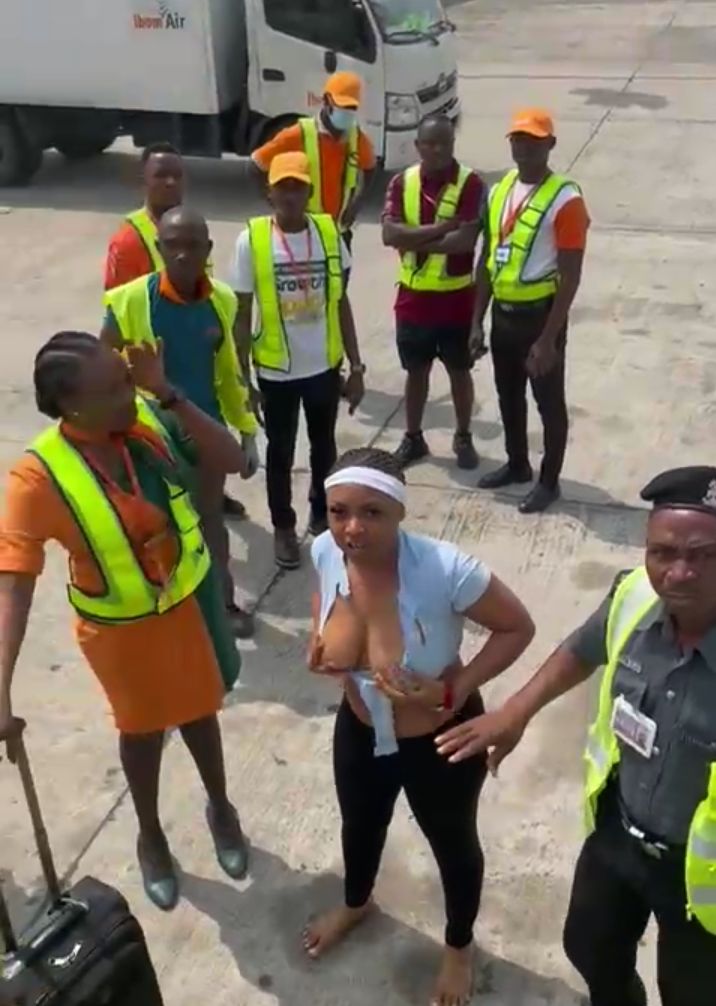
 A statement today, August 11, from Ibom Airlines Limited, narrated how it all happened thus: