Nigerian Police have said that they detained the publisher of Sahara Reporters online newspaper, Omoyele Sowore because he refused to speak to the officers. “The same law that gives him the right to remain silent also imposes responsibilities on the police (to detain) when a suspect chooses not to talk. “We cannot simply release a suspect because he has decided to keep mute. Procedures under the law are being followed.” Speaking on the detention of Sowore, the Commissioner of Police in charge of the Special Intervention Squad, Abayomi Shogunle,said that his arrest followed his alleged refusal to make a statement during police interrogation, despite being confronted with two petitions against him. According to Shogunle, the petitions accused Sowore of forging a police document, which he allegedly published online and engaging in cyberbullying. “The two petitions were shown to him in my presence, alongside his lawyers,” Shogunle said in a video streamed by Sahara Reporters. “One concerns forgery of a police document, and the other relates to cyberbullying. The law is clear—you have a duty to explain how you obtained such a document. But he refused to make a statement, even in the presence of his lawyers.” Shogunle said that Sowore was not coerced to speak and that the police were following due process. When asked by a lawyer why Sowore was being held beyond the constitutionally stipulated 24 hours, Shogunle insisted that the detention was lawful. “We are professionals, and we are complying with the law. Everything required in keeping someone in custody is being observed.” The police boss said that Sowore came voluntarily, “but the moment he refused to make a statement, his arrest was ordered. The law is being followed regarding his apprehension and detention.” Meanwhile, Sowore has announced that he has been released from the custody. In a post on his X (formerly Twitter), Sowore wrote: “I have been released from unjust, unwarranted, and unlawful detention. “It is nothing to celebrate, but I can’t do without thanking you all for not giving up. You’ve all seen the power of unity.” Sowore, who was presidential candidate of the African Action Congress (AAC) in 2019, was detained after honouring an invitation from the IGP Monitoring Unit at the Force Headquarters in Abuja.
In a country where public universities face perennial underfunding, dilapidated infrastructure, and frequent strikes, Nigeria’s political class has found a new way to erode the dignity of its academic institutions through abrupt renaming, driven by political gratification rather than merit or history. This creeping trend, where institutions are renamed after politicians or individuals with little or no ties to their founding vision, is not only revisionist but also a calculated desecration of academic heritage. The Nigerian academic landscape is littered with stories of such political interference. One of the most controversial attempts as reported in the dailies was in 2012 when the federal government under President Goodluck Jonathan sought to rename the prestigious University of Lagos to Moshood Abiola University. The backlash was swift and deafening. Students, alumni, and civil society groups vehemently rejected the move, staging protests across the nation. Many questioned the rationale behind the decision and decried the lack of consultation. Eventually, the government backtracked but the attempt left a sour taste in the mouth of many Nigerians. Unfortunately, other institutions were not as lucky. Kogi State University, popularly known as KSU originally established to serve as a beacon of higher learning in the North Central region, was renamed Prince Abubakar Audu University by the state government in honor of the late former governor. While Abubakar Audu played a significant role in the founding of the university, critics argue that renaming the institution unilaterally without input from stakeholders undermines its neutrality and opens the door for political manipulation of academia. Even more recently, news broke out, of the federal government’s plan to rename the University of Maiduguri (UniMaid) after former President Muhammadu Buhari. While some saw it as a tribute to a former head of state, many others interpreted it as a political maneuver that fails to respect the history, mission, and cultural significance of the institution. Beyond the name change lies the issue of credibility. How do international partners, researchers, and alumni reconcile such arbitrary changes with the continuity and stability expected of academic institutions? The implications of this trend are deeply troubling. Globally, universities, by their nature, are meant to be independent centers of knowledge, critical thinking, and cultural preservation. Their names are often symbolic, carrying the weight of their history, founding ideals, and community values. When politicians impose name changes based on transient political motives, they effectively rewrite history and erode the identity of the institution. Moreover, these changes are frequently announced with no input from students, faculty, alumni, or the host communities, stakeholders who are the lifeblood of any academic institution. The absence of due process not only undermines the democratic ethos expected in academic spaces but also stirs resentment and distrust. One of the less discussed consequences is the impact on the institution’s global reputation. Nigerian universities are already struggling with international recognition, limited research funding, and minimal global partnerships. Frequent name changes confuse international collaborators and harm the continuity of institutional branding. Academic publications, citations, and alumni credentials become difficult to trace, affecting both academic visibility and employability of graduates. This political meddling also sends the wrong message to young Nigerians. At a time when the country needs role models grounded in academic excellence, research breakthroughs, and innovation, politicians are glorifying themselves by imposing their names on public assets. It signals to the younger generation that political power, not scholarly impact or societal contribution is the ultimate currency of recognition. This undignified trend is not isolated to the aforementioned institutions alone. Other institutions have also faced similar fates or proposals. The Federal University of Agriculture, Makurdi, was once renamed Joseph Sarwuan Tarka University, and the Federal University Ndufu-Alike Ikwo was changed to Alex Ekwueme Federal University. While some may argue that these individuals contributed to nation-building, critics maintain that renaming institutions in their honor without transparent dialogue reduces universities to mere political trophies. It is worth noting that academic institutions around the world reserve such honors for individuals with groundbreaking contributions to knowledge or to the institution itself, not merely for holding political office. The University of Oxford, Harvard, and other globally revered universities maintain their identities for centuries, which partly contribute to their esteemed legacies. Nigeria should not be an exception. If the goal is to honor distinguished individuals, there are many alternative means. Endowments, lecture halls, research chairs, and scholarships can be named after deserving figures without altering the institution’s foundational identity. Such gestures not only preserve the historical name of the institution but also contribute to its development in tangible ways. The bastardization of academic institutions through politicized renaming is a symptom of a deeper malaise: the disregard for the sanctity of education in Nigeria. It is a distraction from the real issues, which are underfunding, brain drain, overcrowded lecture halls, and outdated curricula. Instead of investing in infrastructure, research grants, and staff welfare, politicians are rebranding campuses for vanity. To safeguard the future of Nigerian education, a national policy must be enacted to prevent arbitrary name changes to public institutions without a comprehensive consultation process involving all stakeholders. Academic institutions must be protected from political interference, not just in nomenclature but also in governance and administration. Until Nigerian leaders begin to see academic institutions as sacred grounds for learning rather than monuments for political memory, our universities will remain victims of ego-driven politics, disconnected from global academic progress.
Adavize is researcher and public affairs analyst, writes from Abuja.
The Nigerian Presidency has admitted that most citizens are going through economic challenges, a fact no one can deny even in the Presidency. It said: “no one in the Tinubu administration denies that some of our citizens face economic challenges,” but that it is essential to separate honest concern from exaggerated pessimism and generalisation. In a statement today, August 7, reacting to an editorial comment by the Daily Trust newspaper, a presidential spokesperson, Sunday Dare frowned at the editorial which classified Nigerians as “hungry.” According to him, Tinubu’s administration is not indifferent to the genuine concerns of the people. “The irony is that what is often criticised today are, in fact, the policies that will ensure that Nigerians have a more secure, stable, and prosperous future. “Misrepresentations, selective use of projections, and alarmist narratives do not serve the public good; they distract from the genuine progress underway nationwide.” Dare responded to those who ask, “Where is the hope?”, saying: “We say hope is in the stabilising naira, in three million families lifted by direct transfers, and about 400,000 students now schooling without fear of paying fees. “Hope is in the 500,000 farmers sowing into a new food system. Hope is in a government that is finally treating poverty not as a slogan but as a solvable problem.” The full statement, titled: Responsible Critique Requires Fact-Driven Narratives: A Response To Daily Trust Editorial is reproduced here: A recent editorial by Daily Trust paints an exaggerated and unbalanced portrait of Nigeria as a nation overwhelmed by hunger, hardship, and helplessness. We were not surprised by the newspaper’s opinion, as the paper has consistently and deliberately misinformed its readers about the government’s policy. The Tinubu administration believes in the right of the media to offer constructive criticism, but it must be anchored on facts, not distortion or selective pessimism. The Daily Trust has on several occasions breached this rule by misrepresenting government policies and actions—a trend for which the newspaper has publicly apologised at least twice. While no one in the Tinubu administration denies that some of our citizens face economic challenges, it is essential to separate honest concern from exaggerated pessimism and generalisation. The Tinubu administration is not indifferent to the genuine concerns of the people. The irony is that what is often criticised today are, in fact, the policies that will ensure that Nigerians have a more secure, stable, and prosperous future. Misrepresentations, selective use of projections, and alarmist narratives do not serve the public good; they distract from the genuine progress underway nationwide. To suggest, as Daily Trust did in its biased editorial, that “Nigerians are hungry” without recognising the government’s ongoing interventions perpetuates despair instead of empowering citizens with the truth. President Bola Ahmed Tinubu is not indifferent to Nigerians’ difficulties. On the contrary, he is taking deliberate, targeted steps—many already yielding results—to reset our economy from a legacy of consumption without productivity, opacity without accountability, and policy that served the powerful, not the people. This is the context that Daily Trust omitted in its jaundiced editorial. 1. UNICEF Projection vs. Cadre Harmonisé Analysis. The editorial referenced a UNICEF “prediction” from April 2025 stating that 33 million Nigerians, including 16 million children, would face hunger in 2025. This figure has been widely cited but wrongly interpreted. What was presented was not a UNICEF-specific report but the Cadre Harmonisé Food and Nutrition Insecurity Analysis, jointly prepared by the Federal Government of Nigeria, FAO, WFP, and UNICEF. It is not a current count, but a worst-case projection for the June–August 2025 lean season, assuming no mitigation actions by government or partners. Here are some of the measures taken by the government to ensure we never get there: Over 42,000 metric tons of grains were released from federal strategic reserves; 117,000 metric tons were under additional procurement; the President activated the Food Security Council; emergency nutrition support was scaled up in Borno, Yobe, Adamawa, Katsina, Sokoto, and Bauchi States. Malnutrition is a serious national concern, but let’s not localise it as a “Northern Nigeria” crisis. Since 2020, COVID has disrupted the global food system, worsened the Russia-Ukraine war, and is now aggravated by conflict in the Middle East. According to the World Bank’s April 2025 Food Security Update, over 1.4 billion people worldwide are under food stress, a problem that is not unique to Nigeria. 2. The Naira is Not Worthless — It Has Found Its Level and Is Strengthening The editorial’s use of the term “worthless naira” is false and misleading. Since hitting a low of ₦1,800/$1 in March 2024, the naira has rebounded strongly due to: Increased oil receipts and remittances, Restoration of investor confidence, Unification of the FX window, Reduction of FX backlog by over $4 billion (CBN data, May 2025) As of August 1, 2025, the naira traded around ₦1,525/$1, a sizable appreciation since its lowest ebb. Nigeria’s FX reserves are stabilising, and foreign portfolio inflows are picking up after major reforms in the monetary and fiscal space. The naira has not collapsed—it has been corrected and is now recovering. 3. Yes, this administration is listening – And Acting on viable Recommendations, not the ones driven by anger and ambition. We welcome suggestions such as suspending VAT on food, reducing taxes on drugs and medical equipment, and easing the tax burden on MSMEs. The Federal Ministry of Finance and the Fiscal Policy and Tax Reforms Committee are working on many of these. Starting January 2026, the new tax reforms will: Streamline over 60 overlapping taxes into fewer, manageable channels. Eliminate nuisance taxes that burden small businesses. Create exemptions for essential goods, including some food and medical items. Encourage state-federal tax harmonisation to stop multiple taxation. Meanwhile, the President works closely with State Governors through the National Economic Council (NEC) to implement immediate local tax reliefs, VAT waivers, and food market stabilisation efforts in each state. 4. Social Protection Measures Are Expanding, Not Fizzling Out The claim that the school feeding programme has “fizzled out” is inaccurate and false. The National Home-Grown School Feeding Programme serves over 9.8 million children in 53,000 schools across 36 states and the FCT. Over 200,000 cooks and local farmers are engaged in the programme, which is being digitised for transparency and efficiency. The Federal Government has not abandoned the programme. On the broader safety net, three million vulnerable households have received ₦75,000 each under the Renewed Hope Conditional Cash Transfer, with plans to scale up to 15 million households. As of August 7, over 396,000 students now benefit from NELFUND tuition loans and stipends. The Presidential MSME Grant Scheme has disbursed funds to over 250,000 businesses in 2025, supporting small and medium-sized enterprises despite the outcry on CBN interest rates. CNG bus rollout and transport palliatives are reducing urban commuting costs 5. Global Food Prices Are Also Driving Local Pain — But Nigeria Is Responding The facts: The FAO Food Price Index (June 2025) shows global food prices remain 22% above 2019 levels. Countries like Kenya, Ghana, Pakistan, and Sri Lanka also struggle with food price inflation. But Nigeria, under President Tinubu, is actively mitigating this global shock, by rolling out the following measures: State of Emergency on Food Security; Invested ₦200 billion in dry-season and all-year farming; Targeted 500,000 farmers for input support in 2025; Launched the National Commodity Board to regulate food price volatility; Introduced transport subsidies to cut logistics costs for food. 6. The administration is Coordinating With States to Alleviate Hardship. The President is not acting in isolation. Joint State-FG food distribution plans are being implemented through ongoing engagements with State Governors, LGAs, development partners, and civil society. States have received direct cash support and grants for local market stabilisation. Coordination is ongoing to scale up nutrition interventions, including micronutrient support for women and children. We also acknowledge that hardship is uneven across regions. However, Nigeria is one country, one people, and the fight against hunger is a collective effort, not a northern, southern, Christian, or Muslim issue. A Time for Unity, Not Despair Let’s speak the truth. Yes, Nigerians are belt-tightening, but Nigeria is healing. The economic surgery undertaken by President Tinubu is not without pain, but it is yielding green shoots. To those who ask, “Where is the hope?” We say hope is in the stabilising naira, in three million families lifted by direct transfers, and about 400,000 students now schooling without fear of paying fees. Hope is in the 500,000 farmers sowing into a new food system. Hope is in a government that is finally treating poverty not as a slogan but as a solvable problem. Only recently, this administration launched an effort to drive grassroots economic growth and poverty reduction across Nigeria, as President Bola Tinubu approved a ward-level development strategy called the Renewed Hope Ward Development Programme (RHWDP). This initiative, which was endorsed by the National Economic Council (NEC) during its 150th meeting, is part of the President’s broader Renewed Hope Agenda, which aims for a $1 trillion economy by 2030. Key aspects of the RHWDP include: Targeting all 8,809 wards in Nigeria: The programme is designed to reach every administrative ward, ensuring that no community is left behind in national development efforts. Focus on key development areas: It aims to serve as a coordinated intervention framework focused on poverty alleviation, food security, rural infrastructure, power supply, and job creation. Identifying and supporting local economic actors: The program will identify at least 1,000 economically active individuals in each ward and support them in enhancing local manufacturing and business operations. This will generate double-digit growth in most wards as Nigeria progresses towards its $1 trillion economy target. Several other interventions abound. This administration does not ask for silence in the face of hardship. It asks only for fairness and a shared commitment to rebuilding this country, not just exaggerating its pain. This is what President Tinubu expects from all Nigerians and well-wishers of our country. Sunday Dare Special Adviser to the President Media & Public Communications August 7, 2025.
The West African Examinations Council (WAEC) has announced temporal shutdown of its result-checking portal as a result of what it called technical difficulties. This is coming today, August 6, a few hours after announcing the release of the 2025 West African Senior School Certificate Examination (WASSCE) results. The shutdown was confirmed in a statement posted on WAEC’s official X (formerly Twitter) handle today evening. The statement read: “WAEC hereby informs the general public that the result checker portal waecdirect.org is temporarily shutdown due to technical issues. “However, the Council is working assiduously to ensure that candidates are able to access their results in the next 24 hours. Please bear with us.” Meanwhile, thousands of candidates who turned up at various cybercafe to check their results were thrown into confusion before the announcement of the shut down.
Two members of Ghana’s government –Defense Minister, Edward Omane Boamah and Environment Minister, Ibrahim Murtala Mohammed, and six others have been killed in a helicopter crash. Julius Debrah, Chief of Staff to the Ghanian President, who confirmed the crash said that it occured today, August 6, in the southern Ashanti region. Ghana’s Armed Forces had said earlier today that it had lost contact with a Z9 helicopter that was en-route from the capital of Accra to Obuasi, a mining town in southern Ghana. It said that five passengers and three crew were on board the flight. The chief of staff, in a video statement said that flags would fly half mast until further notice. This is a developing story.
Yobe philanthropist, Kashim Musa Tumsah, has announced a cash reward of ₦500,000 commended three students from Yobe State who emerged victorious at the 2025 TeenEagle Global English Championship in London, the United Kingdom. Tumsah also gave each of the students a brand-new laptop to bolster their educational pursuits. The students, 17-year-old Nafisa Abdullahi Aminu, 15-year-old Rukayya Muhammad Fema, and Hadiza Kashim Kalli, represented Nigeria at the international competition and emerged among the best in various categories, beating over 20,000 participants from 69 countries. In a statement on his Facebook page, Tumsah said that the students’ achievements were commendable and brought pride to the state. His full statement reads: “We proudly celebrate the outstanding achievement of three brilliant young students from Yobe State, Nafisa Abdullahi Aminu, Rukayya Muhammad Fema, and Hadiza Kashim Kalli, who have brought honour to Nigeria at the TeenEagle Global English Championship held in London. “Emerging victorious among over 20,000 participants from 69 countries, these students have not only demonstrated academic excellence and discipline but have also highlighted the immense potential of Nigerian youth, particularly from the North-East region. “Their success reflects the growing impact of continued investments in education under the visionary leadership of His Excellency, Governor Mai Mala Buni, whose commitment to creating an enabling learning environment is yielding truly exceptional results.” Tumsa added: “in recognition of this inspiring global accomplishment, a cash reward of ₦500,000 and a brand-new laptop each will be presented to support and further empower their educational pursuits. “This milestone is a source of pride not only for Yobe State but for Nigeria as a whole. It stands as a powerful reminder of what is possible when talent meets opportunity, and it serves to inspire countless other young Nigerians to aim higher through education and perseverance. “Congratulations to our champions from Yobe. The future is bright.” Rukayya Muhammad Fema was recently declared Overall Best in Debate at the global finals, while Nafisa Abdullahi Aminu emerged as the Overall Best in English Language Skills. Hadiza Kashim Kalli was also honoured with the Outstanding Talent Award for her unique presence and exceptional creativity among global peers. Their collective successes undoubtedly strengthen Nigeria’s educational presence on a global scale. Observers have praised the announcement not only as recognition of merit but also as a timely act of encouragement to promote excellence among youths in underserved regions. Tumsah’s public commendation and accompanying reward are seen as emblematic of a growing culture of educational support in northern Nigeria. He continues to distinguish himself through a consistent portfolio of grassroots interventions that cut across education and youth development. Earlier this year, Tumsah awarded a ₦100,000 cash prize to each Yobe indigene who scored over 300 in the 2025 JAMB examinations. A total of 29 high-achieving students benefited, receiving a combined ₦2.9 million, a gesture widely acknowledged as unprecedented in the state’s educational history. This effort complements his prior initiative, where he facilitated the purchase of JAMB forms for underprivileged candidates across all 17 LGAs of Yobe, alongside providing tutorials and mock CBT exams under his KMT–Light Up Yobe Initiative. Tumsah’s engagement is not confined to academic interventions alone. He had tackled urgent infrastructural and humanitarian gaps in vulnerable communities. In recent months, he commissioned a pedestrian bridge in Potiskum’s Rugar Fulani, solving a long-standing challenge of seasonal isolation due to flooding. The structure replaced a dangerous wooden walkway that schoolchildren and residents once relied upon. Following a windstorm that destroyed over 350 homes in Fika LGA, Tumsah provided emergency relief. Similarly, he coordinated support for insurgency victims in Tarmuwa, mobilising both personal resources and his wider network.
Yobe state Governor, Dr. Mai Mala Buni has approved a grand ceremony to honour 17 year old Nafisa Abdullah and 15 year old Rukayya Muhammad Fema for emerging World best in English language skills and overall debate competitions respectively, at the 2025 TeenEagle Global Finals in London, United Kingdom.
Nafisa and Rukayya, both from Yobe state, are students of the Nigerian Tulip International College, who reprepresented Nigeria at the World competition to beat other 20,000 participants from 69 countries. Nafisa and Rukayya are beneficiaries of the Governor Mai Mala Buni’s scholarship programme, covering full tuition for 890 students at the Nigeria Tulip International College. The Governor described the outstanding performances as a great honour to the state and country. “These are great feats that make us proud and justify the government’s investment in the education sector.” He gave assurance that his government would continue to subsidize education for every child in the state to have the opportunity to go to school, even as he appealed to parents for cooperation. “Government has reconstructed schools destroyed by the protracted insurgency, provided furniture, books, laboratory equipment and employed more qualified teachers to improve the quality content of education in the state, and it is still a work in progress.” A statement today, August 5, by the governor’s spokesperson, Mamman Mohammed recalled that at present, there are about 40,000 Yobe state students on government scholarship studying various courses in Universities and other tertiary institutions in Nigeria and overseas. The statement recalled that a few months ago, the state celebrated the graduation of 167 beneficiaries of the state-funded scholarship programme who graduated in medical sciences, computer science and engineering from Indian Universities.
The Bola Tinubu regime is once again under surveillance following the award of a $700 million port renovation contract to ITB Nigeria, a company owned by Gilbert Chagoury, a billionaire businessman with a long history of money laundering, foreign campaign violations, and undue influence in Nigerian politics. The project, which involves the reconstruction of Tin Can Island and Apapa ports in Lagos, was awarded without a competitive bidding process, a direct violation of Nigeria’s Public Procurement Law 2007, which mandates open competitive bidding for large-scale government contracts, especially those involving international financing or exceeding ₦100 million. So far, the Bureau of Public Procurement (BPP) has not published any waiver or justification for the single-source selection of ITB Nigeria. The Ministry of Marine and Blue Economy, under which the project falls, has also remained silent on the criteria for the award. Moreover, ITB Nigeria’s troubled labour practices are adding fuel to the fire. The June 2025 dismissal of over 150 workers following a protest at a Lagos site has been independently confirmed by multiple news outlets. Workers cited poor pay, lack of holiday compensation, and alleged discrimination by foreign supervisors. No official inquiry has been launched into the firings. Meanwhile, President Tinubu’s long-standing association with Gilbert Chagoury continues to raise eyebrows. Chagoury, who returned tens of millions of dollars to Nigerian authorities after laundering funds for Sani Abacha, and later paid U.S. fines for campaign finance violations, has continued to enjoy elite status in Nigeria, owning numerous real estate, construction, and logistics companies through the Chagoury Group, which operates in close coordination with high-ranking Nigerian politicians. Under Tinubu’s government, Chagoury-owned companies have been handed two of the most significant infrastructure projects in Nigerian history, the port reconstruction and the ₦15 trillion Lagos-Calabar Coastal Highway. Both contracts bypassed competitive bidding and environmental reviews and were awarded despite limited public disclosure and questionable technical qualifications. Notably, both ITB Nigeria and HiTech Construction appear to have no previous track record in managing port infrastructure projects, a fact that the industry has many flagged as a significant oversight, if not deliberate favouritism. The appointment of ITB Nigeria to oversee the critical port upgrade illustrates the deepening of patronage politics and oligarchic control under the Tinubu presidency. Tinubu has maintained a close relationship with Chagoury since his time as Lagos governor in the early 2000s. As Nigeria’s economic crisis deepens, with inflation at 29 per cent, youth unemployment above 40 per cent, and external debt at record highs, many question why billion-dollar contracts are going to convicted foreign allies with no expertise and a trail of red flags. This growing entanglement between Tinubu’s government and Chagoury’s empire threatens democratic integrity, procurement fairness, and Nigeria’s standing on the global stage.
President Tinubu came into power promising reform, growth, and transparency. But his administration is increasingly being defined by patronage, nepotism, and shady dealings with convicted tycoons. With the 2027 general election already on the horizon, the question is no longer whether corruption exists; it’s whether Nigeria’s institutions are still strong enough to confront it.
Midway into a rather routine and very tepid presidency, President Bola Tinubu is caught in strange identity crisis. Politicians from across the nation are asking the president to define whose leader he really is. The general public is equally embarrassed by what many see as an “anyhow “ government: no focus, no commitment, no clarity of policy and a harvest of adversity all over the land. Suddenly, no political constituency seems ready to claim Tinubu as their own even as he tries desperately to make things happen. To paraphrase his colourless predecessor, “I belong to no one …”, and apparently no one belongs to me. That seems to be the summation of the present state of Tinubu and his national constituency. The presidential throne is literally on fire from every direction. The president himself is hardly loved by the populace. He lacks the charisma and personal electricity to attract the popular support that should alleviate his failings to be glossed over and make his blatant sins forgivable. His actual performance on the job is below average. He has neither the intellectual depth nor the firm grasp of national issues and the way out to convince anybody that he has a higher interest than just the fancy title and the benefits of power. An inchoate coalition of parties and interest groups is in the offing with an openly declared intent to oust Mr. Tinubu from his rent free quarters in Abuja. The regional interests are not disguised. The most consequential is a coalition of northern political interest groups. The entire northern political bloc seems to be united in the conviction that Mr. Tinubu’s presidency is not in their interest. They cite the declining security situation which has rendered the region dangerous. The roads are unsafe. Villages are being razed at will and their residents taken hostage routinely by a motley of bandit armies who have defied the agencies of national security. The farms are similarly no go areas as farmers can neither plant nor harvest freely except by paying huge tolls to bandits to get to their very farms. Nor can convoys of harvested goods and farm produce move freely through ambushes and road blocks mounted by bandits. In a most unfortunate propaganda twist by the Presidency, the myriad problems of the Tinubu government are being blamed on the fact that he is from the south. Tinubu’s chief town crier, Mr. Bayo Onanuga, has just screamed out . For him, Mr. Tinubu is being troubled because he is from the south, a rather desperate but unwise twist to a clear personal political problem created by failings of the president himself. In other words, there is a northern conspiracy against Tinubu. This silly divisive rhetoric is being erected to characterize an office whose principal aim is to unite a multinational country. Tinubu was elected to unite Nigerians, not to create and see regional adversaries in his self inflicted political problems. Underneath this lazy and mischievous diversion is the assumption that Tinubu’s policies are in the interest of the south. In other words, Tinubu is now being vilified for presumably placing the interests of the south over and above those of other regions especially the north. What nonsense. The north has just organized a huge conference in Kaduna and ended up with a divided voice as to Tinubu’s precise political allegiance to the region that gave him most of the votes that installed him in Abuja. While the APC governors from the region insist that Tinubu has been fair to the region, the broad majority of free wheeling political agents from the region have disowned the man as a political traitor. Tinubu’s northern traducers point to an avalanche of grievances to make their point: Insufficient political appointments. Paucity of federal government projects and a general alienation of the core northern political elite from the policy making machinery of the federal government. As for the broad south, the picture is even more unclear and worrisome. The strategic South South cannot understand what hit them. Their voice in the Tinubu government is a mixed bag of a power drunk high and a thuggish low. The highs are Akpabio and the Wikes of this world and their variants. The lows are of course the Asari Dokubos and similar thugs. Until he passed on recently, the respected E.K Clark never stopped lamenting the relative emptiness and lopsidedness of the Tinubu government as it concerned the marginalization of both the South South and the South East respectively. Tinubu’s matter with the South East is a different matter entirely. For a man who as Lagos state governor ran an integral and inclusive government that embraced a number of Igbos, the present total eclipse of the South East from national political life is scandalous. The alienation and exclusion of the region from the commanding heights of this administration has been heightened by a certain undeclared political hostility powered by the emergence and prominence of Mr. Peter Obi as the nation’s lead opposition figure. From the presidential election of 2023 to the present, Tinubu’s body language and grassroots political footwork has driven a dangerous wedge between the Igbos of the South East and their Yoruba compatriots in the South West. At the present moment, the social media and the language of common discourse on the streets between both groups is dripping with hate and bigotry. No one knows where this will lead in the run up to the 2027 elections. In Tinubu’s own South West, there is a discordant tune. The rest of the country has no doubt that what Tinubu is presiding over is a virtual ‘Yoruba republic of Nigeria’. Over 98% of the strategic federal appointments and still counting are filled with persons with Yoruba sounding names. These range from the highest positions in defence, security, finance, internal affairs, oil, gas, internal affairs etc. Accomplished Yoruba sons and daughters who have shared a higher commitment to the noble values of inclusive nationhood are embarrassed by Tinubu’s xenophobic and exclusive pattern of appointments. And yet within the Yoruba world, there is loud grumbling that Tinubu’s definition of Yorubaland is limited to a choice of his friends from the Lagos circuit and the Ogun state axis from where he has appointed four cabinet ministers in flagrant violation of the federal character principle and the spirit and letter of the 1999 constitution. Yet the preponderance of Yoruba sounding names at the top of all strategic posts of government leaves a permanent stench of sickening ethnocentrism and decadent political myopia. Ordinarily, while expecting the President to have a more enlightened sense of balance and inclusiveness, most Nigerians will feel better if indeed key political appointments at the federal level minimally represent the broad spectrum of the nation’s diversity. In the present situation, the feeling of state capture by Tinubu on behalf of the Yoruba faction of the national elite is inescapable. Matters would have been somewhat lighter to bear if indeed the appointees were giving the nation a sterling quality of governance. Instead, the Tinubu administration has run the Nigerian state aground. Performance of key sectors is at its lowest ebb. National security is literally absent. Service delivery is nil while the welfare of the populace has been pulverized by an avalanche of taxes, thoughtless levies, tariffs and incoherent policy measures all of which have left a world of misery and increased poverty and frustration. Arguably, corruption and lack of transparency is at an all time high. Tinubu’s Yoruba world is not the universe of Obafemi Awolowo that combined the best technocrats and bureaucrats and even invited the traditional business acumen in the best Yoruba tradition to create a Western region which became a model region. Instead, Tinubu’s Yoruba federal republic is a hopeless land of corruption, incompetence, mediocrity and epic lack of capacity in all spheres. This is not the first federal administration to include a sizeable number of Yoruba elite and technocrats at the top. President Ibrahim Babangida had Olu Falae, Ojetunji Abayode, Bolaji Akinyemi, Olikoye Ransome Kuti, Babs Fafunwa, Michael Omolayole, Tai Solarin, Wole Soyinka, Maria Sokenu and many other brilliant and accomplished Yoruba sons and daughters at the helm of national life and the team delivered sterling quality service to the nation. I am personally troubled that Tinubu’s choice of Yoruba ‘best’ has devalued national service and now runs the risk of degrading the high standards that the world has come to associate with the Yorubas as a race. These people are associated with world class values, sense of equity, hospitality, accomplishments in science and technology, the administration of justice, democracy and the rule of law as well as art and culture. For this great civilization to be reduced now into the current Abuja rabble of office seekers, small thieves and pick pockets at the helm of the present administration is a crime that Tinubu should apologise to the Yoruba nation and ancestry for. No gravity of power grab can excuse this hubris by any standards. Indeed, Tinubu owes Nigeria an open apology for inflicting the worst stock of the Yoruba on the nation. Tinubu’s current quandary as to his real national constituency may end in greater confusion unless he is ready to rediscover the source of his original sin and redress it. That original sin is that he has failed to rise to the lofty height of the nation, Instead, he has spent two years struggling to reduce a great nation to the limited size of his stature, vision and politics. To discover his mission, Mr. Tinubu has to rise to the magnitude of his national canvass.
The West African Examination Council (WAEC) has lamented what it called “steep decline” in the overall results of candidates that sat for the Senior School Certificate Examination (SSCE) in 2025. The Council, which earlier today, August 4, announced the release of the results for over 1.9 million candidates, said: “Five Credits and Above (Including English and Mathematics) only 38.32% attained this, a steep decline from 72.12% recorded in 2024, marking a 33.8% performance drop. “Full Results Released: 1,518,517 candidates (about 77.1%). “Results on Hold: 451,796 candidates (22.9%) due to pending issues in one or more subjects.” WAEC assured that these will be resolved and released in due course. It asked all the candidates to access their results through its official online portal, in the following steps: 1. Visit www.waecdirect.org 2. Enter your 10-digit WAEC examination number (centre number + candidate number) 3. Select the examination year — 2025 4. Choose the Examination Type- WASSCE for School Candidates test 5. Enter your e-PIN serial number and PIN from the result checker card 6. Click Submit to display your result. “We congratulate candidates whose results have been fully released and urge those with pending results to remain patient as we conclude investigations into subject-specific issues. Our aim remains to ensure fairness, transparency, and the credibility of the WASSCE.”
We use cookies on our website to give you the most relevant experience by remembering your preferences and repeat visits. By clicking “Accept”, you consent to the use of ALL the cookies.
This website uses cookies to improve your experience while you navigate through the website. Out of these, the cookies that are categorized as necessary are stored on your browser as they are essential for the working of basic functionalities of the website. We also use third-party cookies that help us analyze and understand how you use this website. These cookies will be stored in your browser only with your consent. You also have the option to opt-out of these cookies. But opting out of some of these cookies may affect your browsing experience.
Necessary cookies are absolutely essential for the website to function properly. This category only includes cookies that ensures basic functionalities and security features of the website. These cookies do not store any personal information.
Any cookies that may not be particularly necessary for the website to function and is used specifically to collect user personal data via analytics, ads, other embedded contents are termed as non-necessary cookies. It is mandatory to procure user consent prior to running these cookies on your website.






 Nafisa and Rukayya, both from Yobe state, are students of the Nigerian Tulip International College, who reprepresented Nigeria at the World competition to beat other 20,000 participants from 69 countries.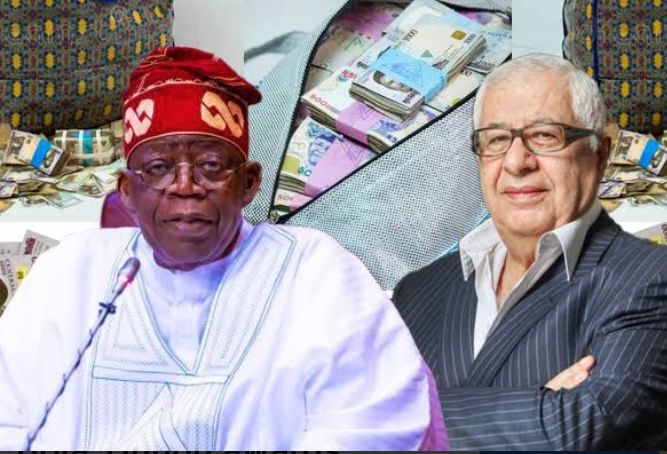
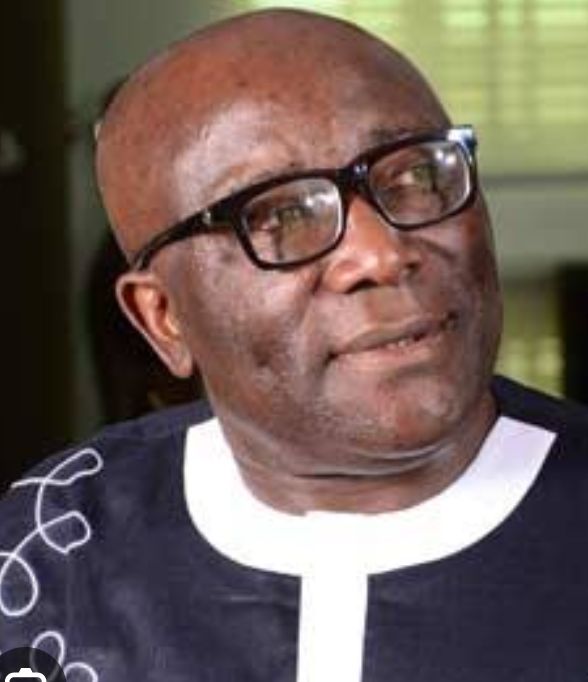



How Politicians Are Bastardizing Nigeria’s Academic Institutions, By Deen Adavize
In a country where public universities face perennial underfunding, dilapidated infrastructure, and frequent strikes, Nigeria’s political class has found a new way to erode the dignity of its academic institutions through abrupt renaming, driven by political gratification rather than merit or history. This creeping trend, where institutions are renamed after politicians or individuals with little or no ties to their founding vision, is not only revisionist but also a calculated desecration of academic heritage.
The Nigerian academic landscape is littered with stories of such political interference. One of the most controversial attempts as reported in the dailies was in 2012 when the federal government under President Goodluck Jonathan sought to rename the prestigious University of Lagos to Moshood Abiola University. The backlash was swift and deafening. Students, alumni, and civil society groups vehemently rejected the move, staging protests across the nation. Many questioned the rationale behind the decision and decried the lack of consultation. Eventually, the government backtracked but the attempt left a sour taste in the mouth of many Nigerians.
Unfortunately, other institutions were not as lucky. Kogi State University, popularly known as KSU originally established to serve as a beacon of higher learning in the North Central region, was renamed Prince Abubakar Audu University by the state government in honor of the late former governor. While Abubakar Audu played a significant role in the founding of the university, critics argue that renaming the institution unilaterally without input from stakeholders undermines its neutrality and opens the door for political manipulation of academia.
Even more recently, news broke out, of the federal government’s plan to rename the University of Maiduguri (UniMaid) after former President Muhammadu Buhari. While some saw it as a tribute to a former head of state, many others interpreted it as a political maneuver that fails to respect the history, mission, and cultural significance of the institution. Beyond the name change lies the issue of credibility. How do international partners, researchers, and alumni reconcile such arbitrary changes with the continuity and stability expected of academic institutions?
The implications of this trend are deeply troubling. Globally, universities, by their nature, are meant to be independent centers of knowledge, critical thinking, and cultural preservation. Their names are often symbolic, carrying the weight of their history, founding ideals, and community values. When politicians impose name changes based on transient political motives, they effectively rewrite history and erode the identity of the institution.
Moreover, these changes are frequently announced with no input from students, faculty, alumni, or the host communities, stakeholders who are the lifeblood of any academic institution. The absence of due process not only undermines the democratic ethos expected in academic spaces but also stirs resentment and distrust.
One of the less discussed consequences is the impact on the institution’s global reputation. Nigerian universities are already struggling with international recognition, limited research funding, and minimal global partnerships. Frequent name changes confuse international collaborators and harm the continuity of institutional branding. Academic publications, citations, and alumni credentials become difficult to trace, affecting both academic visibility and employability of graduates.
This political meddling also sends the wrong message to young Nigerians. At a time when the country needs role models grounded in academic excellence, research breakthroughs, and innovation, politicians are glorifying themselves by imposing their names on public assets. It signals to the younger generation that political power, not scholarly impact or societal contribution is the ultimate currency of recognition.
This undignified trend is not isolated to the aforementioned institutions alone. Other institutions have also faced similar fates or proposals. The Federal University of Agriculture, Makurdi, was once renamed Joseph Sarwuan Tarka University, and the Federal University Ndufu-Alike Ikwo was changed to Alex Ekwueme Federal University. While some may argue that these individuals contributed to nation-building, critics maintain that renaming institutions in their honor without transparent dialogue reduces universities to mere political trophies.
It is worth noting that academic institutions around the world reserve such honors for individuals with groundbreaking contributions to knowledge or to the institution itself, not merely for holding political office. The University of Oxford, Harvard, and other globally revered universities maintain their identities for centuries, which partly contribute to their esteemed legacies. Nigeria should not be an exception.
If the goal is to honor distinguished individuals, there are many alternative means. Endowments, lecture halls, research chairs, and scholarships can be named after deserving figures without altering the institution’s foundational identity. Such gestures not only preserve the historical name of the institution but also contribute to its development in tangible ways.
The bastardization of academic institutions through politicized renaming is a symptom of a deeper malaise: the disregard for the sanctity of education in Nigeria. It is a distraction from the real issues, which are underfunding, brain drain, overcrowded lecture halls, and outdated curricula. Instead of investing in infrastructure, research grants, and staff welfare, politicians are rebranding campuses for vanity.
To safeguard the future of Nigerian education, a national policy must be enacted to prevent arbitrary name changes to public institutions without a comprehensive consultation process involving all stakeholders. Academic institutions must be protected from political interference, not just in nomenclature but also in governance and administration.
Until Nigerian leaders begin to see academic institutions as sacred grounds for learning rather than monuments for political memory, our universities will remain victims of ego-driven politics, disconnected from global academic progress.