Home Blog Page 528

Twitter Has Been My Sole Issue And Biggest Regret, Jack Dorsey On Why He Sold It

Jack Dorsey

Twitter founder, Jack Dorsey has admitted that Twitter, as a company has always been his sole issue and his biggest regret.

Giving reasons why he sold it to billionaire, Elon Musk, Dorsey said: “I love Twitter. Twitter is the closest thing we have to global consciousness. The idea and service is all that matters to me, and I will do whatever it takes to protect both.. It has been owned by Wall Street and the ad model. Taking it back from Wall Street is the correct first step.

“In principle, I don’t believe anyone should own or run Twitter. It wants to be a public good at a protocol level, not a company. Solving the problem of it being a company, however, Elon is the singular solution I trust. I trust his mission to extend the light of consciousness.

“Elon’s goal of creating a platform that is “maximally trusted and broadly inclusive” is the right one. This is also @paraga’s goal, and why I chose him.

“Thank you both for getting the company out of an impossible situation. This is the right path…I believe it with all my heart.”

Jack assured that Twitter will continue to serve the public conversation.

Elon Musk, had yesterday, April 25 night, reached an agreement to buy Twitter for approximately $44 billion.

The 50-year-old acquired the company at $54.20 a share, the same price named in his initial offer on April 14.

UK Companies Plan $300 Million Investments In Nigeria

Some companies in the United Kingdom have agreed to bring investments in various economic fields worth $300 Million to Nigeria soon.

This came against the backdrop of an agreement signed by Nigerian and representatives of the companies on Foreign Direct Investment (FDI). The agreement was reached at the Economic and Development Forum (EDF) held in London.

The agreement is targeting small and medium-size enterprises and will create over 5,000 jobs in the coming years.

Nigeria and Britain also agreed to start discussions on an Enhanced Trade Partnership (ETP) to strengthen trade and high-value investment across both countries.

The Nigeria’s Minister of Industry, Trade and Investment, Niyi Adebajo, signed the deal on behalf of the Nigerian government while his British counterpart, Penny Mordaunt, represented his country at the forum.

Kogi Fixes Hajj Fare For 2022 At N2.6 Million

Kogi State has fixed fare for intending pilgrims in the 2022 pilgrimage at N2,656,000.

The Executive Chairman of the State

Hajj Commission, Sheikh Luqman Imam Abdullahi, who made the announcement today, April 26, said however that the fare is tentative.

He said that as part of preparations for the 2022 pilgrimage to Saudi Arabia, intending pilgrims going through Kogi State have been given May 15, 2022 as deadline for payment of the fares.

He said that the rise in cost is as a result of the local exchange rate and increase in the value added tax, (VAT), from 5% to 15% by the kingdom of Saudi Arabia.

Sheikh Luqman Abdullahi advised intending pilgrims to update their payments, emphasizing that the final Hajj fares are being expected.

He advised intending pilgrims to take the Covid-19 vaccination and provide proof, adding that such is one of the requirements for the Hajj performance.

African Development Bank Moves To Combat Food Crisis In Africa

President of the Africa Development Bank (AfDB), Dr. Akinwunmi Adesina has revealed plans being made to combat the looming food crisis in Africa, mainly as a result of the effect of COVID19 epidemic.

Dr. Adesina, who spoke when he paid a courtesy visit on President Muhammadu Buhari today, April 26, at the Presidential villa, Abuja, also attributed the looming food crisis to negative consequences of the Russia-Ukraine war in terms of food security.

According to him, the Russia-Ukraine war would create global problems and particularly for Africa, which imports a huge percentage of its food from the two countries.

“Already, the price of wheat has gone up about 60%. Maize and other grains will also be affected. There may be fertilizer crisis, as there would be about 2 million metric tons deficit. And that will affect food production by about 20%. Africa will lose $11 billion worth of food, and coming shortly after COVID-19, that would be rather serious.”

The AfDB President said that to prepare against the evil day, the Bank has developed a $1.5 billion Africa Emergency Food Plan, which is now before the bank’s Board for approval.

“We were not ready for COVID-19, but we are now planning to avert food crisis on the continent. There is plan to help farmers cultivate wheat, maize, rice, sorghum, and soybeans. It will mitigate the impact of the Russia-Ukraine war.”

Adesina, who is a former Nigerian Minister of Agriculture, said that in the wet season of 2022, at least five million smallholder farmers would be helped to cultivate one million hectares of maize, one million hectares of rice, and 250,000 hectares of sorghum and soybeans, respectively.

“In total, our support will help Nigeria to produce 9.5 million metric tons of food.”

States that will benefit from the assistance include Kano, Ogun, Oyo, Kaduna, Imo, Cross River, and the Federal Capital Territory.

Dr. Adesina acknowledged that President Buhari has passion for agriculture, saying: “we are behind you strongly, and we want to ensure Nigeria won’t feel the impact of the food crisis.”

President Buhari expressed appreciation to the AfDB boss, who he said understands “our weaknesses and our strengths, and for planning and working ahead.”

“We are very much aware of the need for food security, and to encourage our local farmers; that was why we closed our borders for about two years to curb smuggling. We made some progress.”

Kogi Gov. Yahaya Bello Buys APC Presidential Forms With N100 Million

Governor Yahaya Adoza Bello of Kogi has paid for his All Progressives Congress (APC) Presidential Expression of Interest and Nomination forms to contest the 2023 presidential election.
The governor’s Presidential Campaign Organisation Media and Publicity Director, Yemi Kolapo, in a statement today, April 26 in Abuja, said that the governor paid the required N100 million for the purchase of the forms early today.
“This made him the first to officially seal his aspiration to the office of the President of the Federal Republic of Nigeria in 2023.”
Kolapo said that with the payment for the forms, Bello’s teeming supporters should be rest assured that he would be on the ballot paper in the 2023 presidential race.
“We are highly encouraged by the number of APC governors, leaders and stakeholders who have demonstrated their strong support for the candidacy  of our principal.“
“We reiterate that he is not known for betrayal. He is always very loyal to his own, and his priorities had always been Nigeria, Nigeria and Nigeria.
“Though, the race officially begins now, it is on record that Bello has consistently been at the forefront of the contest.
“He has demonstrated this again by being the first to pay for the APC expression of interest and nomination forms.
“We urge delegates and indeed all Nigerians to shun divisive narratives in the interest of the nation and choose the best of the lot.”
He expressed optimism that the APC Abdullahi Adamu-led National Working Committee (NWC) would put the interest of the party and that of Nigeria first in its activities for the emergence of the party’s 2023 presidential candidate.
He noted that the last few months had witnessed persistent calls by youth, women and professional groups across Nigeria on the Kogi governor to contest the 2023 presidential election.
“With Senator Jonathan Zwingina as the Chairman of the Hope ’23 Yahaya Bello Presidential Campaign Organisation, and Hafsat Abiola-Costello as the Director-General, the tone is set for hope to be actualised for Nigerians in 2023,” Kolapo said.
Source: NAN.

Criminals Plan To Plunge Nigeria Into Confusion, Using Bomb Explosions – DSS

The Department of State Service (DSS) has alerted Nigerians of plans by criminal elements to return the country to the pre-2015 era reminiscent of IED attacks on soft and hard targets in parts of the country.

In a statement today, April 26, the spokesperson of the Services, Dr. Peter Afunanya said that the Service has uncovered a ploy by suspected criminal gangs to forge an alliance among themselves with a view to launching further attacks on critical infrastructure and other frequented public places like worship and relaxation centres, especially during and after the holidays and festive celebrations.

The statement said that the objective is to achieve some self- serving interests as well as cause fear among the citizenry, recalling the earlier warning that some groups and individuals were plotting to stoke violence in the country.

The DSS therefore called on the patrons, owners and managers of aforementioned public places, to be wary of this development and implement basic security measures to deter the threats.

“While the Service is committed to the disruption of this trend and pattern of violent attacks, it will continue to partner with other security agencies to ensure that necessary drills are emplaced in order that public peace and order are not jeopardized.

“To this end, residents are enjoined to go about their lawful businesses and share, with security and law enforcement agencies, useful information on the activities of criminals.”

The statement said that the Director General of the Service, Alhaji Yusuf Magaji Bichi, felicitates with Nigerians and wish them a hitch free Workers’ Day and Sallah celebrations.

2023: If Jonathan Runs On APC Platform And I’m Asked To Step Down For Him, I Will Obey – Ayade

Cross River State Governor, Ben Ayade has said that if, as Presidential aspirant, former Nigerian President, Goodluck Jonathan is eventually presented by his All Progressives Congress (APC) and he is asked to step down for him, he would obey the party’s directive.

“I believe that the party leadership will decide on the appropriate candidate that will take our party to victory. And so, if you heard me well, I am just part of the family; absolutely loyal to the president, seeking to run for the president.

“I am running. But at any point in time that the political leadership of my party, the APC feels that president Jonathan is the appropriate candidate that will actually take us to victory, I will turn my support for him.”

Governor Ayade, who spoke to newsmen today, April 26 shortly after an audience with President Muhammadu Buhari at the Presidential villa, Abuja, said: “I have great respect for President Jonathan and so I have no challenges whatsoever.

 “I am never, ever going to fight the establishment, the institution, the aristocracy, the spiritual vortex of which God has placed a leader of a country. I will never question the powers of the leader of a country. I have never played politics of antagonism or fight.

“I became governor by offering to support whoever the governor (Imoke) wanted and by stroke of luck, I became the candidate.

“By the same token, I am only here to support the president’s candidate and by a stroke of luck, he said, you too go there and join the race and let me see.”

According to Ayade, who had earlier earlier declared for the Presidential race on the platform of the ruling APC, President Buhari advised him to join the presidential race and that the the President advised him to make further consultations on his ambition.

The governor, who defected from the People’s Democratic Party to the APC less than two years ago, promised to replicate what he has done in Cross River State if he is elected president.

The governor insisted that the presidential ticket be zoned to the south as he possesses the capacity to deliver from where Buhari would have stopped in 2023.

He said that security, economy, electricity and employment will be his focus should he become the president.

Twitter Up For Grab; World Richest Man, Elon Musk Offers $44 Billion, Plans Changes

Twitter Inc. (NYSE: TWTR) has announced that it has entered into a definitive agreement to be acquired by an entity wholly owned by Elon Musk, for $54.20 per share in cash in a transaction valued at approximately $44 billion.
Upon completion of the transaction, Twitter will become a privately held company.

“Under the terms of the agreement, Twitter stockholders will receive $54.20 in cash for each share of Twitter common stock that they own upon closing of the proposed transaction. The purchase price represents a 38% premium to Twitter’s closing stock price on April 1, 2022, which was the last trading day before Mr Musk disclosed his approximately 9% stake in Twitter,” the company said today, April 25, 2022.

Bret Taylor, Twitter’s Independent Board Chairman, said: “The Twitter Board conducted a thoughtful and comprehensive process to assess Elon’s proposal with a deliberate focus on value, certainty, and financing. The proposed transaction will deliver a substantial cash premium and we believe it is the best path forward for Twitter’s stockholders.”

Parag Agrawal, Twitter’s CEO, said: “Twitter has a purpose and relevance that impacts the entire world. Deeply proud of our teams and inspired by the work that has never been more important.”
The outspoken Tesla CEO, who is also the world’s wealthiest person, has said he wanted to buy and privatise Twitter because he thinks it’s not living up to its potential as a platform for free speech.

Musk said in a joint statement with Twitter that he wants to make the service “better than ever” with new features, such as getting rid of automated “spam bots” and making its algorithms open to the public to increase trust.

“Free speech is the bedrock of a functioning democracy and Twitter is the digital town square where matters vital to the future of humanity are debated.

“I also want to make Twitter better than ever by enhancing the product with new features, making the algorithms open source to increase trust, defeating the spam bots, and authenticating all humans. Twitter has tremendous potential – I look forward to working with the company and the community of users to unlock it”, Musk said in a statement included in the press release announcing the $44 billion deal.

The deal was cemented roughly two weeks after the billionaire first revealed a 9 percent stake in the platform.

Musk said last week that he had lined up $46.5 billion in financing to buy Twitter, putting pressure on the company’s board to negotiate a deal.

Twitter said the transaction was unanimously approved by its board of directors. The 11-member board includes Twitter co-founder and former CEO, Jack Dorsey, who has been planning to step down from the board in May.

Twitter said the deal is expected to close sometime this year and is subject to the approval of Twitter stockholders and regulators.

Shares of Twitter Inc. rose 6% Monday to $52 per share. On April 14, Musk announced an offer to buy the social media platform for $54.20 per share. While the stock is up sharply since Musk made his offer, it is well below the high of $77 per share it reached in February 2021.

Musk has described himself as a “free-speech absolutist”, but is also known for blocking or disparaging other Twitter users who question or disagree with him.

In recent weeks, he has voiced a number of proposed changes for the company, from relaxing its content restrictions — such as the rules that suspended former President Donald Trump’s account — to ridding the platform of fake and automated accounts, and shifting away from its advertising-based revenue model.

Asked during a recent TED talk if there are any limits to his notion of “free speech”, Musk said Twitter or any forum is “obviously bound by the laws of the country that it operates in. So obviously there are some limitations on free speech in the US, and, of course, Twitter would have to abide by those rules.”

Beyond that, though, he said he’d be “very reluctant” to delete things and in general be cautious about permanent bans.

It won’t be perfect, Musk added, “but I think we want it to really have the perception and reality that speech is as free as reasonably possible.”

Twitter had initially enacted an anti-takeover measure known as a poison pill that could make a takeover attempt prohibitively expensive. But the board decided to negotiate after Musk updated his proposal last week to show he had secured financing, according to The Wall Street Journal.

While Twitter’s user base of more than 200 million remains much smaller than those of rivals such as Facebook and TikTok, the service is popular with celebrities, world leaders, journalists and intellectuals. Musk himself is a prolific tweeter with a following that rivals several pop stars in the ranks of the most popular accounts.

Last week, he said in documents filed with U.S. securities regulators that the money would come from Morgan Stanley and other banks, some of it secured by his huge stake in Tesla.

Musk is the world’s wealthiest person, according to Forbes, with a nearly $279 billion fortune. But much of his money is tied up in Tesla stock — he owns about 17% of the electric car company, according to FactSet, which is valued at more than $1 trillion — and SpaceX, his privately held space company. It’s unclear how much cash Musk has.

Musk began making his fortune in 1999 when he sold Zip2, an online mapping and business directory, to Compaq for $307 million. He used his share to create what would become PayPal, an internet service that bypassed banks and allowed consumers to pay businesses directly. It was sold to eBay for $1.5 billion in 2002.

That same year, Musk founded Space Exploration Technologies, or SpaceX, after finding that cost constraints were limiting NASA’s interplanetary travel. The company eventually developed cost-effective reusable rockets.

In 2004, Musk was courted to invest in Tesla, then a startup trying to build an electric car. Eventually he became CEO and led the company to astronomical success as the world’s most valuable automaker and largest seller of electric vehicles.

How We Can Make Commonwealth A Real Global Power, By Muhammadu Buhari

What becomes of the Commonwealth should one of its 15 members that is not a republic join those 39 others? With Jamaica considering such a move, this question is being asked. But it is misplaced: the modern Commonwealth was constituted in 1949 specifically to accommodate a republic – newly independent India – precisely after such constitutional change.

Still, it is right to debate the Commonwealth’s future. Though perfectly sustainable in its current form, it would be a disservice to its members should current levels of co-operation be the limit of our aspirations.

For a start, we should strive to reduce trade barriers, given the unity nearly all of us hold through the English language, jurisprudence and education systems. We might explore grouping more readily together at intergovernmental forums such as the United Nations to deliver outcomes for one member individually or all collectively. We should work closer on defence interoperability and mutual support in the fight against global terrorism – now centred on Africa, and which threatens new waves of refugees into the West.

Some will point to factors such as Commonwealth countries’ membership of regional trade blocs, UN ballots with members voting in opposite ways and a lack of military compatibility as proof that closer cooperation cannot be achieved. It is possible to prove these people wrong – but only if we attempt to do so.

The forthcoming Commonwealth Heads of Government Meeting (CHOGM) this June should be a moment when the potential for our club is reimagined. This bi-annual senior decision-making body is being hosted by Rwanda: a republic no less, and prescient, when the largest contingent of Commonwealth countries is African.

Not far from the official agenda will be the question of how Brexit will continue to affect us all.

Already the U.K. Global Tariff (UKGT) has reduced, removed or simplified tax on thousands of imported goods, which is an important step in reconfiguring Commonwealth trade. When the club’s largest economy was unable to practice the free trade it long preached, others had little incentive to lower barriers. Association within their own trade blocs is not prohibitive. There is still much more that members can do inside their respective frameworks.

A number of the Commonwealth’s African members have now signed product-based trade agreements with the UK. But a potential deal with the African Continental Free Trade Area (AfCFTA), set to become the world’s largest free trade area, heralds the greatest opportunity.


The UK signed the world’s first memorandum of understanding with the nascent bloc last year, with a future deal securing free trade simultaneously with nineteen African Commonwealth members, collectively representing the majority of Africa’s GDP. It would likely presage further agreements between AfCFTA and other members, further opening intra-Commonwealth trade.

With trade could come greater defence cooperation. African Commonwealth members are active in many theatres across the continent, whether battling ISIS-affiliated militants across the Sahel region in the West, the Horn of Africa in the East, or Mozambique in the South. Arms and defensive equipment are part of the solution.

There is no reason why one of the world’s foremost military manufacturers should not sell more widely to our association when it is a group of allies. When Britain does not, they must look elsewhere. Today we have a mosaic of incompatible systems. But particularly in Africa, where members find themselves on the same missions, interoperability would make a material impact on the ground.

And in diplomacy, when trade and defence ties are drawn closer, so too do geopolitical interests. The EU’s 27 members tend to have each other’s backs in, for instance, UN votes. Why should the 54 Commonwealth partners not similarly organise, lending weight to each other in such bodies and wielding more influence?

At CHOGM, these new opportunities can be grasped. What holds us back is only the limit of our ambition. For those who say this cannot be done, I say we will never know until we try.

Muhammadu Buhari is President of the Federal Republic of Nigeria

Presidential Communication Team, Bringing Governance Closer To Nigerians, By Oche Echeija Egwa

Presidential Aso Rock Villa, Abuja

Every visitor to Nigeria’s seat of power, Aso Rock, is first struck by the beautiful scenery of green and white; our national colours. From the entrance, Pilot Gate, white edifices and nature’s greenery are tuned in a welcoming symphony. The serenity of the Presidential Villa belies flurry of activities, mostly planning meetings, brainstorming sessions and negotiations on sundry issues, both national and international.

Energy for work hardly dissipates at the seat of power. Outcomes of meetings, movements and actions matter to Nigerians, hence on February 25, 2021, the Presidential Communication Team (PCT), an umbrella body that brings together leaders of all media departments in the Villa, chaired by Vice President, Prof. Yemi Osinbajo, birthed the idea of a more regularized and formalized State House Briefing.

The briefing, usually held at the Press Gallery, creates a more predictable and measured meeting point between government officials, State House Press Corps and Nigerians.

The PCT, which comprises media aides in the Office of the President, Vice President, First Lady and Chief of Staff, meet every week to gauge the pulse of the nation, and decide on government officials that should be invited to the specialized interaction. The invitation gives opportunities to public officials to ventilate, and bring clearer perspective on national issues.

In the well-structured, no-holds-barred, meeting with journalists, progress on projects and services are explained, taking into cognisance the tripod vision of President Muhammadu Buhari for taking the country forward, security, economy and corruption.

The quality of the State House Press Corps animates discussions, especially at the question and answer session, with ranking journalists, both local and international, asking public officials penetrating and unedited questions. Carefully chosen by various media houses, majority of the newsmen have more than 20 to 30 years experiences in news reporting, covering presidents, politics and governance, with some already brandishing well-earned Ph.Ds. Facing the battery of newsmen, public officials present their score cards and prepare for hot-seating.

Little over a year, 34 sessions of the specialized State House Briefings have been held. Not surprising, the Minister of Finance, Zainab Shamsuna Ahmed, was the first guest on February 25, 2021. For close to two hours, Ahmed tackled issues on Nigeria’s development plans, double exit from recession, budget projections and constraints, inflationary trends and debt profile, and outlook on the economy, especially on job creation. With a mastery of figures and facts on the economy, accompanied by the Heads of parastatals in her ministry, Ahmed illuminated discussions on why certain decisions were taken, and long term beneficial implications for the citizenry.  She assured the economy was on track.

Some public officials have had multiple invitations because of their peculiar portfolios. The Minister of Health, Dr Osagie Ehanire, had the highest number of appearances, three times. The sense of urgency that trailed Coronavirus saw more invitations to the Minister of Health, who explained response mechanisms since COVID-19 was reported in Nigeria on February 27, 2020. The minister clarified issues on partnerships with countries and health organisations, surveillance, treatment, vaccine administration and controversies, and sustenance of other health services.  The specialized briefing turned out a veritable platform for citizen sensitization and mobilisation to take the vaccines, and explain government actions.

Dealing with many sensitive issues like accessibility, authenticity and implications of different vaccines, Dr. Ehanire was accompanied by the Director General of NAFDAC, Dr Mojisola Adeyeye, Executive Director/CEO of NPHCDA, Dr Faisal Shuaib and former DG, NCDC, Dr Chikwe Ihekweazu.

Due to the centrality of security in national development, more public officials in the sector have been featured in the specialized briefing. The National Security Adviser (NSA), Maj. Gen. Mohammed Monguno (Rtd) and Inspector General of Police, Usman Alkali Baba, have been featured twice. Other guests include the Minister of Defence, Maj. Gen. Bashir Salihi Magashi (Rtd), Minister of Interior, Rauf Aregbesola, Chief of Defence Staff, Gen. Lucky Irabor, Chairman, National Drug Law Enforcement Agency, Brig. Gen. Mohammed Buba Marwa,  and Chairman of the Economic and Financial Crimes Commission, Abdulrasheed Bawa.

Armed with knowledge of the security networks, operations and challenges in the country, especially in his home State, Borno, Monguno showcased achievements in the North East, with many people now returning to their homes, schools and businesses re-opened, and gave insight into procurements of hardwares by the military, like the Tucanos, trainings on use of new security technology, deployment and partnerships. The NSA leaves the stage on an elevated note that peace and harmony remain realisable.

The NSA and security chiefs detailed efforts at fighting terrorism and banditry, imploring Nigerians to be more forthcoming on providing intelligence and trusting the security men deployed across the country. According to them, synergy and intelligence gathering are integral in winning the war against insurgents. The Inspector General of Police, Usman Alkali Baba, also explained welfare of the police, reforms and re-organisations to meet the changing dynamics of crimes.

Top government officials that have been featured at the briefings are: Minister of Communication and Digital Economy, Prof. Isa Pantami; Minister of Sports, Sunday Dare; Minister of Transportation, Rotimi Amaechi; Minister of Aviation, Hadi Sirika; Minister of Works and Housing, Babatunde Fashola, invited twice;  Minister of Water Resources, Engr Suleiman Adamu; Minister of Niger Delta, Sen. Godswill Akpabio; Minister of Humanitarian Affairs, Sadiya Umar Farouq; Minister of Power, Abubakar Aliyu and Minister of Industry, Trade and Investment, Adeniyi Adebayo, who also featured twice, and Minister of Mines and Steel, Olamilekan Adegbite.

Other invited officials are: the Minister of State, Petroleum, Timipre Sylva, who has also featured twice, Minister of State, Labour and Employment, Festus Keyamo, Managing Director/CEO, Nigerian Sovereign Investment Authority (NSIA), Mr Uche Orji and former Executive Director/CEO, Nigerian Export Promotion Council, Segun Awolowo.

The invitations provided useful updates on infrastructure, like the landmark legacy project of the administration, Second Niger Bridge, road and rail projects across the country, and policy directions and regulations, particularly on subsidy in the oil sector, tax and reforms of licensing in mining.

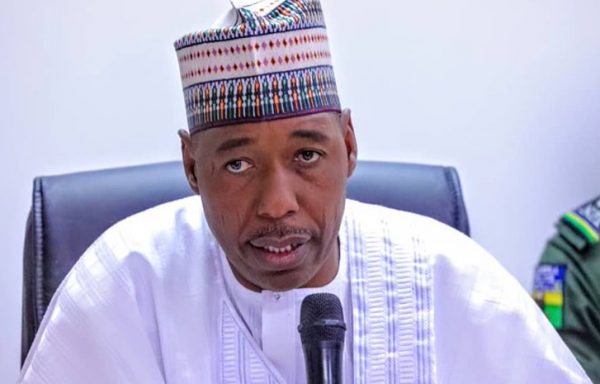
In an interesting departure, yet deliberately structured for more clarity on the economy and security, three governors were featured on the State House Briefing: David Umahi, Governor of Ebonyi State, Prof. Babagana Umara Zulum, Borno State and Nasir el-Rufai of Kaduna State. Umahi highlighted the security and economic challenges in the South East, and successes recorded in integration and harmony, while Zulum shared more depth on the development in the North East, with huge successes in infrastructure, rehabilitation and re-integration of families. Most topical, was the issue of repentant terrorists that surrendered their weapons!  

El Rufai brought journalists up to speed on developments in the North West, particularly Kaduna State, spotlighting the efforts of security outfits to tackle myriad security challenges, and unfolding political issues in the governing party, All Progressives Congress (APC).

Barely few weeks after the inaugural briefing, an exceptional guest took the hot-seat on March 15, 2021. Former Minister of Finance, and Director General of World Trade Organisation, Dr Ngozi Okonjo-Iweala, after a “thank you’’ courtesy call on President Buhari, spoke  on the implications of her position for Nigeria and Africa, taking questions on Nigeria’s share of global trade, developing Nigeria’s services sector, COVID-19, attracting investment, training and capacity building, safe schools and AFCTA.

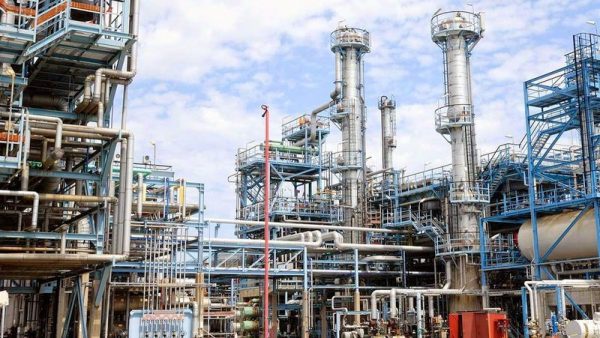
Answering a question on Dangote Refinery, which is the largest single-train refinery in the world, Okonjo-Iweala said: “I wish we had done it years ago. If we had done it years ago and encouraged Alhaji Dangote, who is doing a good thing, we would be producing our own fuel today.” Questions rained and flowed like river. Okonjo-Iweala answered cheerfully and masterly.

Unlike other press events at the Villa, the special State House Briefing draws strength from frequency, timeliness, accessibility and unrestricted conversations. Every session is streamed live on social media, like the State House Youtube channel, and comments and questions from the public are instantly integrated. Some media houses, like the NTA and AriseTV, have taken the liberty to air as a whole or some parts of the interaction, while the reports by journalists usually flood websites, blogs, social media handles, broadcast and print media, generating more discussions.

Interestingly, government officials, journalists, organizers, and the public now eagerly wait for the next opportunity to engage on the weekly interaction, with likely chances of going viral in the media. And as the conversation grows and becomes more predictable in the Press Gallery, the State House Briefing has achieved the goal of the PCT, creating and sustaining understanding between government and the people.

Oche Echeija Egwa is an Assistant Director, Information, in the Office of the Special Adviser to the President on Media & Publicity.

Advertisement ADVERTORIAL
WP2Social Auto Publish Powered By : XYZScripts.com