Morocco has filed a petition to CAF protesting the inclusion of two players in the final of the WAFCON, which Nigeria’s Super Falcons won 3-2 on July 26. It would be recalled that Morocco, which hosted the tournament, were two goals up, going into the half time break , but a second half rally by the Nigerian team helped them to a 3-2 win, and also the title for the tenth time in their history. Before the game, there was a protest lodged by Morocco on the eligibility of two of the Nigerian players: Ashleigh Plumptre and Michelle Alozie. Both players were born outside Nigeria but made the decision to play for Nigeria at senior level. In their protest, Morocco said the manner of their switch of nationality is faulty, citing some irregularities in their claims to be Nigerians. They wanted Nigeria to lose the title by virtue of fielding both players in the tournament. Plumptre was granted approval by FIFA to play for Nigeria in 2021 after it was established that her paternal grandfather is a Nigerian. Alozie’s case is more straightforward as she was born in the USA to immigrant parents from Nigeria. Nigerians are however not losing sleep over the protest as a top member of the Nigeria Football Federation (NFF) termed it as dead on arrival.
Nigeria is now facing a total healthcare shutdown as the nurses and midwives embarked on a nationwide strike, beginning today, July 30, even as Nigerian Medical Association (NMA) issued a 21-day notice of total and indefinite strike over the alleged failure of the federal government to address their long-standing demands. The Nurses and midwives, under the umbrella of the National Association of Nigeria Nurses and Midwives–Federal Health Institutions Sector, vowed to continue the strike from today until their demands are met by the government. Some of such demands include the upward review of shift allowance, uniform allowance adjustment, a separate salary structure for nurses, increased core duty allowance, mass employment of nurses, and the establishment of a nursing department in the Federal Ministry of Health, among others. The National Chairman of NANNM-FHI, Morakinyo Rilwan, who spoke about the strike said that the government had 15 days to respond to their demands but failed to act. The union, on July 14, 2025, issued a 15-day ultimatum to the Federal Government, demanding immediate intervention to prevent a total healthcare shutdown. Rilwan said: “As far as we are concerned, there has been no communication from the government to this moment. That is why we are saying the strike is going on, and nothing is stopping it. “Even if the government calls today or tomorrow, it won’t stop the strike. They had enough time. “Fifteen days is enough for them to call us for negotiations. It is because they are not sensitive to the welfare of the masses. That’s why they allowed 15 good days to elapse.” Rilwan noted that the strike was initiated by members who had grown tired of poor working conditions. “For over 40 years, we have been patient with them. They subjected us to no provision of gloves or equipment, and for the past 40 years, nurses have not embarked on any strike. “And we gave them 15 days’ notice. Maybe they are looking at it that these people have not gone on strike for a very long time, so they are not going to go on strike. But they are wrong.” He said that members are prepared to face any consequences, including “no work, no pay.” “This strike is not initiated by the leadership of the union; it was initiated by the members, and they said this is what they want. So, we don’t have any option but to allow them to exercise their rights, because they are tired. “They are not even contemplating ‘no work, no pay,’ because that is the only language the government can use, and they are ready because the money they are taking is not even enough for them. They are ready to sacrifice that as long as this strike continues.” He said that after the seven-day warning strike, if no reasonable agreement is reached, they would give another 21-day ultimatum to the government, according to labour law, before proceeding on an indefinite strike. “If the 21 days elapse and there is no reasonable response from the government, we would embark on a total and indefinite strike. “Nobody is pulling out. Federal Medical Centre, Ebute-Metta and Lagos University Teaching Hospital, Lagos, have not been part of our association because of some issues. “They have opted out of the association for the past three years, so they are not legally covered to participate in this strike because they are not legitimate financial members of the association. “Other hospitals in Lagos and other states, including the Federal Capital Territory, are joining the strike.” On its part, the Nigerian Medical Association had issued a communiqué at the end of its Emergency Delegates Meeting on July 26, 2025, expressed deep disappointment over the protracted negotiations with the government on issues affecting doctors’ welfare across the country. The communiqué, signed by NMA President, Professo Bala Audu and Secretary General, Dr. Jamin Egbo, cited several unresolved issues, including the suspension—rather than withdrawal—of a recent circular by the National Salaries, Income and Wages Commission (NSIWC), which the association had opposed. The emergency meeting, convened by the National Officers Committee (NOC) of the association in response to the NSIWC circular on the review of the Consolidated Medical Salary Structure (CONMESS) for doctors, as well as the federal government’s failure to: Pay seven months of accrued 25/35% CONMESS adjustment arrears, Honor previously signed Collective Bargaining Agreements (CBAs), Adequately prioritize the health sector at all levels of governance. The communiqué reads in part: “The meeting, after extensive deliberations, unanimously condemned the federal government’s approach to the welfare of its members and the persistent neglect of issues affecting Nigerian doctors. “The meeting issued a 21-day notice of total and indefinite strike, effective from July 27, 2025, in line with relevant labour laws, should the government fail to comprehensively address the association’s demands within this period.” The association expressed optimism that the government would act responsibly to avert a nationwide industrial action, stressing however, the risk such neglect poses to the already fragile health system. It advised the government to consider the health needs of citizens and the wellbeing of medical professionals. The NMA commended the efforts of its National Officers Committee and the National Technical Negotiating Team (NTNT) in their continued engagement with government agencies. However, it lamented that none of its 19 listed demands had been fully met. The meeting also expressed concern over: Inadequate implementation of the Memorandum of Understanding signed with government representatives, Rising economic hardship affecting both doctors and citizens, The continued neglect of the health sector, which contributes to brain drain and poor national health indices, The increasing trend of medical tourism by government officials, which it said undermines confidence in Nigeria’s healthcare system. The NMA appreciated delegates from the 36 states and the FCT who participated in the meeting and called on all Nigerian doctors to remain united and committed to the association’s shared vision. The communiqué concluded with a call for immediate government intervention to prevent avoidable disruption in the country’s health services.
Seven decades of ink and grit, of shared dreams no time can split. Kano State Correspondents’ Chapel — a cradle of truth, where journalistic fire burns eternal, from age to youth. They came with pens, with passion and pride, bound not by blood, but walking side by side. Through typewriters and tape decks, through tech and tide, they stood for truth, with honor as their guide. We honour the pathfinders, the mighty and brave — Halilu Ahmed Getso, Salisu Alhassan Bichi, Late Hassan Safiyanu Gumel and Murtala Maikaba the sage, Labaran Maku, Bisi Adekunle, and Shola Lawal of Concord’s page. There are Sani Zorro, who dared the status quo, Muhammad Garba two NUJ national Presidents, bold as morning glow. Late Abdullahi Yakubu of New Nigerian and Leadership too, qnd Abdulaziz Abdulaziz, ever compassionate, ever true. From Edwin Olofu’s pen that spoke with fire, to Ibrahim Garba Shua’ibu whose words inspire. Thisday’s prolific Yakubu Musa, Suwaid bn Isa of NNN, Ja’afar Ja’afar bold, Sani Umar, voice for the voiceless, with a heart of gold. Mohammed Ya’u of RDF, once of Sokoto’s The Path, Sani Malumfashi, whose courage would never depart, Nathaniel Ikyur, Babajide Otitoloju, Gali Sadiq the calm Ado Saleh Kankia and Amina Waziri, both bearing truth as their charm. Haruna Aliyu Hadejia and Ibrahim Mohammed, radio’s pride; Jinge Michael, Thompson Charlie from Plateau’s side. Ustaz M.S Abdullahi and late Bashir Umar of The Sun; Desmond Mgboh, Tina Anthony — their journalistic runs well spun. From Radio Nigeria’s gallant crew — Abubakar Abdurahman, Aliyu Yahaya, Professor Samaila Shehu, Abubakar Sadiq Yusuf of Gaskiya Ta Fi Kwabo, The Kakaki of Almizan, loud and raw. Osa Director, a champion of justice, with a heart that’s kind and true; Osedebamen Isibor, a journalist with a heart of gold too. Suleiman Anyewulechi, the kingmaker himself, Akinola Alli, a leader who needed no help. Umar Yari, a pen warrior full of cheer, Late Umar Sa’idu Tudun Wada, whose voice we still hear. Aliyu Abubakar Askira, short-lived Chairman with resolve; Ibrahim the vital link, with problems he’d always solve. We remember the tiny Jakuskus, whose reign was enviable, late Bello Fagge, A Yau and Abuja Mirror, dependable and capable. Na Baker uban Sumayya da Khalid — no tale more powerful, more free; Adamu Joshua Marshall, whose legacy stands firm like a tree. Babangida Funtua, the money keeper, wise and true, late Musa Umar Kazaure, the one who always knew. Dr. Habibi A.T Yaqoob, his journalistic heart aglow; Auwaliye bn Umar of Daily Times, fierce in pen and flow. Ubale Musa, and Patience Musa, strong and kind; Umar Suleiman, sports guru with a brilliant mind. Bassey Inyang of Express, bold and never cold, their stories still fresh, their memory never old. Ricardo Chidi Obi, of blessed memory who wrote for the Guardian with the jerry coil having a flair; John Alechenu of the Punch and late Augustine Maduwest — rare. The late Cosmos Etaiyi Elaigwu, fierce and grand, his ‘brother from another mother’ Kayode Olaitan, hand in hand. Oyelere Kola of Tribune, Kolade Adeyemi’s strategic might, Malam Ahmad Muhammad Kwalam, a VOA light. Muhammad Salisu Rabiu of A Kori Kwalam fame, Dahiru Suleiman, of Gaskiya Ta Fi Kwabo earned him a golden name. Ibrahim Dahiru of the legendary New Nigerian, Hussain Abubakar Mbar of NAN, Chapel Chairman again and again. Samaila Dabai of FRCN, Isa Muhammad Inuwa of Radio Germany, Aminu Abubakar of Radio France, all writing with harmony. Garba Lere of Voice of Nigeria, and Hisham Habib, once of Trust, Habibi, Madu Jerry — the man on top, sharp and just. Aliyu Dankama of Radio Nigeria Kaduna, Jamilan Trust with her twin stars Ruqayya Aliyu, now Professor, and Habiba Adamu with her gentle scars. Yusha’u Adamu, Hassan Karofi, Mustapha Kwaru the steady, Ahmed Abubakar, Giginyu, Dawud Nazifi, Mudassir Ismail ever ready. Chika Nwabueze and Ibrahim Birnin Magaji, silent but sound; Tajuddeen Suleiman, a powerful Chair who stood his ground. Ashahabu Lawal of NAN — quiet yet bold, Sunday Alu, the gallant soldier with a kitchen-hardened hold. Salihu Usman Isha, the Hotman with charisma bright, and Yusuf Ozi Usman, Chapel Chairman, guiding with insight. Mustapha Gide and Bala Abdullahi of New Nigerian type, late ace photographer Zubairu Shaba and twin Kabiru Funtua, ripe. The silent John Akubo, present in the ink, and many unnamed heroes who made us rethink. These individuals, with passion, grit and grace, gave the Chapel its heartbeat and its journalistic base. Through shadows and storms, they lit the way and still their spirits guide us today. As we celebrate 70 years of the Kano State Correspondents’ Chapel, we fondly remember the Late Umar Sa’idu Tudun Wada, Umar Suleiman, Mike Oboh, Sani Abdullahi, Bello Fagge, Musa Baker, Jinge Michael, Cosmos Elaigwu, and Ricardo Chidi Obi, zubairu Shaba, Bashir Umar, Ted Udogu, Augustine Madu West, Ibrahim Barde— all legends eternal. May Allah bless this noble Chapel — the famed “Galadima Bombers.” For those not named, your legacy is part of this honor. We appreciate you all — in silence or in thunder — For the truth you wrote, and the unity you fostered under.
Lamara Garba Azare is former Chairman, Kano State NUJ Correspondents’ Chapel
Former Kano State Governor, Dr. Abdullahi Ganduje, today, July 29, drove to the residence of his former Kaduna State counterpart, Malam Nasir Ahmed El-Rufai for possible political reunion. The two had breakfast together, quietly.
Media group under the canopy of Kogi Central Journalists’ Guild (KCJG) has called on the state Governor, Ahmed Usman Ododo to rename the Confluence University of Science and Technology (CUSTECH), Osara after his predecessor, Yahaya Adoza Bello. In a statement by the National Chairman, Muhammad Tijani Abdulsalam, and the Secretary, Ozumi Abdul, the Guild said that such recognition would reciprocate Yahaya Bello’s unparalleled legacy in education, and other key sectors that propelled the state to enviable position. The Guild recalled that education sector was in disarray before 2016 and that Yahaya Bello’s administration birthed an education roadmap through an Education Summit it convened in 2018. The summit came up with an enactment of the 2020 Education Law. The media group listed Yahaya Bello’s administration’s achievements in education to include allocation of over 30% of the budget to education annually from 2021, surpassing the UNESCO benchmark. “Bello’s efforts reduced out-of-school for children from over 550,000 to fewer than 87,000 by 2019, while a total of 833 classrooms were renovated as 1,800 new blocks were also constructed.” The Guild said that the former Governor established model science schools and declared free education in public schools from primary to secondary level, and paid WAEC, NECO, and JAMB fees for students. The media group noted that such efforts led to a sharp increase in students’ performance in national exams and culminated in the establishment of two state universities, CUSTECH, Osara in 2021 and Kogi State University, Kabba in 2023, making Yahaya Bello the only governor in Kogi’s history to achieve such a feat. The Guild said that renaming CUSTECH after Yahaya Bello would not only honuor his vision for science and technological advancement, but will immortalize a leader who gave the state a new identity in unity, development and governance. “Governor Ododo has a moral and historical responsibility to recognize the man who laid the foundation for modern Kogi. “Renaming CUSTECH to Yahaya Adoza Bello University of Science and Technology will be a fitting tribute to a transformational leader. “The appeal we make to His Excellency is consonant with international best practices, seeking to galvanize individuals with a strong sense of civic responsibility to help build a society that promotes the common good and enhances the quality of life for all.” Meanwhile, the Guild announced the constitution of a 7-man Committee to push for the realization of its appeal.
Absolute Profligacy. This is how best to describe President Bola Tinubu’s $2,950,000 gift to the Super Falcons/technical crew for winning the Women African Cup of Nations held in Morocco. Our President sloppily ordered the release of the Naira equivalent of $100,000 to each of the 24 players and $50,000 to each of the 11-man technical crew of the team. This is clearly not how to spend funds; funds generated from struggling tax payers. By his action, Tinubu showed that he cared less about the sweat of Nigerian tax payers. He did not even think one bit about the opportunity cost. The fund could have been added to those already set aside for tackling growing hunger, malnutrition and poverty in beloved Nigeria. The money could have been used to tackle decaying health, road and education infrastructure. Our public schools, hospitals and other vital facilities are in shambles. Yes, the Super Falcons deserve to be rewarded for winning an historic 10th WAFCON title. Conferring national honours on them and a gift of flats in Abuja is more than enough. The additional cash gift is excessive. Besides, the Super Falcons have been decently rewarded with cash bonuses at every stage of the competition. The winning bonus at the group stage was $2000 per player. It progressed to $3000 at the quarter final stage, $4000 at the semi-final stage and $5000 in the final. The draw with Botswana attracted $1000 bonus. There was also the daily camp allowance of $100 per player. So, each player already has around $19000. Then, for winning the trophy, CAF, Africa’s football governing body/organisers of WAFCON paid the Nigerian FA $1 million as victory prize. CAF further clearly states that 33 percent of its prize money must be shared to players and coaches. That is another $330,000 for the Falcons and their trainers. This will come to around $10,000 per player. In all, each player will take home around $30,000. Is Tinubu unaware of this? So, why the overkill with additional $100,000 per player? Tinubu must stop spending public funds recklessly. This must not be happening in a country where many go to bed without meals and wake up not sure of breakfast. It must not be happening in a country where millions are still battling for living wages. It must not be happening in a country where scores die daily from ailments as ordinary as malaria and typhoid fever. No fewer than 4,252 Nigerians die yearly from hepatitis. I’m quoting official figures here. Nigeria is still home to the largest number of people living below poverty in this world. Tinubu ought to be worried about this emblem of disgrace. Things have not changed under this government. Nigeria’s healthcare workers are still struggling for living wages. Just yesterday, the Nigerian Medical Association (NMA), the umbrella body of all medical doctors in the country, gave the federal government 21 days to meet their welfare demands or face total, indefinite nationwide strike. Nigerian nurses, under the umbrella of the National Association of Nigeria Nurses and Midwives, Federal Health Institutions Sector, are set for a seven-day nationwide warning strike effective Wednesday, in protest over poor remuneration, staff shortages, unpaid allowances, and unsafe working conditions. The strike will affect 74 federal hospitals. It will paralyse services in federal medical centres, teaching hospitals, and specialist institutions. Clearly, healthcare services across Nigeria are in crisis. Tinubu and our languid governors should be worried about this. These hopeless governors also gave a needless N350 million to the Falcons. Public funds should go to healthcare, education, roads, food, poverty alleviation, job creation for Nigerians, not excessively for sports. Enough is enough. One more thing. England’s women football team won the European trophy last Sunday. The British government did not give them extra cash gifts. They were paid agreed winning bonuses and allowances. Also, the Spanish women football team that won the world title last year did not get extra cash gift from the Spanish government. They were paid agreed winning bonuses and allowances. This is the global standard. Nigeria must key into this. A good government must key into this global standard.
Adebowale can be reached through: yemiadebowale@yahoo.com or 08054699539
A chieftain of the ruling All Progressives Congress (APC), Ali Modu Sheriff has identified two things he said could stand in the way of President Bola Tinubu winning the 2027 election for second term in office.
Modu Sheriff was two-term governor of Borno State and a former Senator of the federal republic of Nigeria. Speaking on Channels Television programme last night, July 28, Sheriff said: “I can tell you for free, the only things that will stop President Tinubu from winning the election in 2027 are only two factors: one, if there are no elections in Nigeria and two, if he decides not to run.”
“Honestly, I didn’t want to watch the match. I didn’t want to have high blood pressure. But people came in and turned my TV on that channel. When it was 2-0, I got very offended and restless.” These were the confessions of President Bola Ahmed Tinubu when he received members of the Super Falcons from Morocco today, July 28 after their victory at the 2024 Women’s Africa Cup of Nations (WAFCON). President Tinubu went on: “But I was still watching, with the spirit of resilience, determination, and courage. And after that penalty, my strength was lifted, and I believe that of the nation was lifted too.” Recounting further scenario around him during the sweat soaked dwell, Tinubu said: “you almost made me angrier because your mother (the First Lady) was in the kitchen, nearly abandoning my dinner. ”She doesn’t watch the game except when the girls are playing. And at the end of the final whistle, it was joy all over the country.” The President commended the players who he said have inspired millions, especially young girls who now see proof that their dreams are valid and achievable. “You have inspired me, too. And it’s great for a nation to have assets that are the hope of today, tomorrow, and the day after. You represent that hope. You ignited that hope. “And we will continue to encourage you, the next generation, and other generations after you. “Your victory represents more than a sporting accomplishment. It is a triumph of courage, determination, discipline, and consistency.” The President assured the team of his administration’s continued support and commitment to sports development, pledging that the government would invest further in women’s football and youth talent development across the country. “Your story is a story of hope. And in this era of Renewed Hope, we celebrate you not just as champions of Africa, but as champions of the Nigerian dream.” This was even as the Chairman of the Nigeria Governors’ Forum (NGF), Governor AbdulRahman AbdulRazaq, also announced a donation of ₦10 million to each of the players and technical team members on behalf of the 36 state governors. The First Lady, Senator Oluremi Tinubu, described the Super Falcons as role models and shining examples of courage and excellence. She congratulated the team for their exceptional performance and unwavering spirit, describing their journey as “a testament to resilience, teamwork, and determination. “You played with passion, confidence, and an unshakeable belief in yourselves—that it is not over until it is over. “The zeal you displayed on the pitch was nothing short of inspirational. You never wavered and reminded the world why Nigeria remains a powerhouse in African women’s football.” The First Lady prayed for the team’s continued success and shared an earlier conversation with President Tinubu about the team’s bright future as world champions. “I told Mr. President this morning that you are going on to win the World Cup, and he thought I was too ambitious. But Ajibade, the team captain, just seconded that, and that is possible.” Super Falcons Captain, Rasheedat Ajibade said that the victory was for the team and for every Nigerian girl who dreams of achieving greatness. “Today, I stand before you not just as the captain of the Super Falcons, but as a proud daughter of Nigeria, carrying the dreams, resilience, and spirit of our great nation. “On behalf of my teammates, coaches, and technical staff, I express our heartfelt gratitude for this warm reception and the unwavering belief you have shown in us.” The team captain emphasised the significance of their 10th WAFCON title, saying: “This victory is not just a trophy. It is a testament to the unyielding spirit of Nigeria. It is a celebration of every young girl in our villages, towns, and cities who dares to dream… This 10th title is for you, Mr. President, for Nigerians, for Super Falcons, and for every young child who believes and dreams to be on this stage someday.” Ajibade called for continued support from the government and stakeholders to elevate Nigeria’s global standing in women’s football. Chairman of the National Sports Commission, Shehu Dikko, described the team’s victory as a symbol of national unity, inspiration, and the triumph of belief, courage, and excellence. Dikko credited President Tinubu’s administration with investing in sports development and women’s empowerment. “The Super Falcons’ triumph is a fruit of your unwavering support for sports and women. You have always believed that sports can unite us, heal us, and uplift our spirits as one of the major drivers of the economy. And today, we have seen it happen.” He commended the First Lady, Senator Oluremi Tinubu, for her “constant support for our women in sports.” “This win goes beyond sports. It is a powerful symbol of our national unity and cohesion. In those 90 minutes, Nigerians everywhere from the north, south, east and west held their breath, prayed together, cheered the team, and finally celebrated together. ”That is the power of sports, and indeed the power of our women in sports.”
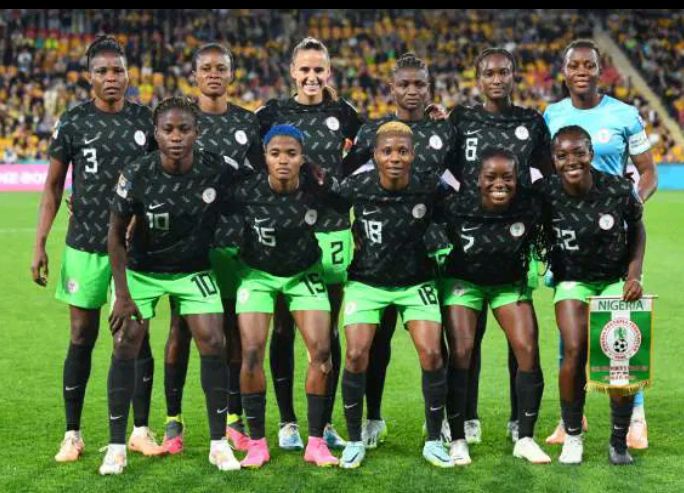
Nigerian President, Bola Tinubu has rewarded members of the Super Falcons, a national female team, with $100,000 gift, national honour of Officer of the Order of the Niger (OON) and a house each in Abuja, the federal capital city of Nigeria. This came today, July 28, in appreciation of the team’s win at the 2024 Women’s African Cup of Nations which took place at Rabat, Morocco. The 24-member team, led by their captain, Rasheedat Ajibade, won the championship for the 10th time against their Moroccan counterpart yesterday, July 27. Special assistant to the President on social media, Olusegun Dada, in a post on his verified X, said that each of the 24 players will receive a cash gift of $100,000 and a three-bedroom apartment in the Renewed Hope Estate. He said that each of the technical team members will also receive a cash gift of $50,000 from the President. Dada wrote: “President Bola Ahmed Tinubu confers National Honours of Officer of Order of Niger and 3-bedroom apartments each and a cash award of $100,000 each to the 24 players and $50,000 each technical team for all the members of the Technical Committee.”
No fewer than 23 persons have been killed in devastating flood that swept through parts of Yola, Adamawa State capital yesterday, July 27. The disaster was triggered by a torrential downpour that began around 1:00 a.m yesterday, leaving behind widespread destruction, damaging homes and property worth millions of naira. The State Governor, Ahmadu Umaru Fintiri, who led a high-level delegation to inspect affected communities, expressed grief over the incident, even as he reassured the victims of the government’s commitment to bringing succor and aid recovery. The governor, who described the incident as “tragic and devastating,” sympathized with bereaved families and those who lost properties. He said that the state government would immediately set up a technical committee in collaboration with the Adamawa State Emergency Management Agency (ADSEMA) and the National Emergency Management Agency (NEMA) to assess the full scale of the disaster. “We will constitute a technical committee to carry out a thorough assessment. “Based on their findings, we will take concrete steps to assist affected residents.” The Governor criticized individuals using the tragedy to spread misinformation and incite political tension. “This is not a time for politics or finger-pointing. It’s a time for unity and action.” Governor Fintiri attributed the flooding to a combination of intense rainfall and blocked water channels that prevented proper drainage of stormwater into the river, noting that such structural deficiencies must be addressed moving forward. Search and rescue operations are ongoing as emergency response teams continue to comb through submerged areas, searching for survivors and helping displaced residents.
We use cookies on our website to give you the most relevant experience by remembering your preferences and repeat visits. By clicking “Accept”, you consent to the use of ALL the cookies.
This website uses cookies to improve your experience while you navigate through the website. Out of these, the cookies that are categorized as necessary are stored on your browser as they are essential for the working of basic functionalities of the website. We also use third-party cookies that help us analyze and understand how you use this website. These cookies will be stored in your browser only with your consent. You also have the option to opt-out of these cookies. But opting out of some of these cookies may affect your browsing experience.
Necessary cookies are absolutely essential for the website to function properly. This category only includes cookies that ensures basic functionalities and security features of the website. These cookies do not store any personal information.
Any cookies that may not be particularly necessary for the website to function and is used specifically to collect user personal data via analytics, ads, other embedded contents are termed as non-necessary cookies. It is mandatory to procure user consent prior to running these cookies on your website.









Tinubu’s $3 Million Cash Reward To Super Falcons Is Profligacy, By Yemi Adebowale
Absolute Profligacy. This is how best to describe President Bola Tinubu’s $2,950,000 gift to the Super Falcons/technical crew for winning the Women African Cup of Nations held in Morocco.
Our President sloppily ordered the release of the Naira equivalent of $100,000 to each of the 24 players and $50,000 to each of the 11-man technical crew of the team. This is clearly not how to spend funds; funds generated from struggling tax payers.
By his action, Tinubu showed that he cared less about the sweat of Nigerian tax payers. He did not even think one bit about the opportunity cost. The fund could have been added to those already set aside for tackling growing hunger, malnutrition and poverty in beloved Nigeria. The money could have been used to tackle decaying health, road and education infrastructure. Our public schools, hospitals and other vital facilities are in shambles.
Yes, the Super Falcons deserve to be rewarded for winning an historic 10th WAFCON title. Conferring national honours on them and a gift of flats in Abuja is more than enough. The additional cash gift is excessive. Besides, the Super Falcons have been decently rewarded with cash bonuses at every stage of the competition. The winning bonus at the group stage was $2000 per player. It progressed to $3000 at the quarter final stage, $4000 at the semi-final stage and $5000 in the final. The draw with Botswana attracted $1000 bonus. There was also the daily camp allowance of $100 per player. So, each player already has around $19000.
Then, for winning the trophy, CAF, Africa’s football governing body/organisers of WAFCON paid the Nigerian FA $1 million as victory prize. CAF further clearly states that 33 percent of its prize money must be shared to players and coaches. That is another $330,000 for the Falcons and their trainers. This will come to around $10,000 per player. In all, each player will take home around $30,000. Is Tinubu unaware of this? So, why the overkill with additional $100,000 per player?
Tinubu must stop spending public funds recklessly. This must not be happening in a country where many go to bed without meals and wake up not sure of breakfast. It must not be happening in a country where millions are still battling for living wages. It must not be happening in a country where scores die daily from ailments as ordinary as malaria and typhoid fever. No fewer than 4,252 Nigerians die yearly from hepatitis. I’m quoting official figures here. Nigeria is still home to the largest number of people living below poverty in this world. Tinubu ought to be worried about this emblem of disgrace. Things have not changed under this government.
Nigeria’s healthcare workers are still struggling for living wages. Just yesterday, the Nigerian Medical Association (NMA), the umbrella body of all medical doctors in the country, gave the federal government 21 days to meet their welfare demands or face total, indefinite nationwide strike.
Nigerian nurses, under the umbrella of the National Association of Nigeria Nurses and Midwives, Federal Health Institutions Sector, are set for a seven-day nationwide warning strike effective Wednesday, in protest over poor remuneration, staff shortages, unpaid allowances, and unsafe working conditions. The strike will affect 74 federal hospitals. It will paralyse services in federal medical centres, teaching hospitals, and specialist institutions.
Clearly, healthcare services across Nigeria are in crisis. Tinubu and our languid governors should be worried about this. These hopeless governors also gave a needless N350 million to the Falcons. Public funds should go to healthcare, education, roads, food, poverty alleviation, job creation for Nigerians, not excessively for sports. Enough is enough.
One more thing. England’s women football team won the European trophy last Sunday. The British government did not give them extra cash gifts. They were paid agreed winning bonuses and allowances.
Also, the Spanish women football team that won the world title last year did not get extra cash gift from the Spanish government. They were paid agreed winning bonuses and allowances. This is the global standard. Nigeria must key into this.
A good government must key into this global standard.
Adebowale can be reached through: yemiadebowale@yahoo.com or 08054699539