President Bola Ahmed Tinubu has joined media team covering the presidency in mourning the death, yesterday, July 25, of one of them, Dr. Leon Habby Usigbe. The President, in a statement by his Chief media aide, Bayo Onanuga, expressed sadness over the death of Dr. Usigbe, who he described as “a veteran STATEHOUSE Correspondent and professional.” The President confirmed that the deceased, who until his death, was the Northern Bureau Chief of the Nigerian Tribune Newspapers, was “a cherished member of the State House Press Corps.” Tinubu acknowledged Dr. Usigbe’s dedication to truth, balance and ethical journalism, which earned him the respect of colleagues, public officials and readers nationwide. He said that Usigbe’s insightful reporting and calm demeanour contributed immensely to strengthening democratic governance and keeping the public well-informed about the workings of the presidency and government at large. “I extend my heartfelt condolences to his family, friends, colleagues at The Tribune, and the entire Statehouse Press Corps. May Almighty God grant his soul eternal rest and comfort all who mourn this great loss.”
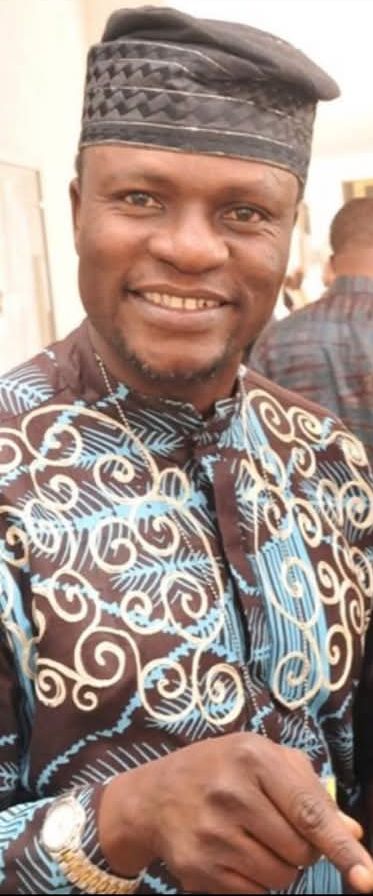
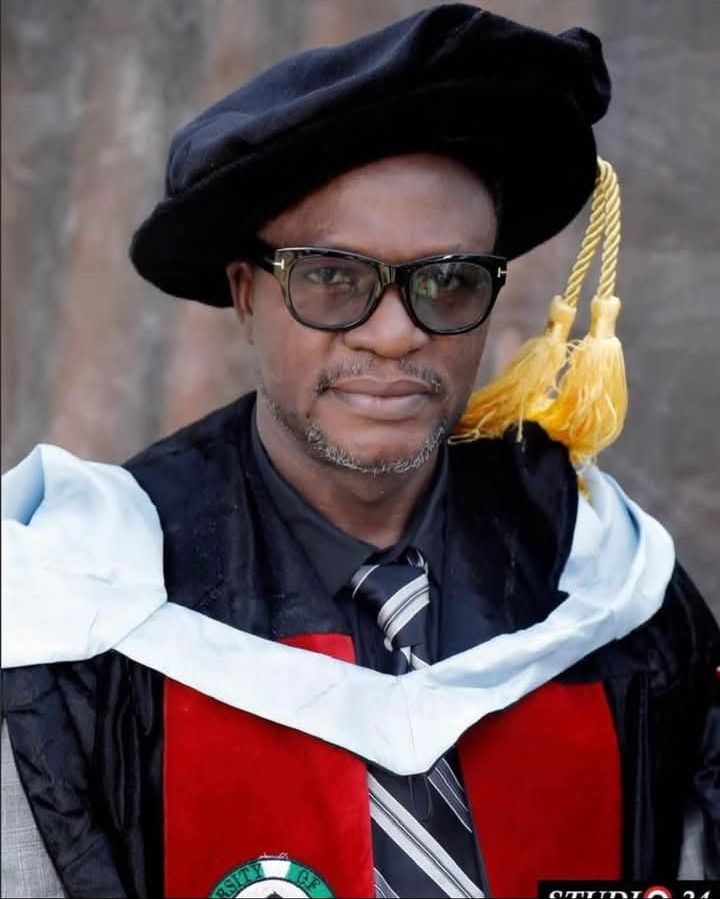
Doctor Leon Usigbe, representing Tribune newspaper at the Aso Rock Presidential Villa, is dead. His death was made known by a colleague, Mrs. Juliana Taiwo Obalonye in a common Whatsapp group platform this evening, July 25.
…Dr. Usigbe
Dr. Usigbe was said to be sick for sometime, “but we didn’t think it would result to death,” Taiwo Obalonye said. Late Usigbe had covered the Aso Rock Presidential Villa for more than fifteen years. As at the time of his death today, he was the Bureau Head of the Tribune newspaper in Abuja, and the North.
His death came barely a year after Kabiru Yusuf, representing French Radio broadcasting network in the Aso Rock Presidential Villa died, shortly after returning from pilgrimage in Saudi Arabia.
The Economic and Financial Crimes Commission (EFCC) has arrested no fewer than 25 students of Bayero University Kano (BUK) for alleged internet fraud. A statement by the commission said that the students were arrested opposite BUK new site, following actionable intelligence on their suspected involvement in cybercrime activities. The statement said that all suspects apprehended are undergraduate students of Bayero University Kano (BUK). It said that items recovered during the operation include, mobile phones, laptops, internet routers and one Honda Accord car. The statement gave the names of suspects as Ismaíl Nura, Suuleyman Ayeh, Usman Abdulrazaq, Emmanuel Chigozie, Akabe Seth, Daniel Imoter, Abdulganiyu Jimoh, Jafar Abubakar, Usman Nuraddeen, Mohammad Adnan, Abubakar Abusufyan, Abdulmalik Ibrahim, Abubakar Sadiq, Daniel Masamu, Abdulrasheed Abdulsamad, Issac Dosunu, Nuraddeen Ogunbiyi, Onyeyemi Kaleem, Miracle Joseph, Danjuma Musa, Ibrahim Mubaraq, Yusuf Salihu, Lawal Ibrahim Edebo, Abdulmajeed Suleiman and Dauda Abdulhamid. It said that they were arrested following weeks of surveillance linked to their alleged involvement in internet fraud, identity theft, and financial scam It said that the suspects would be charged to court after the investigations are concluded.
Professor Nentawe Goshwe Yilwatda, Nigeria’s Humanitarian Minister, has emerged as new National Chairman of the ruling All Progressives Congress (APC). He his emergence came today, July 24, at the National Executive Committee (NEC) of the party. Professor Yilwatda succeeded Dr. Abdullahi Ganduje, who resigned recently. Professor Nentawe Goshwe Yilwatda is a distinguished academic and advocate for humanitarian and poverty reduction initiatives. Born on August 8, 1968, in Dungung, Kanke Local Government Area, he hails from a lineage of service, being the son of the Late Rev. Toma Yilwatda. He attended the prestigious Boys’ Secondary School, Gindiri. His academic journey saw him obtain his first degree from the Federal University of Agriculture, Makurdi, followed by a master’s degree from ATBU, Bauchi, and a doctorate from the University of Nigeria, Nsukka, specializing in Electronic and Computer Engineering. Prof. Yilwatda returned to his alma mater, the Federal University of Agriculture, Makurdi, where he served for over 26 years. He was the University’s pioneer Director of ICT, leading transformative digital reforms that automated key institutional processes. He earned multiple accolades, including Best Staff of the Year and Best Director of the Year. Prof. Yilwatda has played a pivotal role in the digital transformation of Nigeria’s public and private sectors. His consultancy work spans multinational organizations and global development partners such as the European Union, UNICEF, the World Bank, and TECHVILE USA. In 2017, he was appointed a Resident Electoral Commissioner with the Independent National Electoral Commission (INEC). During his tenure, he championed some reforms, including policy amendments to the Electoral Act, the development of voting frameworks for Internally Displaced Persons (IDPs) and People Living with Disabilities (PWDs), and the deepening of technology in Nigeria’s electoral system. In 2021, he stepped down to pursue public service through elective office, contesting as the Plateau State gubernatorial candidate under the All Progressives Congress (APC) and serving as the Coordinator of the Tinubu/Shettima Campaign Organization in Plateau State during the 2023 General Elections.
In the intricate dance of creative writing, few decisions are as pivotal as determining where, and with whom, your story truly begins. The adage, “When you know the core of your story, it becomes easier to identify which of your characters has the burden of opening the window into the narrative,” isn’t just a truism; it’s a fundamental principle that underpins effective storytelling. The character who first speaks, acts, or is observed holds immense power, shaping not only the reader’s initial perception of the world but also establishing the tone, stakes, and central conflict that will unfold. The “core of your story” is its beating heart—the central theme, the primary conflict, the driving question. Is it a tale of profound loss and redemption? A high-stakes political thriller? A nuanced exploration of family dynamics? Once this essence is clear, the path to choosing your opening character becomes significantly clearer. This isn’t about simply picking the protagonist; it’s about identifying the character whose perspective offers the most immediate and impactful access to that core. Consider a story centered on a devastating societal collapse. While the ultimate hero might be a determined survivor, the most potent opening might come from a character experiencing the very first tremors of the catastrophe—perhaps a scientist observing an anomaly, or an ordinary citizen grappling with an inexplicable disruption. Their initial confusion, fear, or dawning realization directly conveys the core theme of societal vulnerability. Conversely, if the core of the story is an intensely personal journey of self-discovery, opening with the protagonist already on the cusp of a significant internal shift, even if subtly hinted at, immediately draws the reader into their interior world. The character bearing the “burden of opening the window” serves multiple crucial functions. First, they are the “initial point of identification” for the reader. Their emotional state, their immediate surroundings, and their initial actions become the reader’s entry point into the narrative. If this character’s experience doesn’t resonate with the story’s core, the opening can feel disconnected, forcing the reader to work harder to understand the true purpose of the narrative. Second, this character dictates the “initial narrative perspective and voice”. An opening through the eyes of a cynical detective will feel vastly different from one filtered through the wonder of a child, or the detached observation of an omniscient narrator. Each choice subtly, but powerfully, signals the kind of story that is about to unfold. If the story’s core is a dark mystery, a world-weary detective’s jaded perspective might be the perfect fit to set the tone. Finally, the opening character often introduces the “inciting incident or the seeds of conflict”. They might be the recipient of a life-altering message, witness a pivotal event, or simply be in a position where the central tension of the story is immediately evident. Their initial interaction with the world should hint at the larger forces at play, drawing the reader deeper into the narrative’s central question. Ultimately, choosing the right character to open the narrative is not a random act; it’s a deliberate craft decision rooted in a deep understanding of your story’s essence. When the core is clear, the character best suited to unlock its mysteries and invite the reader into its world will emerge, bearing the essential burden of that crucial first impression. It is through their eyes, their voice, or their immediate circumstances that the story truly begins to breathe.
*Shehu is the author of four poetry collections, Questions for Big Brother, Open Sesame, Icarus Rising and The River Never Returns. He is a co-founder of the Abuja Writers Forum (AWF).
A popular public affairs commentator and professor of Mass Communications teaching in America, Professor Farooq Kperogi has tendered public apology to Aisha Buhari, wife of the immediate past President of Nigeria, Muhammadu Buhari who died in London on July 13. In an open publication in social media and other outlets, Professor Kperogi said: “to Mrs. Aisha Buhari, I offer my heartfelt and unreserved apology for the needless and deeply regrettable hurt I have caused. I am truly sorry.” The top ranking journalist, who worked with Daily Trust newspaper in Nigeria before he flew to America for teaching career, had last week, while the nation was in deep mourning mood with the death of ex President Buhari, came up with a story that Aisha and Buhari had divorced before his death on Sunday last week. The full message of apology by the Professor is reproduced hereunder: Although I absolutely should have foreseen it, I honestly didn’t anticipate the profoundly painful consequences that my July 16 Facebook update titled “Aisha Buhari, Divorce, and Forgiveness Claim” would have on former First Lady Mrs. Aisha Buhari and people closest to her. It’s one of the worst and cruelest lapses of judgement I have ever committed in my life, and it has been a source of unfathomable personal anguish for me these past few days. My source, whose integrity is unimpeachable, insists the information is accurate, but never intended for it to become public. Going public with the information was an error on my part, as not every well-sourced information is for public consumption. On the other side, Alhaji Sani Zorro, former SSA to the First Lady on Public Affairs, whom I hold in the highest esteem, has reached out to question the accuracy of my claims. I will not contest the particulars and veracity of the information with Alhaji Sani who conveyed the former First Lady’s position that her marriage was intact. After all, as the late MKO Abiola memorably said, no one can give you a haircut in your absence. Clearly, Mrs. Buhari herself has the ultimate authority and right to define the status of her marriage with her late husband. Her truth should be respected as supreme, whatever other facts may exist. Moreover, the truth of this information is now far less significant than the hurt my disclosure of it has caused. I shouldn’t have shared it publicly. Period. Doing so violated every moral and ethical principle I cherish and uphold. But it shows I am only human, an imperfect human. I realize it might be impossible for many to believe (except those who truly know me) that I acted without malice, ulterior motives, or external influence. But I sincerely did not intend to harm Mrs. Buhari or execute any personal vendetta. To Mrs. Aisha Buhari, I offer my heartfelt and unreserved apology for the needless and deeply regrettable hurt I have caused. I am truly sorry.
The most senior member of the Buhari’s family, elder Mamman Daura has expressed deep appreciation to President Bola Tinubu for the great roles he and his government have played since the death of the former President, Muhammadu Buhari in London on July 13. Daura, in a statement today, July 20, by the family’s spokesperson, Malam Garba Shehu, said that such roles “have instilled confidence in all of us to face this loss with courage. We are deeply grateful to the President on his thoughtful gestures in declaring a public holiday and renaming the University of Maiduguri after Buhari. “It is truly comforting to receive such support from the President.” Also expressing gratitude to many others that participated in Buhari’s burial and prayers, the family head singled out the First Lady, Senator Remi Tinubu and Vice President Kashim Shettima, as well as the President’s Chief of Staff, Femi Gbajabiamela both of who went to the United Kingdom to bring the remains of the deceased. “Our gratitude also goes to leaders of the various countries around the globe who either came in person, sent representatives, sent letters, or placed personal telephone calls to commiserate with us. “Of special note were those of the King of England, King Charles 111, the Secretary General of the United Nations, the Deputy Secretary General, Amina Mohammed, the Chairman of the African Union, and that of the Committee of Heads of State and Government of ECOWAS countries, and our former Head of State, Abdulsalami Abubakar. “Muhammadu Buhari’s demise is an irreparable loss and its pain is beyond words, but the general reaction and kind expressions give us the strength to cope with the loss of our esteemed family member and former leader of the country. “The family is equally grateful to Vice President Kashim Shettima in his own person and his wife, and to all state governors, especially those of Katsina, the host governor, Dr Dikko Umar Radda; Professor Babagana Umara Zulum of Borno State and all those who visited us in the UK and Daura from Adamawa, Kano, Kwara, Lagos, Kaduna, Imo, Nassarawa, Bauchi, Sokoto, Kebbi as well as several former governors, including Dr. Peter Obi for their compassionate words of condolence. “Your empathy has touched our hearts deeply, and we are truly grateful for your kindness. “We express our deep appreciations to former Vice Presidents Atiku Abubakar, Architect Namadi Sambo, Professor Yemi Osinbajo, and Ambassador Babagana Kingibe as well as to the President of Senate, Godswill Akpabio, the Speaker, House of Representatives, Honourable Tajuddeen Abbas, Deputy Senate President, Barau Jibrin and other leaders and members of the National and State Assemblies. “We do sincerely thank the Secretary to the Government of the Federation, Senator George Akume and his predecessor in office, Boss Mustapha, the current Chief of Staff, Honorable Femi Gbajabiamila and his predecessor, Professor Ibrahim Gambari, former and serving members of the cabinet in both administrations for their activities in these events and their comforting words. “We are very pleased with the amazing gestures of our traditional leaders, notably the Sultan of Sokoto, the Shehu of Borno, the Emir of Gwandu and the host emirs of Katsina and Daura, as well as the various emirs and chiefs from all over Nigeria and the neighboring countries who came in person or sent representatives. “We have been honoured by the large turnout of religious leaders, Islamic, Christian and of other faiths, community leaders, women, youth and politicians of various leanings whose surge in Daura was both challenging and reassuring. “The family in Daura is also thanking past and serving security and intelligence, police and military leaders, permanent secretaries, and the rank and file civil servants, community groups and associations, civil society, and the media of communications. “The family expresses its appreciation to the nation’s business leaders who visited Daura, in the persons of Alhaji Aliko Dangote, Abdul Samad Isyaka Rabi’u, Alhaji Muhammadu Indimi, Alhaji Dahiru Mangal, Kola Adesina and Nasiru Danu. “We also take this opportunity to thank the entire citizens of this country and those of other nations represented by their missions in Nigeria. “All of Nigerians came out in force to bury Buhari and condole with us and pray for him. We are deeply grateful for the visits, the condolence messages, and prayers on him. We are thankful to all. “We respect your prayers as I and the family go through this period. May the Almighty Allah bless and reward you all.”
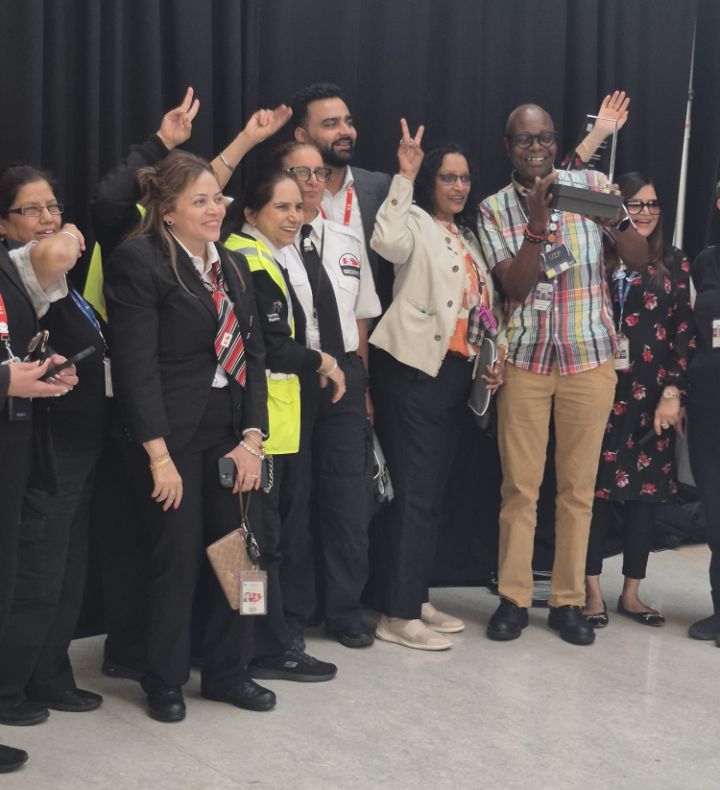
WATER FASAN, a Nigerian Pharmacist turned Security Specialist and Access Control Officer shot to limelight in Canada when he won the 2025 Canadian Airports Council (CAC) National Recognition Award, a feat which gained instant international recognition. Though Fasan’s rise from humble beginnings in Nigeria to international acclaim sounds like a fairy tale, his has been a long story of courage across, effort, dedicated service, study and the determination to pursue his desire to succeed even if he had to cross continents. His purpose-driven road to success and refusal to be limited by background or borders also led across multiple industries and nations. Water Fasan is also recognized for his strong customer service skills, particularly in his role at Toronto Pearson International Airport where his calm demeanor and approachability are noted for helping to prevent potential challengesFasan began his professional journey in Nigeria as a Pharmacy Technician, at Cosmos Pharmacy under the visionary leadership of Mr. Azubike Okwor in (year). Mr Okwor, a former President of the Pharmaceutical Society of Nigeria, and the first Black man to receive a Fellowship in the history of the pharmaceutical industry, took the young pharmaceutical technician under his wings for (number of years). The period left an indelible mark on Fasan. By the time he left in search of greener pastures, Mr Okwor’s mentorship was a changed man.Looking back, Fasan recalled that Mr. Okwor’s mentorship instilled in him the values of excellence, discipline, and service to community.Now a focused, purpose driven young man filled with dreams and ambitions, his desire to succeed in life first led him to Israel, where he gained life-changing experiences before returning to Nigeria in 2009. In 2010, driven by a higher calling, he immigrated to Canada. The North American country was quite different from his Nigerian background. But equipped with only faith, determination, and an unshakable belief in hard work, he embraced the challenge of starting over by embracing a new career and pursuing a new path in private security. The change did not come easy as he had to complete numerous certifications and gain hands-on experience in his new field. “I worked with respected firms like RBG Security Inc., under the direction of Ron Boyko, and advanced to become an Operations Supervisor at one of the historic department stores in the world—Hudson’s Bay and Saks Fifth Avenue,” Fasan said. It was at Hudson’s Bay and Saks Fifth Avenue that Fasan’s sterling qualities were first noticed in his new found country. There, he received the Best Customer Service of All Time award, a reflection of his commitment to excellence.In 2019, he entered the aviation industry, beginning at Menzies Aviation. He later rose to lead teams at AAS, serving as Acting Manager at Dexterra. Currently, he is a Security Specialist with ASP Security at Toronto Pearson International Airport, a position he has held since 2022. Still driven by the burning desire to grow, Fasan returned to the classroom and graduated in 2024 from the Canadian College of Business and Management, earning a Diploma in Human Resources Management. This academic achievement further prepared him for a broader impact in leadership, training, and organizational development.Over the years, Fasan’s work has earned wide recognition In Canada. His story, face, and contributions are featured across Pearson Airport as a symbol of dedication and pride.In 2025, he became the first-ever African-Canadian Nigerian to receive the Canadian Airports Council (CAC) National Recognition Award when he and eight others were selected from among 52,000 airport workers and 80 nominees at the 16th Canadian Airport ceremony. Although Water Fasan’s story is still unfolding, his success reminds us all that with faith, focus, and fearless effort, anything is possible. The honour was more than an award—it was a moment of history For Nigeria, for Africa, and for every immigrant whose story is still being written.
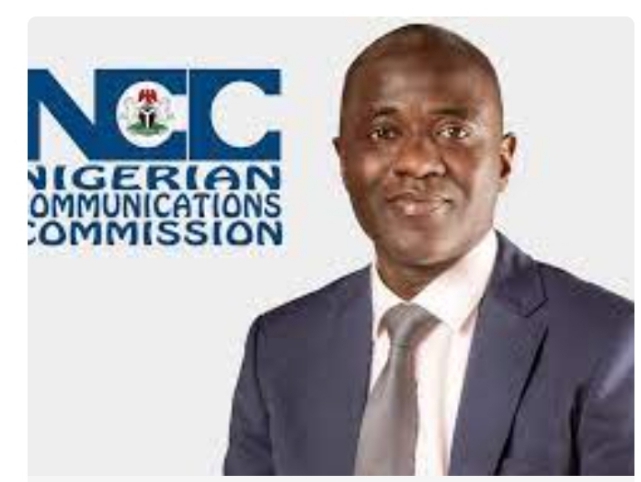
The Executive Vice Chairman, Chief Executive Officer of the Nigerian Communications Commission (NCC), Dr. Aminu Maida has stressed the necessity for the establishment of strong regulatory measures for Nigeria to welcome the digital economy that is fast approaching. Dr. Maida, at a stakeholders’ Forum on general Authorization framework for the country’s Telecoms industry today, July 17, said: “the future of Nigeria’s digital economy is no longer distant. “It is unfolding right before us. And at the heart of this future is the communications sector—our shared infrastructure for innovation, inclusion, and economic advancement.” The NCC Boss emphasized the necessity for modern regulation in the fast growing telecommunications technology, saying that it must be designed to enable innovation rather than hinder it. He said that this has remained at the core of the Nigerian Communications Commission’s latest initiative, which includes the General Authorisation Framework. “This reform introduces a flexible and responsive regulatory licensing approach that is structured to embrace new and emerging services that fall outside the existing License Structure. “The framework introduces three key instruments: Proof-of-Concept pilots to validate novel ideas in real-world environments, a Regulatory Sandbox, which allows innovators to test solutions—such as Open RAN trials, or dynamic spectrum sharing—under controlled and risk-managed conditions and an Interim Service Authorisation for services that do not yet fit within existing license categories. Dr. Maida said that by adopting this approach, NCC is providing a platform for innovators of various sizes, whether they are startups or established companies, to demonstrate feasibility, assess risk and measure outcomes before deployment.
“This model encourages experimentation and responsible innovation while safeguarding consumer rights and public interest.” He said however that regulation alone is not enough, adding that stakeholders should be central to the success of the framework. “Mobile Network Operators, Service Providers, Infrastructure Companies, OEMs, startups, civil society, and academia all have a role to play. “Your insights, your ideas, and your partnership are critical in refining this approach and making sure that it works for Nigeria.” He assured that that no one is left behind, stressing that expanding access, closing connectivity gaps and empowering the youth, women and underserved communities through inclusive innovation. “To sustain momentum, we must be bold, collaborative, and committed to building a resilient and innovative ecosystem. “Through the General Authorisation Framework, we are unlocking new pathways for experimentation, market entry, and growth. “Let us work together to deepen the innovation value chain, nurture homegrown solutions, build investor confidence, and ensure that the dividends of digital transformation reach every corner of our society. “It is my hope that today’s engagement will spark your curiosity, refine our collective vision, and accelerate our journey towards a more connected, innovative, and prosperous Nigeria.”
The Chief Judge of Kogi State and Presiding Judge of High Court One, sitting in Lokoja, Justice Josiah Majebi, has slammed N200,000 fine on those who are seeking for enforcement of an earlier judgment seeking for the dethronement of the Ohinoyi of Ebiraland, Alhaji Ahmed Tijani Mohammed Anaje. The Chief Judge angrily struck out the application, describing it as a waste of court time and abuse of judicial process. The application, with suit number HCL/34/2024 sought the enforcement of an order earlier made by a High Court, presided over by Justice Salisu Umar in respect of the appointment of the Ohinoyi of Ebiraland and was filed by Daudu Banabas Ojiah and two others against the Governor of Kogi State and the Ohinoyi of Ebiraland who were the two defendants. The chief judge averred: “The application is an abuse of court process and in this circumstance, it is only appropriate to strike out the motion for being an abuse of court process.” The Chief Judge frowned at what he called: ” unwarranted” filing of cases capable of wasting court’s time and cautioned that the court process is sacrosanct and should be preserved in such manners that it would continue to serve the course of justice. Before passing his verdict, Justice Majebi had listened to the defendants’ counsel, led by A. W. Zakari Esq. of the state’s Ministry of Justice who particularly expressed disappointment in the legal team of the claimants for their absence in court despite instituting the case. Another counsel in the defendants’ team, Z. E. Abbas Esq., informed the court that the substantive matter was already before the Court of Appeal following the initial judgement. Barr. Zakari said that he was surprised that neither the applicants nor their counsel showed up in court, adding that he only received a notification to that effect yesterday morning, July 15, and that the applicants and their counsel had dissociated themselves from the suit. He reminded the court that the applicants had also been served a notice of disobedience in the past. Abbas Esq., on his part, said that a similar motion was struck out on 21st May, 2025, having been withdrawn by the applicants just as he also referred to records showing that appeal was duly filed as he relied on order 4 Rules 10 & 11 of the Court of Appeal Rules, 2021. He said that the present application was filed on 29th May, 2025 for an order seeking the defendant to vacate the palace and stop parading himself as Ohinoyi of Ebiraland when the applicant was particularly aware of a pending appeal in respect of the matter at the Court of Appeal. He said that the applicants ought to have been well-guided by the proceedings of the court and could not therefore withdraw at the last minute without consequences and demanded an award of N2 million as cost. Aligning himself with this position, Barr. Zakari saud that it was too late to withdraw or dissociate themselves with the matter and urged the court to consider the cost of N2 million canvassed against the claimants who failed to appear in court despite knowing fully well that the court has its processes.
We use cookies on our website to give you the most relevant experience by remembering your preferences and repeat visits. By clicking “Accept”, you consent to the use of ALL the cookies.
This website uses cookies to improve your experience while you navigate through the website. Out of these, the cookies that are categorized as necessary are stored on your browser as they are essential for the working of basic functionalities of the website. We also use third-party cookies that help us analyze and understand how you use this website. These cookies will be stored in your browser only with your consent. You also have the option to opt-out of these cookies. But opting out of some of these cookies may affect your browsing experience.
Necessary cookies are absolutely essential for the website to function properly. This category only includes cookies that ensures basic functionalities and security features of the website. These cookies do not store any personal information.
Any cookies that may not be particularly necessary for the website to function and is used specifically to collect user personal data via analytics, ads, other embedded contents are termed as non-necessary cookies. It is mandatory to procure user consent prior to running these cookies on your website.




 …Dr. Usigbe…