

Don’t Make Law To Gag Social Media, Nigerian Content Development Boss Cautions

The Executive Secretary of the Nigerian Content Development and Monitoring Board, Engr. Simbi Kesiye Wabote has cautioned against making law for the purpose of gagging social and online media.
Simbi Wabote spoke February 17 when he hosted members of the Guild of Corporate Online Publishers (GOCOP) at the Sheraton Hotel Ikeja, Lagos.
He said: “personally, I believe that the social media space and online media should not be gagged by laws but must be regulated in such a manner that encourages the freedom of expression enshrined in the 1999 Constitution as amended.
“The free exchange of ideas should be allowed to blossom.”
The Content Development boss however, asked citizens not take the liberty to libel or slander one another.
“As we all know, your freedom begins where the other persons freedom ends.
“As online publishers, you have a huge responsibility to condemn and weed out the bad eggs in your profession, and our society generally.
“Some of the online media platforms are undermining government’s noble intentions of bringing in technocrats and professionals to serve as appointees because of the targeted and unwarranted attack against these persons under the cloak of investigative journalism, thereby tarnishing the image of your wonderful profession.”
He expressed joy to see some of his friends being members of GOCOP, the group he described as “elite group in the Nigerian media space.”
Simbi Waboti acknowledged the importance of the media, referring in particular to the famous quote by Thomas Jefferson, the third President of the United States, from 1801 to 1809.
“He said and I quote, ‘Were it left to me to decide whether we should have a government without newspapers, or newspapers without a government, I should not hesitate a moment to prefer the latter.'”
He gave reasons why he convened the breakfast meeting.
“First, we want online publishers to understand the importance of Nigerian Content to the national economy; and to continue to advocate for Local Content in all spheres of the Nigerian economy. (This the first time we are formally engaging online publishers.)
“The COVID-19 pandemic brought home the reality that every economy needs to develop local capacities and capabilities in the core sectors of its economy. So, all hands must now be on deck to push the Local Content narrative.
“Secondly, we want to use the opportunity of this engagement to give a historical excursion of the reason for the Nigerian Content imperative; the journey so far; and our plans going forward.
“Thirdly, we want to have a frank conversation with online publishers and encourage your members to censor fake news using the instrumentality of the law and self-regulation procedures, so you can maintain the enviable reputation you have earned in society.
I am honoured and delighted to hold this breakfast meeting with this important segment of the media. As earlier mentioned by the Manager, Corporate Communications the importance of online media in today’s journalism space cannot be overemphasized.
To underscore the above, members of the Corporate Online publishers are distinguished media practitioners, who rose to the zenith in the mainstream media before veering off to set up your own online publishing business.
I can see some of my friends in your group here, who are members of the Nigerian Guild of Editors, the elite group in the Nigerian media space.
Let me underscore the importance the media with this famous quote by Thomas Jefferson, 3rd President of the United States, from 1801 to 1809. He said and I quote, “Were it left to me to decide whether we should have a government without newspapers, or newspapers without a government, I should not hesitate a moment to prefer the latter.”
Why have we convened this breakfast meeting?
First, we want online publishers to understand the importance of Nigerian Content to the national economy; and to continue to advocate for Local Content in all spheres of the Nigerian economy. (This the first time we are formally engaging online publishers.)
The COVID-19 pandemic brought home the reality that every economy needs to develop local capacities and capabilities in the core sectors of its economy. So, all hands must now be on deck to push the Local Content narrative.
Secondly, we want to use the opportunity of this engagement to give a historical excursion of the reason for the Nigerian Content imperative; the journey so far; and our plans going forward.
Thirdly, we want to have a frank conversation with online publishers and encourage your members to censor fake news using the instrumentality of the law and self-regulation procedures, so you can maintain the enviable reputation you have earned in society.
Our guest presenter, Mr. Kemela Okara of Vale Partners has spoken eloquently on Media practice and the Law.
Personally, I believe that the social media space and online media should not be gagged by laws but must be regulated in such a manner that encourages the freedom of expression enshrined in the 1999 Constitution as amended. The free exchange of ideas should be allowed to blossom. However, citizens must not take the liberty to libel or slander one another.
As we all know, your freedom begins where the other persons freedom ends. As online publishers, you have a huge responsibility to condemn and weed out the bad eggs in your profession, and our society generally.
Some of the online media platforms are undermining government’s noble intentions of bringing in technocrats and professionals to serve as appointees because of the targeted and unwarranted attack against these persons under the cloak of investigative journalism, thereby tarnishing the image of your wonderful profession.
We would get to these issues in detail much later in our discussions.
LOCAL CONTENT JOURNEY IN NIGERIAN OIL AND GAS INDUSTRY
Prior to the adoption of local content, the Nigerian oil and gas industry was characterized by:
a. Revenue focus with little emphasis on in-country value addition;
b. Massive capital flights of over $380 Billion and an estimated two (2) million job losses over a 50-year period;
c. The local content in the oil and gas industry was less than 5%.
Former President Olusegun Obasanjo directed NNPC to introduce Local Content Policies in the oil and gas industry as part of our national economic development imperatives sometime in 2004.
Following the presidential directive, NNPC issued 16 and 23 Directives in 2005 and 2006 respectively to drive local content as a key development imperative. These directives further raised the consciousness in the oil and gas industry and moved the needle a bit in getting some in-country value addition across the oil and gas value chain.
Having witnessed initial resistance to the NNPC Directives by most of the E & P companies, Government felt it was imperative to give legal backing to the directives and provide an all-encompassing framework for the development of Nigerian Content in the oil and gas industry. Hence, the NOGICD Act was enacted in 2010 and signed into law on 22nd April 2010.
The NOGICD Act, 2010 established NCDMB as the sole agency of the Federal Government with the responsibility for driving Nigerian Content in the oil and gas industry.
The key thrusts of the NOGICD Act include the following:
a) Maximize utilization of Nigerian resources, that is, goods, services and assets
b) Maximize participation of Nigerians in the oil and gas activities
c) Attract investments to the Nigeria oil and gas industry; and
d) Link oil and gas sector to other sectors of the economy
Let me inform you that the focus of the NOGICD Act is not “Nigerianization” of the oil & gas industry, but “Domiciliation” and “Domestication” of value-adding activities.
The NOGICD Act defines Nigerian Content as “the quantum of composite value added to or created in the Nigeria economy by` a systematic development of capacity and capabilities through the deliberate utilization of Nigerian human, material resources and services in the Nigerian oil and gas industry.”
Some of the key provisions of the NOGICD Act that enable the delivery of the Board’s mandate are as follows:
Sections 3, 12, and 28 of the NOGICD Act together provides for first consideration to be given:
a. to Nigerian operators in the award of oil blocks and licenses,
b. to Nigerian goods and services in the evaluation of bids, and
c. for the employment and training of Nigerians in any project executed in the Nigerian oil and gas industry.
These provisions are very fundamental and are at the core of the application of the Nigerian Content Act.
Sections 20, 21, and 22 of the NOGICD Act clearly stipulates our touchpoints during pre-qualification, bidding, and award stages of the oil and gas tenders to ensure local content provisions are not circumvented.
Section 104 of the Act requires that the sum of one percent of every contract awarded to any operator, contractor, subcontractor, alliance partner or any other entity involved in any project, operation, activity or transaction in the upstream sector of the Nigeria oil and gas industry shall be deducted at source and paid into the Nigerian Content Development Fund (NCDF). This provision has enabled the Board to fund several activities necessary to implement the provisions of the Act.
Section 70 of the Act lists out the functions of NCDMB to include the following:
a) Monitor Nigerian content compliance by operators and service providers.
b) Engage in targeted capacity building interventions.
c) Set minimum Nigerian Content levels for project activities.
d) Conduct studies, research, investigation, workshops and trainings aimed at advancing the development of Nigerian Content and
e) Manage and Grow the Nigerian Content Development Fund
In the past 11 years, the NOGICD Act has been implemented in 3 phases:
Phase 1: 2010 – 2012: Transition from NNPC-NCD to NCDMB; Temporary offices in Yenagoa, Bayelsa State; Pioneer staff recruitment & training; Benchmark studies on LC practices; Created awareness on opportunities in the Act
30. Phase 2: 2013 – 2016: Implementation of CDIs & deployment of compliance monitoring tools- Participated in bids and enforced compliance with NC requirements; Monitored compliance with NC commitments in bids; Applied sanctions on defaulting companies; Achieved 26% Nigerian Content as at end 2016
Phase 3: 2017 – 2027: Implementation of a 10-Year Strategic Roadmap to achieve 70% Nigerian Content in the Oil and Gas Industry.
The 10-Year Strategic Roadmap in underpinned by 5 pillars namely – Technical Capability Development, Enabling Business Environment, Organisational Capability, Sectorial & Regional Market Linkages and Compliance & Enforcement.
4 Enablers, namely – Funding, Regulatory Environment, Collaboration & Stakeholder Engagement and Research & Statistics.
Using these provisions, and the roll-out of the 10-Year Strategic Roadmap, the following achievements have been recorded in the oil and gas industry with the implementation of the Nigerian Content Act.
Increase of in-country value retention from 26% in 2016 to 42% in 2022.
Nigeria moved from near zero participation in the oil and gas sector to the point that our indigenous operators such as SEPLAT, AITEO, EROTON, and others are now responsible for 15% of our oil production and 60% of our domestic gas supply.
Before the Act, we had annual spend of $20 billion, with little or nothing retained in-country. Today, we now spend more than $8 billion in-country per year.
We now have 2 world-class pipe mills and 5 impressive pipe coating yards
More than 40% of marine vessels used in the oil and gas industry are now owned by Nigerians.
In fabrication, today Nigeria can handle fabrication of more than 250,000 Tonnes per annum.
Over ten (10) million training manhours have been delivered via our Human Capacity Development Programs. No surprise that our indigenous workforce was able to sustain oil production at the peak of the COVID-19 pandemic lockdown.
Over 50,000 direct jobs have been created on the back of the implementation of the NOGICD Act.
Completion and commissioning of our 17-storey headquarters building – the Nigerian Content Tower in Yenagoa, complete with a 1,000-seater conference auditorium and multi-level car park.
Completion of 10MW power plant for the supply of electricity to the Nigerian Content Tower and the industrial park in Bayelsa State.
Completion and commissioning of the 5,000bpd Waltersmith Modular Refinery at Obigwe, Imo State; the refinery is currently in operation with the products completely sold out.
Launched the $350million Nigerian Content Intervention Fund managed by the Bank of Industry and NEXIM Bank for single digit loans for Asset Acquisition, Manufacturing, Loan Refinancing, Working Capital and Loan for Women in Oil and Gas.
The only infrastructure in Africa for FPSO integration is available in Nigeria. The Egina FPSO which is the largest in the world was integrated at the SHI-MCI Yard in Lagos.
Completed GSM training scheme for about 4,000 trainees in Kano, Bauchi, Yobe, Kaduna, and Cross River States as part of development of linkage sectors.
Completed the upgrade of two (2) Vocational Technical Colleges in Akwa Ibom and Enugu states.
We launched NOGTECH HACKATHON and ENACTUS STIC to nurture innovation amongst our young minds.
NCDMB inaugurated a $50million Nigerian Content Research & Development Fund to drive basic research, commercialization of research breakthroughs, establishment of Centers of Excellence, and to sponsor University endowments.
The Board floated a $50m special loan product for women in the oil and gas business to enable empowerment of the womenfolk in the industry.
We also established another $30m Working Capital Fund to support oil and gas service companies. Both the Women and Working Capital funds are managed by Nexim Nigerian Export-Import Bank.
Last Thursday we secured the approval of our Governing Council to set up a USD$50 million fund for NOGAPS Manufacturing Product Line, to be dedicated to companies that would operate in the Nigerian Oil and Gas Parks, being constructed by the Board in Bayelsa and Cross River States. The beneficiaries would engage in the manufacturing of equipment components used in the oil and gas industry and linkage sectors.
Capacity Development Initiative for the Completion of the Block Tower and Workshops in the PTDF Skills Development Center at Omagwa, Port Harcourt, Rivers State.
The level of Expatriate Quota has continued in a downward trend due to our stringent monitoring activities and collaboration with the Ministry of Interior. We continue to utilize the Exchange Program and the Understudy Program under Expatriate Quota regime to develop required skills in the industry.
Construction of oil and gas industrial parks spread across six (6) states complete with the provision of infrastructure and utilities to enhance local manufacturing.
Partnership for the local manufacturing of 1.2million composite LPG cylinders per year with the 1st phase scheduled for commissioning in 2022.
Partnership for the establishment of additional modular refineries in Bayelsa and Edo States.
Partnership for the construction of 300MMscfd gas gathering hub for gas supply into the OB-3 pipeline in Edo State.
Partnership to deepen LPG utilization in the North with the roll-out of LPG bottling plants and depots in ten (10) Northern States of Kaduna, Bauchi, Katsina, Kano, Nasarawa, Niger, Plateau, Gombe, Zamfara, Jigawa and Abuja.
Partnership to establish base oil manufacturing plant in Omagwa, Rivers State.
We now boast of very high engineering design capacity as Nigerian companies now have the required skills to do conceptual, FEED, and detailed engineering designs.
We now have capacity to manufacture low, medium, and high voltage cables and paints that can match any standard or quality in any part of the world.
These are just a few of the achievements through the adoption and implementation of local content in the oil and gas industry.
Now that Nigeria has a well-established local content in the oil and gas industry such that other nations are even coming to learn from us, we need to now extend it to other sectors of the economy to further drive our National Development in the growth trajectory.
It is important to state here that our plan in NCDMB is that by 2027, we will ensure 70% Nigerian Content; creation of 300, 000 direct jobs; retention of USD$13Bn of the estimated USD$20Bn spend in the oil and gas industry; ensure the domiciliation of major fabrication yards and manufacturing hubs in-country. These are no mean targets we have set for ourselves.
However, we are confident of hitting these targets, if not surpassing them, because of the can-do spirit of the Nigerian people.
I will conclude by saying that the Nigerian Content imperative is a journey, a marathon one for that matter. We will require all hands to join forces with NCDMB and government to pursue this cause in ensuring that the benefits of the oil and gas industry is retained maximally in Nigeria.
Let me once again express my gratitude to the Guild of Corporate Online Publishers for the support you have provided to the Board in the last five years that I have been on the saddle as the Executive Secretary.
I do not take your support for granted.
Let me again emphasise the need for media practitioners, especially in the online media, to self-regulate and checkmate your colleagues who have deployed their platforms to propagate falsehood and perpetrate extortionist practice.
As you are aware, I dragged one of such platforms, Pointblank News to court in the United States and I am determined to pursue the case to its logical conclusion.
I will be willing to share with you some background to the matter so that you can treat the story professionally when next it lands on your desk.
Thank you all for your attention.
Engr. Simbi Wabote (FNSE, FIPS)
Executive Secretary,
Nigerian Content Development and Monitoring Board
Thursday,17th February 2022.
 The Nigerian National Petroleum Company (NNPC) Limited has assured the National Economic Council (NEC) that the scarcity of fuel now being faced by Nigerians will be over next week.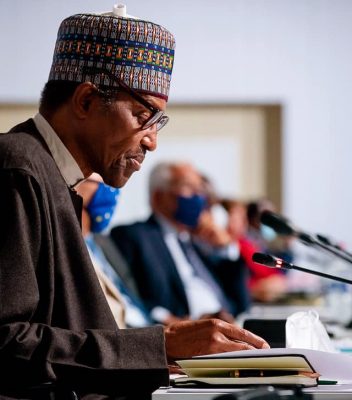
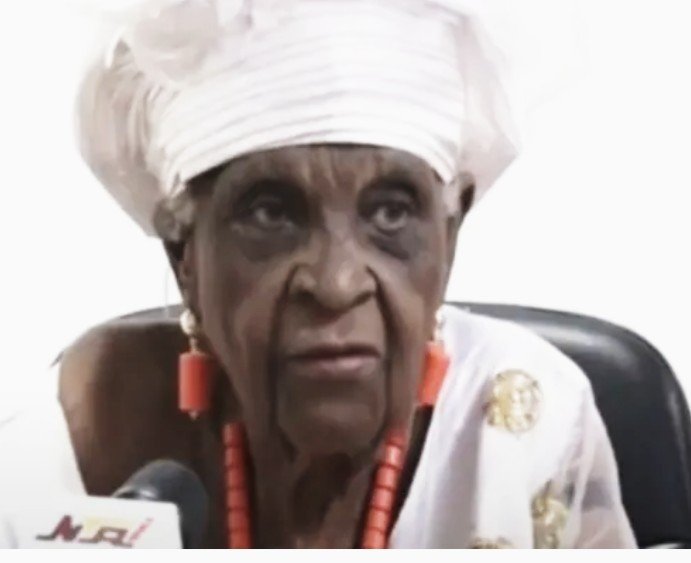



 President Muhammadu Buhari has written to the National Assembly, seeking approval of a supplementary budget which contains N2.557 trillion meant to provide for subsidy on petroleum products from June to December 2022. President Buhari wrote both to the President of the Senate, Senator Ahmad Lawan and Speaker, House of Representatives, Femi Gbajabiamila. The letters were read during plenary by Lawan and Gbajabiamila respectively.
 Kogi State Governor, Alhaji Yahaya Bello has signed the implementation of the N30,000 new national minimum wage for public service workers in the State.

Supreme Court And Executive Order 10: Matters Arising, Bye Ruben Abati
Many commentators have so far tried to be diplomatic in their response to the ruling, but from the outcome as reported, it is not difficult to see that what the Supreme Court has done is to take a technical view of the matter and offer a strict interpretation of the Constitution, the powers of the President, the relationship between the states, and the limits of the Federal Government in the exercise of its powers as spelled out in the 1999 Constitution. Did the President of Nigeria actually act ultra vires? Justice Mohammed Dattijo, delivering the lead judgment declared that “This country is still a Federation and the 1999 Constitution it operates is a federal one. The Constitution provides a clear delineation of powers between the state and the Federal Government. The President has overstepped the limit of his constitutional powers by issuing the Executive Order 10. The country is run on the basis of the rule of law.” Okay. The law is what the judge says it is. The powers of the various tiers of government are defined in Sections 4, 5, and 6 of the 1999 Constitution pursuant to the doctrine of the separation of powers. Executive powers are vested in the President in Sections 5, 130, 132, 148(1), 151 such that in general, the President of Nigeria is one of the most powerful executives in the world invested literally with the status of a constitutional monarch. In Section 130 (2), he is actually described as “the \Head of State, the Chief Executive of the Federation and Commander-in-chief of the Federation.” The strong effect of the ruling by the Supreme Court in A.G. Abia and 35 ors vs. AG Federation is that there are limits to these powers, nonetheless.
By seeking to enforce and extend Section 121(3) of the 1999 Constitution, the President, in other words, encroaches on the right of state governments to receive money from the Federation Account on behalf of the state judiciary and legislature and transmit their share to them. Thus, the Federal Executive overreaches itself when it assumes it has the powers to strengthen Section 121(3) through what amounts to additional legislation. It is the duty of the legislative arm of government to make or amend laws under Section 6. EO 10 further amounts to an interpretation of the law by the Federal Government and that Executive arm of government acting as adjudicator. The powers in that regard belong to the judiciary under Section 6. So, while the EO 10 would have protected the judiciary against the rascality of state Governors riding roughshod over the judiciary and the legislature at the sub-national level, and the judiciary would have been a beneficiary of the order, their Lordships looked beyond benefit to the judiciary and took a strictly purist and technocratic view of the law. It would be wrong to assume that the judiciary has ruled against itself. If the Federal Government is allowed to overreach itself and the President permitted to usurp the functions of the legislature and the judiciary, that would be a prescription for anarchy and an endorsement of dictatorship.
The lead judgment emphasizes the rule of law, separation of powers, the limits of powers and the federal principle. I would like to see the state legislatures begin to perform their oversight functions, to call over-bearing Governors to order. The judgment has also been described as victory for the Governors. It is most ironic that these same Governors are benefiting from a principle they themselves do not respect, an emphasis on the rule of law they have no regard for. In various states, Nigerian Governors are worse than tyrants. They seek to control judges, bribe them, humiliate them and violate their independence and integrity. It will be recalled that in one state, Cross Rivers State to be specific, magistrates not too long ago – January 2021- carried placards and organized protests because their salaries had not been paid for 24 months and nothing had been done to provide them good working conditions. State Governors also intervene unnecessarily in the appointment of judges, and seek to compromise them. As for the State legislatures, state Governors preside over them remotely. They behave like messiahs with the control of everything else. State legislatures in Nigeria are in any case pathetic. The members behave like the Governors’ houseboys, especially when the Governor’s party has the majority in the House. I argue that although the 36 State Governors may have secured partial victory in the matter of EO 10 with the Federal Government, but they lack the right to claim any moral high ground.
The judex may never at any time go to court to sue the state Executive arm of government, that would be strange but the abuse of privilege by state Governors actually got so bad, that in 2015, the Judicial Staff Union of Nigeria (JUSUN) went on strike for two weeks. In 2020, they shut down the courts for 64 days. State Governments hurriedly signed a Memorandum of Action (MoA), the National Judicial Council also made an appeal before the strike was suspended. JUSUN asked for financial autonomy for the judiciary. The body insisted on compliance with the Constitutional provision which places the budgets of state judiciary as a first line charge on the Constitution. They have a point.. I would also like to see the state legislatures begin to perform their oversight functions, to call over-bearing Governors to order.
What the Governors do to Local governments is even worse. They rely on the powers of control conferred on the state government under Section 7 to render local councils totally ineffective. Governors decide on whether elections would hold at that level of government or not, and when they frustrate due process they appoint sole administrators or caretaker committees. They hide under the State-Local Government Joint Account and the associated committees to steal money meant for local councils. They get away with blue murder because nobody challenges them.
To put the matter in perspective, the Federal Government in 2019 introduced Executive Order 10 to correct the wrong being committed by the State Governors. It also introduced through the Nigeria Financial Investigation Unit (NFIU) a set of guidelines to ensure that state Governors would no longer withdraw monies meant for local council operations from the Joint Account (Section 162 (8)). Daylight robbery of local council resources is one of the reasons the local level of government is virtually dead. The big obstacle against the attempt by the Federal Government to enforce the fiscal autonomy of the local councils was again, the law. This is relatable to the minority judgment by Justice Uwani Abba-Aji who maintained that the EO 10 was in order “because of the hanky-panky and subterfuge played by state Governors against the independence and financial autonomy of state judiciary…This is not unconstitutional.” There has been a tendency to play down this minority view.
On Sunday as anchor of ThisDay Live: The Sunday Talk Show, I had tried to bring up the matter with one of my guests, the legendary Chief Robert Clarke, SAN. Chief Clark had admonished me not to even mention the judge’s name not to talk of offering a summary of his position. But Justice Abba-Aji enjoys the support of Professor Itse Sagay, SAN, who deserves to be quoted at some length: “I just read the judgment” he said. “I was out of the country. I just want to say broadly that I agree with Justice Abba-Aji, the minority judgment. The reason is that the constitution makes it clear that the legislative and judicial branches of state government are to get specific sums of money from what goes to the state. And if the state governors are not making them to have it, all that the executive order has done is to facilitate the implementation of the Constitution. And that is what executive orders are supposed to do. So, the Federal Government was right and I agree with the minority judgment entirely.” What are we dealing with here: form vs substance, the law as it is vs. the law as it ought to be? What is the minority opinion based upon? Was Justice Abba-Aji offering an opinion rather than a strict construction of the law as it is? But whatever it is, the Supreme Court is the apex Court of the land, and the majority decision carries the day, more so as it is focused on the very substance of EO 10.
The Nigerian President is empowered to give orders, and in this regard, there can be a recourse to Section 315(2) of the 1999 Constitution, but this particular section states clearly that the President can only act “in conformity with the provisions of this Constitution”, certainly not in breach of it. The Buhari administration has adopted Executive Orders, the first administration to do so in Nigeria in a manner that looks like a copy-cat imitation of the American Donald Trump’s Presidency. Within the first five months of his assumption of office in 2017, Trump had signed 37 EOs! But even in the US, Executive orders are administrative handmaidens to facilitate the execution of policies within the Executive arm of government, commands to Ministries, Departments and Agencies (MDAs) as instruments of management or to prepare a framework for proposals to the legislature, but certainly not an attempt by the Executive to usurp legislative and judicial functions. To date, the Buhari administration has proclaimed more than 10 Executive Orders. A close scrutiny may reveal that most of them would pass the test. These would include EO 1: on the promotion of transparency and efficiency in the Business Environment; EO 2: On Submission of Annual Budgetary Estimates by all Statutory and non-Statutory Agencies, including Incorporated Companies wholly owned by the Federal Government of Nigeria; EO 3: Support for Local Content in Public Procurement by the Federal Government; EO 4: On the Voluntary Assets and Income Declaration Scheme (VAIDS); EO 5: to promote local content in public procurement with science, engineering and technology components, and to prohibit the Ministry of Interior from issuing visas to foreign nationals whose skills are available in Nigeria; EO 6: on assets connected with corruption and other related offences; EO 7: On Road Infrastructure Development and Refurbishment Investment Tax Credit Scheme; EO 8: On Voluntary Offshore Assets Regulatory Scheme, EO 9: On Companies Income Tax. The problem with EO 10 as appropriately pointed out by the Supreme Court is its breach of constitutional provisions.
It seems to me therefore that Executive Orders are not necessarily in themselves bad; they are good only to the extent that they are in conformity with the basic law, that is the Constitution. Every affirmation of the supremacy of the rule of law is a good sign, but all parties concerned, including the apex court must be seen to be consistent accordingly, and prepared to embark on judicial activism, beyond narrow technicality, for public good, when required to do so. The ruling under review thus throws up more questions than answers: how do we truly ensure the independence of the co-equal parts of government? How do we prevent cynical elements from violating the laws of the land because it is expedient to do so? There are many Nigerians who believe that the 1999 Constitution is the biggest problem of Nigeria and that the Constitution needs to be replaced with a people’s Constitution forged and agreed upon under a democratic dispensation. They also think that for as long as Nigeria is unable to find the political will and the right political leaders to promote unity and national loyalty, so long would the lawmakers and the judex continue to talk about the rule of law in vacuo. In that sense, the Supreme Court ruling under review has not solved any problem. It is instead, a strong reminder, of the inchoateness of the Nigerian essence.