The Nigerian Institute of Electrical and Electronic Engineers (NIEEE) has thumbed up for the leadership of the Nigerian Communications Commission (NCC) for the deployment of 5G in Nigeria.
The Engineering body, in a statement today, February 15 by the outgoing National Chairman, Engr. Kings Adeyemi, gave kudos to the Executive Vice Chairman of the Commission, Professor Umar Garba Danbatta and the management staff for the feat achieved.
“Major requirements for 5G journey include spectrum availability, investor-friendly regulatory policy and stakeholders’ awareness. Nigerian Communications Commission (NCC) engaged relevant stakeholders ahead of the Federal Executive Council’s (FEC) approval of the Development of a Policy for Deployment of 5G in Nigeria,” he stressed.
“We use this medium to commend the entire Management of NCC under the leadership of the Executive Vice Chairman/CEO Engr. Prof. Umar Garba Danbatta FNSE, FRAES, FAEng, FNIEEE. NCC demonstrated high level qualities of a world-class regulator indeed by setting the wheel of 5G in motion, from 5G Proof of Concept (PoC) trial in 2019 to the recently successful auction of 5G spectrum on 3.5GHz band.
This remarkable landmark achievement was attained by NCC at a time when COVID-19 pandemic continues to force the postponement of many highly anticipated 5G spectrum auctions throughout the world.”
The body of Engineers commended the in-house professionals for the choice of 3.5 – 3.6 GHz and 3.7 – 3.8GHz.
It said that Frequencies in the range 3.3 – 4.2 GHz (3GPP Band 78) are being used as the basis for the first implementations of 5G globally.
“This decision allays the fear of 5G services interfering with the aircraft operations as currently exercised in some countries. NCC’s choice on the 3.5 GHz band has sufficiently safeguarded civil aircraft altimeters which usually operate between 4.2 – 4.4 GHz range.
“From expert’s perspective, the choice of two (2) slots of 100 MHz (TDD) bandwidth each on 3.5 GHz band (precisely 3GPP Band 78) is a highly laudable choice to launch 5G network.”
Such wide channel bandwidth, the Engineers stressed, is required to deliver the multi-Gbps data speed required of a 5G network.
“It is technically proven that wider channels lower network density which ripples into lowering the cost of 5G services to consumers. Other advantages include less base stations sites and lower environmental impact. The 3.5 GHz band is the best choice to balance capacity and network coverage which in turn encourages operators to commit investment in 5G infrastructure.”
Minister of the Federal Capital Territory (FCT), Malam Muhammad Musa Bello has inaugurated an 8-man Technical Committee to access the N200 billion Sukuk fund to augment the FCT 2022 statutory budget. The committee is made up of the Federal Capital Territory Administration (FCTA) and Debt Management Office (DMO). Speaking at the inauguration today, February 15 in Abuja, the Minister Muhammad Musa Bello stressed that the alternative fund will fast-track the fulfilment of the FCTA’s mandate of building a world class nation’s capital. He emphasized that the issuance of SUKUK of the sum of 200 billion Naira for the FCT 2022 statutory budget would propel the Administration to meeting its objective of building a world class city for Nigeria. Muhammad Musa Bello said that the pressure on existing infrastructure, occasioned by the influx of people, vis-à-vis the dwindling allocated funds necessitated the need for sukuk fund as an alternative source of funding capital projects that have great bearing on residents of the Territory. “Resources available for the development of the Territory no longer matched the infrastructural need, with a resulting fear that Abuja may not achieve the dreams of its founding fathers. “For this reason, we needed to rehabilitate and expand some existing roads in the city as well as open up some others to arrest traffic gridlocks along major roads within and around the city and satellite towns. Hence the need to seek for an alternative source of funding outside our statutory funding to finance the completion of some projects with huge capital outlay but with the potential for maximum positive impact on residents.” The Minister commended the government of President Muhammadu Buhari for making Sukuk, under the Debt Management Office, available to the FCT, adding: “Sukuk has come to the rescue.” He said that the N29 billion Sukuk that was previously approved for the FCT is being used for the completion of various road projects to open up the capital city. Such road projects will put an end to the hardship motorists experience while navigating from one point of the FCT to another. Mohammad Musa Bello said that the proposed N200 Billion Sukuk would focus on the completion of major on-going water, street lightening and additional road projects. He read out the Committee’s Terms of Reference, which among others, include Developing a framework for accessing Sukuk fund for the FCTA; Review and advise on the procedure and options for obtaining sovereign Guarantee for the issuance of Sukuk; Prepare a budget estimate for the issuance and advise on requisite approvals. The Minister charged the committee to carry out its assignment diligently. He commended the National Assembly, especially, lawmakers overseeing the FCT with whom he had enjoyed support and guidance since he became Minister. In her remarks, the Director General of the Debt Management Office, Ms. Patience Oniha commended the Minister for his drive and foresight. She expressed satisfaction on the way the SUKUK fund is being used, adding that the result has been visible. Speaking at the occasion, the Chairman of the Senate Committee on FCT, Senator Abubakar Kyari advised the FCTA to focus on the development of satellite towns to relieve the pressure on the Federal Capital City (FCC).
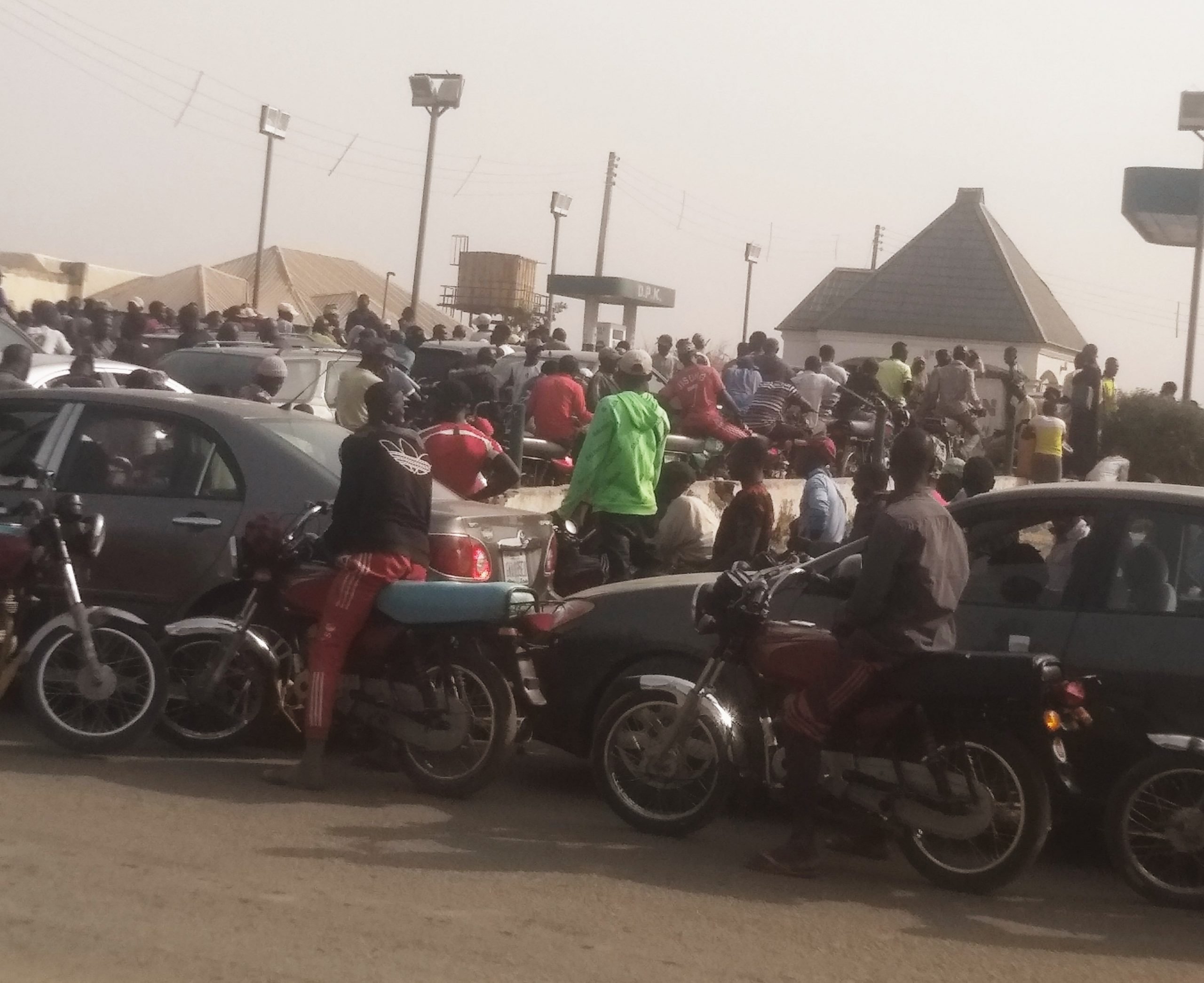
Fuel Scarcity that started a few days ago has reached a boiling point to the extent of grounding activities in Abuja, the Federal Capital Territory (FCT). Our reporters who went round the city came back a few minutes ago, February 15, with damming report of the situation. It was discovered that many motorists simply abandoned their vehicles in most of the fuel stations that have no fuel to sell. It was further discovered that in the few stations that are selling the product, queue of vehicles stretch over a kilometer with hundreds of motorcyclists and jerrican carriers complicating the situation. As a result of the crisis, hundreds of vehicle owners commute in a few available commercial vehicles to their destinations at double the previous fares. It was noted that pupils and students have stopped going to schools either because their parents’ cars have no fuel or because their are no vehicles to take them to schools. Also, many workers are either trekking to their workplaces or have stopped going to work at all. Only yesterday, Patrol Tanker Drivers, through their association, complained that the adulterated fuel which the government discovered and stopped from being sold to the public is still in their tanks. They stressed that if the adulterated one is not removed there would be no tanker to go and get another product.
University teachers under the auspices of the Academic Staff Union of Universities (ASUU) have began a 30-day “comprehensive and total” strike.
The strike, according to the lecturers, l takes effect from today, February 14.
The National President of ASUU,
Professor Emmanuel Osodeke announced the development to journalists on Monday in Lagos after the National Executive Council(NEC) meeting of the union tagged ‘NEC for NEC.’
The National Executive Council of ASUU, including leaders across campuses in Nigeria held marathon meetings over the weekend in Lagos over the federal government’s inability to meet the Union’s demands.
ASUU’s demands include funding for revitalisation of public universities, earned academic allowances, University Transparency Accountability Solution
Others are re-negotiation of 2009 ASUU-FGN Agreement and the inconsistencies in Integrated Payroll and Personnel Information System Payment.
The Nigeria Police Force has thrown more lights on the activities of members of the international narcotic cartel for which the embattled Abba Kyari, a suspended Deputy Commissioner of Police, has just been arrested and being detained.
The spokesperson of the Police Force Headquarters, Olumuyiwa Adejobi, a Chief Superintendent of Police, in a statement today, February 14, said that though Abba Kyari has been arrested and handed over to the NDLEA, there are more facts that needed to be told.
Olumuyiwa said that the police arrested Abba Kyari and four other police officers for their involvement in the alleged case of criminal conspiracy, discreditable, unethical, and unprofessional conduct, official corruption and tampering with exhibits in a case of illicit drug trafficking involving a perpetual transnational drug cartel.
“The arrest of the officers was sequel to pieces of information received from the leadership of the National Drug Law Enforcement Agency (NDLEA) on 10th February, 2022.”
He said that in line with the standard administrative procedure of the Force, the Inspector General of Police ordered a high-level, discreet, and in-house investigation into the allegations.
“The interim investigations report revealed that two international drug couriers identified as Chibunna Patrick Umeibe and Emeka Alphonsus, both males, were arrested at Akanu Ibiam International Airport, Enugu on the 19th of January, 2022 upon their arrival from Addis Ababa aboard an Ethiopian Airlines flight ET917.
“The arrest led to the recovery of substantial quantity of powdery substance suspected to be cocaine from the two narcotic couriers.
“The operation which was intelligence-driven, was undertaken by a Unit of the Police Intelligence Response Team (IRT).
“Although the case and the two suspects were subsequently transferred to the NDLEA on the 25th January, 2022, the findings of the in-house investigation ordered by the Inspector General of Police established reasonable grounds for strong suspicion that the IRT officers involved in the operation could have been involved in some underhand and unprofessional dealings as well as official corruption which compromised ethical standards in their dealings with the suspects and exhibits recovered
“Beyond this, the Police investigation also established that the international narcotics cartel involved in this case have strong ties with some officers of the National Drug Law Enforcement Agency (NDLEA) at the Akanu Ibiam International Airport, Enugu who are on their payroll.
“The two arrested drug couriers confirmed that the modus is for the transnational drug barons to conspire with the NDLEA officers on duty and send them their pre-boarding photographs for identification, seamless clearance, and unhindered passage out of the airport with the narcotics being trafficked.
“The two arrested drug couriers also confirmed that they have been enjoying this relationship with the NDLEA officers at the Akanu Ibiam International Airport since 2021 and had in this instant case of 19th January, 2022, been identified and cleared by the NDLEA officers as customary, having received their pre-departure photographs and other details prior to their arrival in Enugu, and were on their way out with the narcotics when they were apprehended by the Police.”
Olumuyiwa said that the Police investigations report also indicted DCP Abba Kyari, who had been on suspension for his alleged involvement in a different fraud case being investigated by the Federal Bureau of Investigations (FBI), for complicity in the allegation of official corruption, tampering with narcotics exhibit and sundry unprofessional conducts that negate the standard administrative and investigative protocols of the Force as well as extant criminal laws.
According to him, Abba Kyari’s involvement in these allegations occurred while his suspension from service was subsisting, adding that on the strength of the findings of the in-house Police Investigation Panel, the Inspector-General of Police has ordered the immediate arrest and transfer of all the indicted police officers to the NDLEA authorities for conclusive investigation, while appropriate disciplinary actions are also being initiated against them by the Force leadership.
“The concerned officers include DCP Abba Kyari, ACP Sunday Ubuah, ASP Bawa James, ASP John Umoru (at large), Inspr. Simon Agrigba and John Nuhu.
“They have all been, accordingly, handed over today 14th February, 2022 to the NDLEA authorities.
“In so doing, the Inspector General of Police has also formally requested that the Chairman and Chief Executive Officer of the National Drug Law Enforcement Agency should ensure the identification, arrest and investigation of the Agency’s officers who have also been found to be colluding with the international drug cartel involved in this case towards advancing the anti-narcotics agenda of the federal Government.
“The Inspector General of Police assures the public of his administration’s commitment to upholding the tenets and values of policing in line with the agenda of ethical regeneration, restoration of professional standard, enhancement of the anti-corruption drive, respect for the rule of law and inter-agency collaboration in the drive to stabilise the internal security order of the country.”
The National Drug Law Enforcement Agency (NDLEA) has narrated how the already embattled super cop, Abba Kyari, a Deputy Commissioner of Police was involved in drug cartel group across the world, for which he has been declared wanted. Addressing newsmen today, February 14 in Abuja, the leadership of the drug law enforcement agency said that Kyari’s saga started on Friday, January 21, 2022, when he initiated a call to one of the NDLEA officers in Abuja at 2:12 pm. The agency said that when the officer returned the call two minutes later, Kyari informed him that he was coming to see him, to discuss an operational matter after the Juma’at service. Continue to read the rest of the story as narrated by the NDLEA: He (Kyari) appeared at the agreed venue of the meeting with the officer and went straight to the crux of the matter. This was it: His team had intercepted and arrested some traffickers that came into the country from Ethiopia with, according to him, 25kg of cocaine. He proposed a drug deal whereby he and his team are to take 15kg of the cocaine and leave 10kg for the prosecution of the suspects arrested with the illicit drug in Enugu. In the meantime, the purloined cocaine will be replaced with a dummy worth 15kg. He asked the NDLEA officer to persuade men of the FCT Command, to play along as well. Now, anybody who is in touch with the reality of the renewed drug war by NDLEA since January 18, 2021, would know that that was a tall order because our officers and men have rededicated themselves to the war against illicit drugs and what Kyari was asking for was not tenable, not in this new dispensation, not with the new NDLEA. We can recall that one of our officers was in the same situation in May 2021 when a drug kingpin, Ejiofor Felix Enwereaku, flew from Brazil to Nigeria to negotiate the release of a 27.95 kg shipment of cocaine intercepted at the MMIA. The drug lord offered a bribe of $24, 500, but our officer placed duty above pecuniary interest. We all know how the episode ended. That is the ethos of the new NDLEA. And our officer proved it again this time by reporting to the authorities. By 11: 05 am on Monday, January 24, after the Agency gave the officer the green light to play along, he and Kyari began a WhatsApp call for the rest of the day. The officer conveyed “their” willingness to play the game. At this point, Kyari disclosed that the 15kg (already taken out) was shared between the informants that provided information for the seizure and he and his men of the IRT of the Nigerian Police. According to him, the informants were given 7kg while his team took 8kg which was already sold. He then offered to pay the NDLEA team (that is the officer and the FCT commander) by selling, on their behalf, half of the remaining 10kg, thereby further reducing the original cocaine for the prosecution to just 5kg. At N7m per kilogram, the proceed from the 5kg would amount to N35m, at the exchange rate of N570 per dollar being the black market rate for the day, January 24, 2022. In effect, he would be delivering $61, 400 to the NDLEA team. He put pressure on our officer to wrap up the arrangement with the commander of the FCT Command to take custody of the drug and suspects from his men who were on ground in Abuja. At the time, he was speaking from Lagos, where he allegedly travelled for private business. The next day January 25, Kyari offered to send his younger brother to deliver the payment while his men deliver the suspects, but our officer turned down the suggestion, insisting he would rather deal with him in person and was therefore prepared to wait for him to return from Lagos. And by 5: 23 pm, Kyari was in Abuja and met with the officer at the same rendezvous where they had the first meeting. In their discussion, he disclosed how his team received the information from a double-crosser who betrayed the traffickers to him, showing a sordid connection between law enforcement agents and the drug underworld; he narrated how acting on the tip-off, his team departed Abuja to Enugu and arrested the traffickers, removed part of the consignment on his instruction and replaced same with dummies. He also indicated how to identify the remnant of the original cocaine that would be delivered to NDLEA, five original packages marked with red dots. The reason for this was to avoid the dummies being subjected to test. He forwarded a picture of the marked original cocaine package. According to the plan, once the 5kg cocaine has been tested in the presence of the suspects and confirmed positive, there would be no need to test the remaining ones, being dummies. He also brought with him the money from the sale of the 5kg share of the NDLEA team, a total of $61, 400. Our officer, however, preferred to take the money inside his car. Well, the car was wired with sound and video recorders. And the moment was documented, part of which I will play for you at the end of this briefing. So we have a trove of intelligence, hard facts, from chats to photos and video and a detailed transcript of the communication between him and the NDLEA officer. This is not the place to delve into the details. But it is disheartening to hear straight from the horse’s mouth the kind of sleaze engaged in by this team of rogue law enforcement agents led by Kyari, the members of whom he described this way: “the boys are very, very sharp, they are very loyal.” It is disheartening to hear him say of this rogue team, and I quote: “I do take good care of them, and this kind of work is done by only that team.” It is equally disheartening to hear him give details of another similar operation which they pulled off, three weeks ago, according to him. Well, I am not here to wash his dirty linen in the public. But I want us to understand how we arrive at this juncture whereby we are having this press briefing. NDLEA has the mandate to take custody of suspects and consignments of drugs seized by other arms of law enforcement. And there is a standard protocol for such transfer. This we duly followed. The suspects and drugs were delivered to us on February 8 but the last part of the process, yet to be completed, is the debriefing of Kyari. Gentlemen of the press, DCP Abba Kyari was invited by NDLEA for debriefing on Thursday February 10 through two main channels because there is a whole lot of questions begging for answers. The invitation was legitimate and formal according to our protocol. But up till the close of office hours on Friday, February 11, he refused to respond. Up till this moment, he hasn’t responded. We are a law-abiding agency of government. We follow due process. In that vein, we will not detain suspects beyond the stipulated period according to the law before we charge them to court. And Kyari must be debriefed before the suspects are arraigned in court. Having failed to honour the official invitation, NDLEA has no option but to declare DCP Abba Kyari of the Nigerian Police WANTED, right from this very moment. I must say this publicly. We are not unaware of threats to the lives of NDLEA officers involved in this investigation, even as we continue to do our best to protect our officers and men in the line of duty. We are making this strong statement to those contemplating harmful action against NDLEA officers. They would only succeed in compounding their problems in the event of the murder of or harm to officers and men of NDLEA. Thank you.
Senate is looking into the disappearance of N100 billion from the coffers of the Niger Delta Development Commission (NDDC), allegedly paid to 626 contractors as mobilisation for which no work has been done. Senator Matthew Urhoghide who is leading the Senate Committee on Public Accounts to probe the NDDC, said that the committee will personalise any refund that would be traceable to an individual during the Investigative hearing. Senator Urhoghide regretted that over N100 billion was spent on contracts by the NDDC without justification for the spending. The Senate Committee is relying on special periodic checks on the activities and programmed of Niger Delta Development Commission for the period between January 1, 2013 and June 30, 2018. Speaking during the meeting of the Committee, Senator Urhoghide said that the Committee has invited the management of the NDDC to appear before it on Wednesday, February 16. ”We have invited NDDC to come; they don’t have records of financial transaction. They will appear before us on Wednesday. “They have 47 queries and we are going at the issue from 1 to 47 and we are going to personalise any refund. “It is painful that N100 billion were spent without justification for it. “We equally invite them for status enquiry on all revenue into their accounts. We are waiting for the NDDC, if they don’t come, we will take necessary action against them.” Some of the queries read: ”it was observed that so many contractors were paid mobilisation fee to enable them to commence the execution of the projects awarded to them. “Contrary to the terms and agreement, some of the contractors bolter away after collection of the mobilisation fees.
“The surprising aspect of it was that this practice involved 626 contractors in which the sum of N61.4 billion was lost to fraudulent practices.
“Irregularities in the execution of contract awarded to SETRACO Nigeria Ltd. for the construction of Gbaregolor- Gbekbot -Ogulagha road phase worth N16.1 billion.”
Yoruba Nation agitator, Sunday Adeyemo, popularly called Sunday Igboho, has filed a $1 million suit against Republic of Benin before the Community Court of Justice, the Economic Community of West African States (ECOWAS) as cost of general damages for each day he has spent in prison in the country.
Igboho, through his lawyer, Tosin Ojaomo, also asked for a declaration of court that Benin’s actions regarding his unlawful, arbitrary arrest and detention, violating his freedom of movement, his right to an unbiased trial within a reasonable time, violated his right to dignity as a person.
The order being sought, according to Igboho’s counsel, is pursuant to Article 59 of Rules of Procedure, an Expedited Procedure and Hearing, regarding the imprisonment and release of his client.
Igboho after being raided at his Soka Ibadan home on July 1, 2021, by operatives of the Department of State Services had escaped to Benin Republic en-route Germany, but was arrested by the operatives of the Brigade Criminelle on July 19, 2021.
Ojaomo in the application dated February 10, 2022, sought for an order for the immediate and unconditional release of Igboho with his Nigerian passport, pending litigation and determination on damages.
According to him, the application is brought pursuant to Article 3 (4) of the 2005 Supplementary Protocol A/SP.1/01/05, by which “the court has jurisdiction to determine (the) case of violation of human rights that occur in any member state.
He added: “Article 11(1) of the 1991 Community Court of Justice Protocol (A/P.I/7/91) by which “cases may be brought before the Court by an application addressed to the Court Registry. The Revised Treaty of Economic Community of West African States (“ECOWAS Treaty”), Articles 56(2) and 57.
“The African Charter on Human and Peoples’ Rights (the “Banjul Charter”), Articles 1, 4, 5, 6, 7, 12(1), 12(2), 12(3), and 17(2). Article 3(2)(d)(iii) of the ECOWAS Treaty, Article 2(1) of the ECOWAS Protocol A/P.1/5/79 relating to Free Movement of Persons, Residence, and establishment, upon which Chief Adeyemo sought to escape the persecution by passing through the neighboring Republic of Benin (“Benin”), to take refuge in Germany,” he added.
According to him: “While imprisoned in Benin, Chief Adeyemo’s lawyer filed a lawsuit on his behalf in the Oyo State High Court, seeking damages against Nigeria’s attorney general, Abubakar Malami, the State Security Services (“SSS”), and Central Bank of Nigeria (“CBN”).
“On September 17, 2021, the Oyo State High Court ruled in affirmation of Chief Adeyemo’s right to political activity in pursuit of self-determination for the Yoruba People, and ordered payment of #20,000,000,000 in damages to Chief Adeyemo in Suit No. M/435/2021.”
The All Progressive Congress (APC) and the Peoples Democratic Party (PDP) have shared the six Area Councils of the Federal Capital Territory (FCT), equally in the election conducted yesterday, February 12.
While the APC won the chairmanship seat in Abaji, Kwali and Gwagwalada Area Councils, the PDP won in Kuje, Bwari and Abuja Municipal Councils.
According to the returning officers of the Independent National Electoral Commission (INEC), APC candidate, Jubrin Abubakar won in Gwagwalada with 11,125 votes while his opponent, Mohammed Kassim of the PDP got 9,597 votes.
In Kuje Area Council, the candidate of the PDP, Suleman Abdullahi Sabo won with 13,301 votes while his closest rival, Sarki Hamidu, of the APC got 7,694 votes. Sabo will now serve a second term in office.
The candidate of PDP, John Gabaya won in Bwari Area Council polling 13045 to defeat his closest rival, Haruna Shekwolo of the APC who scored 7697.
In AMAC, the candidate of the PDP, Christopher Zaka polled 13,240 votes to beat Murtala Karshi of the APC who scored 10,302.
The Force Public Relations Officer, Frank Mba, has been nominated by the Inspector-General of Police for the Senior Executive Course at the National Institute for Policy and Strategic Studies (NIPSS), Kuru, Jos.
Mba, according to statement from the Force Headquarters, has therefore handed over the duties and responsibilities of the Force Public Relations Department to his Deputy, Olumuyiwa Adejobi.
The statement said that Olumuyiwa Adejobi is a Chief Superintendent of Police and an alumnus of the prestigious University of Ibadan where he studied Archeology and Geography (Combined Honours).
He also holds a Master’s Degree in Peace and Conflict Studies from the same University.
He was the Police Public Relations Officer (PPRO) in the Ogun State Command from 2008 – 2016; PPRO Zone 2 Headquarters, Onikan, Lagos, in 2016 and PPRO Lagos State Police Command between September, 2020 and August, 2021.
Olumuyiwa is an experienced communicator and image manager who has achieved great strides in his previous appointments.
He is a member of several professional bodies and associations which include: Nigerian Institute of Public Relations (NIPR); International Public Relations Association (IPRA); Pointman Leadership Institute, USA; International Association of Chiefs of Police (IACP), USA; and the Institute of Corporate Administration, Nigeria.
We use cookies on our website to give you the most relevant experience by remembering your preferences and repeat visits. By clicking “Accept”, you consent to the use of ALL the cookies.
This website uses cookies to improve your experience while you navigate through the website. Out of these, the cookies that are categorized as necessary are stored on your browser as they are essential for the working of basic functionalities of the website. We also use third-party cookies that help us analyze and understand how you use this website. These cookies will be stored in your browser only with your consent. You also have the option to opt-out of these cookies. But opting out of some of these cookies may affect your browsing experience.
Necessary cookies are absolutely essential for the website to function properly. This category only includes cookies that ensures basic functionalities and security features of the website. These cookies do not store any personal information.
Any cookies that may not be particularly necessary for the website to function and is used specifically to collect user personal data via analytics, ads, other embedded contents are termed as non-necessary cookies. It is mandatory to procure user consent prior to running these cookies on your website.



 The Nigerian Institute of Electrical and Electronic Engineers (NIEEE) has thumbed up for the leadership of the Nigerian Communications Commission (NCC) for the deployment of 5G in Nigeria.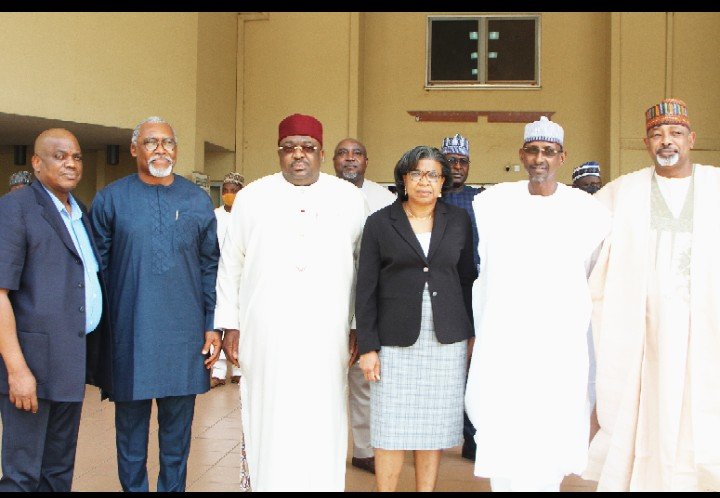
 University teachers under the auspices of the Academic Staff Union of Universities (ASUU) have began a 30-day “comprehensive and total” strike.
 The Nigeria Police Force has thrown more lights on the activities of members of the international narcotic cartel for which the embattled Abba Kyari, a suspended Deputy Commissioner of Police, has just been arrested and being detained.


 The All Progressive Congress (APC) and the Peoples Democratic Party (PDP) have shared the six Area Councils of the Federal Capital Territory (FCT), equally in the election conducted yesterday, February 12.