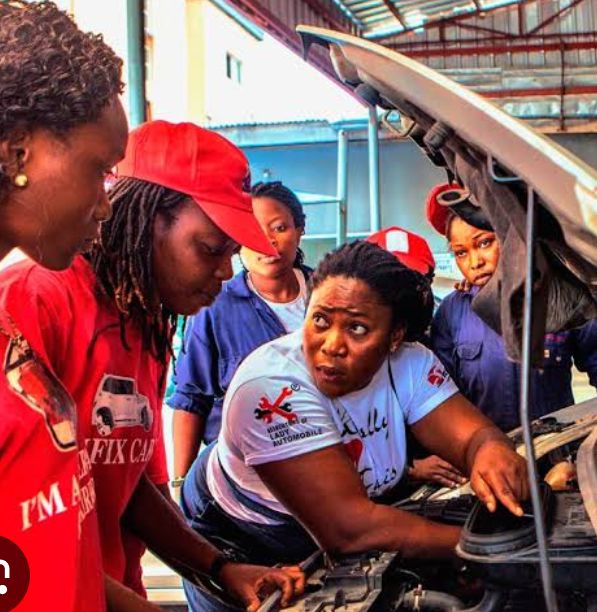
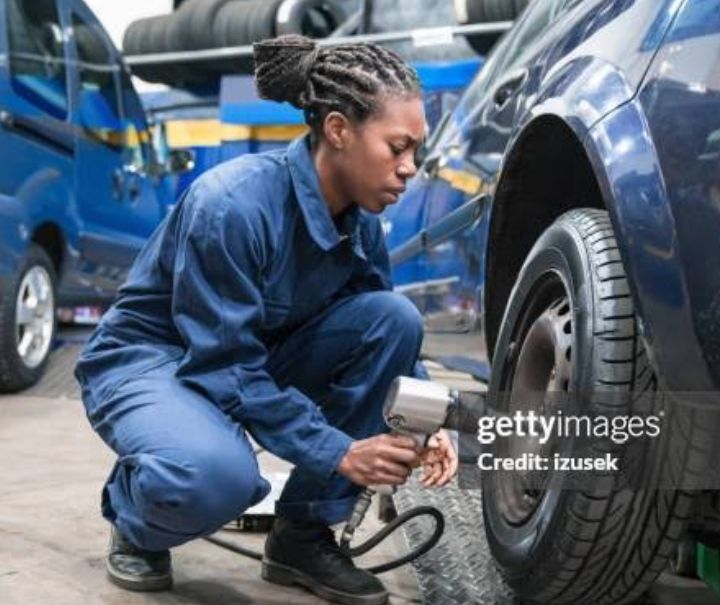
No fewer than 50 women have been trained as mechanics in Edo State and have received their certificates. The women were trained as specialists on converting petrol vehicles to Compressed Natural Gas (CNG)-powered vehicles. Information reaching us at Greenbarge Reporters showed that the training was sponsored by Mrs. Sandra Aguebor, Founder of Lady Mechanic Initiative, National Automotive Design And Development Council(NADDC) and Edo Government. Mrs. Aguebor was quoted as saying that the 50 graduates would significantly boost manpower for converting petrol vehicles to environmentally friendly CNG-powered engines. She said that the CNG conversion is a new horizon for women in the automotive industry, emphasizing women’s expanding role in the male-dominated sector. Mrs. Aguebor, Nigeria’s first lady mechanic, said that Edo women mechanics could convert petrol vehicles to CNG following their training and successful graduation from the Lady Mechanic Initiative. She said that that so far, the Lady Mechanic Initiative had trained more than 6,000 women across 20 states, with certified coordinators supporting the programme Mrs. Aguebor explained that the initiative was to empower women and girls, as well as promoting economic prosperity for families, especially vulnerable women in society through skill development. She added that the initiative also provided mentorship and counseling, further supporting the girl child and encouraging women’s sustained success in mechanics. “All beneficiaries have been trained and certified as CNG conversion technicians.” Mrs. Aguebor commended Governor Monday Okpebholo and the Federal Government for their vital support and commitment to the women empowerment initiative.
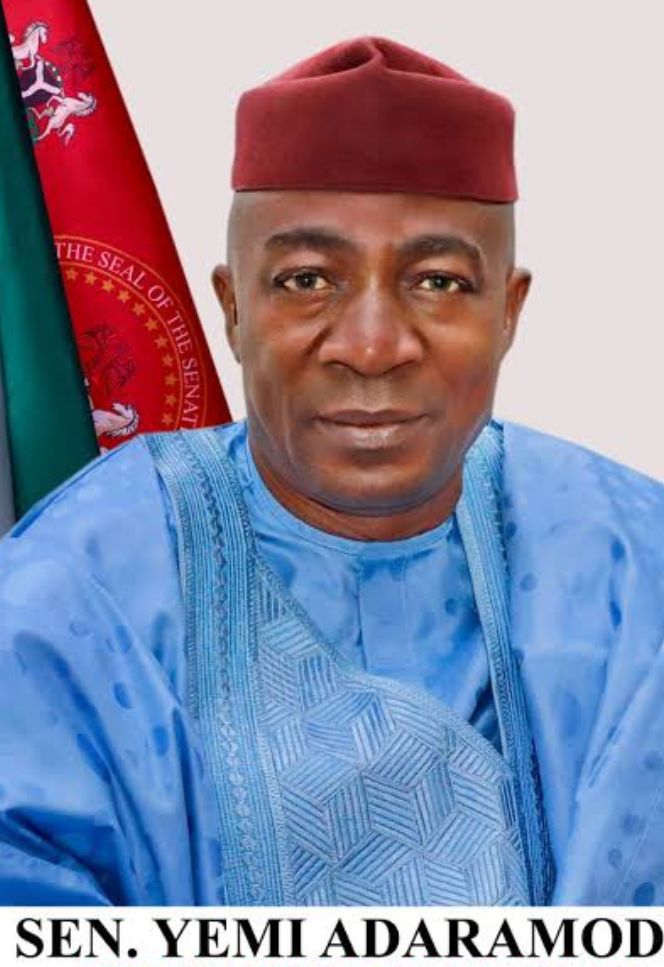
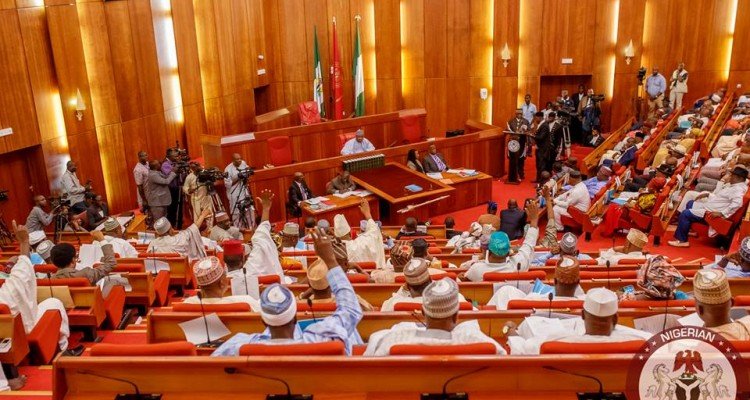
Spokesperson to the Senate, Yemi Adaramodu has made it clear that the Red Chamber would not immediately reinstate the embattled senator Natasha Akpoti-Uduaghan, representing Kogi Central Senatorial Area, until she apologizes as directed by court. Reacting to the judgment of the Federal High Court in Abuja yesterday, July 4, Senator Adaramodu said that the court judgment did not override the Senate’s constitutional powers to discipline its members. “Which judgment are we appealing when they (the court) said the Senate has the right to discipline its erring members? “The court has not ousted the Senate’s statutory right to punish any erring senator. “It was established that the senator in question erred. The court has already told her to go and do some things, like restitution, so after the restitution, the Senate will now sit again and consider the content of that restitution, and that will inform our next line of action. According to Senator Adaramodu, the Senate would only reconvene to deliberate on the matter after Natasha Akpoti-Uduaghan had complied with the court’s directives. “The onus is no more on us now; it is already on her doorstep to go and apologise. Once she does that, then the Senate will sit and determine how to deal with her matter. “The first reaction now will not be from us. The court has ruled, so once she takes the step to redress and does what the court has directed her to do, then the Senate will sit and look at the content of her reaction as prescribed by the court.” This is even as the Senate counsel, Paul Dauda, SAN, described the ruling as a partial victory for the Senate, particularly on the issue of civil contempt arising from social media posts made during the case. Dauda said: “The first application filed by the Senate, that no social media posts should have been made, was decided in our favour. The court directed that the satirical apology be taken down and that a proper apology be published in two national dailies. “Additionally, damages of five million naira were awarded to be paid to the court.” On the substantive ruling regarding the suspension, Dauda noted that the Senate’s authority to discipline its members was not in dispute. “It appears the court affirmed that the Senate, as an institution, has the right to discipline its members. While members are elected to represent constituencies, they are expected to conduct themselves in accordance with the Senate’s standing rules.” According to him, the court did not order Akpoti-Uduaghan’s reinstatement but merely suggested that the Senate could consider recalling her. “There was no relief asking for the suspension to be lifted. The judge only made what we call ‘an obiter dictum,’ which is a non-binding remark, that the suspension may have been excessive. “We will consult with our colleagues, read the full judgment, and respond accordingly.”
Governor Monday Okpebholo-led administration in Edo State, has posted ₦52.6 billion in Internally Generated Revenue (IGR) within six months, representing 46 percent increase from the ₦36.1 billion recorded during the same period in 2024. The Executive Chairman of the State Internal Revenue Service (EIRS), Otunba Oladele Bankole-Balogun, who made this known said that the half-year revenue figure reflects a remarkable 89.5 percent performance year-to-date, surpassing all mid-year benchmarks set in recent history. “We are not just collecting revenue but we are restructuring the very foundations of Edo’s tax ecosystem. Our reforms are deliberate, people-focused, and technology-driven. “What Governor Okpebholo has achieved in just six months is more than a fiscal milestone; it is a statement that a New Edo is not just rising, it is already here.” He said that since assuming office in November, 2024, Governor Okpebholo has focused on strengthening institutional capacity at the EIRS, launching a multifaceted approach that includes regular staff training and improved welfare, regular stakeholder engagements, infrastructure upgrade and strengthened compliance with tax laws “This holistic model of tax administration, rarely seen in state level governance, has led to the onboarding of 1,900 new taxpayers within the six-month window, marking a shift from theoretical tax expansion to operational reality. “It’s a progressive model,” Bankole-Balogun said, adding: “You don’t bring everyone into the tax net overnight. But you can focus on big-income earners, plug the leaks, and keep the momentum going.” The EIRS Chairman emphasized that the Governor Okpebholo-led administration is not simply collecting tax but redefining public perception around civic responsibility. “We are building a culture where taxation is not seen as a burden but a patriotic contribution. When people see their taxes being translated into development, compliance becomes easier.” He assured that the revenue agency would intensify efforts to implement the new federal tax reforms recently signed into law by President Bola Ahmed Tinubu. This, he said, would further align state policy with national growth targets.
In the Name of Allah, the Beneficent, the Merciful. All perfect praise be to Allah the Lord of the Worlds. May His peace and blessings be upon our beloved Prophet Muhammad (Peace be upon him) and upon all his family and companions. To proceed: Dear brothers and sisters! In the hustle and bustle of daily life, it’s easy to forget that our time in this world is limited. Many often avoid thinking about this and instead distract themselves with worldly pursuits. The Qur’an addresses this tendency. Allah the Most High says: “You have been distracted by gathering the worldly things, until you reach the graves. Certainly, you will come to know!” (Qur’an, 102:1-3) Islam teaches that death is not the end, but a transition to another phase of existence. Understanding the Islamic perspective on death can offer profound insights, not just for Muslims, but for anyone seeking to live a more meaningful and purposeful life. Whether you are a Muslim, Christian, Jew, or atheist, we all agree on one thing: death is inescapable. The Qur’an states: “Every soul will taste death. Then to Us will you be returned.” (Qur’an, 29:57). This Qur’anic verse serves as a powerful reminder of our mortality and the temporary nature of worldly life. It encourages us to pause and reflect: Are we living in a way that we’d be content with if today were our last day? Are we prepared for what comes after? In Islam, the best preparation for death is to live a righteous life. This doesn’t mean a life of austerity or constant seriousness, but rather one of balance, kindness, and mindfulness of our actions and their consequences. The Prophet Muhammad (Peace be upon him) said: “Live in this world as if you are a stranger or a traveler passing through.” (Bukhari). This Hadith captures the reality of this world – it is like an airport terminal or a bus station. Therefore, one should not be overly obsessed with excessive materialism and instead focus on actions that have lasting spiritual value. In Islam, the moment of death is when the soul is taken by the Angel of Death.. The Qur’an describes this moment: “He reigns supreme over all of His creation, and sends recording angels, watching over you. When death comes to any of you, Our angels take their soul, never neglecting this duty.” (Qur’an, 6:61). For those who lived righteously, this moment is described as peaceful: “Those whose lives the angels take in a state of purity, saying (to them), ‘Peace be on you; enter Paradise, because of (the good) which you did (in the world).” (Qur’an, 16:32) Islam provides a vivid description of what occurs at the moment of death, based on teachings attributed to Prophet Muhammad (Peace be upon him). The experience is said to differ greatly depending on the person’s faith and deeds in life. For a person who lived a righteous life, death is described as a peaceful event. According to a saying of the Prophet Muhammad (Peace be upon him): “When the believing servant is about to depart this world and enter the Hereafter, angels with radiant faces descend from heaven. They bring with them a shroud and perfume from Paradise, and sit as far as the eye can see. The Angel of Death then approaches and sits by the person’s head, saying, ‘O pure soul, come out to the forgiveness and pleasure of Allah.’” The soul is said to leave the body easily, described as flowing “like a drop of water from a cup.” The angels then take the soul, wrap it in the heavenly shroud, and perfume it with a scent described as the most fragrant musk on earth. The journey of the soul continues after it leaves the body. The Hadith describes: “The angels ascend with the soul, and as they pass by groups of angels, they are asked, ‘Who is this pure soul?’ They reply with the person’s best names known on earth. Upon reaching each heaven, they request entry, and the gates are opened.” When the soul reaches the seventh heaven, Allah is said to decree: “Record the book of My servant in Illiyyun (the highest heaven) and return him to the earth. For I created them from it, and to it I shall return them, and from it I shall bring them forth once again.” In contrast, for those who led a life contrary to Islamic teachings, the experience is described as difficult. The Hadith states: “For the disbeliever, the soul is extracted harshly. As the angels ascend with it, they pass by groups of angels who ask, ‘Who is this evil soul?’ The angels reply using the worst names by which the person was known on earth. When they reach the lowest heaven and request entry, the gates are not opened.” The Qur’an is then quoted: “For them the gates of heaven will not be opened, and they will not enter Paradise until the camel goes through the eye of the needle.” (Qur’an, 7:40). Respected servants of Allah! Islam holds that the journey of the soul does not end with death. After burial, it’s believed that two angels, one named Munkar and the other Nakir, question the deceased about their faith. The Prophet Muhammad (Peace be upon him) said: “When the deceased is buried, two blue-black angels come to him. One is called Munkar and the other Nakir. They ask him, ‘What did you use to say about this man (Prophet Muhammad)?’ He will say what he used to say (in this world): ‘He is the servant of Allah and His Messenger…’” (Tirmidhi). The soul then enters a state called Barzakh, a period between death and resurrection. The Qur’an mentions this intermediate state: “And behind them is a barrier (barzakh) until the Day they are resurrected.” (Qur’an, 23:100). While the exact nature of this state is known only to Allah, it’s understood to be a time of waiting until the Day of Judgment. For the righteous, this period is understood to be one of peace and anticipation of Allah’s mercy. The Prophet Muhammad (Peace be upon him), is reported to have said: “When a believer dies, he is shown his place in Paradise morning and evening.” (Bukhari). Conversely, for those who led sinful lives, this period may involve discomfort as a preview of accountability to come. Respected brothers and sisters! Reflecting on death prompts us to contemplate the fundamental questions of our existence: Why are we here? Is there a greater purpose to life beyond our daily routines and material pursuits? These thoughts naturally lead us to consider the concept of a higher power or Creator. If there is Allah, what is our relationship to this Divine being? How does this relationship, or lack thereof, shape our understanding of life and our place in the universe? Moreover, pondering death inevitably raises questions about what, if anything, comes after. Is death truly the end, or is it a transition to another form of existence? If there is an afterlife, how does that possibility influence the way we live our lives now? These are not easy questions to grapple with, but they are essential in forming a comprehensive worldview and understanding our place in the grand scheme of existence. Such reflections challenge us to look beyond the immediate and consider the eternal. They invite us to examine our beliefs, our actions, and the very foundations of our worldview. For those who believe in an afterlife, it raises the question of how prepared we are for what comes next. For those who don’t, it prompts consideration of how to find meaning in a finite existence. Islam teaches that it’s never too late to turn towards righteousness and seek answers to these profound questions. The Qur’an says: “O you who have believed, fear Allah. And let every soul look to what it has put forth for tomorrow – and fear Allah. Indeed, Allah is Aware of what you do.” (Qur’an, 59:18). This Qur’anic verse is a call to action, encouraging us to be mindful of our spiritual state and to seek understanding before our time in this world comes to an end. Dear servants of Allah! In Islam, understanding death is not about living in fear, but about living with purpose and consciousness of our ultimate destiny. The Prophet Muhammad (Peace be upon him) said: “Be in this world as if you were a stranger or a traveler.” (Bukhari) Reminding us of life’s temporary nature. The Qur’an emphasises this perspective: “And this worldly life is not but diversion and amusement. And indeed, the home of the Hereafter – that is the [eternal] life, if only they knew.” (Qur’an, 29:64) This teaching encourages us to prioritise our actions based on their consequences in the afterlife. It calls us to live lives of meaning, virtue, and devotion, always conscious of our return to Allah the Almighty. As you reflect on these teachings, consider how this awareness of death and the afterlife might reshape your priorities and actions. The path to righteousness is open to all, as the Qur’an states: “Indeed, Allah loves those who are constantly repentant and loves those who purify themselves.” (Qur’an, 2:222) The opportunity for change is always present, but the time to act is now. All praise is due to Allah, the Lord of the worlds. Prayers, peace and mercy are upon our beloved master, Muhammad, the son of Abdullah (Peace be upon him), his family and Companions.
Murtadha Muhammad Gusau is the Chief Imam of Nagazi-Uvete Jumu’ah and the late Alhaji Abdur-Rahman Okene’s Mosques, Okene, Kogi State, Nigeria. He can be reached via: gusauimam@gmail.com or +2348038289761.
A country so naturally endowed in landmarks, landscapes, land mass, and potentially blessed with people of diverse and rich cultures. We have globally celebrated icons in various fields of art, science and technology yet with deficiency in meaningful political self-governance. Our political leadership is never lacking on the right political models but there is deliberate ignorance driven by greed and selfishness of the political leadership. Corruption is so corrupt that even the institutions that should police the other civil institutions are culpably corrupt and compromised by the endemically corrupt society. Civil or public Servants are ironically the Lords of the society, manufacturing, orchestrating, manipulating and systematically institutionalizing corruption in our society. We may individually have our experiences to share in any of our encounters either in seeking admission in schools or in legitimate public services ranging from job search or health care without entanglement and corrupt practices from your first contact to the top level of government officials. Political offices are being vied for with huge resources either illegally or legitimately sourced but to be recouped by all means necessary when elected or appointed- in Nigeria politics, if you win or lose political office, just do everything to align with the system, you can be leveraged. Honestly, addressing political governance in Nigeria is not the problem but the political class can only be intentional about it by cutting the cost of governance firstly, pruning itself of ungodly and irrational remuneration either as Executive or Legislative. Realistically, the country’s remuneration of the few elected elites have wicked imbalances with the salaries and wages of the working class and in a bid for the working public servants to square up with the same market realities, corrupt practices are institutionalized. Same market with the political elites yet skewed remunerative system. Good Government jobs, of choice offices tagged “white collar” are only for the children of the political elites or Who-Know-Man connections. A check on Government parastatals and Agencies can be verified. The cost of Executive governance must be pruned. Act of making legislative laws have become so hyper expensive, than our Holy Books that are being used for oath of offices respectively. Judiciary are no longer judicious in the dispensation of justice but most often the highest bidder wins in our various levels of our courts.
Omuya Yusuf, a Public Affairs Analyst can be reached on: oohinoyi@yahoo.com
A Federal High Court in Abuja has pleaded to the Senate to consider recalling Natasha Akpoti-Uduaghan who has been on six month suspension for alleged violation of the Senate rules. The court, which conceded to the fact that the Senate has the power to discipline any member for unethical conduct, begged the red chamber of the national assembly to consider recalling her to afford her the opportunity to represent her constituency. Justice Binta Nyako, in a judgment on the matter today, July 4, advised the suspended Senator to tender apology to the Senate as a precursor to her recall. She held that under the Senate Rules, the Senate President is empowered to allocate seats for members and such a member is only allowed to speak from the seat allocated to him or her. Justice Nyako found that since Natasha was not speaking from the sit allocated to her during the Senate’s sitting of February 20, she was not entitled to be heard. The judge held that although the Senate could suspend its members, it should reconsider the period of such suspension.
Federal High Court in Abuja has fined suspended Senator Natasha Akpoti-Uduaghan, representing Kogi Central, N5 Million plus publication of apology in national newspapers for contempt over a satirical Facebook post published on April 27. Justice Binta Nyako, who delivered the ruling today, July 4, is originally presiding over a case filed by the suspended Senator challenging her suspension from the Senate. Before addressing the main suit, the court considered a contempt application brought by Senate President Godswill Akpabio, saying that the Facebook post breached a prior court order that barred all parties from making public comments or social media posts related to the ongoing case. In her defense, Natasha Akpoti-Uduaghan’s legal team claimed that the post was unrelated to the suspension case and instead referenced a separate issue involving sexual harassment allegations against Akpabio. But Justice Nyako disagreed and ruled that the post was clearly linked to the subject of the lawsuit. She subsequently found the senator in contempt of court, ordering the suspended Senator to issue a formal apology in two national newspapers and on her Facebook page within seven days, in addition to a fine of ₦5 million.
Kogi State Government has flagged off the distribution of fertilizer worth ₦3.2 billion to 30,000 farmers to strengthen food security and enhance agricultural productivity in the state The State Governor, Ahmed Usman Ododo, who officially launched the initiative in Lokoja, described the intervention as a critical step in empowering farmers and reducing the high cost of agricultural inputs. The governor said that the exercise is part of a broader effort to reposition agriculture as a key driver of the state’s economy. “This is not just about fertilizer; it’s about food security, economic growth, and the dignity of our farmers.”
The distributed inputs include high-grade Urea and NPK fertilizers, which are being delivered directly to verified farmers across all 21 local government areas of the state. The Ministry of Agriculture confirmed that a digital registration process was used to eliminate racketeering and ensure that genuine smallholder farmers benefit directly. Commissioner for Agriculture, Musa Adesina, said that the scheme aligns with the national food security agenda and will help boost yields, reduce input costs, and stabilize local food prices. “Every registered farmer receiving this support has been digitally verified to guarantee transparency and impact.” Halima Abubakar, a rice farmer from Ibaji Local Government Ares, expressed happiness with the government’s gesture, saying: “this support is a major relief as the planting season begins.” Agricultural experts have projected that the intervention could raise crop yields by up to 40% and boost Kogi’s contribution to regional food supply.
Kogi Enterprise Development Agency (KEDA) has taken a giant step towards the establishment of what it called “Agro Industrial Factory” for casava processing into garri. KEDA which went into partnership with Combined Agricultural and Renewable Energy Company Limited (CAREC) by signing a joint Memorandum of Understanding (MoU) yesterday, July 3, in Lokoja, capital of Kogi State, also vowed to embark on rice processing amongst others. A statement by KEDA Information Officer, Joseph Adama said that the partnership would lead to the establishment of incubation centres for Pharmaceuticals, model Agro Industrial factory for casava processing into garri, rice processing, cashew nut processing and other derivatives by Women Cooperatives etc. The statement said that the MoU would create mutual understanding and intentions of the parties to establish a strategic collaboration to support the agency’s MSME development initiatives . The scope of the MOU, according to the statement, includes joint establishment of incubation Centre for nursing start ups for selected Entrepreneurs to establish their businesses, joint incubation for startups in assembling of electronic digital devices, portable solar lamps and generators, inverters, battery energy storage packs. The statement quoted the Managing Director and Chief Executive Officer of KEDA, Alhaji Muhammed Kadiri Okeji as saying that the MoU would foster the growth of Micro, Small and Medium Enterprises(MSMEs) within the Kogi State economy.
The Managing Director stressed the need to partner with private sector organisations to develop the state because government cannot do all things for the people. He said that with the partnership, efforts will be geared towards ensuring that the project is pursued vigorously, even as he expressed optimism that the MoU when fully implimented, would put smile on the faces of teeming women and Youths across the state Also speaking via zoom after the signing of the MOU, the vice chairman, Engr. Jatto A .Adams on behalf of the chairman of CAREC expressed appreciation to the kogi state government for the partnership and commended the KEDA Management for the signing of the MOU. He noted that the signed document would boost the activities of KEDA in the realisation of the state government’s objectives to boost economic activities, foster industrialisation and create more entrepreneurs. A director in CAREC, Mallam Yakubu Lawal, signed on behalf of his organisation while the MD/CEO signed for KEDA. In a media chat, Mallam Lawal promised speedy implementation of the agreement, stressing that as stakeholders, they would join hands to see to the development of the state. At the event from KEDA were the Executive Director, Finance and Administration, Usman Zubair; Executive Director Operations, Akin Akinola and Head of Research and Development, Daniel Arome and the Directors from CAREC were Alhaji Ahmed Musa Ododo; IT and Corporate Services, Umar Sulaiman and Project planning and Development, Engr. Enesi Abdulrasheed.
Celebrated former Super Eagles goalkeeper Peter Rufai is dead. He died today, July 3 after a prolonged illness, aged 61 A report monitored on radio today confirmed the death of Rufai who was popularly referred to as Dodo Mayana by football fans. Peter “Dodo Mayana” Rufai was born on 24 August 1963 in Lagos, Nigeria. He started his football club career in 1980 with Stationery Stores of Nigeria, moved to Femo Scorpions in 1985 and to AS Dragons de l’Ouémé of Benin Republic between 1986 and 87, becoming the first Nigerian keeper abroad. He also played for Lokeren in Belgium, from 1987 to 91, though he had limited appearances. From 1991 to 1993, he was with Beveren Belgium, from where he went to Go Ahead Eagles of Netherlands in 1993, participating in 12 matches. Peter Rufai also moved to S.C. Farense in Portugal, in 1994 and was instrumental in UEFA Cup qualification and in 1997, he went to Hércules CF of Spain and then to Deportivo La Coruña in 1997 as backup keeper. Peter Rufai appeared 65 times in the Green Eagles national squad and took full part in the Africa Cup of Nations, as winner in Tunisia in1994, FIFA World Cup in 1994 (USA) and 1998 (France); reached Round of 16 both times He scored a penalty in 6–0 win versus Ethiopia on 24 July 1993 during AFCON qualification and in the finals on 28 June 1998 with Denmark Peter Rufai was hghly respected for bravery, consistency, and professionalism; regarded as one of Nigeria’s greatest goalkeepers He was an advocate of hard work, discipline and focus as cornerstones of goalkeeping success. On his retirement, he founded Peter Rufai International Football School, later Staruf FC, in Lagos in 2010. It was meant to foster youth and goalkeepers Peter Rufai studied for coaching badges at Nigeria’s National Institute for Sports in Lagos (2023). He was Married to Mikaila Rufai and together they have four children Children: Eldest son, Senbaty, played for Sunshine Stars in Nigeria Premier League. Peter Rufai’s journey from Lagos streets to global stadiums was a testament to his resilience and skill. A pioneer among Nigerian goalkeepers, his legacy encompasses national glory (AFCON ’94), global acclaim (World Cups), and a post-retirement mission of mentoring the next generation.
We use cookies on our website to give you the most relevant experience by remembering your preferences and repeat visits. By clicking “Accept”, you consent to the use of ALL the cookies.
This website uses cookies to improve your experience while you navigate through the website. Out of these, the cookies that are categorized as necessary are stored on your browser as they are essential for the working of basic functionalities of the website. We also use third-party cookies that help us analyze and understand how you use this website. These cookies will be stored in your browser only with your consent. You also have the option to opt-out of these cookies. But opting out of some of these cookies may affect your browsing experience.
Necessary cookies are absolutely essential for the website to function properly. This category only includes cookies that ensures basic functionalities and security features of the website. These cookies do not store any personal information.
Any cookies that may not be particularly necessary for the website to function and is used specifically to collect user personal data via analytics, ads, other embedded contents are termed as non-necessary cookies. It is mandatory to procure user consent prior to running these cookies on your website.







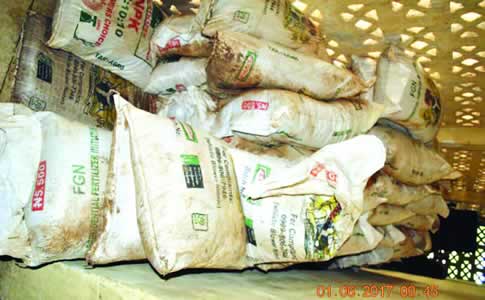 The distributed inputs include high-grade Urea and NPK fertilizers, which are being delivered directly to verified farmers across all 21 local government areas of the state. The Ministry of Agriculture confirmed that a digital registration process was used to eliminate racketeering and ensure that genuine smallholder farmers benefit directly.
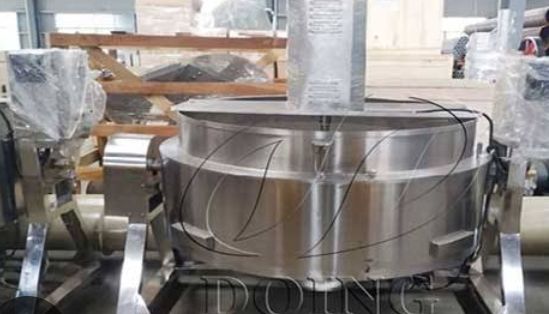 The Managing Director stressed the need to partner with private sector organisations to develop the state because government cannot do all things for the people.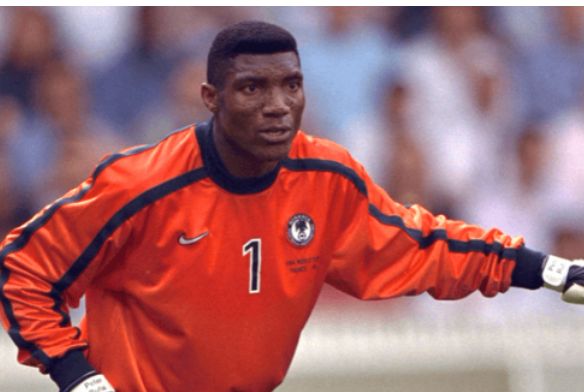



Corruption In Nigeria: Politics And Governance, By Emmanuel Omuya Yusuf
A country so naturally endowed in landmarks, landscapes, land mass, and potentially blessed with people of diverse and rich cultures. We have globally celebrated icons in various fields of art, science and technology yet with deficiency in meaningful political self-governance.
Our political leadership is never lacking on the right political models but there is deliberate ignorance driven by greed and selfishness of the political leadership.
Corruption is so corrupt that even the institutions that should police the other civil
institutions are culpably corrupt and compromised by the endemically corrupt
society.
Civil or public Servants are ironically the Lords of the society, manufacturing, orchestrating, manipulating and systematically institutionalizing corruption in our
society.
We may individually have our experiences to share in any of our encounters either in seeking admission in schools or in legitimate public services ranging from job search or health care without entanglement and corrupt practices from your first contact to the top level of government officials.
Political offices are being vied for with huge resources either illegally or legitimately sourced but to be recouped by all means necessary when elected or appointed- in Nigeria politics, if you win or lose political office, just do everything to align with the system, you can be leveraged.
Honestly, addressing political governance in Nigeria is not the problem but the political class can only be intentional about it by cutting the cost of governance firstly, pruning itself of ungodly and irrational remuneration either as Executive or
Legislative.
Realistically, the country’s remuneration of the few elected elites have wicked imbalances with the salaries and wages of the working class and in a bid for the working public servants to square up with the same market realities, corrupt practices are institutionalized.
Same market with the political elites yet skewed remunerative system.
Good Government jobs, of choice offices tagged “white collar” are only for the
children of the political elites or Who-Know-Man connections.
A check on Government parastatals and Agencies can be verified.
The cost of Executive governance must be pruned. Act of making legislative laws have become so hyper expensive, than our Holy Books that are being used for oath of offices respectively.
Judiciary are no longer judicious in the dispensation of justice but most often the highest bidder wins in our various levels of our courts.
Omuya Yusuf, a
Public Affairs Analyst can be reached on:
oohinoyi@yahoo.com