Dangote Cement Plc has launched a Farmers Empowerment Programme in Benue State, targeting 50 farmers that would produce subsistence and cash crops in commercial quantity. This is coming barely two months after the company empowered businesswomen in Gboko host communities of the State with cash grants. Speaking at the launch of the Farmers Empowerment Programme, General Manager, Social Performance, Johnson Kor, described the programme as ‘historic and innovative.’ He said that the beneficiaries were selected from the company’s host communities of Gboko Local Government Area of Benue State. According to him, the beneficiaries were carefully selected from the six catchment areas of the Local Government. Kor said that the projects have been earmarked for the communities as captured in the extant Community Development Agreement (CDA), adding that the contents of the CDA are progressively being executed. “Today, we are witnessing an historic occasion in our journey of mutual development. Farmers Empowerment Programme is the first programme to be launched since we signed the CDA with the immediate host communities in December 2024.” Plant Director of the Dangote Cement, Gboko Plant, Munusamy Murugan, said that the company will also support farmers with fertilizers, Agro chemicals, Knapsack Sprayers and various types of seedlings. Murugan, who was represented by Head of Production Department, Engineer Soom Kiishi said: “This is the first batch but certainly just the beginning, and certainly not the end. We plan it to be an annual event, but the choice of the Farmers programme may change, depending on the choice of the benefiting communities.” He said that other economic empowerment programmes are lined up in the coming weeks. “The Youth Empowerment Programme will soon be launched, and selected beneficiaries will receive training in Welding & Fabrication, and Solar Electrical Installation from Professional personnels.”
The Association of Former Employees of NICON Insurance (AFENI) Pensioners has expressed grave concern over the systematic exclusion of its members from the revised implementation of the Consequential Pension Adjustment (CPA), the ₦32,000 wage award approved by President Bola Ahmed Tinubu and other statutory pension entitlements.
A statement by the leadership of the Association, Prince Emmanuel Omadivi and Mr. Ade S Adesokan said that the exclusion which was executed by the Pension Transitional Arrangement Directorate (PTAD), is a gross act of injustice and a violation of the principles of equity and national inclusion. The statement said that as a result of the circular that was issued by the National Salaries, Incomes and Wages Commission (NSIWC) on 8th July 2024 (SWC/S/04/S.557/T/171), PTAD re-implemented the 2019 CPA for pensioners under the Defined Benefit Scheme, using the Grade Level model rather than the previously adopted Pay Band structure. It said that such realignment had led to pension increases of 20% and 28% for many retirees, even as pensioners from defunct agencies—notably NICON Insurance—were entirely left out of the reassessment, claiming that they do not fall within the listed salary structures of eligible agencies. The statement said that these agencies of government have termed Nicon Insurance and the other so-called defunct Parastatals as those that were receiving super salary structures when in operation. Nicon Pensioners argued that the same government that sold these Parastatals during the privatization exercise also thought it fit to payroll them for pension, pointing out that there’s nowhere in the Nigerian constitution where Pensioners are discriminated against that would “warrant this apartheid and illegal form of selective treatment. “In announcing the wage award, the pensioners of Nicon Insurance noted that the President didn’t indicate exclusion of any agencies. “They further submitted that when Nicon Insurance was performing creditably well, it had a registered in-house Pension Scheme whose kitty at the time of privatization was worth N2.3b but which money was taken away by the core investor. Part of the statement goes thus: They believe that if that money had been invested, it would have been serving the pension needs of staff of the so-called defunct Parastatals. The pensioners see the current action of misguided government super civil servants as a jealous and cruel decision, asserting that they served their country under full Federal Government’s Agency employment in a now-defunct but once-vital institution that was a major subscriber to Federal Government shares, alongside such entities as NAL, Daily Times, the then Nicon Hilton, now Transcorp Hilton and a host of others. Many of the affected pensioners are elderly and medically vulnerable, yet continue to suffer income stagnation amid inflationary pressures. The abrupt exclusion without consultation or explicit explanation undermines confidence in government pension reform processes and raises serious legal and moral concerns, as there is no constitutional basis for distinguishing between pensioners of active and defunct agencies under the Defined Benefit Scheme. The association calls on the Federal Government, the National Assembly, and the National Human Rights Commission to immediately investigate the circumstances surrounding PTAD’s implementation, reinstate entitlements for all affected pensioners of NICON Insurance and uphold the fundamental right to equitable treatment in retirement, regardless of agency status. “This isn’t just a fight for financial justice,” stated [Barr. Chijioke Nwafor], a member of the pensioners’ association. “It is a fight to protect the dignity of those who toiled to build the institution that once served this nation in full capacity. The affected pensioners are, however, hopeful that the administration of President Bola Ahmed Tinubu, which has shown respect for pensioners and has championed various reforms and improved welfare for ordinary Nigerians, will urgently intervene to correct this exclusion and restore confidence in the nation’s pension system.
Malam Garba Shehu, Senior Special Adviser to Muhammadu Buhari when he was President from 2015 to 2023 has confirmed that ex President is currently recovering from illness in London. Responding to an enquiry about the health of Buhari, Garba Shehu said: “Following your enquiry, I wish to state as follows: It is true that the former president, Muhammadu Buhari, is unwell. He has been receiving treatment in the UK. “You would recall he made it known that he was going for his annual medical check-up (in London). He became ill there, but I am happy to announce to you that he is doing well in his recovery while receiving treatment. We pray for his healthy recovery.” Garba Shehu would not speak about the nature of Buhari’s ailment and the hospital where he is being treated.
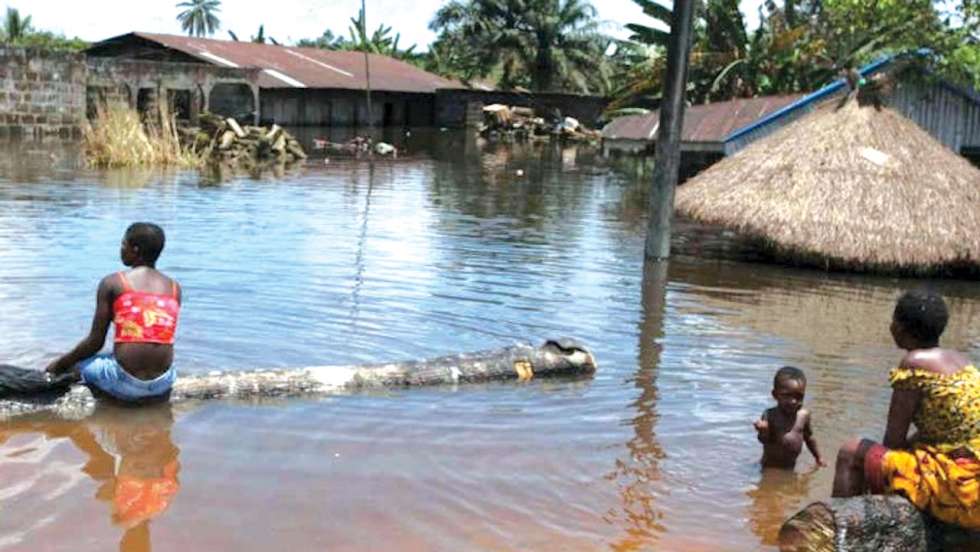
Many people have lost their lives in flashes of flood that swept through some towns and villages of Niger, Gombe, Borno and Kebbi states. Report reaching us at Greenbarge Reporters online newspaper said that four persons were drowned in flood waters in Gombe State, whereas Borno and Niger States witnessed the death of two residents. The Public Relations Officer of Gombe State Police Command, Buhari Abdullahi, a Deputy Superintendent of Police (DSP), in a statement, said that he received reports of four incidents of drowning that occurred at Hayin Kwarin-Misau; Bojude, Bajoga and Difa communities in Akko, Kwami, Funakaye and Yamaltu Deba local government areas of the state. He said that the victims were children and teenagers who drowned in rivers, erosion sites and unprotected water channels. Two women also died in Wovi Community of Damboa Local Government Area of Borno State, with several houses destroyed in Rumirgo, Askira Uba Local Government Area, displacing several families. A statement by the media aide to the governor, Dauda Iliya, said that Governor Babagana Zulum extended his sympathy to the victims and their families. The incident occurred less than a year after a deadly flood submerged communities across Borno State, killing scores of people and washing away homes, farmlands, among others. Similarly, the corpses of two children, a boy and a nine-year-old girl were discovered in a drainage after a heavy rainfall that broke out in Minna, Niger State yesterday, July 1. The children were returning from the market when the girl slipped and fell into the drainage. It was learnt that as the flood was carrying her away, her brother, an 11-year-old, was shouting to residents in the neighbourhood to help him rescue his sister, who was being swept away by the flood. The people could not help due to the level the water had reached and the force it carried. They watched helplessly as the water carried the little girl away while the brother went back to their residence to inform their parents about the tragedy. The father of the girl was later contacted to identify his daughter’s corpse at a tunnel on Mandela Street (more than five kilometers from where the flood carried her), and when he got there, he found the corpse of the little girl and that of another boy who was also killed by the flood. Spokesman for the Niger State Emergency Management Agency (NSEMA), Hussaine Ibrahim, expressed shock over the tragedy and said the agency would visit the girl’s family to find out more details. “The agency is not aware of the disaster, but my people will visit the home of the girl at Tunga tomorrow to meet with the parents.” Meanwhile, following recent flooding in Rafin Atiku Ward, Birnin Kebbi, Kebbi State, Deputy Governor, Senator Umar Abubakar Tafida visited the area to assess the damage, which residents blamed on heavy rain and blocked drainage. Accompanying the Deputy Governor were SEMA Chairman, Bello Yakubu Rilisco, Environment Commissioner, Alhaji Musa Mohammad Tungulawa, and Youth and Sports Commissioner, Comrade Nura Bala Fingilla. The flooding was caused by a clogged major drainage channel. Affected resident, Malam Idris Abdulrahman told journalists: “The water entered our house at night. We lost bags of grains, mattresses, and even some parts of the wall collapsed. This has never happened like this before.” Senator Tafida directed the Environment Ministry and SEMA to clear blocked drains and assist affected residents.
The final flight carrying about 88 pilgrims have arrived Kaduna, Nigeria, this morning, July 2, from Jeddah, completing the airlift of the over 41,000 Nigerian Muslims that performed this year’s pilgrimage in the Holy land. The return leg airlift operations, according to a statement by the spokesperson of the National Hajj Commission of Nigeria (NAHCON), Hajiya Fatima Sanda Usara, spanned 20 days in a total of 101 flights that was commenced on 13th of June, over a week after the end of the pilgrimage in the Holy land. Real Hajj rites ended June 10. Hajiya Sanda Usara quoted the Chairman of NAHCON, Professor Abdullah Saleh Usman, in his end-of-the-operation address as expressing profound gratitude to Allah for granting Nigerian a smooth and successful Hajj exercise. He attributed the success to the spirit of unity and cooperation demonstrated by State Pilgrims’ Welfare Boards officials, airline operators and other service providers, as well as obedience of the pilgrims to laid down guidelines.
NAHCON Chairman called on the returning pilgrims to continue to pray for Nigeria to overcome its challenges and for them to remember the nation’s leaders in their prayers. He reminded them that Hajj serves as an opportunity to build meaningful relationships that foster peace and harmony, encouraging them to therefore sustain the ties of friendships they established during their pilgrimage. Professor Usman reassured that NAHCON will continue to improve in its mandate for Nigerian pilgrims in line with global best practices. In attendance were the Commissioner for NAHCON Operations, Prince Anofiu Elegushi, Secretary of the Commission, Dr Mustapha Alli, Special Assistant to the President, Ameen Amshi and other staff.
Edo State has a rich tradition of women’s involvement in agriculture, even more than men. In fact, I still recall when I was in school back home and used to go to farm around Sabongida Ora. Almost all the farmworks were undertaken by women in the communities. Women used to engage extra hands, like me, for a fee, in tilling the ground and even in harvesting. While the women were busy on the farms, the men, their husbands, would be around the compounds or the houses playing eyo game or ludo or other past time games, gulping bottles of local wine. So, undoubtedly, women in Edo state, time immemorial, have been playing critical roles in the production, processing and marketing of agricultural goods, especially in rural areas. They indeed, have long been active participants in various aspects of agriculture, including real farming. They are primarily involved in crop cultivation such as cassava, yam, maize, plantain, okra, pepper, tomatoes, oil palm, rice (in riverine areas), vegetables (e.g. fluted pumpkin, amaranth) and several others. Women dominate food processing activities like cassava into garri/fufu, oil palm processing and local spice preparation. This is in addition to acting as traders of agricultural produce in local markets, a role passed down through generations. Women in peri-urban and rural communities, also engage in backyard poultry and vegetable farming. Women’s activities ensure household and community-level food availability. Income from farming and market sales supports children’s education and family health.
Meanwhile, Women’s cooperatives have risen over time to support microfinance schemes, local savings and communal projects. This is in addition to some Organizations which have noticed the activities of those hardworking women and and have formed support networks. They include Edo Women Farmers Cooperative Societies, which is a local groups that empowers women through shared resources and knowledge. There are also None Governmental Organizations (NGO) like Lift Above Poverty Organization (LAPO) that provide micro-credit to rural women in agriculture. The State’s ministry of Agriculture has also been of support to the women through training, farm inputs and women-focused schemes. There is also Women in Agriculture (WIA) programs under ADP (Agricultural Development Programme): it offers extension services tailored to female farmers. However limited access to land in which cultural practices restrict women’s land ownership has turned out to be a big challenge. Another challenge is the low access to credit and Inputs in the struggle to access fertilizer, improved seeds and loans. Poor access to technology has equally restricted the women traditional tools, thereby reducing productivity. Those women are facing difficulty accessing formal markets or fair prices, besides the effects of climate change that have arisen from flooding. All such factors have combined to negatively affect crop yield, especially in riverine areas. Rising to address the negative elements in the agricultural practices, the state has long introduced some empowerment programs, including FADAMA, IFAD-VCDP, with women-inclusive components. NGOs and government extension services have also introduced agricultural training and skill acquisition. They also introduced Youth and Women in Agribusiness Initiatives to attract younger women to farming, using modern technology. There are as well individuals that have risen to encourage women to be more productive in the trade. Such individuals including Princess (Dr.) Florence Edebiri, Known for advocating rural women’s inclusion in Edo agricultural development. There are also local agribusiness leaders and female cooperative presidents that used to lead training and mobilization in Local Government Areas.
Information reaching us at Greenbarge Reporters online newspaper has indicated that the Joint Admission and Matriculation Board (JAMB) has blocked one Basola Jamiu Owodunni from proceeding to serve the nation through the National Youth Service Corps (NYSC). Basola Jamiu Owodunni was said to have sat for and wrote JAMB in 2017 and got admitted to the Federal University of Technology Akure (FUTA) to study Civil Engineering. He was believed to have spent over five years in the school and graduated in 2024 with a CGPA of 4.41 (first class). It was gathered that after he finished his exams, defended his project and completed his school’s clearance, JAMB suddenly described his admission in 2017 as “fake.” JAMB is said to have blocked him from its portal, refusing to mobilize him for the NYSC. It was gathered that the first class graduating student has already been handed over to the security agents, including the Directorate of State Service (DSS). It was learnt that all these have been happening despite the fact that FUTA had checked and confirmed that the name of the student is on JAMB CAPS. It was gathered that not even confirmation by the university Vice Chancellor could make JAMB to change its mind, “insisting that his admission is not valid.” It is learnt that Basola has no parents and has no one to fight for him to get justice. He said that he had gone to JAMB office, Public Complaint Commission, Brekete Family FM radio, in addition to many letters that had been written to JAMB but that nothing has changed. Efforts by our Reporters to speak to JAMB’s management did not yield positive results. The JAMB spokesman, Dr. Fabian Benjamin did not respond to Whatsapp messages that were sent to him.
The 1949 revolution, led by the Chinese Communist Party (CCP), resulted in the proclamation of the People’s Republic of China and the CCP’s consolidation of power on the mainland. Several years after another silent revolution took place in China, it was the agricultural revolution. It is safe to describe China as not just a vast country dotted with well-built and well-administered cities, but one which has cultivated land almost everywhere you look. After a few days in Beijing, the beautiful capital city of China, I joined other participants for the seminar on Agricultural Machinery Development Planning and Safety Management for Developing Countries in a high-speed train to Jiamusi in Heilongjiang Province. For most of the eight-hour journey, both sides of the rail route were cultivated land with tall buildings in the background forming a nice combination of the two basic needs of man. The team of participants from five nations, Nigeria, Uzbekistan, The Gambia, Pakistan and Jordan, travelled to Jiamusi to see more of the many factories producing the machinery and farming input that powers China’s mechanised food production. One of the places visited in Jiamusi is the fully mechanised and digitalized, Intelligent Farm run by Beidahuang Kengzheng Agricultural Machinery company. An interesting fact is that President Xi Jinping visited the same farm in 2018. VIDEO: https://youtu.be/rv_daDaYTdA?si=1gbiwpaLoY-KL8iw/ Areal view of a mechanised farm in Jiamusi, China. Aside from the Intelligent Farm, there are other fully mechanised and digitalized mega and medium sized farms across China. However, the secret of the country’s massive agricultural output is the smallholders who form a large chunk of the Household Contract Responsibility System. The Household Responsibility System was introduced at a critical moment of China’s reforms which saw the country move from the Soviet model of planned economy, characterized by heavy industries and complete nationalisation, which yielded inefficiency and undersupply, to a more open country prioritising shared prosperity. In his presentation on China’s level of development and culture, MA Teng, a Senior Engineer at the Chinese Academy of Agricultural Mechanisation Sciences Group (CAAMS), which hosted the two-week summit, told participants that strictly implemented reforms and, the adherence to the rule of law had seen China lift 800 million of its 1.4 billion population out of poverty. This is as Feng Li, a researcher at the Chinese Foreign Affairs University, traced China’s impressive economic indicators to the country’s past and current leaders sticking to people-centric reforms. Using data from 2024, Li further told participants that the Asian country’s GDP stands at 134,908.4 Chinese Yuan. The national income is 133,969.2 billion Yuan, industry output is 40,544.2 billion, the service sector’s total value is 765,583 billion, and domestic trade (total trade of consumer goods) hit 48,334.5 billion Yuan. For international trade, the total value of imports and exports of goods reached 43,846.8 Yuan, while the national per capita disposable income is 41,314 Yuan. But as explained by Li, China still considers itself to adeveloping country because of the rural poor whom the government is working assiduously to pull as many out of poverty. Unlike in Nigeria, where experts and the media, based on the socioeconomic realities, have cause to dispute exciting economic indicators from the government, in China, the country’s much-touted shared prosperity philosophy is easy to see in Beijing, Jiamusi and Changchun. In the three cities visited by participants, my keen observation showed that there aren’t glaring social disparities between the two cities, far from China’s capital city. In fact, Jiamusi is home to 24 Fortune Global 500 companies. One of the thriving businesses in Jiamusi is Jichin Tractors, which produces thousands of tractors from 30-300 HP annually. Another is the Beidahuang Kengzheng Agricultural Machinery company which produces thousands of tractors and farm machinery yearly. The majority of the customers of China’s manufacturers come from within and the neighbouring countries, with the Chinese government backing these companies’ push to sell more overseas.
It was therefore disheartening to return to Nigeria and reading about President Bola Ahmed Tinubu proudly announcing the distribution of 2,000 tractors and thousands of farming implements under the Renewed Hope Agricultural Mechanisation Programme. The initiative, according to the President is aimed at boosting food security and national prosperity. Speaking during the launch of the programme in Abuja on Monday, June 24, Tinubu said: “Today, we take a monumental leap forward with the introduction of the state-of-the-art tractors through our new agricultural mechanisation programme. We are very proud of what we are doing”.Undoubtedly, Nigeria cannot solve its food supply and hunger problem with tokenistic interventions such as the distribution of 2,000 tractors and thousands of farming implements. In 2024, Nigeria ranked 110th out of 127 countries on the Global Hunger Index (GHI), with a score of 28.8/100. Further breakdown of the data from GHI shows that 18.0% of Nigeria’s estimated over 200 million population are undernourished, while 31.5% of children under five are stunted. Again, 6.5% of children under five are wasted even as 10.7%. of children die due to a deadly mix of inadequate nutrition and unhealthy environments. Water and sanitation are also huge problems especially in rural areas and among the urban poor. While China’s degree of mechanisation in crop growing, including land cultivation, sowing and harvesting, reached 72.03 % in 2021, as reported by ScienceDirect.com, in 2025, Nigeria’s leader is boasting of changing lives with the deployment of 2,000 tractors, 50 industrial-grade land preparation bulldozers, 12 fully equipped mobile workshops, and over 8,000 specialised farming implements, to improve food production for the country’s over 200 million, youth-heavy population. Beyond the distribution of tractors and other farm equipment, President Tinubu must honestly confront other challenges that prevent the country from improving agricultural mechanisation from its current 10 percent level. Some of these challenges include: high cost and limited access to machinery, inadequate maintenance facilities and poor basic infrastructure as well as energy constraints. Other challenges include fragmented landholdings and tenure issues. Small, fragmented landholdings, common in many parts of Nigeria make it difficult to efficiently utilise large-scale machinery. Again, in many cultures in Nigeria, women don’t inherit land; they have to rent or lease at high cost, even though women constitute a significant majority of peasant farmers, with estimates ranging from 70% to over 75%. Farmers, especially the women, also struggle to secure loans or credit to purchase machinery, especially those with limited collateral. To solve the twin problems of land ownership and machinery acquisition, the government can localise the Chinese model of Household Responsibility Contract in which families or communities come together to sign a contract with government on farming and food production, which is beneficial to both parties. Other problems stalling agricultural mechanisation include the lack of skilled labour and technical expertise and lack of effective extension services and training programs. Then there is the huge problem of bloody attacks on farms which have seen large numbers of rural dwellers abandoning farmlands. The violent attacks have led to fluctuations in the sector’s contributions to the economy. In 2020, Agriculture contributed 25.70% to the GDP, according to the National Bureau of Statistics. Aside from allocating the highest figure to defence in the annual budget, the Federal Government must seek better means of dealing with banditry, kidnapping and cattle rustling. Again, to improve agricultural mechanisation in Nigeria, a multifaceted approach is needed, including policy reforms, increased access to credit, training programs, and public-private partnerships. Specifically, this involves supporting local machine production, strengthening existing institutions, and promoting the use of modern machinery and equipment. In improving the level of farm mechanisation Nigeria can also learn from China when it comes to maintaining safety. In her presentation titled China’s Machinery Safety Supervision and Management Policies and Practices, Prof. Hua Dengfeng, disclosed that in 1978, a total of 59,546 agricultural accidents occurred with 9,734 killed and 15,326 injured. However, with nationally set and strictly implemented safety rules and laws, between 2012 to 2024, the number of accidents reduced from 2000 with 900 injuries and 700 fatalities to nil recorded accidents, injuries and mortality. How can Nigeria collaborate with China on agricultural mechanisation? To significantly improve agricultural mechanisation, Nigeria can collaborate, as already done with Belarus and China, which is an even bigger and tested partner. Nigeria can easily key into its long history of trade and other forms of collaboration with China. By 2023, trade between China and Nigeria reached $22.56 billion, with Nigeria being China’s third-largest trading partner in Africa. In 2023, the top exports from Nigeria to China included Petroleum Gas ($995M), Crude Petroleum ($409M), and Other Mineral ($293M), according to The Observatory of Economic Complexity. In 2023, the top exports from China to Nigeria included machinery having individual functions ($530M), broadcasting equipment ($486M), and non-knit women’s Suits ($452M), according to The Observatory of Economic Complexity. From January to September 2024, the trade volume totalled $15.1 billion, with China’s imports from Nigeria increasing by 36.1% year-on-year. The currency swap agreement between Nigeria and China, which was renewed in 2024 is worth $2 billion. The deal is aimed at reducing reliance on the US dollar, stabilise Nigeria’s foreign reserves, and boosting trade and investment. Nigeria is also part of China’s Belt and Road Initiative (BRI). Nigeria signed a Memorandum of Understanding (MoU) to join the BRI in September 2018. The initiative focuses on infrastructure development and strengthening economic and political ties between China and participating countries. Nigeria has actively engaged with the BRI, particularly in areas like railway and port infrastructure development. In building on its already existing partnerships and bilateral agreements, Nigeria can prioritise future collaboration on opportunities to improve mechanisation of agriculture in Nigeria as this critical to massive food production, ending hunger and poverty alleviation.
Kemi Yesufu, who recently returned from China, is the Editor-In-Chief/ CEO of Frontline News Online, and can be reached on yesufukemi@gmail.com
The International Foundation for Electoral Systems (IFES) published a report early this year on how it is not easy to be a woman in Nigerian politics. It goes on: at the highest levels of Nigerian governance, men vastly outnumber women. In the Senate and House of Representatives, women hold only three percent and four percent of seats, respectively. This gender disproportionality is evident in state and municipal governments as well.
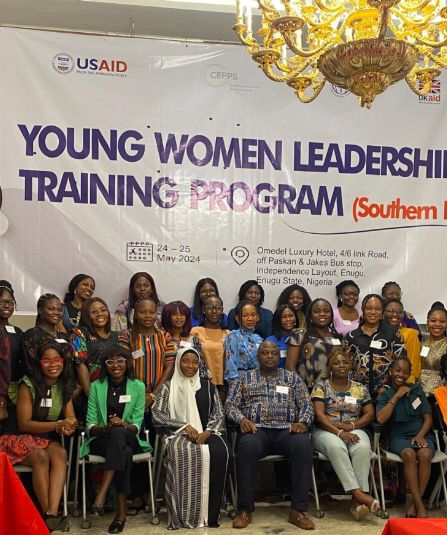
The lack of women in leadership positions in local government and civil society reflects how difficult it is for females to carve out leadership positions or rise through the ranks. Being a female in leadership in Nigeria means navigating a complex and often uneven playing field, shaped by societal expectations, systemic barriers, and deep-rooted gender norms. It requires resilience, determination, and strength to create meaningful change in the face of historical inequities. Striving for gender equality is not only advantageous to the women who might benefit from these efforts, but it is beneficial for Nigerian society in general. Women’s empowerment in governance can increase the quality of democracy by creating a society that is more representative of its citizenry and thus more stable. A more inclusive and diverse set of leaders across all levels of society can lessen internal conflicts and improve peacebuilding outcomes. To address the gender inequalities in Nigeria, the International Foundation for Electoral Systems (IFES) created and hosted the Young Women’s Leadership Training Program (YWLTP). IFES’s YWLTP is an empowering initiative designed to help young women in Nigeria chart a pathway through the maze of long-standing gender biases in order to achieve their dreams. Consisting of women ages 18 to 30 and tailored specifically for women with disabilities, university students, and female election candidates who have run for office without success, this program builds participants’ confidence, teaches leadership skills, and nurtures a female-centered support system. The program creates a network of persevering women ready to make an impact in elections, activism, or governance. To break through gender barriers, young women need tools. The YWLTP focuses on equipping participants with the resources and know-how they need to step boldly into leadership positions. While completing the IFES training, many beneficiaries created one-year-long work plans, setting personal goals for their leadership, political, and career goals, which were submitted to IFES for accountability and ongoing support, ensuring their growth is both strategic and sustained. One year later, IFES checked back in with three participants, Ifunanya, Praise, and Toyin, to see what they’ve accomplished:
Ifunanya Jessica Okoye, 22, Oraifite, Ekwusigo, Anambra state, Nigeria Ifunanya Jessica Okoye, 22, Oraifite, Ekwusigo, Anambra state, Nigeria Ifunanya Okoye, has become a registered member of a political party in Anambra State, where she is actively supporting a female councillorship candidate by crafting campaign messages. She also applied her training to run for an elective position in the Youth Assembly of Nigeria (YAN), successfully securing the role of Chief Whip for Ekwusigo LGA. How did the IFES training prepare you for your role as Chief Whip for Ekwusigo LGA in the Youth Assembly of Nigeria? Ifunanya: The IFES training, particularly focusing on self-confidence and campaign strategies, empowered me to overcome challenges and successfully campaign for my position. It provided me with the tools and mindset needed to navigate obstacles and emerge as a strong leader. From your own experience, how does the quality of leadership differ when led by women? Ifunanya: Women leaders excel in listening, empathizing, and making decisions that benefit the collective rather than individual interests. Their leadership style is characterized by inclusivity, compassion, and genuine concern for the welfare of others. Women’s involvement in leadership is crucial as women possess unique insights and perspectives that contribute to inclusive decision-making processes. Women leaders prioritize the well-being of all individuals, ensuring a balanced and equitable approach. What surprising lesson have you learned in your current position? Ifunanya: I have discovered that opposition, particularly from within my own gender, can be a significant challenge. This realization has reinforced the importance of self-reliance and resilience in leadership roles.
Ifunanya What positive changes have you observed due to your hard work? Ifunanya: My level of self-confidence has increased and every day, I continually strive for personal growth and excellence in leadership; daring and striving to do more and become a better leader/version of myself. What future transformations do you hope to see come out of your work? Ifunanya: Through my work with IFES, I have witnessed the support and interest of individuals invested in my growth. This has spurred me to do more and want to be more. I am determined to make a significant impact in the realm of whatever leadership position I am privileged to occupy, and I aspire to be recognized among the world’s most influential female leaders, such as Ngozi Okonjo-Iweala. What does democracy mean to you? Ifunanya: Democracy, to me, embodies the power of the people to shape their own destiny. It represents inclusiveness, equality, and the freedom to express opinions, make choices, and hold leaders accountable. True democracy thrives when every voice is heard, and every right is protected. My work in Nigeria is driven by a deep passion and commitment to justice, equality, and education. Through initiatives like Justice Link and programs for gender inclusion, I strive to amplify the voices to the marginalized, contribute towards preventing innocent citizens from falling victim to systemic injustices, and empower young girls to pursue education. I firmly believe that change begins with action, and I’m committed to creating a society where everyone has the opportunity to thrive.
Praise Chidiebube Nwankwo, 24, Ebonyi state, Nigeria. Praise is leading leadership training sessions for secondary school girls in Ebonyi State, aiming to inspire them to embrace leadership roles. She initiated a secondary school outreach program, visiting two schools to engage with students and instill a passion for leadership, preparing them for future roles in higher education and beyond. What valuable lessons did you learn from the IFES training you attended? Praise: One of the most valuable lessons I gained from the IFES Young Women Leadership Program was the importance of authentic leadership. Throughout the program, I participated in sessions focused on building confidence, improving public speaking skills, and understanding key leadership principles. These experiences taught me that true leadership is not defined by one’s title, but by their ability to influence, their vision, and their sense of purpose. The program challenged me to embrace my purpose, communicate effectively, and motivate others to take action, particularly in environments where women’s voices are often marginalized. It reinforced my belief that when women lead with authenticity and clarity, they have the power to make a lasting impact in their communities. Praise speaks to group of people. How did IFES’s training prepare you to conduct your own trainings at the secondary schools in Ebonyi State? Praise: The training I received from IFES provided me with the confidence and skills to effectively engage and inspire young minds. Through sessions on leadership and public speaking, I learned how to connect with diverse audiences and deliver impactful messages. When working with secondary schools in Ebonyi State, I applied these lessons to develop interactive sessions on gender equality, leadership, and personal development. IFES taught me how to tailor my approach to empower young students, ensuring that they not only learn but also feel inspired to take action in their communities. From your own experience, how does the quality of leadership differ when led by women? Praise: In my experience, women-led leadership often comes with a special combination of empathy, collaboration, and resilience. As the team lead at HerRise Foundation, I facilitated open dialogue during a recent community project, ensuring that every voice was heard. This approach not only fostered trust and empathy but also sparked innovative solutions as everyone felt a sense of belonging. This demonstrates that inclusive leadership can truly transform outcomes for individuals and communities. Women leaders excel in creating environments where individuals feel valued and empowered, driving meaningful progress. I believe it is imperative for women to take on leadership roles as diverse leadership leads to more inclusive and effective decision-making. Women bring unique perspectives shaped by their experiences and their involvement which ensures that policies and initiatives address the needs of all individuals. When women are in leadership positions, entire communities thrive. What future impacts do you hope to see through your continued efforts? Praise: My vision is to cultivate a generation of empowered young women who shatter barriers, redefine leadership, and create inclusive communities. As the founder of HerRise Foundation, I envision a world where every girl, regardless of her background, has access to quality education, asserts her rights, and fearlessly leads in spaces where her voice was once stifled. Praise with school children in uniforms. What does democracy mean to you? Praise: Democracy embodies principles of inclusion, equality, and the empowerment of every individual to shape decisions that affect their lives. It entails establishing systems where everyone, irrespective of their status or background, has an opportunity to participate, lead, and thrive. Through my work in Nigeria, my goal is to inspire a new generation of young people, particularly girls, to transcend limitations and lead with confidence. From initially providing sanitary pads to over 1,000 teenage girls to engage more than 3,000 students in leadership programs, I am unwaveringly committed to creating platforms where young voices are amplified, dreams are nurtured, and barriers are dismantled. My message is clear: with the right support, every child can thrive, and every girl can lead.
Headshot of Toyin Oluwatoyin “Toyin” Adebusola Adebayo, 28, Ikirun, Ifelodun, Osun State, Nigeria Toyin has been conducting leadership coaching sessions for young women in Osun State and established the Blooming Wellness Initiative. This organization promotes young women’s participation in leadership and addresses gender-based violence. Through her initiative, she hosts monthly dialogues on leadership and civic engagement. How did the training you received from IFES help you in establishing the Blooming Wellness Initiative? Toyin: The Blooming Wellness Initiative was born out of a deep-seated desire to cultivate leadership skills in young girls long before its official inception. The training provided by IFES transcended a mere two-day program; it was a transformative mentorship experience enriched with practical, hands-on activities. Participants were encouraged to express themselves openly, with facilitators offering genuine guidance that resonated deeply with me, fueling my passion for leadership. The structured nature of the training, coupled with the unwavering support of the facilitators, ensured that we were equipped with the necessary tools to navigate the complexities of leadership. The implementation template provided during the training proved to be indispensable too, offering a clear roadmap for planning and executing activities aimed at realizing our vision for change. Upon returning home, I was inspired to formalize my passion by officially registering the Blooming Wellness Initiative. The training provided by IFES not only equipped me with the skills and knowledge needed to lead effectively but also instilled in me the confidence to turn my aspirations into reality.
Toyin speaks at lecturn Why do you believe it is essential for women to hold leadership positions? Toyin: It is crucial because women are just as capable as men and can drive impactful change. Women bring a peculiar style of leadership to the table, shaped by their diverse life experiences, which can greatly enhance decision-making processes. Furthermore, women have a profound influence on the next generation of leaders – our children. By harnessing this influence through leadership roles, we can shape a brighter future for society. The quality of leadership is distinct when women are at the helm. Women, often conditioned to prioritize family and community, bring a unique perspective that can drive a sustainable society. Their values, ability to think critically, and firsthand experience with issues affecting women and children allow them to champion policies and initiatives with passion and insight. What future transformations do you hope to see through your continued efforts and engagement with the community? Toyin: Moving forward, my goal is to see a community where women are empowered to realize their full leadership potential and become unstoppable forces for positive change; rising above societal norms. Can you share a surprising discovery you made during your monthly dialogues? Toyin: One surprising discovery during our dialogues was the decision to include graduates in attendance. I was pleasantly surprised to find that topics I initially thought were more suitable for secondary school girls were highly relevant to them. This experience revealed that, despite the numerous initiatives and interventions for young women, there is a need to pay closer attention to unemployed graduates. Supporting them in developing and honing their leadership skills has become a critical area of focus for me. What message would you like to convey to readers worldwide about the impactful work you are doing in Nigeria? Toyin: The work we are doing in Nigeria is centered around empowering young women to recognize and harness their leadership abilities, sparking a wave of positive transformation. Our mission is to instill confidence, build skills, and challenge societal norms that hinder women’s participation in leadership roles, paving the way for a brighter future. To readers worldwide, empowering women is not just a local endeavor, it transcends borders—it is a global imperative for creating inclusive, resilient, and sustainable societies.
Federal Capital Territory (FCT) High Court has sent to one year imprisonment, a staff of the Federal Ministry of Aviation, Elvis Simon Okerenyi, for defrauding a man of one million naira with fake job employment promise. Elvis Simon Okerenyi, who was charged to court by the Independent Corrupt Practices and Other Related Offences Commission (ICPC), was given an option of fine to the tune of N200,000.00. The court ordered him to also pay “restitution” of the sum of N350,000.00 to Titus Tavershima, who was the victim of his crime. Elvis Simon Okerenyi was charged to court on forgery and giving “fake employment” to a job-seeker. ICPC said that investigations showed that Okerenyi defrauded Titus Tavershima, of the sum of One Million Naira to secure employment for him in the Federal Civil Service. “This act is contrary to Section 320 and punishable under Section 322 of the Penal Code, Cap 532, Laws of the Federal Capital Territory, Nigeria, 2006. “Subsequently, the defendant entered into a plea bargain agreement with the prosecution; the initial seven-count charge was amended to a count charge to which the defendant pleaded guilty. “The defendant pleaded guilty upon his arraignment based on a plea bargain agreement before Justice S. C. Oriji of the High Court of the Federal Capital Territory (FCT) and was convicted pursuant to section 270(10) ACJA on the only charge in the amended charge.”
We use cookies on our website to give you the most relevant experience by remembering your preferences and repeat visits. By clicking “Accept”, you consent to the use of ALL the cookies.
This website uses cookies to improve your experience while you navigate through the website. Out of these, the cookies that are categorized as necessary are stored on your browser as they are essential for the working of basic functionalities of the website. We also use third-party cookies that help us analyze and understand how you use this website. These cookies will be stored in your browser only with your consent. You also have the option to opt-out of these cookies. But opting out of some of these cookies may affect your browsing experience.
Necessary cookies are absolutely essential for the website to function properly. This category only includes cookies that ensures basic functionalities and security features of the website. These cookies do not store any personal information.
Any cookies that may not be particularly necessary for the website to function and is used specifically to collect user personal data via analytics, ads, other embedded contents are termed as non-necessary cookies. It is mandatory to procure user consent prior to running these cookies on your website.







 NAHCON Chairman called on the returning pilgrims to continue to pray for Nigeria to overcome its challenges and for them to remember the nation’s leaders in their prayers.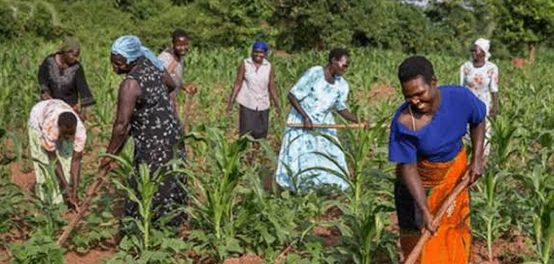
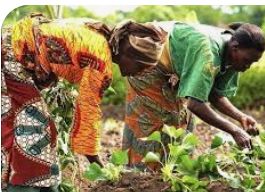 Meanwhile, Women’s cooperatives have risen over time to support microfinance schemes, local savings and communal projects. This is in addition to some Organizations which have noticed the activities of those hardworking women and and have formed support networks. They include Edo Women Farmers Cooperative Societies, which is a local groups that empowers women through shared resources and knowledge.





China’s Agricultural Revolution: Lessons For Nigeria, By Kemi Yesufu
The 1949 revolution, led by the Chinese Communist Party (CCP), resulted in the proclamation of the People’s Republic of China and the CCP’s consolidation of power on the mainland. Several years after another silent revolution took place in China, it was the agricultural revolution.
It is safe to describe China as not just a vast country dotted with well-built and well-administered cities, but one which has cultivated land almost everywhere you look.
After a few days in Beijing, the beautiful capital city of China, I joined other participants for the seminar on Agricultural Machinery Development Planning and Safety Management for Developing Countries in a high-speed train to Jiamusi in Heilongjiang Province. For most of the eight-hour journey, both sides of the rail route were cultivated land with tall buildings in the background forming a nice combination of the two basic needs of man.
The team of participants from five nations, Nigeria, Uzbekistan, The Gambia, Pakistan and Jordan, travelled to Jiamusi to see more of the many factories producing the machinery and farming input that powers China’s mechanised food production. One of the places visited in Jiamusi is the fully mechanised and digitalized, Intelligent Farm run by Beidahuang Kengzheng Agricultural Machinery company. An interesting fact is that President Xi Jinping visited the same farm in 2018.
VIDEO: https://youtu.be/rv_daDaYTdA?si=1gbiwpaLoY-KL8iw/ Areal view of a mechanised farm in Jiamusi, China.
Aside from the Intelligent Farm, there are other fully mechanised and digitalized mega and medium sized farms across China. However, the secret of the country’s massive agricultural output is the smallholders who form a large chunk of the Household Contract Responsibility System. The Household Responsibility System was introduced at a critical moment of China’s reforms which saw the country move from the Soviet model of planned economy, characterized by heavy industries and complete nationalisation, which yielded inefficiency and undersupply, to a more open country prioritising shared prosperity.
In his presentation on China’s level of development and culture, MA Teng, a Senior Engineer at the Chinese Academy of Agricultural Mechanisation Sciences Group (CAAMS), which hosted the two-week summit, told participants that strictly implemented reforms and, the adherence to the rule of law had seen China lift 800 million of its 1.4 billion population out of poverty. This is as Feng Li, a researcher at the Chinese Foreign Affairs University, traced China’s impressive economic indicators to the country’s past and current leaders sticking to people-centric reforms. Using data from 2024, Li further told participants that the Asian country’s GDP stands at 134,908.4 Chinese Yuan. The national income is 133,969.2 billion Yuan, industry output is 40,544.2 billion, the service sector’s total value is 765,583 billion, and domestic trade (total trade of consumer goods) hit 48,334.5 billion Yuan. For international trade, the total value of imports and exports of goods reached 43,846.8 Yuan, while the national per capita disposable income is 41,314 Yuan. But as explained by Li, China still considers itself to adeveloping country because of the rural poor whom the government is working assiduously to pull as many out of poverty.
Unlike in Nigeria, where experts and the media, based on the socioeconomic realities, have cause to dispute exciting economic indicators from the government, in China, the country’s much-touted shared prosperity philosophy is easy to see in Beijing, Jiamusi and Changchun. In the three cities visited by participants, my keen observation showed that there aren’t glaring social disparities between the two cities, far from China’s capital city. In fact, Jiamusi is home to 24 Fortune Global 500 companies. One of the thriving businesses in Jiamusi is Jichin Tractors, which produces thousands of tractors from 30-300 HP annually. Another is the Beidahuang Kengzheng Agricultural Machinery company which produces thousands of tractors and farm machinery yearly. The majority of the customers of China’s manufacturers come from within and the neighbouring countries, with the Chinese government backing these companies’ push to sell more overseas.
While China’s degree of mechanisation in crop growing, including land cultivation, sowing and harvesting, reached 72.03 % in 2021, as reported by ScienceDirect.com, in 2025, Nigeria’s leader is boasting of changing lives with the deployment of 2,000 tractors, 50 industrial-grade land preparation bulldozers, 12 fully equipped mobile workshops, and over 8,000 specialised farming implements, to improve food production for the country’s over 200 million, youth-heavy population.
Beyond the distribution of tractors and other farm equipment, President Tinubu must honestly confront other challenges that prevent the country from improving agricultural mechanisation from its current 10 percent level. Some of these challenges include: high cost and limited access to machinery, inadequate maintenance facilities and poor basic infrastructure as well as energy constraints. Other challenges include fragmented landholdings and tenure issues. Small, fragmented landholdings, common in many parts of Nigeria make it difficult to efficiently utilise large-scale machinery.
Again, in many cultures in Nigeria, women don’t inherit land; they have to rent or lease at high cost, even though women constitute a significant majority of peasant farmers, with estimates ranging from 70% to over 75%. Farmers, especially the women, also struggle to secure loans or credit to purchase machinery, especially those with limited collateral. To solve the twin problems of land ownership and machinery acquisition, the government can localise the Chinese model of Household Responsibility Contract in which families or communities come together to sign a contract with government on farming and food production, which is beneficial to both parties. Other problems stalling agricultural mechanisation include the lack of skilled labour and technical expertise and lack of effective extension services and training programs. Then there is the huge problem of bloody attacks on farms which have seen large numbers of rural dwellers abandoning farmlands. The violent attacks have led to fluctuations in the sector’s contributions to the economy. In 2020, Agriculture contributed 25.70% to the GDP, according to the National Bureau of Statistics. Aside from allocating the highest figure to defence in the annual budget, the Federal Government must seek better means of dealing with banditry, kidnapping and cattle rustling.
Again, to improve agricultural mechanisation in Nigeria, a multifaceted approach is needed, including policy reforms, increased access to credit, training programs, and public-private partnerships. Specifically, this involves supporting local machine production, strengthening existing institutions, and promoting the use of modern machinery and equipment. In improving the level of farm mechanisation Nigeria can also learn from China when it comes to maintaining safety. In her presentation titled China’s Machinery Safety Supervision and Management Policies and Practices, Prof. Hua Dengfeng, disclosed that in 1978, a total of 59,546 agricultural accidents occurred with 9,734 killed and 15,326 injured. However, with nationally set and strictly implemented safety rules and laws, between 2012 to 2024, the number of accidents reduced from 2000 with 900 injuries and 700 fatalities to nil recorded accidents, injuries and mortality.
How can Nigeria collaborate with China on agricultural mechanisation? To significantly improve agricultural mechanisation, Nigeria can collaborate, as already done with Belarus and China, which is an even bigger and tested partner. Nigeria can easily key into its long history of trade and other forms of collaboration with China. By 2023, trade between China and Nigeria reached $22.56 billion, with Nigeria being China’s third-largest trading partner in Africa. In 2023, the top exports from Nigeria to China included Petroleum Gas ($995M), Crude Petroleum ($409M), and Other Mineral ($293M), according to The Observatory of Economic Complexity.
In 2023, the top exports from China to Nigeria included machinery having individual functions ($530M), broadcasting equipment ($486M), and non-knit women’s Suits ($452M), according to The Observatory of Economic Complexity.
From January to September 2024, the trade volume totalled $15.1 billion, with China’s imports from Nigeria increasing by 36.1% year-on-year.
The currency swap agreement between Nigeria and China, which was renewed in 2024 is worth $2 billion. The deal is aimed at reducing reliance on the US dollar, stabilise Nigeria’s foreign reserves, and boosting trade and investment. Nigeria is also part of China’s Belt and Road Initiative (BRI). Nigeria signed a Memorandum of Understanding (MoU) to join the BRI in September 2018. The initiative focuses on infrastructure development and strengthening economic and political ties between China and participating countries. Nigeria has actively engaged with the BRI, particularly in areas like railway and port infrastructure development. In building on its already existing partnerships and bilateral agreements, Nigeria can prioritise future collaboration on opportunities to improve mechanisation of agriculture in Nigeria as this critical to massive food production, ending hunger and poverty alleviation.
Kemi Yesufu, who recently returned from China, is the Editor-In-Chief/ CEO of Frontline News Online, and can be reached on yesufukemi@gmail.com