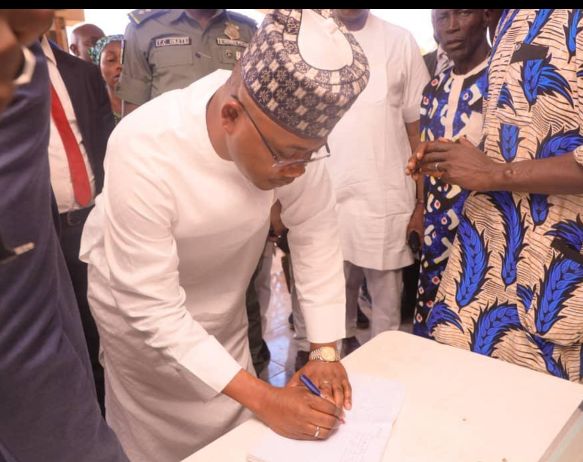
Permanent Representative of Italy to the United Nations and other International Organisations, Ambassador Vincenzo Grassi has vowed to wage war on discrimination against women and girls. Ambassador Vincenzo Grassi, who spoke at the Interactive Dialogue with the Working Group on Discrimination against Women and Girls at the 59th session of the Human Rights Council in Geneva, said that the fight would involve the removal of stereotypes and cultural barriers. He stressed that efforts would also be made to promote an equitable distribution of care work in families between women and men. “The fight against all forms of discrimination against women and girls is a traditional priority for Italy.” Ambassador Grassi pointed out that “one of the most urgent challenges to be addressed is the disproportionate impact of care work, the burden of which falls disproportionately on women and girls, often preventing them from pursuing adequate personal and professional development.” In this sense, he added: “promoting an equitable distribution between women and men of care work within the family and household is a fundamental step towards gender equality.” The Permanent Representative stressed: “economic empowerment and equal opportunities in access to education, training and career advancement are fundamental in the Italian vision.” He also stressed the importance of “removing stereotypes and cultural barriers that prevent women and girls from accessing all fields of study and work, including science, technology and finance, as well as supporting female entrepreneurship and leadership positions in decision-making processes.”
People of Biu in Borno State have chosen to re-elect their representative in the Federal House of Representatives, Muktar Betara Aliyu in the 2027 election to continue the good work he has been doing for the constituency. Betara Aliyu is representing Biu, Bayo, Shani and Kwaya-kusar towns in the House of Representatives in the past eighteen years. In a statement, one of the leaders in the constituency and a retired civil servant, Alhaji Ibrahim Biu, said that the people in the constituency had never had it so good in terms of the dividend of democracy like the period Betara Aliyu had been in charge. Ibrahim Biu, who is a top journalist, said that the people’s representative had transformed Biu town into a modern city with the provision of infrastructure such as road networks, water, health institutions and facilities. “He has done a great lot in the areas of education, health, agriculture, rural electrification, and provision of water, fertilizer, infrastructure, grinding engines, and tractors to farmers and women, especially widow. “He has also constructed about 100 boreholes and provided houses to the less privileged in the society apart from helping women and children to be on their own, through the provision of motivational funds.
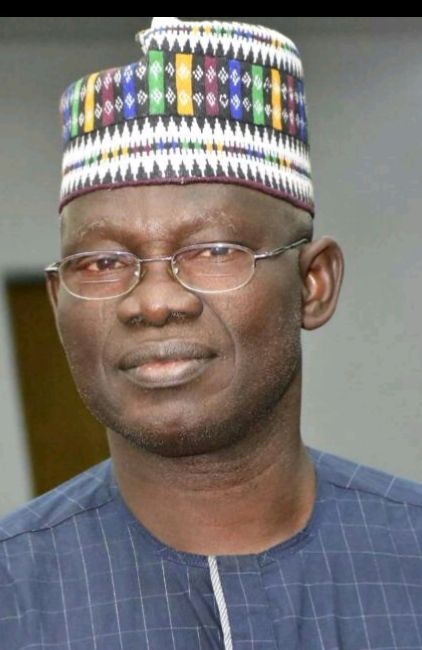
“This is apart from helping farmers, the less privileged in the society not only during festivities but also all aimed at improving their lives. “No wonder almost everywhere you go, the people are clamouring for the re-election of Betara Aliyu.” Ibrahim Biu stressed the fact that the people in the area wanted Betara Aliyu back in the House of Representatives in 2027 because of his superlative performances, simplicity, fear of God and his large heart. Honourable Muktar Betara Aliyu is currently chairman of the House of Representatives Committee on the Federal Capital Territory (FCT).
In more ways than one, Nigerian women have remained in the background where major politics is being played. This is despite the advancement not only in technology but also in global awareness. From the time the first woman, arguably, Funmilayo Ransom-Kuti surfaced to fight against unfair taxation and oppressive colonial policies against women in 1946, there hasn’t been any significant increase in women participation in the Nigerian politics, passing through the first to the present fourth Republics. In fact, Funmilayo Ransome-Kuti (1900–1978), who founded Abeokuta Women’s Union (AWU), mobilised thousands of women to protest, forcing the Alake of Egba to abdicate in 1949. She later became a strong member of the National Council of Nigeria and the Cameroons (NCNC). She advocated for women’s suffrage and political representation, paving the way for future women’s participation.
After Funmilayo was also Margaret Ekpo (1914–2006) who was a teacher, politician and activist from Aba. She founded Market Women Association in Aba to fight colonial injustices against women traders. She rose as a prominent member of NCNC, representing women’s interests. In 1953, she won election into the Eastern Regional House of Assembly, becoming one of the first female legislators in Nigeria. She mobilised women to engage in politics beyond traditional roles, integrating them into decision-making. And in the Northern part of the country emerged Hajiya Gambo Sawaba (1933–2001). She a fearless politician and activist, who was a strong member of the Northern Element Progressive Union (NEPU) under late Malam Aminu Kano. NEPU came out to oppose feudalism, illiteracy and gender oppression in the North. Gambo Sawaba defied the so-called norms and culture and got into serious political activism, resulting in her imprisonment many times, especially for advocating girl-child education and fighting child marriage. She went all the way to encourage women to vote and contest positions despite sociocultural resistance. One other woman participant in the murky water of politics was Chief (Mrs) Olufunmilayo Olopade, who engaged in local political structures in Western Nigeria. She mobilised women in local councils and market associations to demand participation in the 1950s regional political reforms, even as Chief (Mrs) Janet Mokelu, an Igbo politician contested and became a member of the Eastern House of Assembly. Mrs Janet Mokelu advocated education and health reforms for women and children in the Eastern Region as well as promoted girl-child education in the old Anambra area.
The next other woman political activist was Wuraola Esan (1909–1985), who turned out to be the first female member of the Nigerian Senate (1960–1966). She was very active in Action Group (AG) politics in Western Nigeria. She advocated women’s rights, girl-child education and social welfare and served as an influential voice in constitutional development and women’s representation in Nigeria’s First Republic. These early female politicians actually engaged in anti-tax protests (e.g. Aba Women’s Riot, Abeokuta protests) and fought hard as members as well as leaders in national political parties (NCNC, NEPU, AG). They fought against oppressive traditional and colonial structures. They contested elective positions at regional and national levels to influence policies. Fast forward, what do we have in this fourth republic, specifically in the current dispensation?
As a matter of fact, women representation in politics and leadership is so low that it can rightly be regarded as backwardness. To think that currently only about, or even less than 10 percent of the elective offices at national and state levels are occupied by women. For example, in the 10th National Assembly (2023), out of 469 seats (Senate and House of Representatives), only about 17 were held by women. There are only four in the Senate that is made up of 109 members. There is no female governor elected in the 2023 general elections, though there were deputy governors. At the political level, the only position women occupy is that of ‘women leader’ instead of core decision-making roles such as party chairpersons or national secretaries. Party structures are male-dominated, limiting women’s influence on internal party policies and candidate nominations. Even in the area of appointment, the Federal Executive Council of President Bola Tinubu has about 20 percent female ministers, which of course, is below the 35 percent affirmative action target set in national gender policies. The low participation of women has remained the product of patriarchal norms and cultural beliefs, which combined to discourage female political ambition. This is more pronounced in the northern part of the country, where women who dare to take part in politicking are regarded as loose and uncultured. It is very appropriate to digress here to stress the point that the greatest stumbling block to women participation in politics and leadership position, especially in the northern Nigeria, is this misconceived Islamic point of view that women should not be seen, heard and lead, whereas it is purely a patriarchal interpretation combined with cultural tradition. Islam, when studied holistically, upholds dignity, justice and capability of any human being as the criteria for leadership, not gender alone. This should be seen of course, as a very sensitive and important topic requiring balanced and grounded analysis. Many people in Northern Nigeria, including the learned ones, believe that Islam forbids women from political leadership, based on interpretations of certain Hadiths (Prophetic traditions). The Hadith, narrated by Abu Bakra says: “Never will succeed such a nation as makes a woman their ruler.” (Bukhari 4425) This Hadith was narrated in the context of the Persian Empire appointing a woman (daughter of Kisra) as ruler. Some scholars argue that it was a specific commentary on that situation, not a general eternal ruling. But the Holy Qur’an does not categorically prohibit women from leadership. For instance, Allah in Surah An-Naml (27:23-44) of the Holy Qur’an, presents Queen of Sheba (Bilqis) as an intelligent, wise, consultative and just leader. He neither condemns her rule nor commands her removal. Instead, He mentions her good judgement and eventual acceptance of Islam. The Holy Qur’an repeatedly emphasizes that both men and women are equally accountable for deeds (e.g. 33:35), indicating that leadership, in the form of enjoining good and forbidding evil is encouraged for all believers. Some contemporary scholars maintain that women cannot be heads of state but can hold other leadership roles (ministers, parliamentarians, commissioners). Others argue that the Hadith is contextual and leadership should depend on competence, integrity and capability, not gender alone. Again, in the Northern Nigeria, Islam is deeply intertwined with culture. But many barriers attributed to Islam are in fact cultural, including preference for male dominance in public affairs, early marriage affecting girls’ education, which reduces future leadership prospects and misinterpretation of religious texts by conservative scholars to reinforce patriarchal norms. It is on record that Prophet Muhammad (SAW) consulted women, e.g. Umm Salma during Hudaybiyyah. Women like Aisha (RA) were scholars and public teachers of Hadith and Fiqh, guiding men and rulers. The fact needs to be repeated that late Hajiya Gambo Sawaba defied both colonial and North’s cultural restrictions to lead politically in the mid-20th century. Also women like late Hajiya Aisha Jummai Alhassan (popularly called Mama Taraba), Hajiya Aisha Dahiru Ahmed Binani, Hajiya Bint Masi Garba, Hajiya Khadija Bukar Abba, Hajiya Saudatu Sani, Hajiya Dr. Ramatu Aliyu Tijjani, Barrister Natasha Akpoti-Uduaghan, Ireti Kingigbe and others also defied the established norms and culture to fully participate in politics and leadership in the north, holding ministerial and senatorial positions as well as venturing into contesting governorship elections. The greatest stumbling block is therefore, not Islam itself but patriarchal interpretations combined with cultural traditions. Islam, when studied holistically, upholds dignity, justice, and capability as the criteria for leadership, not gender alone. On the inhibiting factors to women participation in politics and leadership in Nigeria are also the issues of violence, intimidation, and harassment during elections which, by their gentle nature, women cannot withstand. Because Nigeria’s kind of politics is heavily monitised, a large chunk of women who may want to venture into politics are discouraged either by financial constraints or the deceptive nature inherent in the system. This is hinged mainly on lack of internal democracy in parties to ensure fair primaries for women, irrespective of how much they may spend to campaign. With the world advancing towards the Artificial Intelligence era, from the internet revolution, it will be unfortunate if Nigerian women are, willy nilly, being kept in the background at every turn in the nation’s political and leadership journey. There is therefore urgent need to legislate on, and enforce gender quota laws, mandating a minimum percentage of women in elective and appointive positions, which should be 35 percent as in National Gender Policy). Electoral Act should be amended to include, among others, clear affirmative action clauses. Political parties should be made to abolish or reduce nomination fees for women aspirants, even as internal quota system should be created to reserve slots for female candidates in primaries. There should be a deliberate policy too to strengthen women wings to have policy influence, not only mobilisation roles. As a matter of fact, special provisions need to be put in place to train women in political strategy, campaign management and governance, besides the establishment of mentorship programs that should connect young women with experienced female politicians. The system: government and political parties should set up what one would call “Women Political Empowerment Funds” supported by government and private sectors to fund female candidates’ campaigns. Above all, national and international None Governmental Organizations (NGOs) need to intensify advocacy to change negative cultural perceptions of women leaders, especially in the northern part of the country. They can use schools, religious bodies and media to promote gender equality in leadership and governance. Ways should be made to control electoral violence. There should be deliberate moves and policies to device stronger enforcement against political violence and harassment, which often deter women from participating. To catch them young, policies should be initiated to educate girls from early stages on political leadership and civic rights for them to build interest and confidence. For Northern Nigerian society in particular to harness its full human resource, both men and women should be empowered to serve in all spheres, including political leadership, within the moral and social framework of Islam. There is need to re-educate communities in the north on Qur’anic principles of justice, consultation and capability; to encourage female education at all levels as a religious duty and to clarify Hadith interpretations within proper scholarly contexts rather than as blanket bans. There is also the urgent need to promote inclusive Islamic scholarship where women scholars teach both men and women and to address cultural barriers, differentiating them from Islamic injunctions. On the whole, it must be restated for emphasis that the present women’s participation in politics and governance has been discouraging despite constitutional guarantees of equality, and to improve requires legal quotas, party reforms, cultural change, financial support and targeted capacity development are indispensable and urgently so. This is essential for balanced development and inclusive governance towards achieving Nigeria’s commitments under the Sustainable Development Goals (SDG 5: Gender Equality).
Yusuf Ozi-Usman, nipr, is Editor-in-chief of Greenbarge Reporters online newspaper and Author of many books. He can be reached on oziusman@yahoo.com and Whatsapp +234-8037020244.
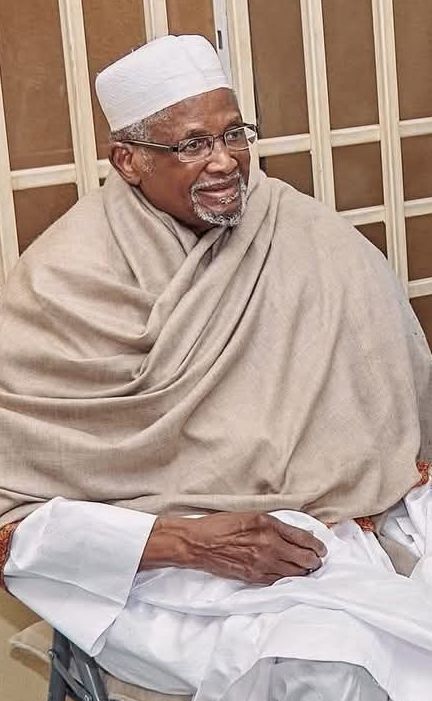
A respected Nigerian business tycoon, philanthropist and elder statesman, Alhaji Aminu Alhassan Dantata I dead, aged 94. A family member confirmed his passing yesterday (June 27), evening. The famous Kano-born businessman died at a hospital in Abu Dhabi, the United Arab Emirates at about 3.00am Nigerian time. Aminu Dantata to whom Alhaji Aliko Dangote is a grandnephew, was born on May 19, 1931. He was one of the promoters of Kano State Foundation, an endowment fund that supported educational initiatives and provided grants to small-scale entrepreneurs in Kano. Aminu Ɗantata was one time Kano State Commissioner for Planning and Development from 1967 to 1972 under the government of military Governor, Audu Bako. He was a member of the Northern House of Assembly from Kano between 1960 and 1966. In 1978, he was a member of the National Movement, an organization that later transformed to the National Party of Nigeria, the second Republic’s ruling party. He was also an active member of the Northern People’s Congress from 1959 to 1966 as well as member of the Aminu Kano led Northern Elements Progressive Union (NEPU) from 1959. Dantata was the founder of Express Petroleum & Gas Company Ltd and one of the organizers of Jaiz Bank in Nigeria.
The Women’s Rights Advancement and Protection Alternative (WRAPA) has launched campaign for electoral reforms in its effort to promote gender equity and inclusive governance in Nigeria. The group, with support from MacArthur Foundation, recently convened a high profile community town hall meeting in Mubi North, Adamawa State, aimed at raising awareness around electoral reforms and citizen participation in the democratic process. The event, organized in partnership with the International Federation of Women Lawyers (FIDA) Nigeria, Adamawa State chapter and the Nigerian Women Trust Fund (NWTF), brought together a cross-section of community stakeholders, including traditional rulers, religious leaders, civil society organizations (CSOs), women groups, and associations of Persons With Disabilities (PWDs). The meeting, held under the Electoral Accountability, Gender Equity and Social Inclusion (GESI) Project highlighted the urgent need for reforms that would guarantee free, fair and inclusive elections. Central to the discussions was the role of women and marginalized groups in the political process, groups often left behind in the nation’s democratic journey. In her address, WRAPA’s Program Manager, Hajiya Umma Rimi, said that the town hall meeting was part of the broader #UnfinishedBusiness campaign, focused at ensuring that no one is excluded from Nigeria’s electoral and governance systems. “This is not just about elections, it’s about reshaping the future so that everyone, regardless of gender or physical ability, has a voice and a seat at the table.” Also speaking, the WRAPA Adamawa State Coordinator, Barrister Fatima Raji, alongside the chairperson of FIDA, Barrister Jamila Babuba, represented by Barr. Lubna Dodo, Vice chairperson of the organization educated participants on how electoral reforms could foster transparency, equity and stronger citizen trust in governance. They stressed that such reforms would remove longstanding barriers that have hindered women’s and PWDs’ participation in leadership. The interactive session saw participants sharing personal stories and challenges, underscoring the structural and societal limitations that keep women and persons with disabilities on the margins. Many participants expressed the belief that unless deliberate policies are put in place, the political space will continue to be skewed against vulnerable groups. The participation of the APC Zonal Vice Chairman for Adamawa North, Wilfred William Vimtim, who represented the State APC Chairman, Barrister Idris Shuaibu added colour to the event. Vimtim reaffirmed his party’s support for voter education and the principles of inclusive governance. His remarks were greeted with appreciation, even as he emphasized the importance of electoral literacy, especially at the grassroots level. WRAPA and its partners reiterated their commitment to continue these town hall engagements in Mubi South and other local governments to reinforce the message that Nigeria’s democracy can only thrive when it is inclusive, transparent and accountable to all.
The Nigerian National Petroleum Company Limited (NNPC Ltd.) has said that the emerging coordinated sabotage campaign being waged by faceless actors, both outside and within various levels of the organisation would not fly. In a statement today, June 27, NNPCL cried out against the group of detractors that have gone to town, spreading lies and misinformation simply to discredit the company’s leadership and derail the ongoing transformation into a corruption-free, performance-driven energy company, in line with the mandate of the President. “Their tactics include planting scandalous and fabricated reports, curated to distract leadership, mislead the public, and undermine the commitment of our dedicated workforce and reform-minded Nigerians. “These are calculated efforts by those who feel threatened by reform, transparency, accountability and change—clear evidence of the lengths to which they will go to obstruct the transformation of Nigeria’s foremost energy institution. “We expect a surge of defamatory content in the days and weeks ahead. NNPC Ltd. remains undeterred. “The transformation is underway, and no amount of sabotage will stop it. “We urge our dedicated staff, stakeholders, and all patriotic Nigerians to stay focused, ignore the noise and not be discouraged. We remain on mission.”
The National Chairman of the ruling All Progressives Congress (APC), Dr. Abdullahi Umar Ganduaje has resigned. Ganduje, who is the former Governor of Kano State, said his resignation is as a result of health challenges, but did not elaborate. In the resignation letter, he stressed the need for him to focus on his well-being. Details later.
The Guild of Interfaith Media Practitioners Nigeria (GIMP‑Nigeria) has advised Muslims to use the 1447 AH Hijrah New Year to build religious bridges. The new Islamic Year begins today, June 26, with the sighting of the crescent of new Muharram moon last night. In a statement, the Chairman of the Guild, Abdulkarim Abdulmalik recalled that Prophet Muhammad’s journey of faith began in this month with the migration from Makkah to Madinah, signifying courage, conviction and community-building. “On this auspicious occasion, we pray that Allah grants the Ummah guidance toward compassion, justice and unity. “As commitment to renewed hope and positive transformation for ourselves and the Nigerian society, our collective interfaith mission is strengthened by our example of solidarity, inclusion, and peaceful coexistence. “Muharram marks not only the beginning of the Islamic calendar but also a moment to reflect, resolve and rebuild. May this New Year usher in abundant blessings, forgiveness, and spiritual growth.” Abdulmalik called on interfaith media colleagues to inspire collaborative efforts in peace-building and national dialogue, even as he wanted them to renew their dedication to narratives of bridge building and not walls. “Let this Hijrah New Year be a fresh opportunity to amplify stories of harmony, resilience and shared humanity in our diverse Nigerian landscape.” He also called on policymakers, civil society and faith leaders to embrace this season as a rallying point for advancing policies that promote interfaith tolerance, equitable representation and peaceful coexistence. “From all of us at GIMP‑Nigeria, we say: Assalamu Alaikum Warahmatullahi Wabarakatuh. 1447 AH Mubarak.”
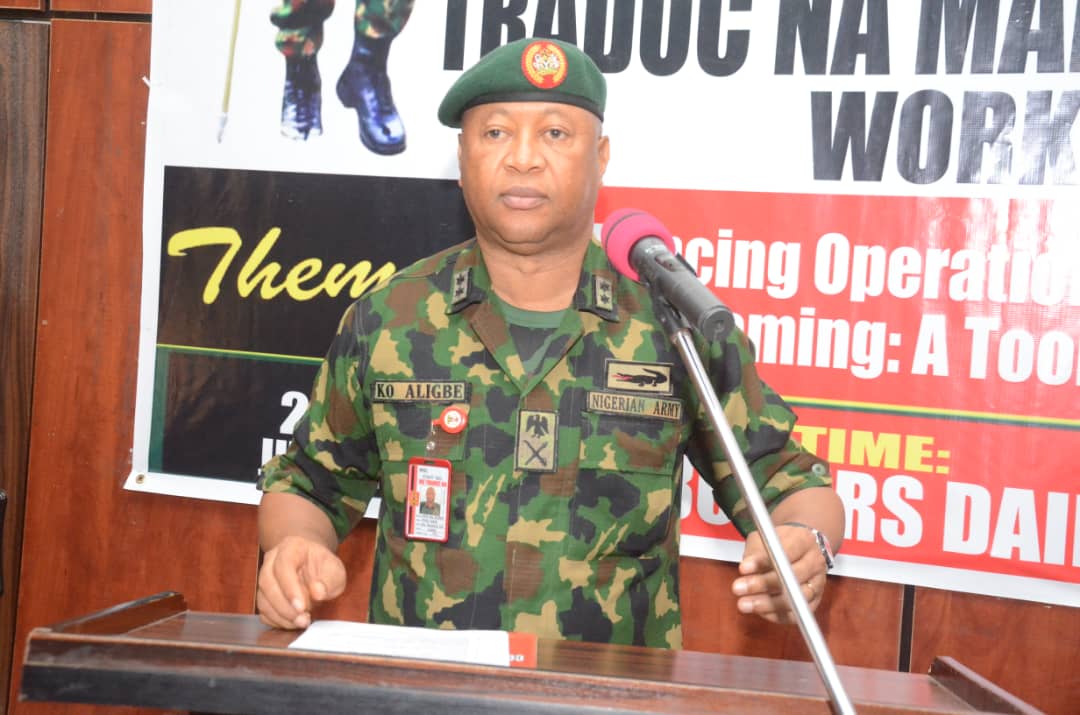
Commander of the Training and Doctrine Command Nigerian Army (TRADOC NA), Major General Kevin Aligbe, has said that the world is becoming so complex now that Nigeria needs to get army commanders that think out-of-the-box In battlefield at all times. He declared: “We (Nigerians) want commanders who can think out of the box, apply unconventional tactics, and deliver battlefield results that matter. This is the kind of transformation that strengthens not just the Army, but national security as a whole.” The General was speaking at a week-long Manual Wargaming Workshop codenamed: Exercise MUNGAMA AIKI, in Minna, the Niger State capital. The workshop, aimed to equip tactical commanders with practical skills in combat strategy and decision-making, is being conducted by the Training and Doctrine Command Nigerian Army (TRADOC NA). It brings together commanders from across Army formations for intensive manual wargaming drills an approach that removes digital limitations and fosters raw strategic thinking. Major General Kevin Aligbe stressed the need for commanders to be agile, innovative and results-oriented, saying that the workshop is timely in view of the fact that Nigeria continues to face diverse and complex threats, ranging from insurgency and terrorism to banditry and cyber warfare.
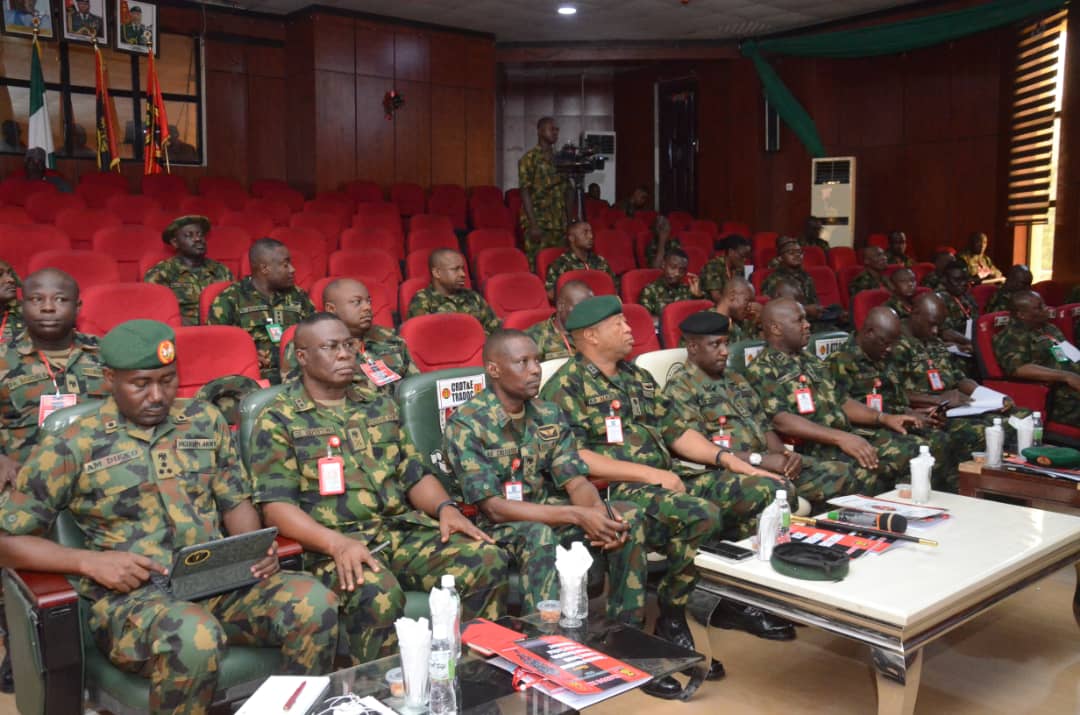
According to the General, simulated battlefield scenarios would help sharpen participants’ judgment and response capabilities in real conflict situations. Major General Aligbe also stressed the importance of using manual wargaming to assess operational plans prior to deployment an approach that could save lives, time, and resources. He commended the Chief of Army Staff for his visionary leadership, which he said has continued to drive the Army’s professionalization efforts. “Our duty is clear: to protect this nation. We must train harder, plan smarter, and lead better.” In his welcome address, the Chief of Doctrine and Combat Development TRADOC NA, Major General Jamiu Jimoh, represented by Brigadier General Muhammed Abubakar described manual wargaming as an essential planning tool that enhances operational effectiveness, manages risk and fosters a unified planning language among commanders. He emphasized that the workshop will feature lectures, interactive discussions and practical sessions centered on the application of manual wargaming and the military decision-making process. The workshop is structured as a “train-the-trainer” program, where participants will replicate the wargaming model in their respective units to raise operational planning standards at all levels. Participants were drawn from Nigerian Army formations and training institutions. Major General Jimoh encouraged them to be fully engaged, open-minded and committed to transferring the knowledge gained to their respective commands for the benefit of national security. The workshop runs until 27 June 2025 and is expected to contribute significantly to the Nigerian Army’s doctrinal evolution and field strategy development. It is being held at the Lt General Faruk Yahaya Manual Wargaming Centre, co-located within the TRADOC NA Complex.
Governor Ahmed Usman Ododo of Kogi State has sent a strong warning to traditional rulers and others that are directly and indirectly aiding criminals in any part of the State. The governor, who personnelly visited the family of retired military officer, Major Joe Ajayi. who died in kidnappers’ den, specifically warned traditional rulers against allocating lands in their domain to questionable characters. Speaking at the residence of late Major Joe Ajayi at Odo-Ape community, in Kabba-Bunu Local Government Area of the State today, June 25, the state Chief executive declared a total clampdown on criminal elements operating in the area and other parts of the state’s West Senatorial District. “Any individual or group found aiding or abetting crime in any community will face the full wrath of the law.” The Governor described the late officer as a true patriot who served the country with honour and dedication, saying that his death at the hands of criminals was not only heartbreaking but a call to action. “I was personally touched when I heard about his death. “It would be a disservice to his memory if we fold our arms and allow criminals to take over our land.” Governor Ododo assured the people of Odo-Ape and the Kogi West that his administration would deploy all necessary resources to ensure that the perpetrators are brought to justice and that peace and security are restored to the area. The governor stressed that the state government would no longer condone the unregulated influx of criminal elements masquerading as investors, even as he cautioned traditional leaders in the area against indiscriminate allocation of land to individuals whose identities and intentions are unclear. Speaking on behalf of the family, younger brother of the deceased, Titus Ajayi thanked Governor Ododo for identifying with the family in their time of grief. He said that the visit was a strong source of comfort and assurance that justice will be served.
We use cookies on our website to give you the most relevant experience by remembering your preferences and repeat visits. By clicking “Accept”, you consent to the use of ALL the cookies.
This website uses cookies to improve your experience while you navigate through the website. Out of these, the cookies that are categorized as necessary are stored on your browser as they are essential for the working of basic functionalities of the website. We also use third-party cookies that help us analyze and understand how you use this website. These cookies will be stored in your browser only with your consent. You also have the option to opt-out of these cookies. But opting out of some of these cookies may affect your browsing experience.
Necessary cookies are absolutely essential for the website to function properly. This category only includes cookies that ensures basic functionalities and security features of the website. These cookies do not store any personal information.
Any cookies that may not be particularly necessary for the website to function and is used specifically to collect user personal data via analytics, ads, other embedded contents are termed as non-necessary cookies. It is mandatory to procure user consent prior to running these cookies on your website.



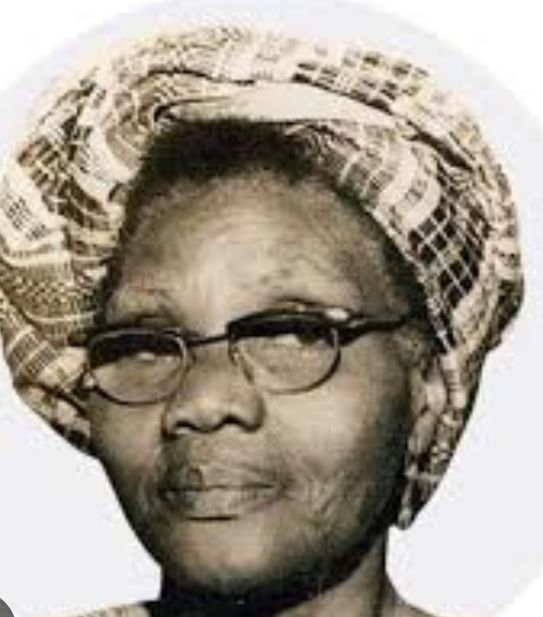 After Funmilayo was also Margaret Ekpo (1914–2006) who was a teacher, politician and activist from Aba. She founded Market Women Association in Aba to fight colonial injustices against women traders. She rose as a prominent member of NCNC, representing women’s interests.
 The next other woman political activist was Wuraola Esan (1909–1985), who turned out to be the first female member of the Nigerian Senate (1960–1966). She was very active in Action Group (AG) politics in Western Nigeria. She advocated women’s rights, girl-child education and social welfare and served as an influential voice in constitutional development and women’s representation in Nigeria’s First Republic.
 As a matter of fact, women representation in politics and leadership is so low that it can rightly be regarded as backwardness.