Government’ll Soon Name Politicians Fueling Bandits, Others – Zamfara Governor
Zamfara State Governor, Bello Muhammad Matawalle has said that Federal and some state governments are quietly investigating those he called “politicians” who have been fueling banditry and other forms of insecurity and their names will be made public.
Answering Reporters’ questions today, January 17 shortly after a private audience with President Muhammadu Buhari at the Presidential villa, Abuja, Governor Matawalle regretted that while the governments are trying to end the insecurity, these “political bandits” are thwarting such efforts.
“We know the people that are pushing them (bandits) to do so and we are going to push them out and I assure you that they will be fished out and we will deal with them accordingly.
“As I have been saying, there are some political bandits who have been spreading lies, rumors so that they can achieve some political gain.”
The governor said that such political bandits have sworn with Holy Qur’an that thousands of people have been killed which is grossly misleading “but we know all those kind of people do not want peace in the nation but God will prevail inshallah.
“Like I said, we are still investigating those that are involved in these activities. And we will make the public to know them after the confirmation of the reality of all the information that we have at hand. Because, we are working to make sure that all those who have hand in this insecurity must be brought to justice.
“Therefore, once the investigation is concluded, we will inform the public of the result of the investigation of what the security is doing about it.”
Governor Bello Matawalle, who confirmed that the total number of people killed by bandits in recent attacks were 58 and not over 200 as media carried it, recalled that when he assumed duty as a governor: “I used so many options to bring this insecurity to a minimal level.
“First of all, I initiated dialogue and reconciliation between the herders and farmers and during that dialogue, we spent more than nine months without any crisis in Zamfara State. It worked.
“But unfortunately, people used politics, because they have collaborators, of course.
“So, they went back to those bandits telling them that the government is not serious about this dialogue; that we did not give them anything. So the bandits decided to go back to their normal businesses.
“That’s why I backed out from the reconciliation Programme. But definitely, it worked for over nine months. But because this is something that I inherited, that has been going on for almost eight years, and you don’t expect it to end within just two years of my administration. It is supposed to be ongoing process.
“So, after I realized that some of them had backed out of this dialogue, then I cut off the programme. I then initiated the cutting off communications, and some logistics that used to go to the bandits from August 2011 to December 2011. And it worked too.
“But sometimes those collaborators who are usually happy with what is happening; who would even jubilate if people are being kille, they went back and started again, saying that the government is not serious. And instigating some of the public. In fact, they even dragged me to court.
“So you see the kind of people who we have in Zamfara State?
“I don’t think this issue of banditry will end very soon because, already some people are behind it. Some people are using it and all they want is at least to show Nigerians that both the federal and Zamfara state governments are not serious on the issue of insecurity, despite the fact that some of them are involved in the crisis of this insecurity. But we’re doing our best.”
Question: have you identified those calibrators and, what are you going to do with them. Over the weekend, some people from Nahuche village protested at the government house that they have paid bandits N200 million and yet it’s not abetting?
Answer by the Governor:
It is not true. As I said, they have collaborators and we are working to fish out those collaborators and the law will take it course. It’s wrong for the whole people of Nahuche to say government gave N200 million to the bandits. How can you believe that? Your Chairman is from Zamfara State, he is from Chafe local government area. He can testify to that.
So we know that people are just saying that in order to blackmail the government and the security agencies. But it is not true.


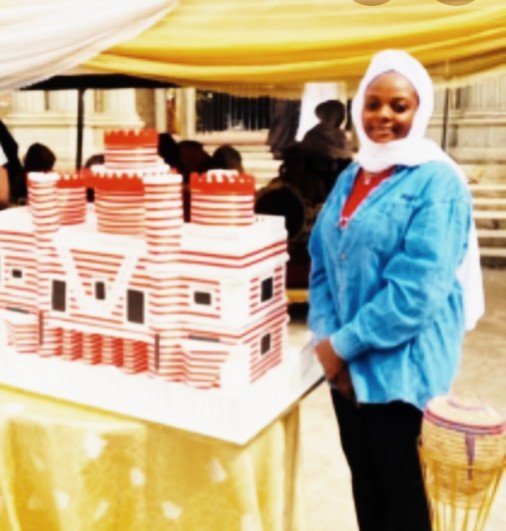
President Muhammadu Buhari is set to unveil the Central Bank of Nigeria (CBN) huge Rice Pyramids in Abuja on January 18.

The Kano State Governor, Dr. Abdullahi Umar Ganduje has confessed that the State has the highest number of Almajiri in the country.
President Muhammadu Buhari has expressed confidence that the nation will overcome the prevailing situation of insecurity in parts of the country.
Twitter Cannot Tell Nigerian Government What To Do Or Say, By Adaobi Nwaubani
The social media platform deleted a tweet by President Muhammadu Buhari in June 2021, and was then officially banned in the country two days afterwards. Despite a global outcry, the Nigerian government stood its ground, lifting the ban only after it was satisfied that Twitter had met certain stipulated conditions. The showdown lasted 222 days. My country has shown the world that it will not be tossed around by invisible controllers in Silicon Valley.
Twitter has a right to enforce its rules and regulations, of course, but there is a significant difference between President Buhari’s case and the infamous restrictions to the account of former US president Donald Trump. Buhari’s tweet – labelled hate speech by Twitter and deleted – was an official communication from the official account of the Nigerian president, while Trump was tweeting from his personal account.
No external group has the right to alter the official communication of a democratically elected government to its people. Nigerians have the right to hear whatever our leaders say to us, irrespective of how ill-advised their choice of words or how terrible their intentions might be. That same post – from which Buhari’s tweet was deleted – was broadcast in its entirety on various media platforms across the country through which the Nigerian people usually receive information from our government.
Twitter was also interfering in the laws of the land. While each of us might have our differing opinions on the Indigenous People of Biafra (IPOB), the Nigerian government in 2017 proscribed the separatist group as terrorists. IPOB fought to have this tag rescinded but lost the case in a competent court of law.
Therefore, as far as the laws of Nigeria are concerned, they are outlaws. And Buhari addressed them as such. Surely, Twitter would not delete a post threatening violence against ISIS or Boko Haram, even if it had been written by Trump? It is most likely that Twitter had no idea of this background.
The controllers in Silicon Valley clearly did not have enough understanding or context before moving to exert their power over who says what, when and how. They displayed the kind of ignorance of local affairs that has often caused foreign governments, charities, diplomats and many other international do-gooders, to bequeath African nations with more problems than they landed on our countries’ shores to solve.
A similar intervention by Twitter, when it verified the account of one group of organisers and not any of the others during Nigeria’s #EndSars anti-police brutality protests in October 2020, led to bitter infighting that eventually derailed the movement. At this rate, it seems to me that Twitter may be responsible for the next violent conflict in who knows which part of Africa.
To keep up to speed with all the latest opinions and comment, sign up to our free weekly Voices Dispatches newsletter by clicking here
The Nigerian government is clearly unwilling that Nigeria should become one such arena. The conditions under which the ban was lifted include: “Act with respectful acknowledgement of Nigerian laws” and “appoint a designated country representative” – hopefully, someone with a rich comprehension of Nigerian politics and culture.
Twitter has also agreed to register in Nigeria, comply with tax regulations, and communicate directly with the Nigerian government to manage prohibited content that violates Twitter’s rules. That sounds more like it.
Like many Nigerians, I detest an authoritarian government. I have lived through a few and so appreciate the value of such human rights as freedom of speech. But, I also do not want a government that can be jabbed and prodded around at random by foreign fingers.
The multitude of activists and international figures who rushed to condemn the Nigerian government’s action against Twitter apparently meant well, but they should realise that this day and age breeds other kinds of authoritarianism that need to be tackled head-on. Nigeria, the giant of Africa, cannot have Twitter telling it what to do and say.
• Adaobi Tricia Obinne Nwaubani is a Nigerian novelist, humorist, essayist and journalist