Nigeria has won election to retain its seat in the African Union Peace and Security Council (AUPSC) for another three-year mandate (2022-2025).
Nigeria, which polled 44 votes in the first round to secure the statutory two-third votes required to win the election, will continue to represent the West African region.
The election of the 15-member Council was held on 3rd February, 2022 during the 40th Ordinary Session of the Executive Council of the African Union (Ministers of Foreign Affairs) in Addis Ababa.
Also elected for a three-year mandate alongside Nigeria, were Cameroon, Djibouti, Morocco, and Namibia. Elected for a two year mandate were Burundi, Congo, Uganda, Tanzania, Tunisia, Zimbabwe, South Africa, Ghana, Senegal, and Gambia.
Nigeria is the only country that has sustained the membership of the PSC since the inception of the Organ in 2004, following the decision of the ECOWAS Authority of Heads of State and Government dedicating a Seat of three-year term to Nigeria at every PSC election.
This is in recognition of Nigeria’s sterling contributions to the maintenance of peace and security in Africa and beyond. It is in consonance with the AUPSC Protocol and without prejudice to the two-third votes standard requirement.
The PSC is a standing decision-making organ of the African Union charged with responsibilities of: conducting early warning and preventive diplomacy; facilitating peace-making; establish peace-support operations; and, in certain circumstances recommend intervention in Member States to promote peace, security and stability.
The PSC works in support of peace-building and post-conflict reconstruction as well as humanitarian action and disaster management. It is mandated to institute sanctions; and implement the AU’s common defense policy.
The PSC also ensures the implementation of key conventions and instruments to combat international terrorism; promote coordination between regional mechanisms and the AU with respect to peace, security and stability in Africa.
Going forward, Nigeria’s objectives in the AU-PSC will remain guided by the renewed commitment of the Administration of President Muhammed Buhari, towards accelerating the ongoing implementation of the African Peace and Security Architecture (APSA) and the African Governance Architecture (AGA) in-line with the core objectives of the AU Agenda 2063 and the UN 2030 Agenda. As Africa continues to respond to old and emerging conflicts on the continent, particularly that of unconstitutional change of government, Nigeria targets collaborative efforts towards improving on gains made in proffering African Solutions to African problems premised on the overall objective of African ownership and leadership to durable peace in the continent.
The Nigerian Ambassador to Ethiopia and Permanent Representative to the African Union, Victor A. Adeleke will represent Nigeria in this important Council at the Permanent Representatives level.
For two days, on January 25 and 26 at the Anti-Corruption Academy of Nigeria in Keffi, Nasarawa State, seven experts from within and without the Independent Corrupt Practices and other related matters Commission (ICPC) took turn to dwell on different topics at the capacity building for the media on reporting anti corruption issues as they relate to ICPC Initiatives.
The experts/resource persons include Akeem Lawal, the ICPC Director of Operations, who spoke on Understanding Anti-Corruption Issues and Investigations: Overview of the ICPC Act and ICPC Mandate; Mohammed Ashiru Baba, the ICPC Director of Public Enlightenment and Education who treated the issue of ICPC Initiatives: Overview of the Public Enlightenment and Education Mandate. Others were Abbira Udofa, the ICPC Director of the System Study and Review, who spoke on Understanding ICPC Preventive Mandate: Adenekan Ebenezer Shogunle, the ICPC Deputy Director in the Legal department, who spoke on Effective Media Reportage of the Investigation and Prosecution of Cases of Sexual Harassment and Abuse of Office Under ICPC Act.
Yusuf Ali, Managing Editor (Northern Operations) of The Nation newspaper was also on hand to speak on The Roles of the Media in the Fight Against Corruption, even as Dayo Aiyetan, Director of the International Centre for Investigative Reporting (ICIR) treated the topic: Investigative Journalism and the Challenges of Reporting Corruption. The topic: A Review of Nigeria’s Ranking on Corruption Perception of Transparency International was handled by Oluyinka Akintunde while Adebayo A. Kayode, ICPC Director, spoke on Asset Tracing, Recovery and Management. The drafters of the ICPC Act 2000 must be very crafty and foresighted, though it looks overloaded. So also are the implementers or operators of the content of the Act are thorough in the way they do it as well as understanding what clearly, on the whole, is a difficult terrain they must tread to get things done. When the Commission, through the legal frame work that set it up, is expected to fight not only financial corruption but OTHER related matters (emphasis mine), you would understand the seemingly unlimited power it wields. The list of cases of corruption and related other matters which the Commission handles are mouthwatering. They include but not limited to the following: Cheating, not keeping to promise, abuse of office, including using official position for the benefit of self, nepotism, cronyism, bribery, receiving and or giving kickback, trade in influence, theft, looting, extortion, misuse of entrusted power for private gain, embezzlement, fraud, misappropriation of public fund, favouritism, flaunting influence, lying, using coercion, cheating, diversion of funds meant for execution of public project, possessing properties above one’s earning, rape and so on. As a matter of fact, ICPC appears to combine the functions and responsibilities of almost all the other anti corruption and anti criminal agents, including the Economic and Financial Crimes Commission (EFCC), the Code of Conduct Bureau (CCB), the Nigeria Police Force (NPF), etc.
ICPC Spokesperson.
The Bill for the Act which seeks to prohibit all forms of corruption and prescribe punishment for corrupt practices and other related offences, was passed and came into effect on 13th June, 2000. The Act was enacted pursuant to section 15 (5)chapter 2 of the 1999 Constitution, empowering the State to abolish corrupt practice and abuse of power AND National Assembly’s power to make laws for peace, order and good government in section 4 (2), chapter 1 of the 1999 Constitution.
Section 3 (14) of the ICPC Act says that while discharging its powers and responsibilities, it (ICPC) is not subject to direction or control of any person or authority. The Act specifies the mandate of the Commission, with section 12 prohibiting the use of office by public officer to acquire direct or indirect interest in contract, agreement or investment emanating from his office. Section 16 prohibits making of false statement or returns by any person charged with receipt, custody or management of public revenue or property while section 19 prohibits public officer from using his office/position to confer corrupt or an unfair advantage on himself, or relation, associate or another public officer. In the process of operation, the Commission discovered at various times, irregular recruitments and abuse of the Federal Character Principles, abuse of procurement processes and fraud, none remittance of tax and other statutory deductions to appropriate authorities, diversion of revenue through staff loan. It further discovered cash transactions against electronic transactions, even as, over the years, it closed down 115 illegal institutions. It works with Universities, using the draft code of ethics, to eradicate all forms of corruption, including harassment and sex-for-marks and grades. The ICPC describes corruption as ubiquitous that is prevalent and predatory, believing that prevention is a crucial element to reduce, and possibly eliminate corruption. It also believes that it is better and imperative to secure the treasuries (from being plundered) “than running after the thieves.” In the total of 15-hour discourse with the experts in their fields, minus of course, 3-hour tea and lunch breaks, issue on how journalists could join forces to fight corruption came up prominently. And the major decimal in the discourse around this issue, is the need for Investigative Journalism. Luckily, the three resource persons that treated the topic are journalists: one, Yusuf Ali who is still in active service and the other two, Ashiru Baba and Dayo Aiyetan that are now at the periphery of journalism profession – ICPC and International Center for Investigative Reporting (ICIR) respectively. While Ashiru Baba and Dayo Aiyetan seemed to be more on the side of appeal to journalists, Yusuf Ali was pungent and forceful in his presentation, giving a plethora of personal examples of his exploits in investigative reporting. He concluded that investigative journalism does not harm, despite the risks involved. My argument however, is that in the environment in which journalists operate in Nigeria, investigative reporting may appear harmless, lucrative and a sort of kill-joy, but when the chips are down, there is a fact that you are hurting a person and or institutions thereby directly and indirectly creating a market of enemies. It can also snowball into loss of business patronages (for media organizations) and above all, leading the investigative reporter to stand lonely. For, when trouble arises for the investigative reporter, no one would be around and be ready to stand by him and go through the trouble, even litigation with him. If anything, as it happened to me many times when I ventured into that terrain years ago, you will even receive insults and innuendos from the unusual quarters: people that ordinarily should be your source of strength, including colleagues. That Yusuf Ali went into Investigative reporting all this while and nothing bad crosses his path, to me, is more of divine luck (for him), and not a yardstick for general assessment. What I had expected to hear from the advocates of investigative reporting to suggest, was a kind of support-base for those who want to venture into Investigative reporting, which is a world on its own. It can be ICPC or a subcommittee under it that will register courageous reporters for the purpose of involving them in its operations or be a total support-base for the investigative reporters. Interest of the media organizations in which such investigative reporter work can also be factored into the new arrangement. Above all, Special Fund can be created, through the instrumentality of amendment to relevant provision of the ICPC Act for the purpose of tidying up the package for effective function of the system, for Investigative reporting. If talks should be matched with actions, this is the way to go!
Four drug Firms in America and Britain have made a combined profits of more than $14 billion in COVID-19 treatments in 2021. The tally, according to findings, includes full-year sales of Eli Lilly & Co.’s monoclonal antibodies ($2.2 billion), Gilead Sciences Inc.’s COVID-19 antiviral Veklury ($5.5 x billion). The profits were made according to year-end earnings from those companies. It’s learnt that omicron, a variant of COVID19, surge that began in the final month of the year fuelled better-than-expected utilisation of these COVID-19 therapies as millions of people tested positive for the virus and hundreds of thousands were hospitalised. It’s confirmed that the fast reduction in omicron wave, has created very different landscape for COVID-19 treatments in 2022. Several new therapies were authorized last year, including two much awaited antiviral pills Paxlovid and molnupiravir) that some people with mild and moderate forms of the disease can take at home. This is a big change from the first two years of the pandemic, when most of the available treatments like Veklury and the steroid dexamethasone were reserved for severely ill COVID-19 patients. They were only proven to work in that patient population. “We expect COVID treatment to evolve to oral direct antivirals, particularly once Paxlovid and molnupiravir become more broadly available in the coming months, which alongside waning case numbers should decrease the need for GILD’s Veklury,” RBC Capital Markets analyst, Brian Abrahams told investors on February 1, 2022. Veklury is also an antiviral, though it’s primarily been used as an in-hospital treatment. That is changing now that the Food and Drug Administration said the treatment can be administered in outpatient settings to people with mild or moderate COVID-19 who are at high risk of disease progression. The drug brought in $5.5 billion in sales in 2021; however, Gilead said it expects half of that $2 billion in 2022, based on an expected “step-down in hospitalization rates.” Gilead CFO Andrew Dickinson told investors this week that figure applies if omicron is the “only major surge” of the year. For the new antivirals, there’s no step-down in sight. Molnupiravir, which was developed with the privately held Ridgeback Biotherapeutics, generated $952 million in global sales in the fourth quarter—an impressive feat considering it received FDA authorization in the final two weeks of the year. As for 2022, the legacy drug maker said it expects sales of $5 billion to $6 billion, against a FactSet consensus of $6.3 billion. Expect middling Paxlovid sales of $99 million for 2021 and then a colossal $22.0 billion in 2022, according to the FactSet consensus. The market for monoclonal antibodies likely won’t fare as well, now that it’s evident that variants can impact the therapies’ effectiveness and Wall Street is focused on what else these drug makers have to offer investors. The FDA last month revised the authorisations of Lilly’s bamlanivimab and etesevimab and Regeneron’s casirivimab and imdevimab, saying both monoclonal antibodies can’t be used for people infected or exposed to omicron because they’re not effective. Lilly told investors on Thursday that its monoclonal antibodies generated $2.2 billion in sales in 2021, half of which ($1.0 billion) arrived in the fourth quarter. However, the FactSet consensus for 2022 sales indicates a sharp drop in revenue, to $396 million. The company said that it already has another monoclonal in development, called bebtelovimab, which it submitted to the FDA for authorisation in January. But Wall Street still isn’t putting its long-term bets on monoclonals as a revenue source. Mizuho Securities analyst Vamil Divan told investors that while the monoclonals and Lilly’s rheumatoid arthritis drug Olumiant may have helped drive sales for the company in the final quarter of the year, “those products are less important from a longer-term perspective.” Regeneron reported $5.8 billion in sales of its monoclonal antibody, Regen-Cov, in 2021—beating the FactSet consensus of $5.4 billion. Similar to Lilly, about 40% of that revenue $2.3billion came in during the final quarter of the year. However, the same FactSet consensus predicts a much quieter year ahead for Regen-Cov revenue, estimating only $1.4 billion in sales in 2022. Also up is Vir Biotechnology Inc., which developed another monoclonal antibody with GlaxoSmithKline, although it won’t report its results until March 31.
President Muhammadu Buhari has acknowledged that the Minister of Transportation, Rotimi Amaechi has made the promise of change he made to Nigerians, especially on road and railway a reality
In a message of congratulation to the Minister on the conferment of a chieftaincy title on him tomorrow, February 5 by the Daura Emirate Council, Buhari described the conferment of the title of “Dan Amana” (the trusted one) to Amaechi as a clear commitment to the harmonious relationship between the nation’s diverse cultures
According to the President, Amaechi has worked hard “with enormous energy to make the CHANGE we promised Nigerians a reality. The change we are witnessing in the transport sector is an extraordinary legacy.”
Buhari sent similar message to a chieftain of the All Progressives Congress (APC), Nasiru Haladu Danu, who will also be conferred with a chieftaincy title of Tafida Babba of Daura.
Nasiru Haladu Danu is a reputable businessman.
The President said that he will not be at the event but designated a delegation of three, made up of the Ministers of Water Resources, Engineer Sulaiman Adamu, Aviation, Senator Hadi Sirika and his Senior Special Assistant on media and publicity, Garba Shehu to represent him.
Report reaching us at Greenbarge Reporters online newspaper said that no fewer than 25 terrorists fleeing airstrikes of the Nigerian military have perished in a deep river located within the Marte axis of the Lake Chad axis in the Northeast.
The report added that military fighter jets, including Super Tucano belonging to the Nigerian Air Force (NAF) ‘aggressively’ raided camps of the Islamic State of West African Province (ISWAP) on Wednesday and Thursday in weeklong sustained aerial attacks.
An intelligence operative confirmed that camps and warehouses serving as ISWAP insurgents’ ammunition and firearms were bombed by the aircraft.
“The military jets’ bombardments were simultaneously carried out at Bukar Mairam and Jubularam, Abbaganaram and Chikul Gudu which resulted in the explosion of the warehouses, killing several terrorists.
“However, those who survived the blast at Bukar Mairam and Jubularam, fled and attempted to cross a river within the Lake Chad axis. It was in the process that about 25 of them got drowned ” a source said.
The International Press Institute (IPI) Nigeria has commended the PRNigeria Centre for its investment in training and mentoring budding young writers and Journalists in areas of digital media and emerging Information Communication Technology at its Kano Hub.
The President of IPI Nigeria, Musikilu Mojeed who is also the Editor in Chief and Chief Operating Officer of the PREMIUM TIMES, made the commendation during a tour of PRNigeria facility in Kano, alongside the Secretary of IPI Nigeria and General Manager, Business and Strategy of Media Trust Limited, publishers of DAILY TRUST, Ahmed I. Shekarau.
According to Mojeed, the facility is not only important to Kano state, but Northern Nigeria, especially at a time when the quality of available manpower in the field of Journalism is very low.
“By investing in this facility, you are trying to tap into solving the problem and it is commendable how you mentor young people and empower them in Digital Skills.”
“We are proud of what you are doing, our expectation is that the people that are trained here will be very familiar with the ethics of Journalism, and they will refrain from spreading fake news, refrain from blackmail and do only the things that are professional in the job.”
He assured of IPI’s support and partnership with the Centre in the near future, even as he guaranteed that the IPI will be visiting the Centre again to encourage and offer needed assistance.
In his response, the Chief Executive Officer of Image Merchants Promotions Limited (IMPR), Yushau A. Shuaib appreciated the team for finding time to visit and encourage young people at the Centre.
Shuaib said that with the support of the National Information Technology Development Agency (NITDA), the Centre, in collaboration with the Penlight has sustained regular training and mentorship of students, graduates as well as journalists on Digital Journalism and ICT skills for self-development and empowerment.
IMPR is the publisher of PRNigeria, Economic Confidential and other media titles.
He assured that the centre will not relent in its tireless drive to bridge the digital skill gaps and build the capacity of young people to excel in their various endeavours.
In Nigeria’s politics, the north is indispensable – and it has always been. By the contrivance of kismet, the north has always held all the aces as the repository of political power since independence. And I say it is divine.
In the 1959 general election, the north showed its strength. The Northern People’s Congress (NPC) won 134 seats in parliament (the highest number of seats). Although it polled 1,922,179 votes, it entered into an entente with the National Council of Nigeria and the Cameroons (NCNC) which won 81 parliamentary seats and polled 2,594,577 votes.
Owing to the alliance, Tafawa Balewa emerged as Nigeria’s first prime minister while Nnamdi Azikiwe became Nigeria’s first non-executive president. Action Group, Obafemi Awolowo’s party won 73 seats in parliament and recorded 1,992,364 votes.
Even at that time, there was the fear that the north owing to its size and number could rule in perpetuity if the principle of popular representation was exclusively applied in selecting leaders. So, it made sense that there was a modification to the rule such that one political party could not single-handed form a government. COALITION POLITICS was devised to allay fears and attenuate the suspicion of ethnic domination.
The introduction of the presidential system of government in 1979 changed the complexion of Nigeria’s politics. Under the presidential system, it is ‘winner-takes-it-all’ as one political party forms the government, while the loser retreats into opposition to throw a spanner in the works.
But I think, the framers of the constitution envisaged a situation where votes from only one section of the country are enough to make anyone president — which could engender sectional hegemony; so they introduced the ‘’2/3 majority vote rule’’. That is, ‘’a (presidential) candidate must receive a majority of the vote and over 25% of the vote in at least 24 of the 36 states’’ to be declared president. This is to ensure sufficient geographical spread and mainstream approval of any candidate.
But the fundamental thing is the majority vote which the north confidently wields. The north-west, for instance, has the highest number of registered voters – over 19 million. Kano, Kaduna and Katsina are reputed to have the highest number of registered voters. Also, the north has maintained the voting lead in every election over the years.
The reason for the north’s obvious advantage is not only because of its robust population, but also because the citizenry are more attuned to national politics than those down south. The average northern Nigerian will not mind leaving his business to join a long chain of people seeking to register for the permanent voter card. He will not mind standing in the rain or in the sun all day to cast his vote.
Citizens up north vote collectively as a bloc and do not dilly-dally about their choices. They are either for or against you. They do not quiver or vacillate.
The north has always played the deciding role in elections; any candidate the region aligns with is most likely to win. From former President Olusegun Obasanjo, former President Goodluck Jonathan to President Muhammadu Buhari – they all had the backing of the north to win.
In 2023 when the south is expected to produce Nigeria’s president, the electoral decision of the north is even more paramount. Whoever the region fancies will win. Or rather, whoever assuages the feelings; allays the fears and plays to the sentiments of the north will become president.
Reasonably, some presidential aspirants have made the north the centrepiece of their campaign. For instance, political mobilisation for Bola Tinubu’s presidential bid began in Kano. 2500 Islamic clerics were pulled from across Kano and assembled to pray for Tinubu. Ludicrous as this may seem, it was a strategic move. The north is a conservative region and the primacy of religion is indisputable. The citizens hold religious leaders in high esteem; so they (the clerics) are the best marketers of any candidate.
Vice-President Yemi Osinbajo who is rumoured to be running for president began is political marshalling from Kano as well. And like Tinubu, Osinbajo has been paying frequent visits to Kano, delivering lectures and meeting political stakeholders. Other aspirants, groups, including Ohanaeze Ndi Igbo which is pushing for a president of Igbo extraction in 2023, have also started courting the north.
I do not think the north is angling to retain political power in 2023. But I do think the region will support any candidate it believes will protect its interest. The north is the battleground of the 2023 presidential election.
As I said earlier, this beautiful bride; the north, will give her heart to that suitor who plays to her sentiments and with whom her interest is assured and protected.
Fredrick Nwabufo; Nwabufo aka Mr OneNigeria is a writer and journalist.
The Minister of Information and Culture, Alhaji Lai Mohammed has given details of how the introduction of the Biometric Verification Number (BVN) has removed 54,000 fake workers from payroll entries.
He said also that the Treasury Single Account (TSA), has led to the discovery and consolidation of 17,000 bank accounts in the Central Bank of Nigeria (CBN), saving N4 billion monthly.
According to the Minister, who spoke to newsmen in Abuja, in 2021 alone, the EFCC recovered a total monetary amount of N152,088,698,751.64; £1,182,519.75, 50 Emirati Dirham, 1,723,310 Saudi Riyal, 1,900 South African Rand; US $386,220,202.85; 156,246.76 Euros; 1,400 Canadian Dollars; 5.36957319 Bitcoin and 0.09012 Ethereum.
He said that during the same period, the organisation returned fraudulently-obtained funds totalling US$103,722,102.83, 3,000 Pound Sterling; 7,695 Singapore Dollar and 1,091 Euros to 11 countries of victims who came into the country.
The minister said that ICPC had similarly played a pivotal role in bringing about structural changes in the operations of the government, especially regarding improvements in MDAs budget utilisation, better value for money, improved project completion, service delivery and higher level of anti-corruption awareness.
“Between 2019 and 2021, ICPC traced 2,000 projects worth over N300 billion. During the same period, 326 contractors of abandoned projects across the six geo-political zones were forced by the Commission to return to site to complete projects worth N32.183 billion. Also, the ICPC’s Assets Tracing, Recovery and Management (ATRM) project led to the recovery of cash totalling N34.346 billion and US$1.62 million between 2019 and 2021.”
The Federal Government of Nigeria has announced the identification of no fewer than 96 direct financiers of the deadly terrorism in the country.
The Minister of Information and Culture, Alhaji Lai Mohammed, who made this known at a news briefing said that out of 96, 45 of them will soon be put on trial.
The ministersaid that the properties of the suspects will be seized by the government while the trial goes on.
He explained that out of the 553 persons identified as sponsors of terrorism in the 2020-2021 report by the Nigerian Financial Intelligence Unit (NFIU), 96 are direct financiers of terrorism, 424 are associates/supporters of the financiers, 123 are companies while 33 are bureaux de change.
According to him, 26 others are identified as bandits and kidnappers by the NFIU, adding that Nigeria had shared intelligence on Boko Haram, ISWAP and kidnapping with no fewer than 19 countries.
Lai Mohammed said that from the NFIU analysis, tax evasion and tax avoidance linked to corruption, the country lost a whooping sum of N7.6 trillion in value added tax and withholding tax.
He said the NFIU had also sent 1,165 intelligence reports on cases of corruption, money laundering and other serious offences to 27 domestic agencies for investigation, prosecution and asset recovery.
Still on terrorism financing, he said that NFIU had intelligence exchanges on Boko Haram, ISWAP, banditry, kidnapping and others with 19 countries.
About nine days to the election of six Area Council Chairmen, Vice Chairmen and Councillors in the Federal Capital Territory (FCT), on February 12, the Independent National Electoral Commission (INEC) has discovered that 593 Polling Units are currently without registered voters.
Dropping this hint today at a meeting with stakeholders in Abuja, the chairman of the INEC, Professor Mahmood Yakubu expressed surprise that such situation arose despite that the Commission gave voters the opportunity to transfer to some of the new polling units.
“Unfortunately, voters did not take advantage of this opportunity as we had expected in all cases.
“Consequently, there are 593 polling units in the FCT without registered voters, 1,328 polling units with between 0-50 voters and 546 polling units with over 1,000 registered voters.”
Professor Yakubu said that the Commission had already informed political parties, civil society organisations, the media and security agencies at the national level about this development.
He said that the Commission has decided that no election will take place at the polling units without registered voters.
“No materials have been produced for these units and no personnel will be deployed to them.
“However, voting will take place in all the other polling units.
“For congested polling units, the Commission will deploy more than one BVAS to facilitate a speedy accreditation of voters.
“We will also deploy additional staff to these locations. We also agreed with the security agencies to deploy more personnel to ensure peace and order.”
He said that after the period for substitution and withdrawal of candidates as provided by law, the Commission has listed 473 candidates sponsored by 14 political parties for the forthcoming elections.
“In all, 110 candidates (Chair and Vice Chair) are vying for the leadership of the six Area Councils while 363 candidates are competing for 62 councillorship positions.”
The INEC chairman said that with only nine days to the election, major activities have been concluded.
“Right now, the Commission is only putting the finishing touches to our preparations. Continuous Voter Registration (CVR) was conducted over a period of six months.
“Permanent Voters Cards (PVCs) have been printed and made available for collection.
“There are enough ad hoc staff engaged and trained for the election. Non-sensitive materials have been deployed to the various Area Councils.
“Non-pharmaceutical materials have been procured to protect voters and personnel from COVID-19 in line with the Commission’s policy based on the protocols prescribed by health authorities.
“Voter education and publicity are ongoing. Transport arrangements have been made, including motorcycles for remote locations and boats for riverine areas.
“We have had several meetings with the security agencies in the area councils, the FCT and the national level on how to address potential threats to the election and secure the process.
“They have also been trained on the code of conduct for security personnel on election duty to ensure their neutrality and professionalism.”
He commended the FCT Minister for convening the meeting and inviting him to speak on the preparations of the Commission for the election.
The stakeholders meeting was convened by the Minister of the Federal Capital Territory (FCT), Malam Muhammad Musa Bello.
We use cookies on our website to give you the most relevant experience by remembering your preferences and repeat visits. By clicking “Accept”, you consent to the use of ALL the cookies.
This website uses cookies to improve your experience while you navigate through the website. Out of these, the cookies that are categorized as necessary are stored on your browser as they are essential for the working of basic functionalities of the website. We also use third-party cookies that help us analyze and understand how you use this website. These cookies will be stored in your browser only with your consent. You also have the option to opt-out of these cookies. But opting out of some of these cookies may affect your browsing experience.
Necessary cookies are absolutely essential for the website to function properly. This category only includes cookies that ensures basic functionalities and security features of the website. These cookies do not store any personal information.
Any cookies that may not be particularly necessary for the website to function and is used specifically to collect user personal data via analytics, ads, other embedded contents are termed as non-necessary cookies. It is mandatory to procure user consent prior to running these cookies on your website.



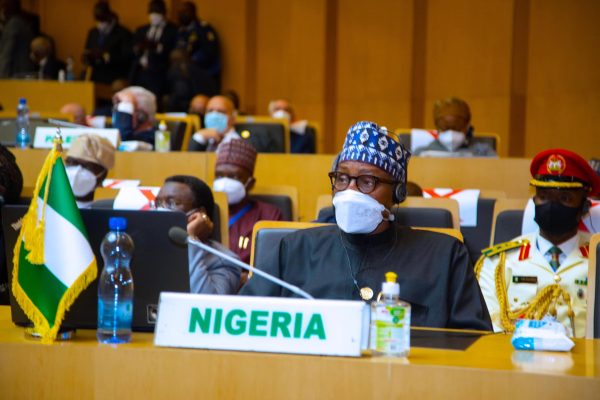 Nigeria has won election to retain its seat in the African Union Peace and Security Council (AUPSC) for another three-year mandate (2022-2025).
 President Muhammadu Buhari has acknowledged that the Minister of Transportation, Rotimi Amaechi has made the promise of change he made to Nigerians, especially on road and railway a reality
 Report reaching us at Greenbarge Reporters online newspaper said that no fewer than 25 terrorists fleeing airstrikes of the Nigerian military have perished in a deep river located within the Marte axis of the Lake Chad axis in the Northeast.

 The Federal Government of Nigeria has announced the identification of no fewer than 96 direct financiers of the deadly terrorism in the country.
 About nine days to the election of six Area Council Chairmen, Vice Chairmen and Councillors in the Federal Capital Territory (FCT), on February 12, the Independent National Electoral Commission (INEC) has discovered that 593 Polling Units are currently without registered voters.


ICPC: Fighting Corruption In All Fronts (Takeaways 2), By Yusuf Ozi Usman
For two days, on January 25 and 26 at the Anti-Corruption Academy of Nigeria in Keffi, Nasarawa State, seven experts from within and without the Independent Corrupt Practices and other related matters Commission (ICPC) took turn to dwell on different topics at the capacity building for the media on reporting anti corruption issues as they relate to ICPC Initiatives.
The experts/resource persons include Akeem Lawal, the ICPC Director of Operations, who spoke on Understanding Anti-Corruption Issues and Investigations: Overview of the ICPC Act and ICPC Mandate; Mohammed Ashiru Baba, the ICPC Director of Public Enlightenment and Education who treated the issue of ICPC Initiatives: Overview of the Public Enlightenment and Education Mandate.
Others were Abbira Udofa, the ICPC Director of the System Study and Review, who spoke on Understanding ICPC Preventive Mandate: Adenekan Ebenezer Shogunle, the ICPC Deputy Director in the Legal department, who spoke on Effective Media Reportage of the Investigation and Prosecution of Cases of Sexual Harassment and Abuse of Office Under ICPC Act.
Yusuf Ali, Managing Editor (Northern Operations) of The Nation newspaper was also on hand to speak on The Roles of the Media in the Fight Against Corruption, even as Dayo Aiyetan, Director of the International Centre for Investigative Reporting (ICIR) treated the topic: Investigative Journalism and the Challenges of Reporting Corruption.
The topic: A Review of Nigeria’s Ranking on Corruption Perception of Transparency International was handled by Oluyinka Akintunde while Adebayo A. Kayode, ICPC Director, spoke on Asset Tracing, Recovery and Management.
The drafters of the ICPC Act 2000 must be very crafty and foresighted, though it looks overloaded. So also are the implementers or operators of the content of the Act are thorough in the way they do it as well as understanding what clearly, on the whole, is a difficult terrain they must tread to get things done.
When the Commission, through the legal frame work that set it up, is expected to fight not only financial corruption but OTHER related matters (emphasis mine), you would understand the seemingly unlimited power it wields.
The list of cases of corruption and related other matters which the Commission handles are mouthwatering. They include but not limited to the following:
Cheating, not keeping to promise, abuse of office, including using official position for the benefit of self, nepotism, cronyism, bribery, receiving and or giving kickback, trade in influence, theft, looting, extortion, misuse of entrusted power for private gain, embezzlement, fraud, misappropriation of public fund, favouritism, flaunting influence, lying, using coercion, cheating, diversion of funds meant for execution of public project, possessing properties above one’s earning, rape and so on. As a matter of fact, ICPC appears to combine the functions and responsibilities of almost all the other anti corruption and anti criminal agents, including the Economic and Financial Crimes Commission (EFCC), the Code of Conduct Bureau (CCB), the Nigeria Police Force (NPF), etc.
The Bill for the Act which seeks to prohibit all forms of corruption and prescribe punishment for corrupt practices and other related offences, was passed and came into effect on 13th June, 2000. The Act was enacted pursuant to section 15 (5)chapter 2 of the 1999 Constitution, empowering the State to abolish corrupt practice and abuse of power AND National Assembly’s power to make laws for peace, order and good government in section 4 (2), chapter 1 of the 1999 Constitution.
Section 3 (14) of the ICPC Act says that while discharging its powers and responsibilities, it (ICPC) is not subject to direction or control of any person or authority.
The Act specifies the mandate of the Commission, with section 12 prohibiting the use of office by public officer to acquire direct or indirect interest in contract, agreement or investment emanating from his office.
Section 16 prohibits making of false statement or returns by any person charged with receipt, custody or management of public revenue or property while section 19 prohibits public officer from using his office/position to confer corrupt or an unfair advantage on himself, or relation, associate or another public officer.
In the process of operation, the Commission discovered at various times, irregular recruitments and abuse of the Federal Character Principles, abuse of procurement processes and fraud, none remittance of tax and other statutory deductions to appropriate authorities, diversion of revenue through staff loan.
It further discovered cash transactions against electronic transactions, even as, over the years, it closed down 115 illegal institutions. It works with Universities, using the draft code of ethics, to eradicate all forms of corruption, including harassment and sex-for-marks and grades.
The ICPC describes corruption as ubiquitous that is prevalent and predatory, believing that prevention is a crucial element to reduce, and possibly eliminate corruption.
It also believes that it is better and imperative to secure the treasuries (from being plundered) “than running after the thieves.”
In the total of 15-hour discourse with the experts in their fields, minus of course, 3-hour tea and lunch breaks, issue on how journalists could join forces to fight corruption came up prominently. And the major decimal in the discourse around this issue, is the need for Investigative Journalism.
Luckily, the three resource persons that treated the topic are journalists: one, Yusuf Ali who is still in active service and the other two, Ashiru Baba and Dayo Aiyetan that are now at the periphery of journalism profession – ICPC and International Center for Investigative Reporting (ICIR) respectively.
While Ashiru Baba and Dayo Aiyetan seemed to be more on the side of appeal to journalists, Yusuf Ali was pungent and forceful in his presentation, giving a plethora of personal examples of his exploits in investigative reporting. He concluded that investigative journalism does not harm, despite the risks involved.
My argument however, is that in the environment in which journalists operate in Nigeria, investigative reporting may appear harmless, lucrative and a sort of kill-joy, but when the chips are down, there is a fact that you are hurting a person and or institutions thereby directly and indirectly creating a market of enemies. It can also snowball into loss of business patronages (for media organizations) and above all, leading the investigative reporter to stand lonely.
For, when trouble arises for the investigative reporter, no one would be around and be ready to stand by him and go through the trouble, even litigation with him. If anything, as it happened to me many times when I ventured into that terrain years ago, you will even receive insults and innuendos from the unusual quarters: people that ordinarily should be your source of strength, including colleagues.
That Yusuf Ali went into Investigative reporting all this while and nothing bad crosses his path, to me, is more of divine luck (for him), and not a yardstick for general assessment.
What I had expected to hear from the advocates of investigative reporting to suggest, was a kind of support-base for those who want to venture into Investigative reporting, which is a world on its own. It can be ICPC or a subcommittee under it that will register courageous reporters for the purpose of involving them in its operations or be a total support-base for the investigative reporters. Interest of the media organizations in which such investigative reporter work can also be factored into the new arrangement.
Above all, Special Fund can be created, through the instrumentality of amendment to relevant provision of the ICPC Act for the purpose of tidying up the package for effective function of the system, for Investigative reporting.
If talks should be matched with actions, this is the way to go!
Yusuf Ozi Usman
End of the Takeaways.