Home Blog Page 597

High Cost Of Farm Implements, Inputs May Lead To Food Scarcity – CLO Boss

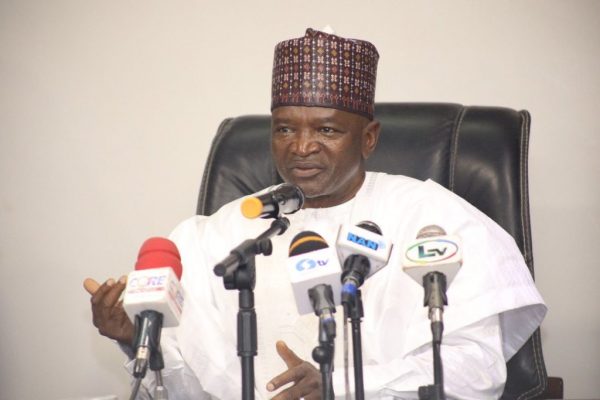
Chairman of Civil Liberties Organisation (CLO) in Anambra State, Vincent Ezekwueme has attributed low food production in the country to high cost of farm implements and inputs.

Speaking in a chat with the News Agency of Nigeria (NAN) in Enugu today, October 25, the CLO boss stressed that such high cost has made it difficult for the small-holder farmers to thrive.

He advised the Federal, state and local governments to take immediate and urgent measures to rescue impending food scarcity in country as small-holder farmers are finding it hard to continue farming.

This he said was due to unprecedented escalation of prices of farm implements and agricultural products, especially herbicides, pest control and insecticides as well as other tools needed by farmers for easy cultivation.

“It is unbelievable but existential reality that herbicides sold for N1,300 in January has skyrocketed up to N3,500 now, while insecticides and pest control also increased by more than 200 per cent.

“During our discreet investigation due to incessant lamentations by farmers and outrageous cost of food stuff; importers of these farm implements and inputs ascribed the astrological increase in prices to devaluation of naira and scarcity of foreign currency.

“Government should marshal out actions to forestall impending food scarcity in the country as it will be very difficult if not impossible for the common man to afford three squares meal a day.

“There is no doubt that the high cost of food production will precipitate increase in prices. Remember, no farmer no food, no nation.

“So no efforts should be spared to protect and encourage them.

“It is pertinent and a step in the right direction for governments to remove all the bureaucratic bottle neck farmers experience while accessing governments’ loan.”

Ezekwueme called on the governments at all levels to ensure that grants, farm inputs, fertilisers, seeds, agricultural products and loans meant for farmers get to real and genuine farmers, “not political farmers”.

The activist called on government to introduce Farmers National Award Day in other to encourage farmers and appreciate their contributions towards nation building.

“The award will also add value and respect to them and also give them a sense of belonging for without food, there will be hunger, anger and frustration.

“We must strive to help farmers always to enhance their inevitable works, avoid and avert anything that hinders them through avoidance of hoarding and escalating prices of food stuff, farm implements and agricultural products”

COVID19 Vaccination: Persuade Workers, Don’t Force Them – NLC President

President of the Nigeria Labour Congress (NLC), Ayuba Wabba has called on the government to use persuasion on the issue of civil servants taking COVID 19 vaccination rather than force or threat.

Ayuba Waba, who spoke today, October 25 while unveiling the COVID-19 vaccination Advisory for the Federal Civil Servants in Abuja, faulted the federal government’s proposed enforcement of COVID-19 vaccination on its workers with effect from December 1, 2021.

The NLC President said that though the efficacy of vaccines for the control of COVID-19 had been scientifically proven, but that the federal government should use the tool of persuasion rather than force to get workers and the general public to take it.

”I urge workers all over the world to take advantage of the COVID-19 vaccines and keep themselves, their families and their colleagues at work safe and free from the morbid threats of the Corona pandemic.

“We urge government and other employers of labour to make special arrangement for workers to access the vaccine at the workplace.

”We urge that the tool of persuasion and conviction be used rather than force to get workers and the general populace to take the vaccine,” he said.

Wabba however noted that the COVID-19 pandemic had brought some of the biggest strains, stress and squeeze to the workplace, adding that thousands of workers had died from the disease.

He noted that, more than 180,000 health workers world over had lost their lives to the COVID-19 pandemic.

“The high rate of fatality is unfortunate but also highlights the sacrifice that workers have made in combating and containing this deadly virus. Many more workers have lost their jobs and means of livelihood to COVID-19,” he said.

The NLC president said the biggest lesson of the pandemic was that amidst the worst crisis, the human race could rise to the challenge with great resourcefulness and resilience.

According to him, apart from accelerated scientific efforts at understanding the epidemiology of the virus, science had raised the bar a little higher with the breakthrough discovery of vaccine for COVID-19, which had helped reduce death rate and hospital admissions.

He said that a study conducted by the United States Centre for Disease Control at the end of May 2021 showed that there was about 63 per cent drop in hospital visitations after the introduction of the COVID-19 vaccine.

“There was also a 63 per cent drop in hospital admissions post-vaccination and 66 per cent drop in mortality for those aged 18 – 49 after the vaccination.

“I understand some people prefer to view COVID-19 vaccination with caution. Yes, it is important to proceed on issues of public health with great caution.

“Yet, it would be foolhardy to elevate caution above scientific evidence and facts from public health records.”

Source: NAN.


Anambra Election Will Hold November 6, Security Is Assured – INEC Boss

Chairman of the Independent National Electoral Commission (INEC), Professor Mahmoud Yakubu has said that INEC is determined to proceed with the Anambra State Governorship election as scheduled.

“The safety and protection of voters, our personnel, accredited observers, the media and materials are cardinal considerations in any election. We have been assured by the security agencies of a secure environment for the election.

At a special meeting of Interagency Consultative Committee On Election Security (ICCES) on Anambra Governorship election held at the INEC headquarters in Abuja, Professor said: “I am sure the Commissioner of Police, Anambra State in his briefing, will provide more details regarding preparations on the ground.”

He acknowledged the continued support of security agencies to the Commission during elections, especially the high level of professional conduct of the agencies in the last two major elections in Edo and Ondo States.

“Indeed, Edo and Ondo have become the standard for securing elections in Nigeria. The professionalism and neutrality exhibited by the security agencies in the two elections have been widely praised nationally and internationally.

“We are confident that this will be replicated in Anambra State.”

He expressed the gratitude of the Commission for the support received from religious, traditional and community leaders for peaceful elections.

“The Commission is also working with the National Peace Committee under the leadership of our respected former Head of State, General Abdulsalami Abubakar GCFR, to bring all political parties and candidates for the Anambra State Governorship election to commit to peace before, during and after the elections.

“We appreciate this wide-ranging support and I wish to reassure the registered voters in Anambra State that the choice of the next Governor lies in their hands. I urge all and sundry to play their part in ensuring a free, fair, credible and peaceful Governorship election in Anambra State.”

Those who were at the meeting were the NSA and Co-Chair of ICCES, representative of the Corps Marshal of the FRSC, Commandant General of the NSCDC, representative of the DG, DSS and representatives of Various Security Organisations.


World Bank Blacklists 18 Nigerian Firms, Individuals For Corruption

The World Bank has blacklisted 18 Nigerian individuals and firms for engaging in corrupt practices, fraud and collusive practices in its 2021 fiscal year.

A list of debarred individuals and firms was presented in a new annual report titled: World Bank Group Sanctions System FY21.”

The debarments were made by the World Bank Sanctions Board, World Bank Chief Suspension and Debarment Officer and the African Development Bank.

The debarments made by AfDB were recognised by World Bank, making the affected firms to be barred under  cross-debarment policy.

Based on the World Bank Sanctions Board’s decision, Mr. Elie Abou Ghazaleh and Mr. Fadi Abou Ghazaleh, alongside their firm, Abou Ghazaleh Contracting Nigeria Limited, were debarred for six months for collusive practices.

Based on the decision of the World Bank Chief Suspension and Debarment Officer, a Nigerian firm, Swansea Tools Resources, was debarred for fraudulent practices for two years and 10 months.

Referred to under Sanctions Case No 651, it was disclosed that the firm misrepresented its past experience in its bid for a road maintenance contract.

The report read in part: “The SDO determined that the respondent, a Nigerian firm, engaged in a fraudulent practice by misrepresenting its past experience in its bid for a road maintenance contract under a state employment and expenditure project in Nigeria. The SDO imposed on the respondent a debarment with conditional release for a minimum period of two years and 10 months. As a mitigating factor, the SDO considered the respondent’s limited cooperation with investigators, noting that the respondent produced documents and agreed to be interviewed but did not accept responsibility for the misconduct.”

Another Nigerian firm, Juckon Construction and Allied Services Nigeria Limited, was debarred for corrupt practices for three years. Referred to under Sanctions Case No 649, it was disclosed that the firm made improper payment to a public official.

The report read: “The SDO determined that the respondent, a Nigerian firm, engaged in a corrupt practice by making an improper payment to a public official in connection with the award and/or execution of two waste management and refuse collection contracts under a state employment and expenditure project in Nigeria. The SDO imposed on the respondent a debarment with conditional release for a minimum period of four years.”

A Nigerian, Ms. Okafor Glory, was debarred for fraudulent practices for four years, while the firm involved, Unique Concept Enterprises, was debarred for five years for same reason.

Another Nigerian firm, Asbeco Nigeria Limited, was debarred for five years for corrupt practices.

The matter which involved Ms. Glory and the firm, Unique Concept Enterprises, was presented under Sanctions Case No 691.

It read in part: “The SDO determined that the respondents, a Nigerian firm and a Nigerian citizen, engaged in fraudulent practices by submitting false documents in connection with two refuse collection and disposal contracts under a state employment and expenditure project in Nigeria. In particular, the SDO found that: (i) the corporate respondent submitted a falsified income tax clearance certificate in its bids for the contracts; and (ii) both respondents submitted a falsified advance payment guarantee in connection with the execution of one of the contracts.

“The SDO imposed on the corporate respondent a debarment with conditional release for a minimum period of five years. On the individual respondent, the SDO imposed a debarment with conditional release for a minimum period of four years. As aggravating factors, the SDO considered that (i) the corporate respondent engaged in a repeated pattern of misconduct, and (ii) the individual respondent was the managing director of the corporate respondent.”

The matter which involved Asbeco Nigeria was presented under Sanctions Case No 675.

It read in part: “The SDO determined that the respondent, a Nigerian firm, engaged in corrupt practices in connection with an erosion control contract under an erosion and watershed management project in Nigeria. Specifically, the SDO found that the respondent (i) made a payment of N2m (approximately $12,000) to the project’s engineer to influence his actions in connection with the procurement and/or execution of the contract, and (ii) made a facilitation payment of N50,000 (approximately $160) to the project’s cashier to influence her actions in connection with the execution of the same contract.

“The SDO imposed on the respondent a debarment with conditional release for a minimum period of five years. In determining this sanction, the SDO considered as aggravating factors the respondent’s (i) engagement in a repeated pattern of corrupt activity and (ii) interference with INT’s investigation, noting in particular that the respondent engaged in acts intended to materially impede the exercise of the Bank’s contractual audit rights.”

Based on the World Bank’s Sanctions Board Decision, A.G. Vision Construction Nigeria Limited, was debarred for fraudulent practices and collusive practices for four years and six months.

Not included in the report is a recent debarment of a Nigerian consultant, Mr Salihu Tijani, who is a consultant for the National Social Safety Nets Project, a project designed to ensure that cash is transfer to poor and vulnerable households in Nigeria.

Tijani was barred for 38 months for engaging in corrupt practices.

Aside from the firms mentioned so far, there are some firms that were debarred by other multilateral organisations under cross-debarment, which makes them debarred by the World Bank.

Sangtech International Services Limited, Sangar & Associates (Nigeria) Limited, Mashad Integrated And Investment Co Limited, and Medniza Global Merchants Limited were debarred by the AfDB two years under cross-debarment recognised by the World Bank.

ALG Global Concept Nigeria Limited, Abuharaira Labaran Gero, Qualitrends Global Solutions Nigeria Limited, and Maxicare Company Nigeria Limited were debarred by the AfDB for three years under cross-debarment recognised by the World Bank.

In his opening message in the report, the World Bank Group’s David Malpass, stated that the bank had granted over $157bn to assist developing countries, as he emphasised the need for integrity and transparency standards in public finance.

“Since the beginning of the global pandemic, the World Bank Group has deployed more than $157bn in critical assistance to developing countries. The crisis has required us to be rapid and innovative in mobilising this historic support.

“Yet, for these resources to have the needed development impact on the hundreds of millions of people who live in extreme poverty, we must ensure that resources are used efficiently, effectively, and for their intended purposes. And that means remaining vigilant to the scourge of corruption and ensuring that we promote the highest integrity and transparency standards in public finance,” he said.

He further highlighted some of the consequences of corruption, which he said could be devastating.

“The negative impacts of corruption on lives and livelihoods are well known. Corruption diverts scarce development dollars from the people who need them most and corrodes the systems and services that are integral for reducing extreme poverty.

“Entrenched corruption also comes with greater economic costs for countries, as it distorts public expenditures and leads to inefficient allocations of financing away from productive investments toward rent-seeking activities. And corruption increases the costs of doing business and deters foreign investors from entering new markets.

“As the world moves toward recovering from the pandemic’s damaging impacts, these costs can also restrict the private sector, which plays an important role in revitalizing economic growth and development in our client countries,” he added.thanks


CBN Kick-Starts Digital Currency, eNaira With N500 Million: 33 Banks Involved 

The Central Bank of Nigeria (CBN) has kick-started the digital currency, known as Central Bank Digital Currency (CBDC) with N500 million, to be operated by 33 banks in the country.

The apex bank’s Governor, Godwin Emefiele, who spoke today, October 24 when President Muhammadu Buhari formally launched the digital currency at the Presidential villa in Abuja, confirmed that 33 banks have been fully integrated into the platform.

Emefiele said that N200 million has been issued to financial institutions and that 2,000 customers and 120 merchants have successfully registered on the eNaira platform.

“Customers who download the eNaira Speed Wallet App will be able to perform the following: onboard and create their wallet; fund their eNaira wallet from their bank account; transfer eNaira from their wallet to another wallet and make payment for purchases at registered merchant locations.”

Emefiele assured that the CBN would continue to refine and upgrade the eNaira.

Nigerians without BVN can access the eNaira. The digital currency can also be accessed without the internet using USSD.

Emefiele said that the eNaira will be deployed for the “onboarding of revenue collection agencies to increase and simplify collections and the creation of sector-specific tokens to support the Federal Government’s social programmes and distribution of targeted welfare schemes in a bid to lift millions out of poverty by 2025.

The CBN Governor explained that eNaira is Nigeria’s CBDC and it is the digital equivalent of the physical Naira.

”As the tagline simply encapsulates, the eNaira is the same Naira with far more possibilities. The eNaira – like the physical Naira – is a legal tender in Nigeria and a liability of the CBN. The eNaira and Naira will have the same value and will always be exchanged at 1 naira to 1 eNaira,” he said.

Emefiele added that the CBN has given careful consideration to the entire payments and financial architecture and has designed the eNaira to complement and strengthen these ecosystems and has implemented secure safeguards and policies to maintain the integrity of the financial system.

He pledged that there would be strict adherence to the anti-money laundering and combating the financing of terrorism (AML/CFT) standards in order to preserve the integrity and stability of Nigeria’s payment system.

According to Emefiele, since the eNaira platform went live, there has been overwhelming interest and encouraging response from Nigerians and other parties across the world with over 2.5 million daily visits to the website.

He listed the following milestones:

”33 banks are fully integrated and live on the platform, 500 million has been successfully minted by the Bank, N200 million has been issued to financial institutions, over 2,000 customers have been onboarded and over 120 merchants have successfully registered on the eNaira platform.”

The CBN governor also used the occasion to commend President Buhari for making history, yet again, with the launch of the eNaira – the first in Africa and one of the earliest around the world.

He also dispelled fears on the nation’s foreign reserves, saying the reserves are strong and getting stronger by the day.

”Mr. President, as you make ground breaking reforms, there have been continuing debate on the true value of the Naira. Rather than worry today on the direction of the exchange rate, let us take a step back and analyze how we got here in the first place.

”Please recall that since the advent of the International Monetary Fund (IMF) led Structural Adjustment Programme (SAP) in 1986, and the introduction of the Second Tier Foreign Exchange (SFEM) market, the Naira has been on a one-way free fall from parity to the US Dollar in 1984 to over N410/USD today.

”Some 35 years later, we have not been able to achieve the many promises and objectives of that programme.

”Instead, what we have seen is widespread import dependency, which has wiped out most of our production and manufacturing bases and exported all our jobs in the process.

”What has happened to the massive textile factories across our nation such that we import almost all cotton products when we are rich in cotton?

”What has happened to our vehicle assembly plants across the nation such that we import most vehicles and have become a massive dumping ground for dying second-hand vehicles?

”What has happened to our rubber plantations through which we made the best tyres and rubber products in the world? What has happened to our groundnut pyramids? What has happened to our Cocoa farms? What has happened to our palm oil mills?

”Under your leadership, Mr. President, we must stop this decline for good! We must return to massive homemade production; we must get our people working again. We must create the economic environment for massive domestic production and significant non-oil exports.

”As custodians of your national reserves, let me first assure you that there is no cause for alarm. Our FX reserves are strong and indeed getting stronger by the day, crossing the 40 billion USD mark, and is one of the highest in Africa – and growing.

”But we cannot fritter our reserves away on cheap imports and currency speculators. We must return to an employment-led growth anchored on productivity and rewarding producers of local goods, services, innovation and new technologies.

”If you consume cheap imports and export our jobs, we will make you pay dearly; but if you produce locally – with little or no foreign inputs beyond machinery, we will support you, and the markets will reward you abundantly,” he said.

Launching the platform, President Buhari said that the introduction of the eNaira would enable the government to send direct payments to citizens eligible for specific welfare programmes as well as foster cross border trade.

President Buhari said that alongside digital innovations, CBDCs can foster economic growth through better economic activities, increase remittances, improve financial inclusion and make monetary policy more effective.

”Let me note that aside from the global trend to create Digital Currencies, we believe that there are Nigeria-specific benefits that cut across different sectors of, and concerns of the economy.

”The use of CBDCs can help move many more people and businesses from the informal into the formal sector, thereby increasing the tax base of the country.”

The President said with the launch of eNaira, Nigeria has become the first country in Africa, and one of the first in the world to introduce a Digital Currency to her citizens.

He commended the Governor of the Central Bank, Godwin Emefiele, his deputies and the entire team of staff who worked tirelessly to make the launch of Africa’s first digital currency a reality.

The President, who assured Nigerians of the safety and scalability of the CBDC system, said the journey to create a digital currency for Nigeria began sometime in 2017.

”Work intensified over the past several months with several brainstorming exercises, deployment of technical partners and advisers, collaboration with the Ministries of Communication and Digital Economy and its sister agencies like the Nigerian Communications Commission (NCC), integration of banking software across the country and painstaking tests to ensure the robustness, safety and scalability of the CBDC System.”

The President also used the occasion of the unveiling of the eNaira to painstakingly explain to Nigerians why he approved the use of the digital currency.

”In recent times, the use of physical cash in conducting business and making payments has been on the decline. This trend has been exacerbated by the onset of the COVID-19 pandemic and the resurgence of a new Digital Economy.

”Alongside these developments, businesses, households, and other economic agents have sought for new means of making payments in the new circumstances.

”The absence of a swift and effective solution to these requirements, as well as fears that Central Banks’ actions sometimes lead to hyperinflation created the space for non-government entities to establish new forms of “private currencies” that seemed to have gained popularity and acceptance across the world, including here in Nigeria.

”In response to these developments, an overwhelming majority of Central Banks across the world have started to consider issuing digital currencies in order to cater for businesses and households seeking faster, safer, easier and cheaper means of payments.

”A handful of countries including China, Bahamas, and Cambodia have already issued their own CBDCs.

”A 2021 survey of Central Banks around the world by the Bank for International Settlements (BIS) found that almost 90 per cent are actively researching the potential for CBDCs, 60 percent were experimenting with the technology and 14 per cent were deploying pilot projects.

”Needless to add, close monitoring and close supervision will be necessary in the early stages of implementation to study the effect of eNaira on the economy as a whole.

”It is on the basis of this that the Central Bank of Nigeria (CBN) sought and received my approval to explore issuing Nigeria’s own Central Bank Digital Currency, named the eNaira.”

The President said that his approval was also underpinned by the fact that the CBN has been a leading innovator ‘‘in the form of money they produce, and in the payment services they deploy for efficient transactions.’’

He noted that Nigeria’s apex bank has invested heavily in creating a Payment System that is ranked in the top ten in the world and certainly the best in Africa.

”This payment system now provides high‐value and time‐critical payment services to financial institutions, and ultimately serves as the backbone for every electronic payment in Nigeria.

”They have also supported several private‐sector initiatives to improve the existing payments landscape, and in turn, have created some of the world’s leading payment service providers today.’’


Book Review: Chinese Century Communist Party, Lessons For Africa, By Deen Adavize

President Xi Jinping and other leaders of China at the Communist Congress

In a groundbreaking effort to explore the internal dynamics of, perhaps, the world’s largest political party, the Communist Party of China (CPC), a renowned African scholar on China studies, Charles Onunaiju revealed the rare historical-cum philosophical insights into the Party and the secret behind its phenomenal rise on the world stage.

At an event to mark the centenary of the founding of the Communist Party of China last July, the General Secretary of the party, which is also the President of the People’s Republic of China, Xi Jinping unequivocally stated that “the founding of a communist party in China was an epoch-making event, which profoundly changed the course of Chinese history in modern times; transformed the future of the Chinese people and nation, and altered the landscape of world development.”

The 255-page book: “A Century of the Communist Party of China: Why Africa should engage its experience,” chronicled the arduous journey of the China Communist Party and the mystery behind its success in eliminating extreme poverty amongst the 1.4 billion Chinese people, a feat that has sparked global debates.

The book

The author is able to rigorously examine the nexus between the party’s success and the role of Marxism-Leninism theory with its core fundamentals of dialectical-historical materialism as an instrument of scientific interrogation of the country’s existential reality and how the party’s leadership, from generation to generation, has consistently innovated and updated the theory in line with the emerging trends. Such analysis has made the book not only unique but a compelling treasure for Africa and other developing countries to explore.

The seven-chapter book, which is the first of its kind in recent time, offers deep perspectives from the continent about the Communist Party of China, and the need to apply theoretical interrogation to unravel the history and socio-cultural forces of any society. It no doubt, opens a new bank of ideas, particularly for African nations whose exposure and political orientation are largely shaped by the colonial legacies.

As a firm believer in China-Africa cooperation, the author dedicates a chapter in the book to explore the productive relationship between the two partners that has so far changed the landscape of the continent, especially within the last two decades. In the chapter, he advocates more experience-sharing between China and Africa, especially in the areas of party building, organization, and governance, even as he reflects on the weak nature of African states, occasioned by the negation of the continent’s historical process while continuously nurturing the colonial legacies that ensure that the continent remains at the “periphery of the metropolitan imperialist.”

The author regrets the deficit of thorough interrogation of our existential realities that should have provided opportunities to evolve home-grown socio-political frameworks that can address our peculiar challenges of infrastructure, of poverty, of poor leadership, of corruption, and of course, dearth of reasoning.

The book advises the African continent to turn its weakness into an advantage, by drawing inspiration from the formation of China’s Communist Party which quickly “took advantage of the industrial backwardness of the country and its lack of sizeable proletariat, and proceeded to build a formidable and reliable army of peasantry and with steady revolutionary devolution and integrity, mobilize the national and petty bourgeoise…to embark on socialist construction.”

It is pertinent to highlight a few key points which I considered as takeaways from the book, and hope it will help the readers to know the exact focus of the work, ahead of obtaining their copies.

First, the lifting of about 800 million people out of absolute poverty within the span of 40 years, culminating in the elimination of extreme poverty among the 1.4 billion Chinese people, shows that poverty is neither destiny nor fate to quietly live with, but a social scourge that can be eliminated with requisite political will and the right leadership.

It also shows that poverty elimination is not a humanitarian work, but a responsibility bequeathed by leader to leader. The book is clear that “before the final conquest of poverty in China, over 3 million public sector officials were dispatched from all nooks and crannies of the country to combat the scourge on the frontline.”

It pontificates the fact that any vision of human progress without proper theoretical examination or guide to understand and deconstruct the internal contradictions is susceptible to failure or destined to produce poor results. This is particularly evident in the over three decades of adoption of liberal competitive multi-party democracy in many African states with periodic elections that had consistently yielded nothing significant. Instead, what have been coming out are poverty, unending social disorder, violent conflicts and swirling crimes.

It reveals that the concept of “democracy” is best defined or practiced by the individual country’s historical and social fabric, not by any universal standard or model.

The book also uncovers that the Chinese political model cannot be mechanically replicated anywhere in the world, but can serve as a useful guide for any nation that is ready to evolve a homegrown political system.

That China had gone through similar or worse challenges African nations have gone through or are still going through.

China had experienced the combined oppression of foreign capitalist and domestic feudal forces, and of late, corrupt party officials, which the current leader, Xi Jinping has vigorously fought and purged. The country had witnessed what Xi described as “innumerable hardships.”

The myth of China’s so-called miracle is by no means extraordinary, but came about as a result of a common resolve and continuous toil of its people with the party’s leadership at its core of extracting the facts from the truth.

As a matter of fact, while the book is not exhaustive of the party’s one-hundred year’s history, as acknowledged by the author, the work, no doubt, laid bare in a concise manner, the major events that shaped the party’s trajectories and, ultimately the country’s destiny. From its formative stage and liberation movement to the transformation era and, to its latest vision of shared prosperity for humanity, the material encompasses numerous important lessons that can provide a leeway for Africa to address the challenges of continent, and Nigeria in particular.

Of course, a short piece of this nature cannot sufficiently review all the vital points skillfully and succinctly put forth in this well-researched and in-depth exercise, but this is just an attempt to provide a glimpse of what to expect by readers.

As a matter of fact, the book is rich, handy, profound and is rendered in a lucid language.

I humbly recommend this book, particularly to African policymakers, political leaders, scholars, students, journalists and many other categories of people that are seeking for knowledge. The book should be made available in all Libraries of Nigerian universities.

I congratulate and commend the author for vigorously exerting himself in expanding the frontier of knowledge in Africa and beyond.

How Buhari Navigates 4 Dangerous Nation’s Challenges, By Garba Shehu

Shehu Garba

The Economist is correct: Nigeria faces four key threats to the stability and prosperity of the nation – namely: ISWAP/Boko Haram terrorism in the North-East; kidnapping and crime in the North-West; herder-farmer disputes in the central belt; and the delusions of IPOB terrorists in the South-East.

The Economist is also accurate to state that they have come to a head under President Buhari and the All Progressives Congress, (APC) administration. Yet they do so, because for so long, under previous administrations, whether military or democratic, tough decisions have been ducked, and challenges never fully met – with the effect of abetting these dangers and allowing them all to fester and grow. Today, all four threats are being fought concurrently and it is only this President’s administration which has finally had the will and determination to confront them.
The Buhari administration has sought to push back terrorism which has been a threat for more than two decades since the first emergence of Boko Haram. It is only the Buhari administration that has now sought to intervene against the kidnapping and banditry that has been a simmering threat for far longer. It is only this President’s government which has taken on IPOB, the violent terrorist group which bombs police stations and offices of security agencies, while also threatening those who break their Monday-sit-ins whilst claiming the mantle of forebears who half a century ago fought a civil war. And it is only the Buhari leadership which has sought – ever, in over one hundred years – to identify the root causes of the herder-farmer clashes and find durable solutions.
The forms may have altered, and the threats posed by each may have waxed and waned, but what has been constant is that administration after administration since independence – whether military or democratic – none sought to fully address these threats to Nigeria as President Buhari’s government does now.
Today, the military is engaged in almost all the states of Nigeria because the President has insisted upon addressing these decade-after-decade-long issues during his time in office.
In the North, Boko Haram members – many of whom now fight under the breakaway banner of Islamic State’s West Africa Province (ISWAP) – have been pushed back. At the start of the President’s tenure, Boko Haram was launching attacks across the majority of the country – including in southern states and Lagos. Today they are cornered and confined along with their ISWAP compatriots in our country’s outermost fringes of the border, unable to spread further.
In the South-East, IPOB – which the Economist rightly describes as “delusional” – the arrest and present trial of the terrorist leader of the group is the beginning of its demise. The President’s administration is redoubling efforts to have IPOB rightfully designated as a terrorist group by our allies outside of Nigeria – an act which will collapse their ability to transact gains from crime and extortion in foreign currencies. It is important to remind the Economist and the global media that this group’s aggression and widespread presence on social media does not reflect their public support, for which they have none: all elected governors, all elected politicians and all elected state assemblies in the South-East – which IPOB claim to be part of their fantasy kingdom – reject them completely.
The only government of Nigeria which has ever sought a solution to the centuries-old herder-farmer disputes of the central belt is President Buhari’s administration. The Federal ranches programme, launched shortly after the President’s re-election is the first of its kind – and it is working: during the last 12 months clashes have significantly reduced. The government now calls on State governors to have the imagination to join forces with the Federal administration and expand this programme by making available state lands for those interested, now that its effectiveness has been demonstrated.
The Economist opinionated and reported on banditry and kidnapping in the North-West. While this has been simmering for generations, it is the newest of the organized threats Nigeria faces to her stability. But this too the Economist inaccurately described: “bandits” who have the resources and technology to shoot down a military fighter jet are not bandits at all – but rather highly organised crime syndicates with huge resources and weaponry.
Yet they are essentially no different to Boko Haram in this regard who are now cornered. It will take time, but the President is unwavering in his determination to collapse this challenge to public order.
The Economist is correct: Nigeria faces multiple threats. They confluence now not because of this government; but on the contrary, it is this government which is addressing them concurrently, and simultaneously – when no other prior administration sought to adequately address even a single one. That is the difference between what has gone before and what we have now. It is why the President and his party were re-elected with’ an increased majority in national elections two years ago.
Garba Shehu is Senior Special Assistant to the president on media and publicity

Wait Till 2031 If You Want To Aspire For Presidency, Sagay Tells Kogi Gov, Bello

Prof Itse Sagay

Chairman of the Presidential Advisory Committee Against Corruption (PACAC), Professor Itse Sagay (SAN), has advised Kogi State Governor, Alhaji Yahaya Bello to wait till 2031 if he wants to aspire for the Presidency of Nigeria.

According to Sagay, the ruling All Progressives Congress (APC) would not need a young man like Yahaya Bello as its presidential candidate in 2023.

Speaking with DAILY INDEPENDENT today, October 24, Professor Sagay insisted that the party must field a Southerner as candidate in the 2023 election, even as he told Yahaya Bello that the only highest position he can aspire for in 2023 is Vice- Presidency.

Professor Sagay, who is also chieftain of the APC said that the claim by the governor that Nigeria needs a youth as president does not apply to him as there are abundance of young people in the Southern part of the country.

Gov Hope Of Imo Poses With Shakers


Governor Hope Uzodinma of Imo State (in the middle) poses with the industrial shakers in the State: Mr. Osagie Okunbor, Managing Director of Shell (right), and Chief (Dr.) Leemom Ikpea, Executive Chairman of Lee Engineering and Construction Company (left), shortly after a security meeting the governor had with them yesterday, October 23 in Owerri, the State capital.

We’re Determined To Stop Practices That Hurt Female Dignity In Nigerian – Minister

The Nigerian Minister of Women Affairs, Mrs. Pauline Tallen has vowed that her ministry, working in conjunction with others, will work hard to put a stop to practices that jeopardize the health of female children and impugn on the dignity of female gender in the country.
She complained that despite advancement in technology and extant laws,  Nigeria still remain one of the few countries in the world with high rate of Female Genital Mutilation (FGM) cases.
She said that such harmful practice persists in spite of a number of reforms and laws to curb the trend.

The Minister, who spoke on the sidelines of various activities to commemorate the 2021 International Day of the girls child in Abuja, Nigeria, further decried the general, increasing cases of Sexual and Gender Based Violence (SGBV) against women and girls in spite of the domestication of extant laws in the country.

Paulline Tallen said: “although government has undertaken a number of health reforms, including laws against harmful traditional practices, many cultural and religious practices still put the health of women in doldrums.
“I wish to state that the ministry is committed to abolishing all traditional practices that endanger the health and dignity of girls and womanhood in Nigeria and in this regard, will work more with the Ministry of Health.”
She said that violence and harmful practices endanger the lives of women and girls, hence the need for all states of the federation to domesticate laws and implement them to serve as deterrent and eliminate it in totality.
According to her, in spite of government and partners’ positive interventions, high and community level advocacy, capacity building of circumcisers, including provision of alternate income for circumcisers, the practice of FGM still persists.
She, therefore, urged stakeholders to support girls and women and ensure the implementation of all enacted policies/laws on ending SGBV and harmful practices.
In an interview too, the Founder of Hope for Second Chance Foundation (HOSEC), an NGO, Mrs. Ibukunoluwa Otesile said that the culture of silence by survivors and their families impedes success in eliminating SGBV and harmful practices in the country.
“The culture of silence is one of the things that has continued to endanger violence against women and children in Nigeria. The culture makes it difficult for the tools that the government has put in place to actually work. If people refuse to speak out against it when it happens, there is nothing government can do about it.
“It goes beyond just having the instruments and the laws; we as a people must criminalise every form of violence against women, girls and children, particularly sexual violence so that we don’t have situations where they will say we will go and settle in the family.
“It is not something that should be settled, it is a crime against the state and it should be attended to as such.”
On her part, Amarachi Chukwu, the Assistant Programme Officer, International Federation of Women Lawyers (FIDA), said the establishment of special courts to handle GBV cases would help to expedite prosecution of cases and ensure survivors got justice, which would serve as deterrent to others.

She added that “the more such cases are delayed, the more traumatised the survivor becomes. But as soon as the survivor gets justice, they get better.”  Source: NAN.

Advertisement ADVERTORIAL
WP2Social Auto Publish Powered By : XYZScripts.com