The World Health Organisation (WHO) has ranked Nigeria’s COVID-19 response as the fourth-best in the world.
WHO Country Representative, Dr. Walter Mulombo spoke at an event on the arrival of the first consignment of 177,600 doses of the Johnson and Johnson (J&J) COVID-19 vaccine in Abuja today, August 13
At least 1,173,132 doses of the vaccine, part of the 29.8 million doses procured by the Federal Government through the African Export-Import Bank, will arrive this month.
Mulombo said: “We are witnessing the symbolic arrival of 177,600 Johnson & Johnson vaccines, another landmark event in Nigeria’s response to COVID-19 pandemic; widely acclaimed by many as one of the most successful so far in the world.
“Nigeria was ranked fourth among the top ten most successful responses to COVID-19.
“WHO had on many occasions, commended the government, including the Presidential Steering Committee (PSC), Federal Ministry of Health (FMOH) and National Primary Health Care Development Agency (NPHCDA), for the successful completion of the first phase of the COVID-19 vaccine roll-out with the vaccination of the frontline workers and other priority groups who are at high risk of COVID-19.
“Nigeria’s preparation for the second phase of the COVID-19 vaccination, involving more resources and logistics, is highly commendable.
“These vaccines are safe and effective and will be the game-changer; but for the foreseeable future, we must continue wearing masks, physically distance and avoid crowds.
“J&J vaccine is highly effective against the Delta variant and against severe disease, hospitalisation and death from COVID-19.”
NPHCDA Executive Director and Chief Executive Officer, Dr. Faisal Shuaib, said the 177,600 doses of Johnson and Johnson vaccine are part of the 29,850,000 doses procured from the African Union (AU) through the African Vaccine Acquisition Task Team (AVATT) platform.
“The balance of the vaccines will be delivered over the coming months. But we are glad to hear that before the end of August, the total quantity of vaccines that we will be receiving is 1,173,132.
“We have the capacity and capability to store and distribute this vaccine to the point of administration, as we have working freezers in all 36 States plus the Federal Capital Territory (FCT).
“The Johnson and Johnson vaccine is stored at temperatures of +2 to +8 degree Celsius, which is the temperature in which most of our routine immunisation vaccines are stored.
“Because it is a one-dose effective vaccine, these doses will be focused on those who are in the hard-to-reach areas, that is, the riverine areas, desert communities, security compromised areas and also the elderly.
“This is because these are people who may find it difficult to leave their homes to the health facilities for the second dose after taking the first one.”
He said the government is committed to a safe and equitable vaccination of all eligible persons in the country.
“The availability of different vaccine brands in the country does not mean that some people are being selected for higher quality vaccines while others are targeted for low-quality vaccines.
“All the COVID-19 vaccines approved by the WHO and the NAFDAC are safe and can deliver adequate protection against COVID-19,” he said.
UNICEF Country Representative, Peter Hawkins, stressed that with the procurement of 28.9 million doses of Johnson and Johnson COVID-19 vaccine, and the fact that Nigeria will receive more AstraZeneca vaccines next week, there is an urgent need to encourage people to take the jabs.
“I urged religious and traditional leaders to encourage their people to take the vaccine,” he said.
AFREXIM Bank Chief Operating Officer, Anglophone West Africa, Abdolaye Kone, added: “All AU member states through the AVATT set up in November 2020…will have access to 220 million doses of Johnson and Johnson single shot COVID-19 vaccine with the potential to order an additional 180 million doses.
“The Johnson and Johnson vaccine rollout began in August 2021 with Togo being the first African country to receive the shipment…The target is to deliver almost 50 million vaccines before the end of December 2021. By January 2022, the number of vaccines being released will be in excess of 25 million per month.”
Country Representative of the Africa CDC, Dr. Amadu Cisse, said the African Export-Import Bank made the vaccines possible through a $2 billion financing facility.
“The Johnson and Johnson vaccine was chosen because as a single-shot vaccine, it is easier and cheaper to administer; the vaccine has a long shelf-life and favourable storage conditions, and is partly manufactured on the African continent, with fill-finish activities taking place in South Africa.”
An iconic singer, actor, journalist, broadcaster and author, Onyeka Onwenu, has confessed that
of all the men she was linked with, only Fela Anikulapo-Kuti showed romantic interest in her and asked for her hand in marriage.
In an interview with RedmediaAfrica, Onwenu, who acknowledged her rumoured love affairs with former President Olusegun Obasanjo, King Sunny Ade, late Sunny Okosun among others, said however that she declined the King of Afrobeats’ proposal.
“Fela (Anikulapo-Kuti) was a trickster. He knew I would say no. He had a bet with someone, that person is Dede Mabiaku. He told Dede I was going to run.”
She said that Fela’s proposal might have been his way of thanking her for standing up for him when he was charged with money laundering and jailed by the Federal Government.
“I took a chance writing that widely read article in his favour. I said why arrest him for the money he has earned? ‘He’s taking his band outside and he’s going to pay for their hotel, this is so wrong’ and some people said ‘go and arrest her’.
“It was Idiagbon who said ‘no, leave that woman alone, she loves Nigeria.’”
On her rumoured love affair with Obasanjo, Onwenu confessed: “they even said President Obasanjo married me. Obasanjo asked me about the rumour and we had a good laugh about it. Somebody had asked me that question four times, and by the fifth time I was ready to fight him to leave me alone. If he (Obasanjo) was going to marry me, then we’d make it public, why would I hide it” she disclosed.
The award-winning veteran said that the rumours about her love affairs with celebrities became so rampantthat a lot of times, “I actually refused to address those questions.”
She said that after many years of enduring rumours of affairs and a turbulent marriage that almost killed her, she now enjoys a fulfilling love life with her childhood sweetheart.
Though she would not disclose the name of the lucky guy, she said: “the love that I share with this man started when I was 13 years old.
“This man loved me, knew me, built me up and told me who I was before I knew who I was…You don’t meet people like him all the time. He’s just very special.”
The Nigerian Communications Commission (NCC) is set to roll out optical fibre cables for communications in the 774 Local Government Areas of the country.
The Executive Vice Chairman/Chief Executive of the NCC, Professor Umar Garba Danbatta, dropped the hint today, August 12, in a lecture at a Policy Implementation Assisted Forum on the National Policy for Promotion of Indigenous Content in the Nigerian Telecommunications Sector (aka PIAFo-001) in Abuja.
According to him, the NCC is vigorously promoting local investment in digital infrastructure and competition in the provision of accessible high speed broadband infrastructure. “This will in turn enable the Commission to deliver on the stipulated targets in the Nigerian National Broadband Plan (NNBP) 2020-2025.
“Towards achieving the mandate, the Commission has developed a licensing framework to enable infrastructure companies (INFRACOs) roll out optical fibre cables for communications in the 774 Local Government Areas that make-up the Federation.”
Professor Danbatta stressed that the Commission will also ensure full utilization of spectrum for deployment of services through Re-farming, Re-planning and Auctioning.
Read the full text of the lecture below:
ESTABLISHING RULES AND LAWS FOR THE EFFECTIVE IMPLEMENTATION OF LOCAL CONTENT PROMOTION POLICY IN THE NATIONAL TELECOMS SECTOR[1]
The Nigerian Communications Commission is pleased to collaborate with Messrs. Business Metrics and their partners to deliver this great maiden initiative of its Policy Implementation Assisted Forum on the National Policy for Promotion of Indigenous Content in the Nigerian Telecommunications Sector (aka PIAFo-001).
The Commission considers stakeholder engagement and consultation as a key strategic regulatory approach hence the success story of the sector is largely attributable to the wide consultations and engagements employed at every step of the sectors journey.
Introduction
Indigenous Content Policy generally means any policy that encourages the development of indigenous skills, technology transfer, use of indigenous manpower and indigenous manufacturing. With advancements in technology, Administrations have come to recognize the need for their indigenes to participate actively in exploitation and transformation of their resources into goods and services aimed at economic growth.
As we are all aware, the Federal Government has put in place very robust policy and legal framework for local content within the oil and gas sector. Similarly, the advent of local content in the Nigerian Telecoms sector is probably as old as the Nigerian telecoms revolution itself. The National Telecommunications Policy posited that the domestic production of telecommunications hardware and software is desirable for national development. It further states that, Government shall encourage domestic production of telecommunications equipment, components and software to meet local and export demands.[2]
In giving legal backing to the above policy direction, the Nigerian Communications Act, 2003 identifies,as one of its primary objects the encouragement of local and foreign investments in the Nigerian communications industry.[3]
With the steady evolution of Telecommunications in Nigeria, the industry and its infrastructure are appreciated as the infrastructure of infrastructures, positioned todrive growth and efficiency in every other sector (both private and public) by supporting the optimization of institutions and processes in the ecosystem. Accordingly, the development of effective local participation at all levels of the value chain becomes a sine-qua-non to the overarching national economic development and marketsuccess.
Updates on Indigenous Content Valorization in the Nigerian Telecom Industry
The Federal Government recently reinforced the local content agenda by putting in place Executive Order 003 of 2017 and Executive Order 005 of 2018 titled Support for Local Content in Public Procurement by the Federal Government and Development of Local Content in Science, Engineering and Technologyrespectively.The Commission instituted several measures and strategies towards ensuring compliance by the industry to the aforementioned ExecutiveOrders, these include building local capacity through various initiatives and innovations which are aimed at encouraging digital skills and entrepreneurship as well as building local infrastructure.
The NCC is vigorously promoting local investment in digital infrastructure and competition in the provision of accessible high speed broadband infrastructure. This will in turn enable the Commission to deliver on the stipulated targets in the Nigerian National Broadband Plan (NNBP) 2020-2025. Towards achieving the mandate, the Commission has developed a licensing framework to enable infrastructure companies (INFRACOs) roll out optical fibre cables for communications in the 774 Local Government Areas that make-up the Federation. The Commission also ensures full utilization of spectrum for deployment of services through Re-farming, Re-planning and Auctioning.
His Excellency, PresidentMuhammadu Buhari GCFR,recently presented the National Policy for the Promotion of Indigenous Content in the Nigerian Telecom Sector[4].The Policy (a.k.a NPPIC) seeks to accelerate the pace of indigenous digital capacity development and thereby enhance national competitiveness and prosperity for indigenous/local players in Nigeria.
In the Policy document, there are clearly defined objectives identified for each focus area with expected significant impact that a concerted implementation would have on the sector and the national economy.
In addition, the Commissionhas developed an action plan to help guide the implementation of the Policy. To this effect, the Commission has articulated several targets and high impact interventions, which are Specific, Measurable, Attainable, Relevant and Time-based to address the major policy areas. The focus policy areas are Manufacturing, Software Development, Compliance Monitoring, Licensing, Funding, People, and Research & Development for Digital Innovation and Entrepreneurship.
NCC’s Roadmap for implementation of the Policy for the Promotion of Indigenous Content in the Nigerian Telecom Sector
As required by the Policy, the Commission has established the Nigeria Office for Developing the Indigenous Telecoms Sector (NODITS). This Office is saddled with the responsibility of implementation of the NPPIC as well as the Executive Orders 003 and 005.Relevant portions of the Nigerian National Broadband Plan (NNBP) 2020-2025 as well as the National Digital Economy Policy and Strategy (NDEPS) are also under the purview of this new office called NODITS.
Other Departments within the Commission are equally saddled with responsibilities that help to inculcate indigenous participation in the telecom sector. Efforts being made by the Research & Development and Licensing Departments are worthy of mention in that regard. Under the auspices of the Research & Development Department, the Commission has sponsored research efforts in several universities across the country. Notable areas of research conducted include “Development of All Weather Solar Systems For Energy Optimization in a Mobile Communications Base Stations” (at Ekiti State University of Technology), “Design and Fabrication of Meta-material Inspired UWB/MIMO Antenna for the 5G-Sub 6GHz Application” (at Taraba State University) and “Intelligent Autonomous Multi-UAVs (Multiple Drones) Swarm Monitoring for Effective Surveillance and Situation Awareness in the Nigerian Telecommunications Industry” (at Gombe State University). By these activities the Commission seeks to identify with and harness local resources in Nigerian institutions of learning for the benefit of the industry.
Through R&D, the Commission has also successfully initiated Professorial Chairs in Abubakar Tafawa Balewa University (ATBU), University of Ibadan, Federal University of Technology, Owerri (FUTO) and Bayero University Kano.This is informed by the need to establish concrete local linkages to deepen the relationship between the telecom industry and the academia in Nigeria; and to provide the missing integration and collaborative partnership required to galvanise qualitative indigenous solutions in telecommunications in Nigeria. R&D also supports the development of local Tech-Hubs and hackathon initiatives aimed at supporting indigenous upstarts, App developers and ICT innovators in general.
The Commission has identified several areas of collaboration with other Agencies and Non-Governmental Organizations such as National Office for Technology Acquisition &Promotion (NOTAP), Small &Medium Enterprises Development Agency (SMEDAN), National Agency for Science & Engineering Infrastructure (NASENI), National Information Technology Development Agency (NITDA) and Rockefeller Foundation. Equally, there are plans towards direct intervention in line with subsisting policies e.g., in the local production of corrugated optical ducts (COD) to cater for fibre requirements in Nigeria and ultimately for export.
With the constitution of the NODITS, the industry should expect new Guidelines and Regulations bothering on indigenous content, local manufacturing of telecom equipment, outsourcing of services, construction and lease of telecoms ducts, succession planning in the telecoms sector, corporate governance, corporate social responsibility, etc. as the need arises.
The Commission has already constituted a standing licensing review committee that is currently examining allits licenses in an effort not only of modernizing it to reflect the current realities of technology and development but also to consolidate, bundle or un-bundle individual licenses or even create new licenses.
Global/Regional Agenda for Local Content
The International Telecommunications Union (ITU) emphasizes the effectiveness of ICTs for the sustainability of indigenous contents amongst member States. By the very nature of telecommunications, a large aspect of the content and procedures is global in nature, yet significant aspectsare also local. ITU recognizes the need to sustain the balance between local and global content in the sector.[5]
This search for a balance presents opportunities and challenges for the regulator. In that regard, there is a pressing need to find a middle ground between optimizing indigenous participation in ICT and maximizing the benefits of a globalized ICT ecosystem. For us in the Commission, we agree with the notion that such a balance is achievable through purpose driven policies that create an enabling environment towards local innovation, local participation, local job creation, local investment and local ownership.
Collaboration with National Information Technology Development Agency (NITDA)
A key mandate of the Commission under the NPPIC is periodic benchmarking with NITDA, our sister Agency. In that regard, it is gratifying to note that sometime in 2013, NITDA introducedGuidelineson Nigerian Content Development for the Information and Communications Technology (ICT) sector.
In brief the NITDA Guidelines set out to introduce content requirements for all companies operating in the Nigerian ICT industry and to achieve a target of 50% local content in the industry. All ICT companies were also required to be registered under Nigerian entities with predominant Nigerian representation. The guideline is not restrictive but is aimed at encouraging local value creation for ICT companies.
Focus areas of the guidelines include driving indigenous innovation, developing the local ICT industry and establishing intellectual property regulation and standards protection.
Conclusion
Ladies and Gentlemen, I would like to assureyou that the Commission is wholly committed to realizing the vision of Mr. President for promoting indigenous content in the telecommunications sector as has been done in the Agricultural and Petroleum sectors to achieve our goals of significant participation, preservation of scarce foreign exchange and improving the lives of Nigerians.
To ensure effective implementation of these objectives, we are developing a robust compliance monitoring and enforcement framework leveraging on existing mechanisms. We are spurred by the words of Mr. President:
“… we want Nigerians to play a major role in the design and manufacture of devices, in meeting the manpower requirements and in becoming an active part of the telecommunications ecosystem of the country.”[6]
Indigenous Content Development in the Nigerian Telecom sector is set to fly, and the Commission calls on all its stakeholders to come on board to achieve maximum success.
The Federal Government has declared Lagos, Akwa Ibom, Rivers, Oyo, Ogun and Ekiti State as well as the Federal Capital Territory, Abuja as COVID-19 Delta Variant Red Alert States.
Nigeria’s Health Minister, Dr. Osagie Ehanire, who spoke today, August 12 in Abuja at the weekly ministerial briefing organized by the Presidential Communications Team said: “currently, the states that have the highest contribution to the national case load of COVID-19 are Lagos, Akwa Ibom, Rivers, Oyo, Ogun, Ekiti, and the Federal Capital Territory, Abuja.
“These are the ones we have called the red alert states because they require extra attention to contain the COVID-19 outbreak in those places.”
Dr. Ehanire said Nigeria was concerned about the Delta variant because “it is more transmissible and dangerous’’.
“The country is particularly concerned about the Delta variant because it is much more transmissible and it has been estimated to be 60 percent more transmissible, which means that where one virus of the previous variants would infect 100 people, this particular variant will infect 160 people and that is a lot.
“Secondly, this variant is also of concern because it affects even younger people. Before now we did say that younger people might likely get away or escape from the infection,
“We expect the vaccination from 18 years upward but this Delta variant attacks people and we did say that those who suffer most from the other variants are people who have underlying illnesses but this variant seems to care less.
“It does not discriminate too much whether you have underlying illnesses or not.”
The minister said that vigilance at the country’s borders had been fortified to check the importation of the disease to the country.
He said that the ravaging third wave Delta variant of COVID-19 could be defeated if all citizens play their part in the fight against the pandemic.
According to him, if everybody plays his/her role, such efforts put in by individuals and organizations will complement the national response by government.
“If we work together, not only government, it also has to do with citizens, agencies and not the least, the media, we do have a good chance of scaling through this COVID-19 third wave threat.
“I want to thank all Nigerians for the support and participation so far, which has made this battle controllable.
“The successful implementation of the non-pharmaceutical interventions and public health measures since we started this vaccination and since this epidemic came in remains very important.
“Therefore, everyone has a role to play; government, citizens, media, partners, nongovernmental organizations, community based organizations, civil society organizations, traditional rulers, political leaders and community leaders all have a role to play in this collective effort.”
He gave the current status of the disease in the country, saying that as at August 11, the number of confirmed cases stood at over 179, 000.
“As at the Aug. 11, 2021, the government of Nigeria has confirmed the following statistics which by now may have changed a little bit; that the total number of confirmed cases is 179, 118, active cases are 10,783.
“The number of number of discharged cases, 166,144 and sadly the number of fatalities is 2194.
“So we have declared that Nigeria is officially in the 3rd wave of COVID-19 pandemic and as you know, it has already spread in many parts of the world mostly in India where it was first recognized spreading to other parts of the world and also Africa, including West Africa.”
“So, when you say you divide (Nigeria into Biafra, Yoruba Nations, etc), where do you draw the line with the inter-marriages and so on and so forth? It is going to be difficult.”
These were the views expressed today, August 12 by the former Nigerian Military Head of State, retired General Abdulsalami Abubakar while speaking at the Ibrahim Badamasi Babangida(IBB) legacy Dialogue 2021.
Insisting that separation of Nigerian won’t work, the former leader said that instead of various people to be agitating for separation, they should embrace their diversity and work towards maintaining unity.
“Even if you break Nigeria now, how are you going to do? When everybody, every Nigerian, anywhere you go in the village, you will find a Hausa man, a Yoruba man, an Igbo man, Itsekiri and so on and so forth.” he said.
He advised that all hands should be on deck to address the menace of insecurity and disunity, stressing the need for Nigerians to expose perpetrators of insecurity.
“So, let us expose them to the authorities and let us put our hands on deck to tackle the security challenges,”
Present at the event were former Senate President, Senator David Mark, Chairman, Daar Communications Plc, High Chief Raymond Dokpesi, President General of Ohanaeze Ndigbo, Ambassador George Obiozor, former Governor of Imo State, Senator Rochas Okorocha, Professor Jerry Gana; former Governor of Niger State, Mu’azu Babangida Aliyu amongst many others.
File photo: The above photo is used to illustrate the story
We all detest dictatorship when we are the victims of its reverberations, but when we wear the jackboots and are handing down orders, censures; singling shots, cutting down, attacking and destroying other people we palliate our actions. In most cases, we subsume our venture in tyranny as ‘’activism’’ – a term that has now become nebulous and an umbrella for highwaymen clutching the banner of civil advocacy.
There is a dictator in every Nigerian. We want to be heard, but we do not want to hear others. Even when we listen, it is not to understand but to muster ammunition for a belligerent response. The falcon does not hear the falconer. We have become so regimented in our celebration that any view which does not follow a ‘’popular solitary narrative’’ is blitzed, and the messenger assailed ruthlessly.
It must be our way or the highway to hell. A straitjacket opinion dominates the landscape and all contrary perspectives sentenced to silence. If you dare to think different or say different, you are cancelled, ridiculed, vilified and slandered. In our world, everyone must be on the bandwagon of the solitary narrative. Is this not a tyranny of opinion? Are we not dictators?
I have become a staple for vicious internet hobgoblins. These imps find my unyielding stance on national issues vexatious. To them, it is uncharacteristic for someone from the south-east to speak in defence of Nigeria or take a position away from the prevailing socio-political doctrine. Their run-off-the-mill argument is that since I am Igbo, I must defend the Igbo – whether for good or for evil. But I cannot fit into that provincial receptacle. It is not me. My calling is for humanity regardless of tribe, religion or political persuasion.
When it is time to take a righteous stand for any group whether – Igbo, Hausa, Yoruba, Fulani, Igala, Ibibio, or Ijaw – I will proudly do so. What affects one afflicts all of us.
Native mentation. This is our challenge — to see in tribal silos and do not to think beyond the tribe. We must evolve beyond this drawback. Armies of Nigerians from different sections of the country must rise up and defend Nigeria and Nigerians. We should not always retreat into ethnic shells and interpret national matters by sectional prejudice. We must stand in the beautiful middle dividing nonsenses.
My stint in activism enriched my knowledge of civil advocacies – and their ugly underbelly. The clouds are not always white and robins do not always sing. The Nigerian civil society space is one that is tainted and blackened by ego, rapaciousness, and sleaze. I participated in some advocacies in the past with a mind brimming with passion for Nigeria and a fist raised for a change in my country. I was naive. My dispassionate commitment to certain causes and conviction led me down the primrose path of deception. In my innocence, I assumed everyone raising a fist and parroting slogans had genuine intentions.
It was devastating for me when I realised some of these advocacies are well-oiled campaigns promoted by unclean characters. Most civil advocacies do not sprout organically. There is always a mighty hand behind the curtains pulling the marionettes.
There is also the all-knowing complex with the activism industry. ‘’Activists’’ appear to have the right prescriptions to Nigeria’s problems as well as the Midas touch to turn things around. They make pleasing noises; shout the loudest in the room, deliver wry but perfect one-liners, and seal every oration with powerful quotes from famous persons — all by rote. They know what to say in every situation. But many of these advocates from the Nigerian ‘’activism community’’ found themselves in government and became what they stood against in their days in the trenches – and instead of bringing change, they caused government to atrophy with a Sadim touch.
A once vibrant activist with a mouth full of hot words revealed his true plumage and betrayed his hypocrisy when he became state governor and then national chairman of a major political party. There are many like that in the activism community waiting for their turn at the table. And while they are waiting they must keep shouting until their mouth is fed.
While the ‘’activism community’’ claims to be at war with tyranny, it does not brook opposition. Members who do a volt-face or have a change of perspective are ‘’de-comraded’’ or dismissed as ‘’compromised’’. There is a dictatorship of opinion in the activism community. It must be ‘’attack, tear down, criticise and pull down’’. If you happen to point out the flickers of hope in the system, you are reduced to a quisling.
This does not obviate the place of genuine activists – those whose singular pursuit is to see a better Nigeria. Even in a crate of rotten eggs, we still have the unsoiled ones.
There is a dictator in every Nigerian. We hold those in government to scrutiny for alleged acts of tyranny while ignoring our own complicity. We should hear one another. If you insist only your way must stand, how are you different from Idi Amin? Dictatorship stirs resistance. When you come to people from a position of tyranny, naturally they will resist you. This is a normal human reaction. No one wants to be dictated to, no one wants to be pushed around or made to feel like an indentured slave. We should hear one another.
Minister of the Federal Capital Territory (FCT), Malam Muhammad Musa Bello has commended Abuja nurses for their heroic role in the fight against COVID-19.
The Minister, who gave the commendation today, August 12, at the 2021 annual FCT Nurses Week/Scientific workshop, said that the sacrifice of the nurses, for which some of them paid the ultimate price, ensured that the pandemic did not overwhelm the Territory.
Malam Muhammad Musa Bello called on them not to relent in their efforts towards saving lives and help to the realize the aspirations of the government in the health sector.
“Your sacrifices and indeed, those of all frontline health workers have ensured that we are not overwhelmed by this disease and for this, we will remain eternally grateful.
“As we once more confront COVID-19 and an old enemy, cholera, you are once again called into the trenches to offer your service of caring for the afflicted with dedication and compassion for which you are known. We are confident that we can, as usual, count on you to give your best – at your duty posts- in our quest of saving lives in these challenging times.”
The minister reiterated the commitment of his Administration towards the welfare of staff, especially in the area of professional capacity.
“Here in the FCT, we will continue to pay great attention to the professional capacity of our nurses with training programmers as well as their personal well-being with the provision of good working conditions and adequate amenities in our healthcare facilities.”
Malam Muhammad Musa Bello said that his government is open to suggestions and ideas from the nurses for collective move to build a healthcare system that is caring, functional and efficient.
He commended the nurses for the theme of the weeklong event, which is “Nurses : A Voice to Lead, A vision for Future Healthcare,” which he described timely, considering the critical role nurses and nursing profession play in the nation’s healthcare delivery system.
Minister of Health, Dr. Osagie Ehanire has reminded Residents Doctors now on a nationwide strike of the no-work-no-pay policy of not just the government of Nigeria, but also that of the International Labour Organization (ILO).
Briefing newsmen today, August 12 at the Presidential villa, on the progress made so far in the battle with COVID-19, especially Delta variat Dr. Ehanire regretted that doctors went on strike exactly at the time they were expected to rally round to stave off the dangers posed by various variants of COVID – 19.
As for the policy of no work no pay, the Minister said: “but that’s the standard thing. That’s International Labour Organisation (ILO) recommendation that if you didn’t work, then why will you take your salary. The salary comes from taxpayers money.
“So if you did not work, why should you be paid? Because if that is so you can’t be encouraged to stay home for six months and your salary is running from public funds, from taxpayers money, or you have not given the community any service.
“So that no work, no pay is not just the government regulation, it is recommended. It is specifically stated in International Labour Organisation that if you do not work, if you have not given any service, you can’t expect remuneration.
“Because you can’t go to market and buy something for nothing. You must put down something, you must put down work.
“You can go to market and take goods without paying. So if you work, you will be paid. And we are strongly in support of government meeting it’s obligations to pay what is agreed.
“We have said that we shall push for that, you know, working with the salaries and wages commission, the head of service, we are working to support that, including paying all the insurance dues.
“But we cannot say again what the ILO says, pay people who didn’t go to work. I mean, I think before God and man, you can’t defend that position, but there is no question of threats.
“These young doctors, they are professionals, not just professionals, they are young people who we need to also mentor and treat well, to the best of all our capacity here.
“So, the strike is not what we want now. We would like to again, use this platform to ask doctors to return to work, let us negotiate. We can do that among us. “There are many areas the Ministry of Health supports them.
“But part of the problem we have is that some of the grudges that they have, or let us say the demands are with state governments not the federal government. So if the state government has not paid some people salary why go on nationwide strike.
“We say if you want to talk to that state, which I will support you and appeal to the state.
“Among the 12 original demands that they made, seven were state related. “They are not federal, federal government cannot compel a state to pay you a certain salary that you want.
“But the ones that are concerning us at federal level, many of them are not even exactly the Ministry of Health either.
“But we support them and those with what strike is not a good tool to use. And especially, when the health of the country is threatened. “When people will come out or volunteer in other countries to work.
“That is not the time to withdraw your own service. And I think again, we’ll continue to appeal to young doctors not to use strike as a tool, especially at a time of national need that will not rest welcome your conscience.
“We have said openly that this is not a good time for doctors to go on strike. We are having a strike for the third time this year that is not good. You have appealed to them. They will be having long meetings with young doctors to tell them that look we have a certain responsibility to our country.
“Every country which has difficult situation at this time should understand that responsibilities is on all of us if you have any problem, any grudges let’s talk about it.
“If we can’t solve it now, let’s continue talking about it until we fine solution but don’t drop work.
“I think Nigeria is probably the only country in the world today where doctors are dropping work in the middle of a threat to the whole country.
“So that’s why we have advised. There has been no threat. Nobody threatened anything. Just appeal; all of us are doctors, all of us went through the same residency. We are saying this is not the time let’s continue to talk about it.
“Do not put people’s lives at risk. That’s what the Minister of Labour has been saying, that is what the Minister of Health has been saying. Nobody has threatened anybody with anything.”
Vice President Yemi Osinbajo has called on Nigerians to rally round and nip in the bud, the festering disunity caused by all types of insecurity in Nigeria.
“There is no great nation anywhere that has not had this sort of challenge, especially where you have a multi-racial, multi-religious setup. And the greatest nations in the world are multi-racial, multi-religious, and multi-ethnic.”
Professor Osinbajo, who spoke today, August 11 during a courtesy visit by a delegation from the Arewa Concerned People for National Unity and Religious Tolerance from Kano, led by Alhaji Auwal Maidabino and Prince Usman Ado-Bayero, said that security and unity are as important as the economy.
According to him: “a united people; people who see themselves as one, are more likely to be economically successful, more likely to be able to secure themselves and secure their borders, and more likely to work together for the goodness and greatness of their people.”
The Vice President stressed that it is the duty of the leadership, as much as it is the duty of the political leadership, as well as the leadership of social groups and organizations such as yours, to ensure that we are focused on these issues of unity and tolerance.
Professor Osinbajo said: “as you know, religious tolerance and unity, is for me, a matter that goes beyond mere advocacy. I believe very strongly that the greatness of nations, wherever those nations may be, have always been on account of leaders who thought it fit to build those nations on the basis of unity and tolerance.
“I think that it is such an important issue that we cannot afford to discount it. There is a need for us to pay more time and attention to these issues in whatever way we can because every once in a while, we see some threats to the unity of our country, and we must not allow it to happen at all, we must continue not just in the advocacy, but in action that will bring about unity and religious tolerance.” Prof. Osinbajo added.
In his remarks, the leader of the delegation, Alhaji Maidabino commended Professor Osinbajo for his innovative approach to governance and the several initiatives of the Buhari administration anchored through his office and prayed God to provide the opportunity to enable him continue to serve the nation.
Alhaji Maidabino noted that through schemes such as TraderMoni, National Homegrown School Feeding Programme, N-Power, and the Ease of Doing Business initiative, among others, the Vice President has impacted many Nigerians across different sectors.
“We wish to commend and congratulate you for your contributions in the area of promotion of good governance, transparency, and efficiency as exemplified with the core principles behind the Ease of Doing Business initiative of this government, and for the continuation of your uncompromising dedication to peace, unity, and economic progress, among others.”
He informed the Vice President of plans by the group to convene a national forum on unity as part of its contributions to entrenching peaceful coexistence and unity among Nigerians.
The World Bank has extended an assistant to the Nigeria’s Federal Capital Territory Administration (FCTA) to the tune of $15 million, through the Federal Government, to cushion the effects of the COVID-19 pandemic, especially its impact on lives and livelihoods of the poor and vulnerable.
The federal government World Bank-assisted economic recovery fund is put at $750 million for Nigeria’s 36 states and the FCT.
Permanent Secretary in the FCT Administration, Olusade Adesola, who stated this while inaugurating the FCT Steering Committee on COVID-19 Action Recovery and Economic Stimulus, known as FCT CARES, said that the committee will use the money to help restore the livelihoods of the poor and vulnerable, maintaining food security and facilitating recovery of small and medium scale enterprises.
Adesola, who was represented by the Director, Human Resources Management in the FCTA, Mallam Bashir Mohammed, explained that the advent of COVID-19 in Nigeria in 2020 had a devastating impact the people and that the lockdown which was imposed as part of containment measures against the virus severely affected income, as businesses were limited and restricted in the FCT. According to him, a significant reopening of the economy has been on several months, but the recovery from last year’s forced contraction and economic difficulties continues.
“The FCTA is especially eager to support the acceleration and expansion of this recovery to help businesses regain markets, income, and confidence. The effect of the COVID-19 pandemic on the global economy arising from the global lockdown and its severe negative impact on livelihoods and food cannot be overemphasised.
“As a result of this, the federal government in collaboration with the World Bank and the Nigeria Governors Forum developed the States/FCT CARES programme to cushion the effect of the pandemic, most especially on the most vulnerable segment of the Nigeria population. CARES is a result-oriented programme to deliver the results in the following three key areas; result area one; to increase social transfers, basic services, and livelihood support to the poor and vulnerable household. “Under this, 42, 606 individuals are expected to benefit directly, while over 180,000 people will benefit indirectly.”
He further explained that the result area two would be to increase food security and safe functioning of the food supply chain under which a total of 12, 293 farmers will benefit directly, while over 100, 000 people will benefit indirectly.
“Result area three, to facilitating recovery of SMEs through grants, under this, a total number of 612 business will benefit directly, while over 10,000 people will benefit indirectly. “Outcomes from the three result areas reinforce one another, enhancing the wellbeing of poor and vulnerable households, together with employment and livelihood grants can help boost demand for the agricultural produce of farmers and food suppliers and other goods and services offered by SMEs.”
Adesola said that the newly inaugurated steering committee is expected to provide oversight and policy guidance to the implementation of the program (PforR) at the FCT, by the financial agreement and operations manual, that they will also liaise with the National Assembly for adequate allocation/appropriation of resources. Among other expectations, the committee is expected to consider and clear the work plan and budget of the FCCU and delivery units/platforms to be funded from the NG CARES resources of the FCT.
We use cookies on our website to give you the most relevant experience by remembering your preferences and repeat visits. By clicking “Accept”, you consent to the use of ALL the cookies.
This website uses cookies to improve your experience while you navigate through the website. Out of these, the cookies that are categorized as necessary are stored on your browser as they are essential for the working of basic functionalities of the website. We also use third-party cookies that help us analyze and understand how you use this website. These cookies will be stored in your browser only with your consent. You also have the option to opt-out of these cookies. But opting out of some of these cookies may affect your browsing experience.
Necessary cookies are absolutely essential for the website to function properly. This category only includes cookies that ensures basic functionalities and security features of the website. These cookies do not store any personal information.
Any cookies that may not be particularly necessary for the website to function and is used specifically to collect user personal data via analytics, ads, other embedded contents are termed as non-necessary cookies. It is mandatory to procure user consent prior to running these cookies on your website.




 The Federal Government has declared Lagos, Akwa Ibom, Rivers, Oyo, Ogun and Ekiti State as well as the Federal Capital Territory, Abuja as COVID-19 Delta Variant Red Alert States.
 “So, when you say you divide (Nigeria into Biafra, Yoruba Nations, etc), where do you draw the line with the inter-marriages and so on and so forth? It is going to be difficult.”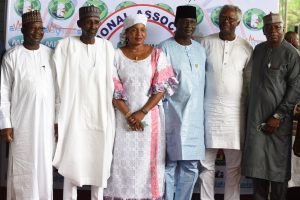

 Vice President Yemi Osinbajo has called on Nigerians to rally round and nip in the bud, the festering disunity caused by all types of insecurity in Nigeria.
 The World Bank has extended an assistant to the Nigeria’s Federal Capital Territory Administration (FCTA) to the tune of $15 million, through the Federal Government, to cushion the effects of the COVID-19 pandemic, especially its impact on lives and livelihoods of the poor and vulnerable.

The Dictator In Every Nigerian, By Fredrick Nwabufo
We all detest dictatorship when we are the victims of its reverberations, but when we wear the jackboots and are handing down orders, censures; singling shots, cutting down, attacking and destroying other people we palliate our actions. In most cases, we subsume our venture in tyranny as ‘’activism’’ – a term that has now become nebulous and an umbrella for highwaymen clutching the banner of civil advocacy.
There is a dictator in every Nigerian. We want to be heard, but we do not want to hear others. Even when we listen, it is not to understand but to muster ammunition for a belligerent response. The falcon does not hear the falconer. We have become so regimented in our celebration that any view which does not follow a ‘’popular solitary narrative’’ is blitzed, and the messenger assailed ruthlessly.
It must be our way or the highway to hell. A straitjacket opinion dominates the landscape and all contrary perspectives sentenced to silence. If you dare to think different or say different, you are cancelled, ridiculed, vilified and slandered. In our world, everyone must be on the bandwagon of the solitary narrative. Is this not a tyranny of opinion? Are we not dictators?
I have become a staple for vicious internet hobgoblins. These imps find my unyielding stance on national issues vexatious. To them, it is uncharacteristic for someone from the south-east to speak in defence of Nigeria or take a position away from the prevailing socio-political doctrine. Their run-off-the-mill argument is that since I am Igbo, I must defend the Igbo – whether for good or for evil. But I cannot fit into that provincial receptacle. It is not me. My calling is for humanity regardless of tribe, religion or political persuasion.
When it is time to take a righteous stand for any group whether – Igbo, Hausa, Yoruba, Fulani, Igala, Ibibio, or Ijaw – I will proudly do so. What affects one afflicts all of us.
Native mentation. This is our challenge — to see in tribal silos and do not to think beyond the tribe. We must evolve beyond this drawback. Armies of Nigerians from different sections of the country must rise up and defend Nigeria and Nigerians. We should not always retreat into ethnic shells and interpret national matters by sectional prejudice. We must stand in the beautiful middle dividing nonsenses.
My stint in activism enriched my knowledge of civil advocacies – and their ugly underbelly. The clouds are not always white and robins do not always sing. The Nigerian civil society space is one that is tainted and blackened by ego, rapaciousness, and sleaze. I participated in some advocacies in the past with a mind brimming with passion for Nigeria and a fist raised for a change in my country. I was naive. My dispassionate commitment to certain causes and conviction led me down the primrose path of deception. In my innocence, I assumed everyone raising a fist and parroting slogans had genuine intentions.
It was devastating for me when I realised some of these advocacies are well-oiled campaigns promoted by unclean characters. Most civil advocacies do not sprout organically. There is always a mighty hand behind the curtains pulling the marionettes.
There is also the all-knowing complex with the activism industry. ‘’Activists’’ appear to have the right prescriptions to Nigeria’s problems as well as the Midas touch to turn things around. They make pleasing noises; shout the loudest in the room, deliver wry but perfect one-liners, and seal every oration with powerful quotes from famous persons — all by rote. They know what to say in every situation. But many of these advocates from the Nigerian ‘’activism community’’ found themselves in government and became what they stood against in their days in the trenches – and instead of bringing change, they caused government to atrophy with a Sadim touch.
A once vibrant activist with a mouth full of hot words revealed his true plumage and betrayed his hypocrisy when he became state governor and then national chairman of a major political party. There are many like that in the activism community waiting for their turn at the table. And while they are waiting they must keep shouting until their mouth is fed.
While the ‘’activism community’’ claims to be at war with tyranny, it does not brook opposition. Members who do a volt-face or have a change of perspective are ‘’de-comraded’’ or dismissed as ‘’compromised’’. There is a dictatorship of opinion in the activism community. It must be ‘’attack, tear down, criticise and pull down’’. If you happen to point out the flickers of hope in the system, you are reduced to a quisling.
This does not obviate the place of genuine activists – those whose singular pursuit is to see a better Nigeria. Even in a crate of rotten eggs, we still have the unsoiled ones.
There is a dictator in every Nigerian. We hold those in government to scrutiny for alleged acts of tyranny while ignoring our own complicity. We should hear one another. If you insist only your way must stand, how are you different from Idi Amin? Dictatorship stirs resistance. When you come to people from a position of tyranny, naturally they will resist you. This is a normal human reaction. No one wants to be dictated to, no one wants to be pushed around or made to feel like an indentured slave. We should hear one another.