The Nigerian Communications Commission (NCC) has distanced itself from an online media report which alleged that mobile telephony subscriptions in Nigeria grew by 3 million new subscribers in the first quarter of 2021, despite the suspension on the registration of new subscribers which took effect from December 9, 2020 and was only lifted in May, 2021.
A statement today, July 8, by the Commission’s Director of Public Affairs, Dr. Ikechukwu Adinde, advised stakeholders to disregard any information on subscriber data different from those presented in the Commission’s website.
“We wish to use this opportunity to clarify that the Nigerian Communications Commission and the National Bureau of Statistics are the only authoritative sources of authentic data on the Nigerian telecommunications sector. “Indeed, the Commission is well aware of the critical need to make accurate and up-to-date data available to all Stakeholders.
” Indeed, as a matter of corporate policy and consistent with international best practice, relevant data and statistics are transparently reported and regularly updated on the Commission’s website (< https://www.ncc.gov.ng/statistics-reports/industry-overview >) for free use by interested Stakeholders.”
The statement said that the Ericsson Mobility Report cited in the online publication is essentially a forecast of trends based on Ericsson’s analysis and does not refer to the NCC or any official channel as source for its data and/or projections.
The Commission asked all Stakeholders to visit the website of the Commission for authentic data on the sector and to refer all doubts to its Public Affairs Department to avoid unnecessary controversy and/or inadvertently misleading other Stakeholders who may rely on such reports.
The Federal Inland Revenue Service (FIRS) has engaged the services of some commercial banks in Nigeria to recover the sum of N1.8 trillion from accounts of Messrs MultiChoice Nigeria Limited (MCN) And MultiChoice Africa (MCA).
A statement today, July 8 by the Executive Chairman of the FIRS, Muhammad Nami, said that the decision to appoint the banks as agents and to freeze the accounts was as a result of the group’s continued refusal to grant FIRS access to its servers for audit.
Nami said that the companies persistently breached all agreements and undertakings with the FIRS, by not promptly responding to correspondences, including lack data integrity “and are not transparent as they continually deny FIRS access to their records.
“Particularly, MCN has avoided giving the FIRS accurate information on the number of its subscribers and income. The companies are involved in the under-remittance of taxes which necessitated a critical review of the tax-compliance level of the company.
The statement said that the group’s performance does not reflect in its tax obligations and compliance level in Nigeria.
“The level of non-compliance by Multi-Choice Africa (MCA), the parent Company of Multi-Choice Nigeria (MCN) is very alarming. The parent company, which provides services to MCN has never paid Value Added Tax (VAT) since its inception.
“The issue with Tax collection in Nigeria, especially from foreign-based Companies conducting businesses in Nigeria and making massive profits is frustrating and infuriating to the Federal Inland Revenue Service (FIRS).
“Regrettably, Companies come into Nigeria just to infringe on our tax laws by indulging in tax evasion. There is no doubt that broadcasting, telecommunications and the cable-satellite industries have changed the face of communication in Nigeria. However, when it comes to tax compliance, some companies are found wanting. They do with impunity in Nigeria what they dare not try in their countries of origin.”
The FIRS boss stressed in the statement that Nigeria contributes 34% of total revenue for the Multi-Choice group, saying that next to Nigeria from intelligence gathering is Kenya with 11%, and Zambia is in 3rd place with 10%. The rest of Africa where they have presence accounts for 45% of the group’s total revenue.
“Information currently at the disposal of FIRS has revealed a tax liability for relevant years of assessment for ₦1,822,923,909,313.94 (One trillion, eight hundred and twenty-two billion, nine hundred and twenty-three million, nine hundred and nine thousand, three hundred and thirteen naira, ninety-four kobo only) and $342,531,206 (Three hundred and forty-two million, five hundred and thirty-one thousand, two hundred and six dollars only).
“Under FIRS powers in Section 49 of the Companies Income Tax Act Cap C21 LFN 2004 as amended, Section 41 of the Value Added Tax Act Cap V1 LFN 2004 as amended and Section 31 of the FIRS (Establishment) Act No. 13 of 2007, all bankers to MCA & MCN in Nigeria were therefore appointed as Collecting Agents for the full recovery of the aforesaid tax debt.
“In this regard, the affected banks are required to sweep balances in each of the above-mentioned entities’ accounts and pay the same in full or part settlement of the companies’ respective tax debts until FULL recovery. This should be done before the execution of any transaction involving the companies or any of their subsidiaries. It is further requested that the Federal Inland Revenue Service be informed of any transactions before EXECUTION on the account, especially transfers of funds to any of their subsidiaries.”
The Executive Chairman said that it is important that Nigeria puts a stop to all tax frauds that have been going on for too long.
“All Companies must be held accountable and made to pay their fair share of relevant taxes including back duty taxes owed, especially VAT for which they are ordinarily agents of collection.”
Curtain fell on the extraordinary and illustrious life of Kenneth David Kaunda, Zambia’s founding father and pan-Africanist, after he died from pneumonia on June 17. He will be buried July 7, after living for 97 years.
Kaunda was the last of the titans, the African nationalists that fought for independence from colonial rule, which included the likes of Kwame Nkrumah, Julius Nyerere, Nnamdi Azikiwe, Obafemi Awolowo, Ahmadu Bello, Felix Houphouet-Boigny, Nelson Mandela and others.
He was a remarkable man in dignity, humility, simplicity, intellect and character – a leader per excellence.
Given the role he played as a foremost nationalist, pan-Africanist and anti-colonial and anti-apartheid fighter South of Sahara, it will be difficult for me not to pen this tribute on the transition of this inimitable African leader.
Kaunda was born to teacher parents in 1924 and he too started life as a teacher but joined politics in 1949 by becoming a member of Northern Rhodesia Africa National Congress. In 1953, he moved to Lusaka to assume office as the Secretary General of the Africa National Congress.
The entire Southern Africa was in colonial fervour. Colonialism there was not just economic exploitation and political subjugation; large swaths of Europeans were moving in with a clear agenda of resettlement, land grab and the remaking of the region in European image for whites.
It was in these circumstances that Kaunda emerged as a political leader for his people. It is interesting that he never took up arms, but used nonviolent means of passive resistance to advance his cause. For this he was imprisoned by the colonial government. He came out of detention to be elected the first president of independent Zambia in 1964.
His priority in office was education, followed by agriculture. He set a target of total literacy for Zambia and it is not surprising that Zambia has one of the highest literacy rates in Africa.
Finding himself within colonial and apartheid encirclement, he was in the forefront of the anti-apartheid struggle in Southern Africa. He committed Zambian resources and personnel to the struggle and allowed patriots from Zimbabwe, South Africa, Angola and Namibia to use his country as base in their struggles.
He participated actively in the Organisation of Africa Unity (OAU) which he headed twice. He was a pan-Africanist who worked with others for African unity and integration. They transcended their local space as the entire continent was not even enough a platform for them. He was also in the Non-Allied Movement, the association of states that do not align with either side of the Cold War. He was thus a national, regional, continental and global player – straddling the entire gamut.
One blight of his reign was the banning of multiparty political system and institution of political monolithism in Zambia. His argument was that a one-party system keeps ethnic, religious and other divisive tendencies in politics at bay.
But the global Third Wave of democratisation was in full swing, beginning from the late 1980s. The Cold War had ended with American unipolar hegemony being constructed without as much as whimper from any quarter. The United States and her especially European allies were then promoting transition to multiparty democracy where there were hitherto military autocracies and one-party dictatorships all over the world.
Kaunda was caught in the ferments of this wave as popular movement in Zambia, led by his nemesis and eventual successor, Frederick Chiluba, a trade unionist, rose to demand for multiparty democracy. Kaunda was forced to unban multiparty political participation and called for election ahead of schedule in 1991. He only managed to garner 25 per cent of the votes as Chiluba swept him off power by carting off 75 per cent of the ballots, thus ushering a new era of political leadership in Zambia, after 27 years of Kaunda presidency.
I had a fortuitous meeting with Kaunda in 2011 when I was the governor in Osun. We had been attracted to the Zambian beef industry’s success story and had visited with the intention of duplicating it in our state. So, in the company of my friends, the Director General of the Bureau of Social Services, Olufemi Ifaturoti, Dr Charles Akinola, the Director General of the State’s Office of Economic Development and Partnership and Mr Wale Adedoyin, the State’s Commissioner for Agriculture and Food Security, we departed for Lusaka on December 11, 2011.
It was a pleasant surprise when our host and the then Nigerian High Commissioner in Zambia, Ambassador Folake Markus Bello included a visit to the old man in our itinerary. I was quite impressed that Kaunda had retired to a modest bungalow and from the serenity of this simple building in the heart of Lusaka, he received us warmly.
We discovered also that he had been engaged pro bono in advocacy works on HIV-AIDS, healthy living and child development. We decided immediately to publish one of the handbooks he wrote for students, copies of which were distributed to pupils in Osun schools.
His immediate post-presidency life was not particularly rosy. He found himself in opposition and had to frequently clash with President Chiluba as the key opposition figure. This got to a head when Chiluba, now power drunk, instigated the campaign to deport him to Malawi, where his parents were born. He got a court to actually order his deportation but this was overturned by the Supreme Court.
I have Kaunda and others to thank for the pan-Africanist ideology and legacy that my generation inherited from them. This makes it difficult for us to accept further partitioning of the countries created by Europeans in their Berlin Conference of 1884. Rather, we look forward to unification of the continent and the completion of the unfinished work of Markus Garvey, Awolowo, Nkrumah, Kaunda and other.
Adieu Kaunda! You came, you saw and you conquered. Your legacy will live on.
Ogbeni Aregbesola is Nigeria’s Minister of Interior.
Borno State Governor, Babagana Zulum has warned his counterparts in the Southern parts of the country that their collective ban on open grazing by cattle herders in that region will not work.
Speaking today, July 7, on Channels TV programme, Governor Zulum, stressed that what should be done now is for all the governors in the country and people of goodwill to find solution to the lingering security and economic crisis in the country.
“The issue of the socio-political and economic dimensions of this crisis is very important.
“Addressing farmers-herders is also very important, to ensure that the enabling environment has been created for the herders is very important.
“This issue of stopping open grazing and others will not work unless we sit down and address all these issues squarely.”
The 17 Southern Governors had, among others things, rising from their meeting in Lagos State, banned herders from open grazing in the region, with effect from September 1, this year.
They had earlier in a summit held in Asaba, Delta State capital, unanimously banned open grazing, attributing this to the clashes between farmers and herdsmen.
Former Nigerian Minister of Finance, Mrs. Kemi Adeosun, has said that the ruling of the Federal High Court that she could serve without the certificate of the National Youth Service Corps (NYSC) is a victory not only for her but for all Nigerians in Diaspora wanting to come and serve their fatherland.
In a statement today, July 7 by her legal team, hours after the judgment in the case, Adeosun, who resigned from Federal cabinet as a result of the dust the allegation raised, said she went through a “very traumatic spell.
“My lawyers have informed me of the judgment by the Federal High Court, Abuja, in the case of Folakemi Adeosun v The Attorney General of the Federation (FHC/ABJ/CS/303/2021) in which the court, presided over by Honourable Justice Taiwo Taiwo, ruled that the Constitution does not require me to present my first-degree certificate or any other certificate, including the NYSC certificate, to be appointed a Minister.
“More importantly, he also ruled that I was not eligible to perform NYSC by virtue of the constitution. This is the position I have always maintained and am happy for this official clarification.
“The ruling vindicates me after a very traumatic spell. It is, however, not only a personal victory; it’s also a victory for many Nigerians in the Diaspora under similar conditions who are desirous to serve their country.
“I wish to thank God, my family, friends, my counsel, Chief Wole Olanipekun (SAN) and numerous well-wishers for their love, care and concern throughout this difficult period, which has lasted three whole years.
“I wish to add in the light of the court’s ruling, I will at the appropriate time and without hesitation, take all further steps necessary within the law to protect my reputation. I thank you all.”
Justice Taiwo Taiwo, in the judgment, held that Adeosun was not qualified to have participated in the scheme when she graduated at 22 years because she was then a British citizen.
Justice Taiwo further held that as at when she formally returned to Nigeria and became a Nigerian citizen at over 30 years, she was not eligible to present herself for the NYSC service.
The judge had said Adeosun or anyone did not require a discharge certificate of NYSC to qualify to contest election to the House of Representatives or be appointed a minister in Nigeria.
Adeosun, in an originating, summon with suit number: FHC/ABJ/CS/303/2021 filed on March 11 by her lawyer, Wole Olanipekun, SAN, listed the Attorney General of the Federation as the sole defendant.
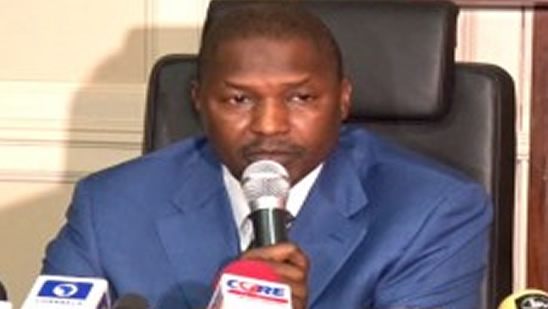
Nigeria’s Attorney General and Minister of Justice, Abubakar Malami, has taken the Minister of Justice and Solicitor-General of the Government of Alberta, Canada, Kelechi Madu to the cleaner over his comments on the arrest of Nnamdi Kanu, leader of the outlawed Indigenous People of Biafra (IPOB), describing him as an empty barrel.
Malami, who lectured his Canadian counterpart on the tenets of law, in a statement today, July 7, said: “we advise the so-called ‘learned man’ to shelve his arrogance and learn to study the law books before opening his mouth to disgrace himself before the right thinking members of the society thereby attracting to himself criticism that may propel doubt about his suitability for the job he claims to be doing now, after moving out of his country of origin in which he fails to excel.”
The Nigeria’s chief law officer called the Canadian state official an ignoramus and eccentric, whose views are weird to the legal profession.
The AGF said it is unfortunate that Madu faulted the internationally recognised manner through which Kanu who jumped bail was re-arrested and brought back to face trial.
“It was abundantly clear that bench warrant was lawfully and judiciously procured through judicial process by a competent court of law, whose bail condition Nnamdi Kanu breached with impunity.
“There was no illegality in the entire process and the question of illegality does not even arise. It is a common principle of the law that he who comes to equity must come with clean hands,” Malami said.
Malami said Kanu has enjoyed representation by counsel of his choice and was never denied a right of choice of counsel or recourse to one, even when he symbolises a proscribed association (IPOB).
“Where was the so-called Madu when Nnamdi Kanu was inciting violence against the country? Why, as a lawyer, would Madu support a fugitive who jumped bail and accused of terrorism and treasonable felony? What stopped Madu from voicing out dissent on the atrocities of Kanu and their group?
“It is important to educate the likes of Keleche Madu that both Nigeria (his country of birth) and Canada (where he claims to be practising law) are signatories to the Multinational Treaty Agreement where, among others, fugitive fleeing justice in nations with similar agreement could be brought back to face justice.
“It is a pity that as a Solicitor General of a province, Madu failed to keep himself acquainted with the provisions of general laws of the country where he stays as well as international laws.
“We wish to draw the attention of Madu to the provisions of Consolidated Act Criminal Code under the Canadian Law R.S., C 1985, c. C-46:1-2 on Treason and other Offences vis:
“46(1) Every one commits high treason who, in Canada: (a) Kills or attempts to kill Her Majesty or does her any bodily harm tending to death or destruction, maims or wounds her, or imprisons or restrains her,
“(b) Levels war against Canada or does any act thereto; or (C) Assist an enemy at war with Canada or any armed forces against whom Canadian Forces are engaged in hostilities, whether or not a state of war exists between Canada and the country whose forces they are. 46(2) Every one commits treason who, in Canada (a) Use force or violence for the purpose of overthrowing the government of Canada or a province;
“(b) Without lawful authority, communicates or makes available to an agent of a state other than Canada, military or scientific information or any sketch, plan, model, article, note or document of a military or scientific character that he knows or ought to know may be used by that state for a purpose prejudicial to the safety of defence of Canada;
“(c) Conspires with any person to commit high treason or do anything mentioned in paragraph; (d ) Forms an intention to do anything that is high treason or that is mentioned in paragraph; (e) Conspires with any person to do anything mentioned in paragraph (b) or forms an intention to do anything mentioned in paragraph (b) and manifests intention by and overt act.”
Madu had criticized Malami over Kanu’s controversial arrest, calling him a disgrace to the rule of law, and not worthy to be an officer of the court.
“He has shown himself to be a bigot who does not understand what it means to live in a pluralistic society governed by the dictates of the rule of law.”
A Federal High Court in Abuja has ruled that former finance minister, Kemi Adeosun did not offend Nigerian law or contravened the constitution over lack of possession of the National Youth Service Corps (NYSC) certificate, because she was not qualified for the scheme.
According to Justice Taiwo Taiwo, as of the time she graduated from a United Kingdom university at 22 in 1989, she was a British citizen who was not qualified to participate in the scheme.
The judge ruled on the originating summon with suit number: FHC/ABJ/CS/303/21 brought by Wole Olanipekun on Adeosun’s behalf.
The court said she was not supposed to present herself for the scheme because under the 1979 Constitution, which was in force at the time of her graduation, she was not a Nigerian citizen either at the time of her graduation or when she turned 30.
Justice Taiwo said that Adeosun’s appointment as minister was legal despite not presenting the NYSC certificate.
The judge also ruled that since the 1979 constitution, which was in force at the time did not recognise dual citizenship, Adeosun could not have served because she was a British citizen.
Kemi Adeosun was forced to resign as minister during the heat generated by an “investigative” story, carried by an online newspaper (not Greenbarge Reporters online), on the fact that she did not go through the compulsory one year para military training, known as National Youth Service Corps.
File photo: Wole Soyinka | PIUS UTOMI EKPEI/AFP/Getty Images)
Professor Wole Soyinka, who appears totally ignorant of the most burning issue in international current affairs, betrays an unacceptable level of illiteracy on a related issue at home.
On the issue of culpability for the origin of Boko Haram, Mahmud Jega says of Soyinka that he thinks he knows; Sam Nda-Isaiah says he doesn’t, and is hopelessly dead wrong; Mohammed Haruna says he only peddles pure rubbish. All the three are right, but the truth really is that he doesn’t even understand—and probably never will.
This is because the tunnel vision with which he sees the country has been conditioned by three factors—an unfounded cultural superiority complex, a hubristic pagan worldview and an experience in which he saw the man died.
The issue of Boko Haram merely gave him another opportunity to take on his imagined old adversary—the Northern Establishment, which he now holds responsible for the creation of Boko Haram. This is simplistic and laughable; but it saves this unready analyst the trouble of having to know the background to the situation, engage in serious analysis of the issues involved, draw the necessary conclusions and find a way forward for society.
Certainly, a knowledge of the varieties of groups on the Islamic revival scene, which no one on the international scene should today be without, the fact that Boko Haram predated the Jonathan administration, and is confined to a corner of the country that is held by one of the opposition parties, and is opposed to all constituted authority including that to be wielded by the Northern leaders that were supposed to have founded it, would make Soyinka’s simplistic explanation all too obvious—and it might have been made to draw attention away from suspected US involvement.
No doubt, Soyinka suffers from tribal hubris of which he needs to be cured. Going by the themes of his literary output, he seems to believe that his race is the greatest and the most cultured—and therefore, by implication, his pronouncements must be the best and the final word the world is waiting for.
But what is this Yoruba culture in which people like Soyinka take so much pride? No doubt, his people love their language and love singing in it; they love their bodies and love waltzing them into a variety of dance forms. They love their lives and are always impulsively proud to say that they love the culture that has come to define the way they see themselves and view others.
However, what Soyinka holds aloft is not culture: it is paganism; though it must be admitted that it is quite elaborate. But the possession of a pagan past is no accomplishment; it is a fact of history and every tribe has had one; and after the advent of Judaism, Christianity and Islam, there is nothing more to glory in animistic heathenism: it is there at the centre and origin of every type of primitiveness. The issue therefore should not be the promotion of the pagan culture of a distant past, but the cultivation of culturedness in present conduct.
The proof and relevance of culture should be in its attitudinal pudding, measured by its practical moral utility in setting the standard of what is acceptable in human conduct; and not in the elaborateness of ancient idolatrous rituals.
For us, it represented the sub-humanness of our primordial cultural history; and we are not proud of it, and nor are we any more captivated by its elaborateness or by the depth of meaning and the symbolism of its meta-paganism. Of course that is not to say that cultural mores are without meaning. Not at all. They may often in fact be too pregnant with a variety of meanings capable of interpretations; but their import is for a world that is past and gone—and better forgotten.
Man’s cultural and social development have today passed the ignorance and obscurantism that paganism has to offer and the superficialities of the animus of those whose antipathy to divine values today finds expression in the cultivation and promotion of this new international pagan culture.
But there is no superiority in paganism: there was nothing in Yoruba native forest theology that was more diabolical than the heathenism of the Savannah, where, in the Benue valley, there is magic that is blacker than Sanponno; and in Niger valley, a Satanism that is darker than Esu’s; and among the Maguzawa there are totems that, though benign, are no less occultist.
The rituals of Tsumburbura were every inch as complex and elaborate as the possessed incantations of Ogun or the thunders of Sango, and no less diabolical. The Satanology of Santolo would beat every mumbo jumbo of Ifa Orisa divinations. The rites of Mai Barhaza would any day be more picturesque than the dance of the Egungun masquerade; and Babule and Dan Galadima more demonic than Ogboni totemism, and of women just as chauvinistic.
In lasciviousness and pure voluptuary the Gelede Festival pales in comparison to the Dala Dance of unclothedness. In number, in hideousness of Satanism and in the comprehensiveness of misguidance Obatala’s 4,000-odd Orisas would prove no match for the fetishism and atheistic devilry of the numberless Iskoki of pre-Islamic Bahaushe. Or of the pre-Christian Tiv man, for instance. But all these are facts of which no one is today proud, or on account of which cultural superiority is assumed over others.
Perhaps Soyinka’s—and Nigeria’s—problem lies in the fact that the Nobel Laureate considers himself an intellectual whose word the world looks forward to. And he is not. True intellectualism is not the mere fact of having been to school or teaching in one. It is all about being conscious, sensitive and aware of the circumstance and of one’s role in it and one’s readiness to sacrifice and suffer to make it better.
You are either born an intellectual or you are not: it is an attitude that cannot be learnt; because education and experience only help to refine and sharpen an already existing predisposition—being analytical, being objective and being truly concerned. While some intellectuals choose only to expose a bad situation, others, in addition, fight to change it; and of these, those that succeed are those unencumbered by prejudice of the kind that Soyinka has always exhibited.
It is not a quality that the receipt of an international prize—not even a Nobel—can confer on one; and a literary career based solely on the exploration of themes in Yoruba paganism is insufficient a social platform for someone like Soyinka, who is really not fully intellectualised, to articulate usefully on any of the many contentious national issues. That is why Soyinka is never known to have offered a solution that works; or that, when looked at closely, makes any sense. Of issues even within their areas of primary interest, they have no real knowledge—only fancy and conjecture and an overarching desire to belong to the cultural metropolis from which they unconsciously take their cue in spite of all the parroting of authentic Ogun-ness.
Nigeria has changed from the closed society of 1964, but those unable to see, or are averse to seeing, healthy change in the nation have decided to cling to the uncreative fiction of the Wetie. And the fact that he is not understood—in his literature and in his analyses—and is therefore not generally effective shouldn’t mean that he doesn’t belong to that distinguished class of tribal jingoists and sectional propagandists; because even if his analysis is not clear—and is probably not even an analysis—his objective is always only too obvious, not least because, as far as the North is concerned, what he bandies about as analysis of its condition and role has remained unchanging over all these years.
Three decades and someone has still not grown culturally or developed intellectually; and what a coincidence that Boko Haram also originated in Bo-ro-no State! Someone like him who has chosen the narrowness of a pagan worldview and eschewed the universalism of divine guidance or even that offered by objective secular multiculturalism will never taste the sweetness of true intellectualism. With a mind fixated on hatred and all muddled up with an incurable anti-Northern animus, it has become permanently set and is now a part of character, but too superficial and too ossified to be of any intellectual use.
In our situation, it is not those who do not know who are lost, it is those who do not want to learn who are; and all those pretentiously bookish creatures whose knowledge is only from books are in reality ignorant even of them. Of this and of Boko Haram, he doesn’t really understand—and probably never will.
Adamu Adamu is the Nigerian Hon. Minister of Higher Education.
Haitian President Jovenel Moise | Caribbean News Global
A group of unidentified individuals attacked the private residence of Haitian President Jovenel Moise overnight and shot him dead, Interim Prime Minister, Claude Joseph, said in a statement released Wednesday.
At around 1am on Wednesday, July 7, a group of unidentified people, including some speaking Spanish, attacked the private residence of the president, mortally wounding the head of state.
The First Lady suffered bullet injuries, said a statement released by Interim Prime Minister Claude Joseph’s office.
Joseph said he was now in charge of the country.
Condemning the “inhumane and barbaric act”, Joseph called for calm, saying the police and the country’s armed forces had taken control of the security situation.
Coalition Northern Groups Kaduna Spokesperson Malam Abdul Azeez | Credit: DailyNigeria
The North has made it clear to the Southern Governors that it would not be intimidated into conceding the Presidency in the 2023 election in the country.
The warning was made separately by the Northern elders and interest groups.
On its part, the Coalition of Northern Groups (CNG) said the North would not accept the imposition of any candidate on the region.
This was even as the Northern Elders Forum (NEF) rejected the position that the South should produce the next President, saying that the North would not be compelled to yield an elective position.
Also, the Arewa Youths Forum (AYF) said that the southern governors should first address secession agitation in their regions.
The Northern Elders Forum, through its Director of Publicity and Advocacy, Dr. Hakeem Baba-Ahmed, said the North will not be intimidated into yielding an office that ought to be settled democratically.
It sees the decision of the Southern governors as an expression of a sentiment that could be best discussed within a political process.
“We are running a democratic government and decisions over where the next president comes from will be made by voters exercising their rights to choose which candidate best serves their interest.”
In a statement by its spokesperson, Abdul-Azeez Suleiman, Coalition of Northern Group, accused the Southern governors of ganging up against the North.
Describing the proposed anti-open grazing law as retrogressive, the group said it threatens the legitimate presence of pastoral communities in the South.
“Their (Southern governors) support for treasonable felony, by the subtle endorsement of the activities of such criminal separatist forces, led by the likes of Sunday Igboho and Nnamdi Kanu, by warning the nation’s security agencies against operating in the region without obtaining permission from the governor of the particular state is a matter that must be given the seriousness it deserves.
“It is ironic for such leaders of a society that delights in unleashing mayhem against fellow citizens of other regions at the slightest of pretexts, to expect the other sections of the country to trust them or any of their proteges with presidential powers.
“The Southern governors’ resolutions in that regard have further exposed a deliberate attempt to impose a contentious system of a rotational presidency that turns all democratic norms and accepted indices of our national demography on their heads; a rotation system that is clearly aimed at achieving dubious political goals; and one clearly designed to weaken the North.
“The Southern governors’ threat to impose and enforce this undemocratic leadership selection process on the North, irrespective of its advantage of numerical superiority and inherent political sophistry, is part of a calculated design to continuously weaken our region politically and pauperise it economically.
“This conspiracy is actively perpetrated with the connivance of some northerners and accommodated by the personal ambition of a few of those that present themselves as northern political leaders.
“Inevitably, the immediate trigger to the Lagos pronouncements was the collaborative assurances by the former Borno State Governor, Kashim Shettima and the Kaduna State Governor Nasir Elrufai given just two days earlier.”
CNG insisted that the North would not be stampeded into making major decisions around power shift.
It added that only a candidate who is competent and can unite and secure Nigeria should be President in 2023, irrespective of where he or she comes from.
“We warn the Southern governors and their northern collaborators that any attempt to ride on the back of such gratuitous insults to democratic fair play and crass political opportunism, to hoist incompetent leadership on the nation in the name of rotation would not be accepted and shall be vehemently resisted.”
AYF, in a statement by Gambo Gujungu, said the governors’ resolutions were not only unconstitutional but “unfortunate.”
It said rather than being concerned about insecurity and economic hardship, the governors were worried about where the president would come from.
“Our advice to the southern governors is: before we talk about the 2023 elections, they should work to settle the problems ravaging their states and regions.
“It is only when some of these impasses are resolved that any one should begin to talk about the Presidency in 2023, under an atmosphere devoid of rancour, bitterness and the present pronounced division.”
AYF believes that some of the resolutions, especially the governors’ rejection of certain provisions of the Petroleum Industry Bill (PIB), “do not engender peace, unity and fairness that the Southern governors said they want by asking for the Presidency in 2023.
‘Provide grazing alternative first’
A former Secretary-General of Arewa Consultative Forum (ACF), Anthony Sani, faulted the governors’ decision to enforce the law on the ban of open grazing by September.
“I do not see how the outright ban of open grazing backed by the state laws without provision for any viable alternative for the herders who lack the wherewithal can be implementable and be helpful.
“To me, such a fiat approach can be likened to outright banning of subsistence farming using hoes and cutlasses without any viable alternative for modern farming. Any law that is not implementable is as good as of no effect and no use to society.”
We use cookies on our website to give you the most relevant experience by remembering your preferences and repeat visits. By clicking “Accept”, you consent to the use of ALL the cookies.
This website uses cookies to improve your experience while you navigate through the website. Out of these, the cookies that are categorized as necessary are stored on your browser as they are essential for the working of basic functionalities of the website. We also use third-party cookies that help us analyze and understand how you use this website. These cookies will be stored in your browser only with your consent. You also have the option to opt-out of these cookies. But opting out of some of these cookies may affect your browsing experience.
Necessary cookies are absolutely essential for the website to function properly. This category only includes cookies that ensures basic functionalities and security features of the website. These cookies do not store any personal information.
Any cookies that may not be particularly necessary for the website to function and is used specifically to collect user personal data via analytics, ads, other embedded contents are termed as non-necessary cookies. It is mandatory to procure user consent prior to running these cookies on your website.



 The Nigerian Communications Commission (NCC) has distanced itself from an online media report which alleged that mobile telephony subscriptions in Nigeria grew by 3 million new subscribers in the first quarter of 2021, despite the suspension on the registration of new subscribers which took effect from December 9, 2020 and was only lifted in May, 2021.
 The Federal Inland Revenue Service (FIRS) has engaged the services of some commercial banks in Nigeria to recover the sum of N1.8 trillion from accounts of Messrs MultiChoice Nigeria Limited (MCN) And MultiChoice Africa (MCA).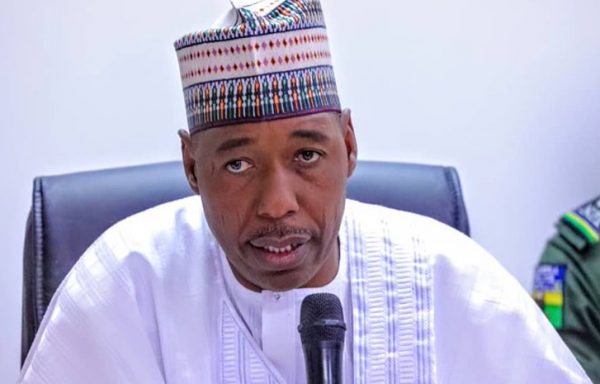






Kaunda, The Last Of Titans Departs, By Rauf Aregbesola
Curtain fell on the extraordinary and illustrious life of Kenneth David Kaunda, Zambia’s founding father and pan-Africanist, after he died from pneumonia on June 17. He will be buried July 7, after living for 97 years.
Kaunda was the last of the titans, the African nationalists that fought for independence from colonial rule, which included the likes of Kwame Nkrumah, Julius Nyerere, Nnamdi Azikiwe, Obafemi Awolowo, Ahmadu Bello, Felix Houphouet-Boigny, Nelson Mandela and others.
He was a remarkable man in dignity, humility, simplicity, intellect and character – a leader per excellence.
Given the role he played as a foremost nationalist, pan-Africanist and anti-colonial and anti-apartheid fighter South of Sahara, it will be difficult for me not to pen this tribute on the transition of this inimitable African leader.
Kaunda was born to teacher parents in 1924 and he too started life as a teacher but joined politics in 1949 by becoming a member of Northern Rhodesia Africa National Congress. In 1953, he moved to Lusaka to assume office as the Secretary General of the Africa National Congress.
The entire Southern Africa was in colonial fervour. Colonialism there was not just economic exploitation and political subjugation; large swaths of Europeans were moving in with a clear agenda of resettlement, land grab and the remaking of the region in European image for whites.
It was in these circumstances that Kaunda emerged as a political leader for his people. It is interesting that he never took up arms, but used nonviolent means of passive resistance to advance his cause. For this he was imprisoned by the colonial government. He came out of detention to be elected the first president of independent Zambia in 1964.
His priority in office was education, followed by agriculture. He set a target of total literacy for Zambia and it is not surprising that Zambia has one of the highest literacy rates in Africa.
Finding himself within colonial and apartheid encirclement, he was in the forefront of the anti-apartheid struggle in Southern Africa. He committed Zambian resources and personnel to the struggle and allowed patriots from Zimbabwe, South Africa, Angola and Namibia to use his country as base in their struggles.
He participated actively in the Organisation of Africa Unity (OAU) which he headed twice. He was a pan-Africanist who worked with others for African unity and integration. They transcended their local space as the entire continent was not even enough a platform for them. He was also in the Non-Allied Movement, the association of states that do not align with either side of the Cold War. He was thus a national, regional, continental and global player – straddling the entire gamut.
One blight of his reign was the banning of multiparty political system and institution of political monolithism in Zambia. His argument was that a one-party system keeps ethnic, religious and other divisive tendencies in politics at bay.
But the global Third Wave of democratisation was in full swing, beginning from the late 1980s. The Cold War had ended with American unipolar hegemony being constructed without as much as whimper from any quarter. The United States and her especially European allies were then promoting transition to multiparty democracy where there were hitherto military autocracies and one-party dictatorships all over the world.
Kaunda was caught in the ferments of this wave as popular movement in Zambia, led by his nemesis and eventual successor, Frederick Chiluba, a trade unionist, rose to demand for multiparty democracy. Kaunda was forced to unban multiparty political participation and called for election ahead of schedule in 1991. He only managed to garner 25 per cent of the votes as Chiluba swept him off power by carting off 75 per cent of the ballots, thus ushering a new era of political leadership in Zambia, after 27 years of Kaunda presidency.
I had a fortuitous meeting with Kaunda in 2011 when I was the governor in Osun. We had been attracted to the Zambian beef industry’s success story and had visited with the intention of duplicating it in our state. So, in the company of my friends, the Director General of the Bureau of Social Services, Olufemi Ifaturoti, Dr Charles Akinola, the Director General of the State’s Office of Economic Development and Partnership and Mr Wale Adedoyin, the State’s Commissioner for Agriculture and Food Security, we departed for Lusaka on December 11, 2011.
It was a pleasant surprise when our host and the then Nigerian High Commissioner in Zambia, Ambassador Folake Markus Bello included a visit to the old man in our itinerary. I was quite impressed that Kaunda had retired to a modest bungalow and from the serenity of this simple building in the heart of Lusaka, he received us warmly.
We discovered also that he had been engaged pro bono in advocacy works on HIV-AIDS, healthy living and child development. We decided immediately to publish one of the handbooks he wrote for students, copies of which were distributed to pupils in Osun schools.
His immediate post-presidency life was not particularly rosy. He found himself in opposition and had to frequently clash with President Chiluba as the key opposition figure. This got to a head when Chiluba, now power drunk, instigated the campaign to deport him to Malawi, where his parents were born. He got a court to actually order his deportation but this was overturned by the Supreme Court.
I have Kaunda and others to thank for the pan-Africanist ideology and legacy that my generation inherited from them. This makes it difficult for us to accept further partitioning of the countries created by Europeans in their Berlin Conference of 1884. Rather, we look forward to unification of the continent and the completion of the unfinished work of Markus Garvey, Awolowo, Nkrumah, Kaunda and other.
Adieu Kaunda! You came, you saw and you conquered. Your legacy will live on.