Home Blog Page 656

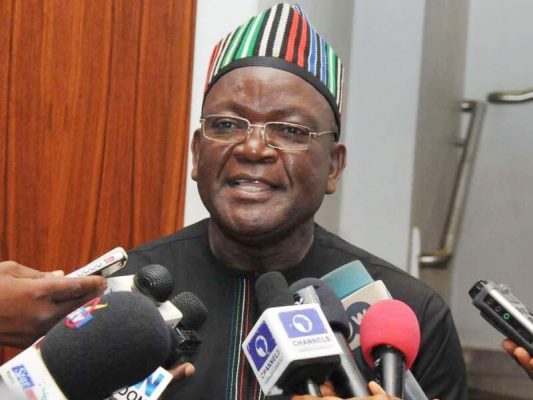
We Didn’t Kill Gulak, IPOB Swears, Says ‘Assassination Of Politicians Not Part Of Our Agenda’

Photo Credit: BBC

The Indigenous People of Biafra (IPOB) has washed its hands off the murder of a chieftain of the All Progressives Congress (APC), Ahmed Gulak today, May 30 in Owerri, capital of Imo State. Gulak was Special Assistant on Politics to ex-President Goodluck Jonathan.

In a statement today, May 30 by its spokesman, Emma Powerful, the IPOB said that Gulak was not a threat to the Biafra agitation and that the group had no reason to assassinate the ex-Presidential aide.

The Biafra secessionist group said: “The attention of the Indigenous People of Biafra (IPOB) ably led by our great leader Mazi Nnamdi Kanu, has been drawn to the untenable allegation by the security agencies that IPOB was responsible for the assassination of former presidential aide to ex-President Goodluck Jonathan, Ahmed Gulak on his way to Sam Mbakwe Airport Owerri Imo State.

“We therefore state without equivocations that IPOB knows nothing about the said assassination. In the first place, what threat did the late Gulak constitute to our cause to warrant his elimination? We had nothing in common with him and could not have in any way killed him.

“Pointing accusing fingers at IPOB for this barbaric act is only meant to divert attention away from the real masterminds. This is the same way terrorists in security uniform commit various atrocities in South-East and turn around to blame IPOB for their crimes just to tarnish our global reputation.

“This is purely a smokescreen to justify their long awaited plan to declare another special military operation in the Eastern region to kill more innocent Biafrans.”

IPOB described as suspicious, the rush to conclusion by security agencies that its members were responsible for the assassination without first probing it.

“Instead of the security agencies to properly investigate the incident and possible factors they were switch to accuse IPOB of a crime we know nothing about. Did IPOB have the itinerary of the late Gulak to have waylaid him at the airport?

“Before linking IPOB with the crime the jaundiced zoo security agencies should have first investigated Gulak’s host, Hope Uzodima, as well as his political opponents to establish their possible involvement.

“This is akin to the allegation by the Lagos Commissioner of Police who raised false alarm recently that IPOB and ESN were planning to attack Lagos State.

“This was to conceal the plans by the terrorists patronising Nigerian Government to use their imported terrorists to bomb soft targets in the City of Lagos and blame it on IPOB. But thank God some discerning minds understood their antics and did not fall for their cheap propaganda.

“We are not surprised that they quickly pointed accusing fingers at us just as they have always looked for every opportunity to incriminate us to frustrate our struggle for Biafra restoration. But this too will not fly because the world is aware that IPOB is a peaceful movement. IPOB is not a terrorist organization and does not spill blood.

“Had the late Chief of Army Staff Attahiru’s plane crashed in the East, definitely, the so-called Intelligence Agency would say it was IPOB that shot down the plane and everyone in Fulani controlled Sharia core North would believe it. For us, linking IPOB with the assassination of Gulak is simply to pitch the East against the core Islamic North as a cover and justification for another round of pogrom against Easterners living in the North.”

He said that the group sympathizes with Gulak’s family, reiterating that it is after having sovereign nation of Biafra and that killing of politicians is not in its plan.

“We are only after the restoration of Biafra. Assassination of politicians is not part of our agenda otherwise we would have killed the Efulefu politicians in the Eastern region sabotaging our struggle.

“We are in mournful mood ahead of the May 31st Biafra Remembrance Day in honour of our fallen heroes. The terrorists in security uniform looking for any slightest opportunity to blackmail us should not cash in on the sit-at-home order given by our Leader for our fallen heroes.

“The order is for Monday and not Sunday. People were freely moving about on the streets of Biafra without any molestations by IPOB and there was no way we could have singled out Gulak for attack because we a non-violent movement.

“Once again we urge the illiterate and clearly unintelligent agencies masquerades as intelligence agencies we have in Nigeria to please leave IPOB out of their messy incompetence. We challenge Aso Rock to Institute an independent panel of inquiry to investigate the incident and expose those behind this gruesome murder of an innocent man.

“Our hearts go out to the family of Gulak. May his soul rest in peace.”

What Is Happening In Southeast Is Terrorism, By Fredrick Nwabufo

At a time when evil spars against good, we must choose a side. We either opt to be a part of darkness or take a place in the phalanx of virtuous knights. Staying taciturn while evil course through the land like molten magma from a volcano does not absolve anyone of complicity. All who keep silent in the face of evil are accomplices.

A great pestilence is scourging the south-east. The land is crimson from the blood of innocents. There is fear, anxiety and confusion. A region that was once the safest place in Nigeria is in the throes of anarchy. Police officers are being mauled; soldiers butchered; residents targeted, and citizens killed.  INEC offices and police stations have been razed. And more public infrastructure is being incinerated daily.

What makes these tragedies more devastating is the open support by some citizens of the south-east. Some of them, particularly those who take residence on social media spreading poison, have rationalised the killings and destruction of public property in the region. They describe the killers and arsonists as ‘’our people’’ and ‘’freedom fighters’’.

When did we become a people who rationalise killings? When did we start appropriating arsonists and criminals? When did we become a people imbued with so much hate and anger? When did we become so emotive and reactionary? When did we become so unfeeling? When did life stop to matter to us? Why have we become the monsters we claim we are fighting? When did wanton killing and destruction become a show of strength for us?

What have we become?

Hypocrisy is a vexatious problem here. Some people defending criminals taking innocent lives because “they are our people; they are freedom fighters”. This is while they spread propaganda against other groups. It is really sickening.

Today happens to be #BiafraRemembranceDay, but instead of being a solemn occasion, there are reports of killings and arsons in the south-east. It is not enough to say #Ozoemena because the south-east is already at war. Igbo leaders would rather skirt around the issue because they do not want to be seen as going against the zeitgeist in the region. They are observing political silence. But anyone who keeps silent in the face evil is an accomplice.

It appears we learnt nothing from the civil war. Who invites the grim reaper to his own home? Who brings death and destruction upon his own people? Does freedom fighting entail killing and destruction of lives? The south-east is a commercial centre; the multiplier effect of the activities of gunmen on the region is colossal. Businesses will collapse while some will relocate out of the area. Already, some businesses are relocating from the place. Where does that leave us? If the regional economy plummets, families thrown into poverty and hunger ravages the population, what is the benefit of the agitations?

What is happening in the south-east is terrorism. We must call it by its character. The killing of citizens; the methodical killing of security agents, and the destruction of public property are nothing short of terrorist acts.

Citizens of the south-east must rise and stop this declension into the void. It is in our greater interest to do so.

These are just my lamentations.

By Fredrick Nwabufo

Twitter @FredrickNwabufo

Gulak Murder: Buhari Talks Tough, “No One Can Hold Nigeria To Ransom”

President Muhammadu Buhari has made it clear that his government would not allow anyone anywhere to hold Nigeria to Ransom for whatever reason.

In a statement today, May 30, the President expressed outrage and disgust over what he called “the heinous murder of Adamawa politician, Ahmed Gulak” in Owerri, Imo State by yet to be identified gunmen.

He said: “I’m repulsed by such premeditated and gruesome murder of Gulak by evil people who are determined to undermine the peace, unity and territorial integrity of our country.

“Let me warn however that nobody or group of people who engages in such despicable acts should expect to go free. We will deploy all resources at our disposal to ensure that such callous and criminal elements are brought to justice.”

President Buhari expressed his deep condolences to the family of the deceased, the people and government of Adamawa State as well as his friends and associates all over the country.

Group Raises Alarm Over Plot By A Former President To Force Buhari To Resign

Niyi akinsiju

The Buhari Media Organisation has raised alarm over plot by a former civilian president and a gang of conspirators under the guise of ’eminent persons’ to instigate an uprising to force President Muhammadu Buhari to resign.

In a statement today, May 30  by its Chairman Niyi Akinsiju and Secretary Cassidy Madueke, the pro-Buhari group condemned the conspirators for their recourse to unconstitutional means to force the resignation of President Buhari, describing the move as reckless and anti-Nigeria.

“Our highly reliable security sources have informed us of the determination of the former President to go ahead with a plan to cause disaffection in the country through a planned conference of so-called eminent Nigerians. While the Conference ostensibly aims to review the state of the nation, we can authoritatively confirm that it is actually a premeditated plan to create confusion in the polity by calling President Buhari to resign after a supposed vote of no confidence.

“Our Security sources said the worries over this latest move by the former leader is not so much about the illegality of the planned declaration but the anarchical mindset behind it, especially given the growing resurgence of  military putsch in the West African sub-region. Any appearance of national confusion, even if scripted without any basis, could fuel unreasoned confusion.

“We, therefore, call on Nigerians to be wary of manoeuvres by people who are desperate to erode the foundation of our hard-fought democracy to further the agenda of a desperate, bumptious and self-serving group of elites besotted with power to the point that they are ready to throw the country into a contrived pandemonium to remain relevant.”

Ahmed Gulak Was Not With Security Escort – Imo Police Command

The Imo State police command has confirmed that the assassinated Ahmed Gulak in the state capital by yet to be identified members of the outlawed Indigenous People of Biafra (IPOB), was not with any security escort at the time of the incidence.

In a statement today, May 30, the command called the killers “Bandits”, saying that the incidence happened at about 7.20 this morning.

The armed bandits, the statement said, intercepted and attacked a Toyota Camry cab carrying Ahmed Gulak and two others who were on their way to Sam Mbakwe Airport to catch a flight.

“Ahmed Gulak left his room at Protea Hotel without informing the Police nor sister agencies in view of the fragile security situation in the South East and Imo in particular. He left without any security escorts and while the cab driver took irregular route to the airport, six armed bandits who rode in a Toyota Sienna intercepted, identified and shot at Ahmed Gulak at around Umueze Obiangwu in Ngor-Okpala Local Government Area close to the Airport.”

The state Commissioner of Police, Abutu Yaro, has directed a discreet investigation into the matter as Tactical and Special forces have been deployed to cordone the area and arrest perpetrators.

How IPOB Militants Killed Ahmed Gulak In Imo – Military Intelligence

Military intelligence has given details of how members of the proscribed Indigenous People of Biafra (IPOB) gruesomely killed the former aide to ex President Goodluck Jonathan, Barrister Ahmed Gulak in Owerri, the capital of Imo State, Southeast Nigeria.

The intelligent officers said that they intercepted communication and videos where the leader of IPOB, Nnamdi Kanu had threatened death to anyone who fails to observe his sit-at-home order from May 29 to May 31, 2021.

“Why should Nigeria and the media continue to dignify IPOB by claiming that its continuous atrocities against the security services and Nigerians are executed by unknown gunmen when we have arrested their members confessing their involvements,” the officer said

This was even as Gulak’s personal friend, Umar Ardo confirmed the killing of his friend.

Ardo, who is a chieftain of the Peoples Democratic Party (PDP) in Adamawa State, reacting to the murder, said that he was killed last night by IPOB militants for no just cause.

“Inna lillahi wa inna illaihi rajiuun. Allahu Akbar.

“I just confirmed the sad and gruesome death of my friend and classmate, the former Hon. Speaker of the Adamawa State House of Assembly, former Senior Special Assistant to the Vice President and former Special Adviser Political to President Goodluck Jonathan, Barr. Ahmadu Ali Gulak.

“Barr Gulak was said to have been killed last night by unknown gunmen in Owerri, Imo State.

“May Allah (SWT) forgive his sins, bless his soul and reward his good deeds with Aljannah on the Day of Resurrection. May Allah (SWT) also give all his children, relatives, friends and loved ones, the fortitude to bear the irreparable loss. And may Allah (SWT) bless us with faithful deaths when it is our turn to die. Ameen.

“Please let all and sundry accept my heartfelt sympathy over this personal painful experience even as I draw solace that he lived a good, helpful and productive life, well illustrated by the fact that he died while in service of his dear country,” Ardo said.

Source: PRNigeria

SIXTH ANNIVERSARY OF BUHARI ADMINISTRATION FACT SHEET

INFRASTRUCTURE

-Presidential approval, in 2020, for the establishment of InfraCo Plc, a world class infrastructure development vehicle, wholly focused on Nigeria, with combined debt and equity take-off capital of N15 trillion, and managed by an independent infrastructure fund manager.

– Establishment in 2020 of the Presidential Infrastructure Development Fund (PIDF), with more than $1 Billion in funding so far.

– The Nigerian Sovereign Investment Authority (NSIA) has seen total additional inflows from the Government of around US$2 billion under the Buhari Administration – since the original US$1 billion which the Fund kicked off with in 2012.

– Launch of the Nigeria Innovation Fund, by the NSIA, to address investment opportunities in the domestic technology sector: data networking, datacenters, software, Agri-tech, Bio-tech, etc.

RAIL

– 156km Lagos-Ibadan Standard Gauge Rail nearing completion

– 327km Itakpe-Warri Standard Gauge Rail completed and commissioned 33 years after construction began.

– Abuja Light Rail completed in 2018.

– Ground-breaking done for construction of Kano-Maradi Standard Gauge Rail, and revamp of Port-Harcourt-Maiduguri Narrow Gauge Rail.

– Financing negotiations ongoing for Ibadan-Kano Standard Gauge Rail project

ROADS

– Presidential Infrastructure Development Fund (PIDF), investing over a billion dollars in three flagship projects: Lagos-Ibadan Expressway, Second Niger Bridge, Abuja-Kaduna-Zaria-Kano Expressway.

– Executive Order 7 mobilizing private investment into the development of key roads and bridges like Bodo-Bonny in Rivers and Apapa-Oshodi-Oworonshoki-Ojota in Lagos

– Highway Development and Management Initiative (HDMI), a public-private partnership program to mobilise, in its first Phase, over a Trillion Naira in private investment into the development and maintenance of 12 Roads, amounting to 1,963km in length.

– More than 360 billion Naira worth of Sukuk Bonds raised since 2017 for dozens of critical road projects across all six geopolitical zones.

PORTS

– Completion of New Terminals for International Airports in Lagos, Abuja, Kano and Port Harcourt

– Construction of New Runway for Abuja and Enugu International Airports

– Presidential approval for four International Airports as Special Economic Zones: Lagos, Kano, Abuja and Port Harcourt.

– Approval for new private-sector funded deep sea ports: Lekki Deep Sea Port (Construction already well underway, for completion in 2022); Bonny Deep Sea Port (Ground-breaking done in March 2021); Ibom Deep Sea Port; and Warri Deep Sea Port

– Development of capacity at the Eastern Ports:

o In December 2017, Calabar Port commenced export of bulk cement to Tema Port in Ghana

o In 2019, three container ships berthed at Calabar Port, for the first time in eleven years

o Dredging of Warri Port (Escravos Bar—Warri Port channel) completed in 2018

o On October 30, 2019, an LPG Tanker operated by NLNG, berthed in Port Harcourt – the first time ever an LPG ship berthed in any of the Eastern Ports

o On December 8, 2019, Onne Port received JPO VOLANS (owned by Maersk), the FIRST gearless and largest container vessel (265.07 metres) to call at any Eastern Port in Nigeria.

o On August 1, 2019, Onne Port’s Brawal Terminal received MSC GRACE, its first container vessel since 2012.

POWER

Energizing Education Programme: Taking clean and reliable energy (Solar and Gas) to Federal Universities and Teaching Hospitals across the country. Four Universities completed and commissioned already: BUK (Kano), FUNAI (Ebonyi), ATBU (Bauchi) and FUPRE (Delta); others ongoing.

Energizing Economies Programme: Taking clean and reliable energy (Solar and Gas) to markets across the country. Completed projects include Sabon-Gari Market in Kano, Ariaria Market in Aba, and Sura Shopping Complex in Lagos.

National Mass Metering Programme: Nationwide rollout of electricity meters to all on-grid consumers, launched in August 2020. The Central Bank of Nigeria is providing 60 billion Naira for the first phase, with a target of 1 million meter installations. So far more than 500,000 meters have been delivered to the Discos, and more than 280,000 installed.

Solar Power Naija: Launched in April 2021 to deliver 5 million off-grid solar connections to Nigerian households. The program is expected to generate an additional N7 billion increase in tax revenues per annum and $10 million in annual import substitution. In May 2021, the Rural Electrification Agency announced the planned deployment of solar-powered grids to 200 Primary Health Centres (PHC) and 104 Unity Schools nationwide.

Presidential Power Initiative (PPI), aka Siemens Power Program: A Government-to-Government initiative involving the Governments of Nigeria and Germany, and Siemens AG of Germany, to upgrade and modernize Nigeria’s electricity grid. Contract for the pre-engineering phase of the Presidential Power Initiative (PPI) was signed in February 2021, following the 2020 approval for the payment of FGN’s counterpart funding for that phase.

Nigeria Electrification Project (NEP) has provided grants for the deployment of 200,000 Solar Home Systems, impacting one million Nigerians. The NEP is also delivering mini-grids across the country.

HOUSING

– The Family Homes Fund Limited (FHFL), incorporated by the Federal Government of Nigeria in September 2016, is the implementing agency for the Buhari Administration’s National Social Housing scheme.

– More than two thousand (2,000) hectares of land with titled documents have been given by 24 States for the Buhari administration’s Social Housing programme, with the capacity to accommodate about 65,000 new homes.

– Under the National Social Housing programme, Nigerians will be given at least a 15-year period with a monthly payment at 6 percent interest rate, to pay for each housing unit. The Central Bank of Nigeria is providing a N200 Billion financing facility, with a guarantee by the FGN.

OIL AND GAS

The Buhari Administration has declared this decade the “Decade of Gas.”

– Ground-breaking on 614km Ajaokuta-Kaduna-Kano Gas Project.

– Successful completion of Nigeria’s first Marginal Field Bid Round in almost 20 years, expected to raise in excess of half a billion dollars, and open up a new vista of investment in oil and gas.

– Launch of National LPG Expansion Programme (including Removal of VAT from the domestic pricing of LPG)

– Financial close and signing of contract for NLNG Train 7, which will grow Nigeria’s production capacity by about 35%

– Nigeria and Morocco have in 2021 signed an agreement to develop a US$1.4 billion multipurpose industrial platform (Ammonia and Di-Ammonium Phosphate production plants) that will utilize Nigerian gas and Moroccan phosphate to produce 750,000 tons of ammonia and 1 million tons of phosphate fertilizers annually by 2025. It will be located in Ikot-Abasi, Akwa-Ibom State.

– Commissioning, in December 2020, of the new NPDC Integrated Gas Handling Facility in Edo State, the largest onshore LPG plant in the country, with a processing capacity of 100 million standard cubic feet of gas daily, producing 330 tonnes of LPG, 345 tonnes of propane and 2,600 barrels of condensate, daily.

– Establishment of a $350m Nigerian Content Intervention Fund, to finance manufacturing, contracts and assets in the oil and gas industry

– Financial Close on the following NNPC-involved projects:

o A 10,000 tonnes per day methanol plant and a 500 million standard cubic feet per day gas processing plant, in Odeama, Brass, Bayelsa State.

o The ANOH gas processing plant, with a processing capacity of 300 million standard cubic feet of gas, in Imo State. It is a Joint Venture between Seplat Petroleum  Development Company and the Nigerian Gas Company, a wholly owned subsidiary of Nigerian National Petroleum Corporation (NNPC). It also has the potential to deliver 1,200MW of power when completed.

o Comprehensive Rehabilitation of the Port Harcourt Refinery (PHRC). Sign-off Ceremony of Engineering, Procurement & Construction (EPC) Contract held in April 2021, marking the commencement of site handover and full mobilization to site.

– Policy, Regulatory and Funding Support for the establishment of Modular Refineries across the Niger Delta. When the Administration took office in 2015 Nigeria had only one functioning Modular Refinery. Today there are at least six ongoing brownfield and greenfield Modular Refinery Projects across the Niger Delta. In 2020 President Buhari commissioned the first phase of the Waltersmith Modular Refinery, in Imo State.

– Launch of the Nigerian Upstream Cost Optimization Programme (NUCOP), to reduce operating expenses through process enhancement and industry collaboration.

AGRICULTURE

– Anchor Borrowers Program (ABP): The Anchor Borrowers Programme (ABP) of the Central Bank of Nigeria, launched by President Muhammadu Buhari on November 17, 2015, has made more than 300 billion Naira to more than 3.1 million smallholder farmers of 21 different commodities (including Rice, Wheat, Maize, Cotton, Cassava, Poultry, Soy Beans, Groundnut, Fish), cultivating over 3.8 million hectares of farmland.

– Presidential Fertilizer Initiative: Launched as a government-to-government partnership between the Nigerian and Moroccan Governments, in December 2016, the Presidential Fertilizer Initiative (PFI) produced ~12million 50kg bags of NPK 20:10:10 equivalent in 2020, bringing total production since inception to over 30 million 50kg bags equivalent; and number of participating blending plants increased to 44 from three at inception.

– Special-Agro Industrial Processing Zones (SAPZ) Programme: A partnership between FGN, AfDB Group, and other stakeholders including IFAD and BOI. Under the SAPZ programme, agro-processing centres will be established across the country. The agro-processing centres will be provided with basic infrastructure such as water, electricity and roads as well as facilities for skills training. Seven (7) States and the FCT selected for the pilot phase, due to commence 2021: Ogun, Oyo, Imo, Cross River, Kano, Kaduna, Kwara.

– The Green Imperative – a Nigeria-Brazil Agricultural Mechanisation Programme aimed at boosting agricultural production in Nigeria. The National Assembly has approved a loan for the financing of the program, which will involve the development of 632 privately-operated primary production (mechanisation) Service Centers and 142 Agro processing (value addition) service Centres across the 774 LGAs, and the reactivation of 6 privately owned partially-operational or moribund tractor assembly plants nationwide. It will also train 100,000 new extension workers.

SOCIAL INVESTMENT AND POVERTY ALLEVIATION

– In 2016, President Buhari launched the National Social Investment Programme, currently the largest such programme in Africa and one of the largest in the world. Currently, the National Social Register of poor and vulnerable Nigerians (NSR) has 32.6 million persons from more than 7 million poor and vulnerable households, identified across 708 local government areas, 8,723 wards and 86,610 communities across the 36 States of the country and the FCT.

– From this number, 1.6 million poor and vulnerable households (comprising more than 8 million individuals, in 45,744 communities from 5,483 Wards of 557 LGAs in 35 states and the FCT are currently benefiting from the Conditional Cash Transfer (CCT) program, which pays a bimonthly stipend of N10,000 per household.

– In January 2019, President Buhari launched Nigeria’s Micro-Pension Scheme – which allows self-employed persons and persons working in organisations with less than 3 employees to save for the provision of pension at retirement or incapacitation.

– Establishment of Survival FundNational Youth Investment Fund, and National Special Public Works Program (774,000 beneficiaries across 774 LGAs nationwide), and the Central Bank’s Covid-19 300 billion Naira Targeted Credit Facility (TCF) – more than 150 billion Naira disbursed so far – to support millions of small businesses, households and young people, with federal grants, loans and stipends.

– The Buhari Administration’s Survival Fund has provided its grants (Payroll Support, Artisan and Transport Sector grants, and General MSME grants) to more than 800,000 beneficiaries, since the last quarter of 2020. It has also provided free business registration to more than 200,000 MSMEs across the country.

– Presidential approval for the establishment of the Nigeria Investment and Growth Fund (NIG-Fund), in 2021.

– As at the end of 2020, Development Bank of Nigeria (which commenced operations in 2017) had disbursed 324 billion Naira in loans to more than 136,000 MSMEs, through 40 Participating Financial Institutions (PFIs). (57% of the beneficiaries are women-owned MSMEs while 27% are youth-owned).

– Bank of Industry has disbursed more than 900 billion Naira in loans to over 3 million large, medium, small and micro enterprises, since 2015.

– In January 2019, President Buhari launched Nigeria’s Micro Pension Scheme – which allows self-employed persons and persons working in organisations with less than 3 employees to save for the provision of pension at retirement or incapacitation.

EDUCATION AND HEALTH

– Since assuming office, the Buhari Administration has committed more than N1.7 trillion of capital intervention to Nigeria’s tertiary institutions, through various means, including TETFund – with the universities taking the lion share of the total amount.

– The Federal Government has disbursed more than 170 billion Naira in UBE Matching Grants to States and the FCT since 2015, 8 billion Naira in Special Education Grant to States and private providers of Special Education, and 34 billion Naira from the Teachers Professional Development Fund to States and the FCT. 

– Launch of the Alternate School Programme (ASP), designed to ensure that every out-of-school child in Nigeria gains access to quality basic education, irrespective of social, cultural or economic circumstance, in line with the aspirations of Sustainable Development Goal 4 (SDG-4).

– Presidential approval for a new (extended) Retirement age of 65 and Length of Service of 40 years for Teachers in Public Basic and Secondary Schools in Nigeria (both effective January 1, 2021), as well as a new Special Teachers Salary Scale (effective January 1, 2022), and also a new Special Teachers Pension Scheme.

– Reduction in number of out-of-school children, by 3,247,590, as at 31st December, 2020, achieved through a World-Bank financed program known as ‘Better Education Service Delivery for All’ (BESDA). 1,792,833 of that number achieved through formal schools while 1,454,757 are through non-formal interventions such as Almajiri, Girl-Child, Nomadic/Migrant and IDPs Education).

– Under the World Bank-supported Innovation Development & Effectiveness in the Acquisition of Skills (IDEAS) Project, approved in 2020, US$200m will be invested in 6 participating States (Abia, Benue, Ekiti, Gombe, Kano, Edo) as well as 20 Federal Science and Technical Colleges nationwide. Implementation will be stepped-up in 2021 to afford millions of Nigerian youths the opportunity to acquire hands-on skills to effectively contribute to national development.

– Presidential approval for the establishment of the following:

o Federal Maritime University, in Delta State

o Nigerian Army University, in Borno State

o Six new Colleges of Education (one per geopolitical zone: Odugbo, Benue State; Isu, Ebonyi State; Ekiadolor, Edo State; Gidan Madi, Sokoto State; Jama’are, Bauchi State; and Iwo, Osun State).

o Six new Federal Polytechnics in Kaltungo, Gombe State; Ayede, Oyo State; Daura, Katsina State; Shendam, Plateau State, Ohodo, Enugu State; and Ugep, Cross River State.

o Under the phased implementation of the National Youth Policy, 6 Federal Science & Technical Colleges (FSTC) were established in 2020, as follows: FSTC Ogugu, Kogi State; FSTC Hadeija, Jigawa State; FSTC Umuaka, Imo State; FSTC Igangan, Oyo State; FSTC Ganduje, Kano State; FSTC, Amuzu, Ebonyi State. Five (5) additional Federal Science and Technical Colleges (FSTC) will come on-stream in 2021, and will be located in Bauchi, Plateau, Sokoto, Enugu and Cross River States.

– Grants to State Governments: At least $2.5 million disbursed to each State of the Federation and the FCT, under the Saving One Million Lives (SOML) initiative, to improve health outcomes.

– Basic Health Care Provision Fund (BHCPF): For the first time since the National Health Act was passed in 2014, the Federal Government in 2018 began including the 1% minimum portion of the Consolidated Revenue Fund – amounting to 55 billion Naira in 2018 – to fund the Basic Health Care Provision Fund (BHCPF). The Fund is designed to deliver a guaranteed set health services to all Nigerians, through the national network of Primary Health Care centers.

– Passage of enabling legislation for the Nigeria Center for Disease Control (NCDC), for the first time since it was founded in 2011. President Buhari approved a grant of 5 billion Naira for the NCDC in March 2020, as part of the response to the Coronavirus pandemic.

– Tertiary Healthcare Upgrade Programme: A number of key Federal Hospitals across the country are being upgraded to effectively manage cancer and other major health challenges. Cancer Radiotherapy machines and other equipment are being provided to these hospitals. The National Hospital in Abuja has already received two LINAC (cancer treatment) machines.

– Nigeria Sovereign Investment Authority (NSIA) in March 2018 invested US$10m to establish a world-class Cancer Treatment Center at the Lagos University Teaching Hospital (LUTH), and US$5m each in the Aminu Kano University Teaching Hospital and the Federal Medical Centre, Umuahia, to establish modern Diagnostic Centres. These Centers have all been completed and are now operational.

– Launch in 2019 of a Cancer Treatment Support Programme, ‘Chemotherapy Access Partnership’, as a public-private partnership between the Federal Government of Nigeria and a Private Sector coalition, to enable Nigerians access lower-cost, high-quality medications for the treatment of several types of cancer.

CREATIVE INDUSTRY AND SPORTS

SPORTS

– Long overdue renovation of the Lagos and Abuja National Stadiums kicked off in 2020, ahead of concessioning for private management.

– In 2018, the National Sports Festival held for the first time since 2012.

– Nigeria national U-17 football team, the Golden Eaglets, won the FIFA U-17 World Cup for the fifth time, in 2015. Their first ever win was 30 years earlier, in 1985, when President Buhari was military Head of State.

– Nigeria’s participation at the 2016 Paralympic Games yielded her best gold medal result since Nigeria started taking part in the Games in 1992.

– D’ Tigress, Nigeria’s Female National Basketball Team won the 2017 FIBA Africa Women’s Championship, the continental championship Cup, for the first time in 12 years, and earned qualification for its first FIBA Women’s World Cup appearance since 2006.

– In 2018, D’ Tigress, Nigeria’s Female National Basketball Team earned its first-ever win at the FIBA Women’s World Cup, and went on to advance to the quarterfinals. The Team finished in 8th place – the best ever performance by an African Team.

– In 2019, D’ Tigress successfully defended its 2017 Afro Basketball Women Championship Title.

– In 2020, D’ Tigress became the only female African Team to qualify for participation in the 2020 Summer Olympic Games.

– Nigeria’s Women’s Football Team, the Super Falcons, won the African Women Cup of Nations (AWCON) in 2016 and 2018.

– In 2018, Nigeria hosted a FIFA Executive Football Summit, one of twelve worldwide.

– In 2019, the Super Falcons advanced to the group stage of the Women’s World Cup, for the first time in 20 years.

– In 2019, Nigeria won its first Athletics World Championship Medal in six years.

YOUTH AND CREATIVE INDUSTRY SUPPORT

– Establishment of the 75 billion Naira National Youth Investment Fund (NYIF), approved by President Buhari in 2020

– Establishment of the Creative Industry Financing Initiative (CIFI), by the Central Bank of Nigeria (CBN) in collaboration with the Bankers’ Committee, to provide single-digit financing to young Nigerians in the fields of Fashion, Film, Music and Information Technology.

– In 20197, the Federal Government added Creative Industries to the list of qualifying sectors for ‘Pioneer Status’ Incentives – which grants relief from Corporate Income Tax for a specified period of time.

– Presidential Approval for the handover of the National Theatre, Lagos, to the Central Bank of Nigeria and the Bankers Committee, for redevelopment into a world-class Creative Park serving the theatre, film, fashion, music, and ICT sectors. The handover has been done, and redevelopment work (valued at about 20 billion Naira) has now kicked off.

FISCAL, TRADE, MONETARY AND INVESTMENT REFORMS

– The Nigerian Investment Promotion Council (NIPC) in 2017 completed a long-overdue revision of the list of activities that can benefit from Nigeria’s Pioneer Status Incentive, which grants beneficiary companies a 3 to 5-year tax holiday. The revision, done more than 10 ten years after the last one, has modernized the List, expanding the tax holiday incentives to qualifying companies in E-commerce, Software Development, Animation, Music, Film and TV.

– Restoration of Federal Budget to January-December cycle, with the 2020 Budget, for the first time in 12 years.

– Introduction, since 2020, of annual Finance (Reform) Bills to accompany the annual Federal Appropriation Bill

– Negotiation of the billions of dollars in arrears of Cash Calls we inherited when the administration assumed office, resulting in an agreement for a significant discount of more than a billion dollars. Since 2017 the NNPC has commenced payment of the arrears to the Oil Companies. As at Q4 2020, more than $3 billion of the ~$5 billion arrears had been cleared.

– Launch of a Visa-on-Arrival Policy, as part of Ease of Doing Business Reforms. In addition, a comprehensive reform of the existing Visa Regime, leading to the rollout in 2020 of a new and enhanced Visa Policy for Nigeria (including expansion from 6 visa categories to 79; each tailored to a specific type of traveller – 36 Temporary Residence Visas, 15 Permanent Residence Visas, 24 Short Visit Visas, etc.

PRESIDENTIAL ASSENT TO LEGISLATIVE BILLS

– Deep Offshore and Inland Basin Production Sharing Contracts Act, 1993 (Amendment) Act, 2019, which will deliver increased revenues to the Federation.

– Federal Competition and Consumer Protection Commission (FCCPC) Bill, the first legislation in Nigeria’s history focused on curbing anti-competition practices; establishing the Federal Competition and Consumer Protection Commission.

– Nigeria Center for Disease Control (NCDC) Establishment Act, 2018

– Mutual Assistance in Criminal Matters Bill, an Executive Bill, signed into law in 2019. The Bill facilitates the identification, tracing, freezing, restraining, recovery, forfeiture and confiscation of proceeds, property and other instrumentalities of crime, as well as the prosecution of offenders in criminal cases regardless of where in the world they might be.

– Bill establishing the Police Trust Fund, which will significantly improve funding for the Nigeria Police Force (2019).

– Nigeria Police Act, 2020 – the first comprehensive reform of Police legislation since the Police Act of 1943.

– Repeal and Re-Enactment of the Companies & Allied Matters Act (CAMA), 2020 – the first comprehensive reform since 1990.

– Not Too Young to Run Bill (2018) – a Constitution Amendment Bill, to reduce the age of eligibility for running for elective office in Nigeria.

– Nigerian Correctional Services Bill, 2019 – the first comprehensive reform of prison legislation in close to five decades

– Suppression of Piracy and other Maritime Offences Bill, 2019 – the first anti-piracy legislation in West Africa.

– A Bill to grant financial autonomy to States’ Houses of Assembly and States’ Judiciary (2018)

– Banks and Other Financial Institutions Act (BOFIA) 2020

– Finance Act 2019 and 2020

– The Discrimination Against Persons with Disabilities (Prohibition) Act, 2018.

EXECUTIVE ORDERS

– The Buhari Administration has, since 2017, issued a number of landmark Executive Orders:

o Executive Order on Promotion of Transparency and Efficiency in the Business Environment (2017)

o Executive Order on Promoting Local Procurement by Government Agencies (2017)

o Executive Order on Submission of Annual Budgetary Estimates by all Statutory and non-Statutory Agencies, including Incorporated Companies wholly owned by the Federal Government of Nigeria (2017)

o Executive Order on the Voluntary Assets and Income Declaration Scheme (2017)

o Presidential Executive Order on Planning and Execution of Projects, Promotion of Nigerian Content in Contracts, Science, Engineering and Technology (2018)

o Executive Order (and Amendment) on the Voluntary Offshore Assets Regularization Scheme (VOARS) (2018)

o Executive Order on Road Infrastructure Development and Refurbishment Investment Tax Credit Scheme (2019)

o Executive Order Implementing Financial Autonomy of State Legislature and State Judiciary (2020)

SUPPORT TO STATES

– The Buhari Administration has extended more than N2 Trillion Naira in bailout packages to State Governments, to enable them meet their salary and pension obligations, especially in the face of dwindling oil revenues in the first 3 years of the Administration. The support has come in the form of the following:

– Budget Support Facility (Total of 614 billion Naira extended to the States.

– Paris Club Refunds ($5.4 billion)

– Infrastructure Loans & Refunds: More than 700 billion Naira in refunds for Federal Road projects embarked upon by State Governments.

– Loan Restructuring for Facilities with Commercial Banks:In 2015, the DMO restructured Commercial Bank loans with a total value of N575.516 billion for 23 States to reduce the debt service burden on the states. In exchange for their loans to State Governments, the banks were issued 20-year FGN Bonds at a yield of 14.83% per annum. The Restructuring Exercise benefited the States through:

o Reduction in the monthly debt service burden of States from between 55% to 97% for various States;

o Interest rate savings for the States ranging from 3% to 9% per annum;

o Longer repayment period for the loans now converted into Bonds; and,

o Freeing up of needed cash to run the machinery of Government.

NIGER DELTA

– Take-off of the Nigerian Maritime University in Okerenkoko, Delta State. The University was granted approval in January 2018 by the National Universities Commission (NUC) to commence undergraduate degree programmes effective 2017/18 session, and commenced academic activities on April 12, 2018.

– Resumption of work on the 337km East-West Road project, originally awarded in 2006. The Buhari Administration expects to complete the project by Q1 2022.

– President Buhari approved 5 billion Naira in take-off grant for the Maritime University.

– Ogoni Clean-Up: Setting aside of US$170m seed funding for the Ogoni Clean Up, in an Escrow Account established for that purpose. The Escrow Agreement Signing Ceremony took place in April 2018. The Clean-Up commenced in January 2019, with the handover of the first batch of 21 sites to the selected remediation firms, after a painstaking procurement process. As of March 2021, 16 of the first 21 sites had been certified cleaned.

– Approvals for the establishment of private-sector-led Modular Refineries across the nine States of the Niger Delta – the first three Refineries have now been completed, while construction is ongoing on others.

ANTI-CORRUPTION AND TRANSPARENCY

EXPANSION OF TSA AND IPPIS COVERAGE

– On August 7, 2015, President Buhari issued a directive to all Ministries, Departments and Agencies (MDAs) to close their accounts with Deposit Money Banks (DMBs) and transfer their balances to the Central Bank of Nigeria on or before 15th September 2015. 

– The TSA system was launched in 2012, but failed to gain traction until President Buhari’s executive order in August 2015. The TSA system has now been implemented in more than 90 percent of all Federal MDAs. 

– This decision to fully operationalize the Treasury Single Account (TSA) system—a public accounting system that enables the Government to manage its finances (revenues and payments) using a single/unified account, or series of linked accounts domiciled at the Central Bank of Nigeria — has resulted in the consolidation of more than 17,000 bank accounts previously spread across DMBs in the country, and in savings of an average of N4 billion monthly in banking charges.

– In spite of great opposition, the Buhari Administration has expanded IPPIS coverage to the Armed Forces, as well as Federal Universities and other academic institutions.

BVN DEPLOYMENT FOR SOCIAL INVESTMENT PROGRAMMES AND OTHERS: 

– Considering that personnel costs are the Federal Government’s largest expenditure line, the Federal Government has given priority to the deployment of the BVN for payroll and pension audits. The use of BVN to verify payroll entries on the Integrated Personnel Payroll Information System (IPPIS) platform has so far led to the detection of 54,000 fraudulent payroll entries. 

– The Federal Government has also ensured the deployment of BVN system to serve as the verification basis for payments to beneficiaries and vendors in the Anchor Borrowers Programme (ABP), the N-Power Scheme and the Homegrown School Feeding Programme (HGSFP)

OPEN GOVERNMENT PARTNERSHIP

– In May 2016, President Buhari attended and participated in the International Anti-Corruption Summit organised by the UK Government. At that Summit he pledged that Nigeria would join the OGP, an international transparency, accountability and citizen engagement initiative. 

– In July 2016, Nigeria became the 70th country to join the OGP. Following this, Nigeria constituted an OGP National Steering Committee (NSC), which went on to develop a National Action Plan (2017–2019) that aims to deepen and mainstream transparency mechanisms and citizens’ engagement in the management of public resources across all sectors. 

– In 2018, Nigeria was elected to lead the OGP, alongside Argentina, France, and Romania. All four new members of the OGP Steering Committee will serve for three years starting on October 1, 2018.

ASSET RECOVERY

– Presidential Advisory Committee Against Corruption (PACAC) has helped anti-corruption agencies devise clearer strategies for obtaining forfeiture of assets suspected to have been acquired fraudulently, mainly from State Coffers, before prosecuting suspected culprits. Part of this work has involved painstakingly reviewing existing Laws (like the Money Laundering Act, 2004, the EFCC Act, 2004 and the ICPC Act, 2000), to identify and highlight sections directly conferring powers of forfeiture on Nigeria’s anticorruption agencies. This advocacy has led to a significant increase in the use of Non-Conviction Based Asset Forfeiture Mechanisms by anti-corruption agencies

– ICPC scrutiny of practices, systems and procedures of MDAs’ personnel cost from 2019 to 2020, yielded 189 billion Naira in recoveries from inflated personnel budgets.

– In 2019 alone ICPC also recovered 32 billion Naira worth of Land, Buildings and Vehicles.

– ICPC’s audit of Constituency Projects covering 2015 to 2018 helped recover 2 billion Naira of diverted funds and assets.

SECURITY AND JUSTICE REFORM

– Nigerian Air Force has acquired 26 brand new aircraft since President Buhari assumed office in 2015, and is expecting another 12 (the twelve Super Tucano currently on order from the United States Government, due for delivery starting July 2021). The NAF is also locally re-activating several previously unserviceable planes.

– The Nigerian Navy has acquired close to 400 new platforms since 2015, including 172 Riverine Patrol Boats (RPBs), 114 Rigid- Hull Inflatable Boats (RHIBs), 2 Seaward Defence Boats (SDBs), 12 Manta Class/Inshore Patrol Craft (IPC), 3 Whaler Boats, 4 Barges / Tug Boats, 22 Fast Attack Boats, 14 Unmanned Aerial Vehicles (UAVs), 4 Helicopters, 14 River Town Class, 14 House Boats and 4 Capital Ships.

– In line with the President’s directive, the Nigerian Navy has established a Naval Base Lake Chad in Baga, Borno State, as well as deployed 14 Naval Security Stations along the nation’s coastline in areas prone to criminal activity.

– President Buhari signed into law, in 2019, the Bill establishing the Police Trust Fund, which will significantly improve funding for the Nigeria Police Force.

– Nigeria Police Force launched a new National Command and Control Center in Abuja in 2019

– As part of Criminal Justice Reforms, President Buhari in 2020 granted amnesty to 2,600 prisoners nationwide, representing about 3.5 percent of all inmates, in a bid to decongest Nigeria’s prison population. The beneficiaries were those 60 years and above; those suffering from ill-health that might likely lead to death; convicts serving three years and above and have less than six months to serve; inmates with mental health defect; and inmates with a pending fine not exceeding N50,000 and with no pending cases.

– Presidential approval for commencement of Community Policing Programme nationwide, and release of take-off funding. The Community Policing Programme has now been enshrined into the Police Act, 2020.

– The Nigerian Immigration Service (NIS) is deploying a Migration Information and Data Analysis System (MIDAS) at five International Airports. MIDAS is a global real-time border management system developed by International Organization for Migration (IOM), and is linked to INTERPOL & other watchlists. The implementation of MIDAS at the International Airport in Abuja was described by the IOM as “the largest deployment of MIDAS at any airport globally, to date.”

DIPLOMACY AND INTERNATIONAL RELATIONS

Re-establishment of Nigeria’s position and influence in the regional and global arena. Fragile/broken relations with the United States, United Kingdom, South Africa, and with neighbouring countries (Chad, Niger, Cameroon) have been revived and strengthened since June 2015.

Major outcomes/results/manifestations of Nigeria’s renewed visibility and respect on the International Stage include:

– The positions of Deputy Secretary-General of the United Nations, Director-General of the World Trade Organization, Secretary-General of the Organization of Petroleum Exporting Countries (OPEC), African Development Bank, and African Export–Import Bank are all currently held by Nigerians.

– The signing, in August 2016, of an MoU with the UK Government on modalities for the return of Nigeria’s stolen assets in the UK.

– The establishment of a Global Forum for Asset Recovery (GFAR), hosted by the governments of the US and UK in December 2017, to focus on assisting Nigeria and three other countries to reclaim their stolen assets.

– Nigeria joined the Open Government Partnership (OGP) in 2016 and developed a National Action Plan, which is already being implemented.

– In 2016 Nigeria signed an Agreement on the identification and repatriation of Illicit Funds with the United Arab Emirates during President Buhari’s Visit to that country.

– The Federal Government under President Buhari has successfully engaged the governments of Switzerland, Jersey Island, United States, United Arab Emirates, and Liechtenstein among others, in an effort to ensure the repatriation of Nigeria’s stolen assets.

– A total of US$622 million in looted Abacha funds repatriated to Nigeria in two tranches in December 2017 and April 2020. The first tranche ($322m) is being disbursed as part of the Buhari Administration’s Social Investment Programme interventions, while the second tranche ($311m) is being invested in the Presidential Infrastructure Development Fund (PIDF), managed by the Nigeria Sovereign Investment Authority (NSIA).

– Under President Buhari’s watch, Nigeria has been playing an active and stabilizing role in OPEC. In 2017 Nigeria was able to successfully negotiate a vital exemption from production cuts agreed at the time, a move that helped shore up revenues and foreign reserves.

– The Buhari Administration has mobilized International Support for the War against Boko Haram, forging strong partnerships with key countries, including the United States, the United Kingdom, France and Germany, ECOWAS, the AU, the UN, and others. After years of stalemate, the United States finally agreed to sell – and has sold – weapons to Nigeria (12 Super Tucano Aircraft)

– Revamp of the Multinational Joint Task Force (MNJTF) comprising troops from Nigeria and Chad, Niger, Cameroon and Benin.

– The designation of President Buhari as the African Union (AU) Anti-Corruption Champion for 2018

– The designation of President Buhari by ECOWAS Heads of State as West Africa’s Covid-19 Champion in 2020.

– President Buhari’s interventions have helped restore and strengthen democracy in The Gambia and Guinea Bissau. He authorized the deployment of troops, fighter jets and warships to The Gambia during the impasse that followed the December 2016 Presidential elections.

– Successful evacuation and repatriation of more than 10,000 Nigerian migrants from Libya, with the support and partnership of the International Organization for Migration (IOM).

BILATERAL RELATIONS:

CHINA

– Billions of dollars in concessional infrastructure funding for critical road and rail projects. President Buhari’s April 2016 official visit to China has unlocked billions of dollars in infrastructure funding, primarily for road, rail and port projects;

– Implementation of a Chinese Yuan (CNY) 15 billion Currency Swap Agreement between the Peoples Bank of China and the Central Bank of Nigeria.

GERMANY

– Support for the Presidential Power Initiative (PPI), six-year Programme to modernise Nigeria’s electricity grid, under a Government-to-Government framework between the Nigerian and German Governments; to be managed and implemented by Siemens AG.

– Signing of a Memorandum of Understanding (MoU) between Nigeria Incentive-Based Risk Sharing System for Agricultural Lending (NIRSAL) and Petkus Technologie of Germany, aimed at significantly reducing the incidence/impact of post-harvest losses in Nigeria’s Agriculture Value Chain.

– Signing of a MoU with Volkswagen of South Africa (VWSA) to develop a joint vision for an automotive hub in Nigeria.

UNITED STATES (USA)

– Renewed cooperation in Security and Anti-Corruption. The US Government has approved the sale of 12 Super Tucano Aircraft to Nigeria, as well as repatriation of recovered looted monies and assets stashed in the US. In 2020 the United States and the Bailiwick of Jersey repatriated $311 million to Nigeria

– Nigerian and U.S. militaries collaborated to host, April 2018 in Abuja, the 2018 African Land Forces Summit, the largest gathering of African Army chiefs, to discuss cooperation aimed at improving security on the continent.

UNITED KINGDOM (UK)

– 2018: Nigeria commenced the implementation of Automatic Exchange of Tax Information (AETI) protocol with the United Kingdom. This Protocol will provide the Nigerian Government with data on bank accounts, property and trusts held in the UK by Nigerian nationals, and will support the Voluntary Assets and Income Declaration Scheme (VAIDS) by allowing Nigerian tax authorities to check the accuracy of declarations received regarding overseas assets and income.

– 2018: Launch of a UK-Government funded £13 million education programme that will provide training for teachers, school equipment, and security for schools, for 100,000 children living in parts of the Northeast affected by Boko Haram.

– 2021: Repatriation by the United Kingdom of GBP 4.2 million being recovered loot from the Ibori family, to Nigeria.

SOUTH AFRICA

– The SA-Nigeria Bi-National Commission was in 2019 elevated from Vice Presidential to Presidential Level, as a symbol of a renewed commitment to cooperation between Africa’s two largest economies.

MOROCCO

– The Presidential Fertilizer Initiative, PFI (which involves a partnership with the Government of Morocco, for the supply of phosphate, as well as technical assistance), has resulted in the revitalization of more than 40 blending plants across Nigeria. 

– As part of the PFI, in 2018 Nigeria and Morocco signed a Memorandum of Understanding (between OCP of Morocco and the Nigeria Sovereign Investment Authority) on the establishment of a Basic Chemicals Platform, specifically to develop a significant Ammonia Production Plant in the Niger Delta. In March 2021, contracts were signed by NSIA and OCP for land acquisition, joint venture equity investment, and gas supply for the project.

RUSSIA

– Government-to-Government Arms Deal involving the supply of 12 Attack Helicopters to Nigeria

– Resuscitation Deal for the Ajaokuta Steel Rolling Mill, agreed by Presidents Buhari and Putin, during the Russia Africa Summit in 2019. The Russian Government has agreed to support the completion and full operationalization of the plant.

UNITED ARAB EMIRATES (UAE)

– Nigeria has signed and ratified an Extradition Treaty with the United Arab Emirates that allows extradition of Nigerians who flee to the UAE after committing crimes in Nigeria.

SAUDI ARABIA

– During the Future Investment Initiative (FII) in 2019, President Buhari met separately and held extensive talks with the King Salman bin Abdulaziz, and his son, Crown Prince Mohammed bin Salman, MBS; as well as the leadership of ARAMCO and the Saudi Sovereign Wealth Fund.

– One of the outcomes of the Saudi Visit was the agreement by the two governments to set up a joint Saudi-Nigeria Strategic Council, made up of government officials and businessmen from both countries, and which will focus on economic growth and development, investments in oil and non-oil sectors, and security cooperation.

INTERNATIONAL APPOINTMENTS HELD BY NIGERIANS

– Designation of President Buhari as the African Union (AU) Anti-Corruption Champion for 2018, and by ECOWAS Heads of State as West Africa’s Covid-19 Champion in 2020.

– Amina Mohammed, Deputy Secretary-General of the United Nations (UN), appointed 2017

– Ngozi Okonjo-Iweala, Director General of the World Trade Organization (WTO) (first African and first woman to hold the position, elected 2021)

– Akin Adesina, President of the African Development Bank, elected in 2015 and re-elected 2020.

– Benedict Oramah, President of African Export-Import Bank (Afreximbank), re-elected for a second term in 2020

– Mohammad Sanusi Barkindo, Secretary-General of the Organization of Petroleum Exporting Countries (OPEC); elected 2016, re-elected 2019.

– Chile Eboe-Osuji, President of the International Criminal Court (ICC), 2018–2021.

– Tijjani Muhammad-Bande, President of the 74th Session of the United Nations General Assembly, 2019–2020.

– Bankole Adeoye, Commissioner, African Union Commission’s Department for Political Affairs & Peace and Security, elected 2021

CORONAVIRUS RESPONSE

“In Nigeria, we are taking a two-step approach. First, to protect the lives of our fellow Nigerians and residents living here and second, to preserve the livelihoods of workers and business owners to ensure their families get through this very difficult time in dignity and with hope and peace of mind.” – President Buhari

– The President in March 2020 set up an Economic Sustainability Committee chaired by Vice President Osinbajo, to develop a comprehensive economic plan to respond to the disruptions and dislocations caused by the COVID-19 pandemic.

– The ESC produced an Economic Sustainability Plan (ESP) that is being implemented and has been credited with helping Nigeria exit the Covid-induced recession faster than expected.

– The President in March 2020 set up a Presidential Task Force on Covid-19, chaired by the Secretary to the Government of the Federation, to coordinate Nigeria’s multi-sectoral inter-governmental approach to COVID-19. The PTF has since April 2021 transitioned into a Presidential Steering Committee (PSC) on Covid-19

President Buhari also approved the following, in 2020:

– Establishment of a 500 billion Naira COVID-19 Crisis Intervention Fund, for the upgrading of health facilities nationwide, finance a national Special Public Works Programme, as well as any other interventions that may be approved in the future.

– Launch of the Export Expansion Facility Programme, designed to ameliorate the impact of the pandemic on exporting businesses. The goals are market development (22 identified export markets), capacity building, export aggregation, and trade facilitation.

– Release of special intervention grants of 10 billion Naira and 5 billion Naira to the Lagos State Government and the Nigeria Center for Disease Control (NCDC) respectively, to facilitate the Covid-19 Response.

– A three-month repayment moratorium for all Social Investment Programme microcredit loans (TraderMoni, MarketMoni and FarmerMoni), with immediate effect.

– A three-month moratorium for all Federal Government funded loans issued by the Bank of Industry, Bank of Agriculture and the Nigeria Export Import Bank.

– Presidential approval for Expansion of National Social Register (official database for implementation of the Conditional Cash Transfer programme) by 1 million additional households.

Buhari Emerges Best Performing President In Africa

President Muhammadu Buhari of Nigeria has been named winner of the 2021 Great Builder Super Prize for Trophée Babacar Ndiaye.
He took over from Abdel Fattah al-Sissi of Egypt, who won the 2020 prize.
A statement from the African Development Bank (AfDB) yesterday, May 28, said that Buhari was named winner during the inaugural Africa Road Builders Conference held on March 31 in Cairo, Egypt.
The trophy would be awarded on June 24 on the side-lines of the AfDB’s Annual Meetings.
Fattah al-Sissi, received the award “for his personal leadership and for the efforts made to ensure road safety and the health of the population in the context of transport.”
The selection committee, however, cited Nigeria’s efforts to improve road safety and air quality for road users.
It also commended efforts to obtain COVID-19 vaccines and for advancing major transport projects, especially in the rail sector that would ensure the optimal operation of roads and transport.
The Babacar Ndiaye Africa Road Builders Award is organised by Acturoutes, an information platform on infrastructure and roads in Africa, and Media for Infrastructure and Finance in Africa (MIFA), a network of African journalists specialised in road infrastructure.
The AfDB president sponsors the award.
The selection committee comprises media representatives from the five regions of the continent who rely on media reports and experts on road networks, transport, and sustainable development.
The award was created in honour of Babacar Ndiaye, President of the AfDB Group from 1985 to 1995.
Each year, the Africa Road Builders selection committee carefully evaluates ambitious and tangible projects that have a real impact on the mobility of people in Africa.

Chelsea Defeat Man City To Emerge Champions League

Chelsea manager Thomas Tuchel started his tenure at Stamford Bridge with a spectacular 15-game win streak and ended his first season as a Champions League winner, outmaneuvering Manchester City manager Pep Guardiola in Chelsea’s 1-0 final win.
Chelsea’s Christian Pulisic became only the second American international, after Borussia Dortmund forward Jovan Kirovski in 1997, to lift the Champions League trophy.
Guardiola opted to embrace the Premier League winner’s formidable attack with his starting lineup, dropping defensive midfielders Rodri and Fernandinho in favor of an all-out attack. Consistent with his tendency to tinker with his squads in big games, Guardiola chose Raheem Sterling, Phil Foden and UCL semifinal hero Riyad Mahrez to lead the line with Kevin De Bruyne and Bernardo Silva in behind, with only İlkay Gündoğan in holding midfield.
Both Americans were named to the bench with Steffen backing up City keeper Ederson while Tuchel preferred Kai Havertz over Pulisic on the wing. Chelsea’s N’Golo Kanté has overcome injury to start while goalkeeper Edouard Mendy has also been passed fit after limping off in the season-ending loss to Aston Villa.
In front of a roaring crowd of 16,500 spectators at the Estádio do Dragão, City started off with a high line that Chelsea tried to take advantage of early. Havertz created the first dangerous chance of the match with his drive into the box following a Timo Werner run, but his ricocheted pass ended up in the hands of Ederson in the fourth minute.
Ederson used a brilliant ball over the top to stretch the Chelsea defense as Raheem Sterling seemed nearly through on goal, but Mendy was there to stop the chance just in time after Sterling’s misplaced touch.
Havertz and Werner combined again, this time down the left wing in the 10th minute, to give Chelsea a premium chance in front of goal, but Werner failed to connect on a low pass at his feet and scuffed the chance.
Werner seemed to have the lion’s share of the scoring opportunities early on with his best chance coming in the 14th minute on a Chelsea counter attack, but the German couldn’t corral the ball at his feet properly before sending a rushed shot directly at Ederson.
After 20 minutes, City appeared to settle into its possession-based gameplan following the frenetic pace set by the Chelsea counter attack. Still, Chelsea found plenty of pockets to maneuver with Kanté drawing a foul in the 25th minute to create a dangerous free-kick opportunity for Chelsea, which was eventually cleared by City’s standout center back Rúben Dias.
De Bruyne finally got involved in the action against his former team in the 25th minute, creating City’s most dangerous chance yet. The Belgian international opened up space down the left wing and slid a perfect pass for a goalbound Phil Foden, but Antonio Rüdiger’s perfectly timed, sliding challenge prevented the point-blank shot from testing Mendy.
Five minutes later, Kyle Walker intercepted the ball down the right wing in Chelsea’s defensive third and sent a dangerous pass into the area. But the cross was just inches out of the reach of a crashing Mahrez, which drew groans from the boisterous City fans in attendance.
Tuchel was forced into the first change when Thiago Silva limped off in the 38th minute with what appeared to be a groin injury. Andreas Christensen came on for the Brazilian, who was playing in his second Champions League final of the last nine months after captaining PSG in the 2019-20 final in August.
Chelsea’s counter attack paid dividends just before halftime when Mason Mount sent a through ball that unleashed Havertz up the pitch. The former Bayer Leverkusen star took the pass in stride and ran past a charging Ederson before easily finishing for his first goal in 20 Champions League appearances.
Manchester City held more than 50 percent of possession in the first half, but could only manage one shot on target. Chelsea clearly created the better chances with Tuchel organizing his team to perfection.
Despite the injury to Thiago Silva, Blues rarely looked unnerved by City’s all-out attack, instead allowing Guardiola’s side to push its numbers forward before taking control on the counter attack.
City opened up the second half with a free-kick in the Chelsea half after Sterling drew a foul, but Foden’s poorly hit a low set-piece cross that was easily cleared by Kanté in the 48th.
As expected the second half started slowly as Chelsea withdrew into a tighter formation in its own half, relying on two Kanté tackles to stop City’s attack in the first 10 minutes.
Rüdiger and De Bruyne were involved in a collision that forced the latter out of the match in the 58th minute with an apparent facial injury. With Gabriel Jesus running on, De Bruyne left the pitch in tears with a swollen eye after his head crashed straight into Rüdiger’s shoulder, which earned a yellow card for the German.
City was denied its handball cries in the 60th minute when Sterling’s shot hit Reece James between the arm and chest, leading to a quick and inconclusive VAR check while the game carried on.
Pulisic entered the match in the 65th minute, becoming the first male American international to feature in a Champions League final. Meanwhile, De Bruyne was seen on the City bench with an icepack held against his severely bruised left eye as second-half sub Fernandinho led the midfield in place of Bernardo Silva.
Chelsea had to deal with another defensive injury when Cesar Azpilicueta went down with a knee injury following a collision, just moments after the captain cleared a sharp cross into the box that was en route toward Gündoğan. However, the Spaniard was able to continue following on-field treatment.
Pulisic nearly became the first USMNT player to score in a final with his chance in the 73rd. Kanté and Havertz did the hard work once again, with the German drawing two defenders for Pulisic’s run, but Pulisic couldn’t find the back of the net after chipping his open shot just wide of the post.
As De Bruyne gingerly left the bench to receive more treatment in the dressing room, Chelsea looked set on winding the game down with by holding the ball up as Mateo Kovačić coming on for Mount in a defensive-minded substitute.
In the 85th minute, City put together one of its best chances of the second half when second-half substitute Sergio Agüero took a pass down the left of the penalty area and appeared to chip his shot toward goal, only for the chance to end up in Mendy’s hands.
It was Thiago Silva’s replacement, Andreas Christensen, who proved to save Chelsea in the 90th minute with his block of Foden’s shot from inside the area after latching onto Mahrez’s pass.
Despite the seven minutes of stoppage time, Chelsea held strong at the back as City frantically looked for an equalizer. In the 97th minute, Mahrez came within inches of the equalizer with his header. But in the end, Tuchel avenged his final loss from last season, turning around Chelsea in the new year with a tactical masterclass to end the season.
Source: SI Soccer.

Swimming Through Security Tides, Buhari Has, In 6 Years, Positively Touched On Main Core Of The Nation – Presidency

President Muhammadu Buhari

President Muhammadu Buhari, whose administration clocks six years tomorrow, May 29, 2021, embraced the opportunity to reflect, and recount the impact that has been made (and is being made) on different sectors of national life. 

A statement today, May 28, by the special adviser to the President on media and publicity, Femi Adesina said that recounted the government’s performances in infrastructure, finance, education, healthcare, sports, anti-corruption, human development , housing, oil and gas, foreign relations, and many others.

“Administration is recording giant strides, enough to make Nigerians proud. That is, those who are dispassionate and fair-minded, not beclouded by political partisanship and undue cynicism. 

“Some people claim: we don’t see what they are doing. We don’t hear about it. Well, here it is. A Fact Sheet, a report card on the Buhari Administration, just a bit of the successes, as the milestone of six years is attained. 

“As it is said, the past is but a story told. The future may yet be written in gold. When the Administration breasts the tape in another two years, by the grace of God, the applause will be resounding, even from the worst of sceptics. Facts are undeniable, and always remain so. They are stubborn things.”

Hereunder are the Femi Adesina’s analysis:

INFRASTRUCTURE

-Presidential approval, in 2020, for the establishment of InfraCo Plc, a world class infrastructure development vehicle, wholly focused on Nigeria, with combined debt and equity take-off capital of N15 trillion, and managed by an independent infrastructure fund manager.

– Establishment in 2020 of the Presidential Infrastructure Development Fund (PIDF), with more than $1 Billion in funding so far.

– The Nigerian Sovereign Investment Authority (NSIA) has seen total additional inflows from the Government of around US$2 billion under the Buhari Administration – since the original US$1 billion which the Fund kicked off with in 2012.

– Launch of the Nigeria Innovation Fund, by the NSIA, to address investment opportunities in the domestic technology sector: data networking, datacenters, software, Agri-tech, Bio-tech, etc.

RAIL

– 156km Lagos-Ibadan Standard Gauge Rail nearing completion

– 327km Itakpe-Warri Standard Gauge Rail completed and commissioned 33 years after construction began.

– Abuja Light Rail completed in 2018.

– Ground-breaking done for construction of Kano-Maradi Standard Gauge Rail, and revamp of Port-Harcourt-Maiduguri Narrow Gauge Rail.

– Financing negotiations ongoing for Ibadan-Kano Standard Gauge Rail project

ROADS

– Presidential Infrastructure Development Fund (PIDF), investing over a billion dollars in three flagship projects: Lagos-Ibadan Expressway, Second Niger Bridge, Abuja-Kaduna-Zaria-Kano Expressway.

– Executive Order 7 mobilizing private investment into the development of key roads and bridges like Bodo-Bonny in Rivers and Apapa-Oshodi-Oworonshoki-Ojota in Lagos

– Highway Development and Management Initiative (HDMI), a public-private partnership program to mobilise, in its first Phase, over a Trillion Naira in private investment into the development and maintenance of 12 Roads, amounting to 1,963km in length.

– More than 360 billion Naira worth of Sukuk Bonds raised since 2017 for dozens of critical road projects across all six geopolitical zones.

PORTS

– Completion of New Terminals for International Airports in Lagos, Abuja, Kano and Port Harcourt

– Construction of New Runway for Abuja and Enugu International Airports

– Presidential approval for four International Airports as Special Economic Zones: Lagos, Kano, Abuja and Port Harcourt.

– Approval for new private-sector funded deep sea ports: Lekki Deep Sea Port (Construction already well underway, for completion in 2022); Bonny Deep Sea Port (Ground-breaking done in March 2021); Ibom Deep Sea Port; and Warri Deep Sea Port

– Development of capacity at the Eastern Ports:

o In December 2017, Calabar Port commenced export of bulk cement to Tema Port in Ghana

o In 2019, three container ships berthed at Calabar Port, for the first time in eleven years

o Dredging of Warri Port (Escravos Bar—Warri Port channel) completed in 2018

o On October 30, 2019, an LPG Tanker operated by NLNG, berthed in Port Harcourt – the first time ever an LPG ship berthed in any of the Eastern Ports

o On December 8, 2019, Onne Port received JPO VOLANS (owned by Maersk), the FIRST gearless and largest container vessel (265.07 metres) to call at any Eastern Port in Nigeria.

o On August 1, 2019, Onne Port’s Brawal Terminal received MSC GRACE, its first container vessel since 2012.

POWER

Energizing Education Programme: Taking clean and reliable energy (Solar and Gas) to Federal Universities and Teaching Hospitals across the country. Four Universities completed and commissioned already: BUK (Kano), FUNAI (Ebonyi), ATBU (Bauchi) and FUPRE (Delta); others ongoing.

Energizing Economies Programme: Taking clean and reliable energy (Solar and Gas) to markets across the country. Completed projects include Sabon-Gari Market in Kano, Ariaria Market in Aba, and Sura Shopping Complex in Lagos.

National Mass Metering Programme: Nationwide rollout of electricity meters to all on-grid consumers, launched in August 2020. The Central Bank of Nigeria is providing 60 billion Naira for the first phase, with a target of 1 million meter installations. So far more than 500,000 meters have been delivered to the Discos, and more than 280,000 installed.

Solar Power Naija: Launched in April 2021 to deliver 5 million off-grid solar connections to Nigerian households. The program is expected to generate an additional N7 billion increase in tax revenues per annum and $10 million in annual import substitution. In May 2021, the Rural Electrification Agency announced the planned deployment of solar-powered grids to 200 Primary Health Centres (PHC) and 104 Unity Schools nationwide.

Presidential Power Initiative (PPI), aka Siemens Power Program: A Government-to-Government initiative involving the Governments of Nigeria and Germany, and Siemens AG of Germany, to upgrade and modernize Nigeria’s electricity grid. Contract for the pre-engineering phase of the Presidential Power Initiative (PPI) was signed in February 2021, following the 2020 approval for the payment of FGN’s counterpart funding for that phase.

Nigeria Electrification Project (NEP) has provided grants for the deployment of 200,000 Solar Home Systems, impacting one million Nigerians. The NEP is also delivering mini-grids across the country.

HOUSING

– The Family Homes Fund Limited (FHFL), incorporated by the Federal Government of Nigeria in September 2016, is the implementing agency for the Buhari Administration’s National Social Housing scheme.

– More than two thousand (2,000) hectares of land with titled documents have been given by 24 States for the Buhari administration’s Social Housing programme, with the capacity to accommodate about 65,000 new homes.

– Under the National Social Housing programme, Nigerians will be given at least a 15-year period with a monthly payment at 6 percent interest rate, to pay for each housing unit. The Central Bank of Nigeria is providing a N200 Billion financing facility, with a guarantee by the FGN.

OIL AND GAS

The Buhari Administration has declared this decade the “Decade of Gas.”

– Ground-breaking on 614km Ajaokuta-Kaduna-Kano Gas Project.

– Successful completion of Nigeria’s first Marginal Field Bid Round in almost 20 years, expected to raise in excess of half a billion dollars, and open up a new vista of investment in oil and gas.

– Launch of National LPG Expansion Programme (including Removal of VAT from the domestic pricing of LPG)

– Financial close and signing of contract for NLNG Train 7, which will grow Nigeria’s production capacity by about 35%

– Nigeria and Morocco have in 2021 signed an agreement to develop a US$1.4 billion multipurpose industrial platform (Ammonia and Di-Ammonium Phosphate production plants) that will utilize Nigerian gas and Moroccan phosphate to produce 750,000 tons of ammonia and 1 million tons of phosphate fertilizers annually by 2025. It will be located in Ikot-Abasi, Akwa-Ibom State.

– Commissioning, in December 2020, of the new NPDC Integrated Gas Handling Facility in Edo State, the largest onshore LPG plant in the country, with a processing capacity of 100 million standard cubic feet of gas daily, producing 330 tonnes of LPG, 345 tonnes of propane and 2,600 barrels of condensate, daily.

– Establishment of a $350m Nigerian Content Intervention Fund, to finance manufacturing, contracts and assets in the oil and gas industry

– Financial Close on the following NNPC-involved projects:

o A 10,000 tonnes per day methanol plant and a 500 million standard cubic feet per day gas processing plant, in Odeama, Brass, Bayelsa State.

o The ANOH gas processing plant, with a processing capacity of 300 million standard cubic feet of gas, in Imo State. It is a Joint Venture between Seplat Petroleum  Development Company and the Nigerian Gas Company, a wholly owned subsidiary of Nigerian National Petroleum Corporation (NNPC). It also has the potential to deliver 1,200MW of power when completed.

o Comprehensive Rehabilitation of the Port Harcourt Refinery (PHRC). Sign-off Ceremony of Engineering, Procurement & Construction (EPC) Contract held in April 2021, marking the commencement of site handover and full mobilization to site.

– Policy, Regulatory and Funding Support for the establishment of Modular Refineries across the Niger Delta. When the Administration took office in 2015 Nigeria had only one functioning Modular Refinery. Today there are at least six ongoing brownfield and greenfield Modular Refinery Projects across the Niger Delta. In 2020 President Buhari commissioned the first phase of the Waltersmith Modular Refinery, in Imo State.

– Launch of the Nigerian Upstream Cost Optimization Programme (NUCOP), to reduce operating expenses through process enhancement and industry collaboration.

AGRICULTURE

– Anchor Borrowers Program (ABP): The Anchor Borrowers Programme (ABP) of the Central Bank of Nigeria, launched by President Muhammadu Buhari on November 17, 2015, has made more than 300 billion Naira to more than 3.1 million smallholder farmers of 21 different commodities (including Rice, Wheat, Maize, Cotton, Cassava, Poultry, Soy Beans, Groundnut, Fish), cultivating over 3.8 million hectares of farmland.

– Presidential Fertilizer Initiative: Launched as a government-to-government partnership between the Nigerian and Moroccan Governments, in December 2016, the Presidential Fertilizer Initiative (PFI) produced ~12million 50kg bags of NPK 20:10:10 equivalent in 2020, bringing total production since inception to over 30 million 50kg bags equivalent; and number of participating blending plants increased to 44 from three at inception.

– Special-Agro Industrial Processing Zones (SAPZ) Programme: A partnership between FGN, AfDB Group, and other stakeholders including IFAD and BOI. Under the SAPZ programme, agro-processing centres will be established across the country. The agro-processing centres will be provided with basic infrastructure such as water, electricity and roads as well as facilities for skills training. Seven (7) States and the FCT selected for the pilot phase, due to commence 2021: Ogun, Oyo, Imo, Cross River, Kano, Kaduna, Kwara.

– The Green Imperative – a Nigeria-Brazil Agricultural Mechanisation Programme aimed at boosting agricultural production in Nigeria. The National Assembly has approved a loan for the financing of the program, which will involve the development of 632 privately-operated primary production (mechanisation) Service Centers and 142 Agro processing (value addition) service Centres across the 774 LGAs, and the reactivation of 6 privately owned partially-operational or moribund tractor assembly plants nationwide. It will also train 100,000 new extension workers.

SOCIAL INVESTMENT AND POVERTY ALLEVIATION

– In 2016, President Buhari launched the National Social Investment Programme, currently the largest such programme in Africa and one of the largest in the world. Currently, the National Social Register of poor and vulnerable Nigerians (NSR) has 32.6 million persons from more than 7 million poor and vulnerable households, identified across 708 local government areas, 8,723 wards and 86,610 communities across the 36 States of the country and the FCT.

– From this number, 1.6 million poor and vulnerable households (comprising more than 8 million individuals, in 45,744 communities from 5,483 Wards of 557 LGAs in 35 states and the FCT are currently benefiting from the Conditional Cash Transfer (CCT) program, which pays a bimonthly stipend of N10,000 per household.

– In January 2019, President Buhari launched Nigeria’s Micro-Pension Scheme – which allows self-employed persons and persons working in organisations with less than 3 employees to save for the provision of pension at retirement or incapacitation.

– Establishment of Survival FundNational Youth Investment Fund, and National Special Public Works Program (774,000 beneficiaries across 774 LGAs nationwide), and the Central Bank’s Covid-19 300 billion Naira Targeted Credit Facility (TCF) – more than 150 billion Naira disbursed so far – to support millions of small businesses, households and young people, with federal grants, loans and stipends.

– The Buhari Administration’s Survival Fund has provided its grants (Payroll Support, Artisan and Transport Sector grants, and General MSME grants) to more than 800,000 beneficiaries, since the last quarter of 2020. It has also provided free business registration to more than 200,000 MSMEs across the country.

– Presidential approval for the establishment of the Nigeria Investment and Growth Fund (NIG-Fund), in 2021.

– As at the end of 2020, Development Bank of Nigeria (which commenced operations in 2017) had disbursed 324 billion Naira in loans to more than 136,000 MSMEs, through 40 Participating Financial Institutions (PFIs). (57% of the beneficiaries are women-owned MSMEs while 27% are youth-owned).

– Bank of Industry has disbursed more than 900 billion Naira in loans to over 3 million large, medium, small and micro enterprises, since 2015.

– In January 2019, President Buhari launched Nigeria’s Micro Pension Scheme – which allows self-employed persons and persons working in organisations with less than 3 employees to save for the provision of pension at retirement or incapacitation.

EDUCATION AND HEALTH

– Since assuming office, the Buhari Administration has committed more than N1.7 trillion of capital intervention to Nigeria’s tertiary institutions, through various means, including TETFund – with the universities taking the lion share of the total amount.

– The Federal Government has disbursed more than 170 billion Naira in UBE Matching Grants to States and the FCT since 2015, 8 billion Naira in Special Education Grant to States and private providers of Special Education, and 34 billion Naira from the Teachers Professional Development Fund to States and the FCT. 

– Launch of the Alternate School Programme (ASP), designed to ensure that every out-of-school child in Nigeria gains access to quality basic education, irrespective of social, cultural or economic circumstance, in line with the aspirations of Sustainable Development Goal 4 (SDG-4).

– Presidential approval for a new (extended) Retirement age of 65 and Length of Service of 40 years for Teachers in Public Basic and Secondary Schools in Nigeria (both effective January 1, 2021), as well as a new Special Teachers Salary Scale (effective January 1, 2022), and also a new Special Teachers Pension Scheme.

– Reduction in number of out-of-school children, by 3,247,590, as at 31st December, 2020, achieved through a World-Bank financed program known as ‘Better Education Service Delivery for All’ (BESDA). 1,792,833 of that number achieved through formal schools while 1,454,757 are through non-formal interventions such as Almajiri, Girl-Child, Nomadic/Migrant and IDPs Education).

– Under the World Bank-supported Innovation Development & Effectiveness in the Acquisition of Skills (IDEAS) Project, approved in 2020, US$200m will be invested in 6 participating States (Abia, Benue, Ekiti, Gombe, Kano, Edo) as well as 20 Federal Science and Technical Colleges nationwide. Implementation will be stepped-up in 2021 to afford millions of Nigerian youths the opportunity to acquire hands-on skills to effectively contribute to national development.

– Presidential approval for the establishment of the following:

o Federal Maritime University, in Delta State

o Nigerian Army University, in Borno State

o Six new Colleges of Education (one per geopolitical zone: Odugbo, Benue State; Isu, Ebonyi State; Ekiadolor, Edo State; Gidan Madi, Sokoto State; Jama’are, Bauchi State; and Iwo, Osun State).

o Six new Federal Polytechnics in Kaltungo, Gombe State; Ayede, Oyo State; Daura, Katsina State; Shendam, Plateau State, Ohodo, Enugu State; and Ugep, Cross River State.

o Under the phased implementation of the National Youth Policy, 6 Federal Science & Technical Colleges (FSTC) were established in 2020, as follows: FSTC Ogugu, Kogi State; FSTC Hadeija, Jigawa State; FSTC Umuaka, Imo State; FSTC Igangan, Oyo State; FSTC Ganduje, Kano State; FSTC, Amuzu, Ebonyi State. Five (5) additional Federal Science and Technical Colleges (FSTC) will come on-stream in 2021, and will be located in Bauchi, Plateau, Sokoto, Enugu and Cross River States.

– Grants to State Governments: At least $2.5 million disbursed to each State of the Federation and the FCT, under the Saving One Million Lives (SOML) initiative, to improve health outcomes.

– Basic Health Care Provision Fund (BHCPF): For the first time since the National Health Act was passed in 2014, the Federal Government in 2018 began including the 1% minimum portion of the Consolidated Revenue Fund – amounting to 55 billion Naira in 2018 – to fund the Basic Health Care Provision Fund (BHCPF). The Fund is designed to deliver a guaranteed set health services to all Nigerians, through the national network of Primary Health Care centers.

– Passage of enabling legislation for the Nigeria Center for Disease Control (NCDC), for the first time since it was founded in 2011. President Buhari approved a grant of 5 billion Naira for the NCDC in March 2020, as part of the response to the Coronavirus pandemic.

– Tertiary Healthcare Upgrade Programme: A number of key Federal Hospitals across the country are being upgraded to effectively manage cancer and other major health challenges. Cancer Radiotherapy machines and other equipment are being provided to these hospitals. The National Hospital in Abuja has already received two LINAC (cancer treatment) machines.

– Nigeria Sovereign Investment Authority (NSIA) in March 2018 invested US$10m to establish a world-class Cancer Treatment Center at the Lagos University Teaching Hospital (LUTH), and US$5m each in the Aminu Kano University Teaching Hospital and the Federal Medical Centre, Umuahia, to establish modern Diagnostic Centres. These Centers have all been completed and are now operational.

– Launch in 2019 of a Cancer Treatment Support Programme, ‘Chemotherapy Access Partnership’, as a public-private partnership between the Federal Government of Nigeria and a Private Sector coalition, to enable Nigerians access lower-cost, high-quality medications for the treatment of several types of cancer.

CREATIVE INDUSTRY AND SPORTS

SPORTS

– Long overdue renovation of the Lagos and Abuja National Stadiums kicked off in 2020, ahead of concessioning for private management.

– In 2018, the National Sports Festival held for the first time since 2012.

– Nigeria national U-17 football team, the Golden Eaglets, won the FIFA U-17 World Cup for the fifth time, in 2015. Their first ever win was 30 years earlier, in 1985, when President Buhari was military Head of State.

– Nigeria’s participation at the 2016 Paralympic Games yielded her best gold medal result since Nigeria started taking part in the Games in 1992.

– D’ Tigress, Nigeria’s Female National Basketball Team won the 2017 FIBA Africa Women’s Championship, the continental championship Cup, for the first time in 12 years, and earned qualification for its first FIBA Women’s World Cup appearance since 2006.

– In 2018, D’ Tigress, Nigeria’s Female National Basketball Team earned its first-ever win at the FIBA Women’s World Cup, and went on to advance to the quarterfinals. The Team finished in 8th place – the best ever performance by an African Team.

– In 2019, D’ Tigress successfully defended its 2017 Afro Basketball Women Championship Title.

– In 2020, D’ Tigress became the only female African Team to qualify for participation in the 2020 Summer Olympic Games.

– Nigeria’s Women’s Football Team, the Super Falcons, won the African Women Cup of Nations (AWCON) in 2016 and 2018.

– In 2018, Nigeria hosted a FIFA Executive Football Summit, one of twelve worldwide.

– In 2019, the Super Falcons advanced to the group stage of the Women’s World Cup, for the first time in 20 years.

– In 2019, Nigeria won its first Athletics World Championship Medal in six years.

YOUTH AND CREATIVE INDUSTRY SUPPORT

– Establishment of the 75 billion Naira National Youth Investment Fund (NYIF), approved by President Buhari in 2020

– Establishment of the Creative Industry Financing Initiative (CIFI), by the Central Bank of Nigeria (CBN) in collaboration with the Bankers’ Committee, to provide single-digit financing to young Nigerians in the fields of Fashion, Film, Music and Information Technology.

– In 20197, the Federal Government added Creative Industries to the list of qualifying sectors for ‘Pioneer Status’ Incentives – which grants relief from Corporate Income Tax for a specified period of time.

– Presidential Approval for the handover of the National Theatre, Lagos, to the Central Bank of Nigeria and the Bankers Committee, for redevelopment into a world-class Creative Park serving the theatre, film, fashion, music, and ICT sectors. The handover has been done, and redevelopment work (valued at about 20 billion Naira) has now kicked off.

FISCAL, TRADE, MONETARY AND INVESTMENT REFORMS

– The Nigerian Investment Promotion Council (NIPC) in 2017 completed a long-overdue revision of the list of activities that can benefit from Nigeria’s Pioneer Status Incentive, which grants beneficiary companies a 3 to 5-year tax holiday. The revision, done more than 10 ten years after the last one, has modernized the List, expanding the tax holiday incentives to qualifying companies in E-commerce, Software Development, Animation, Music, Film and TV.

– Restoration of Federal Budget to January-December cycle, with the 2020 Budget, for the first time in 12 years.

– Introduction, since 2020, of annual Finance (Reform) Bills to accompany the annual Federal Appropriation Bill

– Negotiation of the billions of dollars in arrears of Cash Calls we inherited when the administration assumed office, resulting in an agreement for a significant discount of more than a billion dollars. Since 2017 the NNPC has commenced payment of the arrears to the Oil Companies. As at Q4 2020, more than $3 billion of the ~$5 billion arrears had been cleared.

– Launch of a Visa-on-Arrival Policy, as part of Ease of Doing Business Reforms. In addition, a comprehensive reform of the existing Visa Regime, leading to the rollout in 2020 of a new and enhanced Visa Policy for Nigeria (including expansion from 6 visa categories to 79; each tailored to a specific type of traveller – 36 Temporary Residence Visas, 15 Permanent Residence Visas, 24 Short Visit Visas, etc.

PRESIDENTIAL ASSENT TO LEGISLATIVE BILLS

– Deep Offshore and Inland Basin Production Sharing Contracts Act, 1993 (Amendment) Act, 2019, which will deliver increased revenues to the Federation.

– Federal Competition and Consumer Protection Commission (FCCPC) Bill, the first legislation in Nigeria’s history focused on curbing anti-competition practices; establishing the Federal Competition and Consumer Protection Commission.

– Nigeria Center for Disease Control (NCDC) Establishment Act, 2018

– Mutual Assistance in Criminal Matters Bill, an Executive Bill, signed into law in 2019. The Bill facilitates the identification, tracing, freezing, restraining, recovery, forfeiture and confiscation of proceeds, property and other instrumentalities of crime, as well as the prosecution of offenders in criminal cases regardless of where in the world they might be.

– Bill establishing the Police Trust Fund, which will significantly improve funding for the Nigeria Police Force (2019).

– Nigeria Police Act, 2020 – the first comprehensive reform of Police legislation since the Police Act of 1943.

– Repeal and Re-Enactment of the Companies & Allied Matters Act (CAMA), 2020 – the first comprehensive reform since 1990.

– Not Too Young to Run Bill (2018) – a Constitution Amendment Bill, to reduce the age of eligibility for running for elective office in Nigeria.

– Nigerian Correctional Services Bill, 2019 – the first comprehensive reform of prison legislation in close to five decades

– Suppression of Piracy and other Maritime Offences Bill, 2019 – the first anti-piracy legislation in West Africa.

– A Bill to grant financial autonomy to States’ Houses of Assembly and States’ Judiciary (2018)

– Banks and Other Financial Institutions Act (BOFIA) 2020

– Finance Act 2019 and 2020

– The Discrimination Against Persons with Disabilities (Prohibition) Act, 2018.

EXECUTIVE ORDERS

– The Buhari Administration has, since 2017, issued a number of landmark Executive Orders:

o Executive Order on Promotion of Transparency and Efficiency in the Business Environment (2017)

o Executive Order on Promoting Local Procurement by Government Agencies (2017)

o Executive Order on Submission of Annual Budgetary Estimates by all Statutory and non-Statutory Agencies, including Incorporated Companies wholly owned by the Federal Government of Nigeria (2017)

o Executive Order on the Voluntary Assets and Income Declaration Scheme (2017)

o Presidential Executive Order on Planning and Execution of Projects, Promotion of Nigerian Content in Contracts, Science, Engineering and Technology (2018)

o Executive Order (and Amendment) on the Voluntary Offshore Assets Regularization Scheme (VOARS) (2018)

o Executive Order on Road Infrastructure Development and Refurbishment Investment Tax Credit Scheme (2019)

o Executive Order Implementing Financial Autonomy of State Legislature and State Judiciary (2020)

SUPPORT TO STATES

– The Buhari Administration has extended more than N2 Trillion Naira in bailout packages to State Governments, to enable them meet their salary and pension obligations, especially in the face of dwindling oil revenues in the first 3 years of the Administration. The support has come in the form of the following:

– Budget Support Facility (Total of 614 billion Naira extended to the States.

– Paris Club Refunds ($5.4 billion)

– Infrastructure Loans & Refunds: More than 700 billion Naira in refunds for Federal Road projects embarked upon by State Governments.

– Loan Restructuring for Facilities with Commercial Banks:In 2015, the DMO restructured Commercial Bank loans with a total value of N575.516 billion for 23 States to reduce the debt service burden on the states. In exchange for their loans to State Governments, the banks were issued 20-year FGN Bonds at a yield of 14.83% per annum. The Restructuring Exercise benefited the States through:

o Reduction in the monthly debt service burden of States from between 55% to 97% for various States;

o Interest rate savings for the States ranging from 3% to 9% per annum;

o Longer repayment period for the loans now converted into Bonds; and,

o Freeing up of needed cash to run the machinery of Government.

NIGER DELTA

– Take-off of the Nigerian Maritime University in Okerenkoko, Delta State. The University was granted approval in January 2018 by the National Universities Commission (NUC) to commence undergraduate degree programmes effective 2017/18 session, and commenced academic activities on April 12, 2018.

– Resumption of work on the 337km East-West Road project, originally awarded in 2006. The Buhari Administration expects to complete the project by Q1 2022.

– President Buhari approved 5 billion Naira in take-off grant for the Maritime University.

– Ogoni Clean-Up: Setting aside of US$170m seed funding for the Ogoni Clean Up, in an Escrow Account established for that purpose. The Escrow Agreement Signing Ceremony took place in April 2018. The Clean-Up commenced in January 2019, with the handover of the first batch of 21 sites to the selected remediation firms, after a painstaking procurement process. As of March 2021, 16 of the first 21 sites had been certified cleaned.

– Approvals for the establishment of private-sector-led Modular Refineries across the nine States of the Niger Delta – the first three Refineries have now been completed, while construction is ongoing on others.

ANTI-CORRUPTION AND TRANSPARENCY

EXPANSION OF TSA AND IPPIS COVERAGE

– On August 7, 2015, President Buhari issued a directive to all Ministries, Departments and Agencies (MDAs) to close their accounts with Deposit Money Banks (DMBs) and transfer their balances to the Central Bank of Nigeria on or before 15th September 2015. 

– The TSA system was launched in 2012, but failed to gain traction until President Buhari’s executive order in August 2015. The TSA system has now been implemented in more than 90 percent of all Federal MDAs. 

– This decision to fully operationalize the Treasury Single Account (TSA) system—a public accounting system that enables the Government to manage its finances (revenues and payments) using a single/unified account, or series of linked accounts domiciled at the Central Bank of Nigeria — has resulted in the consolidation of more than 17,000 bank accounts previously spread across DMBs in the country, and in savings of an average of N4 billion monthly in banking charges.

– In spite of great opposition, the Buhari Administration has expanded IPPIS coverage to the Armed Forces, as well as Federal Universities and other academic institutions.

BVN DEPLOYMENT FOR SOCIAL INVESTMENT PROGRAMMES AND OTHERS: 

– Considering that personnel costs are the Federal Government’s largest expenditure line, the Federal Government has given priority to the deployment of the BVN for payroll and pension audits. The use of BVN to verify payroll entries on the Integrated Personnel Payroll Information System (IPPIS) platform has so far led to the detection of 54,000 fraudulent payroll entries. 

– The Federal Government has also ensured the deployment of BVN system to serve as the verification basis for payments to beneficiaries and vendors in the Anchor Borrowers Programme (ABP), the N-Power Scheme and the Homegrown School Feeding Programme (HGSFP)

OPEN GOVERNMENT PARTNERSHIP

– In May 2016, President Buhari attended and participated in the International Anti-Corruption Summit organised by the UK Government. At that Summit he pledged that Nigeria would join the OGP, an international transparency, accountability and citizen engagement initiative. 

– In July 2016, Nigeria became the 70th country to join the OGP. Following this, Nigeria constituted an OGP National Steering Committee (NSC), which went on to develop a National Action Plan (2017–2019) that aims to deepen and mainstream transparency mechanisms and citizens’ engagement in the management of public resources across all sectors. 

– In 2018, Nigeria was elected to lead the OGP, alongside Argentina, France, and Romania. All four new members of the OGP Steering Committee will serve for three years starting on October 1, 2018.

ASSET RECOVERY

– Presidential Advisory Committee Against Corruption (PACAC) has helped anti-corruption agencies devise clearer strategies for obtaining forfeiture of assets suspected to have been acquired fraudulently, mainly from State Coffers, before prosecuting suspected culprits. Part of this work has involved painstakingly reviewing existing Laws (like the Money Laundering Act, 2004, the EFCC Act, 2004 and the ICPC Act, 2000), to identify and highlight sections directly conferring powers of forfeiture on Nigeria’s anticorruption agencies. This advocacy has led to a significant increase in the use of Non-Conviction Based Asset Forfeiture Mechanisms by anti-corruption agencies

– ICPC scrutiny of practices, systems and procedures of MDAs’ personnel cost from 2019 to 2020, yielded 189 billion Naira in recoveries from inflated personnel budgets.

– In 2019 alone ICPC also recovered 32 billion Naira worth of Land, Buildings and Vehicles.

– ICPC’s audit of Constituency Projects covering 2015 to 2018 helped recover 2 billion Naira of diverted funds and assets.

SECURITY AND JUSTICE REFORM

– Nigerian Air Force has acquired 26 brand new aircraft since President Buhari assumed office in 2015, and is expecting another 12 (the twelve Super Tucano currently on order from the United States Government, due for delivery starting July 2021). The NAF is also locally re-activating several previously unserviceable planes.

– The Nigerian Navy has acquired close to 400 new platforms since 2015, including 172 Riverine Patrol Boats (RPBs), 114 Rigid- Hull Inflatable Boats (RHIBs), 2 Seaward Defence Boats (SDBs), 12 Manta Class/Inshore Patrol Craft (IPC), 3 Whaler Boats, 4 Barges / Tug Boats, 22 Fast Attack Boats, 14 Unmanned Aerial Vehicles (UAVs), 4 Helicopters, 14 River Town Class, 14 House Boats and 4 Capital Ships.

– In line with the President’s directive, the Nigerian Navy has established a Naval Base Lake Chad in Baga, Borno State, as well as deployed 14 Naval Security Stations along the nation’s coastline in areas prone to criminal activity.

– President Buhari signed into law, in 2019, the Bill establishing the Police Trust Fund, which will significantly improve funding for the Nigeria Police Force.

– Nigeria Police Force launched a new National Command and Control Center in Abuja in 2019

– As part of Criminal Justice Reforms, President Buhari in 2020 granted amnesty to 2,600 prisoners nationwide, representing about 3.5 percent of all inmates, in a bid to decongest Nigeria’s prison population. The beneficiaries were those 60 years and above; those suffering from ill-health that might likely lead to death; convicts serving three years and above and have less than six months to serve; inmates with mental health defect; and inmates with a pending fine not exceeding N50,000 and with no pending cases.

– Presidential approval for commencement of Community Policing Programme nationwide, and release of take-off funding. The Community Policing Programme has now been enshrined into the Police Act, 2020.

– The Nigerian Immigration Service (NIS) is deploying a Migration Information and Data Analysis System (MIDAS) at five International Airports. MIDAS is a global real-time border management system developed by International Organization for Migration (IOM), and is linked to INTERPOL & other watchlists. The implementation of MIDAS at the International Airport in Abuja was described by the IOM as “the largest deployment of MIDAS at any airport globally, to date.”

DIPLOMACY AND INTERNATIONAL RELATIONS

Re-establishment of Nigeria’s position and influence in the regional and global arena. Fragile/broken relations with the United States, United Kingdom, South Africa, and with neighbouring countries (Chad, Niger, Cameroon) have been revived and strengthened since June 2015.

Major outcomes/results/manifestations of Nigeria’s renewed visibility and respect on the International Stage include:

– The positions of Deputy Secretary-General of the United Nations, Director-General of the World Trade Organization, Secretary-General of the Organization of Petroleum Exporting Countries (OPEC), African Development Bank, and African Export–Import Bank are all currently held by Nigerians.

– The signing, in August 2016, of an MoU with the UK Government on modalities for the return of Nigeria’s stolen assets in the UK.

– The establishment of a Global Forum for Asset Recovery (GFAR), hosted by the governments of the US and UK in December 2017, to focus on assisting Nigeria and three other countries to reclaim their stolen assets.

– Nigeria joined the Open Government Partnership (OGP) in 2016 and developed a National Action Plan, which is already being implemented.

– In 2016 Nigeria signed an Agreement on the identification and repatriation of Illicit Funds with the United Arab Emirates during President Buhari’s Visit to that country.

– The Federal Government under President Buhari has successfully engaged the governments of Switzerland, Jersey Island, United States, United Arab Emirates, and Liechtenstein among others, in an effort to ensure the repatriation of Nigeria’s stolen assets.

– A total of US$622 million in looted Abacha funds repatriated to Nigeria in two tranches in December 2017 and April 2020. The first tranche ($322m) is being disbursed as part of the Buhari Administration’s Social Investment Programme interventions, while the second tranche ($311m) is being invested in the Presidential Infrastructure Development Fund (PIDF), managed by the Nigeria Sovereign Investment Authority (NSIA).

– Under President Buhari’s watch, Nigeria has been playing an active and stabilizing role in OPEC. In 2017 Nigeria was able to successfully negotiate a vital exemption from production cuts agreed at the time, a move that helped shore up revenues and foreign reserves.

– The Buhari Administration has mobilized International Support for the War against Boko Haram, forging strong partnerships with key countries, including the United States, the United Kingdom, France and Germany, ECOWAS, the AU, the UN, and others. After years of stalemate, the United States finally agreed to sell – and has sold – weapons to Nigeria (12 Super Tucano Aircraft)

– Revamp of the Multinational Joint Task Force (MNJTF) comprising troops from Nigeria and Chad, Niger, Cameroon and Benin.

– The designation of President Buhari as the African Union (AU) Anti-Corruption Champion for 2018

– The designation of President Buhari by ECOWAS Heads of State as West Africa’s Covid-19 Champion in 2020.

– President Buhari’s interventions have helped restore and strengthen democracy in The Gambia and Guinea Bissau. He authorized the deployment of troops, fighter jets and warships to The Gambia during the impasse that followed the December 2016 Presidential elections.

– Successful evacuation and repatriation of more than 10,000 Nigerian migrants from Libya, with the support and partnership of the International Organization for Migration (IOM).

BILATERAL RELATIONS:

CHINA

– Billions of dollars in concessional infrastructure funding for critical road and rail projects. President Buhari’s April 2016 official visit to China has unlocked billions of dollars in infrastructure funding, primarily for road, rail and port projects;

– Implementation of a Chinese Yuan (CNY) 15 billion Currency Swap Agreement between the Peoples Bank of China and the Central Bank of Nigeria.

GERMANY

– Support for the Presidential Power Initiative (PPI), six-year Programme to modernise Nigeria’s electricity grid, under a Government-to-Government framework between the Nigerian and German Governments; to be managed and implemented by Siemens AG.

– Signing of a Memorandum of Understanding (MoU) between Nigeria Incentive-Based Risk Sharing System for Agricultural Lending (NIRSAL) and Petkus Technologie of Germany, aimed at significantly reducing the incidence/impact of post-harvest losses in Nigeria’s Agriculture Value Chain.

– Signing of a MoU with Volkswagen of South Africa (VWSA) to develop a joint vision for an automotive hub in Nigeria.

UNITED STATES (USA)

– Renewed cooperation in Security and Anti-Corruption. The US Government has approved the sale of 12 Super Tucano Aircraft to Nigeria, as well as repatriation of recovered looted monies and assets stashed in the US. In 2020 the United States and the Bailiwick of Jersey repatriated $311 million to Nigeria

– Nigerian and U.S. militaries collaborated to host, April 2018 in Abuja, the 2018 African Land Forces Summit, the largest gathering of African Army chiefs, to discuss cooperation aimed at improving security on the continent.

UNITED KINGDOM (UK)

– 2018: Nigeria commenced the implementation of Automatic Exchange of Tax Information (AETI) protocol with the United Kingdom. This Protocol will provide the Nigerian Government with data on bank accounts, property and trusts held in the UK by Nigerian nationals, and will support the Voluntary Assets and Income Declaration Scheme (VAIDS) by allowing Nigerian tax authorities to check the accuracy of declarations received regarding overseas assets and income.

– 2018: Launch of a UK-Government funded £13 million education programme that will provide training for teachers, school equipment, and security for schools, for 100,000 children living in parts of the Northeast affected by Boko Haram.

– 2021: Repatriation by the United Kingdom of GBP 4.2 million being recovered loot from the Ibori family, to Nigeria.

SOUTH AFRICA

– The SA-Nigeria Bi-National Commission was in 2019 elevated from Vice Presidential to Presidential Level, as a symbol of a renewed commitment to cooperation between Africa’s two largest economies.

MOROCCO

– The Presidential Fertilizer Initiative, PFI (which involves a partnership with the Government of Morocco, for the supply of phosphate, as well as technical assistance), has resulted in the revitalization of more than 40 blending plants across Nigeria. 

– As part of the PFI, in 2018 Nigeria and Morocco signed a Memorandum of Understanding (between OCP of Morocco and the Nigeria Sovereign Investment Authority) on the establishment of a Basic Chemicals Platform, specifically to develop a significant Ammonia Production Plant in the Niger Delta. In March 2021, contracts were signed by NSIA and OCP for land acquisition, joint venture equity investment, and gas supply for the project.

Advertisement ADVERTORIAL
WP2Social Auto Publish Powered By : XYZScripts.com