Dangote Petroleum Refinery & Petrochemicals has revealed the secret behind its continued reduction of the price of Premium Motor Spirit (PMS), commonly known as petrol. In a statement today, May 19, by the Group Chief Branding and Communications Officer, Anthony Chiejina, the company commended President Bola Tinubu for Naira-For-Crude Initiative, “which has enabled us to consistently reduce the prices of petroleum products for the benefit of all Nigerians.” The company said that despite the fluctuations in global crude oil prices, it would still continue to reduce the prices of petroleum products. According to the statement the decision to maintain price stability reflects the company’s unwavering commitment to supporting the Nigerian economy and alleviating the burden on consumers from the increase in fuel prices by maintaining price stability. “Our approach aligns with the objectives of the Federal Government’s Nigeria First policy, which promotes the prioritisation of locally-produced goods and services. “By refining petroleum products domestically at the world’s largest single-train refinery, we are proud to make a substantial contribution to Nigeria’s energy security, foreign exchange savings, and overall economic resilience—aligning with President Bola Tinubu’s Renewed Hope Agenda, which is focused on addressing the nation’s economic challenges and improving the well-being of Nigerians.” The company assured all stakeholders, including consumers, partners and the government of its continuous dedication to operational excellence and national service. “Dangote Petroleum Refinery remains committed to ensuring that the benefits of our local refining capacity are fully realised and enjoyed by the Nigerian populace. We will continue to prioritise affordability, quality, and national interest in every facet of our work.”
The server glitch that led to unnaturally high failure rates in Lagos and southeast states in Joint Admissions and Matriculation Board’s Unified Tertiary Matriculation Examination (UTME) has alarmed the nation and provoked intense, impassioned debates about the integrity of computer-based standardized tests. There are also the predictably shallow, bigoted attacks on the ethnicity, religious affiliation, and field of scholarly specialization of the JAMB registrar, Professor Is-haq Oloyede. I have chosen to transcend this chauvinistic folderol and instead look at the bigger picture. There is no question that the technical malfunction in JAMB’s server that almost imperiled the dreams and hard work of prospective undergraduates is inexcusably horrid. It’s even more outrageous that in the immediate aftermath of this tragedy, the minister of education was quoted as saying that the mass failure was proof that the government had found a foolproof formula to break the “exam malpractice ecosystem.” But, as I will show shortly, what happened in Nigeria is not unprecedented in the world. It also does not constitute sufficient grounds to impute untoward motives to JAMB or its officials. Or to demand the JAMB registrar’s resignation. Here in the United States, on March 8 this year, a technical glitch in the Scholastic Aptitude Test (SAT), which is somewhat equivalent to Nigeria’s UTME, caused many test takers to prematurely submit their answers. That led to scores of students getting subpar scores that won’t be enough to get them entry into universities. The College Board, which administers the SAT, apologized and gave students an opportunity for a cost-free do-over. It gave test takers a full refund of their registration fees. It also gave them a voucher “for a free registration for a future SAT administration,” according to Forbes of March 10. Nobody resigned because of it. On April 8, an even more devastating technical failure hit the American College Testing (ACT) exam, another standardized university admission test that is a competitor to the SAT. During an online test, up to 11,000 secondary school students in the midwestern state of Illinois could not complete their test because of a sudden server malfunction. ACT’s computer system went down and either delayed start times or caused some sections of the exam to freeze midpoint. In an official statement, ACT “sincerely apologizes for the disruption,” acknowledged the “impact any technical issues have on schedules, student experience, and instructional time,” and provided vouchers for a future national ACT test date in June or July at no cost to students. They have another chance to improve their college admission scores. The ACT’s head has not resigned because of this. The Law School Admission Test, or LSAT, the standardized test required to get admission into law schools in the United States, also experienced a well-publicized technical failure in 2020 when it transitioned from paper-based testing to online testing. A glitch in the system caused the answers that test-takers chose not to be recorded, which meant automatic failure for several people affected. The Law School Admission Council, which administers the LSAT, admitted the error, apologized, made amends by rescheduling a make-up exam for affected students, and promised to investigate and address the cause of the technical mishap. Earlier, in July 2019, the LSAT’s initial switch from paper to tablet-based testing in test centers also saw technical hiccups. Some tablets crashed or froze. This forced LSAC to let students cancel their score and retake the test for free. The head of the LSAC didn’t resign because of this. Nor is this limited to the United States. I only started with the United States because I live here. The United Kingdom, our former colonizer, has also had its own share of digital platform failures during standardized university entrance examinations. For example, in October 2023, Oxford University’s admission test for prospective undergraduates was hampered by severe technical and administrative glitches. The university chose to change Cambridge Assessment Admissions Testing as its test provider for a new provider called Tata Consultancy Services. This turned out to be an epic disaster. According to an October 23, 2023, report by Cherwell, which bills itself as “Oxford’s oldest independent student newspaper,” Oxford’s test for final-year secondary school students was chaotic, marred by technical glitches, and “led to distress amongst applicants.” It was so disordered that “The paper for the English Literature Assessment Test (ELAT) was reportedly from the previous year.” That’s equivalent to answering UTME questions from last year because technical glitches prevented this year’s questions from appearing on your screen. Meanwhile, you will be graded based on the answers for this year’s questions, which you haven’t seen. The paper quoted a final year high school student who took the test as venting the following outrage on Twitter: “We look forward to a written apology and statement about the progress of these tests today. Not only with technical errors, but also the error on the ELAT. Students have prepared for these for months, so rapid response is necessary to assure them they will not be disadvantaged.” The student paper reported that some test sessions were so delayed that backup paper test booklets had to be delivered. For example, the Math Admissions Test (MAT) was eventually given on paper after a two-hour wait when the online system couldn’t be stabilized. Even so, Oxford officials were compelled to indicate that affected applicants would be treated with leniency in score interpretation. No one resigned because of this. It isn’t just advanced industrialized countries that experience technical troubles in standardized tests similar to what happened to this year’s UTME. India, a country that shares many characteristics with Nigeria but is more technologically advanced, has also occasionally grappled with testing glitches. In 2009, India’s transition from paper-based to computer-based testing for its Common Admission Test (CAT) —required for entry into the country’s prestigious Institutes of Management — was marred by widespread software and network problems. This was made even worse by a malware virus attack that caused about 47 out of 104 test labs to crash on the first day, preventing thousands of test takers from completing the exam. Roughly 10–11% of test takers were affected by crashes or freezing terminals, according to India’s Business Standard newspaper of January 21, 2013. Charles Kernan, the COO of Prometric, which administered the test, acknowledged the technical glitches, apologized, and worked with schools to reschedule the tests for affected test takers. He didn’t resign. In January this year, conduct of the Joint Entrance Examination (JEE), India’s key entrance test to study undergraduate degrees in engineering, had glitches and disruptions that altered students’ scores in some parts of the country. According to a January 22, 2025, news report from The Times of India, the National Testing Agency (NTA), which conducts JEE, acknowledged the glitches and posted an official circular noting a technical snag at one venue and promptly issuing a new exam date for all candidates at the most affected centers. NTA’s head didn’t resign because of this. My search turned up many other parallels from different parts of the world. I won’t bore the reader with more examples. My goal, however, is not to lessen or dismiss the gravity of what happened, but to give a broader global context of the failure of technology in test taking and to help rein in the wild emotions this one incident appears to be provoking. I am glad that the JAMB registrar has accepted responsibility for the failure of JAMB’s system. He has apologized sincerely and has offered immediate restitutive amends to affected students. Of course, that didn’t happen in a vacuum. The sustained, evidence-based protestations of Alex Onyia, the CEO of Educare, contributed to this. So, Onyia also deserves commendation for vigilant citizenship. I am sure he is not alone. But it takes a broad, open, and mature mind to invite one’s challenger to the table, give them an opportunity to make their case, admit error when the challenger’s evidence overwhelms yours, then apologize, and make amends. I honestly don’t know what more is expected. Finally, that a simple, if grievous, technical error in a national test became the basis for the widening of our national fissures and for a vicious ethno-religious smear campaign against an individual is not a surprise to me. But I wanted to move beyond that and show that this isn’t unique to Nigeria.
A suspected kidnapper, declared wanted by security operatives, has been arrested by officers of the Directorate of State Security (DSS) at the Abuja Hajj camp. A security source at the camp confirmed that the arrest of the suspect today, May 18, was effected during the screening of pilgrims who were preparing to be airlifted to Saudi Arabia for this year’s pilgrimage. The suspect was identified as Yahaya Zango and resides at Paikon -Kore in Gwagwalada area council of the Federal Capital Territory (FCT). The suspect was said to have presented his passport alongside other Muslim contingent from Abuja who were on their way to observe this year’s hajj. It was learnt that the suspect was declared wanted in connection to some kidnappings in and around the federal capital city for some time now. A security personnel said: “it was this afternoon during the screening at the hajj camp in airport when the DSS operatives apprehended him and whisked him away.” A senior official at the Muslim pilgrims welfare board, who would not want his name mentioned, also confirmed the arrest of the suspect. It was gathered that the suspect had been on the run after security launched manhunt for him. When contacted via text message, spokesperson of the FCT police command, SP Josephine Adeh, referred us to DSS that made the arrest, even as efforts to reach out to DSS did not yield positive outcome. Source: Daily Trust.
About three weeks ago, President Bola Ahmed Tinubu was in Katsina, where he charged the Nigerian Army to end the terrorism menace and reclaim every inch of the nation’s territory. He also strongly warned: “Let the enemies of Nigeria know — their time is up.” After other state engagements, he honoured an invitation to attend the wedding of Governor Dikko Radda’s daughter — an event where guests were treated to lavish entertainment. Recall that the Governor, about two months earlier, had lost his beloved mother. Were Hajiya Sarafa’u Umaru, who died at the age of 93, to be asked, she would have said her death should not stop or even delay the marriage of her granddaughter. It is only that her children, having witnessed the deaths of loved ones over time, may ask themselves, “Why engage in vanity and vainglory? How would I feel if Mama looked down from the Lord’s bosom and saw me gathering the world to dance on her fresh grave?” Be that as it may, biki ya yi biki, as the Hausa are wont to say. Mr. President was there, and many side attractions showcased power, such as when an Emir’s guards broke through a door shut to latecomers, simply because an Emir never turns back from obstacles. Musicians regaled everyone, but the doyen, Dauda Kahutu Rarara, stole the show when he even made President Tinubu laugh in admiration with beautiful lyrics in Yoruba. Forget that at the height of the insurgency, when former President Goodluck Ebele Jonathan went to Kano — not for any festivity like the one witnessed — and danced on stage, Rarara sang a song, Mai Malafa yaje Kano (Hat-wearing Man was in Kano), that trended against the man who grew up without shoes. Katsina, the state of former President Muhammadu Buhari, has been engulfed in recent times by a cloud of insecurity. Banditry and kidnapping have become daily occurrences, relegating previously serious crimes like robbery to the background. Just last week, residents of Tashar Kaɗanya in Ƙankara Local Government Area were thrown into despair after bandits imposed a ₦60 million levy on the community, threatening an attack on the people if they do not meet the demand. Faskari, Bakori, Malumfashi, Musawa, and Dan Musa Local Governments border Ƙankara. On its southern edge lies Zamfara State. Why wouldn’t they panic when over three hundred boys from Government Science Secondary School, Kankara, were kidnapped on 11 December 2020 and released some nine days later, after ransom was paid, according to The Wall Street Journal (WSJ), which interviewed some of them? Many communities in Katsina are isolated, having been cut off because linkage roads are now inaccessible, taken over by bandits who are interrelated with Boko Haram. In many areas, bandits appoint community heads and collect taxes. People pay them to be allowed to farm and, again, to be allowed to harvest. Just last Friday, a traditional ruler, Malam Sani Dandada, the Madawakin Fawa of Faskari, who was kidnapped on his way from Daura on 19 April, was found dead, despite full ransom payment. Katsina is now synonymous with banditry. It has become so pervasive that some unscrupulous civil servants, politicians, women of easy virtue, security agents, traditional rulers, and others from across all segments of society work with the bandits. During a media briefing on the International Day of Education (IDE) in January, the UNICEF Chief of Kano Field Office, Rahama Mohammed-Farah, revealed that the North-West had the second-highest number of out-of-school children in Nigeria, after the North-East. About 10.2 million children at the primary level are out of school in Nigeria. Sixteen per cent of them are from Kano, Jigawa, and Katsina States — with Katsina alone having 536,112 out-of-school children,” he said. Already, 38% of school-aged children in the state lack access to education. Katsina State, including its capital city, also faces significant challenges in providing potable water. This lack of consistent, safe water access leads to various health, social, and economic problems. According to data from the National Bureau of Statistics (NBS), 61% of households in the state lack access to sanitary facilities, and 39% lack access to clean drinking water. The NBS data also shows that there are 2.8 million poor persons in Katsina out of a population of around 9.3 million. Have we ever stopped to ask ourselves about the correlation between extravagance by public office holders and the lack of employment, the production of unemployable citizens, poor health facilities, and other essential social amenities? Or the relationship between all these and the surge in all types of crimes? Yet our ruling elite and public commentators did not look at the Katsina extravaganza through this lens. Instead, they opened a debate on who the best Hausa musician is between the late Mamman Shata and Rarara — a needless discussion akin to comparing Pele and Cristiano Ronaldo, each defined by their time, circumstances, and environment.
As long as we don’t hold those to whom we entrust the key to our treasury accountable — as long as we get carried away by their excesses, clapping for them and floating on the crest of their diversionary indulgences — they will continue to consider us their lapdogs, tossing us bones to keep us at bay. It’s high time we demanded accountability and transparency from our leaders, for the sake of our children and the children of their children.
Hassan Gimba, anipr, is the CEO/Publisher of Neptune Prime.
Senate President, Godswill Akpabio has dished out the sum of two billion naira cash grant and other goodies to the people of his Akwa Ibom North West Senatorial District. The Senate President announced the cash grant and other goodies at the 2nd phase of his constituency empowerment of over three thousand beneficiaries and projects commissioning in Akwa Ibom North-West Senatorial District. The senator also gave out mini buses, cars, tricycles, fridges, sewing machines and Cargo tricycles to his people. In addition, the Senate President handed out scholarships not only to the people in his senatorial area but other from the other two Senatorial Districts of Akwa Ibom State. Akpabio expressed appreciation to the state governor, Pastor Umo Eno for the development he had made in the state. He described the governor as “a man of peace. He is a man of God both in attitude and actions. He has been able to bring us all together in Akwa Ibom and that is why we are enjoying peace in the state, because he acts his words.”
Reasons have emerged regarding the mass failure that was recorded in this year’s UTME examination conducted by the Joint Admission and Matriculation Board (JAMB). Information reaching us at Greenbarge Reporters online newspaper indicated that most of the failed candidates attributed it to the following issues: Difficult Questions — that the questions were unusually hard. Time Management Issues — that the time given for the completion of questions was not enough. System Errors — that there were technical glitches during the exam. System Failures — that there were incidences of computer freezing, crashing or lagging. Unfair Question Allocation — that some candidates had easier or harder sets of questions than others. Poor Center Coordination — that there were disorders and delays at some CBT centers. Unresponsive Invigilators or Supervisors —that help wasn’t readily available for them when they needed it. Power/Network Interruptions — that there were Interruption of exams due to electricity or internet issues. No Makeup or Consideration for Affected Candidates — that most of them that had issues felt left out or ignored. Meanwhile, candidates who have been scheduled for resist of the examination today, May 17, are currently on it in various centres.
A Chief Nursing Officer in the service of Kuje General Hospital, under the Hospital Management Board of the Federal Capital Territory Administration (FCTA), H N. Shuaibu has appealed to the FCT Civil Service Commission chairman, Chief Emeka Ezeh to cause her April salary to be paid immediately. CNO Shuaibu, in a chat with our reporter, said that almost all the 230 civil servants that were declare “ghosts” on May 2, with their April salaries withheld, have been paid except her. The Nurse, who was on her way to work, said that despite that her name appeared as number 4 on the second list of those that were confirmed to be genuine workers, she still was not part of those that were paid yesterday, May 16. She said that there has been no information as to why she was excluded from the payment, adding that even in the first list, where 230 of them were declared ABSCONDMENT, she was number 83. CNO Shuaibu said that since she started work in the hospital under the Hospital Management Board of the FCTA, she had never received verbal query from her superior officers, “instead, I have been receiving commendations and praises. I have risen through the ranks over the years to be Chief Nursing Officer as a result of my dedication and strict adherence to work ethics. Even as you can see, I am on my way to work right now. So, how can I be ghost worker.” About 230 civil servants in the service of the FCTA, including doctors, nurses, and those in other departments woke up on Friday, May 2 to find on group Whatsapp platform their names on a list tagged: ABSCONDMENT, which was later interpreted to mean GHOST WORKERS. Members of the various associations went on strike on Tuesday, May 6, to protest against such fiat declaration, especially without the authority making any form of consultation, and for stopping their April salaries. Following the strike, the FCTA Civil Service Commission quickly reversed the tagg and began to pay the salaries, with an apology from the Commission’s chairman, Chief Emeka Ezeh. Addressing the aggrieved workers during which time he apologized, Chief Ezeh said that the Commission inadvertently declared them ghosts in its attempt to fish out ghost workers in the service. The chairman admitted that the action that led to the stoppage of the salaries was taken in error. He said that the action was part of efforts to identify and eliminate ghost workers, but inadvertently led to the exclusion of legitimate personnel. “We were trying to clean up the payroll and in the process, some genuine staff were mistakenly affected. I sincerely apologise for the inconvenience.”
“Nigeria looks up to you, not only for leadership but for restoration. For a new vision rooted in justice, equity and inclusive progress.” The 46th Alaafin of Oyo, Oba Abimbola Abdulhakeem Owoade reminded President Bola Tinubu when he led his wife, Abiwumi, and a delegation of other traditional rulers from Oyo State on a courtesy visit at the Presidential Villa in Abuja today, May 16. Alaafin assured the President of the traditional council’s support in delivering his mandate to the people. “Today, I speak not just as the custodian of culture and tradition but as a voice for my people, who are deeply honoured by the audience you have granted us here at the heart of the national leadership. “Your gracious reception is more than protocol. It is a mark of your character, statesmanship and enduring regard for the traditional institutions. The people of Oyo remember your journey as a man who rose through the crucible of political struggle with unmatched courage and charity. You won many hearts as an activist, strategist, bridge builder and now as the nation’s foremost leader.”
The Oyo monarch commended the President for bold economic reforms, infrastructural development, instituting social welfare, youth empowerment and improvement in security and investments in agriculture. “We understand that national transformation is not by government alone. It is built when ancient wisdom meets modern governance. When institutions, old and new, work hand-in-hand.” This was even as President Tinubu acknowledged that traditional institutions remain integral to the country’s development. The President called for more support in implementing policies that directly impact people’s livelihoods. He congratulated the Alaafin for his ascendancy to the historic throne and assured the royal father of his prayers and support. “It is a great joy for me and a great honour. Your ascendancy to the throne of your fathers is historic. It is the will of God and the heart of the people. “I am following up on your foresight for development, your humility, and the fact that you uphold the traditions of your people. “The inherited tradition is the making of the Almighty God. Your ascendancy to the throne – like my becoming a president is the divine will of the Almighty God.” The President noted that the hurdles, processes, and anxiety along the way were part of the preparation for the position. He commended the traditional council for the ease in nominating and crowning the 46th Alaafin following Oba Lamidi Adeyemi’s passing on April 22, 2022. “I am happy that you have shown character and discipline and uplifted your people’s name, values and culture, even when you were in Canada. I am glad you have become a hope of sustaining the Yoruba race.” The President said that his government would continue to work with traditional institutions to implement policies to protect and prosper citizens. “The peace and stability of our nation requires inclusiveness. This job is not one you can do alone. We have to pull ourselves together to build a nation of prosperity. “Our priority is still education and Medicare. We want to uplift education and cultural values. Our door is open for participation.” Tinubu said that the sons of the Oyo kingdom serving in his office, including Ambassador Victor Adeleke, State Chief of Protocol and Colonel Nurudeen Alowonle Yusuf, the Aide-de-Camp, have done exceptionally well.
The National Hajj Commission of Nigeria (NAHCON) has embarked on a rigorous oversight system to ensure consistent quality in what the intending pilgrims eat everyday, comprising breakfast and dinner daily The commission’s Medina Feeding Committee, headed by Abdullahi Kabir, is believed to conduct regular inspections of the seven contracted catering facilities, maintaining vigilant supervision as the massive feeding operation unfolds in real time. “The continual monitoring of every aspect of the feeding program demonstrates an institutional commitment that extends beyond mere sustenance to encompass dignity and cultural respect,” said Alhaji Kabiru.
As part of their ongoing quality assurance efforts, committee members perform systematic evaluations of all seven contracted kitchens. They are Africana Home Restaurant, Amjad Alghraa, Al-Andalus, Mawasim Khairat, Na’a Azad, Zowar Muktara, and Kabala Catering. Information reaching us at Greenbarge Reporters online newspaper said that each facility is being subjected to regular assessment against stringent criteria, encompassing sanitation protocols, equipment functionality and staff performance. It was learnt the inspections extend beyond basic health standards, focusing particularly on workforce composition requirements that mandate the employment of Nigerian cooks and support staff within each kitchen operation. This is to ensure culturally authentic meal preparation while creating employment opportunities for Nigerian nationals during the Hajj season.
Committee inspectors are said to meticulously examine the quality of all food ingredients, verifying that raw materials meet nutritional standards before entering the preparation process. “They scrutinize expiration dates on every packaged item, from spices to preserved goods, enforcing a zero-tolerance policy for expired products. Additionally, inspectors verify strict adherence to NAHCON’s mandate for natural ingredients, prohibiting artificial flavor enhancers and preservatives that could compromise the nutritional value or authenticity of traditional Nigerian dishes.” It was learnt that the inspections ensure that kitchens maintain compliance with NAHCON’s exacting standards while serving thousands of meals twice daily. During a critical meeting with food service providers, Madinah Coordinator Alhaji Abdulkadir Oloyin addressed concerns regarding packaging standards with particular firmness. “The use of substandard containers is categorically unacceptable,” Oloyin declared, mandating uniform packaging requirements designed to preserve food safety while enhancing the dignity of the dining experience. The committee’s directives extended beyond technical specifications to embrace cultural authenticity, requiring strict adherence to NAHCON’s approved Nigerian menu. As the Hajj progresses into its more intensive phases, the Madinah Feeding Committee’s methodical approach stands as a case study in effective pilgrim welfare management.
The 267th Bishop of Rome and the new leader of the Roman Catholic Church, Pope Leo XIV, has extended a personal invitation to President Bola Tinubu to his inauguration on Sunday, May 18. In the Papal invitation, sent by Cardinal Pietro Parolin, Pope Leo XIV, stressed the need for President Tinubu’s physical presence “at this moment of particular importance for the Catholic Church and the world afflicted by many tensions and conflicts. Pope Leo further stressed: “Your great nation is particularly dear to me as I worked in the Apostolic Nunciature in Lagos during the 1980s.” President Tinubu who has accepted the invitation is scheduled to depart Abuja for Rome, the capital of Italy, on Saturday, May 17. He will be accompanied by the Catholic Bishop of Sokoto Diocese, Mathew Hassan Kukah. Others in President Tinubu’s entourage includes the Minister of State for Foreign Affairs, Ambassador Bianca Odumegwu-Ojukwu, Archbishop of Owerri and President of Catholic Bishops’ Conference of Nigeria, Archbishop Lucius Ugorji, Archbishop Ignatius Kaigama of Abuja, and Alfred Martins of Lagos. Pope Leo XIV, formerly Cardinal Robert Francis Prevost, will be formally installed at St. Peter’s Square in the Vatican. The Conclave of Cardinals elected him 27 days after his predecessor, Pope Francis, died on April 21. A statement from the presidency said that Tinubu will return to Abuja on Tuesday, May 20.
We use cookies on our website to give you the most relevant experience by remembering your preferences and repeat visits. By clicking “Accept”, you consent to the use of ALL the cookies.
This website uses cookies to improve your experience while you navigate through the website. Out of these, the cookies that are categorized as necessary are stored on your browser as they are essential for the working of basic functionalities of the website. We also use third-party cookies that help us analyze and understand how you use this website. These cookies will be stored in your browser only with your consent. You also have the option to opt-out of these cookies. But opting out of some of these cookies may affect your browsing experience.
Necessary cookies are absolutely essential for the website to function properly. This category only includes cookies that ensures basic functionalities and security features of the website. These cookies do not store any personal information.
Any cookies that may not be particularly necessary for the website to function and is used specifically to collect user personal data via analytics, ads, other embedded contents are termed as non-necessary cookies. It is mandatory to procure user consent prior to running these cookies on your website.





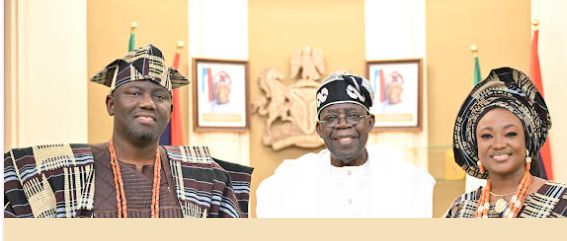
 The Oyo monarch commended the President for bold economic reforms, infrastructural development, instituting social welfare, youth empowerment and improvement in security and investments in agriculture.
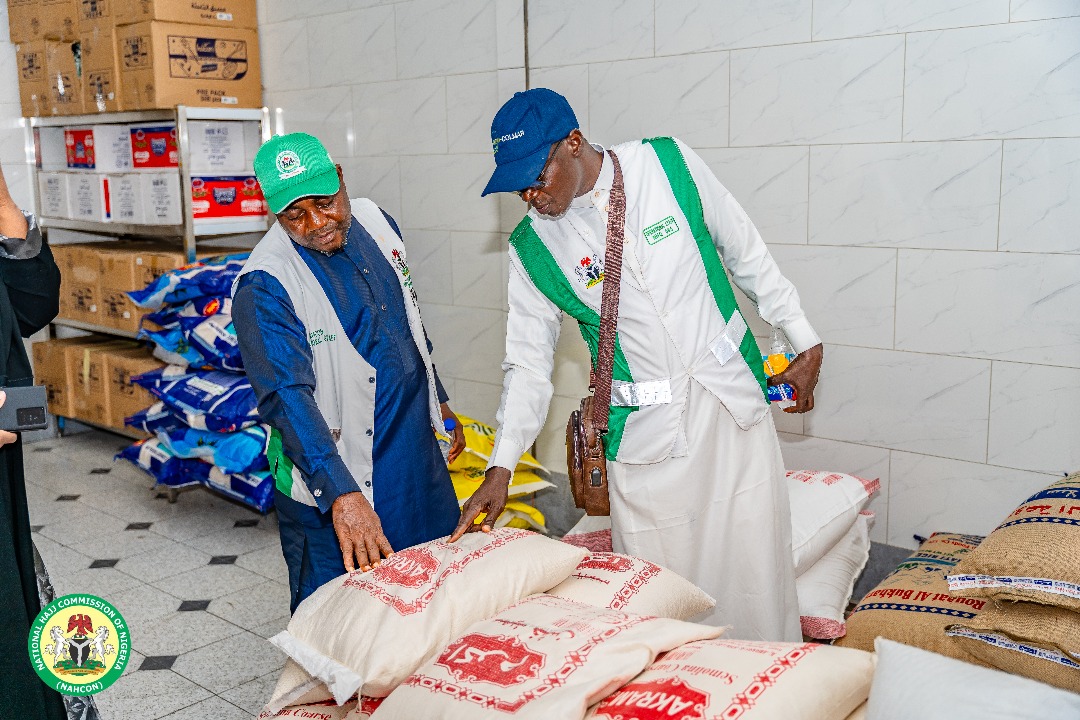 As part of their ongoing quality assurance efforts, committee members perform systematic evaluations of all seven contracted kitchens. They are Africana Home Restaurant, Amjad Alghraa, Al-Andalus, Mawasim Khairat, Na’a Azad, Zowar Muktara, and Kabala Catering.
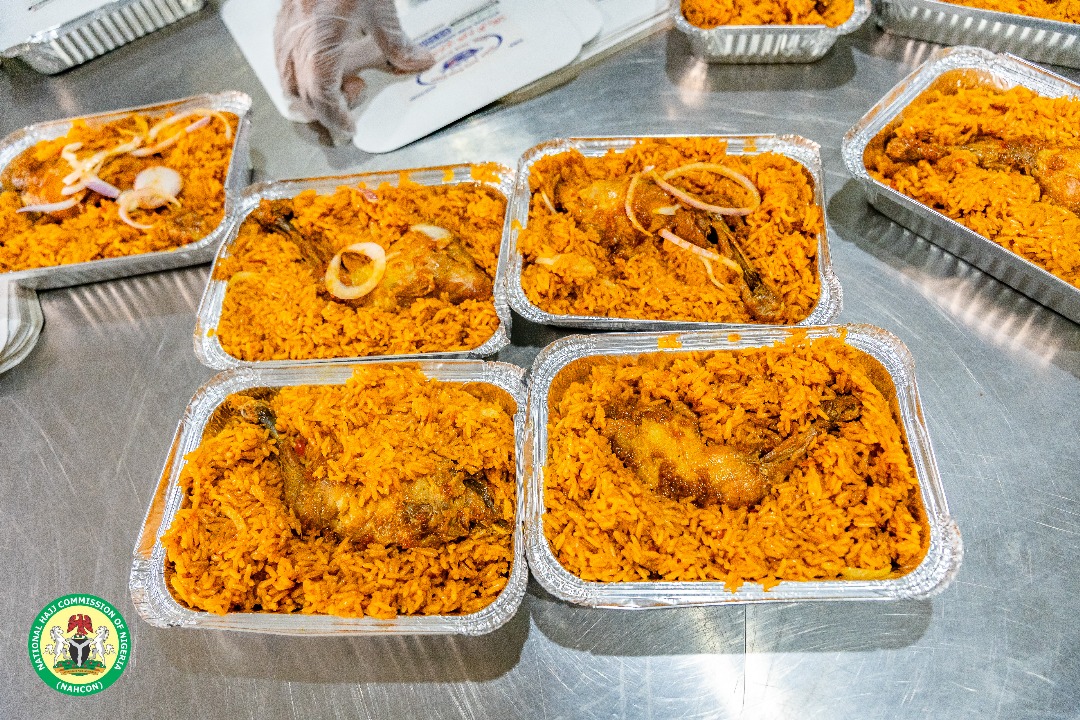 Committee inspectors are said to meticulously examine the quality of all food ingredients, verifying that raw materials meet nutritional standards before entering the preparation process. “They scrutinize expiration dates on every packaged item, from spices to preserved goods, enforcing a zero-tolerance policy for expired products. Additionally, inspectors verify strict adherence to NAHCON’s mandate for natural ingredients, prohibiting artificial flavor enhancers and preservatives that could compromise the nutritional value or authenticity of traditional Nigerian dishes.”



JAMB’s Fiasco Is Horrible, But It’s Not Unexampled, By Farooq A. Kperogi
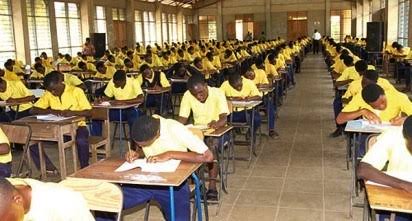
The server glitch that led to unnaturally high failure rates in Lagos and southeast states in Joint Admissions and Matriculation Board’s Unified Tertiary Matriculation Examination (UTME) has alarmed the nation and provoked intense, impassioned debates about the integrity of computer-based standardized tests.
There are also the predictably shallow, bigoted attacks on the ethnicity, religious affiliation, and field of scholarly specialization of the JAMB registrar, Professor Is-haq Oloyede. I have chosen to transcend this chauvinistic folderol and instead look at the bigger picture.
There is no question that the technical malfunction in JAMB’s server that almost imperiled the dreams and hard work of prospective undergraduates is inexcusably horrid. It’s even more outrageous that in the immediate aftermath of this tragedy, the minister of education was quoted as saying that the mass failure was proof that the government had found a foolproof formula to break the “exam malpractice ecosystem.”
But, as I will show shortly, what happened in Nigeria is not unprecedented in the world. It also does not constitute sufficient grounds to impute untoward motives to JAMB or its officials. Or to demand the JAMB registrar’s resignation.
Here in the United States, on March 8 this year, a technical glitch in the Scholastic Aptitude Test (SAT), which is somewhat equivalent to Nigeria’s UTME, caused many test takers to prematurely submit their answers. That led to scores of students getting subpar scores that won’t be enough to get them entry into universities.
The College Board, which administers the SAT, apologized and gave students an opportunity for a cost-free do-over. It gave test takers a full refund of their registration fees. It also gave them a voucher “for a free registration for a future SAT administration,” according to Forbes of March 10. Nobody resigned because of it.
On April 8, an even more devastating technical failure hit the American College Testing (ACT) exam, another standardized university admission test that is a competitor to the SAT. During an online test, up to 11,000 secondary school students in the midwestern state of Illinois could not complete their test because of a sudden server malfunction.
ACT’s computer system went down and either delayed start times or caused some sections of the exam to freeze midpoint.
In an official statement, ACT “sincerely apologizes for the disruption,” acknowledged the “impact any technical issues have on schedules, student experience, and instructional time,” and provided vouchers for a future national ACT test date in June or July at no cost to students. They have another chance to improve their college admission scores. The ACT’s head has not resigned because of this.
The Law School Admission Test, or LSAT, the standardized test required to get admission into law schools in the United States, also experienced a well-publicized technical failure in 2020 when it transitioned from paper-based testing to online testing. A glitch in the system caused the answers that test-takers chose not to be recorded, which meant automatic failure for several people affected.
The Law School Admission Council, which administers the LSAT, admitted the error, apologized, made amends by rescheduling a make-up exam for affected students, and promised to investigate and address the cause of the technical mishap.
Earlier, in July 2019, the LSAT’s initial switch from paper to tablet-based testing in test centers also saw technical hiccups. Some tablets crashed or froze. This forced LSAC to let students cancel their score and retake the test for free. The head of the LSAC didn’t resign because of this.
Nor is this limited to the United States. I only started with the United States because I live here. The United Kingdom, our former colonizer, has also had its own share of digital platform failures during standardized university entrance examinations.
For example, in October 2023, Oxford University’s admission test for prospective undergraduates was hampered by severe technical and administrative glitches. The university chose to change Cambridge Assessment Admissions Testing as its test provider for a new provider called Tata Consultancy Services. This turned out to be an epic disaster.
According to an October 23, 2023, report by Cherwell, which bills itself as “Oxford’s oldest independent student newspaper,” Oxford’s test for final-year secondary school students was chaotic, marred by technical glitches, and “led to distress amongst applicants.”
It was so disordered that “The paper for the English Literature Assessment Test (ELAT) was reportedly from the previous year.”
That’s equivalent to answering UTME questions from last year because technical glitches prevented this year’s questions from appearing on your screen. Meanwhile, you will be graded based on the answers for this year’s questions, which you haven’t seen.
The paper quoted a final year high school student who took the test as venting the following outrage on Twitter: “We look forward to a written apology and statement about the progress of these tests today. Not only with technical errors, but also the error on the ELAT. Students have prepared for these for months, so rapid response is necessary to assure them they will not be disadvantaged.”
The student paper reported that some test sessions were so delayed that backup paper test booklets had to be delivered. For example, the Math Admissions Test (MAT) was eventually given on paper after a two-hour wait when the online system couldn’t be stabilized.
Even so, Oxford officials were compelled to indicate that affected applicants would be treated with leniency in score interpretation. No one resigned because of this.
It isn’t just advanced industrialized countries that experience technical troubles in standardized tests similar to what happened to this year’s UTME.
India, a country that shares many characteristics with Nigeria but is more technologically advanced, has also occasionally grappled with testing glitches. In 2009, India’s transition from paper-based to computer-based testing for its Common Admission Test (CAT) —required for entry into the country’s prestigious Institutes of Management — was marred by widespread software and network problems.
This was made even worse by a malware virus attack that caused about 47 out of 104 test labs to crash on the first day, preventing thousands of test takers from completing the exam. Roughly 10–11% of test takers were affected by crashes or freezing terminals, according to India’s Business Standard newspaper of January 21, 2013.
Charles Kernan, the COO of Prometric, which administered the test, acknowledged the technical glitches, apologized, and worked with schools to reschedule the tests for affected test takers. He didn’t resign.
In January this year, conduct of the Joint Entrance Examination (JEE), India’s key entrance test to study undergraduate degrees in engineering, had glitches and disruptions that altered students’ scores in some parts of the country.
According to a January 22, 2025, news report from The Times of India, the National Testing Agency (NTA), which conducts JEE, acknowledged the glitches and posted an official circular noting a technical snag at one venue and promptly issuing a new exam date for all candidates at the most affected centers. NTA’s head didn’t resign because of this.
My search turned up many other parallels from different parts of the world. I won’t bore the reader with more examples.
My goal, however, is not to lessen or dismiss the gravity of what happened, but to give a broader global context of the failure of technology in test taking and to help rein in the wild emotions this one incident appears to be provoking.
I am glad that the JAMB registrar has accepted responsibility for the failure of JAMB’s system. He has apologized sincerely and has offered immediate restitutive amends to affected students.
Of course, that didn’t happen in a vacuum. The sustained, evidence-based protestations of Alex Onyia, the CEO of Educare, contributed to this. So, Onyia also deserves commendation for vigilant citizenship. I am sure he is not alone.
But it takes a broad, open, and mature mind to invite one’s challenger to the table, give them an opportunity to make their case, admit error when the challenger’s evidence overwhelms yours, then apologize, and make amends. I honestly don’t know what more is expected.
Finally, that a simple, if grievous, technical error in a national test became the basis for the widening of our national fissures and for a vicious ethno-religious smear campaign against an individual is not a surprise to me. But I wanted to move beyond that and show that this isn’t unique to Nigeria.