Police have arrested the immediate past Imo State Governor, Senator Rochas Okorocha for daring Governor Hope Uzodimma by reopening the Royal Palm Estate sealed by the State Government.
Accompanied by his son-in-law, Uche Nwosu, the former Governor broke the keys to recover the estate belonging to his wife, Nkechi.
Infuriated by the ex-Governor’s action, loyalists to the State Government confronted them in a clash that left one person injured.
The seizure, according to the team led by Commissioner for Lands, Enyinnaya Onuegbu, was in compliance with directive of the Imo State gazette on the report of the Judicial Commission of Enquiry on recovery of Lands and other related matters.
Imo Government, on Friday, recovered the Royal Palm Estate along Akachi road.
Professor Ibrahim Gambari, President Muhammadu Buhari’s Chief of Staff, international relations guru and bureaucrat does not think we should wait for historians to do the assessment of the Buhari administration in the international arena given limitations of the focus of many of them. “Now is the time to do it,” he insists.
We agree with many of the historians that the pursuit of closer foreign economic relations is no longer an option and the important need for an upward trajectory in bilateral relationship, first in our own neighbourhood and then in the world are key. This is what necessitated a whirlwind of visits around the world in the President’s First Term.
Although these trips themselves became objects of controversy around the country, these engagements have given an image boost to Nigeria all around the world.
But while the historians and international relations scholars have given a significant part of their attention to the government’s efforts in rebuilding connectivity in our immediate and extended geographies and global engagements that have been spiced with Nigeria’s economic priorities, little attention was paid to the important undertaking of making Nigeria a global human resource power house.
There is no doubt that there is so much that has been achieved in conventional international relations in the six years of the administration.
Africa remains the centerpiece of our foreign relations. Friendship and cooperation have replaced rivalry with big and small nations on the continent. The United Kingdom remains our most strategic partner. Despite the four convulsive years of the Trump presidency and its “America First” ideology, bilateral relations between our two nations have miraculously survived, intact. We have resumed upward trajectory in relations with Germany, France, Turkey, Italy, Japan, India and Pakistan. With the coming of the Buhari administration, Nigeria has cemented relations with Russia and achieved a comprehensive partnership with China. Nigeria is warmly embraced by the Arab States and Iran.
However, despite rising political profile of the country, losses have been suffered, as did other nations following the Coronavirus pandemic, which for Nigeria, were accentuated by the fight against terrorism, Boko Haram and other threats to her security. Without doubt, the war against terror had limited Nigeria’s diplomacy to the extent that her external visibility in global and continental organizations was reduced to mere attendance of meetings related to such organisations only.
Two international events that shaped Nigeria’s path to progressive diplomacy are largely attributable to Mr. President’s personality and character. His post-inaugural visitations to our neighbouring countries of Chad, Niger and Benin Republics as well as Cameroon in 2015, led to the re-constitution of the Multinational Joint Task Force of the Lake Chad Basin Commission and the expansion of its mandate to fight insecurity in the sub-region more concertedly. Prior to the election of 2015 in Nigeria, there was a stalemate in moving ahead but President Buhari’s victory in that year’s election, sufficiently diffused the stalemate and permitted Nigeria’s leadership of the MNJTF, which had previously been resisted, based on mistrust by some member-states of LCBC. The other event was the AfDB election in 2015. President Buhari’s strong support for the nomination by his predecessor in office of Dr. Akinwumi Adesina and campaigns for him, ultimately assured his victory.
Regrettably, Nigeria could not consolidate on these initial diplomatic successes. In 2016, Nigeria’s attempt to clinch the prestigious position of Commissioner for Peace and Security of the African Union was a disaster as her candidate was comprehensively defeated, despite mounting very elaborate campaign efforts.
At the United Nations level on the other hand, Nigeria’s diplomacy continues to offer some hope. When former Secretary General Ban Ki Moon’s term ended and a new Secretary-General was elected, he looked in the direction of Nigeria to choose a deputy and our Amina Mohammed, former Minister of Environment became the darling of the foremost global institution.
At the 74th Session of United Nations General Assembly in 2019, Nigeria’s Permanent Representative at the UN, Professor Tijjani Mohammed Bande was unanimously elected as the President of the Assembly. It was a defining moment for the UN as the world was soon afflicted by a pandemic, COVID-19. One virus holding the world hostage and imposing a new norm of relationships and collaborations for individuals, nations and indeed for multilateralism. The impact of this pandemic on the world has been comprehensive and the dysfunctionality of the world was near complete. But the UN meetings dramatically continued through virtual sessions, ensuring that the global body remained relevant in the lives of humankind. The innovation was miraculous and Nigeria’s Professor Bande, as Permanent Representative and President of the General Assembly who led these efforts was appreciated for the roles he played in the world body and deservedly received the recognition and acknowledgement by the UN Secretary-General, Antonio Gutteres as the “miracle of 2020.”
The re-election of Dr. Adewumi as AfDB President in 2020 faced more herculean task as a superpower was bent on preventing his re-election. Despite pressure on President Buhari to replace him, Mr. President instead, reinforced his faith and commitment in Dr. Adewumi’s candidacy and reached out to world leaders to canvas support. Mr. President’s adroit diplomacy paid off as Dr. Adewumi had a landslide victory.
Nigeria’s progressive diplomatic leg-works within ECOWAS, first through support for the complicated peace process in Mali, to logistics support for practically all elections in the sub-region, to coordinating and providing leadership for good governance, accountability and fight against corruption as well as managing efforts to contain the catastrophic consequences of COVID-19, earned Mr. President and Nigeria, recognition, respect and appreciation. When Nigeria expressed interest in fielding a candidate for the position of Commissioner for Political Affairs, Peace and Security of the African Union, Nigeria’s adroit diplomacy came to play once again, when all ECOWAS countries stepped down for Nigeria’s candidate, who obtained the support of ALL the African Union member-countries to clinch the position on 6th February, 2021.
Building on this foreign policy momentum, Nigeria made waves with the nomination of former Finance Minister Ngozi Okonjo-Iweala as World Trade Organisation, WTO Director-General. The switch of candidates by Nigeria was seen as a master-stroke that finally paid off a few days ago, when she got the endorsement to be the first African and first lady to head the Organisation.
The lesson in the rebound of Nigeria’s diplomacy lies in two great attributes. Respect and recognition for the nation’s leader and the determination to always present one of our best. President Buhari is deeply respected within the sub-region and the rest of Africa. He is measured in speaking but firm on his positions. He throws his weight around causes he deeply believes in and his brother-Presidents cherish that. But, in all cases, presentation of very good candidates is easier to sell as in the cases that have been referenced. Nigeria must keep the momentum and prioritise its global engagements for maximum benefits to Nigerians, Nigeria and Africa at large.
Shehu is Senior Special Assistant to President Buhari on Media and Publicity
The Governor of Ogun State, Dapo Abiodun has blamed social media for the crisis that erupted between indigenous Yoruba people in the Southwest and Fulani herdsmen residence in the region.
“Again, we notice that our media houses have not particularly been helping us. “Social media have become such that people are quick to send messages around on WhatsApp or on Instagram of things are not true.
“So many messages are being shared and sent around, some of them, we’ve seen that they are videos of places that are not even Nigeria.
” Some videos are videos of incidences that occurred last year, we have people that are quick to share these videos around and this is causing disaffection amongst our people.
“We don’t have any other country but this country. It beats me why anyone would be in such a hurry to spread fake news and news that can immediately cause a problem between us and our brothers from different parts of the country.”
The governor, who spoke to newsmen today, February 21, after a stakeholders meeting, said that part of the problems had to do with ethnic profiling, adding that the fact is that criminals are criminals and criminals abound everywhere.
“There are criminals in Yorubaland, there are criminals in Igboland, there are criminals in the Niger Delta, there are criminals in the north and we see that even in the north, in the northeast, in the north-central; we see that there are criminals activities.
“Our people have had a problem with drawing a line between peaceful Fulani people, who are traditionally herdsmen, and bandits who are cattle rustlers, who will steal cattle, take the cattle to farmlands belonging to people, attack them. Now farmers and indigenes carry out counter attacks against innocent people that have been living with us.
“I must say that the Fulani have lived with us in Ogun State for hundreds of years. The Seriki Fulani from that particular corridor speaks better Yoruba than I do because his father was born there.”
Governor Abiodun, who spoke to newsmen after an audience with President Muhammadu Buhari at the presidential villa in Abuja, said that at the end of a stakeholders meeting it was resolved that a joint stakeholders committee be formed and would comprise of the Fulani, the herdsmen, the farmers and government.
“That has since been put in place. That committee is going to be sworn in, I think sometime this evening.”
He said that they made available, pickup trucks, motorcycles, telecoms equipment, for the joint security patrol team to further strengthen security along the areas where these incident had occurred in last few weeks.
He appreciated the governor of Niger State who he said, spent a night with him.
“This is a governor, who on getting back to his state, 50 people were kidnapped and therefore, we cannot be profiling them based on ethnic grounds and be saying, ‘oh the Fulani have kidnapped Fulani or Hausa men in Niger.'”
He reminded Journalists that they have no other country but Nigeria and that they must be responsible in journalism. “Yesterday we rose from NEC, resolving that there must be stiff penalties for people that are propagating fake news because fake news is threatening the unity of this country.
“And I want to implore you who are traditional journalists that we must be responsible in reporting things, we must try and report news as accurately as we can. I appreciate that you want to create sensation, that is how you sell your newspapers and your TV advertisement and all that, but we cannot threaten the security of the country. This is a national security issue.”
Nigerian Air Force high command has released names of officers who died in a military aircraft that crashed on Abuja airport runway today, February 21. The Beechcraft KingAir B350i aircraft crashed while returning to the Abuja Airport after reporting engine failure enroute Minna. NAF spokesperson, Ibikunle Daramola, confirmed via his Twitter handle @KunleDaramola3 that seven personnel died, adding that the Chief of Air Staff, Air Marshal Isiaka Amao, has ordered immediate investigation. “This is to confirm that a Nigerian Air Force (NAF) Beechcraft KingAir B350i aircraft crashed while returning to the Abuja Airport after reporting engine failure enroute Minna. First responders are at the scene. Sadly, all 7 personnel on board died in the crash. “The Chief of the Air Staff (CAS), @CAS_IOAmao, has ordered an immediate investigation into the incident. While urging the general public to remain calm & await the outcome of investigation, the CAS, on behalf of all NAF personnel, commiserates with the families of the deceased,” Daramola tweeted. Names of the dead ones were given as Flt Lt Gazama, Flt Lt Piyo, Flg Offr Okpara, FS Olawumi, ACM Johnson and Sgt Oluka.
The former President of the Catholic Bishops’ Conference of Nigeria and the Archbishop of Abuja, John Onaiyekan has expressed concern that a gang of criminals are gradually taking over Nigeria.
“We have a gang of criminals that are almost taking over our country and the government should either do it or allow others to do it,” Onaiyekan stressed, during an interview with newsmen after the ordination of the Auxillary Bishop of Minna Diocese yesterday, February 20.
According to him, the war against bandits, Boko Haram and other criminal gangs has nothing to do with religion, politics, ethnicity, saying: “this has nothing to do with APC or PDP, it is not political and we have also seen that it has nothing to do with Islam or Christianity, not even with our ethical differences. “
He warned however that if the government does not take a definite step, there will be a revolt that would be dangerous to the people.
“The fact remains that we are not where we should be. We should not be living in a country where we are always with our hearts in our mouth when we are moving from one place to another”
“We should not be living in a country where the children cannot study in schools and where bandits can come and cart away students and their teachers into the bush and sit there and boast for dialogue.
“Sadly, we have people who claim to be our leaders; who during elections forced us, begged us and cajoled us to put them in power, now that they are in power, do your work for goodness sake.”
“If the government cannot secure the lives of the people, they should call for a kind of national cohesion. They should stop pretending that they are the ones ruling. In some countries when these incidents happen, it gets to a stage where the government will call for national unity where everyone comes on board to proffer solutions.”
Onaiyekan said the government has no excuse for the current insecurity in parts of the country.
The Economic and Financial Crimes Commission (EFCC) has promoted its designated Acting Chairman, Abdulrasheed Ahmed Bawa and 88 others. Information has it that they have been promoted from Grade Level 13 Principal Detective Superintendent (PDS) to grade level 14 Deputy Chief Detective Superintendent (DCDS) Grade Level 14, effective from January 1, 2021.. The ‘swift’ promotion offered the anti-graft agency’s nominated boss, and other EFCC operatives is coming less than two weeks after Mr. President nominated Bawa to replace Ibrahim Magu, the former acting Chairman. An internal memo, signed by one Femi Peter Gbarufu, issued yesterday and titled, “Release of Promotion List” said that promotion letters would be issued to the affected staff as soon as possible by the Human Resources Unit. A source in the EFCC said that with the promotion, Bawa’s new rank is equivalent to the position of Assistant Commissioner of Police (ACP), a qualification for the position of Chairman in the agency. “Bawa was recruited into EFCC in 2005 as one of the pioneer cadets and has spent 16 years as an operative. By virtue of his new rank, he is now equivalent to Assistant Commissioner of Police and qualified to be a Chairman of EFCC. “The EFCC Establishment Act, especially Section 2a (ii) stated that a candidate for appointment as the Chairman of the agency should be a serving or retired member of any security or law enforcement agency not below the rank of Assistant Commissioner of Police or equivalent.” “The DCDS in EFCC is equivalent ACP in Police. For instance, the operative cadre entry-level in the police is Assistant Superintendent of Police (ASP) equivalent to Assistant Detective of Superintendent (ADS); Deputy Superintendent of Police (DSP) is equivalent to Deputy Detective Superintendent (DDS); Superintendent of Police (SP) is equivalent to Senior Detective Superintendent (SDS); Chief Superintendent of Police (CSP) is equivalent to Principal Detective Superintendent (PDS) while Assistant Commissioner of Police (ACP) is equivalent to Deputy Chief Detective Superintendent (DCDS). “There are other senior officers in EFCC who are not detective operatives but with routine civil service ranks for administrative purposes. The Detective operatives currently in the service of EFCC are either course mates or junior to the Bawa who has just been promoted to qualifying level for the position of the Chairman,” the officer concluded.
Nigerian soldiers have stormed a farm allegedly owned by Boko Haram leader, Abubakar Shekau in the Sambisa forest just as the military successfully repelled ISWAP Terrorists who attacked Dikwa town on yesterday evening.
In a video, the soldiers who stormed the farm in the Sambisa axis, invited some people in the locality to help themselves with edibles after which they destroyed the farm.
The troops could be heard mocking the sect leader and asking him to come out from the hiding.
Meanwhile, the Nigerian troops in Dikwa after repelling the attack by ISWAP nabbed two men suspected to be terrorist informants living in the community.
An intelligence source revealed that the terrorists invaded a military Super Camp unit on the northern axis of the town on several light trucks mounted with Heavy Machine Guns (HMGs).
“The terrorists suspected to be aided by informants approached the base from two axes.
“One of the groups attacked from the northern axis towards Marte road, while the other group approached the base from the north-eastern axis towards Gajibo road.
“The troops on the ground had got a signal of the attempted invasion and retreated to Ajiri Community in the Southern axis, where they relaunched counter-attacks with troops from Gulumba.
“A Ground Force Close Air Support (CAS) component deployed also attacked the terrorists from the air destroying their guntrucks and makeshift camps.”
It was gathered that the terrorists are coordinating their recent attacks from their new base in Andakar with some commanders and mercenaries from neighbouring countries.
The minister of State in the Federal Capital Territory (FCT), Dr. Ramatu Tijjani Aliyu has appealed to the new Ambassadors Designate, Consuls General and Charge d’Affaires of Nigeria to aim at attracting investments to Abuja, from their countries of posting.
Speaking when the envoys visited the FCT headquarters in Area 10 as part of their induction, Dr. Ramatu advised them to use their vantage positions to market the abundant investment opportunities available in the FCT.
Such investment opportunities, she said, include agriculture and agro-allied businesses, tourism and recreation, sustainable energy, housing, healthcare and transportation amongst others.
She also called on the envoys to drum into the ears of potential investors the favourable climactic conditions, the high standard of functional infrastructure and the peaceful co-existence amongst the residents of the FCT to come over and invest in the Territory.
This was even as the minister, Muhammad Musa Bello advised the envoys to carry the message of peace in Nigeria to their various countries of posting.
According to him: “we are better off together and united, and I hope that as our Ambassadors, our Consul Generals, Charge De Affairs and Heads of Missions, you will take this message across.”
The Minister also advised the new envoys to build on the positive activities of their predecessors, saying: “my advice to you is, instead of trying to create new things, look inwards within your mission and consulates and see the works in progress. I think if you are able to do that, you will cut down the time it takes for you to acclimatize and then you would be able to push for so many things that would be of benefit to our dear country”
While congratulating the envoys on their appointments which, he said were well deserved, Muhammad Musa Bello wished them successful tours of duty in their countries of posting
The former Governor of the Central Bank of Nigeria (CBN), Professor Charles Soludo has officially declared his intention to run the Anambra governorship race come November 6, 2021 on the platform of the All Progressives Grand Alliance (APGA).
Soludo who is also the Chairman of Anambra Vision 2070 Committee made his intention known in Awka, at the State secretariat of the party with the APGA Chairman, Sir Norbert Obi present.
Professor Soludo, while addressing party faithful at the event, explained that he was optimistic that there would be a free and fair process.
He was accompanied to State party secretariat by top APGA stakeholders and functionaries including member representing Anambra East and West federal constituency, Hon Chinedu Obidigwe; former member representing Idemili North and South Federal Constituency, Ifeanyichukwu Ibezi; member representing Anaocha, Njikoka and Dunukofia federal constituency, Chief Dozie Nwankwo; Deputy Speaker, Anambra State House of Assembly, Dr Paschal Agbodike and other Assembly members; APGA BoT Member and Spiritual Leader, Chief Rommy Ezeonwuka (Ogilisi Igbo); former Deputy Governor of the State, Dr Emeka Sibudu; some members of the State Executive Council; the Director General of Inter-Party Office, Anambra State and Chieftain of APGA, Chief Ben Obi; wife of late Dr Alex Ekwueme, Chief Mrs Ifeoma Ekwueme; Transition Committee Chairmen, among others.
Speaking to journalists shortly after the event, Chief Rommy Ezeonwuka said that Anambra State had witnessed an unprecedented success in the past years under APGA, and that a new Governor of APGA extraction is needed at this time, to uphold good governance, security of lives and property, rural and urban development as well as massive infrastructural development, which he said were the hallmarks of the APGA-led Government in Anambra State.
“We look forward to a transparent party primaries, and we are confident that APGA would be retuned elected at the November guber poll.”
Armed bandits terrorizing some local government areas and communities in Niger State have informed a popular Islamic scholar, Sheikh Abubakar Gumi why they are angry, kidnapping and killing people in the State.
In a mediation chat with the cleric today, February 19, about four days after the abduction of staff, students and relatives of the Government Science School in Kagara, the Fulani bandits said that they are not happy that several of their cows have been stolen by robbers.
They alleged that their fellow herdsmen have been killed by some villagers, adding that vigilante members in some communities attack Fulanis and their family members whenever they sight them going to markets and towns.”
The bandits took Gumi round locations where bodies of their Fulani relatives and family members, killed in aerial bombardments, were dumped.
Notorious bandits leaders, including Dogon Gida, Kachalla, were in attendance at the meeting that took place at an isolated area inside a forest in the Niger State,” a security source said.
The bandit leaders told Sheikh Gumi that they were ready to end killings and abductions.
They expressed willingness to be part of any deradicalization exercise or programme that the government will unveil for “our boys.”
We use cookies on our website to give you the most relevant experience by remembering your preferences and repeat visits. By clicking “Accept”, you consent to the use of ALL the cookies.
This website uses cookies to improve your experience while you navigate through the website. Out of these, the cookies that are categorized as necessary are stored on your browser as they are essential for the working of basic functionalities of the website. We also use third-party cookies that help us analyze and understand how you use this website. These cookies will be stored in your browser only with your consent. You also have the option to opt-out of these cookies. But opting out of some of these cookies may affect your browsing experience.
Necessary cookies are absolutely essential for the website to function properly. This category only includes cookies that ensures basic functionalities and security features of the website. These cookies do not store any personal information.
Any cookies that may not be particularly necessary for the website to function and is used specifically to collect user personal data via analytics, ads, other embedded contents are termed as non-necessary cookies. It is mandatory to procure user consent prior to running these cookies on your website.



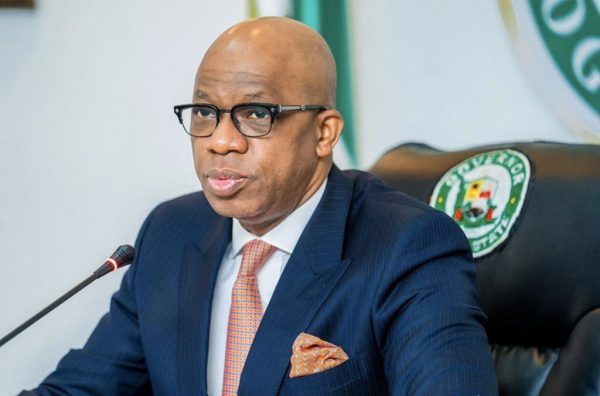
 Nigerian Air Force high command has released names of officers who died in a military aircraft that crashed on Abuja airport runway today, February 21.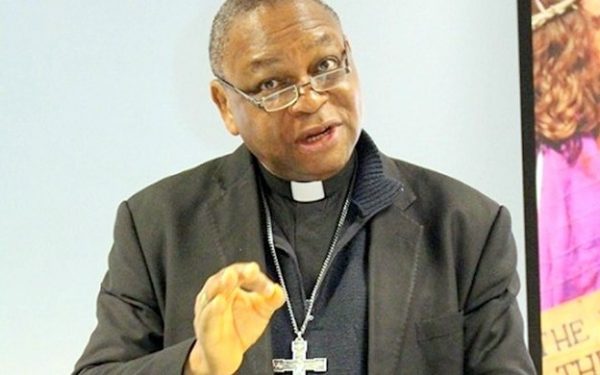
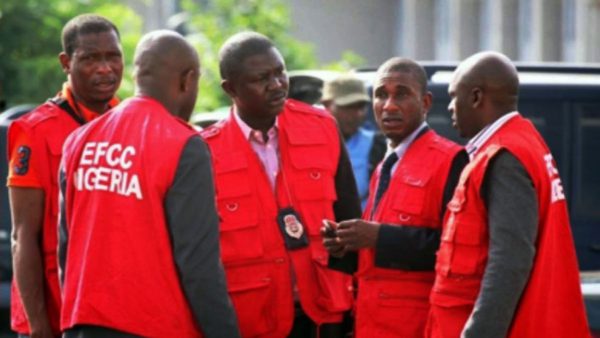 The Economic and Financial Crimes Commission (EFCC) has promoted its designated Acting Chairman, Abdulrasheed Ahmed Bawa and 88 others.
 The minister of State in the Federal Capital Territory (FCT), Dr. Ramatu Tijjani Aliyu has appealed to the new Ambassadors Designate, Consuls General and Charge d’Affaires of Nigeria to aim at attracting investments to Abuja, from their countries of posting.
 The former Governor of the Central Bank of Nigeria (CBN), Professor Charles Soludo has officially declared his intention to run the Anambra governorship race come November 6, 2021 on the platform of the All Progressives Grand Alliance (APGA).


With Adesina, Okonjo-Iweala Others, Nigeria Attains Human Resource Power House Status Under President Buhari, By Garba Shehu
But while the historians and international relations scholars have given a significant part of their attention to the government’s efforts in rebuilding connectivity in our immediate and extended geographies and global engagements that have been spiced with Nigeria’s economic priorities, little attention was paid to the important undertaking of making Nigeria a global human resource power house.
There is no doubt that there is so much that has been achieved in conventional international relations in the six years of the administration.
Africa remains the centerpiece of our foreign relations. Friendship and cooperation have replaced rivalry with big and small nations on the continent. The United Kingdom remains our most strategic partner. Despite the four convulsive years of the Trump presidency and its “America First” ideology, bilateral relations between our two nations have miraculously survived, intact. We have resumed upward trajectory in relations with Germany, France, Turkey, Italy, Japan, India and Pakistan. With the coming of the Buhari administration, Nigeria has cemented relations with Russia and achieved a comprehensive partnership with China. Nigeria is warmly embraced by the Arab States and Iran.
However, despite rising political profile of the country, losses have been suffered, as did other nations following the Coronavirus pandemic, which for Nigeria, were accentuated by the fight against terrorism, Boko Haram and other threats to her security. Without doubt, the war against terror had limited Nigeria’s diplomacy to the extent that her external visibility in global and continental organizations was reduced to mere attendance of meetings related to such organisations only.
Two international events that shaped Nigeria’s path to progressive diplomacy are largely attributable to Mr. President’s personality and character. His post-inaugural visitations to our neighbouring countries of Chad, Niger and Benin Republics as well as Cameroon in 2015, led to the re-constitution of the Multinational Joint Task Force of the Lake Chad Basin Commission and the expansion of its mandate to fight insecurity in the sub-region more concertedly. Prior to the election of 2015 in Nigeria, there was a stalemate in moving ahead but President Buhari’s victory in that year’s election, sufficiently diffused the stalemate and permitted Nigeria’s leadership of the MNJTF, which had previously been resisted, based on mistrust by some member-states of LCBC. The other event was the AfDB election in 2015. President Buhari’s strong support for the nomination by his predecessor in office of Dr. Akinwumi Adesina and campaigns for him, ultimately assured his victory.
Regrettably, Nigeria could not consolidate on these initial diplomatic successes. In 2016, Nigeria’s attempt to clinch the prestigious position of Commissioner for Peace and Security of the African Union was a disaster as her candidate was comprehensively defeated, despite mounting very elaborate campaign efforts.
At the United Nations level on the other hand, Nigeria’s diplomacy continues to offer some hope. When former Secretary General Ban Ki Moon’s term ended and a new Secretary-General was elected, he looked in the direction of Nigeria to choose a deputy and our Amina Mohammed, former Minister of Environment became the darling of the foremost global institution.
At the 74th Session of United Nations General Assembly in 2019, Nigeria’s Permanent Representative at the UN, Professor Tijjani Mohammed Bande was unanimously elected as the President of the Assembly. It was a defining moment for the UN as the world was soon afflicted by a pandemic, COVID-19. One virus holding the world hostage and imposing a new norm of relationships and collaborations for individuals, nations and indeed for multilateralism. The impact of this pandemic on the world has been comprehensive and the dysfunctionality of the world was near complete. But the UN meetings dramatically continued through virtual sessions, ensuring that the global body remained relevant in the lives of humankind. The innovation was miraculous and Nigeria’s Professor Bande, as Permanent Representative and President of the General Assembly who led these efforts was appreciated for the roles he played in the world body and deservedly received the recognition and acknowledgement by the UN Secretary-General, Antonio Gutteres as the “miracle of 2020.”
The re-election of Dr. Adewumi as AfDB President in 2020 faced more herculean task as a superpower was bent on preventing his re-election. Despite pressure on President Buhari to replace him, Mr. President instead, reinforced his faith and commitment in Dr. Adewumi’s candidacy and reached out to world leaders to canvas support. Mr. President’s adroit diplomacy paid off as Dr. Adewumi had a landslide victory.
Nigeria’s progressive diplomatic leg-works within ECOWAS, first through support for the complicated peace process in Mali, to logistics support for practically all elections in the sub-region, to coordinating and providing leadership for good governance, accountability and fight against corruption as well as managing efforts to contain the catastrophic consequences of COVID-19, earned Mr. President and Nigeria, recognition, respect and appreciation. When Nigeria expressed interest in fielding a candidate for the position of Commissioner for Political Affairs, Peace and Security of the African Union, Nigeria’s adroit diplomacy came to play once again, when all ECOWAS countries stepped down for Nigeria’s candidate, who obtained the support of ALL the African Union member-countries to clinch the position on 6th February, 2021.
Building on this foreign policy momentum, Nigeria made waves with the nomination of former Finance Minister Ngozi Okonjo-Iweala as World Trade Organisation, WTO Director-General. The switch of candidates by Nigeria was seen as a master-stroke that finally paid off a few days ago, when she got the endorsement to be the first African and first lady to head the Organisation.
The lesson in the rebound of Nigeria’s diplomacy lies in two great attributes. Respect and recognition for the nation’s leader and the determination to always present one of our best. President Buhari is deeply respected within the sub-region and the rest of Africa. He is measured in speaking but firm on his positions. He throws his weight around causes he deeply believes in and his brother-Presidents cherish that. But, in all cases, presentation of very good candidates is easier to sell as in the cases that have been referenced. Nigeria must keep the momentum and prioritise its global engagements for maximum benefits to Nigerians, Nigeria and Africa at large.