

Nigeria Needs More Than Critical National Information Infrastructure Order To Guarantee Telecom Safety- Experts
Some industry leaders have made it clear that Nigeria needs more than just Executive Order on the Designation and Protection of Critical National Information Infrastructure (CNII) to ensure effective telecom infrastructure safety.
They insisted that operators need to resolve what they called “certain internal and standardisation issues.”
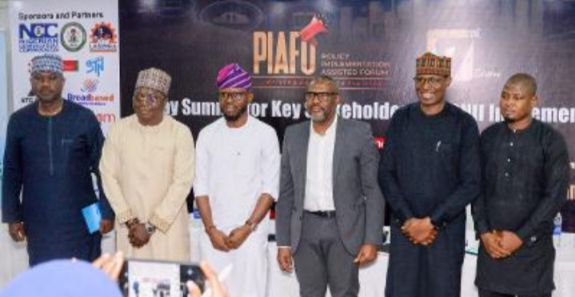
The leaders who met to identify important measures to secure telecommunications infrastructures in the country and ensure that investments in the telecoms space are protected, highlighted pressing issues such as infrastructure vandalism, unauthorized installations, and cable theft, even as they proposed actionable solutions to safeguard the country’s critical national infrastructure.
Speaking at the 7th Policy Implementation Assisted Forum (PIAFo) Summit on CNII implementation, held in Lagos, Chairman of the Association of Licensed Telecommunications Operators of Nigeria (ALTON), Gbenga Adebayo, stressed the importance of proper infrastructure maintenance and installation to prevent vandalism and theft.
Adebayo noted the widespread issue of stolen manhole covers and poles, attributing the problem to poor maintenance practices.
“When properly installed, these components are difficult to remove. However, due to negligence, they are often left unsecured, making them easy targets for theft.”
Adebayo said that community resistance to infrastructure projects has significantly hindered progress, and specifically noted instances where local communities prevented trucks from accessing sites due to previous unaddressed damages caused by contractors.
“A diesel supplier was blocked from entering an estate because a previous contractor had damaged their property and failed to make repairs. This lack of accountability breeds distrust and delays crucial projects.”
He asked stakeholders to foster better relationships with communities to prevent such conflicts.
Another critical issue Adebayo identified was the unauthorized installation of infrastructure without government approval, leading to inadvertent damage during road construction projects.
“Government agencies often damage unregistered infrastructure simply because they were not documented in official records. Proper approvals and collaboration with authorities will ensure accountability and protection of critical infrastructure.”
He called for improved industry coordination to resolve these challenges internally before seeking external solutions that are promised by the CNII provisions.
President of the Association of Telecommunications Companies of Nigeria (ATCON), Tony Emoekpere emphasised the need for standardisation and better coordination among stakeholders.
He pointed out that Nigeria’s infrastructure challenges go beyond technical issues, extending into environmental and moral concerns.
“We are dealing with a moral challenge. An engineer who switched from diesel to gas generators encountered a new problem—workers began stealing engine oil instead, as they could no longer siphon diesel. These issues require both technical and ethical solutions.”
Emoekpere argued that standardisation is the key to long-term sustainability.
“If infrastructure is deployed in a suboptimal manner, failure is inevitable. We need to establish proper standards that all stakeholders—government, private sector, and the public—can align with.”
He also emphasized that Nigeria has strong policies, such as local content policies, but implementation remains a major challenge.
“We must move beyond discussions and focus on actionable steps, follow-ups, and policy enforcement.”
The Chief Executive Officer (CEO) of Cedarview Communications Limited, Wale Owoeye, spoke on the
importance of addressing cable theft and vandalism
He lamented over the alarming rate of cable cuts, which disrupt network operations and drive up maintenance costs.
“Cable theft is a serious issue. Airtel representatives told me they experience a cable cut every six minutes. The assumption that all black cables contain valuable copper leads to reckless vandalism.”
To combat problem, Owoeye proposed three key approaches, including reorientation, enforcement, and proactive measures.
“We need to engage local communities in their native languages, educating them on the consequences of vandalism.”
He suggested that strict legal penalties, including long-term imprisonment, should be enforced to deter offenders.
He also emphasized the need for preventive strategies rather than reactive responses. “Prevention is always more effective and cost-efficient than restoration.”
Owoeye proposed the creation of a dedicated fund to support advocacy and awareness campaigns across Nigeria.
To demonstrate his commitment, he pledged to contribute N500,000 quarterly as a seed fund and encouraged other industry players to follow suit.
“This is like planting a seed. With collective effort, we can grow it into a sustainable solution for protecting Nigeria’s telecom infrastructure.”
The experts collectively emphasised that addressing these challenges requires collaboration among industry players, government agencies, and local communities.
They called for a concerted effort to enforce policies, engage stakeholders, and implement practical solutions that will ensure the long-term sustainability of Nigeria’s telecommunication infrastructure.


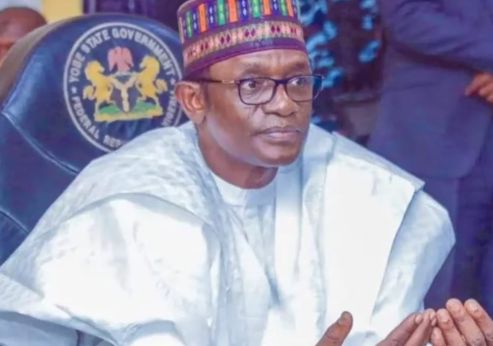




Yobe’s Leadership In Accountability In Governance, By Zarah Kasha
Democracy as a leading form of government globally, thrives mainly on accountability and transparency which are sine-qua-non for good governance. It is a fact that notwithstanding the modest successes recorded, Nigerians are still far from experiencing good governance full blast, some 26 years after the country’s return to democracy.
However, the trend appears to be fast changing in Yobe State, a 34-year-old state where Mai Mala Buni holds sway as its executive governor. As one of the states with the least allocation and revenue generation, prudency plays a major role in its financial stability towards meeting the people’s expectations on good governance. And this feat has never gone unnoticed by professionals and experts who are on the trail of how states manage their funds.
Just last year, Yobe state made it to the top as the best in the 2023 Subnational Audit Efficacy(SAE) index report on accountability and transparency in public funds, put together by the Paradigm Leadership Support Initiative (PLSI), an internationally recognised civil society group noted for tracking public accountability and transparency in the expenditure of public funds.
This was after emerging as the second best in 2022 with 63 per cent after Akwa Ibom which placed first position with 69 per cent.
And to demonstrate that the previous standings were no fluke, the state came top in the 2024 edition. The flagship research report rates Ekiti as second with 54%, and Adamawa (47%) as occupying the third position.
At the lower rung of the ladder are Ogun, Bayelsa, and Ebonyi states jointly placed 34th position with each coring 7%.
More than anything, the Index seeks to foster a culture of accountability in the public sector, ensuring good governance and effective resource utilisation for the overall benefit of the citizens.
The Index further goes to underscore the significance of regular audits, prompt implementation of recommendations, and collaboration among government entities to promote good governance.
In arriving at the verdict, the PLSI usually carries out an assessment process of some critical factors such as getting value for public funds, audit legal framework and operationalisation, annual activity report, publication of annual audit report, and performances.
The rest components are citizens’ account reports, civil societies and media participation reports, and monitoring and oversight functions of the legislative committee on public accounts.
The SAE PLSI assessment system is designed to assess the performance of Nigerian states on key aspects of public accountability and to initiate and implement audit reports by key stakeholders.
The SAE Survey figures reveal Yobe as being consistent in providing and maintaining quality services that are in line with public opinion, transparent and accountable policies, making it an outstanding example for other states in Nigeria.
The index marks Yobe as the first state to promote accountability among the people, ensuring efficient use of resources for the benefit of the people and the welfare of the people of the state.
Speaking at the launch of the report, the 5th in the series, in Abuja recently, the Director of PLSI, Olusegun Elemo, said: “Our SAE index is a technology that reflects the transformational nature and strengthens public trust, the success of Yobe State shows that it has given all other states a leg up in the management of financial and natural resources.”
“The SAE Index is a tool for driving reform and strengthening public trust. Yobe’s achievement shows that prioritising transparency in public financial management is possible and rewarding,” he further stated.
Elemo said the initiative was birthed in 2021 to evaluate states’ transparency and accountability in public fund management and policy implementation.
According to him, the 2024 report highlighted concerns over declining commitment to fiscal accountability following the end of the $1.5 billion World Bank-Assisted States Fiscal Transparency, Accountability, and Sustainability (SFTAS) Programme (2018-2022).
The PLSI boss stated that while the 2021 assessment showed progress in public sector auditing due to legal reforms, subsequent evaluations revealed stagnation or decline, adding that the 2022 edition recorded an average score of 31.81%, which dropped to 30.58% in 2023 and declined to 29.47% in 2024.
Major highlights of the report showed that of the 36 states, only 4 have so far implemented financial autonomy for the Office of the Auditor-General, while 12 states activated legal provisions for administrative independence, limiting the effectiveness of public audit institutions.
Besides, the PLSI said no state produced a standard performance audit report on government programs or projects in 2023, just as 21 states failed to publish their 2023 audit reports online, as it was the previous years.
While stressing the need for governance to prioritise accountability, Elemo called on the state governors to strengthen relevant offices for financial and administrative independence.
It also urged greater collaboration among state governments, legislative houses, and auditors-general to improve transparency.
On methodology, the 2024 edition retained that used in 2023, with data from audit institutions, public accounts committees, accountant-general offices, civil society organizations, and the media, being put to use.
On the whole, the report dwelt on the need for enhanced auditors’ technical capacity to ensure public accessibility of audit reports, and promote citizen engagement in financial transparency efforts.
…‘Consequence of deliberate planning’
In a reaction, the state’s Auditor General, Alhaji Mai Aliyu Umar, attributed the success to the free hand provided to the audit by Governor Mai Mala Buni.
“The governor has provided us with very free hands to perform our duties and responsibilities without interference” he said.
Director General Media and Press Affairs to the Governor, Mamman Mohammed, said the governor is a firm believer in the independence of government sectors, agencies and officials.
“This independence has contributed immensely to the performance and successes of government and its agencies” Mamman said.
He described the feat as “certainly not unexpected given what His Excellency has been doing in the area of fiscal discipline.
This is not accidental, it is a consequence of deliberate planning targeted at good governance.
“This is a further demonstration of the Mai Mala Buni administration to ensure good governance and transparency in all ramifications. I mean, what else can I say?. He is a man who is conscious of his covenant, the social contract with the people of Yobe state.”
Let me recall for the record what the governor said when the state achieved the same feat last year: “The state government, through the Fiscal Responsibility Board, instituted reforms in public finance which have translated into worthy investments, accountability and transparency in government transactions.
“I am glad to say that our audit department and institutions like the Bureau for Public Procurement are independent and ensure transparency and accountability of government expenditure, which has placed the state above board.
“We will continue to strengthen these institutions to promote accountability and transparency in every expenditure of public funds.”
“Now, this was last year. And since then, the state government has upped its ante by ensuring further reforms and initiatives that resulted in its emergence in the 2024 Index Report. I can only tell you that the various initiatives have resulted in the right appropriation of resources in the area of infrastructure as well as human development for the good people of the state,” Mohammed added.
Wining it back-to-back, the Buni administration can’t afford to falter in the years ahead.
Analysts believe if Yobe, a frontline state gradually coming out of the wrecks of insurgency can do it, then other states won’t have any reason not to be up and doing.
Expectations are high from the citizenry, and like the PLSI said, “…Yobe’s achievement shows that prioritising transparency in public financial management is possible and rewarding.”.
It is hoped that Yobe will sustain the tempo and make itself the true model of fiscal discipline for others to emulate and follow.